

Relationship of suicide rates with climate and economic variables in Europe during 2000–2012
Open accessThe DOI matches its Crossref record; 82 of the 82 references it cites were found in a registry or an index.
Abstract
BACKGROUND: It is well known that suicidal rates vary considerably among European countries and the reasons for this are unknown, although several theories have been proposed. The effect of economic variables has been extensively studied but not that of climate. METHODS: Data from 29 European countries covering the years 2000-2012 and concerning male and female standardized suicidal rates (according to WHO), economic variables (according World Bank) and climate variables were gathered. The statistical analysis included cluster and principal component analysis and categorical regression. RESULTS: The derived models explained 62.4 % of the variability of male suicidal rates. Economic variables alone explained 26.9 % and climate variables 37.6 %. For females, the respective figures were 41.7, 11.5 and 28.1 %. Male suicides correlated with high unemployment rate in the frame of high growth rate and high inflation and low GDP per capita, while female suicides correlated negatively with inflation. Both male and female suicides correlated with low temperature. DISCUSSION: The current study reports that the climatic effect (cold climate) is stronger than the economic one, but both are present. It seems that in Europe suicidality follows the climate/temperature cline which interestingly is not from south to north but from south to north-east. This raises concerns that climate change could lead to an increase in suicide rates. The current study is essentially the first successful attempt to explain the differences across countries in Europe; however, it is an observational analysis based on aggregate data and thus there is a lack of control for confounders.
Overview
The claims and statistics of this paper haven’t been checked yet.
Free: it reads the open-access text and checks the first 5 claims that cite a source we can check. Create a free account to check every claim.
Integrity signals
Registry
Cites
Statistics
Figures
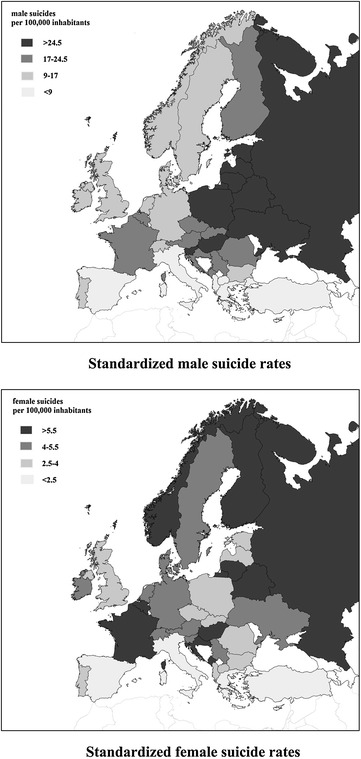
Verification
Claims the paper makes
The claims and statistics of this paper haven’t been checked yet.
Free: it reads the open-access text and checks the first 5 claims that cite a source we can check. Create a free account to check every claim.
Claims other papers make about this one
Each is checked against this paper’s own text: does it say what the citing paper says it does?
The source backs part of the claim, not all of it — or backs it for a different population, condition or comparison.
In the citing paper
“After ecological and environmental changes in a country, economic crises can occur and lead to an increase in suicide rates and other mental and behavioral disturbances especially working men (141).”
From The Impact of Climate Change on Mental Health: A Systematic Descriptive Review (2020) · cites this paper as [141]
Experimental — accuracy not yet measuredThe cited source says what the claim attributes to it.
In the citing paper
“Both economic and climatic variables are strongly correlated with suicide, with 62.4% of male and 41.7% of female suicide rate variability across the continent (141).”
From The Impact of Climate Change on Mental Health: A Systematic Descriptive Review (2020) · cites this paper as [141]
Self-check
Percentages, sums and reported differences re-computed from the paper’s own numbers.
The self-check needs the paper’s full text.
Citations
Cites
Suicide Prevention Strategies: A Systematic Review
Mann, J. J., Apter, A., Bertolote, J., Beautrais, A., Currier, D., Haas, A., Hegerl, U., Lonnqvist, J., Malone, K., Marusic, A., et al. (2005) · JAMA · doi:10.1001/jama.294.16.2064 · Cited by 2,852 · cited 1×
“However, the differences in the psychiatric morbidity (including alcohol abuse), as well as the accuracy of the registration of suicide, the stigma associated with mental illness and suicide (possibly influencing help-seeking behaviour and reporting rates), the availability of lethal methods, and the availability and…”
BackgroundSelf-citationImpact of 2008 global economic crisis on suicide: time trend study in 54 countries.
Chang, S.-S., Stuckler, D., Yip, P., & Gunnell, D. (2013) · BMJ · doi:10.1136/bmj.f5239 · Cited by 799 · cited 1×
“There are several studies published until now, suggesting the presence of such a pattern concerning the impact of the economic crisis in European countries [6, 8–18], Asia [19, 20] and the US [15] although different and more complex interpretations also exist [21–26].”
BackgroundHealth effects of financial crisis: omens of a Greek tragedy
Kentikelenis, A., Karanikolos, M., Papanicolas, I., Basu, S., McKee, M., & Stuckler, D. (2011) · The Lancet · doi:10.1016/s0140-6736(11)61556-0 · Cited by 652 · cited 2×
“There are several studies published until now, suggesting the presence of such a pattern concerning the impact of the economic crisis in European countries [6, 8–18], Asia [19, 20] and the US [15] although different and more complex interpretations also exist [21–26].”
BackgroundGili, M., Roca, M., Basu, S., McKee, M., & Stuckler, D. (2013) · European Journal of Public Health · doi:10.1093/eurpub/cks035 · Cited by 596
Effects of the 2008 recession on health: a first look at European data
Stuckler, D., Basu, S., Suhrcke, M., Coutts, A., & McKee, M. (2011) · The Lancet · doi:10.1016/s0140-6736(11)61079-9 · Cited by 478 · cited 1×
“There are several studies published until now, suggesting the presence of such a pattern concerning the impact of the economic crisis in European countries [6, 8–18], Asia [19, 20] and the US [15] although different and more complex interpretations also exist [21–26].”
BackgroundSuicides associated with the 2008-10 economic recession in England: time trend analysis
Barr, B., Taylor-Robinson, D., Scott-Samuel, A., McKee, M., & Stuckler, D. (2012) · BMJ · doi:10.1136/bmj.e5142 · Cited by 452 · cited 1×
“There are several studies published until now, suggesting the presence of such a pattern concerning the impact of the economic crisis in European countries [6, 8–18], Asia [19, 20] and the US [15] although different and more complex interpretations also exist [21–26].”
Chang, S.-S., Gunnell, D., Sterne, J. A. C., Lu, T.-H., & Cheng, A. T. A. (2009) · Social Science & Medicine · doi:10.1016/j.socscimed.2009.01.010 · Cited by 397
Increase in state suicide rates in the USA during economic recession
Reeves, A., Stuckler, D., McKee, M., Gunnell, D., Chang, S.-S., & Basu, S. (2012) · The Lancet · doi:10.1016/s0140-6736(12)61910-2 · Cited by 347 · cited 1×
“There are several studies published until now, suggesting the presence of such a pattern concerning the impact of the economic crisis in European countries [6, 8–18], Asia [19, 20] and the US [15] although different and more complex interpretations also exist [21–26].”
BackgroundModelling suicide and unemployment: a longitudinal analysis covering 63 countries, 2000–11
Nordt, C., Warnke, I., Seifritz, E., & Kawohl, W. (2015) · The Lancet Psychiatry · doi:10.1016/s2215-0366(14)00118-7 · Cited by 322
Self-citationClimate change: The next challenge for public mental health?
Bourque, F., & Cunsolo Willox, A. (2014) · International Review of Psychiatry · doi:10.3109/09540261.2014.925851 · Cited by 285 · cited 1×
“Since meteorological variables seem to have an impact on mental health, there are concerns that climate change could lead to an increase in the rates of mental disorders and especially addictions and suicide rates [81].”
BackgroundSuicide and drought in New South Wales, Australia, 1970–2007
Hanigan, I. C., Butler, C. D., Kokic, P. N., & Hutchinson, M. F. (2012) · Proceedings of the National Academy of Sciences · doi:10.1073/pnas.1112965109 · Cited by 257
Christodoulou, C., Douzenis, A., Papadopoulos, F. C., Papadopoulou, A., Bouras, G., Gournellis, R., & Lykouras, L. (2012) · Acta Psychiatrica Scandinavica · doi:10.1111/j.1600-0447.2011.01750.x · Cited by 241 · cited 1×
“The data are complex and a number of confounding variables exist, including gender, social cues and diagnosis [31–39].”
BackgroundSuicide Rates in Relation to Health Care Access in the United States: An Ecological Study
Tondo, L., Albert, M. J., & Baldessarini, R. J. (2006) · The Journal of Clinical Psychiatry · doi:10.4088/jcp.v67n0402 · Cited by 206 · cited 1×
“1) [26–28].”
Suicidal ideation and reported suicide attempts in Greece during the economic crisis
Economou, M., Madianos, M., Peppou, L. E., Theleritis, C., Patelakis, A., & Stefanis, C. (2013) · World Psychiatry · doi:10.1002/wps.20016 · Cited by 188 · cited 1×
“There are several studies published until now, suggesting the presence of such a pattern concerning the impact of the economic crisis in European countries [6, 8–18], Asia [19, 20] and the US [15] although different and more complex interpretations also exist [21–26].”
BackgroundIncreased suicidality amid economic crisis in Greece
Economou, M., Madianos, M., Theleritis, C., Peppou, L. E., & Stefanis, C. N. (2011) · The Lancet · doi:10.1016/s0140-6736(11)61638-3 · Cited by 172 · cited 1×
“There are several studies published until now, suggesting the presence of such a pattern concerning the impact of the economic crisis in European countries [6, 8–18], Asia [19, 20] and the US [15] although different and more complex interpretations also exist [21–26].”
BackgroundDeclining Autopsy Rates and Suicide Misclassification: A Cross-national Analysis of 35 Countries
Kapusta, N. D. (2011) · Archives of General Psychiatry · doi:10.1001/archgenpsychiatry.2011.66 · Cited by 169 · cited 1×
“Probably, there are differences between countries both in the quality of the data as well as in the level of misclassification of suicide, and these could lead to potential bias between countries [82], but it is not expected they had a significant impact on the results of the current study.”
ResultImpact of Business Cycles on US Suicide Rates, 1928–2007
Luo, F., Florence, C. S., Quispe-Agnoli, M., Ouyang, L., & Crosby, A. E. (2011) · American Journal of Public Health · doi:10.2105/ajph.2010.300010 · Cited by 157
Suicide and unemployment in Australia 1907–1990
Morrell, S. L., Taylor, R. J., Quine, S., & Kerr, C. B. (1993) · Social Science & Medicine · doi:10.1016/0277-9536(93)90035-3 · Cited by 144
Suicide rates and the association with climate: A population-based study
Lee, H., Lin, H., Tsai, S., Li, C., Chen, C.-C., & Huang, C. (2006) · Journal of Affective Disorders · doi:10.1016/j.jad.2006.01.026 · Cited by 134 · cited 2×
“Most reports suggest that the suicide rates are higher during periods of high temperature [47– 49, 51, 52, 61–73], low rainfalls [47, 63, 72, 74, 75] and more sunshine [41, 44, 45, 61, 68, 70, 76–78].”
BackgroundRelationship of suicide rates to economic variables in Europe: 2000–2011
Fountoulakis, K. N., Kawohl, W., Theodorakis, P. N., Kerkhof, A. J. F. M., Navickas, A., Höschl, C., Lecic-Tosevski, D., Sorel, E., Rancans, E., Palova, E., et al. (2014) · British Journal of Psychiatry · doi:10.1192/bjp.bp.114.147454 · Cited by 124
Self-citationIncreased Suicide Rate in the Middle-Aged and Its Association With Hours of Sunlight
Lambert, G., Reid, C., Kaye, D., Jennings, G., & Esler, M. (2003) · American Journal of Psychiatry · doi:10.1176/appi.ajp.160.4.793 · Cited by 116 · cited 2×
“The literature suggests that overall the suicide rate is higher in autumn [40] but also during the summer with the lowest observed during winter [41–44].”
BackgroundExcess suicides and attempted suicides in Italy attributable to the great recession
De Vogli, R., Marmot, M., & Stuckler, D. (2013) · Journal of Epidemiology and Community Health · doi:10.1136/jech-2012-201607 · Cited by 114
Health and the financial crisis in Greece
Fountoulakis, K. Ν., Grammatikopoulos, I. A., Koupidis, S. A., Siamouli, M., & Theodorakis, P. N. (2012) · The Lancet · doi:10.1016/s0140-6736(12)60422-x · Cited by 107
Self-citationSwinscow, D. (1951) · BMJ · doi:10.1136/bmj.1.4720.1417 · Cited by 105 · cited 1×
“It is widely believed that crises of this kind increase suicides [1–7], with men of working age being at the highest risk.”
BackgroundSeasonality and Climatic Associations with Violent and Nonviolent Suicide: A Population-Based Study
Lin, H.-C., Chen, C.-S., Xirasagar, S., & Lee, H.-C. (2008) · Neuropsychobiology · doi:10.1159/000129664 · Cited by 100
The influence of climate on suicidal behaviour in Italy
Preti, A. (1998) · Psychiatry Research · doi:10.1016/s0165-1781(97)00154-6 · Cited by 94 · cited 3×
“Most reports suggest that the suicide rates are higher during periods of high temperature [47– 49, 51, 52, 61–73], low rainfalls [47, 63, 72, 74, 75] and more sunshine [41, 44, 45, 61, 68, 70, 76–78].”
BackgroundEffects of sunshine on suicide rates
Vyssoki, B., Praschak-Rieder, N., Sonneck, G., Blüml, V., Willeit, M., Kasper, S. F., & Kapusta, N. D. (2011) · Comprehensive Psychiatry · doi:10.1016/j.comppsych.2011.06.003 · Cited by 94 · cited 1×
“In this frame sunshine, via interactions with serotonin neurotransmission, may trigger increased impulsivity and promote suicidal acts [78].”
BackgroundClimatic and diurnal variation in suicide attempts in the ED
Doğanay, Z., Sünter, A. T., Güz, H., Özkan, A., Altıntop, L., Katı, C., Colak, E., Aygün, D., & Güven, H. (2003) · The American Journal of Emergency Medicine · doi:10.1016/s0735-6757(03)00039-1 · Cited by 88 · cited 2×
“Most reports suggest that the suicide rates are higher during periods of high temperature [47– 49, 51, 52, 61–73], low rainfalls [47, 63, 72, 74, 75] and more sunshine [41, 44, 45, 61, 68, 70, 76–78].”
BackgroundResultDiversity and change in suicide seasonality over 125 years
Ajdacic-Gross, V., Bopp, M., Sansossio, R., Lauber, C., Gostynski, M., Eich, D., Gutzwiller, F., & Rössler, W. (2005) · Journal of Epidemiology and Community Health · doi:10.1136/jech.2004.030981 · Cited by 87 · cited 1×
“On the contrary, seasonality seems to be more pronounced in those countries closer to the poles [41] and seems to correlate with male gender and violent methods [51, 52, 58, 59] as well as with the traditional agricultural societies [50, 58].”
BackgroundJessen, G., Jensen, B. F., Arensman, E., Bib‐Brahe, U., Crepet, P., Leo, D. D., Hawton, K. E., Häring, C., Hjelmeland, H., Michel, K., et al. (1999) · Acta Psychiatrica Scandinavica · doi:10.1111/j.1600-0447.1999.tb00986.x · Cited by 84
Likhvar, V., Honda, Y., & Ono, M. (2011) · Environmental Health and Preventive Medicine · doi:10.1007/s12199-010-0163-0 · Cited by 83 · cited 2×
“It is interesting that it seems the temperature effect is so strong that it exerts its effect on the same day concerning suicides by a violent method [51, 52] or a day after [66].”
BackgroundAssociation of meteorological factors with suicide
Deisenhammer, E. A., Kemmler, G., & Parson, P. (2003) · Acta Psychiatrica Scandinavica · doi:10.1046/j.0001-690x.2003.00219.x · Cited by 82 · cited 1×
“Most reports suggest that the suicide rates are higher during periods of high temperature [47– 49, 51, 52, 61–73], low rainfalls [47, 63, 72, 74, 75] and more sunshine [41, 44, 45, 61, 68, 70, 76–78].”
BackgroundInfluence of environmental factors on suicidal behavior
Souêtre, E., Wehr, T. A., Douillet, P., & DARCOURT, G. (1990) · Psychiatry Research · doi:10.1016/0165-1781(90)90030-9 · Cited by 80 · cited 1×
“Most reports suggest that the suicide rates are higher during periods of high temperature [47– 49, 51, 52, 61–73], low rainfalls [47, 63, 72, 74, 75] and more sunshine [41, 44, 45, 61, 68, 70, 76–78].”
BackgroundSeasonality of suicide in Singapore: data from the equator
Parker, G. B., Gao, F., & Machin, D. (2001) · Psychological Medicine · doi:10.1017/s0033291701003294 · Cited by 76 · cited 1×
“There is a positive linear relation between the variation in suicide rate and geographic latitude [54], and this is true for both hemispheres but not for the tropical zone where there seems to be no seasonal pattern [55–57].”
BackgroundSeasonality and suicide in Italy: Amplitude is positively related to suicide rates
Rocchi, M., Sisti, D., Cascio, M. T., & Preti, A. (2006) · Journal of Affective Disorders · doi:10.1016/j.jad.2006.10.003 · Cited by 76 · cited 1×
“Other papers report higher rates during spring and summer [45–47] or spring and autumn [48] or only spring [49–53].”
BackgroundAssociation of Weekly Suicide Rates with Temperature Anomalies in Two Different Climate Types
Dixon, P., Sinyor, M., Schaffer, A., Levitt, A., Haney, C., Ellis, K., & Sheridan, S. (2014) · International Journal of Environmental Research and Public Health · doi:10.3390/ijerph111111627 · Cited by 74
Suicides in the midnight sun—a study of seasonality in suicides in West Greenland
Björkstén, K. S., Bjerregaard, P., & Kripke, D. F. (2005) · Psychiatry Research · doi:10.1016/j.psychres.2004.12.002 · Cited by 72 · cited 2×
“It seems also that extended periods of light in the summer may contribute to impulsive–aggressive summer suicides [41], while abrupt temperature changes twice a year seem to trigger the activity in brown adipose tissue and deepen depression [48].”
BackgroundTemperature change dominates the suicidal seasonality in Taiwan: A time-series analysis
Tsai, J.-F., & Cho, W. (2011) · Journal of Affective Disorders · doi:10.1016/j.jad.2011.11.010 · Cited by 72 · cited 2×
“Although most reports suggest that sociodemographical factors are stronger predictors in comparison to climate and seasonality [64, 80], there are opposite reports [72].”
BackgroundResultIncreasing seasonality of suicide in Australia 1970–1999
Rock, D. J., Greenberg, D. M., & Hallmayer, J. F. (2003) · Psychiatry Research · doi:10.1016/s0165-1781(03)00165-3 · Cited by 68 · cited 1×
“On the contrary, seasonality seems to be more pronounced in those countries closer to the poles [41] and seems to correlate with male gender and violent methods [51, 52, 58, 59] as well as with the traditional agricultural societies [50, 58].”
BackgroundChang, S., Sterne, J. A. C., Huang, W., Chuang, H.-L., & Gunnell, D. (2009) · Public Health · doi:10.1016/j.puhe.2009.11.005 · Cited by 64
Socio-environmental drivers and suicide in Australia: Bayesian spatial analysis
Qi, X., Hu, W., Mengersen, K., & Tong, S. (2014) · BMC Public Health · doi:10.1186/1471-2458-14-681 · Cited by 63
Variation and seasonal patterns of suicide mortality in Finland and Sweden since the 1750s
Holopainen, J., Helama, S., Björkenstam, C., & Partonen, T. (2013) · Environmental Health and Preventive Medicine · doi:10.1007/s12199-013-0348-4 · Cited by 63 · cited 2×
“It seems also that extended periods of light in the summer may contribute to impulsive–aggressive summer suicides [41], while abrupt temperature changes twice a year seem to trigger the activity in brown adipose tissue and deepen depression [48].”
BackgroundGlobal warming possibly linked to an enhanced risk of suicide: Data from Italy, 1974–2003
Preti, A., Lentini, G., & Maugeri, M. (2007) · Journal of Affective Disorders · doi:10.1016/j.jad.2006.12.003 · Cited by 62
Socioeconomic factors outweigh climate in the regional difference of suicide death rate in Taiwan
Tsai, J.-F. (2010) · Psychiatry Research · doi:10.1016/j.psychres.2008.06.044 · Cited by 61
Milner, A. J., Page, A., & LaMontagne, A. D. (2012) · Journal of Epidemiology & Community Health · doi:10.1136/jech-2012-201594 · Cited by 60
A comparison of seasonal variation between suicide deaths and attempts in Hong Kong SAR
Yip, P. S. F., & Yang, K. C. T. (2003) · Journal of Affective Disorders · doi:10.1016/j.jad.2003.09.001 · Cited by 60 · cited 1×
“The data are complex and a number of confounding variables exist, including gender, social cues and diagnosis [31–39].”
BackgroundEffects of temperature variation on suicide in five U.S. counties, 1991–2001
Dixon, P. G., McDonald, A. N., Scheitlin, K. N., Stapleton, J. E., Allen, J. S., Carter, W. M., Holley, M. R., Inman, D. D., & Roberts, J. B. (2007) · International Journal of Biometeorology · doi:10.1007/s00484-006-0081-4 · Cited by 58
Accentuation of suicides but not homicides with rising latitudes of Greenland in the sunny months
Björkstén, K. S., Kripke, D. F., & Bjerregaard, P. (2009) · BMC Psychiatry · doi:10.1186/1471-244x-9-20 · Cited by 58
Association of temporal factors and suicides in the United States, 2000–2004
Kposowa, A. J., & D’Auria, S. (2009) · Social Psychiatry and Psychiatric Epidemiology · doi:10.1007/s00127-009-0082-9 · Cited by 57
Helama, S., Holopainen, J., & Partonen, T. (2013) · Environmental Health and Preventive Medicine · doi:10.1007/s12199-013-0329-7 · Cited by 57
Seasonal patterns of suicides over the period of socio-economic transition in Lithuania
Kalèdiené, R., Starkuvienė, S., & Petrauskienė, J. (2006) · BMC Public Health · doi:10.1186/1471-2458-6-40 · Cited by 57 · cited 1×
“The literature suggests that overall the suicide rate is higher in autumn [40] but also during the summer with the lowest observed during winter [41–44].”
BackgroundTime patterns of attempted suicide
Valtonen, H., Suominen, K. H., Partonen, T., Ostamo, A. I., & Lönnqvist, J. K. (2006) · Journal of Affective Disorders · doi:10.1016/j.jad.2005.12.004 · Cited by 53
Suicide, recession, and unemployment
Fountoulakis, K. Ν., Koupidis, S. A., Siamouli, M., Grammatikopoulos, I. A., & Theodorakis, P. N. (2013) · The Lancet · doi:10.1016/s0140-6736(13)60573-5 · Cited by 51 · cited 1×
“There are several studies published until now, suggesting the presence of such a pattern concerning the impact of the economic crisis in European countries [6, 8–18], Asia [19, 20] and the US [15] although different and more complex interpretations also exist [21–26].”
BackgroundSelf-citationInfluence of Method on Seasonal Distribution of Attempted Suicides in Italy
Preti, A., & Miotto, P. (2000) · Neuropsychobiology · doi:10.1159/000026635 · Cited by 51 · cited 1×
“The data are complex and a number of confounding variables exist, including gender, social cues and diagnosis [31–39].”
BackgroundRetrospective evaluation of emergency service patients with poisoning: A 3-year study
Baydın, A., Yardan, T., Aygün, D., Doğanay, Z., Narğis, C., & İncealtın, O. (2005) · Advances in Therapy · doi:10.1007/bf02849959 · Cited by 50
Digon, E., & Bock, H. B. (1966) · Archives of Environmental Health An International Journal · doi:10.1080/00039896.1966.10664374 · Cited by 47 · cited 2×
“The first ever study on the effect of climate on suicides reported that falling barometric pressure was correlated with increasing suicides [60] but this was not confirmed by latter studies.”
ResultTrends in suicidality amid the economic crisis in Greece
Fountoulakis, K. Ν., Savopoulos, C. G., Siamouli, M., Zaggelidou, E., Mageiria, S., Iacovides, A., & Hatzitolios, A. I. (2012) · European Archives of Psychiatry and Clinical Neuroscience · doi:10.1007/s00406-012-0385-9 · Cited by 46 · cited 1×
“There are several studies published until now, suggesting the presence of such a pattern concerning the impact of the economic crisis in European countries [6, 8–18], Asia [19, 20] and the US [15] although different and more complex interpretations also exist [21–26].”
BackgroundSelf-citationVogli, R. D., Marmot, M. G., & Stückler, D. (2013) · Journal of Epidemiology & Community Health · doi:10.1136/jech-2012-202112 · Cited by 46 · cited 1×
“There are several studies published until now, suggesting the presence of such a pattern concerning the impact of the economic crisis in European countries [6, 8–18], Asia [19, 20] and the US [15] although different and more complex interpretations also exist [21–26].”
BackgroundSeasonal Variation in Suicidal Deaths in Chile: Its Relationship to Latitude
Heerlein, A., Valeria, C., & Medina, B. (2006) · Psychopathology · doi:10.1159/000090596 · Cited by 45
Müller, H., Biermann, T., Renk, S., Reulbach, U., Ströbel, A., Kornhuber, J., & Sperling, W. (2011) · Chronobiology International · doi:10.3109/07420528.2011.618418 · Cited by 44 · cited 1×
“It is interesting that it seems the temperature effect is so strong that it exerts its effect on the same day concerning suicides by a violent method [51, 52] or a day after [66].”
BackgroundSeasonality of suicide attempts: association with gender
Mergl, R., Havers, I., Althaus, D., Rihmer, Z., Schmidtke, A., Lehfeld, H., Niklewski, G., & Hegerl, U. (2009) · European Archives of Psychiatry and Clinical Neuroscience · doi:10.1007/s00406-009-0086-1 · Cited by 42 · cited 1×
“The data are complex and a number of confounding variables exist, including gender, social cues and diagnosis [31–39].”
BackgroundSelf-citationSocioeconomic Change and Suicide
Lucey, S., Corcoran, P. E., Keeley, H., Brophy, J., Arensman, E., & Perry, I. J. (2005) · Crisis · doi:10.1027/0227-5910.26.2.90 · Cited by 40
Atmospheric pressure and suicide attempts in Helsinki, Finland
Hiltunen, L., Ruuhela, R., Ostamo, A. I., Lönnqvist, J. K., Suominen, K. H., & Partonen, T. (2012) · International Journal of Biometeorology · doi:10.1007/s00484-011-0518-2 · Cited by 39 · cited 1×
“The data are complex and a number of confounding variables exist, including gender, social cues and diagnosis [31–39].”
BackgroundTemporal Variation in Irish Suicide Rates
Corcoran, P., Reilly, M., Salim, A., Brennan, A., Keeley, H. S., & Perry, I. J. (2004) · Suicide and Life-Threatening Behavior · doi:10.1521/suli.34.4.429.53735 · Cited by 38
Moniruzzaman, S., & Andersson, R. (2004) · Public Health · doi:10.1016/j.puhe.2003.10.004 · Cited by 37
Associations Between Air Temperature and Daily Suicide Counts in Astana, Kazakhstan
Grjibovski, A., Kozhakhmetova, G., Kosbayeva, A., & Menne, B. (2013) · Medicina · doi:10.3390/medicina49080059 · Cited by 37
Lester, D., & Yang, B. (1991) · Australian & New Zealand Journal of Psychiatry · doi:10.3109/00048679109064445 · Cited by 36 · cited 1×
“It is widely believed that crises of this kind increase suicides [1–7], with men of working age being at the highest risk.”
BackgroundSunshine and suicide at the tropic of Capricorn, São Paulo, Brazil, 1996-2004
Nejar, K. A., Benseñor, I. M., & Lotufo, P. A. (2007) · Revista de Saúde Pública · doi:10.1590/s0034-89102006005000046 · Cited by 35
Seasonality of suicide in the city of Sao Paulo, Brazil, 1979-2003
Bando, D. H., Scrivani, H., Morettin, P. A., & Teng, C. T. (2009) · Brazilian Journal of Psychiatry · doi:10.1590/s1516-44462009000200004 · Cited by 33
Economic crisis-related increased suicidality in Greece and Italy: a premature overinterpretation
Fountoulakis, K. Ν., Siamouli, M., Grammatikopoulos, I. A., Koupidis, S. A., Siapera, M., & Theodorakis, P. N. (2012) · Journal of Epidemiology & Community Health · doi:10.1136/jech-2012-201902 · Cited by 31 · cited 1×
“There are several studies published until now, suggesting the presence of such a pattern concerning the impact of the economic crisis in European countries [6, 8–18], Asia [19, 20] and the US [15] although different and more complex interpretations also exist [21–26].”
BackgroundSelf-citationAydın, A., Güleç, M., Boysan, M., Selvı, Y., Selvi, F., Kadak, M. T., & Beşiroğlu, L. (2012) · International Journal of Psychiatry in Clinical Practice · doi:10.3109/13651501.2012.697565 · Cited by 29
Seasonal and socio-demographic predictors of suicide in Ireland: A 22year study
Casey, P., Gemmell, I., Hiroeh, U., & Fullwood, C. (2011) · Journal of Affective Disorders · doi:10.1016/j.jad.2011.09.020 · Cited by 28
Suicide and Meteorological Factors in Huhhot, Inner Mongolia
Wang, Y. T., Wang, D., & Wang, X. Y. (1997) · Crisis · doi:10.1027/0227-5910.18.3.115 · Cited by 26
Evidence That Latitude is Directly Related to Variation in Suicide Rates
Davis, G. E., & Lowell, W. E. (2002) · The Canadian Journal of Psychiatry · doi:10.1177/070674370204700611 · Cited by 24 · cited 1×
“There is a positive linear relation between the variation in suicide rate and geographic latitude [54], and this is true for both hemispheres but not for the tropical zone where there seems to be no seasonal pattern [55–57].”
BackgroundFirst reliable data suggest a possible increase in suicides in Greece
Fountoulakis, K. Ν., Koupidis, S. A., Grammatikopoulos, I. A., & Theodorakis, P. N. (2013) · BMJ · doi:10.1136/bmj.f4900 · Cited by 24 · cited 1×
“There are several studies published until now, suggesting the presence of such a pattern concerning the impact of the economic crisis in European countries [6, 8–18], Asia [19, 20] and the US [15] although different and more complex interpretations also exist [21–26].”
BackgroundSelf-citationRisk factors for suicide in Japan: A model of predicting suicide in 2008 by risk factors of 2007
Ishii, N., Terao, T., Araki, Y., Kohno, K., Mizokami, Y., Arasaki, M., & Iwata, N. (2012) · Journal of Affective Disorders · doi:10.1016/j.jad.2012.11.038 · Cited by 24
Suicide prevention strategies--a brief review.
Rihmer, Z., Kantor, Z., Rihmer, A., & Seregi, K. (2004) · PubMed · Cited by 24
Self-citationInoue, K., Nishimura, Y., Fujita, Y., Ono, Y., & Fukunaga, T. (2012) · West Indian Medical Journal · doi:10.7727/wimj.2010.141 · Cited by 23 · cited 1×
“In contrast with the above, one paper reported a positive correlation of rainfalls with increasing suicidal rates [68] and another one no effect of temperature [79].”
ResultThe Transformation of Suicide Fluctuation in Slovenia
Oravecz, R., Czigler, B., & Moore, M. M. (2005) · Archives of Suicide Research · doi:10.1080/13811110500318471 · Cited by 13 · cited 1×
“Most reports suggest that the suicide rates are higher during periods of high temperature [47– 49, 51, 52, 61–73], low rainfalls [47, 63, 72, 74, 75] and more sunshine [41, 44, 45, 61, 68, 70, 76–78].”
BackgroundThe meteorological factors associated with suicide.
Kordić, M., Babić, D., Petrov, B., Kordić, J., Jelavić, B., & Pivić, G. (2010) · PubMed · Cited by 11
THE SEASONALITY OF SUICIDE IN HUNGARY IN THE 1930s
Lester, D., & Moksony, F. (2007) · Perceptual and Motor Skills · doi:10.2466/pms.105.3.714-714 · Cited by 8 · cited 1×
“On the contrary, seasonality seems to be more pronounced in those countries closer to the poles [41] and seems to correlate with male gender and violent methods [51, 52, 58, 59] as well as with the traditional agricultural societies [50, 58].”
Background[Genetically hypertensive rats: a model for essential arterial hypertension].
Grana, D. R., Beigelman, R., & Milei, J. (1989) · PubMed · Cited by 3
Research works printed but not linked: 2
- World Health Organization Financial crisis and global health: report of a high-level consultation 2009 Geneva WHO
- Fountoulakis KN Kawohl W Theodorakis PN Kerkhof AJ Navickas A Hoschl C Lecic-Tosevski D Sorel E Rancans E Palova E Relationship of suicide rates to economic variables in Europe: 2000-2011 Br J Psychiatry 2014 205 6 486 496 10.1192/bjp.bp.114.147454 25359926 · DOI · Paper page
Cited by
The Impact of Climate Change on Mental Health: A Systematic Descriptive Review
Cianconi, P., Betrò, S., & Janiri, L. (2020) · Frontiers in Psychiatry · doi:10.3389/fpsyt.2020.00074 · Cited by 1,320
“7% of female suicide rate variability across the continent (141).”
BackgroundAmbient temperature, sunlight duration, and suicide: A systematic review and meta-analysis
Gao, J., Cheng, Q., Duan, J., Xu, Z., Bai, L., Zhang, Y., Zhang, H., Wang, S., Zhang, Z., & Su, H. (2019) · Science of The Total Environment · doi:10.1016/j.scitotenv.2018.07.098 · Cited by 151
Climate change and mental health research methods, gaps, and priorities: a scoping review
Hwong, A. R., Wang, M., Khan, H., Chagwedera, D. N., Grzenda, A., Doty, B., Benton, T., Alpert, J., Clarke, D., & Compton, W. M. (2022) · The Lancet Planetary Health · doi:10.1016/s2542-5196(22)00012-2 · Cited by 154
Prevalence of Suicidality in the European General Population: A Systematic Review and Meta-Analysis
Castillejos, M. C., Huertas, P., Martín, P., & Moreno Küstner, B. (2021) · Archives of Suicide Research · doi:10.1080/13811118.2020.1765928 · Cited by 98
Brenner, M. H., & Bhugra, D. K. (2020) · Frontiers in Psychiatry · doi:10.3389/fpsyt.2020.592467 · Cited by 118
Metadata
- Authors
- Fountoulakis, K. N., Chatzikosta, I., Pastiadis, K., Zanis, P., Kawohl, W., Kerkhof, A. J. F. M., Navickas, A., Höschl, C., Lecic-Tosevski, D., Sorel, E., Rancans, E., Palova, E., Juckel, G., Isacsson, G., Jagodic, H. K., Botezat-Antonescu, I., Rybakowski, J., Azorin, J. M., Cookson, J., Waddington, J., Pregelj, P., Demyttenaere, K., Hranov, L. G., Stevovic, L. I., Pezawas, L., Adida, M., Figuera, M. L., Jakovljević, M., Vichi, M., Perugi, G., Andreassen, O. A., Vukovic, O., Mavrogiorgou, P., Varnik, P., Dome, P., Winkler, P., Salokangas, R. K. R., From, T., Danileviciute, V., Gonda, X., Rihmer, Z., Forsman, J., Grady, A., Hyphantis, T., Dieset, I., Soendergaard, S., Pompili, M., & Bech, P.
- Affiliations
- Aristotle University of Thessaloniki (GR)
- University Hospital Zurich (CH)
- Vrije Universiteit Amsterdam (NL)
- Vilnius University (LT)
- National Institute of Mental Health (CZ)
- George Washington University (US)
- LWL-Universitätsklinikum Bochum (DE)
- Poznan University of Medical Sciences (PL)
- Hôpital Sainte-Marguerite (FR)
- East London NHS Foundation Trust (GB)
- Royal College of Surgeons in Ireland (IE)
- University Psychiatric Hospital (SI)
- KU Leuven (BE)
- Multiprofile Hospital for Active Treatment in Neurology and Psychiatry St. Naum (BG)
- University Hospital Centre Zagreb (HR)
- Istituto Superiore di Sanità (IT)
- University of Pisa (IT)
- Oslo University Hospital (NO)
- University of Turku (FI)
- Karolinska Institutet (SE)
- University of Ioannina (GR)
- University of Copenhagen (DK)
- Azienda Ospedaliera Sant'Andrea (IT)
- ORCID
- Pastiadis, Konstantinos
- Zanis, Prodromos
- Kawohl, Wolfram
- Kerkhof, Ad J. F. M.
- Höschl, Cyril
- Juckel, Georg
- Rybakowski, Janusz
- Cookson, John
- Waddington, John
- Pregelj, Peter
- Demyttenaere, Koen
- Vichi, Monica
- Perugi, Giulio
- Andreassen, Ole A.
- Mavrogiorgou, Paraskevi
- Winkler, Petr
- Salokangas, Raimo K. R.
- From, Tiina
- Forsman, Jonas
- Hyphantis, Thomas
- Dieset, Ingrid
- Pompili, Maurizio
- Bech, Per
- Venue
- Annals of General Psychiatry
- Published
- 2016-08-09
- Volume
- 15
- Issue
- 1
- Pages
- 19-19
- ISSN
- 1744-859X (ISSN-L)
- PMC
- PMC4977895
- OpenAlex
- W2494960972
- Cited by
- 76
- References
- 82
- Citations by year
- 2026: 3 · 2025: 6 · 2024: 9 · 2023: 4 · 2022: 12 · 2021: 10 · 2020: 13 · 2019: 5 · 2018: 9 · 2017: 3 · 2016: 2
- FWCI
- 8.47
- Type
- journal article
- Language
- en
- Open access
- gold
- doi.org
- Licence
- cc-by
- Locations
- Annals of General Psychiatry (publishedVersion, cc-by)
- Europe PMC (PubMed Central) (publishedVersion, cc-by)
- PubMed Central (publishedVersion, cc-by)
- PubMed (publishedVersion)
- Research at the University of Copenhagen (University of Copenhagen) (publishedVersion, cc-by)
- Repository of the Medical Faculty of the University of Zagreb (University of Zagreb) (acceptedVersion)
- Repository of the Academy's Library (Library of the Hungarian Academy of Sciences) (acceptedVersion)
- UTUPub (University of Turku) (submittedVersion)
- UTUPub (University of Turku) (submittedVersion, cc-by)
- CINECA IRIS Institutial research information system (University of Pisa) (submittedVersion)
- Figshare (submittedVersion, cc-by-nc-sa)
- IRIS Research product catalog (Sapienza University of Rome) (submittedVersion)
- Research Portal (King's College London) (submittedVersion, cc-by)
- NORA - Norwegian Open Research Archives (submittedVersion, cc-by)
- Funders
- Magyar Tudományos Akadémia
- Topics
- Social Sciences › Psychology › Clinical Psychology › Suicide and Self-Harm Studies
- Physical Sciences › Environmental Science › Health, Toxicology and Mutagenesis › Climate Change and Health Impacts
- Social Sciences › Sociology and Political Science › Homicide, Infanticide, and Child Abuse
- Keywords
- suicide rates, climate, temperature, economic factors, unemployment, inflation, GDP per capita, sex differences, climate change, cross-national variation, Europe
About these checks
Registry, retraction, Cites and statistics results are computed, not judged, with one exception: a printed reference that no index lists is read once by a model before it counts as a citation error. Claims are extracted by a model and kept only when their quote appears verbatim in the text; each cited source is then checked, with a model’s help, for whether it says what the claim relies on. Those verdicts can be wrong — read the claim’s quote and the cited source before relying on one.
Statistics and arithmetic are recomputed, not judged.
Confidence bands are shown only for fields calibrated on our annotated test set. None is calibrated yet, so no band is shown.
What counts as a claim ›How we measure confidence ›How we check this ›
Are you an author, or do you see a problem with this page? Request a review
Data sources
Bibliographic data: Semantic Scholar, OpenAlex, Crossref.
Contains information from the Semantic Scholar Academic Graph Datasets, made available under the ODC Attribution License (ODC-BY 1.0).
Semantic Scholar’s data is described in: Kinney, R., et al. (2023). The Semantic Scholar Open Data Platform. arXiv:2301.10140.
