

Smoking and antidepressants pharmacokinetics: a systematic review
Open accessThe DOI matches its Crossref record; 40 of the 41 references it cites were found in a registry or an index.
Abstract
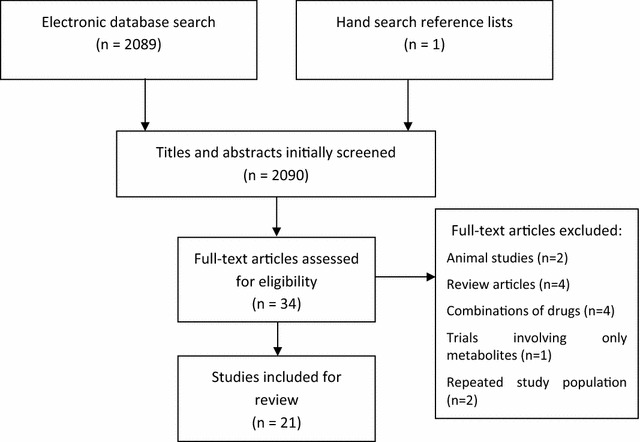
BACKGROUND: Despite an increasingly recognized relationship between depression and smoking, little is known about how smoking influences antidepressant response and treatment outcomes. The aim of this study was to systematically review the evidence of the impact of smoking on new-generation antidepressants with an emphasis on the pharmacokinetic perspective. METHODS: We present a systematic review of clinical trials comparing the serum levels of new-generation antidepressants in smokers and nonsmokers. Data were obtained from MEDLINE/PubMed, Embase, and other sources. Risk of bias was assessed for selection, performance, detection, attrition, and reporting of individual studies. RESULTS: Twenty-one studies met inclusion criteria; seven involved fluvoxamine, two evaluated fluoxetine, sertraline, venlafaxine, duloxetine or mirtazapine, and escitalopram, citalopram, trazodone and bupropion were the subject of a single study. No trials were found involving other common antidepressants such as paroxetine or agomelatine. Serum levels of fluvoxamine, duloxetine, mirtazapine and trazodone were significantly higher in nonsmokers compared with smokers. CONCLUSIONS: There is evidence showing a reduction in the concentration of serum levels of fluvoxamine, duloxetine, mirtazapine and trazodone in smoking patients as compared to nonsmokers. The evidence regarding other commonly used antidepressants is scarce. Nonetheless, smoking status should be considered when choosing an antidepressant treatment, given the risk of pharmacokinetic interactions.
Overview
The claims and statistics of this paper haven’t been checked yet.
Free: it reads the open-access text and checks the first 5 claims that cite a source we can check. Create a free account to check every claim.
Integrity signals
Registry
Cites
Statistics
Figures
Verification
Claims the paper makes
The claims and statistics of this paper haven’t been checked yet.
Free: it reads the open-access text and checks the first 5 claims that cite a source we can check. Create a free account to check every claim.
Claims other papers make about this one
Each is checked against this paper’s own text: does it say what the citing paper says it does?
The cited source says what the claim attributes to it.
In the citing paper
“Tobacco smoking [43], alcohol consumption [44], fasting [55], and concomitant drug use [56, 57] may influence antidepressant metabolization and thus the bioavailability of the drugs”
From The relationship between dose and serotonin transporter occupancy of antidepressants—a systematic review (2022) · cites this paper as [43]
Self-check
Percentages, sums and reported differences re-computed from the paper’s own numbers.
The self-check needs the paper’s full text.
Citations
Cites
Preferred Reporting Items for Systematic Reviews and Meta-Analyses: the PRISMA statement
Moher, D., Liberati, A., Tetzlaff, J., Altman, D. G., & for the PRISMA Group (2009) · BMJ · doi:10.1136/bmj.b2535 · Cited by 83,823
Preferred reporting items for systematic reviews and meta-analyses: the PRISMA Statement.
(2009) · PubMed Central · Cited by 44,859
Cochrane Handbook for Systematic Reviews of Interventions Version 5.0.1. The Cochrane Collaboration
Higgins, J. P. T., Green, S. R., & Higgins, J. P. T. (2008) · Cited by 7,261
Cross-national epidemiology of DSM-IV major depressive episode
Bromet, E., Andrade, L. H., Hwang, I., Sampson, N. A., Alonso, J., de Girolamo, G., de Graaf, R., Demyttenaere, K., Hu, C., Iwata, N., et al. (2011) · BMC Medicine · doi:10.1186/1741-7015-9-90 · Cited by 2,221 · cited 1×
“It has been projected to become the leading cause of disability and the second leading contributor to the global burden of disease and overall mortality by the year 2020; according to the recent epidemiologic data, about 10% of world population suffers with depression [3].”
BackgroundAGNP Consensus Guidelines for Therapeutic Drug Monitoring in Psychiatry: Update 2011
Hiemke, C., Baumann, P., Bergemann, N., Conca, A., Dietmaier, O., Egberts, K., Fric, M., Gerlach, M., Greiner, C., Gründer, G., et al. (2011) · Pharmacopsychiatry · doi:10.1055/s-0031-1286287 · Cited by 868
Drug Interactions with Tobacco Smoking: An Update
Zevin, S., & Benowitz, N. L. (1999) · Clinical Pharmacokinetics · doi:10.2165/00003088-199936060-00004 · Cited by 692
Cigarette smoking in schizophrenia: relationship to psychopathology and medication side effects
(1992) · American Journal of Psychiatry · doi:10.1176/ajp.149.9.1189 · Cited by 579 · cited 1×
“Background One-quarter of the general population, 40–50% of people with depression and 70–80% of those with schizophrenia smoke [1, 2].”
BackgroundPharmacogenetics, Pharmacogenomics, and Individualized Medicine
Ma, Q., & Lu, A. Y. H. (2011) · Pharmacological Reviews · doi:10.1124/pr.110.003533 · Cited by 464 · cited 1×
“Different antidepressants are metabolized by different subtypes of CYP and the amount of each CYP varies from person to person [6].”
BackgroundWhy do patients with schizophrenia smoke?
Winterer, G. (2010) · Current Opinion in Psychiatry · doi:10.1097/yco.0b013e3283366643 · Cited by 240 · cited 1×
“Background One-quarter of the general population, 40–50% of people with depression and 70–80% of those with schizophrenia smoke [1, 2].”
BackgroundMuth, E. A., Moyer, J. A., Haskins, J. T., Andree, T. H., & Husbands, G. E. M. (1991) · Drug Development Research · doi:10.1002/ddr.430230210 · Cited by 212 · cited 1×
“However, the pharmacodynamical effects of this are not completely understood, though many studies point to considerably weaker inhibition of serotonin and noradrenaline reuptake pumps when compared with venlafaxine itself [34].”
Background
Research works printed but not linked: 1
- Bastos H Polido F Saraiva C Saraiva C Cerejeira J História da Psiquiatria Psiquiatria fundamental 2014 Coimbra Lidel Edições Técnicas
Cited by
Marx, W., Manger, S. H., Blencowe, M., Murray, G., Ho, F. Y.-Y., Lawn, S., Blumenthal, J. A., Schuch, F., Stubbs, B., Ruusunen, A., et al. (2023) · The World Journal of Biological Psychiatry · doi:10.1080/15622975.2022.2112074 · Cited by 179
“pine, olanzapine, fluvoxamine, duloxetine, mirtazapine, and trazodone) (Oliveira et al. 2017).”
BackgroundDodd, S., Bauer, M., Carvalho, A. F., Eyre, H., Fava, M., Kasper, S., Kennedy, S. H., Khoo, J.-P., Lopez Jaramillo, C., Malhi, G. S., et al. (2021) · The World Journal of Biological Psychiatry · doi:10.1080/15622975.2020.1851052 · Cited by 88
“etine, mirtazapine and trazadone due to enzyme induction (Oliveira et al. 2017).”
BackgroundSørensen, A., Ruhé, H. G., & Munkholm, K. (2022) · Molecular Psychiatry · doi:10.1038/s41380-021-01285-w · Cited by 65
Causes of drug discontinuation in patients with major depressive disorder in China
Zhu, Y., Wu, Z., Sie, O., Cai, Y., Huang, J., Liu, H., Yao, Y., Niu, Z., Wu, X., Shi, Y., et al. (2019) · Progress in Neuro-Psychopharmacology and Biological Psychiatry · doi:10.1016/j.pnpbp.2019.109755 · Cited by 64
Couto, R. A. S., Gonçalves, L. M., Carvalho, F. D., Rodrigues, J. A., Rodrigues, C. M. P., & Quinaz, M. B. (2018) · Critical Reviews in Analytical Chemistry · doi:10.1080/10408347.2018.1439724 · Cited by 57
Suhas, S., Kumar, V., Dinakaran, D., Sharma, P., Rao, N. P., Varambally, S. S., Venkatasubramanian, G., Murthy, P., & Gangadhar, B. N. (2020) · Schizophrenia Research · doi:10.1016/j.schres.2020.05.057 · Cited by 46
Tega, Y., Yamazaki, Y., Akanuma, S.-I., Kubo, Y., & Hosoya, K. (2018) · Biological and Pharmaceutical Bulletin · doi:10.1248/bpb.b18-00134 · Cited by 40
Maideen, N. M. P. (2019) · World Journal of Pharmacology · doi:10.5497/wjp.v8.i2.14 · Cited by 43
Scherf‐Clavel, M., Samanski, L., Hommers, L. G., Deckert, J., Menke, A., & Unterecker, S. (2019) · International Clinical Psychopharmacology · doi:10.1097/yic.0000000000000250 · Cited by 41
Zakaraya, Z. Z., Assab, M. A., Tamimi, L., Karameh, N., Hailat, M. M., Al-Omari, L., Dayyih, W. A., Alasasfeh, O., Awad, M., & Awad, R. S. (2024) · Pharmaceuticals · doi:10.3390/ph17030280 · Cited by 42
“It is essential to acknowledge that the S -enantiomer demonstrates a greater potency, by approximately 1.5 times, in inhibiting serotonin reuptake than the R -enantiomer [7].”
InfluentialLi, D., Pain, O., Fabbri, C., Wong, W. L. E., Lo, C. W. H., Ripke, S., Cattaneo, A., Souery, D., Dernovšek, M. Z., Henigsberg, N., et al. (2024) · Translational Psychiatry · doi:10.1038/s41398-024-02981-1 · Cited by 46
“Differences in response rate may be due to many factors including drug-drug interactions [7], depression subtypes [8, 9], comorbidity [10], smoking [11], and genetic variation, particularly in drug metabolism genes.”
BackgroundKamusheva, M., Игнатова, Д., Gołda, A., & Skowron, A. (2020) · Integrated Pharmacy Research and Practice · doi:10.2147/iprp.s239672 · Cited by 36
Organohalogens: A persisting burden in Slovenia?
Runkel, A. A., Križanec, B., Lipičar, E., Baskar, M., Hrženjak, V. V., Kodba, Z. C., Kononenko, L., Kanduč, T., Mazej, D., Tratnik, J. S., et al. (2021) · Environmental Research · doi:10.1016/j.envres.2021.111224 · Cited by 31
Escitalopram and Sertraline Population Pharmacokinetic Analysis in Pediatric Patients
Poweleit, E. A., Taylor, Z. L., Mizuno, T., Vaughn, S. E., Desta, Z., Strawn, J. R., & Ramsey, L. B. (2023) · Clinical Pharmacokinetics · doi:10.1007/s40262-023-01294-8 · Cited by 33
“Information related to nicotine use and smoking were not extracted because previous studies have demonstrated no significant effect on escitalopram or sertraline PK [36, 37].”
Smoking Is Associated With Lower Dose–Corrected Serum Concentrations of Escitalopram
Scherf‐Clavel, M., Deckert, J., Menke, A., & Unterecker, S. (2019) · Journal of Clinical Psychopharmacology · doi:10.1097/jcp.0000000000001080 · Cited by 25
“Copyright © 2019 Wolters Kluwer 40% to 50% are smokers.(3) Therefore, knowledge of pharmacokinetic interactions of tobacco smoke with antidepressants is important to guide pharmacotherapy.”
BackgroundMirtazapine attenuates the expression of nicotine-induced locomotor sensitization in rats
Barbosa-Méndez, S., Jurado, N., Matus-Ortega, M., Martiñón, S., Heinze, G., & Salazar‐Juárez, A. (2017) · European Journal of Pharmacology · doi:10.1016/j.ejphar.2017.06.028 · Cited by 25
“4) Some antidepressants may alter neurotransmission systems involved specifically in nicotine addiction (Oliveira et al., 2017; Hughes et al., 2014; Cahill et al., 2013).”
BackgroundGoing to Altitude with a Preexisting Psychiatric Condition
Hüfner, K., Sperner‐Unterweger, B., & Brugger, H. (2019) · High Altitude Medicine & Biology · doi:10.1089/ham.2019.0020 · Cited by 24
CYP1A2 and tobacco interaction: a major pharmacokinetic challenge during smoking cessation
Barrangou-Poueys-Darlas, M., Guerlais, M., Laforgue, E., Bellouard, R., Istvan, M., Chauvin, P., Guillet, J.-Y., Jolliet, P., Grégoire, M., & Victorri‐Vigneau, C. (2020) · Drug Metabolism Reviews · doi:10.1080/03602532.2020.1859528 · Cited by 26
“Regarding tobacco consumption, a recent systematic review is available on the impact of tobacco on antidepressants (Oliveira et al. 2017).”
BackgroundCalabrò, M., Fabbri, C., Kasper, S., Zohar, J., Souery, D., Montgomery, S., Albani, D., Forloni, G., Ferentinos, P. P., Rujescu, D., et al. (2022) · European Neuropsychopharmacology · doi:10.1016/j.euroneuro.2022.01.008 · Cited by 20
Rothschild, A. J., Parikh, S. V., Hain, D., Law, R., Thase, M. E., Dunlop, B. W., DeBattista, C., Conway, C. R., Forester, B. P., Shelton, R. C., et al. (2021) · Psychiatry Research · doi:10.1016/j.psychres.2020.113649 · Cited by 20
Socioeconomic Disparities in Smoking Among U.S. Adults With Depression, 2005–2014
Weinberger, A. H., Bandiera, F. C., Leventhal, A. M., Dierker, L., Gbedemah, M., Tidey, J. W., & Goodwin, R. D. (2018) · American Journal of Preventive Medicine · doi:10.1016/j.amepre.2018.02.008 · Cited by 21
I smoke to cope with pain: patients’ perspectives on the link between cigarette smoking and pain
Lee, M. L., Snow, J. L., Quon, C. A., Selander, K., DeRycke, E. C., Lawless, M., Driscoll, M., Ditre, J. W., Mattocks, K. M., Becker, W. C., et al. (2021) · Wiener klinische Wochenschrift · doi:10.1007/s00508-021-01931-x · Cited by 19
Mirtazapine attenuates nicotine-seeking behavior in rats
Barbosa-Méndez, S., & Salazar‐Juárez, A. (2018) · Journal of Psychopharmacology · doi:10.1177/0269881118764991 · Cited by 15
Cigarette smoking affects the differences between male and female phenotypes.
Campesi, I., Milella, L., Palermo, M., Sotgiu, G., Reggiardo, G., & Franconi, F. (2020) · PubMed Central · Cited by 16
Greil, W., de Bardeci, M., Seifert, J., Bernegger, X., Cattapan, K., Stassen, H. H., Wagner, A. L., Sieberer, M. G., Grohmann, R., & Toto, S. (2021) · Human Psychopharmacology Clinical and Experimental · doi:10.1002/hup.2809 · Cited by 11
Shnayder, N. A., Kidyaeva, A. V., Vaiman, E. E., Asadullin, A. R., Петрова, М. М., Kaskaeva, D. S., Matyushin, G. V., Evsyukov, A. A., Galko, E. V., Garganeeva, N. P., et al. (2023) · Personalized Psychiatry and Neurology · doi:10.52667/2712-9179-2023-3-2-72-119 · Cited by 12
“Systematic review studies found evidence of reduced blood concentrations of flu-voxamine, duloxetine, mirtazapine and trazodone among smokers compared with non-smokers [152].”
BackgroundTemperament traits and remission of depression: A naturalistic six-month longitudinal study
Gurpegui, D., Ortuño, F., & Gurpegui, M. (2018) · Journal of Affective Disorders · doi:10.1016/j.jad.2018.09.041 · Cited by 9
Nadalin, S., Jakovac, H., Peitl, V., Karlović, D., & Buretić‐Tomljanović, A. (2021) · Molecular Medicine Reports · doi:10.3892/mmr.2021.12250 · Cited by 8
Tsai, J., Szymkowiak, D., & Iheanacho, T. (2021) · Human Psychopharmacology Clinical and Experimental · doi:10.1002/hup.2829 · Cited by 10
Li, R., Bi, B., Dong, Z., Chen, S., Yun, Y., Hasenqimuge, Hasenqimuge, Chen, S., & Tan, Y. (2025) · BMC Psychiatry · doi:10.1186/s12888-025-07033-6 · Cited by 9
“This retrospective study has several limitations, including the lack of data on variables such as body mass index and smoking history, which have been shown to affect sertraline pharmacokinetics and pharmacodynamics [17, 50].”
Liu, S., Xiao, T., Huang, S., Li, X., Kong, W., Yang, Y., Zhang, Z. M., Ni, X., Lu, H., Zhang, M., et al. (2022) · Frontiers in Pharmacology · doi:10.3389/fphar.2022.964758 · Cited by 9
“, 2015), smoking (Oliveira et al., 2017; Scherf-Clavel et al., 2019), CYP2C19 phenotype (Huang et al.”
Adamo, D., Canfora, F., Pecoraro, G., Leuci, S., Coppola, N., Marenzi, G., Ottaviani, G., Rupel, K., Pellegrini, L., Aria, M., et al. (2025) · Current Neuropharmacology · doi:10.2174/1570159x22999240729103717 · Cited by 10
“Similarly, smoking affects pain perception and treatment in complex ways [78].”
CYP1A2 genotype-dependent effects of smoking on mirtazapine serum concentrations
Scherf‐Clavel, M., Weber, H., Weiß, C., Klüpfel, C., Stonawski, S., Hommers, L. G., Unterecker, S., Domschke, K., Menke, A., Kittel‐Schneider, S., et al. (2025) · Journal of Psychopharmacology · doi:10.1177/02698811251337387 · Cited by 6
“This is in accordance with previous studies showing an association of CD with smoking status of the patients (Lind et al., 2009; Oliveira et al., 2017; Scherf-Clavel et al., 2019).”
Zaabi, M. S. R. A., Sridhar, S. B., Tadross, T. M., & Shariff, A. (2021) · Biomedical & Pharmacology Journal · doi:10.13005/bpj/2223 · Cited by 6
Lai, R., Su, M., Lin, K., Chen, C., Pan, Y., Hsiao, P., Chen, P., Huang, Y., Wu, C., & Wang, S. (2023) · Journal of Affective Disorders · doi:10.1016/j.jad.2023.10.141 · Cited by 5
Zhong, L., Hu, L., Li, Y., Wang, T., Chen, S., Gao, Y., Yuan, Y., & Shao, H. (2024) · Journal of Psychopharmacology · doi:10.1177/02698811241278779 · Cited by 3
“Meanwhile, alcohol and tobacco consumption also can affect TDM by the higher metabolic ratio of CYP2D6 phenotypes (Oliveira et al., 2017; Vincent-Viry et al., 2000).”
Tobacco Use, the Missing Cause of Drug Interaction: A Narrative Literature Review
Rayej, E., Jafari, K., Pakravan, D., Asl, A. S., Fathalipour, M., & Alizade, H. (2022) · Tobacco and Health · doi:10.34172/thj.2022.14 · Cited by 3
“Results of previous experiments on sertraline, escitalopram, citalopram, and bupropion showed no effect of smoking on their pharmacokinetics (16).”
BackgroundResultInfluentialCernat, A., Pahwa, M., Hadid, D., Shen, K., Abelson, J., Samaan, Z., Ramdyal, A., & Vanstone, M. G. (2024) · PLOS mental health. · doi:10.1371/journal.pmen.0000128 · Cited by 6
Lion, M., Ibrahim, E. C., Caccomo-Garcia, E., Bourret, J., Cinquanta, G., Khalfallah, O., Glaichenhaus, N., Davidovic, L., Courtet, P., Turecki, G., et al. (2025) · European Neuropsychopharmacology · doi:10.1016/j.euroneuro.2025.01.001 · Cited by 2
Genetic and Phenotypic Associations With Sustained Antidepressant Use in Major Depressive Disorder
Walker, A., Mitchell, B. L., Lin, T., Crouse, J. J., Albiñana, C., Yap, C. X., Lynall, M.-E., Lind, P. A., Cipriani, A., Byrne, E. M., et al. (2026) · JAMA Psychiatry · doi:10.1001/jamapsychiatry.2025.4372 · Cited by 3
Review of Bath Salts on Illicit Drug Market
Protti, M. (2019) · Elsevier eBooks · doi:10.1016/b978-0-12-815607-0.00021-6 · Cited by 2
Englisch, S., Jung, H., Lewien, A., Becker, A., Nowak, U., Braun, H., Eisenacher, S., Thiem, J., Meyer‐Lindenberg, A., & Zink, M. (2018) · Pharmacopsychiatry · doi:10.1055/a-0606-5240 · Cited by 2
“Smoking is highly prevalent in psychiatric populations [1] and has been shown to influence treatment response to several antidepressant agents (summarized in [2]).”
BackgroundTherapie tumorassoziierter Schmerzen – von medikamentös bis invasiv
Hofbauer, H., Wirz, S., Steffen, P. R. P., Kieselbach, K., & Keßler, J. (2024) · Die Anaesthesiologie · doi:10.1007/s00101-024-01488-0 · Cited by 1
Riaz, S., Khuda, F., Khan, A., Jan, A., Ibenmoussa, S., Alotaibi, G., Ali, S. S., & Albabtain, B. A. (2026) · Annals of General Psychiatry · doi:10.1186/s12991-026-00644-7 · Cited by 1
“For example, income level was linked to dry mouth ( p = 0.0235), reflecting disparities in healthcare access [60, 61], whereas tobacco use was associated with dry mouth ( p = 0.0058) and insomnia ( p = 0.0055), likely due to its pharmacological effects [62].”
InfluentialSmoking blunts sertraline response in depression: A prospective observational cohort study
Mohan, P., Chatterjee, K., Sinha, S., Saini, R. K., Sharma, A. K., & Waikole, S. (2022) · Medical Journal Armed Forces India · doi:10.1016/j.mjafi.2021.10.015 · Cited by 1
Utility of duloxetine dose-related reference ranges calculated by AGNP consensus guidelines 2017
Hefner, G., Hahn, M., Buenger, M., & Roll, S. (2018) · Archives of Psychiatry and Behavioral Sciences · doi:10.22259/2638-5201.0101002 · Cited by 1
Carroll, A. J., Huffman, M. D., Wileyto, E. P., Khan, S. S., Fox, E. N., Smith, J. D., Bauer, A., Leone, F. T., Schnoll, R. A., & Hitsman, B. L. (2023) · Journal of Affective Disorders · doi:10.1016/j.jad.2023.04.089 · Cited by 3
Physiological Measurements for Prescribing Psychotropic Medications
Limandri, B. J. (2019) · Journal of Psychosocial Nursing and Mental Health Services · doi:10.3928/02793695-20190713-01
Renin-Angiotensin System Genes and Nicotine Dependence
Nadalin, S., & Jakovac, H. (2019) · Elsevier eBooks · doi:10.1016/b978-0-12-813035-3.00042-3
Husni, M., Burhan, M., & Mazin, M. (2021) · European Journal of Clinical Medicine · doi:10.24018/clinicmed.2021.2.3.102
“For example, smoking can interfere with the medications taken for schizophrenia and depression, therefore the doses of some psychotropic medications may need to be decreased following cessation [12].”
BackgroundInduction of Cytochrome P450 Systems
Coleman, M. D. (2020) · Wiley eBooks · doi:10.1002/9781119658016.ch4
Factors Affecting Plasma Concentrations
Curry, S. H., & Whelpton, R. (2022) · Wiley eBooks · doi:10.1002/9781119589181.ch10
Campesi, I., & Franconi, F. (2023) · Principles of Gender-Specific Medicine · doi:10.1016/b978-0-323-88534-8.00037-7
Smoking may increase the usage of antidepressant: evidence from genomic perspective analysis
Qu, Y., Du, Z., Shen, Y., Zhou, Q., Zhou, Z., Jiang, Y., & Zhu, H. (2024) · European Archives of Psychiatry and Clinical Neuroscience · doi:10.1007/s00406-024-01802-2
Thanh, N. N. T. N. N., Hậu, P. H. D., Hồng, T. T. T. H. T. T. T., & Hương, N. T. T. H. N. T. T. (2024) · TẠP CHÍ KHOA HỌC TRƯỜNG ĐẠI HỌC QUỐC TẾ HỒNG BÀNG · doi:10.59294/hiujs.27.2024.575
Nadalin, S., Vučić, D., Vilibić, M., Peitl, V., Maršić, L., Dunđer, I., Lukenda, K. C., & Karlović, D. (2024) · Medicina Fluminensis · doi:10.21860/medflum2024_319215
“Serotonin antagonist and reuptake inhibitor ; SARI) – trazodona 94, 95 .”
Tang, W., & Li, R. (2025) · Journal of Orthopaedic Surgery and Research · doi:10.1186/s13018-025-06014-5
“Moreover, smoking alters coagulation-fibrinolysis balance by elevating fibrinogen levels, enhancing platelet aggregation via nicotinic acetylcholine receptors, and suppressing fibrinolysis through increased plasminogen activator inhibitor-1 [42].”
Radoš, I., Vuksan-Ćusa, Z., Milić, J., Šagud, M., Vrančić, A. L., Jakšić, N., Vuksan‐Ćusa, B., & Pivac, N. (2026) · Biomolecules · doi:10.3390/biom16010070
“In addition, smoking may reduce serum levels of several antidepressants, such as fluvoxamine, duloxetine, mirtazapine, and trazodone [31], which may compromise their efficacy.”
Tumorassoziierte Schmerzen effektiv behandeln – was ist möglich und sinnvoll?
Hofbauer, H., Wirz, S., Steffen, P. R. P., Kieselbach, K., & Keßler, J. (2026) · InFo Hämatologie + Onkologie · doi:10.1007/s15004-025-1236-y
“Die Überwachung potenzieller Interaktio-nen verbessert generell die Therapiesicherheit, wenngleich auch der Lebensstil Einfluss haben kann (z. B. Beschleunigung des Duloxetinmetabolismus durch Nikotinabusus [25]).”
Physical inactivity, a risk factor for mental disorders in Spanish youth: a cross-sectional study
Pastor-Cisneros, R., Pereira-Payo, D., Denche-Zamorano, Á. M., Mendoza-Muñoz, M., Calzada-Rodríguez, J. I., & Franco-García, J. M. (2026) · Journal of Public Health · doi:10.1007/s10389-026-02785-1
Metadata
- Authors
- Oliveira, P., Ribeiro, J., Donato, H., & Madeira, N.
- Affiliations
- Unidade Local de Saúde de Coimbra (PT)
- Corresponding author
- Madeira, Nuno
- Venue
- Annals of General Psychiatry
- Published
- 2017-03-06
- Volume
- 16
- Issue
- 1
- Pages
- 17-17
- ISSN
- 1744-859X (ISSN-L)
- PMC
- PMC5340025
- OpenAlex
- W2593668513
- Cited by
- 60
- References
- 41
- Citations by year
- 2026: 5 · 2025: 5 · 2024: 8 · 2023: 5 · 2022: 6 · 2021: 8 · 2020: 7 · 2019: 8 · 2018: 7 · 2017: 1
- FWCI
- 1.09
- Type
- journal article
- Language
- en
- Open access
- gold
- doi.org
- Licence
- cc-by
- Locations
- Annals of General Psychiatry (publishedVersion, cc-by)
- PubMed Central (publishedVersion, cc-by)
- PubMed (publishedVersion)
- Portuguese National Funding Agency for Science, Research and Technology (RCAAP Project by FCT) (submittedVersion, other-oa)
- Topics
- Life Sciences › Pharmacology, Toxicology and Pharmaceutics › Pharmacology › Pharmacogenetics and Drug Metabolism
- Health Sciences › Medicine › Public Health, Environmental and Occupational Health › Smoking Behavior and Cessation
- Health Sciences › Medicine › Pharmacology (medical) › Treatment of Major Depression
- Keywords
- smoking, antidepressants, pharmacokinetics, drug interactions, depression, fluvoxamine, duloxetine, mirtazapine, trazodone, fluoxetine, sertraline, venlafaxine, escitalopram, citalopram, bupropion, serum drug concentration
About these checks
Registry, retraction, Cites and statistics results are computed, not judged, with one exception: a printed reference that no index lists is read once by a model before it counts as a citation error. Claims are extracted by a model and kept only when their quote appears verbatim in the text; each cited source is then checked, with a model’s help, for whether it says what the claim relies on. Those verdicts can be wrong — read the claim’s quote and the cited source before relying on one.
Statistics and arithmetic are recomputed, not judged.
Confidence bands are shown only for fields calibrated on our annotated test set. None is calibrated yet, so no band is shown.
What counts as a claim ›How we measure confidence ›How we check this ›
Are you an author, or do you see a problem with this page? Request a review
Data sources
Bibliographic data: Semantic Scholar, OpenAlex, Crossref.
Contains information from the Semantic Scholar Academic Graph Datasets, made available under the ODC Attribution License (ODC-BY 1.0).
Semantic Scholar’s data is described in: Kinney, R., et al. (2023). The Semantic Scholar Open Data Platform. arXiv:2301.10140.
