

Poor sleep quality and associated factors among prisoners of the Diredawa correctional facility in eastern Ethiopia
Open accessThe DOI matches its Crossref record; 45 of the 46 references it cites were found in a registry or an index.
Abstract
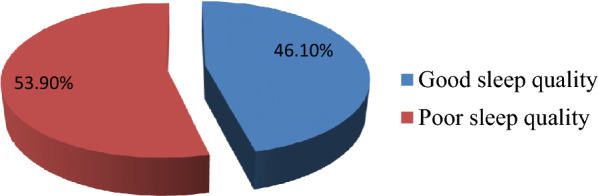
Background: Impaired sleep quality affects judgment, psychomotor skills, memory, decision-making, concentration, and attention. It might also contribute to the development of new physical health problems, as well as exacerbating already existing physical problems. Despite this, there is a scarcity of research done in Africa including Ethiopia that addressed this issue. So this study assessed the quality of sleep and related factors among prisoners of the Diredawa correctional facility, Diredawa, eastern Ethiopia. Methods: A cross-sectional study was done using a simple random sampling technique to recruit 421 participants from May 21 to June 21; 2017. A semi-structured questionnaire, Pittsburgh Sleeps Quality Index (PSFIG), Patient Health Questionnaire-9 (PQ-9), and Sleep Hygiene Index (SHI) were used to assess participants’ socio-demographic data, sleep quality, depression, and sleep hygiene, respectively. The collected data were entered into EPA-data 3.1 and analyzed by using SPAS-20. Descriptive and analytical statistics were used. Bivariate and multivariable logistic regression with odds ratio and 95% CI were employed. The statistical significance was declared at p value < 0.05. Results: A total of 421 out of 423 prisoners were interviewed, resulting in a response rate of 99.5%. The prevalence of poor sleep quality was 227 (53.9%) with 95% CI (49.2, 58.7). Having co-morbidity of depression (adjusted odds ratio; OAR = 3.47, 95% CI 1.38,8.76), lifetime use of cigarette (OAR = 2.16, 95% CI 1.21,5.58), marijuana and hashish (OAR = 5.02, 95% CI 1.63,15.46), current use of coffee (OAR = 2.75, CI 1.37, 7.05), poor sleep hygiene (OAR = 3.19, CI 1.32,7.69), committing assault crime (OAR = 4.12, CI 1.29,10.63) and crime of rape (OAR = 5.57, CI (1.45, 13.89) were the associated factors for poor sleep quality in this study. Conclusion: More than half of the participants (53.9%) have poor sleep quality. Depression, lifetime use of cigarettes, using cannabis and hashish, current use of coffee, poor sleep hygiene, and crime types were the associated factors that should be taken into consideration and evaluated early to minimize poor sleep quality.
Overview
The claims and statistics of this paper haven’t been checked yet.
Free: it reads the open-access text and checks the first 5 claims that cite a source we can check. Create a free account to check every claim.
Integrity signals
Registry
Cites
Statistics
Figures
Verification
Claims the paper makes
The claims and statistics of this paper haven’t been checked yet.
Free: it reads the open-access text and checks the first 5 claims that cite a source we can check. Create a free account to check every claim.
Claims other papers make about this one
Each is checked against this paper’s own text: does it say what the citing paper says it does?
The source backs part of the claim, not all of it — or backs it for a different population, condition or comparison.
In the citing paper
“Poor sleep quality among women with GDM might cause a series of pathophysiological responses, including impaired judgment and psychomotor skills, even aggravating insulin resistance [37, 38].”
From Neglected sleep quality problems in women with gestational diabetes mellitus: a multi-center cross-sectional study (2024) · cites this paper as [38]
Experimental — accuracy not yet measured
Self-check
Percentages, sums and reported differences re-computed from the paper’s own numbers.
The self-check needs the paper’s full text.
Citations
Cites
The Pittsburgh Sleep Quality Index: a new instrument for psychiatric practice and research
Buysse, D. J., Reynolds, C. F., Monk, T. H., Berman, S. R., & Kupfer, D. J. (1989) · Psychiatry Research · doi:10.1016/0165-1781(89)90047-4 · Cited by 35,234 · cited 2×
“Operational definitions Sleep quality: using the Pittsburgh sleep quality index (PSFIG) at cut-off point greater than 5, we screened poor sleep quality, whereas good sleep quality was a score less than or equal to 5 in this scale [39].”
MethodA Brief Measure for Assessing Generalized Anxiety Disorder: The GAD-7
Spitzer, R. L., Kroenke, K., Williams, J. B. W., & Löwe, B. (2006) · Archives of Internal Medicine · doi:10.1001/archinte.166.10.1092 · Cited by 31,765 · cited 1×
“Anxiety: a score of ≥ 8 on the GAD-7 scale was considered as a general anxiety disorder [41].”
BackgroundThe PHQ-9: A New Depression Diagnostic and Severity Measure
Kroenke, K., & Spitzer, R. L. (2002) · Psychiatric Annals · doi:10.3928/0048-5713-20020901-06 · Cited by 5,898 · cited 2×
“The cut-off points of 5, 10, 15, and 20 represent the thresholds for mild, moderate, moderately severe, and severe depression, respectively [40].”
BackgroundMethodCappuccio, F. P., Cooper, D., D'Elia, L., Strazzullo, P., & Miller, M. A. (2011) · European Heart Journal · doi:10.1093/eurheartj/ehr007 · Cited by 2,146
Health effects of energy drinks on children, adolescents, and young adults
Seifert, S. M., Schaechter, J. L., Hershorin, E. R., & Lipshultz, S. E. (2011) · Pediatrics · doi:10.1542/peds.2009-3592 · Cited by 893 · cited 1×
“Caffeine is an adenosine antagonist leading to the release of dopamine and activation of the CNS finally increasing arousal [49, 50].”
BackgroundFranzen, P. L., & Buysse, D. J. (2008) · Dialogues in Clinical Neuroscience · doi:10.31887/dcns.2008.10.4/plfranzen · Cited by 747 · cited 2×
“Moreover, anxiety related to the situation, fear of violence, forced contact with others and being worried [7, 12, 19–23], night-shift work [21], depressive disorders [24, 25], prolongation of detention or long-term offenders [26, 27], substance use [18, 20], committing a serious crime [28], and lack of physical activ…”
BackgroundResultPoor sleep as a potential causal factor in aggression and violence
Kamphuis, J., Meerlo, P., Koolhaas, J. M., & Lancel, M. (2012) · Sleep Medicine · doi:10.1016/j.sleep.2011.12.006 · Cited by 407
The Economic Cost of Sleep Disorders
Hillman, D. R., Murphy, A. S., Antic, R., & Pezzullo, L. (2006) · Sleep · doi:10.1093/sleep/29.3.299 · Cited by 356 · cited 1×
“Partial sleep loss is common in many segments of the population, having enormous effects both on society and individual levels [1, 2].”
BackgroundPaul, S. M. (1981) · Archives of General Psychiatry · doi:10.1001/archpsyc.1981.01780370017001 · Cited by 313 · cited 1×
“The possible justification could be the decrement of serotonin neurotransmitters in depressed prisoners [44, 45] that has an impact on diminished cognitive performance and quality of sleep.”
BackgroundSleep epidemiology--a rapidly growing field
Ferrie, J. E., Kumari, M., Salo, P., Singh-Manoux, A., & Kivimaki, M. (2011) · International Journal of Epidemiology · doi:10.1093/ije/dyr203 · Cited by 291
Psychiatric morbidity among young offenders in England and Wales
Lader, D., Singleton, N., & Meltzer, H. (2003) · International Review of Psychiatry · doi:10.1080/0954026021000046074 · Cited by 208 · cited 3×
“However, the finding of the present study was consistent with a study in England where 52% of participants were reported to have had poor sleep quality [10].”
BackgroundResultDevelopment and Evaluation of the Sleep Treatment and Education Program for Students (STEPS)
Brown, F. C., Buboltz Jr., W. C., & Soper, B. (2006) · Journal of American College Health · doi:10.3200/jach.54.4.231-237 · Cited by 207 · cited 1×
“The elevated risk for poor sleep quality in participants having poor sleep hygiene could be explained by poor knowledge regarding sleep hygiene leading to poor sleep hygiene practice [51, 52] and poor sleep quality.”
BackgroundSleep quality and more common sleep-related problems in medical students
Veldi, M., Aluoja, A., & Vasar, V. (2005) · Sleep Medicine · doi:10.1016/j.sleep.2004.12.003 · Cited by 186 · cited 1×
“A study in Tartu, Estonia, discovered poor sleep quality in 62% of elderly prisoners [9].”
BackgroundBjorness, T., & Greene, R. (2009) · Current Neuropharmacology · doi:10.2174/157015909789152182 · Cited by 172 · cited 2×
“Caffeine is an adenosine antagonist leading to the release of dopamine and activation of the CNS finally increasing arousal [49, 50].”
BackgroundSleep problems and suicidality in the National Comorbidity Survey Replication
Wojnar, M., Ilgen, M. A., Wojnar, J., McCammon, R. J., Valenstein, M., & Brower, K. J. (2009) · Journal of Psychiatric Research · doi:10.1016/j.jpsychires.2008.07.006 · Cited by 169 · cited 1×
“Moreover, prisoners with poor sleep quality have a risk of aggressive and violent behavior [30–32], suicidal behaviors [15, 33, 34], depression [35, 36], and vascular complications [37, 38] in diabetic prisoners.”
BackgroundThe impact of insomnia and sleep disturbances on depression and suicidality.
Cukrowicz, K. C., Otamendi, A., Pinto, J. V., Bernert, R. A., Krakow, B., & Joiner, T. E. (2006) · Dreaming · doi:10.1037/1053-0797.16.1.1 · Cited by 158 · cited 1×
“Moreover, prisoners with poor sleep quality have a risk of aggressive and violent behavior [30–32], suicidal behaviors [15, 33, 34], depression [35, 36], and vascular complications [37, 38] in diabetic prisoners.”
BackgroundPoor sleep quality is associated with a negative cognitive bias and decreased sustained attention
Gobin, C. M., Banks, J. B., Fins, A. I., & Tartar, J. L. (2015) · Journal of Sleep Research · doi:10.1111/jsr.12302 · Cited by 155 · cited 1×
“It has also an impact on cognitive performance, psychosocial functioning, and the perception of stress [22, 29].”
BackgroundPrevalence of insomnia in elderly general practice attenders and the current treatment modalities
Hohagen, F., Käppler, C., Schramm, E., Rink, K., Weyerer, S., Riemann, D., & Berger, M. (1994) · Acta Psychiatrica Scandinavica · doi:10.1111/j.1600-0447.1994.tb01563.x · Cited by 140
Benitez, A. M., & Gunstad, J. (2012) · The Clinical Neuropsychologist · doi:10.1080/13854046.2012.658439 · Cited by 131 · cited 1×
“It has also an impact on cognitive performance, psychosocial functioning, and the perception of stress [22, 29].”
BackgroundPoor sleep predicts symptoms of depression and disability retirement due to depression
Paunio, T., Korhonen, T., Hublin, C., Partinen, M., Koskenvuo, K., Koskenvuo, M., & Kaprio, J. (2015) · Journal of Affective Disorders · doi:10.1016/j.jad.2014.10.002 · Cited by 129 · cited 1×
“Moreover, prisoners with poor sleep quality have a risk of aggressive and violent behavior [30–32], suicidal behaviors [15, 33, 34], depression [35, 36], and vascular complications [37, 38] in diabetic prisoners.”
BackgroundSleep disruption and aggression: Implications for violence and its prevention.
Križan, Z., & Herlache, A. D. (2016) · Psychology of Violence · doi:10.1037/vio0000018 · Cited by 126
Berhanu, H., Mossie, A., Tadesse, S., & Geleta, D. (2018) · Sleep Disorders · doi:10.1155/2018/8342328 · Cited by 103 · cited 13×
“Author details 1 Department of Psychiatry, College of Medicine and Health Sciences, Diredawa University, Diredawa, Ethiopia.”
ResultInfluentialLemma, S., Patel, S. V., Tarekegn, Y. A., Tadesse, M. G., Berhane, Y., Gelaye, B., & Williams, M. A. (2012) · Sleep Disorders · doi:10.1155/2012/583510 · Cited by 101
Psychiatric morbidity among women prisoners in England and Wales
O'Brien, M., Mortimer, L., Singleton, N., & Meltzer, H. (2003) · International Review of Psychiatry · doi:10.1080/0954026021000046100 · Cited by 91 · cited 2×
“Moreover, the present finding was lower than the reported prevalence of poor sleep quality in a study from the US [10, 11], UK [7, 43], Italy [15] and South Africa [17].”
ResultReduced platelet serotonin in depression
Sang, K. L. Q., Plaisant, O., Leboyer, M., Gay, C., Kamal, L. A., Devynck, M., & Meyer, P. (1984) · Psychiatry Research · doi:10.1016/0165-1781(84)90056-8 · Cited by 91 · cited 1×
“The possible justification could be the decrement of serotonin neurotransmitters in depressed prisoners [44, 45] that has an impact on diminished cognitive performance and quality of sleep.”
BackgroundPrison life: Television, sports, work, stress and insomnia in a remand prison
Elger, B. S. (2009) · International Journal of Law and Psychiatry · doi:10.1016/j.ijlp.2009.01.001 · Cited by 89 · cited 2×
“Although no association was obtained in our study, prolongation of detention was associated with sleep disturbance in a study conducted in Geneva, Switzerland [26], and Canada [27].”
BackgroundBan, D. J., & Lee, T. J. (2001) · Journal of Korean Medical Science · doi:10.3346/jkms.2001.16.4.475 · Cited by 87 · cited 2×
“Partial sleep loss is common in many segments of the population, having enormous effects both on society and individual levels [1, 2].”
BackgroundPsychometric evaluation of the sleep hygiene index: a sample of patients with chronic pain
Cho, S., Kim, G.-S., & Lee, J.-H. (2013) · Health and Quality of Life Outcomes · doi:10.1186/1477-7525-11-213 · Cited by 69 · cited 2×
“Poor sleep hygiene: a score above the mean on sleep hygiene index scale was categorized as poor sleep hygiene; the mean score in this study was 14 [42].”
BackgroundFranzen, P. L., Buysse, D. J., Rabinovitz, M., Pollock, B. G., & Lotrich, F. E. (2010) · Psychiatry Research · doi:10.1016/j.psychres.2009.02.011 · Cited by 62 · cited 1×
“Moreover, prisoners with poor sleep quality have a risk of aggressive and violent behavior [30–32], suicidal behaviors [15, 33, 34], depression [35, 36], and vascular complications [37, 38] in diabetic prisoners.”
BackgroundInsomnia and suicidal behaviour in prisoners
Carli, V., Roy, A., Bevilacqua, L., Maggi, S., Cesaro, C., & Sarchiapone, M. (2011) · Psychiatry Research · doi:10.1016/j.psychres.2009.10.001 · Cited by 60 · cited 3×
“Moreover, prisoners with poor sleep quality have a risk of aggressive and violent behavior [30–32], suicidal behaviors [15, 33, 34], depression [35, 36], and vascular complications [37, 38] in diabetic prisoners.”
BackgroundResultInfluentialDewa, L. H., Hassan, L., Shaw, J. J., & Senior, J. (2017) · Sleep Medicine · doi:10.1016/j.sleep.2016.12.018 · Cited by 60
Dewa, L. H., Kyle, S. D., Hassan, L., Shaw, J. J., & Senior, J. (2014) · Sleep Medicine Reviews · doi:10.1016/j.smrv.2014.12.002 · Cited by 57
Sleep and its association with aggression among prisoners: Quantity or quality?
Barker, L., Ireland, J. L., Chu, S., & Ireland, C. A. (2016) · International Journal of Law and Psychiatry · doi:10.1016/j.ijlp.2016.02.014 · Cited by 56
Prevalence, Types and Possible Causes of Insomnia in a Swiss Remand Prison
Elger, B. S. (2004) · European Journal of Epidemiology · doi:10.1023/b:ejep.0000036805.58237.e3 · Cited by 53 · cited 2×
“[13] in which 44% of prisoners had poor quality sleep.”
BackgroundHealth care help seeking behaviour among prisoners in Norway
Nesset, M. B., Rustad, Å.-B., Kjelsberg, E., Almvik, R., & Bjørngaard, J. H. (2011) · BMC Health Services Research · doi:10.1186/1472-6963-11-301 · Cited by 38 · cited 3×
“2% in Norway [16], 73% in South Africa [17] and 37.”
BackgroundInfluentialAssociation of diabetic vascular complications with poor sleep complaints
Meng, L., Liu, Y., Geng, R., Tang, Y., & Li, D. (2016) · Diabetology & Metabolic Syndrome · doi:10.1186/s13098-016-0195-8 · Cited by 38 · cited 1×
“Moreover, prisoners with poor sleep quality have a risk of aggressive and violent behavior [30–32], suicidal behaviors [15, 33, 34], depression [35, 36], and vascular complications [37, 38] in diabetic prisoners.”
BackgroundRaman, R., Gupta, A., Venkatesh, K., Kulothungan, V., & Sharma, T. (2010) · Acta Diabetologica · doi:10.1007/s00592-010-0240-2 · Cited by 34 · cited 1×
“Moreover, prisoners with poor sleep quality have a risk of aggressive and violent behavior [30–32], suicidal behaviors [15, 33, 34], depression [35, 36], and vascular complications [37, 38] in diabetic prisoners.”
BackgroundSleep Quality and Risk for Sleep Apnea in Incarcerated Women
Harner, H. M., & Budescu, M. (2014) · Nursing Research · doi:10.1097/nnr.0000000000000031 · Cited by 33 · cited 1×
“Poor sleep quality in prisoners aggravates an already existing medical problem, leads to the rise of new health problems, and weakens a detainee’s ability to fruitfully contribute [23].”
BackgroundWho requests psychological services upon admission to prison?
Diamond, P. M., Magaletta, P. R., Harzke, A. J., & Baxter, J. (2008) · Psychological Services · doi:10.1037/1541-1559.5.2.97 · Cited by 29 · cited 1×
“Moreover, the present finding was lower than the reported prevalence of poor sleep quality in a study from the US [10, 11], UK [7, 43], Italy [15] and South Africa [17].”
ResultElger, B. S. (2003) · Medicine Science and the Law · doi:10.1258/rsmmsl.43.4.334 · Cited by 26
Prisoners' insomnia: to treat or not to treat? Medical decision-making in places of detention
Elger, B. S. (2008) · Medicine Science and the Law · doi:10.1258/rsmmsl.48.4.307 · Cited by 16 · cited 1×
“A study of prisoners in Switzerland reported that prisoners with a low level of education, who were unemployed, separated, or divorced had higher rates of poor sleep quality [19, 20].”
BackgroundA good conscience is the best pillow? Sleep disorders in prison
Ihalainen, O. (1989) · Nordic Journal of Psychiatry · doi:10.3109/08039488909098653 · Cited by 8 · cited 3×
“The feelings of guilt may trouble their minds and disturb their sleep quality [28].”
Backgroundvan Heerden, J. (1996) · Open University of Cape Town (University of Cape Town) · Cited by 6
Sleep efficiency and sleep quality among male inmates in Nigeria
Fakorede, O. O., Onifade, P. O., & Majekodunmi, O. E. (2015) · Sleep Medicine · doi:10.1016/j.sleep.2015.02.146 · Cited by 5 · cited 9×
“Fakorede O, Onifade P, Majekodunmi O. Sleep efficiency and sleep quality among male inmates in Nigeria.”
BackgroundMethodResultInfluentialManagement of sleep complaints in correctional settings
Elger, B. S. (2015) · Oxford University Press eBooks · doi:10.1093/med/9780199360574.003.0016 · Cited by 1 · cited 4×
“This finding is supported by a study in German prison [20] and a study among the general population in Ethiopia [46].”
BackgroundResultInfluential
Research works printed but not linked: 5
- Widmar R Sleep to survive: how to manage sleep deprivation Fire Eng. 2003 156 6 45 54
- Datta PV Vijaya M Krishna IV Bai BS Sharon MT Ramam S Prevalence of depression and assessment of its severity among prisoners of central prison, Rajahmundry, India Indo Am J Pharm Res 2015 5 9 2893 2898
- Datta PV Vijaya M Krishna I Bai BS Sharon M Ramam S Prevalence of depression and assessment of its severity among prisoners of central prison, Rajahmundry, India Indo Am J Pharma Res. 2015 5 9 2893 2898
- Conroy D Arnedt JT Brower KJ Insomnia in patients with addictions: a safer way to break the cycle Curr Psychiatry. 2008 7 5 97
- O’Quinn S Inadequate sleep hygiene practices: level of community awareness Can J Res Ther. 2003 9 21 29
Cited by
Prevalence of insomnia and poor sleep quality in the prison population: A systematic review
Sheppard, N., & Hogan, L. (2022) · Journal of Sleep Research · doi:10.1111/jsr.13677 · Cited by 43
“There was further inconsistency in the use of PSQI score thresholds with Dewa et al. (2017a), Getachew et al. (2020), and Harner and Budescu (2014) using the suggested PSQI > 5 for distinguishing poor sleep.”
BackgroundMethodResultInfluentialAyanaw, T., Temesgen, M., Azagew, A. W., & Ferede, Y. M. (2022) · PLoS ONE · doi:10.1371/journal.pone.0271072 · Cited by 31
Sleep health inequities in vulnerable populations: Beyond sleep deserts
Al-Khalil, Z., Attarian, H. P., Dunietz, G. L., Gavidia, R., Knutson, K. L., & Johnson, D. A. (2024) · Sleep Medicine X · doi:10.1016/j.sleepx.2024.100110 · Cited by 29
“…and having committed violent crimes put incarcerated individuals at higher odds of poor sleep quality [cigarette use (OAR = 2.16, 95% CI 1.21,5.58), marijuana and hashish use (OAR = 5.02, 95% CI 1.63,15.46), violent crime (OAR = 4.12, CI 1.29,10.63), rape (OAR = 5.57, CI (1.45, 13.89)] [54].”
BackgroundInfluentialLegas, G., Beyene, G. M., Asnakew, S., Belete, A., & Emiru, T. D. (2022) · BMC Psychiatry · doi:10.1186/s12888-022-04209-2 · Cited by 18
“The significant association between poor sleep hygiene practice and poor sleep quality in the present study is similar to previous Ethiopian studies [42, 49] and a study done in Nigeria [56].”
BackgroundResultGriffiths, C., & Hina, F. (2021) · International Journal of Prisoner Health · doi:10.1108/ijph-01-2021-0014 · Cited by 13
Metadata
- Authors
- Getachew, Y., Azale, T., & Necho, M.
- Affiliations
- Dire Dawa University (ET)
- University of Gondar (ET)
- Wollo University (ET)
- Corresponding author
- Necho, Mogesie
- Venue
- Annals of General Psychiatry
- Published
- 2020-06-20
- Volume
- 19
- Issue
- 1
- Pages
- 40-40
- ISSN
- 1744-859X (ISSN-L)
- PMC
- PMC7306144
- OpenAlex
- W3036569678
- Semantic Scholar
- 7acd5a99c2477c67d934f5e6df8f3c454225b289
- Cited by
- 18
- References
- 46
- Citations by year
- 2026: 1 · 2025: 3 · 2024: 4 · 2023: 5 · 2022: 3 · 2021: 2
- FWCI
- 2.42
- Type
- journal article
- Language
- en
- Open access
- gold
- doi.org
- Licence
- cc-by
- creativecommons.org/licenses/by/4.0 (tdm)
- creativecommons.org/licenses/by/4.0 (vor)
- Locations
- Annals of General Psychiatry (publishedVersion, cc-by)
- PubMed Central (publishedVersion, cc-by)
- PubMed (publishedVersion)
- DOAJ (DOAJ: Directory of Open Access Journals) (submittedVersion, cc-by-sa)
- Funders
- University of Gondar
- Topics
- Social Sciences › Psychology › Experimental and Cognitive Psychology › Sleep and related disorders
- Social Sciences › Sociology and Political Science › Criminal Justice and Corrections Analysis
- Social Sciences › Psychology › Experimental and Cognitive Psychology › Sleep and Work-Related Fatigue
- Keywords
- poor sleep quality, prisoners, prisons, sleep hygiene, depression, substance use, coffee consumption, rape, risk factors, Ethiopia, prison health, sleep quality index, PHQ-9, Sleep Hygiene Index, associated factors, prison mental health
About these checks
Registry, retraction, Cites and statistics results are computed, not judged, with one exception: a printed reference that no index lists is read once by a model before it counts as a citation error. Claims are extracted by a model and kept only when their quote appears verbatim in the text; each cited source is then checked, with a model’s help, for whether it says what the claim relies on. Those verdicts can be wrong — read the claim’s quote and the cited source before relying on one.
Statistics and arithmetic are recomputed, not judged.
Confidence bands are shown only for fields calibrated on our annotated test set. None is calibrated yet, so no band is shown.
What counts as a claim ›How we measure confidence ›How we check this ›
Are you an author, or do you see a problem with this page? Request a review
Data sources
Bibliographic data: Semantic Scholar, OpenAlex, Crossref.
Contains information from the Semantic Scholar Academic Graph Datasets, made available under the ODC Attribution License (ODC-BY 1.0).
Semantic Scholar’s data is described in: Kinney, R., et al. (2023). The Semantic Scholar Open Data Platform. arXiv:2301.10140.
