

Study design and protocol of a stepped wedge cluster randomized trial using a practical implementation strategy as a model for hypertension-HIV integration—the MAP-IT trial
Open accessThe DOI matches its Crossref record; 41 of the 41 references it cites were found in a registry or an index.
Abstract
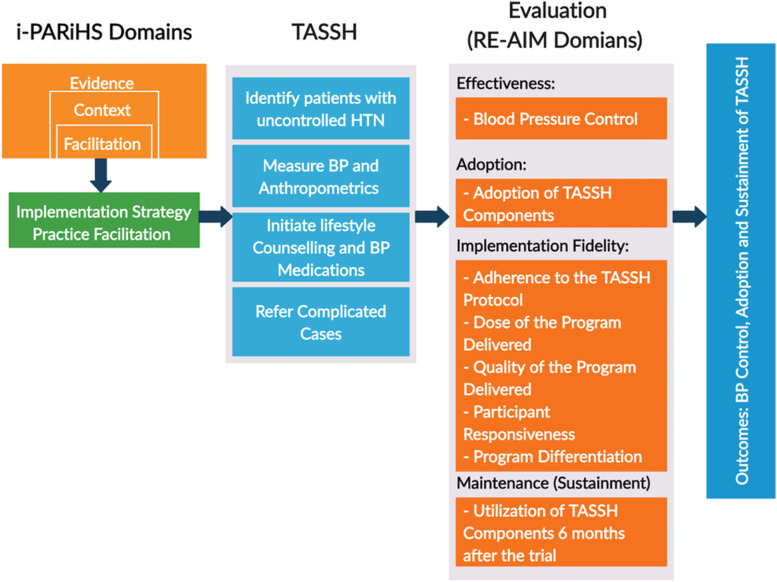
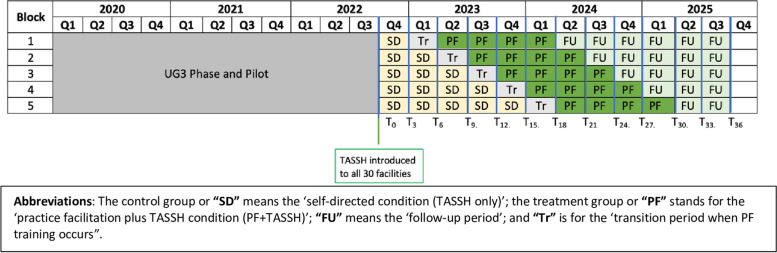
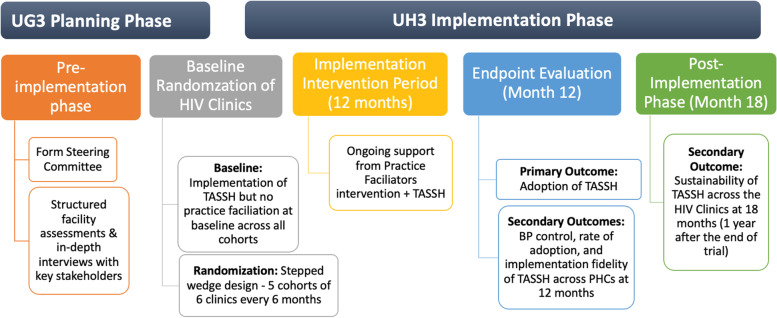
BACKGROUND: As people living with HIV (PLWH) experience earlier and more pronounced onset of noncommunicable diseases (NCDs), advancing integrated care networks and models in low-resource-high-need settings is critical. Leveraging current health system initiatives and addressing gaps in treatment for PLWH, we report our approach using a late-stage (T4) implementation research study to test the adoption and sustainability of a proven-effective implementation strategy which has been minimally applied in low-resource settings for the integration of hypertension control into HIV treatment. We detail our protocol for the Managing Hypertension Among People Living with HIV: an Integrated Model (MAP-IT) trial, which uses a stepped wedge cluster randomized trial (SW-CRT) design to evaluate the effectiveness of practice facilitation on the adoption of a hypertension treatment program for PLWH receiving care at primary healthcare centers (PHCs) in Akwa Ibom State, Nigeria. DESIGN: In partnership with the Nigerian Federal Ministry of Health (FMOH) and community organizations, the MAP-IT trial takes place in 30 PHCs. The i-PARiHS framework guided pre-implementation needs assessment. The RE-AIM framework will guide post-implementation activities to evaluate the effect of practice facilitation on the adoption, implementation fidelity, and sustainability of a hypertension program, as well as blood pressure (BP) control. Using a SW-CRT design, PHCs sequentially crossover from the hypertension program only (usual care) to hypertension plus practice facilitation (experimental condition). PHCs will recruit and enroll an average of 28-32 patients to reach a maximum of 960 PLWH participants with uncontrolled hypertension who will be followed longitudinally for BP outcomes. DISCUSSION: Given the need for integrated NCD-HIV care platforms in low-resource settings, MAP-IT will underscore the challenges and opportunities for integrating hypertension treatment into HIV care, particularly concerning adoption and sustainability. The evaluation of our integration approach will also highlight the potential impact of a health systems strengthening approach on BP control among PLWH. TRIAL REGISTRATION: Clinicaltrials.gov ( NCT05031819 ). Registered on 2nd September 2021.
Overview
The claims and statistics of this paper haven’t been checked yet.
Free: it reads the open-access text and checks the first 5 claims that cite a source we can check. Create a free account to check every claim.
Integrity signals
Registry
Cites
Statistics
Figures
Verification
Claims the paper makes
The claims and statistics of this paper haven’t been checked yet.
Free: it reads the open-access text and checks the first 5 claims that cite a source we can check. Create a free account to check every claim.
Claims other papers make about this one
Each is checked against this paper’s own text: does it say what the citing paper says it does?
The source backs part of the claim, not all of it — or backs it for a different population, condition or comparison.
In the citing paper
“Recent years have seen a surge in the use of the SWD within sub-Sahran African (SSA) research settings (6–8).”
From Applications and implementation considerations for stepped-wedge designs in sub-Saharan Africa: a systematic review (2026) · cites this paper as [7]
Experimental — accuracy not yet measuredThe source backs part of the claim, not all of it — or backs it for a different population, condition or comparison.
In the citing paper
“SWD was frequently used in HIV research to navigate ethical and practical challenges in evaluating interventions where treatment access is considered necessary (7, 13, 113).”
From Applications and implementation considerations for stepped-wedge designs in sub-Saharan Africa: a systematic review (2026) · cites this paper as [7]
Experimental — accuracy not yet measured
Self-check
Percentages, sums and reported differences re-computed from the paper’s own numbers.
The self-check needs the paper’s full text.
Citations
Cites
Evaluating the public health impact of health promotion interventions: the RE-AIM framework.
Glasgow, R. E., Vogt, T. M., & Boles, S. M. (1999) · American Journal of Public Health · doi:10.2105/ajph.89.9.1322 · Cited by 7,217
Bellg, A. J., Treatment Fidelity Workgroup of the NIH Behavior Change Consortium, Borrelli, B., Resnick, B., Hecht, J., Minicucci, D. S., Ory, M., Ogedegbe, G., Orwig, D., Ernst, D., et al. (2004) · Health Psychology · doi:10.1037/0278-6133.23.5.443 · Cited by 2,620
A conceptual framework for implementation fidelity
Carroll, C., Patterson, M., Wood, S., Booth, A., Rick, J., & Balain, S. (2007) · Implementation Science · doi:10.1186/1748-5908-2-40 · Cited by 2,559
Mediation Analysis: A Practitioner's Guide
VanderWeele, T. J. (2016) · Annual Review of Public Health · doi:10.1146/annurev-publhealth-032315-021402 · Cited by 1,985
The stepped wedge cluster randomised trial: rationale, design, analysis, and reporting
Hemming, K., Haines, T. P., Chilton, P. J., Girling, A. J., & Lilford, R. J. (2015) · BMJ · doi:10.1136/bmj.h391 · Cited by 1,410
Estimation in generalized linear models with random effects
SCHALL, R. (1991) · Biometrika · doi:10.1093/biomet/78.4.719 · Cited by 1,243
Mediation analysis with multiple mediators
VanderWeele, T., & Vansteelandt, S. (2014) · Epidemiologic Methods · doi:10.1515/em-2012-0010 · Cited by 858
A Unification of Mediation and Interaction: A 4-Way Decomposition
VanderWeele, T. J. (2014) · Epidemiology · doi:10.1097/ede.0000000000000121 · Cited by 661
Systematic Review and Meta-Analysis of Practice Facilitation Within Primary Care Settings
Baskerville, N. B., Liddy, C., & Hogg, W. (2012) · The Annals of Family Medicine · doi:10.1370/afm.1312 · Cited by 571 · cited 1×
“Previous studies demonstrate that primary care practices are more likely to adopt evidence-based standards of care through PF [18, 20, 22].”
BackgroundLau, R., Stevenson, F., Ong, B. N., Dziedzic, K., Treweek, S., Eldridge, S., Everitt, H., Kennedy, A., Qureshi, N., Rogers, A., et al. (2015) · BMJ Open · doi:10.1136/bmjopen-2015-009993 · Cited by 254 · cited 1×
“Previous studies demonstrate that primary care practices are more likely to adopt evidence-based standards of care through PF [18, 20, 22].”
BackgroundKwan, B. M., McGinnes, H. L., Ory, M. G., Estabrooks, P. A., Waxmonsky, J. A., & Glasgow, R. E. (2019) · Frontiers in Public Health · doi:10.3389/fpubh.2019.00345 · Cited by 243
Non‐communicable diseases and HIV care and treatment: models of integrated service delivery
Duffy, M., Ojikutu, B., Andrian, S., Sohng, E., Minior, T., & Hirschhorn, L. R. (2017) · Tropical Medicine & International Health · doi:10.1111/tmi.12901 · Cited by 193 · cited 1×
“Building on calls to integrate care [2], Duffy and colleagues argue that longitudinal care models established through HIV programs offer exemplary platforms for integrating NCDs due to favorable outcomes with retention and continuity, healthy lifestyle promotion, and routine monitoring of PLWH [1].”
BackgroundMandatory TB notification in Mysore city, India: Have we heard the private practitioner’s plea?
Singh Chadha, S., Burugina Nagaraja, S., Trivedi, A., Satapathy, S., N M, D., & Devi Sagili, K. (2017) · BMC Health Services Research · doi:10.1186/s12913-016-1943-z · Cited by 169
Taylor, E. F., Machta, R. M., Meyers, D. S., Genevro, J., & Peikes, D. N. (2013) · The Annals of Family Medicine · doi:10.1370/afm.1462 · Cited by 155
Generalized Linear Mixed Models
Hedeker, D. (2005) · Encyclopedia of Statistics in Behavioral Science · doi:10.1002/0470013192.bsa251 · Cited by 150
Practice facilitators: a review of the literature.
Nagykaldi, Z. J., Mold, J. W., & ASPY, C. B. (2005) · PubMed · Cited by 144
Li, P., & Redden, D. T. (2015) · BMC Medical Research Methodology · doi:10.1186/s12874-015-0026-x · Cited by 142
Mendis, S., Johnston, S. C., Wu, F., Oladapo, O. O., Cameron, A., & Faramawi, M. F. (2009) · Bulletin of the World Health Organization · doi:10.2471/blt.08.062364 · Cited by 130
(2011) · PubMed · Cited by 125
Ogedegbe, G. G., Plange‐Rhule, J., Gyamfi, J., Chaplin, W. F., Ntim, M., Apusiga, K., Iwelunmor, J., Yeboah-Awudzi, K., Quakyi, N. K., Mogaverro, J., et al. (2018) · PLoS Medicine · doi:10.1371/journal.pmed.1002561 · Cited by 125 · cited 3×
“Leveraging our experience from our other trials [17, 25, 36] and best practices from the literature on PF [21, 37, 38], we will use several strategies to retain PHCs enrolled in the study.”
BackgroundMethodAdeyemi, O., Lyons, M., Njim, T. N., Okebe, J., Birungi, J., Nana, K. N., Mbanya, J. C., Mfinanga, S., Ramaiya, K. L., Jaffar, S. S., et al. (2021) · BMJ Global Health · doi:10.1136/bmjgh-2020-004669 · Cited by 121
Wang, A., Pollack, T., Kadziel, L. A., Ross, S. M., McHugh, M., Jordan, N., & Kho, A. (2018) · Journal of General Internal Medicine · doi:10.1007/s11606-018-4581-9 · Cited by 118 · cited 1×
“Previous studies demonstrate that primary care practices are more likely to adopt evidence-based standards of care through PF [18, 20, 22].”
BackgroundGyamfi, J., Plange‐Rhule, J., Iwelunmor, J., Lee, D., Blackstone, S. R., Mitchell, A., Ntim, M., Apusiga, K., Tayo, B. O., Yeboah-Awudzi, K., et al. (2017) · BMC Health Services Research · doi:10.1186/s12913-017-2026-5 · Cited by 82
How Practice Facilitation Strategies Differ by Practice Context
Nguyen, A. M., Cuthel, A. M., Padgett, D. K., Niles, P. M., Rogers, E., Pham-Singer, H., Ferran, D., Kaplan, S. A., Berry, C. A., & Shelley, D. (2019) · Journal of General Internal Medicine · doi:10.1007/s11606-019-05350-7 · Cited by 70
Liddy, C. E., Hogg, W. E., Singh, J., Taljaard, M., Russell, G. M., Armstrong, C. D., Akbari, A., Dahrouge, S., & Grimshaw, J. (2015) · Implementation Science · doi:10.1186/s13012-015-0341-y · Cited by 68
Development of an Instrument to Document the 5A's for Smoking Cessation
Lawson, P. J., Flocke, S. A., & Casucci, B. (2009) · American Journal of Preventive Medicine · doi:10.1016/j.amepre.2009.04.027 · Cited by 63
Ekrikpo, U. E., Akpan, E. E., Ekott, J. U., Bello, A. K., Okpechi, I. G., & Kengne, A. P. (2018) · BMJ Open · doi:10.1136/bmjopen-2017-019664 · Cited by 61 · cited 1×
“Over the past 20 years, Nigeria, which bears the highest burden of HIV infection in Western Africa [9], experienced a dramatic increase in mortality associated with hypertension [10].”
BackgroundMuddu, M., Tusubira, A. K., Sharma, S. K., Akiteng, A. R., Ssinabulya, I., & Schwartz, J. I. (2018) · JAIDS Journal of Acquired Immune Deficiency Syndromes · doi:10.1097/qai.0000000000002067 · Cited by 60 · cited 1×
“Background With increased life expectancy, people living with HIV (PLWH) are at risk for noncommunicable diseases (NCDs) [1–3] such as cardiovascular disease (CVD) [4], for which hypertension is the primary risk factor [5, 6].”
BackgroundShelley, D., Ogedegbe, G. G., Anane, S., Wu, W. Y., Goldfeld, K. S., Gold, H. T., Kaplan, S. A., & Berry, C. A. (2015) · Implementation Science · doi:10.1186/s13012-016-0450-2 · Cited by 54
Kintu, A., Sando, D. M., Okello, S., Mutungi, G. N., Guwatudde, D., Menzies, N. A., Danaei, G., & Verguet, S. (2020) · Journal of the International AIDS Society · doi:10.1002/jia2.25508 · Cited by 46 · cited 7×
“Background With increased life expectancy, people living with HIV (PLWH) are at risk for noncommunicable diseases (NCDs) [1–3] such as cardiovascular disease (CVD) [4], for which hypertension is the primary risk factor [5, 6].”
BackgroundInfluentialEl-Sadr, W. M., & Goosby, E. (2018) · AIDS · doi:10.1097/qad.0000000000001886 · Cited by 45
Garofalo, R., Adetunji, A. A., Kuhns, L. M., Omigbodun, O. O., Johnson, A. K., Kuti, K. M., Awolude, O. A., Berzins, B., Janulis, P. F., Okonkwor, O., et al. (2022) · JAMA Network Open · doi:10.1001/jamanetworkopen.2022.0148 · Cited by 44
Gausi, B., Berkowitz, N., Jacob, N., & Oni, T. (2021) · AIDS Research and Therapy · doi:10.1186/s12981-021-00387-3 · Cited by 33
Aifah, A. A., Onakomaiya, D. O., Iwelunmor, J., Oladele, D. A., Gbaja-Biamila, T. A., Obiezu‐Umeh, C., Nwaozuru, U., Musa, A. Z., Ezechi, O., & Ogedegbe, G. G. (2020) · Implementation Science Communications · doi:10.1186/s43058-020-00048-y · Cited by 26 · cited 3×
“Importantly, the policy promotes skilled, non-physician workers like nurses treating stable HIV patients and key tasks including case identification, referrals, initiation of treatment, and routine physical examinations [11].”
BackgroundMethodHarvey, G., & Kitson, A. (2015) · Implementing Evidence-Based Practice In Healthcare · doi:10.4324/9780203557334-3 · Cited by 22
Asante, K. P., Iwelunmor, J., Apusiga, K., Gyamfi, J., Nyame, S., Adjei, K. G. A., Aifah, A. A., Adjei, K. K., Onakomaiya, D. O., Chaplin, W. F., et al. (2020) · Trials · doi:10.1186/s13063-020-04667-7 · Cited by 16
Aifah, A. A., Odubela, O., Rakhra, A., Onakomaiya, D. O., Hu, J., Nwaozuru, U., Oladele, D. A., Odusola, A. O., Idigbe, I. E., Musa, A. Z., et al. (2021) · Implementation Science · doi:10.1186/s13012-021-01167-3 · Cited by 16
Tisdale, R. L., Cazabon, D., Moran, A. E., Rabkin, M., Bygrave, H., & Cohn, J. (2021) · Global Heart · doi:10.5334/gh.978 · Cited by 15
Berry, C. A., Nguyen, A. M., Cuthel, A. M., Cleland, C. M., Siman, N., Pham-Singer, H., & Shelley, D. (2020) · American Journal of Medical Quality · doi:10.1177/1062860620959450 · Cited by 13
Akwaowo, C., Motilewa, O. O., & Ekanem, A. (2020) · Nigerian Medical Journal · doi:10.4103/nmj.nmj_113_19 · Cited by 11 · cited 1×
“The cornerstone for healthcare delivery in Akwa Ibom is at the primary care level [14].”
BackgroundAntiretroviral service delivery at selected community pharmacies in Akwa Ibom State, Nigeria
Olorunsola, E. O., Eichie, F. E., & Awofisayo, S. O. (2019) · Journal of Applied Pharmaceutical Science · doi:10.7324/japs.2019.91012 · Cited by 3 · cited 1×
“Considering this policy, we describe below a viable HIV chronic care platform for integrating hypertension management in Akwa Ibom, a state in Nigeria with the highest HIV burden [12, 13].”
Background
Research works printed but not linked: 3
- Nigeria HIV/AIDS Indicator and Impact Survey (NAIIS) technical report 2018 Abuja Federal Ministry of Health, Nigeria 2019
- Knox L Report on the AHRQ 2010 consensus meeting on practice facilitation for primary care improvement. Prepared by LA Net under contract no HHSA2902007100110) 2010 Rockville Agency for Healthcare Research and Quality
- World Health O Prevention of cardiovascular disease: guidelines for assessment and management of total cardiovascular risk 2007 Geneva World Health Organization
Cited by
Vijayasingham, L., Ansbro, É., Zmeter, C., Abbas, L. A., Schmid, B., Sanga, L. A., Larsen, L. B., Perone, S. A., & Perel, P. (2024) · Journal of Migration and Health · doi:10.1016/j.jmh.2024.100228 · Cited by 18
Galaviz, K. I., Patel, S. A., Siedner, M. J., Goss, C. W., Gumede, S. B., Johnson, L. C. M., Ordóñez, C. E., Laxy, M., Klipstein‐Grobusch, K., Heine, M., et al. (2024) · Implementation Science Communications · doi:10.1186/s43058-024-00640-6 · Cited by 13
“Another study that is part of this alliance is focused on testing practice facilitation to improve hypertension treatment in HIV care in Nigeria [48].”
BackgroundHunter, S. C., Morgillo, S., Kim, B., Bergström, A., Ehrenberg, A., Eldh, A. C., Wallin, L., & Kitson, A. A. (2025) · Implementation Science Communications · doi:10.1186/s43058-025-00704-1 · Cited by 11
“…facilitation [35] ◦ A conceptual framework was developed outlining how the two approaches worked together to design and evaluate implementation [38, 40] • PARIHS/i-PARIHS and CFIR: ◦ Allowed for a more comprehensive approach to implementation supported by facilitation [28] ◦ To complement one…”
InfluentialTetteh, E., Effah, W., Fuentes, L. D. L., Steger-May, K., Goss, C. W., Dowdy, D. W., Huffman, M. D., Williams, M. J., Tutse-Tonwe, V., Bansal, G. P., et al. (2024) · Implementation Science Communications · doi:10.1186/s43058-024-00599-4 · Cited by 8
Onyeaghala, C. A., Nortey, M. A., Bai-Sesay, A. U., Hassan, A. N., Anyamene, E. L., & Tsikata, C. Y. (2025) · Discover Public Health · doi:10.1186/s12982-025-01273-3 · Cited by 3
“Facility-based models, such as centralized clinics, provide specialized care but are often associated with overcrowding, long waiting times, and high resource demands [12].”
Metadata
- Authors
- Aifah, A. A., Hade, E. M., Colvin, C., Henry, D., Mishra, S., Rakhra, A., Onakomaiya, D., Ekanem, A., Shedul, G., Bansal, G. P., Lew, D., Kanneh, N., Osagie, S., Udoh, E., Okon, E., Iwelunmor, J., Attah, A., Ogedegbe, G., & Ojji, D.
- Affiliations
- New York University (US)
- University of Abuja Teaching Hospital (NG)
- University of Uyo (NG)
- National Institutes of Health (US)
- Washington University in St. Louis (US)
- Saint Louis University (US)
- University of Abuja (NG)
- Corresponding author
- Aifah, Angela A.
- ORCID
- Venue
- Implementation Science
- Published
- 2023-05-10
- Volume
- 18
- Issue
- 1
- Pages
- 14-14
- ISSN
- 1748-5908 (ISSN-L)
- PMC
- PMC10173657
- OpenAlex
- W4376113882
- Cited by
- 11
- References
- 41
- Citations by year
- 2026: 5 · 2025: 2 · 2024: 4
- FWCI
- 3.87
- Type
- journal article
- Language
- en
- Open access
- gold
- doi.org
- Licence
- cc-by
- creativecommons.org/licenses/by/4.0 (tdm)
- creativecommons.org/licenses/by/4.0 (vor)
- Locations
- Implementation Science (publishedVersion, cc-by)
- PubMed Central (publishedVersion, cc-by)
- PubMed (publishedVersion)
- Digital Commons@Becker (Washington University School of Medicine) (submittedVersion, cc-by)
- DOAJ (DOAJ: Directory of Open Access Journals) (submittedVersion, cc-by-sa)
- Funders
- National Heart, Lung, and Blood Institute (4UH3HL154498-0)
- Topics
- Health Sciences › Health Professions › General Health Professions › Health Policy Implementation Science
- Health Sciences › Medicine › Cardiology and Cardiovascular Medicine › Blood Pressure and Hypertension Studies
- Health Sciences › Medicine › Public Health, Environmental and Occupational Health › Clinical practice guidelines implementation
- Keywords
- people living with HIV, hypertension control, practice facilitation, stepped-wedge cluster randomized trial, implementation research, primary health centers, blood pressure control, non-communicable diseases, health system strengthening, implementation fidelity, sustainability, adoption, RE-AIM framework, resource-limited settings, Akwa Ibom State
- MeSH terms
- Humans, Hypertension, Nigeria, HIV Infections, Randomized Controlled Trials as Topic
About these checks
Registry, retraction, Cites and statistics results are computed, not judged, with one exception: a printed reference that no index lists is read once by a model before it counts as a citation error. Claims are extracted by a model and kept only when their quote appears verbatim in the text; each cited source is then checked, with a model’s help, for whether it says what the claim relies on. Those verdicts can be wrong — read the claim’s quote and the cited source before relying on one.
Statistics and arithmetic are recomputed, not judged.
Confidence bands are shown only for fields calibrated on our annotated test set. None is calibrated yet, so no band is shown.
What counts as a claim ›How we measure confidence ›How we check this ›
Are you an author, or do you see a problem with this page? Request a review
Data sources
Bibliographic data: Semantic Scholar, OpenAlex, Crossref.
Contains information from the Semantic Scholar Academic Graph Datasets, made available under the ODC Attribution License (ODC-BY 1.0).
Semantic Scholar’s data is described in: Kinney, R., et al. (2023). The Semantic Scholar Open Data Platform. arXiv:2301.10140.
