

Cross-sectional study of 168 patients with hepatorenal tyrosinaemia and implications for clinical practice
Open accessThe DOI matches its Crossref record; 60 of the 60 references it cites were found in a registry or an index; 4 of the 49 sources its claims cite were checked for support.
Abstract
BACKGROUND: Hepatorenal tyrosinaemia (Tyr 1) is a rare inborn error of tyrosine metabolism. Without treatment, patients are at high risk of developing acute liver failure, renal dysfunction and in the long run hepatocellular carcinoma. The aim of our study was to collect cross-sectional data. METHODS: Via questionnaires we collected retrospective data of 168 patients with Tyr 1 from 21 centres (Europe, Turkey and Israel) about diagnosis, treatment, monitoring and outcome. In a subsequent consensus workshop, we discussed data and clinical implications. RESULTS: Early treatment by NTBC accompanied by diet is essential to prevent serious complications such as liver failure, hepatocellular carcinoma and renal disease. As patients may remain initially asymptomatic or develop uncharacteristic clinical symptoms in the first months of life newborn mass screening using succinylacetone (SA) as a screening parameter in dried blood is mandatory for early diagnosis. NTBC-treatment has to be combined with natural protein restriction supplemented with essential amino acids. NTBC dosage should be reduced to the minimal dose allowing metabolic control, once daily dosing may be an option in older children and adults in order to increase compliance. Metabolic control is judged by SA (below detection limit) in dried blood or urine, plasma tyrosine (<400 μM) and NTBC-levels in the therapeutic range (20-40 μM). Side effects of NTBC are mild and often transient. Indications for liver transplantation are hepatocellular carcinoma or failure to respond to NTBC. Follow-up procedures should include liver and kidney function tests, tumor markers and imaging, ophthalmological examination, blood count, psychomotor and intelligence testing as well as therapeutic monitoring (SA, tyrosine, NTBC in blood). CONCLUSION: Based on the data from 21 centres treating 168 patients we were able to characterize current practice and clinical experience in Tyr 1. This information could form the basis for clinical practice recommendations, however further prospective data are required to underpin some of the recommendations.
Overview
CoChat Summary
## TL;DR
This retrospective cross-sectional survey of 168 patients with tyrosinaemia type 1 (Tyr 1) from 21 centres aimed to describe diagnosis, treatment, monitoring, and outcomes, then use a consensus workshop to derive clinical implications. The paper argues that newborn screening using succinylacetone (SA), early NTBC plus diet, and structured follow-up are key to reducing severe complications, especially hepatocellular carcinoma (HCC).
## Key findings
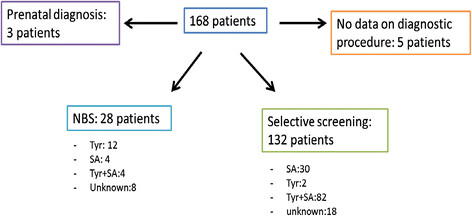
- Among 168 patients, 132 were diagnosed by selective screening and only 28 by newborn screening (NBS); the average age at diagnosis was 12.9 months overall, 0.58 months in NBS-diagnosed patients, and 15.5 months in selectively screened patients.
- Delayed NTBC treatment was associated with substantially higher HCC risk: treatment started at 1–6 months carried a 2.5-fold risk, 7–12 months a 6-fold risk, and beyond 12 months a 13-fold risk compared with treatment started in the neonatal period.
- 29/168 patients underwent liver transplantation; the main indication was HCC (72% of transplants), with liver cirrhosis and liver failure also listed as indications.
- The cohort had frequent complications despite treatment: 20% had psychomotor impairment, 17 patients (11.5%) required special education, and the paper reports that acute liver failure was rare (5/148 treated patients) when treatment was late (>6 months), while early-treated patients had few sequelae.
## Methods
- Retrospective cross-sectional international survey using questionnaires sent to 22 metabolic centres in Europe, Turkey, and Israel; 21 centres contributed individual patient data.
- Data were collected on 168 patients with Tyr 1, covering demographics, diagnosis, treatment, monitoring, liver transplantation, side effects, and outcomes; a 2-day consensus workshop in Hannover (November 2012) discussed findings and clinical implications.
- Analysis was largely descriptive, with age-dependency and treatment-outcome associations tested using chi-squared/Fisher’s exact tests, plus odds ratios and confidence intervals; continuous lab values were analyzed with ANOVA, Kruskal-Wallis, or Mann-Whitney U as appropriate.
## Limitations
- The paper explicitly states that further prospective data are required to underpin some recommendations and that prospective studies are needed to confirm suggested target values and outcome relations.
- As a retrospective questionnaire study, the paper could not establish causality and notes at least one unavailable element: compliance with medication was not addressed in the questionnaire.
- Evident from the text: practices varied considerably across centres in diagnosis, treatment, and monitoring, which limits uniform interpretation and reflects heterogeneity rather than a controlled protocol.
Model-written summary. Check it against the paper before relying on it.
Integrity signals
Registry
Cites
Statistics
Figures
Verification
Claims the paper makes
4 Valid · 1 Not valid · 29 Not checked · 141 Own results and interpretations
The sources with a verdict support this claim; the rest weren’t checked yet, have no full text we could read, or their verdicts aren’t rated yet.
In the paper
“In line with previous studies, we could not find a clear genotype-phenotype correlation [32] using two classifications described by Halvorsen 1990 and van Spronsen 1994, respectively [33],[34].”
§ Cross-sectional study of 168 patients with hepatorenal tyrosinaemia and implications for clinical practice > Discussion > Diagnosis
What the sources say
- Not checked — no full text of the sourcecites [32] Bergman AJIW van den Berg IET Brink W Poll-The BT van Amstel P Berger R Spectrum of Mutations in the Fumarylacetoacetate Hydrolase Gene of Tyrosinemia Type I Patients in Northwestern Europe and Mediterranean Countries Hum Mutat 1998 12 19 26 9633815 doi:10.1002/(sici)1098-1004(1998)12:1
- Not checked — no full text of the sourcecites [33] Halvorsen S Fernandes J, Saudubray J-M, Tada K Tyrosinemia Inborn Metabolic diseases 1990 1 Springer, Berlin 199 209 source
- Supportedcites [34] Van Spronsen FJ Thomasse Y Smit GPA Leonard JV Clayton PT Fidler V Berger R Heymans HAS Hereditary Tyrosinemia Type I: A New Clinical Classification with Difference in Prognosis on Dietary Treatment Hepatology 1994 20 1187 1191 7927251 source
In the citing sentence, [34] (van Spronsen 1994) is attached specifically to the classification it describes, not to the genotype-phenotype result (which carries its own citation [32]). Our copy states exactly that classification: the Discussion ('So far, only general indications on the prognosis of HT on dietary treatment are available') reports that 'the classification following Halvorsen did not distinguish between groups of patients with a different clinical prognosis, whereas a clear and statistically significant difference was found in prognosis in patients with an onset of symptoms before 2 mo, 2 to 6 mo and after 6 mo of age. On the basis of this clinical difference, the classification has been revised: very early (symptoms < 2 mo), early (2 to 6 mo) and late presenting form (> 6 mo),' with the Abstract and Results (108 patients, Tables 1-2) confirming it. Note that the paper itself performed no genotyping; its own remark that molecular research is 'not allowing a clear genotype-phenotype relation' is credited to its references 14-16, consistent with the citing paper attributing that point elsewhere. (LLM, conf=0.85)
hedged- Asserted: passes — The authors put it forward as true.
- Checkable: passes — It can be checked against evidence.
- Load-bearing: unclear — It is unclear whether the paper’s conclusions depend on it.
- Based: passes — The paper gives a reason why it holds.
A result the paper reports from its own data — it cites no other source for it, so there is none to check. The quote shows it is in the paper.
In the paper
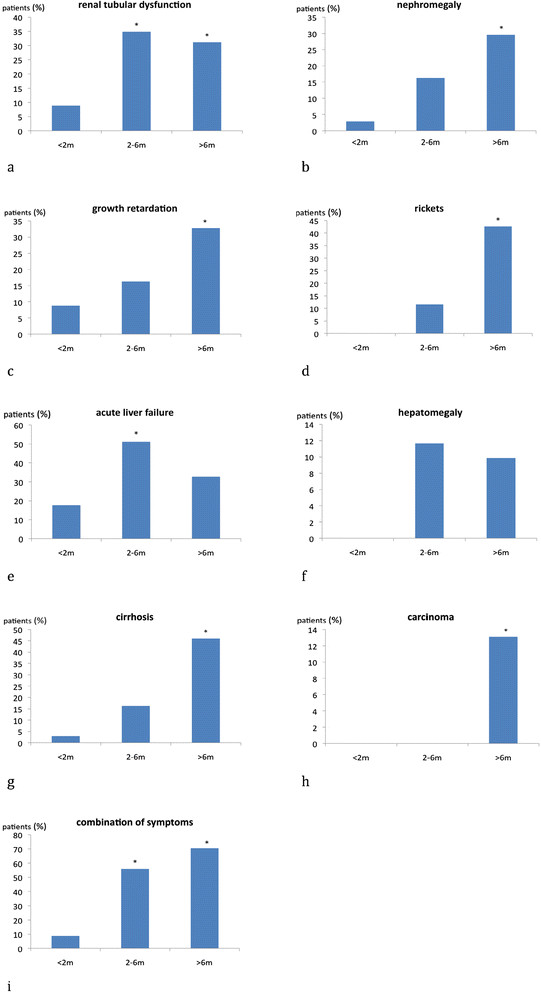
“Hepatomegaly did not show any age-dependency.”
§ Cross-sectional study of 168 patients with hepatorenal tyrosinaemia and implications for clinical practice > Results > Age-dependency of initial symptoms
plain- Asserted: passes — The authors put it forward as true.
- Checkable: passes — It can be checked against evidence.
- Load-bearing: unclear — It is unclear whether the paper’s conclusions depend on it.
- Based: passes — The paper gives a reason why it holds.
A result the paper reports from its own data — it cites no other source for it, so there is none to check. The quote shows it is in the paper.
In the paper
“At diagnosis, initial liver imaging was performed in 79% of cases (110 selectively screened patients, 16 patients diagnosed via NBS, 3 patients with prenatal diagnosis, 3 patients with no data on diagnosis); all patients were examined by ultrasound of the liver.”
§ Cross-sectional study of 168 patients with hepatorenal tyrosinaemia and implications for clinical practice > Results > Laboratory parameters at diagnosis and imaging
plainn = 110- Asserted: passes — The authors put it forward as true.
- Checkable: passes — It can be checked against evidence.
- Load-bearing: unclear — It is unclear whether the paper’s conclusions depend on it.
- Based: passes — The paper gives a reason why it holds.
A result the paper reports from its own data — it cites no other source for it, so there is none to check. The quote shows it is in the paper.
In the paper
“114/168 patients developed symptoms.”
§ Cross-sectional study of 168 patients with hepatorenal tyrosinaemia and implications for clinical practice > Results > Diagnosis and clinical presentation
plainn = 168- Asserted: passes — The authors put it forward as true.
- Checkable: passes — It can be checked against evidence.
- Load-bearing: unclear — It is unclear whether the paper’s conclusions depend on it.
- Based: passes — The paper gives a reason why it holds.
A result the paper reports from its own data — it cites no other source for it, so there is none to check. The quote shows it is in the paper.
In the paper
“The average age at diagnosis was 12.9 months (SD: +/− 23.8, range: 0–183 months) for the whole group, 0.58 months (SD:+/−0.73, range 0–3 months) in patients diagnosed via NBS and 15.5 months (SD:+/−24.9, range 0–183 months) in those diagnosed via selective screening.”
§ Cross-sectional study of 168 patients with hepatorenal tyrosinaemia and implications for clinical practice > Results > Diagnosis and clinical presentation
plainn = 168- Asserted: passes — The authors put it forward as true.
- Checkable: passes — It can be checked against evidence.
- Load-bearing: unclear — It is unclear whether the paper’s conclusions depend on it.
- Based: passes — The paper gives a reason why it holds.
86 more claims
Create a free account to see all 175 claims and to verify the 2 references still open.
- Probably not a substantial claim. 48
- It may state two separate claims as one. 50
- The quote only partly states this claim. 1
Claims other papers make about this one
Each is checked against this paper’s own text: does it say what the citing paper says it does?
In the citing paper
“neither ultrasound, nor computed tomography, nor magnetic resonance imaging can discriminate between all benign and malignant hepatic nodules that appear in up to 75% of non-NTBC-treated patients.9, 32, 73, 74, 75”
From Diagnosis and treatment of tyrosinemia type I: a US and Canadian consensus group review and recommendations (2017) · cites this paper as [9]
In the citing paper
“Standard therapeutic approaches to HT-1 with NTBC and dietary restriction of phenylalanine/tyrosine are associated with reversal (or prevention) of the tubulopathy in nearly all cases within weeks.9, 58”
From Diagnosis and treatment of tyrosinemia type I: a US and Canadian consensus group review and recommendations (2017) · cites this paper as [9]
Citations
Cites
Principles and Practice of Screening for Disease.
(1968) · Annals of Internal Medicine · doi:10.7326/0003-4819-69-5-1085_2 · Cited by 3,066 · cited 1×
“When SA is used as a screening parameter, NBS for Tyr 1 fulfils the criteria laid down by Wilson and Jungner [38].”
On the enzymic defects in hereditary tyrosinemia.
Lindblad, B., Lindstedt, S., & Steen, G. (1977) · Proceedings of the National Academy of Sciences · doi:10.1073/pnas.74.10.4641 · Cited by 447
Inborn Metabolic Diseases: Diagnosis and Treatment
(2006) · Springer eBooks · doi:10.1007/978-3-540-28785-8 · Cited by 361
Serum Alpha Fetoprotein (AFP) Levels in Normal Infants
Wu, J. T., Book, L., & Sudar, K. (1981) · Pediatric Research · doi:10.1203/00006450-198101000-00012 · Cited by 320 · cited 1×
“Higher initial AFP levels in patients screened via NBS compared to those who were diagnosed late are partly due to age-dependency of AFP levels [30,31].”
The occurrence of hepatoma in the chronic form of hereditary tyrosinemia
Weinberg, A. G., Mize, C. E., & Worthen, H. G. (1976) · The Journal of Pediatrics · doi:10.1016/s0022-3476(76)80259-4 · Cited by 283
Tyrosinaemia type I and NTBC (2‐(2‐nitro‐4‐trifluoromethylbenzoyl)‐1,3‐cyclohexanedione)
Holme, E., & Lindstedt, S. (1998) · Journal of Inherited Metabolic Disease · doi:10.1023/a:1005410820201 · Cited by 264
Recommendations for the management of tyrosinaemia type 1
de Laet, C., Dionisi-Vici, C., Leonard, J. V., McKiernan, P., Mitchell, G., Monti, L., de Baulny, H. O., Pintos-Morell, G., & Spiekerkötter, U. (2013) · Orphanet Journal of Rare Diseases · doi:10.1186/1750-1172-8-8 · Cited by 227 · cited 3×
“Occasionally, nodules are present before initiation of NTBC-treatment but regress on repeated imaging following treatment [18].”
Self-citationNTBC treatment in tyrosinaemia type I: Long‐term outcome in French patients
Masurel‐Paulet, A., Poggi‐Bach, J., Rolland, M. ‐., Bernard, O., Guffon, N., Dobbelaere, D., Sarles, J., de Baulny, H. O., & Touati, G. (2008) · Journal of Inherited Metabolic Disease · doi:10.1007/s10545-008-0793-1 · Cited by 212 · cited 1×
“Only recently, cognitive deficits were described in some Tyr 1-patients treated with NTBC [5-8,11].”
Van Spronsen, F. J., Thomasse, Y., Smit, P. G. A., Leonard, J. V., Clayton, P. T., Fidler, V., Berger, R., & Heymans, H. S. A. (1994) · Hepatology · doi:10.1002/hep.1840200513 · Cited by 193
Self-induced correction of the genetic defect in tyrosinemia type I.
Kvittingen, E. A., Rootwelt, H., Berger, R., & Brandtzaeg, P. (1994) · Journal of Clinical Investigation · doi:10.1172/jci117509 · Cited by 168
Cited by
Items 101–133 of 133
Chen, J., Sun, J., Li, X., & Du, M. (2022) · BMC Medical Genomics · doi:10.1186/s12920-022-01406-6 · Cited by 1
“Insufficient activity of FAH leads to the accumulation of toxic metabolites such as succinylacetone (SA), which is a pathognomonic finding [3].”
BackgroundMoguilevitch, M., & Fitz-James, I. A. (2024) · Journal of Liver Transplantation · doi:10.1016/j.liver.2024.100216 · Cited by 1
Emotional and behavioural functioning in children with tyrosinaemia type 1
Pohorecka, M., Biernacki, M., Jakubowska-Winecka, A., Leszczynska-Iwanicka, K., Rokicki, D., Pokora, P., Perkowska, B., Pajdowska, M., & Biernacka, M. (2024) · Pediatric Endocrinology Diabetes and Metabolism · doi:10.5114/pedm.2024.138666 · Cited by 1
“Initially, following the discovery of the effectiveness of nitisi-none in TT1, papers on the outcomes of treatment in affected children focused mainly on metabolic control [6–8].”
BackgroundDiagnostic tools and strategies for assessing disease progression in Alkaptonuria
Ranganath, L., Psarelli, E. E., Cox, T. F., et al. (2015) · Expert Opinion on Orphan Drugs · doi:10.1517/21678707.2015.1042859 · Cited by 1
van Spronsen, F. J., & van Rijn, M. (2017) · Oxford University Press eBooks · doi:10.1093/acprof:oso/9780199398911.003.0040 · Cited by 1
Self-citationInborn errors of amino acid, organic acid metabolism and disorders of the urea cycle
Honzík, T., & Zeman, J. (2022) · Česko-slovenská pediatrie · doi:10.55095/cspediatrie2022/066 · Cited by 1
Self-citationMcKiernan, P. J. (2017) · doi:10.1002/9781119046936.ch9 · Cited by 1
Self-citation(2000) · Time to knit · doi:10.1016/s1637-5017(20)64964-x · Cited by 1
Brunkhorst, L., Franke, D., Kirschstein, M., Kratz, C. P., & Das, A. M. (2015) · Monatsschrift Kinderheilkunde · doi:10.1007/s00112-015-3388-6
Self-citationHepatomegalie mit fokalen Läsionen und Nephromegalie bei einem Kleinkind
Koletzko, B. (2015)
Essabar, L., Rghouda, H., Dahri, S., Chabraoui, L., Chat, L., & Kriouile, Y. (2016) · Journal of Biosciences and Medicines · doi:10.4236/jbm.2016.412016
“As patients are often asymptomatic in the first few months of life and the initial clinical symptoms are rather unspecific newborn screening is mandatory to diagnose patients early in life [12].”
BackgroundInfluentialKostovski, A., Zdraveska, N., Tesařová, M., & Zeman, J. (2017) · Srpski arhiv za celokupno lekarstvo · doi:10.2298/sarh161013084k
Self-citation(Acute) Renal Failure in the Full Term Neonate
Avni, F. E., & Lahoche, A. (2017) · Springer eBooks · doi:10.1007/978-3-319-63700-6_6
Liver Transplantation for Inherited Metabolic Disorders
Burlina, A., & D’Antiga, L. (2019) · Springer eBooks · doi:10.1007/978-3-319-96400-3_35
Varughese, B., Madrewar, D., Polipalli, S. K., & Kapoor, S. (2021) · Indian Journal of Clinical Biochemistry · doi:10.1007/s12291-020-00944-z
Enfermedades hereditarias por anomalías del metabolismo de los aminoácidos
Labarthe, F., & Tardieu, M. (2021) · EMC - Pediatría · doi:10.1016/s1245-1789(21)45215-7
Liver-Based Inherited Metabolic Disorders
Vara, R. (2021) · Springer eBooks · doi:10.1007/978-3-030-80068-0_67 · Cited by 1
McKiernan, P. J., & Squires, J. E. (2021) · Elsevier eBooks · doi:10.1016/b978-0-323-63671-1.00039-2
Self-citationPharmacological Therapy in Inborn Errors of Metabolism
Das, A. M., & Illsinger, S. (2020) · Springer eBooks · doi:10.1007/978-3-319-68864-0_62
Self-citationIqbal, S., Bell, D. A., & Knipe, H. (2020) · Radiopaedia.org · doi:10.53347/rid-76482
A Three-Month-Old Girl with Liver Failure: How Far have We Reached after Autopsy?
Gupta, K., Nada, R., Bolia, R. K., et al. (2022) · Annals of Pediatric Gastroenterology & Hepatology · doi:10.5005/jp-journals-11009-0002
Öktem, M., İnci, A., Biberoğlu, G., Okur, İ., Ezgü, F. S., & Tümer, L. (2022) · Research Square · doi:10.21203/rs.3.rs-2381682/v1
Inborn Errors of Carbohydrate, Ammonia, Amino Acid, and Organic Acid Metabolism
Merritt, J. L., & Gallagher, R. C. (2023) · Elsevier eBooks · doi:10.1016/b978-0-323-82823-9.00029-5
Hepatocellular carcinoma in an infant with tyrosinemia type 1
Kelifová, S., Honzík, T., Tesařová, M., Gonsorčíková, L., Sticová, E., Mašková, J., Mališ, J., Froněk, J., & Zeman, J. (2023) · Česko-slovenská pediatrie · doi:10.55095/cspediatrie2023/021
Self-citationSzigetvari, P. D., Patil, S. S., Birkeland, E., Kleppe, R., & Haavik, J. (2023) · bioRxiv (Cold Spring Harbor Laboratory) · doi:10.1101/2023.09.05.556372
“The resulting accumulation of toxic metabolites such as fumarylacetoacetate and succinylacetone is associated with a severe, life-threatening condition, leading to multiple organ failure involving the liver and kidneys, causing cirrhosis or hepatocellular carcinoma and death if left untreated (Mayorandan et al., 2014).”
BackgroundConsenso mexicano de tirosinemia tipo 1
Zárate-Mondragón, F. E., Alcántara-García, R. I., Belmont‐Martínez, L., Consuelo‐Sánchez, A., Fernández‐Hernández, L., Flores-Calderón, J., González‐Ortíz, B., López, S. G., Hernández-Chávez, E., Hernández-Vez, G., et al. (2024) · Boletín Médico del Hospital Infantil de México · doi:10.24875/bmhim.24000025
“…genético es que, en caso de contar con ambas variantes patogénicas caracterizadas, debe extenderse el análisis genético a los familiares de primer grado, para detectar portado-res en familiares con riesgo, y realizar pruebas prena-tales en caso de un embarazo con riesgo elevado para TH1 30 .”
10.1016/b978-84-9113-949-2.00077-9
(2000) · Time to knit · doi:10.1016/b978-84-9113-949-2.00077-9
Yazdani, A.-H., Keyfi, F., Nahid, S., Maleki, M., Jalili‐Nik, M., Eshraghi, P., Mashkani, B., & Sadeghi, A. (2025) · Biochemical Genetics · doi:10.1007/s10528-025-11102-6
Hereditary Tyrosinemia Type 1: Success and Challenges in Indian Subcontinent
Das, S., Sood, V., Lal, B. B., Khanna, R., Alam, S., & Bihari, C. (2025) · Indian Pediatrics · doi:10.1007/s13312-025-00182-7
“If left undetected or untreated, the disease is usually fatal (with varying age at mortality) secondary to liver failure, occurrence of hepatocellular carcinoma (HCC) or rarely, due to neurologic crises [2–4].”
InfluentialTrudności w rozpoznaniu tyrozynemii typu 1 z perspektywy onkologa – opis przypadku
Ukielska, B., Gowin, E., Kałużny, Ł., Zając‐Spychała, O., Bartkowska‐Śniatkowska, A., Jończyk‐Potoczna, K., Jazdon, M., Kędzierska, J., Mańkowski, P., Konatkowska, B., et al. (2015) · Pediatria Polska · doi:10.1016/j.pepo.2015.02.005
Sidorina, A., Rizzo, C., Leal-Witt, M. J., Arias, C., Cortés, I., Cornejo, V., Sacchetti, E., Catesini, G., Boenzi, S., Dionisi‐Vici, C., et al. (2025) · Metabolites · doi:10.3390/metabo16010021
Self-citationAdam, A., Marcélis, L., Fage, D., Mathieu, E., Empain, A., Dufour, C., COTTON, F. J., & Laet, C. D. (2026) · JIMD Reports · doi:10.1002/jmd2.70062 · Cited by 1
Self-citationMorel-Ribeiro, P. (2024) · theses.fr (ABES) · doi:10.70675/29d1d766z3c99z46f4z9748ze7de69182005
Metadata
- Authors
- Mayorandan, S., Meyer, U., Gokcay, G., Segarra, N. G., de Baulny, H. O., van Spronsen, F., Zeman, J., de Laet, C., Spiekerkoetter, U., Thimm, E., Maiorana, A., Dionisi-Vici, C., Moeslinger, D., Brunner-Krainz, M., Lotz-Havla, A. S., Cocho de Juan, J. A., Couce Pico, M. L., Santer, R., Scholl-Bürgi, S., Mandel, H., Bliksrud, Y. T., Freisinger, P., Aldamiz-Echevarria, L. J., Hochuli, M., Gautschi, M., Endig, J., Jordan, J., McKiernan, P., Ernst, S., Morlot, S., Vogel, A., Sander, J., & Das, A. M.
- Affiliations
- Medizinische Hochschule Hannover (DE)
- Charles University (CZ)
- University Medical Center Freiburg (DE)
- Düsseldorf University Hospital (DE)
- Bambino Gesù Children's Hospital (IT)
- Ludwig-Maximilians-Universität München (DE)
- University Medical Center Hamburg-Eppendorf (DE)
- Rambam Health Care Campus (IL)
- Oslo University Hospital (NO)
- Klinik und Poliklinik für Kinder- und Jugendmedizin (DE)
- Hospital de Cruces (ES)
- University Hospital Zurich (CH)
- University Hospital of Bern (CH)
- Birmingham Children's Hospital (GB)
- Corresponding author
- Das, Anibh Martin
- ORCID
- Venue
- Orphanet Journal of Rare Diseases
- Published
- 2014-08-01
- Volume
- 9
- Issue
- 1
- Pages
- 107-107
- ISSN
- 1750-1172 (ISSN-L)
- PMC
- PMC4347563
- OpenAlex
- W2145611140
- Semantic Scholar
- 50a61bd42942a9e4d2d0e650a59660ceb94dcaf1
- Cited by
- 131
- References
- 60
- Citations by year
- 2026: 1 · 2025: 7 · 2024: 8 · 2023: 7 · 2022: 16 · 2021: 18 · 2020: 11 · 2019: 10 · 2018: 11 · 2017: 22 · 2016: 9 · 2015: 8 · 2014: 3
- FWCI
- 9.64
- Type
- journal article
- Language
- en
- Open access
- gold
- doi.org
- Locations
- Orphanet Journal of Rare Diseases (publishedVersion, cc-by)
- Europe PMC (PubMed Central) (publishedVersion, cc-by)
- PubMed Central (publishedVersion, cc-by)
- PubMed (publishedVersion)
- Zurich Open Repository and Archive (University of Zurich) (acceptedVersion, cc-by)
- BORIS (University Library Bern) (submittedVersion, cc-by)
- Dépôt institutionnel de l'Université libre de Bruxelles (Université Libre de Bruxelles) (submittedVersion, other-oa)
- LA Referencia (Red Federada de Repositorios Institucionales de Publicaciones Científicas) (submittedVersion, other-oa)
- Open access LMU (Ludwid Maxmilian's Universitat Munchen) (submittedVersion)
- University of Groningen research database (University of Groningen / Centre for Information Technology) (submittedVersion, cc-by)
- RUNA. Repositorio Institucional del Sergas (Servicio Gallego de Salud (SERGAS)) (submittedVersion, other-oa)
- Zurich Open Repository and Archive (University of Zurich) (submittedVersion, cc-by)
- Zurich Open Repository and Archive (University of Zurich)
- Open Access CRIS of the University of Bern
- Funders
- Medizinischen Hochschule Hannover
- Topics
- Life Sciences › Biochemistry, Genetics and Molecular Biology › Clinical Biochemistry › Metabolism and Genetic Disorders
- Life Sciences › Biochemistry, Genetics and Molecular Biology › Biochemistry › Amino Acid Enzymes and Metabolism
- Health Sciences › Medicine › Genetics (clinical) › Lysosomal Storage Disorders Research
- Keywords
- nitisinone, NTBC, succinylacetone, newborn screening, protein restriction, essential amino acids, hepatocellular carcinoma, liver transplantation, acute liver failure, renal dysfunction, plasma tyrosine, therapeutic monitoring, medication adherence, clinical guidelines
- MeSH terms
- Adolescent, Child, Child, Preschool, Cross-Sectional Studies, Cyclohexanones, Enzyme Inhibitors, Female, Follow-Up Studies, Humans, Infant, Infant, Newborn, Male, Nitrobenzoates, Surveys and Questionnaires, Retrospective Studies, Neonatal Screening, Liver Transplantation, Treatment Outcome, Liver Failure, Tyrosinemias, Rare Diseases, Renal Insufficiency, Young Adult
About these checks
Registry, retraction, Cites and statistics results are computed, not judged, with one exception: a printed reference that no index lists is read once by a model before it counts as a citation error. Claims are extracted by a model and kept only when their quote appears verbatim in the text; each cited source is then checked, with a model’s help, for whether it says what the claim relies on. Those verdicts can be wrong — read the claim’s quote and the cited source before relying on one.
The claim verdicts this report counts are experimental: their accuracy is not yet measured.
A language model drew the claims from the paper on 2026-10-10, under version 3 of the claim definition (model deepseek-v4.1-flash, prompt extract-v3).
A second model labelled each claim on 2026-10-10 (model jev-1.13-20260917, definition revision gold-guideline-v0.2).
Cited sources are checked with a language model’s help (qwen3.8-omni-flash).
Statistics and arithmetic are recomputed, not judged.
Confidence bands are shown only for fields calibrated on our annotated test set. None is calibrated yet, so no band is shown.
What counts as a claim ›How we measure confidence ›How we check this ›
Are you an author, or do you see a problem with this page? Request a review
Data sources
Bibliographic data: Semantic Scholar, OpenAlex, Crossref.
Contains information from the Semantic Scholar Academic Graph Datasets, made available under the ODC Attribution License (ODC-BY 1.0).
Semantic Scholar’s data is described in: Kinney, R., et al. (2023). The Semantic Scholar Open Data Platform. arXiv:2301.10140.
