

Prevalence, incidence and carrier frequency of 5q-linked spinal muscular atrophy - a literature review
Open accessThe DOI matches its Crossref record; 118 of the 118 references it cites were found in a registry or an index.
Abstract
Spinal muscular atrophy linked to chromosome 5q (SMA) is a recessive, progressive, neuromuscular disorder caused by bi-allelic mutations in the SMN1 gene, resulting in motor neuron degeneration and variable presentation in relation to onset and severity. A prevalence of approximately 1-2 per 100,000 persons and incidence around 1 in 10,000 live births have been estimated with SMA type I accounting for around 60% of all cases. Since SMA is a relatively rare condition, studies of its prevalence and incidence are challenging. Most published studies are outdated and therefore rely on clinical rather than genetic diagnosis. Furthermore they are performed in small cohorts in small geographical regions and only study European populations. In addition, the heterogeneity of the condition can lead to delays and difficulties in diagnosing the condition, especially outside of specialist clinics, and contributes to the challenges in understanding the epidemiology of the disease. The frequency of unaffected, heterozygous carriers of the SMN1 mutations appears to be higher among Caucasian and Asian populations compared to the Black (Sub-Saharan African ancestry) population. However, carrier frequencies cannot directly be translated into incidence and prevalence, as very severe (death in utero) and very mild (symptom free in adults) phenotypes carrying bi-allelic SMN1 mutations exist, and their frequency is unknown. More robust epidemiological data on SMA covering larger populations based on accurate genetic diagnosis or newborn screening would be helpful to support planning of clinical studies, provision of care and therapies and evaluation of outcomes.
Overview
The claims and statistics of this paper haven’t been checked yet.
Free: it reads the open-access text and checks the first 5 claims that cite a source we can check. Create a free account to check every claim.
Integrity signals
Registry
Cites
Statistics
Figures
Verification
Claims the paper makes
The claims and statistics of this paper haven’t been checked yet.
Free: it reads the open-access text and checks the first 5 claims that cite a source we can check. Create a free account to check every claim.
Claims other papers make about this one
Each is checked against this paper’s own text: does it say what the citing paper says it does?
In the citing paper
“This autosomal recessive disorder results from a mutation in the survival motor neuron SMN1 gene with an incidence of approximately 1:10,000 live births, 60% of whom have SMA type 1.2,3”
From Current clinical applications of in vivo gene therapy with AAVs (2021) · cites this paper as [2]
Self-check
Percentages, sums and reported differences re-computed from the paper’s own numbers.
The self-check needs the paper’s full text.
Citations
Cites
Identification and characterization of a spinal muscular atrophy-determining gene
Lefebvre, S., Bürglen, L., Reboullet, S., Clermont, O., Burlet, P., Viollet, L., Benichou, B., Cruaud, C., Millasseau, P., Zeviani, M., et al. (1995) · Cell · doi:10.1016/0092-8674(95)90460-3 · Cited by 3,990 · cited 2×
“This results in a frame-shift and production of a protein with a different C-terminal end, which is unstable and non-functional [3, 6].”
BackgroundMethodPrevalence of Muscular Dystrophies: A Systematic Literature Review
Theadom, A., Rodrigues, M., Roxburgh, R., Balalla, S., Higgins, C., Bhattacharjee, R., Jones, K., Krishnamurthi, R., & Feigin, V. (2014) · Neuroepidemiology · doi:10.1159/000369343 · Cited by 2,046
Population frequencies of inherited neuromuscular diseases—A world survey
Emery, A. E. H. (1991) · Neuromuscular Disorders · doi:10.1016/0960-8966(91)90039-u · Cited by 1,448 · cited 1×
“In 1991, Alan Emery published a review estimating the incidence for SMA type I to be around 4–6 in 100,000 (1 in 12,500–1 in 16,667) live births [49], which was based on only three studies [50–52].”
BackgroundFeldkötter, M., Schwarzer, V., Wirth, R., Wienker, T. F., & Wirth, B. (2002) · The American Journal of Human Genetics · doi:10.1086/338627 · Cited by 1,004
Lunn, M. R., & Wang, C. H. (2008) · The Lancet · doi:10.1016/s0140-6736(08)60921-6 · Cited by 995
Roy, N., Mahadevan, M. S., McLean, M., Shutter, G., Yaraghi, Z., Farahani, R., Baird, S., Besner-Johnston, A., Lefebvre, C., Kang, X., et al. (1995) · Cell · doi:10.1016/0092-8674(95)90461-1 · Cited by 981 · cited 1×
“NAIP, H4F5 and GTF2H2 are thought to be a modifiers due to their proximity to the SMN1 gene and NAIP also shows homology to apoptosis inhibitory proteins [12, 14, 16].”
BackgroundSugarman, E. A., Nagan, N., Zhu, H., Akmaev, V. R., Zhou, Z., Rohlfs, E. M., Flynn, K., Hendrickson, B. C., Scholl, T., Sirko-Osadsa, D. A., et al. (2012) · European Journal of Human Genetics · doi:10.1038/ejhg.2011.134 · Cited by 661 · cited 2×
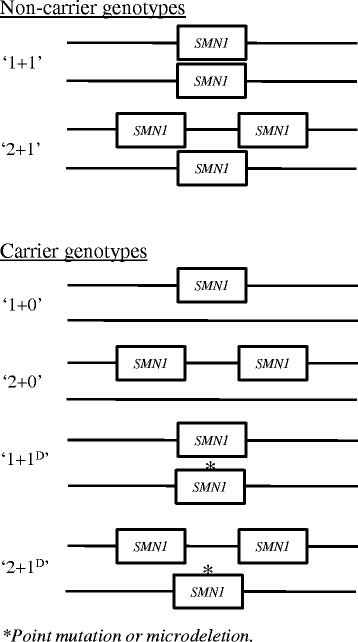
“This was seen in African Americans [46, 62, 77], as well as in Black Africans [66] and would indicate a higher proportion of 2-copy (duplication) alleles, thereby suggesting a higher number of ‘2 + 0’ carriers.”
BackgroundResultZerres, K. (1995) · Archives of Neurology · doi:10.1001/archneur.1995.00540290108025 · Cited by 563
McAndrew, P. E., Parsons, D. W., Simard, L. R., Rochette, C., Ray, P. N., Mendell, J. R., Prior, T. W., & Burghes, A. H. M. (1997) · The American Journal of Human Genetics · doi:10.1086/515465 · Cited by 543
Norwood, F. L. M., Harling, C., Chinnery, P. F., Eagle, M., Bushby, K., & Straub, V. (2009) · Brain · doi:10.1093/brain/awp236 · Cited by 541 · cited 1×
“Of three studies that investigated type II and type III separately, two found a higher prevalence of type III compared to type II [24, 32].”
BackgroundObservational study of spinal muscular atrophy type I and implications for clinical trials
Finkel, R. S., McDermott, M. P., Kaufmann, P., Darras, B. T., Chung, W. K., Sproule, D. M., Kang, P. B., Foley, A. R., Yang, M. L., Martens, W. B., et al. (2014) · Neurology · doi:10.1212/wnl.0000000000000741 · Cited by 528 · cited 1×
“4 months up to 4 years in studies performed after 2000 [35, 36].”
BackgroundPlastin 3 Is a Protective Modifier of Autosomal Recessive Spinal Muscular Atrophy
Oprea, G. E., Kröber, S., McWhorter, M. L., Rossoll, W., Müller, S., Krawczak, M., Bassell, G. J., Beattie, C. E., & Wirth, B. (2008) · Science · doi:10.1126/science.1155085 · Cited by 497
Incidence, prevalence, and gene frequency studies of chronic childhood spinal muscular atrophy.
Pearn, J. (1978) · Journal of Medical Genetics · doi:10.1136/jmg.15.6.409 · Cited by 472 · cited 1×
“For example, in the studies of John Pearn in Northeast England patients were defined as SMA type I if they had an onset of symptoms before the age of 12 months, so this might also include some early diagnosed SMA type II patients [41, 52].”
BackgroundChildhood spinal muscular atrophy: controversies and challenges
Mercuri, E., Bertini, E., & Iannaccone, S. T. (2012) · The Lancet Neurology · doi:10.1016/s1474-4422(12)70061-3 · Cited by 423 · cited 1×
“SMA type 0 is a very severe form with onset in utero, reduced or absent movements, contractures, and requirement for mechanical ventilation support at birth and death before six months of age, while SMA type IV is a mild late (adult) onset form that has a normal life expectancy [1, 2].”
BackgroundWirth, B., Herz, M., Wetter, A., Moskau, S., Hahnen, E., Rudnik-Schöneborn, S., Wienker, T., & Zerres, K. (1999) · The American Journal of Human Genetics · doi:10.1086/302369 · Cited by 368 · cited 2×
“In Table 6 also disease frequencies are estimated by combining the copy number results with an estimated small mutation (1) frequency of 4% [4, 5] and an estimated de novo mutation frequency of 2% [100].”
BackgroundMolecular analysis of spinal muscular atrophy and modification of the phenotype by SMN2
Mailman, M. D., Heinz, J. W., Papp, A. C., Snyder, P. J., Sedra, M. S., Wirth, B., Burghes, A. H. M., & Prior, T. W. (2002) · Genetics in Medicine · doi:10.1097/00125817-200201000-00004 · Cited by 364
Wirth, B., Brichta, L., Schrank, B., Lochmüller, H., Blick, S., Baasner, A., & Heller, R. (2006) · Human Genetics · doi:10.1007/s00439-006-0156-7 · Cited by 355
Self-citationThe changing natural history of spinal muscular atrophy type 1
Oskoui, M., Levy, G., Garland, C. J., Gray, J. M., O’Hagen, J., De Vivo, D. C., & Kaufmann, P. (2007) · Neurology · doi:10.1212/01.wnl.0000290830.40544.b9 · Cited by 321
Zerres, K., Rudnik-Schöneborn, S., Forrest, E., Lusakowska, A., Borkowska, J., & Hausmanowa-Petrusewicz, I. (1997) · Journal of the Neurological Sciences · doi:10.1016/s0022-510x(96)00284-5 · Cited by 296 · cited 1×
“Nowadays, a median life expectancy of around one year of age is estimated for type I patients [35–37], whereas in type II 75–93% of patients survive beyond 20 years of age [37–40] and life expectancy for type III is thought to be close to the normal population [20, 39].”
BackgroundHahnen, E., Forkert, R., Marke, C., Rudnik-Schöneborn, S., Schönling, J., Zerres, K., Creavin, T., & Wirth, B. (1995) · Human Molecular Genetics · doi:10.1093/hmg/4.10.1927 · Cited by 289
Newborn and carrier screening for spinal muscular atrophy
Prior, T. W., Snyder, P. J., Rink, B. D., Pearl, D. K., Pyatt, R. E., Mihal, D. C., Conlan, T., Schmalz, B., Montgomery, L., Ziegler, K., et al. (2010) · American Journal of Medical Genetics Part A · doi:10.1002/ajmg.a.33474 · Cited by 268 · cited 1×
“SMN2 is absent in 10–15% of the general population [101], and deletions of both SMN1 and SMN2 are embryonically lethal.”
BackgroundStructure and Organization of the Human Survival Motor Neurone (SMN) Gene
Bürglen, L., Lefebvre, S., Clermont, O., Burlet, P., Viollet, L., Cruaud, C., Munnich, A., & Melki, J. (1996) · Genomics · doi:10.1006/geno.1996.0147 · Cited by 267 · cited 1×
“This results in a frame-shift and production of a protein with a different C-terminal end, which is unstable and non-functional [3, 6].”
BackgroundEmerging therapies and challenges in spinal muscular atrophy
Farrar, M. A., Park, S. B., Vucic, S., Carey, K. A., Turner, B. J., Gillingwater, T. H., Swoboda, K. J., & Kiernan, M. C. (2017) · Annals of Neurology · doi:10.1002/ana.24864 · Cited by 247
A community survey of neurological disorders in Saudi Arabia: the Thugbah Study
Al Rajeh, S., Bademosi, O., Ismail, H., Awada, A., Dawodu, A., Al-Freihi, H., Assuhaimi, S., Borollosi, M., & Al-Shammasi, S. (1993) · Neuroepidemiology · doi:10.1159/000110316 · Cited by 215 · cited 1×
“Although the prevalence of SMA might be different in the Middle East when compared to Europe, in more than half of the cases parental consanguinity was observed, which could at least partially explain the high prevalence [29].”
BackgroundCobben, J. M., van der Steege, G., Grootscholten, P. M., de Visser, M., Scheffer, H., & Buys, C. H. C. M. (1995) · Europe PMC (PubMed Central) · Cited by 214
Finkel, R., Bertini, E., Muntoni, F., & Mercuri, E. (2015) · Neuromuscular Disorders · doi:10.1016/j.nmd.2015.04.009 · Cited by 210
Neuromuscular disorders in childhood: a descriptive epidemiological study from western Sweden
Darin, N., & Tulinius, M. (2000) · Neuromuscular Disorders · doi:10.1016/s0960-8966(99)00055-3 · Cited by 205 · cited 1×
“Of three studies that investigated type II and type III separately, two found a higher prevalence of type III compared to type II [24, 32].”
BackgroundButchbach, M. E. R. (2016) · Frontiers in Molecular Biosciences · doi:10.3389/fmolb.2016.00007 · Cited by 193
Genetic risk assessment in carrier testing for spinal muscular atrophy
Ogino, S., Leonard, D. G. B., Rennert, H., Ewens, W. J., & Wilson, R. B. (2002) · American Journal of Medical Genetics · doi:10.1002/ajmg.10425 · Cited by 189 · cited 1×
“Generally, an estimation of the incidence of all types of SMA of around 10 in 100,000 (1 in 10,000) live births is cited [20, 21].”
BackgroundWirth, B., Schmidt, T., Hahnen, E., Rudnik-Schöneborn, S., Krawczak, M., Müller-Myhsok, B., Schönling, J., & Zerres, K. (1997) · The American Journal of Human Genetics · doi:10.1086/301608 · Cited by 182 · cited 1×
“In Table 6 also disease frequencies are estimated by combining the copy number results with an estimated small mutation (1) frequency of 4% [4, 5] and an estimated de novo mutation frequency of 2% [100].”
BackgroundSpinal Muscular Atrophy: Survival Pattern and Functional Status
Chung, B. H. Y., Wong, V. C. N., & Ip, P. (2004) · Pediatrics · doi:10.1542/peds.2004-0668 · Cited by 178
Alías, L., Bernal, S., Fuentes-Prior, P., Barceló, M. J., Also, E., Martínez-Hernández, R., Rodríguez-Alvarez, F. J., Martín, Y., Aller, E., Grau, E., et al. (2009) · Human Genetics · doi:10.1007/s00439-008-0598-1 · Cited by 173 · cited 2×
“In Table 6 also disease frequencies are estimated by combining the copy number results with an estimated small mutation (1) frequency of 4% [4, 5] and an estimated de novo mutation frequency of 2% [100].”
BackgroundDifferences in SMN1 allele frequencies among ethnic groups within North America
Hendrickson, B. C., Donohoe, C., Akmaev, V. R., Sugarman, E. A., Labrousse, P., Boguslavskiy, L., Flynn, K., Rohlfs, E. M., Walker, A., Allitto, B., et al. (2009) · Journal of Medical Genetics · doi:10.1136/jmg.2009.066969 · Cited by 172 · cited 9×
“Hispanics [46, 77], but this was not seen in other studies [62, 69, 80].”
BackgroundResultInfluentialHomozygous SMN1 deletions in unaffected family members and modification of the phenotype by SMN2
Prior, T. W., Swoboda, K. J., Scott, H. D., & Hejmanowski, A. Q. (2004) · American Journal of Medical Genetics Part A · doi:10.1002/ajmg.a.30251 · Cited by 164
Hosseinibarkooie, S., Peters, M., Torres-Benito, L., Rastetter, R. H., Hupperich, K., Hoffmann, A., Mendoza-Ferreira, N., Kaczmarek, A., Janzen, E., Milbradt, J., et al. (2016) · The American Journal of Human Genetics · doi:10.1016/j.ajhg.2016.07.014 · Cited by 162 · cited 1×
“PLS3 restores the function of the neuromuscular junction, by stabilizing F-actin-dependent endocytosis [17].”
BackgroundIdentification of a candidate modifying gene for spinal muscular atrophy by comparative genomics
Scharf, J. M., Endrizzi, M. G., Wetter, A., Huang, S., Thompson, T. G., Zerres, K., Dietrich, W. F., Wirth, B., & Kunkel, L. M. (1998) · Nature Genetics · doi:10.1038/1753 · Cited by 154 · cited 1×
“NAIP, H4F5 and GTF2H2 are thought to be a modifiers due to their proximity to the SMN1 gene and NAIP also shows homology to apoptosis inhibitory proteins [12, 14, 16].”
BackgroundAbnormalities of the heart and great arteries in first trimester chromosomally abnormal fetuses
Hyett, J. A., Moscoso, G. J., & Nicolaides, K. H. (1997) · American Journal of Medical Genetics · doi:10.1002/(sici)1096-8628(19970317)69:2<159::aid-ajmg8>3.0.co;2-k · Cited by 154
Pearn, J. H. (1973) · Journal of Medical Genetics · doi:10.1136/jmg.10.3.260 · Cited by 147 · cited 1×
“For example, in the studies of John Pearn in Northeast England patients were defined as SMA type I if they had an onset of symptoms before the age of 12 months, so this might also include some early diagnosed SMA type II patients [41, 52].”
BackgroundOgino, S., Wilson, R. B., & Gold, B. (2004) · European Journal of Human Genetics · doi:10.1038/sj.ejhg.5201288 · Cited by 144 · cited 2×
“This implied that SMA type I, II and III constituted 60%, 27% and 12% of all SMA cases, respectively [30].”
BackgroundResultSpinal muscular atrophy: molecular genetics and diagnostics
Ogino, S., & Wilson, R. B. (2004) · Expert Review of Molecular Diagnostics · doi:10.1586/14737159.4.1.15 · Cited by 144 · cited 1×
“These last two genotypes are very rare [56, 57].”
BackgroundKurland, L. T. (1958) · Journal of Chronic Diseases · doi:10.1016/0021-9681(58)90002-x · Cited by 134 · cited 1×
“Furthermore, this total population consisted of only 30,000 persons [54].”
BackgroundHomozygous deletion of the survival motor neuron 2 gene is a prognostic factor in sporadic ALS
Veldink, J. H., van den Berg, L. H., Cobben, J. M., Stulp, R. P., De Jong, J. M. B. V., Vogels, O. J., Baas, F., Wokke, J. H. J., & Scheffer, H. (2001) · Neurology · doi:10.1212/wnl.56.6.749 · Cited by 120
Determination of SMN1 and SMN2 copy number using TaqMan™ technology
Anhuf, D., Eggermann, T., Rudnik‐Schöneborn, S., & Zerres, K. (2003) · Human Mutation · doi:10.1002/humu.10221 · Cited by 115
Su, Y.-N., Hung, C., Lin, S., Chen, F.-Y., Chern, J. P. S., Tsai, C., Chang, T.-S., Yang, C., Li, H., Ho, H., et al. (2011) · PLoS ONE · doi:10.1371/journal.pone.0017067 · Cited by 115
Wirth, B., Garbes, L., & Rießland, M. (2013) · Current Opinion in Genetics & Development · doi:10.1016/j.gde.2013.03.003 · Cited by 114
SMN genotypes producing less SMN protein increase susceptibility to and severity of sporadic ALS
Veldink, J. H., Kalmijn, S., Van der Hout, A. H., Lemmink, H. H., Groeneveld, G. J., Lummen, C., Scheffer, H., Wokke, J. H. J., & Van den Berg, L. H. (2005) · Neurology · doi:10.1212/01.wnl.0000174472.03292.dd · Cited by 109
Wang, C. (1996) · Human Molecular Genetics · doi:10.1093/hmg/5.3.359 · Cited by 109
Nonrandom tissue distribution of mutant mtDNA
Chinnery, P. F., Zwijnenburg, P. J. G., Walker, M., Howell, N., Taylor, R. W., Lightowlers, R. N., Bindoff, L., & Turnbull, D. M. (1999) · American Journal of Medical Genetics · doi:10.1002/(sici)1096-8628(19990827)85:5<498::aid-ajmg13>3.0.co;2-8 · Cited by 108
Epidemiology of Neuromuscular Diseases, Including the Postpolio Sequelae, in a Swedish County
Ahlström, G., Gunnarsson, L.-G., Leissner, P., & Sjödén, P.-O. (1993) · Neuroepidemiology · doi:10.1159/000110327 · Cited by 106
Deletion and conversion in spinal muscular atrophy patients: Is there a relationship to severity?
DiDonato, C. J., Ingraham, S. E., Mendell, J. R., Prior, T. W., Lenard, S., Moxley, R. T., Florence, J. M., & Burghes, A. H. M. (1997) · Annals of Neurology · doi:10.1002/ana.410410214 · Cited by 104
Technical standards and guidelines for spinal muscular atrophy testing
Prior, T. W., Nagan, N., Sugarman, E. A., Batish, S. V. D., & Braastad, C. D. (2011) · Genetics in Medicine · doi:10.1097/gim.0b013e318220d523 · Cited by 99 · cited 1×
“These last two genotypes are very rare [56, 57].”
BackgroundArkblad, E. L., Tulinius, M., Kroksmark, A., Henricsson, M., & Darín, N. (2009) · Acta Paediatrica · doi:10.1111/j.1651-2227.2008.01201.x · Cited by 96
The prevalence of inherited neuromuscular disease in Northern Ireland
Hughes, M. I., Hicks, E. M., Nevin, N. C., & Patterson, V. (1996) · Neuromuscular Disorders · doi:10.1016/0960-8966(94)00017-4 · Cited by 95
Luo, M., Liu, L., Peter, I., Zhu, J., Scott, S. A., Zhao, G., Eversley, C. D., Kornreich, R., Desnick, R. J., & Edelmann, L. J. (2013) · Genetics in Medicine · doi:10.1038/gim.2013.84 · Cited by 90 · cited 3×
“This was seen in African Americans [46, 62, 77], as well as in Black Africans [66] and would indicate a higher proportion of 2-copy (duplication) alleles, thereby suggesting a higher number of ‘2 + 0’ carriers.”
BackgroundResultSMN1 gene, but not SMN2 , is a risk factor for sporadic ALS
Corcia, P., Camu, W., Halimi, J. M., Vourc'h, P., Antar, C., Vedrine, S., Giraudeau, B., de Toffol, B., & Andres, C. R. (2006) · Neurology · doi:10.1212/01.wnl.0000233830.85206.1e · Cited by 87
Cusin, V., Clermont, O., Gérard, B., Chantereau, D., & Élion, J. (2003) · Journal of Medical Genetics · doi:10.1136/jmg.40.4.e39 · Cited by 86
A hungarian study on Werdnig-Hoffmann disease.
Czeizel, A. E., & Hamula, J. (1989) · Journal of Medical Genetics · doi:10.1136/jmg.26.12.761 · Cited by 77
Population screening and cascade testing for carriers of SMA
Smith, M. J., Calabro, V., Chong, B., Gardiner, N., Cowie, S., & du Sart, D. (2007) · European Journal of Human Genetics · doi:10.1038/sj.ejhg.5201821 · Cited by 77
Sheng-Yuan, Z., Xiong, F., Chen, Y., Yan, T., Zeng, J., Li, L., Zhang, Y., Chen, W., Bao, X., Zhang, C., et al. (2010) · European Journal of Human Genetics · doi:10.1038/ejhg.2010.54 · Cited by 71
Incidence of Spinal Muscular Atrophy in Poland – More Frequent than Predicted?
Jędrzejowska, M., Milewski, M. I., Zimowski, J. G., Zagożdżon, P., Kostera‐Pruszczyk, A., Borkowska, J., Sielska, D., Jurek, M., & Hausmanowa-Petrusewicz, I. (2010) · Neuroepidemiology · doi:10.1159/000275492 · Cited by 70
The Israeli national population program of genetic carrier screening for reproductive purposes
Zlotogora, J., Grotto, I., Kaliner, E., & Gamzu, R. (2015) · Genetics in Medicine · doi:10.1038/gim.2015.55 · Cited by 69
Congenital Myotonic Dystrophy: Incidence, Clinical Aspects and Early Prognosis
WESSTRöM, G., Bensch, J., & Schollin, J. (1986) · Acta Paediatrica · doi:10.1111/j.1651-2227.1986.tb10301.x · Cited by 69
Watihayati, M. S., Fatemeh, H., Marini, M., Atif, A. B., Mohammad, W. M. Z. W., Sasongko, T. H., Tang, T. H., Zabidi-Hussin, Z., Nishio, H., & Zilfalil, B. A. (2008) · Brain and Development · doi:10.1016/j.braindev.2008.08.012 · Cited by 64
Unaffected patients with a homozygous absence of the SMN1 gene
Jędrzejowska, M., Borkowska, J., Zimowski, J. G., Kostera‐Pruszczyk, A., Milewski, M. I., Jurek, M., Sielska, D., Kostyk, E., Nyka, W. M., Zaremba, J., et al. (2008) · European Journal of Human Genetics · doi:10.1038/ejhg.2008.41 · Cited by 64
He, J., Zhang, Q., Lin, Q., Chen, Y., Lin, X., Lin, M.-T., Murong, S.-X., Wang, N., & Chen, W. (2013) · Gene · doi:10.1016/j.gene.2012.12.109 · Cited by 64 · cited 1×
“NAIP, H4F5 and GTF2H2 are thought to be a modifiers due to their proximity to the SMN1 gene and NAIP also shows homology to apoptosis inhibitory proteins [12, 14, 16].”
BackgroundG�rard, B., Ginet, N., Matthijs, G., Evrard, P., Baumann, C., Silva, F. D., Gérard‐Blanluet, M., Mayer, M., Grandchamp, B., & Élion, J. (2000) · Human Mutation · doi:10.1002/1098-1004(200009)16:3<253::aid-humu8>3.0.co;2-8 · Cited by 64
Chen, K., Wang, Y. L., Rennert, H., Joshi, I. D., Mills, J. K., Leonard, D. G. B., & Wilson, R. B. (1999) · American Journal of Medical Genetics · Cited by 63
Huang, C., Chang, Y.-Y., Chen, C., Kuo, Y.-S., Hwu, W., Gerdes, T., & Ko, T. (2007) · Genetics in Medicine · doi:10.1097/gim.0b013e31803d35bc · Cited by 60
Prevalence of Neuromuscular Diseases in Chinese Children: A Study in Southern China
Chung, B. H., Wong, V. C. N., & Ip, P. (2003) · Journal of Child Neurology · doi:10.1177/08830738030180030201 · Cited by 58
Epidemiology of neuromuscular disorders in the under-20 population in Bologna province, Italy
Merlini, L., Stagni, S., Marri, E., & Granata, C. (1992) · Neuromuscular Disorders · doi:10.1016/0960-8966(92)90006-r · Cited by 52 · cited 1×
“56 per 100,000 persons aged less than 20 years [22].”
BackgroundTangsrud, S. E., & Halvorsen, S. (1988) · Clinical Genetics · doi:10.1111/j.1399-0004.1988.tb02854.x · Cited by 49
Epidemiology of Spinal Muscular Atrophies in a Sample of the Italian Population
Mostacciuolo, M. L., Danieli, G. A., Trevisan, C., Müller, E., & Angelini, C. I. (1992) · Neuroepidemiology · doi:10.1159/000110905 · Cited by 49
Large-scale population screening for spinal muscular atrophy: Clinical implications
Ben‐Shachar, S., Orr‐Urtreger, A., Bardugo, E., Shomrat, R., & Yaron, Y. (2011) · Genetics in Medicine · doi:10.1097/gim.0b013e3182017c05 · Cited by 46
Amara, A., Adala, L., Charfeddine, I. B., Mamaï, O., Mili, A., Lazreg, T. B., Hmida, D., Amri, F., Salem, N., Boughammura, L., et al. (2011) · European Journal of Paediatric Neurology · doi:10.1016/j.ejpn.2011.07.007 · Cited by 44
Spinal Muscular Atrophy Genetic Testing Experience at an Academic Medical Center
Ogino, S., Leonard, D. G. B., Rennert, H., & Wilson, R. B. (2002) · Journal of Molecular Diagnostics · doi:10.1016/s1525-1578(10)60680-0 · Cited by 44
Genetics of low spinal muscular atrophy carrier frequency in sub‐Saharan Africa
Sangaré, M., Hendrickson, B. C., Sango, H. A., Chen, K., Nofziger, J. H., Amara, A., Dutra, A., Schindler, A. B., Guindo, A., Traoré, M., et al. (2014) · Annals of Neurology · doi:10.1002/ana.24114 · Cited by 42 · cited 2×
“This was seen in African Americans [46, 62, 77], as well as in Black Africans [66] and would indicate a higher proportion of 2-copy (duplication) alleles, thereby suggesting a higher number of ‘2 + 0’ carriers.”
BackgroundResultLarson, J. L., Silver, A. J., Chan, D., Borroto, C., Spurrier, B., & Silver, L. M. (2015) · BMC Medical Genetics · doi:10.1186/s12881-015-0246-2 · Cited by 40 · cited 3×
“This is also demonstrated by the fact that some studies among Hispanics found much higher frequencies [69, 80], while others found that the frequencies were lower [46].”
ResultEpidemiological data on Werdnig-Hoffmann disease in Germany (West-Th�ringen)
Thieme, A., Mitulla, B., Schulze, F., & Spiegier, A. J. (1993) · Human Genetics · doi:10.1007/bf00218278 · Cited by 40 · cited 1×
“6 per 100,000) in a German study in the same region as the previously mentioned type I study that partially covered the same time period [33, 43].”
BackgroundSMA carrier testing: a meta‐analysis of differences in test performance by ethnic group
MacDonald, W. K., Hamilton, D. C., & Kuhle, S. (2014) · Prenatal Diagnosis · doi:10.1002/pd.4459 · Cited by 38 · cited 8×
“In their analysis they included 14 studies where ethnicities were described and results were broken down by SMA copy number [47].”
BackgroundInfluentialSomerville, M. J., Hunter, A. G. W., Aubry, H. L., Korneluk, R. G., MacKenzie, A., & Surh, L. C. (1997) · PubMed · Cited by 38
Evidence of reduced frequency of spinal muscular atrophy type I in the Cuban population
Zaldívar, T., Montejo, Y., Acevedo, A. M., Guerra, R., Vargas, J., Garofalo, N., Alvarez, R., Alvarez, M. A., & Hardiman, O. M. (2005) · Neurology · doi:10.1212/01.wnl.0000172860.41953.12 · Cited by 37
Carrier frequency of SMA by quantitative analysis of the SMN1 deletion in the Iranian population
Hasanzad, M., Azad, M. H., Kahrizi, K., Saffar, B., Nafisi, S., Keyhanidoust, Z. D., Azimian, M., Refah, A. A., Also‐Rallo, E., Urtizberea, J. A., et al. (2009) · European Journal of Neurology · doi:10.1111/j.1468-1331.2009.02693.x · Cited by 36 · cited 2×
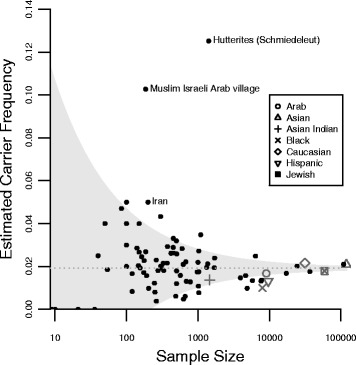
“However this is based on one study with a small sample size, furthermore, in Iran, consanguineous marriages are common [91].”
BackgroundCarrier incidence for spinal muscular atrophy in southern Chinese
Chan, V., Yip, B., Yam, I., Au, P., Lin, C. K., Wong, V. C. N., & Chan, T. (2004) · Journal of Neurology · doi:10.1007/s00415-004-0487-z · Cited by 36
Genetics of childhood spinal muscular atrophy.
Winsor, E. J. T., Murphy, E. G., Thompson, M. W., & Reed, T. E. (1971) · Journal of Medical Genetics · doi:10.1136/jmg.8.2.143 · Cited by 35
Single‐gene neurological disorders in south wales: An epidemiological study
MacMillan, J., & Harper, P. S. (1991) · Annals of Neurology · doi:10.1002/ana.410300314 · Cited by 34
Prevalence of type I spinal muscular atrophy in North Dakota
Burd, L., Short, S. K., Martsolf, J. T., & Nelson, R. A. (1991) · American Journal of Medical Genetics · doi:10.1002/ajmg.1320410216 · Cited by 33 · cited 1×
“All patients studied were Caucasian and no consanguinity was observed [53].”
BackgroundSpinal Muscular Atrophy (SMA) Subtype Concordance in Siblings: Findings From the Cure SMA Cohort
Jones, C. C., Cook, S. F., Jarecki, J., Belter, L. T., Reyna, S. P., Staropoli, J. F., Farwell, W. R., & Hobby, K. (2019) · Journal of Neuromuscular Diseases · doi:10.3233/jnd-190399 · Cited by 33
Self-citationChen, T., Tzeng, C., Wang, C., Wu, S., Chang, J., Yang, S., Hung, C., & Jong, Y. (2011) · Journal of the Neurological Sciences · doi:10.1016/j.jns.2011.06.002 · Cited by 30
The molecular basis of Spinal Muscular Atrophy (SMA) in South African black patients
Labrum, R. W., Rodda, J., & Krause, A. (2007) · Neuromuscular Disorders · doi:10.1016/j.nmd.2007.05.005 · Cited by 30 · cited 1×
“Lower carrier frequencies were also seen in a study comparing Black and White people in South Africa and a study among samples of the 1000 genome project [65, 80].”
ResultLee, T.-M., Kim, S. W., Lee, K.-S., Jin, H., Koo, S. K., Jo, I., Kang, S., & Jung, S. (2004) · Journal of Korean Medical Science · doi:10.3346/jkms.2004.19.6.870 · Cited by 30
Lúðvígsson, P., Ólafsson, E., & Hauser, W. A. (1999) · Neuroepidemiology · doi:10.1159/000026221 · Cited by 29
Homozygous SMN2 deletion is a protective factor in the Swedish ALS population
Corcia, P., Ingre, C., Blasco, H., Press, R., Praline, J., Antar, C., Veyrat‐Durebex, C., Guettard, Y.-O., Camu, W., Andersen, P. M., et al. (2012) · European Journal of Human Genetics · doi:10.1038/ejhg.2011.255 · Cited by 29
Carrier screening for spinal muscular atrophy in Italian population
Calì, F., Ruggeri, G., Chiavetta, V., Scuderi, C., Bianca, S., Barone, C., Ragalmuto, A., Schinocca, P., Vitello, G. A., Romano, V., et al. (2014) · Journal of Genetics · doi:10.1007/s12041-014-0323-x · Cited by 29
Fried, K., & Mundel, G. (1977) · Clinical Genetics · doi:10.1111/j.1399-0004.1977.tb00934.x · Cited by 28
Basel‐Vanagaite, L., Taub, E., Drasinover, V., Magal, N., Brudner, A., Zlotogora, J., & Shohat, M. (2008) · Genetic Testing · doi:10.1089/gte.2007.0030 · Cited by 28 · cited 1×
“However, these are isolated populations with a high degree of inbreeding [81, 89].”
BackgroundHEREDITARY MOTOR AND SENSORY NEUROPATHIES IN SWEDISH CHILDREN I
Hagberg, B. A., & Westerberg, B. (1983) · Acta Paediatrica · doi:10.1111/j.1651-2227.1983.tb09732.x · Cited by 28
Lyahyai, J., Sbiti, A., Barkat, A., Ratbi, I., & Sefiani, A. (2011) · Genetic Testing and Molecular Biomarkers · doi:10.1089/gtmb.2011.0149 · Cited by 27
Chong, J. X., Oktay, A. A., Dai, Z., Swoboda, K. J., Prior, T. W., & Ober, C. (2011) · European Journal of Human Genetics · doi:10.1038/ejhg.2011.85 · Cited by 25 · cited 1×
“However, these are isolated populations with a high degree of inbreeding [81, 89].”
BackgroundAhn, E.-J., Yum, M., Kim, E.-H., Yoo, H., Lee, B. H., Kim, G.-H., & Ko, T. (2017) · Journal of Clinical Neurology · doi:10.3988/jcn.2017.13.1.27 · Cited by 24
Population data on acute infantile and chronic childhood spinal muscular atrophy in Warsaw
Spiegler, A. W. J., Hausmanowa-Petrusewicz, I., Borkowska, J., & Kłopocka, A. (1990) · Human Genetics · doi:10.1007/bf00193198 · Cited by 23 · cited 1×
“In this study type Ib patients are mentioned, and are defined as patients diagnosed at birth or in the first months of life and living up to 30 years, whereas type II SMA was described as having an onset at the age of one year onwards [42].”
BackgroundChronic childhood spinal muscular atrophy in Germany (West-Th�ringen) ? an epidemiological study
Thieme, A., Mitulla, B., Schulze, F., & Spiegler, A. W. J. (1994) · Human Genetics · doi:10.1007/bf00212036 · Cited by 22 · cited 2×
“However, in the study in West-Thüringen, Germany patients had to survive till at least four years of age to be classified as chronic SMA [43].”
BackgroundA clinical, epidemiological and genetic study of hereditary motor neuropathies in Benghazi, Libya
Radhakrishnan, K., Thacker, A. K., & Maloo, J. C. (1988) · Journal of Neurology · doi:10.1007/bf00314486 · Cited by 19 · cited 3×
“In a small study among 75,000 persons in Libya, a high incidence (24 per 100,000 live births) was found, and this may partially be explained by a high degree of consanguinity [48].”
BackgroundInfluentialYoon, S., Lee, C., & Lee, K. (2010) · Annals of Laboratory Medicine · doi:10.3343/kjlm.2010.30.1.93 · Cited by 19
Outcome and experience of implementing spinal muscular atrophy carrier screening on sperm donors
Callum, P., Iger, J., Ray, M., Sims, C. A., & Falk, R. E. (2010) · Fertility and Sterility · doi:10.1016/j.fertnstert.2009.12.071 · Cited by 17
ascalet‐Guidon, M. P. S., Bois, E. P., Feingold, J., Mattei, J., Combes, J., & Hamon, C. (1984) · Clinical Genetics · doi:10.1111/j.1399-0004.1984.tb00785.x · Cited by 17
Majumdar, R., Rehana, Z., Jumah, M. A., & Fetaini, N. (2005) · Annals of Human Genetics · doi:10.1046/j.1529-8817.2004.00149.x · Cited by 16
Descriptive Epidemiology of Spinal Muscular Atrophy Type I in Estonia
Vaidla, E., Talvik, I., Kulla, A., Kahre, T., Hämarik, M., Napa, A., Metsvaht, T., Piirsoo, A., & Talvik, T. (2006) · Neuroepidemiology · doi:10.1159/000096128 · Cited by 14
Wang, K. C., Chang, C. C., Chang, Y., Wang, S.-H., Chiang, C.-K., & Tsai, C. (2015) · Journal of Neurogenetics · doi:10.3109/01677063.2015.1033098 · Cited by 13
Detection of Spinal Muscular Atrophy Carriers in a Sample of the Brazilian Population
Perina, K. C. B., Gouvêa, S. P., Genari, A. B., Funayama, C. A. R., Zanette, D. L., Silva, W. A., OLIVEIRA, A. B., Scola, R. H., Werneck, L. C., & Marques, W. (2011) · Neuroepidemiology · doi:10.1159/000324156 · Cited by 11
SMN1 gene duplications are more frequent in patients with progressive muscular atrophy
Kuźma‐Kozakiewicz, M., Jędrzejowska, M., & Kaźmierczak, B. (2013) · Amyotrophic Lateral Sclerosis and Frontotemporal Degeneration · doi:10.3109/21678421.2013.771367 · Cited by 11 · cited 2×
“Only ethnicities studied in more than one study are included CI confidence interval a) The isolated Muslim Israeli Arab village [59] has been omitted”
BackgroundThe infantile proximal spinal muscular atrophies in Switzerland.
Zellweger, H., & Hanhart, E. (1972) · PubMed · Cited by 8
Scoto, M., Main, M. L., Munot, P., Manzur, A. Y., & Francesco Muntoni, A. (2017) · doi:10.1136/archdischild-2017-084620.32 · Cited by 8
Landaburu, I., Gonzalvo, M. C., Clavero, A., Ramírez, J. P., Yoldi, A., Mozas, J., Zamora, S., Martinez, L., & Castilla, J. A. (2013) · European Journal of Obstetrics & Gynecology and Reproductive Biology · doi:10.1016/j.ejogrb.2013.06.022 · Cited by 7
Kvasnicova, M., Styková, J., & Hudec, P. (1994) · PubMed · Cited by 7
Halevy, R. S., Pesso, R., Garbian, N., Magal, N., & Shohat, M. (2010) · Genetic Testing and Molecular Biomarkers · doi:10.1089/gtmb.2009.0089 · Cited by 6
New Approaches in Molecular Diagnosis and Population Carrier Screening for Spinal Muscular Atrophy
Gonçalves-Rocha, M., Oliveira, J., Rodrigues, L., & Santos, R. (2011) · Genetic Testing and Molecular Biomarkers · doi:10.1089/gtmb.2010.0164 · Cited by 5
SMA subtype concordance in siblings: Findings from the cure SMA cohort
Jones, C. C., Cook, S. F., Hobby, K., & Jarecki, J. (2016) · Neuromuscular Disorders · doi:10.1016/j.nmd.2016.06.068 · Cited by 3
Self-citationContreras‐Capetillo, S., Gallardo‐Blanco, H. L., Cerda-Flores, R. M., Lugo-Trampe, J. D. J., TORRES-MUÑOZ, I. C., Oro, A. B., Esmer, C., & Villarreal, L. (2015) · Experimental and Therapeutic Medicine · doi:10.3892/etm.2015.2436 · Cited by 2 · cited 2×
“This is also demonstrated by the fact that some studies among Hispanics found much higher frequencies [69, 80], while others found that the frequencies were lower [46].”
Result
Research works printed but not linked: 2
- SPINRAZA® (Nusinersen) Approved in the European Union as First Treatment for Spinal Muscular Atrophy [ http://media.biogen.com/press-release/investor-relations/spinraza-nusinersen-approved-european-union-first-treatment-spinal-].
- Ignatius J Donner M H L Epidemiology of childhood disorders (in Finnish) Lihastautien Kehittyvä Tutkimus Ja Hoito 1989 Turku Kiasma
Cited by
Inflammation in CNS neurodegenerative diseases
Stephenson, J., Nutma, E., van der Valk, P., & Amor, S. (2018) · Immunology · doi:10.1111/imm.12922 · Cited by 966
Adeno-associated virus as a delivery vector for gene therapy of human diseases
Wang, J.-H., Gessler, D. J., Zhan, W., Gallagher, T. L., & Gao, G. (2024) · Signal Transduction and Targeted Therapy · doi:10.1038/s41392-024-01780-w · Cited by 904
Current clinical applications of in vivo gene therapy with AAVs
Mendell, J. R., Al-Zaidy, S. A., Rodino-Klapac, L. R., Goodspeed, K., Gray, S. J., Kay, C. N., Boye, S. L., Boye, S. E., George, L. A., Salabarria, S., et al. (2021) · Molecular Therapy · doi:10.1016/j.ymthe.2020.12.007 · Cited by 743
“This autosomal recessive disorder results from a mutation in the survival motor neuron SMN1 gene with an incidence of approximately 1:10,000 live births, 60% of whom have SMA type 1.(2,3) The human SMN gene is an inverted duplication on chromosome 5q13.”
BackgroundCalucho, M., Bernal, S., Alías, L., March, F., Venceslá, A., Rodríguez-Álvarez, F. J., Aller, E., Fernández, R. M., Borrego, S., Millán, J. M., et al. (2018) · Neuromuscular Disorders · doi:10.1016/j.nmd.2018.01.003 · Cited by 497
“3% in the meta-analysis vs the 50%–60% estimated by rate [32,33]).”
Mercuri, E., Sumner, C. J., Muntoni, F., Darras, B. T., & Finkel, R. S. (2022) · Nature Reviews Disease Primers · doi:10.1038/s41572-022-00380-8 · Cited by 430
Metadata
- Authors
- Verhaart, I. E. C., Robertson, A., Wilson, I. J., Aartsma-Rus, A., Cameron, S., Jones, C. C., Cook, S. F., & Lochmüller, H.
- Affiliations
- Newcastle University (GB)
- Biogen (United States) (US)
- Corresponding author
- Lochmüller, Hanns
- ORCID
- Venue
- Orphanet Journal of Rare Diseases
- Published
- 2017-07-04
- Volume
- 12
- Issue
- 1
- Pages
- 124-124
- ISSN
- 1750-1172 (ISSN-L)
- PMC
- PMC5496354
- OpenAlex
- W2733659072
- Cited by
- 739
- References
- 117
- Citations by year
- 2026: 82 · 2025: 108 · 2024: 125 · 2023: 91 · 2022: 90 · 2021: 91 · 2020: 63 · 2019: 45 · 2018: 33 · 2017: 2
- FWCI
- 5.52
- Type
- journal article
- Language
- en
- Open access
- gold
- doi.org
- Licence
- cc-by
- Locations
- Orphanet Journal of Rare Diseases (publishedVersion, cc-by)
- PubMed Central (publishedVersion, cc-by)
- PubMed (publishedVersion)
- Data Archiving and Networked Services (DANS) (submittedVersion)
- Leiden Repository (Leiden University) (submittedVersion)
- DOAJ (DOAJ: Directory of Open Access Journals) (submittedVersion, cc-by-sa)
- Newcastle University ePrints (Newcastle Univesity) (cc-by)
- Funders
- Biogen
- Topics
- Health Sciences › Medicine › Genetics (clinical) › Neurogenetic and Muscular Disorders Research
- Life Sciences › Neuroscience › Cellular and Molecular Neuroscience › Hereditary Neurological Disorders
- Life Sciences › Neuroscience › Cellular and Molecular Neuroscience › Genetic Neurodegenerative Diseases
- Keywords
- spinal muscular atrophy, chromosome 5q, SMN1, prevalence, incidence, carrier frequency, heterozygous carriers, SMA type I, phenotypic heterogeneity, genetic diagnosis, newborn screening
- MeSH terms
- Chromosomes, Human, Pair 5, Female, Humans, Male, Muscular Atrophy, Spinal, Incidence, Prevalence, Survival of Motor Neuron 1 Protein
About these checks
Registry, retraction, Cites and statistics results are computed, not judged, with one exception: a printed reference that no index lists is read once by a model before it counts as a citation error. Claims are extracted by a model and kept only when their quote appears verbatim in the text; each cited source is then checked, with a model’s help, for whether it says what the claim relies on. Those verdicts can be wrong — read the claim’s quote and the cited source before relying on one.
Statistics and arithmetic are recomputed, not judged.
Confidence bands are shown only for fields calibrated on our annotated test set. None is calibrated yet, so no band is shown.
What counts as a claim ›How we measure confidence ›How we check this ›
Are you an author, or do you see a problem with this page? Request a review
Data sources
Bibliographic data: Semantic Scholar, OpenAlex, Crossref.
Contains information from the Semantic Scholar Academic Graph Datasets, made available under the ODC Attribution License (ODC-BY 1.0).
Semantic Scholar’s data is described in: Kinney, R., et al. (2023). The Semantic Scholar Open Data Platform. arXiv:2301.10140.
