

Prevalence, incidence and carrier frequency of 5q-linked spinal muscular atrophy - a literature review
Open accessThe DOI matches its Crossref record; 118 of the 118 references it cites were found in a registry or an index.
Abstract
Spinal muscular atrophy linked to chromosome 5q (SMA) is a recessive, progressive, neuromuscular disorder caused by bi-allelic mutations in the SMN1 gene, resulting in motor neuron degeneration and variable presentation in relation to onset and severity. A prevalence of approximately 1-2 per 100,000 persons and incidence around 1 in 10,000 live births have been estimated with SMA type I accounting for around 60% of all cases. Since SMA is a relatively rare condition, studies of its prevalence and incidence are challenging. Most published studies are outdated and therefore rely on clinical rather than genetic diagnosis. Furthermore they are performed in small cohorts in small geographical regions and only study European populations. In addition, the heterogeneity of the condition can lead to delays and difficulties in diagnosing the condition, especially outside of specialist clinics, and contributes to the challenges in understanding the epidemiology of the disease. The frequency of unaffected, heterozygous carriers of the SMN1 mutations appears to be higher among Caucasian and Asian populations compared to the Black (Sub-Saharan African ancestry) population. However, carrier frequencies cannot directly be translated into incidence and prevalence, as very severe (death in utero) and very mild (symptom free in adults) phenotypes carrying bi-allelic SMN1 mutations exist, and their frequency is unknown. More robust epidemiological data on SMA covering larger populations based on accurate genetic diagnosis or newborn screening would be helpful to support planning of clinical studies, provision of care and therapies and evaluation of outcomes.
Overview
The claims and statistics of this paper haven’t been checked yet.
Free: it reads the open-access text and checks the first 5 claims that cite a source we can check. Create a free account to check every claim.
Integrity signals
Registry
Cites
Statistics
Figures
Verification
Claims the paper makes
The claims and statistics of this paper haven’t been checked yet.
Free: it reads the open-access text and checks the first 5 claims that cite a source we can check. Create a free account to check every claim.
Claims other papers make about this one
Each is checked against this paper’s own text: does it say what the citing paper says it does?
In the citing paper
“This autosomal recessive disorder results from a mutation in the survival motor neuron SMN1 gene with an incidence of approximately 1:10,000 live births, 60% of whom have SMA type 1.2,3”
From Current clinical applications of in vivo gene therapy with AAVs (2021) · cites this paper as [2]
Self-check
Percentages, sums and reported differences re-computed from the paper’s own numbers.
The self-check needs the paper’s full text.
Citations
Cites
Identification and characterization of a spinal muscular atrophy-determining gene
Lefebvre, S., Bürglen, L., Reboullet, S., Clermont, O., Burlet, P., Viollet, L., Benichou, B., Cruaud, C., Millasseau, P., Zeviani, M., et al. (1995) · Cell · doi:10.1016/0092-8674(95)90460-3 · Cited by 3,990 · cited 2×
“This results in a frame-shift and production of a protein with a different C-terminal end, which is unstable and non-functional [3, 6].”
BackgroundMethodPrevalence of Muscular Dystrophies: A Systematic Literature Review
Theadom, A., Rodrigues, M., Roxburgh, R., Balalla, S., Higgins, C., Bhattacharjee, R., Jones, K., Krishnamurthi, R., & Feigin, V. (2014) · Neuroepidemiology · doi:10.1159/000369343 · Cited by 2,046
Population frequencies of inherited neuromuscular diseases—A world survey
Emery, A. E. H. (1991) · Neuromuscular Disorders · doi:10.1016/0960-8966(91)90039-u · Cited by 1,448 · cited 1×
“In 1991, Alan Emery published a review estimating the incidence for SMA type I to be around 4–6 in 100,000 (1 in 12,500–1 in 16,667) live births [49], which was based on only three studies [50–52].”
BackgroundFeldkötter, M., Schwarzer, V., Wirth, R., Wienker, T. F., & Wirth, B. (2002) · The American Journal of Human Genetics · doi:10.1086/338627 · Cited by 1,004
Lunn, M. R., & Wang, C. H. (2008) · The Lancet · doi:10.1016/s0140-6736(08)60921-6 · Cited by 995
Roy, N., Mahadevan, M. S., McLean, M., Shutter, G., Yaraghi, Z., Farahani, R., Baird, S., Besner-Johnston, A., Lefebvre, C., Kang, X., et al. (1995) · Cell · doi:10.1016/0092-8674(95)90461-1 · Cited by 981 · cited 1×
“NAIP, H4F5 and GTF2H2 are thought to be a modifiers due to their proximity to the SMN1 gene and NAIP also shows homology to apoptosis inhibitory proteins [12, 14, 16].”
BackgroundSugarman, E. A., Nagan, N., Zhu, H., Akmaev, V. R., Zhou, Z., Rohlfs, E. M., Flynn, K., Hendrickson, B. C., Scholl, T., Sirko-Osadsa, D. A., et al. (2012) · European Journal of Human Genetics · doi:10.1038/ejhg.2011.134 · Cited by 661 · cited 2×
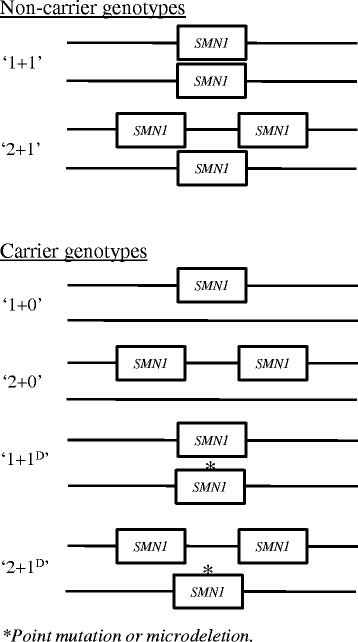
“This was seen in African Americans [46, 62, 77], as well as in Black Africans [66] and would indicate a higher proportion of 2-copy (duplication) alleles, thereby suggesting a higher number of ‘2 + 0’ carriers.”
BackgroundResultZerres, K. (1995) · Archives of Neurology · doi:10.1001/archneur.1995.00540290108025 · Cited by 563
McAndrew, P. E., Parsons, D. W., Simard, L. R., Rochette, C., Ray, P. N., Mendell, J. R., Prior, T. W., & Burghes, A. H. M. (1997) · The American Journal of Human Genetics · doi:10.1086/515465 · Cited by 543
Norwood, F. L. M., Harling, C., Chinnery, P. F., Eagle, M., Bushby, K., & Straub, V. (2009) · Brain · doi:10.1093/brain/awp236 · Cited by 541 · cited 1×
“Of three studies that investigated type II and type III separately, two found a higher prevalence of type III compared to type II [24, 32].”
Background
Research works printed but not linked: 2
- SPINRAZA® (Nusinersen) Approved in the European Union as First Treatment for Spinal Muscular Atrophy [ http://media.biogen.com/press-release/investor-relations/spinraza-nusinersen-approved-european-union-first-treatment-spinal-].
- Ignatius J Donner M H L Epidemiology of childhood disorders (in Finnish) Lihastautien Kehittyvä Tutkimus Ja Hoito 1989 Turku Kiasma
Cited by
Inflammation in CNS neurodegenerative diseases
Stephenson, J., Nutma, E., van der Valk, P., & Amor, S. (2018) · Immunology · doi:10.1111/imm.12922 · Cited by 966
Adeno-associated virus as a delivery vector for gene therapy of human diseases
Wang, J.-H., Gessler, D. J., Zhan, W., Gallagher, T. L., & Gao, G. (2024) · Signal Transduction and Targeted Therapy · doi:10.1038/s41392-024-01780-w · Cited by 904
Current clinical applications of in vivo gene therapy with AAVs
Mendell, J. R., Al-Zaidy, S. A., Rodino-Klapac, L. R., Goodspeed, K., Gray, S. J., Kay, C. N., Boye, S. L., Boye, S. E., George, L. A., Salabarria, S., et al. (2021) · Molecular Therapy · doi:10.1016/j.ymthe.2020.12.007 · Cited by 743
“This autosomal recessive disorder results from a mutation in the survival motor neuron SMN1 gene with an incidence of approximately 1:10,000 live births, 60% of whom have SMA type 1.(2,3) The human SMN gene is an inverted duplication on chromosome 5q13.”
BackgroundCalucho, M., Bernal, S., Alías, L., March, F., Venceslá, A., Rodríguez-Álvarez, F. J., Aller, E., Fernández, R. M., Borrego, S., Millán, J. M., et al. (2018) · Neuromuscular Disorders · doi:10.1016/j.nmd.2018.01.003 · Cited by 497
“3% in the meta-analysis vs the 50%–60% estimated by rate [32,33]).”
Mercuri, E., Sumner, C. J., Muntoni, F., Darras, B. T., & Finkel, R. S. (2022) · Nature Reviews Disease Primers · doi:10.1038/s41572-022-00380-8 · Cited by 430
Onasemnogene Abeparvovec: First Global Approval
Hoy, S. M. (2019) · Drugs · doi:10.1007/s40265-019-01162-5 · Cited by 337
Mendell, J. R., Al-Zaidy, S. A., Lehman, K. J., McColly, M., Lowes, L. P., Alfano, L. N., Reash, N. F., Iammarino, M. A., Church, K. R., Kleyn, A., et al. (2021) · JAMA Neurology · doi:10.1001/jamaneurol.2021.1272 · Cited by 295
Schorling, D. C., Pechmann, A., & Kirschner, J. (2020) · Journal of Neuromuscular Diseases · doi:10.3233/jnd-190424 · Cited by 276
Logroscino, G., Piccininni, M., Marin, B., Nichols, E., Abd-Allah, F., Abdelalim, A., Alahdab, F., Asgedom, S. W., Awasthi, A., Chaiah, Y., et al. (2018) · The Lancet Neurology · doi:10.1016/s1474-4422(18)30404-6 · Cited by 272
Advances in therapy for spinal muscular atrophy: promises and challenges
Groen, E. J. N., Talbot, K., & Gillingwater, T. H. (2018) · Nature Reviews Neurology · doi:10.1038/nrneurol.2018.4 · Cited by 235
Treatment Algorithm for Infants Diagnosed with Spinal Muscular Atrophy through Newborn Screening
Glascock, J., Sampson, J., Haidet-Phillips, A., Connolly, A., Darras, B., Day, J., Finkel, R., Howell, R. R., Klinger, K., Kuntz, N., et al. (2018) · Journal of Neuromuscular Diseases · doi:10.3233/jnd-180304 · Cited by 233
Health outcomes in spinal muscular atrophy type 1 following AVXS-101 gene replacement therapy
Al‐Zaidy, S., Pickard, A. S., Kotha, K., Alfano, L. N., Lowes, L., Paul, G., Church, K., Lehman, K., Sproule, D. M., Dabbous, O., et al. (2019) · Pediatric Pulmonology · doi:10.1002/ppul.24203 · Cited by 216
“The onset of symptoms for SMA1 occurs shortly after birth and prior to six months of age with a clinical hallmark of the inability to achieve independent sitting.(3,4) Infants with SMA1 rapidly losemotor function and ultimately succumb to respiratory complications often within the first year of life.”
BackgroundAge-dependent SMN expression in disease-relevant tissue and implications for SMA treatment
Ramos, D. M., d’Ydewalle, C., Gabbeta, V., Dakka, A., Klein, S. K., Norris, D. A., Matson, J., Taylor, S. J., Zaworski, P. G., Prior, T. W., et al. (2019) · Journal of Clinical Investigation · doi:10.1172/jci124120 · Cited by 190
“org Introduction The neuromuscular disease spinal muscular atrophy (SMA), affecting approximately 1 in 10,000 individuals, is the most common inherited cause of infant death (1).”
BackgroundOne Year of Newborn Screening for SMA – Results of a German Pilot Project
Vill, K., Kölbel, H., Schwartz, O., Blaschek, A., Olgemöller, B., Harms, E., Burggraf, S., Röschinger, W., Durner, J., Gläser, D., et al. (2019) · Journal of Neuromuscular Diseases · doi:10.3233/jnd-190428 · Cited by 187
“The study pointed out that many of the published prevalence or incidence rates predated genetic testing and that classification schemes have changed over the years, highlighting the need for contemporary data (29).”
BackgroundInfluentialKabir, M. T., Rahman, M. H., Shah, M., Jamiruddin, M. R., Basak, D., Al-Harrasi, A., Bhatia, S., Ashraf, G. M., Najda, A., El-kott, A. F., et al. (2022) · Biomedicine & Pharmacotherapy · doi:10.1016/j.biopha.2021.112610 · Cited by 181
Lowes, L. P., Alfano, L. N., Arnold, W. D., Shell, R., Prior, T. W., McColly, M., Lehman, K. J., Church, K., Sproule, D. M., Nagendran, S., et al. (2019) · Pediatric Neurology · doi:10.1016/j.pediatrneurol.2019.05.005 · Cited by 179
Newborn screening programs for spinal muscular atrophy worldwide: Where we stand and where to go
Dangouloff, T., Vrščaj, E., Servais, L., Osredkar, D., Adoukonou, T., Aryani, O., Barisic, N., Bashiri, F., Bastaki, L., Benitto, A., et al. (2021) · Neuromuscular Disorders · doi:10.1016/j.nmd.2021.03.007 · Cited by 176
Nusinersen treatment of spinal muscular atrophy: current knowledge and existing gaps
Gidaro, T., & Servais, L. (2019) · Developmental Medicine & Child Neurology · doi:10.1111/dmcn.14027 · Cited by 144
“SMA is the most common genetic cause of early infant death, with an incidence of approximately 1 in 11 000 live births.(2) SMA is an autosomal recessive disorder caused by a mutation in the survival motor neuron 1 gene (SMN1), located on chromosome 5q13.”
BackgroundThe implementation of newborn screening for spinal muscular atrophy: the Australian experience
Kariyawasam, D., Russell, J. S., Wiley, V., Alexander, I. E., & Farrar, M. A. (2020) · Genetics in Medicine · doi:10.1038/s41436-019-0673-0 · Cited by 167
Chaytow, H., Faller, K. M. E., Huang, Y.-T., & Gillingwater, T. H. (2021) · Cell Reports Medicine · doi:10.1016/j.xcrm.2021.100346 · Cited by 165
“Cell R This is an open access article und and typically a normal life expectancy.(1) However, this natural history of the disease will likely become obsolete as the majority of patients will receive at least one disease-modifying therapy.”
BackgroundSpinal Muscular Atrophy: The Past, Present, and Future of Diagnosis and Treatment
Nishio, H., Niba, E. T. E., Saito, T., Okamoto, K., Takeshima, Y., & Awano, H. (2023) · International Journal of Molecular Sciences · doi:10.3390/ijms241511939 · Cited by 202
New Treatments in Spinal Muscular Atrophy: Positive Results and New Challenges
Messina, S., & Sframeli, M. (2020) · Journal of Clinical Medicine · doi:10.3390/jcm9072222 · Cited by 180
Advances and limitations for the treatment of spinal muscular atrophy
Day, J., Howell, K., Place, A., Long, K. K., Rosselló-Urgell, J., Kertesz, N. L., & Nomikos, G. G. (2022) · BMC Pediatrics · doi:10.1186/s12887-022-03671-x · Cited by 173
“An overall prevalence of SMA between one and two per 100,000 people has been suggested [4] with a frequency of 1/11,000 births [5].”
BackgroundSubacute Liver Failure Following Gene Replacement Therapy for Spinal Muscular Atrophy Type 1
Feldman, A. G., Parsons, J. A., Dutmer, C. M., Veerapandiyan, A., Hafberg, E., Maloney, N., & Mack, C. L. (2020) · The Journal of Pediatrics · doi:10.1016/j.jpeds.2020.05.044 · Cited by 136
Antisense oligonucleotides in neurological disorders
Wurster, C. D., & Ludolph, A. C. (2018) · Therapeutic Advances in Neurological Disorders · doi:10.1177/1756286418776932 · Cited by 149
Humanising the mouse genome piece by piece
Zhu, F., Nair, R., Fisher, E., & Cunningham, T. J. (2019) · Nature Communications · doi:10.1038/s41467-019-09716-7 · Cited by 126
Sturm, S., Guenther, A., Jaber, B., Jordan, P., Kotbi, N. A., Parkar, N., Cleary, Y., Frances, N., Bergauer, T., Heinig, K., et al. (2018) · British Journal of Clinical Pharmacology · doi:10.1111/bcp.13786 · Cited by 113
Nusinersen for spinal muscular atrophy
Wurster, C. D., & Ludolph, A. C. (2018) · Therapeutic Advances in Neurological Disorders · doi:10.1177/1756285618754459 · Cited by 104
Dangouloff, T., Botty, C., Beaudart, C., Servais, L., & Hiligsmann, M. (2021) · Orphanet Journal of Rare Diseases · doi:10.1186/s13023-021-01695-7 · Cited by 115
“Background Spinal muscular atrophy (SMA) is the most common genetic cause of death in children, with an incidence of approximately 1 in 12,000 live births and a prevalence of approximately 1–2 per 100,000 persons [1].”
BackgroundResultMalone, D. C., Dean, R., Arjunji, R., Jensen, I., Cyr, P., Miller, B., Maru, B., Sproule, D. M., Feltner, D. E., & Dabbous, O. (2019) · Journal of Market Access & Health Policy · doi:10.1080/20016689.2019.1601484 · Cited by 99
“It is the second most common fatal autosomal recessive disorder after cystic fibrosis, with a prevalence of approximately 1–2 per 100,000 persons and incidence around 8 per 100,000 live births [2].”
BackgroundLally, C. A., Jones, C. C., Farwell, W. R., Reyna, S. P., Cook, S. F., & Flanders, W. D. (2017) · Orphanet Journal of Rare Diseases · doi:10.1186/s13023-017-0724-z · Cited by 116
Self-citationSpinal Muscular Atrophy Treatment in Patients Identified by Newborn Screening—A Systematic Review
Aragon‐Gawinska, K., Mouraux, C., Dangouloff, T., & Servais, L. (2023) · Genes · doi:10.3390/genes14071377 · Cited by 97
“Studies based on symptomatic patients reported incidence of 1 in 12,000 births [10].”
BackgroundOgbonmide, T., Rathore, R., Rangrej, S. B., Hutchinson, S., Lewis, M., Ojilere, S., Carvalho, V., & Kelly, I. (2023) · Cureus · doi:10.7759/cureus.36197 · Cited by 165
“Gene therapies include replacing, silencing, or knocking out a mutated gene or introducing a new gene to restore additional function or protection [9].”
BackgroundGarrison, L. P., Jackson, T., Paul, D. R., & Kenston, M. (2019) · Journal of Managed Care & Specialty Pharmacy · doi:10.18553/jmcp.2019.18378 · Cited by 116
Dabbous, O., Maru, B., Jansen, J. P., Lorenzi, M., Cloutier, M., Guérin, A., Pivneva, I., Wu, E. Q., Arjunji, R., Feltner, D., et al. (2019) · Advances in Therapy · doi:10.1007/s12325-019-00923-8 · Cited by 93
Evidence in focus: Nusinersen use in spinal muscular atrophy [RETIRED]
Michelson, D., Ciafaloni, E., Ashwal, S., Lewis, E., Narayanaswami, P., Oskoui, M., & Armstrong, M. J. (2018) · Neurology · doi:10.1212/wnl.0000000000006502 · Cited by 95
“It is the most severe form and accounts for 60% of incident cases.(4) Without supportive care or treatments, most childrenwith type 1 SMAdie before 2 years of age and are never able to sit independently.”
BackgroundChen, X., Harting, J., Farrow, E., Thiffault, I., Kasperavičiūtė, D., Hoischen, A., Gilissen, C., Pastinen, T., & Eberle, M. A. (2023) · The American Journal of Human Genetics · doi:10.1016/j.ajhg.2023.01.001 · Cited by 98
Current and emerging therapies for Duchenne muscular dystrophy and spinal muscular atrophy
Iftikhar, M., Frey, J., Shohan, M. J., Malek, S., & Mousa, S. A. (2020) · Pharmacology & Therapeutics · doi:10.1016/j.pharmthera.2020.107719 · Cited by 92
Pricing Zolgensma – the world’s most expensive drug
Nuijten, M. J. C. (2021) · Journal of Market Access & Health Policy · doi:10.1080/20016689.2021.2022353 · Cited by 82
“The budget impact analysis for The Netherlands is based on treatment of only symptomatic patients with SMA type 1, representing 60% of the SMA population [9].”
BackgroundInfluentialChallenges and opportunities in spinal muscular atrophy therapeutics
Yeo, C. J. J., Tizzano, E. F., & Darras, B. T. (2024) · The Lancet Neurology · doi:10.1016/s1474-4422(23)00419-2 · Cited by 101
Oligonucleotides to the (Gene) Rescue: FDA Approvals 2017–2019
Rüger, J., Ioannou, S., Castanotto, D., & Stein, C. A. (2019) · Trends in Pharmacological Sciences · doi:10.1016/j.tips.2019.10.009 · Cited by 80
Risdiplam: A Review in Spinal Muscular Atrophy
Paik, J. (2022) · CNS Drugs · doi:10.1007/s40263-022-00910-8 · Cited by 85
“infantileonset SMA), which occurs in infants aged < 6 months and accounts for over half of SMA cases; untreated infants experience severe developmental impairment and have a typical life expectancy of less than 2 years [4].”
BackgroundKay, D. M., Stevens, C. F., Parker, A., Saavedra‐Matiz, C. A., Sack, V., Chung, W. K., Chiriboga, C. A., Engelstad, K., Laureta, E. C., Farooq, O., et al. (2020) · Genetics in Medicine · doi:10.1038/s41436-020-0824-3 · Cited by 87
Jablonka, S., Hennlein, L., & Sendtner, M. (2022) · Neurological Research and Practice · doi:10.1186/s42466-021-00162-9 · Cited by 86
Burden of Spinal Muscular Atrophy (SMA) on Patients and Caregivers in Canada
McMillan, H. J., Gerber, B., Cowling, T., Khuu, W., Mayer, M., Wu, J. W., Maturi, B., Klein-Panneton, K., Cabalteja, C., & Lochmüller, H. (2021) · Journal of Neuromuscular Diseases · doi:10.3233/jnd-200610 · Cited by 67
“Many persons with SMA type II and type III survive into adulthood [3, 4, 38, 39], and would therefore require comprehensive care over a longer period of time compared to individuals with SMA type I who have a life expectancy of less than two years [3, 4, 38, 39].”
BackgroundSelf-citationPhysical exercise training for type 3 spinal muscular atrophy
Bartels, B., Montes, J., van der Pol, W. L., & de Groot, J. F. (2019) · Cochrane Database of Systematic Reviews · doi:10.1002/14651858.cd012120.pub2 · Cited by 80
“[PUBMED: 15570657] Verhaart 2017 Verhaart IEC, Robertson A, Wilson IN, Aartsma-Rus A, Cameron S, Jones CC, et al. Prevalence, incidence and carrier frequency of 5q-linked spinal muscular atrophy - a literature review.”
BackgroundNusinersen for spinal muscular atrophy type 1: Real‐world respiratory experience
Lavie, M., Diamant, N., Cahal, M., Sadot, E., Be’er, M., Fattal‐Valevski, A., Sagi, L., Domany, K. A., & Amirav, I. (2020) · Pediatric Pulmonology · doi:10.1002/ppul.25140 · Cited by 70
“SMA is the most common genetic cause of early infant death, with an incidence of approximately 1 in 10,000 live births.(2,3) The disease is classified into four subtypes based on age at onset of symptoms and motor milestone achievements.”
BackgroundHealth, wellbeing and lived experiences of adults with SMA: a scoping systematic review
Wan, H. W. Y., Carey, K. A., D’Silva, A., Vucic, S., Kiernan, M. C., Kasparian, N. A., & Farrar, M. A. (2020) · Orphanet Journal of Rare Diseases · doi:10.1186/s13023-020-1339-3 · Cited by 78
Fetal Gene Therapy Using a Single Injection of Recombinant AAV9 Rescued SMA Phenotype in Mice
Rashnonejad, A., Chermahini, G. A., Gündüz, C., Önay, H., Aykut, A., Durmaz, B., Baka, M., Su, Q., Gao, G., & Özkınay, F. (2019) · Molecular Therapy · doi:10.1016/j.ymthe.2019.08.017 · Cited by 65
“737/10,000 individuals).(1,2) Homozygous deletions in the survival motor neuron (SMN) gene cause a reduced level of the SMN protein, leading to the disease.”
BackgroundVidal‐Folch, N., Gavrilov, D. K., Raymond, K., Rinaldo, P., Tortorelli, S., Matern, D., & Oglesbee, D. (2018) · Clinical Chemistry · doi:10.1373/clinchem.2018.293712 · Cited by 65
Reilly, A., Chehadé, L., & Kothary, R. (2022) · Gene Therapy · doi:10.1038/s41434-022-00349-y · Cited by 74
“BACKGROUND Spinal Muscular Atrophy (SMA) is an autosomal recessive neurodegenerative disorder with an incidence of around 1:10,000 live births [1, 2].”
BackgroundOverview of Current Drugs and Molecules in Development for Spinal Muscular Atrophy Therapy
Shorrock, H. K., Gillingwater, T. H., & Groen, E. J. N. (2018) · Drugs · doi:10.1007/s40265-018-0868-8 · Cited by 67
“SMA is the most common genetic cause of infant mortality and occurs in approximately one in 10,000 live births [2].”
BackgroundObligations of the “Gift”: Reciprocity and Responsibility in Precision Medicine
Lee, S. S.-J. (2021) · The American Journal of Bioethics · doi:10.1080/15265161.2020.1851813 · Cited by 51
Dangouloff, T., Hiligsmann, M., Deconinck, N., D’Amico, A., Seferian, A., Boemer, F., & Servais, L. (2022) · Developmental Medicine & Child Neurology · doi:10.1111/dmcn.15286 · Cited by 55
“It is the most common genetic cause of infant mortality with an incidence of approximately 1 in 10 000 live births.(2,3) SMA is linked to a homozygous deletion of the survival motor neuron 1, telomeric (SMN1) gene.”
BackgroundGene Therapy for Spinal Muscular Atrophy: An Emerging Treatment Option for a Devastating Disease
Rao, V. K., Kapp, D., & Schroth, M. K. (2018) · Journal of Managed Care & Specialty Pharmacy · doi:10.18553/jmcp.2018.24.12-a.s3 · Cited by 78
Metabolic Dysfunction in Spinal Muscular Atrophy
Deguise, M., Chehadé, L., & Kothary, R. (2021) · International Journal of Molecular Sciences · doi:10.3390/ijms22115913 · Cited by 64
“The estimated incidence of SMA is 1 in 11,000 live births with a reported carrier frequency of 1 in 40, making it one of the most common inherited neurodegenerative diseases [2,3].”
BackgroundSystematic Literature Review of the Natural History of Spinal Muscular Atrophy
Ribero, V. A., Martí, Y., Batson, S., Mitchell, S., Gorni, K., Gusset, N., Oskoui, M., Servais, L., & Sutherland, C. S. (2023) · Neurology · doi:10.1212/wnl.0000000000207878 · Cited by 58
Neurodegenerative Diseases: Their Onset, Epidemiology, Causes and Treatment
Zaib, S., Javed, H., Khan, I. A., Jaber, F. T., Sohail, A., Zaib, Z., Mehboob, T., Tabassam, N., & Ogaly, H. A. (2023) · ChemistrySelect · doi:10.1002/slct.202300225 · Cited by 59
Bonanno, S., Marcuzzo, S., Malacarne, C., Giagnorio, E., Masson, R., Zanin, R., Arnoldi, M. T., Andreetta, F., Simoncini, O., Venerando, A., et al. (2020) · Biomedicines · doi:10.3390/biomedicines8020021 · Cited by 55
“The incidence of all types of SMA is approximately 1/10,000 live births, with a prevalence of 1-2/100,000 persons [4].”
BackgroundMirea, A., Shelby, E.-S., Axente, M., Badina, M., Pădure, L., Leanca, M. C., Dima, V., & Sporea, C. (2021) · Journal of Clinical Medicine · doi:10.3390/jcm10235540 · Cited by 50
“SMA has an incidence of about 1 in 10,000 live births [6] and a worldwide carrier frequency of 1 in 40 to 1 in 60 [7].”
BackgroundAn integrated modelling methodology for estimating the prevalence of centronuclear myopathy
Vandersmissen, I., Biancalana, V., Servais, L., Dowling, J. J., Stichele, G. V., Rooijen, S. V., & Thielemans, L. A. (2018) · Neuromuscular Disorders · doi:10.1016/j.nmd.2018.06.012 · Cited by 53
Gusset, N., Stalens, C., Stumpe, E., Klouvi, L., Méjat, A., Ouillade, M.-C., & de Lemus, M. (2021) · Neuromuscular Disorders · doi:10.1016/j.nmd.2021.01.012 · Cited by 52
“Spinal muscular atrophy (SMA) is a rare, autosomal ecessive neuromuscular disorder occurring in approximately in 10,000 live births [1] .”
BackgroundRibero, V. A., Daigl, M., Martí, Y., Gorni, K., Evans, R., Scott, D. A., Mahajan, A., Abrams, K. R., & Hawkins, N. (2022) · Journal of Comparative Effectiveness Research · doi:10.2217/cer-2021-0216 · Cited by 59
History of development of the life-saving drug “Nusinersen” in spinal muscular atrophy
Qiu, J., Wu, L., Qu, R., Jiang, T., Bai, J., Sheng, L., Feng, P., & Sun, J. (2022) · Frontiers in Cellular Neuroscience · doi:10.3389/fncel.2022.942976 · Cited by 51
“Unfortunately, according to epidemiological surveys, type I patients account for the majority of SMA cases (Verhaart et al., 2017).”
BackgroundStettner, G. M., Hasselmann, O., Tscherter, A., Galiart, E., Jacquier, D., & Klein, A. (2023) · BMC Neurology · doi:10.1186/s12883-023-03133-6 · Cited by 52
“With an overall incidence of approximately 1 in 6000 to 10,000 live births [7], SMA was a leading cause of infant mortality prior to the introduction of disease modifying therapies.”
BackgroundGene therapy for spinal muscular atrophy: the Qatari experience
Ali, H. G., Ibrahim, K. O., Elsaid, M. F., Mohamed, R., Abeidah, M., Rawwas, A. O. A., Elshafey, K., Al-Mulla, H., El‐Akouri, K., AlMulla, M., et al. (2021) · Gene Therapy · doi:10.1038/s41434-021-00273-7 · Cited by 53
Weng, W., Hsu, Y.-K., Chang, F.-M., Lin, C., Hwu, W., Lee, W., Lee, N., & Chien, Y. (2020) · Genetics in Medicine · doi:10.1038/s41436-020-00987-w · Cited by 48
Prevalence of Spinal Muscular Atrophy in the Era of Disease-Modifying Therapies
Coratti, G., Ricci, M., Capasso, A., D’Amico, A., Sansone, V., Bruno, C., Messina, S., Ricci, F., Mongini, T., Coccia, M., et al. (2022) · Neurology · doi:10.1212/wnl.0000000000201654 · Cited by 46
Motor Neuron Gene Therapy: Lessons from Spinal Muscular Atrophy for Amyotrophic Lateral Sclerosis
Tosolini, A. P., & Sleigh, J. N. (2017) · Frontiers in Molecular Neuroscience · doi:10.3389/fnmol.2017.00405 · Cited by 53
Belter, L. T., Cook, S. F., Crawford, T. O., Jarecki, J., Jones, C. C., Kissel, J. T., Schroth, M. K., & Hobby, K. (2018) · Journal of Neuromuscular Diseases · doi:10.3233/jnd-170292 · Cited by 47
“Natural history studies in type II and III SMA reflect survival well into adulthood [6, 7, 10, 11].”
BackgroundSelf-citationGowda, V. L., Atherton, M., Murugan, A., Servais, L., Sheehan, J., Standing, E., Manzur, A. Y., Scoto, M., Baranello, G., Munot, P., et al. (2023) · The Lancet Regional Health - Europe · doi:10.1016/j.lanepe.2023.100817 · Cited by 53
Bayoumy, S., Verberk, I. M. W., Vermunt, L., Willemse, E. A. J., den Dulk, B., van der Ploeg, A. T., Pajkrt, D., Nitz, E., van den Hout, J. M. P., van der Post, J., et al. (2024) · Clinical Chemistry and Laboratory Medicine (CCLM) · doi:10.1515/cclm-2023-1311 · Cited by 48
Spinal Muscular Atrophy Update in Best Practices
Schroth, M. K., Deans, J., Arya, K., Castro, D., Vivo, D. C. D., Gibbons, M. A., Ionita, C., Kuntz, N. L., Lakhotia, A., Knierbein, E. E. N., et al. (2024) · Neurology Clinical Practice · doi:10.1212/cpj.0000000000200310 · Cited by 52
Universal screening for thyroid disease during pregnancy should be performed
Stagnaro‐Green, A., Dong, A. C., & Stephenson, M. D. (2019) · Best Practice & Research Clinical Endocrinology & Metabolism · doi:10.1016/j.beem.2019.101320 · Cited by 61
Emerging Oligonucleotide Therapeutics for Rare Neuromuscular Diseases
Aoki, Y., & Wood, M. J. A. (2021) · Journal of Neuromuscular Diseases · doi:10.3233/jnd-200560 · Cited by 48
“Spinal muscular atrophy (SMA), one of the most common genetic causes of infantile death, is caused by a mutation in the survival motor neuron (SMN1) gene, with an incidence of 1:10,000 [74].”
BackgroundSpinal Muscular Atrophy Treatments, Newborn Screening, and the Creation of a Neurogenetics Urgency
Butterfield, R. J. (2021) · Seminars in Pediatric Neurology · doi:10.1016/j.spen.2021.100899 · Cited by 51
The Antisense Oligonucleotide Nusinersen for Treatment of Spinal Muscular Atrophy
Edinoff, A. N., Nguyen, L. H., Odisho, A. S., Maxey, B. S., Pruitt, J., Girma, B., Cornett, E. M., Kaye, A. M., & Kaye, A. D. (2021) · Orthopedic Reviews · doi:10.52965/001c.24934 · Cited by 48
Cumplido, C., Ramos, J., Delgado-Castillejo, E., Garcés‐Castellote, E., Puyuelo, G., Destarac, M. A., Barquín-Santos, E., Plaza, A., Hernández, M., Gutiérrez, A., et al. (2022) · Journal of NeuroEngineering and Rehabilitation · doi:10.1186/s12984-022-01055-x · Cited by 43
A Novel System for Spinal Muscular Atrophy Screening in Newborns: Japanese Pilot Study
Shinohara, M., Niba, E. T. E., Wijaya, Y. O. S., Takayama, I., Mitsuishi, C., Kumasaka, S., Kondo, Y., Takatera, A., Hokuto, I., Morioka, I., et al. (2019) · International Journal of Neonatal Screening · doi:10.3390/ijns5040041 · Cited by 50
Markati, T., Fisher, G., Ramdas, S., & Servais, L. (2022) · Expert Opinion on Investigational Drugs · doi:10.1080/13543784.2022.2056836 · Cited by 43
“The most common form, called 5q-SMA, is caused by a homozygous deletion or loss-of-function mutations in the survival of motor neuron 1 (SMN1) gene on locus 5q13 of chromosome 5, which codes for the homonymous survival motor neuron (SMN) protein [1,2].”
BackgroundA 20-year Clinical and Genetic Neuromuscular Cohort Analysis in Lebanon: An International Effort
Mégarbané, A., Bizzari, S., Deepthi, A., Sabbagh, S., Mansour, H., Chouery, É., Hmaimess, G., Jabbour, R., Mehawej, C., Alame, S., et al. (2021) · Journal of Neuromuscular Diseases · doi:10.3233/jnd-210652 · Cited by 42
“SMA is an autosomal recessive lower alpha motor neuron disease globally estimated to affect ∼1 in 4,000 to 20,000 births [9].”
BackgroundCost-Effectiveness of Newborn Screening for Spinal Muscular Atrophy in England
Weidlich, D., Servais, L., Kausar, I., Howells, R., & Bischof, M. (2023) · Neurology and Therapy · doi:10.1007/s40120-023-00489-2 · Cited by 43
“SMA type 1 is the most common (accounting for 50–60% of cases) [3, 4] and most severe form of SMA, with onset in early infancy.”
BackgroundMartí, Y., Ribero, V. A., Batson, S., Mitchell, S., Gorni, K., Gusset, N., Oskoui, M., Servais, L., Deconinck, N., McGrattan, K. E., et al. (2024) · Journal of Neuromuscular Diseases · doi:10.3233/jnd-230248 · Cited by 43
Risdiplam treatment has not led to retinal toxicity in patients with spinal muscular atrophy
Sergott, R. C., Amorelli, G. M., Baranello, G., Barreau, E., Beres, S., Kane, S., Mercuri, E. M., Orazi, L., SantaMaria, M., Tremolada, G., et al. (2020) · Annals of Clinical and Translational Neurology · doi:10.1002/acn3.51239 · Cited by 41
“Without therapeutic intervention, it is the leading genetic cause of mortality in infants and young children, with an incidence of 1 in 10,000 live births.(5) SMA manifests in various degrees of severity defined by age of onset and highest motor milestone achieved;(2) there are three main subtypes: Type 1 (patients ne…”
BackgroundGrowth patterns in children with spinal muscular atrophy
Amicis, R. S. D., Baranello, G., Foppiani, A., Leone, A., Battezzati, A., Bedogni, G., Ravella, S., Giaquinto, E., Mastella, C., Agosto, C., et al. (2021) · Orphanet Journal of Rare Diseases · doi:10.1186/s13023-021-02015-9 · Cited by 46
“SMA has an incidence of about 1 in 6000 to 1 in 10,000 live births [3] and is categorized into five different phenotypes based on the age of onset and the highest level of motor function achieved [4].”
BackgroundNewborn Screening for Spinal Muscular Atrophy in China Using DNA Mass Spectrometry
Lin, Y., Lin, C., Yin, X., Zhu, L., Yang, J., Shen, Y., Yang, C., Chen, X., Hu, H., Ma, Q., et al. (2019) · Frontiers in Genetics · doi:10.3389/fgene.2019.01255 · Cited by 40
Newborn Screening for Spinal Muscular Atrophy: Ontario Testing and Follow-up Recommendations
McMillan, H. J., Kernohan, K. D., Yeh, E., Amburgey, K., Boyd, J. R., Campbell, C., Dowling, J. J., Gonorazky, H. D., Marcadier, J., Tarnopolsky, M. A., et al. (2020) · Canadian Journal of Neurological Sciences / Journal Canadien des Sciences Neurologiques · doi:10.1017/cjn.2020.229 · Cited by 46
Hahn, A., Günther, R., Ludolph, A. C., Schwartz, O., Trollmann, R., Weydt, P., Weiler, M., Neuland, K., Schwaderer, M. S., Hagenacker, T., et al. (2022) · Orphanet Journal of Rare Diseases · doi:10.1186/s13023-022-02420-8 · Cited by 40
Cost-Effectiveness of Newborn Screening for Spinal Muscular Atrophy in The Netherlands
Velikanova, R., van der Schans, S., Bischof, M., van Olden, R. W., Postma, M. J., & Boersma, C. (2022) · Value in Health · doi:10.1016/j.jval.2022.06.010 · Cited by 45
“The reported incidence of SMA in the literature varies from 1:7000 to 1:11000 births,(4-6) and the estimated prevalence is approximately 1 to 2 per 100 000 population.(7) Three SMA treatments have been approved by the European Medicines Agency and the US Food and Drug Administration: nusinersen (Spinraza), onasemnogen…”
BackgroundEffects of spinal deformities on lung development in children: a review
Wang, Y., Wang, D., Zhang, G., Ma, B., Ma, Y., Yang, Y., Xing, S., Kang, X., & Gao, B. (2023) · Journal of Orthopaedic Surgery and Research · doi:10.1186/s13018-023-03665-0 · Cited by 46
“The progressive weakness of trunk/back muscles while vertebral column continues to grow against gravity, leads to development of scoliosis, pelvic obliquity and hip subluxation [36, 37].”
BackgroundUBA1/GARS-dependent pathways drive sensory-motor connectivity defects in spinal muscular atrophy
Shorrock, H. K., van der Hoorn, D., Boyd, P. J., Hurtado, M. L., Lamont, D. J., Wirth, B., Sleigh, J. N., Schiavo, G., Wishart, T. M., Groen, E. J. N., et al. (2018) · Brain · doi:10.1093/brain/awy237 · Cited by 40
Cost effectiveness of nusinersen for patients with infantile-onset spinal muscular atrophy in US
Thokala, P., Stevenson, M., Kumar, V., Ren, S., Ellis, A. G., & Chapman, R. H. (2020) · Cost Effectiveness and Resource Allocation · doi:10.1186/s12962-020-00234-8 · Cited by 40
Zizzi, C. E., Luebbe, E. A., Mongiovi, P. C., Hunter, M., Dilek, N., Garland, C., Ciafaloni, E., Zaidman, C. M., Kissel, J. T., McDermott, M., et al. (2021) · Muscle & Nerve · doi:10.1002/mus.27223 · Cited by 38
“Spinal muscular atrophy (SMA) is an autosomal recessive neuromuscular disorder with an incidence of approximately 1 in 12 000 live births.(1) The severity of disease in patients with SMA is highly variable.”
BackgroundMazzella, A., Curry, M. A., Belter, L. T., Cruz, R. E., & Jarecki, J. (2021) · Orphanet Journal of Rare Diseases · doi:10.1186/s13023-021-01701-y · Cited by 43
Gene-Targeting Therapeutics for Neurological Disease: Lessons Learned from Spinal Muscular Atrophy
Ravi, B., Chan-Cortés, M. H., & Sumner, C. J. (2021) · Annual Review of Medicine · doi:10.1146/annurev-med-070119-115459 · Cited by 39
Spinal Muscular Atrophy: Diagnosis, Incidence, and Newborn Screening in Japan
Kimizu, T., Ida, S., Okamoto, K., Awano, H., Niba, E. T. E., Wijaya, Y. O. S., Okazaki, S., Shimomura, H., Lee, T., Tominaga, K., et al. (2021) · International Journal of Neonatal Screening · doi:10.3390/ijns7030045 · Cited by 40
“According to a previous report, it has a prevalence of approximately 1–2 per 100,000 individuals and an incidence of around 1 in 10,000 live births [2].”
BackgroundThe Role of Sphingomyelin and Ceramide in Motor Neuron Diseases
McCluskey, G., Donaghy, C. G., Morrison, K. E., McConville, J., Duddy, W. J., & Duguez, S. (2022) · Journal of Personalized Medicine · doi:10.3390/jpm12091418 · Cited by 43
“The majority (60%) of cases of SMA are SMA Type 1, the most severe type with disease onset at <6 months and a typical survival of 2 years [6,8].”
BackgroundApplications of brain-computer interfaces in neurodegenerative diseases
Tayebi, H., Azadnajafabad, S., Maroufi, S. F., Pour‐Rashidi, A., Khorasanizadeh, M., Faramarzi, S., & Slavin, K. V. (2023) · Neurosurgical Review · doi:10.1007/s10143-023-02038-9 · Cited by 41
“Studies conducted on the incidence and prevalence of the disease are few and mostly based on clinical findings [63].”
BackgroundOnasemnogene abeparvovec for the treatment of spinal muscular atrophy
McMillan, H. J., Proud, C. M., Farrar, M. A., Alexander, I. E., Muntoni, F., & Servais, L. (2022) · Expert Opinion on Biological Therapy · doi:10.1080/14712598.2022.2066471 · Cited by 39
Costs of Illness of Spinal Muscular Atrophy: A Systematic Review
Landfeldt, E., Pechmann, A., McMillan, H. J., Lochmüller, H., & Sejersen, T. (2021) · Applied Health Economics and Health Policy · doi:10.1007/s40258-020-00624-2 · Cited by 35
Self-citation
Metadata
- Authors
- Verhaart, I. E. C., Robertson, A., Wilson, I. J., Aartsma-Rus, A., Cameron, S., Jones, C. C., Cook, S. F., & Lochmüller, H.
- Affiliations
- Newcastle University (GB)
- Biogen (United States) (US)
- Corresponding author
- Lochmüller, Hanns
- ORCID
- Venue
- Orphanet Journal of Rare Diseases
- Published
- 2017-07-04
- Volume
- 12
- Issue
- 1
- Pages
- 124-124
- ISSN
- 1750-1172 (ISSN-L)
- PMC
- PMC5496354
- OpenAlex
- W2733659072
- Cited by
- 739
- References
- 117
- Citations by year
- 2026: 82 · 2025: 108 · 2024: 125 · 2023: 91 · 2022: 90 · 2021: 91 · 2020: 63 · 2019: 45 · 2018: 33 · 2017: 2
- FWCI
- 5.52
- Type
- journal article
- Language
- en
- Open access
- gold
- doi.org
- Licence
- cc-by
- Locations
- Orphanet Journal of Rare Diseases (publishedVersion, cc-by)
- PubMed Central (publishedVersion, cc-by)
- PubMed (publishedVersion)
- Data Archiving and Networked Services (DANS) (submittedVersion)
- Leiden Repository (Leiden University) (submittedVersion)
- DOAJ (DOAJ: Directory of Open Access Journals) (submittedVersion, cc-by-sa)
- Newcastle University ePrints (Newcastle Univesity) (cc-by)
- Funders
- Biogen
- Topics
- Health Sciences › Medicine › Genetics (clinical) › Neurogenetic and Muscular Disorders Research
- Life Sciences › Neuroscience › Cellular and Molecular Neuroscience › Hereditary Neurological Disorders
- Life Sciences › Neuroscience › Cellular and Molecular Neuroscience › Genetic Neurodegenerative Diseases
- Keywords
- spinal muscular atrophy, chromosome 5q, SMN1, prevalence, incidence, carrier frequency, heterozygous carriers, SMA type I, phenotypic heterogeneity, genetic diagnosis, newborn screening
- MeSH terms
- Chromosomes, Human, Pair 5, Female, Humans, Male, Muscular Atrophy, Spinal, Incidence, Prevalence, Survival of Motor Neuron 1 Protein
About these checks
Registry, retraction, Cites and statistics results are computed, not judged, with one exception: a printed reference that no index lists is read once by a model before it counts as a citation error. Claims are extracted by a model and kept only when their quote appears verbatim in the text; each cited source is then checked, with a model’s help, for whether it says what the claim relies on. Those verdicts can be wrong — read the claim’s quote and the cited source before relying on one.
Statistics and arithmetic are recomputed, not judged.
Confidence bands are shown only for fields calibrated on our annotated test set. None is calibrated yet, so no band is shown.
What counts as a claim ›How we measure confidence ›How we check this ›
Are you an author, or do you see a problem with this page? Request a review
Data sources
Bibliographic data: Semantic Scholar, OpenAlex, Crossref.
Contains information from the Semantic Scholar Academic Graph Datasets, made available under the ODC Attribution License (ODC-BY 1.0).
Semantic Scholar’s data is described in: Kinney, R., et al. (2023). The Semantic Scholar Open Data Platform. arXiv:2301.10140.
