

The DOI matches its Crossref record; 2 of the 2 references it cites were found in a registry or an index.
Equivocal expression of emotions in children with Prader-Willi syndrome: what are the consequences for emotional abilities and social adjustment?
Abstract
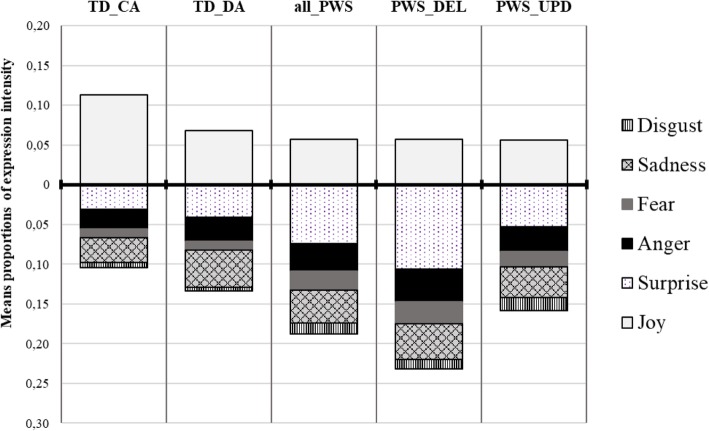
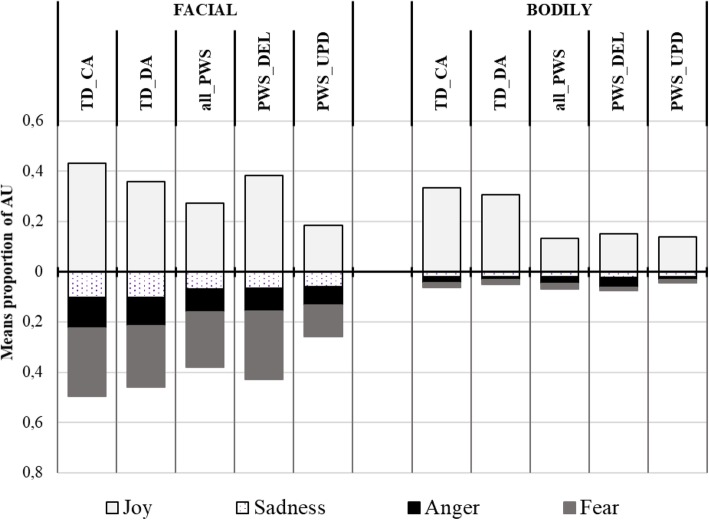
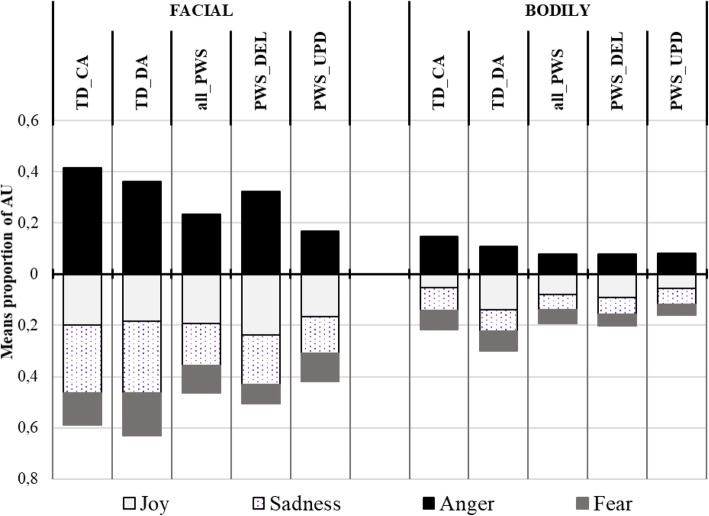
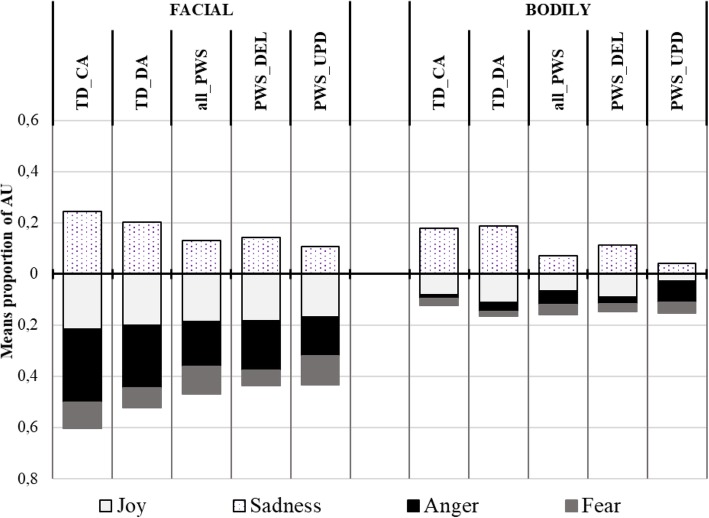
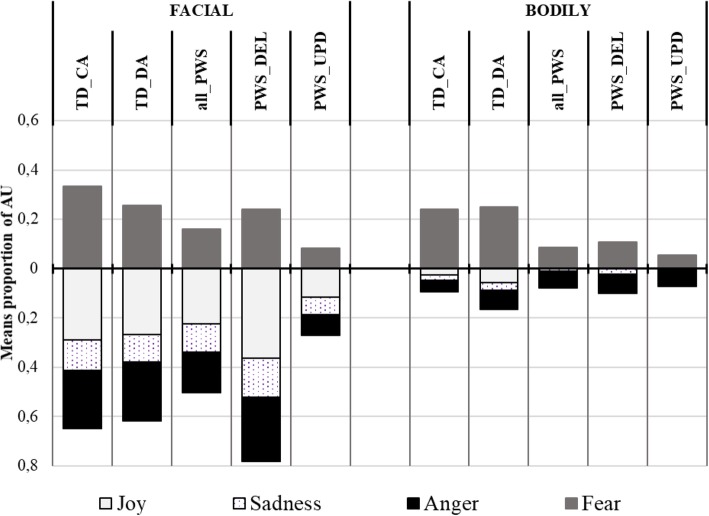
Background: People with Prader-Willi Syndrome (PWS) experience great difficulties in social adaptation that could be explained by disturbances in emotional competencies. However, current knowledge about the emotional functioning of people with PWS is incomplete. In particular, despite being the foundation of social adaptation, their emotional expression abilities have never been investigated. In addition, motor and cognitive difficulties - characteristic of PWS - could further impair these abilities. Method: To explore the expression abilities of children with PWS, twenty-five children with PWS aged 5 to 10 years were assessed for 1) their emotional facial reactions to a funny video-clip and 2) their ability to produce on demand the facial and bodily expressions of joy, anger, fear and sadness. Their productions were compared to those of two groups of children with typical development, matched to PWS children by chronological age and by developmental age. The analyses focused on the proportion of expressive patterns relating to the target emotion and to untargeted emotions in the children’s productions. Results: The results showed that the facial and bodily emotional expressions of children with PWS were particularly difficult to interpret, involving a pronounced mixture of different emotional patterns. In addition, it was observed that the emotions produced on demand by PWS children were particularly poor and equivocal. Conclusions: As far as we know, this study is the first to highlight the existence of particularities in the expression of emotions in PWS children. These results shed new light on emotional dysfunction in PWS and consequently on the adaptive abilities of those affected in daily life.
Overview
The claims and statistics of this paper haven’t been checked yet.
Run the check — free, no account needed. It reads the open-access text and checks the sources it cites.
Integrity signals
Registry
Cites
Statistics
Figures
Verification
Claims the paper makes
The claims and statistics of this paper haven’t been checked yet.
Run the check — free, no account needed. It reads the open-access text and checks the sources it cites.
Claims other papers make about this one
Each is checked against this paper’s own text: does it say what the citing paper says it does?
In the citing paper
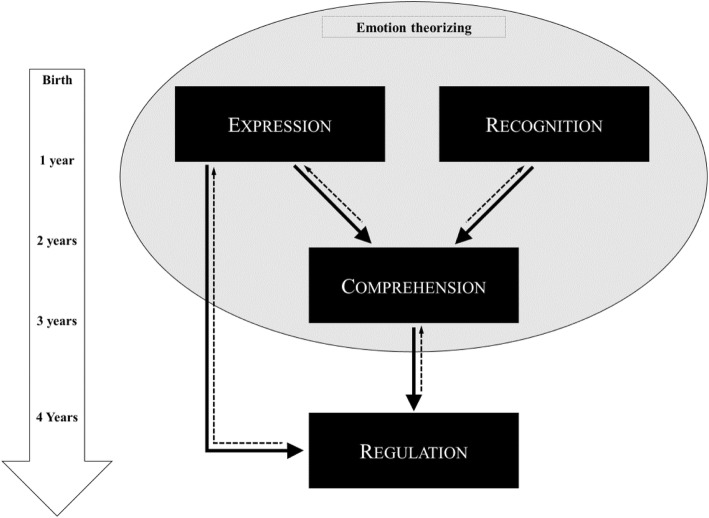
“Through the expression, recognition and comprehension skills, the individual gradually conceives of emotion as a concept (9).”
In the citing paper
“Given this developmental model, emotion regulation abilities seem to be strongly dependent on the expression, recognition, and comprehension skills, which can be considered as prerequisites (9).”
In the citing paper
“In addition, the emotional expressions of PWS children are particularly poor and equivocal, making it difficult to interpret them (9).”
Self-check
Percentages, sums and reported differences re-computed from the paper’s own numbers.
The self-check needs the paper’s full text.
Citations
Cites
Emotion regulation: affective, cognitive, and social consequences.
Gross, J. J. (2002) · Psychophysiology · doi:10.1017/s0048577201393198 · Cited by 4,890
Preschool emotional competence: Pathway to social competence?
Denham, S. A., Blair, K. A., DeMulder, E., Levitas, J., Sawyer, K., Auerbach–Major, S., & Queenan, P. (2003) · Child Development · doi:10.1111/1467-8624.00533 · Cited by 1,359
Research works printed but not linked: 51
- Cassidy SB, Schwartz S, Miller JL, Driscoll DJ. Prader-Willi syndrome. Genet Med. 2012;14:10–26. · DOI · Paper page
- Copet P, Jauregi J, Laurier V, Ehlinger V, Arnaud C, Cobo A-M, et al. Cognitive profile in a large french cohort of adults with Prader-Willi syndrome: differences between genotypes. J Intellect Disabil Res. 2010;54:204–15. · DOI
- Curfs LM, Wiegers AM, Sommers JRM, Borghgraef M, Fryns JP. Strengths and weaknesses in the cognitive profile of youngsters with Prader-Willi syndrome. Clin Genet. 2008;40:430–4. · DOI
- Jauregi J, Arias C, Vegas O, Alén F, Martinez S, Copet P, et al. A neuropsychological assessment of frontal cognitive functions in Prader?Willi syndrome. J Intellect Disabil Res. 2007;51:350–65. · DOI
- Whittington J, Holland A. Cognition in people with Prader-Willi syndrome: insights into genetic influences on cognitive and social development. Neurosci Biobehav Rev. 2017;72:153–67. · DOI · Paper page
- Akefeldt A, Åkefeldt B, Gillberg C. Voice, speech and language characteristics of children with Prader-Willi syndrome. J Intellect Disabil Res. 2007;41:302–11. · DOI
- Dimitropoulos A, Ferranti A, Lemler M. Expressive and receptive language in Prader–Willi syndrome: report on genetic subtype differences. J Commun Disord. 2013;46:193–201. · DOI
- Festen DA, Wevers M, de Weerd AW, van den Bossche RAS, Duivenvoorden HJ, Otten BJ, et al. Psychomotor development in infants with Prader-Willi syndrome and associations with sleep-related breathing disorders. Pediatr Res. 2007;62:221–4. · DOI
- Pansy J, Barones C, Urlesberger B, Pokorny FB, Bartl-Pokorny KD, Verheyen S, et al. Early motor and pre-linguistic verbal development in Prader-Willi syndrome – a case report. Res Dev Disabil. 2019;88:16–21. · DOI
- Koenig K, Klin A, Schultz R. Deficits in social attribution ability in Prader-Willi syndrome. J Autism Dev Disord. 2004;34:573–82. · DOI
- Reddy LA, Pfeiffer SI. Behavioral and emotional symptoms of children and adolescents with Prader-Willi syndrome. J Autism Dev Disord. 2007;37:830–9. · DOI
- Steinhausen H-C, Eiholzer U, Hauffa BP, Malin Z. Behavioural and emotional disturbances in people with Prader-Willi syndrome. J Intellect Disabil Res. 2004;48:47–52. · DOI
- Goldstone AP, Holland AJ, Hauffa BP, Hokken-Koelega AC, Tauber M. Recommendations for the diagnosis and Management of Prader-Willi Syndrome. J Clin Endocrinol Metab. 2008;93:4183–97. · DOI
- Veltman MWM, Thompson RJ, Roberts SE, Thomas NS, Whittington J, Bolton PF. Prader-Willi syndrome. Eur Child Adolesc Psychiatry. 2004;13:42–50. · DOI
- Dykens EM, Roof E. Behavior in Prader-Willi syndrome: relationship to genetic subtypes and age. J Child Psychol Psychiatry. 2008;49:1001–8. · DOI
- Walley RM, Donaldson MDC. An investigation of executive function abilities in adults with Prader-Willi syndrome. J Intellect Disabil Res. 2005;49:613–25. · DOI
- Stauder JEA, Boer H, Gerits RHA, Tummers A, Whittington J, Curfs LM. Differences in behavioural phenotype between parental deletion and maternal uniparental disomy in Prader–Willi syndrome: an ERP study. Clin Neurophysiol. 2005;116:1464–70. · DOI
- Whittington J, Holland A, Webb T, Butler J, Clarke D, Boer H. Cognitive abilities and genotype in a population-based sample of people with Prader-Willi syndrome. J Intellect Disabil Res. 2004;48:172–87. · DOI
- Thuilleaux D, Laurier V, Copet P, Tricot J, Demeer G, Mourre F, et al. A model to characterize psychopathological features in adults with Prader-Willi syndrome. Am J Med Genet A. 2018;176:41–7. · DOI
- Dimitropoulos A, Schultz RT. Autistic-like symptomatology in Prader-Willi syndrome: a review of recent findings. Curr Psychiatry Rep. 2007;9:159–64. · DOI
- Rosner BA, Hodapp RM, Fidler DJ, Sagun JN, Dykens EM. Social competence in persons with Prader-Willi, Williams and Down’s syndromes. J Appl Res Intellect Disabil. 2004;17:209–17. · DOI
- Mikolajczak M, Quoidbach J, Kotsou I, Nelis D. Les compétences émotionnelles. Paris: Dunod; 2009.
- Feldman BH, Dimitropoulos A. Face discrimination skills in Prader-Willi syndrome and autism Spectrum disorder. J Ment Health Res Intellect Disabil. 2014;7:264–85. · DOI
- Tager-Flusberg H, Boshart J, Baron-Cohen S. Reading the windows to the soul: evidence of domain-specific sparing in Williams syndrome. J Cogn Neurosci. 1998;10:631–9. · DOI
- Halit H, Grice SJ, Bolton PF, Johnson MH. Face and gaze processing in Prader-Willi syndrome. J Neuropsychol. 2008;2:65–77. · DOI
- Decety J. The neurodevelopment of empathy in humans. Dev Neurosci. 2010;32:257–67. · DOI · Paper page
- Stegge H, Meerum TM. Awareness and regulation of emotion in typical and atypical development. In: Gross JJ, editor. Handb Emot Regul. New York: Guilford Press; 2007. p. 288–305.
- Thommen E, Dumas A, Erskine J, Reymond J. Perception and conceptualization of intentionality in children. Br J Dev Psychol. 1998;16:255–72. · DOI
- Camras LA, Shuster MM. Current emotion research in Developmental Psychology. Emot Rev. 2013;5:321–9. · DOI
- Grossard C, Chaby L, Hun S, Pellerin H, Bourgeois J, Dapogny A, et al. Children facial expression production: influence of age, gender, emotion subtype, Elicitation Condition and Culture. Front Psychol. 2018;9:1–11. · DOI
- Dethier M, Blairy S, Rosenberg H, McDonald S. Spontaneous and posed emotional facial expressions following severe traumatic brain injury. J Clin Exp Neuropsychol. 2012;34:936–47. · DOI
- Izard CE. Facial expressions and the regulation of emotions. J Pers Soc Psychol. 1990;58:487–98. · DOI
- Famelart N, Guidetti M. The effect of laughter expression modulation on emotional experience in 4 to 10 year-old children. Eur J Dev Psychol. 2017;14:311–23. · DOI · Paper page
- Noldus. FaceReader: Tool for automatic analysis of facial expression. Reference Manual Version 7. Wageningen: The Netherlands: Noldus Information Technology b.v.; 2016.
- Ekman P, Friesen WV. Manual for the facial action coding system. Palo Alto, CA: Consulting Psychologists Press.; 1978. · DOI · Paper page
- Izard CE. The maximally discriminative facial movement scoring system (MAX). Newark: Instructional Recourses Centre, University of Delaware; 1979.
- Sullivan MW, Lewis M. Emotional expressions of young infants and children: a Practitioner’s primer. Infants Young Child. 2003;16. · DOI
- Johnson SR, Finlon KJ, Izard CE. The development and validation of the behavior and emotion expression observation system to characterize preschoolers’ social and emotional interactions. Early Educ Dev. 2016;27:896–913. · DOI
- Lausberg H, Sloetjes H. Coding gestural behavior with the NEUROGES-ELAN system. Behav Res Methods. 2009;41:841–9. · DOI
- Sayette MA, Cohn JF, Wertz JM, Perrott MA, Parrott DJ. A psychometric evaluation of the facial action coding system for assessing spontaneous expression. J Nonverbal Behav. 2001;25:167–85. · DOI
- Dumas JE, Lafrenière PJ, Capuano F. Profil socioaffectif (PSA). Évaluation des compétences sociales et des difficultés d’adaptation des enfants entre 2 ans ½ à 6 ans. Paris: ECPA; 1997.
- Edelbrock CS, Achenbach TM. The teacher version of the child behavior profile: I. boys aged 6-11. J Consult Clin Psychol. 1984;52:207–17. · DOI
- Yamada K, Matsuzawa H, Uchiyama M, Kwee IL, Nakada T. Brain developmental abnormalities in Prader-Willi syndrome detected by diffusion tensor imaging. Pediactrics. 2006;118:e442–8. · DOI
- Reus L, Zwarts M, van Vlimmeren LA, Willemsen MA, Otten BJ. Nijhuis-van der Sanden MWG. Motor problems in Prader–Willi syndrome: a systematic review on body composition and neuromuscular functioning. Neurosci Biobehav Rev. 2011;35:956–69. · DOI
- Coupaye M, Tauber M, Cuisset L, Laurier V, Bieth E, Lacorte J-M, et al. Effect of genotype and previous GH treatment on adiposity in adults with Prader-Willi syndrome. J Clin Endocrinol Metab. 2016;101:4895–903. · DOI
- Bennett JA, Germani T, Haqq AM, Zwaigenbaum L. Autism spectrum disorder in Prader-Willi syndrome: a systematic review. Am J Med Genet A. 2015;167:2936–44. · DOI
- Swaab DF, Purba JS, Hofman MA. Alterations in the hypothalamic paraventricular nucleus and its oxytocin neurons (putative satiety cells) in Prader-Willi syndrome: a study of five cases. J Clin Endocrinol Metab. 1995;80:573–9.
- Muscatelli F, Abrous DN, Massacrier A, Boccaccio I, Moal ML, Cau P, et al. Disruption of the mouse Necdin gene results in hypothalamic and behavioral alterations reminiscent of the human Prader–Willi syndrome. Hum Mol Genet. 2000;9:3101–10. · DOI
- Schaller F, Watrin F, Sturny R, Massacrier A, Szepetowski P, Muscatelli F. A single postnatal injection of oxytocin rescues the lethal feeding behaviour in mouse newborns deficient for the imprinted Magel2 gene. Hum Mol Genet. 2010;19:4895–905. · DOI · Paper page
- Tauber M, Boulanouar K, Diene G, Çabal-Berthoumieu S, Ehlinger V, Fichaux-Bourin P, et al. The use of oxytocin to improve feeding and social skills in infants with Prader–Willi syndrome. Pediatrics. 2017;139:1–11. · DOI
- Ho AY, Dimitropoulos A. Clinical management of behavioral characteristics of Prader-Willi syndrome. Neuropsychiatr Dis Treat. 2010;6:107–18.
Cited by
Sorted by citations
Famelart, N., Diene, G., Çabal-Berthoumieu, S., Glattard, M., Molinas, C., Tauber, M., & Guidetti, M. (2022) · Frontiers in Psychiatry · doi:10.3389/fpsyt.2022.1038223 · Cited by 5
Self-citation
Metadata
- Authors
- Famelart, N., Diene, G., Çabal-Berthoumieu, S., Glattard, M., Molinas, C., Guidetti, M., & Tauber, M.
- ORCID
- Famelart, Nawelle
- Venue
- Orphanet Journal of Rare Diseases
- Published
- 2020-02-21
- Volume
- 15
- Issue
- 1
- ISSN
- 1750-1172
- PMC
- PMC7035757
- Cited by
- 12
- References
- 2
- Language
- en
- Funders
- University of Toulouse
- Occitanie Region
- French Prader-Willi Association
- Prader-Willi Syndrome Reference Center
About these checks
Registry, retraction, Cites and statistics results are computed, not judged, with one exception: a printed reference that no index lists is read once by a model before it counts as a citation error. Claims are extracted by a model and kept only when their quote appears verbatim in the text; each cited source is then checked, with a model’s help, for whether it says what the claim relies on. Those verdicts can be wrong — read the claim’s quote and the cited source before relying on one.
Statistics and arithmetic are recomputed, not judged.
Confidence bands are shown only for fields calibrated on our annotated test set. None is calibrated yet, so no band is shown.
What counts as a claim ›How we measure confidence ›How we check this ›
Are you an author, or do you see a problem with this page? Request a review
How to cite
Cite CoChat for the checks on this page, and the paper for its own findings.
- This page
- CoChat. (2026). Citation check: Equivocal expression of emotions in children with Prader-Willi syndrome: what are the consequences for emotional abilities and social adjustment? https://app.cochat.ai/papers/10.1186/s13023-020-1333-9
- The paper
- Famelart, N., Diene, G., Çabal-Berthoumieu, S., Glattard, M., Molinas, C., Guidetti, M., & Tauber, M. (2020). Equivocal expression of emotions in children with Prader-Willi syndrome: what are the consequences for emotional abilities and social adjustment? Orphanet Journal of Rare Diseases. https://doi.org/10.1186/s13023-020-1333-9
