

Diagnosing CAH-X syndrome by long-read sequencing and identifying a novel genotype
Open accessThe DOI matches its Crossref record; 23 of the 23 references it cites were found in a registry or an index.
Abstract
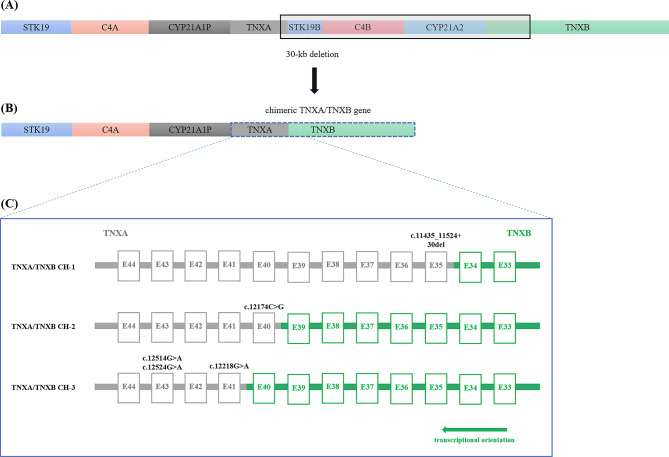
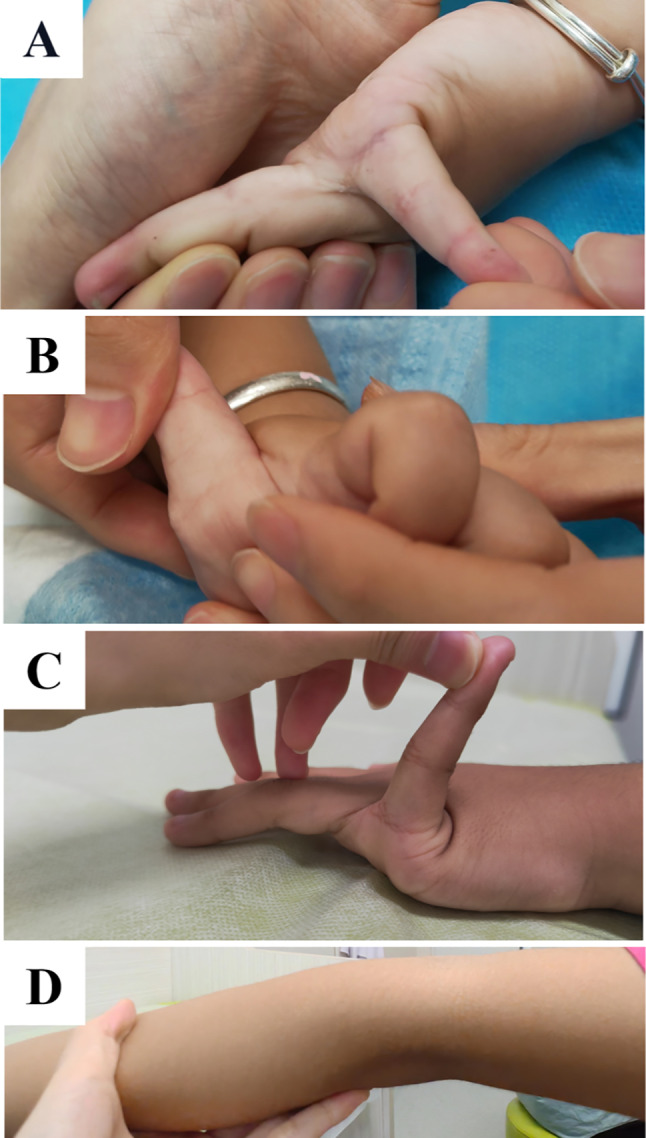
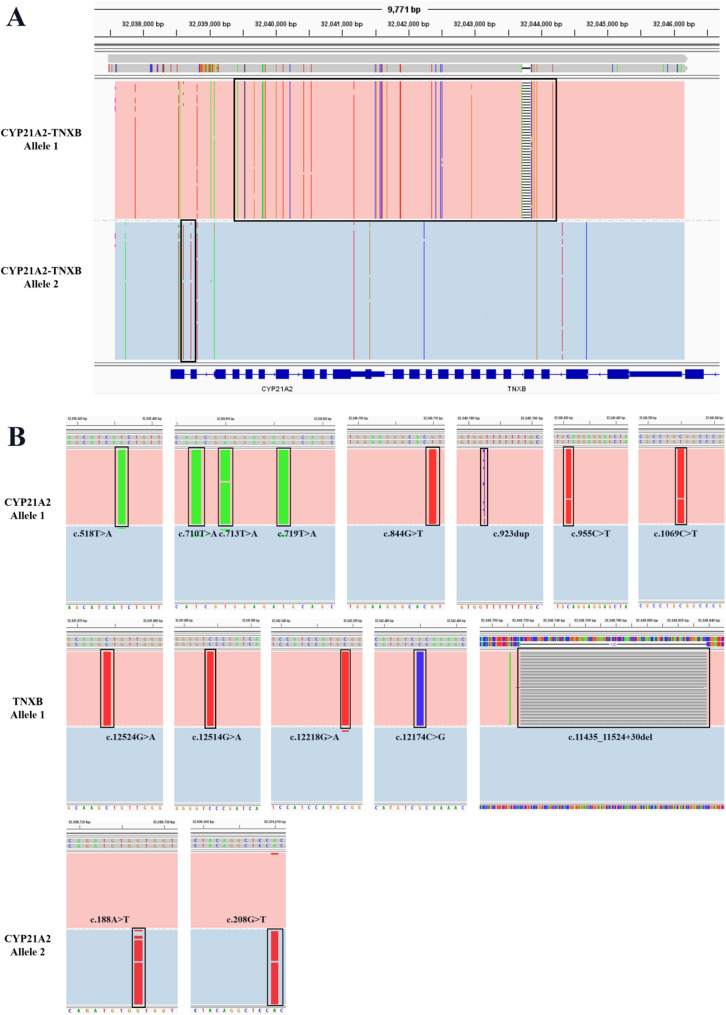
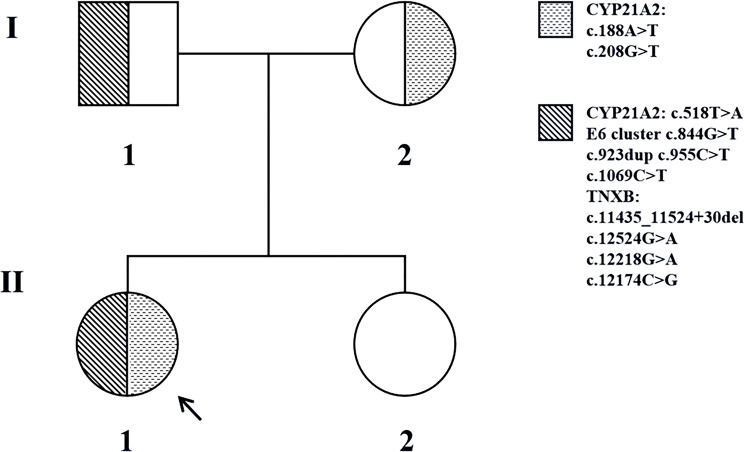
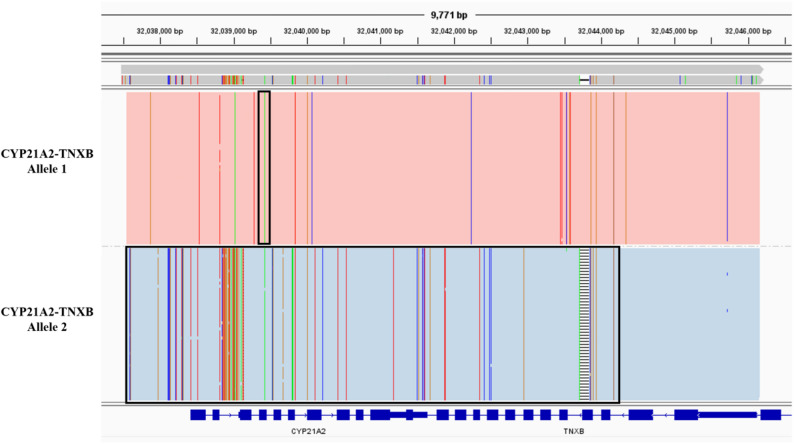
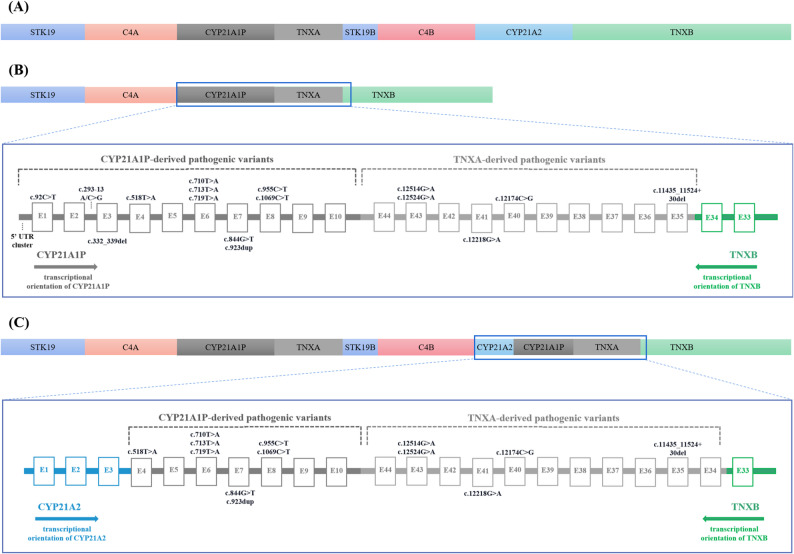
BACKGROUND: To conduct long-read sequencing (LRS) testing for molecular diagnosis of CAH-X syndrome. This study collected clinical data and evaluated the phenotypes of Ehlers-Danlos syndrome (EDS) in 20 cases of 21-hydroxylase deficiency (21-OHD) children and performed genetic diagnosis for CAH-X syndrome by LRS. RESULTS: Two of the 20 cases of pediatric patients with 21-OHD were ultimately diagnosed with CAH-X syndrome. Both patients were presented with concurrent phenotypes of EDS and 21-OHD, 1 of whom exhibited a novel CAH-X genotype resulting from large gene conversion between the CYP21A2-TNXB gene (chr6:32039426–32044184) and CYP21A1P-TNXA pseudogene, whereas the other patient carried a TNXA/TNXB_CH-1 chimeric gene. CONCLUSIONS: This study identified a novel CAH-X genotype resulting from a large gene conversion and indicates that LRS may be a more reliable method for genetic diagnosis of CAH-X syndrome.
Overview
The claims and statistics of this paper haven’t been checked yet.
Free: it reads the open-access text and checks the first 5 claims that cite a source we can check. Create a free account to check every claim.
Integrity signals
Registry
Cites
Statistics
Figures
Verification
Claims the paper makes
The claims and statistics of this paper haven’t been checked yet.
Free: it reads the open-access text and checks the first 5 claims that cite a source we can check. Create a free account to check every claim.
Self-check
Percentages, sums and reported differences re-computed from the paper’s own numbers.
The self-check needs the paper’s full text.
Citations
Cites
The 2017 international classification of the Ehlers–Danlos syndromes
Malfait, F., Francomano, C., Byers, P., Belmont, J., Berglund, B., Black, J., Bloom, L., Bowen, J. M., Brady, A. F., Burrows, N. P., et al. (2017) · American Journal of Medical Genetics Part C: Seminars in Medical Genetics · doi:10.1002/ajmg.c.31552 · Cited by 1,936 · cited 2×
“The Beigh-ton 9-point scoring system [2, 22] was used to assess the joint hypermobility of patients, with a score of ≥ 5 indicating generalized joint hypermobility (GJH) in children [4].”
InfluentialSpeiser, P. W., Arlt, W., Auchus, R. J., Baskin, L. S., Conway, G. S., Merke, D. P., Meyer-Bahlburg, H. F. L., Miller, W. L., Murad, M. H., Oberfield, S. E., et al. (2018) · The Journal of Clinical Endocrinology & Metabolism · doi:10.1210/jc.2018-01865 · Cited by 1,234
Juul-Kristensen, B., Rogind, H., Jensen, D. V., & Remvig, L. (2007) · Rheumatology · doi:10.1093/rheumatology/kem290 · Cited by 299 · cited 1×
“The Beigh-ton 9-point scoring system [2, 22] was used to assess the joint hypermobility of patients, with a score of ≥ 5 indicating generalized joint hypermobility (GJH) in children [4].”
The Complexities in Genotyping of Congenital Adrenal Hyperplasia: 21-Hydroxylase Deficiency
Pignatelli, D., Carvalho, B. L., Palmeiro, A., Barros, A., Guerreiro, S. G., & Macut, D. (2019) · Frontiers in Endocrinology · doi:10.3389/fendo.2019.00432 · Cited by 95
Merke, D. P., Chen, W., Morissette, R., Xu, Z., Van Ryzin, C., Sachdev, V., Hannoush, H., Shanbhag, S. M., Acevedo, A. T., Nishitani, M., et al. (2013) · The Journal of Clinical Endocrinology & Metabolism · doi:10.1210/jc.2012-3148 · Cited by 82 · cited 4×
“Additionally, according to reports, family members of patients with CAH-X syndromes, specifically, heterozygous carriers of CAH-X chimera who do not have 21-OHD, typically exhibit only mild EDS symptoms or no symptoms at all [3, 4, 6, 14].”
InfluentialComprehensive analysis of congenital adrenal hyperplasia using long-read sequencing
Liu, Y., Chen, M., Liu, J., Mao, A., Teng, Y., Yan, H., Zhu, H., Li, Z., Liang, D., & Wu, L. (2022) · Clinical Chemistry · doi:10.1093/clinchem/hvac046 · Cited by 80
Self-citationBroadening the Spectrum of Ehlers Danlos Syndrome in Patients With Congenital Adrenal Hyperplasia
Morissette, R., Chen, W., Perritt, A. F., Dreiling, J. L., Arai, A. E., Sachdev, V., Hannoush, H., Mallappa, A., Xu, Z., McDonnell, N. B., et al. (2015) · The Journal of Clinical Endocrinology & Metabolism · doi:10.1210/jc.2015-2232 · Cited by 68 · cited 1×
“1) [4, 5, 15].”
Tenascin-X, Congenital Adrenal Hyperplasia, and the CAH-X Syndrome
Miller, W. L., & Merke, D. P. (2018) · Hormone Research in Paediatrics · doi:10.1159/000481911 · Cited by 61 · cited 2×
“…loses function because of the deletion of the 120-bp sequence, resulting in less expression through haploinsufficiency, whereas the expression levels of CAH-X CH-2 and CAH-X CH-3 chimeras remain unaffected but with alteration in protein structure associated with dominant negative effects [11, 12].”
Chen, W., Perritt, A. F., Morissette, R., Dreiling, J. L., Bohn, M.-F., Mallappa, A., Xu, Z., Quezado, M., & Merke, D. P. (2016) · Human Mutation · doi:10.1002/humu.23028 · Cited by 45 · cited 1×
“1) [4, 5, 15].”
Genes and Pseudogenes: Complexity of the RCCX Locus and Disease
Carrozza, C., Foca, L., De Paolis, E., & Concolino, P. (2021) · Frontiers in Endocrinology · doi:10.3389/fendo.2021.709758 · Cited by 37 · cited 4×
“Highly homologous pseudogenes and functional genes in the RCCX module are prone to undergo recombination events during meiosis, with ~ 75% resulting in gene conversions and the remaining 25% leading to chimeric genes through homologous misalignment [12, 13].”
InfluentialGao, Y., Lu, L., Yu, B., Mao, J., Wang, X., Nie, M., & Wu, X. (2020) · The Journal of Clinical Endocrinology & Metabolism · doi:10.1210/clinem/dgaa199 · Cited by 31
Tsai, L., Cheng, C., Chuang, S.-H., & Lee, H.-H. (2011) · Analytical Biochemistry · doi:10.1016/j.ab.2011.02.016 · Cited by 30
Lao, Q., Brookner, B., & Merke, D. P. (2019) · The Journal of Molecular Diagnostics · doi:10.1016/j.jmoldx.2019.06.001 · Cited by 29 · cited 3×
“NGS is routinely used in clinical practice, but is unsuitable for RCCX modules with pseudogene interference and complex copy number variations [6].”
Marino, R., Garrido, N. P., Ramirez, P., Notaristéfano, G., Moresco, A., Touzon, M. S., Vaiani, E., Finkielstain, G., Obregón, M. G., Balbi, V., et al. (2021) · The Journal of Clinical Endocrinology & Metabolism · doi:10.1210/clinem/dgab033 · Cited by 23
Congenital Adrenal Hyperplasia and Ehlers-Danlos Syndrome
Marino, R. M., Moresco, A., Garrido, N. P., Ramírez, P., & Belgorosky, A. (2022) · Frontiers in Endocrinology · doi:10.3389/fendo.2022.803226 · Cited by 23
CAH-X Syndrome: Genetic and Clinical Profile
Concolino, P., & Falhammar, H. (2022) · Molecular Diagnosis & Therapy · doi:10.1007/s40291-022-00588-0 · Cited by 19
Paragliola, R. M., Perrucci, A., Foca, L., Urbani, A., & Concolino, P. (2022) · Journal of Clinical Medicine · doi:10.3390/jcm11133818 · Cited by 17
Tantirukdham, N., Sahakitrungruang, T., Chaisiwamongkol, R., Pongpanich, M., Srichomthong, C., Assawapitaksakul, A., Buasong, A., Tongkobpetch, S., Yeetong, P., & Shotelersuk, V. (2022) · The Journal of Clinical Endocrinology & Metabolism · doi:10.1210/clinem/dgac187 · Cited by 14
Zhang, X., Gao, Y., Lü, L., Cao, Y., Zhang, W., Sun, B., Wu, X., Tong, A., Chen, S., Wang, X., et al. (2023) · Journal of Endocrinological Investigation · doi:10.1007/s40618-023-02197-y · Cited by 14
Zhang, R., Cui, D., Song, C., Ma, X., Cai, N., Zhang, Y., Feng, M., Cao, Y., Chen, L., & Qiang, R. (2024) · Clinica Chimica Acta · doi:10.1016/j.cca.2024.117820 · Cited by 13
Wang, Y., Zhu, G., Li, D., Pan, Y., Li, R., Zhou, T., Mao, A., Chen, L., Zhu, J., & Zhu, M. (2025) · Human Genomics · doi:10.1186/s40246-024-00696-4 · Cited by 13
Paragliola, R. M., Perrucci, A., Foca, L., Urbani, A., & Concolino, P. (2022) · doi:10.20944/preprints202206.0329.v1 · Cited by 13
Sun, Y., Wu, L., Ye, L., et al. (2023) · PubMed · doi:10.3760/cma.j.cn511374-20230330-00178 · Cited by 1
Research works printed but not linked: 1
- Marino R, Moresco A, Perez Garrido N, Ramirez P, Belgorosky A. Congenital Adrenal Hyperplasia and Ehlers-Danlos Syndrome. Front Endocrinol. 2022;13:803226. PMC8913572 35282436 · DOI
Cited by
Still being checked.
Metadata
- Authors
- Li, Z., Xu, S., Fu, Q., Du, L., Lin, Q., Lin, H., E., H., & Liu, H.
- Affiliations
- Fujian Medical University (CN)
- Corresponding author
- Liu, Hui
- ORCID
- Liu, Hui
- Venue
- Orphanet Journal of Rare Diseases
- Published
- 2026-04-22
- Volume
- 21
- Issue
- 1
- ISSN
- 1750-1172 (ISSN-L)
- PMC
- PMC13277045
- OpenAlex
- W7155079389
- Cited by
- 0
- References
- 21
- FWCI
- 0.00
- Type
- journal article
- Language
- en
- Open access
- gold
- doi.org
- Licence
- cc-by
- creativecommons.org/licenses/by/4.0 (tdm)
- creativecommons.org/licenses/by/4.0 (vor, 57 d)
- Locations
- Orphanet Journal of Rare Diseases (publishedVersion, cc-by)
- PubMed (publishedVersion)
- PubMed Central (publishedVersion, cc-by)
- DOAJ (DOAJ: Directory of Open Access Journals) (submittedVersion)
- Funders
- Fujian Provincial Natural Science Foundation of China (2023J011310)
- Topics
- Health Sciences › Medicine › Endocrinology, Diabetes and Metabolism › Sexual Differentiation and Disorders
- Life Sciences › Biochemistry, Genetics and Molecular Biology › Genetics › Genomics and Rare Diseases
- Life Sciences › Biochemistry, Genetics and Molecular Biology › Genetics › Connective tissue disorders research
- Keywords
- congenital adrenal hyperplasia, 21-hydroxylase deficiency, Ehlers-Danlos syndrome, long-read sequencing, molecular diagnosis, novel genotypes, gene conversion, pediatric patients
- MeSH terms
- Adrenal Hyperplasia, Congenital, Child, Child, Preschool, Ehlers-Danlos Syndrome, Female, Genotype, Humans, Male, Steroid 21-Hydroxylase
About these checks
Registry, retraction, Cites and statistics results are computed, not judged, with one exception: a printed reference that no index lists is read once by a model before it counts as a citation error. Claims are extracted by a model and kept only when their quote appears verbatim in the text; each cited source is then checked, with a model’s help, for whether it says what the claim relies on. Those verdicts can be wrong — read the claim’s quote and the cited source before relying on one.
Statistics and arithmetic are recomputed, not judged.
Confidence bands are shown only for fields calibrated on our annotated test set. None is calibrated yet, so no band is shown.
What counts as a claim ›How we measure confidence ›How we check this ›
Are you an author, or do you see a problem with this page? Request a review
Data sources
Bibliographic data: Semantic Scholar, OpenAlex, Crossref.
Contains information from the Semantic Scholar Academic Graph Datasets, made available under the ODC Attribution License (ODC-BY 1.0).
Semantic Scholar’s data is described in: Kinney, R., et al. (2023). The Semantic Scholar Open Data Platform. arXiv:2301.10140.
