

Mental health problems in male young offenders in custodial versus community based-programs: implications for juvenile justice interventions
Open accessThe DOI matches its Crossref record; 50 of the 51 references it cites were found in a registry or an index.
Abstract
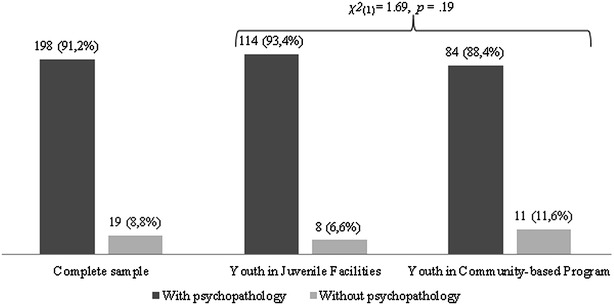
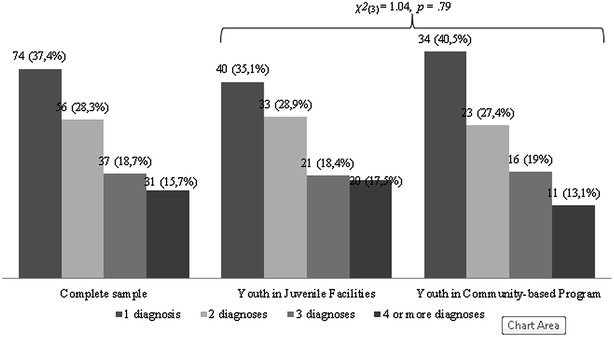
BACKGROUND: Young offenders are known to be a population with high prevalence of mental health disorders. In most cases, these disorders are neither identified nor treated properly, with the majority of them being chronic and difficult to treat. In many countries, the prevalence rates of psychopathology in male young offenders are still unknown and no psychotherapeutic interventions are delivered. Therefore, the main goal of the present study was to assess mental health problems in Portuguese male young offenders placed in either custodial or community-based programs and discuss treatment implications within the juvenile justice interventions. METHODS: Participants in this study included 217 male young offenders aged between 14 and 20 years old that were randomly selected using a random number table. From the total sample, 122 (56.3 %) participants were placed in juvenile detention facilities, and 95 (43.7 %) were receiving community-based programs. Participants were interviewed with the Mini-International Neuropsychiatric Interview for Children and Adolescents, a structured interview that assesses DSM-IV Axis I Mental Disorders. Participants aged 18 years or older were also assessed with the antisocial personality disorder section from the Structured Clinical Interview for DSM-IV Axis II Personality Disorders. RESULTS: Results showed a high prevalence of mental health disorders, with a global prevalence of 91.2 % in the total sample. In both groups, global prevalence rates were equally high (93.4 % in youth in custodial versus 88.4 % in youth in community-based programs). Substance-related disorders were more prevalent in youth placed in juvenile facilities, whereas anxiety and mood disorders were more often found in the community-based group. Moreover, oppositional defiant disorder was more prevalent in youth from the community, whereas antisocial personality disorder and conduct disorder were less prevalent than expected in this same group. A high comorbidity rate was also found, with the majority of participants from both groups' fulfilling criteria for two or more disorders. Additionally, participants with conduct disorder were over four times more likely to fulfill criteria for substance abuse. CONCLUSIONS: Our findings inform about specific needs concerning mental health intervention that should be taken into account when deciding and planning rehabilitation programs for male young offenders, either from custodial or community-based programs.
Overview
The claims and statistics of this paper haven’t been checked yet.
Free: it reads the open-access text and checks the first 5 claims that cite a source we can check. Create a free account to check every claim.
Integrity signals
Registry
Cites
Statistics
Figures
Verification
Claims the paper makes
The claims and statistics of this paper haven’t been checked yet.
Free: it reads the open-access text and checks the first 5 claims that cite a source we can check. Create a free account to check every claim.
Claims other papers make about this one
Each is checked against this paper’s own text: does it say what the citing paper says it does?
The cited source says what the claim attributes to it.
In the citing paper
“The Portuguese version of Mini-KID resulted from a thorough translation and backtranslation process and has been previously used as a method for diagnoses (Rijo et al., 2016).”
From Psychological inflexibility explains social anxiety over time: a mediation analyses with a clinical adolescent sample (2024) · cites this paper as Rijo et al., 2016
The cited source says what the claim attributes to it.
In the citing paper
“At baseline, D. was assessed online with the Mini-International Neuropsychiatric Interview for Children and Adolescents (MINI-KID; Sheehan et al., 2010; Portuguese Authorized Version by Rijo et al., 2016), 2 weeks before the start of the program.”
From THE EFFICACY OF A COMPASSION, ACCEPTANCE AND MINDFULNESS-BASED PILOT INTERVENTION FOR ADOLESCENTS’ TEST ANXIETY: A CASE STUDY USING THE ACADEMIC PROGRAM (2023) · cites this paper as Rijo et al., 2016
The cited source says what the claim attributes to it.
In the citing paper
“The Portuguese version of MINI-KID resulted from a careful translation and backtranslation process and has been previously utilized as a method for diagnoses assessment [52].”
From The Prevalence of Adolescent Social Fears and Social Anxiety Disorder in School Contexts (2022) · cites this paper as [52]
The cited source says what the claim attributes to it.
In the citing paper
“The Portuguese version of the Mini-KID resulted from a careful translation and backtranslation process and has been previously used as a method for the assessment of clinical diagnoses [85].”
From Acceptance and commitment therapy as a transdiagnostic approach to adolescents with different anxiety disorders: study protocol. (2025) · cites this paper as [85]
Self-check
Percentages, sums and reported differences re-computed from the paper’s own numbers.
The self-check needs the paper’s full text.
Citations
Cites
(2017) · Cited by 16,319
The Psychology of Criminal Conduct
Hart, S. D., Andrews, D. A., & Bonta, J. (1995) · Political Psychology · doi:10.2307/3792235 · Cited by 2,900
The Psychology of Criminal Conduct
Bonta, J., & Andrews, D. A. (2016) · doi:10.4324/9781315677187 · Cited by 2,107
Sheehan, D. V., Sheehan, K. H., Shytle, R. D., Janavs, J., Bannon, Y., Rogers, J. E., Milo, K. M., Stock, S. L., & Wilkinson, B. (2010) · The Journal of Clinical Psychiatry · doi:10.4088/jcp.09m05305whi · Cited by 1,730 · cited 6×
“Participants were interviewed with a structured clinical interview, the MINI-KID-Mini-International Neuropsychiatric Interview for Children and Adolescents [35], which assesses Axis I mental health disorders according to DSM-IV criteria, namely: mood disorders; anxiety disorders; substance-related disorders; tic disor…”
MethodInfluentialPsychiatric Disorders in Youth in Juvenile Detention
Teplin, L. A., Abram, K. M., McClelland, G. M., Dulcan, M. K., & Mericle, A. A. (2002) · Archives of General Psychiatry · doi:10.1001/archpsyc.59.12.1133 · Cited by 1,675
Adapting Educational and Psychological Tests for Cross-Cultural Assessment
(2004) · Psychology Press eBooks · doi:10.4324/9781410611758 · Cited by 1,627 · cited 1×
“The MINI-KID was translated and adapted into Portuguese following a translation and back-translation procedure [38].”
MethodRehabilitating criminal justice policy and practice
Andrews, D. A., & Bonta, J. (2010) · Psychology, Public Policy, and Law · doi:10.1037/a0018362 · Cited by 1,223 · cited 1×
“Finally, though it is well established that recidivism risk assessment in forensic settings can provide information about the nature, intensity, and length of interventions [44, 45], the mental health paradigm can provide specific models targeting the core processes underling these youth’s dysregulation problems, whic…”
BackgroundPosttraumatic Stress Disorder and Trauma in Youth in Juvenile Detention
Abram, K. M., Teplin, L. A., Charles, D. R., Longworth, S. L., McClelland, G. M., & Dulcan, M. K. (2004) · Archives of General Psychiatry · doi:10.1001/archpsyc.61.4.403 · Cited by 774 · cited 2×
“Abram and colleagues [11] found that 92.”
BackgroundD'Andrea, W., Ford, J., Stolbach, B., Spinazzola, J., & van der Kolk, B. A. (2012) · American Journal of Orthopsychiatry · doi:10.1111/j.1939-0025.2012.01154.x · Cited by 703 · cited 1×
“[40] argued, children exposed to trauma, as it seems to be the case of the majority of young offenders [11], often meet criteria for other psychiatric disorders rather than post-traumatic stress disorder.”
BackgroundFazel, S., Doll, H., & Långström, N. (2008) · Journal of the American Academy of Child & Adolescent Psychiatry · doi:10.1097/chi.obo13e31817eecf3 · Cited by 615 · cited 3×
“Similarly to what has been observed in other studies [1, 4, 5, 15, 19], a considerable high psychiatric comorbidity rate was found, either when analyzing the total sample, as when considering both groups separately, with similar proportion comorbidity rates having been found between groups.”
BackgroundResultDierkhising, C. B., Ko, S. J., Woods-Jaeger, B., Briggs, E. C., Lee, R., & Pynoos, R. S. (2013) · European Journal of Psychotraumatology · doi:10.3402/ejpt.v4i0.20274 · Cited by 507
Bonta, J., Blais, J., & Wilson, H. A. (2014) · Aggression and Violent Behavior · doi:10.1016/j.avb.2014.04.014 · Cited by 338
Young, S., Moss, D., Sedgwick, O., Fridman, M., & Hodgkins, P. (2015) · Psychological Medicine · doi:10.1017/s0033291714000762 · Cited by 291 · cited 1×
“1 %), when compared with peers from the community [10].”
BackgroundPsychopathology and delinquency in adolescents: a descriptive and developmental perspective
Vermeiren, R. (2003) · Clinical Psychology Review · doi:10.1016/s0272-7358(02)00227-1 · Cited by 283 · cited 3×
“Similarly to what has been observed in other studies [1, 4, 5, 15, 19], a considerable high psychiatric comorbidity rate was found, either when analyzing the total sample, as when considering both groups separately, with similar proportion comorbidity rates having been found between groups.”
BackgroundResultA Systematic Review of People with Autism Spectrum Disorder and the Criminal Justice System
King, C., & Murphy, G. H. (2014) · Journal of Autism and Developmental Disorders · doi:10.1007/s10803-014-2046-5 · Cited by 251 · cited 1×
“Research suggests that intellectual disabilities [32, 51], psychotic disorders [52], and/or pervasive developmental disorders [53] are present in young offenders, although in a low rate, and they are not always properly identified.”
Lee, V., & Hoaken, P. N. S. (2007) · Child Maltreatment · doi:10.1177/1077559507303778 · Cited by 249
Untangling Developmental Relations Between Depressed Mood and Delinquency in Male Adolescents
Beyers, J. M., & Loeber, R. (2003) · Journal of Abnormal Child Psychology · doi:10.1023/a:1023225428957 · Cited by 216 · cited 1×
“The relationship between mood disorders, namely depression, and antisocial behavior has also been studied, and longitudinal research suggests that depressive symptoms during adolescence might predict later antisocial behavior [18].”
BackgroundPsychiatric morbidity among young offenders in England and Wales
Lader, D., Singleton, N., & Meltzer, H. (2003) · International Review of Psychiatry · doi:10.1080/0954026021000046074 · Cited by 208
Mental health needs of young offenders in custody and in the community
Chitsabesan, P., Kroll, L., Bailey, S., Kenning, C., Sneider, S., MacDonald, W., & Theodosiou, L. (2006) · British Journal of Psychiatry · doi:10.1192/bjp.bp.105.010116 · Cited by 204 · cited 4×
“Thirdly, this paper adds to the few previous studies [32] comparing prevalence rates of psychiatric disorders among a group of male young offenders placed in juvenile facilities Table 3 Frequency of the main diagnosis by groups, for participants aged 17 years or younger”
BackgroundMethodResultInfluentialPsychiatric Disorders in a Representative Sample of Incarcerated Boys in The Netherlands
Vreugdenhil, C., DORELEIJERS, T. A. H., Vermeiren, R. R. J. M., Wouters, L. F., & van den Brink, W. (2004) · Journal of the American Academy of Child & Adolescent Psychiatry · doi:10.1097/00004583-200401000-00019 · Cited by 190 · cited 2×
“As expected, disruptive disorders were the most frequently reported diagnoses in juvenile justice samples, with conduct disorder being the most frequent diagnosis among male young offenders, with prevalence rates ranging from 31 to 100 % [5, 7].”
BackgroundNeighbors, B., Kempton, T., & Forehand, R. (1992) · Addictive Behaviors · doi:10.1016/0306-4603(92)90043-u · Cited by 178 · cited 1×
“Moreover, previous studies present several methodological flaws, namely: (a) the use of small or unrepresentative samples, which provides less reliable prevalence rates [1]; (b) the lack of randomized samples, with most studies using convenience samples or samples of youth already referred as having mental health prob…”
ResultAbram, K. M., Zwecker, N. A., Welty, L. J., Hershfield, J. A., Dulcan, M. K., & Teplin, L. A. (2015) · JAMA Psychiatry · doi:10.1001/jamapsychiatry.2014.1375 · Cited by 153 · cited 6×
“Prevalence studies have also stressed out that psychiatric comorbidity is the norm among male young offenders; 46–80 % of these individuals meet criteria for more than one psychiatric disorder [1, 4, 5, 7, 15, 19].”
BackgroundResultInfluentialRawal, P., Romansky, J., Jenuwine, M., & Lyons, J. S. (2004) · The Journal of Behavioral Health Services & Research · doi:10.1007/bf02287288 · Cited by 144 · cited 1×
“Moreover, previous studies present several methodological flaws, namely: (a) the use of small or unrepresentative samples, which provides less reliable prevalence rates [1]; (b) the lack of randomized samples, with most studies using convenience samples or samples of youth already referred as having mental health prob…”
ResultPsychiatric Disorders of Youth in Detention
Teplin, L. A., Abram, K. M., McClelland, G. M., Mericle, A. A., Dulcan, M. K., & Washburn, J. J. (2006) · PsycEXTRA Dataset · doi:10.1037/e511002006-001 · Cited by 121
Neuropsychological Deficit and Self-Reported Delinquency in an Unselected Birth Cohort
Moffitt, T. E., & Silva, P. A. (1988) · Journal of the American Academy of Child & Adolescent Psychiatry · doi:10.1097/00004583-198803000-00017 · Cited by 115 · cited 1×
“Another diagnosis frequently related with antisocial behavior is attention-deficit hyperactivity disorder [9].”
BackgroundMulder, E. A., Brand, E. F. J. M., Bullens, R. A. R., & van Marle, H. (2010) · Criminal Behaviour and Mental Health · doi:10.1002/cbm.754 · Cited by 113 · cited 1×
“It should also be noticed that psychopathology is considered a risk factor for recidivism both in adult inmates [21, 22] as well as in juvenile offenders [23, 24].”
BackgroundPrevalence of Mental Health Problems and Service Use Among First-Time Juvenile Offenders
Burke, J. D., Mulvey, E. P., & Schubert, C. A. (2015) · Journal of Child and Family Studies · doi:10.1007/s10826-015-0185-8 · Cited by 110 · cited 2×
“Regular forensic settings act mainly as controlling environments aimed primarily at security [36], not assessing nor addressing properly the mental health intervention needs of young offenders [17, 26].”
BackgroundSailing uncharted seas without a compass: A review of interventions in forensic mental health
Barnao, M., & Ward, T. J. (2015) · Aggression and Violent Behavior · doi:10.1016/j.avb.2015.04.009 · Cited by 103 · cited 1×
“These issues draw attention to the responsibility of decision-makers if real rehabilitation is to be achieved [1, 47, 48], namely to the scarcity of specialized facilities and services aiming to meet the needs of adolescents at the interface between mental health, protection, and criminal justice [17, 32, 49].”
Backgroundde Vries, S. L. A., Hoeve, M., Assink, M., Stams, G. J. J. M., & Asscher, J. J. (2015) · Journal of Child Psychology and Psychiatry · doi:10.1111/jcpp.12320 · Cited by 100 · cited 1×
“This kind of preventive policy has proven to have positive effects on preventing persistent juvenile delinquency, namely when interventions are behavioral-oriented, delivered in a family or multimodal format, and when their intensity matches the level of risk presented by the juveniles [42].”
BackgroundPsychiatric disorders of youth in detention
Teplin, L. A., Abram, K. M., McClelland, G. M., Mericle, A. A., Dulcan, M. K., Washburn, J. J., & Butt, S. (2007) · Cambridge University Press eBooks · doi:10.1017/cbo9780511543913.003 · Cited by 94
Steiner, H., Silverman, M. A., Karnik, N. S., Huemer, J., Plattner, B., Clark, C. E., Blair, J., & Haapanen, R. (2011) · Child and Adolescent Psychiatry and Mental Health · doi:10.1186/1753-2000-5-21 · Cited by 74
Garrido, V., & Morales, L. A. (2007) · Campbell Systematic Reviews · doi:10.4073/csr.2007.7 · Cited by 68
Nicol, R., Stretch, D. D., Whitney, I., JONES, K., Garfield, P., TURNER, K., & Stanion, B. (2000) · Journal of Adolescence · doi:10.1006/jado.2000.0312 · Cited by 68
Young Offenders in Custody: An International Comparison of Mental Health Services
Penner, E. K., Roesch, R. G., & Viljoen, J. L. (2011) · International Journal of Forensic Mental Health · doi:10.1080/14999013.2011.598427 · Cited by 53 · cited 8×
“Prevalence studies have also stressed out that psychiatric comorbidity is the norm among male young offenders; 46–80 % of these individuals meet criteria for more than one psychiatric disorder [1, 4, 5, 7, 15, 19].”
BackgroundMethodResultInfluentialGuebert, A. F., & Olver, M. E. (2014) · International Journal of Forensic Mental Health · doi:10.1080/14999013.2014.955220 · Cited by 52 · cited 4×
“As some authors argue [15, 23], these individuals should be regarded as patients at risk of developing dual pathology in adulthood, and constitute a specific group with particular mental health intervention needs.”
BackgroundInfluentialVaughn, M. G., Salas‐Wright, C. P., DeLisi, M., Maynard, B. R., & Boutwell, B. B. (2015) · Comprehensive Psychiatry · doi:10.1016/j.comppsych.2015.02.012 · Cited by 51 · cited 6×
“Antisocial personality disorder is also frequently found in male young offenders, with prevalence rates ranging from 76 to 81 % [4, 6].”
BackgroundResultInfluentialPsychopathology and offense types in detained male juveniles
Plattner, B., Giger, J., Bachmann, F., Brühwiler, K., Steiner, H., Steinhausen, H., Bessler, C., & Aebi, M. (2012) · Psychiatry Research · doi:10.1016/j.psychres.2012.02.006 · Cited by 50 · cited 1×
“Discussion Despite available international data on the high prevalence of mental health problems in young offenders [2, 4], this study presents the first systematic assessment of mental health disorders in male young offenders intervened by the Portuguese Juvenile Justice System.”
BackgroundSullivan, C. J., Veysey, B. M., Hamilton, Z. K., & Grillo, M. (2007) · International Journal of Offender Therapy and Comparative Criminology · doi:10.1177/0306624x06296237 · Cited by 49 · cited 1×
“These issues draw attention to the responsibility of decision-makers if real rehabilitation is to be achieved [1, 47, 48], namely to the scarcity of specialized facilities and services aiming to meet the needs of adolescents at the interface between mental health, protection, and criminal justice [17, 32, 49].”
BackgroundChild and adolescent psychopathy: Assessment issues and treatment needs
da Silva, D. R., Rijo, D., & Salekin, R. T. (2012) · Aggression and Violent Behavior · doi:10.1016/j.avb.2012.10.003 · Cited by 43 · cited 2×
“This is especially relevant, since it is well established that antisocial individuals tend to have a better response to treatment in early developmental stages, such as adolescence [27, 28].”
BackgroundSelf-citationBrazão, N., da Motta, C., Rijo, D., & Pinto‐Gouveia, J. (2015) · Análise Psicológica · doi:10.14417/ap.975 · Cited by 40 · cited 1×
“Though other personality disorders are known to be prevalent in offenders, particularly all cluster B personality disorders and paranoid personality disorder, antisocial personality disorder is the most prevalent among male offenders [37] and, as known, it must be preceded by an earlier diagnosis of conduct disorder.”
BackgroundSelf-citationIncarcerated youth with personality disorders: Prevalence, comorbidity and convergent validity
Kaszynski, K. L., Kallis, D. L., Karnik, N. S., Soller, M. V., Hunter, S. J., Haapanen, R., Blair, J., & Steiner, H. (2013) · Personality and Mental Health · doi:10.1002/pmh.1241 · Cited by 37 · cited 1×
“A recent study [8] further shown that male young offenders with personality disorders have high levels of anger– irritability, aggression, delinquency, distress, and reduced restraint, when compared with young offenders without personality pathology.”
BackgroundPsychiatric Disorders and Violence: A Study of Delinquent Youth After Detention
Elkington, K. S., Teplin, L. A., Abram, K. M., Jakubowski, J. A., Dulcan, M. K., & Welty, L. J. (2015) · Journal of the American Academy of Child & Adolescent Psychiatry · doi:10.1016/j.jaac.2015.01.002 · Cited by 36 · cited 2×
“A longitudinal study found that substance-related disorders were the strongest predictors of subsequent violence in male young offenders after detention [25].”
BackgroundMarion‐Veyron, R., Lambert, M., Cotton, S., SCHIMMELMANN, B. G., Gravier, B., McGorry, P. D., & Conus, P. (2014) · Schizophrenia Research · doi:10.1016/j.schres.2014.09.078 · Cited by 29 · cited 1×
“Research suggests that intellectual disabilities [32, 51], psychotic disorders [52], and/or pervasive developmental disorders [53] are present in young offenders, although in a low rate, and they are not always properly identified.”
BackgroundForensic evaluation and treatment of juveniles: Innovation and best practice.
Salekin, R. T. (2015) · American Psychological Association eBooks · doi:10.1037/14595-000 · Cited by 23 · cited 2×
“This is especially relevant, since it is well established that antisocial individuals tend to have a better response to treatment in early developmental stages, such as adolescence [27, 28].”
BackgroundScreening with young offenders with an intellectual disability
McKenzie, K., Paxton, D., Michie, A. M., Murray, G. C., Murray, A. L., & Curtis, J. (2012) · Journal of Forensic Psychiatry and Psychology · doi:10.1080/14789949.2012.733723 · Cited by 21 · cited 1×
“Research suggests that intellectual disabilities [32, 51], psychotic disorders [52], and/or pervasive developmental disorders [53] are present in young offenders, although in a low rate, and they are not always properly identified.”
BackgroundPsychiatric morbidity in children remanded to prison custody—a pilot study
Dimond, C., & Misch, P. (2002) · Journal of Adolescence · doi:10.1006/jado.2002.0513 · Cited by 19
Mental health in juvenile judges' decision-making: Review of literature
Cappon, L., & Laenen, F. V. (2012) · International Journal of Law and Psychiatry · doi:10.1016/j.ijlp.2012.11.010 · Cited by 14 · cited 1×
“Such an assessment should also help the judge to decide about the nature of the intervention provided by the juvenile justice and/or health services [17, 43].”
Backgroundvan Horn, J. E., Eisenberg, M. J., Kuik, S., & van Kinderen, G. M. (2012) · PubMed · Cited by 9
Boonmann, C., Nelson, R. J., Dicataldo, F. C., Jansen, L. M. C., DORELEIJERS, T. A. H., Vermeiren, R. R. J. M., Colins, O. F., & Grisso, T. (2015) · Criminal Behaviour and Mental Health · doi:10.1002/cbm.1961 · Cited by 6 · cited 1×
“Moreover, previous studies present several methodological flaws, namely: (a) the use of small or unrepresentative samples, which provides less reliable prevalence rates [1]; (b) the lack of randomized samples, with most studies using convenience samples or samples of youth already referred as having mental health prob…”
Result67. Trauma Experiences Among Detained Youth: Predictors of Recidivism
Willis, A., Best, C., & Aalsma, M. C. (2013) · Journal of Adolescent Health · doi:10.1016/j.jadohealth.2012.10.126 · Cited by 4
Research works printed but not linked: 2
- First MB, Gibbon M, Spitzer RL, Williams JBW, Benjamin LS. Structured Clinical Interview for DSM-IV Axis II Personality Disorders. Washington: American Psychiatric Press; 1997. (Portuguese version by Pinto-Gouveia J, Matos AP, Rijo D, Castilho P, Salvador MC 1999).
- Mulvey EP Highlights from pathway to desistence: a longitudinal study of serious adolescent offenders 2011 Washington Office of Justice Programs, U.S. Department of Justice
Cited by
Emilian, C. A., Al‐Juffali, N., & Fazel, S. (2025) · The Lancet Public Health · doi:10.1016/s2468-2667(24)00280-9 · Cited by 87
da Silva, D. R., Salekin, R. T., & Rijo, D. (2018) · Journal of Criminal Justice · doi:10.1016/j.jcrimjus.2018.12.003 · Cited by 48
“All of those recruited in these settings had a history of severe behavior problems and, consequently, had a high probability for having a CD diagnosis (Rijo et al., 2016).”
BackgroundSelf-citationThe Prevalence of Adolescent Social Fears and Social Anxiety Disorder in School Contexts
Alves, F., Figueiredo, D. V., & Vagos, P. (2022) · International Journal of Environmental Research and Public Health · doi:10.3390/ijerph191912458 · Cited by 38
“The following diagnostic assessment phase of this work invited adolescents scoring one standard deviation above the mean found for a large normative sample on the SAS-A (i.e., M = 46.97, SD = 11.16; [51]) for an individual structured clinical interview (i.e., the Portuguese version of the Mini International Neuropsych…”
BackgroundMethodInfluentialSelf-citationPsychopathic traits in children and youth: The state-of-the-art after 30 years of research
da Silva, D. R., Rijo, D., & Salekin, R. T. (2020) · Aggression and Violent Behavior · doi:10.1016/j.avb.2020.101454 · Cited by 47
Self-citationLovero, K. L., Adam, S. E., Bila, C., Canda, E. D., Fernandes, M. E., Rodrigues, T. A. O., Sander, M. C. T., Mellins, C. A., Duarte, C. S., dos Santos, P. F., et al. (2022) · BMC Psychiatry · doi:10.1186/s12888-022-04189-3 · Cited by 42
“We used the Portuguese version [52] of the MINI International Neuropsychiatric Interview for Children and Adolescents (MINI-KID), a structured diagnostic interview for DSM-IV and ICD-10 disorders [53], as our gold standard mental health assessment tool.”
Method
Metadata
- Authors
- Rijo, D., Brazão, N., Barroso, R., da Silva, D. R., Vagos, P., Vieira, A., Lavado, A., & Macedo, A. M.
- Affiliations
- University of Coimbra (PT)
- University of Trás-os-Montes and Alto Douro (PT)
- Corresponding author
- Rijo, Daniel
- Venue
- Child and Adolescent Psychiatry and Mental Health
- Published
- 2016-11-01
- Volume
- 10
- Issue
- 1
- Pages
- 40-40
- ISSN
- 1753-2000 (ISSN-L)
- PMC
- PMC5088680
- OpenAlex
- W2544515296
- Cited by
- 70
- References
- 51
- Citations by year
- 2026: 4 · 2025: 4 · 2024: 6 · 2023: 24 · 2022: 13 · 2021: 5 · 2020: 9 · 2019: 2 · 2018: 1 · 2017: 1 · 2016: 1
- FWCI
- 2.23
- Type
- journal article
- Language
- en
- Open access
- gold
- doi.org
- Licence
- cc-by
- Locations
- Child and Adolescent Psychiatry and Mental Health (publishedVersion, cc-by)
- PubMed Central (publishedVersion, cc-by)
- PubMed (publishedVersion)
- Portuguese National Funding Agency for Science, Research and Technology (RCAAP Project by FCT) (submittedVersion, other-oa)
- Portuguese National Funding Agency for Science, Research and Technology (RCAAP Project by FCT) (submittedVersion)
- Funders
- Program Criminal Justice of the European Commission (JUST/2010/JPEN/AG/1610)
- Topics
- Social Sciences › Psychology › Clinical Psychology › Psychopathy, Forensic Psychiatry, Sexual Offending
- Social Sciences › Sociology and Political Science › Crime Patterns and Interventions
- Social Sciences › Psychology › Clinical Psychology › Child and Adolescent Psychosocial and Emotional Development
- Keywords
- mental illness, juvenile offenders, juvenile justice, juvenile detention, community-based programs, substance-related disorders, conduct disorder, antisocial personality disorder, oppositional defiant disorder, anxiety disorders, mood disorders, comorbidities, psychopathology prevalence, rehabilitation programs, adolescent boys
About these checks
Registry, retraction, Cites and statistics results are computed, not judged, with one exception: a printed reference that no index lists is read once by a model before it counts as a citation error. Claims are extracted by a model and kept only when their quote appears verbatim in the text; each cited source is then checked, with a model’s help, for whether it says what the claim relies on. Those verdicts can be wrong — read the claim’s quote and the cited source before relying on one.
Statistics and arithmetic are recomputed, not judged.
Confidence bands are shown only for fields calibrated on our annotated test set. None is calibrated yet, so no band is shown.
What counts as a claim ›How we measure confidence ›How we check this ›
Are you an author, or do you see a problem with this page? Request a review
Data sources
Bibliographic data: Semantic Scholar, OpenAlex, Crossref.
Contains information from the Semantic Scholar Academic Graph Datasets, made available under the ODC Attribution License (ODC-BY 1.0).
Semantic Scholar’s data is described in: Kinney, R., et al. (2023). The Semantic Scholar Open Data Platform. arXiv:2301.10140.
