

Mental health problems in male young offenders in custodial versus community based-programs: implications for juvenile justice interventions
Open accessThe DOI matches its Crossref record; 50 of the 51 references it cites were found in a registry or an index.
Abstract
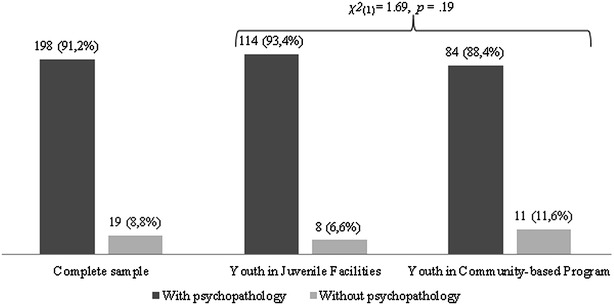
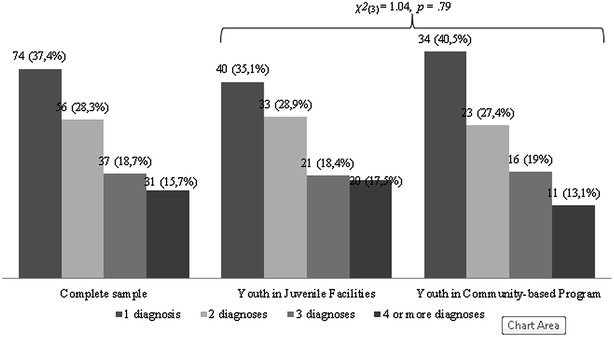
BACKGROUND: Young offenders are known to be a population with high prevalence of mental health disorders. In most cases, these disorders are neither identified nor treated properly, with the majority of them being chronic and difficult to treat. In many countries, the prevalence rates of psychopathology in male young offenders are still unknown and no psychotherapeutic interventions are delivered. Therefore, the main goal of the present study was to assess mental health problems in Portuguese male young offenders placed in either custodial or community-based programs and discuss treatment implications within the juvenile justice interventions. METHODS: Participants in this study included 217 male young offenders aged between 14 and 20 years old that were randomly selected using a random number table. From the total sample, 122 (56.3 %) participants were placed in juvenile detention facilities, and 95 (43.7 %) were receiving community-based programs. Participants were interviewed with the Mini-International Neuropsychiatric Interview for Children and Adolescents, a structured interview that assesses DSM-IV Axis I Mental Disorders. Participants aged 18 years or older were also assessed with the antisocial personality disorder section from the Structured Clinical Interview for DSM-IV Axis II Personality Disorders. RESULTS: Results showed a high prevalence of mental health disorders, with a global prevalence of 91.2 % in the total sample. In both groups, global prevalence rates were equally high (93.4 % in youth in custodial versus 88.4 % in youth in community-based programs). Substance-related disorders were more prevalent in youth placed in juvenile facilities, whereas anxiety and mood disorders were more often found in the community-based group. Moreover, oppositional defiant disorder was more prevalent in youth from the community, whereas antisocial personality disorder and conduct disorder were less prevalent than expected in this same group. A high comorbidity rate was also found, with the majority of participants from both groups' fulfilling criteria for two or more disorders. Additionally, participants with conduct disorder were over four times more likely to fulfill criteria for substance abuse. CONCLUSIONS: Our findings inform about specific needs concerning mental health intervention that should be taken into account when deciding and planning rehabilitation programs for male young offenders, either from custodial or community-based programs.
Overview
The claims and statistics of this paper haven’t been checked yet.
Free: it reads the open-access text and checks the first 5 claims that cite a source we can check. Create a free account to check every claim.
Integrity signals
Registry
Cites
Statistics
Figures
Verification
Claims the paper makes
The claims and statistics of this paper haven’t been checked yet.
Free: it reads the open-access text and checks the first 5 claims that cite a source we can check. Create a free account to check every claim.
Claims other papers make about this one
Each is checked against this paper’s own text: does it say what the citing paper says it does?
The cited source says what the claim attributes to it.
In the citing paper
“The Portuguese version of Mini-KID resulted from a thorough translation and backtranslation process and has been previously used as a method for diagnoses (Rijo et al., 2016).”
From Psychological inflexibility explains social anxiety over time: a mediation analyses with a clinical adolescent sample (2024) · cites this paper as Rijo et al., 2016
The cited source says what the claim attributes to it.
In the citing paper
“At baseline, D. was assessed online with the Mini-International Neuropsychiatric Interview for Children and Adolescents (MINI-KID; Sheehan et al., 2010; Portuguese Authorized Version by Rijo et al., 2016), 2 weeks before the start of the program.”
From THE EFFICACY OF A COMPASSION, ACCEPTANCE AND MINDFULNESS-BASED PILOT INTERVENTION FOR ADOLESCENTS’ TEST ANXIETY: A CASE STUDY USING THE ACADEMIC PROGRAM (2023) · cites this paper as Rijo et al., 2016
The cited source says what the claim attributes to it.
In the citing paper
“The Portuguese version of MINI-KID resulted from a careful translation and backtranslation process and has been previously utilized as a method for diagnoses assessment [52].”
From The Prevalence of Adolescent Social Fears and Social Anxiety Disorder in School Contexts (2022) · cites this paper as [52]
The cited source says what the claim attributes to it.
In the citing paper
“The Portuguese version of the Mini-KID resulted from a careful translation and backtranslation process and has been previously used as a method for the assessment of clinical diagnoses [85].”
From Acceptance and commitment therapy as a transdiagnostic approach to adolescents with different anxiety disorders: study protocol. (2025) · cites this paper as [85]
Self-check
Percentages, sums and reported differences re-computed from the paper’s own numbers.
The self-check needs the paper’s full text.
Citations
Cites
(2017) · Cited by 16,319
The Psychology of Criminal Conduct
Hart, S. D., Andrews, D. A., & Bonta, J. (1995) · Political Psychology · doi:10.2307/3792235 · Cited by 2,900
The Psychology of Criminal Conduct
Bonta, J., & Andrews, D. A. (2016) · doi:10.4324/9781315677187 · Cited by 2,107
Sheehan, D. V., Sheehan, K. H., Shytle, R. D., Janavs, J., Bannon, Y., Rogers, J. E., Milo, K. M., Stock, S. L., & Wilkinson, B. (2010) · The Journal of Clinical Psychiatry · doi:10.4088/jcp.09m05305whi · Cited by 1,730 · cited 6×
“Participants were interviewed with a structured clinical interview, the MINI-KID-Mini-International Neuropsychiatric Interview for Children and Adolescents [35], which assesses Axis I mental health disorders according to DSM-IV criteria, namely: mood disorders; anxiety disorders; substance-related disorders; tic disor…”
MethodInfluentialPsychiatric Disorders in Youth in Juvenile Detention
Teplin, L. A., Abram, K. M., McClelland, G. M., Dulcan, M. K., & Mericle, A. A. (2002) · Archives of General Psychiatry · doi:10.1001/archpsyc.59.12.1133 · Cited by 1,675
Adapting Educational and Psychological Tests for Cross-Cultural Assessment
(2004) · Psychology Press eBooks · doi:10.4324/9781410611758 · Cited by 1,627 · cited 1×
“The MINI-KID was translated and adapted into Portuguese following a translation and back-translation procedure [38].”
MethodRehabilitating criminal justice policy and practice
Andrews, D. A., & Bonta, J. (2010) · Psychology, Public Policy, and Law · doi:10.1037/a0018362 · Cited by 1,223 · cited 1×
“Finally, though it is well established that recidivism risk assessment in forensic settings can provide information about the nature, intensity, and length of interventions [44, 45], the mental health paradigm can provide specific models targeting the core processes underling these youth’s dysregulation problems, whic…”
BackgroundPosttraumatic Stress Disorder and Trauma in Youth in Juvenile Detention
Abram, K. M., Teplin, L. A., Charles, D. R., Longworth, S. L., McClelland, G. M., & Dulcan, M. K. (2004) · Archives of General Psychiatry · doi:10.1001/archpsyc.61.4.403 · Cited by 774 · cited 2×
“Abram and colleagues [11] found that 92.”
BackgroundD'Andrea, W., Ford, J., Stolbach, B., Spinazzola, J., & van der Kolk, B. A. (2012) · American Journal of Orthopsychiatry · doi:10.1111/j.1939-0025.2012.01154.x · Cited by 703 · cited 1×
“[40] argued, children exposed to trauma, as it seems to be the case of the majority of young offenders [11], often meet criteria for other psychiatric disorders rather than post-traumatic stress disorder.”
BackgroundFazel, S., Doll, H., & Långström, N. (2008) · Journal of the American Academy of Child & Adolescent Psychiatry · doi:10.1097/chi.obo13e31817eecf3 · Cited by 615 · cited 3×
“Similarly to what has been observed in other studies [1, 4, 5, 15, 19], a considerable high psychiatric comorbidity rate was found, either when analyzing the total sample, as when considering both groups separately, with similar proportion comorbidity rates having been found between groups.”
BackgroundResult
Research works printed but not linked: 2
- First MB, Gibbon M, Spitzer RL, Williams JBW, Benjamin LS. Structured Clinical Interview for DSM-IV Axis II Personality Disorders. Washington: American Psychiatric Press; 1997. (Portuguese version by Pinto-Gouveia J, Matos AP, Rijo D, Castilho P, Salvador MC 1999).
- Mulvey EP Highlights from pathway to desistence: a longitudinal study of serious adolescent offenders 2011 Washington Office of Justice Programs, U.S. Department of Justice
Cited by
Emilian, C. A., Al‐Juffali, N., & Fazel, S. (2025) · The Lancet Public Health · doi:10.1016/s2468-2667(24)00280-9 · Cited by 87
da Silva, D. R., Salekin, R. T., & Rijo, D. (2018) · Journal of Criminal Justice · doi:10.1016/j.jcrimjus.2018.12.003 · Cited by 48
“All of those recruited in these settings had a history of severe behavior problems and, consequently, had a high probability for having a CD diagnosis (Rijo et al., 2016).”
BackgroundSelf-citationThe Prevalence of Adolescent Social Fears and Social Anxiety Disorder in School Contexts
Alves, F., Figueiredo, D. V., & Vagos, P. (2022) · International Journal of Environmental Research and Public Health · doi:10.3390/ijerph191912458 · Cited by 38
“The following diagnostic assessment phase of this work invited adolescents scoring one standard deviation above the mean found for a large normative sample on the SAS-A (i.e., M = 46.97, SD = 11.16; [51]) for an individual structured clinical interview (i.e., the Portuguese version of the Mini International Neuropsych…”
BackgroundMethodInfluentialSelf-citationPsychopathic traits in children and youth: The state-of-the-art after 30 years of research
da Silva, D. R., Rijo, D., & Salekin, R. T. (2020) · Aggression and Violent Behavior · doi:10.1016/j.avb.2020.101454 · Cited by 47
Self-citationLovero, K. L., Adam, S. E., Bila, C., Canda, E. D., Fernandes, M. E., Rodrigues, T. A. O., Sander, M. C. T., Mellins, C. A., Duarte, C. S., dos Santos, P. F., et al. (2022) · BMC Psychiatry · doi:10.1186/s12888-022-04189-3 · Cited by 42
“We used the Portuguese version [52] of the MINI International Neuropsychiatric Interview for Children and Adolescents (MINI-KID), a structured diagnostic interview for DSM-IV and ICD-10 disorders [53], as our gold standard mental health assessment tool.”
MethodMcGovern, R., Balogun-Katung, A., Artis, B., Bareham, B. K., Spencer, L. P., Alderson, H., Brown, E., Brown, J., Lingam, R., McArdle, P., et al. (2024) · Journal of Prevention · doi:10.1007/s10935-024-00785-z · Cited by 51
“These children also experience poor outcomes including an increased risk of substance use (Hopfer et al., 2013), involvement in offending behaviour (Rijo et al., 2016), difficulties in their relationships with family and friends (Lim et al., 2020), diminished educational opportunities, Wickersham…”
BackgroundCaiado, B., Góis, A., Pereira, B., Canavarro, M. C., & Moreira, H. (2022) · International Journal of Environmental Research and Public Health · doi:10.3390/ijerph19031782 · Cited by 26
“Therefore, 52 children (50% referred by school psychologists; 34.6% enrolled through the project website; and 15.4% referred by the mental health professionals of the hospital) were assessed for their eligibility by the research team in a clinical interview that included the structured MINI-KID clinical interview (see…”
BackgroundInfluentialda Silva, D. R., Rijo, D., Salekin, R. T., Paulo, M., Miguel, R. R., & Gilbert, P. (2020) · Journal of Experimental Criminology · doi:10.1007/s11292-020-09418-x · Cited by 30
“In turn, the full mental health assessment coupled with the recidivism risk assessment should help to decide about the nature, intensity, and length of interventions delivered to detained youth (Andrews and Bonta 2010; Ribeiro da Silva et al. 2019b; Rijo et al. 2016; Salekin 2017).”
BackgroundMethodInfluentialSelf-citationda Silva, D. R., Sousa, R., Rijo, D., Mendez, B., Tsang, S., & Salekin, R. T. (2021) · Assessment · doi:10.1177/10731911211044534 · Cited by 24
“The MINI-KID (Sheehan et al., 2010; Portuguese authorized version by Rijo et al., 2016) is a semistructured clinical diagnostic interview, which assesses DSM/ICD disorders in children and youth in a way that is both comprehensive and concise, namely: mood disorders, anxiety disorders,…”
BackgroundMethodSelf-citationHRV patterns associated with different affect regulation systems: Sex differences in adolescents
Sousa, R., Petrocchi, N., Gilbert, P., & Rijo, D. (2021) · International Journal of Psychophysiology · doi:10.1016/j.ijpsycho.2021.10.009 · Cited by 23
Self-citationAhmed, M. M., & John, J. (2023) · Cambridge Prisms Global Mental Health · doi:10.1017/gmh.2023.70 · Cited by 27
“Understanding the proper services is crucial since “ the prevalence of mentalhealthdisordersconnectedto stress and adaptation indicates a need to build community-based service resources to manage and assist the afflicted persons ” (Wells et al., 2004; Sellers, 2015; Rijo et al., 2016).”
BackgroundPat, P., Sundberg, L. R., Jegannathan, B., Edin, K. E., & Sebastiån, M. S. (2021) · Global Health Action · doi:10.1080/16549716.2021.1985229 · Cited by 21
“2% of their respondents fulfilled the criteria for at least one psychiatric disorder [15].”
BackgroundResultSousa, R., Petrocchi, N., Gilbert, P., & Rijo, D. (2022) · Journal of Criminal Justice · doi:10.1016/j.jcrimjus.2022.101970 · Cited by 17
Self-citationFigueiredo, D. V., Alves, F., & Vagos, P. (2024) · Current Psychology · doi:10.1007/s12144-023-04650-w · Cited by 13
“Those who scored more than one standard deviation above the mean observed in a large normative Portuguese sample on the SAS-A (Cunha et al., 2004) were invited for an individual clinical interview (MINI-KID, Sheehan et al., 2010; Portuguese Authorized version by Rijo et al., 2016).”
Self-citationSousa, R., da Silva, D. R., Petrocchi, N., Gilbert, P., & Rijo, D. (2023) · Frontiers in Psychiatry · doi:10.3389/fpsyt.2022.1032011 · Cited by 14
“Thus, they are at greater risk for both internalizing and externalizing disorders (21), including conduct (CD) and/or oppositional defiant disorders [ODD; (26)].”
BackgroundSelf-citationMoreira, H., Vagos, P., Pereira, J., Fonseca, A., Canavarro, M. C., & Rijo, D. (2020) · Current Psychology · doi:10.1007/s12144-020-00778-1 · Cited by 11
Self-citationUniversity of Coimbra, P., PIRES, C. P., HOFMANN, S. G., Philipps-University Marburg, G., PUTWAIN, D. W., Liverpool John Moores University, U., DO CÉU SALVADOR, M., & University of Coimbra, P. (2023) · Journal of Evidence-Based Psychotherapies · doi:10.24193/jebp.2023.1.3 · Cited by 9
Ganho-Ávila, A., Vieira Figueiredo, D., & Vagos, P. (2022) · Clinical Case Studies · doi:10.1177/15346501221091519 · Cited by 9
“The baseline assessment was conducted by a psychologist that used the MINI-KID (Sheehan et al., 2010; Portuguese Authorized Version by Rijo et al., 2016) 3 weeks before the start of the program.”
MethodSelf-citationBarroso, R., Figueiredo, P., Ramião, E., & Fanti, K. A. (2020) · Journal of Sexual Aggression · doi:10.1080/13552600.2019.1705407 · Cited by 10
Self-citationPereira, J., Vagos, P., Fonseca, A., Moreira, H., Canavarro, M. C., & Rijo, D. (2020) · Journal of Traumatic Stress · doi:10.1002/jts.22634 · Cited by 9
Self-citationRijo, D., Miguel, R. R., Paulo, M., & Brazão, N. (2020) · International Journal of Offender Therapy and Comparative Criminology · doi:10.1177/0306624x20912988 · Cited by 7
Self-citationCarbonell, Á., Georgieva, S., Pérez, J. J. N., & Botija, M. (2023) · International Journal of Environmental Research and Public Health · doi:10.3390/ijerph20115989 · Cited by 13
McGovern, R., Balogun-Katung, A., Artis, B., Alderson, H., Brown, E. H., Diggle, T. T. J., Lingam, R., McArdle, P., Rankin, J. M., Thomason, P., et al. (2024) · BMC Public Health · doi:10.1186/s12889-024-19770-6 · Cited by 8
“These CYP experience poor outcomes including an increased risk of substance use [6], involvement in offending behaviour [7], difficulties in their relationships with family and friends [8], diminished educational opportunities, [9] and unplanned pregnancy/ parenthood [10].”
BackgroundAlves, F., Figueiredo, D. V., & Vagos, P. (2023) · Clinical Case Studies · doi:10.1177/15346501221144069 · Cited by 3
“For the Portuguese version, there is no study observing inter-rater reliability though it has been previously used for determining diagnosis (Rijo et al., 2016).”
MethodSelf-citationFonseca, A., Vagos, P., Moreira, H., Pereira, J., Canavarro, M. C., & Rijo, D. (2020) · Child Psychiatry & Human Development · doi:10.1007/s10578-020-00965-y · Cited by 3
“Kid [33] to confirm the clinical diagnosis.”
MethodInfluentialSelf-citationVagos, P., Figueiredo, D. V., Ganho-Ávila, A., Mayr, A. J., & Rijo, D. (2023) · Frontiers in Psychology · doi:10.3389/fpsyg.2022.915677 · Cited by 6
“The assessment phase consisted of individual assessment via a structured clinical interview (i.e., the Portuguese version of the Mini International Neuropsychiatric Interview for Children and Adolescents; Rijo et al., 2016), which was used for defining the presence of inclusion criteria (i.”
MethodSelf-citationRobertson, H. (2022) · Educational and Child Psychology · doi:10.53841/bpsecp.2022.39.2.56 · Cited by 6
Pires, J., & Martins, P. C. (2019) · Configurações · doi:10.4000/configuracoes.7165 · Cited by 11
Thematic series CAPMH “Forensic Child and Adolescent Psychiatry and Mental Health”
Schmeck, K., Boonmann, C., & Fegert, J. M. (2016) · Child and Adolescent Psychiatry and Mental Health · doi:10.1186/s13034-016-0126-3 · Cited by 3
“For this reason, Rijo and colleagues [4] examined the prevalence rates of mental disorders, including personality disorders, in a randomized sample of male juvenile offenders assessed in the Portuguese Juvenile Justice System.”
BackgroundFigueiredo, D. V., Salvador, M. D. C., Rijo, D., & Vagos, P. (2025) · European Child & Adolescent Psychiatry · doi:10.1007/s00787-024-02608-2 · Cited by 2
“The Portuguese version of the Mini-KID resulted from a careful translation and backtranslation process and has been previously used as a method for the assessment of clinical diagnoses [85].”
Self-citationGold Standard Versus Treatment as Usual: Assessment Practices in the Juvenile Justice System
Kovalenko, J., Li, N., & Grigorenko, E. L. (2022) · Clinical Psychology and Special Education · doi:10.17759/cpse.2022110210 · Cited by 2
Care planning needs for youth in custody, inpatient and outpatient settings
Stewart, S. L., Thornley, E., Lapshina, N., Vingilis, E. R., Erickson, P. A., Hamilton, H. A., Abbas, S., & Semovski, V. (2023) · Children and Youth Services Review · doi:10.1016/j.childyouth.2023.107082 · Cited by 4
Figueiredo, D. V., Ganho-Ávila, A., Miguel, R. R., Paulo, M., Nobre-Lima, L., Salvador, M. D. C., Rijo, D., & Vagos, P. (2021) · Psychologica · doi:10.14195/1647-8606_64-2_4 · Cited by 3
Self-citationForensic child & adolescent psychiatry and psychology in Europe
Boonmann, C., Schmeck, K., & Witt, A. (2024) · Child and Adolescent Psychiatry and Mental Health · doi:10.1186/s13034-024-00756-6 · Cited by 2
“Since then, 24 papers (excluding the editorials mentioned above) have been published [1–3, 5, 7, 8, 11–19, 22–30].”
BackgroundVagos, P., Figueiredo, D. V., & Cunha, M. I. V. A. (2025) · European Child & Adolescent Psychiatry · doi:10.1007/s00787-025-02824-4 · Cited by 1
“…studies on the efficacy of psychological interventions for adolescent SAD [ 5, 16, 21] were invited for an individual diagnostic assessment using the Mini-International Neuropsychiatric Interview for Children and Adolescents [ 55], Portuguese version by [ 50] to establish a diagnosis of SAD.”
Self-citationPires, C. P., Azevedo, J., Guiomar, R. N. R. M., Silva, E., Putwain, D. W., Hofmann, S. G., & Salvador, M. D. C. (2026) · Mindfulness · doi:10.1007/s12671-026-02816-8 · Cited by 1
“…description and understanding of test anxiety symptoms in each participant (Comprehensive Test Anxiety Interview; Pires et al., 2025) and the Mini-International Neuropsychiatric Interview for Children and Adolescents (MINI-KID; Sheehan et al., 2010; Portuguese version by Rijo et al., 2016).”
da Silva, D. R. (2026) · Psychology Crime and Law · doi:10.1080/1068316x.2026.2713582 · Cited by 1
Theron, M., Artz, L., Nel, J. H., & Senekal, M. (2022) · Child & Youth Services · doi:10.1080/0145935x.2022.2044772 · Cited by 1
Félix, A., Ferreira, A., & Vagos, P. (2022) · Psicologia · doi:10.17575/psicologia.1788 · Cited by 3
Self-citationFigueiredo, D. V., Vagos, P., Ganho-Ávila, A., Salvador, M. D. C., Nobre-Lima, L., & Rijo, D. (2023) · Journal of Evidence-Based Psychotherapies · doi:10.24193/jebp.2023.1.2 · Cited by 3
Self-citationPrevalence and Comorbidity of Emotional and Behavioural Problems of Young Offenders in Singapore
Oei, A. C. (2023) · SpringerBriefs in criminology · doi:10.1007/978-3-031-41702-3_3 · Cited by 1
da Silva, D. R., Lindberg, N., & Garofalo, C. (2025) · Journal of Criminal Justice · doi:10.1016/j.jcrimjus.2025.102357 · Cited by 2
Interventions for mood, anxiety disorders or self-harm in young offenders
Robertson, L., Aboaja, A. M., Walker, D., Vostanis, P., Witt, K., Chakrabarti, I., Perry, A., & Townsend, E. (2020) · Cochrane Database of Systematic Reviews · doi:10.1002/14651858.cd013768 · Cited by 2
Configurações, D. D. R. (2019) · Configurações · doi:10.4000/configuracoes.6373 · Cited by 1
Theron, M., Senekal, M., & Artz, L. (2021) · Figshare · doi:10.25375/uct.8229557.v1 · Cited by 1
(2017) · Emerald Group Publishing Limited eBooks · doi:10.1108/978-1-78743-611-420171009
Pat, P., Sundberg, L. R., Jegannathan, B., Edin, K. E., & Sebastiån, M. S. (2020) · doi:10.21203/rs.3.rs-30188/v1
Ferreira, C., & Martins, P. C. (2022) · Revista Contexto & Saúde · doi:10.21527/2176-7114.2022.46.13188
Barata, M., Ferreira, A., & Vagos, P. (2022) · Psicologia · doi:10.17575/psicologia.1786 · Cited by 1
“The M.I.N.I-KID — Mini International Neuropsychiatric Interview for Children and Adolescents (Sheehan et al., 1998; Portuguese version Rijo et al., 2016) is a structured clinical interview that assesses mental disorders commonly found in childhood and adolescence based on the diagnostic criteria…”
MethodSelf-citationProtective Factors Against Emotional and Behavioural Problems in Young Offenders
Liu, M., Teo, D., & Chu, C. M. (2023) · SpringerBriefs in criminology · doi:10.1007/978-3-031-41702-3_7
Ahmed, M. M., & John, J. (2023) · Cambridge Prisms Global Mental Health · doi:10.1017/gmh.2023.70.pr14
Ahmed, M. M., & John, J. (2023) · Cambridge Prisms Global Mental Health · doi:10.1017/gmh.2023.70.pr13
Ahmed, M. M. (2023) · Cambridge Prisms Global Mental Health · doi:10.1017/gmh.2023.70.pr12
Ahmed, M. M., & John, J. (2023) · Cambridge Prisms Global Mental Health · doi:10.1017/gmh.2023.70.pr11
Ahmed, M. M., & John, J. (2023) · Cambridge Prisms Global Mental Health · doi:10.1017/gmh.2023.70.pr10
Ahmed, M. M., & John, J. (2023) · Cambridge Prisms Global Mental Health · doi:10.1017/gmh.2023.70.pr9
Ahmed, M. M., & John, J. (2023) · Cambridge Prisms Global Mental Health · doi:10.1017/gmh.2023.70.pr8
Ahmed, M. M., & John, J. (2023) · Cambridge Prisms Global Mental Health · doi:10.1017/gmh.2023.70.pr6
Ahmed, M. M. (2023) · Cambridge Prisms Global Mental Health · doi:10.1017/gmh.2023.70.pr7
Ahmed, M. M., & John, J. (2023) · Cambridge Prisms Global Mental Health · doi:10.1017/gmh.2023.70.pr5
Ahmed, M. M., & John, J. (2023) · Cambridge Prisms Global Mental Health · doi:10.1017/gmh.2023.70.pr4
Ahmed, M. M., & John, J. (2023) · Cambridge Prisms Global Mental Health · doi:10.1017/gmh.2023.70.pr3
Ahmed, M. M., & John, J. (2023) · Cambridge Prisms Global Mental Health · doi:10.1017/gmh.2023.70.pr2
Ahmed, M. M. (2023) · Cambridge Prisms Global Mental Health · doi:10.1017/gmh.2023.70.pr1
Situational Analysis on residents of MIMAROPA Youth Center: A Basis for Program Proposal
Ciedelle, P.-S., Jerome, T., & Jobeth, C. (2024) · Diversitas Journal · doi:10.48017/dj.v9ispecial1.2942
Planet statistika: Raba statističnih testov
Erčulj, V. I., & Šulc, A. (2024) · doi:10.18690/um.fvv.8.2024
Paulo, M., Vagos, P., da Silva, D. R., Castilho, P., Soares, J., Sousa, R., Hellmig, F., & Rijo, D. (2025) · Journal of Contextual Behavioral Science · doi:10.1016/j.jcbs.2025.100955
Self-citationLovero, K. L., Adam, S. E., Bila, C., Canda, E. D., Fernandes, M. E., Rodrigues, T. I. B., Sander, M. C. T., Mellins, C. A., Duarte, C. S., dos Santos, P. F., et al. (2022) · Figshare · doi:10.6084/m9.figshare.20484949
Prevalence of Mental Disorders and Healthcare Seeking Among Mozambican Adolescents in School
King, A., Adam, S. E., Bila, C., Fernandes, M. E., Rodrigues, T. A. O., dos Santos, P. F., Wainberg, M. L., Duarte, C. S., & Lovero, K. L. (2026) · Transcultural Psychiatry · doi:10.1177/13634615251409683 · Cited by 1
“The MINI-KID was previously translated into Portuguese by a multidisciplinary and multilingual team in Brazil (Rijo et al., 2016), who used the gold standard method of translation and back-translation and worked with the author of the MINI-KID to ensure consistency with the original…”
Ji, W. (2026) · Journal of Forensic Psychiatry and Psychology · doi:10.1080/14789949.2026.2747638
Metadata
- Authors
- Rijo, D., Brazão, N., Barroso, R., da Silva, D. R., Vagos, P., Vieira, A., Lavado, A., & Macedo, A. M.
- Affiliations
- University of Coimbra (PT)
- University of Trás-os-Montes and Alto Douro (PT)
- Corresponding author
- Rijo, Daniel
- Venue
- Child and Adolescent Psychiatry and Mental Health
- Published
- 2016-11-01
- Volume
- 10
- Issue
- 1
- Pages
- 40-40
- ISSN
- 1753-2000 (ISSN-L)
- PMC
- PMC5088680
- OpenAlex
- W2544515296
- Cited by
- 70
- References
- 51
- Citations by year
- 2026: 4 · 2025: 4 · 2024: 6 · 2023: 24 · 2022: 13 · 2021: 5 · 2020: 9 · 2019: 2 · 2018: 1 · 2017: 1 · 2016: 1
- FWCI
- 2.23
- Type
- journal article
- Language
- en
- Open access
- gold
- doi.org
- Licence
- cc-by
- Locations
- Child and Adolescent Psychiatry and Mental Health (publishedVersion, cc-by)
- PubMed Central (publishedVersion, cc-by)
- PubMed (publishedVersion)
- Portuguese National Funding Agency for Science, Research and Technology (RCAAP Project by FCT) (submittedVersion, other-oa)
- Portuguese National Funding Agency for Science, Research and Technology (RCAAP Project by FCT) (submittedVersion)
- Funders
- Program Criminal Justice of the European Commission (JUST/2010/JPEN/AG/1610)
- Topics
- Social Sciences › Psychology › Clinical Psychology › Psychopathy, Forensic Psychiatry, Sexual Offending
- Social Sciences › Sociology and Political Science › Crime Patterns and Interventions
- Social Sciences › Psychology › Clinical Psychology › Child and Adolescent Psychosocial and Emotional Development
- Keywords
- mental illness, juvenile offenders, juvenile justice, juvenile detention, community-based programs, substance-related disorders, conduct disorder, antisocial personality disorder, oppositional defiant disorder, anxiety disorders, mood disorders, comorbidities, psychopathology prevalence, rehabilitation programs, adolescent boys
About these checks
Registry, retraction, Cites and statistics results are computed, not judged, with one exception: a printed reference that no index lists is read once by a model before it counts as a citation error. Claims are extracted by a model and kept only when their quote appears verbatim in the text; each cited source is then checked, with a model’s help, for whether it says what the claim relies on. Those verdicts can be wrong — read the claim’s quote and the cited source before relying on one.
Statistics and arithmetic are recomputed, not judged.
Confidence bands are shown only for fields calibrated on our annotated test set. None is calibrated yet, so no band is shown.
What counts as a claim ›How we measure confidence ›How we check this ›
Are you an author, or do you see a problem with this page? Request a review
Data sources
Bibliographic data: Semantic Scholar, OpenAlex, Crossref.
Contains information from the Semantic Scholar Academic Graph Datasets, made available under the ODC Attribution License (ODC-BY 1.0).
Semantic Scholar’s data is described in: Kinney, R., et al. (2023). The Semantic Scholar Open Data Platform. arXiv:2301.10140.
