

Deep learning-based ovarian cancer subtypes identification using multi-omics data
Open accessThe DOI matches its Crossref record; 27 of the 27 references it cites were found in a registry or an index.
Abstract
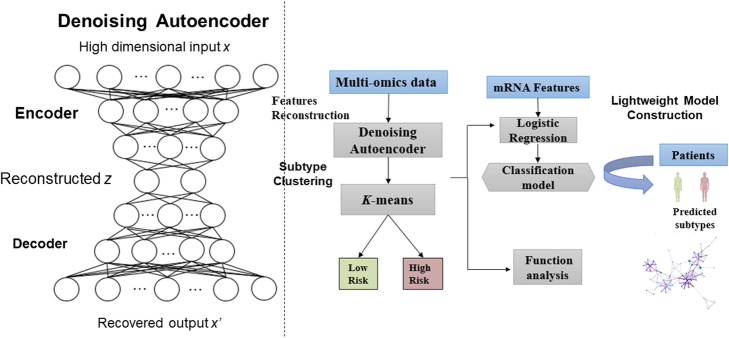
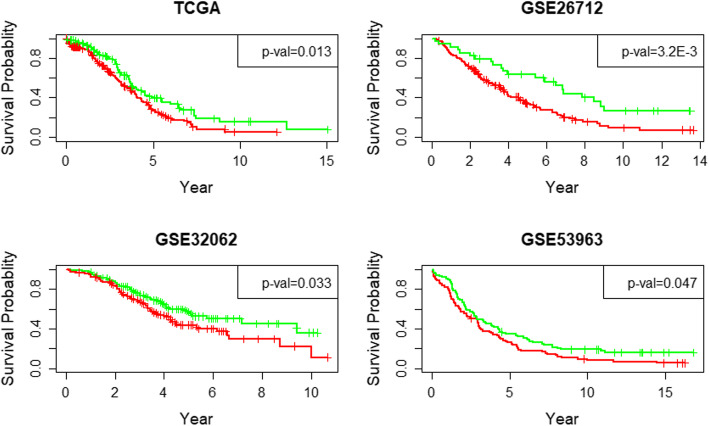
Background: Identifying molecular subtypes of ovarian cancer is important. Compared to identify subtypes using single omics data, the multi-omics data analysis can utilize more information. Autoencoder has been widely used to construct lower dimensional representation for multi-omics feature integration. However, learning in the deep architectures in Autoencoder is difficult for achieving satisfied generalization performance. To solve this problem, we proposed a novel deep learning-based framework to robustly identify ovarian cancer subtypes by using denoising Autoencoder. Results: In proposed method, the composite features of multi-omics data in the Cancer Genome Atlas were produced by denoising Autoencoder, and then the generated low-dimensional features were input into k-means for clustering. At last based on the clustering results, we built the light-weighted classification model with L1-penalized logistic regression method. Furthermore, we applied the differential expression analysis and WGCNA analysis to select target genes related to molecular subtypes. We identified 34 biomarkers and 19 KEGG pathways associated with ovarian cancer. Conclusions: The independent test results in three GEO datasets proved the robustness of our model. The literature reviewing show 19 (56%) biomarkers and 8(42.1%) KEGG pathways identified based on the classification subtypes have been proved to be associated with ovarian cancer. The outcomes indicate that our proposed method is feasible and can provide reliable results.
Overview
The claims and statistics of this paper haven’t been checked yet.
Free: it reads the open-access text and checks the first 5 claims that cite a source we can check. Create a free account to check every claim.
Integrity signals
Registry
Cites
Statistics
Figures
Verification
Claims the paper makes
The claims and statistics of this paper haven’t been checked yet.
Free: it reads the open-access text and checks the first 5 claims that cite a source we can check. Create a free account to check every claim.
Claims other papers make about this one
Each is checked against this paper’s own text: does it say what the citing paper says it does?
The source backs part of the claim, not all of it — or backs it for a different population, condition or comparison.
In the citing paper
“The applications of early nonlinear fusion methods reviewed here have shown that these methods can outperform shallow methods on prediction tasks (e.g. [35, 36]).”
From Multimodal deep learning for biomedical data fusion: a review (2022) · cites this paper as [35]
Experimental — accuracy not yet measuredThe cited source says what the claim attributes to it.
In the citing paper
“For the same clinical task, a similar workflow has been adapted by researchers, but applying denoising AEs (DAEs) [91] instead [35, 36].”
From Multimodal deep learning for biomedical data fusion: a review (2022) · cites this paper as [35]
In the citing paper
“Similarly, Denoising autoencoder has been incorporated along with L1-penalized logistic regression for identifying ovarian cancer subtypes (Guo et al., 2020).”
From Using machine learning approaches for multi-omics data analysis: A review (2021) · cites this paper as Guo et al., 2020
Self-check
Percentages, sums and reported differences re-computed from the paper’s own numbers.
The self-check needs the paper’s full text.
Citations
Cites
Moderated estimation of fold change and dispersion for RNA-seq data with DESeq2
Love, M. I., Huber, W., & Anders, S. (2014) · Genome Biology · doi:10.1186/s13059-014-0550-8 · Cited by 95,106
WGCNA: an R package for weighted correlation network analysis
Langfelder, P., & Horvath, S. (2008) · BMC Bioinformatics · doi:10.1186/1471-2105-9-559 · Cited by 27,252 · cited 6×
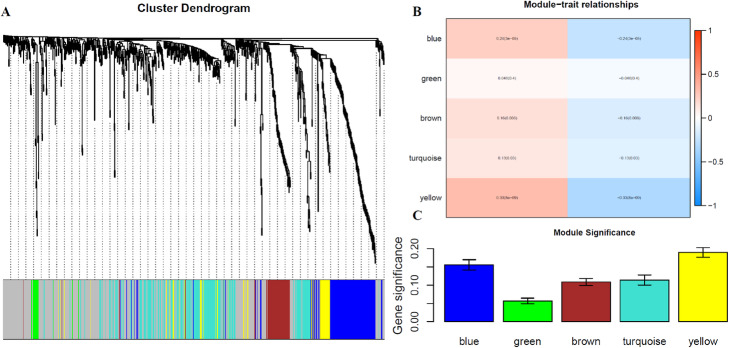
“The different clustered modules from WGCNA are represented by different colors.”
MethodInfluentialSilhouettes: A graphical aid to the interpretation and validation of cluster analysis
Rousseeuw, P. J. (1987) · Journal of Computational and Applied Mathematics · doi:10.1016/0377-0427(87)90125-7 · Cited by 21,392 · cited 1×
“We determined the optimal number of clusters with silhouette score [15].”
MethodExtracting and composing robust features with denoising autoencoders
Vincent, P., Larochelle, H., Bengio, Y., & Manzagol, P.-A. (2008) · Proceedings of the 25th international conference on Machine learning - ICML '08 · doi:10.1145/1390156.1390294 · Cited by 7,436 · cited 1×
“Compared to AE, DAE proposed by Vincent [12] can make the features learned by the model more robust by superimposing noise on the input.”
MethodKOBAS 2.0: a web server for annotation and identification of enriched pathways and diseases
Xie, C., Mao, X., Huang, J., Ding, Y., Wu, J., Dong, S., Kong, L., Gao, G., Li, C.-Y., & Wei, L. (2011) · Nucleic Acids Research · doi:10.1093/nar/gkr483 · Cited by 5,094 · cited 1×
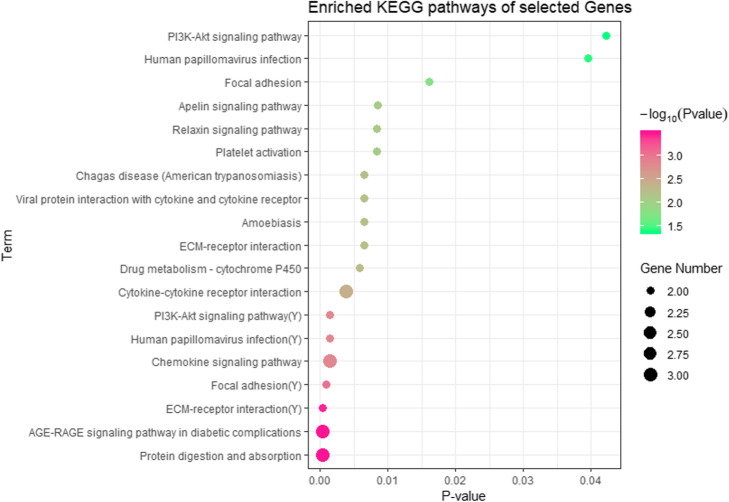
“And the enriched pathways were obtained by these genes based on the KOBAS online tool [20].”
MethodNovel Molecular Subtypes of Serous and Endometrioid Ovarian Cancer Linked to Clinical Outcome
Tothill, R. W., Tinker, A. V., George, J., Brown, R., Fox, S. B., Lade, S., Johnson, D. S., Trivett, M. K., Etemadmoghadam, D., Locandro, B., et al. (2008) · Clinical Cancer Research · doi:10.1158/1078-0432.ccr-08-0196 · Cited by 1,467 · cited 2×
“One way to research the heterogeneity is identifying different molecular subtypes in ovarian cancer, and many machine learning methods have been proposed for solving this problem [1, 2].”
MethodSystematic pan-cancer analysis of tumour purity
Aran, D., Sirota, M., & Butte, A. J. (2015) · Nature Communications · doi:10.1038/ncomms9971 · Cited by 1,216 · cited 1×
“However, some caveats about our method are still worth discussion below: Firstly, TCGA samples have been reported are impure in a previous study [26].”
MethodDeep learning-based multi-omics integration robustly predicts survival in liver cancer
Chaudhary, K., Poirion, O. B., Lu, L., & Garmire, L. X. (2018) · Clinical Cancer Research · doi:10.1158/1078-0432.ccr-17-0853 · Cited by 1,091 · cited 2×
“Chaudhary et al. employed AE to reconstruct low dimensional representation from three types of omics data (mRNA, miRNA and DNA methylation), and input them into k -means to identify different molecular subtypes of the liver hepatocellular carcinoma [11].”
BackgroundMethodA framework for feature selection in clustering
Witten, D. M., & Tibshirani, R. (2010) · Journal of the American Statistical Association · doi:10.1198/jasa.2010.tm09415 · Cited by 696
Copy number signatures and mutational processes in ovarian carcinoma
Macintyre, G., Goranova, T. E., De Silva, D., Ennis, D., Piskorz, A. M., Eldridge, M., Sie, D., Lewsley, L.-A., Hanif, A., Wilson, C., et al. (2018) · Nature Genetics · doi:10.1038/s41588-018-0179-8 · Cited by 449 · cited 1×
“…ovarian cancer subtypes using DNA methylation profiling with nonnegative matrix factorization (NMF) clustering algorithm [5], Macintyre et al. proved the copy number is related to the ovarian cancer survival and the probability of platinum-resistant relapse by using NMF mixture modeling [6].”
Method
Cited by
Using machine learning approaches for multi-omics data analysis: A review
Reel, P. S., Reel, S., Pearson, E., Trucco, E., & Jefferson, E. (2021) · Biotechnology Advances · doi:10.1016/j.biotechadv.2021.107739 · Cited by 903
Multimodal deep learning for biomedical data fusion: a review
Stahlschmidt, S. R., Ulfenborg, B., & Synnergren, J. (2022) · Briefings in Bioinformatics · doi:10.1093/bib/bbab569 · Cited by 766
“For the same clinical task, a similar workflow has been adapted by researchers, but applying denoising AEs (DAEs) [91] instead [35, 36].”
MethodDeep learning-based approaches for multi-omics data integration and analysis
Ballard, J. L., Wang, Z., Li, W., Shen, L., & Long, Q. (2024) · BioData Mining · doi:10.1186/s13040-024-00391-z · Cited by 258
Artificial intelligence assists precision medicine in cancer treatment
Liao, J., Li, X., Gan, Y., Han, S., Rong, P., Wang, W., Li, W., & Zhou, L. (2023) · Frontiers in Oncology · doi:10.3389/fonc.2022.998222 · Cited by 256
Kourou, K., Exarchos, K. P., Papaloukas, C., Sakaloglou, P., Exarchos, T., & Fotiadis, D. I. (2021) · Computational and Structural Biotechnology Journal · doi:10.1016/j.csbj.2021.10.006 · Cited by 165
Metadata
- Authors
- Guo, L.-Y., Wu, A.-H., Wang, Y.-X., Zhang, L.-P., Chai, H., & Liang, X.-F.
- Affiliations
- Guangzhou University of Chinese Medicine (CN)
- Guangdong Provincial Hospital of Chinese Medicine (CN)
- Sun Yat-sen University (CN)
- Corresponding author
- Chai, Hua
- Venue
- BioData Mining
- Published
- 2020-08-24
- Volume
- 13
- Issue
- 1
- Pages
- 10-10
- ISSN
- 1756-0381 (ISSN-L)
- PMC
- PMC7447574
- OpenAlex
- W3080469858
- Cited by
- 89
- References
- 27
- Citations by year
- 2026: 9 · 2025: 23 · 2024: 22 · 2023: 14 · 2022: 10 · 2021: 10 · 2020: 1
- FWCI
- 2.84
- Type
- journal article
- Language
- en
- Open access
- gold
- doi.org
- Licence
- cc-by
- creativecommons.org/licenses/by/4.0 (tdm)
- creativecommons.org/licenses/by/4.0 (vor)
- Locations
- BioData Mining (publishedVersion, cc-by)
- PubMed Central (publishedVersion, cc-by)
- PubMed (publishedVersion)
- DOAJ (DOAJ: Directory of Open Access Journals) (submittedVersion, cc-by-sa)
- Funders
- Natural Science Foundation of Guangdong Province (2019A1515012207)
- Natural Science Foundation of China (81601280)
- Topics
- Life Sciences › Biochemistry, Genetics and Molecular Biology › Molecular Biology › Gene expression and cancer classification
- Life Sciences › Biochemistry, Genetics and Molecular Biology › Molecular Biology › Bioinformatics and Genomic Networks
- Health Sciences › Medicine › Oncology › Ovarian cancer diagnosis and treatment
- Keywords
- ovarian cancer, molecular subtypes, multi-omics integration, denoising autoencoder, K-means clustering, biomarker discovery, KEGG pathways, differential gene expression, weighted gene co-expression network analysis, cancer subtyping
About these checks
Registry, retraction, Cites and statistics results are computed, not judged, with one exception: a printed reference that no index lists is read once by a model before it counts as a citation error. Claims are extracted by a model and kept only when their quote appears verbatim in the text; each cited source is then checked, with a model’s help, for whether it says what the claim relies on. Those verdicts can be wrong — read the claim’s quote and the cited source before relying on one.
Statistics and arithmetic are recomputed, not judged.
Confidence bands are shown only for fields calibrated on our annotated test set. None is calibrated yet, so no band is shown.
What counts as a claim ›How we measure confidence ›How we check this ›
Are you an author, or do you see a problem with this page? Request a review
How to cite
Cite CoChat for the checks on this page, and the paper for its own findings.
- This page
- CoChat. (2026). Citation check: Deep learning-based ovarian cancer subtypes identification using multi-omics data. https://app.cochat.ai/papers/10.1186/s13040-020-00222-x
- The paper
- Guo, L.-Y., Wu, A.-H., Wang, Y.-X., Zhang, L.-P., Chai, H., & Liang, X.-F. (2020). Deep learning-based ovarian cancer subtypes identification using multi-omics data. BioData Mining. https://doi.org/10.1186/s13040-020-00222-x
Data sources
Bibliographic data: Semantic Scholar, OpenAlex, Crossref.
Contains information from the Semantic Scholar Academic Graph Datasets, made available under the ODC Attribution License (ODC-BY 1.0).
Semantic Scholar’s data is described in: Kinney, R., et al. (2023). The Semantic Scholar Open Data Platform. arXiv:2301.10140.
