

Chimeric antigen receptor natural killer (CAR-NK) cell design and engineering for cancer therapy
Open accessThe DOI matches its Crossref record; 234 of the 234 references it cites were found in a registry or an index.
Abstract
Due to their efficient recognition and lysis of malignant cells, natural killer (NK) cells are considered as specialized immune cells that can be genetically modified to obtain capable effector cells for adoptive cellular treatment of cancer patients. However, biological and technical hurdles related to gene delivery into NK cells have dramatically restrained progress. Recent technological advancements, including improved cell expansion techniques, chimeric antigen receptors (CAR), CRISPR/Cas9 gene editing and enhanced viral transduction and electroporation, have endowed comprehensive generation and characterization of genetically modified NK cells. These promising developments assist scientists and physicians to design better applications of NK cells in clinical therapy. Notably, redirecting NK cells using CARs holds important promise for cancer immunotherapy. Various preclinical and a limited number of clinical studies using CAR-NK cells show promising results: efficient elimination of target cells without side effects, such as cytokine release syndrome and neurotoxicity which are seen in CAR-T therapies. In this review, we focus on the details of CAR-NK technology, including the design of efficient and safe CAR constructs and associated NK cell engineering techniques: the vehicles to deliver the CAR-containing transgene, detection methods for CARs, as well as NK cell sources and NK cell expansion. We summarize the current CAR-NK cell literature and include valuable lessons learned from the CAR-T cell field. This review also provides an outlook on how these approaches may transform current clinical products and protocols for cancer treatment.
Overview
The claims and statistics of this paper haven’t been checked yet.
Free: it reads the open-access text and checks the first 5 claims that cite a source we can check. Create a free account to check every claim.
Integrity signals
Registry
Cites
Statistics
Figures
Verification
Claims the paper makes
The claims and statistics of this paper haven’t been checked yet.
Free: it reads the open-access text and checks the first 5 claims that cite a source we can check. Create a free account to check every claim.
Claims other papers make about this one
Each is checked against this paper’s own text: does it say what the citing paper says it does?
The cited source says what the claim attributes to it.
In the citing paper
“Due to this difference in cytokine secretion profile, NK cells have the potential to be developed as “off-the-shelf” CAR products with a lower risk of inducing CRS compared to CAR-T cells.”
From Multiple myeloma: signaling pathways and targeted therapy (2024) · cites this paper as [272]
Self-check
Percentages, sums and reported differences re-computed from the paper’s own numbers.
The self-check needs the paper’s full text.
Citations
Cites
Tisagenlecleucel in Adult Relapsed or Refractory Diffuse Large B-Cell Lymphoma
Schuster, S. J., Bishop, M. R., Tam, C. S., Waller, E. K., Borchmann, P., McGuirk, J. P., Jäger, U., Jaglowski, S., Andreadis, C., Westin, J. R., et al. (2019) · New England Journal of Medicine · doi:10.1056/nejmoa1804980 · Cited by 4,112
LMO2 -Associated Clonal T Cell Proliferation in Two Patients after Gene Therapy for SCID-X1
Hacein-Bey-Abina, S., Von Kalle, C., Schmidt, M., McCormack, M. P., Wulffraat, N., Leboulch, P., Lim, A., Osborne, C. S., Pawliuk, R., Morillon, E., et al. (2003) · Science · doi:10.1126/science.1088547 · Cited by 3,587
Effectiveness of donor natural killer cell alloreactivity in mismatched hematopoietic transplants
Ruggeri, L., Capanni, M., Urbani, E., Perruccio, K., Shlomchik, W. D., Tosti, A., Posati, S., Rogaia, D., Frassoni, F., Aversa, F., et al. (2002) · Science · doi:10.1126/science.1068440 · Cited by 3,380 · cited 1×
“An interesting property of mature NK cells for adoptive cell therapy is that they can be transplanted into a new surrounding with different MHC expression patterns without losing their function [23, 24].”
BackgroundCar t cell immunotherapy for human cancer
June, C. H., O’Connor, R. S., Kawalekar, O. U., Ghassemi, S., & Milone, M. C. (2018) · Science · doi:10.1126/science.aar6711 · Cited by 3,207 · cited 1×
“In 2017, the US Food and Drug Administration (FDA) approved the first two CAR-T treatments for CD19+ hematologic malignancies (axicabtagene ciloleucel and tisagenlecleucel) [1, 17].”
BackgroundLee, D. W., Kochenderfer, J. N., Stetler-Stevenson, M., Cui, Y. K., Delbrook, C., Feldman, S. A., Fry, T. J., Orentas, R., Sabatino, M., Shah, N. N., et al. (2015) · The Lancet · doi:10.1016/s0140-6736(14)61403-3 · Cited by 2,898
Morgan, R. A., Yang, J. C., Kitano, M., Dudley, M. E., Laurencot, C. M., & Rosenberg, S. A. (2010) · Molecular Therapy · doi:10.1038/mt.2010.24 · Cited by 2,533 · cited 1×
“There already have been reports of the potential damaging effects of CAR-engineered T cells, such as the 4D5-scFv anti-ERBB2 [50] and G250-scFv anti-CAIX [51].”
BackgroundChimeric Antigen Receptor Therapy
June, C. H., & Sadelain, M. (2018) · New England Journal of Medicine · doi:10.1056/nejmra1706169 · Cited by 2,331 · cited 3×
“Therefore, the target of a CAR needs to be selected carefully to be specific for the tumor-associated antigen, while at the same time not recognizing self-antigens that could induce severe side effects [1].”
BackgroundUse of CAR-Transduced Natural Killer Cells in CD19-Positive Lymphoid Tumors
Liu, E., Marin, D., Banerjee, P., Macapinlac, H. A., Thompson, P., Basar, R., Nassif Kerbauy, L., Overman, B., Thall, P., Kaplan, M., et al. (2020) · New England Journal of Medicine · doi:10.1056/nejmoa1910607 · Cited by 2,217 · cited 12×
“A first CAR-NK study in men showed a promising anti-tumor response without the development of major toxic effects, such as cytokine release storm (CRS) and graft-versus-host disease (GVHD) [30].”
BackgroundInfluentialMiller, J. S., Soignier, Y., Panoskaltsis-Mortari, A., McNearney, S. A., Yun, G. H., Fautsch, S. K., McKenna, D., Le, C., Defor, T. E., Burns, L. J., et al. (2005) · Blood · doi:10.1182/blood-2004-07-2974 · Cited by 1,903 · cited 1×
“An interesting property of mature NK cells for adoptive cell therapy is that they can be transplanted into a new surrounding with different MHC expression patterns without losing their function [23, 24].”
BackgroundTargeting a CAR to the TRAC locus with CRISPR/Cas9 enhances tumour rejection
Eyquem, J., Mansilla-Soto, J., Giavridis, T., van der Stegen, S. J. C., Hamieh, M., Cunanan, K. M., Odak, A., Gönen, M., & Sadelain, M. (2017) · Nature · doi:10.1038/nature21405 · Cited by 1,831 · cited 5×
“TRAC-CAR-T outperformed both conventional retroviral transduced CAR T cells (RVCAR) as well as T cells with the CAR inserted in the β2M locus (β2M-CAR) in an in vivo mouse model, based on tumor eradication and expression of exhaustion markers, including PD1, TIM3 and LAG3 [40].”
BackgroundMethodInfluential
Research works printed but not linked: 1
- 119. Gandara C, Affleck V, Stoll EA. Manufacture of third-generation lentivirus for preclinical use, with process development considerations for translation to good manufacturing practice. Hum Gene Ther Methods. 2018;29(1):1–15. doi: 10.1089/hgtb.2017.098. · DOI · Paper page
Cited by
γδ T cells: origin and fate, subsets, diseases and immunotherapy
Hu, Y., Hu, Q., Li, Y., Lu, L., Xiang, Z., Yin, Z., Kabelitz, D., & Wu, Y. (2023) · Signal Transduction and Targeted Therapy · doi:10.1038/s41392-023-01653-8 · Cited by 382
Heterogeneity of the tumor immune microenvironment and its clinical relevance
Jia, Q., Wang, A., Yuan, Y., Zhu, B., & Long, H. (2022) · Experimental Hematology & Oncology · doi:10.1186/s40164-022-00277-y · Cited by 300
Exploiting innate immunity for cancer immunotherapy
Yi, M., Li, T., Niu, M., Mei, Q., Zhao, B., Chu, Q., Dai, Z., & Wu, K. (2023) · Molecular Cancer · doi:10.1186/s12943-023-01885-w · Cited by 225
Current Perspectives on “Off-The-Shelf” Allogeneic NK and CAR-NK Cell Therapies
Heipertz, E. L., Zynda, E. R., Stav-Noraas, T. E., Hungler, A. D., Boucher, S. E., Kaur, N., & Vemuri, M. C. (2021) · Frontiers in Immunology · doi:10.3389/fimmu.2021.732135 · Cited by 211
Lamers-Kok, N., Panella, D., Georgoudaki, A.-M., Liu, H., Özkazanc, D., Kučerová, L., Duru, A. D., Spanholtz, J., & Raimo, M. (2022) · Journal of Hematology & Oncology · doi:10.1186/s13045-022-01382-5 · Cited by 178
Immunotherapy in hematologic malignancies: achievements, challenges and future prospects
Tang, L., Huang, Z., Mei, H., & Hu, Y. (2023) · Signal Transduction and Targeted Therapy · doi:10.1038/s41392-023-01521-5 · Cited by 162
“Further research is also needed to perfect the design and manufacturing to improve the efficacy and durability of CAR-NK cells.(476,477)”
Caruso, S., Angelis, B. D., Bufalo, F. D., Ciccone, R., Donsante, S., Volpe, G., Manni, S., Guercio, M., Pezzella, M., Iaffaldano, L., et al. (2022) · Journal of Hematology & Oncology · doi:10.1186/s13045-022-01376-3 · Cited by 130
“While several clinical trials are available for CAR T cells, clinical data regarding CAR-NK cells are still limited [23], and most of them are based on irradiated NK-cell lines (e.g. NK-92 or the newly generated cell line NK-101) [24].”
BackgroundEmerging roles of CAR-NK cell therapies in tumor immunotherapy: current status and future directions
Zhong, Y., & Liu, J. (2024) · Cell Death Discovery · doi:10.1038/s41420-024-02077-1 · Cited by 138
“Unlike CAR-T cells, the intracellular domain in CAR-NK cells often includes signaling motifs from NK cell activating receptors, such as DAP12 or CD3 ζ , coupled with co-stimulatory domains from 2B4 (CD244) or DNAM-1 (CD226) to enhance activation and cytotoxic function [3, 18].”
BackgroundIntegration of CRISPR/Cas9 with artificial intelligence for improved cancer therapeutics
Bhat, A. A., Nisar, S., Mukherjee, S., Saha, N., Yarravarapu, N., Lone, S. N., Masoodi, T., Chauhan, R., Maacha, S., Bagga, P., et al. (2022) · Journal of Translational Medicine · doi:10.1186/s12967-022-03765-1 · Cited by 130
“In addition, they abundantly express neural cell adhesion molecule (NCAM; also known as CD56) and recognize a wide range of ligands on target cells [79].”
BackgroundStrategies to enhance CAR-T persistence
Liu, Y., An, L., Huang, R., Xiong, J., Yang, H., Wang, X., & Zhang, X. (2022) · Biomarker Research · doi:10.1186/s40364-022-00434-9 · Cited by 97
Overcoming tumor resistance mechanisms in CAR-NK cell therapy
Valeri, A., García-Ortiz, A., Castellano, E., Córdoba, L., Maroto-Martín, E., Encinas, J., Leivas, A., Río, P., & Martínez‐López, J. (2022) · Frontiers in Immunology · doi:10.3389/fimmu.2022.953849 · Cited by 103
Lipid nanoparticle-based mRNA delivery systems for cancer immunotherapy
Han, J., Lim, J., Wang, C. J., Han, J., Shin, H. E., Kim, S.-N., Jeong, D., Lee, S. H., Chun, B.-H., Park, C. G., et al. (2023) · Nano Convergence · doi:10.1186/s40580-023-00385-3 · Cited by 106
Multiple myeloma: signaling pathways and targeted therapy
Lu, Q., Yang, D., Li, H., Niu, T., & Tong, A. (2024) · Molecular biomedicine · doi:10.1186/s43556-024-00188-w · Cited by 90
The Function of NK Cells in Tumor Metastasis and NK Cell-Based Immunotherapy
Yu, Y. (2023) · Cancers · doi:10.3390/cancers15082323 · Cited by 108
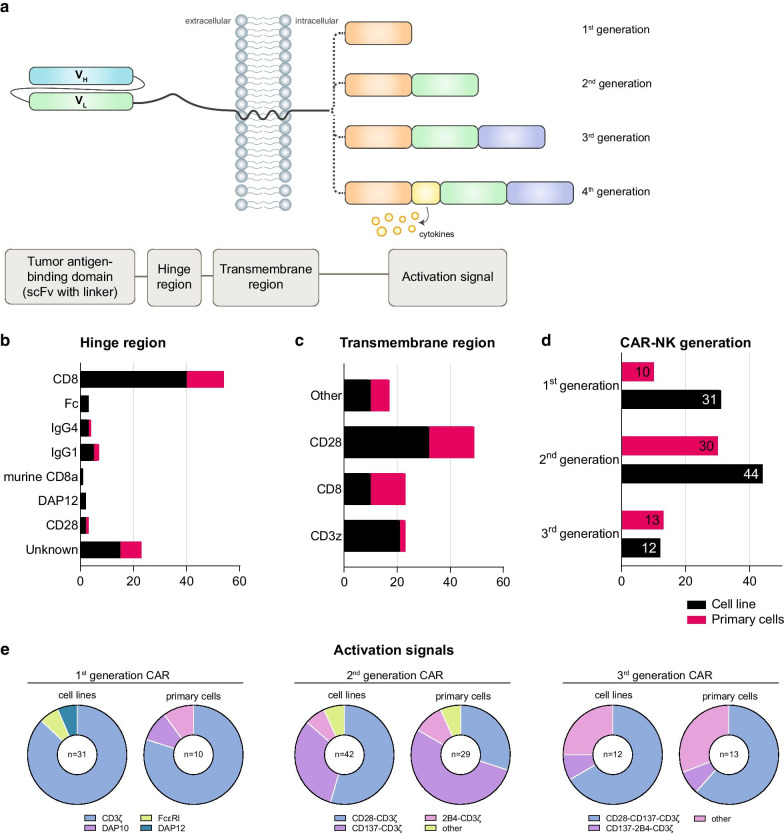
“Like the structure and design of the CAR-T, the CAR-NK is composed of a promoter, a short signal peptide (SP), a tumor antigen binding domain (scFv with a linker between VH and VL) (ectodomain), a hinge region, a transmembrane domain, and intracellular activation signal domain (endodomain) (Figure 6) [271].”
CAR-Macrophage Therapy Alleviates Myocardial Ischemia-Reperfusion Injury
Wang, J., Du, H., Xie, W., Bi, J., Zhang, H., Liu, X., Wang, Y., Zhang, S., Lei, A., He, C., et al. (2024) · Circulation Research · doi:10.1161/circresaha.124.325212 · Cited by 97
Self-citationCAR-NK cell therapy: promise and challenges in solid tumors
Balkhi, S., Zuccolotto, G., Spirito, A. D., Rosato, A., & Mortara, L. (2025) · Frontiers in Immunology · doi:10.3389/fimmu.2025.1574742 · Cited by 109
Huo, Y., Zhang, H., Sa, L., Zheng, W., He, Y., Lyu, H., Sun, M., Zhang, L., Shan, L., Yang, A., et al. (2023) · Journal of Translational Medicine · doi:10.1186/s12967-023-04061-2 · Cited by 92
“Researchers have programmed other immune cells with CAR, such as natural killer cells [22], gamma-delta T Fig.”
BackgroundRecent Advances in CAR-Based Solid Tumor Immunotherapy
Shin, M. H., Oh, E., Kim, Y. J., Nam, D.-H., Jeon, S., Yu, J. H., & Minn, D. (2023) · Cells · doi:10.3390/cells12121606 · Cited by 95
“In a pre-clinical study, GPC3-CAR and IL-15 showed enhanced antitumor activity in mouse xenograft models of GPC3+ solid tumors compared to GPC3-CAR alone [78].”
BackgroundInfluentialCAR NK-92 cells targeting DLL3 kill effectively small cell lung cancer cells in vitro and in vivo
Liu, M., Huang, W., Guo, Y., Zhou, Y., Zhi, C., Chen, J., Li, J., He, J., Lian, H., Zhou, J., et al. (2022) · Journal of Leukocyte Biology · doi:10.1002/jlb.5ma0122-467r · Cited by 86
Zhang, C., Hu, Y., Xiao, W., & Tian, Z. (2021) · Cellular and Molecular Immunology · doi:10.1038/s41423-021-00732-6 · Cited by 84
Ibrahim, A., Abdalsalam, N. M. F., Liang, Z., Tariq, H. K., Li, R., Afolabi, L. O., Rabiu, L., Chen, X., Xu, S., Xu, Z., et al. (2025) · Cancer Gene Therapy · doi:10.1038/s41417-025-00886-9 · Cited by 101
“CAR-NK, with their innate ability to bypass MHC restrictions, offer an advantage in reducing the risk of immune evasion and cytokine release syndrome compared to CAR-T cells [171].”
Emerging Trends in Immunotherapy for Cancer
Mishra, A. K., Ali, A., Dutta, S., Banday, S., & Malonia, S. K. (2022) · Diseases · doi:10.3390/diseases10030060 · Cited by 88
The emerging role of off-the-shelf engineered natural killer cells in targeted cancer immunotherapy
Fabian, K. P., & Hodge, J. W. (2021) · Molecular Therapy — Oncolytics · doi:10.1016/j.omto.2021.10.001 · Cited by 81
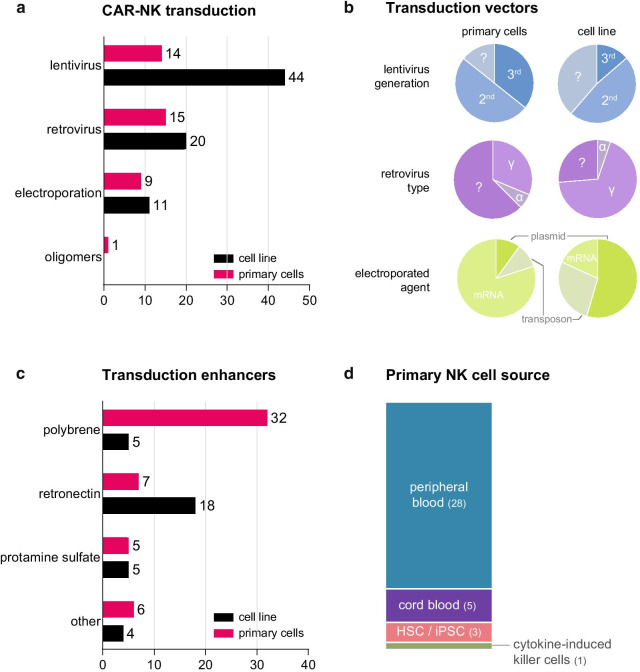
“The main gene modification methods utilized to generate CAR NK cells are viral transduction and transfection.(58,71) Retrovirus and lentivirus-based vectors have been widely applied in the production of CAR NK cells due to stable gene integration and high transduction rates, especially in blood-derived NK cells.”
BackgroundMethodA Bibliometric and Knowledge-Map Analysis of CAR-T Cells From 2009 to 2021
Miao, L., Zhang, J., Zhang, Z., Wang, S., Tang, F., Teng, M., & Li, Y. (2022) · Frontiers in Immunology · doi:10.3389/fimmu.2022.840956 · Cited by 80
Advances in targeting tumor microenvironment for immunotherapy
Wang, L., Zhang, L., Zhang, Z., Wu, P., Zhang, Y., & Chen, X. (2024) · Frontiers in Immunology · doi:10.3389/fimmu.2024.1472772 · Cited by 111
Gao, L., Shi, C., Yang, Z., Jing, W., Han, M., Zhang, J., Zhang, C., Tang, C., Dong, Y., Liu, Y., et al. (2023) · Journal of Nanobiotechnology · doi:10.1186/s12951-023-01810-9 · Cited by 85
Targeted glycan degradation potentiates cellular immunotherapy for solid tumors
Wu, J., Wang, X., Huang, Y., Zhang, Y., Su, S., Shou, H., Wang, H., Zhang, J., & Wang, B. (2023) · Proceedings of the National Academy of Sciences · doi:10.1073/pnas.2300366120 · Cited by 76
Tumor cell membrane‐based vaccines: A potential boost for cancer immunotherapy
Yang, M., Zhou, J., Lu, L., Deng, D., Huang, J., Tang, Z., Shi, X., Lo, P., Lovell, J. F., Zheng, Y., et al. (2024) · Exploration · doi:10.1002/exp.20230171 · Cited by 89
Novel insights in CAR-NK cells beyond CAR-T cell technology; promising advantages
Ebrahimiyan, H., Tamimi, A., Shokoohian, B., Minaei, N., Memarnejadian, A., Hossein‐Khannazer, N., Hassan, M., & Vosough, M. (2022) · International Immunopharmacology · doi:10.1016/j.intimp.2022.108587 · Cited by 69
Synapse-tuned CARs enhance immune cell anti-tumor activity
Chockley, P. J., Ibañez-Vega, J., Krenciute, G., Talbot, L. J., & Gottschalk, S. M. (2023) · Nature Biotechnology · doi:10.1038/s41587-022-01650-2 · Cited by 69
Advancements in CAR-NK therapy: lessons to be learned from CAR-T therapy
Kilgour, M. K., Bastin, D. J., Lee, S., Ardolino, M., McComb, S., & Visram, A. (2023) · Frontiers in Immunology · doi:10.3389/fimmu.2023.1166038 · Cited by 72
“Vesicular-stomatitis-virus-G protein (VSV-G) lentivirus is the most commonly used pseudotyping receptor applied in manufacturing CAR-T cells.”
BackgroundTwo for one: targeting BCMA and CD19 in B-cell malignancies with off-the-shelf dual-CAR NK-92 cells
Roex, G., Campillo-Davó, D., Flumens, D., Shaw, P. A. G., Krekelbergh, L., Reu, H. D., Berneman, Z. N., Lion, E., & Anguille, S. (2022) · Journal of Translational Medicine · doi:10.1186/s12967-022-03326-6 · Cited by 69
“Despite its obvious advantages, such as potentially reducing the duration of severe side effects in treated patients, the temporary CAR expression following mRNA electroporation could imply a need for repeated administration of the therapeutic cell product [61].”
BackgroundSi, C., Gao, J., & Ma, X. (2024) · Molecular Cancer · doi:10.1186/s12943-024-02045-4 · Cited by 71
Targeting immune checkpoints: how to use natural killer cells for fighting against solid tumors
Ghaedrahmati, F., Esmaeil, N., & Abbaspour, M. (2022) · 癌症:英文版 · doi:10.1002/cac2.12394 · Cited by 62
Advances in NK cell therapy for brain tumors
Fares, J., Davis, Z., Rechberger, J. S., Toll, S. A., Schwartz, J., Daniels, D. J., Miller, J. S., & Khatua, S. (2023) · npj Precision Oncology · doi:10.1038/s41698-023-00356-1 · Cited by 77
Chimeric antigen receptor engineered natural killer cells for cancer therapy
Zhang, Y., Zhou, W., Yang, J., Yang, J., & Wang, W. (2023) · Experimental Hematology and Oncology · doi:10.1186/s40164-023-00431-0 · Cited by 61
“The hinge region connects scFv or VHH with the transmembrane region, which docks the ectodomain region of the CAR molecule to the cell membrane [118].”
BackgroundThe Next Generation of Cellular Immunotherapy: Chimeric Antigen Receptor-Natural Killer Cells
Moscarelli, J. R., Zahavi, D. J., Maynard, R. E., & Weiner, L. M. (2022) · Transplantation and Cellular Therapy · doi:10.1016/j.jtct.2022.06.025 · Cited by 65
Current Progress of CAR-NK Therapy in Cancer Treatment
Pang, Z., Wang, Z., Li, F., Feng, C., & Mu, X. N. (2022) · Cancers · doi:10.3390/cancers14174318 · Cited by 61
“Currently, CAR-NK transduction techniques that are commonly used include viral and non-viral vectors, among which commonly used viral vectors include retrovirus, lentivirus, and adeno-associated virus (AAV) [73].”
BackgroundMethodInfluentialAddressing graft-versus-host disease in allogeneic cell-based immunotherapy for cancer
Lyu, Z., Niu, S., Fang, Y., Chen, Y., Li, Y.-R., & Yang, L. (2025) · Experimental Hematology and Oncology · doi:10.1186/s40164-025-00654-3 · Cited by 72
CAR-NK as a Rapidly Developed and Efficient Immunotherapeutic Strategy against Cancer
Włodarczyk, M., & Pyrzyńska, B. (2022) · Cancers · doi:10.3390/cancers15010117 · Cited by 57
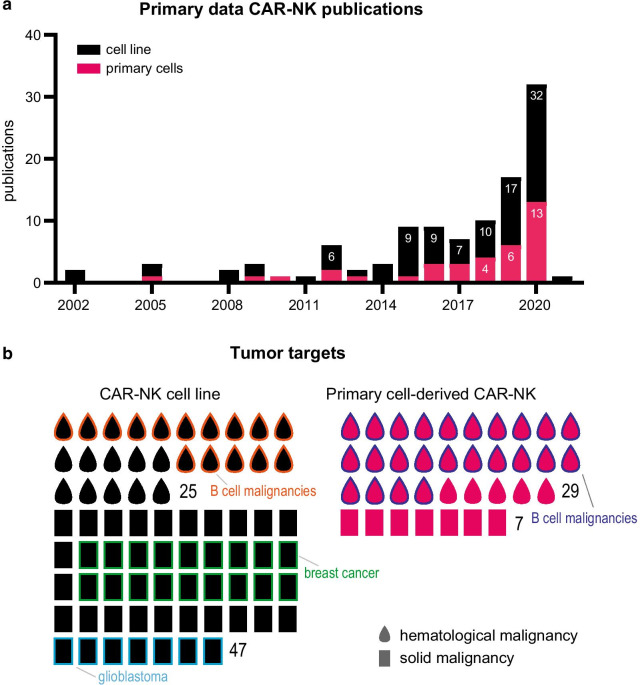
“The CD19 antigen is the most prevalent in engineering CAR-NK and CAR-T cells [92].”
BackgroundWu, X., & Matosevic, S. (2022) · Molecular Therapy — Oncolytics · doi:10.1016/j.omto.2022.10.011 · Cited by 63
“NK cell engineering can successfully avoid GvHD and other side effects, such as CRS, encountered with CAR-T therapy.(137) Because NK cells have a comparably shorter lifespan than other immune cells, the possibility of long-term cell deficiency caused by memory cell responses such as B cells is reduced.”
BackgroundLi, J., Wang, Q., Han, Y., Jiang, L., Lu, S., Wang, B., Qian, W., Zhu, M., Huang, H., & Qian, P. (2023) · Journal of Hematology & Oncology · doi:10.1186/s13045-023-01460-2 · Cited by 55
Azeez, S. S., Yashooa, R. K., Smail, S. W., Salihi, A. B., Ali, A. S., Mamand, S., & Janson, C. (2025) · Molecular Cancer · doi:10.1186/s12943-025-02386-8 · Cited by 65
“CAR engineering enhances NK cell therapeutic potential by equipping them with CARs adapted from CAR-T cell designs [259].”
Soldierer, M., Bister, A., Haist, C., Thivakaran, A., Cengiz, S. C., Sendker, S., Bartels, N., Thomitzek, A., Smorra, D., Hejazi, M., et al. (2022) · Frontiers in Immunology · doi:10.3389/fimmu.2022.847008 · Cited by 52
Engineering c-Met-CAR NK-92 cells as a promising therapeutic candidate for lung adenocarcinoma
Peng, Y., Zhang, W., Chen, Y., Zhang, L., Shen, H., Wang, Z., Tian, S., Yang, X., Cui, D., He, Y., et al. (2023) · Pharmacological Research · doi:10.1016/j.phrs.2023.106656 · Cited by 50
Nano/genetically engineered cells for immunotherapy
Shen, J., Zhou, Y., & Yin, L. (2024) · BMEMat · doi:10.1002/bmm2.12112 · Cited by 54
Shang, Q., Liu, W., Leslie, F., Yang, J., Guo, M., Sun, M., Zhang, G., Zhang, Q., & Wang, F. (2023) · Acta Pharmaceutica Sinica B · doi:10.1016/j.apsb.2023.12.008 · Cited by 52
“Recently, anti-cancer immunotherapy targeting the innate immune system is concentrated on activating innate immune cells such as M1 macrophages, DCs, and NKs through chimeric antigen receptor-macrophages (CAR-M), DCs-based vaccines, and CAR-NK cell immunotherapy, respectively 73,82,83 .”
BackgroundWang, M., Krueger, J. B., Gilkey, A. K., Stelljes, E. M., Kluesner, M. G., Pomeroy, E. J., Skeate, J. G., Slipek, N. J., Lahr, W. S., Claudio Vázquez, P. N., et al. (2025) · Journal for ImmunoTherapy of Cancer · doi:10.1136/jitc-2024-009560 · Cited by 45
“6 Limited in vivo persistence and durability issues in the absence of cytokine support are major challenges to effective NK-based immunotherapy.”
Therapeutic strategies for gastric cancer targeting immune cells: Future directions
Zhao, Y. F., Bai, Y., Shen, M., & Li, Y. (2022) · Frontiers in Immunology · doi:10.3389/fimmu.2022.992762 · Cited by 57
Zhang, T., Tai, Z., Miao, F., Zhang, X., Li, J., Zhu, Q., Wei, H., & Chen, Z. (2024) · Journal of Controlled Release · doi:10.1016/j.jconrel.2024.02.033 · Cited by 50
Advances in CAR‐Engineered Immune Cell Generation: Engineering Approaches and Sourcing Strategies
Chen, Z., Hu, Y., & Mei, H. (2023) · Advanced Science · doi:10.1002/advs.202303215 · Cited by 53
He, S., Su, L., Hu, H., Liu, H., Xiong, J., Gong, X., Chi, H., Wu, Q., & Yang, G. (2024) · Frontiers in Immunology · doi:10.3389/fimmu.2023.1328094 · Cited by 47
Lipid nanoparticle‐mediated RNA delivery for immune cell modulation
Kim, E. H., Teerdhala, S. V., Padilla, M. S., Joseph, R. A., Li, J. J., Haley, R. M., & Mitchell, M. J. (2024) · European Journal of Immunology · doi:10.1002/eji.202451008 · Cited by 53
“This is supported by the significant donor-to-donor variability in peripheral blood and cord blood-derived CAR-NK cells, which is also true for T cells [92].”
Lipid-mediated ex vivo cell surface engineering for augmented cellular functionalities
Kim, S., & Kim, K. (2022) · Biomaterials Advances · doi:10.1016/j.bioadv.2022.213059 · Cited by 45
CAR-NK Cell Therapy: A Transformative Approach to Overcoming Oncological Challenges
Li, W., Wang, X., Zhang, X., Aziz, A. U. R., & Wang, D. (2024) · Biomolecules · doi:10.3390/biom14081035 · Cited by 48
“(5) Enhancing Surgical Oncology Outcomes through CAR-NK Cell Therapy Integration In the evolving landscape of oncological treatment, the advent of CAR-NK cell therapy presents a promising synergy with surgical interventions, particularly in the multimodal management of cancer [111].”
BackgroundYang, K., Zhao, Y., Sun, G., Zhang, X., Cao, J., Shao, M.-C., Liang, X., & Wang, L. (2023) · Frontiers in Immunology · doi:10.3389/fimmu.2022.1081546 · Cited by 46
Nanoparticle-Based Chimeric Antigen Receptor Therapy for Cancer Immunotherapy
Shin, S., Lee, P., Han, J., Kim, S.-N., Lim, J., Park, D.-H., Paik, T., Min, J., Park, C. G., & Park, W. (2023) · Tissue Engineering and Regenerative Medicine · doi:10.1007/s13770-022-00515-8 · Cited by 43
“In recent studies, there have been attempts to increase the transfection efficacy through nanoparticles and realize CAR-NK with improved effect [88].”
BackgroundCAR-NK cells in combination therapy against cancer: A potential paradigm
Li, J., Hu, H., Lian, K., Zhang, D., Hu, P., He, Z., Zhang, Z., & Wang, Y. (2024) · Heliyon · doi:10.1016/j.heliyon.2024.e27196 · Cited by 43
Liao, T., Chen, X., Qiu, F., Zhang, X., Wu, F., Zhao, Z., Xu, M., Chen, M., Shen, J., Shen, Q., et al. (2025) · Journal of Nanobiotechnology · doi:10.1186/s12951-025-03217-0 · Cited by 47
“They are characterized by their ability to distinguish between normal and pathological cells and to recognize receptors by expressing multiple cell surface proteins [77, 78].”
Co-expression of IL-21-Enhanced NKG2D CAR-NK cell therapy for lung cancer
Zhang, Y., Zhang, C., He, M.-H., Xing, W., Hou, R., & Zhang, H. (2024) · BMC Cancer · doi:10.1186/s12885-023-11806-1 · Cited by 46
“NKG2D could bind to many ligands, including MICA, MICB and ULBP1-6 [53, 54].”
BackgroundExtramedullary hematopoiesis in cancer
Barisas, D. A. G., & Choi, K. (2024) · Experimental & Molecular Medicine · doi:10.1038/s12276-024-01192-4 · Cited by 51
“These competing signals set a balance that is now being manipulated by therapeutics such as immune checkpoint inhibitors, recombinant cytokine therapy, and chimeric antigen receptor T-cell and NK-cell therapies 229,231 – 233 .”
BackgroundKong, J. C., Sa’ad, M. A., Vijayan, H. M., Ravichandran, M., Balakrishnan, V., Tham, S. K., & Tye, G. J. (2024) · Frontiers in Immunology · doi:10.3389/fimmu.2024.1384039 · Cited by 43
“CRISPR-Cas9 provides precise gene editing, but gene delivery ef fi ciency still needs to be investigated (39).”
BackgroundInfluentialGong, Y., Germeraad, W. T. V., Zhang, X., Wu, N., Li, B., Janssen, L., He, Z., Gijbels, M. J., Wu, B., Senden-Gijsbers, B. L. M. G., et al. (2024) · Molecular Therapy · doi:10.1016/j.ymthe.2024.06.034 · Cited by 46
Self-citationMcErlean, E. M., & McCarthy, H. O. (2024) · Journal of Nanobiotechnology · doi:10.1186/s12951-024-02746-4 · Cited by 44
“4) [96–98].”
BackgroundT Cell Engaging Immunotherapies, Highlighting Chimeric Antigen Receptor (CAR) T Cell Therapy
Bousser, E. D., Callewaert, N., & Festjens, N. (2021) · Cancers · doi:10.3390/cancers13236067 · Cited by 44
Single VHH-directed BCMA CAR-NK cells for multiple myeloma
Ren, Q., Zu, Y., Su, H., Lu, Q., Xiang, B., Luo, Y., Zhang, J., & Song, Y. (2023) · Experimental Hematology & Oncology · doi:10.1186/s40164-023-00461-8 · Cited by 35
“The optimal intracellular domain in CAR-NK is not fully understood [10].”
BackgroundLi, J., Hu, H., Lian, H., Yang, S., Liu, M., He, J., Cao, B., Chen, D. S., Hu, Y., Zhi, C., et al. (2024) · International Journal of Biological Sciences · doi:10.7150/ijbs.88539 · Cited by 46
“Interestingly, NK cell-activated receptors as transmembrane structures can lead to more CD107a degranulation and stronger cytotoxicity [16] .”
BackgroundEngineering CAR T cells for enhanced efficacy and safety
Wu, Y., Huang, Z., Harrison, R. E. S., Liu, L., Zhu, L., Situ, Y., & Wang, Y. (2022) · APL Bioengineering · doi:10.1063/5.0073746 · Cited by 36
Yang, N., Zhang, C., Zhang, Y., Fan, Y., Zhang, J., Lin, X., Guo, T., Gu, Y., Wu, J., Gao, J.-M., et al. (2024) · Journal of Translational Medicine · doi:10.1186/s12967-024-04990-6 · Cited by 41
“A prior study noted a gradual decline in CAR expression within 4 days after mRNA electroporation into NK cells, eventually returning to baseline levels [26].”
BackgroundAdvances in CAR-NK cell therapy for hematological malignancies
Yang, R., Yang, Y., Liu, R., Wang, Y., Yang, R., & He, A. (2024) · Frontiers in Immunology · doi:10.3389/fimmu.2024.1414264 · Cited by 46
Lam, P. Y., Omer, N., Wong, J., Tu, C., Alim, L., Rossi, G. R., Victorova, M., Tompkins, H., Lin, C., Mehdi, A. M., et al. (2025) · Clinical and Translational Medicine · doi:10.1002/ctm2.70140 · Cited by 41
“31 Given that genetic modifications in CAR-T cells have been associated with the potential risk of generating secondary cancers due to insertional mutagenesis, 32 messenger RNA (mRNA) transfection has the additional benefit of long-term safety by avoiding permanent genetic alterations.”
Focaccetti, C., Benvenuto, M., Pighi, C., Vitelli, A., Napolitano, F., Cotugno, N., Fruci, D., Palma, P., Rossi, P., Bei, R., et al. (2022) · Frontiers in Immunology · doi:10.3389/fimmu.2022.886319 · Cited by 36
“First, we assessed whether transfection of NK cells with our four DNAM-1-based constructs [FL-DNAM-1, FL-DNAM-1CD3z, DNAM-1 (1-275)-CD3z, FL-DNAM-1-2B4-CD3z] (Figure 1) could affect the surface expression of DNAM-1.”
BackgroundInfluentialMeci, A., Goyal, N., & Slonimsky, G. (2024) · Cancers · doi:10.3390/cancers16040703 · Cited by 39
“In vivo trials have shown similar efficacy to CAR-T therapy and clinical trials for advanced solid tumors are ongoing [140].”
BackgroundEngineering CAR-NK cells: how to tune innate killer cells for cancer immunotherapy
Schmidt, D., Ebrahimabadi, S., Gomes, K. R. D. S., Aguiar, G. D. M., Tirapelle, M. C., Silvestre, R. N., de Azevedo, J. T. C., Covas, D. T., & Picanço‐Castro, V. (2022) · Immunotherapy Advances · doi:10.1093/immadv/ltac003 · Cited by 36
“Most studies with CAR-NK cells have used enriched cells from PB from allogeneic donors as their source [21].”
BackgroundNanomedicine-induced programmed cell death enhances tumor immunotherapy
Lu, J., Tai, Z., Wu, J., Li, L., Zhang, T., Liu, J., Zhu, Q., & Chen, Z. (2023) · Journal of Advanced Research · doi:10.1016/j.jare.2023.09.018 · Cited by 34
IL-15 as a key regulator in NK cell-mediated immunotherapy for cancer: From bench to bedside
Vahidi, S., Touchaei, A. Z., & Samadani, A. A. (2024) · International Immunopharmacology · doi:10.1016/j.intimp.2024.112156 · Cited by 39
CAR-NK cells for gastrointestinal cancer immunotherapy: from bench to bedside
Zhu, X., Xue, J., Jiang, H., & Xue, D. (2024) · Molecular Cancer · doi:10.1186/s12943-024-02151-3 · Cited by 33
“They are less likely to cause severe side effects such as CRS and can be sourced from allogeneic donors without causing graft-versus-host disease (GVHD), allowing for the development of “off-the-shelf” therapies [10].”
BackgroundYao, P., Liu, Y., Huang, G., Hao, L., & Wang, R. (2024) · Experimental Hematology and Oncology · doi:10.1186/s40164-024-00583-7 · Cited by 38
CAR-NK cells: harnessing the power of natural killers for advanced cancer therapy
dos Reis, F. D., Saidani, Y., Martín-Rubio, P., Pamplona, R. S., Stojanovic, A., & Correia, M. P. (2025) · Frontiers in Immunology · doi:10.3389/fimmu.2025.1603757 · Cited by 39
Zhang, R., Liu, Q., Zhou, S., He, H., Zhao, M., & Ma, W. (2023) · Cancer Letters · doi:10.1016/j.canlet.2023.216103 · Cited by 34
Anti-BCMA novel therapies for multiple myeloma
Sammartano, V., Franceschini, M., Fredducci, S., Caroni, F., Ciofini, S., Pacelli, P., Bocchia, M., & Gozzetti, A. (2023) · Cancer Drug Resistance · doi:10.20517/cdr.2022.138 · Cited by 34
CAR-NK cell therapy for glioblastoma: what to do next?
Xiong, Q., Zhu, J., Zhang, Y., & Deng, H. (2023) · Frontiers in Oncology · doi:10.3389/fonc.2023.1192128 · Cited by 31
Harnessing the evolving CRISPR/Cas9 for precision oncology
Li, T., Li, S., Kang, Y., Zhou, J., & Yi, M. (2024) · Journal of Translational Medicine · doi:10.1186/s12967-024-05570-4 · Cited by 40
Shang, J., Hu, S., & Wang, X. (2024) · Experimental Hematology and Oncology · doi:10.1186/s40164-024-00481-y · Cited by 30
“III) cytoplasmic domain, transmits activating signals then causes downstream processes and facilitates the killing effects [117–119].”
BackgroundCAR-engineered cell therapies: current understandings and future perspectives
Bayat, M., & Nahand, J. S. (2026) · Molecular Biomedicine · doi:10.1186/s43556-025-00401-4 · Cited by 37
“…for CAR-T), and viability loss during cryopreservation remain significant obstacles. iPSC-derived NK platforms overcome these issues by allowing standardized, unlimited production with high gene-editing efficiency (20–70% transduction) and suitability for bioreactor-based scaling [144, 160, 161].”
BCMA-Targeted Biologic Therapies: The Next Standard of Care in Multiple Myeloma Therapy
Paul, B. A., Rodriguez, C., & Usmani, S. Z. (2022) · Drugs · doi:10.1007/s40265-022-01697-0 · Cited by 28
“They recognize abnormal cells (including virally infected cells and tumor cells) without prior sensitization in a non-HLA restricted manner through a combination of surface stimulatory and inhibitory receptors that target ligands on target cells [164, 165].”
BackgroundThe application of autologous cancer immunotherapies in the age of memory-NK cells
Lizana‐Vasquez, G. D., Torres‐Lugo, M., Dixon, R. B., Powderly, J. D., & Warin, R. (2023) · Frontiers in Immunology · doi:10.3389/fimmu.2023.1167666 · Cited by 30
Anti-Tumor Efficacy of In Situ Vaccination Using Bacterial Outer Membrane Vesicles
Caproni, E., Corbellari, R., Tomasi, M., Isaac, S. J., Tamburini, S., Zanella, I., Grigolato, M., Gagliardi, A., Benedet, M., Baraldi, C., et al. (2023) · Cancers · doi:10.3390/cancers15133328 · Cited by 29
Diverse drug delivery systems for the enhancement of cancer immunotherapy: an overview
Liu, X., Cheng, Y., Mu, Y., Zhang, Z., Tian, D., Liu, Y., Hu, X., & Wen, T. (2024) · Frontiers in Immunology · doi:10.3389/fimmu.2024.1328145 · Cited by 40
Immunotherapy in OSCC: Current trend and challenges
Gupta, S., Singh, A., Deorah, S., & Tomar, A. (2025) · Critical Reviews in Oncology/Hematology · doi:10.1016/j.critrevonc.2025.104672 · Cited by 31
Lindahl, H., Vonlanthen, S., Valentini, D., Björklund, A. T., Sundin, M., Mielke, S., & Hauzenberger, D. (2022) · Bone Marrow Transplantation · doi:10.1038/s41409-022-01615-8 · Cited by 29
“Immune therapies currently under investigation are expected to further increase the treatment options [7, 8].”
BackgroundXia, W., Chen, J., Hou, W., Chen, J., Xiong, Y., Li, H., Qi, X., Xu, H. Y., Xie, Z., Li, M., et al. (2023) · International Journal of Molecular Sciences · doi:10.3390/ijms24076843 · Cited by 27
“CAR-NK therapy has gained great attention owing to the lack of adverse effects observed in CAR-T therapies and to NK cells’ unique mechanisms in recognizing target cells [16,17]; furthermore, CAR-NK can be made into an off-the-shelf product for many recipients [18].”
BackgroundJangid, A. K., Kim, S., Kim, H. J., & Kim, K. (2023) · Bioconjugate Chemistry · doi:10.1021/acs.bioconjchem.3c00335 · Cited by 26
Novel gene manipulation approaches to unlock the existing bottlenecks of CAR-NK cell therapy
Dehghan, F., Metanat, Y., Askarizadeh, M., Ahmadi, E., & Moradi, V. (2025) · Frontiers in Cell and Developmental Biology · doi:10.3389/fcell.2024.1511931 · Cited by 29
Yi, E., Lee, E., Park, H. J., Lee, H. H., Yun, S., & Kim, H. S. (2025) · Journal of Experimental & Clinical Cancer Research · doi:10.1186/s13046-025-03351-5 · Cited by 34
“However, CAR constructs currently used to engineer NK cells are primarily designed for T cells and are not optimized for NK cell activation signals [18, 26, 27].”
InfluentialLi, B., Zhu, X., Ge, J., Zhang, H., Gao, Y., Bao, X., Dai, X., Du, Z., Tu, X., Zhou, T., et al. (2025) · Molecular Therapy · doi:10.1016/j.ymthe.2025.05.026 · Cited by 30
Beyond CAR-T: Engineered NK cell therapies (CAR-NK, NKCEs) in next-generation cancer immunotherapy
Zhang, F., Samarkhazan, H. S., Pooraskari, Z., & Bayani, A. (2025) · Critical Reviews in Oncology/Hematology · doi:10.1016/j.critrevonc.2025.104912 · Cited by 36
Boretti, A. A. (2024) · European Journal of Pharmacology · doi:10.1016/j.ejphar.2024.176618 · Cited by 26
Targeting esophageal carcinoma: molecular mechanisms and clinical studies
Wang, W., Ye, L., Li, H., Mao, W., & Xu, X. (2024) · MedComm · doi:10.1002/mco2.782 · Cited by 27
New power in cancer immunotherapy: the rise of chimeric antigen receptor macrophage (CAR-M)
Jing, J., Chen, Y., Chi, E., Li, S., He, Y., Wang, B., Shen, H., Fan, L., Wang, J., Shangguan, T., et al. (2025) · Journal of Translational Medicine · doi:10.1186/s12967-025-07115-9 · Cited by 27
“The addition of IL-15, which enhances tumor-killing activity and prolongs cell lifespan, represents a fourth-generation CAR structure [27, 116–118].”
Self-citation
Metadata
- Authors
- Gong, Y., Klein Wolterink, R. G. J., Wang, J., Bos, G. M. J., & Germeraad, W. T. V.
- Affiliations
- Maastricht University Medical Centre (NL)
- Chinese Academy of Medical Sciences & Peking Union Medical College (CN)
- Corresponding author
- Germeraad, Wilfred T. V.
- Venue
- Journal of Hematology & Oncology
- Published
- 2021-05-01
- Volume
- 14
- Issue
- 1
- Pages
- 73-73
- ISSN
- 1756-8722 (ISSN-L)
- PMC
- PMC8088725
- OpenAlex
- W3157831753
- Semantic Scholar
- e3e6de553b19b48ee62bda6b51544f96e1cfc439
- Cited by
- 379
- References
- 233
- Citations by year
- 2026: 51 · 2025: 108 · 2024: 93 · 2023: 78 · 2022: 43 · 2021: 6
- FWCI
- 6.69
- Type
- journal article
- Language
- en
- Open access
- gold
- doi.org
- Licence
- cc-by
- creativecommons.org/licenses/by/4.0 (tdm)
- creativecommons.org/licenses/by/4.0 (vor)
- Locations
- Journal of Hematology & Oncology (publishedVersion, cc-by)
- PubMed Central (publishedVersion, cc-by)
- PubMed (publishedVersion)
- Research Publications (Maastricht University) (submittedVersion, cc-by)
- DOAJ (DOAJ: Directory of Open Access Journals) (submittedVersion, cc-by-sa)
- Research Publications (Maastricht University) (submittedVersion, other-oa)
- Funders
- China Scholarship Council (201707720056)
- Kootstra Talent Fellowship
- Marie Skłodowska-Curie Individual fellowship (799810-TOPNIN)
- Cancer Research Foundation Limburg (2012-03-KOFL)
- Topics
- Health Sciences › Medicine › Oncology › CAR-T cell therapy research
- Life Sciences › Immunology and Microbiology › Immunology › Immune Cell Function and Interaction
- Life Sciences › Immunology and Microbiology › Immunology › Immunotherapy and Immune Responses
- Keywords
- CAR-NK cells, chimeric antigen receptor, natural killer cells, adoptive immunotherapy, cancer immunotherapy, gene delivery, viral transduction, electroporation, CRISPR/Cas9 genome editing, NK cell expansion, automotive design, cytokine release syndrome, neurotoxicity, car detection
- MeSH terms
- Receptors, Chimeric Antigen, Humans, Killer Cells, Natural, Neoplasms, Tissue Engineering
About these checks
Registry, retraction, Cites and statistics results are computed, not judged, with one exception: a printed reference that no index lists is read once by a model before it counts as a citation error. Claims are extracted by a model and kept only when their quote appears verbatim in the text; each cited source is then checked, with a model’s help, for whether it says what the claim relies on. Those verdicts can be wrong — read the claim’s quote and the cited source before relying on one.
Statistics and arithmetic are recomputed, not judged.
Confidence bands are shown only for fields calibrated on our annotated test set. None is calibrated yet, so no band is shown.
What counts as a claim ›How we measure confidence ›How we check this ›
Are you an author, or do you see a problem with this page? Request a review
Data sources
Bibliographic data: Semantic Scholar, OpenAlex, Crossref.
Contains information from the Semantic Scholar Academic Graph Datasets, made available under the ODC Attribution License (ODC-BY 1.0).
Semantic Scholar’s data is described in: Kinney, R., et al. (2023). The Semantic Scholar Open Data Platform. arXiv:2301.10140.
