

Anti-tumour effects of all-trans retinoid acid on serous ovarian cancer
Open accessThe DOI matches its Crossref record; 46 of the 46 references it cites were found in a registry or an index.
Abstract
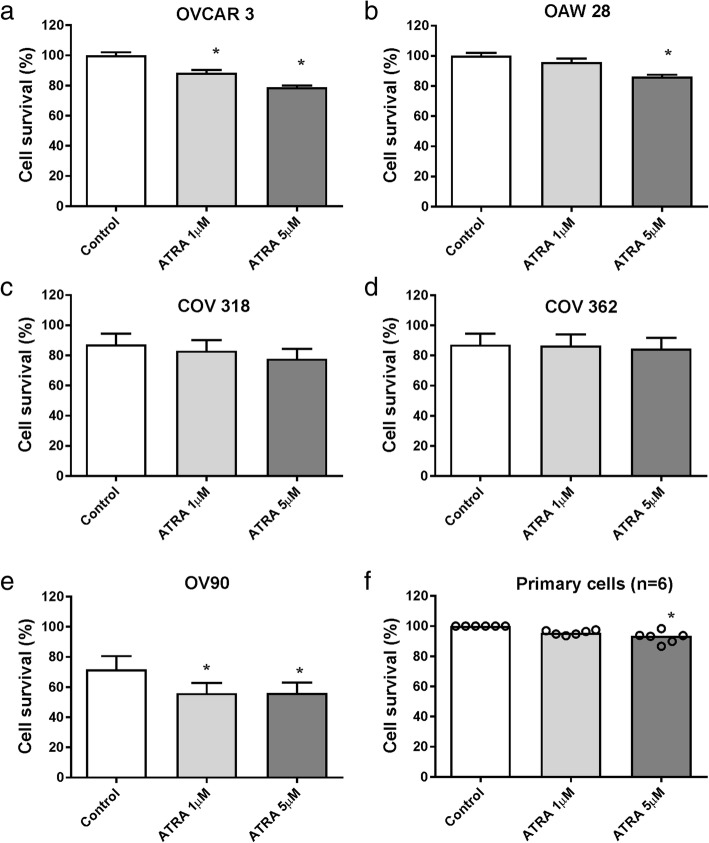
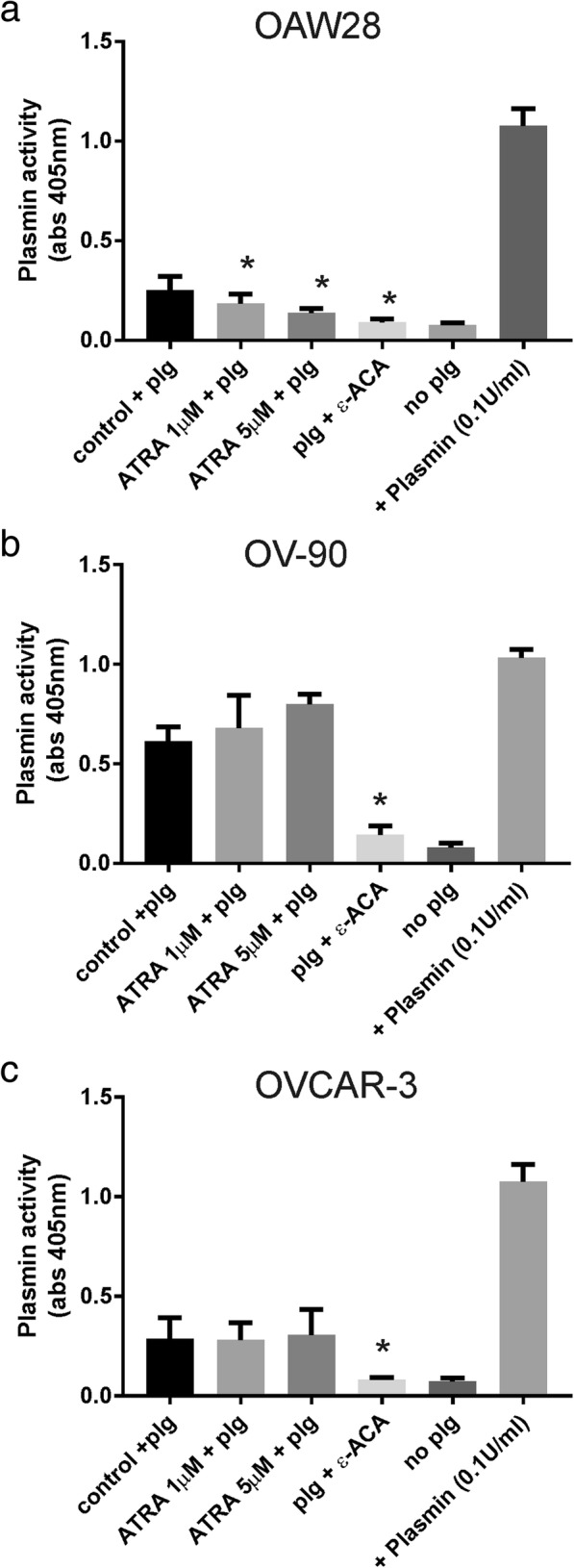
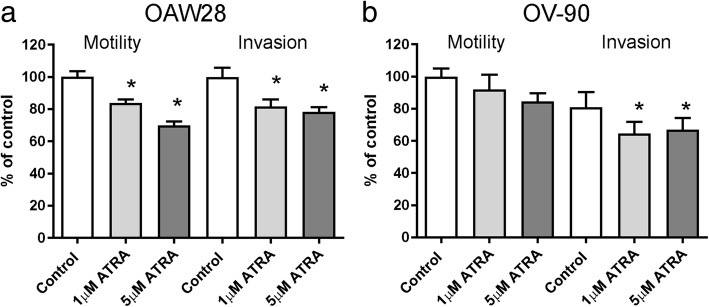
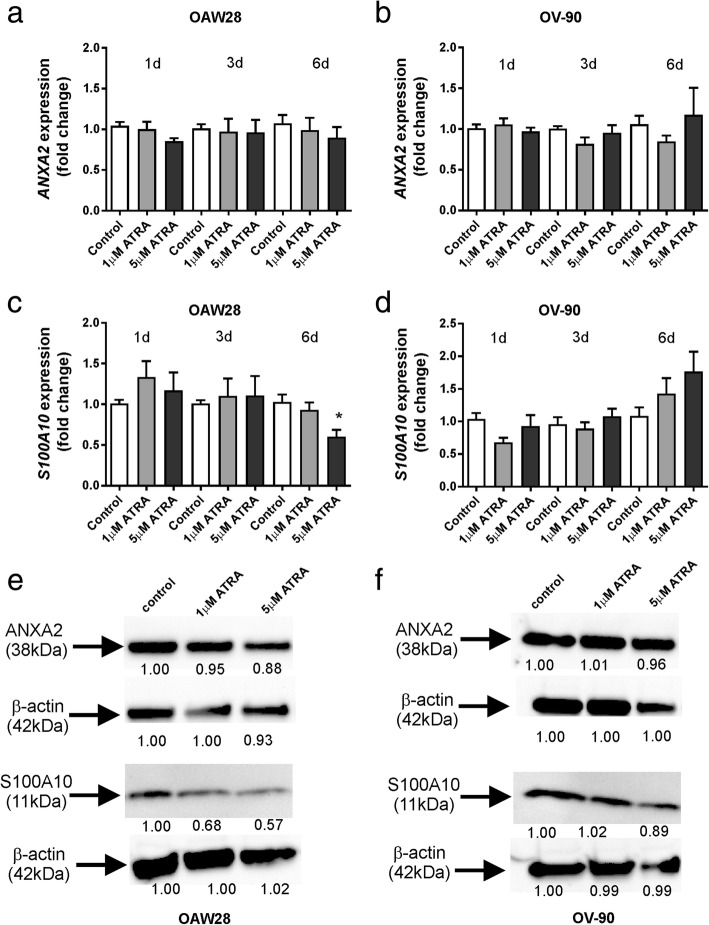
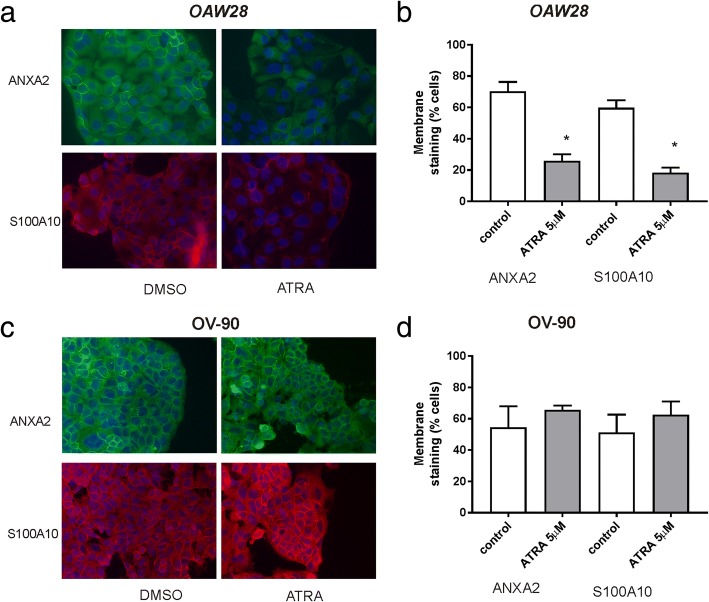
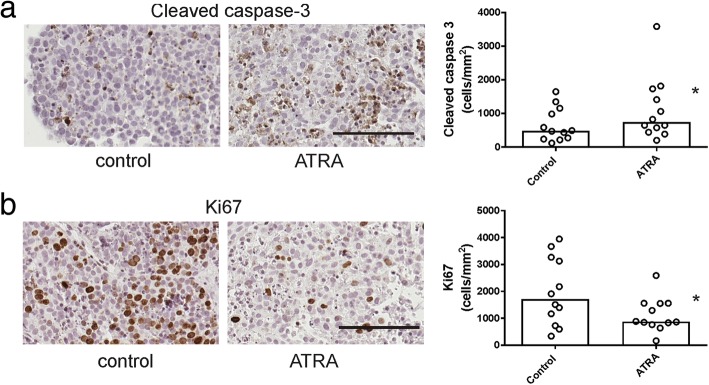
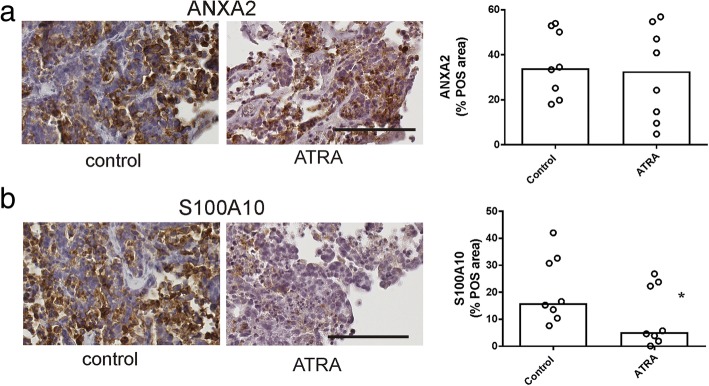
BACKGROUND: Annexin A2 is increased in serous ovarian cancer and plays an essential role in ovarian cancer invasion and metastasis. In combination with S100A10, annexin A2 plays an important role in the plasminogen activator system regulating plasmin production. The aim of this study was to investigate the potential utility of all-trans retinoid acid (ATRA), an inhibitor of the annexin A2-S100A10 signalling pathway, as a new therapeutic against serous ovarian cancer. METHODS: In this study we determined the effects of ATRA treatment (1-5 μM) on annexin A2 and S100A10 expression, plasmin activation, and the ability of ATRA to inhibit serous ovarian cancer cell survival, motility and invasion in vitro. We also employed an ex vivo tissue explant assay to assess response to ATRA treatment in serous ovarian cancers. Cryopreserved serous ovarian cancer tissues were cultured on gelatin sponges for 72 h with ATRA (1 μM). Effects on apoptosis and proliferation were assessed by immunohistochemistry using antibodies to cleaved caspase 3 or Ki67, respectively. RESULTS: Survival of serous ovarian cancer cells (OVCAR-3, OV-90, & OAW28) was significantly decreased by ATRA treatment (1-5 μM). ATRA (1 μM) also significantly decreased proliferation (Ki67 positivity, p = 0.0034), S100A10 protein levels (p = 0.0273), and increased cell apoptosis (cleaved caspase-3 positivity, p = 0.0024) in serous ovarian cancer tissues using the ex vivo tissue explant assay. In OAW28 cells, reduced cell survival following ATRA treatment was associated with a reduction of S100A10 mRNA and protein levels, S100A10 and annexin A2 membrane localization, plasmin generation, motility and invasion. In contrast, ATRA inhibited OV-90 cell survival and invasion but did not affect plasmin activation or S100A10 and annexin A2 expression or membrane localization. CONCLUSIONS: These findings suggest that ATRA inhibits serous ovarian cancer proliferation and invasion via both S100A10 dependant and S100A10 independent mechanisms. Our results show that ATRA has promising potential as a novel therapy against serous ovarian cancer that warrants further evaluation.
Overview
The claims and statistics of this paper haven’t been checked yet.
Free: it reads the open-access text and checks the first 5 claims that cite a source we can check. Create a free account to check every claim.
Integrity signals
Registry
Cites
Statistics
Figures
Verification
Claims the paper makes
The claims and statistics of this paper haven’t been checked yet.
Free: it reads the open-access text and checks the first 5 claims that cite a source we can check. Create a free account to check every claim.
Claims other papers make about this one
Each is checked against this paper’s own text: does it say what the citing paper says it does?
The source backs part of the claim, not all of it — or backs it for a different population, condition or comparison.
In the citing paper
“In addition to its differentiating effect, it has also been reported to inhibit the proliferation of lymphoma and lung, liver and solid ovarian tumors [7,185,193].”
From Vitamin A Update: Forms, Sources, Kinetics, Detection, Function, Deficiency, Therapeutic Use and Toxicity (2021) · cites this paper as [185]
Experimental — accuracy not yet measuredThe cited source says what the claim attributes to it.
In the citing paper
“Apart from the well-known indications in hypovitaminosis and skin diseases, retinoids have been successfully used in treating cancer”
From Vitamin A Update: Forms, Sources, Kinetics, Detection, Function, Deficiency, Therapeutic Use and Toxicity (2021) · cites this paper as [185]
Self-check
Percentages, sums and reported differences re-computed from the paper’s own numbers.
The self-check needs the paper’s full text.
Citations
Cites
Jemal, A., Bray, F., Center, M. M., Ferlay, J., Ward, E., & Forman, D. (2011) · CA: A Cancer Journal for Clinicians · doi:10.3322/caac.20107 · Cited by 54,679
Global cancer statistics, 2012
Torre, L. A., Bray, F., Siegel, R. L., Ferlay, J., Lortet‐Tieulent, J., & Jemal, A. (2015) · CA: A Cancer Journal for Clinicians · doi:10.3322/caac.21262 · Cited by 26,850
Siegel, R. L., Miller, K. D., & Jemal, A. (2017) · CA: A Cancer Journal for Clinicians · doi:10.3322/caac.21387 · Cited by 14,712
Retinoic Acid and Arsenic Trioxide for Acute Promyelocytic Leukemia
Lo-Coco, F., Avvisati, G., Vignetti, M., Thiede, C., Orlando, S. M., Iacobelli, S., Ferrara, F., Fazi, P., Cicconi, L., Di Bona, E., et al. (2013) · New England Journal of Medicine · doi:10.1056/nejmoa1300874 · Cited by 1,611
Schug, T. T., Berry, D. C., Shaw, N. S., Travis, S. N., & Noy, N. (2007) · Cell · doi:10.1016/j.cell.2007.02.050 · Cited by 680
Retinoids, Retinoic Acid Receptors, and Cancer
Tang, X.-H., & Gudas, L. J. (2011) · Annual Review of Pathology: Mechanisms of Disease · doi:10.1146/annurev-pathol-011110-130303 · Cited by 596
The tumor microenvironment is a dominant force in multidrug resistance
Correia, A. L., & Bissell, M. J. (2012) · Drug Resistance Updates · doi:10.1016/j.drup.2012.01.006 · Cited by 443
Retinoic acid receptors: From molecular mechanisms to cancer therapy
di Masi, A., Leboffe, L., De Marinis, E., Pagano, F., Cicconi, L., Rochette-Egly, C., Lo-Coco, F., Ascenzi, P., & Nervi, C. (2015) · Molecular Aspects of Medicine · doi:10.1016/j.mam.2014.12.003 · Cited by 403
Annexin II and Bleeding in Acute Promyelocytic Leukemia
Menell, J. S., Cesarman, G. M., Jacovina, A. T., McLaughlin, M. A., Lev, E. A., & Hajjar, K. A. (1999) · New England Journal of Medicine · doi:10.1056/nejm199904013401303 · Cited by 387
Annexin A2 Heterotetramer: Structure and Function
Bharadwaj, A., Bydoun, M., Holloway, R., & Waisman, D. (2013) · International Journal of Molecular Sciences · doi:10.3390/ijms14036259 · Cited by 307
Cited by
Carazo, A., Macáková, K., Matoušová, K., Krčmová, L. K., Protti, M., & Mladěnka, P. (2021) · Nutrients · doi:10.3390/nu13051703 · Cited by 461
Friend or Foe: S100 Proteins in Cancer
Allgöwer, C., Kretz, A.-L., von Karstedt, S., Wittau, M., Henne-Bruns, D., & Lemke, J. (2020) · Cancers · doi:10.3390/cancers12082037 · Cited by 131
“This leads to the production of plasmin, which results in ECM degradation, EMT, and angiogenesis [151,152].”
BackgroundBharadwaj, A. G., Holloway, R. W., Miller, V. A., & Waisman, D. M. (2021) · Cancers · doi:10.3390/cancers13081838 · Cited by 130
“Lokman et al. found that ATRA treatment resulted in downregulation of p11 and p36 mRNA and cell surface protein levels with a concomitant reduction in plasmin activity, and invasion, in the serous ovarian cancer cell line (OAW28) [183].”
BackgroundInfluentialCurrent Trends in ATRA Delivery for Cancer Therapy
Giuli, M. V., Hanieh, P. N., Giuliani, E., Rinaldi, F., Marianecci, C., Screpanti, I., Checquolo, S., & Carafa, M. (2020) · Pharmaceutics · doi:10.3390/pharmaceutics12080707 · Cited by 101
“More recently, it has been demonstrated that ATRA inhibited proliferation and invasion in ovarian cancer [37], liver cancer [38], and lung cancer [39].”
BackgroundTargeting the retinoic acid signaling pathway as a modern precision therapy against cancers
Lavudi, K., Nuguri, S. M., Olverson, Z. A., Dhanabalan, A. K., Patnaik, S., & Kokkanti, R. R. (2023) · Frontiers in Cell and Developmental Biology · doi:10.3389/fcell.2023.1254612 · Cited by 99
Huang, T., Peng, S., Huang, Y., Tsai, C., Tsai, F., Huang, C., Tang, C., Yang, J., Hsu, Y., Yin, M., et al. (2019) · Journal of Food Biochemistry · doi:10.1111/jfbc.13122 · Cited by 54
Heparan sulfate proteoglycans as targets for cancer therapy: a review
Onyeisi, J. O. S., Ferreira, B. Z. F., Nader, H. B., & Lopes, C. C. (2020) · Cancer Biology & Therapy · doi:10.1080/15384047.2020.1838034 · Cited by 44
“All-trans retinoic acid (ATRA) is an active metabolite of a nutrient vitamin A that the body needs in small amounts to function and helps cells to grow and develop, especially in the embryo.(65,66) The synthetic form of ATRA made in the laboratory is used to treat the skin, to treat conditions such as acne and can be…”
BackgroundKobayashi, T., Mitsuhashi, A., Piao, H., Shioya, M., Kojima, K., Nishikimi, K., Yahiro, K., & Shozu, M. (2022) · Scientific Reports · doi:10.1038/s41598-022-15348-7 · Cited by 34
Yang, W., Cui, X., Sun, D., Sun, G., Yan, Z., Wei, M., Wang, Z., & Yu, W. (2023) · Cell Death and Disease · doi:10.1038/s41419-023-06332-8 · Cited by 31
“Consequently, there is an urgent need to investigate the molecular physiological mechanisms underlying the onset and progression of GC, identify novel diagnostic molecular markers, and discover new therapeutic targets and targeted drugs.”
Ovarian mitochondrial and oxidative stress proteins are altered by glyphosate exposure in mice
Ganesan, S., & Keating, A. F. (2020) · Toxicology and Applied Pharmacology · doi:10.1016/j.taap.2020.115116 · Cited by 30
Liu, Z., Jing, C., & Kong, F. (2024) · Journal of Ovarian Research · doi:10.1186/s13048-024-01359-7 · Cited by 29
“…inflammation and immune response, such as Inter-leukin-8 (IL-8), STAT3, Nuclear Factor kappa B (NF-κB), and Toll-like receptor-4 (TLR4), are significantly elevated in OCCC, suggesting that the development of OCCC may be linked with the microenvironment of immune suppression in patients [143, 144].”
BackgroundBorges, G. S. M., Lima, F. A., Carneiro, G., Goulart, G. A. C., & Ferreira, L. A. M. (2021) · Expert Opinion on Drug Delivery · doi:10.1080/17425247.2021.1919619 · Cited by 23
Paroni, G., Zanetti, A., Barzago, M. M., Kurosaki, M., Guarrera, L., Fratelli, M., Troiani, M., Ubezio, P., Bolis, M., Vallerga, A., et al. (2020) · Cancers · doi:10.3390/cancers12103027 · Cited by 22
“All-trans retinoic-acid (ATRA) is a promising agent in the personalized treatment/chemo-prevention of breast-cancer (13),(14) and other tumors (15), as indicated by pre-clinical in vitro and in vivo data.”
BackgroundRepurposed Drugs in Gastric Cancer
Araújo, D., Ribeiro, E., Amorim, I., & Vale, N. (2022) · Molecules · doi:10.3390/molecules28010319 · Cited by 20
Jiang, S., Yang, Y., Zhang, Y., Ye, Q., Jiao, S., Zheng, M., & Li, X. (2022) · Disease Markers · doi:10.1155/2022/9719671 · Cited by 17
RetractedAnnexin A2 and S100A10 as Candidate Prognostic Markers in Epithelial Ovarian Cancer
CHRISTENSEN, M. V., Høgdall, C. K., Jensen, S. G., Lokman, N. A., Ricciardelli, C., Christensen, I. J., Christiansen, P., Brask, J. B., Karlsen, M. A., NISSEN, T. K., et al. (2019) · Anticancer Research · doi:10.21873/anticanres.13367 · Cited by 17
Self-citationChen, Y., Zhao, N., Xu, L., Jia, X., Liu, F., Huang, J., Li, X., Wang, Y., Lai, C., Shen, Y., et al. (2025) · Molecular Cancer · doi:10.1186/s12943-025-02359-x · Cited by 15
“While its effectiveness in treating solid tumors remains limited, several studies have demonstrated its anti-tumor effects in thyroid, breast, ovarian, liver, and lung cancers by inhibiting cancer cell proliferation and invasion [62–64].”
Annexin A2 promotes development of retinal neovascularization through PI3K/ AKT signaling pathway
Li, C., Zhao, Z., & Zhao, S. (2021) · Current Eye Research · doi:10.1080/02713683.2021.2018467 · Cited by 15
Emerging Cancer Epigenetic Mechanisms Regulated by All-Trans Retinoic Acid
Rossetti, S., & Sacchi, N. (2020) · Cancers · doi:10.3390/cancers12082275 · Cited by 16
“Notably, anticancer effects in ovarian serous cancer were induced by RA, which is not only a regulator of ANXA8, but also an inhibitor of the ANXA2-S100A10 signaling pathway [144].”
BackgroundGiuli, M. V., Hanieh, P. N., Forte, J., Fabiano, M. G., Mancusi, A., Natiello, B., Rinaldi, F., Favero, E. D., Ammendolia, M. G., Marianecci, C., et al. (2023) · International Journal of Pharmaceutics · doi:10.1016/j.ijpharm.2023.123672 · Cited by 14
Isaic, A., Nistor, D., Motofelea, A. C., Cadar, B.-A., Crintea, A., Tatu, C. S., Pop, G. N., & Csep, A. N. (2024) · Antioxidants · doi:10.3390/antiox13121567 · Cited by 13
Myosin light chain kinase is a potential target for hypopharyngeal cancer treatment
Cao, F., Zhu, L., Zhang, J., Pongkorpsakol, P., Kuo, W., Turner, J. R., Zhou, Q., Wang, Y., Chen, F., Liu, Y., et al. (2020) · Biomedicine & Pharmacotherapy · doi:10.1016/j.biopha.2020.110665 · Cited by 12
“ATRA is increasingly included in anti-tumor therapeutic schemes for the treatment of various diseases such as Kaposi’s sarcoma [17], head and neck squamous cell carcinoma [18], ovarian carcinoma [19], bladder cancer [20], neuroblastoma [21].”
BackgroundShen, Y., Xu, M., Ren, L., Li, X., Han, X., Cao, X., Yao, J., & Yan, B. (2023) · Scientific Reports · doi:10.1038/s41598-023-37619-7 · Cited by 10
“RA treatment alters cancer proliferation and invasion by regulating the expression of RARα downstream target gene, RARβ2 31,32 .”
Manoochehri, H., Farrokhnia, M., Sheykhhasan, M., Mahaki, H., & Tanzadehpanah, H. (2024) · Heliyon · doi:10.1016/j.heliyon.2024.e34300 · Cited by 10
“Moreover, numerous pre-clinical studies have proposed the potential use of ATRA in the treat-ment of solid tumors, including thyroid [35], ovarian [36], and breast [37] cancers.”
BackgroundYu, Y., Wang, Y., Fei, X., Song, Z., Xie, F., Yang, F., Liu, X., Xu, Z., & Wang, G. (2020) · Cardiovascular Drugs and Therapy · doi:10.1007/s10557-020-07089-4 · Cited by 8
Dan, Z., Shi, X., Shu, C., Zhu, R., Wang, Y., & Zhu, H. (2023) · Cellular Signalling · doi:10.1016/j.cellsig.2023.111001 · Cited by 6
Mei, B., Li, J., Wang, D., Feng, L., Huang, J., & Zhang, G. (2024) · Molecular Cancer Therapeutics · doi:10.1158/1535-7163.mct-24-0140 · Cited by 6
Dash, M. K., Joshi, N., Dubey, V. S., Dwivedi, K. N., & Gautam, D. N. S. (2022) · Journal of Complementary and Integrative Medicine · doi:10.1515/jcim-2021-0410 · Cited by 6
Vitamins and minerals and their role in cancer: a comprehensive review
Garutti, M., de Scordilli, M., Alberti, M., Mazzeo, R., Michelotti, A., Fagioli, S., Conte, A. D., Casirati, A., Caccialanza, R., Bartolini, E., et al. (2026) · Frontiers in Nutrition · doi:10.3389/fnut.2025.1686777 · Cited by 6
CaMKK2 Promotes the Progression of Ovarian Carcinoma through the PI3K/PDK1/Akt Axis
Chen, Z., Sun, X., Xia, Z., Wang, J., Guo, N., & Zhang, Y. (2022) · Computational and Mathematical Methods in Medicine · doi:10.1155/2022/7187940 · Cited by 5
RetractedInvolvement of hedgehog signaling in all-trans retinoic acid-mediated suppression of colon cancer.
Xu, Y. H., & Sun, H. (2022) · PubMed · Cited by 5
Hamad, M., Mehanna, R. A., Abd-Alhaseeb, M. M., & Houssen, M. E. (2023) · Współczesna Onkologia · doi:10.5114/wo.2023.133742 · Cited by 5
The role of pyroptosis in ovarian cancer
Zhou, Y., Tian, P., Zhang, J., & Liang, R. (2025) · Discover Oncology · doi:10.1007/s12672-025-03518-8 · Cited by 3
“All-trans All-trans retinoic acid (ATRA) is a well-established retinoid with in vitro efficacy against OC; however, many OC cell lines are resistant to ATRA [110].”
Combined treatment of All-trans retinoic acid with Tamoxifen suppresses ovarian cancer
Xu, R., Yang, X., Tang, B. H., Mao, Y. V., & Jiang, F. (2024) · Cancer Chemotherapy and Pharmacology · doi:10.1007/s00280-024-04671-7 · Cited by 3
“For example, ATRA has promising potential as a novel therapy against serous ovarian cancer [13] and as a potential anticancer drug in the sub-group of ovarian carcinomas in which the TERT promoter is hypomethylated [14] and inhibits HGSOC cell growth by inducing Pin1 degradation [15].”
BackgroundKhan, T., Kryza, T., He, Y., Gunter, J. H., Gough, M., Snell, C. E., & Hooper, J. D. (2023) · bioRxiv (Cold Spring Harbor Laboratory) · doi:10.1101/2023.05.01.538916 · Cited by 2
“Annexin-V stains membrane-protruded phosphatidylserine, an early event in 317 programmed apoptosis, whereas PI binds the nuclei of cells with perforated plasma membranes; a 318 conserved marker of late-stage cell death (34,35).”
BackgroundLi, Y., Wu, J., & Zhu, G. (2022) · Computational and Mathematical Methods in Medicine · doi:10.1155/2022/9398823 · Cited by 1
RetractedNkwocha, C. C., Felix, J. O., & Ekeanyanwu, R. C. (2024) · Research Square · doi:10.21203/rs.3.rs-3344956/v1 · Cited by 1
Optical coherence tomography imaging of ovarian cancer invasion
Hallas-Potts, A. (2021) · ERA · doi:10.7488/era/1045
Targeting NPM1c in Acute Myeloid Leukemia
Hleihel, R. (2019) · theses.fr (ABES) · doi:10.70675/dadcce67z6277z4db3z8c0cza6518fe9080c
Vitamin A - potential anticancer weapon
Popławska, N. A., Śliz, J., Skorupska, M., Czeczotka, M. J., & Woźniak, K. (2024) · Journal of Education Health and Sport · doi:10.12775/jehs.2024.72.51511
Fat Soluble Vitamins and Macrominerals
Polat, E. (2024) · doi:10.69860/nobel.9786053359173.1
Çocukluk Çağında Vitamin ve Mineraller
Ersoy, M., İnal, G. A., Okuducu, U., Barutçu, S., Köşeci, B., Gündüz, N. T., Aydın, E., Haykır, N., Çelik, M. Y., Kekeç, İ., et al. (2025) · Akademisyen Kitabevi eBooks · doi:10.37609/akya.3548
(2025) · European Journal of Gynaecological Oncology · doi:10.22514/ejgo.2025.045
“Moreover, all-trans retinoic acid, an intermediate metabolite of vitamin A, has been shown to inhibit the proliferative and invasive abilities of ovarian cancer cells via S100A10-dependent and -independent mechanisms [ 40].”
Coulleray, J. (2023) · theses.fr (ABES) · doi:10.70675/e4cb1a19zcc9dz4172zbb6bz11c460eee5d1
Exosome-Associated Proteins as Mediators and Biomarkers of Ovarian Cancer Dissemination
Shefer, A., Dzhugashvili, E., Чернышова, А. Л., & TAMKOVICH, S. N. (2026) · Biomolecules · doi:10.3390/biom16081150
“For example, all-trans retinoic acid has been shown to exert antitumor effects in serous OC models and to influence invasive properties of tumor cells, including an Annexin A2/S100A10-associated phenotype [97].”
Metadata
- Authors
- Lokman, N. A., Ho, R., Gunasegaran, K., Bonner, W. M., Oehler, M. K., & Ricciardelli, C.
- Affiliations
- The University of Adelaide (AU)
- Royal Adelaide Hospital (AU)
- Adelaide University (AU)
- Corresponding author
- Ricciardelli, Carmela
- Venue
- Journal of Experimental & Clinical Cancer Research
- Published
- 2019-01-08
- Volume
- 38
- Issue
- 1
- Pages
- 10-10
- ISSN
- 0392-9078 (ISSN-L)
- 1756-9966
- PMC
- PMC6325857
- OpenAlex
- W2917305526
- Cited by
- 39
- References
- 46
- Citations by year
- 2026: 2 · 2025: 2 · 2024: 7 · 2023: 7 · 2022: 7 · 2021: 4 · 2020: 8 · 2019: 2
- FWCI
- 5.02
- Type
- journal article
- Language
- en
- Open access
- gold
- doi.org
- Licence
- cc-by
- creativecommons.org/licenses/by/4.0/ (tdm)
- Locations
- Journal of Experimental & Clinical Cancer Research (publishedVersion, cc-by)
- Europe PMC (PubMed Central) (publishedVersion, cc-by)
- PubMed Central (publishedVersion, cc-by)
- PubMed (publishedVersion)
- Adelaide Research & Scholarship (AR&S) (University of Adelaide) (submittedVersion, cc-by)
- DOAJ (DOAJ: Directory of Open Access Journals) (submittedVersion, cc-by-sa)
- Funders
- Cancer Council South Australia (N/A)
- Ovarian Cancer Research Foundation (N/A)
- Topics
- Health Sciences › Medicine › Oncology › Ovarian cancer diagnosis and treatment
- Life Sciences › Biochemistry, Genetics and Molecular Biology › Molecular Biology › S100 Proteins and Annexins
- Life Sciences › Biochemistry, Genetics and Molecular Biology › Molecular Biology › Retinoids in leukemia and cellular processes
- Keywords
- all-trans retinoic acid, serous ovarian cancer, annexin A2, S100A10, plasminogen activation system, plasmin activation, tumor invasion, cell motility, apoptosis, cell proliferation, cancer therapy, OVCAR-3 cells
- MeSH terms
- Antineoplastic Agents, Cell Survival, Female, Humans, Ovarian Neoplasms, Tretinoin, Cystadenocarcinoma, Serous, Cell Line, Tumor
About these checks
Registry, retraction, Cites and statistics results are computed, not judged, with one exception: a printed reference that no index lists is read once by a model before it counts as a citation error. Claims are extracted by a model and kept only when their quote appears verbatim in the text; each cited source is then checked, with a model’s help, for whether it says what the claim relies on. Those verdicts can be wrong — read the claim’s quote and the cited source before relying on one.
Statistics and arithmetic are recomputed, not judged.
Confidence bands are shown only for fields calibrated on our annotated test set. None is calibrated yet, so no band is shown.
What counts as a claim ›How we measure confidence ›How we check this ›
Are you an author, or do you see a problem with this page? Request a review
Data sources
Bibliographic data: Semantic Scholar, OpenAlex, Crossref.
Contains information from the Semantic Scholar Academic Graph Datasets, made available under the ODC Attribution License (ODC-BY 1.0).
Semantic Scholar’s data is described in: Kinney, R., et al. (2023). The Semantic Scholar Open Data Platform. arXiv:2301.10140.
