

Final height in Italian patients with congenital hypothyroidism detected by neonatal screening: a 20-year observational study
Open accessThe DOI matches its Crossref record; 37 of the 37 references it cites were found in a registry or an index.
Abstract
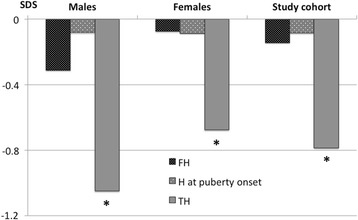
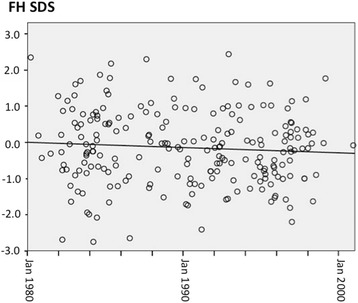
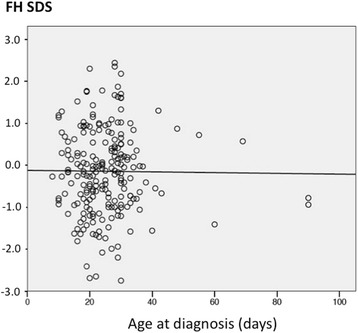
BACKGROUND: Linear growth and final height are reported as normal in congenital hypothyroid patients in the neonatal screening era. METHODS: We evaluated the final height in 215 patients with congenital hypothyroidism to assess if it improved over the last 2 decades. RESULTS: Final height (-0.1 ± 1.0 SDS) was higher than target height (-0.8 ± 1.0 SDS, p < 0.001) and not different among the 4 quartiles for birthdate. It was correlated with target height (r(2) = 0.564, p < 0.001) and height at puberty onset (r(2) = 0.685, p < 0.001), but not with age at diagnosis or the starting LT4/kg/day dose. The curve fitting analysis showed that the age at diagnosis progressively decreased during the 20-year study period, while the target height and the starting LT4/kg/day increased. Final height was not affected by the birthdate, the age at diagnosis, the starting LT4 dose. CONCLUSIONS: The final height is higher than the target height, but despite the improvement in the screening and the treatment, it did not improve over the last 20 years. These findings are in keeping with the described secular trend and suggest that earlier diagnosis and replacement therapy do not significantly modify final height in these patients.
Overview
The claims and statistics of this paper haven’t been checked yet.
Free: it reads the open-access text and checks the first 5 claims that cite a source we can check. Create a free account to check every claim.
Integrity signals
Registry
Cites
Statistics
Figures
Verification
Claims the paper makes
The claims and statistics of this paper haven’t been checked yet.
Free: it reads the open-access text and checks the first 5 claims that cite a source we can check. Create a free account to check every claim.
Claims other papers make about this one
Each is checked against this paper’s own text: does it say what the citing paper says it does?
The source backs part of the claim, not all of it — or backs it for a different population, condition or comparison.
In the citing paper
“Early detection and prompt treatment of CH (within the first 2 weeks of life) are essential to optimize the neurocognitive outcome, linear growth, the onset and progression of puberty, pubertal growth, and final height of affected neonates (47).”
From Congenital Hypothyroidism: A 2020–2021 Consensus Guidelines Update—An ENDO-European Reference Network Initiative Endorsed by the European Society for Pediatric Endocrinology and the European Society for Endocrinology (2021) · cites this paper as [47]
Experimental — accuracy not yet measuredThe source backs part of the claim, not all of it — or backs it for a different population, condition or comparison.
In the citing paper
“Adult height is normal and comparable with siblings, with no effects of severity of CH at diagnosis, CH etiology, or LT4 starting dose (47,183–185); moreover, in the majority of children, adult height is above the target height in both sexes (47,183,184).”
From Congenital Hypothyroidism: A 2020–2021 Consensus Guidelines Update—An ENDO-European Reference Network Initiative Endorsed by the European Society for Pediatric Endocrinology and the European Society for Endocrinology (2021) · cites this paper as [47]
Experimental — accuracy not yet measuredThe source backs part of the claim, not all of it — or backs it for a different population, condition or comparison.
In the citing paper
“However, earlier adiposity rebound (194–196) and increased risks of being overweight or obese have been reported in up to 37% of young adults with CH (47,71,114).”
From Congenital Hypothyroidism: A 2020–2021 Consensus Guidelines Update—An ENDO-European Reference Network Initiative Endorsed by the European Society for Pediatric Endocrinology and the European Society for Endocrinology (2021) · cites this paper as [47]
Experimental — accuracy not yet measuredThe cited source says what the claim attributes to it.
In the citing paper
“Onset of puberty occurs at the normal age in the vast majority of CH patients and progresses normally in both sexes (47,183,114).”
Self-check
Percentages, sums and reported differences re-computed from the paper’s own numbers.
The self-check needs the paper’s full text.
Citations
Cites
Tanner, J. M., Whitehouse, R. H., & Takaishi, M. (1966) · Archives of Disease in Childhood · doi:10.1136/adc.41.220.613 · Cited by 2,553
Update of Newborn Screening and Therapy for Congenital Hypothyroidism
American Academy of Pediatrics, Rose, S. R., and the Section on Endocrinology and Committee on Genetics, American Thyroid Association, Brown, R. S., and the Public Health Committee, & Lawson Wilkins Pediatric Endocrine Society (2006) · Pediatrics · doi:10.1542/peds.2006-0915 · Cited by 798
Léger, J., Olivieri, A., Donaldson, M., Torresani, T., Krude, H., van Vliet, G., Polak, M., Butler, G., & on behalf of ESPE-PES-SLEP-JSPE-APEG-APPES-ISPAE, A. T. C. H. C. C. G. (2014) · The Journal of Clinical Endocrinology & Metabolism · doi:10.1210/jc.2013-1891 · Cited by 569
Cole, T. J. (2000) · Proceedings of the Nutrition Society · doi:10.1017/s0029665100000355 · Cited by 526
The secular trend in human physical growth: a biological view
Cole, T. J. (2003) · Economics & Human Biology · doi:10.1016/s1570-677x(02)00033-3 · Cited by 515 · cited 2×
“Since 1850 there has been a positive secular trend in height among European populations [28–30].”
BackgroundItalian cross-sectional growth charts for height, weight and BMI (6–20 y)
Cacciari, E., Milani, S., Balsamo, A., Dammacco, F., De Luca, F., Chiarelli, F., Pasquino, A., Tonini, G., & Vanelli, M. (2002) · European Journal of Clinical Nutrition · doi:10.1038/sj.ejcn.1601314 · Cited by 387 · cited 2×
“Height was calculated as standard deviation score (SDS) in keeping with the Italian standard growth charts [24].”
MethodSecular changes in growth and maturation: an update
Hauspie, R., Vercauteren, M., & Susanne, C. (1997) · Acta Paediatrica · doi:10.1111/j.1651-2227.1997.tb18364.x · Cited by 274 · cited 1×
“Since 1850 there has been a positive secular trend in height among European populations [28–30].”
BackgroundDubuis, J. M. (1996) · Journal of Clinical Endocrinology & Metabolism · doi:10.1210/jc.81.1.222 · Cited by 194
Selva, K. A., Harper, A., Downs, A., Blasco, P. A., & LaFranchi, S. H. (2005) · The Journal of Pediatrics · doi:10.1016/j.jpeds.2005.07.024 · Cited by 190 · cited 1×
“The neurodevelopmental outcome is greatly superior in infants detected through neonatal screening than in those diagnosed after the onset of clinical signs, and CH severity at diagnosis, the initial LT4 dose and the timing of normalization of thyroid function are the main factors to prevent mental delay [9–16].”
BackgroundSalerno, M., Militerni, R., Bravaccio, C., Micillo, M., Capalbo, D., Di Maio, S., & Tenore, A. (2002) · Thyroid · doi:10.1089/105072502753451968 · Cited by 165
Self-citationHeight of conscripts in Europe: is postneonatal mortality a predictor?
Schmidt, I. M., Jørgensen, M. H., & Michaelsen, K. F. (1995) · Annals of Human Biology · doi:10.1080/03014469500003702 · Cited by 161
Bongers-Schokking, J. J., & de Muinck Keizer-Schrama, S. M. P. F. (2005) · The Journal of Pediatrics · doi:10.1016/j.jpeds.2005.09.031 · Cited by 131
Bonthuis, M., van Stralen, K. J., Verrina, E. E., Edefonti, A., Molchanova, E. A., Hokken-Koelega, A., Schaefer, F. S., & Jager, K. J. (2012) · PLoS ONE · doi:10.1371/journal.pone.0042506 · Cited by 124
Salerno, M., Micillo, M., Di Maio, S., Capalbo, D., Ferri, P., Lettiero, T., & Tenore, A. (2001) · European Journal of Endocrinology · doi:10.1530/eje.0.1450377 · Cited by 123 · cited 2×
“Linear growth, onset and progression of puberty, pubertal growth and final height (FH) are reported as rather normal in patients diagnosed thorough the screening, and the target height (TH) is the most important factor determining linear growth [3–8].”
BackgroundResultSelf-citationKempers, M. J. E., van der Sluijs Veer, L., Nijhuis-van der Sanden, M. W. G., Kooistra, L., Wiedijk, B. M., Faber, I., Last, B. F., de Vijlder, J. J. M., Grootenhuis, M. A., & Vulsma, T. (2006) · The Journal of Clinical Endocrinology & Metabolism · doi:10.1210/jc.2005-1209 · Cited by 122 · cited 1×
“tional attainment [19, 20].”
Secular changes in human biological variables in Western countries: an updated review and synthesis.
Danubio, M. E., & Sanna, E. (2008) · PubMed · Cited by 114
Disorders of pubertal development
Traggiai, C., & Stanhope, R. G. (2003) · Best Practice & Research Clinical Obstetrics & Gynaecology · doi:10.1053/ybeog.2003.0360 · Cited by 110 · cited 1×
“0 yrs in males [23].”
Relationship of Etiology to Treatment in Congenital Hypothyroidism
Hanukoglu, A., Perlman, K., Shamis, I., Brnjac, L., Rovet, J., & Daneman, D. (2001) · The Journal of Clinical Endocrinology & Metabolism · doi:10.1210/jcem.86.1.7124 · Cited by 93 · cited 1×
“Nowadays, CH patients are more properly treated and it is well acknowledged that the replacement LT4 dose beyond the neonatal period is different on the basis of CH aetiology [25–27].”
BackgroundSecular change in adult stature has come to a halt in northern Europe and Italy
Larnkjær, A., Attrup Schrøder, S., Maria Schmidt, I., Hørby Jørgensen, M., & Fleischer Michaelsen, K. (2006) · Acta Paediatrica · doi:10.1080/08035250500527323 · Cited by 92
Prevalence of Congenital Hypothyroidism—Current Trends and Future Directions: Workshop Summary
Olney, R. S., Grosse, S. D., & Vogt, R. F. (2010) · Pediatrics · doi:10.1542/peds.2009-1975c · Cited by 90 · cited 1×
“However, even if the neonatal screening programs ensure the prompt initiation of the therapy and the neurodevelopmental outcome can be considered generally normal, some problems in relation to mental outcome are still reported in follow-up studies [17, 18].”
BackgroundLéger, J., Ecosse, E., Roussey, M., Lanoë, J. L., Larroque, B., & the French Congenital Hypothyroidism Study Group (2011) · The Journal of Clinical Endocrinology & Metabolism · doi:10.1210/jc.2010-2315 · Cited by 85
Kempers, M. J. E., van der Sluijs Veer, L., Nijhuis-van der Sanden, R. W. G., Lanting, C. I., Kooistra, L., Wiedijk, B. M., Last, B. F., de Vijlder, J. J. M., Grootenhuis, M. A., & Vulsma, T. (2007) · The Journal of Clinical Endocrinology & Metabolism · doi:10.1210/jc.2006-1538 · Cited by 85 · cited 1×
“However, even if the neonatal screening programs ensure the prompt initiation of the therapy and the neurodevelopmental outcome can be considered generally normal, some problems in relation to mental outcome are still reported in follow-up studies [17, 18].”
BackgroundGrowth and Puberty in German Children
Gohlke, B., & Wölfle, J. (2009) · Deutsches Ärzteblatt international · doi:10.3238/arztebl.2009.0377 · Cited by 84 · cited 1×
“In many European countries and in Italy as well, this secular trend slowed down or even reached a plateau since the 80s/90s [30–34] whereas in other Countries, like Belgium, Spain, and Portugal, average heights might still increase [32].”
BackgroundIntellectual outcome at 12 years of age in congenital hypothyroidism
Salerno, M., Militerni, R., Di Maio, S., Bravaccio, C., Gasparini, N., & Tenore, A. (1999) · European Journal of Endocrinology · doi:10.1530/eje.0.1410105 · Cited by 81 · cited 1×
“The neurodevelopmental outcome is greatly superior in infants detected through neonatal screening than in those diagnosed after the onset of clinical signs, and CH severity at diagnosis, the initial LT4 dose and the timing of normalization of thyroid function are the main factors to prevent mental delay [9–16].”
BackgroundSelf-citationLéger, J. (2015) · European Journal of Endocrinology · doi:10.1530/eje-14-0777 · Cited by 72
Wasniewska, M., De Luca, F., Cassio, A., Oggiaro, N., Gianino, P., Delvecchio, M., Aiazzi, R., Stoppioni, V, Lombardo, F., Messina, M., et al. (2003) · European Journal of Endocrinology · doi:10.1530/eje.0.1490001 · Cited by 67 · cited 1×
“The neurodevelopmental outcome is greatly superior in infants detected through neonatal screening than in those diagnosed after the onset of clinical signs, and CH severity at diagnosis, the initial LT4 dose and the timing of normalization of thyroid function are the main factors to prevent mental delay [9–16].”
BackgroundSelf-citationDonaldson, M., & Jones, J. H. (2012) · Journal of Clinical Research in Pediatric Endocrinology · doi:10.4274/jcrpe.849 · Cited by 60 · cited 2×
“sis [21], our data suggest that the earlier diagnosis does not influence the height outcome.”
BackgroundMethodThe importance of early management in optimizing IQ in infants with congenital hypothyroidism
Fisher, D. A. (2000) · The Journal of Pediatrics · doi:10.1067/mpd.2000.104286 · Cited by 59 · cited 1×
“The neurodevelopmental outcome is greatly superior in infants detected through neonatal screening than in those diagnosed after the onset of clinical signs, and CH severity at diagnosis, the initial LT4 dose and the timing of normalization of thyroid function are the main factors to prevent mental delay [9–16].”
BackgroundDickerman, Z., & De Vries, L. (1997) · Clinical Endocrinology · doi:10.1046/j.1365-2265.1997.3181148.x · Cited by 58 · cited 2×
“Linear growth, onset and progression of puberty, pubertal growth and final height (FH) are reported as rather normal in patients diagnosed thorough the screening, and the target height (TH) is the most important factor determining linear growth [3–8].”
BackgroundResultBain, P., & Toublanc, J.-E. (2002) · Hormone Research in Paediatrics · doi:10.1159/000064489 · Cited by 53 · cited 2×
“However in a previous paper, Bain et al [5] showed that the patients with a positive Δheight had a significantly younger mean age at the start of treatment than children with a negative Δheight.”
BackgroundMethodCassio, A., Corbetta, C., Antonozzi, I., Calaciura, F., Caruso, U., Cesaretti, G., Gastaldi, R., Medda, E., Mosca, F., Pasquini, E., et al. (2013) · PubMed · doi:10.3275/8849 · Cited by 39 · cited 1×
“Introduction Congenital hypothyroidism (CH) is the most frequent endocrine disease in childhood which causes mental delay and short stature if untreated [1, 2].”
BackgroundSelf-citationSanna, E. (2002) · UNICA IRIS Institutional Research Information System (University of Cagliari) · Cited by 27
Factors predicting final height in early treated congenital hypothyroid patients
Delvecchio, M., Salerno, M., Acquafredda, A., Zecchino, C., Fico, F., Manca, F., Faienza, M. F., & Cavallo, L. (2006) · Clinical Endocrinology · doi:10.1111/j.1365-2265.2006.02651.x · Cited by 27 · cited 3×
“not confirmed by the correlation analysis performed in a larger study population [7].”
BackgroundMethodSelf-citationLevothyroxine requirement in congenital hypothyroidism: a 12-year longitudinal study
Delvecchio, M., Salerno, M., Vigone, M. C., Wasniewska, M. G., Popolo, P. P., Lapolla, R., Mussa, A., Tronconi, G. M., D’Acunzo, I., Mase, R. D., et al. (2015) · Endocrine · doi:10.1007/s12020-015-0574-1 · Cited by 24 · cited 1×
“Nowadays, CH patients are more properly treated and it is well acknowledged that the replacement LT4 dose beyond the neonatal period is different on the basis of CH aetiology [25–27].”
BackgroundSelf-citationAdachi, M., Asakura, Y., & Tachibana, K. (2003) · Acta Paediatrica · doi:10.1111/j.1651-2227.2003.tb00603.x · Cited by 23 · cited 2×
“Linear growth, onset and progression of puberty, pubertal growth and final height (FH) are reported as rather normal in patients diagnosed thorough the screening, and the target height (TH) is the most important factor determining linear growth [3–8].”
BackgroundResultDelvecchio, M., Faienza, M. F., Acquafredda, A., Zecchino, C., Peruzzi, S., & Cavallo, L. (2007) · Hormone Research in Paediatrics · doi:10.1159/000100373 · Cited by 21 · cited 1×
“Nowadays, CH patients are more properly treated and it is well acknowledged that the replacement LT4 dose beyond the neonatal period is different on the basis of CH aetiology [25–27].”
BackgroundSelf-citationAdachi, M., Asakura, Y., & Tachibana, K. (2003) · Acta Paediatrica · doi:10.1080/08035250310002759 · Cited by 11
Cited by
van Trotsenburg, P., Stoupa, A., Léger, J., Rohrer, T., Peters, C., Fugazzola, L., Cassio, A., Heinrichs, C., Beauloye, V., Pohlenz, J., et al. (2021) · Thyroid® · doi:10.1089/thy.2020.0333 · Cited by 469
“Onset of puberty occurs at the normal age in the vast majority of CH patients and progresses normally in both sexes (47,183,114).”
BackgroundInfluentialSelf-citationGuidelines for Newborn Screening of Congenital Hypothyroidism (2021 Revision)
Nagasaki, K., Minamitani, K., Nakamura, A., Kobayashi, H., Numakura, C., Itoh, M., Mushimoto, Y., Fujikura, K., Fukushi, M., & Tajima, T. (2022) · Clinical Pediatric Endocrinology · doi:10.1297/cpe.2022-0063 · Cited by 50
Esposito, A., Vigone, M. C., Polizzi, M., Wasniewska, M. G., Cassio, A., Mussa, A., Gastaldi, R., Mase, R. D., Vincenzi, G., Pozzi, C., et al. (2022) · Frontiers in Endocrinology · doi:10.3389/fendo.2022.923448 · Cited by 39
Self-citationHeidari, Z., Feizi, A., Hashemipour, M., Kelishadi, R., & Amini, M. (2016) · Endocrine · doi:10.1007/s12020-016-1010-x · Cited by 31
Thyroid Hormone Signaling in the Development of the Endochondral Skeleton
Lindsey, R. C., Aghajanian, P., & Mohan, S. (2017) · Vitamins and hormones · doi:10.1016/bs.vh.2017.06.003 · Cited by 17
Metadata
- Authors
- Delvecchio, M., Vigone, M. C., Wasniewska, M., Weber, G., Lapolla, R., Popolo, P. P., Tronconi, G. M., Di Mase, R., De Luca, F., Cavallo, L., Salerno, M., & Faienza, M. F.
- Affiliations
- University of Bari Aldo Moro (IT)
- Vita-Salute San Raffaele University (IT)
- University of Messina (IT)
- University of Foggia (IT)
- University of Naples Federico II (IT)
- Corresponding author
- Delvecchio, Maurizio
- ORCID
- Venue
- Italian Journal of Pediatrics
- Published
- 2015-10-28
- Volume
- 41
- Issue
- 1
- Pages
- 82-82
- ISSN
- 1720-8424 (ISSN-L)
- 1824-7288
- PMC
- PMC4625434
- OpenAlex
- W1885661435
- Cited by
- 22
- References
- 37
- Citations by year
- 2026: 2 · 2025: 2 · 2024: 2 · 2023: 3 · 2022: 3 · 2021: 2 · 2020: 2 · 2018: 2 · 2017: 2 · 2016: 2
- FWCI
- 1.73
- Type
- journal article
- Language
- en
- Open access
- gold
- doi.org
- Licence
- cc-by
- Locations
- The Italian Journal of Pediatrics/Italian journal of pediatrics (publishedVersion, cc-by)
- PubMed Central (publishedVersion, cc-by)
- PubMed (publishedVersion)
- Archivio Istituzionale della Ricerca - Università degli Studi dell Aquila (submittedVersion, cc-by)
- Archivio Istituzionale della Ricerca - Università Vita-Salute San Raffaele (submittedVersion)
- CINECA IRIS Institutional Research Information System (University of Bari Aldo Moro) (submittedVersion)
- Topics
- Health Sciences › Medicine › Endocrinology, Diabetes and Metabolism › Thyroid Disorders and Treatments
- Health Sciences › Medicine › Endocrinology, Diabetes and Metabolism › Growth Hormone and Insulin-like Growth Factors
- Health Sciences › Medicine › Surgery › Thyroid and Parathyroid Surgery
- Keywords
- congenital hypothyroidism, adult height, newborn screening, levothyroxine replacement therapy, age at diagnosis, puberty onset, secular trends, target height, linear growth, Italian patients
- MeSH terms
- Adolescent, Body Height, Child, Child, Preschool, Congenital Hypothyroidism, Female, Forecasting, Humans, Infant, Infant, Newborn, Italy, Male, Retrospective Studies, Sexual Maturation, Incidence, Neonatal Screening
About these checks
Registry, retraction, Cites and statistics results are computed, not judged, with one exception: a printed reference that no index lists is read once by a model before it counts as a citation error. Claims are extracted by a model and kept only when their quote appears verbatim in the text; each cited source is then checked, with a model’s help, for whether it says what the claim relies on. Those verdicts can be wrong — read the claim’s quote and the cited source before relying on one.
Statistics and arithmetic are recomputed, not judged.
Confidence bands are shown only for fields calibrated on our annotated test set. None is calibrated yet, so no band is shown.
What counts as a claim ›How we measure confidence ›How we check this ›
Are you an author, or do you see a problem with this page? Request a review
Data sources
Bibliographic data: Semantic Scholar, OpenAlex, Crossref.
Contains information from the Semantic Scholar Academic Graph Datasets, made available under the ODC Attribution License (ODC-BY 1.0).
Semantic Scholar’s data is described in: Kinney, R., et al. (2023). The Semantic Scholar Open Data Platform. arXiv:2301.10140.
