

Machine learning model for early prediction of acute kidney injury (AKI) in pediatric critical care
Open accessThe DOI matches its Crossref record; 20 of the 21 references it cites were found in a registry or an index; 13 of the 21 sources its claims cite were checked for support.
Abstract
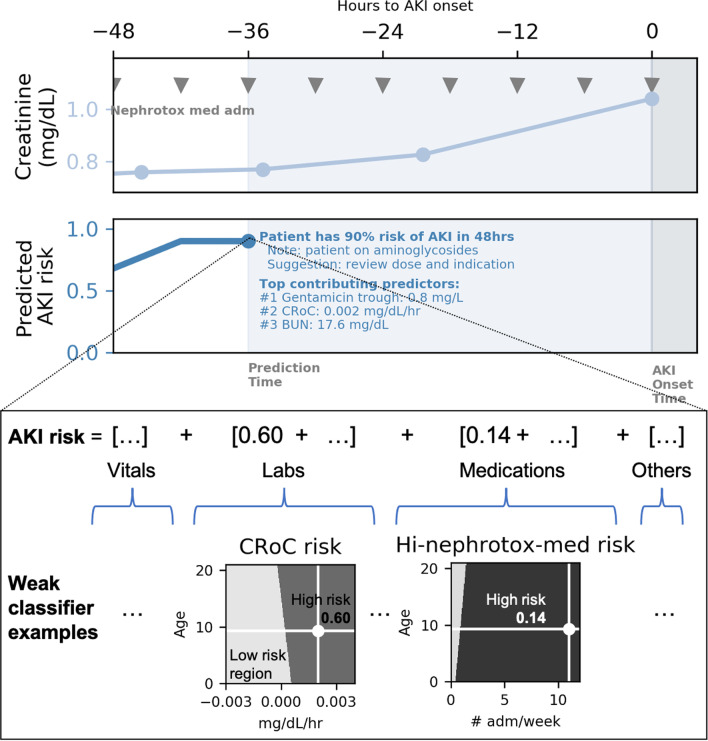
BACKGROUND: Acute kidney injury (AKI) in pediatric critical care patients is diagnosed using elevated serum creatinine, which occurs only after kidney impairment. There are no treatments other than supportive care for AKI once it has developed, so it is important to identify patients at risk to prevent injury. This study develops a machine learning model to learn pre-disease patterns of physiological measurements and predict pediatric AKI up to 48 h earlier than the currently established diagnostic guidelines. METHODS: EHR data from 16,863 pediatric critical care patients between 1 month to 21 years of age from three independent institutions were used to develop a single machine learning model for early prediction of creatinine-based AKI using intelligently engineered predictors, such as creatinine rate of change, to automatically assess real-time AKI risk. The primary outcome is prediction of moderate to severe AKI (Stage 2/3), and secondary outcomes are prediction of any AKI (Stage 1/2/3) and requirement of renal replacement therapy (RRT). Predictions generate alerts allowing fast assessment and reduction of AKI risk, such as: "patient has 90% risk of developing AKI in the next 48 h" along with contextual information and suggested response such as "patient on aminoglycosides, suggest check level and review dose and indication". RESULTS: The model was successful in predicting Stage 2/3 AKI prior to detection by conventional criteria with a median lead-time of 30 h at AUROC of 0.89. The model predicted 70% of subsequent RRT episodes, 58% of Stage 2/3 episodes, and 41% of any AKI episodes. The ratio of false to true alerts of any AKI episodes was approximately one-to-one (PPV 47%). Among patients predicted, 79% received potentially nephrotoxic medication after being identified by the model but before development of AKI. CONCLUSIONS: As the first multi-center validated AKI prediction model for all pediatric critical care patients, the machine learning model described in this study accurately predicts moderate to severe AKI up to 48 h in advance of AKI onset. The model may improve outcome of pediatric AKI by providing early alerting and actionable feedback, potentially preventing or reducing AKI by implementing early measures such as medication adjustment.
Overview
CoChat Summary
TL;DR
A single age-dependent ensemble machine learning model was developed on EHR data from 16,863 pediatric critical care patients across three institutions to predict creatinine-based AKI up to 48 h before conventional diagnosis. It predicted Stage 2/3 AKI with a median lead-time of 30 h and AUROC 0.89, while also forecasting any AKI and renal replacement therapy.
Key findings
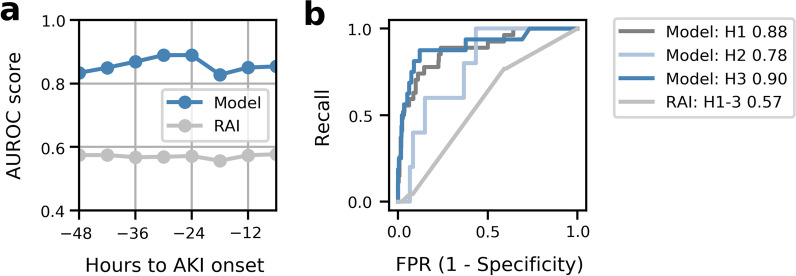
- The model predicted Stage 2/3 AKI before conventional criteria with a median lead-time of 30 h; AUROC reached 0.89 within the training prediction window (48–24 h before onset) and decreased slightly to 0.85 outside it.
- It identified 70% of subsequent RRT episodes, 58% of Stage 2/3 AKI episodes, and 41% of any AKI episodes; PPV for any AKI was 47% (false-to-true alert ratio approximately 1:1), and PPV for Stage 2/3 AKI was 22% (1:4).
- Among patients predicted by the model, 79% received potentially nephrotoxic medication after being identified but before AKI development.
- The renal angina index comparator was less predictive, with AUROC around 0.57, sensitivity of 5% for any AKI and 3% for Stage 2/3 AKI, and PPV of 4% (1:21) and 1% (1:98), respectively.
Methods
- Retrospective multi-center cohort using EHR data from 16,863 pediatric critical care patients aged 1 month to 21 years from three independent institutions (PICU and CTICU); each center’s data were split into derivation (70%), validation (15%), and holdout testing (15%) sets with no patient overlap.
- A single age-dependent ensemble machine learning model used 15 final predictors plus age, selected from 250 candidate predictors; predictors were aggregated every 6 h, the model was trained on data 48–24 h before AKI onset, and tested on holdout data 48–6 h before onset. Primary outcome was Stage 2/3 AKI; secondary outcomes were any AKI and RRT requirement; the renal angina index served as baseline comparator.
- AKI was labeled using KDIGO serum creatinine criteria; urine output criteria were not used due to unreliable records. Baseline creatinine was determined by mean normal creatinine for age and gender, and the model can make predictions when some predictors are missing without data imputation.
Limitations
- Stated: the model uses creatinine alone to stage AKI due to data availability; up to 20% of AKI patients are diagnosed by urine output criteria alone, so the model may miss more urine-staged patients and reported PPV may increase if those patients were counted. Generalizability is not fully resolved, with a need for more validation on larger non-US datasets; the best way to present and integrate the model into workflow remains untested; and performance against admission reason and patient comorbidities is unknown.
- Stated: the model intentionally avoided “black-box” neural network models to preserve transparency and actionability, which may have limited performance.
- Evident from the text: validation was retrospective only, with no prospective clinical-impact study yet (the authors plan one); performance was worse on the UK hospital, likely due to its smaller data size and younger patients, and younger patients were predicted less accurately.
Model-written summary. Check it against the paper before relying on it.
Integrity signals
Registry
Cites
Statistics
Figures
Verification
Claims the paper makes
9 Valid · 3 Not valid · 3 Not checked · 56 Own results and interpretations
The cited sources that could be checked couldn’t confirm or dispute this claim.
In the paper
“some studies have shown that early improvements in renal function after AKI may lead to better outcomes [1, 5, 7].”
§ Machine learning model for early prediction of acute kidney injury (AKI) in pediatric critical care > Background
What the sources say
- Could not verifycites [1] Kaddourah A Basu RK Bagshaw SM Goldstein SL Epidemiology of acute kidney injury in critically ill children and young adults N Engl J Med 2017 376 1 11 20 10.1056/NEJMoa1611391 27959707 PMC5322803 sourceExperimental — accuracy not yet measured
The Results sections on AKI progression and risk of death report worsening AKI and an association between greater severity and mortality. They do not compare patients whose renal function improved early after AKI with those whose function did not improve. Searches for recovery, resolution, and early improvement found no passage addressing that claim; the Discussion also cautions against causal conclusions. (LLM, conf=0.76)
- Not checked — no full text of the sourcecites [5] Kellum JA Lameire N Aspelin P Barsoum RS Burdmann EA Goldstein SL Herzog CA Joannidis M Kribben A Levey AS MacLeod AM Kidney disease: improving global outcomes (KDIGO) acute kidney injury work group. KDIGO clinical practice guideline for acute kidney injury Kidney Int Suppl 2012 2 1 1 138 10.1038/kisup.2012.1 source
- Not checked — no full text of the sourcecites [7] Levy MM Macias WL Vincent JL Russell JA Silva E Trzaskoma B Williams MD Early changes in organ function predict eventual survival in severe sepsis Crit Care Med 2005 33 10 2194 2201 10.1097/01.CCM.0000182798.39709.84 16215369 source
hedgedstates a possible cause- Asserted: passes — The authors put it forward as true.
- Checkable: passes — It can be checked against evidence.
- Load-bearing: passes — The paper’s conclusions depend on it.
- Based: passes — The paper gives a reason why it holds.
- Could not verify
The cited sources support only part of this claim — read each source’s verdict below.
In the paper
“Up to 20% of AKI patients are diagnosed based on the urine output criteria alone [20]”
§ Machine learning model for early prediction of acute kidney injury (AKI) in pediatric critical care > Limitations
What the sources say
- Partly supportedcites [20] Kaddourah A Basu RK Bagshaw SM Goldstein SL Epidemiology of acute kidney injury in critically ill children and young adults N Engl J Med 2017 376 11 20 10.1056/NEJMoa1611391 27959707 PMC5322803 sourceExperimental — accuracy not yet measured
The Results section (Comparison of Plasma Creatinine Level and Urine Output in Defining Acute Kidney Injury; page unavailable) supports diagnosis by urine-output criteria alone: 355 patients meeting those criteria would have been missed using plasma creatinine alone. It does not support the stated upper limit of 20%; among patients with data for both measures, those 355 represent about 32.5% of the 1,093 patients meeting either criterion. (LLM, conf=0.88)
hedged- Asserted: passes — The authors put it forward as true.
- Checkable: passes — It can be checked against evidence.
- Load-bearing: passes — The paper’s conclusions depend on it.
- Based: passes — The paper gives a reason why it holds.
- Partly supported
Every source the paper cites for this claim was checked and supports it.
In the paper
“Whilst in pediatric intensive care units (PICU) there are often no specific treatments to reverse AKI after it has developed [6]”
§ Machine learning model for early prediction of acute kidney injury (AKI) in pediatric critical care > Background
What the sources say
- Supportedcites [6] Sutherland SM Chawla LS Kane-Gill SL Hsu RK Kramer AA Goldstein SL Kellum JA Ronco C Bagshaw SM Utilizing electronic health records to predict acute kidney injury risk and outcomes: workgroup statements from the 15th ADQI consensus conference Can J Kidney Health Dis 2016 3 1 11 26925247 PMC4768420 source
The Background states that no treatments exist to mitigate or cure AKI once it has developed, in a discussion explicitly covering both adults and children. The citing sentence’s narrower, hedged statement about pediatric intensive care units is consistent with that passage. (LLM, conf=0.92)
hedged- Asserted: passes — The authors put it forward as true.
- Checkable: passes — It can be checked against evidence.
- Load-bearing: passes — The paper’s conclusions depend on it.
- Based: passes — The paper gives a reason why it holds.
- Supported
Every source the paper cites for this claim was checked and supports it.
In the paper
“The baseline comparator RAI, using mainly creatinine to predict AKI [17], performed worse than the model”
§ Machine learning model for early prediction of acute kidney injury (AKI) in pediatric critical care > Discussion > Baseline comparator
What the sources say
- Supportedcites [17] Basu RK Zappitelli M Brunner L Derivation and validation of the renal angina index to improve the prediction of acute kidney injury in critically ill children Kidney Int 2014 85 3 659 667 10.1038/ki.2013.349 24048379 PMC4659420 source
The Methods section identifies the RAI as an index for predicting AKI, and the Results ('RAI prediction of AKI—by creatinine clearance and/or fluid overload criteria') show that its creatinine-clearance component discriminated better than fluid overload alone. The statement that RAI performed worse than 'the model' is the citing authors’ comparison, not a result attributed to this source. (LLM, conf=0.88)
plain- Asserted: passes — The authors put it forward as true.
- Checkable: passes — It can be checked against evidence.
- Load-bearing: passes — The paper’s conclusions depend on it.
- Based: passes — The paper gives a reason why it holds.
- Supported
Every source the paper cites for this claim was checked and supports it.
In the paper
“This addresses the need expressed by ADQI for a predictive model to present information about patient measurements contributing to the predicted risks and provide feedback to practitioners regarding potential actionable items [6]”
§ Machine learning model for early prediction of acute kidney injury (AKI) in pediatric critical care > Discussion > Impacting clinical workflow and improving outcomes
What the sources say
- Supportedcites [6] Sutherland SM Chawla LS Kane-Gill SL Hsu RK Kramer AA Goldstein SL Kellum JA Ronco C Bagshaw SM Utilizing electronic health records to predict acute kidney injury risk and outcomes: workgroup statements from the 15th ADQI consensus conference Can J Kidney Health Dis 2016 3 1 11 26925247 PMC4768420 source
In Results, Question 4 (page not supplied), the proposed dashboard would show which factors most significantly affect a patient's current risk score. The same section says AKI prediction tools should provide practitioners with feedback about potential actionable items. These are the two functions the citing sentence attributes to ADQI. (LLM, conf=0.92)
plain- Asserted: passes — The authors put it forward as true.
- Checkable: passes — It can be checked against evidence.
- Load-bearing: passes — The paper’s conclusions depend on it.
- Based: passes — The paper gives a reason why it holds.
- Supported
39 more claims · 2 with their cited sources checked
Create a free account to see all 71 claims and every source verdict.
- It may state two separate claims as one. 15
- Probably not a substantial claim. 14
- The quote only partly states this claim. 1
Claims other papers make about this one
Each is checked against this paper’s own text: does it say what the citing paper says it does?
In the citing paper
“Early health prediction plays a critical role in improving public health by enabling healthcare providers to identify and address potential health problems before they become more serious [11,12].”
From Edge AI for Early Detection of Chronic Diseases and the Spread of Infectious Diseases: Opportunities, Challenges, and Future Directions (2023) · cites this paper as [11]
Self-check
Percentages, sums and reported differences re-computed from the paper’s own numbers.
Each contradiction between two passages listed here was confirmed by an independent check.
Rated minor: it would not touch a result — a value no result rests on, a p-value that stays on the same side of the significance level, or a conflict that is clerical, resolved elsewhere in the paper, or outside its own findings.
In the paper
§ Machine learning model for early prediction of acute kidney injury (AKI) in pediatric critical care > Results > Baseline comparator
“In comparison, RAI was less predictive of AKI with AUROC around 0.57 in Fig. 2a and b and sensitivity and specificity shown in Table 3.”
§ Machine learning model for early prediction of acute kidney injury (AKI) in pediatric critical care > Results > Performance
“| | Sensitivity Any Stage AKI (%) | Sensitivity AKI Stage 2 or 3 (%) | PPV (TP:FP) Any stage AKI | PPV (TP:FP) AKI Stage 2 or 3 |”
Citations
Cites
Rudin, C. (2019) · Nature Machine Intelligence · doi:10.1038/s42256-019-0048-x · Cited by 10,561 · cited 1×
“Many research groups have tackled early prediction of AKI using electronic health records (EHR) data [8–11], but no model so far explains the rationale behind specific predictions despite a clear need for explainable and actionable predictions [6, 12].”
BackgroundKDIGO Clinical Practice Guidelines for Acute Kidney Injury
Khwaja, A. (2012) · Nephron Clinical Practice · doi:10.1159/000339789 · Cited by 8,014
Bellomo, R., Ronco, C., Kellum, J. A., Mehta, R. L., Palevsky, P., & workgroup, T. A. (2004) · Critical Care · doi:10.1186/cc2872 · Cited by 6,781 · cited 1×
“Baseline creatinine was determined by the mean normal creatinine level for age and gender group [14–16].”
Method(2012) · Kidney International Supplements · doi:10.1038/kisup.2012.1 · Cited by 4,326
A clinically applicable approach to continuous prediction of future acute kidney injury
Tomašev, N., Glorot, X., Rae, J. W., Zielinski, M., Askham, H., Saraiva, A., Mottram, A., Meyer, C., Ravuri, S., Protsyuk, I., et al. (2019) · Nature · doi:10.1038/s41586-019-1390-1 · Cited by 1,086
Epidemiology of Acute Kidney Injury in Critically Ill Children and Young Adults
Kaddourah, A., Basu, R. K., Bagshaw, S. M., & Goldstein, S. L. (2017) · New England Journal of Medicine · doi:10.1056/nejmoa1611391 · Cited by 1,075 · cited 1×
“Up to 20% of AKI patients are diagnosed based on the urine output criteria alone [20], and the lack of urine criteria may have resulted in lower AKI rates than previously described.”
BackgroundKDOQI US Commentary on the 2012 KDIGO Clinical Practice Guideline for Acute Kidney Injury
Palevsky, P. M., Liu, K. D., Brophy, P. D., Chawla, L. S., Parikh, C. R., Thakar, C. V., Tolwani, A. J., Waikar, S. S., & Weisbord, S. D. (2013) · American Journal of Kidney Diseases · doi:10.1053/j.ajkd.2013.02.349 · Cited by 935 · cited 1×
“Length of stay (days) 3 [1, 6] 4 [2, 8] 5 [3, 13]”
Mammen, C., Al Abbas, A., Skippen, P., Nadel, H., Levine, D., Collet, J. P., & Matsell, D. G. (2012) · American Journal of Kidney Diseases · doi:10.1053/j.ajkd.2011.10.048 · Cited by 573
Early changes in organ function predict eventual survival in severe sepsis*
Levy, M. M., Macias, W. L., Vincent, J.-L., Russell, J. A., Silva, E., Trzaskoma, B., & Williams, M. D. (2005) · Critical Care Medicine · doi:10.1097/01.ccm.0000182798.39709.84 · Cited by 358 · cited 1×
“Whilst in pediatric intensive care units (PICU) there are often no specific treatments to reverse AKI after it has developed [6], some studies have shown that early improvements in renal function after AKI may lead to better outcomes [1, 5, 7].”
BackgroundSchneider, J., Khemani, R., Grushkin, C., & Bart, R. (2010) · Critical Care Medicine · doi:10.1097/ccm.0b013e3181cd12e1 · Cited by 323 · cited 1×
“Baseline creatinine was determined by the mean normal creatinine level for age and gender group [14–16].”
Method
Research works printed but not linked: 2
- American College of Physicians. Annals of Internal Medicine. The TRIPOD Statement: Explanation and Elaboration. https://annals.org/aim/fullarticle/2088542/transparent-reporting-multivariableprediction-model-individual-prognosisdiagnosis-tripod-explanation.
- Kaddourah A Basu RK Bagshaw SM Goldstein SL Epidemiology of acute kidney injury in critically ill children and young adults N Engl J Med 2017 376 11 20 10.1056/NEJMoa1611391 27959707 PMC5322803 · DOI · Paper page
Cited by
Hu, J., Xu, J., Li, M., Jiang, Z., Mao, J., Feng, L., Miao, K., Li, H., Chen, J., Bai, Z., et al. (2024) · eClinicalMedicine · doi:10.1016/j.eclinm.2023.102409 · Cited by 213
“Although a few retrospective studies were conducted to identify AKI prediction models in hospitalized children, 14 – 16,53 these models performed less accurately than our fi nal model 14, The ML technique has been described as a “ black-box ” with little explanation about how predictions are derived.”
MethodResultBaker, S., & Xiang, W. (2023) · IEEE Communications Surveys & Tutorials · doi:10.1109/comst.2023.3256323 · Cited by 178
“Additionally, categorization of AKI severity would further improve the work presented in [212], as would identification of when cancer recurrence is most likely to occur in [216], [217].”
BackgroundMachine learning-based models for the prediction of breast cancer recurrence risk
Zuo, D., Yang, L., Jin, Y. Q., Qi, H., Liu, Y., & Li, R. (2023) · BMC Medical Informatics and Decision Making · doi:10.1186/s12911-023-02377-z · Cited by 195
Fan, Z., Jiang, J., Chen, X., Chen, Y., Xia, Q., Wang, J., Fang, M., Wu, Z., & Chen, F. (2023) · Journal of Translational Medicine · doi:10.1186/s12967-023-04205-4 · Cited by 174
“Dong et al. [16] developed an ML model to learn predisease patterns of physiological measurements and predict pediatric AKI up to 48 h in advance compared with presently established diagnostic guidelines.”
MethodBadidi, E. (2023) · Future Internet · doi:10.3390/fi15110370 · Cited by 113
“Early health prediction plays a critical role in improving public health by enabling healthcare providers to identify and address potential health problems before they become more serious [11,12].”
Emerging early diagnostic methods for acute kidney injury
Xiao, Z., Huang, Q., Yang, Y., Liu, M., Chen, Q., Huang, J., Xiang, Y., Long, X., Zhao, T., Wang, X., et al. (2022) · Theranostics · doi:10.7150/thno.71064 · Cited by 125
“Abbreviations AKI: acute kidney injury; RRT: renal replacement therapy; SCR: serum creatinine; UO: urine output; NGAL: neutrophil gelatinase associated lipoprotein; GGT: γ-glutamyl transpeptidase; KIM-1: kidney injury molecule-1; MiRNA: microRNA; RONS: excess reactive oxygen species and nitrogen; SPR: surface plasmon…”
BackgroundInfluentialThe use of machine learning and artificial intelligence within pediatric critical care
Shah, N., Arshad, A., Mazer, M. B., Carroll, C. L., Shein, S. L., & Remy, K. E. (2023) · Pediatric Research · doi:10.1038/s41390-022-02380-6 · Cited by 63
“54 This is in addition to the use of machine learning in pediatrics for predicting 30-day readmissions, 55 need for massive transfusion following blunt trauma, 56 risk of cerebral hemorrhage in preterm infants, 57 and early prediction of AKI.”
MethodHu, C., Li, L., Li, Y., Wang, F., Hu, B., & Peng, Z. (2022) · Infectious Diseases and Therapy · doi:10.1007/s40121-022-00671-3 · Cited by 63
“Delays in identifying clinical deterioration in critically ill patients usually result in increased morbidity and mortality [17] while, conversely, early prediction of deterioration could provide a critical window of time for clinical interventions that might reduce severity [18].”
BackgroundKASHANI, K. B., Awdishu, L., Bagshaw, S. M., Barreto, E. F., Granado, R. C., Evans, B. J., Forni, L. G., Ghosh, E., Goldstein, S. L., Kane‐Gill, S. L., et al. (2023) · Nature Reviews Nephrology · doi:10.1038/s41581-023-00744-7 · Cited by 61
“Current evidence on AKI alerts combined with ML and/or AI models used data from selected hospitalized patients in the ICU 54,64–66 , in perioperative settings 67–69 or in the emergency department 70 .”
MethodZhang, L., Wang, Z., Zhou, Z., Li, S., Huang, T., Yin, H., & Lyu, J. (2022) · iScience · doi:10.1016/j.isci.2022.104932 · Cited by 52
Predicting postoperative outcomes in lumbar spinal fusion: development of a machine learning model
Schönnagel, L., Caffard, T., Vu‐Han, T., Zhu, J., Nathoo, I., Finos, K., Camino-Willhuber, G. O., Tani, S., Guven, A. E., Haffer, H. P. H., et al. (2023) · The Spine Journal · doi:10.1016/j.spinee.2023.09.029 · Cited by 52
Artificial intelligence in the clinical laboratory
Hou, H., Zhang, R., & Li, J. (2024) · Clinica Chimica Acta · doi:10.1016/j.cca.2024.119724 · Cited by 65
Exploring the Potential of Chatbots in Critical Care Nephrology
Suppadungsuk, S., Thongprayoon, C., Miao, J., Krisanapan, P., Qureshi, F., Kashani, K., & Cheungpasitporn, W. (2023) · Medicines · doi:10.3390/medicines10100058 · Cited by 37
“With seamless connections to EHRs and laboratory systems, chatbots are well-positioned to collect and interpret real-time data, which includes serum creatinine levels [105,106], urine output [77], and other relevant parameters [50].”
BackgroundInfluentialLei, L., Zhang, S., Yang, L., Yang, C. Z., Liu, Z., Xu, H. Y., Su, S., Wan, X., & Xu, M. (2023) · International Journal of Nursing Studies · doi:10.1016/j.ijnurstu.2023.104565 · Cited by 39
Machine Learning for Acute Kidney Injury Prediction in the Intensive Care Unit
Gottlieb, E. R., Samuel, M., Bonventre, J. V., Celi, L. A., & Mattie, H. (2022) · Advances in Chronic Kidney Disease · doi:10.1053/j.ackd.2022.06.005 · Cited by 31
Chen, X., Zhang, H., Guo, D., Yang, S., Liu, B., Hao, Y., Liu, Q., Zhang, T., Meng, F., Sun, L., et al. (2024) · EClinicalMedicine · doi:10.1016/j.eclinm.2024.102969 · Cited by 37
Thongprayoon, C., Pattharanitima, P., Kattah, A. G., Mao, M. A., Keddis, M. T., Dillon, J., Kaewput, W., Tangpanithandee, S., Krisanapan, P., Qureshi, F., et al. (2022) · Journal of Clinical Medicine · doi:10.3390/jcm11216264 · Cited by 35
Tran, T. T. L., Yun, G., & Kim, S. (2024) · BMC Nephrology · doi:10.1186/s12882-024-03793-7 · Cited by 41
“This early detection allows for timely interventions, such as adjusting medications, potentially reducing the severity of AKI and improving patient outcomes [78].”
BackgroundRaina, R., Nada, A., Shah, R., Aly, H. Z., Kadatane, S., Abitbol, C. L., Aggarwal, M., Koyner, J. L., Neyra, J. A., & Sethi, S. K. (2023) · Pediatric Nephrology · doi:10.1007/s00467-023-06191-7 · Cited by 28
“Dong et al. [34] created a single ML model to predict early serum Fig.”
A time-aware attention model for prediction of acute kidney injury after pediatric cardiac surgery
Zeng, X. L., Shi, S., Yuhan, S., Feng, Y., Tan, L., Lin, R., Li, J., Duan, H., Shu, Q., & Li, H. (2022) · Journal of the American Medical Informatics Association · doi:10.1093/jamia/ocac202 · Cited by 30
Song, Z., Yang, Z., Hou, M., & Shi, X. (2022) · Frontiers in Cardiovascular Medicine · doi:10.3389/fcvm.2022.951881 · Cited by 34
“(51) recruited 16,863 pediatric critical care patients aged from 1 month to 21 years, and used machine learning to predict pediatric AKI.”
BackgroundEarly recognition and prevention of acute kidney injury in hospitalised children
Robinson, C., Iyengar, A. A., & Zappitelli, M. (2023) · The Lancet Child & Adolescent Health · doi:10.1016/s2352-4642(23)00105-0 · Cited by 33
Smart Health Revolution: Exploring Artificial Intelligence of Internet of Medical Things
Shafik, W. (2024) · Engineering cyber-physical systems and critical infrastructures · doi:10.1007/978-3-031-65434-3_9 · Cited by 31
Park, J. E., Kim, D. Y., Park, J. W., Jung, Y. J., Lee, K. S., Park, J. H., Sheen, S. S., Park, K. J., Sunwoo, M. H., & Chung, W. Y. (2023) · Bioengineering · doi:10.3390/bioengineering10101163 · Cited by 24
“…the recent emergence and advancement of artificial intelligence, several studies have incorporated machine learning methods to facilitate efficient clinical judgments in the ICU, including those related to airway management [13], acute kidney injury [14,15], pressure ulcers [16], and mortality [17].”
BackgroundLiang, Q., Ding, S., Chen, J., Chen, X., Xu, Y., Xu, Z., & Huang, M. (2024) · BMC Medical Informatics and Decision Making · doi:10.1186/s12911-024-02504-4 · Cited by 24
Cui, Z., Dong, Y., Yang, H., Li, K., Li, X., Ding, R., & Yin, Z. (2025) · Computers in Biology and Medicine · doi:10.1016/j.compbiomed.2025.110028 · Cited by 28
Zou, Z., Chen, B., Tang, F., Li, X., & Xiao, D. (2023) · Frontiers in Pediatrics · doi:10.3389/fped.2023.1147033 · Cited by 26
Predicting pediatric cardiac surgery-associated acute kidney injury using machine learning
Nagy, M. R., Onder, A. M., Rosen, D. W., Mullett, C. J., Morca, A., & Baloğlu, O. (2023) · Pediatric Nephrology · doi:10.1007/s00467-023-06197-1 · Cited by 21
“While multiple studies have explored associations of these risk factors with the development of AKI, few of the published predictive models are developed for children [4, 5], and even fewer specifically for children undergoing cardiac surgery [6, 7].”
InfluentialMusiał, K., Stojanowski, J., Miśkiewicz‐Bujna, J., Kałwak, K., & Ussowicz, M. (2023) · International Journal of Molecular Sciences · doi:10.3390/ijms242115791 · Cited by 24
“However, pediatric research on the subject did not go beyond critical care conditions [43].”
BackgroundXu, C., Shi, F., Ding, W., Fang, C., & Fang, C. (2025) · Scientific Reports · doi:10.1038/s41598-025-18443-7 · Cited by 34
Fan, T., Wang, J., Li, L., Kang, J., Wang, W., & Zhang, C. (2023) · Frontiers in Public Health · doi:10.3389/fpubh.2023.1087297 · Cited by 28
Huang, C.-T., Wang, T., Kuo, L., Tsai, M., Cia, C.-T., Chiang, D.-H., Chang, P.-J., Chong, I., Tsai, Y.-S., Chu, Y.-C., et al. (2023) · Health Information Science and Systems · doi:10.1007/s13755-023-00248-5 · Cited by 28
Liu, J., Bao, C., Zhang, J., Han, Z., Fang, H., & Lu, H. (2024) · Pharmacology & Therapeutics · doi:10.1016/j.pharmthera.2024.108712 · Cited by 21
Wu, H., Li, C., Song, J., & Zhou, J. (2024) · Journal of Orthopaedic Surgery and Research · doi:10.1186/s13018-024-05271-0 · Cited by 21
“Recognizing the advantages of ML approaches, such as their ability to handle nonlinear data and their robustness, researchers have found that ML models showed promising potential in predicting surgical outcomes related to the medical field [30–33].”
Deng, L., Wang, S., Wan, D., Zhang, Q., Shen, W., Liu, X., & Zhang, Y. L. (2025) · International Journal of General Medicine · doi:10.2147/ijgm.s507013 · Cited by 18
Current applications and challenges of artificial intelligence in pathology
Hanna, M. G., & Hanna, M. H. (2022) · Human Pathology Reports · doi:10.1016/j.hpr.2022.300596 · Cited by 18
Liu, C., Zhang, K., Yang, X., Meng, B., Lou, J., Liu, Y., Cao, J., Liu, K., Mi, W., & Li, H. (2024) · JMIR Aging · doi:10.2196/54872 · Cited by 17
“ML has been proven more powerful than conventional logistic regression because it can overcome the limitations of statistical methods and even create personalized risk predictions [10].”
Tian, Y., Zhang, Y., He, J., Chen, L., Hao, P., Li, T., Peng, L., Chong, W., Hai, Y., You, C., et al. (2023) · European Stroke Journal · doi:10.1177/23969873231184667 · Cited by 14
Subphenotypes of acute kidney injury in children
Gist, K. M., Fuhrman, D. Y., Stanski, N. L., Menon, S., & Soranno, D. E. (2022) · Current Opinion in Critical Care · doi:10.1097/mcc.0000000000000986 · Cited by 21
“vancomycin), when applicable Patient/family education Targeted novel biomarker testing Various machine learning algorithms, including EHR-embedded [51,54,55]”
BackgroundGe, X., Chen, W., Shi, J., Zhang, J., Tai, H., Zhang, Y., Wang, B., Liu, W., Chen, S., & Han, H. (2025) · Journal of Medical Internet Research · doi:10.2196/73840 · Cited by 16
“For example, Dong et al [14] developed a machine learning–based model capable of predicting AKI in children up to 48 hours earlier than the current diagnostic criteria.”
Biomarkers vs Machines: The Race to Predict Acute Kidney Injury
Ghazi, L., Farhat, K., Hoenig, M. P., Durant, T. J. S., & El-Khoury, J. M. (2024) · Clinical Chemistry · doi:10.1093/clinchem/hvad217 · Cited by 16
Zhao, Y.-S., Lai, Q., Tang, H., Luo, R.-J., He, Z., Huang, W., Wang, L., Zhang, Z., Lin, S., Qin, W., et al. (2024) · Frontiers in Medicine · doi:10.3389/fmed.2024.1386161 · Cited by 16
“Some important studies use 70% or 80% of samples in the training set (46–48).”
BackgroundSha, Y., Yuan, Q., Du, Y., et al. (2025) · Frontiers in Immunology · doi:10.3389/fimmu.2025.1681072 · Cited by 12
Mu, F., Cui, C., Tang, M., Guo, G., Zhang, H., Ge, J., Bai, Y., Zhao, J., Cao, S., Wang, J., et al. (2022) · Frontiers in Pharmacology · doi:10.3389/fphar.2022.1027230 · Cited by 14
“In previous studies, machine learning was used to predict AKI after cardiac surgery, in pediatric intensive care and cancer patients (Tseng et al., 2020; Dong et al., 2021; Scanlon et al., 2021).”
MethodKarimzadeh, I., Strader, M. B., Kane‐Gill, S. L., & Murray, P. T. (2023) · Current Opinion in Critical Care · doi:10.1097/mcc.0000000000001099 · Cited by 14
Du, Y. H., Guan, C.-J., Li, L. Y., & Gan, P. (2023) · PeerJ · doi:10.7717/peerj.16405 · Cited by 13
“In recent years, machine learning has been increasingly employed for predicting and diagnosing kidney diseases, including acute kidney injury in pediatric intensive care and forecasting the survival rates of kidney transplantation ( Dong et al., 2021 ; Naqvi et al., 2021 ).”
Zhu, Y., Liu, J., & Wang, B. (2024) · Diabetes Obesity and Metabolism · doi:10.1111/dom.15933 · Cited by 13
Artificial intelligence applications in intensive care unit nursing: A narrative review (2020–2025)
Bi, A., Li, T., Cheng, G., & Hu, J. (2025) · Digital Health · doi:10.1177/20552076251406302 · Cited by 21
Tsai, M., Jhou, M.-J., Liu, T.-C., Fang, Y., & Lu, C.-J. (2023) · Frontiers in Medicine · doi:10.3389/fmed.2023.1155426 · Cited by 16
Zhang, L., Li, M., Wang, C., Zhang, C., & Wu, H. Y. (2025) · Digital Health · doi:10.1177/20552076241311173 · Cited by 17
Si, F., Liu, Q., & Yu, J. (2025) · BMC Geriatrics · doi:10.1186/s12877-025-05679-1 · Cited by 15
Nasef, D., Nasef, D., Sher, M., & Toma, M. (2025) · Algorithms · doi:10.3390/a18060343 · Cited by 13
Yang, M., Liu, S., Hao, T., Ma, C., Chen, H., Li, Y., Wu, C., Xie, J., Qiu, H., Li, J., et al. (2024) · Artificial Intelligence in Medicine · doi:10.1016/j.artmed.2024.102785 · Cited by 10
Li, B., Lin, F., Song, B., Han, S., Ye, Z., Sun, Y., Wang, P., Xia, Y., Yu, W., Zhou, X., et al. (2025) · Nature Communications · doi:10.1038/s41467-025-62433-2 · Cited by 14
“AKIisacriticalrenaldisordercharacterizedbyarapiddeclineinkidney function, signi fi cantly increasing mortality among critically ill patients 30,31 .”
Ma, K., Liu, J., Zheng, Z.-R., Li, H.-Y., Hu, B., & Meng, Y. (2023) · Archives of Biochemistry and Biophysics · doi:10.1016/j.abb.2023.109738 · Cited by 13
Park, C., Loza-Avalos, S. E., Harvey, J., Hirschkorn, C., Dultz, L. A., Dumas, R. P., Sanders, D., Chowdhry, V., Starr, A. J., & Cripps, M. W. (2023) · The American Surgeon · doi:10.1177/00031348231207299 · Cited by 11
Luan, X., Ou, W., Hu, J. Y., & Lu, J. (2023) · Cellular and Molecular Biology · doi:10.14715/cmb/2023.69.13.5 · Cited by 9
Wen, X., Tang, T., Wang, X., Tong, Y., Zhu, D., Wang, F., Ding, H., Su, P., & Wang, G. (2024) · Journal of Affective Disorders · doi:10.1016/j.jad.2024.11.057 · Cited by 10
Zhang, L., Ma, Y.-L., Li, Q., Long, Z., Zhang, J., Zhang, Z., & Qin, X. (2024) · Heliyon · doi:10.1016/j.heliyon.2024.e24189 · Cited by 9
Bogossian, P. M., Nattala, U., Wong, A. S. M., Morrice‐West, A. V., Zhang, G. Z., Rana, P., Whitton, R. C., & Hitchens, P. L. (2024) · Scientific Reports · doi:10.1038/s41598-024-79071-1 · Cited by 11
“When these windows are imminent to the event of interest, features may be more strongly predictive, and become less so the further from the event they are measured 46 .”
Ma, M., Chen, C., Chen, D., Zhang, H., Du, X., Sun, Q., Li, F., Kong, H., Chen, X., Cao, C., et al. (2024) · Journal of Medical Internet Research · doi:10.2196/51255 · Cited by 11
“This approach potentially eliminates the necessity for additional AKI biomarker testing [16,17].”
Wei, Z., Liu, S., Chen, Y., Liu, H., Liu, G., Hu, Y. L., & Song, B. (2025) · Reviews in Cardiovascular Medicine · doi:10.31083/rcm25768 · Cited by 10
“Prediction models developed using machine learning and now widely utilized in clinical predictions exhibit greater stability, higher accuracy, and stronger generalization capabilities [12,13].”
Wen, Y., Wan, Z., Ren, H., Wang, X., & Wang, W. (2025) · JMIR Medical Informatics · doi:10.2196/64979 · Cited by 19
“For example, they have achieved significant results in the early prediction of acute kidney injury [8], malaria prediction [9], and cervical cancer survival prediction [10].”
Wang, M. (2025) · Archives of cardiovascular diseases · doi:10.1016/j.acvd.2025.09.005 · Cited by 10
Predicting dry weight change in Hemodialysis patients using machine learning
Inoue, H., Oya, M., Aizawa, M., Wagatsuma, K., Kamimae, M., Kashiwagi, Y., Ishii, M., Wakabayashi, H., Fujii, T., Suzuki, S., et al. (2023) · BMC Nephrology · doi:10.1186/s12882-023-03248-5 · Cited by 12
“ML has demonstrated a pivotal role in estimating the onset of acute kidney injury [2–5] and the therapeutic responses of diabetic nephropathy [6] and IgA nephropathy [7].”
BackgroundFrança, A. R. M., Rocha, E., Bastos, L. D. S. L., Bozza, F. A., Kurtz, P., Maccariello, E. R., Silva, J. R. L. E., & Salluh, J. I. (2023) · Journal of Critical Care · doi:10.1016/j.jcrc.2023.154480 · Cited by 9
Heo, S., Kang, E. A., Yu, J. Y., Kim, H. R., Lee, S., Kim, K., Hwangbo, Y., Park, R. W., Shin, H., Ryu, K., et al. (2024) · JMIR Medical Informatics · doi:10.2196/47693 · Cited by 10
“…drugs were selected from 5 medications associated with a high risk of AKI according to the US Food and Drug Administration (FDA) and previous studies: acetaminophen; vancomycin; 2 nonsteroidal anti-inflammatory drugs (NSAIDs), naproxen and celecoxib; and 1 antiviral drug, acyclovir [21,22].”
BackgroundMethodResultZhang, L., Han, Y., Zhou, C., Li, Y., Long, Z., Li, Q., Zhang, J., & Qin, X. (2024) · International Immunopharmacology · doi:10.1016/j.intimp.2024.112608 · Cited by 9
Nedbal, C., Adithya, S., Gite, S., et al. (2024) · Journal of Endourology · doi:10.1089/end.2024.0120 · Cited by 8
“9 One notable area of application is the use of ML as a predictive tool for postoperative outcomes.”
PTEN in kidney diseases: a potential therapeutic target in preventing AKI-to-CKD transition
Cao, F., Li, Y., Peng, T., Li, Y., Yang, L., Hu, L., Zhang, H., & Wang, J. (2024) · Frontiers in Medicine · doi:10.3389/fmed.2024.1428995 · Cited by 11
“It is distinguished by tubular cell necrosis, tissue damage, renal dysfunction, and the manifestation of acute kidney failure (5).”
BackgroundHuang, A. A., & Huang, S. Y. (2022) · Research Square · doi:10.21203/rs.3.rs-2075948/v1 · Cited by 8
Zhu, R., Zhao, Y., Yin, H., Shu, L., Ma, Y., & Tao, Y. (2024) · Scientific Reports · doi:10.1038/s41598-024-81803-2 · Cited by 7
Thadani, S. V., Wu, T.-C., Wu, D. T. Y., Kakajiwala, A. K., Soranno, D. E., Cortina, G., Srivastava, R., Gist, K. M., Menon, S., & Collaborators, O. B. O. T. W. E. O. R. R. O. C. I. K. D. (.-R. (2024) · Critical Care Explorations · doi:10.1097/cce.0000000000001188 · Cited by 8
Guan, H., Yuan, Q., Lv, K., Qi, Y., Jiang, Y., Zhang, S., Miao, D., Wang, Z., & Lin, J. (2024) · Journal of Cancer · doi:10.7150/jca.94759 · Cited by 10
“This helps the model capture abstract features in the input data more effectively and mitigates overfitting, making the model more generalisable (48).”
BackgroundPersson, I., Grünwald, A., Morvan, L., Becedas, D., & Arlbrandt, M. (2023) · JMIR Formative Research · doi:10.2196/45979 · Cited by 9
Miyazawa, Y., Katsuta, N., Nara, T., Nojiri, S., Naito, T., Hiki, M., Ichikawa, M., Takeshita, Y., Kato, T., Okumura, M., et al. (2024) · PLoS ONE · doi:10.1371/journal.pone.0296760 · Cited by 7
Sepsis-Associated Acute Kidney Injury in Critically Ill Children: Incidence and Outcomes
Shalaby, M. A., Alhasan, K. A., Sandokji, I. A., Albanna, A. S., Almukhtar, Z., Elhaj, H. K., Alwadai, K., Bahassan, A., Temsah, M.-H. A., Raina, R., et al. (2024) · Journal of Clinical Medicine · doi:10.3390/jcm13226720 · Cited by 17
Artificial intelligence and pediatric acute kidney injury: a mini-review and white paper
Hu, J., & Raina, R. (2025) · Frontiers in Nephrology · doi:10.3389/fneph.2025.1548776 · Cited by 9
“Dong et al. used a machine learning model to predict early serum creatinine-based AKI in 16,863 PICU and cardiothoracic ICU patients, achieving a median lead time of 30 hours and an AUC of 0.89 for predicting stage 2/3 AKI before detection by conventional criteria (38).”
InfluentialKnowledge Extraction on Hemodialysis by using Binary and Multiclass with ML models
Ayyappan, G., G., A., Mohan, E., et al. (2024) · International Conference on Emerging Research in Computational Science (ICERCS) · doi:10.1109/icercs63125.2024.10895194 · Cited by 6
Sun, Y., Yu, K., Du, L., et al. (2025) · Molecular Pain · doi:10.1177/17448069251376199 · Cited by 6
AI-powered insights in pediatric nephrology: current applications and future opportunities
Nada, A., Ahmed, Y., Hu, J., Weidemann, D. K., Gorman, G. H., Lecea, E. M. G., Sandokji, I. A., Cha, S., Shin, S., Bani-Hani, S., et al. (2025) · Pediatric Nephrology · doi:10.1007/s00467-025-06911-1 · Cited by 8
“In pediatrics, Dong et al. [37] developed a ML model, trained on EHR data, to predict AKI before the traditional KDIGO creatinine-based criterion is met.”
Shen, F., Xu, Y., Jiang, X., Yu, L., Ge, H., Wang, X., & Sun, Y.-Q. (2025) · BMC Medical Informatics and Decision Making · doi:10.1186/s12911-025-03211-4 · Cited by 7
Dan, W., Lv, S., Gao, W., Liao, X., Wang, Z., & Zhang, G. (2024) · Journal of Biomolecular Structure and Dynamics · doi:10.1080/07391102.2024.2314752 · Cited by 7
“Nevertheless, it is gratifying to observe the extensive application of machine learning in the field of medicine (Dong et al., 2021), providing new insights into traditional diagnosis and treatment models and enhancing the operational efficiency of diagnoses.”
Liu, M., Fan, Z., Gao, Y., Mubonanyikuzo, V., Wu, R., Li, W., Xu, N., Liu, K., & Zhou, L. (2024) · Scientific Reports · doi:10.1038/s41598-024-63793-3 · Cited by 7
Machine Learning and Antibiotic Management
Maviglia, R., Michi, T., Passaro, D., Raggi, V., Bocci, M. G., Piervincenzi, E., Mercurio, G., Lucente, M., & Murri, R. (2022) · Antibiotics · doi:10.3390/antibiotics11030304 · Cited by 6
Szymańska, C., & Baszko, A. (2025) · Current Cardiology Reviews · doi:10.2174/011573403x380162250706094642 · Cited by 7
“These technologies have shown great promise in addressing complex issues across a wide range of aspects, including obesity [82], renal dysfunction [83], cancer [84, 85], and diabetes mellitus [86].”
Wu, Z., Yu, B., He, Q., & Huang, C. (2025) · APOPTOSIS · doi:10.1007/s10495-025-02182-1 · Cited by 8
“Particularly in renal pathology, machine learning algorithms have enabled molecular subtyping of acute kidney injury and prognostic stratification of diabetic nephropathy [16, 17].”
Zhou, R. J., Li, Z. A., Liu, J., Qian, D., Meng, X., Guan, L., Sun, X., Li, H., & Yu, M. (2024) · Frontiers in Cardiovascular Medicine · doi:10.3389/fcvm.2024.1344170 · Cited by 6
“With the rapid advances in arti fi cial intelligence, data-driven machine learning algorithms are being used to predict diverse clinical outcomes (6 – 8).”
MethodTakakura, W., Surjanhata, B. C., Nguyen, L. A. B., Parkman, H. P., Rao, S. S. C., McCallum, R. W., Schulman, M. I., Wo, J. M., Sarosiek, I., Moshiree, B., et al. (2024) · Clinical and Translational Gastroenterology · doi:10.14309/ctg.0000000000000743 · Cited by 5
Lu, D., Tu, L., Hu, Y., & Cai, X. (2024) · PLoS ONE · doi:10.1371/journal.pone.0306884 · Cited by 6
Artificial Intelligence: Current and Future Role in Veterinary and Public Medicine
Amer, M. M., Amer, A. M., & El-bayoumi, K. M. (2024) · Egyptian Journal of Veterinary Science · doi:10.21608/ejvs.2024.293158.2126 · Cited by 6
Yang, H., Wei, C., Zhou, S., & Mao, F. (2025) · Frontiers in Oncology · doi:10.3389/fonc.2025.1549851 · Cited by 7
Li, F., Hu, C., & Luo, X. (2024) · International Urology and Nephrology · doi:10.1007/s11255-024-04259-3 · Cited by 10
“Researchers have developed clinical predictive models for patients with acute kidney injury and adopted various machine learning algorithms to reduce the disease burden [9–11].”
Effects of Predictive Nursing Process on Elderly Patients with Total Hip Arthroplasty
Guo, J., & Zhang, Z. (2024) · Rejuvenation Research · doi:10.1089/rej.2024.0059 · Cited by 6
“11,23,24 In recent years, there has been a growing recognition of the importance of individualized care strategies tailored to patients ’ speci fi c risk pro fi les, particularly in the context of complex medical interventions such as surgical procedures.”
Li, J., Dong, Z., Tang, L., Liu, L., Su, C., & Yu, S. (2025) · Inflammation · doi:10.1007/s10753-025-02286-5 · Cited by 4
“Acute kidney injury (AKI) is a critical condition characterized by a rapid decline in renal function, often triggered by ischemia–reperfusion (I/R) injury [30].”
Cheong, S. C., So, S. L., Lal, A., & Coveliers-Munzi, J. (2025) · Frontiers in Pediatrics · doi:10.3389/fped.2025.1581578 · Cited by 4
Karimzadeh, I., Kane‐Gill, S. L., & Ma, B. (2025) · Antibiotics · doi:10.3390/antibiotics14111138 · Cited by 7
Chen, B., Zhong, H., Lin, J., Lyu, G., & Su, S. (2025) · Journal of Ultrasound in Medicine · doi:10.1002/jum.70027 · Cited by 5
“16,17 However, ML, in itself, lacks the understanding of its underlying mechanisms and the reliability of its outcomes, thus lacking interpretability.”
Li, D., Yu, A. S. L., Fuhrman, D. Y., & Liu, M. (2025) · Journal of the American Medical Informatics Association · doi:10.1093/jamia/ocaf125 · Cited by 5
Yang, X., De, Z., Li, Y., et al. (2025) · BMC Medical Informatics and Decision Making · doi:10.1186/s12911-025-03203-4 · Cited by 4
Metadata
- Authors
- Dong, J., Feng, T., Thapa-Chhetry, B., Cho, B. G., Shum, T., Inwald, D. P., Newth, C. J. L., & Vaidya, V. U.
- Affiliations
- Philips (United States) (US)
- Phoenix Children's Hospital (US)
- Addenbrooke's Hospital (GB)
- University of Southern California (US)
- Corresponding author
- Dong, Junzi
- Venue
- Critical Care
- Published
- 2021-08-10
- Volume
- 25
- Issue
- 1
- Pages
- 288-288
- ISSN
- 1364-8535 (ISSN-L)
- PMC
- PMC8353807
- OpenAlex
- W3191280566
- Semantic Scholar
- 677f5b0101ac8f1f610b462079c5a32cf7352480
- Cited by
- 233
- References
- 21
- Citations by year
- 2026: 40 · 2025: 75 · 2024: 65 · 2023: 33 · 2022: 20
- FWCI
- 20.17
- Type
- journal article
- Language
- en
- Open access
- gold
- doi.org
- Licence
- cc-by
- creativecommons.org/licenses/by/4.0 (tdm)
- creativecommons.org/licenses/by/4.0 (vor)
- Locations
- Critical Care (publishedVersion, cc-by)
- PubMed Central (publishedVersion, cc-by)
- PubMed (publishedVersion)
- DOAJ (DOAJ: Directory of Open Access Journals) (submittedVersion, cc-by-sa)
- Topics
- Health Sciences › Medicine › Nephrology › Acute Kidney Injury Research
- Physical Sciences › Computer Science › Artificial Intelligence › Machine Learning in Healthcare
- Health Sciences › Health Professions › Health Information Management › Artificial Intelligence in Healthcare
- Keywords
- acute kidney injury, pediatric intensive care, early prediction, machine learning, serum creatinine, renal replacement therapy, clinical decision support alerts, nephrotoxic drugs, aminoglycosides, AKI risk stratification, electronic health records
- MeSH terms
- Machine Learning, Adolescent, Child, Child, Preschool, Computer Simulation, Critical Care, Female, Humans, Infant, Infant, Newborn, Male, Pediatrics, ROC Curve, Severity of Illness Index, Intensive Care Units, Pediatric, Cohort Studies, Area Under Curve, Young Adult, Acute Kidney Injury
About these checks
Registry, retraction, Cites and statistics results are computed, not judged, with one exception: a printed reference that no index lists is read once by a model before it counts as a citation error. Claims are extracted by a model and kept only when their quote appears verbatim in the text; each cited source is then checked, with a model’s help, for whether it says what the claim relies on. Those verdicts can be wrong — read the claim’s quote and the cited source before relying on one.
The claim verdicts this report counts are experimental: their accuracy is not yet measured.
A language model drew the claims from the paper on 2026-10-10, under version 3 of the claim definition (model deepseek-v4.1-flash, prompt extract-v3).
A second model labelled each claim on 2026-10-10 (model jev-1.13-20260917, definition revision gold-guideline-v0.2).
Cited sources are checked with a language model’s help (gpt-6-sol).
Statistics and arithmetic are recomputed, not judged.
Confidence bands are shown only for fields calibrated on our annotated test set. None is calibrated yet, so no band is shown.
What counts as a claim ›How we measure confidence ›How we check this ›
Are you an author, or do you see a problem with this page? Request a review
Data sources
Bibliographic data: Semantic Scholar, OpenAlex, Crossref.
Contains information from the Semantic Scholar Academic Graph Datasets, made available under the ODC Attribution License (ODC-BY 1.0).
Semantic Scholar’s data is described in: Kinney, R., et al. (2023). The Semantic Scholar Open Data Platform. arXiv:2301.10140.
