

Machine learning model for early prediction of acute kidney injury (AKI) in pediatric critical care
Open accessThe DOI matches its Crossref record; 20 of the 21 references it cites were found in a registry or an index; 13 of the 21 sources its claims cite were checked for support.
Abstract
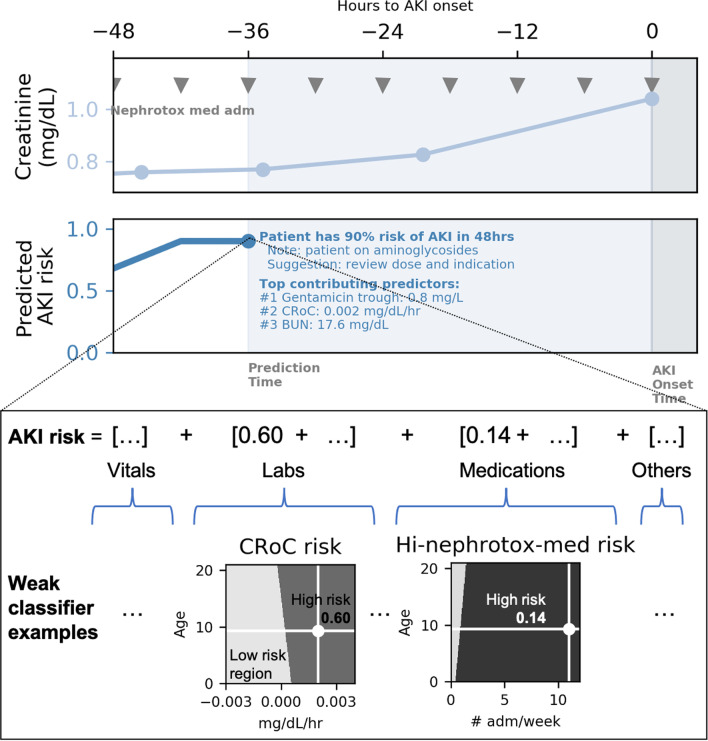
BACKGROUND: Acute kidney injury (AKI) in pediatric critical care patients is diagnosed using elevated serum creatinine, which occurs only after kidney impairment. There are no treatments other than supportive care for AKI once it has developed, so it is important to identify patients at risk to prevent injury. This study develops a machine learning model to learn pre-disease patterns of physiological measurements and predict pediatric AKI up to 48 h earlier than the currently established diagnostic guidelines. METHODS: EHR data from 16,863 pediatric critical care patients between 1 month to 21 years of age from three independent institutions were used to develop a single machine learning model for early prediction of creatinine-based AKI using intelligently engineered predictors, such as creatinine rate of change, to automatically assess real-time AKI risk. The primary outcome is prediction of moderate to severe AKI (Stage 2/3), and secondary outcomes are prediction of any AKI (Stage 1/2/3) and requirement of renal replacement therapy (RRT). Predictions generate alerts allowing fast assessment and reduction of AKI risk, such as: "patient has 90% risk of developing AKI in the next 48 h" along with contextual information and suggested response such as "patient on aminoglycosides, suggest check level and review dose and indication". RESULTS: The model was successful in predicting Stage 2/3 AKI prior to detection by conventional criteria with a median lead-time of 30 h at AUROC of 0.89. The model predicted 70% of subsequent RRT episodes, 58% of Stage 2/3 episodes, and 41% of any AKI episodes. The ratio of false to true alerts of any AKI episodes was approximately one-to-one (PPV 47%). Among patients predicted, 79% received potentially nephrotoxic medication after being identified by the model but before development of AKI. CONCLUSIONS: As the first multi-center validated AKI prediction model for all pediatric critical care patients, the machine learning model described in this study accurately predicts moderate to severe AKI up to 48 h in advance of AKI onset. The model may improve outcome of pediatric AKI by providing early alerting and actionable feedback, potentially preventing or reducing AKI by implementing early measures such as medication adjustment.
Overview
CoChat Summary
TL;DR
A single age-dependent ensemble machine learning model was developed on EHR data from 16,863 pediatric critical care patients across three institutions to predict creatinine-based AKI up to 48 h before conventional diagnosis. It predicted Stage 2/3 AKI with a median lead-time of 30 h and AUROC 0.89, while also forecasting any AKI and renal replacement therapy.
Key findings
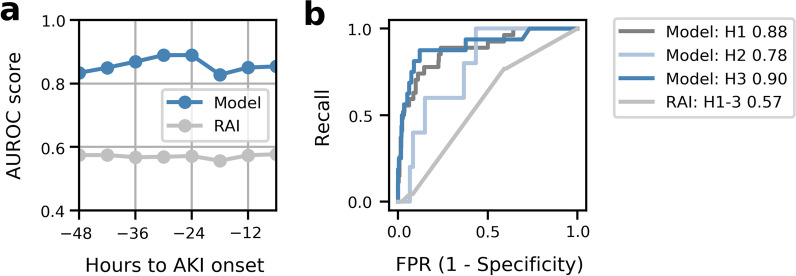
- The model predicted Stage 2/3 AKI before conventional criteria with a median lead-time of 30 h; AUROC reached 0.89 within the training prediction window (48–24 h before onset) and decreased slightly to 0.85 outside it.
- It identified 70% of subsequent RRT episodes, 58% of Stage 2/3 AKI episodes, and 41% of any AKI episodes; PPV for any AKI was 47% (false-to-true alert ratio approximately 1:1), and PPV for Stage 2/3 AKI was 22% (1:4).
- Among patients predicted by the model, 79% received potentially nephrotoxic medication after being identified but before AKI development.
- The renal angina index comparator was less predictive, with AUROC around 0.57, sensitivity of 5% for any AKI and 3% for Stage 2/3 AKI, and PPV of 4% (1:21) and 1% (1:98), respectively.
Methods
- Retrospective multi-center cohort using EHR data from 16,863 pediatric critical care patients aged 1 month to 21 years from three independent institutions (PICU and CTICU); each center’s data were split into derivation (70%), validation (15%), and holdout testing (15%) sets with no patient overlap.
- A single age-dependent ensemble machine learning model used 15 final predictors plus age, selected from 250 candidate predictors; predictors were aggregated every 6 h, the model was trained on data 48–24 h before AKI onset, and tested on holdout data 48–6 h before onset. Primary outcome was Stage 2/3 AKI; secondary outcomes were any AKI and RRT requirement; the renal angina index served as baseline comparator.
- AKI was labeled using KDIGO serum creatinine criteria; urine output criteria were not used due to unreliable records. Baseline creatinine was determined by mean normal creatinine for age and gender, and the model can make predictions when some predictors are missing without data imputation.
Limitations
- Stated: the model uses creatinine alone to stage AKI due to data availability; up to 20% of AKI patients are diagnosed by urine output criteria alone, so the model may miss more urine-staged patients and reported PPV may increase if those patients were counted. Generalizability is not fully resolved, with a need for more validation on larger non-US datasets; the best way to present and integrate the model into workflow remains untested; and performance against admission reason and patient comorbidities is unknown.
- Stated: the model intentionally avoided “black-box” neural network models to preserve transparency and actionability, which may have limited performance.
- Evident from the text: validation was retrospective only, with no prospective clinical-impact study yet (the authors plan one); performance was worse on the UK hospital, likely due to its smaller data size and younger patients, and younger patients were predicted less accurately.
Model-written summary. Check it against the paper before relying on it.
Integrity signals
Registry
Cites
Statistics
Figures
Verification
Claims the paper makes
9 Valid · 3 Not valid · 3 Not checked · 56 Own results and interpretations
The cited sources that could be checked couldn’t confirm or dispute this claim.
In the paper
“some studies have shown that early improvements in renal function after AKI may lead to better outcomes [1, 5, 7].”
§ Machine learning model for early prediction of acute kidney injury (AKI) in pediatric critical care > Background
What the sources say
- Could not verifycites [1] Kaddourah A Basu RK Bagshaw SM Goldstein SL Epidemiology of acute kidney injury in critically ill children and young adults N Engl J Med 2017 376 1 11 20 10.1056/NEJMoa1611391 27959707 PMC5322803 sourceExperimental — accuracy not yet measured
The Results sections on AKI progression and risk of death report worsening AKI and an association between greater severity and mortality. They do not compare patients whose renal function improved early after AKI with those whose function did not improve. Searches for recovery, resolution, and early improvement found no passage addressing that claim; the Discussion also cautions against causal conclusions. (LLM, conf=0.76)
- Not checked — no full text of the sourcecites [5] Kellum JA Lameire N Aspelin P Barsoum RS Burdmann EA Goldstein SL Herzog CA Joannidis M Kribben A Levey AS MacLeod AM Kidney disease: improving global outcomes (KDIGO) acute kidney injury work group. KDIGO clinical practice guideline for acute kidney injury Kidney Int Suppl 2012 2 1 1 138 10.1038/kisup.2012.1 source
- Not checked — no full text of the sourcecites [7] Levy MM Macias WL Vincent JL Russell JA Silva E Trzaskoma B Williams MD Early changes in organ function predict eventual survival in severe sepsis Crit Care Med 2005 33 10 2194 2201 10.1097/01.CCM.0000182798.39709.84 16215369 source
hedgedstates a possible cause- Asserted: passes — The authors put it forward as true.
- Checkable: passes — It can be checked against evidence.
- Load-bearing: passes — The paper’s conclusions depend on it.
- Based: passes — The paper gives a reason why it holds.
- Could not verify
The cited sources support only part of this claim — read each source’s verdict below.
In the paper
“Up to 20% of AKI patients are diagnosed based on the urine output criteria alone [20]”
§ Machine learning model for early prediction of acute kidney injury (AKI) in pediatric critical care > Limitations
What the sources say
- Partly supportedcites [20] Kaddourah A Basu RK Bagshaw SM Goldstein SL Epidemiology of acute kidney injury in critically ill children and young adults N Engl J Med 2017 376 11 20 10.1056/NEJMoa1611391 27959707 PMC5322803 sourceExperimental — accuracy not yet measured
The Results section (Comparison of Plasma Creatinine Level and Urine Output in Defining Acute Kidney Injury; page unavailable) supports diagnosis by urine-output criteria alone: 355 patients meeting those criteria would have been missed using plasma creatinine alone. It does not support the stated upper limit of 20%; among patients with data for both measures, those 355 represent about 32.5% of the 1,093 patients meeting either criterion. (LLM, conf=0.88)
hedged- Asserted: passes — The authors put it forward as true.
- Checkable: passes — It can be checked against evidence.
- Load-bearing: passes — The paper’s conclusions depend on it.
- Based: passes — The paper gives a reason why it holds.
- Partly supported
Every source the paper cites for this claim was checked and supports it.
In the paper
“Whilst in pediatric intensive care units (PICU) there are often no specific treatments to reverse AKI after it has developed [6]”
§ Machine learning model for early prediction of acute kidney injury (AKI) in pediatric critical care > Background
What the sources say
- Supportedcites [6] Sutherland SM Chawla LS Kane-Gill SL Hsu RK Kramer AA Goldstein SL Kellum JA Ronco C Bagshaw SM Utilizing electronic health records to predict acute kidney injury risk and outcomes: workgroup statements from the 15th ADQI consensus conference Can J Kidney Health Dis 2016 3 1 11 26925247 PMC4768420 source
The Background states that no treatments exist to mitigate or cure AKI once it has developed, in a discussion explicitly covering both adults and children. The citing sentence’s narrower, hedged statement about pediatric intensive care units is consistent with that passage. (LLM, conf=0.92)
hedged- Asserted: passes — The authors put it forward as true.
- Checkable: passes — It can be checked against evidence.
- Load-bearing: passes — The paper’s conclusions depend on it.
- Based: passes — The paper gives a reason why it holds.
- Supported
Every source the paper cites for this claim was checked and supports it.
In the paper
“The baseline comparator RAI, using mainly creatinine to predict AKI [17], performed worse than the model”
§ Machine learning model for early prediction of acute kidney injury (AKI) in pediatric critical care > Discussion > Baseline comparator
What the sources say
- Supportedcites [17] Basu RK Zappitelli M Brunner L Derivation and validation of the renal angina index to improve the prediction of acute kidney injury in critically ill children Kidney Int 2014 85 3 659 667 10.1038/ki.2013.349 24048379 PMC4659420 source
The Methods section identifies the RAI as an index for predicting AKI, and the Results ('RAI prediction of AKI—by creatinine clearance and/or fluid overload criteria') show that its creatinine-clearance component discriminated better than fluid overload alone. The statement that RAI performed worse than 'the model' is the citing authors’ comparison, not a result attributed to this source. (LLM, conf=0.88)
plain- Asserted: passes — The authors put it forward as true.
- Checkable: passes — It can be checked against evidence.
- Load-bearing: passes — The paper’s conclusions depend on it.
- Based: passes — The paper gives a reason why it holds.
- Supported
Every source the paper cites for this claim was checked and supports it.
In the paper
“This addresses the need expressed by ADQI for a predictive model to present information about patient measurements contributing to the predicted risks and provide feedback to practitioners regarding potential actionable items [6]”
§ Machine learning model for early prediction of acute kidney injury (AKI) in pediatric critical care > Discussion > Impacting clinical workflow and improving outcomes
What the sources say
- Supportedcites [6] Sutherland SM Chawla LS Kane-Gill SL Hsu RK Kramer AA Goldstein SL Kellum JA Ronco C Bagshaw SM Utilizing electronic health records to predict acute kidney injury risk and outcomes: workgroup statements from the 15th ADQI consensus conference Can J Kidney Health Dis 2016 3 1 11 26925247 PMC4768420 source
In Results, Question 4 (page not supplied), the proposed dashboard would show which factors most significantly affect a patient's current risk score. The same section says AKI prediction tools should provide practitioners with feedback about potential actionable items. These are the two functions the citing sentence attributes to ADQI. (LLM, conf=0.92)
plain- Asserted: passes — The authors put it forward as true.
- Checkable: passes — It can be checked against evidence.
- Load-bearing: passes — The paper’s conclusions depend on it.
- Based: passes — The paper gives a reason why it holds.
- Supported
39 more claims · 2 with their cited sources checked
Create a free account to see all 71 claims and every source verdict.
- It may state two separate claims as one. 15
- Probably not a substantial claim. 14
- The quote only partly states this claim. 1
Claims other papers make about this one
Each is checked against this paper’s own text: does it say what the citing paper says it does?
In the citing paper
“Early health prediction plays a critical role in improving public health by enabling healthcare providers to identify and address potential health problems before they become more serious [11,12].”
From Edge AI for Early Detection of Chronic Diseases and the Spread of Infectious Diseases: Opportunities, Challenges, and Future Directions (2023) · cites this paper as [11]
Self-check
Percentages, sums and reported differences re-computed from the paper’s own numbers.
Each contradiction between two passages listed here was confirmed by an independent check.
Rated minor: it would not touch a result — a value no result rests on, a p-value that stays on the same side of the significance level, or a conflict that is clerical, resolved elsewhere in the paper, or outside its own findings.
In the paper
§ Machine learning model for early prediction of acute kidney injury (AKI) in pediatric critical care > Results > Baseline comparator
“In comparison, RAI was less predictive of AKI with AUROC around 0.57 in Fig. 2a and b and sensitivity and specificity shown in Table 3.”
§ Machine learning model for early prediction of acute kidney injury (AKI) in pediatric critical care > Results > Performance
“| | Sensitivity Any Stage AKI (%) | Sensitivity AKI Stage 2 or 3 (%) | PPV (TP:FP) Any stage AKI | PPV (TP:FP) AKI Stage 2 or 3 |”
Citations
Cites
Rudin, C. (2019) · Nature Machine Intelligence · doi:10.1038/s42256-019-0048-x · Cited by 10,561 · cited 1×
“Many research groups have tackled early prediction of AKI using electronic health records (EHR) data [8–11], but no model so far explains the rationale behind specific predictions despite a clear need for explainable and actionable predictions [6, 12].”
BackgroundKDIGO Clinical Practice Guidelines for Acute Kidney Injury
Khwaja, A. (2012) · Nephron Clinical Practice · doi:10.1159/000339789 · Cited by 8,014
Bellomo, R., Ronco, C., Kellum, J. A., Mehta, R. L., Palevsky, P., & workgroup, T. A. (2004) · Critical Care · doi:10.1186/cc2872 · Cited by 6,781 · cited 1×
“Baseline creatinine was determined by the mean normal creatinine level for age and gender group [14–16].”
Method(2012) · Kidney International Supplements · doi:10.1038/kisup.2012.1 · Cited by 4,326
A clinically applicable approach to continuous prediction of future acute kidney injury
Tomašev, N., Glorot, X., Rae, J. W., Zielinski, M., Askham, H., Saraiva, A., Mottram, A., Meyer, C., Ravuri, S., Protsyuk, I., et al. (2019) · Nature · doi:10.1038/s41586-019-1390-1 · Cited by 1,086
Epidemiology of Acute Kidney Injury in Critically Ill Children and Young Adults
Kaddourah, A., Basu, R. K., Bagshaw, S. M., & Goldstein, S. L. (2017) · New England Journal of Medicine · doi:10.1056/nejmoa1611391 · Cited by 1,075 · cited 1×
“Up to 20% of AKI patients are diagnosed based on the urine output criteria alone [20], and the lack of urine criteria may have resulted in lower AKI rates than previously described.”
BackgroundKDOQI US Commentary on the 2012 KDIGO Clinical Practice Guideline for Acute Kidney Injury
Palevsky, P. M., Liu, K. D., Brophy, P. D., Chawla, L. S., Parikh, C. R., Thakar, C. V., Tolwani, A. J., Waikar, S. S., & Weisbord, S. D. (2013) · American Journal of Kidney Diseases · doi:10.1053/j.ajkd.2013.02.349 · Cited by 935 · cited 1×
“Length of stay (days) 3 [1, 6] 4 [2, 8] 5 [3, 13]”
Mammen, C., Al Abbas, A., Skippen, P., Nadel, H., Levine, D., Collet, J. P., & Matsell, D. G. (2012) · American Journal of Kidney Diseases · doi:10.1053/j.ajkd.2011.10.048 · Cited by 573
Early changes in organ function predict eventual survival in severe sepsis*
Levy, M. M., Macias, W. L., Vincent, J.-L., Russell, J. A., Silva, E., Trzaskoma, B., & Williams, M. D. (2005) · Critical Care Medicine · doi:10.1097/01.ccm.0000182798.39709.84 · Cited by 358 · cited 1×
“Whilst in pediatric intensive care units (PICU) there are often no specific treatments to reverse AKI after it has developed [6], some studies have shown that early improvements in renal function after AKI may lead to better outcomes [1, 5, 7].”
BackgroundSchneider, J., Khemani, R., Grushkin, C., & Bart, R. (2010) · Critical Care Medicine · doi:10.1097/ccm.0b013e3181cd12e1 · Cited by 323 · cited 1×
“Baseline creatinine was determined by the mean normal creatinine level for age and gender group [14–16].”
Method
Research works printed but not linked: 2
- American College of Physicians. Annals of Internal Medicine. The TRIPOD Statement: Explanation and Elaboration. https://annals.org/aim/fullarticle/2088542/transparent-reporting-multivariableprediction-model-individual-prognosisdiagnosis-tripod-explanation.
- Kaddourah A Basu RK Bagshaw SM Goldstein SL Epidemiology of acute kidney injury in critically ill children and young adults N Engl J Med 2017 376 11 20 10.1056/NEJMoa1611391 27959707 PMC5322803 · DOI · Paper page
Cited by
Items 101–200 of 222
Jiang, Y., Zhang, J., Ainiwaer, A., Liu, Y., Li, J., Zhou, L., Yang, Y., & Zhang, H. (2024) · Renal Failure · doi:10.1080/0886022x.2024.2394634 · Cited by 5
Meng, Y., Lin, Y., Xiong, W., Lau, E. H. Y., Ho, F. C. S., Wong, J. Y., Wu, P., Tsang, T. K., Cowling, B. J., & Yang, B. (2024) · The Journal of Infectious Diseases · doi:10.1093/infdis/jiae592 · Cited by 2
Ye, M., Liu, C., Yang, D., & Gao, H. (2025) · BMC Cardiovascular Disorders · doi:10.1186/s12872-024-04466-x · Cited by 4
“Dong J et al. [12] reported a multi-center validated AKI prediction model that utilized EHR data from 16 863 pediatric critical care patients to predict moderate to severe AKI up to 48 h in advance of AKI onset.”
Deng, Z., Dong, Z., Wang, Y., Dai, Y., Liu, J., & Deng, F. (2024) · Human Genetics · doi:10.1007/s00439-024-02641-w · Cited by 5
“…(AKI) has emerged as a worldwide public health problem with elevating prevalence; up to 50% of critically ill patients present with AKI and it is associated with high morbidity and mortality, which poses a substantial clinical and economic public health burden (Dong et al. 2021; Hoste et al. 2015).”
Temsah, M.-H. A., Abouammoh, N. A., Alsatrawi, M., et al. (2024) · medRxiv · doi:10.1101/2024.03.18.24304453 · Cited by 4
Zhang, L., Wang, L., Yan, B., Pei, X., Wang, N., Yan, L., Cao, H., & Shao, F. (2025) · Renal Failure · doi:10.1080/0886022x.2025.2575918 · Cited by 3
“Following commonly used methods in previous studies [13,14], patients with stage 1 aKi were classified as the mild aKi group, whereas those with stages 2–3 aKi were classified into the severe aKi group.”
Artificial intelligence for early diagnosis in emergency department
Fazio, N. D., Zanza, C., Longhitano, Y., Voza, A., Balagna, R., Mosca, S., Balagna, P., Rossignoli, R., Cerenzia, S., Bertozzi, G., et al. (2026) · Journal of Anesthesia Analgesia and Critical Care · doi:10.1186/s44158-025-00334-y · Cited by 5
“Early diagnosis of acute kidney injury (AKI) is essential, enabling immediate intervention and better outcomes [75].”
Li, D.-M., Yu, F., Xia, W., Jiang, M.-H., Yang, L.-J., Yang, H.-Y., Yin, S.-J., Wang, P., Meng, R., Cun, S.-H., et al. (2025) · Renal Failure · doi:10.1080/0886022x.2025.2611198 · Cited by 4
Ma, Y.-L., Zhang, L., Li, Q., & Qin, X. (2024) · Heliyon · doi:10.1016/j.heliyon.2024.e34602 · Cited by 3
“As artificial intelligence (AI) develops, researchers have used machine learning in diagnosing, classifying and treating illnesses [8].”
BackgroundHu, B., Yang, Z., Lu, Y., Huang, S., Huang, X., Wang, C., & Cai, J. (2025) · Diabetes Research and Clinical Practice · doi:10.1016/j.diabres.2025.112301 · Cited by 3
Kandasamy, Y., & Baker, S. (2023) · Diagnostics · doi:10.3390/diagnostics13182865 · Cited by 4
“One recent study [34] developed an AI model that utilised vital signs, laboratory results, and other clinical information to train an AI model for predicting AKI in a paediatric cohort.”
MethodGingrich, A. R., Hagenow, A. M., Steinbach, E. J., et al. (2023) · Acta Paediatrica · doi:10.1111/apa.17055 · Cited by 3
“The number of formal inpatient paediatric nephrology consultations for any diagnosis was found to be significantly higher in the post-protocol cohort (9 vs. 20, p = 0.025).”
BackgroundInfluentialXu, S., & Huang, J. (2024) · Medicine · doi:10.1097/md.0000000000036587 · Cited by 3
“[31 ] In this study, by using multivariate logistic regression to determine the risk factors, then we adopted 4 ML models to predict bladder cancer.”
MethodFluid Balance in Continuous Renal Replacement Therapy: Prescribing, Delivering, and Review
Baldwin, I. C., & McKaige, A. (2024) · Blood Purification · doi:10.1159/000537928 · Cited by 3
“Machines and software have not progressed into predictive tracking and assisting clinical decision making like this, but this may be an element of further machine design and where device computers are advancing in health care [35 – 37].”
Wang, X., Xu, L., Chen, G., Xu, D., Che, L., Wang, Y., Man, X., Li, C., & Xu, Y. H. (2024) · Frontiers in Medicine · doi:10.3389/fmed.2024.1407354 · Cited by 5
A Systematic Analysis on Active Federated Learning Network in Healthcare Industry
Muthukumar, D. S., & Deepalakshmi, P. (2024) · International Conference on Data Intelligence and Cognitive Informatics (ICDICI) · doi:10.1109/icdici62993.2024.10810760 · Cited by 2
Wang, X., Li, C., Xu, L., Jiang, S., Guan, C., Che, L., Wang, Y., Man, X., & Xu, Y. H. (2025) · Clinical Kidney Journal · doi:10.1093/ckj/sfaf080 · Cited by 4
Yang, L., Zou, K., Wang, Y., Zhang, Y., Zhong, J., Wu, Z., Tang, F., Lü, P., Liu, X., & Deng, L. (2025) · BMC Medical Informatics and Decision Making · doi:10.1186/s12911-025-03043-2 · Cited by 3
“Furthermore, numerous studies have addressed the prediction of renal function [21], acute kidney injury (AKI) [22, 23], end-stage kidney disease (ESKD) [24], and short-term eGFR fluctuations in patients with chronic kidney disease (CKD) [25].”
Artificial Intelligence in Pediatric Anesthesia.
Madadi, F., Dabbagh, A., & Sabouri, A. (2025) · Anesthesiology Clinics · doi:10.1016/j.anclin.2025.06.003 · Cited by 4
Chen, J., Ai, T., Song, Z., Zhang, W., Yang, T., Shi, A., Tang, J., Shao, P., Zheng, W., Shi, Z., et al. (2025) · Annals of Medicine and Surgery · doi:10.1097/ms9.0000000000003699 · Cited by 2
“…for those at high risk of acute kidney injury in different populations (such as general pediatric patients in critical care, patients with sepsis and adult inpatients), but models for predicting postoperative AKI are lacking, especially for AKI after noncardiac surgery (NCS) [ 16–19 ] .”
Wang, X., Chen, Y., Hua, L., Wang, D., Zhang, X., & Wang, L.-H. (2025) · Frontiers in Medicine · doi:10.3389/fmed.2025.1596030 · Cited by 1
Chen, C., Chen, X., Gao, Y., Deng, Y., & Li, Z. (2025) · Renal Failure · doi:10.1080/0886022x.2025.2553809 · Cited by 3
“Machine learning (Ml) methods have been employed to predict aKi across various settings [8–10]. a retrospective study demonstrated that Ml outperformed traditional regression in predicting post-lt aKi [11].”
Liang, B., Ma, C., & Lei, M. (2025) · Frontiers in Physiology · doi:10.3389/fphys.2025.1612900 · Cited by 5
Artificial Intelligence in Nephrology
da Silva, A. Q. B., Almeida, J., & Kirsztajn, G. M. (2022) · Springer eBooks · doi:10.1007/978-3-031-11570-7_15 · Cited by 2
Sethi, S. K., Raina, R., Sawan, A., Asim, S., Khant, A. K., Matnani, M., Ganesan, K., Lohia, S., Sinha, R., Rumana, J., et al. (2024) · Pediatric Nephrology · doi:10.1007/s00467-024-06324-6 · Cited by 2
RetractedSun, T., Yue, X., Chen, X., Huang, T., Gu, S., Chen, Y., Yang, Y., Qian, F., Han, C., Pan, X., et al. (2024) · Nephrology Dialysis Transplantation · doi:10.1093/ndt/gfae168 · Cited by 3
Liu, L., Zhou, H., Wang, X., Wen, F., Zhang, G., Yu, J., Shen, H., & Huang, R. (2024) · Frontiers in Public Health · doi:10.3389/fpubh.2024.1405533 · Cited by 2
“We employed five ML methods to predict eGFR based on environmental phenols exposure, which have been previously shown to be effective in predicting various diseases in other contemporary ML studies (36–38).”
MethodChen, M., Xiong, J., Li, M., Hu, T., & Zhang, Y. (2025) · Journal of Clinical Hypertension · doi:10.1111/jch.70017 · Cited by 2
“Currently, machine learning algorithms have become powerful tools for predicting various health outcomes [13–15].”
Bhatia, J., Vishveshwara, R. M., Kureshi, F. M. N., Parmar, R. A., Ghosh, A. K., & Upreti, S. (2025) · Smart innovation, systems and technologies · doi:10.1007/978-981-96-2182-8_11 · Cited by 5
Kuok, M. C. I., & Chan, W. K. Y. (2025) · World Journal of Pediatrics · doi:10.1007/s12519-025-00965-9 · Cited by 3
Prediction Model of Intradialytic Hypertension in Hemodialysis Patients Based on Machine Learning
Zhou, H., Guo, Q., wang, K., Zhang, X., Luo, Y., Luan, S., Tang, D., 徐明芝, Dong, J., Yin, L., et al. (2025) · Journal of Medical Systems · doi:10.1007/s10916-025-02237-5 · Cited by 3
“In nephrology, ML techniques have proven particularly effective for the prognostication of renal pathologies, exemplified by the development of predictive models for acute kidney injury [29–32] and chronic renal failure [33–35].”
Wang, M., Yan, P., Zhang, N.-Y., Deng, Y.-H., Luo, X.-Q., Wang, X., & Duan, S.-B. (2022) · Frontiers in Medicine · doi:10.3389/fmed.2022.892473 · Cited by 3
“Existing evidence has emphasized comprehensive assessment of hospitalized admissions by making full use of clinical parameters to provide timely and precise predictions for detecting adverse outcomes of AKI (17).”
BackgroundData harnessing to nurture the human mind for a tailored approach to the child
Misra, S. C., & Mukhopadhyay, K. (2022) · Pediatric Research · doi:10.1038/s41390-022-02320-4 · Cited by 3
“29 Emergency and ward .”
Xiao, Z., Zeng, L., Chen, S., Wu, J., & Huang, H. (2024) · Scientific Reports · doi:10.1038/s41598-024-62447-8 · Cited by 5
Lee, G., Kim, S., Hong, S., et al. (2024) · Life Cycle · doi:10.54724/lc.2024.e6 · Cited by 1
Wang, C., Liu, X., Zhang, C., Yan, R., Li, Y., & Peng, X. (2024) · Pediatric Investigation · doi:10.1002/ped4.12458 · Cited by 2
“40 The definitions of the baseline SCr included three types: the normal value for age and gender group; the historic value before admission; and the value calculated by the formula.”
InfluentialJoe, Y., Ha, N.-Y., Lee, W., & Byon, H. (2025) · Journal of Clinical Medicine · doi:10.3390/jcm14051459 · Cited by 3
Dixon, C. G., Rivera, E. A. T., Patel, A. K., & Pollack, M. M. (2025) · Frontiers in Pediatrics · doi:10.3389/fped.2025.1549836 · Cited by 2
Haskul, M., Kaya, E., & Kurtoğlu, A. (2025) · Journal of Clinical Pathology · doi:10.1136/jcp-2025-210087 · Cited by 1
“21 22 In the study, ML methods were used to predict PV diagnoses from the haemo-gram parameters of PV-positive and negative cases who came to the hospital adult haematology outpatient clinic with elevated haemoglobin.”
Zhang, C., Wang, C., Hu, Q., Xu, X.-M., Yan, R., Nie, X.-L., Peng, Y., Yang, H., Song, Y., Yang, X., et al. (2025) · World Journal of Pediatrics · doi:10.1007/s12519-025-00950-2 · Cited by 5
“Another is based on clinical data from 48 hours or other prediction windows before onset [12].”
Thadani, S. V., Silos, C. N., Horvat, C. M., Dolan, K. J., Srivaths, P. R., Fogarty, T. P., Akcan‐Arikan, A., Chen, J., & Neyra, J. A. (2025) · Pediatric Research · doi:10.1038/s41390-025-04368-4 · Cited by 2
“…at CRRT connection, patient ionized calcium after CRRT connection [1.22 (1.16 – 1.28) vs. 1.18 (1.10 – 1.27), p < 0.01], ef fl uent dose (ml/kg/h) [46 (40 – 79) vs. 78 (60 – 131), p < 0.01], and prescribed total ultra fi ltration rate over the fi rst hour [10 (8 – 14) vs. 16 (11 – 22), p < 0.01].”
InfluentialMedICL: In-Context Learning for Semantically Enhanced AKI Prediction in Cardiac Surgery
Su, C., Wang, Y., Xu, B., Feng, R., Du, L., Liu, H., & Meng, G. (2025) · Lecture notes in computer science · doi:10.1007/978-3-032-05141-7_39 · Cited by 2
Es-Saad, O., Berrada, M., ELHASNAOUI, A., Lakhdar, K., Bahouh, C., Motiaa, Y., Alkouh, R., Najdi, A., & Labib, S. (2025) · Renal Replacement Therapy · doi:10.1186/s41100-025-00681-0 · Cited by 1
“In the context of AKI, preliminary evidence suggests that ML-based tools can predict both AKI onset and related mortality at an earlier stage, thus enhancing resource allocation and patient care [10, 11].”
Deng, Y.-H., Liu, Q., & Luo, X.-Q. (2026) · Pediatric Nephrology · doi:10.1007/s00467-025-07137-x · Cited by 2
Li, J., Xue, M., Peng, D., Han, K., Bai, R., An, R., Zhang, L., Zhou, B., Zhang, L., & Shen, X. (2026) · Asian Journal of Psychiatry · doi:10.1016/j.ajp.2026.104930 · Cited by 2
Zhou, K., Tang, Z., & Hu, J. T. (2026) · Frontiers in Medicine · doi:10.3389/fmed.2026.1796756 · Cited by 7
“Integrating longitudinal biomarker monitoring and time-series clinical data has facilitated the application of artificial intelligence (AI)-based computational approaches to include multi-time-point and multivariable information for dynamic AKI risk assessment and decision support (89, 97, 98).”
Harnessing artificial intelligence for pediatric health: Current trends and future opportunities
Wu, J., Chen, B., Chan, K. C. C., Liang, M., Lyu, Y., Yu, P., Feng, T., Xie, F., Yu, S., Zhang, F., et al. (2026) · iScience · doi:10.1016/j.isci.2026.115962 · Cited by 2
Self-citationResearch progress on biomarkers for acute kidney injury in children
Jin, W., Ye, Q., & Cheng, D. (2026) · Pediatric Nephrology · doi:10.1007/s00467-026-07321-7 · Cited by 1
Künstliche Intelligenz in der Nephrologie
Boss, K., Roller, R., Woywodt, A., Kribben, A., Budde, K., & Becker, S. (2022) · Die Nephrologie · doi:10.1007/s11560-022-00609-3 · Cited by 1
Whitlock, A. E., Gondy Leroy, A., Donovan, F., & Galgiani, J. N. (2024) · IEEE International Conference on Healthcare Informatics (ICHI) · doi:10.1109/ichi61247.2024.00024 · Cited by 3
“…learning (ML) algorithms, thousands of examples are needed to train models, e.g., 16,863 pediatric patients to assess the development of acute kidney injury [1], 790,470 examples to predict developing myelodysplastic syndrome [2], and clinical phenotyping using EHR data from 113,493 samples [3].”
BackgroundWen, Y., Wan, Z., Ren, H., Wang, X., & Wang, W. (2024) · doi:10.2196/preprints.64979 · Cited by 1
Mohamed, T. H., Bambach, S., Spencer, J. D., Rust, L., Patel, S. Y., Magers, J. K., Neyra, J. A., Wilson, F. P., Ning, X., Newland, J. G., et al. (2025) · medRxiv · doi:10.1101/2025.06.12.25329508 · Cited by 1
“Predictive machine learning models help clinicians identify adult [10-12] and pediatric patients [13-15] at risk for AKI, but these tools are not yet available for the unique population of critically ill neonates.”
Mai, M. V., Shin, H. S., Muthu, N., Braykov, N. P., McCarter, A., Hilsman, J., Orenstein, E. W., Hu, X., & Kandaswamy, S. (2026) · medRxiv · doi:10.64898/2026.01.15.26344209 · Cited by 1
Huang, A. A., & Huang, S. Y. (2022) · Research Square · doi:10.21203/rs.3.rs-2075948/v2
Machine learning-based model for predicting the outcome of abdominal paracentesis drainagePreprint
Liu, R., Zhang, Y., He, L., et al. (2023) · Research Square · doi:10.21203/rs.3.rs-2510990/v1
Heo, S., Kang, E. A., Yu, J. Y., et al. (2023) · doi:10.2196/preprints.47693
Liu, C., Zhang, K., Yang, X., et al. (2023) · doi:10.2196/preprints.54872
Hernández-Llanes, N. F., Sánchez-Domínguez, R., Reza, S. Á., Fernández-Cáceres, C., & Marín-Navarrete, R. (2024) · Research Square · doi:10.21203/rs.3.rs-4014199/v1
苏, 拜. (2024) · Advances in Clinical Medicine · doi:10.12677/acm.2024.143958
Predicting adverse long-term neurocognitive outcomes after pediatric intensive care unit admission
Nakano, F. K., Dulfer, K., Vanhorebeek, I., Wouters, P. J., Verbruggen, S. C. A. T., Joosten, K., Güiza, F., Vens, C., & den Berghe, G. V. (2024) · Computer Methods and Programs in Biomedicine · doi:10.1016/j.cmpb.2024.108166 · Cited by 1
Advances in machine learning prediction models for acute kidney injury
Zhihe, Z. E. N. G., Qing, D. U., Zhang, B., et al. (2024) · Panminerva Medica · doi:10.23736/s0031-0808.24.05117-6
Pediatric Acute Kidney Injury: An Overview and Examination of Recent Evidence
Jones, K. (2024) · Nephrology Self-Assessment Program · doi:10.58483/nsap.00172024
A Review of Electronic Early Warning Systems for Acute Kidney Injury
Wang, X., Bian, Z., Zhu, R., & Chen, S. (2024) · Advances in Urology · doi:10.1155/2024/6456411
“…between 1 month and 21 years of age from three independent institutions were used to develop a single machine learning model for early prediction of creatinine-based AKI using intelligently engineered predictors, such as creatinine rate of change, to automatically assess real-time AKI risk [18].”
MethodAcute kidney injury: Diagnosis, causes, and latest treatments- An updated review article
Albogamy, S. A., Alanazi, A., Aljawad, H. M., Alzuhair, H. A., Aljehani, M., Alanazi, A. S. K., Al-Harbi, M. S. A., & Alamri, F. H. (2022) · International Journal of Health Sciences · doi:10.53730/ijhs.v6ns10.15238
Künstliche Intelligenz in der Nephrologie
da Silva, A. Q. B., Almeida, J., & Kirsztajn, G. M. (2024) · Springer eBooks · doi:10.1007/978-3-031-65236-3_15
Prediction model of intradialytic hypertension in hemodialysis patients based on machine learningPreprint
Zhou, H., Guo, Q., Wang, K., et al. (2024) · Research Square · doi:10.21203/rs.3.rs-5355171/v1
Self-citationCLEAR-Shock: Contrastive LEARning for Shock
Kwon, J. E., Lee, S. W., Kim, S. J., Han, K. S., Lee, S., Song, J., & Lee, H. K. (2025) · IEEE Journal of Biomedical and Health Informatics · doi:10.1109/jbhi.2025.3527477 · Cited by 1
Dziorny, A. C., Drury, S., Clark, A., Farris, R. W. D., Nishisaki, A., Cornell, T. T., Tawfik, D. S., Bennett, T. D., Shah, S. S., Weiss, S. L., et al. (2026) · Critical Care Explorations · doi:10.1097/cce.0000000000001425
Yan, R., Wang, C., Zhang, C., Liu, X., Zhang, D., & Peng, X. (2025) · BMC Medical Research Methodology · doi:10.1186/s12874-025-02492-7
Non-linear association between AKI alert detection rate by physicians and medical costs
Ai, H.-J., Jiang, E.-L., Wang, H., Yang, Q., Jin, Q., Wan, L., Liu, J., & He, C. (2025) · PLoS ONE · doi:10.1371/journal.pone.0314907 · Cited by 1
“The automated alert system, capable of real-time prediction of AKI occurrences, is considered a potential solution to this issue [10–12].”
A Framework for Mortality Risk in Patients with AKI in the ICU Based on the Bagging Ensemble Method
Liu, M., Wu, R., Li, W. C., & Fan, Z. (2025) · Smart innovation, systems and technologies · doi:10.1007/978-981-97-9128-6_29
Machine learning in lymphocyte and immune biomarker analysis for childhood thyroid diseases in China
Yang, R., Li, W., Niu, Q., Yang, W., Gu, W., & Wang, X. (2025) · BMC Pediatrics · doi:10.1186/s12887-024-05368-9 · Cited by 1
“At present, a multitude of machine learning techniques have been utilized in the establishment of disease prediction models, a considerable number of which have exhibited considerable predictive value, including applications in forecasting outcomes for pediatric patients [24–26].”
A Machine Learning Model for the Early Prediction of Fetal Acidosis in Vaginal DeliveriesPreprint
Zhou, L., Zhang, L., Tang, Y.-J., et al. (2025) · SSRN Electronic Journal · doi:10.2139/ssrn.5219315
Wang, L., Tao, Q., Hu, H., Fu, Z., Jia, M., Wang, L., Wu, Y., Xu, Q., Jia, X., & Zhang, W. (2025) · SSRN Electronic Journal · doi:10.2139/ssrn.5255723
Simms, B., & Kandil, S. B. (2025) · Pediatric Research · doi:10.1038/s41390-025-04158-y
“8 Similarly, Di Sarno et al. similarly highlight how AI-driven platforms incorporating metrics like HRV and pupillometry can generate dynamic, individualized risk scores via real-time dashboards.”
Zhang, W., Liu, Y., Feng, Z., Xiong, N., Tang, L., Chen, W., Zhu, X., Xue, J., Dai, W., & Yang, J. (2025) · Research Square · doi:10.21203/rs.3.rs-6824634/v1
Paediatric and Neonatal Intensive Care: Quo Vadis
Tibboel, D. (2025) · Springer eBooks · doi:10.1007/978-3-031-64762-8_1
Chaluvadi, A., Othman, N. A., Pulakhandam, W., Vallu, V. R., & Revathi, S. (2025) · International Journal of Humanoid Robotics · doi:10.1142/s0219843625400031
Wang, Z., & Chen, S. (2025) · International Urology and Nephrology · doi:10.1007/s11255-025-04697-7
“Compared with EHR-based AI models [5], this solution avoids data integration barriers and is especially suitable for scenarios with limited resources.”
Qin, Z., Zhang, P., Fu, H., Yan, S., & Li, W. (2025) · SSRN Electronic Journal · doi:10.2139/ssrn.5350604
Fu, L., Yu, J., Chen, Z., Xu, C., Gao, F., Zhang, Z., Fu, J., Hong, P., & Feng, W. (2025) · British Journal of Haematology · doi:10.1111/bjh.70160 · Cited by 1
Nontraditional Models for Acute Kidney Injury Research: Organoids, Zebrafish, and More
Jog, E., Wu, T., Maggiore, J. C., & Hukriede, N. A. (2025) · Seminars in Nephrology · doi:10.1016/j.semnephrol.2025.151668
Future AIoT-Based Green Smart Cities Essential Role in Enhancement of Healthcare Services
Chamazkoti, M. N., Ullah, I., Mirzaliev, S., Monirul, I. M., Sharafian, A., & Bilal, H. (2025) · Information systems engineering and management · doi:10.1007/978-3-031-95302-6_13 · Cited by 2
Qiu, S., Mu, S., Tao, Y., Zhang, N., Bai, J., & Cao, N. (2025) · Renal Failure · doi:10.1080/0886022x.2025.2562448 · Cited by 4
Gao, B., Jin, H., Zhang, Y., & Chen, J. (2025) · Journal of Intensive Care Medicine · doi:10.1177/08850666251390848 · Cited by 1
“Thirdly, we include a wide array of features in the ML models in comparison to some previous studies 14,17 – 19, 30 , 51 – 59 that may have contributed to the excellent excellent”
Du, Y., Sun, P., Sheng, J., Wang, H., Lei, J., Zhang, W., & Song, J. (2025) · Health and Technology · doi:10.1007/s12553-025-01027-w
Nedbal, C., Gauhar, V., Gite, S., et al. (2025) · World Journal of Urology · doi:10.1007/s00345-025-06095-1
Thadani, S. V., Horvat, C. M., Silos, C. N., Sutherland, B., Dolan, K. J., Chen, J., Akcan‐Arikan, A., & Neyra, J. A. (2025) · Pediatric Nephrology · doi:10.1007/s00467-025-07019-2
Li, L., Zhou, H., Wei, J., Huang, J., & Lu, D. (2025) · Journal of Biosciences and Medicines · doi:10.4236/jbm.2025.1311034
A comparative analysis of machine learning classifiers for chronic liver disease prediction in rats
Nadeem, A., Bisht, S., Kaushal, A., & Gupta, S. (2025) · Journal of Pharmacy and Pharmacology · doi:10.1093/jpp/rgaf121 · Cited by 1
Chen, X., Chen, G., Zheng, Z., Lu, H., Luo, Y., Lu, M., & Jiang, M. (2025) · Frontiers in Artificial Intelligence · doi:10.3389/frai.2025.1678292
Zhang, Q., Zhang, N., Zheng, Y., Zhou, J., & Liu, L. (2025) · Research Square · doi:10.21203/rs.3.rs-8242432/v1
Jaundice Stages Prediction Using Supervised Machine Learning
Moorthi, M., Keerthipriya, Pooja, et al. (2026) · Lecture notes in networks and systems · doi:10.1007/978-981-95-5082-1_1
Xu, W., Cheng, S., Wu, C., Li, C., Ni, T., Ni, P., Zhang, G., Diao, M., & Hu, W. (2026) · Frontiers in Medicine · doi:10.3389/fmed.2025.1717973
Stojanowski, J., Gołębiowski, T., & Musiał, K. (2026) · International Journal of Molecular Sciences · doi:10.3390/ijms27031285 · Cited by 1
“In detail, the use of machine learning allows for the assessment of the risk of AKI in pediatric patients and adults staying in the ICU more effectively than traditional methods [13–15].”
Identifying pertinent cohorts and addressing imbalance for robust intensive care survival analysis
Ahmed, A., Zeng, X., Xi, R., Hou, M., Afzal, M., & Shah, S. A. (2026) · Engineering Applications of Artificial Intelligence · doi:10.1016/j.engappai.2026.114267 · Cited by 1
Yi, J., Ryu, J., Tú, T. T., Park, S., Jeong, J. C., Chin, H. J., Kim, K., & Kim, S. (2026) · Kidney Medicine · doi:10.1016/j.xkme.2026.101327
AI for monitoring clinical outcomes and adverse events
Hamid, S., Ali, R., Khanna, K., & Raza, K. (2026) · Elsevier eBooks · doi:10.1016/b978-0-443-44430-2.00002-5
Du, Y., & Li, Y. (2026) · Nephrology · doi:10.1111/nep.70190 · Cited by 1
“The advancement of machine learning opens a new way to exploring sensitive and predictive biomarkers of diseases [2, 16].”
Zhang, X., Chen, M., Xia, B., Liu, B., Lin, X., Tao, H., Wang, H., Gu, T., Li, J., Dong, B., et al. (2026) · npj Precision Oncology · doi:10.1038/s41698-026-01406-0 · Cited by 1
“It offers signi fi cant advantages in interpreting omics data, developing predictive models, identifying biomarkers, and stratifying patients for precision medicine 24,25 .”
Metadata
- Authors
- Dong, J., Feng, T., Thapa-Chhetry, B., Cho, B. G., Shum, T., Inwald, D. P., Newth, C. J. L., & Vaidya, V. U.
- Affiliations
- Philips (United States) (US)
- Phoenix Children's Hospital (US)
- Addenbrooke's Hospital (GB)
- University of Southern California (US)
- Corresponding author
- Dong, Junzi
- Venue
- Critical Care
- Published
- 2021-08-10
- Volume
- 25
- Issue
- 1
- Pages
- 288-288
- ISSN
- 1364-8535 (ISSN-L)
- PMC
- PMC8353807
- OpenAlex
- W3191280566
- Semantic Scholar
- 677f5b0101ac8f1f610b462079c5a32cf7352480
- Cited by
- 233
- References
- 21
- Citations by year
- 2026: 40 · 2025: 75 · 2024: 65 · 2023: 33 · 2022: 20
- FWCI
- 20.17
- Type
- journal article
- Language
- en
- Open access
- gold
- doi.org
- Licence
- cc-by
- creativecommons.org/licenses/by/4.0 (tdm)
- creativecommons.org/licenses/by/4.0 (vor)
- Locations
- Critical Care (publishedVersion, cc-by)
- PubMed Central (publishedVersion, cc-by)
- PubMed (publishedVersion)
- DOAJ (DOAJ: Directory of Open Access Journals) (submittedVersion, cc-by-sa)
- Topics
- Health Sciences › Medicine › Nephrology › Acute Kidney Injury Research
- Physical Sciences › Computer Science › Artificial Intelligence › Machine Learning in Healthcare
- Health Sciences › Health Professions › Health Information Management › Artificial Intelligence in Healthcare
- Keywords
- acute kidney injury, pediatric intensive care, early prediction, machine learning, serum creatinine, renal replacement therapy, clinical decision support alerts, nephrotoxic drugs, aminoglycosides, AKI risk stratification, electronic health records
- MeSH terms
- Machine Learning, Adolescent, Child, Child, Preschool, Computer Simulation, Critical Care, Female, Humans, Infant, Infant, Newborn, Male, Pediatrics, ROC Curve, Severity of Illness Index, Intensive Care Units, Pediatric, Cohort Studies, Area Under Curve, Young Adult, Acute Kidney Injury
About these checks
Registry, retraction, Cites and statistics results are computed, not judged, with one exception: a printed reference that no index lists is read once by a model before it counts as a citation error. Claims are extracted by a model and kept only when their quote appears verbatim in the text; each cited source is then checked, with a model’s help, for whether it says what the claim relies on. Those verdicts can be wrong — read the claim’s quote and the cited source before relying on one.
The claim verdicts this report counts are experimental: their accuracy is not yet measured.
A language model drew the claims from the paper on 2026-10-10, under version 3 of the claim definition (model deepseek-v4.1-flash, prompt extract-v3).
A second model labelled each claim on 2026-10-10 (model jev-1.13-20260917, definition revision gold-guideline-v0.2).
Cited sources are checked with a language model’s help (gpt-6-sol).
Statistics and arithmetic are recomputed, not judged.
Confidence bands are shown only for fields calibrated on our annotated test set. None is calibrated yet, so no band is shown.
What counts as a claim ›How we measure confidence ›How we check this ›
Are you an author, or do you see a problem with this page? Request a review
Data sources
Bibliographic data: Semantic Scholar, OpenAlex, Crossref.
Contains information from the Semantic Scholar Academic Graph Datasets, made available under the ODC Attribution License (ODC-BY 1.0).
Semantic Scholar’s data is described in: Kinney, R., et al. (2023). The Semantic Scholar Open Data Platform. arXiv:2301.10140.
