

Should AI models be explainable to clinicians?
Open accessThe DOI matches its Crossref record; 40 of the 40 references it cites were found in a registry or an index.
Abstract
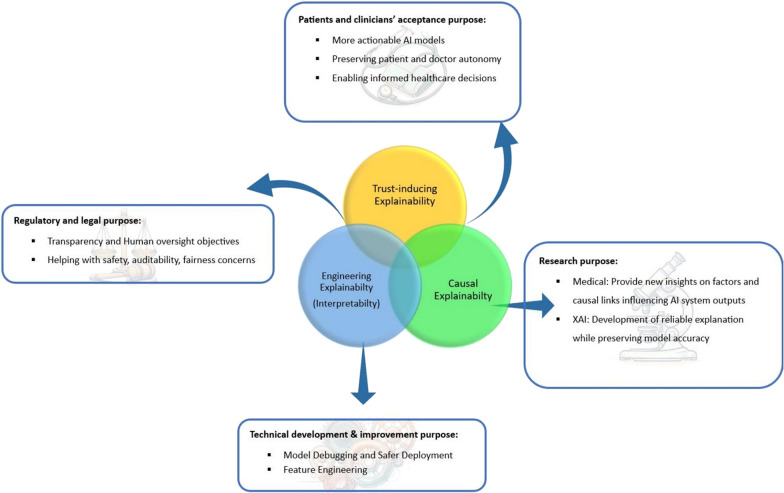
In the high-stakes realm of critical care, where daily decisions are crucial and clear communication is paramount, comprehending the rationale behind Artificial Intelligence (AI)-driven decisions appears essential. While AI has the potential to improve decision-making, its complexity can hinder comprehension and adherence to its recommendations. “Explainable AI” (XAI) aims to bridge this gap, enhancing confidence among patients and doctors. It also helps to meet regulatory transparency requirements, offers actionable insights, and promotes fairness and safety. Yet, defining explainability and standardising assessments are ongoing challenges and balancing performance and explainability can be needed, even if XAI is a growing field.
Overview
The claims and statistics of this paper haven’t been checked yet.
Free: it reads the open-access text and checks the first 5 claims that cite a source we can check. Create a free account to check every claim.
Integrity signals
Registry
Cites
Statistics
Figures
Verification
Claims the paper makes
The claims and statistics of this paper haven’t been checked yet.
Free: it reads the open-access text and checks the first 5 claims that cite a source we can check. Create a free account to check every claim.
Claims other papers make about this one
Each is checked against this paper’s own text: does it say what the citing paper says it does?
In the citing paper
“Criticism of post hoc explanation techniques such as SHAP and LIME has grown in parallel, as these methods offer only approximate attributions and risk creating an “illusion of clarity” that can mislead rather than support clinical judgement.52”
From Translational Potential and Explainability of Artificial Intelligence-Based Clinical Decision Support for Adults in Intensive Care: A Scoping Review (2026) · cites this paper as [52]
Self-check
Percentages, sums and reported differences re-computed from the paper’s own numbers.
The self-check needs the paper’s full text.
Citations
Cites
Rudin, C. (2019) · Nature Machine Intelligence · doi:10.1038/s42256-019-0048-x · Cited by 10,561 · cited 4×
“In medical AI, where models are typically based on detailed, structured data grounded in physiopathology, the performance difference between interpretable and more complex models often turns out to be minimal [34].”
BackgroundMethodInfluentialAn overview of clinical decision support systems: Benefits, risks, and strategies for success
Sutton, R. T., Pincock, D., Baumgart, D. C., Sadowski, D. C., Fedorak, R. N., & Kroeker, K. I. (2020) · npj Digital Medicine · doi:10.1038/s41746-020-0221-y · Cited by 3,019 · cited 1×
“In the high-pressure environment of the ICU, doctors need clarity when making decisions, especially when using AI-based support systems [13].”
BackgroundThe false hope of current approaches to explainable artificial intelligence in health care
Ghassemi, M., Oakden-Rayner, L., & Beam, A. L. (2021) · The Lancet Digital Health · doi:10.1016/s2589-7500(21)00208-9 · Cited by 1,724 · cited 2×
“Moreover, identifying an AI model’s key features does not ensure their effective or expected use, particularly from a clinical perspective [28].”
BackgroundVasey, B., Nagendran, M., Campbell, B., Clifton, D. A., Collins, G. S., Denaxas, S., Denniston, A. K., Faes, L., Geerts, B., Ibrahim, M., et al. (2022) · Nature Medicine · doi:10.1038/s41591-022-01772-9 · Cited by 1,039 · cited 1×
“These caveats partly explain why there is still no consensus on whether AI models, as seen in decision support systems, should inherently possess explainability as a core attribute [35].”
BackgroundMarkus, A. F., Kors, J. A., & Rijnbeek, P. R. (2021) · Journal of Biomedical Informatics · doi:10.1016/j.jbi.2020.103655 · Cited by 811
Manipulating and Measuring Model Interpretability
Poursabzi-Sangdeh, F., Goldstein, D. G., Hofman, J. M., Wortman Vaughan, J. W., & Wallach, H. (2021) · Proceedings of the 2021 CHI Conference on Human Factors in Computing Systems · doi:10.1145/3411764.3445315 · Cited by 728 · cited 1×
“Authors have suggested that this overconfidence may, in part, arise from an "information overload" effect [32, 41], which might also induce data fatigue.”
BackgroundManipulating and Measuring Model Interpretability
Poursabzi-Sangdeh, F., Goldstein, D. G., Hofman, J. M., Vaughan, J. W., & Wallach, H. (2018) · arXiv · doi:10.48550/arxiv.1802.07810 · Cited by 711 · cited 1×
“Authors have suggested that this overconfidence may, in part, arise from an "information overload" effect [32, 41], which might also induce data fatigue.”
BackgroundAI for radiographic COVID-19 detection selects shortcuts over signal
DeGrave, A. J., Janizek, J. D., & Lee, S.-I. (2021) · Nature Machine Intelligence · doi:10.1038/s42256-021-00338-7 · Cited by 631 · cited 1×
“…models took ’shortcuts’ by relying on features like laterality markers (e.g., the "R" letter adjacent to the right side of the radiograph) or patient positioning to draw their conclusions, rather than focusing on medically relevant pathology [22], rendering their predictions less reliable.”
BackgroundHatib, F., Jian, Z., Buddi, S., Lee, C., Settels, J., Sibert, K., Rinehart, J., & Cannesson, M. (2018) · Anesthesiology · doi:10.1097/aln.0000000000002300 · Cited by 614 · cited 1×
“By employing variables selected from millions of individual and combinatorial ones, derived from invasive arterial line waveform analysis, it efficiently predicts and prevents intraoperative hypotension, despite lacking a straightforward physiological explanation for its output [30, 31].”
MethodCai, C. J., Winter, S., Steiner, D., Wilcox, L., & Terry, M. (2019) · Proceedings of the ACM on Human-Computer Interaction · doi:10.1145/3359206 · Cited by 594 · cited 1×
“This approach parallels the collaborative mental models that clinicians establish with their colleagues, akin to seeking a second opinion [17].”
Result
Research works printed but not linked: 6
- Grote T. Allure of simplicity: on interpretable machine learning models in healthcare. Philod Med. 2023;4:1.
- Goodman B, Flaxman S. European Union regulations on algorithmic decision-making and a 'right to explanation' . 2016 [cited 2023 Oct 26]; Available from: https:// arxiv. org/ abs/ 1606. 08813
- Chung NC, Chung H, Lee H, Chung H, Brocki L, Dyer G. False Sense of Security in Explainable Artificial Intelligence (XAI) [Internet]. arXiv; 2024 [cited 2024 May 23]. Available from: https:// arxiv. org/ abs/ 2405. 03820
- Schneider J. Explainable Generative AI (GenXAI): A Survey, Conceptualiza- tion, and Research Agenda [Internet]. arXiv; 2024 [cited 2024 May 23]. Available from: http:// arxiv. org/ abs/ 2404. 09554
- European Commission. Directorate General for Communications Net- works, Content and Technology., High Level Expert Group on Artificial Intelligence. Ethics guidelines for trustworthy AI. [Internet]. LU: Publica- tions Office; 2019 [cited 2023 Oct 26]. Available from: https://data.europa. eu/doi/https:// doi. org/ 10. 2759/ 346720 · doi:10.2759/346720
- Jacovi A. Trends in Explainable AI (XAI) Literature [Internet]. arXiv; 2023 [cited 2024 May 23]. Available from: https:// arxiv. org/ abs/ 2301. 05433
Cited by
Abbas, Q., Jeong, W., & Lee, S. W. (2025) · Healthcare · doi:10.3390/healthcare13172154 · Cited by 236
“As AI continues to evolve, the emphasis on explainability will be pivotal for its responsible and sustainable integration into routine clinical workflows [45,46].”
Leivaditis, V., Maniatopoulos, A. A., Lausberg, H., Mulita, F., Papatriantafyllou, A., Liolis, E., Beltsios, E., Adamou, A., Kontodimopoulos, N., & Dahm, M. (2025) · Journal of Clinical Medicine · doi:10.3390/jcm14082729 · Cited by 76
Artificial intelligence to revolutionize IBD clinical trials: a comprehensive review
Sedaño, R., Solitano, V., Vuyyuru, S. K., Yuan, Y., Hanžel, J., Ma, C., Nardone, O. M., & Jairath, V. (2025) · Therapeutic Advances in Gastroenterology · doi:10.1177/17562848251321915 · Cited by 69
Machine learning for extracellular vesicles enables diagnostic and therapeutic nanobiotechnology
Tiwari, A. K., Widodo, Krisnawati, D. I., Tzou, K.-Y., & Kuo, T. (2026) · Journal of Nanobiotechnology · doi:10.1186/s12951-025-03952-4 · Cited by 64
Saeidnia, H. R., Firuzpour, F., Kozak, M., & majd, H. S. (2025) · Artificial Intelligence Review · doi:10.1007/s10462-025-11117-w · Cited by 50
“Clinicians need to understand AI-generated recommendations to effectively communicate these decisions to patients and maintain accountability (Alanazi 2023; Abgrall et al. 2024 ).”
Chen, Z., Wu, T., Wu, X., Wang, J., Ke, S., Li, H., & Lin, R. (2025) · BMC Nursing · doi:10.1186/s12912-025-03577-w · Cited by 44
AI-driven nanomedicine for cancer theranostics
Tiwari, A., Widodo, Krisnawati, D. I., Chen, C.-Y., & Kuo, T. (2026) · Molecular Cancer · doi:10.1186/s12943-025-02563-9 · Cited by 48
Artificial intelligence agents in cancer research and oncology
Truhn, D., Azizi, S., Zou, J., Cerdá-Alberich, L., Mahmood, F., & Kather, J. N. (2026) · Nature reviews. Cancer · doi:10.1038/s41568-025-00900-0 · Cited by 46
Automation complacency: risks of abdicating medical decision making
Saadeh, M., Janhonen, J., Beer, E., Castelyn, C., & Hoffman, D. N. (2025) · AI and Ethics · doi:10.1007/s43681-025-00825-2 · Cited by 33
Explainable artificial intelligence in electrocardiography: A systematic review
Taleban, A., Sparapani, R., Noffke, P., Zlochiver, S., Lu, Q., Widlansky, M. E., & Luo, J. (2025) · Biomedical Signal Processing and Control · doi:10.1016/j.bspc.2025.109325 · Cited by 33
Artificial intelligence for radiopharmaceutical and molecular imaging
Tao, J., Liang, L., Hao, S., Chen, Y., Yang, Z., Cai, Y., & Zhu, H. (2025) · Acta Pharmaceutica Sinica B · doi:10.1016/j.apsb.2025.09.039 · Cited by 25
“Due to stakeholder skepticism 152 , ongoing research and model development should focus on interpretable AI frameworks and technologies to aid clinicians in understanding and evaluating models 153,154 .”
Transforming Speech-Language Pathology with AI: Opportunities, Challenges, and Ethical Guidelines
Georgiou, G. P. (2025) · Healthcare · doi:10.3390/healthcare13192460 · Cited by 38
“Abgrall et al. [41] report that improved transparency enhances clinician confidence and aids compliance with regulatory mandates demanding accountability in clinical decision-making.”
Pan, C., Dong, X., Lança, C., Wang, Y., Saw, S., He, X., Hu, D., Fan, Q., Grzybowski, A. E., & Ohno‐Matsui, K. (2025) · Progress in Retinal and Eye Research · doi:10.1016/j.preteyeres.2025.101415 · Cited by 27
Rise of the Machines - Artificial Intelligence in Healthcare Epidemiology
Non, L. R., Marra, A. R., & İnce, D. (2024) · Current Infectious Disease Reports · doi:10.1007/s11908-024-00854-8 · Cited by 23
“However, this may not always be achievable as new AI systems, like GenAI, are complex [41].”
Marchi, G. (2026) · Breathe · doi:10.1183/20734735.0318-2025 · Cited by 16
Leveraging machine learning in nursing: innovations, challenges, and ethical insights
Yip, S. S. W., Ning, S., Wong, N. Y. K., Chan, J., Ng, K. S., Kwok, B. O. T., Anders, R. L., & Lam, S. C. (2025) · Frontiers in Digital Health · doi:10.3389/fdgth.2025.1514133 · Cited by 21
Al‐Nusair, J., Lanino, L., Durmaz, A., Porta, M. G. D., Zeidan, A. M., & Kewan, T. Z. (2025) · Blood Reviews · doi:10.1016/j.blre.2025.101340 · Cited by 14
Marchi, G., Gabbrielli, L., Gherardi, M., Serradori, M., Baglivo, F., Fanni, S. C., Cefalo, J., Salerni, C., Guglielmi, G., Pistelli, F., et al. (2026) · Diagnostics · doi:10.3390/diagnostics16010147 · Cited by 14
Decoding breast cancer imaging trends: the role of AI and radiomics through bibliometric insights
Wu, X., Xia, Y., Lou, X., Huang, K., Wu, L., & Gao, C. (2025) · Breast Cancer Research · doi:10.1186/s13058-025-01983-1 · Cited by 21
“However, faced with the uncertainty of explainable AI, standardized methods are still needed to assess its accuracy and comprehensiveness [35].”
Maiorano, M. F. P., Cormio, G., Loizzi, V., & Maiorano, B. A. (2025) · AI · doi:10.3390/ai6040084 · Cited by 19
“This work emphasizes the importance of developing validated, interpretable, and multi-modal AI models to enhance precision oncology and personalized treatment strategies in ovarian cancer.”
Mehrtabar, S., Marey, A., Desai, A., Saad, A. M., Desai, V. S., Goñi, J., Pal, B., & Umair, M. (2025) · Journal of Imaging Informatics in Medicine · doi:10.1007/s10278-025-01656-7 · Cited by 19
“There is also growing recognition of the need for interdisciplinary collaboration [104].”
Overcoming the Black Box Challenge: Building Trust in Artificial Intelligence Algorithms in Oncology
Alum, E. U., Egwu, C. K., Manjula, V. S., Ekpang, P. O., Ekpang, J. E., Echegu, D. A., Alum, B. N., & Uti, D. E. (2026) · Technology in Cancer Research & Treatment · doi:10.1177/15330338261434649 · Cited by 12
Lago, M. A., Zamzmi, G., Eich, B., & Delfino, J. G. (2026) · Bioengineering · doi:10.3390/bioengineering13010111 · Cited by 22
“This lack of consensus definitions and techniques for assessing explanations is problematic, as a growing body of evidence suggests that providing untrustworthy information to users can degrade task performance [13–16, 35, 36 ].”
Perspectives on Artificial Intelligence in Dermatology: An International Cross-Sectional Study
Karampinis, E., Zoumpourli, C.-M., Lallas, A., Apalla, Z., Paoli, J., Akay, B. N., Navarette-Dechent, C., Biswanath, B., Enechukwu, N. A., Chai, P., et al. (2026) · Medicina · doi:10.3390/medicina62040759 · Cited by 14
“Dermatologists appear to agree that education is essential to ensure safe interpretation of outputs and to control risks such as bias or overreliance [49].”
Descriptive overview of AI applications in x-ray imaging and radiotherapy
Damilakis, J. E., & Stratakis, J. (2024) · Journal of Radiological Protection · doi:10.1088/1361-6498/ad9f71 · Cited by 13
“Several methods have been recently developed to increase the interpretability of AI models [93, 94].”
Predicting lack of clinical improvement following varicose vein ablation using machine learning
Li, B., Eisenberg, N., Beaton, D., Lee, D. S., Al‐Omran, L., Wijeysundera, D. N., Hussain, M. A., Rotstein, O. D., de Mestral, C., Mamdani, M., et al. (2024) · Journal of Vascular Surgery Venous and Lymphatic Disorders · doi:10.1016/j.jvsv.2024.102162 · Cited by 18
Phillips, V. J. (2025) · AI & Society · doi:10.1007/s00146-025-02337-3 · Cited by 16
“As previously mentioned, Abgrall et al. (2024) and others have detailed how post-hoc techniques like SHAP (Lundberg 2017) and LIME (Ribeiro et al. 2016) can substantially increase inference times.”
InfluentialBottacin, W. E., de Souza, T. T., Melchiors, A. C., & Reis, W. C. T. (2025) · International Journal of Clinical Pharmacy · doi:10.1007/s11096-025-01906-2 · Cited by 10
“Explainability (2.8) is crucial in AI model development, especially in clinical settings where trust and clarity are essential [18, 29, 34, 35].”
InfluentialDahri, N. A., Dahri, F. H., Laghari, A. A., & Javed, M. (2025) · Complex Engineering Systems · doi:10.20517/ces.2025.07 · Cited by 14
Maqsood, S., Sarwar, M. A., Belousovienė, E., & Maskeliūnas, R. (2025) · Diabetes Obesity and Metabolism · doi:10.1111/dom.70147 · Cited by 12
Holistic AI in medicine; improved performance and explainability
Petridis, P., Margaritis, G., Stoumpou, V., & Bertsimas, D. (2026) · npj Digital Medicine · doi:10.1038/s41746-025-02298-3 · Cited by 17
Razavi, J. K., Dhafar, H. O., & BaHammam, A. S. (2025) · Saudi Journal for Health Sciences · doi:10.4103/sjhs.sjhs_26_25 · Cited by 15
Ghorbian, M., Ghorbian, ., & Ghobaei‐Arani, M. (2025) · Clinical and Experimental Medicine · doi:10.1007/s10238-025-01753-5 · Cited by 9
Ramesh, D., Manickavel, P., Ghosh, S., & Bhat, M. (2025) · Journal of Clinical and Experimental Hepatology · doi:10.1016/j.jceh.2025.102611 · Cited by 11
Stakeholder-centric participation in large language models enhanced health systems
Wang, Z., Yan, R., Francis, S., Diaz, C., Flickinger, T., Lin, Y., Xiao, H., Barnes, L. E., & LeBaron, V. T. (2025) · npj Health Systems · doi:10.1038/s44401-025-00024-5 · Cited by 11
“Additionally, LLMs may unintentionally erode clinical autonomy by subtly in fl uencing decision-making, especially when their recommendations appear authoritative but lack transparency 22 .”
Scott, I. A., Shaw, T. J., Slade, C., Wan, T. T., Barmanray, R., Coorey, C. P., Johnson, S. L., Bell, L. M., Herd, M., & Sullivan, C. M. (2025) · Internal Medicine Journal · doi:10.1111/imj.70112 · Cited by 8
“22 The compromise is for tools to report key features and rationales for their outputs that physicians can comprehend and communicate and for physicians to acquire a basic understanding of tool operations.”
Can we predict the future of respiratory failure prediction?
Pearce, A. K., Nemati, S., Goligher, E. C., Hough, C. L., Holder, A. L., Wardi, G., Yang, P., Boussina, A. E., Lyons, P. G., Sahetya, S. K., et al. (2025) · Critical Care · doi:10.1186/s13054-025-05484-7 · Cited by 11
“Avoiding “black box” models and promoting transparency in model determinants can help promote clinician acceptance and collaboration [63].”
Self-citationExploiting artificial intelligence in precision oncology: an updated comprehensive review
Goda, R. Y., & Abdel‐Aziz, A. K. (2025) · Journal of Translational Medicine · doi:10.1186/s12967-025-07308-2 · Cited by 12
“Explainable AI techniques such as Local Interpretable Model-agnostic Explanations (LIME) and Shapley Additive Explanations (SHAP) emerged to clarify how input features contribute to model prediction [145].”
Chang, L., Li, H., Wu, W., Liu, X., Yan, J., Chen, Z., Wu, H., & Song, S. (2025) · Journal of Translational Medicine · doi:10.1186/s12967-025-07591-z · Cited by 10
“…that detect clinical primitives such as spicula-tion, necrosis, and tumor-infiltrating lymphocyte density; generalized additive models with pairwise interactions (GA^2 M); prototype or nearest-neighbor reasoning; and case-retrieval systems that surface similar prior patients and outcomes [183].”
Deng, W., Zhang, L., Yue, J.-R., & Huang, X.-L. (2026) · Frontiers in Public Health · doi:10.3389/fpubh.2025.1691682 · Cited by 11
“These methods mainly provide local explanation for individual predictions but fall short of delivering the global transparency required by clinicians and regulators (96).”
Bertin, F., Lawrence, J., Niessen, S., Pinard, C. J., Reagan, K. L., & Rentko, V. T. (2026) · Journal of Veterinary Internal Medicine · doi:10.1093/jvimsj/aalaf045 · Cited by 13
“110 The lack of a regulatory framework for AI veterinary tools places a burden of responsibility on veterinary professionals for AI-driven decisions.”
Kanavos, T., Birbas, E., & Zanos, T. P. (2024) · Cancers · doi:10.3390/cancers17010069 · Cited by 8
“In addition, the opacity of AI methods may hinder the patients’ understanding and thereby affect their ability to provide informed consent and exercise their autonomy [117].”
An agentic framework for compliant, ethical and trustworthy GenAI applications in healthcare
Menezes, V. P., Chowdhury, M. J. M., & Mahmood, A. (2025) · Proceedings of the 2025 Australasian Computer Science Week · doi:10.1145/3727166.3727191 · Cited by 6
Es-Saad, O., Darraz, A., Alkouh, R., Motiaa, Y., & Labib, S. (2025) · Science Progress · doi:10.1177/00368504251338927 · Cited by 9
“59,60 61 – 64 By integrating numerous clinical variables (such as laboratory parameters, physiological measures, and patient demographics), ML models can potentially detect subtle patterns that might be overlooked during routine clinical assessment.”
AI-Powered Insights into Drug Resistance in Gastric Cancer: A Path Toward Precision Therapy
Mottaghi-Dastjerdi, N., & Soltany‐Rezaee‐Rad, M. (2025) · Iranian journal of pharmaceutical research · doi:10.5812/ijpr-159954 · Cited by 8
“Explainable AI (XAI) techniques help address this by improving transparency and enabling a clearer understanding of model decisions, supporting more informed clinical use (95, 97).”
An early pipeline framework for assessing vendor AI solutions to support return on investment
Binkley, C. E., Bouslov, D., Zaidi, A., Kaye, L., Whalen, R., Sethi, S., & Azar, J. (2025) · npj Digital Medicine · doi:10.1038/s41746-025-01767-z · Cited by 6
“Transparency also enables health professionals to detect errors in AI suggestions, preventing unin-tendedharms 19 .”
Kamphorst, K., de Jong, J., Rider, N. L., & Portnoy, J. M. (2025) · The Journal of Allergy and Clinical Immunology In Practice · doi:10.1016/j.jaip.2025.09.011 · Cited by 6
Tu, X., Shi, C. X., Qian, P., & Wang, L. (2026) · JMIR Medical Informatics · doi:10.2196/79922 · Cited by 7
“This lack of clarity can reduce trust in the system, since clinicians might hesitate to use a tool whose reasoning process cannot be easily interpreted [15,37,38].”
Chung, C., Wu, I.-C., Bamodu, O. A., Hong, C., & Chiu, H. (2025) · Diagnostics · doi:10.3390/diagnostics15162044 · Cited by 5
“These methods enhance result visualization and variable interpretation transparency, addressing explain-ability needs in clinical AI applications [33–35].”
InfluentialWenzheng, H., Agyemang, E. F., Srivastav, S. K., Shaffer, J. G., & Kakraba, S. (2025) · JMIR Aging · doi:10.2196/70272 · Cited by 12
“These findings regarding variable importance support the notion that interpretability is crucial in AI systems, especially in medical applications [157-161].”
Bailey, D. J., Anjum, J., Park, H., Carpenter, E., Mamlekar, C. R., & Kurland, J. (2026) · American Journal of Speech-Language Pathology · doi:10.1044/2025_ajslp-25-00262 · Cited by 7
Sabit, H., Yadav, A. K., Salimy, S., Sakr, A., Abdel-Ghany, S. E., Wadan, A. S., Alqosaibi, A. I., Rashwan, R., Algosaibi, S., Alnamshan, M. M., et al. (2026) · Cancer Letters · doi:10.1016/j.canlet.2026.218468 · Cited by 13
ReXGroundingCT: A 3D Chest CT Dataset for Segmentation of Findings from Free-Text Reports
Baharoon, M., Luo, L., Moritz, M., Kumar, A., Kim, S. E., Zhang, X., Zhu, M., Alabbad, M. H., Alhazmi, M. S., Mistry, N. P., et al. (2026) · NEJM AI · doi:10.1056/aidbp2501220 · Cited by 35
Wenderott, K., Krups, J., & Weigl, M. (2026) · BMJ Open Quality · doi:10.1136/bmjoq-2025-003639 · Cited by 6
Marchi, G., & Mondoni, M. (2026) · Multidisciplinary Respiratory Medicine · doi:10.5826/mrm.2026.1086 · Cited by 4
“Dr. Marchi emphasized the need for critical appraisal of AI-generated outputs and the continued central role of physician oversight, cautioning against premature or uncritical adoption of algorithmic tools [61–63].”
Warrier, S. P., Narasimhan, V., Meijer, E., Gütlin, Y., Nolte, O., Veeraraghavan, B., & Egli, A. (2026) · Frontiers in Public Health · doi:10.3389/fpubh.2026.1776922 · Cited by 6
“Regulations such as the EU’s General Data Protection Regulation (GDPR) mandate clear disclosure of automated decision-making, protecting patient autonomy and ensuring informed consent (68).”
Hudon, A. (2025) · Frontiers in Artificial Intelligence · doi:10.3389/frai.2025.1606250 · Cited by 3
Martin, G. L., & Létinier, L. (2025) · Therapies · doi:10.1016/j.therap.2025.10.001 · Cited by 3
Ghorbankhani, M., & Safara, M. (2025) · Artificial Intelligence in Medicine · doi:10.1016/j.artmed.2025.103320 · Cited by 6
Brain-Behavior Associations: From Discovery to Clinical Application
Iannone, S., Samardzija, A., Simon, A. J., Parra, F., & Constable, R. T. (2026) · Biological Psychiatry · doi:10.1016/j.biopsych.2026.02.020 · Cited by 5
Ali, U., Shafi, I., Ahmad, J., Caceres, A. Z., Montero, T. C. C., Rehman, H. M. R. U., & Ashraf, I. (2026) · Computational and Structural Biotechnology Journal · doi:10.34133/csbj.0023 · Cited by 4
“…usable through the human-in-the-loop system architectures, where clinicians can communicate with the AI models to refine the diagnoses and reports, which becomes not only accurate, but also clinically actionable as well as explainable and knowledgeable by humans working with the models [ 121 ].”
Jayabal, R., Subbiah, G., Tripathy, S., Nagendra, S. V. H., Kalidhas, A. M., Vadnagra, K. V., Sandeep, G. M., Smerat, A., & Kamakshi Priya, K. (2026) · Journal of Loss Prevention in the Process Industries · doi:10.1016/j.jlp.2026.106026 · Cited by 10
Kakraba, S., Wenzheng, H., Srivastav, S. K., & Shaffer, J. G. (2024) · doi:10.2196/preprints.70272 · Cited by 3
Nazarenko, A. G., Kleymenova, E. B., Kakabadze, N. M., Molodchenkov, A. I., & Yashina, L. P. (2025) · N N Priorov Journal of Traumatology and Orthopedics · doi:10.17816/vto642647 · Cited by 2
How can we promote greater adoption of AI in healthcare?
Scott, I. A., Cresswell, K. M., Williams, R., & van der Vegt, A. H. (2025) · BMJ Quality & Safety · doi:10.1136/bmjqs-2025-019405 · Cited by 2
“Second, more complex AI tools are also more accurate, a trait which most clinicians 10 and patients 11 will happily trade-off against explainability.”
Lian, X., Liu, Y., Liu, X., Tao, W., Cao, B., Fu, B., Yang, F., Bao, Y., & Yang, K. Y. (2025) · International Journal of Medical Informatics · doi:10.1016/j.ijmedinf.2025.106197 · Cited by 3
Bamodu, O. A., Goh, Y.-X., Hong, C., Chen, P.-C., Chiu, W.-T., Chan, L., & Chung, C. (2025) · Journal of NeuroEngineering and Rehabilitation · doi:10.1186/s12984-025-01821-7 · Cited by 4
“Explainable machine learning, when transparently developed and externally validated, can augment early post-cardiac arrest assessment by translating multidimensional data into individualized insights [44, 45].”
Explainable AI models for identifying anxiety and distress in cardiac patients with ICDs
Ebrahimi, A., Eriksen, J. B. R., Kølbæk, D. K., Pedersen, J. M., Christensen, E. V. J., Skovbakke, S. J., Skov, O., Pedersen, S. S., Azar, A. S., & Wiil, U. K. (2025) · BMC Medical Informatics and Decision Making · doi:10.1186/s12911-025-03315-x · Cited by 4
“Unlike earlier investigations that focused mainly on unstructured data, such as free-text clinical notes or wearable sensor data [21, 27], the pres-ent work leverages standardized PROM-based assessments that can be directly incorporated into existing clinical workflows.”
Nag, S., Manikandan, P., S, S. P. M., & Ponnuraja, C. (2025) · Results in Engineering · doi:10.1016/j.rineng.2025.108837 · Cited by 2
Hidekazu, I., Ozawa, N., 立川, 雅., Nagasawa, H., Shirakami, Y., Watanabe, T., Okura, H., & Kikuchi, R. (2026) · Annals of Clinical Biochemistry International Journal of Laboratory Medicine · doi:10.1177/00045632261438009 · Cited by 2
“12 In support of this transparency, SHAP analysis of the decision tree model revealed that the predicted risk was driven by clinically plausible factors such as albumin, eGFR, age, and LD.”
AI-Powered Biomaterial Design for Tissue Engineering
Egbon, E. (2026) · Artificial intelligence · doi:10.5772/intechopen.1015273 · Cited by 2
Applications of Machine Learning-Driven Molecular Models for Advancing Ophthalmic Precision Medicine
Kumar, R., Ong, J., Waisberg, E., Lee, R. S., Nguyen, T. A., Paladugu, P., Rivolta, M. C., Gowda, C., Janin, J. V., Saintyl, J., et al. (2025) · Bioengineering · doi:10.3390/bioengineering12020156 · Cited by 4
“This variability underscores the need for more personalized MF data integration, involving the incorporation of multi-omics data (genomic, transcriptomic, and proteomic) to capture patient-specific signatures [29,30].”
Fang, P., Wu, Y., He, Y., Li, H., Guan, Z., Wang, X., Chen, T., & Shen, J. (2025) · The Visual Computer · doi:10.1007/s00371-025-03977-8 · Cited by 8
Loi, Z., Morquin, D., Derzko, F.-X., Corbier, X., Gauthier, S., Taourel, P., Prin-Lombardo, E., Mercier, G., & Yauy, K. (2024) · medRxiv · doi:10.1101/2024.07.11.24310210 · Cited by 2
Pranata, Y., Mirwanti, R., Bahtiar, Y. A., & Purwanti, H. (2026) · Journal of Multidisciplinary Healthcare · doi:10.2147/jmdh.s621469 · Cited by 1
“52 Even within this review’s own corpus, SHAP outputs were frequently visualised through dense summaries and beeswarm plots that, without a sufficiently intuitive interface, risk adding to the cognitive burden of already fatigued ICU clinicians rather than relieving it.”
Kalousios, S., Larochelle, J., Zabler, N., Locker, N., Woias, P., Comella, L. M., Schulze‐Bonhage, A., & Dümpelmann, M. (2025) · Journal of Neural Engineering · doi:10.1088/1741-2552/add76f · Cited by 3
“More transparent models like tree ensemble models [24] can offer more clinical confidence, which can enhance acceptance among physicians and patients [22, 71].”
Artificial intelligence-driven categorization of rheumatological disease subgroups
Talari, K., & Ravindran, V. K. (2025) · Rheumatology · doi:10.1093/rheumatology/keaf273 · Cited by 1
Explainable AI for Diabetes Risk Stratification Using Severity Index Indicators
U, R. M. V., Pushpalatha, M., & Avarebeel, S. (2025) · International Conference on Trends in Engineering Systems and Technologies (ICTEST) · doi:10.1109/ictest64710.2025.11042791 · Cited by 1
Is the use of machine learning in head and neck cancer radiotherapy supported by clinical trials?
Costin, I.-C., Marcu, L. G., Marcu, D. C., Zahu, R., & Straciuc, O. M. (2025) · Physica Medica · doi:10.1016/j.ejmp.2025.105036 · Cited by 1
Es-Saad, O., Berrada, M., ELHASNAOUI, A., Lakhdar, K., Bahouh, C., Motiaa, Y., Alkouh, R., Najdi, A., & Labib, S. (2025) · Renal Replacement Therapy · doi:10.1186/s41100-025-00681-0 · Cited by 1
“Recent advances in ML have shown promise in providing accurate, data-driven predictions across a range of clinical domains, including sepsis, ventilator weaning, and acute organ failure [6–9].”
Behara, K., & Behara, S. (2025) · Signals and communication technology · doi:10.1007/978-3-031-91802-5_12 · Cited by 2
Applications of AI and machine learning in breast cancer diagnosis and treatment
Handa, S., Chatterjee, M., Jan, N., & Mir, M. A. (2025) · Elsevier eBooks · doi:10.1016/b978-0-443-27801-3.00008-9 · Cited by 2
Yousaf, A., Agbaje, P., Coffee, M. P., & Olufowobi, H. (2025) · IEEE-EMBS International Conference on Biomedical and Health Informatics (BHI ...) · doi:10.1109/bhi67747.2025.11269461 · Cited by 1
“However, despite gains in detection accuracy, ML models often lack transparency, limiting trust and adoption in clinical workflows [10].”
Investigation of machine learning methods for predicting surgical parameters in strabismus surgery
Speidel, A. J., Fetzer, B., Wullbrand, M., Wolf, A., & Münz, M. (2026) · Discover Artificial Intelligence · doi:10.1007/s44163-026-00846-8 · Cited by 1
“Furthermore, explainability helps identify potential biases or inconsistencies in model behaviour, which is critical in meaningful applications such as surgical planning [56, 57].”
Integrative bioinformatics approaches for early detection biomarkers in ovarian cancer
Obeagu, E. I. (2026) · Annals of Medicine and Surgery · doi:10.1097/ms9.0000000000004739 · Cited by 3
“Ensuring accessibility is essential to prevent widening disparities in cancer detection [ 37 ] .”
Explainable reinforcement learning for glucose monitoring based on shapley value analysis
ADJEVI, A., Abdirashid, A. M., Aktaş, F., Uçar, M. H. B., & Solak, S. B. (2026) · Computer Methods and Programs in Biomedicine · doi:10.1016/j.cmpb.2026.109266 · Cited by 3
Narasimhan, V., Warrier, S. P., John, J. J., Monisha Priya, T., Varadaraj, N., Thomas, G. G., & Veeraraghavan, B. (2026) · BMC Gastroenterology · doi:10.1186/s12876-025-04595-3 · Cited by 2
“There is a growing consensus that explain-ability is essential in healthcare settings; explainable AI techniques have been shown to increase clinician confidence and meet regulatory transparency requirements by revealing the reason behind a model’s prediction [53].”
Devi, G. U., & Maram, B. (2025) · International Conference on Internet of Everything, Microwave Engineering, Communication and Networks (IEMECON) · doi:10.1109/iemecon69302.2025.11365821 · Cited by 1
SynthEHR-eviction: enhancing eviction SDoH detection with LLM-augmented synthetic EHR data
Yao, Z., Zhao, Y., Mitra, A., Levy, D. A., Druhl, E., Tsai, J., & Yu, H. (2026) · npj Digital Medicine · doi:10.1038/s41746-026-02473-0 · Cited by 3
Localizing the epileptogenic zone using deep learning and neuroimaging: A systematic review
Koutsouvelis, P., Ermans, S. J. E., Volmer, L., Hoeberigs, M. C., Brecheisen, R., Eekers, D. B. P., Schijns, O. E. M. G., & Dekker, A. L. A. J. (2026) · Seizure · doi:10.1016/j.seizure.2026.03.002 · Cited by 3
Wang, Y., Han, Y., Wang, S., Guan, Z., & Chang, C. (2026) · Scientific Reports · doi:10.1038/s41598-026-44754-4 · Cited by 1
Artificial intelligence in emergency medicine critical care
Heslin, S. M., Nocito, R., & Weingart, S. D. (2026) · Clinical and Experimental Emergency Medicine · doi:10.15441/ceem.26.057 · Cited by 2
“Ex-plainable AI (XAI) methods, such as revealing which individual data elements contributed the most to the model’s output, can help clinicians understand how the model reached its recommendations [27–30].”
Causal AI: Explainable Techniques for Interpreting Behavioral Patterns Using Causal Diagrams
Junaid, W., Fatima, R., Tahir, M. A., Nawaz, H., Ibrar, M., Raza, U., Dong, Y., & Li, Z. (2026) · IGI Global eBooks · doi:10.4018/979-8-3373-5062-2.ch002 · Cited by 1
Friedrichson, B., Stephens, A. F., Tukacs, M., Swol, J., & Jasny, T. (2026) · Perfusion · doi:10.1177/02676591261428030 · Cited by 1
“29,33 Conversely, over-reliance on algorithmic outputs risks inducing automation bias and the erosion of essential clinical skills.”
Delvaux, B. V., Elmaleh, Y. D., Chuan, A., Sia, A. T., GUPTA, R. K., Schroeder, K. M., Guessous, K., & Bowness, J. S. (2026) · Frontiers in Medicine · doi:10.3389/fmed.2026.1823745 · Cited by 1
“Integrating principles of explainable AI (XAI) (37) may be valuable strategies to understand involved heuristics (e.g. saliency maps (38) - highlighting relevant features in the ultrasound image - combined to uncertainty maps).”
Kim, M., Yun, S., Kim, H., Matsushita, E., Yeom, J. W., Kim, S., Pack, S. P., Lee, H., Cheong, T., & Cho, C. (2026) · Digital Health · doi:10.1177/20552076261458929 · Cited by 3
“16 In addition, prior studies have highlighted the risk of a “false sense of certainty” in AI-assisted clinical decision-making, where clinicians may inadvertently rely on model outputs despite underlying inaccuracies or spurious patterns, underscoring the importance of incorporating clinically…”
Mariotti, F., Cacioppa, L. M., Rossini, N., Bruno, A., Francavilla, G., Felicioli, A., Macchini, M., Coppola, A., Cellina, M. I., & Floridi, C. (2026) · Journal of Imaging · doi:10.3390/jimaging12060274 · Cited by 1
“Explainability is a key factor influencing clinician trust in AI systems [65,66].”
Niu, F., Dhamayanti, M., Setiawati, E. P., & Arisanti, N. (2026) · Children and Youth Services Review · doi:10.1016/j.childyouth.2026.109106 · Cited by 2
Künstliche Intelligenz in der Medizin – Chancen und Risiken aus ethischer Sicht
Metan, S., & Bruns, F. (2025) · Die Ophthalmologie · doi:10.1007/s00347-025-02224-8 · Cited by 2
Senel, B. (2025) · International Journal of Health Services Research and Policy · doi:10.33457/ijhsrp.1649066 · Cited by 1
Metadata
- Authors
- Abgrall, G., Holder, A. L., Chelly Dagdia, Z., Zeitouni, K., & Monnet, X.
- Affiliations
- Inserm (FR)
- Emory University (US)
- Université de Versailles Saint-Quentin-en-Yvelines (FR)
- Corresponding author
- Abgrall, Gwénolé
- Venue
- Critical Care
- Published
- 2024-09-12
- Volume
- 28
- Issue
- 1
- Pages
- 301-301
- ISSN
- 1364-8535 (ISSN-L)
- PMC
- PMC11391805
- OpenAlex
- W4402492681
- Cited by
- 175
- References
- 39
- Citations by year
- 2026: 87 · 2025: 82 · 2024: 6
- FWCI
- 25.83
- Type
- journal article
- Language
- en
- Open access
- gold
- doi.org
- Licence
- cc-by
- creativecommons.org/licenses/by/4.0 (tdm)
- creativecommons.org/licenses/by/4.0 (vor)
- Locations
- Critical Care (publishedVersion, cc-by)
- PubMed Central (publishedVersion, cc-by)
- PubMed (publishedVersion)
- HAL (submittedVersion, other-oa)
- Funders
- Fondation pour la Recherche Médicale (FDM202306017126)
- Société de Réanimation de Langue Française
- Topics
- Physical Sciences › Computer Science › Artificial Intelligence › Explainable Artificial Intelligence (XAI)
- Health Sciences › Medicine › Health Informatics › Artificial Intelligence in Healthcare and Education
- Physical Sciences › Computer Science › Artificial Intelligence › Machine Learning in Healthcare
- Keywords
- explainable AI, clinical decision support, AI decision transparency, clinician trust in AI, regulatory transparency
- MeSH terms
- Clinical Decision-Making, Artificial Intelligence, Critical Care, Humans, Physicians
About these checks
Registry, retraction, Cites and statistics results are computed, not judged, with one exception: a printed reference that no index lists is read once by a model before it counts as a citation error. Claims are extracted by a model and kept only when their quote appears verbatim in the text; each cited source is then checked, with a model’s help, for whether it says what the claim relies on. Those verdicts can be wrong — read the claim’s quote and the cited source before relying on one.
Statistics and arithmetic are recomputed, not judged.
Confidence bands are shown only for fields calibrated on our annotated test set. None is calibrated yet, so no band is shown.
What counts as a claim ›How we measure confidence ›How we check this ›
Are you an author, or do you see a problem with this page? Request a review
Data sources
Bibliographic data: Semantic Scholar, OpenAlex, Crossref.
Contains information from the Semantic Scholar Academic Graph Datasets, made available under the ODC Attribution License (ODC-BY 1.0).
Semantic Scholar’s data is described in: Kinney, R., et al. (2023). The Semantic Scholar Open Data Platform. arXiv:2301.10140.
