

Implementing Artificial Intelligence in Critical Care Medicine: a consensus of 22.
Open accessThe DOI matches its Crossref record; 81 of the 81 references it cites were found in a registry or an index; 45 of the 67 sources its claims cite were checked for support.
Abstract
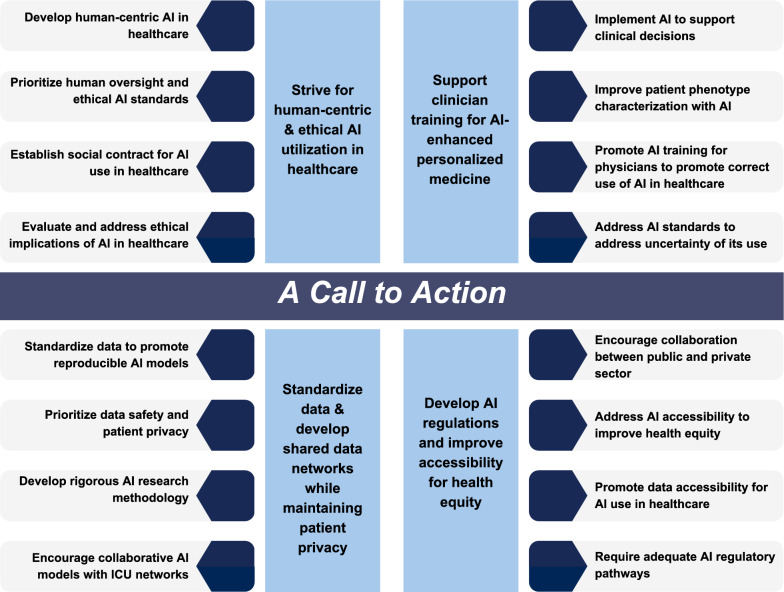
Artificial Intelligence (AI) is rapidly transforming the landscape of critical care, offering opportunities for enhanced diagnostic precision and personalized patient management. However, its integration into ICU clinical practice presents significant challenges related to equity, transparency, and the patient-clinician relationship. To address these concerns, a multidisciplinary team of experts was established to assess the current state and future trajectory of AI in critical care. This consensus identified key challenges and proposed actionable recommendations to guide AI implementation in this high-stakes field. Here we present a call to action for the critical care community, to bridge the gap between AI advancements and the need for humanized, patient-centred care. Our goal is to ensure a smooth transition to personalized medicine while, (1) maintaining equitable and unbiased decision-making, (2) fostering the development of a collaborative research network across ICUs, emergency departments, and operating rooms to promote data sharing and harmonization, and (3) addressing the necessary educational and regulatory shifts required for responsible AI deployment. AI integration into critical care demands coordinated efforts among clinicians, patients, industry leaders, and regulators to ensure patient safety and maximize societal benefit. The recommendations outlined here provide a foundation for the ethical and effective implementation of AI in critical care medicine.
Overview
CoChat Summary
## TL;DR
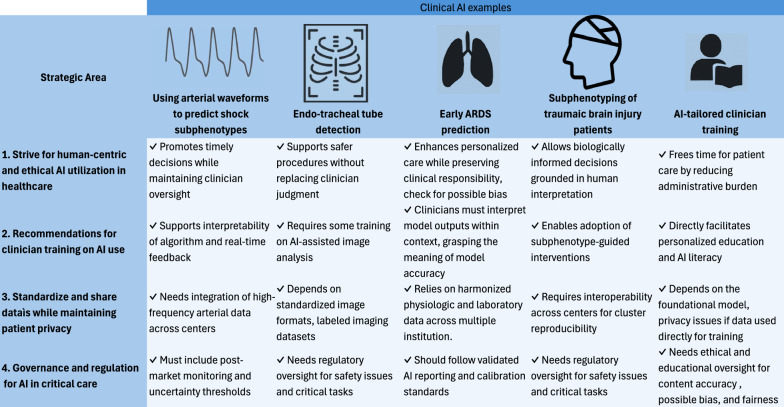
This paper is an expert consensus calling for human-centric, ethically governed, and clinically validated AI in critical care, organized around four domains: human-centric use, clinician training, standardized data infrastructure, and governance/regulation. It argues that AI should augment rather than replace clinicians and that deployment must include transparency, bias monitoring, privacy protection, and post-market surveillance.
## Key findings
- The consensus identifies four main areas for AI integration in critical care: 1) human-centric AI, 2) clinician training on AI use, 3) standardization of data models and networks, and 4) AI governance.
- The paper emphasizes that AI should increase time for patient-physician communication and be used to automate burdensome tasks such as documentation and transfers of care.
- It argues that many AI tools are poorly validated and untested in real settings, and warns that premature deployment can cause harm, bias, and worsening health inequities.
- It recommends stronger safeguards including formal oversight mechanisms (for example, hospital AI committees), continuous post-market evaluation, and regulatory processes that address liability and insurance.
## Methods
- This is a multidisciplinary consensus paper, not a formal systematic review or evidence-graded guideline.
- The consensus emerged through expert discussions among selected participants chosen by the consensus chairs based on recognized contributions to AI in critical care; the panel included intensivists, AI researchers, data scientists, and experts.
- Recommendations were developed through iterative discussion and critical examination of real-world challenges, current research, and regulatory landscapes, rather than formal voting or evidence grading.
## Limitations
- The paper explicitly states that the consensus was not based on formal grading or voting on evidence; this limits how strongly the recommendations can be tied to a structured evidence hierarchy.
- It also states that AI in critical care is rapidly evolving and many critical questions remain unanswered, which the text makes evident as a limitation of the field and of the recommendations.
Model-written summary. Check it against the paper before relying on it.
Integrity signals
Registry
Cites
Statistics
Figures
Verification
Claims the paper makes
32 Valid · 12 Not valid · 13 Not checked · 34 Own results and interpretations
Some cited sources support this claim and some don’t — read each source’s verdict below.
In the paper
“Despite some promising results [27, 28], the clinical application of AI remains limited [29–31].”
§ Implementing Artificial Intelligence in Critical Care Medicine: a consensus of 22 > Introduction > Recommendations
What the sources say
- Not checked yetcites [29] Hah H, Goldin D. Moving toward AI-assisted decision-making: Observation on clinicians’ management of multimedia patient information in synchronous and asynchronous telehealth contexts. Health Informatics J 2022; 28. 10.1177/14604582221077049/ASSET/IMAGES/LARGE/10.1177_14604582221077049-FIG4.JPEG. 35225704 doi:10.1177/14604582221077049/asset/images/large/10.1177_14604582221077049-fig4.jpeg
- Disputedcites [30] Shen J, Zhang CJP, Jiang B, et al. Artificial intelligence versus clinicians in disease diagnosis: Systematic review. JMIR Med Inform 2019; 7. 10.2196/10010. PMC6716335 31420959 sourceExperimental — accuracy not yet measured
The Introduction (Background; page not provided) says AI has been extensively used across medical fields, including to assist clinical diagnoses. Although the Discussion (Principal Findings; page not provided) identifies unresolved challenges, it does not characterize clinical application as limited; it describes AI as improving efficiency in clinical practice. (LLM, conf=0.78)
Checked by a reasoning model — may be wrong.
- Supportedcites [31] Zhang A, Xing L, Zou J, Wu JC. Shifting machine learning for healthcare from development to deployment and from models to data. Nature Biomedical Engineering 2022 6:12 2022; 6: 1330–45. PMC12063568 35788685 source
The Data-limiting factors in the deployment of ML section says the past decade focused on model development and the next will be defined by deployment into clinical settings. The Abstract notes that some systems are beginning to enter clinics, while the Outlook describes implementation as a central challenge. Together, these support the broad claim that clinical application remains limited, without implying that it is absent. (LLM, conf=0.88)
plain- Asserted: passes — The authors put it forward as true.
- Checkable: passes — It can be checked against evidence.
- Load-bearing: passes — The paper’s conclusions depend on it.
- Based: passes — The paper gives a reason why it holds.
Every source the paper cites for this claim was checked and supports it.
In the paper
“For example, machine learning has been used to stratify critically ill patients based on their response to specific therapeutic interventions, potentially improving clinical outcomes [37].”
§ Implementing Artificial Intelligence in Critical Care Medicine: a consensus of 22 > Introduction > Recommendations
What the sources say
- Supportedcites [37] Zhang Z, Chen L, Sun B, et al. Identifying septic shock subgroups to tailor fluid strategies through multi-omics integration. Nat Commun. 2024;15:9028. 39424794 PMC11489719 source
The Methods describe a model that identifies septic-shock subgroups by their expected response to restrictive versus liberal fluid strategies. The Results (Subgroup identification; page not provided) report better survival when patients received the strategy recommended for their subgroup, supporting the claim’s qualified statement about potentially improved outcomes. (LLM, conf=0.91)
hedgedstates a possible cause- Asserted: passes — The authors put it forward as true.
- Checkable: passes — It can be checked against evidence.
- Load-bearing: unclear — It is unclear whether the paper’s conclusions depend on it.
- Based: passes — The paper gives a reason why it holds.
- Supported
Every source the paper cites for this claim was checked and supports it.
In the paper
“In a large ICU cohort of patients with traumatic brain injury (TBI), unsupervised clustering identified six distinct subgroups, based on combined neurological and metabolic profiles. [38]”
§ Implementing Artificial Intelligence in Critical Care Medicine: a consensus of 22 > Introduction > Recommendations
What the sources say
- Supportedcites [38] Åkerlund CAI, Holst A, Stocchetti N, et al. Clustering identifies endotypes of traumatic brain injury in an intensive care cohort: a CENTER-TBI study. Crit Care. 2022;26:1–15. 35897070 PMC9327174 source
The Methods passage identifies an ICU cohort of 1,728 patients with TBI and an unsupervised clustering model. The Discussion and Conclusions report six distinct subgroups characterized by GCS alongside systemic metabolic measures, matching the claimed neurological and metabolic profiles. (LLM, conf=0.95)
plainstates an association- Asserted: passes — The authors put it forward as true.
- Checkable: passes — It can be checked against evidence.
- Load-bearing: unclear — It is unclear whether the paper’s conclusions depend on it.
- Based: passes — The paper gives a reason why it holds.
- Supported
Every source the paper cites for this claim was checked and supports it.
In the paper
“Seymour et al. demonstrated how machine learning can stratify septic patients into clinically meaningful subgroups using high-dimensional data, which can subsequently inform risk assessment and prognosis [35].”
§ Implementing Artificial Intelligence in Critical Care Medicine: a consensus of 22 > Introduction > Recommendations
What the sources say
- Supportedcites [35] Seymour CW, Kennedy JN, Wang S, et al. Derivation, Validation, and Potential Treatment Implications of Novel Clinical Phenotypes for Sepsis. JAMA. 2019;321:2003. 31104070 PMC6537818 source
The Statistical Methods section reports using consensus k-means clustering on 29 clinical variables to derive sepsis phenotypes. The Relationship With Mortality and Organ Support section reports distinct short- and long-term outcomes across those phenotypes, supporting their clinical relevance for prognosis and risk assessment. No page numbers are available in our copy. (LLM, conf=0.93)
boostedstates a cause- Asserted: passes — The authors put it forward as true.
- Checkable: passes — It can be checked against evidence.
- Load-bearing: passes — The paper’s conclusions depend on it.
- Based: passes — The paper gives a reason why it holds.
- Supported
The cited sources support only part of this claim — read each source’s verdict below.
In the paper
“AI algorithms may be harmful when prematurely deployed without adequate control [9, 15–17].”
§ Implementing Artificial Intelligence in Critical Care Medicine: a consensus of 22 > Introduction > Recommendations
What the sources say
- Not checked — no full text of the sourcecites [9] Kwong JCC, Nguyen D-D, Khondker A, et al. When the Model Trains You: Induced Belief Revision and Its Implications on Artificial Intelligence Research and Patient Care — A Case Study on Predicting Obstructive Hydronephrosis in Children. NEJM AI 2024; 1. 10.1056/AICS2300004. source
- Partly supportedcites [15] Perry Wilson F, Martin M, Yamamoto Y, et al. Electronic health record alerts for acute kidney injury: multicenter, randomized clinical trial. BMJ 2021; 372. 10.1136/BMJ.M4786. PMC8034420 33461986 sourceExperimental — accuracy not yet measured
The Results report worse outcomes in two non-teaching hospitals that received acute kidney injury alerts, and the Discussion (Comparisons with other studies) says seemingly benign alerts should not be implemented without robust evidence of safety and efficacy. This supports the warning about harm from insufficiently evaluated deployment, but the intervention was an electronic health record alert; the paper does not establish the claim specifically for AI algorithms. (LLM, conf=0.86)
- Partly supportedcites [16] Ji Z, Lee N, Frieske R, et al. Survey of Hallucination in Natural Language Generation. ACM Comput Surv 2023; 55. 10.1145/3571730. sourceExperimental — accuracy not yet measured
The Introduction says hallucinations in natural-language generation raise safety concerns in real-world applications and could harm patients; Section 13.3.2 discusses safety fine-tuning to mitigate such risks. The paper supports the possibility of harm, but does not establish the broader claim about AI algorithms generally or specifically link harm to premature deployment without adequate control. (LLM, conf=0.84)
- Supportedcites [17] Oniani D, Hilsman J, Peng Y, et al. Adopting and expanding ethical principles for generative artificial intelligence from military to healthcare. npj Digital Medicine 2023 6:1 2023; 6: 1–10. PMC10693640 38042910 source
The Reliability section calls for thorough evaluation and testing during development and deployment to minimize failures and harm. The Governability section says deployed systems need meaningful human control, including monitoring and the ability to deactivate a system that risks harming patients. Together, these support the claim that deploying AI without adequate safeguards may be harmful. (LLM, conf=0.88)
hedgedstates a possible cause- Asserted: passes — The authors put it forward as true.
- Checkable: passes — It can be checked against evidence.
- Load-bearing: passes — The paper’s conclusions depend on it.
- Based: passes — The paper gives a reason why it holds.
17 more claims · 9 with their cited sources checked
Create a free account to see all 91 claims and to verify the 2 references still open.
- It may state two separate claims as one. 27
- Probably not a substantial claim. 58
Citations
Cites
High-performance medicine: the convergence of human and artificial intelligence
Topol, E. J. (2019) · Nature Medicine · doi:10.1038/s41591-018-0300-7 · Cited by 10,450 · cited 1×
“[1, 2] Without a structured approach to implementation, evaluation, and control, this transformation may concrete recommendations to guide the safe, effective, and meaningful adoption of AI into critical care.”
Survey of Hallucination in Natural Language Generation
Ji, Z., Lee, N., Frieske, R., Yu, T., Su, D., Xu, Y., Ishii, E., Bang, Y. J., Madotto, A., & Fung, P. (2023) · ACM Computing Surveys · doi:10.1145/3571730 · Cited by 5,025
Survey of Hallucination in Natural Language Generation
Ji, Z., Lee, N., Frieske, R., Yu, T., Su, D., Xu, Y., Ishii, E., Bang, Y., Chen, D., Dai, W., et al. (2022) · arXiv · doi:10.48550/arxiv.2202.03629 · Cited by 4,981
Collins, G. S., Moons, K. G. M., Dhiman, P., Riley, R. D., Beam, A. L., Van Calster, B., Ghassemi, M., Liu, X., Reitsma, J. B., van Smeden, M., et al. (2024) · BMJ · doi:10.1136/bmj-2023-078378 · Cited by 4,718 · cited 2×
“For predictive models, the TRIPOD-AI extension of the TRIPOD guidelines focuses on transparent reporting for clinical prediction models with specific emphasis on calibration, internal and external validation, and fairness [68].”
Self-citationKung, T. H., Cheatham, M., Medenilla, A., Sillos, C., De Leon, L., Elepaño, C., Madriaga, M., Aggabao, R., Diaz-Candido, G., Maningo, J., et al. (2023) · PLOS Digital Health · doi:10.1371/journal.pdig.0000198 · Cited by 4,115 · cited 1×
“In addition to undergraduate education, it is essential to train experienced physicians, nurses, and other allied health professional [43].”
Kung, T. H., Cheatham, M., ChatGPT, Medenilla, A., Sillos, C., De Leon, L., Elepaño, C., Madriaga, M., Aggabao, R., Diaz-Candido, G., et al. (2022) · doi:10.1101/2022.12.19.22283643 · Cited by 4,115
Deo, R. C. (2015) · Circulation · doi:10.1161/circulationaha.115.001593 · Cited by 3,466
Derivation, Validation, and Potential Treatment Implications of Novel Clinical Phenotypes for Sepsis
Seymour, C. W., Kennedy, J. N., Wang, S., Chang, C.-C. H., Elliott, C. F., Xu, Z., Berry, S., Clermont, G., Cooper, G., Gomez, H., et al. (2019) · JAMA · doi:10.1001/jama.2019.5791 · Cited by 1,567 · cited 2×
“Before integrating these methodologies into clinical workflows, we need to make sure clinicians can accept the paradigm shift between broad syndromes and specific sub-phenotypes, ultimately supporting the transition toward personalized medicine [35, 39–41].”
Self-citationMathew, D., Giles, J. R., Baxter, A. E., Oldridge, D. A., Greenplate, A. R., Wu, J. E., Alanio, C., Kuri-Cervantes, L., Pampena, M. B., D’Andrea, K., et al. (2020) · Science · doi:10.1126/science.abc8511 · Cited by 1,509 · cited 1×
“Before integrating these methodologies into clinical workflows, we need to make sure clinicians can accept the paradigm shift between broad syndromes and specific sub-phenotypes, ultimately supporting the transition toward personalized medicine [35, 39–41].”
Liu, X., Cruz Rivera, S., Moher, D., Calvert, M. J., Denniston, A. K., The SPIRIT-AI and CONSORT-AI Working Group, SPIRIT-AI and CONSORT-AI Steering Group, Chan, A.-W., Darzi, A., Holmes, C., et al. (2020) · Nature Medicine · doi:10.1038/s41591-020-1034-x · Cited by 1,421
Research works printed but not linked: 1
- Sauer CM, Dam TA, Celi LA, et al. Systematic Review and Comparison of Publicly Available ICU Data Sets—A Decision Guide for Clinicians and Data Scientists. Crit Care Med. 2022;50: e581. 35234175 PMC9150442 · DOI · Paper page
Cited by
AI in critical care: A roadmap to the future
Workum, J. D., Meyfroidt, G., Bakker, J., Jung, C., Tobin, J. M., Gommers, D., Elbers, P. W. G., van der Hoeven, J. G., & Van Genderen, M. E. (2026) · Journal of Critical Care · doi:10.1016/j.jcrc.2025.155262 · Cited by 17
Self-citationRecent approaches of artificial intelligence in intensive care unit: A review
Havelikar, U. A., Bembde, A., Patil, D., Shinde, A., Sharma, R. K., Patel, V. P., & Chaudhari, N. B. (2025) · Intelligent Hospital · doi:10.1016/j.inhs.2025.100030 · Cited by 18
Physiology-guided personalized mechanical ventilation to prevent ventilator-induced lung injury
Merola, R., Battaglini, D., Schultz, M. J., & Rocco, P. R. M. (2026) · Frontiers in Medicine · doi:10.3389/fmed.2026.1764151 · Cited by 13
“Emerging computational tools, including physiologic modeling, parameter estimation, and machine learning, offer new opportunities to further refine individualized ventilatory care (144, 145).”
From promise to practice: A roadmap for artificial intelligence in critical care
Agard, G., Hraiech, S., & Gauss, T. (2025) · Journal of Critical Care · doi:10.1016/j.jcrc.2025.155263 · Cited by 9
AI-Enabled Precision Nutrition in the ICU: A Narrative Review and Implementation Roadmap
Briassoulis, G. C., & Briassouli, E. (2025) · Nutrients · doi:10.3390/nu18010110 · Cited by 10
“In this context, “human-centric AI” is emphasized as a tool that supports rather than supplants clinical judgment, reinforcing empathetic care and protecting the therapeutic relationship [4].”
Fragasso, T., Passaro, D., Toscano, A., Amodeo, A., Tozzi, A. E., & Grutter, G. (2025) · Bioengineering · doi:10.3390/bioengineering12121349 · Cited by 6
“Expert consensus papers in critical care underscore similar priorities: human-centered design, clinician education, standardized datasets, cross-disciplinary collaboration, and strong institutional governance [38].”
Artificial intelligence in healthcare: Tailoring education to meet EU AI-Act standards
Bignami, E. G., Darhour, L. J., Bühre, W., Cecconi, M., & Bellini, V. (2025) · Health Policy and Technology · doi:10.1016/j.hlpt.2025.101078 · Cited by 5
Self-citationInnovation in intensive care: a framework to turn ideas and concepts into actionable solutions
Cecconi, M., Greco, M., Balzani, E., Ioan, A.-M., Ferrando, E. S., Aliverti, A., Angus, D., Azoulay, É., Bignami, E. G., Blanch, L. L., et al. (2026) · Intensive Care Medicine · doi:10.1007/s00134-026-08405-6 · Cited by 10
“We also must address the new challenges in human– machine interaction [75].”
Self-citationDeploying AI in the ICU: learning from successes and failures
Komorowski, M., & Cecconi, M. (2025) · Intensive Care Medicine · doi:10.1007/s00134-025-08131-5 · Cited by 6
“Below we highlight key contributors, with more comprehensive discussions available else-where [1, 2, 13, 14].”
InfluentialSelf-citationPitfalls and paradoxes: blood transfusion in 5 public ICU databases
Reuland, M. C., Raasveld, J., Dongelmans, D. A., Elbers, P., Müller, M. C. A., & Vlaar, A. P. J. (2025) · Critical Care · doi:10.1186/s13054-025-05737-5 · Cited by 4
“Artificial Intelligence models might aid clinicians in decision-making, however most studies in transfusion medicine have significant drawbacks [2, 3].”
Self-citationStrategies for a Rational Use of Opioids in Critical Care Settings
Misseri, G., Piattoli, M., Mirasola, A., Guarrera, L., Evangelista, C., Cuttone, G., Via, L. L., & Gregoretti, C. (2026) · Journal of Clinical Medicine · doi:10.3390/jcm15031039 · Cited by 7
Johnson, G. U., Robert, G., Lee, C. S., Boehm, L. M., Pandharipande, P. P., & Ely, E. W. (2026) · International Journal of Nursing Studies · doi:10.1016/j.ijnurstu.2026.105386 · Cited by 5
Artificial intelligence in acute and critical care: current challenges and strategic solutions
Gao, T., Fan, T., Leng, W., Yu, S., & Lyu, Q. (2026) · Frontiers in Public Health · doi:10.3389/fpubh.2026.1818726 · Cited by 5
“Accountability was particularly challenging in the emergency department and ICU because AI outputs could affect time-sensitive, high-stakes decisions across triage, monitoring, escalation, staffing, and patient flow (11).”
InfluentialOrlob, S., Kern, W. J., Hackl, B., et al. (2026) · Journal of Medical Systems · doi:10.1007/s10916-026-02417-x · Cited by 3
Mohamed, S. (2026) · Health Sciences Review · doi:10.1016/j.hsr.2026.100267 · Cited by 5
Mechanical ventilation in ARDS: navigating the fine line with real-time monitoring
Ball, L., Benzi, G., Battaglini, D., Robba, C., Patroniti, N. A., Silva, P. L., Marini, J. J., & Rocco, P. R. M. (2026) · Critical Care · doi:10.1186/s13054-026-05895-0 · Cited by 4
“Computational methods, including machine learning, can help by reducing noise, highlighting meaningful physiological trends, and supporting clinical decisions [14].”
Ben Shitrit, I., Idan, D., Volevich, M., Goldenberg, H. S., Vaknin, D., Degany, O., Abelson, N., Binyamin, Y., Nassar, R., Nassar, M., et al. (2026) · PLOS Digital Health · doi:10.1371/journal.pdig.0001278 · Cited by 2
“The panel recommended mapping human-AI interfaces [17]Click or tap here to enter text..”
Self-citationMachine Learning in Postcardiotomy Shock: Implications for Temporary Mechanical Circulatory Support
Saggu, J. S., Herrera, H. R., Meng, Z., Wieruszewski, P. M., Ursoleo, J. D., Al-Ani, R. I., Nabzdyk, C. S., Comfere, T. B., Bignami, E. G., Wollborn, J., et al. (2026) · Journal of Cardiothoracic and Vascular Anesthesia · doi:10.1053/j.jvca.2026.05.005 · Cited by 3
Self-citationArtificial intelligence-based models for clinical prognosis at the end of life in the ICU
Garcés, M. G., García, J. V., Montoya, J. C., Triana, C. J., & Rincón, E. H. H. (2025) · International Journal of Medical Informatics · doi:10.1016/j.ijmedinf.2025.106156 · Cited by 2
Shen, J., Yan, J., Xie, J., & Li, L. (2025) · Annals of Medicine · doi:10.1080/07853890.2025.2579797 · Cited by 3
“Second, clinician-facing human–AI interfaces should be systematically designed to optimize the cognitive workflow between clinicians and AI systems, thereby reducing risks associated with both over-reliance and under-reliance on algorithmic support [24].”
Loriga, B., Baglivo, F., Bellini, V., Adembri, C., Montomoli, J., Cascella, M., Diedenhofen, G., Angelis, L. D., Gentili, N., Altini, M., et al. (2025) · Journal of Anesthesia Analgesia and Critical Care · doi:10.1186/s44158-025-00306-2 · Cited by 6
Self-citationLian, X., Liu, Y., Liu, X., Tao, W., Cao, B., Fu, B., Yang, F., Bao, Y., & Yang, K. Y. (2025) · International Journal of Medical Informatics · doi:10.1016/j.ijmedinf.2025.106197 · Cited by 3
Organization and Management of Critical Care Services
Puri, N., & Yohannes, S. (2026) · Critical Care Clinics · doi:10.1016/j.ccc.2025.11.005 · Cited by 2
Public critical care databases for clinical research: challenges and opportunities
Cao, Y., Wu, B., Liu, J., Tan, H. J. J., Zhang, Y., & Gao, W. (2026) · Critical Care · doi:10.1186/s13054-025-05735-7 · Cited by 1
“…as the OMOP CDM (Observational Medical Outcomes Partnership Common Data Model) and LOINC (Logical Observation Identifiers Names and Codes)—can align variable definitions, coding schemes, and measurement units, thereby facilitating the creation of reproducible, cross-database cohorts [3].”
Guinat, M., & Vincent, J. (2026) · Critical Care · doi:10.1186/s13054-026-05845-w · Cited by 3
“Teachers should guide learners to critically appraise the accuracy and relevance of all the content they use in clinical decision-making [23, 24].”
Self-citationArtificial intelligence in emergency medicine critical care
Heslin, S. M., Nocito, R., & Weingart, S. D. (2026) · Clinical and Experimental Emergency Medicine · doi:10.15441/ceem.26.057 · Cited by 2
“…AI systems to concurrently process electrocardiogram data, imaging studies, vital sign data, laboratory results, and clinical documentation provides the Samita M. Heslin, et al. capability for the construction of a more comprehensive and dynamic view of the critically ill patient [23,24].”
Akbasli, I. T., Loomba, R. S., Kesici, S., Marino, B. S., Morca, A., & Baloğlu, O. (2026) · Current Treatment Options in Pediatrics · doi:10.1007/s40746-026-00374-8 · Cited by 2
Friedrichson, B., Stephens, A. F., Tukacs, M., Swol, J., & Jasny, T. (2026) · Perfusion · doi:10.1177/02676591261428030 · Cited by 1
“25,32 Responsibility and liability remain unde fi ned.”
InfluentialYang, R., Deng, M., Zheng, X., Deng, Y., Jiang, J., & Miao, J. (2026) · Frontiers in Medicine · doi:10.3389/fmed.2026.1614656 · Cited by 1
Hajjo, R., Abusara, O. H., Sabbah, D. A., Zidan, R., & Bardaweel, S. K. (2026) · Journal of the American Pharmacists Association · doi:10.1016/j.japh.2026.103490 · Cited by 1
Tisha, S. A., Bhattacharjee, B., Ahmed, M. P., Mukaddim, A. A., Hider, M. A., & Khan, M. T. (2025) · SSRN Electronic Journal · doi:10.2139/ssrn.5784022 · Cited by 3
Staffable ICU early-warning with calibrated multi-centre validation and alert-budget guardrailsPreprint
Zafar, S. A., Qin, W., Soomro, T. A., Khan, A. A., & Faisal, M. S. (2025) · medRxiv · doi:10.1101/2025.10.30.25339143
“Internal data were drawn from MIMIC-IV; external validation used eICU-CRD [1, 8].”
Inteligencia artificial en la medicina crítica mexicana: una mirada al futuro inmediato
Gutiérrez, M. A. G. (2025) · Medicina Crítica · doi:10.35366/121717
The case for surgeons to embrace AI as a disruptive technology
Lai, P. B. S. (2025) · Surgical Practice · doi:10.1111/1744-1633.70038
How large language models can help us write a systematic review
Zahavi, I., & Einav, S. (2025) · Intensive Care Medicine · doi:10.1007/s00134-025-08226-z · Cited by 1
Self-citationESICM 2025 haemodynamic recommendations: a remarkable achievement and raising questions
Léone, M., Guinot, P., & Rhodes, A. (2025) · Intensive Care Medicine · doi:10.1007/s00134-025-08244-x
“One can expect that the use of artificial intelligence and machine learning in decision-making may fill this gap, as underlined elsewhere [11].”
Impact of Artificial Intelligence in Critical Care: A Narrative Review
Udupa, A. N., & Sandesh Kumar, K. J. (2025) · Journal of Acute Care · doi:10.5005/jp-journals-10089-0194
La metamorfosis de la evidencia: predicciones para la próxima década
Poves‐Álvarez, R., & Tamayo, E. (2026) · Revista Española de Anestesiología y Reanimación · doi:10.1016/j.redar.2026.502050
STREAM: State Trajectory Representation & Evolution-Aware MonitoringPreprint
Namvar, A., Ram, S., Labaki, W. W., Galbán, S., Lugogo, N. L., & Galbán, C. J. (2026) · medRxiv · doi:10.64898/2026.02.03.26345478
Nurse clinician-scientists as critical stewards of artificial intelligence-driven care delivery
Connell, K. A., & Yu, H. (2026) · Nursing Outlook · doi:10.1016/j.outlook.2026.102700
ICU Staffing, Models, and Outcomes
Chen, K., & Nates, J. L. (2026) · Springer eBooks · doi:10.1007/978-3-319-74698-2_2-2
Evolving and novel applications of artificial intelligence in interventional oncology
Almashni, S. Y., Fayek, F. B., Javens, D. C., Boulis, M. T., & Makary, M. S. (2026) · World Journal of Clinical Oncology · doi:10.5306/wjco.v17.i3.113226
Caroleo, Z., Garofalo, E., Bianco, M. F., Cava, O. S., & Bruni, A. (2026) · Journal of Critical Care · doi:10.1016/j.jcrc.2026.155548
Letter to the Editor: “AI in critical care: A roadmap to the future”
Wang, C., & Sun, J.-L. (2026) · Journal of Critical Care · doi:10.1016/j.jcrc.2026.155569
Cardiopulmonary monitoring in low-resource settings
Edul, V. S. K., & González, C. (2026) · Current Opinion in Critical Care · doi:10.1097/mcc.0000000000001382
Emerging technologies and AI-assisted tools in cardiopulmonary monitoring
Orozco, N., Prager, R. T., & Arntfield, R. T. (2026) · Current Opinion in Critical Care · doi:10.1097/mcc.0000000000001385
Implementing responsible artificial intelligence-driven precision medicine in critical care
Ennouri, E., Boussarsar, M., Saida, I. B., Meddeb, K., & Toumi, R. (2026) · Elsevier eBooks · doi:10.1016/b978-0-443-36554-6.00021-0
Yeh, Y., Shih, M., Backer, D. D., Celi, L. A., See, K. C., Fujii, T., Ling, L., Mongkolpun, W., Hu, H.-W., Chen, H.-Y., et al. (2026) · Annals of Intensive Care · doi:10.1016/j.aicoj.2026.100078
Self-citationNovelty to necessity: large language models in clinical practice—a call to action for physicians
Beltrani, V., Giannini, O., AbouEzzeddine, O. F., Gruebler, M. R., Mastroleo, F., & Tersalvi, G. (2026) · Internal and Emergency Medicine · doi:10.1007/s11739-026-04393-z
“This is particularly critical in high-stakes environments like intensive care, where expert consensus is now defining specific integration priorities [30].”
Respiratory medicine in the ICU 2026: From physiology to precision care
Xia, J., Wu, Z., & Zhang, H. (2026) · Journal of Intensive Medicine · doi:10.1016/j.jointm.2026.04.002
The metamorphosis of evidence: Predictions for the next decade
Poves‐Álvarez, R., & Tamayo, E. (2026) · Revista Española de Anestesiología y Reanimación (English Edition) · doi:10.1016/j.redare.2026.502050
Physiology-guided mechanical ventilation: Monitoring, proportional assist, and bounded automation
Yohannes, R., Jeffries, G., Eskandari, S., Calamaro, J., Zetola, N. M., & Healy, W. J. (2026) · World Journal of Critical Care Medicine · doi:10.5492/wjccm.119806
Operational Integration and Temporal Validation of a Continuously Deployed ICU Prediction Model
Nishiyama, S. M., Uchino, S., Saito, T., Fukano, K., Ono, S., Kamio, T., & Katayama, S. (2026) · Critical Care Medicine · doi:10.1097/ccm.0000000000007181
Kamdar, A., Deshmukh, V., & Chunkhare, M. (2026) · Advances in computational intelligence and robotics book series · doi:10.4018/979-8-3373-7759-9.ch004
Bignami, E. G., Bellini, V., Lanza, R., & Russo, M. (2026) · Discover Artificial Intelligence · doi:10.1007/s44163-026-01616-2
“AI-enabled systems have demonstrated the potential to reduce unplanned ICU admissions and length of stay when accompanied by supportive workflow redesign [26, 27].”
Self-citationZhou, Y., Xiong, W., Liu, H., Wang, Q., Luo, H., Yang, Y., Liu, S., & Long, Y. (2026) · Frontiers in Medicine · doi:10.3389/fmed.2026.1875770
“GAI application can enhance accurate diagnoses and individualized therapy in critical care where clinical complexity and urgency require precision (5, 6).”
Aplicaciones de la IA en neurología y neurocirugía: oportunidades, desafíos y perspectivas futuras
Torres, J. Y., Millán, J. A., Avendaño, V. J. B., Correa, G. W. R., & Calderón, D. M. M. (2026) · Salud Medicina e Innovación Journal · doi:10.70577/34njk124
Vijayasimha, M., Srikanth, M., Kaur, R., et al. (2026) · Indian Journal of Critical Care Medicine · doi:10.5005/jp-journals-10071-25224
Devanand, N. A., Verghese, S., Bacchi, S., Bain, C., Subramaniam, A., & Sundararajan, K. (2026) · Critical Care and Resuscitation · doi:10.1016/j.ccrj.2026.100194 · Cited by 3
“30”
Beyond the scalpel: The silent continuum of surgical critical care
Pahade, A. (2026) · Journal of Injury and Acute Care · doi:10.25259/joiac_1_2026
Rausen, M. S., Anderson, D. C., & Halpern, N. A. (2026) · Springer eBooks · doi:10.1007/978-3-032-22660-0_53
Smart Cardiac ICU: Digital Integration, Predictive Analytics, and Perioperative Inflammation
Azamfirei, L., Veres, M., Bora, S., Oiaga, M. C., Butiulca, M., Lazăr, A. E., Szederjesi, J., & Grigorescu, B. L. (2026) · Bioengineering · doi:10.3390/bioengineering13080921
“AI tools using multimodal data have shown better outcomes compared to conventional triage tools for prediction of specific infections, such as surgical site infections and urinary tract infections, but validation of these models and clinical feasibility still remain a challenge [27–29].”
Ji, Q., Wu, Y. J., Yang, M., Liu, J. L., Zhang, X., Lin, Y., & Hu, W. (2026) · Frontiers in Medicine · doi:10.3389/fmed.2026.1874474 · Cited by 2
“Ethical and legal considerations, such as fairness, transparency, and accountability, are paramount given the high-stakes nature of critical care decisions (5).”
Teng, M. Y., Tsuei, S. H., Koblanski, M. E., & Celi, L. A. (2026) · Critical Care Science · doi:10.62675/2965-2774.20260040
Self-citationHumanizing the pediatric intensive care unit through new technologies and artificial intelligence
Unzueta‐Roch, J. L., Castillo-Sanz, A., Larraz, A. M., García‐Salido, A., & Garde, A. M. D. A. (2026) · Frontiers in Health Services · doi:10.3389/frhs.2026.1868374
“In 2025, Cecconi et al. (35) published a consensus statement on the implementation of AI in intensive care.”
Clinical utility of LLM-assisted chart review for the detection of bleeding events
Reuland, M. C., van der Meer, O. M., Testoni, A., Broeren, P. O. L. P., Dongelmans, D. A., Elbers, P., Müller, M. C. A., Raasveld, J., & Vlaar, A. P. J. (2026) · Transfusion Clinique et Biologique · doi:10.1016/j.tracli.2026.07.005
Self-citationElbers, P., Ercole, A., & Angus, D. C. (2026) · Intensive Care Medicine · doi:10.1007/s00134-026-08576-2 · Cited by 2
“In turn, these can support the complex, continuous and sequential high-stakes decision-making under uncertainty in our field to enable more timely and personalized treatment strategies for future critically ill patients [1].”
Self-citationFrom frailty-driven to frailty-informed care in the age of wearable AI
Bignami, E. G., Madeo, M., Siniscalchi, C., Fedele, S., Cerundolo, N., Bellini, V., & Meschi, T. (2026) · Communications Medicine · doi:10.1038/s43856-026-01868-0 · Cited by 1
“Structured implementation frameworks provide operational guidance for responsible integration, emphasizing accountability, performance monitoring, and clear allocation of clinical responsibility 19 .”
Self-citationManasur, B. V., & Halappanavar, A. (2026) · Journal of Marine Medical Society · doi:10.4103/jmms.jmms_146_25
Azamfirei, L., Oiaga, M. C., & Pui, M. C. (2026) · Healthcare · doi:10.3390/healthcare14172834
“Consequently, governance should be multidisciplinary, engaging intensivists, anesthesiologists, surgeons, pharmacists, nurses, informaticians, biomedical engineers, data security specialists, and hospital leadership [3,33,34,43].”
InfluentialHladschik-Kermer, B., Litvinova, O., Mickael, M.-E., Matin, M., Fatimi, A., Belbachir, A., Serafini, M. R., Kletečka-Pulker, M., Atanasov, A. G., & Wochele‐Thoma, T. (2026) · Frontiers in Medicine · doi:10.3389/fmed.2026.1892822
“Particular attention is drawn to the growing interest in artificial intelligence and generative models, which are shaping a new area of research (45).”
Ethical deliberation in critical care in a changing world: Past, present, and future
Mora, P., Souissi, A. B., & Siddiqui, S. (2026) · Journal of Critical Care · doi:10.1016/j.jcrc.2026.155738
Rubulotta, F. M., Rello, J., Soriano, J. B., et al. (2026) · European Journal of Internal Medicine · doi:10.1016/j.ejim.2026.107218
Hemorrhagic shock in intensive care: Variation in blood product administration during resuscitation
Reuland, M. C., Raasveld, S. J., Dongelmans, D. A., Elbers, P. W. G., Müller, M. C. A., & Vlaar, A. P. J. (2026) · Vox Sanguinis · doi:10.1111/vox.70380
Self-citationHong, Y., Hu, W., Tang, J., & Xiong, F. (2026) · Frontiers in Neurology · doi:10.3389/fneur.2026.1837085
STREAM: A data-driven framework for physiological state monitoring in ICU patients
Namvar, A., Ram, S., Labaki, W. W., Galbán, S., Lugogo, N. L., & Galbán, C. J. (2026) · PLOS Digital Health · doi:10.1371/journal.pdig.0001753 · Cited by 1
“Third, they provide static risk estimates without revealing disease trajectory or progression patterns that could guide proactive interventions [4].”
Kömürcü, Ö., Durmuşoğlu, Z. D. U., Gümüş, N. E., & Ceylan, T. (2026) · Trends in Anaesthesia and Critical Care · doi:10.1016/j.tacc.2026.101704
Metadata
- Authors
- Cecconi, M., Greco, M., Shickel, B., Angus, D. C., Bailey, H., Bignami, E., Calandra, T., Celi, L. A., Einav, S., Elbers, P., Ercole, A., Gómez, H., Gong, M. N., Komorowski, M., Liu, V., Park, S., Sarwal, A., Seymour, C. W., Zampieri, F. G., Taccone, F. S., Vincent, J.-L., & Bihorac, A.
- Affiliations
- Humanitas University (IT)
- University of Florida Health (US)
- University of Pittsburgh (US)
- Durham VA Medical Center (US)
- University of Parma (IT)
- Centre Hospitalier Universitaire Vaudois (CH)
- Beth Israel Deaconess Medical Center (US)
- Hebrew University of Jerusalem (IL)
- Amsterdam University Medical Centers (NL)
- University of Cambridge (GB)
- Albert Einstein College of Medicine (US)
- Imperial College London (GB)
- Kaiser Permanente (US)
- NewYork–Presbyterian Hospital (US)
- Atrium Health Wake Forest Baptist (US)
- University of Alberta (CA)
- Erasmus Hospital (BE)
- Corresponding author
- Cecconi, Maurizio
- ORCID
- Cecconi, Maurizio
- Greco, Massimiliano
- Shickel, Benjamin
- Angus, Derek C.
- Calandra, Thierry
- Celi, Leo Anthony
- Einav, Sharon
- Elbers, Paul
- Ercole, Ari
- Gómez, Hernando
- Gong, Michelle Ng
- Komorowski, Matthieu
- Liu, Vincent
- Park, Soojin
- Sarwal, Aarti
- Seymour, Christopher W.
- Zampieri, Fernando G.
- Taccone, Fabio Silvio
- Vincent, Jean-Louis
- Bihorac, Azra
- Venue
- Critical Care
- Published
- 2025-07-08
- Volume
- 29
- Issue
- 1
- Pages
- 290-290
- ISSN
- 1364-8535 (ISSN-L)
- PMC
- PMC12239397
- OpenAlex
- W4412105411
- Cited by
- 80
- References
- 78
- Citations by year
- 2026: 61 · 2025: 19
- FWCI
- 19.09
- Type
- journal article
- Language
- en
- Open access
- gold
- doi.org
- Licence
- cc-by-nc-nd
- creativecommons.org/licenses/by-nc-nd/4.0 (tdm)
- creativecommons.org/licenses/by-nc-nd/4.0 (vor)
- Locations
- Critical Care (publishedVersion, cc-by-nc-nd)
- PubMed Central (publishedVersion, cc-by-nc-nd)
- PubMed (publishedVersion)
- Pure Amsterdam UMC (publishedVersion, other-oa)
- SERVAL (Université de Lausanne) (publishedVersion, cc-by-nc-nd)
- IRIS (submittedVersion, cc-by-nc-nd)
- Apollo (University of Cambridge) (submittedVersion, cc-by-nc-nd)
- Dépôt institutionnel de l'Université libre de Bruxelles (Université Libre de Bruxelles) (submittedVersion, other-oa)
- DSpace@MIT (Massachusetts Institute of Technology) (submittedVersion, cc-by-nc-nd)
- Apollo (University of Cambridge) (submittedVersion, cc-by)
- Apollo (cc-by)
- Funders
- National Science Foundation (2148451, Bridge2AI OT2OD032701, DS-I Africa U54 TW012043-01)
- Korea Health Industry Development Institute (RS-2024-00403047)
- National Institutes of Health (OT2OD032701)
- Fogarty International Center (U54TW012043)
- Topics
- Health Sciences › Medicine › Health Informatics › Artificial Intelligence in Healthcare and Education
- Physical Sciences › Computer Science › Artificial Intelligence › Machine Learning in Healthcare
- Physical Sciences › Computer Science › Artificial Intelligence › Ethics and Social Impacts of AI
- Keywords
- artificial intelligence, intensive care, intensive care unit, AI implementation, algorithmic bias, transparency, patient-clinician relationship, personalized medicine, data sharing, artificial intelligence in education, AI regulation, patient safety, AI ethics, consensus recommendations
- MeSH terms
- Artificial Intelligence, Critical Care, Humans, Intensive Care Units
About these checks
Registry, retraction, Cites and statistics results are computed, not judged, with one exception: a printed reference that no index lists is read once by a model before it counts as a citation error. Claims are extracted by a model and kept only when their quote appears verbatim in the text; each cited source is then checked, with a model’s help, for whether it says what the claim relies on. Those verdicts can be wrong — read the claim’s quote and the cited source before relying on one.
The claim verdicts this report counts are experimental: their accuracy is not yet measured.
A language model drew the claims from the paper on 2026-10-10, under version 3 of the claim definition (model deepseek-v4.1-flash, prompt extract-v3).
A second model labelled each claim on 2026-10-10 (model jev-1.13-20260917, definition revision gold-guideline-v0.2).
Cited sources are checked with a language model’s help (gpt-6-sol).
Statistics and arithmetic are recomputed, not judged.
Confidence bands are shown only for fields calibrated on our annotated test set. None is calibrated yet, so no band is shown.
What counts as a claim ›How we measure confidence ›How we check this ›
Are you an author, or do you see a problem with this page? Request a review
Data sources
Bibliographic data: Semantic Scholar, OpenAlex, Crossref.
Contains information from the Semantic Scholar Academic Graph Datasets, made available under the ODC Attribution License (ODC-BY 1.0).
Semantic Scholar’s data is described in: Kinney, R., et al. (2023). The Semantic Scholar Open Data Platform. arXiv:2301.10140.
