

Implementing Artificial Intelligence in Critical Care Medicine: a consensus of 22.
Open accessThe DOI matches its Crossref record; 81 of the 81 references it cites were found in a registry or an index; 45 of the 67 sources its claims cite were checked for support.
Abstract
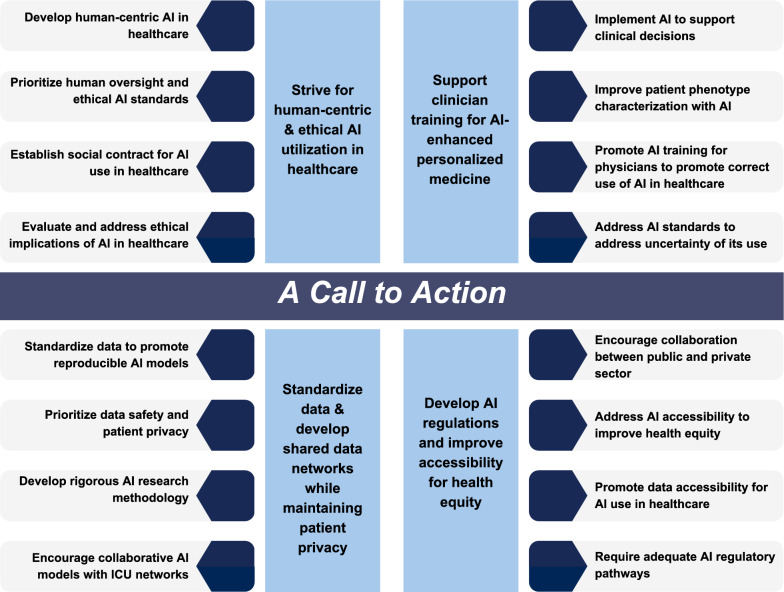
Artificial Intelligence (AI) is rapidly transforming the landscape of critical care, offering opportunities for enhanced diagnostic precision and personalized patient management. However, its integration into ICU clinical practice presents significant challenges related to equity, transparency, and the patient-clinician relationship. To address these concerns, a multidisciplinary team of experts was established to assess the current state and future trajectory of AI in critical care. This consensus identified key challenges and proposed actionable recommendations to guide AI implementation in this high-stakes field. Here we present a call to action for the critical care community, to bridge the gap between AI advancements and the need for humanized, patient-centred care. Our goal is to ensure a smooth transition to personalized medicine while, (1) maintaining equitable and unbiased decision-making, (2) fostering the development of a collaborative research network across ICUs, emergency departments, and operating rooms to promote data sharing and harmonization, and (3) addressing the necessary educational and regulatory shifts required for responsible AI deployment. AI integration into critical care demands coordinated efforts among clinicians, patients, industry leaders, and regulators to ensure patient safety and maximize societal benefit. The recommendations outlined here provide a foundation for the ethical and effective implementation of AI in critical care medicine.
Overview
CoChat Summary
## TL;DR
This paper is an expert consensus calling for human-centric, ethically governed, and clinically validated AI in critical care, organized around four domains: human-centric use, clinician training, standardized data infrastructure, and governance/regulation. It argues that AI should augment rather than replace clinicians and that deployment must include transparency, bias monitoring, privacy protection, and post-market surveillance.
## Key findings
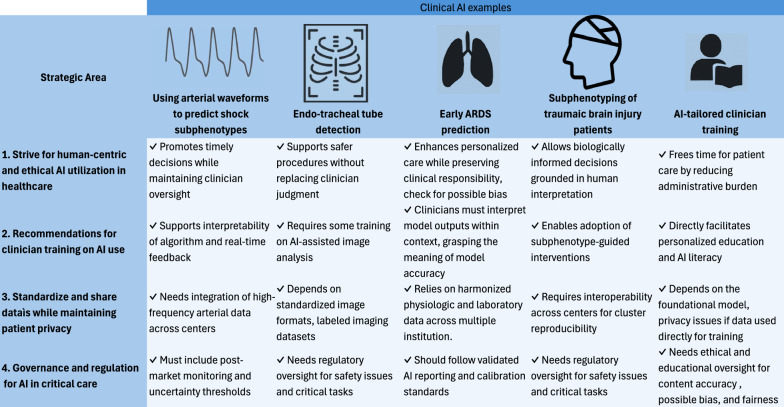
- The consensus identifies four main areas for AI integration in critical care: 1) human-centric AI, 2) clinician training on AI use, 3) standardization of data models and networks, and 4) AI governance.
- The paper emphasizes that AI should increase time for patient-physician communication and be used to automate burdensome tasks such as documentation and transfers of care.
- It argues that many AI tools are poorly validated and untested in real settings, and warns that premature deployment can cause harm, bias, and worsening health inequities.
- It recommends stronger safeguards including formal oversight mechanisms (for example, hospital AI committees), continuous post-market evaluation, and regulatory processes that address liability and insurance.
## Methods
- This is a multidisciplinary consensus paper, not a formal systematic review or evidence-graded guideline.
- The consensus emerged through expert discussions among selected participants chosen by the consensus chairs based on recognized contributions to AI in critical care; the panel included intensivists, AI researchers, data scientists, and experts.
- Recommendations were developed through iterative discussion and critical examination of real-world challenges, current research, and regulatory landscapes, rather than formal voting or evidence grading.
## Limitations
- The paper explicitly states that the consensus was not based on formal grading or voting on evidence; this limits how strongly the recommendations can be tied to a structured evidence hierarchy.
- It also states that AI in critical care is rapidly evolving and many critical questions remain unanswered, which the text makes evident as a limitation of the field and of the recommendations.
Model-written summary. Check it against the paper before relying on it.
Integrity signals
Registry
Cites
Statistics
Figures
Verification
Claims the paper makes
32 Valid · 12 Not valid · 13 Not checked · 34 Own results and interpretations
Some cited sources support this claim and some don’t — read each source’s verdict below.
In the paper
“Despite some promising results [27, 28], the clinical application of AI remains limited [29–31].”
§ Implementing Artificial Intelligence in Critical Care Medicine: a consensus of 22 > Introduction > Recommendations
What the sources say
- Not checked yetcites [29] Hah H, Goldin D. Moving toward AI-assisted decision-making: Observation on clinicians’ management of multimedia patient information in synchronous and asynchronous telehealth contexts. Health Informatics J 2022; 28. 10.1177/14604582221077049/ASSET/IMAGES/LARGE/10.1177_14604582221077049-FIG4.JPEG. 35225704 doi:10.1177/14604582221077049/asset/images/large/10.1177_14604582221077049-fig4.jpeg
- Disputedcites [30] Shen J, Zhang CJP, Jiang B, et al. Artificial intelligence versus clinicians in disease diagnosis: Systematic review. JMIR Med Inform 2019; 7. 10.2196/10010. PMC6716335 31420959 sourceExperimental — accuracy not yet measured
The Introduction (Background; page not provided) says AI has been extensively used across medical fields, including to assist clinical diagnoses. Although the Discussion (Principal Findings; page not provided) identifies unresolved challenges, it does not characterize clinical application as limited; it describes AI as improving efficiency in clinical practice. (LLM, conf=0.78)
Checked by a reasoning model — may be wrong.
- Supportedcites [31] Zhang A, Xing L, Zou J, Wu JC. Shifting machine learning for healthcare from development to deployment and from models to data. Nature Biomedical Engineering 2022 6:12 2022; 6: 1330–45. PMC12063568 35788685 source
The Data-limiting factors in the deployment of ML section says the past decade focused on model development and the next will be defined by deployment into clinical settings. The Abstract notes that some systems are beginning to enter clinics, while the Outlook describes implementation as a central challenge. Together, these support the broad claim that clinical application remains limited, without implying that it is absent. (LLM, conf=0.88)
plain- Asserted: passes — The authors put it forward as true.
- Checkable: passes — It can be checked against evidence.
- Load-bearing: passes — The paper’s conclusions depend on it.
- Based: passes — The paper gives a reason why it holds.
Every source the paper cites for this claim was checked and supports it.
In the paper
“For example, machine learning has been used to stratify critically ill patients based on their response to specific therapeutic interventions, potentially improving clinical outcomes [37].”
§ Implementing Artificial Intelligence in Critical Care Medicine: a consensus of 22 > Introduction > Recommendations
What the sources say
- Supportedcites [37] Zhang Z, Chen L, Sun B, et al. Identifying septic shock subgroups to tailor fluid strategies through multi-omics integration. Nat Commun. 2024;15:9028. 39424794 PMC11489719 source
The Methods describe a model that identifies septic-shock subgroups by their expected response to restrictive versus liberal fluid strategies. The Results (Subgroup identification; page not provided) report better survival when patients received the strategy recommended for their subgroup, supporting the claim’s qualified statement about potentially improved outcomes. (LLM, conf=0.91)
hedgedstates a possible cause- Asserted: passes — The authors put it forward as true.
- Checkable: passes — It can be checked against evidence.
- Load-bearing: unclear — It is unclear whether the paper’s conclusions depend on it.
- Based: passes — The paper gives a reason why it holds.
- Supported
Every source the paper cites for this claim was checked and supports it.
In the paper
“In a large ICU cohort of patients with traumatic brain injury (TBI), unsupervised clustering identified six distinct subgroups, based on combined neurological and metabolic profiles. [38]”
§ Implementing Artificial Intelligence in Critical Care Medicine: a consensus of 22 > Introduction > Recommendations
What the sources say
- Supportedcites [38] Åkerlund CAI, Holst A, Stocchetti N, et al. Clustering identifies endotypes of traumatic brain injury in an intensive care cohort: a CENTER-TBI study. Crit Care. 2022;26:1–15. 35897070 PMC9327174 source
The Methods passage identifies an ICU cohort of 1,728 patients with TBI and an unsupervised clustering model. The Discussion and Conclusions report six distinct subgroups characterized by GCS alongside systemic metabolic measures, matching the claimed neurological and metabolic profiles. (LLM, conf=0.95)
plainstates an association- Asserted: passes — The authors put it forward as true.
- Checkable: passes — It can be checked against evidence.
- Load-bearing: unclear — It is unclear whether the paper’s conclusions depend on it.
- Based: passes — The paper gives a reason why it holds.
- Supported
Every source the paper cites for this claim was checked and supports it.
In the paper
“Seymour et al. demonstrated how machine learning can stratify septic patients into clinically meaningful subgroups using high-dimensional data, which can subsequently inform risk assessment and prognosis [35].”
§ Implementing Artificial Intelligence in Critical Care Medicine: a consensus of 22 > Introduction > Recommendations
What the sources say
- Supportedcites [35] Seymour CW, Kennedy JN, Wang S, et al. Derivation, Validation, and Potential Treatment Implications of Novel Clinical Phenotypes for Sepsis. JAMA. 2019;321:2003. 31104070 PMC6537818 source
The Statistical Methods section reports using consensus k-means clustering on 29 clinical variables to derive sepsis phenotypes. The Relationship With Mortality and Organ Support section reports distinct short- and long-term outcomes across those phenotypes, supporting their clinical relevance for prognosis and risk assessment. No page numbers are available in our copy. (LLM, conf=0.93)
boostedstates a cause- Asserted: passes — The authors put it forward as true.
- Checkable: passes — It can be checked against evidence.
- Load-bearing: passes — The paper’s conclusions depend on it.
- Based: passes — The paper gives a reason why it holds.
- Supported
The cited sources support only part of this claim — read each source’s verdict below.
In the paper
“AI algorithms may be harmful when prematurely deployed without adequate control [9, 15–17].”
§ Implementing Artificial Intelligence in Critical Care Medicine: a consensus of 22 > Introduction > Recommendations
What the sources say
- Not checked — no full text of the sourcecites [9] Kwong JCC, Nguyen D-D, Khondker A, et al. When the Model Trains You: Induced Belief Revision and Its Implications on Artificial Intelligence Research and Patient Care — A Case Study on Predicting Obstructive Hydronephrosis in Children. NEJM AI 2024; 1. 10.1056/AICS2300004. source
- Partly supportedcites [15] Perry Wilson F, Martin M, Yamamoto Y, et al. Electronic health record alerts for acute kidney injury: multicenter, randomized clinical trial. BMJ 2021; 372. 10.1136/BMJ.M4786. PMC8034420 33461986 sourceExperimental — accuracy not yet measured
The Results report worse outcomes in two non-teaching hospitals that received acute kidney injury alerts, and the Discussion (Comparisons with other studies) says seemingly benign alerts should not be implemented without robust evidence of safety and efficacy. This supports the warning about harm from insufficiently evaluated deployment, but the intervention was an electronic health record alert; the paper does not establish the claim specifically for AI algorithms. (LLM, conf=0.86)
- Partly supportedcites [16] Ji Z, Lee N, Frieske R, et al. Survey of Hallucination in Natural Language Generation. ACM Comput Surv 2023; 55. 10.1145/3571730. sourceExperimental — accuracy not yet measured
The Introduction says hallucinations in natural-language generation raise safety concerns in real-world applications and could harm patients; Section 13.3.2 discusses safety fine-tuning to mitigate such risks. The paper supports the possibility of harm, but does not establish the broader claim about AI algorithms generally or specifically link harm to premature deployment without adequate control. (LLM, conf=0.84)
- Supportedcites [17] Oniani D, Hilsman J, Peng Y, et al. Adopting and expanding ethical principles for generative artificial intelligence from military to healthcare. npj Digital Medicine 2023 6:1 2023; 6: 1–10. PMC10693640 38042910 source
The Reliability section calls for thorough evaluation and testing during development and deployment to minimize failures and harm. The Governability section says deployed systems need meaningful human control, including monitoring and the ability to deactivate a system that risks harming patients. Together, these support the claim that deploying AI without adequate safeguards may be harmful. (LLM, conf=0.88)
hedgedstates a possible cause- Asserted: passes — The authors put it forward as true.
- Checkable: passes — It can be checked against evidence.
- Load-bearing: passes — The paper’s conclusions depend on it.
- Based: passes — The paper gives a reason why it holds.
17 more claims · 9 with their cited sources checked
Create a free account to see all 91 claims and to verify the 3 references still open.
- It may state two separate claims as one. 27
- Probably not a substantial claim. 58
Citations
Cites
High-performance medicine: the convergence of human and artificial intelligence
Topol, E. J. (2019) · Nature Medicine · doi:10.1038/s41591-018-0300-7 · Cited by 10,450 · cited 1×
“[1, 2] Without a structured approach to implementation, evaluation, and control, this transformation may concrete recommendations to guide the safe, effective, and meaningful adoption of AI into critical care.”
Survey of Hallucination in Natural Language Generation
Ji, Z., Lee, N., Frieske, R., Yu, T., Su, D., Xu, Y., Ishii, E., Bang, Y. J., Madotto, A., & Fung, P. (2023) · ACM Computing Surveys · doi:10.1145/3571730 · Cited by 5,025
Survey of Hallucination in Natural Language Generation
Ji, Z., Lee, N., Frieske, R., Yu, T., Su, D., Xu, Y., Ishii, E., Bang, Y., Chen, D., Dai, W., et al. (2022) · arXiv · doi:10.48550/arxiv.2202.03629 · Cited by 4,981
Collins, G. S., Moons, K. G. M., Dhiman, P., Riley, R. D., Beam, A. L., Van Calster, B., Ghassemi, M., Liu, X., Reitsma, J. B., van Smeden, M., et al. (2024) · BMJ · doi:10.1136/bmj-2023-078378 · Cited by 4,718 · cited 2×
“For predictive models, the TRIPOD-AI extension of the TRIPOD guidelines focuses on transparent reporting for clinical prediction models with specific emphasis on calibration, internal and external validation, and fairness [68].”
Self-citationKung, T. H., Cheatham, M., Medenilla, A., Sillos, C., De Leon, L., Elepaño, C., Madriaga, M., Aggabao, R., Diaz-Candido, G., Maningo, J., et al. (2023) · PLOS Digital Health · doi:10.1371/journal.pdig.0000198 · Cited by 4,115 · cited 1×
“In addition to undergraduate education, it is essential to train experienced physicians, nurses, and other allied health professional [43].”
Kung, T. H., Cheatham, M., ChatGPT, Medenilla, A., Sillos, C., De Leon, L., Elepaño, C., Madriaga, M., Aggabao, R., Diaz-Candido, G., et al. (2022) · doi:10.1101/2022.12.19.22283643 · Cited by 4,115
Deo, R. C. (2015) · Circulation · doi:10.1161/circulationaha.115.001593 · Cited by 3,466
Derivation, Validation, and Potential Treatment Implications of Novel Clinical Phenotypes for Sepsis
Seymour, C. W., Kennedy, J. N., Wang, S., Chang, C.-C. H., Elliott, C. F., Xu, Z., Berry, S., Clermont, G., Cooper, G., Gomez, H., et al. (2019) · JAMA · doi:10.1001/jama.2019.5791 · Cited by 1,567 · cited 2×
“Before integrating these methodologies into clinical workflows, we need to make sure clinicians can accept the paradigm shift between broad syndromes and specific sub-phenotypes, ultimately supporting the transition toward personalized medicine [35, 39–41].”
Self-citationMathew, D., Giles, J. R., Baxter, A. E., Oldridge, D. A., Greenplate, A. R., Wu, J. E., Alanio, C., Kuri-Cervantes, L., Pampena, M. B., D’Andrea, K., et al. (2020) · Science · doi:10.1126/science.abc8511 · Cited by 1,509 · cited 1×
“Before integrating these methodologies into clinical workflows, we need to make sure clinicians can accept the paradigm shift between broad syndromes and specific sub-phenotypes, ultimately supporting the transition toward personalized medicine [35, 39–41].”
Liu, X., Cruz Rivera, S., Moher, D., Calvert, M. J., Denniston, A. K., The SPIRIT-AI and CONSORT-AI Working Group, SPIRIT-AI and CONSORT-AI Steering Group, Chan, A.-W., Darzi, A., Holmes, C., et al. (2020) · Nature Medicine · doi:10.1038/s41591-020-1034-x · Cited by 1,421
When combinations of humans and AI are useful: A systematic review and meta-analysis
Vaccaro, M., Almaatouq, A., & Malone, T. (2024) · Nature Human Behaviour · doi:10.1038/s41562-024-02024-1 · Cited by 1,314 · cited 2×
“To support the introduction of AI in clinical practice in intensive care, we propose starting with the concept of human-AI augmentation, which is more inclusive and better established according to medical literature [34].”
Moons, K. G. M., Damen, J. A. A., Kaul, T., Hooft, L., Andaur Navarro, C., Dhiman, P., Beam, A. L., Van Calster, B., Celi, L. A., Denaxas, S., et al. (2025) · BMJ · doi:10.1136/bmj-2024-082505 · Cited by 1,069 · cited 1×
“PROBAST-AI framework complements this by offering a structured tool to assess risk of bias and applicability in prediction model studies [69].”
Self-citationTao, F., & Qi, Q. (2019) · Nature · doi:10.1038/d41586-019-02849-1 · Cited by 799 · cited 1×
“Synthetic datasets are artificially generated to reflect the characteristics of real patient data and can be used to train and test models without exposing sensitive information [80].”
Wijnberge, M., Geerts, B. F., Hol, L., Lemmers, N., Mulder, M. P., Berge, P., Schenk, J., Terwindt, L. E., Hollmann, M. W., Vlaar, A. P., et al. (2020) · JAMA · doi:10.1001/jama.2020.0592 · Cited by 586 · cited 1×
“AI could thus improve RCTs by allowing the enrolment of very subtle subgroups of patients with hundreds of specific inclusion criteria over dozens of centres, a task impossible to perform by humans in real-time practice, improving trial efficiency in enrolling enriched populations [65–67].”
LOINC, a Universal Standard for Identifying Laboratory Observations: A 5-Year Update
McDonald, C. J., Huff, S. M., Suico, J. G., Hill, G., Leavelle, D., Aller, R., Forrey, A., Mercer, K., DeMoor, G., Hook, J., et al. (2003) · Clinical Chemistry · doi:10.1373/49.4.624 · Cited by 579
Zack, T., Lehman, E., Suzgun, M., Rodriguez, J. A., Celi, L. A., Gichoya, J., Jurafsky, D., Szolovits, P., Bates, D. W., Abdulnour, R.-E. E., et al. (2024) · The Lancet Digital Health · doi:10.1016/s2589-7500(23)00225-x · Cited by 510 · cited 1×
“It is thus vital to involve patients and societal representatives in discussions regarding the vision of the next healthcare era, its operations, goals, and limits of action [25].”
Self-citationEthics and governance of trustworthy medical artificial intelligence
Zhang, J., & Zhang, Z.-M. (2023) · BMC Medical Informatics and Decision Making · doi:10.1186/s12911-023-02103-9 · Cited by 507
Collins, G. S., Reitsma, J. B., Altman, D. G., & Moons, K. G. M. (2015) · Annals of Internal Medicine · doi:10.7326/l15-5093-2 · Cited by 493
Stang, P. E., Ryan, P. B., Racoosin, J. A., Overhage, J. M., Hartzema, A. G., Reich, C., Welebob, E., Scarnecchia, T., & Woodcock, J. (2010) · Annals of Internal Medicine · doi:10.7326/0003-4819-153-9-201011020-00010 · Cited by 441 · cited 1×
“The Observational Medical Outcomes Partnership (OMOP) Common Data Model (CDM), which embeds standard vocabularies such as LOINC and SNOMED CT, continues to gain popularity as a framework for structuring healthcare data, enabling cross-centre data exchange and model interoperability [52–54].”
Role of artificial intelligence in patient safety outcomes: systematic literature review
Choudhury, A., & Asan, O. (2020) · JMIR Medical Informatics · doi:10.2196/18599 · Cited by 440
Patient apprehensions about the use of artificial intelligence in healthcare
Richardson, J. P., Smith, C., Curtis, S., Watson, S., Zhu, X., Barry, B., & Sharp, R. R. (2021) · npj Digital Medicine · doi:10.1038/s41746-021-00509-1 · Cited by 424
Shifting machine learning for healthcare from development to deployment and from models to data
Zhang, A., Xing, L., Zou, J., & Wu, J. C. (2022) · Nature Biomedical Engineering · doi:10.1038/s41551-022-00898-y · Cited by 420 · cited 1×
“Develop and assess the Human-AI interface Despite some promising results [27, 28], the clinical application of AI remains limited [29–31].”
Large language models propagate race-based medicine
Omiye, J. A., Lester, J. C., Spichak, S., Rotemberg, V., & Daneshjou, R. (2023) · npj Digital Medicine · doi:10.1038/s41746-023-00939-z · Cited by 417 · cited 1×
“[13] AI models may lack both temporal validity (when applied to new data in a different time) and geographic validity (when applied across different institutions or regions).”
Ambient artificial intelligence scribes to alleviate the burden of clinical documentation.
Tierney, A. A., Gayre, G., Hoberman, B., Mattern, B., Ballesca, M., Kipnis, P., Liu, V., & Lee, K. (2024) · NEJM Catalyst · doi:10.1056/cat.23.0404 · Cited by 400 · cited 1×
“For example, the use of AI to replace humans in time-consuming or bureaucratic tasks such as documentation and transfers of care [20–22].”
Self-citationArtificial Intelligence Versus Clinicians in Disease Diagnosis: Systematic Review
Shen, J., Zhang, C. J. P., Jiang, B., Chen, J., Song, J., Liu, Z., He, Z., Wong, S. Y., Fang, P.-H., & Ming, W.-K. (2019) · JMIR Medical Informatics · doi:10.2196/10010 · Cited by 373
Maslove, D. M., Tang, B., Shankar-Hari, M., Lawler, P. R., Angus, D. C., Baillie, J. K., Baron, R. M., Bauer, M., Buchman, T. G., Calfee, C. S., et al. (2022) · Nature Medicine · doi:10.1038/s41591-022-01843-x · Cited by 362 · cited 1×
“Before integrating these methodologies into clinical workflows, we need to make sure clinicians can accept the paradigm shift between broad syndromes and specific sub-phenotypes, ultimately supporting the transition toward personalized medicine [35, 39–41].”
Self-citationSounderajah, V., Ashrafian, H., Golub, R. M., Shetty, S., De Fauw, J., Hooft, L., Moons, K., Collins, G., Moher, D., Bossuyt, P. M., et al. (2021) · BMJ Open · doi:10.1136/bmjopen-2020-047709 · Cited by 333 · cited 1×
“CON-SORT-AI extends the CONSORT framework to include AI-specific elements such as algorithm transparency and reproducibility for interventional trials with AI [70], while STARD-AI provides a framework for reporting AI-based diagnostic accuracy studies [71].”
FDA Perspective on the Regulation of Artificial Intelligence in Health Care and Biomedicine
Warraich, H. J., Tazbaz, T., & Califf, R. M. (2025) · JAMA · doi:10.1001/jama.2024.21451 · Cited by 332 · cited 1×
“By integrating regulatory, professional, and institutional oversight, AI governance in critical care can move beyond theoretical discussions toward actionable policies that balance technological innovation with patient safety [73, 81, 82].”
Sinha, P., Furfaro, D., Cummings, M. J., Abrams, D., Delucchi, K., Maddali, M. V., He, J., Thompson, A., Murn, M., Fountain, J., et al. (2021) · American Journal of Respiratory and Critical Care Medicine · doi:10.1164/rccm.202105-1302oc · Cited by 286
van de Sande, D., van Genderen, M. E., Huiskens, J., Gommers, D., & van Bommel, J. (2021) · Intensive Care Medicine · doi:10.1007/s00134-021-06446-7 · Cited by 279 · cited 1×
“In the ICU, where treatment decisions balance between individual patient preferences and societal consideration, healthcare professionals must lead this transition [26].”
Leisman, D. E., Harhay, M. O., Lederer, D. J., Abramson, M., Adjei, A. A., Bakker, J., Ballas, Z. K., Barreiro, E., Bell, S. C., Bellomo, R., et al. (2020) · Critical Care Medicine · doi:10.1097/ccm.0000000000004246 · Cited by 271 · cited 2×
“Despite the availability of these frameworks, many ICU studies involving AI methods still fail to meet these standards, leading to concerns about inadequate external validation and generalizability [68, 72, 73].”
Self-citationSystematic Review of Economic Impact Studies of Artificial Intelligence in Health Care
Wolff, J., Pauling, J., Keck, A., & Baumbach, J. (2020) · Journal of Medical Internet Research · doi:10.2196/16866 · Cited by 261 · cited 1×
“In this section we present key infrastructures for AI deployment in critical care [50].”
Wood, E. A., Ange, B. L., & Miller, D. D. (2021) · Journal of Medical Education and Curricular Development · doi:10.1177/23821205211024078 · Cited by 261 · cited 2×
“Ensure AI training for responsible use of AI in health-care In addition to clinical practice, undergraduate medical education is also directly influenced by AI transformation [42] as future workers need to be equipped to understand and use these technologies.”
Use of machine learning to analyse routinely collected intensive care unit data: a systematic review
Shillan, D., Sterne, J. A. C., Champneys, A., & Gibbison, B. (2019) · Critical Care · doi:10.1186/s13054-019-2564-9 · Cited by 251
Machine Learning for Clinical Outcome Prediction
Shamout, F., Zhu, T., & Clifton, D. A. (2021) · IEEE Reviews in Biomedical Engineering · doi:10.1109/rbme.2020.3007816 · Cited by 239 · cited 1×
“Develop and assess the Human-AI interface Despite some promising results [27, 28], the clinical application of AI remains limited [29–31].”
Evaluation framework to guide implementation of AI systems into healthcare settings
Reddy, S., Rogers, W., Makinen, V.-P., Coiera, E., Brown, P., Wenzel, M., Weicken, E., Ansari, S., Mathur, P., Casey, A., et al. (2021) · BMJ Health & Care Informatics · doi:10.1136/bmjhci-2021-100444 · Cited by 230 · cited 1×
“…and computational resources needed to develop a large generative AI model, physicians and regulators should promote partnerships among healthcare institutions, technology companies, and governmental bodies to support the research, development, and deployment of AI-enabled care solutions [83].”
Electronic health record alerts for acute kidney injury: multicenter, randomized clinical trial
Wilson, F. P., Martin, M., Yamamoto, Y., Partridge, C., Moreira, E., Arora, T., Biswas, A., Feldman, H., Garg, A. X., Greenberg, J. H., et al. (2021) · BMJ · doi:10.1136/bmj.m4786 · Cited by 200 · cited 1×
“AI algorithms may be harmful when prematurely deployed without adequate control [9, 15–17].”
Shickel, B., Loftus, T. J., Adhikari, L., Ozrazgat-Baslanti, T., Bihorac, A., & Rashidi, P. (2019) · Scientific Reports · doi:10.1038/s41598-019-38491-0 · Cited by 165 · cited 1×
“The first step toward integration is to understand how clinicians interact with AI and to design systems that complement, rather than disrupt, clinical reasoning [32].”
Self-citationArtificial Intelligence Revolutionizing the Field of Medical Education
Narayanan, S., Ramakrishnan, R., Durairaj, E., & Das, A. (2023) · Cureus · doi:10.7759/cureus.49604 · Cited by 164 · cited 1×
“One promising example is the use of AI to support personalized, AI-driven training for clini-cians—both in clinical education and in understanding AI-related concepts [44].”
Hogg, H. D. J., Al-Zubaidy, M., Technology Enhanced Macular Services Study Reference Group, Talks, J., Denniston, A. K., Kelly, C. J., Malawana, J., Papoutsi, C., Teare, M. D., Keane, P. A., et al. (2023) · Journal of Medical Internet Research · doi:10.2196/39742 · Cited by 163
A Cluster-then-label Semi-supervised Learning Approach for Pathology Image Classification
Peikari, M., Salama, S., Nofech-Mozes, S., & Martel, A. L. (2018) · Scientific Reports · doi:10.1038/s41598-018-24876-0 · Cited by 161 · cited 1×
“Another promising possibility is the use of supervised or semi-supervised clustering techniques, which incorporate known outcomes or partial labelling to enhance the phenotyping of patient sub-groups [36].”
Ewoh, P., & Vartiainen, T. (2024) · Journal of Medical Internet Research · doi:10.2196/46904 · Cited by 158 · cited 2×
“Finally, data privacy focuses on the safeguard of personally information, ensuring that patient data is stored and accessed in compliance with legal standards [56].”
Medical Artificial Intelligence and Human Values
Yu, K.-H., Healey, E., Leong, T.-Y., Kohane, I. S., & Manrai, A. K. (2024) · New England Journal of Medicine · doi:10.1056/nejmra2214183 · Cited by 149 · cited 1×
“Consequently, AI development is led by major technology companies whose goals may not always align with those of patients or healthcare systems [10, 11].”
The effect of using a large language model to respond to patient messages
Chen, S., Guevara, M., Moningi, S., Hoebers, F., Elhalawani, H., Kann, B. H., Chipidza, F. E., Leeman, J., Aerts, H. J. W. L., Miller, T., et al. (2024) · The Lancet Digital Health · doi:10.1016/s2589-7500(24)00060-8 · Cited by 147 · cited 1×
“For example, the use of AI to replace humans in time-consuming or bureaucratic tasks such as documentation and transfers of care [20–22].”
Self-citationOniani, D., Hilsman, J., Peng, Y., Poropatich, R. K., Pamplin, J. C., Legault, G. L., & Wang, Y. (2023) · npj Digital Medicine · doi:10.1038/s41746-023-00965-x · Cited by 143
The Cosmos Collaborative: A Vendor-Facilitated Electronic Health Record Data Aggregation Platform
Tarabichi, Y., Frees, A., Honeywell, S., Huang, C., Naidech, A. M., Moore, J. H., & Kaelber, D. C. (2021) · ACI Open · doi:10.1055/s-0041-1731004 · Cited by 139 · cited 1×
“Finally, centralized approaches, such as the Epic Cosmos initiative, leverage de-identified data collected from EHR and stored on a central server providing access to large patient populations for research and quality improvement purposes across the health-care system [78].”
Trustworthy Augmented Intelligence in Health Care
Crigger, E., Reinbold, K., Hanson, C., Kao, A., Blake, K., & Irons, M. (2022) · Journal of Medical Systems · doi:10.1007/s10916-021-01790-z · Cited by 132 · cited 1×
“To better reflect this interaction, the concept of synergy between human and AI has been proposed in the last years, emphasizing that AI supports rather than replaces human clinicians [33].”
Brauneck, A., Schmalhorst, L., Kazemi Majdabadi, M. M., Bakhtiari, M., Völker, U., Baumbach, J., Baumbach, L., & Buchholtz, G. (2023) · Journal of Medical Internet Research · doi:10.2196/41588 · Cited by 130 · cited 1×
“Federated learning is gaining traction in Europe, where data privacy regulations have a more risk-averse approach to AI development, thus favouring decentralized models [79].”
Randomized clinical trials of artificial intelligence
Angus, D. C. (2020) · JAMA · doi:10.1001/jama.2020.1039 · Cited by 112 · cited 1×
“AI will change how clinical research is performed, improving evidence-based medicine and conducting randomized clinical trials (RCTs) [62].”
Self-citationChen, J., Chun, D., Patel, M., Chiang, E., & James, J. (2019) · BMC Medical Informatics and Decision Making · doi:10.1186/s12911-019-0793-0 · Cited by 110 · cited 1×
“On the contrary, without safeguards clinical data risk becoming proprietary products of private companies—which are resold to their source institutions rather than serving as a resource for their own development—for instance, through the development and licensing of synthetic datasets [51].”
Sauer, C. M., Dam, T. A., Celi, L. A., Faltys, M., de la Hoz, M. A. A., Adhikari, L., Ziesemer, K. A., Girbes, A., Thoral, P. J., & Elbers, P. (2022) · Critical Care Medicine · doi:10.1097/ccm.0000000000005517 · Cited by 104 · cited 1×
“ICUs are at the forefront of data sharing efforts, offering several publicly available datasets for use by the research community [75].”
Self-citationÅkerlund, C. A. I., Holst, A., Stocchetti, N., Steyerberg, E. W., Menon, D. K., Ercole, A., Nelson, D. W., the CENTER-TBI Participants and Investigators, Åkerlund, C., Amrein, K., et al. (2022) · Critical Care · doi:10.1186/s13054-022-04079-w · Cited by 93 · cited 2×
“[38] These approaches hold significant potential for advancing acute and critical care by ensuring that AI-driven phenotyping is not only descriptive, but also actionable.”
Self-citationGroen, A. M., Kraan, R., Amirkhan, S. F., Daams, J. G., & Maas, M. (2022) · European Journal of Radiology · doi:10.1016/j.ejrad.2022.110592 · Cited by 89 · cited 1×
“However, AI models introduce a new type of uncertainty, which can undermine clinicians'trust, especially when models function as opaque “black boxes” [45–47].”
Rony, M. K. K., Parvin, M. R., Wahiduzzaman, M., Debnath, M., Bala, S. D., & Kayesh, I. (2024) · SAGE Open Nursing · doi:10.1177/23779608241245220 · Cited by 89
Lin, S. (2022) · The Journal of the American Board of Family Medicine · doi:10.3122/jabfm.2022.01.210226 · Cited by 77
Uncertainty-aware deep learning in healthcare: A scoping review
Loftus, T. J., Shickel, B., Ruppert, M. M., Balch, J. A., Ozrazgat-Baslanti, T., Tighe, P. J., Efron, P. A., Hogan, W. R., Rashidi, P., Upchurch, G. R., et al. (2022) · PLOS Digital Health · doi:10.1371/journal.pdig.0000085 · Cited by 73 · cited 2×
“Yet, we argue that interpretability alone is not enough [48].”
Self-citationPredicting sepsis onset in ICU using machine learning models: a systematic review and meta-analysis
Yang, Z., Cui, X., & Song, Z. (2023) · BMC Infectious Diseases · doi:10.1186/s12879-023-08614-0 · Cited by 68
Temporal trends and characteristics of reportable health data breaches, 2010-2017
McCoy, T. H., & Perlis, R. H. (2018) · JAMA · doi:10.1001/jama.2018.9222 · Cited by 62 · cited 1×
“In modern hospitals, data safety and security will soon become as essential as wall oxygen in operating rooms [57, 58].”
Artificial Intelligence in the Intensive Care Unit
Greco, M., Caruso, P. F., & Cecconi, M. (2021) · Seminars in Respiratory and Critical Care Medicine · doi:10.1055/s-0040-1719037 · Cited by 59 · cited 1×
“Deploying AI within complex clinical environments like the ICU, acute wards, or even regular wards presents a complex challenge [86].”
Self-citationLevi, R., Carli, F., Arévalo, A. R., Altinel, Y., Stein, D. J., Naldini, M. M., Grassi, F., Zanoni, A., Finkelstein, S., Vieira, S. M., et al. (2021) · BMJ Health & Care Informatics · doi:10.1136/bmjhci-2020-100245 · Cited by 42 · cited 1×
“Develop and assess the Human-AI interface Despite some promising results [27, 28], the clinical application of AI remains limited [29–31].”
Self-citationCentralized and Federated Models for the Analysis of Clinical Data
Li, R., Romano, J. D., Chen, Y., & Moore, J. H. (2024) · Annual Review of Biomedical Data Science · doi:10.1146/annurev-biodatasci-122220-115746 · Cited by 39 · cited 1×
“Federated learning, by contrast, involves a decentralized approach where data are stored locally and only models or weights are shared between centres [77].”
Kobayashi, S., Kane, T., & Paton, C. (2018) · Yearbook of Medical Informatics · doi:10.1055/s-0038-1641201 · Cited by 37 · cited 1×
“However, sustaining open-source innovation requires appropriate incentives, such as public or dedicated research funding, academic recognition, and regulatory support to ensure high-quality development and long-term viability [60].”
Identifying septic shock subgroups to tailor fluid strategies through multi-omics integration
Zhang, Z., Chen, L., Sun, B., Ruan, Z., Pan, P., Zhang, W., Jiang, X., Zheng, S., Cheng, S., Xian, L., et al. (2024) · Nature Communications · doi:10.1038/s41467-024-53239-9 · Cited by 37 · cited 1×
“For example, machine learning has been used to stratify critically ill patients based on their response to specific therapeutic interventions, potentially improving clinical outcomes [37].”
Leenen, J. P. L., Ardesch, V., Kalkman, C. J., Schoonhoven, L., & Patijn, G. A. (2024) · BJS Open · doi:10.1093/bjsopen/zrad128 · Cited by 36 · cited 1×
“Ultimately, the AI revolution is not about technological development, but about how it will affect human relations with patients, their families, and physicians [87].”
Ransomware Attacks and Data Breaches in US Health Care Systems
Jiang, J. X., Ross, J. S., & Bai, G. (2025) · JAMA Network Open · doi:10.1001/jamanetworkopen.2025.10180 · Cited by 35 · cited 1×
“In modern hospitals, data safety and security will soon become as essential as wall oxygen in operating rooms [57, 58].”
Nong, P., Hamasha, R., Singh, K., Adler-Milstein, J., & Platt, J. (2024) · NEJM AI · doi:10.1056/aip2300048 · Cited by 34 · cited 1×
“By integrating regulatory, professional, and institutional oversight, AI governance in critical care can move beyond theoretical discussions toward actionable policies that balance technological innovation with patient safety [73, 81, 82].”
Chen, J. H., Dhaliwal, G., & Yang, D. (2022) · JAMA · doi:10.1001/jama.2022.13735 · Cited by 32 · cited 1×
“However, AI models introduce a new type of uncertainty, which can undermine clinicians'trust, especially when models function as opaque “black boxes” [45–47].”
Individualized Treatment Effects of Bougie versus Stylet for Tracheal Intubation in Critical Illness
Seitz, K. P., Spicer, A. B., Casey, J. D., Buell, K. G., Qian, E. T., Graham Linck, E. J., Driver, B. E., Self, W. H., Ginde, A. A., Trent, S. A., et al. (2023) · American Journal of Respiratory and Critical Care Medicine · doi:10.1164/rccm.202209-1799oc · Cited by 32 · cited 1×
“Instead of using large, heterogeneous trial populations, AI might help researchers design and enrol tailored patient subgroups for precise RCTs [63, 64].”
“I’m afraid I can’t let you do that, Doctor”: meaningful disagreements with AI in medical contexts
Kempt, H., Heilinger, J.-C., & Nagel, S. K. (2023) · AI & SOCIETY · doi:10.1007/s00146-022-01418-x · Cited by 31
Shakibfar, S., Nyberg, F., Li, H., Zhao, J., Nordeng, H., Sandve, G. K., Pavlović, M., Hajiebrahimi, M., Andersen, M. T., & Sessa, M. (2023) · Frontiers in Public Health · doi:10.3389/fpubh.2023.1183725 · Cited by 28
The Precision Resuscitation With Crystalloids in Sepsis (PRECISE) Trial: A Trial Protocol
Bhavani, S. V., Holder, A., Miltz, D., Kamaleswaran, R., Khan, S., Easley, K., Murphy, D. J., Franks, N., Wright, D. W., Kraft, C., et al. (2024) · JAMA Network Open · doi:10.1001/jamanetworkopen.2024.34197 · Cited by 21
Hah, H., & Goldin, D. S. (2022) · Health Informatics Journal · doi:10.1177/14604582221077049 · Cited by 20
Benthin, C., Pannu, S., Khan, A., & Gong, M. (2016) · Annals of the American Thoracic Society · doi:10.1513/annalsats.201603-172bc · Cited by 18 · cited 1×
“Networking refers to collaborative research consortia [76] that align protocols and pool clinical research data across institutions.”
Self-citationDetecting racial/ethnic health disparities using deep learning from frontal chest radiography
Pyrros, A., Rodríguez-Fernández, J. M., Borstelmann, S. M., Gichoya, J. W., Horowitz, J. M., Fornelli, B., Siddiqui, N., Velichko, Y., Koyejo, O., & Galanter, W. (2022) · Journal of the American College of Radiology · doi:10.1016/j.jacr.2021.09.010 · Cited by 15 · cited 2×
“When considering AI’s potential influence on physicians'choices and behaviour, the possibility of including or reinforcing biases should be examined rigorously to avoid perpetuating existing health inequities and unfair data-driven associations [24].”
Kwong, J. C. C., Nguyen, D.-D., Khondker, A., Kim, J. K., Johnson, A. E. W., McCradden, M. M., Kulkarni, G. S., Lorenzo, A., Erdman, L., & Rickard, M. (2024) · NEJM AI · doi:10.1056/aics2300004 · Cited by 15
Understanding How the “Open” of Open Source Software (OSS) Will Improve Global Health Security
Hahn, E. N., Blazes, D. L., & Lewis, S. H. (2016) · Health Security · doi:10.1089/hs.2015.0035 · Cited by 8 · cited 1×
“A possible option for the medical community is to support open-source modes to increase transparency and reduce dependence on proprietary algorithms, and possibly enable better control of safety and privacy issues within the distributed systems [59].”
Informing future intensive care trials with machine learning
Komorowski, M., & Lemyze, M. (2019) · British Journal of Anaesthesia · doi:10.1016/j.bja.2019.03.043 · Cited by 8 · cited 1×
“Instead of using large, heterogeneous trial populations, AI might help researchers design and enrol tailored patient subgroups for precise RCTs [63, 64].”
Self-citationPhysiologic signatures within six hours of hospitalization identify acute illness phenotypes
Ren, Y., Loftus, T. J., Li, Y., Guan, Z., Ruppert, M. M., Datta, S., Upchurch, G. R., Tighe, P. J., Rashidi, P., Shickel, B., et al. (2022) · PLOS Digital Health · doi:10.1371/journal.pdig.0000110 · Cited by 6 · cited 1×
“The ICU provides a high level of data granularity due to high resolution monitoring systems, capable of capturing the rapid changes in a patient's physiological status [61].”
Self-citationWhy is plausibility surprisingly problematic as an XAI criterion?
Jin, W., Li, X., & Hamarneh, G. (2023) · arXiv · doi:10.48550/arxiv.2303.17707 · Cited by 4
Kerasidou, A., & Kerasidou, X. (. (2021) · Future Morality · doi:10.1093/oso/9780198862086.003.0008 · Cited by 3
Research works printed but not linked: 1
- Sauer CM, Dam TA, Celi LA, et al. Systematic Review and Comparison of Publicly Available ICU Data Sets—A Decision Guide for Clinicians and Data Scientists. Crit Care Med. 2022;50: e581. 35234175 PMC9150442 · DOI · Paper page
Cited by
AI in critical care: A roadmap to the future
Workum, J. D., Meyfroidt, G., Bakker, J., Jung, C., Tobin, J. M., Gommers, D., Elbers, P. W. G., van der Hoeven, J. G., & Van Genderen, M. E. (2026) · Journal of Critical Care · doi:10.1016/j.jcrc.2025.155262 · Cited by 17
Self-citationRecent approaches of artificial intelligence in intensive care unit: A review
Havelikar, U. A., Bembde, A., Patil, D., Shinde, A., Sharma, R. K., Patel, V. P., & Chaudhari, N. B. (2025) · Intelligent Hospital · doi:10.1016/j.inhs.2025.100030 · Cited by 18
Physiology-guided personalized mechanical ventilation to prevent ventilator-induced lung injury
Merola, R., Battaglini, D., Schultz, M. J., & Rocco, P. R. M. (2026) · Frontiers in Medicine · doi:10.3389/fmed.2026.1764151 · Cited by 13
“Emerging computational tools, including physiologic modeling, parameter estimation, and machine learning, offer new opportunities to further refine individualized ventilatory care (144, 145).”
From promise to practice: A roadmap for artificial intelligence in critical care
Agard, G., Hraiech, S., & Gauss, T. (2025) · Journal of Critical Care · doi:10.1016/j.jcrc.2025.155263 · Cited by 9
AI-Enabled Precision Nutrition in the ICU: A Narrative Review and Implementation Roadmap
Briassoulis, G. C., & Briassouli, E. (2025) · Nutrients · doi:10.3390/nu18010110 · Cited by 10
“In this context, “human-centric AI” is emphasized as a tool that supports rather than supplants clinical judgment, reinforcing empathetic care and protecting the therapeutic relationship [4].”
Metadata
- Authors
- Cecconi, M., Greco, M., Shickel, B., Angus, D. C., Bailey, H., Bignami, E., Calandra, T., Celi, L. A., Einav, S., Elbers, P., Ercole, A., Gómez, H., Gong, M. N., Komorowski, M., Liu, V., Park, S., Sarwal, A., Seymour, C. W., Zampieri, F. G., Taccone, F. S., Vincent, J.-L., & Bihorac, A.
- Affiliations
- Humanitas University (IT)
- University of Florida Health (US)
- University of Pittsburgh (US)
- Durham VA Medical Center (US)
- University of Parma (IT)
- Centre Hospitalier Universitaire Vaudois (CH)
- Beth Israel Deaconess Medical Center (US)
- Hebrew University of Jerusalem (IL)
- Amsterdam University Medical Centers (NL)
- University of Cambridge (GB)
- Albert Einstein College of Medicine (US)
- Imperial College London (GB)
- Kaiser Permanente (US)
- NewYork–Presbyterian Hospital (US)
- Atrium Health Wake Forest Baptist (US)
- University of Alberta (CA)
- Erasmus Hospital (BE)
- Corresponding author
- Cecconi, Maurizio
- ORCID
- Cecconi, Maurizio
- Greco, Massimiliano
- Shickel, Benjamin
- Angus, Derek C.
- Calandra, Thierry
- Celi, Leo Anthony
- Einav, Sharon
- Elbers, Paul
- Ercole, Ari
- Gómez, Hernando
- Gong, Michelle Ng
- Komorowski, Matthieu
- Liu, Vincent
- Park, Soojin
- Sarwal, Aarti
- Seymour, Christopher W.
- Zampieri, Fernando G.
- Taccone, Fabio Silvio
- Vincent, Jean-Louis
- Bihorac, Azra
- Venue
- Critical Care
- Published
- 2025-07-08
- Volume
- 29
- Issue
- 1
- Pages
- 290-290
- ISSN
- 1364-8535 (ISSN-L)
- PMC
- PMC12239397
- OpenAlex
- W4412105411
- Cited by
- 80
- References
- 78
- Citations by year
- 2026: 61 · 2025: 19
- FWCI
- 19.09
- Type
- journal article
- Language
- en
- Open access
- gold
- doi.org
- Licence
- cc-by-nc-nd
- creativecommons.org/licenses/by-nc-nd/4.0 (tdm)
- creativecommons.org/licenses/by-nc-nd/4.0 (vor)
- Locations
- Critical Care (publishedVersion, cc-by-nc-nd)
- PubMed Central (publishedVersion, cc-by-nc-nd)
- PubMed (publishedVersion)
- Pure Amsterdam UMC (publishedVersion, other-oa)
- SERVAL (Université de Lausanne) (publishedVersion, cc-by-nc-nd)
- IRIS (submittedVersion, cc-by-nc-nd)
- Apollo (University of Cambridge) (submittedVersion, cc-by-nc-nd)
- Dépôt institutionnel de l'Université libre de Bruxelles (Université Libre de Bruxelles) (submittedVersion, other-oa)
- DSpace@MIT (Massachusetts Institute of Technology) (submittedVersion, cc-by-nc-nd)
- Apollo (University of Cambridge) (submittedVersion, cc-by)
- Apollo (cc-by)
- Funders
- National Science Foundation (2148451, Bridge2AI OT2OD032701, DS-I Africa U54 TW012043-01)
- Korea Health Industry Development Institute (RS-2024-00403047)
- National Institutes of Health (OT2OD032701)
- Fogarty International Center (U54TW012043)
- Topics
- Health Sciences › Medicine › Health Informatics › Artificial Intelligence in Healthcare and Education
- Physical Sciences › Computer Science › Artificial Intelligence › Machine Learning in Healthcare
- Physical Sciences › Computer Science › Artificial Intelligence › Ethics and Social Impacts of AI
- Keywords
- artificial intelligence, intensive care, intensive care unit, AI implementation, algorithmic bias, transparency, patient-clinician relationship, personalized medicine, data sharing, artificial intelligence in education, AI regulation, patient safety, AI ethics, consensus recommendations
- MeSH terms
- Artificial Intelligence, Critical Care, Humans, Intensive Care Units
About these checks
Registry, retraction, Cites and statistics results are computed, not judged, with one exception: a printed reference that no index lists is read once by a model before it counts as a citation error. Claims are extracted by a model and kept only when their quote appears verbatim in the text; each cited source is then checked, with a model’s help, for whether it says what the claim relies on. Those verdicts can be wrong — read the claim’s quote and the cited source before relying on one.
The claim verdicts this report counts are experimental: their accuracy is not yet measured.
A language model drew the claims from the paper on 2026-10-10, under version 3 of the claim definition (model deepseek-v4.1-flash, prompt extract-v3).
A second model labelled each claim on 2026-10-10 (model jev-1.13-20260917, definition revision gold-guideline-v0.2).
Cited sources are checked with a language model’s help (gpt-6-sol).
Statistics and arithmetic are recomputed, not judged.
Confidence bands are shown only for fields calibrated on our annotated test set. None is calibrated yet, so no band is shown.
What counts as a claim ›How we measure confidence ›How we check this ›
Are you an author, or do you see a problem with this page? Request a review
Data sources
Bibliographic data: Semantic Scholar, OpenAlex, Crossref.
Contains information from the Semantic Scholar Academic Graph Datasets, made available under the ODC Attribution License (ODC-BY 1.0).
Semantic Scholar’s data is described in: Kinney, R., et al. (2023). The Semantic Scholar Open Data Platform. arXiv:2301.10140.
