

Role of ADAM17 in the non-cell autonomous effects of oncogene-induced senescence.
Open accessThe DOI matches its Crossref record; 37 of the 37 references it cites were found in a registry or an index.
Abstract
INTRODUCTION: Cellular senescence is a terminal cell proliferation arrest that can be triggered by oncogenes. One of the traits of oncogene-induced senescence (OIS) is the so-called senescence-associated secretory phenotype or senescence secretome. Depending on the context, the non-cell autonomous effects of OIS may vary from tumor suppression to promotion of metastasis. Despite being such a physiological and pathologically relevant effector, the mechanisms of generation of the senescence secretome are largely unknown. METHODS: We analyzed by label-free proteomics the secretome of p95HER2-induced senescent cells and compared the levels of the membrane-anchored proteins with their transcript levels. Then, protein and RNA levels of ADAM17 were evaluated by using Western blot and reverse transcription-polymerase chain reaction, its localization by using biotin labeling and immunofluorescence, and its activity by using alkaline phosphatase-tagged substrates. The p95HER2-expressing cell lines, senescent MCF7 and proliferating MCF10A, were analyzed to study ADAM17 regulation. Finally, we knocked down ADAM17 to determine its contribution to the senescence-associated secretome. The effect of this secretome was evaluated in migration assays in vitro and in nude mice by assessing the metastatic ability of orthotopically co-injected non-senescent cells. RESULTS: Using breast cancer cells expressing p95HER2, a constitutively active fragment of the proto-oncogene HER2 that induces OIS, we show that the extracellular domains of a variety of membrane-bound proteins form part of the senescence secretome. We determine that these proteins are regulated transcriptionally and, in addition, that their shedding is limited by the protease ADAM17. The activity of the sheddase is constrained, at least in part, by the accumulation of cellular cholesterol. The blockade of ADAM17 abrogates several prometastatic effects of the p95HER2-induced senescence secretome, both in vitro and in vivo. CONCLUSIONS: Considering these findings, we conclude that ectodomain shedding is tightly regulated in oncogene-induced senescent cells by integrating transcription of the shedding substrates with limiting ADAM17 activity. The remaining activity of ADAM17 contributes to the non-cell autonomous protumorigenic effects of p95HER2-induced senescent cells. Because ADAM17 is druggable, these results represent an approximation to the pharmacological regulation of the senescence secretome.
Overview
The claims and statistics of this paper haven’t been checked yet.
Free: it reads the open-access text and checks the first 5 claims that cite a source we can check. Create a free account to check every claim.
Integrity signals
Registry
Cites
Statistics
Figures
Verification
Claims the paper makes
The claims and statistics of this paper haven’t been checked yet.
Free: it reads the open-access text and checks the first 5 claims that cite a source we can check. Create a free account to check every claim.
Claims other papers make about this one
Each is checked against this paper’s own text: does it say what the citing paper says it does?
In the citing paper
“Enzymes like ADAM17 have been reported to be upregulated in OIS and cancer and are responsible for regulating the ectodomain shedding of many cell membrane-bound SASP factors (Effenberger et al., 2014; Morancho et al., 2015).”
From Mechanisms of Cellular Senescence: Cell Cycle Arrest and Senescence Associated Secretory Phenotype (2021) · cites this paper as Morancho et al., 2015
Self-check
Percentages, sums and reported differences re-computed from the paper’s own numbers.
The self-check needs the paper’s full text.
Citations
Cites
Cellular senescence: from physiology to pathology
Muñoz-Espín, D., & Serrano, M. (2014) · Nature Reviews Molecular Cell Biology · doi:10.1038/nrm3823 · Cited by 2,818 · cited 3×
“Thus, the pharmacological modulation of ADAM17 may represent a means to target the non-cell autonomous effects of cellular senescence, which may contribute to different diseases, including cancer [1].”
BackgroundInfluentialSenescence and tumour clearance is triggered by p53 restoration in murine liver carcinomas
Xue, W., Zender, L., Miething, C., Dickins, R. A., Hernando, E., Krizhanovsky, V., Cordon-Cardo, C., & Lowe, S. W. (2007) · Nature · doi:10.1038/nature05529 · Cited by 2,473 · cited 1×
“In fact, senescent cells may be short-lived or long-lived in vivo, in both immunocompetent [3–5] and immunosuppressed [2, 6] mice.”
BackgroundSenescence surveillance of pre-malignant hepatocytes limits liver cancer development
Kang, T.-W., Yevsa, T., Woller, N., Hoenicke, L., Wuestefeld, T., Dauch, D., Hohmeyer, A., Gereke, M., Rudalska, R., Potapova, A., et al. (2011) · Nature · doi:10.1038/nature10599 · Cited by 1,621
An Essential Role for Ectodomain Shedding in Mammalian Development
Peschon, J. J., Slack, J. L., Reddy, P., Stocking, K. L., Sunnarborg, S. W., Lee, D. C., Russell, W. E., Castner, B. J., Johnson, R. S., Fitzner, J. N., et al. (1998) · Science · doi:10.1126/science.282.5392.1281 · Cited by 1,607 · cited 1×
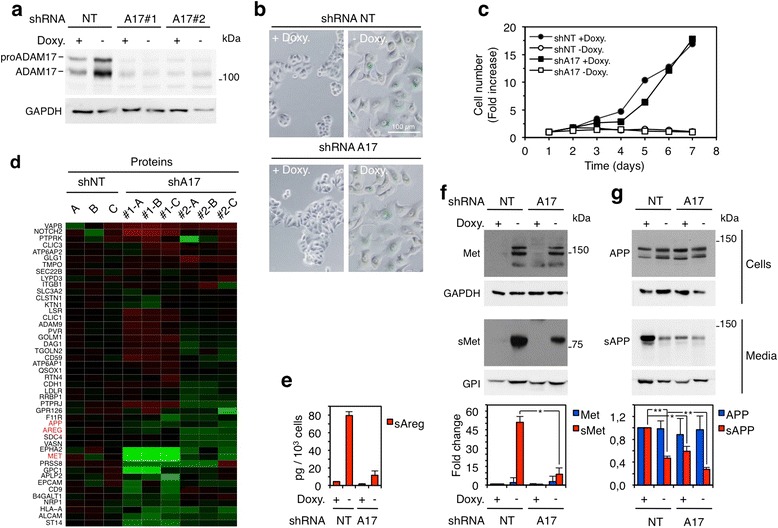
“Both EGF-like transmembrane growth factors are cleaved almost exclusively by ADAM17 in different cell types [18, 33], and the AP moiety allows accurate quantitation of shedding [18].”
BackgroundDistinct roles for ADAM10 and ADAM17 in ectodomain shedding of six EGFR ligands
Sahin, U., Weskamp, G., Kelly, K., Zhou, H.-M., Higashiyama, S., Peschon, J., Hartmann, D., Saftig, P., & Blobel, C. P. (2004) · The Journal of Cell Biology · doi:10.1083/jcb.200307137 · Cited by 979 · cited 3×
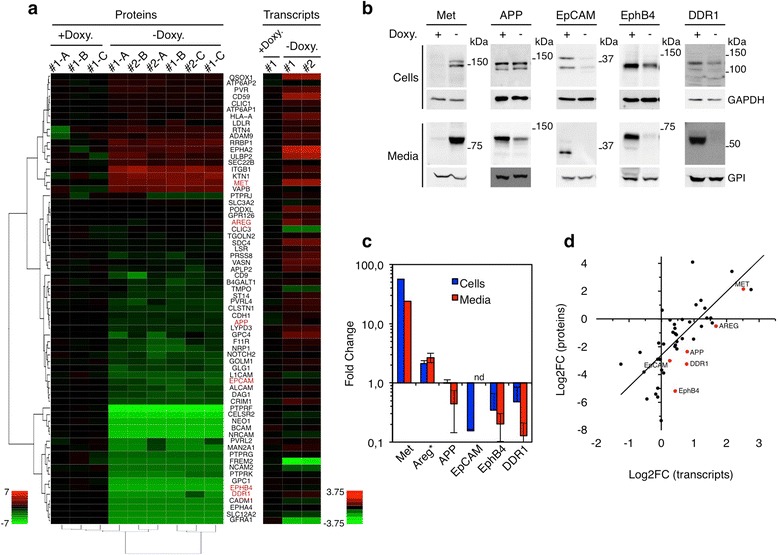
“ADAM17 cleaves Areg [18], APP [19], DDR1 [20], EphB4 [21], Met [22], and EpCAM [23].”
BackgroundNon-Cell-Autonomous Tumor Suppression by p53
Lujambio, A., Akkari, L., Simon, J., Grace, D., Tschaharganeh, D. F., Bolden, J. E., Zhao, Z., Thapar, V., Joyce, J. A., Krizhanovsky, V., et al. (2013) · Cell · doi:10.1016/j.cell.2013.03.020 · Cited by 766 · cited 1×
“Furthermore, the senescence secretome can suppress [7] or promote [8] tumor growth.”
BackgroundNuclear signalling by tumour-associated antigen EpCAM
Maetzel, D., Denzel, S., Mack, B., Canis, M., Went, P., Benk, M., Kieu, C., Papior, P., Baeuerle, P. A., Munz, M., et al. (2009) · Nature Cell Biology · doi:10.1038/ncb1824 · Cited by 719 · cited 2×
“Transmembrane protein Molecular weight Reference Met 145-175 kDa [33] sMet 80 kDa APP 110-135 kDa [34] sAPP 115 kDa EpCAM 31-39 kDa [35] sEpCAM 33 kDa EphB4 110 kDa [36] sEphB4 60 kDa DDR1 120 kDa [14] sDDR1 60 kDa”
BackgroundThe pINDUCER lentiviral toolkit for inducible RNA interference in vitro and in vivo
Meerbrey, K. L., Hu, G., Kessler, J. D., Roarty, K., Li, M. Z., Fang, J. E., Herschkowitz, J. I., Burrows, A. E., Ciccia, A., Sun, T., et al. (2011) · Proceedings of the National Academy of Sciences · doi:10.1073/pnas.1019736108 · Cited by 666 · cited 1×
“pINDUCER20 was kindly provided by Stephen J Elledge (Howard Hughes Medical Institute, Chevy Chase, MD, USA) [17].”
MethodReiss, K., & Saftig, P. (2009) · Seminars in Cell & Developmental Biology · doi:10.1016/j.semcdb.2008.11.002 · Cited by 423
Toso, A., Revandkar, A., Di Mitri, D., Guccini, I., Proietti, M., Sarti, M., Pinton, S., Zhang, J., Kalathur, M., Civenni, G., et al. (2014) · Cell Reports · doi:10.1016/j.celrep.2014.08.044 · Cited by 418 · cited 1×
“It may promote [3] or impair [4] immune surveillance against tumor cells in the liver and in the prostate, respectively.”
BackgroundMatthews, V., Schuster, B., Schütze, S., Bussmeyer, I., Ludwig, A., Hundhausen, C., Sadowski, T., Saftig, P., Hartmann, D., Kallen, K.-J., et al. (2003) · Journal of Biological Chemistry · doi:10.1074/jbc.m210584200 · Cited by 390 · cited 3×
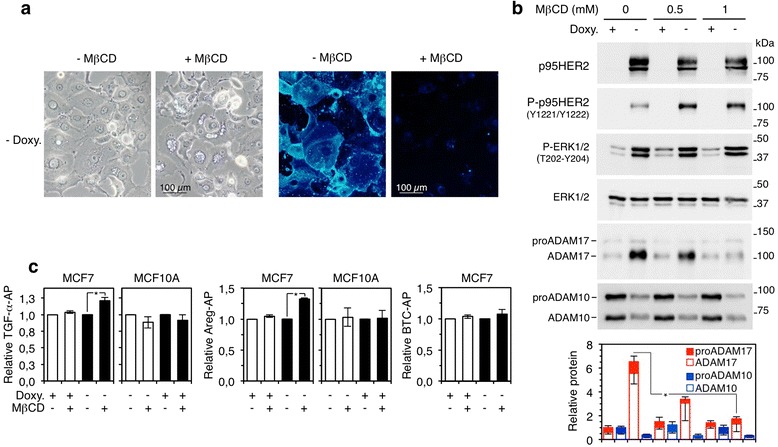
“As previously shown [25–30], short-term treatment with MβCD activates ectodomain shedding (Additional file 8: Figure.”
BackgroundCellular senescence: putting the paradoxes in perspective
Campisi, J. (2011) · Current Opinion in Genetics & Development · doi:10.1016/j.gde.2010.10.005 · Cited by 368 · cited 1×
“Certain senescence secretomes promote cell migration [34].”
Impaired Cholesterol Efflux in Senescent Macrophages Promotes Age-Related Macular Degeneration
Sene, A., Khan, A. A., Cox, D., Nakamura, R. E. I., Santeford, A., Kim, B. M., Sidhu, R., Onken, M. D., Harbour, J. W., Hagbi-Levi, S., et al. (2013) · Cell Metabolism · doi:10.1016/j.cmet.2013.03.009 · Cited by 277 · cited 1×
“Senescent cells tend to accumulate cholesterol [31]; in fact, it has been previously shown that HER2 (NeuT)-induced senescence results in a marked accumulation of cellular cholesterol [32].”
BackgroundDiscoidin Domain Receptors: Unique Receptor Tyrosine Kinases in Collagen-mediated Signaling
Fu, H.-L., Valiathan, R. R., Arkwright, R., Sohail, A., Mihai, C., Kumarasiri, M., Mahasenan, K. V., Mobashery, S., Huang, P., Agarwal, G., et al. (2013) · Journal of Biological Chemistry · doi:10.1074/jbc.r112.444158 · Cited by 245
Maretzky, T., Schulte, M., Ludwig, A., Rose-John, S., Blobel, C., Hartmann, D., Altevogt, P., Saftig, P., & Reiss, K. (2005) · Molecular and Cellular Biology · doi:10.1128/mcb.25.20.9040-9053.2005 · Cited by 232 · cited 3×
“As previously shown [25–30], short-term treatment with MβCD activates ectodomain shedding (Additional file 8: Figure.”
BackgroundA Naturally Occurring HER2 Carboxy-Terminal Fragment Promotes Mammary Tumor Growth and Metastasis
Pedersen, K., Angelini, P.-D., Laos, S., Bach-Faig, A., Cunningham, M. P., Ferrer-Ramón, C., Luque-García, A., García-Castillo, J., Parra-Palau, J. L., Scaltriti, M., et al. (2009) · Molecular and Cellular Biology · doi:10.1128/mcb.01803-08 · Cited by 186 · cited 2×
“Transcripts and secretome analysis were performed as described in [15] and [2], respectively.”
BackgroundMethodSelf-citationMurai, T., Maruyama, Y., Mio, K., Nishiyama, H., Suga, M., & Sato, C. (2011) · Journal of Biological Chemistry · doi:10.1074/jbc.m110.184010 · Cited by 179 · cited 3×
“As previously shown [25–30], short-term treatment with MβCD activates ectodomain shedding (Additional file 8: Figure.”
BackgroundADAM17 as a Therapeutic Target in Multiple Diseases
Arribas, J., & Esselens, C. (2009) · Current Pharmaceutical Design · doi:10.2174/138161209788682398 · Cited by 171 · cited 1×
“Given the lack of modulators of the senescence secretome and the fact that the activity of ADAM17 can be upregulated by different compounds or inhibited with small-molecule synthetic inhibitors (reviewed in [36]) or monoclonal antibodies [37], our results open up a possibility that part of the effects of the senescenc…”
BackgroundSelf-citationTransforming growth factor-alpha and beta-amyloid precursor protein share a secretory mechanism.
Arribas, J., & Massagué, J. (1995) · The Journal of cell biology · doi:10.1083/jcb.128.3.433 · Cited by 153 · cited 1×
“This type of limited proteolysis affects a diverse group of functionally unrelated transmembrane proteins, including membrane-anchored growth factors, cytokines, cell adhesion molecules, or transmembrane proteases [9–12].”
BackgroundSelf-citationWeskamp, G., Mendelson, K., Swendeman, S., Le Gall, S., Ma, Y., Lyman, S., Hinoki, A., Eguchi, S., Guaiquil, V., Horiuchi, K., et al. (2010) · Circulation Research · doi:10.1161/circresaha.109.207415 · Cited by 146 · cited 2×
“Transmembrane protein Molecular weight Reference Met 145-175 kDa [33] sMet 80 kDa APP 110-135 kDa [34] sAPP 115 kDa EpCAM 31-39 kDa [35] sEpCAM 33 kDa EphB4 110 kDa [36] sEphB4 60 kDa DDR1 120 kDa [14] sDDR1 60 kDa”
BackgroundDepletion of Cellular Cholesterol and Lipid Rafts Increases Shedding of CD30
von Tresckow, B., Kallen, K.-J., von Strandmann, E. P., Borchmann, P., Lange, H., Engert, A., & Hansen, H. P. (2004) · The Journal of Immunology · doi:10.4049/jimmunol.172.7.4324 · Cited by 114 · cited 3×
“As previously shown [25–30], short-term treatment with MβCD activates ectodomain shedding (Additional file 8: Figure.”
BackgroundSonic Hedgehog Shedding Results in Functional Activation of the Solubilized Protein
Ohlig, S., Farshi, P., Pickhinke, U., van den Boom, J., Höing, S., Jakuschev, S., Hoffmann, D. E., Dreier, R., Schöler, H. R., Dierker, T., et al. (2011) · Developmental Cell · doi:10.1016/j.devcel.2011.05.010 · Cited by 113 · cited 3×
“As previously shown [25–30], short-term treatment with MβCD activates ectodomain shedding (Additional file 8: Figure.”
BackgroundNath, D., Williamson, N. J., Jarvis, R., & Murphy, G. (2014) · Journal of Cell Science · doi:10.1242/jcs.152595 · Cited by 111 · cited 2×
“Transmembrane protein Molecular weight Reference Met 145-175 kDa [33] sMet 80 kDa APP 110-135 kDa [34] sAPP 115 kDa EpCAM 31-39 kDa [35] sEpCAM 33 kDa EphB4 110 kDa [36] sEphB4 60 kDa DDR1 120 kDa [14] sDDR1 60 kDa”
BackgroundNath, D., Williamson, N. J., Jarvis, R., & Murphy, G. (2001) · Journal of Cell Science · doi:10.1242/jcs.114.6.1213 · Cited by 105
ADAM17, shedding, TACE as therapeutic targets
Rose‐John, S. (2013) · Pharmacological Research · doi:10.1016/j.phrs.2013.01.012 · Cited by 102 · cited 1×
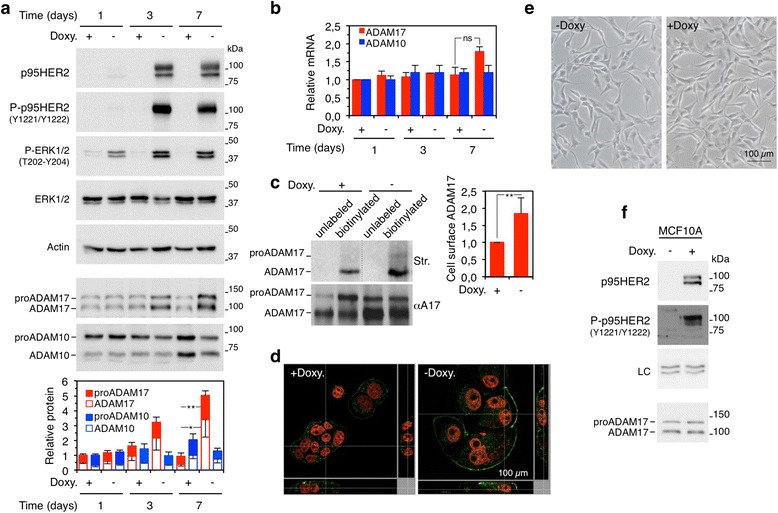
“One of the intracellular pathways that activates ADAM17 is the MEK-ERK pathway (reviewed in [35]).”
BackgroundConstitutive HER2 Signaling Promotes Breast Cancer Metastasis through Cellular Senescence
Angelini, P. D., Fluck, M. F. Z., Pedersen, K., Parra-Palau, J. L., Guiu, M., Bernadó Morales, C., Vicario, R., Luque-García, A., Navalpotro, N. P., Giralt, J., et al. (2013) · Cancer Research · doi:10.1158/0008-5472.can-12-2301 · Cited by 100 · cited 9×
“Expression of p95HER2 in different breast cancer cell lines leads to OIS ([2] and Additional file 1: Figure.”
BackgroundMethodSelf-citationAnti-Tumour Effects of a Specific Anti-ADAM17 Antibody in an Ovarian Cancer Model In Vivo
Richards, F. M., Tape, C. J., Jodrell, D. I., & Murphy, G. (2012) · PLoS ONE · doi:10.1371/journal.pone.0040597 · Cited by 94 · cited 1×
“Given the lack of modulators of the senescence secretome and the fact that the activity of ADAM17 can be upregulated by different compounds or inhibited with small-molecule synthetic inhibitors (reviewed in [36]) or monoclonal antibodies [37], our results open up a possibility that part of the effects of the senescenc…”
BackgroundADAM9 Is Involved in Pathological Retinal Neovascularization
Guaiquil, V., Swendeman, S., Yoshida, T., Chavala, S., Campochiaro, P. A., & Blobel, C. P. (2009) · Molecular and Cellular Biology · doi:10.1128/mcb.01460-08 · Cited by 94 · cited 1×
“This type of limited proteolysis affects a diverse group of functionally unrelated transmembrane proteins, including membrane-anchored growth factors, cytokines, cell adhesion molecules, or transmembrane proteases [9–12].”
BackgroundMerlos-Suárez, A., Fernández-Larrea, J., Reddy, P., Baselga, J., & Arribas, J. (1998) · Journal of Biological Chemistry · doi:10.1074/jbc.273.38.24955 · Cited by 88 · cited 1×
“ADAM17 cleaves Areg [18], APP [19], DDR1 [20], EphB4 [21], Met [22], and EpCAM [23].”
BackgroundSelf-citationGlycerophospholipid profile in oncogene-induced senescence
Cadenas, C., Vosbeck, S., Hein, E., Hellwig, B., Langer, A., Hayen, H., Franckenstein, D., Büttner, B., Hammad, S., Marchan, R., et al. (2011) · Biochimica et Biophysica Acta (BBA) - Molecular and Cell Biology of Lipids · doi:10.1016/j.bbalip.2011.11.008 · Cited by 79 · cited 1×
“Senescent cells tend to accumulate cholesterol [31]; in fact, it has been previously shown that HER2 (NeuT)-induced senescence results in a marked accumulation of cellular cholesterol [32].”
BackgroundSchelter, F., Kobuch, J., Moss, M. L., Becherer, J. D., Comoglio, P. M., Boccaccio, C., & Krüger, A. (2010) · Journal of Biological Chemistry · doi:10.1074/jbc.m110.106435 · Cited by 75 · cited 1×
“This type of limited proteolysis affects a diverse group of functionally unrelated transmembrane proteins, including membrane-anchored growth factors, cytokines, cell adhesion molecules, or transmembrane proteases [9–12].”
BackgroundAbsence of cell-surface EpCAM in congenital tufting enteropathy
Schnell, U., Kuipers, J., Mueller, J. L., Veenstra-Algra, A., Sivagnanam, M., & Giepmans, B. N. G. (2013) · Human Molecular Genetics · doi:10.1093/hmg/ddt105 · Cited by 65 · cited 1×
“This type of limited proteolysis affects a diverse group of functionally unrelated transmembrane proteins, including membrane-anchored growth factors, cytokines, cell adhesion molecules, or transmembrane proteases [9–12].”
BackgroundReddy, J. P., Peddibhotla, S., Bu, W., Zhao, J., Haricharan, S., Du, Y. N., Podsypanina, K., Rosen, J. M., Donehower, L. A., & Li, Y. (2010) · Proceedings of the National Academy of Sciences · doi:10.1073/pnas.0910665107 · Cited by 64 · cited 1×
“In fact, senescent cells may be short-lived or long-lived in vivo, in both immunocompetent [3–5] and immunosuppressed [2, 6] mice.”
BackgroundEffenberger, T., von der Heyde, J., Bartsch, K., Garbers, C., Schulze‐Osthoff, K., Chalaris, A., Murphy, G., Rose‐John, S., & Rabe, B. (2014) · The FASEB Journal · doi:10.1096/fj.14-254565 · Cited by 54 · cited 3×
“In fact, a recent report shows that ADAM17 is activated in Ras-induced senescent cells [14].”
BackgroundInfluentialBorroto, A., Ruíz-Paz, S., de la Torre, T. V., Borrell-Pagès, M., Merlos-Suárez, A., Pandiella, A., Blobel, C. P., Baselga, J., & Arribas, J. (2003) · Journal of Biological Chemistry · doi:10.1074/jbc.m301673200 · Cited by 48 · cited 1×
“ADAM17 [24].”
Self-citationEffect of Cellular Senescence on the Growth of HER2-Positive Breast Cancers
Zacarias-Fluck, M. F., Morancho, B., Vicario, R., Luque Garcia, A., Escorihuela, M., Villanueva, J., Rubio, I. T., & Arribas, J. (2015) · JNCI Journal of the National Cancer Institute · doi:10.1093/jnci/djv020 · Cited by 45
Self-citationHDLs activate ADAM17‐dependent shedding
Tellier, E., Canault, M., Poggi, M., Bonardo, B., Nicolay, A., Alessi, M., Nalbone, G., & Peiretti, F. (2008) · Journal of Cellular Physiology · doi:10.1002/jcp.21265 · Cited by 44 · cited 3×
“As previously shown [25–30], short-term treatment with MβCD activates ectodomain shedding (Additional file 8: Figure.”
Background
Cited by
Hallmarks of Cellular Senescence
Hernandez-Segura, A., Nehme, J., & Demaria, M. (2018) · Trends in Cell Biology · doi:10.1016/j.tcb.2018.02.001 · Cited by 2,605
“Shedding: proteolytic release of the extracellular domain of transmembrane proteins [75].”
Mechanisms of Cellular Senescence: Cell Cycle Arrest and Senescence Associated Secretory Phenotype
Kumari, R., & Jat, P. (2021) · Frontiers in Cell and Developmental Biology · doi:10.3389/fcell.2021.645593 · Cited by 1,622
Linking cellular stress responses to systemic homeostasis
Galluzzi, L., Yamazaki, T., & Kroemer, G. (2018) · Nature Reviews Molecular Cell Biology · doi:10.1038/s41580-018-0068-0 · Cited by 515
Dissecting primary and secondary senescence to enable new senotherapeutic strategies
Admasu, T. D., Rae, M. J., & Stolzing, A. (2021) · Ageing Research Reviews · doi:10.1016/j.arr.2021.101412 · Cited by 103
Liu, Y., Lomeli, I., & Kron, S. J. (2024) · Cells · doi:10.3390/cells13151281 · Cited by 77
“…released by conventional secretory pathways, the SASP also includes macromolecules released via passive leakage through membrane pores and defects, exocytosis of vesicles, and shedding of transmembrane protein ectodomains that are cleaved by enzymes such as disintegrin and ADAM17 [187,188].”
Background
Metadata
- Authors
- Morancho, B., Martínez-Barriocanal, Á., Villanueva, J., & Arribas, J.
- Affiliations
- Vall d'Hebron Institute of Oncology (ES)
- Venue
- Breast Cancer Research
- Published
- 2015-08-12
- Volume
- 17
- Issue
- 1
- Pages
- 106-106
- ISSN
- 1465-5411 (ISSN-L)
- 1465-542X
- PMC
- PMC4532141
- OpenAlex
- W1961478359
- Cited by
- 13
- References
- 37
- Citations by year
- 2025: 1 · 2024: 2 · 2021: 4 · 2020: 2 · 2018: 2 · 2017: 1 · 2016: 1
- FWCI
- 0.98
- Type
- journal article
- Language
- en
- Open access
- gold
- doi.org
- Licence
- Locations
- Breast Cancer Research (publishedVersion, cc-by)
- PubMed Central (publishedVersion, cc-by)
- PubMed (publishedVersion)
- Dipòsit Digital de Documents de la UAB (Universitat Autònoma de Barcelona) (submittedVersion, cc-by)
- Funders
- Breast Cancer Research Foundation (BCRF) (ᅟ)
- Spanish Association Against Cancer (Asociación Española Contra el Cáncer, AECC) (ᅟ)
- Sandra Ibarra Foundation (ᅟ)
- Instituto de Salud Carlos III (Intrasalud PI12/02536)
- Network of Cooperative Cancer Research (RTICC-RD12/0036)
- Ministerio de Economía y Competitividad (JCI-2011-10960)
- Topics
- Life Sciences › Biochemistry, Genetics and Molecular Biology › Cell Biology › Telomeres, Telomerase, and Senescence
- Life Sciences › Biochemistry, Genetics and Molecular Biology › Cancer Research › Protease and Inhibitor Mechanisms
- Life Sciences › Biochemistry, Genetics and Molecular Biology › Molecular Biology › TGF-β signaling in diseases
- Keywords
- ADAM17, oncogene-induced senescence, senescence-associated secretome, non-cell-autonomous effects, HER2, p95HER2, ectodomain shedding, membrane proteins, cholesterol, metastasis, tumor suppression, breast cancer, protease regulation, secretome proteomics, MCF10A, MCF-7 cells
- MeSH terms
- ADAM17 Protein, Proto-Oncogene Mas, Biological Transport, Cell Membrane, Enzyme Activation, Female, Humans, Oncogenes, Gene Expression, Cellular Senescence, Proteome, Gene Expression Profiling, Proteomics, Cell Line, Tumor, ADAM Proteins, Gene Knockdown Techniques
About these checks
Registry, retraction, Cites and statistics results are computed, not judged, with one exception: a printed reference that no index lists is read once by a model before it counts as a citation error. Claims are extracted by a model and kept only when their quote appears verbatim in the text; each cited source is then checked, with a model’s help, for whether it says what the claim relies on. Those verdicts can be wrong — read the claim’s quote and the cited source before relying on one.
Statistics and arithmetic are recomputed, not judged.
Confidence bands are shown only for fields calibrated on our annotated test set. None is calibrated yet, so no band is shown.
What counts as a claim ›How we measure confidence ›How we check this ›
Are you an author, or do you see a problem with this page? Request a review
Data sources
Bibliographic data: Semantic Scholar, OpenAlex, Crossref.
Contains information from the Semantic Scholar Academic Graph Datasets, made available under the ODC Attribution License (ODC-BY 1.0).
Semantic Scholar’s data is described in: Kinney, R., et al. (2023). The Semantic Scholar Open Data Platform. arXiv:2301.10140.
