

Hepatic steatosis risk is partly driven by increased de novo lipogenesis following carbohydrate consumption
Open accessThe DOI matches its Crossref record; 53 of the 53 references it cites were found in a registry or an index.
Abstract
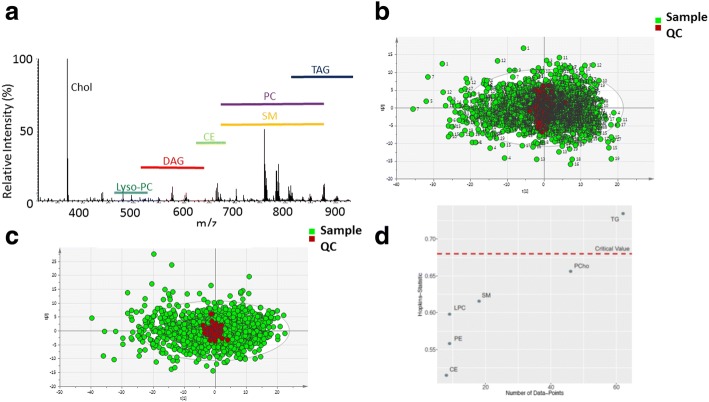
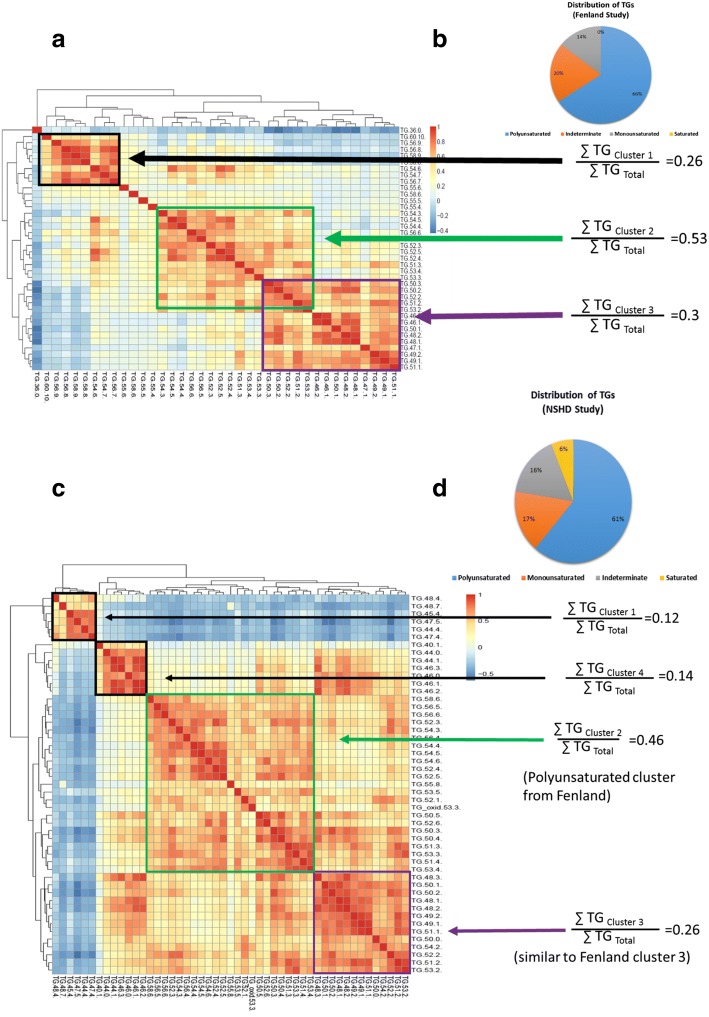
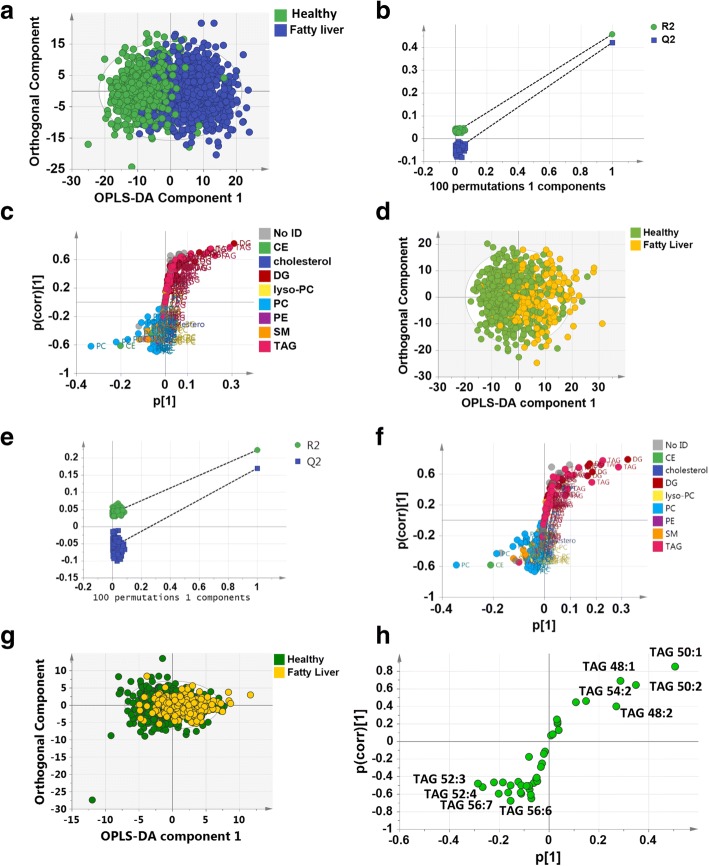
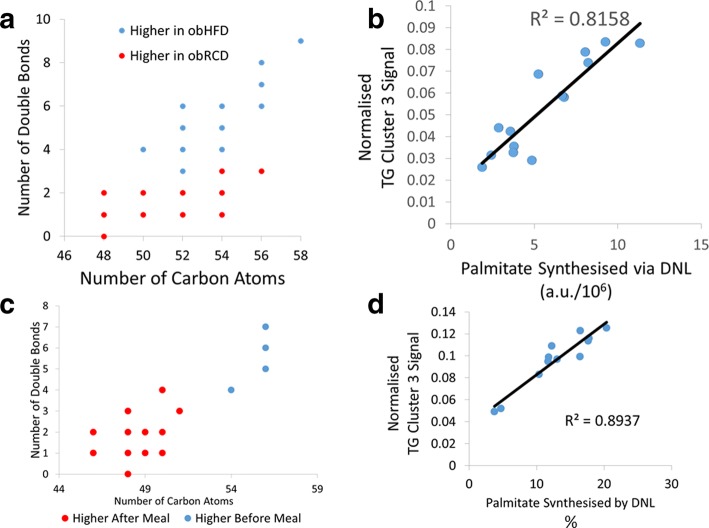
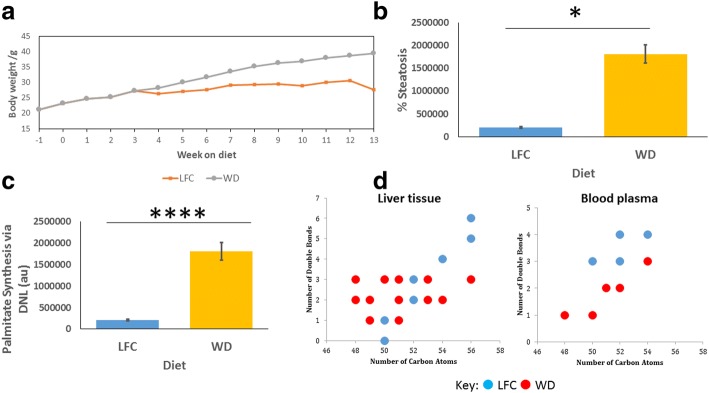
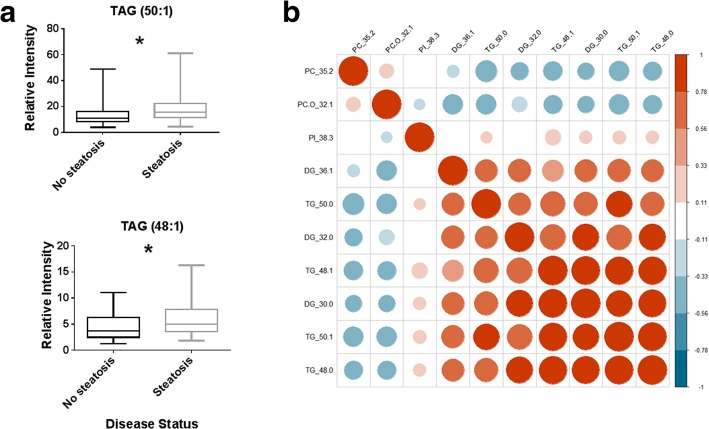
BACKGROUND: Diet is a major contributor to metabolic disease risk, but there is controversy as to whether increased incidences of diseases such as non-alcoholic fatty liver disease arise from consumption of saturated fats or free sugars. Here, we investigate whether a sub-set of triacylglycerols (TAGs) were associated with hepatic steatosis and whether they arise from de novo lipogenesis (DNL) from the consumption of carbohydrates. RESULTS: We conduct direct infusion mass spectrometry of lipids in plasma to study the association between specific TAGs and hepatic steatosis assessed by ultrasound and fatty liver index in volunteers from the UK-based Fenland Study and evaluate clustering of TAGs in the National Survey of Health and Development UK cohort. We find that TAGs containing saturated and monounsaturated fatty acids with 16-18 carbons are specifically associated with hepatic steatosis. These TAGs are additionally associated with higher consumption of carbohydrate and saturated fat, hepatic steatosis, and variations in the gene for protein phosphatase 1, regulatory subunit 3b (PPP1R3B), which in part regulates glycogen synthesis. DNL is measured in hyperphagic ob/ob mice, mice on a western diet (high in fat and free sugar) and in healthy humans using stable isotope techniques following high carbohydrate meals, demonstrating the rate of DNL correlates with increased synthesis of this cluster of TAGs. Furthermore, these TAGs are increased in plasma from patients with biopsy-confirmed steatosis. CONCLUSION: A subset of TAGs is associated with hepatic steatosis, even when correcting for common confounding factors. We suggest that hepatic steatosis risk in western populations is in part driven by increased DNL following carbohydrate rich meals in addition to the consumption of saturated fat.
Overview
The claims and statistics of this paper haven’t been checked yet.
Free: it reads the open-access text and checks the first 5 claims that cite a source we can check. Create a free account to check every claim.
Integrity signals
Registry
Cites
Statistics
Figures
Verification
Claims the paper makes
The claims and statistics of this paper haven’t been checked yet.
Free: it reads the open-access text and checks the first 5 claims that cite a source we can check. Create a free account to check every claim.
Claims other papers make about this one
Each is checked against this paper’s own text: does it say what the citing paper says it does?
The source backs part of the claim, not all of it — or backs it for a different population, condition or comparison.
In the citing paper
“Furthermore, specific TAGs containing palmitate or stearate, i.e. TAG 48:0, 50:0, 48:1 and 50:1, have been associated with the severity of MASLD and with an increased risk of developing T2D.105,106”
From Lipid metabolism in MASLD and MASH: From mechanism to the clinic (2024) · cites this paper as [105]
Experimental — accuracy not yet measuredIn the citing paper
“In MASLD, a significant increase in TAGs with lower carbon numbers and double bonds,94,102,105 DAGs,99,102,107 and PE94,[108], [109], [110], [111] has been reported.”
From Lipid metabolism in MASLD and MASH: From mechanism to the clinic (2024) · cites this paper as [105]
Self-check
Percentages, sums and reported differences re-computed from the paper’s own numbers.
The self-check needs the paper’s full text.
Citations
Cites
Endoplasmic Reticulum Stress Links Obesity, Insulin Action, and Type 2 Diabetes
Özcan, U., Cao, Q., Yilmaz, E., Lee, A.-H., Iwakoshi, N. N., Özdelen, E., Tuncman, G., Görgün, C., Glimcher, L. H., & Hotamisligil, G. S. (2004) · Science · doi:10.1126/science.1103160 · Cited by 3,844 · cited 1×
“Obesity is responsible for suppression of insulin signalling by hyperactivation of c-jun N-terminal kinase (JNK) through increased ER stress [43, 44].”
BackgroundMetabolite profiles and the risk of developing diabetes
Wang, T. J., Larson, M. G., Vasan, R. S., Cheng, S., Rhee, E. P., McCabe, E., Lewis, G. D., Fox, C. S., Jacques, P. F., Fernandez, C., et al. (2011) · Nature Medicine · doi:10.1038/nm.2307 · Cited by 3,143 · cited 1×
“There has been much interest in the field of metabolomics in the generation of predictive markers of T2DM and its associated metabolic diseases [33, 34].”
BackgroundBedogni, G., Bellentani, S., Miglioli, L., Masutti, F., Passalacqua, M., Castiglione, A., & Tiribelli, C. (2006) · BMC Gastroenterology · doi:10.1186/1471-230x-6-33 · Cited by 3,042 · cited 4×
“Analyses were compared with FLI, based on BMI, waist circumference, total TAGs and plasma levels of GGT [21].”
BackgroundInfluentialPredicting basal metabolic rate, new standards and review of previous work.
Wn, S. (1985) · PubMed · Cited by 2,958
Triglycerides and Cardiovascular Disease: A Scientific Statement From the American Heart Association
Miller, M., Stone, N. J., Ballantyne, C., Bittner, V., Criqui, M. H., Ginsberg, H. N., Goldberg, A. C., Howard, W. J., Jacobson, M. S., Kris-Etherton, P. M., et al. (2011) · Circulation · doi:10.1161/cir.0b013e3182160726 · Cited by 1,871
The pathogenesis of insulin resistance: integrating signaling pathways and substrate flux
Samuel, V. T., & Shulman, G. I. (2016) · Journal of Clinical Investigation · doi:10.1172/jci77812 · Cited by 1,484 · cited 1×
“However, TAGs are synthesised via DAGs and these lipids have been shown to interfere with insulin signalling by activating protein kinase CƐ (PKCƐ) which leads to reduced insulin-stimulated insulin receptor substrate 2 (IRS-2) tyrosine phosphorylation [40, 41].”
BackgroundLipid-induced insulin resistance: unravelling the mechanism
Samuel, V. T., Petersen, K. F., & Shulman, G. I. (2010) · The Lancet · doi:10.1016/s0140-6736(10)60408-4 · Cited by 1,189 · cited 10×
“Across these studies, the TAG species have in common relative enrichments for palmitate, stearate and oleate fatty acids, and studies using gas chromatography (GC)-MS have also reported associations between these FAs from total lipid extracts and increased risk of developing T2DM [15].”
BackgroundInfluentialLambert, J. E., Ramos–Roman, M. A., Browning, J. D., & Parks, E. J. (2014) · Gastroenterology · doi:10.1053/j.gastro.2013.11.049 · Cited by 1,069
Hypertriglyceridemia as a cardiovascular risk factor
Austin, M. A., Hokanson, J. E., & Edwards, K. L. (1998) · The American Journal of Cardiology · doi:10.1016/s0002-9149(98)00031-9 · Cited by 1,066
Speliotes, E. K., Yerges-Armstrong, L. M., Wu, J., Hernaez, R., Kim, L. J., Palmer, C. D., Gudnason, V., Eiriksdottir, G., Garcia, M. E., Launer, L. J., et al. (2011) · PLoS Genetics · doi:10.1371/journal.pgen.1001324 · Cited by 984
Research works printed but not linked: 2
- Frayn KN Metabolic reguation: a human perspective 2003 2 Oxford Blackwell Publishing
- James G, Witten D, Hastie T, Tibshirani R. An introduction to statistical learning with applications in R. Springer-Verlag New York: Springer Texts in Statistics; 2015.
Cited by
Rinella, M. E., Neuschwander-Tetri, B. A., Siddiqui, M. S., Abdelmalek, M. F., Caldwell, S., Barb, D., Kleiner, D. E., & Loomba, R. (2023) · Hepatology · doi:10.1097/hep.0000000000000323 · Cited by 2,667
SpaceM reveals metabolic states of single cells
Rappez, L., Stadler, M., Triana, S., Gathungu, R. M., Ovchinnikova, K., Phapale, P., Heikenwalder, M., & Alexandrov, T. (2021) · Nature Methods · doi:10.1038/s41592-021-01198-0 · Cited by 390
Azzu, V., Vacca, M., Virtue, S., Allison, M., & Vidal-Puig, A. (2020) · Gastroenterology · doi:10.1053/j.gastro.2019.12.054 · Cited by 369
Self-citationHendriks, D., Brouwers, J. F., Hamer, K., Geurts, M. H., Luciana, L., Massalini, S., López-Iglesias, C., Peters, P. J., Rodríguez-Colman, M. J., Chuva de Sousa Lopes, S., et al. (2023) · Nature Biotechnology · doi:10.1038/s41587-023-01680-4 · Cited by 249
Biomarkers and subtypes of deranged lipid metabolism in non-alcoholic fatty liver disease
Mato, J. M., Alonso, C., Noureddin, M., & Lu, S. C. (2019) · World Journal of Gastroenterology · doi:10.3748/wjg.v25.i24.3009 · Cited by 199
Inhibition of ATP-citrate lyase improves NASH, liver fibrosis, and dyslipidemia
Morrow, M. R., Batchuluun, B., Wu, J., Ahmadi, E., Leroux, J. M., Mohammadi-Shemirani, P., Desjardins, E. M., Wang, Z., Tsakiridis, E. E., Lavoie, D. C. T., et al. (2022) · Cell Metabolism · doi:10.1016/j.cmet.2022.05.004 · Cited by 199
Lipid metabolism in MASLD and MASH: From mechanism to the clinic
Carli, F., Della Pepa, G., Sabatini, S., Vidal Puig, A., & Gastaldelli, A. (2024) · JHEP Reports · doi:10.1016/j.jhepr.2024.101185 · Cited by 147
Self-citationLongo, M., Meroni, M., Paolini, E., Erconi, V., Carli, F., Fortunato, F., Ronchi, D., Piciotti, R., Sabatini, S., Macchi, C., et al. (2022) · Cellular and Molecular Gastroenterology and Hepatology · doi:10.1016/j.jcmgh.2021.11.007 · Cited by 112
“found that the compound knockout markedly expressed the saturated TAG 50:0 and TAG 52:0 compared with Cas9þ, MBOAT7, and TM6SF2 models (Figure 6D, Supplementary Tables 1 and 2), potentially mirroring the hepatic lipid profile of NAFLD patients and the most upregulated TAGs observed in HCC specimens.(17,18)”
ResultTracing insights into de novo lipogenesis in liver and adipose tissues
Wallace, M., & Metallo, C. M. (2020) · Seminars in Cell and Developmental Biology · doi:10.1016/j.semcdb.2020.02.012 · Cited by 110
Signaling pathways and intervention for therapy of type 2 diabetes mellitus
Cao, R. Y., Tian, H., Zhang, Y., Liu, G., Xu, H., Rao, G., Tian, Y., & Fu, X. (2023) · MedComm · doi:10.1002/mco2.283 · Cited by 109
Xanthakos, S. A., Ibrahim, S. H., Adams, K. H., Kohli, R., Sathya, P., Sundaram, S. S., Vos, M. B., Dhawan, A., Caprio, S., Behling, C. A., et al. (2025) · Hepatology · doi:10.1097/hep.0000000000001368 · Cited by 102
Mechanism of action and therapeutic use of bempedoic acid in atherosclerosis and metabolic syndrome
Biolo, G., Vinci, P., Mangogna, A., Landolfo, M., Schincariol, P., Fiotti, N., Mearelli, F., & Girolamo, F. G. D. (2022) · Frontiers in Cardiovascular Medicine · doi:10.3389/fcvm.2022.1028355 · Cited by 85
“There is no currently approved treatment for NAFLD or NASH.”
BackgroundInfluentialTaylor, R., Barnes, A. C., Hollingsworth, K. G., Irvine, K. M., Solovyova, A. S., Clark, L., Kelly, T., Martin-Ruiz, C., Romeres, D., Koulman, A., et al. (2023) · Clinical Science · doi:10.1042/cs20230586 · Cited by 71
“The > 50% decrease in plasma triglycerides containing predominantly palmitic acid reflects decreased fasting de novo lipogenesis [13], as previously documented with weight loss in heavier people [4,5,21,28].”
Self-citationBeygi, M., Ahi, S., Zolghadri, S., & Stanek, A. (2024) · Nutrients · doi:10.3390/nu16142220 · Cited by 78
Harshfield, E. L., Fauman, E. B., Stacey, D., Paul, D. S., Ziemek, D., Ong, R. M. Y., Danesh, J. N., Butterworth, A. S., Rasheed, A., Sattar, T., et al. (2021) · BMC Medicine · doi:10.1186/s12916-021-02087-1 · Cited by 68
Self-citationArmandi, A., & Bugianesi, E. (2024) · European Journal of Internal Medicine · doi:10.1016/j.ejim.2024.01.005 · Cited by 70
“In fact, the industrialized fructose that is contained in sweetened beverages is readily absorbed and conveyed by the liver into de novo lipogenesis, hence worsening lipid accumulation and lipid-driven oxidative stress [7,8].”
Albracht‐Schulte, K., Gonzalez, S., Jackson, A., Wilson, S., Ramalingam, L., Kalupahana, N. S., & Moustaïd‐Moussa, N. (2019) · Nutrients · doi:10.3390/nu11030599 · Cited by 65
Metabolic dysfunction and cancer in HCV: Shared pathways and mutual interactions
Leslie, J., Geh, D., Elsharkawy, A. M., Mann, D. A., & Vacca, M. (2022) · Journal of Hepatology · doi:10.1016/j.jhep.2022.01.029 · Cited by 61
Self-citationGuerra, S., Mocciaro, G., & Gastaldelli, A. (2021) · European Journal of Clinical Investigation · doi:10.1111/eci.13695 · Cited by 67
Furse, S., White, S. L., Meek, C. L., Jenkins, B., Petry, C. J., Vieira, M. C., Ozanne, S. E., Dunger, D. B., Poston, L., & Koulman, A. (2019) · Molecular Omics · doi:10.1039/c9mo00117d · Cited by 62
Self-citationMocciaro, G., Allison, M., Jenkins, B., Azzu, V., Huang-Doran, I., Herrera-Marcos, L. V., Hall, Z., Murgia, A., Susan, D., Frontini, M., et al. (2023) · Molecular Metabolism · doi:10.1016/j.molmet.2023.101728 · Cited by 56
“1a,b), likely reflecting the known activation of DNL programs previously described in NAFLD [11,14,26,27].”
BackgroundSelf-citationExercise training induces insulin-sensitizing PAHSAs in adipose tissue of elderly women
Březinová, M., Čajka, T., Oseeva, M., Štěpán, M., Daďová, K., Rossmeislová, L., Matouš, M., Šiklová, M., Rossmeisl, M., & Kuda, O. (2019) · Biochimica et Biophysica Acta (BBA) - Molecular and Cell Biology of Lipids · doi:10.1016/j.bbalip.2019.158576 · Cited by 61
“Thus, M values positively correlated with short/medium-chain TAGs containing 38 to 48 carbons and 0 to 3 double bonds, which could serve as markers of DNL in AT [30,31], and also with diacylglycerols (DAGs) and ethercontaining phosphatidylethanolamines (PEe).”
BackgroundO’Brien, K. A., Atkinson, R. A., Richardson, L., Koulman, A., Murray, A. J., Harridge, S. D. R., Martín, D., Levett, D. Z. H., Mitchell, K., Mythen, M. G., et al. (2019) · Scientific Reports · doi:10.1038/s41598-019-38832-z · Cited by 57
Self-citationAzzu, V., Vacca, M., Kamzolas, I., Hall, Z., Leslie, J., Carobbio, S., Virtue, S., Davies, S. E., Lukasik, A., Dale, M., et al. (2021) · Molecular Metabolism · doi:10.1016/j.molmet.2021.101210 · Cited by 52
“These findings confirm previous reports investigating circulating lipid species, suggesting that complex lipids enriched in DNL products could act as biomarkers of the disease [8,49,50].”
BackgroundResultInfluentialSelf-citationCharidemou, E., Ashmore, T., Li, X., McNally, B. D., West, J. A., Liggi, S., Harvey, M., Orford, E., & Griffin, J. L. (2019) · JCI Insight · doi:10.1172/jci.insight.124819 · Cited by 52
“We demonstrate that high-protein feeding, using a soy protein intervention rich in glutamate, results in increased levels of scTAGs and VLDL-associated scTAGs, which have been associated with DNL (9), in plasma of human male subjects.”
BackgroundSelf-citationDietary sugars, exercise and hepatic carbohydrate metabolism
Gonzalez, J. T., & Betts, J. A. (2019) · Proceedings of the Nutrition Society · doi:10.1017/s0029665118002604 · Cited by 50
“Nevertheless, the effects of ingested fructose on de novo lipogenesis may still be important formetabolic health((27)).”
Iliou, A., Mikros, E., Karaman, İ., Elliott, F., Griffin, J. L., Tzoulaki, I., & Elliott, P. (2021) · Heart · doi:10.1136/heartjnl-2019-315615 · Cited by 52
“28 Epidemiological studies have also investigated the role of different lipid particles and lipoproteins through 1 H NMR measurements.”
BackgroundSelf-citationMocciaro, G., D’Amore, S., Jenkins, B., Kay, R. G., Murgia, A., Herrera-Marcos, L. V., Neun, S., Sowton, A. P., Hall, Z., Palma-Duran, S. A., et al. (2022) · International Journal of Molecular Sciences · doi:10.3390/ijms23126786 · Cited by 55
Self-citationFurse, S., Koulman, A., Ozanne, S. E., Poston, L., White, S. L., & Meek, C. L. (2022) · The Journal of Clinical Endocrinology & Metabolism · doi:10.1210/clinem/dgac206 · Cited by 46
Self-citationHudert, C. A., Adams, L. A., Alisi, A., Anstee, Q. M., Crudele, A., Draijer, L. G., EU‐PNAFLD investigators, Furse, S., Hengstler, J. G., Jenkins, B., et al. (2022) · Hepatology Communications · doi:10.1002/hep4.1955 · Cited by 45
Self-citationSistilli, G., Kalendová, V., Čajka, T., Irodenko, I., Bardová, K., Oseeva, M., Žáček, P., Kroupova, P., Horakova, O., Lackner, K., et al. (2021) · Nutrients · doi:10.3390/nu13020437 · Cited by 46
“In fact, our lipidomics data from the livers of mice fed with krill oil document significantly reduced levels of short/medium-chain TAGs, a subset of TAGs previously proposed as a DNL marker [57].”
BackgroundLee, Y., Lai, H. T. M., Otto, M. C. D. O., Lemaître, R. N., McKnight, B., King, I. B., Song, X., Huggins, G. S., Vest, A. R., Siscovick, D. S., et al. (2020) · Journal of the American Heart Association · doi:10.1161/jaha.119.014119 · Cited by 44
Insights into genetic variants associated with NASH-fibrosis from metabolite profiling
Mann, J. P., Pietzner, M., Wittemans, L. B., Rolfe, E. D. L., Kerrison, N. D., Imamura, F., Forouhi, N. G., Fauman, E., Allison, M. E., Griffin, J. L., et al. (2020) · Human Molecular Genetics · doi:10.1093/hmg/ddaa162 · Cited by 38
“Untargeted lipidomic measurement was performed on fasting serum for a subset of participants (n = 1356), as previously described (77).”
MethodSelf-citationFurse, S., Fernandez‐Twinn, D. S., Chiarugi, D., Koulman, A., & Ozanne, S. E. (2021) · International Journal of Molecular Sciences · doi:10.3390/ijms22147452 · Cited by 40
“FA(16:0) isoforms of TG such as these are associated with de novo lipogenesis (DNL) [32], and so these, along with PE and PI variables containing the same FAs, indicate that DNL falls at the start of pregnancy.”
BackgroundSelf-citationJia, X., Chen, Q., Wu, H., Liu, H., Jing, C., Gong, A., & Zhang, Y. (2023) · Frontiers in Nutrition · doi:10.3389/fnut.2023.1291853 · Cited by 38
Kim, H. Y., & Rinella, M. E. (2025) · Clinical and Molecular Hepatology · doi:10.3350/cmh.2025.0083 · Cited by 39
Furse, S., Watkins, A. J., Hojat, N., Smith, J., Williams, H. E. L., Chiarugi, D., & Koulman, A. (2021) · Communications Biology · doi:10.1038/s42003-021-01686-1 · Cited by 42
Self-citationCarbohydrates deteriorate fatty liver by activating the inflammatory response
Gao, Y., Hua, R., Hu, K., & Wang, Z. (2021) · Nutrition Research Reviews · doi:10.1017/s0954422421000202 · Cited by 37
“21 64 (7) 8/13 32 (4) 22 (14) 23 (12) N.”
BackgroundInfluentialIncreased Hepatic Lipogenesis Elevates Liver Cholesterol Content
Berger, J.-M., & Moon, Y.-A. (2021) · Molecules and Cells · doi:10.14348/molcells.2021.2147 · Cited by 39
“High carbohydrate diets stimulate de novo lipogenesis and induce hypertriglyceridemia in humans (Chong et al., 2007; Hellerstein and Parks, 2000; Hudgins et al., 1996; Sanders et al., 2018).”
Lana-Elola, E., Cater, H., Watson-Scales, S., Greenaway, S., Müller-Winkler, J., Gibbins, D., Nemes, M., Slender, A., Hough, T., Keskivali-Bond, P., et al. (2021) · Disease Models & Mechanisms · doi:10.1242/dmm.049157 · Cited by 35
“Furthermore, higher plasma triglycerides were found in people with non-alcoholic fatty liver disease (NAFLD) and in hepatic steatosis, a clinical subtype of NAFLD48, 49.”
BackgroundSelf-citationThe RNA binding protein human antigen R is a gatekeeper of liver homeostasis
Subramanian, P., Gargani, S., Palladini, A., Chatzimike, M., Grzybek, M., Peitzsch, M., Papanastasiou, A. D., Pyrina, I., Ntafis, V., Gercken, B., et al. (2021) · Hepatology · doi:10.1002/hep.32153 · Cited by 37
“[27,28,30,31] Therefore, hepatocyte-specific HuR deficiency leads to a spontaneous phenotype that phenocopies the TAG signature within the hepatic microenvironment characteristic of human NAFLD.”
BackgroundInfluentialA high-throughput platform for detailed lipidomic analysis of a range of mouse and human tissues
Furse, S., Fernandez‐Twinn, D. S., Jenkins, B., Meek, C. L., Williams, H. E. L., Smith, G. C. S., Charnock‐Jones, D. S., Ozanne, S. E., & Koulman, A. (2020) · Analytical and Bioanalytical Chemistry · doi:10.1007/s00216-020-02511-0 · Cited by 32
“These results are interpretable in terms of the aetiology of metabolic and heart disease [24, 41–44] in a manner that is orthogonal to the abundance analysis of whole lipids.”
Self-citationInfluence of Genistein on Hepatic Lipid Metabolism in an In Vitro Model of Hepatic Steatosis
Seidemann, L., Krüger, A., Kegel, V., Seehofer, D., & Damm, G. (2021) · Molecules · doi:10.3390/molecules26041156 · Cited by 35
Herrera-Marcos, L. V., Martínez‐Beamonte, R., Arnal, C., Barranquero, C., Puente‐Lanzarote, J. J., Herrero‐Continente, T., Lou-Bonafonte, J. M., Gonzalo, G., Mocciaro, G., Jenkins, B., et al. (2022) · The Journal of Nutritional Biochemistry · doi:10.1016/j.jnutbio.2022.109207 · Cited by 32
Self-citationFlóres, Y. N., Amoon, A. T., Su, B., Velázquez‐Cruz, R., Ramírez‐Palacios, P., Salmerón, J., Rivera‐Paredez, B., Sinsheimer, J. S., Lusis, A. J., Huertas‐Vázquez, A., et al. (2021) · Lipids in Health and Disease · doi:10.1186/s12944-021-01526-5 · Cited by 32
Histone acetyltransferase NAA40 modulates acetyl-CoA levels and lipid synthesis
Charidemou, E., Tsiarli, M. A., Theophanous, A., Yılmaz, V., Pitsouli, C., Strati, K., Griffin, J. L., & Kirmizis, A. (2022) · BMC Biology · doi:10.1186/s12915-021-01225-8 · Cited by 26
“2E, F) that have been previously described as lipid markers of metabolic risk [31, 32].”
BackgroundSelf-citationPastena, F. D., Gautam, J., Lally, J., Fayyazi, R., Grasset, E., Bhattacharya, D., Fidelito, G., Ahmadi, E., Townsend, L. K., Batchuluun, B., et al. (2026) · Cell Metabolism · doi:10.1016/j.cmet.2025.11.015 · Cited by 27
Meek, C. L., Stewart, Z. A., Feig, D. S., Furse, S., Neoh, S. L., Koulman, A., Murphy, H. R., & on behalf of the CONCEPTT collaborative group (2023) · Diabetologia · doi:10.1007/s00125-023-05989-2 · Cited by 26
“Lipogenesis-related species have been associated with hyperglycaemia in other populations [20, 21].”
BackgroundSelf-citationNiu, Z., Wu, Q., Sun, L., Qi, Q., Zheng, H., Li, H., Zeng, R., Lin, X., & Zong, G. (2021) · The Journal of Clinical Endocrinology & Metabolism · doi:10.1210/clinem/dgab165 · Cited by 26
Relative Abundance of Lipid Metabolites in Spermatozoa across Three Compartments
Furse, S., Kusinski, L. C., Ray, A., Glenn‐Sansum, C., Williams, H. E. L., Koulman, A., & Meek, C. L. (2022) · International Journal of Molecular Sciences · doi:10.3390/ijms231911655 · Cited by 25
“Blood serum had higher abundance of triglycerides overall including triglycerides from de novo lipogenesis (TG(46:1) and (48:1)) [28] and larger triglycerides containing PUFAs of likely dietary origin (carbon C52-54 with multiple double bonds).”
BackgroundSelf-citationNutritional regulation of hepatic de novo lipogenesis in humans
Cross, E., Dearlove, D., & Hodson, L. (2023) · Current Opinion in Clinical Nutrition & Metabolic Care · doi:10.1097/mco.0000000000000914 · Cited by 23
Pepa, G. D., Patrício, B. G., Carli, F., Sabatini, S., Astiarraga, B., Ferrannini, E., Camastra, S., & Gastaldelli, A. (2024) · Diabetes · doi:10.2337/db23-0972 · Cited by 20
Plasma Lipidomic Subclasses and Risk of Hypertension in Middle-Aged and Elderly Chinese
Niu, Z., Wu, Q., Luo, Y., Wang, D., Zheng, H., Wu, Y., Yang, X., Zeng, R., Sun, L. T., & Lin, X. (2022) · Phenomics · doi:10.1007/s43657-022-00057-y · Cited by 20
“Consistent with findings in hypertension, the PREDIMED study also demonstrated that PCs with longer chains and more unsaturated acyl chains were associated with lower CVD risk (Toledo et al.”
BackgroundInfluentialMtrr hypomorphic mutation alters liver morphology, metabolism and fuel storage in mice
Sowton, A. P., Padmanabhan, N., Tunster, S. J., McNally, B. D., Murgia, A., Yusuf, A., Griffin, J. L., Murray, A. J., & Watson, E. D. (2020) · Molecular Genetics and Metabolism Reports · doi:10.1016/j.ymgmr.2020.100580 · Cited by 23
Self-citationFurse, S., Fernandez‐Twinn, D. S., Beeson, J. H., Chiarugi, D., Ozanne, S. E., & Koulman, A. (2022) · Nutrition and Diabetes · doi:10.1038/s41387-022-00185-4 · Cited by 22
“This was also true for TGs that are associated with de novo lipogenesis (DNL), such as TG(50:1) and TG(50:2) [39].”
BackgroundSelf-citationBen‐Assuli, O., Jacobi, A., Goldman, O., Shenhar‐Tsarfaty, S., Rogowski, O., Zeltser, D., Shapira, I., Berliner, S. A., & Zelber‐Sagi, S. (2022) · Journal of Biomedical Informatics · doi:10.1016/j.jbi.2022.103986 · Cited by 19
Shafiha, R., Bahcivanci, B., Gkoutos, G. V., & Acharjee, A. (2021) · Biomedicines · doi:10.3390/biomedicines9111636 · Cited by 18
“, for identifying the biomarkers for NAFLD [32].”
BackgroundSelf-citationHu, H., Sun, N., Du, H., He, Y., Pan, K., Liu, X., Lü, X., Wei, J., Liao, M., & Duan, C. (2022) · Frontiers in Pharmacology · doi:10.3389/fphar.2022.1039726 · Cited by 17
White, S. L., Koulman, A., Ozanne, S. E., Furse, S., Poston, L., & Meek, C. L. (2023) · The Journal of Clinical Endocrinology & Metabolism · doi:10.1210/clinem/dgad168 · Cited by 16
Self-citationLu, Y., Jing-Jie, M. A., Li, P., Liu, B., Wen, X., & Yang, J. (2021) · British Journal of Pharmacology · doi:10.1111/bph.15369 · Cited by 16
Paternal nutritional programming of lipid metabolism is propagated through sperm and seminal plasma
Furse, S., Watkins, A. J., Williams, H. E. L., Snowden, S. G., Chiarugi, D., & Koulman, A. (2022) · Metabolomics · doi:10.1007/s11306-022-01869-9 · Cited by 18
“…representing major phospholipid classes and cholesterol; a set of variables associated with de novo lipogenesis (DNL), TG(46:0, 46:1, 48:0, 48:1) (Sanders et al., 2018); a set representing TGs associated with dietary intake, TG(52:2, 54:4, 54:8, 56:7) and the most abundant PCs, PC(34:1, 34:2,…”
BackgroundSelf-citationLipid metabolism is dysregulated in a mouse model of diabetes
Furse, S. (2022) · Metabolomics · doi:10.1007/s11306-022-01884-w · Cited by 17
“These variables are associated with de novo lipogenesis (DNL, Lipid metabolism is dysregulated in a mouse model of diabetes 1 3 Page 3 of 6 36 Sanders et al., 2018) and the dietary intake of PUFAs, respectively.”
BackgroundHorakova, O., Sistilli, G., Kalendová, V., Bardová, K., Mitrovic, M., Čajka, T., Irodenko, I., Janovská, P., Lackner, K., Kopecký, J., et al. (2023) · Frontiers in Endocrinology · doi:10.3389/fendo.2023.1205703 · Cited by 15
“Our results in B6/N mice show that TN conditions accelerate increased fat accumulation in the liver of STD-fed mice, and one of the mechanisms involved in this process is likely to be activated DNL.”
BackgroundMethodInfluentialMcCaffrey, J. M., & Ibdah, J. A. (2025) · Nutrients · doi:10.3390/nu17182972 · Cited by 19
“In the chronic state of overnutrition typical of MASLD, fructose and other highly absorbable sugars are readily utilized in hepatic DNL, which worsens lipid accumulation and oxidative stress [129,203].”
Mann, J. P., Carter, P. R., Armstrong, M. J., Abdelaziz, H. K., Uppal, H., Patel, B., CHANDRAN, S. R., More, R. S., Newsome, P. N., & Potluri, R. (2020) · PLoS ONE · doi:10.1371/journal.pone.0241357 · Cited by 14
Comparison of the Lipidomic Signature of Fatty Liver in Children and Adults: A Cross‐Sectional Study
Mann, J. P., Jenkins, B., Furse, S., Snowden, S. G., Alisi, A., Draijer, L. G., Karnebeek, K., Kelly, D. A., Koot, B. G. P., Mosca, A., et al. (2022) · Journal of Pediatric Gastroenterology and Nutrition · doi:10.1097/mpg.0000000000003418 · Cited by 15
“Increased hepatic DNL is associated with a more short-chain, saturated TG and reduced long-chain, unsaturated TG (33).”
Self-citationA High-Fat Diet Induces Lower Systemic Inflammation than a High-Carbohydrate Diet in Mice
de Almeida-Souza, C. B., Antunes, M. M., Carbonera, F., Godoy, G., da Silva, M. A. R. C. P., Masi, L. N., Visentainer, J. V., Curi, R., & Bazotte, R. B. (2021) · Metabolic Syndrome and Related Disorders · doi:10.1089/met.2020.0116 · Cited by 17
“10,24,25 The role of MUFA in inflam-mation is controversial.”
O’Brien, K. A., McNally, B. D., Sowton, A. P., Murgia, A., Armitage, J. R., Thomas, L. W., Krause, F. N., Maddalena, L. A., Francis, I., Kavanagh, S. L., et al. (2021) · BMC Biology · doi:10.1186/s12915-021-01192-0 · Cited by 14
“Mild CIII inhibition with GSK932121A did not, however, affect the fall in DNL-associated TAGs after 2 days of hypoxia, as GSK932121A-treated animals displayed a 46% decrease in TAGs of chain lengths 39-53 in comparison with normoxic animals (p = 0.01) (Additional File 1: Figure S7D).”
BackgroundSelf-citationSandoval, V., Sanz‐Lamora, H., Marrero, P. F., Relat, J., & Haro, D. (2021) · Antioxidants · doi:10.3390/antiox10050637 · Cited by 13
“with obesity and insulin resistance, as well as type 2 diabetes [19,20].”
BackgroundSeyres, D., Cabassi, A., Lambourne, J. J., Burden, F., Farrow, S., McKinney, H., Batista, J., Kempster, C., Pietzner, M., Slingsby, O. C., et al. (2022) · Clinical Epigenetics · doi:10.1186/s13148-022-01257-z · Cited by 15
“Further supporting our findings, phosphatidylcholine (38:6 and 36:2) had previously been identified in obesity studies [81]; and triacylglycerol (50:1 and 52:2) had previously been linked to NAFLD [80] and NASH [82].”
InfluentialSelf-citationLiang, H., Yan, J., & Song, K. (2022) · PLoS ONE · doi:10.1371/journal.pone.0267513 · Cited by 13
“Some studies showed that TGs with 48–50 carbons are usually associated with de novo adipogenesis, a process in which excess carbohydrates are converted to fatty acids, which are then converted to TGs for storage [38].”
BackgroundJao, J. K., Balmert, L. C., Sun, S., McComsey, G. A., Brown, T. T., Tien, P. C., Currier, J. S., Stein, J. H., Qiu, Y., LeRoith, D., et al. (2021) · The Journal of Clinical Endocrinology & Metabolism · doi:10.1210/clinem/dgab663 · Cited by 12
Srnic, N., Westcott, F., Caney, E., & Hodson, L. (2025) · Disease Models & Mechanisms · doi:10.1242/dmm.050878 · Cited by 13
Associations between low‐carbohydrate and low‐fat diets and hepatic steatosis
Li, X., Li, M., Xu, L., Zeng, X., Zhang, T., Hu, Y., Li, H., Zhou, Z., Wang, Y., Zhang, C., et al. (2022) · Obesity · doi:10.1002/oby.23551 · Cited by 12
“High carbohydrate intake is associated with hepatic steatosis [29].”
BackgroundTuero, C., Becerril, S., Ezquerro, S., Neira, G., Frühbeck, G., & Rodríguez, A. (2022) · Journal of Physiology and Biochemistry · doi:10.1007/s13105-022-00933-1 · Cited by 11
Hu, S., Liang, X., Qin, Y., Li, Y., Liu, Y., Liu, C., Lin, Z.-X., Geng, C., Xu, Y., Wei, D., et al. (2025) · Advanced Science · doi:10.1002/advs.202411984 · Cited by 12
Associations of Plasma Fatty Acid Patterns During Pregnancy With Gestational Diabetes Mellitus
Li, P., Hu, S., Zhu, Y., Sun, T., Huang, Y., Xu, Z., Liu, H., Luo, C., Zhou, S.-Q., Tan, A., et al. (2022) · Frontiers in Nutrition · doi:10.3389/fnut.2022.836115 · Cited by 12
“In addition, an optional intake of 16:0 in a certain ratio with PUFA (including n-3 and n-6 families) was considered to have significant effect on human health, which was in line with our findings on FAP2 (40).”
BackgroundResultInfluentialLongo, M., Meroni, M., Erconi, V., Carli, F., Macchi, C., Fortunato, F., Ronchi, D., Sabatini, S., Paolini, E., Caro, E. R. D., et al. (2021) · Digestive and Liver Disease · doi:10.1016/j.dld.2020.12.070 · Cited by 10
TM4SF5-Mediated Regulation of Hepatocyte Transporters during Metabolic Liver Diseases
Kim, J. E., Kim, E.-M., & Lee, S. E. (2022) · International Journal of Molecular Sciences · doi:10.3390/ijms23158387 · Cited by 9
“Fructose and glucose induce hepatic DNL [45].”
BackgroundInfluentialEvaluation of the Effects of Diet-Induced Obesity in Zebrafish (Danio rerio): A Comparative Study
Silva, M. G. F. R., Luchiari, A. C., Medeiros, I., de Souza, A. M., Serquiz, A. C., Martins, F. F., de Moura, S. A. B., Camillo, C. D. S., de Medeiros, S. R. B., Pais, T. D. S., et al. (2024) · Nutrients · doi:10.3390/nu16193398 · Cited by 9
Prebiotics Supplementation Ameliorates High Fat High Sugar Diet-Associated Oxidative Stress
Rashid, H. (2020) · Pakistan Veterinary Journal · doi:10.29261/pakvetj/2020.062 · Cited by 5
“Lipid homeostasis is regulated through balance between lipolytic and lipogenic pathways (Sanders et al., 2018).”
BackgroundDietary PUFAs drive diverse system-level changes in lipid metabolism
Furse, S., Virtue, S., Snowden, S. G., Vidal‐Puig, A., Stevenson, P. C., Chiarugi, D., & Koulman, A. (2022) · Molecular Metabolism · doi:10.1016/j.molmet.2022.101457 · Cited by 9
“TG markers for DNL, TG(46:0, 46:1, 48:0, 48:1, 48:2, and 50:1) [37], were largely unchanged in several tissues of the supplementation groups (vastus, adipose, lung, brain, and small intestine) or less abundant (spleen, liver, kidney, heart, plasma) in them.”
BackgroundSelf-citationHan, Y., Liu, J., Li, W., Zhang, F., & Mao, Y.-H. (2024) · Diabetes Metabolic Syndrome and Obesity · doi:10.2147/dmso.s486841 · Cited by 8
“33 In the present study, despite a slight decline in indicators of skeletal muscle mass (eg, FFM, FFMI, SSM, and SMI) following fat loss, there was no significant difference in muscle loss between the two groups.”
Current Treatment Options, Including Diet, Exercise, and Medications
Noureddin, M., & Abdelmalek, M. F. (2023) · Clinics in Liver Disease · doi:10.1016/j.cld.2023.01.008 · Cited by 7
Sowton, A. P., Holzner, L. M. W., Krause, F. N., Baxter, R. M., Mocciaro, G., Krzyzanska, D., Minnion, M., O’Brien, K. A., Harrop, M. C., Darwin, P. M., et al. (2024) · American Journal of Physiology-Endocrinology and Metabolism · doi:10.1152/ajpendo.00256.2024 · Cited by 7
Self-citationMisceo, D., Mocciaro, G., D’Amore, S., & Vacca, M. (2024) · Nutrition & Metabolism · doi:10.1186/s12986-024-00871-3 · Cited by 7
Self-citationSanz‐Lamora, H., Marrero, P. F., Haro, D., & Relat, J. (2022) · Antioxidants · doi:10.3390/antiox11010120 · Cited by 8
“The nonalcoholic fatty liver disease (NAFLD) has been strongly associated with obesity and insulin resistance, as well as type 2 diabetes [49,50].”
BackgroundLipidomic profiling unveils sex differences in diabetes risk: Implications for precision medicine
Pina, A. F., Meneses, M. J., Carli, F., Patrício, B., Ribeiro, R. T., Patarrão, R. S., Gardete-Correia, L., Duarte, R., Boavida, J. M., Raposo, J. F., et al. (2025) · European Journal of Clinical Investigation · doi:10.1111/eci.70137 · Cited by 8
“Furthermore, women exhibited remarkably low levels of triglycerides (TG), specifically TG48:0 and TG48:2, suggesting a potential decrease in hepatic de novo lipogenesis (DNL).”
InfluentialPepa, G. D., Carli, F., Sabatini, S., Pezzica, S., Russo, M., Vitale, M., Masulli, M., Riccardi, G., Rivellese, A. A., Vaccaro, O., et al. (2024) · Diabetes/Metabolism Research and Reviews · doi:10.1002/dmrr.3798 · Cited by 6
“2,12 To the best of our knowledge, no previous studies have investigated if clusters of dysfunctional adipose tissue metabolism, marked by increased ADIPO ‐ IR and large waist circumference (WC) used as a proxy of abdominal fat accumulation, 13 are associated with increased circulating lipotoxic…”
BackgroundWang, Y., Wu, G., Xiao, F., Yin, H., Yu, L., Chen, Y., Shehzad, Q., Xu, L., Zhang, H., Jin, Q., et al. (2024) · Food & Function · doi:10.1039/d4fo00016a · Cited by 5
Elechi, J. O. G., de Mendonça, C. R., Bandeira, V. C. D. A., da Silva, M. S. P., de Melo, A. P. R., Guedes, R. C. A., Hirabara, S. M., Cione, E., & de Vasconcelos, D. A. A. (2026) · Molecular and Cellular Endocrinology · doi:10.1016/j.mce.2026.112736 · Cited by 5
B4GALT1 deficiency attenuates steatohepatitis by regulating the PPARγ/ACSL4 axis
Chien, Y., Xia, R., Zhou, D., Ai, Y., Wu, L., Zeng, X., & Chen, S. (2026) · Hepatology Communications · doi:10.1097/hc9.0000000000000920 · Cited by 5
“[3] Interplay among genetic polymorphisms, [4,5] dysregulated lipid metabolism, [6,7] oxidative stress, [8] altered immune responses, [9] and gut microbiota dysbiosis [10,11] has been proposed to explain the pathogenesis of MASLD.”
The use of animal models in metabolomics
Griffin, J. L. (2020) · Elsevier eBooks · doi:10.1016/b978-0-12-812784-1.00007-4 · Cited by 7
Self-citationLipidome Profiling in Childhood Obesity Compared to Adults: A Pilot Study
Soria‐Gondek, A., Fernández‐García, P., González, L., Reyes‐Farias, M., Murillo, M., Valls, A., Real, N., Pellitero, S., Tarascó, J., Jenkins, B., et al. (2023) · Nutrients · doi:10.3390/nu15153341 · Cited by 4
“All samples were infused into an Exactive Orbitrap (Thermo, Hemel Hampstead, UK), using a Triversa Nanomate (Advion, Ithaca, NY, USA) and a mass resolution of 100,000 [24].”
MethodSelf-citationFurse, S., Virtue, S., Huang‐Doran, I., Vidal‐Puig, A., Chiarugi, D., Stevenson, P. C., Snowden, S. G., & Koulman, A. (2025) · Open Biology · doi:10.1098/rsob.250198 · Cited by 3
“The triglycerides that were common to both sexes were ones commonplace in mammals; all those associated with de novo lipogenesis [49], TG(48:0, 48:1, 48:2, 50:1, 50:2) and polyunsaturated C 18 -containing TGs associated with omnivorous dietary intake, TG(54:3−6), were found in both sexes.”
Self-citationToo Much Sugar—The Not‐So‐Sweet Reality of Its Impact on Our Health
Neuschwander‐Tetri, B. A. (2019) · Hepatology · doi:10.1002/hep.30910 · Cited by 4
Bta06987, Encoding a Peptide of the AKH/RPCH Family: A Role of Energy Mobilization in Bemisia tabaci
Fan, X., Liu, Y., Zhang, Z., Zhang, Z., Peng, J. Y., Gao, Y., Zheng, L., Chen, J., Du, J., Yan, S., et al. (2022) · Insects · doi:10.3390/insects13090834 · Cited by 4
“Notably, triacylglycerols (TAGs) also are the primary energy stored in the body [46].”
BackgroundHolzner, L. M. W., Korpershoek, R. M., Niu, Y., Cochrane, A. L. K., Darwin, P. M., Babuta, J., Nazeer, A., Castro, C., Sowton, A. P., Knapton, A., et al. (2026) · Comprehensive physiology · doi:10.1002/cph4.70283 · Cited by 2
“Studies in humans and rodents have highlighted a role for he-patic metabolism in MASLD, with increased de novo lipogenesis (Lambert et al. 2014; Sanders et al. 2018) and changes in mitochondrial fatty acid oxidation (FAO) (Sarabhai et al. 2023; Perry et al. 2015).”
Self-citationJames, I., Jain, R., Wade, G., Stevenson, P. C., Koulman, A., Simcox, J., & Furse, S. (2024) · PLoS ONE · doi:10.1371/journal.pone.0313205 · Cited by 2
Self-citationSeyres, D., Cabassi, A., Lambourne, J. J., Burden, F., Farrow, S., McKinney, H., Batista, J., Kempster, C., Pietzner, M., Slingsby, O. C., et al. (2020) · bioRxiv (Cold Spring Harbor Laboratory) · doi:10.1101/2020.03.06.961805 · Cited by 2
Self-citation
Metadata
- Authors
- Sanders, F. W. B., Acharjee, A., Walker, C., Marney, L., Roberts, L. D., Imamura, F., Jenkins, B., Case, J., Ray, S., Virtue, S., Vidal-Puig, A., Kuh, D., Hardy, R., Allison, M., Forouhi, N., Murray, A. J., Wareham, N., Vacca, M., Koulman, A., & Griffin, J. L.
- Affiliations
- MRC Elsie Widdowson Laboratory (GB)
- University of Leeds (GB)
- University of Cambridge (GB)
- MRC Unit for Lifelong Health and Ageing (GB)
- Cambridge University Hospitals NHS Foundation Trust (GB)
- Corresponding author
- Griffin, Julian L.
- ORCID
- Venue
- Genome Biology
- Published
- 2018-06-20
- Volume
- 19
- Issue
- 1
- Pages
- 79-79
- ISSN
- 1465-6906 (ISSN-L)
- 1474-760X
- PMC
- PMC6009819
- OpenAlex
- W2809459680
- Cited by
- 114
- References
- 53
- Citations by year
- 2026: 12 · 2025: 8 · 2024: 10 · 2023: 12 · 2022: 25 · 2021: 27 · 2020: 11 · 2019: 8 · 2018: 1
- FWCI
- 9.17
- Type
- journal article
- Language
- en
- Open access
- gold
- doi.org
- Licence
- cc-by
- creativecommons.org/licenses/by/4.0/ (tdm)
- creativecommons.org/licenses/by/4.0/ (vor)
- Locations
- Genome biology (publishedVersion, cc-by)
- Europe PMC (PubMed Central) (publishedVersion, other-oa)
- PubMed Central (publishedVersion, cc-by)
- PubMed (publishedVersion)
- White Rose Research Online (University of Leeds, The University of Sheffield, University of York) (acceptedVersion)
- Apollo (University of Cambridge) (submittedVersion)
- DOAJ (DOAJ: Directory of Open Access Journals) (submittedVersion, cc-by-sa)
- UCL Discovery (University College London) (submittedVersion)
- University of Birmingham Research Portal (University of Birmingham) (submittedVersion, cc-by)
- CINECA IRIS Institutional Research Information System (University of Bari Aldo Moro) (submittedVersion, cc-by-nc-nd)
- Spiral (Imperial College London) (submittedVersion, cc-by)
- Apollo (University of Cambridge) (submittedVersion, cc-by)
- Apollo
- Funders
- Medical Research Council (MC UP A90 1006, MC PC 13030, MC UU12015/1, MC UU 12015/5)
- Evelyn Trust (NA)
- National Institutes of Health (1R01ES022186-01)
- Topics
- Health Sciences › Medicine › Hepatology › Liver Disease Diagnosis and Treatment
- Health Sciences › Medicine › Endocrinology, Diabetes and Metabolism › Diet, Metabolism, and Disease
- Life Sciences › Biochemistry, Genetics and Molecular Biology › Biochemistry › Lipid metabolism and biosynthesis
- Keywords
- hepatic steatosis, non-alcoholic fatty liver disease, de novo lipogenesis, triglycerides, saturated fatty acids, monounsaturated fatty acids, carbohydrate intake, saturated fat, PPP1R3B, glycogen synthesis, Western diet, free sugars, plasma lipidomics, direct infusion mass spectrometry, ob/ob mice, stable isotope tracers
- MeSH terms
- Animals, Carbohydrates, Diet, Fatty Liver, Female, Humans, Lipids, Liver, Male, Mice, Inbred C57BL, Mice, Obese, Middle Aged, Risk, Triglycerides, Lipogenesis, Mice
About these checks
Registry, retraction, Cites and statistics results are computed, not judged, with one exception: a printed reference that no index lists is read once by a model before it counts as a citation error. Claims are extracted by a model and kept only when their quote appears verbatim in the text; each cited source is then checked, with a model’s help, for whether it says what the claim relies on. Those verdicts can be wrong — read the claim’s quote and the cited source before relying on one.
Statistics and arithmetic are recomputed, not judged.
Confidence bands are shown only for fields calibrated on our annotated test set. None is calibrated yet, so no band is shown.
What counts as a claim ›How we measure confidence ›How we check this ›
Are you an author, or do you see a problem with this page? Request a review
Data sources
Bibliographic data: Semantic Scholar, OpenAlex, Crossref.
Contains information from the Semantic Scholar Academic Graph Datasets, made available under the ODC Attribution License (ODC-BY 1.0).
Semantic Scholar’s data is described in: Kinney, R., et al. (2023). The Semantic Scholar Open Data Platform. arXiv:2301.10140.
