

Hepatic steatosis risk is partly driven by increased de novo lipogenesis following carbohydrate consumption
Open accessThe DOI matches its Crossref record; 53 of the 53 references it cites were found in a registry or an index.
Abstract
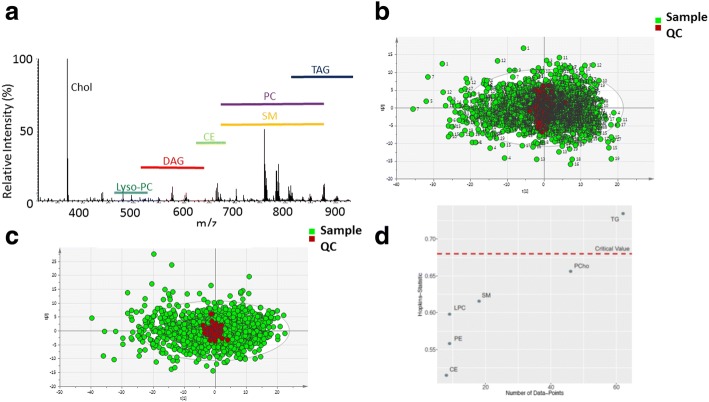
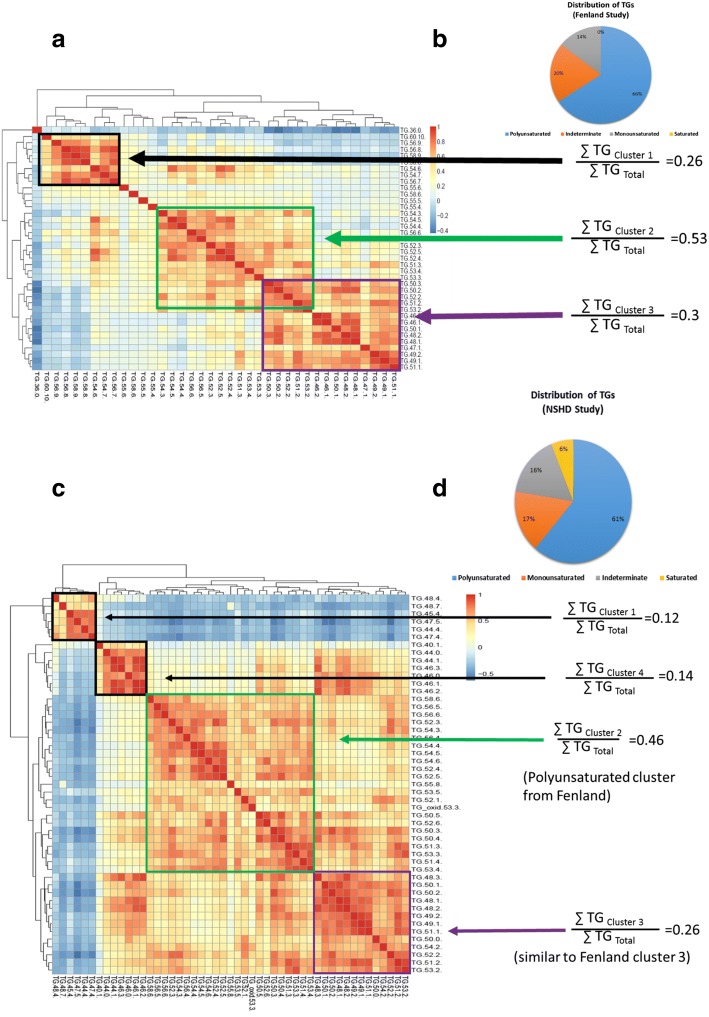
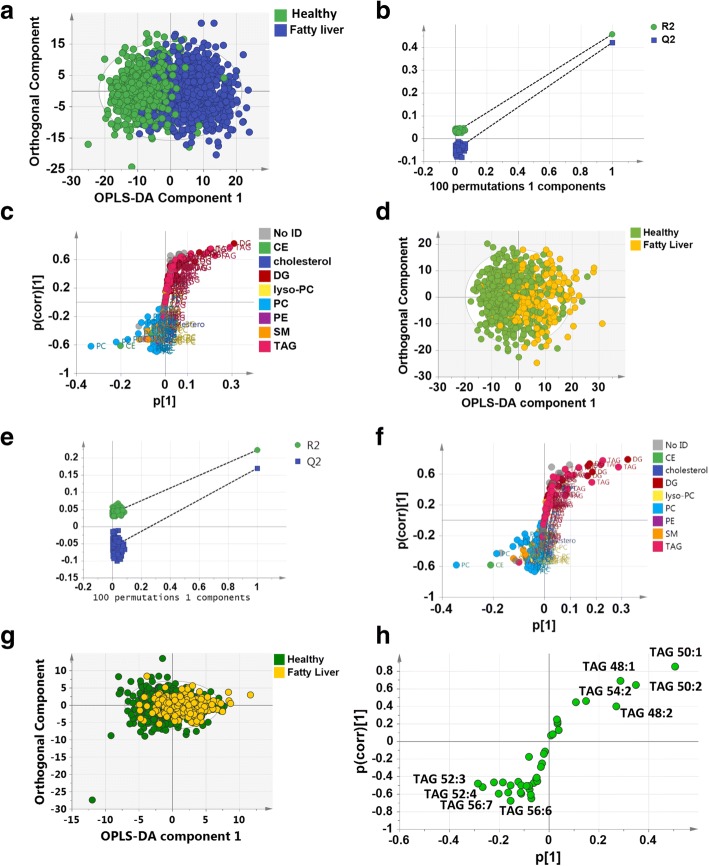
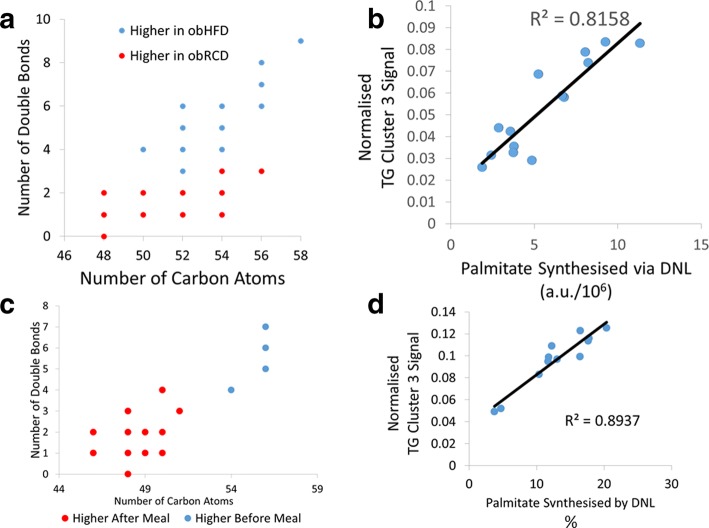
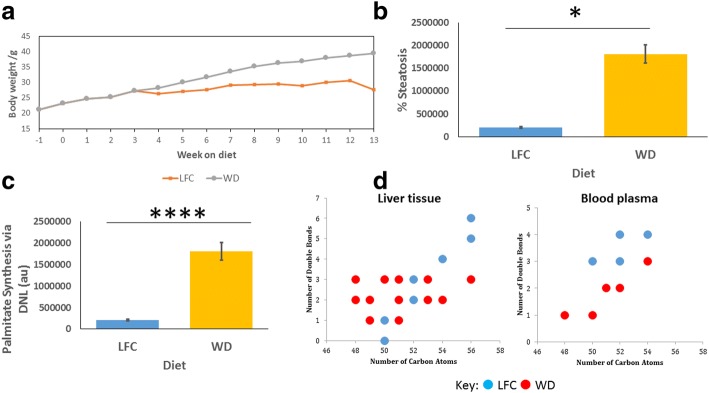
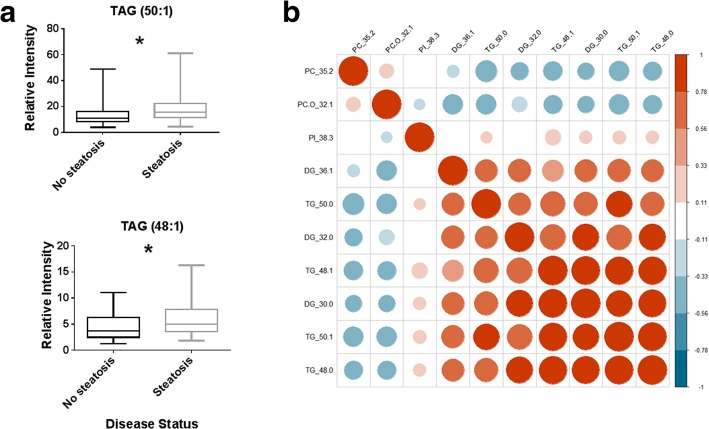
BACKGROUND: Diet is a major contributor to metabolic disease risk, but there is controversy as to whether increased incidences of diseases such as non-alcoholic fatty liver disease arise from consumption of saturated fats or free sugars. Here, we investigate whether a sub-set of triacylglycerols (TAGs) were associated with hepatic steatosis and whether they arise from de novo lipogenesis (DNL) from the consumption of carbohydrates. RESULTS: We conduct direct infusion mass spectrometry of lipids in plasma to study the association between specific TAGs and hepatic steatosis assessed by ultrasound and fatty liver index in volunteers from the UK-based Fenland Study and evaluate clustering of TAGs in the National Survey of Health and Development UK cohort. We find that TAGs containing saturated and monounsaturated fatty acids with 16-18 carbons are specifically associated with hepatic steatosis. These TAGs are additionally associated with higher consumption of carbohydrate and saturated fat, hepatic steatosis, and variations in the gene for protein phosphatase 1, regulatory subunit 3b (PPP1R3B), which in part regulates glycogen synthesis. DNL is measured in hyperphagic ob/ob mice, mice on a western diet (high in fat and free sugar) and in healthy humans using stable isotope techniques following high carbohydrate meals, demonstrating the rate of DNL correlates with increased synthesis of this cluster of TAGs. Furthermore, these TAGs are increased in plasma from patients with biopsy-confirmed steatosis. CONCLUSION: A subset of TAGs is associated with hepatic steatosis, even when correcting for common confounding factors. We suggest that hepatic steatosis risk in western populations is in part driven by increased DNL following carbohydrate rich meals in addition to the consumption of saturated fat.
Overview
The claims and statistics of this paper haven’t been checked yet.
Free: it reads the open-access text and checks the first 5 claims that cite a source we can check. Create a free account to check every claim.
Integrity signals
Registry
Cites
Statistics
Figures
Verification
Claims the paper makes
The claims and statistics of this paper haven’t been checked yet.
Free: it reads the open-access text and checks the first 5 claims that cite a source we can check. Create a free account to check every claim.
Claims other papers make about this one
Each is checked against this paper’s own text: does it say what the citing paper says it does?
The source backs part of the claim, not all of it — or backs it for a different population, condition or comparison.
In the citing paper
“Furthermore, specific TAGs containing palmitate or stearate, i.e. TAG 48:0, 50:0, 48:1 and 50:1, have been associated with the severity of MASLD and with an increased risk of developing T2D.105,106”
From Lipid metabolism in MASLD and MASH: From mechanism to the clinic (2024) · cites this paper as [105]
Experimental — accuracy not yet measuredIn the citing paper
“In MASLD, a significant increase in TAGs with lower carbon numbers and double bonds,94,102,105 DAGs,99,102,107 and PE94,[108], [109], [110], [111] has been reported.”
From Lipid metabolism in MASLD and MASH: From mechanism to the clinic (2024) · cites this paper as [105]
Self-check
Percentages, sums and reported differences re-computed from the paper’s own numbers.
The self-check needs the paper’s full text.
Citations
Cites
Endoplasmic Reticulum Stress Links Obesity, Insulin Action, and Type 2 Diabetes
Özcan, U., Cao, Q., Yilmaz, E., Lee, A.-H., Iwakoshi, N. N., Özdelen, E., Tuncman, G., Görgün, C., Glimcher, L. H., & Hotamisligil, G. S. (2004) · Science · doi:10.1126/science.1103160 · Cited by 3,844 · cited 1×
“Obesity is responsible for suppression of insulin signalling by hyperactivation of c-jun N-terminal kinase (JNK) through increased ER stress [43, 44].”
BackgroundMetabolite profiles and the risk of developing diabetes
Wang, T. J., Larson, M. G., Vasan, R. S., Cheng, S., Rhee, E. P., McCabe, E., Lewis, G. D., Fox, C. S., Jacques, P. F., Fernandez, C., et al. (2011) · Nature Medicine · doi:10.1038/nm.2307 · Cited by 3,143 · cited 1×
“There has been much interest in the field of metabolomics in the generation of predictive markers of T2DM and its associated metabolic diseases [33, 34].”
BackgroundBedogni, G., Bellentani, S., Miglioli, L., Masutti, F., Passalacqua, M., Castiglione, A., & Tiribelli, C. (2006) · BMC Gastroenterology · doi:10.1186/1471-230x-6-33 · Cited by 3,042 · cited 4×
“Analyses were compared with FLI, based on BMI, waist circumference, total TAGs and plasma levels of GGT [21].”
BackgroundInfluentialPredicting basal metabolic rate, new standards and review of previous work.
Wn, S. (1985) · PubMed · Cited by 2,958
Triglycerides and Cardiovascular Disease: A Scientific Statement From the American Heart Association
Miller, M., Stone, N. J., Ballantyne, C., Bittner, V., Criqui, M. H., Ginsberg, H. N., Goldberg, A. C., Howard, W. J., Jacobson, M. S., Kris-Etherton, P. M., et al. (2011) · Circulation · doi:10.1161/cir.0b013e3182160726 · Cited by 1,871
The pathogenesis of insulin resistance: integrating signaling pathways and substrate flux
Samuel, V. T., & Shulman, G. I. (2016) · Journal of Clinical Investigation · doi:10.1172/jci77812 · Cited by 1,484 · cited 1×
“However, TAGs are synthesised via DAGs and these lipids have been shown to interfere with insulin signalling by activating protein kinase CƐ (PKCƐ) which leads to reduced insulin-stimulated insulin receptor substrate 2 (IRS-2) tyrosine phosphorylation [40, 41].”
BackgroundLipid-induced insulin resistance: unravelling the mechanism
Samuel, V. T., Petersen, K. F., & Shulman, G. I. (2010) · The Lancet · doi:10.1016/s0140-6736(10)60408-4 · Cited by 1,189 · cited 10×
“Across these studies, the TAG species have in common relative enrichments for palmitate, stearate and oleate fatty acids, and studies using gas chromatography (GC)-MS have also reported associations between these FAs from total lipid extracts and increased risk of developing T2DM [15].”
BackgroundInfluentialLambert, J. E., Ramos–Roman, M. A., Browning, J. D., & Parks, E. J. (2014) · Gastroenterology · doi:10.1053/j.gastro.2013.11.049 · Cited by 1,069
Hypertriglyceridemia as a cardiovascular risk factor
Austin, M. A., Hokanson, J. E., & Edwards, K. L. (1998) · The American Journal of Cardiology · doi:10.1016/s0002-9149(98)00031-9 · Cited by 1,066
Speliotes, E. K., Yerges-Armstrong, L. M., Wu, J., Hernaez, R., Kim, L. J., Palmer, C. D., Gudnason, V., Eiriksdottir, G., Garcia, M. E., Launer, L. J., et al. (2011) · PLoS Genetics · doi:10.1371/journal.pgen.1001324 · Cited by 984
Intrahepatic fat, not visceral fat, is linked with metabolic complications of obesity
Fabbrini, E., Magkos, F., Mohammed, B. S., Pietka, T., Abumrad, N. A., Patterson, B. W., Okunade, A., & Klein, S. (2009) · Proceedings of the National Academy of Sciences · doi:10.1073/pnas.0904944106 · Cited by 972 · cited 1×
“[29] examining obese individuals matched for either visceral adipose tissue (VAT) or intrahepatic TAG Fig.”
BackgroundWei, Y., Wang, D., Topczewski, F., & Pagliassotti, M. J. (2006) · American Journal of Physiology-Endocrinology and Metabolism · doi:10.1152/ajpendo.00644.2005 · Cited by 735 · cited 2×
“Saturated fats, in particular palmitate and stearate, have been shown to be potent inducers of ER stress and apoptosis in hepatic cells [45].”
BackgroundRhee, E. P., Cheng, S., Larson, M. G., Walford, G. A., Lewis, G. D., McCabe, E., Yang, E., Farrell, L., Fox, C. S., O’Donnell, C. J., et al. (2011) · Journal of Clinical Investigation · doi:10.1172/jci44442 · Cited by 647 · cited 2×
“One of the most reproducible set of prospective biomarkers of IR and T2DM are TAGs with shorter, more saturated FAs, first reported in the Framingham cohort [10] and since reproduced in a number of large cohort studies as well as the investigation of rarer patient groups of T2DM [11, 12, 14, 19, 35].”
BackgroundFabbrini, E., Mohammed, B. S., Magkos, F., Korenblat, K. M., Patterson, B. W., & Klein, S. (2008) · Gastroenterology · doi:10.1053/j.gastro.2007.11.038 · Cited by 631 · cited 1×
“[27] making the intriguing observation that while apoB100 production is proportional to VLDL secretion and DNL production of FAs in the liver in individuals with normal hepatic fat content, apoB100 production does not keep pace with TAG VLDL secretion in fatty liver disease, first leading to increased VLDL particle si…”
BackgroundKorenblat, K. M., Fabbrini, E., Mohammed, B. S., & Klein, S. (2008) · Gastroenterology · doi:10.1053/j.gastro.2008.01.075 · Cited by 592 · cited 1×
“Whole-body IR has been identified as one of the major influences on hepatic steatosis [28].”
BackgroundStegemann, C., Pechlaner, R., Willeit, P., Langley, S. R., Mangino, M., Mayr, U., Menni, C., Moayyeri, A., Santer, P., Rungger, G., et al. (2014) · Circulation · doi:10.1161/circulationaha.113.002500 · Cited by 564 · cited 11×
“Across these studies, the TAG species have in common relative enrichments for palmitate, stearate and oleate fatty acids, and studies using gas chromatography (GC)-MS have also reported associations between these FAs from total lipid extracts and increased risk of developing T2DM [15].”
BackgroundInfluentialForouhi, N. G., Koulman, A., Sharp, S. J., Imamura, F., Kröger, J., Schulze, M. B., Crowe, F. L., Huerta, J. M., Guevara, M., Beulens, J. W., et al. (2014) · The Lancet Diabetes & Endocrinology · doi:10.1016/s2213-8587(14)70146-9 · Cited by 557
Self-citationDe novo lipogenesis in the liver in health and disease: more than just a shunting yard for glucose
Sanders, F. W. B., & Griffin, J. L. (2016) · Biological Reviews · doi:10.1111/brv.12178 · Cited by 539 · cited 1×
“While DNL has classically been thought to play a relatively minor role in total saturated FA content of the mammalian body [8], Lambert et al.”
BackgroundSelf-citationSamuel, V. T., Liu, Z.-X., Wang, A., Beddow, S. A., Geisler, J. G., Kahn, M., Zhang, X.-M., Monia, B. P., Bhanot, S., & Shulman, G. I. (2007) · Journal of Clinical Investigation · doi:10.1172/jci30400 · Cited by 497
Luukkonen, P. K., Zhou, Y., Sädevirta, S., Leivonen, M., Arola, J., Orešič, M., Hyötyläinen, T., & Yki-Järvinen, H. (2016) · Journal of Hepatology · doi:10.1016/j.jhep.2016.01.002 · Cited by 461 · cited 1×
“[24] also have reported increases in these TAGs in liver biopsies from individuals with high HOMA-IR in patients with NAFLD.”
BackgroundRuhl, C. E., & Everhart, J. E. (2015) · Alimentary Pharmacology & Therapeutics · doi:10.1111/apt.13012 · Cited by 452 · cited 1×
“Fatty liver index (FLI) is a surrogate marker of fatty liver determined by ultrasound, composed of BMI, waist circumference, TAGs and gamma-glutamyl transferase (GGT) concentration [21, 22].”
BackgroundBayesian hierarchical clustering
Heller, K. A., & Ghahramani, Z. (2005) · Proceedings of the 22nd international conference on Machine learning - ICML '05 · doi:10.1145/1102351.1102389 · Cited by 357 · cited 2×
“Heller KA, Ghahramani Z. Bayesian hierarchical clustering.”
MethodPostreceptor insulin resistance contributes to human dyslipidemia and hepatic steatosis
Semple, R. K., Sleigh, A., Murgatroyd, P. R., Adams, C. A., Bluck, L., Jackson, S., Vottero, A., Kanabar, D., Charlton-Menys, V., Durrington, P., et al. (2009) · Journal of Clinical Investigation · doi:10.1172/jci37432 · Cited by 344 · cited 3×
“used deuterium labelled water to directly investigate DNL in those with either insulin signalling defects or lipodystrophy, describing increased rates of DNL with IR [17].”
BackgroundDietary Sugars Stimulate Fatty Acid Synthesis in Adults3
Parks, E. J., Skokan, L. E., Timlin, M. T., & Dingfelder, C. S. (2008) · The Journal of Nutrition · doi:10.1093/jn/138.6.1039 · Cited by 316 · cited 1×
“in carbohydrate consumption, particularly in the form of sugary drinks and fruit juices which can rapidly raise the concentration of glucose and fructose in the blood, stimulating DNL [32].”
BackgroundPlasma Lipid Profiling Shows Similar Associations with Prediabetes and Type 2 Diabetes
Meikle, P. J., Wong, G., Barlow, C. K., Weir, J. M., Greeve, M. A., MacIntosh, G. L., Almasy, L., Comuzzie, A. G., Mahaney, M. C., Kowalczyk, A., et al. (2013) · PLoS ONE · doi:10.1371/journal.pone.0074341 · Cited by 308 · cited 10×
“Across these studies, the TAG species have in common relative enrichments for palmitate, stearate and oleate fatty acids, and studies using gas chromatography (GC)-MS have also reported associations between these FAs from total lipid extracts and increased risk of developing T2DM [15].”
BackgroundInfluentialKuh, D., Pierce, M., Adams, J., Deanfield, J., Ekelund, U., Friberg, P., Ghosh, A. K., Harwood, N., Hughes, A., Macfarlane, P. W., et al. (2011) · International Journal of Epidemiology · doi:10.1093/ije/dyq231 · Cited by 296 · cited 1×
“the TAG identification in the Fenland cohort, plasma samples from 1701 individuals were analysed from the NSHD cohort [47].”
MethodSelf-citationInflammation and endoplasmic reticulum stress in obesity and diabetes
Hotamisligil, G. S. (2008) · International Journal of Obesity · doi:10.1038/ijo.2008.238 · Cited by 285 · cited 1×
“Obesity is responsible for suppression of insulin signalling by hyperactivation of c-jun N-terminal kinase (JNK) through increased ER stress [43, 44].”
BackgroundTowards metabolic biomarkers of insulin resistance and type 2 diabetes: progress from the metabolome
Roberts, L. D., Koulman, A., & Griffin, J. L. (2014) · The Lancet Diabetes & Endocrinology · doi:10.1016/s2213-8587(13)70143-8 · Cited by 263 · cited 1×
“There has been much interest in the field of metabolomics in the generation of predictive markers of T2DM and its associated metabolic diseases [33, 34].”
BackgroundSelf-citationNew index for clustering tendency and its application to chemical problems
Lawson, R. G., & Jurs, P. C. (1990) · Journal of Chemical Information and Computer Sciences · doi:10.1021/ci00065a010 · Cited by 249
Schwarz, J. M., Neese, R. A., Turner, S., Dare, D., & Hellerstein, M. K. (1995) · Journal of Clinical Investigation · doi:10.1172/jci118342 · Cited by 244
Pattern Recognition Theory and Applications
(1987) · Springer eBooks · doi:10.1007/978-3-642-83069-3 · Cited by 205
Kotronen, A., Velagapudi, V. R., Yetukuri, L., Westerbacka, J., Bergholm, R., Ekroos, K., Makkonen, J., Taskinen, M.-R., Orešič, M., & Yki-Järvinen, H. (2009) · Diabetologia · doi:10.1007/s00125-009-1282-2 · Cited by 198 · cited 11×
“Across these studies, the TAG species have in common relative enrichments for palmitate, stearate and oleate fatty acids, and studies using gas chromatography (GC)-MS have also reported associations between these FAs from total lipid extracts and increased risk of developing T2DM [15].”
BackgroundInfluentialThe epidemiology, pathogenesis and histopathology of fatty liver disease
Levene, A. P., & Goldin, R. D. (2012) · Histopathology · doi:10.1111/j.1365-2559.2011.04145.x · Cited by 192 · cited 12×
“The recent increase in prevalence of NAFLD [30], even in children [31], raises the question as to whether environmental factors and, in particular, diet may play an important role.”
BackgroundInfluentialKotronen, A., Seppänen‐Laakso, T., Westerbacka, J., Kiviluoto, T., Arola, J., Ruskeepää, A., Yki‐Järvinen, H., & Orešič, M. (2010) · Obesity · doi:10.1038/oby.2009.326 · Cited by 179
Associations between dietary patterns and obesity phenotypes
Paradis, A.-M., Godin, G., Përusse, L., & Vohl, M. (2009) · International Journal of Obesity · doi:10.1038/ijo.2009.179 · Cited by 171 · cited 1×
“major impact on TAG composition, total fatty acid intake [6, 7] and the synthesis of new fatty acids (FAs) in the liver”
BackgroundPrediction of non-alcoholic fatty-liver disease and liver fat content by serum molecular lipids
Orešič, M., Hyötyläinen, T., Kotronen, A., Gopalacharyulu, P., Nygren, H., Arola, J., Castillo, S., Mattila, I., Hakkarainen, A., Borra, R. J. H., et al. (2013) · Diabetologia · doi:10.1007/s00125-013-2981-2 · Cited by 167
Hepatic insulin resistance in mice with hepatic overexpression of diacylglycerol acyltransferase 2
Jornayvaz, F. R., Birkenfeld, A. L., Jurczak, M. J., Kanda, S., Guigni, B. A., Jiang, D. C., Zhang, D., Lee, H.-Y., Samuel, V. T., & Shulman, G. I. (2011) · Proceedings of the National Academy of Sciences · doi:10.1073/pnas.1103451108 · Cited by 164 · cited 2×
“Indeed, increasing TAG synthesis by overexpressing diacylglycerol acyltransferase 2 (DGAT2) specifically in the liver of mice has been shown to increase the total liver content of DAGs as well as TAGs, increase the activity of PKC and reduce the phosphorylation of IRS-2 [42].”
BackgroundPalmitoleic acid is elevated in fatty liver disease and reflects hepatic lipogenesis
Lee, J. J., Lambert, J. E., Hovhannisyan, Y., Ramos-Roman, M. A., Trombold, J. R., Wagner, D. A., & Parks, E. J. (2015) · The American Journal of Clinical Nutrition · doi:10.3945/ajcn.114.092262 · Cited by 164 · cited 11×
“The recent increase in prevalence of NAFLD [30], even in children [31], raises the question as to whether environmental factors and, in particular, diet may play an important role.”
BackgroundInfluentialSerum Triglycerides in Health and in Ischemic Heart Disease
Brown, D. F., Kinch, S. H., & Doyle, J. T. (1965) · New England Journal of Medicine · doi:10.1056/nejm196510282731802 · Cited by 163
Marques-Lopes, I., Ansorena, D., Astiasaran, I., Forga, L., & Martínez, J. A. (2001) · The American Journal of Clinical Nutrition · doi:10.1093/ajcn/73.2.253 · Cited by 159
Chan, S. M. H., Sun, R.-Q., Zeng, X.-Y., Choong, Z.-H., Wang, H., Watt, M. J., & Ye, J.-M. (2013) · Diabetes · doi:10.2337/db12-1397 · Cited by 146
Hernaez, R., McLean, J., Lazo, M., Brancati, F. L., Hirschhorn, J. N., Borecki, I. B., Harris, T. B., Nguyen, T., Kamel, I. R., Bonekamp, S., et al. (2013) · Clinical Gastroenterology and Hepatology · doi:10.1016/j.cgh.2013.02.011 · Cited by 145 · cited 1×
“have been associated with susceptibility to fatty liver disease [37, 38].”
BackgroundMurray, A. J., Knight, N. S., Cochlin, L. E., McAleese, S., Deacon, R. M. J., Rawlins, J. N. P., & Clarke, K. (2009) · The FASEB Journal · doi:10.1096/fj.09-139691 · Cited by 139 · cited 1×
“I Maintenance; Special Diet Services, UK) or a high-fat diet previously described [48] (energy composition: 55% fat, 29% protein, and 16% carbohydrate; diet code: 829197; Special Diet Services, UK) (n = 7 per diet and genotype).”
BackgroundSelf-citationCardiovascular Disease Risk Factors Predict the Development of Type 2 Diabetes
D’Agostino, R. B., Hamman, R. F., Karter, A. J., Mykkanen, L., Wagenknecht, L. E., Haffner, S. M., & for the Insulin Resistance Atherosclerosis Study Investigators (2004) · Diabetes Care · doi:10.2337/diacare.27.9.2234 · Cited by 129
Diraison, F., Pachiaudi, C., & Beylot, M. (1997) · Journal of Mass Spectrometry · doi:10.1002/(sici)1096-9888(199701)32:1<81::aid-jms454>3.0.co;2-2 · Cited by 123 · cited 1×
“corporation of deuterium into TAG FA methyl esters (FAMEs) from deuterium-enriched water as previously described [17, 50].”
A practical guide to metabolomic profiling as a discovery tool for human heart disease
Heather, L. C., Wang, X., West, J. A., & Griffin, J. L. (2012) · Journal of Molecular and Cellular Cardiology · doi:10.1016/j.yjmcc.2012.12.001 · Cited by 85
Self-citationNutritional Management of Insulin Resistance in Nonalcoholic Fatty Liver Disease (NAFLD)
Conlon, B., Beasley, J., Aebersold, K., Jhangiani, S., & Wylie-Rosett, J. (2013) · Nutrients · doi:10.3390/nu5104093 · Cited by 72
Inclusion of Plasma Lipid Species Improves Classification of Individuals at Risk of Type 2 Diabetes
Wong, G., Barlow, C. K., Weir, J. M., Jowett, J. B. M., Magliano, D. J., Zimmet, P., Shaw, J. E., & Meikle, P. J. (2013) · PLoS ONE · doi:10.1371/journal.pone.0076577 · Cited by 38 · cited 1×
“Specific TAGs have also been associated with both pre-diabetes and T2DM, and have been shown to improve predictions of T2DM when used alongside classic risk factors such as HbA1c and total TAGs [12, 13].”
BackgroundThe ddY mouse: a model of postprandial hypertriglyceridemia in response to dietary fat
Yamazaki, T., Kishimoto, K., & Ezaki, O. (2012) · Journal of Lipid Research · doi:10.1194/jlr.m023713 · Cited by 33 · cited 1×
“major impact on TAG composition, total fatty acid intake [6, 7] and the synthesis of new fatty acids (FAs) in the liver”
BackgroundMechanistic insights revealed by lipid profiling in monogenic insulin resistance syndromes
Eiden, M., Koulman, A., Hatunic, M., West, J. A., Murfitt, S. A., Osei, M., Adams, C., Wang, X., Chu, Y., Marney, L. C., et al. (2015) · Genome Medicine · doi:10.1186/s13073-015-0179-6 · Cited by 30 · cited 16×
“Across these studies, the TAG species have in common relative enrichments for palmitate, stearate and oleate fatty acids, and studies using gas chromatography (GC)-MS have also reported associations between these FAs from total lipid extracts and increased risk of developing T2DM [15].”
BackgroundMethodInfluentialSelf-citationNon-alcoholic fatty liver disease (Nafld) in obese children- effect of refined carbohydrates in diet
Félix, D. R., Costenaro, F., Gottschall, C. B. A., & Coral, G. P. (2016) · BMC Pediatrics · doi:10.1186/s12887-016-0726-3 · Cited by 25 · cited 1×
“even in children [31], raises the question as to whether”
BackgroundOn-Line Relational SOM for Dissimilarity Data
Olteanu, M., Vialaneix, N., & Cottrell, M. (2012) · Advances in intelligent systems and computing · doi:10.1007/978-3-642-35230-0_2 · Cited by 19
Randomized algorithms for fast Bayesian hierarchical clustering
Heller, K., & Ghahramani, Z. (2005) · Cited by 14
Research works printed but not linked: 2
- Frayn KN Metabolic reguation: a human perspective 2003 2 Oxford Blackwell Publishing
- James G, Witten D, Hastie T, Tibshirani R. An introduction to statistical learning with applications in R. Springer-Verlag New York: Springer Texts in Statistics; 2015.
Cited by
Rinella, M. E., Neuschwander-Tetri, B. A., Siddiqui, M. S., Abdelmalek, M. F., Caldwell, S., Barb, D., Kleiner, D. E., & Loomba, R. (2023) · Hepatology · doi:10.1097/hep.0000000000000323 · Cited by 2,667
SpaceM reveals metabolic states of single cells
Rappez, L., Stadler, M., Triana, S., Gathungu, R. M., Ovchinnikova, K., Phapale, P., Heikenwalder, M., & Alexandrov, T. (2021) · Nature Methods · doi:10.1038/s41592-021-01198-0 · Cited by 390
Azzu, V., Vacca, M., Virtue, S., Allison, M., & Vidal-Puig, A. (2020) · Gastroenterology · doi:10.1053/j.gastro.2019.12.054 · Cited by 369
Self-citationHendriks, D., Brouwers, J. F., Hamer, K., Geurts, M. H., Luciana, L., Massalini, S., López-Iglesias, C., Peters, P. J., Rodríguez-Colman, M. J., Chuva de Sousa Lopes, S., et al. (2023) · Nature Biotechnology · doi:10.1038/s41587-023-01680-4 · Cited by 249
Biomarkers and subtypes of deranged lipid metabolism in non-alcoholic fatty liver disease
Mato, J. M., Alonso, C., Noureddin, M., & Lu, S. C. (2019) · World Journal of Gastroenterology · doi:10.3748/wjg.v25.i24.3009 · Cited by 199
Metadata
- Authors
- Sanders, F. W. B., Acharjee, A., Walker, C., Marney, L., Roberts, L. D., Imamura, F., Jenkins, B., Case, J., Ray, S., Virtue, S., Vidal-Puig, A., Kuh, D., Hardy, R., Allison, M., Forouhi, N., Murray, A. J., Wareham, N., Vacca, M., Koulman, A., & Griffin, J. L.
- Affiliations
- MRC Elsie Widdowson Laboratory (GB)
- University of Leeds (GB)
- University of Cambridge (GB)
- MRC Unit for Lifelong Health and Ageing (GB)
- Cambridge University Hospitals NHS Foundation Trust (GB)
- Corresponding author
- Griffin, Julian L.
- ORCID
- Venue
- Genome Biology
- Published
- 2018-06-20
- Volume
- 19
- Issue
- 1
- Pages
- 79-79
- ISSN
- 1465-6906 (ISSN-L)
- 1474-760X
- PMC
- PMC6009819
- OpenAlex
- W2809459680
- Cited by
- 114
- References
- 53
- Citations by year
- 2026: 12 · 2025: 8 · 2024: 10 · 2023: 12 · 2022: 25 · 2021: 27 · 2020: 11 · 2019: 8 · 2018: 1
- FWCI
- 9.17
- Type
- journal article
- Language
- en
- Open access
- gold
- doi.org
- Licence
- cc-by
- creativecommons.org/licenses/by/4.0/ (tdm)
- creativecommons.org/licenses/by/4.0/ (vor)
- Locations
- Genome biology (publishedVersion, cc-by)
- Europe PMC (PubMed Central) (publishedVersion, other-oa)
- PubMed Central (publishedVersion, cc-by)
- PubMed (publishedVersion)
- White Rose Research Online (University of Leeds, The University of Sheffield, University of York) (acceptedVersion)
- Apollo (University of Cambridge) (submittedVersion)
- DOAJ (DOAJ: Directory of Open Access Journals) (submittedVersion, cc-by-sa)
- UCL Discovery (University College London) (submittedVersion)
- University of Birmingham Research Portal (University of Birmingham) (submittedVersion, cc-by)
- CINECA IRIS Institutional Research Information System (University of Bari Aldo Moro) (submittedVersion, cc-by-nc-nd)
- Spiral (Imperial College London) (submittedVersion, cc-by)
- Apollo (University of Cambridge) (submittedVersion, cc-by)
- Apollo
- Funders
- Medical Research Council (MC UP A90 1006, MC PC 13030, MC UU12015/1, MC UU 12015/5)
- Evelyn Trust (NA)
- National Institutes of Health (1R01ES022186-01)
- Topics
- Health Sciences › Medicine › Hepatology › Liver Disease Diagnosis and Treatment
- Health Sciences › Medicine › Endocrinology, Diabetes and Metabolism › Diet, Metabolism, and Disease
- Life Sciences › Biochemistry, Genetics and Molecular Biology › Biochemistry › Lipid metabolism and biosynthesis
- Keywords
- hepatic steatosis, non-alcoholic fatty liver disease, de novo lipogenesis, triglycerides, saturated fatty acids, monounsaturated fatty acids, carbohydrate intake, saturated fat, PPP1R3B, glycogen synthesis, Western diet, free sugars, plasma lipidomics, direct infusion mass spectrometry, ob/ob mice, stable isotope tracers
- MeSH terms
- Animals, Carbohydrates, Diet, Fatty Liver, Female, Humans, Lipids, Liver, Male, Mice, Inbred C57BL, Mice, Obese, Middle Aged, Risk, Triglycerides, Lipogenesis, Mice
About these checks
Registry, retraction, Cites and statistics results are computed, not judged, with one exception: a printed reference that no index lists is read once by a model before it counts as a citation error. Claims are extracted by a model and kept only when their quote appears verbatim in the text; each cited source is then checked, with a model’s help, for whether it says what the claim relies on. Those verdicts can be wrong — read the claim’s quote and the cited source before relying on one.
Statistics and arithmetic are recomputed, not judged.
Confidence bands are shown only for fields calibrated on our annotated test set. None is calibrated yet, so no band is shown.
What counts as a claim ›How we measure confidence ›How we check this ›
Are you an author, or do you see a problem with this page? Request a review
Data sources
Bibliographic data: Semantic Scholar, OpenAlex, Crossref.
Contains information from the Semantic Scholar Academic Graph Datasets, made available under the ODC Attribution License (ODC-BY 1.0).
Semantic Scholar’s data is described in: Kinney, R., et al. (2023). The Semantic Scholar Open Data Platform. arXiv:2301.10140.
