

The effectiveness of different singly administered high doses of buprenorphine in reducing suicidal ideation in acutely depressed people with co-morbid opiate dependence: a randomized, double-blind, clinical trial
Open accessThe DOI matches its Crossref record; 42 of the 43 references it cites were found in a registry or an index.
Abstract
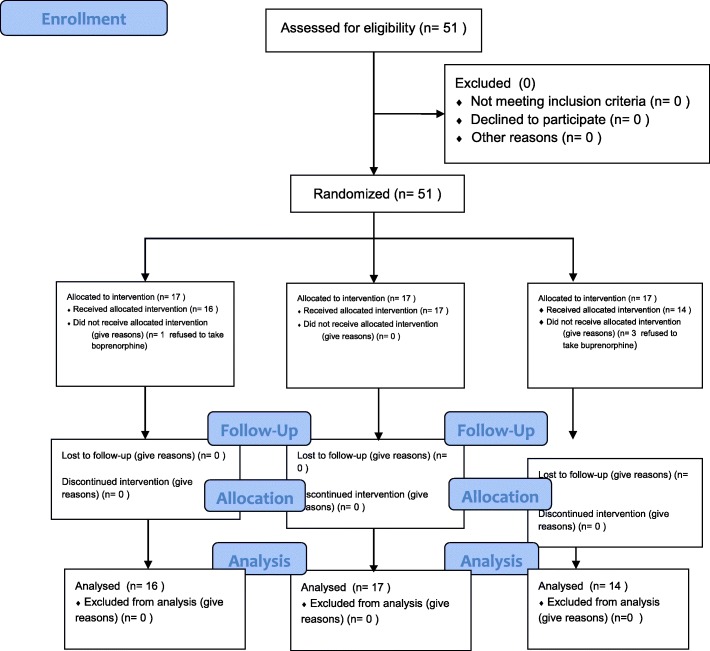
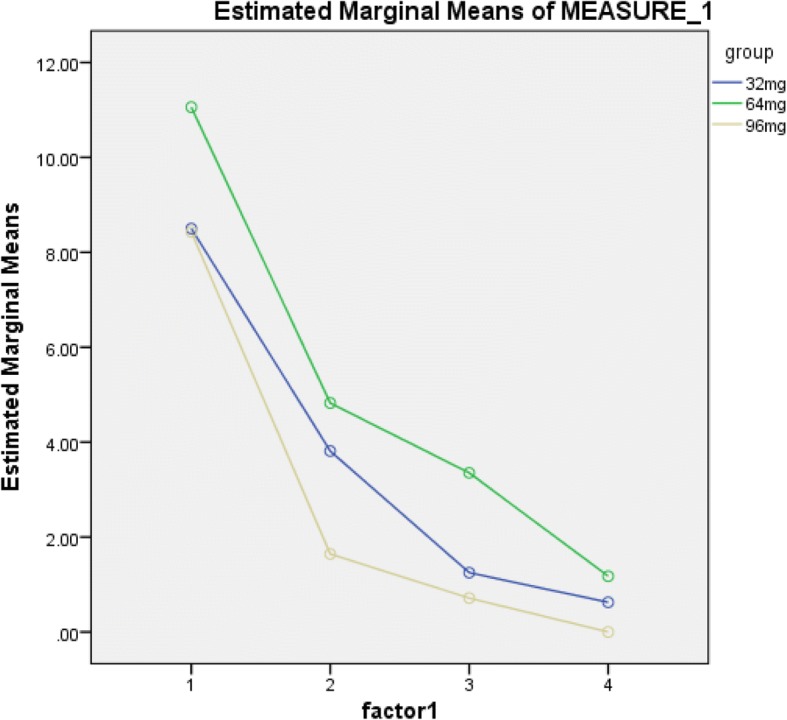
BACKGROUND: Buprenorphine is usually administered to treat opioid use disorder and pain syndromes. This research presents the first study regarding the effectiveness of different singly administered high doses of buprenorphine (a partial opioid agonist (of μ-opioid receptors), a potent opioid antagonist (of κ-receptors) and a partial agonist of nociception receptors) in reducing suicidal ideation in acutely depressed people with co-morbid opiate dependence. It follows small studies that suggest that ultra-low-dose buprenorphine may be useful in reducing suicidal ideation. The goal of this study was to describe the outcome of different doses of buprenorphine on suicidal opioid-dependent patients over a 3-day interval, by conducting a randomized clinical trial. METHODS: Fifty-one suicidal male inpatients who fulfilled the Diagnostic and Statistical Manual of Mental Disorders, Fifth Edition (DSM-5) criteria for both opioid dependence and major depressive disorder were randomized to three groups (n = 17 per group) to receive a single, sublingual dose of buprenorphine (32 mg, 64 mg, or 96 mg). Out of 51 participants, there were 47 patients; 16 (34.04%) received 32 mg, 17 (36.17%) received 64 mg, and 14 (29.78%) received 96 mg of sublingual buprenorphine. They were evaluated by using psychometric assessment of the Beck Scale for Suicidal Ideation (BSSI) and interviews based on DSM-5 criteria. A placebo group was not included because of the high probability of severe withdrawal without active pharmacological treatment. The study was conducted with appropriate precautions and monitoring of respiratory and cardiovascular measures. The medication was administered while the patients were in moderate opiate withdrawal, as indicated by the presence of four to five withdrawal symptoms. A structured clinical interview was conducted, and urine toxicology testing was performed. RESULTS: Patients completed the 3-day trial course. The outcomes illustrated a significant reduction in BSSI scores within each of the three groups, p < 0.01., but no difference in results between the groups, p = 0.408. CONCLUSIONS: The results suggest that a single high dose of buprenorphine could rapidly treat suicidal ideations. A single high dose of buprenorphine may be a main-mechanism medication that gives a rapid treatment for suicidal opioid-dependent patients. Placebo-controlled trials are required to measure the safety and the physiological and psychological effects of this medication.
Overview
The claims and statistics of this paper haven’t been checked yet.
Free: it reads the open-access text and checks the first 5 claims that cite a source we can check. Create a free account to check every claim.
Integrity signals
Registry
Cites
Statistics
Figures
Verification
Claims the paper makes
The claims and statistics of this paper haven’t been checked yet.
Free: it reads the open-access text and checks the first 5 claims that cite a source we can check. Create a free account to check every claim.
Claims other papers make about this one
Each is checked against this paper’s own text: does it say what the citing paper says it does?
The source backs part of the claim, not all of it — or backs it for a different population, condition or comparison.
In the citing paper
“Few case reports demonstrate similar effect in individuals with opioid use disorder using higher dosages (139, 285, 286).”
From A brain-centric model of suicidal behavior (2020) · cites this paper as [139]
Experimental — accuracy not yet measuredThe source backs part of the claim, not all of it — or backs it for a different population, condition or comparison.
In the citing paper
“A small RCT delivered promising results suggesting that patients with depression who received low-dose buprenorphine were more likely to show decreases in suicidal ideation after 2 weeks and 4 weeks of treatment 328 .”
From Suicide and suicide risk (2019) · cites this paper as [328]
Experimental — accuracy not yet measuredThe cited source says what the claim attributes to it.
In the citing paper
“Buprenorphine was well tolerated.”
From Suicide and suicide risk (2019) · cites this paper as [328]
The cited source says what the claim attributes to it.
In the citing paper
“The kappa opioid receptor system may play a role in negative affect associated with suicidal ideation and may explain the possible antisuicidal effects of the kappa antagonist buprenorphine (139, 140).”
From A brain-centric model of suicidal behavior (2020) · cites this paper as [139]
The cited source says what the claim attributes to it.
In the citing paper
“and may also reduce suicidal ideation (139, 140, 283, 285, 286).”
From A brain-centric model of suicidal behavior (2020) · cites this paper as [139]
Self-check
Percentages, sums and reported differences re-computed from the paper’s own numbers.
The self-check needs the paper’s full text.
Citations
Cites
1 retracted
Larkin, G. L., & Beautrais, A. L. (2011) · International Journal of Neuropsychopharmacology · doi:10.1017/s1461145711000629 · Cited by 258
RetractedLithium in the prevention of suicide in mood disorders: updated systematic review and meta-analysis
Cipriani, A., Hawton, K., Stockton, S., & Geddes, J. R. (2013) · BMJ · doi:10.1136/bmj.f3646 · Cited by 920
Comorbidity of substance use disorders with mood and anxiety disorders
Merikangas, K. R., Mehta, R. L., Molnar, B. E., Walters, E. E., Swendsen, J. D., Aguilar-Gaziola, S., Bijl, R., Borges, G., Caraveo-Anduaga, J. J., Dewit, D. J., et al. (1998) · Addictive Behaviors · doi:10.1016/s0306-4603(98)00076-8 · Cited by 725
Kaplan and Sadock's synopsis of psychiatry
Sadock, B. J., & Sadock, V. A. (1998) · Cited by 450
Merikangas, K. R., Zhang, H., Avenevoli, S., Acharyya, S., Neuenschwander, M., & Angst, J. (2003) · Archives of General Psychiatry · doi:10.1001/archpsyc.60.9.993 · Cited by 419
Diagnosis and Symptoms of Depression in Opiate Addicts: Course and Relationship to Treatment Outcome
Rounsaville, B. J. (1982) · Archives of General Psychiatry · doi:10.1001/archpsyc.1982.04290020021004 · Cited by 410
The role of the dynorphin–κ opioid system in the reinforcing effects of drugs of abuse
Wee, S., & Koob, G. F. (2010) · Psychopharmacology · doi:10.1007/s00213-010-1825-8 · Cited by 398 · cited 2×
“Research studies have revealed that activation of dynorphin is likely accompanied by negative emotional conditions, anxiety, and depression [40].”
BackgroundBuprenorphine Treatment of Refractory Depression
Bodkin, J. A., Zornberg, G. L., Lukas, S. E., & Cole, J. O. (1995) · Journal of Clinical Psychopharmacology · doi:10.1097/00004714-199502000-00008 · Cited by 346
Yovell, Y., Bar, G., Mashiah, M., Baruch, Y., Briskman, I., Asherov, J., Lotan, A., Rigbi, A., & Panksepp, J. (2016) · American Journal of Psychiatry · doi:10.1176/appi.ajp.2015.15040535 · Cited by 311
Effects of κ-opioid receptor ligands on intracranial self-stimulation in rats
Todtenkopf, M. S., Marcus, J. F., Portoghese, P. S., & Carlezon, W. A. (2004) · Psychopharmacology · doi:10.1007/s00213-003-1680-y · Cited by 273
ROSS, J., TEESSON, M., DARKE, S., LYNSKEY, M., ALI, R., RITTER, A., & COOKE, R. (2005) · Drug and Alcohol Review · doi:10.1080/09595230500286039 · Cited by 226
Polydrug dependence and psychiatric comorbidity among heroin injectors
Darke, S., & Ross, J. (1997) · Drug and Alcohol Dependence · doi:10.1016/s0376-8716(97)00117-8 · Cited by 197
George, M. S., Raman, R., Benedek, D. M., Pelic, C. G., Grammer, G. G., Stokes, K. T., Schmidt, M., Spiegel, C., DeAlmeida, N., Beaver, K. L., et al. (2014) · Brain Stimulation · doi:10.1016/j.brs.2014.03.006 · Cited by 193
Suicide among adults aged 35-64 years--United States, 1999-2010.
Sullivan, E., Annest, J. L., Luo, F., Simon, T. R., & Dahlberg, L. L. (2013) · MMWR Morbidity and Mortality Weekly Report · Cited by 189
The Role of ECT in Suicide Prevention
Fink, M., Kellner, C. H., & McCall, W. V. (2014) · The Journal of ECT · doi:10.1097/yct.0b013e3182a6ad0d · Cited by 188
Emergency Treatment of Young People Following Deliberate Self-harm
Olfson, M., Gameroff, M. J., Marcus, S. C., Greenberg, T., & Shaffer, D. (2005) · Archives of General Psychiatry · doi:10.1001/archpsyc.62.10.1122 · Cited by 166
HYPOHAPTOGLOBINAEMIA AS AN EPIDEMIOLOGICAL AND CLINICAL INDICATOR FOR MALARIA
Rougemont, A. C., Bouvier, M., Perrin, L., Yerly, S., Brenner, E., Srivastava, I., Dumbo, O., Soula, G., Tamoura, B., Dolo, A., et al. (1988) · The Lancet · doi:10.1016/s0140-6736(88)90186-9 · Cited by 137
Assessment and Treatment of Comorbid Psychiatric Disorders in Opioid-Dependent Patients
Strain, E. C. (2002) · The Clinical Journal of Pain · doi:10.1097/00002508-200207001-00003 · Cited by 132
Greenwald, M., Johanson, C.-E., Bueller, J., Chang, Y., Moody, D. E., Kilbourn, M., Koeppe, R., & Zubieta, J.-K. (2007) · Biological Psychiatry · doi:10.1016/j.biopsych.2006.04.043 · Cited by 124
An open-label study of a functional opioid κ antagonist in the treatment of opioid dependence
Rothman, R. B., Gorelick, D. A., Heishman, S. J., Eichmiller, P. R., Hill, B. H., Norbeck, J., & Liberto, J. G. (2000) · Journal of Substance Abuse Treatment · doi:10.1016/s0740-5472(99)00074-4 · Cited by 124
Suicide among adults aged 35-64 years--United States, 1999-2010.
(2013) · PubMed · Cited by 94
Buprenorphine treatment outcome in dually diagnosed heroin dependent patients: A retrospective study
Gerra, G., Leonardi, C., D'Amore, A., Strepparola, G., Fagetti, R., Assi, C., Zaimovic, A., & Lucchini, A. (2006) · Progress in Neuro-Psychopharmacology and Biological Psychiatry · doi:10.1016/j.pnpbp.2005.10.007 · Cited by 88
Effects of buprenorphine on behavioral tests for antidepressant and anxiolytic drugs in mice
Falcon, E., Maier, K., Robinson, S. A., Hill-Smith, T. E., & Lucki, I. (2015) · Psychopharmacology · doi:10.1007/s00213-014-3723-y · Cited by 84
Larkin, G. L., Beautrais, A. L., Turelli, R. R., Sanacora, G., Powsner, S., Lippmann, M., & Krystal, J. (2011) · European Psychiatry · doi:10.1016/s0924-9338(11)73311-9 · Cited by 80
Patterns of major depression and drug-related problems amongst heroin users across 36 months
Darke, S. G., Mills, K. L., Teesson, M., Ross, J. E., Williamson, A., & Havard, A. (2009) · Psychiatry Research · doi:10.1016/j.psychres.2007.12.007 · Cited by 65
Ipser, J. C., Terburg, D., Syal, S., Phillips, N., Solms, M., Panksepp, J., Malcolm-Smith, S., Thomas, K., Stein, D. J., & van Honk, J. (2013) · Psychoneuroendocrinology · doi:10.1016/j.psyneuen.2012.05.002 · Cited by 55
ANTIDEPRESSANT EFFECTS OF BUPRENORPHINE
Emrich, H. M., Vogt, P., Herz, A., & Kissling, W. (1982) · The Lancet · doi:10.1016/s0140-6736(82)90727-9 · Cited by 55
Savant, J. D., Barry, D. T., Cutter, C. J., Joy, M. T., Dinh, A., Schottenfeld, R. S., & Fiellin, D. A. (2012) · Drug and Alcohol Dependence · doi:10.1016/j.drugalcdep.2012.06.020 · Cited by 54
Maremmani, A., Rovai, L., Pani, P., Pacini, M., Lamanna, F., Rugani, F., Schiavi, E., Dell'Osso, L., & Maremmani, I. (2011) · Annals of General Psychiatry · doi:10.1186/1744-859x-10-17 · Cited by 53
Antipsychotic effect of buprenorphine in schizophrenia
Schmauss, C., Yassouridis, A., & Emrich, H. M. (1987) · American Journal of Psychiatry · doi:10.1176/ajp.144.10.1340 · Cited by 52
New developments in the management of opioid dependence: focus on sublingual buprenorphine–naloxone
Soyka, M. (2015) · Substance Abuse and Rehabilitation · doi:10.2147/sar.s45585 · Cited by 48
The Anti-Suicidal Potential of Buprenorphine: A Case Report
Striebel, J. M., & Kalapatapu, R. K. (2014) · The International Journal of Psychiatry in Medicine · doi:10.2190/pm.47.2.g · Cited by 31
Calvert, G. M., Beckman, J., Prado, J. B., Bojes, H. K., Mulay, P., Lackovic, M., Waltz, J., Schwartz, A., Mitchell, Y., Moraga‐McHaley, S., et al. (2015) · MMWR Morbidity and Mortality Weekly Report · doi:10.15585/mmwr.mm6254a2 · Cited by 28
Dual Diagnosis: Focusing on Depression and Recommendations for Treatment
Torrens, M., Martínez-Sanvisens, D., Martinez-Riera, R., Bulbena, A., Szerman, N., & Ruiz, P. (2011) · Addictive Disorders & Their Treatment · doi:10.1097/adt.0b013e318215f322 · Cited by 23
Ahmadi, J., & Jahromi, M. S. (2017) · Substance Use & Misuse · doi:10.1080/10826084.2017.1400063 · Cited by 19
Self-citationMintzer, M. Z. (2007) · Heroin addiction and related clinical problems · Cited by 19
Fast Treatment of Methamphetamine Related Anxiety and Depressive Disorders: A Novel Approach
Ahmadi, J. (2016) · Journal of Addiction Medicine and Therapeutic Science · doi:10.17352/2455-3484.000011 · Cited by 18
Self-citationSchäfer, I., Fischer, M., Reimer, J., Karow, A., & Haasen, C. (2011) · Mental Health and Substance Use · doi:10.1080/17523281.2011.533452 · Cited by 16
Fast Treatment of Methamphetamine Related Anxiety and Depressive Disorders: A Novel Approach
Ahmadi, J. (2016) · Journal of Addiction Medicine and Therapeutic Science · doi:10.17352/2455-3484.0000011 · Cited by 9
Self-citation(2002) · PubMed · Cited by 8
Ahmadi, J. (2016) · Insights in Biomedicine · Cited by 7
Self-citationScale for Suicide Ideation: Psychometric properties of a self-report version
Beck, A. T., Steer, R. A., & Ranieri, W. F. (1988) · Journal of Clinical Psychology · doi:10.1002/1097-4679(198807)44:4<499::aid-jclp2270440404>3.0.co;2-6
Research works printed but not linked: 3
- Ahmadi J Instant detoxification of heroin with high dose of buprenorphine J Addict Prev 2016 4 1 3
- Moggi F Etiological models on the relationship of mental disorders and substance use disorders Suchtmed 2013 15 327 333
- Soyka M. Affective and anxiety disorders and drug addiction. Suchtmed, German. 2013;15:341–8.
Cited by
Turecki, G., Brent, D. A., Gunnell, D., O’Connor, R. C., Oquendo, M. A., Pirkis, J., & Stanley, B. H. (2019) · Nature Reviews Disease Primers · doi:10.1038/s41572-019-0121-0 · Cited by 1,074
A brain-centric model of suicidal behavior
Mann, J. J., & Rizk, M. M. (2020) · American Journal of Psychiatry · doi:10.1176/appi.ajp.2020.20081224 · Cited by 214
Suicide Risk and Addiction: The Impact of Alcohol and Opioid Use Disorders
Rizk, M. M., Herzog, S., Dugad, S., & Stanley, B. (2021) · Current Addiction Reports · doi:10.1007/s40429-021-00361-z · Cited by 161
Gudin, J., & Fudin, J. (2020) · Pain and Therapy · doi:10.1007/s40122-019-00143-6 · Cited by 172
Understanding buprenorphine for use in chronic pain: expert opinion
Webster, L., Gudin, J., Raffa, R. B., Kuchera, J., Rauck, R., Fudin, J., Adler, J., & Mallick-Searle, T. (2020) · Pain Medicine · doi:10.1093/pm/pnz356 · Cited by 130
“Buprenorphine is a full agonist at the more recently identified opioid receptor-like 1 (ORL1), which may contribute to analgesia [34], and it is an antagonist at the dand j-opioid receptors, which lessen constipation, dysphoria, and abuse potential and help reduce mental depression [7,35,36].”
Background
Metadata
- Authors
- Ahmadi, J., Jahromi, M. S., & Ehsaei, Z.
- Affiliations
- Shiraz University of Medical Sciences (IR)
- Corresponding author
- Ahmadi, Jamshid
- Venue
- Trials
- Published
- 2018-08-29
- Volume
- 19
- Issue
- 1
- Pages
- 462-462
- ISSN
- 1745-6215 (ISSN-L)
- PMC
- PMC6114789
- OpenAlex
- W2889521581
- Cited by
- 48
- References
- 43
- Citations by year
- 2026: 6 · 2025: 4 · 2024: 2 · 2023: 4 · 2022: 9 · 2021: 8 · 2020: 9 · 2019: 6
- FWCI
- 5.48
- Type
- journal article
- Language
- en
- Open access
- gold
- doi.org
- Licence
- cc-by
- creativecommons.org/licenses/by/4.0/ (tdm)
- Locations
- Trials (publishedVersion, cc-by)
- Europe PMC (PubMed Central) (publishedVersion, cc-by)
- PubMed Central (publishedVersion, cc-by)
- PubMed (publishedVersion)
- DOAJ (DOAJ: Directory of Open Access Journals) (submittedVersion, cc-by-sa)
- Funders
- Shiraz University of Medical Sciences (IR.SUMS.REC.1395.102,)
- Topics
- Health Sciences › Medicine › Public Health, Environmental and Occupational Health › Opioid Use Disorder Treatment
- Social Sciences › Psychology › Clinical Psychology › Suicide and Self-Harm Studies
- Health Sciences › Medicine › Pharmacology (medical) › Treatment of Major Depression
- Keywords
- buprenorphine, suicidal ideation, major depressive disorder, opioid use disorder, comorbidities, high-dose buprenorphine, sublingual administration, opioid withdrawal, dose comparison, suicide prevention, depression treatment, opioid antagonists, mu-opioid receptor agonists, kappa opioid receptor
- MeSH terms
- Administration, Sublingual, Adult, Analgesics, Opioid, Antidepressive Agents, Buprenorphine, Major Depressive Disorder, Depressive Disorder, Major, Double-Blind Method, Humans, Iran, Male, Opioid-Related Disorders, Substance Withdrawal Syndrome, Time Factors, Comorbidity, Treatment Outcome, Suicidal Ideation
About these checks
Registry, retraction, Cites and statistics results are computed, not judged, with one exception: a printed reference that no index lists is read once by a model before it counts as a citation error. Claims are extracted by a model and kept only when their quote appears verbatim in the text; each cited source is then checked, with a model’s help, for whether it says what the claim relies on. Those verdicts can be wrong — read the claim’s quote and the cited source before relying on one.
Statistics and arithmetic are recomputed, not judged.
Confidence bands are shown only for fields calibrated on our annotated test set. None is calibrated yet, so no band is shown.
What counts as a claim ›How we measure confidence ›How we check this ›
Are you an author, or do you see a problem with this page? Request a review
Data sources
Bibliographic data: Semantic Scholar, OpenAlex, Crossref.
Contains information from the Semantic Scholar Academic Graph Datasets, made available under the ODC Attribution License (ODC-BY 1.0).
Semantic Scholar’s data is described in: Kinney, R., et al. (2023). The Semantic Scholar Open Data Platform. arXiv:2301.10140.
