

Effectiveness and cost-effectiveness of an electronic mindfulness-based intervention (eMBI) on maternal mental health during pregnancy: the mindmom study protocol for a randomized controlled clinical trial
Open accessThe DOI matches its Crossref record; 62 of the 64 references it cites were found in a registry or an index.
Abstract
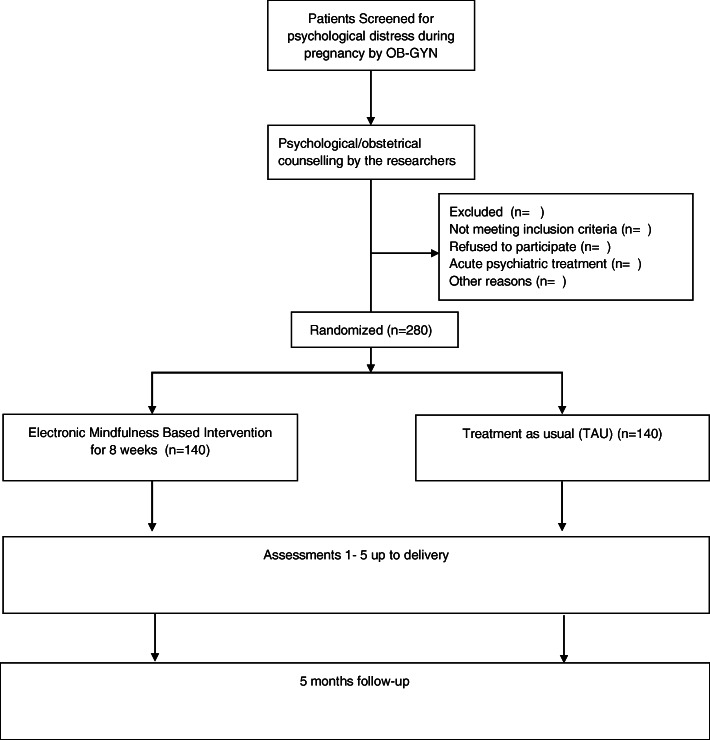
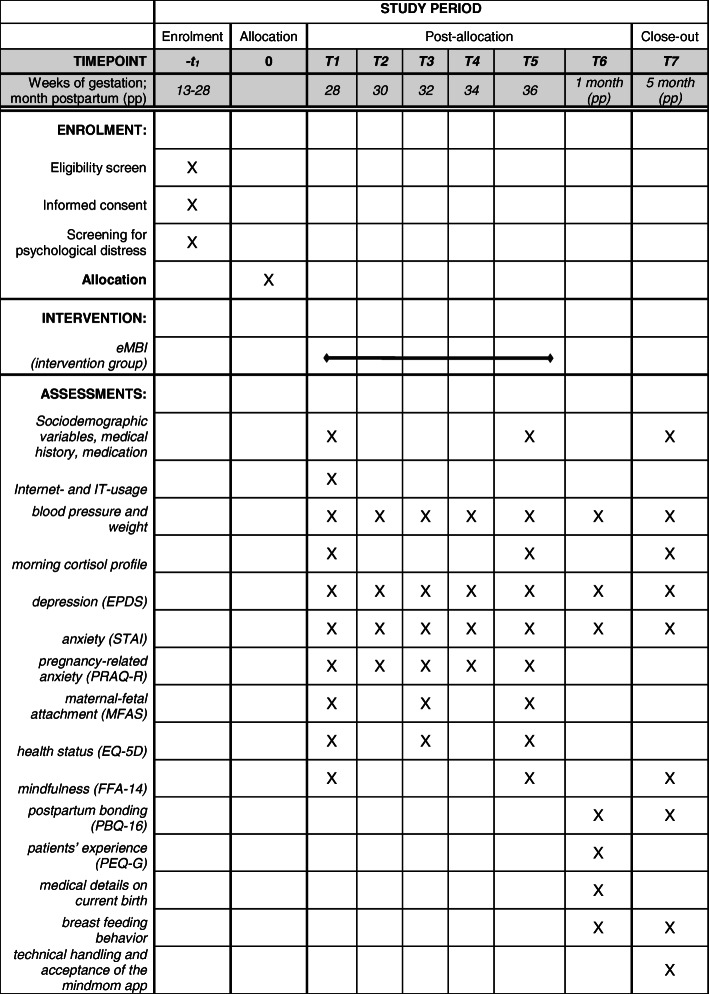
Background: Mental disorders are common during the peripartum period and may have far-reaching consequences for both mother and child. Unfortunately, most antenatal care systems do not provide any structured screening for maternal mental health. As a consequence, mental illnesses are often overlooked and not treated adequately. If correctly diagnosed, cognitive behavioral therapy is currently the treatment of choice for mental illnesses. In addition, mindfulness-based interventions (MBIs) seem to represent a promising treatment option for anxiety and depression during the peripartum period. Considering the internet’s increasing omnipresence, MBIs can also be offered electronically via a (tablet) computer or smartphone (electronically based MBI = eMBI). Objective: The current study aims to examine the clinical effectiveness and cost-effectiveness of an eMBI (the mindmom application) developed by an interdisciplinary team of gynecologists, psychologists, and midwives, teaching pregnant women how to deal with stress, pregnancy-related anxiety, and depressive symptoms. The study sample consists of pregnant women in their third trimester who screened positive for emotional distress. The mindmom study is a bicentric prospective randomized controlled trial (RCT), which is currently conducted at the University women’s hospitals of Heidelberg and Tübingen, Germany. Methods: Within the scope of the routine prenatal care, pregnant women attending routine pregnancy care in Baden-Wuerttemberg, Germany, are invited to participate in a screening for mental distress based on the Edinburgh Postnatal Depression Scale (EPDS). Women with an EPDS screening result > 9 will be referred to one of the mindmom coordinating study centers and are offered counseling either face-to-face or via videotelephony. After an initial psychological counseling, women are invited to participate in an eMBI in their last pregnancy trimester. The study will enroll N = 280 study participants (N = 140 per group), who are randomized 1:1 into the intervention (IG) or control group (treatment as usual = TAU). All participants are requested to complete a total of 7 digital assessments (5 visits pre- and 2 follow-up visits postpartum), involving self-report questionnaires, sociodemographic and medical data, physiological measures, and morning cortisol profiles. The primary outcome will be depressive and anxiety symptoms, measured by the Edinburgh Postnatal Depression Scale, the State Trait Anxiety Questionnaire, and the Pregnancy-Related Anxiety Questionnaire. Secondary outcomes include mindfulness, satisfaction with birth, quality of life, fetal attachment, bonding, mode of delivery, and cost-effectiveness. Discussion: This is the first German RCT to examine the (cost-)effectiveness of an eMBI on maternal mental health during pregnancy. If successful, the mindmom app represents a low-threshold and cost-effective help for psychologically distressed women during pregnancy, thereby reducing the negative impact on perinatal health outcome. Trial registration: Deutsches Register Klinischer Studien, German Clinical Trials Register DRKS00017210. Registered on 13 January 2020. Retrospectively registered.
Overview
The claims and statistics of this paper haven’t been checked yet.
Free: it reads the open-access text and checks the first 5 claims that cite a source we can check. Create a free account to check every claim.
Integrity signals
Registry
Cites
Statistics
Figures
Verification
Claims the paper makes
The claims and statistics of this paper haven’t been checked yet.
Free: it reads the open-access text and checks the first 5 claims that cite a source we can check. Create a free account to check every claim.
Claims other papers make about this one
Each is checked against this paper’s own text: does it say what the citing paper says it does?
The source backs part of the claim, not all of it — or backs it for a different population, condition or comparison.
In the citing paper
“The flexibility inherent in digital platform modalities represent opportunities for prevention, early symptom detection, and facilitation of various treatment options [8].”
From Technology-Based Approaches for Supporting Perinatal Mental Health (2022) · cites this paper as [8]
Experimental — accuracy not yet measuredThe cited source says what the claim attributes to it.
In the citing paper
“Another key advantage of digital methods for use in mental health is the ability to provide users with screening, psychoeducation, and possible treatment depending on need and symptom severity [8].”
From Technology-Based Approaches for Supporting Perinatal Mental Health (2022) · cites this paper as [8]
Self-check
Percentages, sums and reported differences re-computed from the paper’s own numbers.
The self-check needs the paper’s full text.
Citations
Cites
Faul, F., Erdfelder, E., Lang, A.-G., & Buchner, A. (2007) · Behavior Research Methods · doi:10.3758/bf03193146 · Cited by 65,971
Statistical power analysis for the behavioral sciences
(1990) · Computers, Environment and Urban Systems · doi:10.1016/0198-9715(90)90050-4 · Cited by 65,269
Harris, P. A., Taylor, R., Thielke, R., Payne, J., Gonzalez, N., & Conde, J. G. (2009) · Journal of Biomedical Informatics · doi:10.1016/j.jbi.2008.08.010 · Cited by 51,384
(2013) · Cited by 44,563
Statistical power analyses using G∗Power 3.1: tests for correlation and regression analyses
Faul, F., Erdfelder, E., Buchner, A., & Lang, A.-G. (2009) · Behavior Research Methods · doi:10.3758/brm.41.4.1149 · Cited by 37,615
Statistical Power Analysis for the Behavioral Sciences
Cohen, J. (2013) · doi:10.4324/9780203771587 · Cited by 25,373
Detection of Postnatal Depression: Development of the 10-item Edinburgh Postnatal Depression Scale
Cox, J. L., Holden, J. M., & Sagovsky, R. (1987) · British Journal of Psychiatry · doi:10.1192/bjp.150.6.782 · Cited by 14,183
A test of missing completely at random for multivariate data with missing values
Little, R. J. A. (1988) · Journal of the American Statistical Association · doi:10.1080/01621459.1988.10478722 · Cited by 8,963
Moher, D., Hopewell, S., Schulz, K. F., Montori, V., Gotzsche, P. C., Devereaux, P. J., Elbourne, D., Egger, M., & Altman, D. G. (2010) · BMJ · doi:10.1136/bmj.c869 · Cited by 8,883
(2010) · Cited by 7,034
Research works printed but not linked: 2
- Laux L Glanzmann P Schaffner P Spielberger CD Das State-Trait- Angstinventar (STAI) 1981 Weinheim Beltz Testgesellschaft
- van den Bergh B The influence of maternal emotion during pregnancy on fetal and neonatal behavior J Prenat Perinat Psychol Health 1990 5 119 130
Cited by
Haßdenteufel, K., Müller, M., Abele, H., Brucker, S. Y., Graf, J., Zipfel, S., Bauer, A., Jakubowski, P., Pauluschke‐Fröhlich, J., Wallwiener, M., et al. (2023) · Psychiatry Research · doi:10.1016/j.psychres.2023.115599 · Cited by 45
Self-citationTechnology-Based Approaches for Supporting Perinatal Mental Health
Novick, A. M., Kwitowski, M., Dempsey, J., Cooke, D. L., & Dempsey, A. G. (2022) · Current Psychiatry Reports · doi:10.1007/s11920-022-01349-w · Cited by 35
Dörsam, A. F., Bye, A., Graf, J., Howard, L. M., Throm, J. K., Müller, M., Wallwiener, S., Zipfel, S., Micali, N., & Giel, K. E. (2022) · International Journal of Eating Disorders · doi:10.1002/eat.23780 · Cited by 22
Self-citationSchiele, C., Goetz, M., Hassdenteufel, K., Müller, M., Graf, J., Zipfel, S., & Wallwiener, S. (2022) · Frontiers in Psychiatry · doi:10.3389/fpsyt.2022.939577 · Cited by 12
Self-citationConsumer acceptance of using a digital technology to manage postpartum depression
Tang, J. J., Malladi, I., Covington, M. T., Ng, E., Dixit, S., Shankar, S., & Kachnowski, S. (2022) · Frontiers in Global Women s Health · doi:10.3389/fgwh.2022.844172 · Cited by 17
An evaluation of digital intervention for perinatal depression and anxiety: A systematic review
Arifin, S. R. M., Kamaruddin, A., Muhammad, N. A., Nurumal, M. S., Mohadis, H. M., Hussain, N. H. N., & Wardaningsih, S. (2024) · AIMS Public Health · doi:10.3934/publichealth.2024025 · Cited by 23
“Digital approaches have been used to deliver interventions aimed at alleviating perinatal depression and anxiety, especially in Western countries [16–18].”
BackgroundMethodWorku, B. T., Abdulahi, M., Amenu, D., & Bonnechère, B. (2025) · BMC Pregnancy and Childbirth · doi:10.1186/s12884-025-07286-9 · Cited by 19
“Furthermore, technology-supported health services such as internet-based mental health interventions offer the advantages of accessibility, cost-effectiveness, and anonymity to the individual [27, 36].”
Krebs, F., Lorenz, L., Nawabi, F., Alayli, A., & Stock, S. (2022) · International Journal of Environmental Research and Public Health · doi:10.3390/ijerph19105863 · Cited by 19
“To reduce the risk of bias due to co-interventions, pregnant women who scored highly on the Edinburgh Postnatal Depression Scale (sum score > 9 and/or score = 3 on item 10) were excluded from this trial and were referred to another intervention, which took place simultaneously in the same regions and which targeted st…”
MethodWi, D., Lee, R. Y., & Kantrowitz‐Gordon, I. (2025) · PLoS ONE · doi:10.1371/journal.pone.0322931 · Cited by 10
“Moreover, digital platforms are advantageous in terms of cost-effectiveness in addressing perinatal health and the potential to reach larger participants compared to traditional interventions [23,26], especially during the COVID-19 pandemic.”
Chen, Z., Jiang, J., Hu, T., Luo, L., Chen, C., & Xiang, W. (2022) · Medicine · doi:10.1097/md.0000000000028849 · Cited by 7
Jain, D., Jain, A. K., Metz, G. A. S., Ballanyi, N., Sood, A., Linder, R., & Olson, D. M. (2021) · Frontiers in Reproductive Health · doi:10.3389/frph.2021.673118 · Cited by 8
Mindfulness based intervention reduce anxiety in labor
Kundarti, F. I., Kiswati, K., & Komalyna, I. N. T. (2024) · Gaceta Sanitaria · doi:10.1016/j.gaceta.2024.102359 · Cited by 14
Tabi, K., Bhullar, M., Fantu, L., Shulman, B., Dueck, R., Hippman, C., Ryan, D. M., & Stewart, S. E. (2022) · BMJ Open · doi:10.1136/bmjopen-2021-051935 · Cited by 12
Trinh, T. G., Schwarze, C. E., Müller, M., Goetz, M., Haßdenteufel, K., Wallwiener, M., & Wallwiener, S. (2022) · Geburtshilfe und Frauenheilkunde · doi:10.1055/a-1844-9246 · Cited by 6
“To alleviate the workload of therapists, digital health solutions should also be considered [30].”
Self-citationWriedt, S. C., Müller, M., Reck, C., Nonnenmacher, N., Zietlow, A., & Woll-Weber, C. F. J. (2024) · Infant Behavior and Development · doi:10.1016/j.infbeh.2024.101942 · Cited by 4
Self-citationPrenatal mobile applications reported in the scientific literature: a scoping review
Chaves, A. S. C., Silva, J. G. M., de Jesus, L. M. D. S., Spiri, W. C., & Jensen, R. (2024) · Revista da Escola de Enfermagem da USP · doi:10.1590/1980-220x-reeusp-2024-0236en · Cited by 9
Aplicativos móveis de pré-natal relatados na literatura científica: uma revisão de escopo
Chaves, A. S. C., Silva, J. G. M., de Jesus, L. M. D. S., Spiri, W. C., & Jensen, R. (2024) · Revista da Escola de Enfermagem da USP · doi:10.1590/1980-220x-reeusp-2024-0236pt · Cited by 4
Rahimi, F., & Moenimehr, M. (2022) · Quarterly of Horizon of Medical Sciences · doi:10.32598/hms.28.3.3378.2 · Cited by 8
Arifin, S. R. B. M., Kamaruddin, A., Muhammad, N. A., Nurumal, M. S., Mohadis, H. M., Hussain, N. H. N., & Wardaningsih, S. (2025) · International Journal of Nursing Sciences · doi:10.1016/j.ijnss.2025.04.014 · Cited by 4
“Several digital applications, such as eMBI (the Mindmom application) and Mamamia, have shown modest success in reducing symptoms of depression and anxiety [15 e 20].”
Hernández‐Martínez, C., Canals, J., Patricio, D., Sombrero, I., Ruiz, F., & Rey‐Reñones, C. (2025) · BMC Pregnancy and Childbirth · doi:10.1186/s12884-025-08557-1 · Cited by 2
He, S., Chen, Y., Niu, J., Li, Y., & Huang, C. (2023) · Asia Pacific Journal of Social Work and Development · doi:10.1080/02185385.2023.2246418 · Cited by 2
“Most previous intervention studies on first-time or postnatal mothers focused directly on improving mental health or maternal role adjustment, with increased overall social support as a secondary effect (Aarestrup et al., 2020; Müller et al., 2020; Sajadian et al., 2022; Song et al., 2020).”
Haßdenteufel, K., Müller, M., Abele, H., Brucker, S. Y., Graf, J., Zipfel, S., Bauer, A., Jakubowski, P., Pauluschke‐Fröhlich, J., Wallwiener, M., et al. (2024) · Journal of Medical Internet Research · doi:10.2196/56230 · Cited by 1
“Participating centers were the university hospitals of Heidelberg and Tübingen, along with over 200 gynecological practices in the state of Baden-Wuerttemberg, Germany, as detailed in our previous publication [14].”
Self-citationMarciniak, M. A., Rohde, J., Yuen, K. S. L., Binder, H., Walter, H., Wieser, M. J., Kalisch, R., Roelofs, K., & Kleim, B. (2025) · Internet Interventions · doi:10.1016/j.invent.2025.100843 · Cited by 3
“Previous similar studies often included women in this range (Guo et al., 2020; Müller et al., 2020; Yang et al., 2019).”
Increase Nursing Satisfaction with Electronic Emergency And Disaster System (SPEED)
Mesa, N. D. K., Wihastuti, T. A., Nugroho, F. A., Utami, Y. W., Suryanto, S., Kristianto, H., & Supriyadi, M. (2023) · Jurnal Aisyah Jurnal Ilmu Kesehatan · doi:10.30604/jika.v8i2.1764 · Cited by 1
“Job satisfaction for nurses results from increased nurse time to treat patients so that the quality of care increases (Müller et al., 2020).”
BackgroundHaßdenteufel, K., Müller, M., Abele, H., Brucker, S. Y., Graf, J., Zipfel, S., Bauer, A., Jakubowski, P., Pauluschke‐Fröhlich, J., Wallwiener, M., et al. (2024) · doi:10.2196/preprints.56230
Self-citationHasemann, L., Elkenkamp, S., Müller, M., Bauer, A., Wallwiener, S., & Greiner, W. (2024) · Health Economics Review · doi:10.1186/s13561-024-00537-z
“A full description of the methodology of the RCT can be found elsewhere [25].”
BackgroundMethodInfluentialSelf-citationRisk Factor Analysis and Prediction Model Construction and Validation of Depression During Pregnancy
Qu, H., Zhou, Y., & Yu, Y. (2025) · Clinical and Experimental Obstetrics & Gynecology · doi:10.31083/ceog37267
Ladekarl, M., Specht, I. O., Adegboye, A. R. A., Brødsgaard, A., Nohr, E. A., Olsen, N. J., & Heitmann, B. L. (2025) · PLOS mental health. · doi:10.1371/journal.pmen.0000294 · Cited by 1
“This aligns with previous research showing that digital tools teaching mindfulness, acceptance, and cognitive coping strategies can improve emotional regulation and reduce stress, both generally and during pregnancy - including potential downstream benefits for infant outcomes [18,21,40–43].”
Yamada, S., Arimitsu, K., Buyo, M., Mukai, T., Noguchi, R., Akiko, M. I. S. U., Sonoki, T., & HAYASHI, M. (2025) · Japanese Journal of Complementary and Alternative Medicine · doi:10.1625/jcam.22.9
Hasemann, L., Elkenkamp, S., Müller, M., Bauer, A., Wallwiener, S., & Greiner, W. (2024) · Figshare · doi:10.6084/m9.figshare.26755789
Self-citationHaßdenteufel, K., Müller, M., Multmeier, J., Abele, H., Brucker, S. Y., Zipfel, S., Graf, J., Bauer, A., Jakubowski, P., Pauluschke‐Fröhlich, J., et al. (2026) · doi:10.2196/preprints.93811
Self-citationHaßdenteufel, K., Müller, M., Multmeier, J., Abele, H., Brucker, S. Y., Zipfel, S., Graf, J., Bauer, A., Jakubowski, P., Pauluschke‐Fröhlich, J., et al. (2026) · Journal of Medical Internet Research · doi:10.2196/93811
“The exclusion criteria have been described in detail in the previously published study protocol [19].”
InfluentialSelf-citationKamaruddin, A., Arifin, S. R. M., Muhammad, N. A., Nurumal, M. S., Mohadis, H. M., Hussain, N. H. N., Wardaningsih, S., & Azahari, N. A. (2026) · Women s Health Nursing · doi:10.4069/whn.2026.06.17
“Digital interventions have been reported to improve perinatal depression and anxiety, particularly in Western countries [12-14].”
Metadata
- Authors
- Müller, M., Matthies, L. M., Goetz, M., Abele, H., Brucker, S. Y., Bauer, A., Graf, J., Zipfel, S., Hasemann, L., Wallwiener, M., & Wallwiener, S.
- Affiliations
- Ludwig-Maximilians-Universität München (DE)
- University Hospital Heidelberg (DE)
- Universitäts Frauenklinik (DE)
- Universitätsklinikum Tübingen (DE)
- Bielefeld University (DE)
- Corresponding author
- Wallwiener, Stephanie
- ORCID
- Venue
- Trials
- Published
- 2020-11-17
- Volume
- 21
- Issue
- 1
- Pages
- 933-933
- ISSN
- 1745-6215 (ISSN-L)
- PMC
- PMC7672841
- OpenAlex
- W3099535072
- Cited by
- 33
- References
- 64
- Citations by year
- 2026: 3 · 2025: 8 · 2024: 9 · 2023: 3 · 2022: 9 · 2021: 1
- FWCI
- 2.44
- Type
- journal article
- Language
- en
- Open access
- gold
- doi.org
- Licence
- cc-by
- creativecommons.org/licenses/by/4.0/ (tdm)
- creativecommons.org/licenses/by/4.0/ (vor)
- Locations
- Trials (publishedVersion, cc-by)
- PubMed Central (publishedVersion, cc-by)
- PubMed (publishedVersion)
- DOAJ (DOAJ: Directory of Open Access Journals) (submittedVersion)
- Open access LMU (Ludwid Maxmilian's Universitat Munchen) (submittedVersion, cc-by)
- Informationszentrum Lebenswissenschaften (ZB MED) (submittedVersion, cc-by)
- PUB – Publications at Bielefeld University (Bielefeld University) (submittedVersion)
- Funders
- Federal Joint Commitee (01NVF17034)
- Topics
- Health Sciences › Medicine › Public Health, Environmental and Occupational Health › Maternal Mental Health During Pregnancy and Postpartum
- Social Sciences › Psychology › Applied Psychology › Digital Mental Health Interventions
- Social Sciences › Psychology › Clinical Psychology › Mindfulness and Compassion Interventions
- Keywords
- mindfulness-based interventions, maternal mental health, pregnancy, perinatal anxiety, perinatal depression, mobile health, cost-effectiveness, prenatal screening, Edinburgh Postnatal Depression Scale, pregnancy-related anxiety, cortisol, quality of life, fetal attachment, childbirth satisfaction, mode of delivery, postpartum depression, prenatal care, digital mental health
- MeSH terms
- Child, Cost-Benefit Analysis, Depression, Electronics, Female, Germany, Humans, Mental Health, Pregnancy, Pregnancy Complications, Randomized Controlled Trials as Topic, Treatment Outcome, Mindfulness
About these checks
Registry, retraction, Cites and statistics results are computed, not judged, with one exception: a printed reference that no index lists is read once by a model before it counts as a citation error. Claims are extracted by a model and kept only when their quote appears verbatim in the text; each cited source is then checked, with a model’s help, for whether it says what the claim relies on. Those verdicts can be wrong — read the claim’s quote and the cited source before relying on one.
Statistics and arithmetic are recomputed, not judged.
Confidence bands are shown only for fields calibrated on our annotated test set. None is calibrated yet, so no band is shown.
What counts as a claim ›How we measure confidence ›How we check this ›
Are you an author, or do you see a problem with this page? Request a review
Data sources
Bibliographic data: Semantic Scholar, OpenAlex, Crossref.
Contains information from the Semantic Scholar Academic Graph Datasets, made available under the ODC Attribution License (ODC-BY 1.0).
Semantic Scholar’s data is described in: Kinney, R., et al. (2023). The Semantic Scholar Open Data Platform. arXiv:2301.10140.
