

Effectiveness and cost-effectiveness of an electronic mindfulness-based intervention (eMBI) on maternal mental health during pregnancy: the mindmom study protocol for a randomized controlled clinical trial
Open accessThe DOI matches its Crossref record; 62 of the 64 references it cites were found in a registry or an index.
Abstract
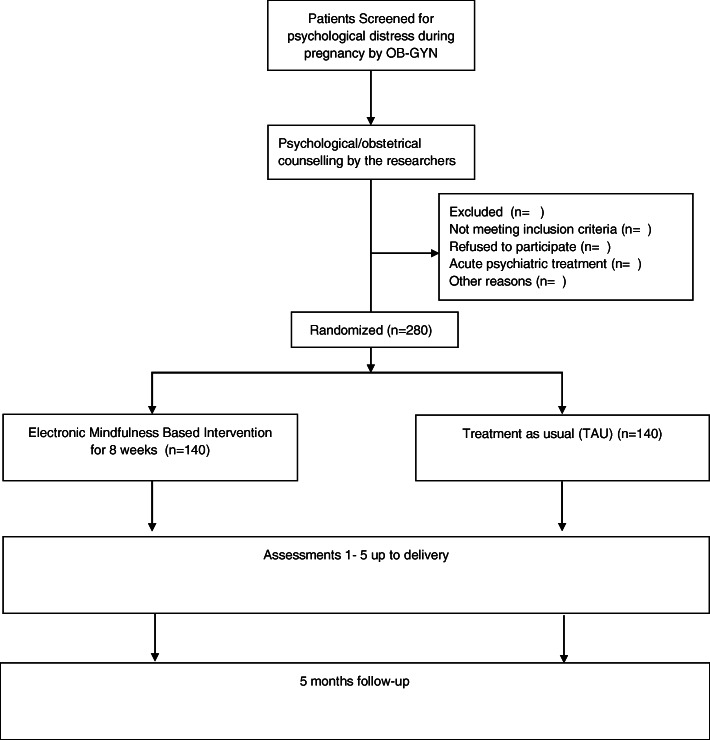
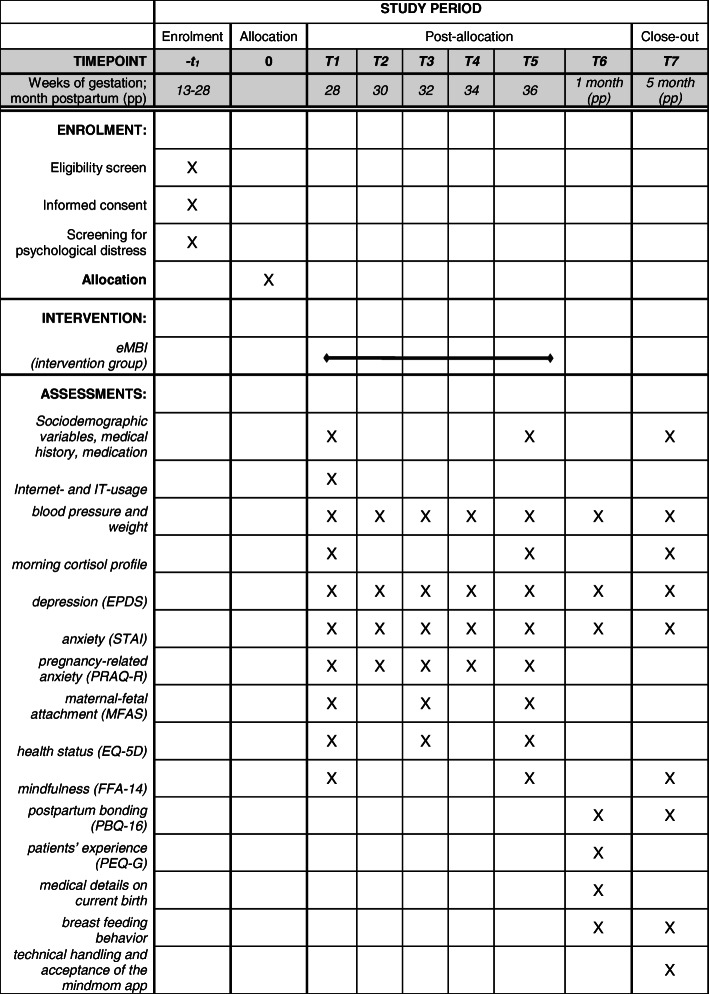
Background: Mental disorders are common during the peripartum period and may have far-reaching consequences for both mother and child. Unfortunately, most antenatal care systems do not provide any structured screening for maternal mental health. As a consequence, mental illnesses are often overlooked and not treated adequately. If correctly diagnosed, cognitive behavioral therapy is currently the treatment of choice for mental illnesses. In addition, mindfulness-based interventions (MBIs) seem to represent a promising treatment option for anxiety and depression during the peripartum period. Considering the internet’s increasing omnipresence, MBIs can also be offered electronically via a (tablet) computer or smartphone (electronically based MBI = eMBI). Objective: The current study aims to examine the clinical effectiveness and cost-effectiveness of an eMBI (the mindmom application) developed by an interdisciplinary team of gynecologists, psychologists, and midwives, teaching pregnant women how to deal with stress, pregnancy-related anxiety, and depressive symptoms. The study sample consists of pregnant women in their third trimester who screened positive for emotional distress. The mindmom study is a bicentric prospective randomized controlled trial (RCT), which is currently conducted at the University women’s hospitals of Heidelberg and Tübingen, Germany. Methods: Within the scope of the routine prenatal care, pregnant women attending routine pregnancy care in Baden-Wuerttemberg, Germany, are invited to participate in a screening for mental distress based on the Edinburgh Postnatal Depression Scale (EPDS). Women with an EPDS screening result > 9 will be referred to one of the mindmom coordinating study centers and are offered counseling either face-to-face or via videotelephony. After an initial psychological counseling, women are invited to participate in an eMBI in their last pregnancy trimester. The study will enroll N = 280 study participants (N = 140 per group), who are randomized 1:1 into the intervention (IG) or control group (treatment as usual = TAU). All participants are requested to complete a total of 7 digital assessments (5 visits pre- and 2 follow-up visits postpartum), involving self-report questionnaires, sociodemographic and medical data, physiological measures, and morning cortisol profiles. The primary outcome will be depressive and anxiety symptoms, measured by the Edinburgh Postnatal Depression Scale, the State Trait Anxiety Questionnaire, and the Pregnancy-Related Anxiety Questionnaire. Secondary outcomes include mindfulness, satisfaction with birth, quality of life, fetal attachment, bonding, mode of delivery, and cost-effectiveness. Discussion: This is the first German RCT to examine the (cost-)effectiveness of an eMBI on maternal mental health during pregnancy. If successful, the mindmom app represents a low-threshold and cost-effective help for psychologically distressed women during pregnancy, thereby reducing the negative impact on perinatal health outcome. Trial registration: Deutsches Register Klinischer Studien, German Clinical Trials Register DRKS00017210. Registered on 13 January 2020. Retrospectively registered.
Overview
The claims and statistics of this paper haven’t been checked yet.
Free: it reads the open-access text and checks the first 5 claims that cite a source we can check. Create a free account to check every claim.
Integrity signals
Registry
Cites
Statistics
Figures
Verification
Claims the paper makes
The claims and statistics of this paper haven’t been checked yet.
Free: it reads the open-access text and checks the first 5 claims that cite a source we can check. Create a free account to check every claim.
Claims other papers make about this one
Each is checked against this paper’s own text: does it say what the citing paper says it does?
The source backs part of the claim, not all of it — or backs it for a different population, condition or comparison.
In the citing paper
“The flexibility inherent in digital platform modalities represent opportunities for prevention, early symptom detection, and facilitation of various treatment options [8].”
From Technology-Based Approaches for Supporting Perinatal Mental Health (2022) · cites this paper as [8]
Experimental — accuracy not yet measuredThe cited source says what the claim attributes to it.
In the citing paper
“Another key advantage of digital methods for use in mental health is the ability to provide users with screening, psychoeducation, and possible treatment depending on need and symptom severity [8].”
From Technology-Based Approaches for Supporting Perinatal Mental Health (2022) · cites this paper as [8]
Self-check
Percentages, sums and reported differences re-computed from the paper’s own numbers.
The self-check needs the paper’s full text.
Citations
Cites
Faul, F., Erdfelder, E., Lang, A.-G., & Buchner, A. (2007) · Behavior Research Methods · doi:10.3758/bf03193146 · Cited by 65,971
Statistical power analysis for the behavioral sciences
(1990) · Computers, Environment and Urban Systems · doi:10.1016/0198-9715(90)90050-4 · Cited by 65,269
Harris, P. A., Taylor, R., Thielke, R., Payne, J., Gonzalez, N., & Conde, J. G. (2009) · Journal of Biomedical Informatics · doi:10.1016/j.jbi.2008.08.010 · Cited by 51,384
(2013) · Cited by 44,563
Statistical power analyses using G∗Power 3.1: tests for correlation and regression analyses
Faul, F., Erdfelder, E., Buchner, A., & Lang, A.-G. (2009) · Behavior Research Methods · doi:10.3758/brm.41.4.1149 · Cited by 37,615
Statistical Power Analysis for the Behavioral Sciences
Cohen, J. (2013) · doi:10.4324/9780203771587 · Cited by 25,373
Detection of Postnatal Depression: Development of the 10-item Edinburgh Postnatal Depression Scale
Cox, J. L., Holden, J. M., & Sagovsky, R. (1987) · British Journal of Psychiatry · doi:10.1192/bjp.150.6.782 · Cited by 14,183
A test of missing completely at random for multivariate data with missing values
Little, R. J. A. (1988) · Journal of the American Statistical Association · doi:10.1080/01621459.1988.10478722 · Cited by 8,963
Moher, D., Hopewell, S., Schulz, K. F., Montori, V., Gotzsche, P. C., Devereaux, P. J., Elbourne, D., Egger, M., & Altman, D. G. (2010) · BMJ · doi:10.1136/bmj.c869 · Cited by 8,883
(2010) · Cited by 7,034
The effect of mindfulness based therapy on anxiety and depression: A meta analytic review
Hofmann, S. G., Sawyer, A. T., Witt, A. A., & Oh, D. (2010) · Journal of Consulting and Clinical Psychology · doi:10.1037/a0018555 · Cited by 3,846
Sufficient Sample Sizes for Multilevel Modeling
Maas, C. J. M., & Hox, J. J. (2005) · Methodology · doi:10.1027/1614-2241.1.3.86 · Cited by 3,582 · cited 1×
“A simulation study shows that only small samples on level 2 (< n = 50) lead to biased estimations of the standard errors on level 2 [58].”
BackgroundSpielberger, C. D. (2010) · The Corsini Encyclopedia of Psychology · doi:10.1002/9780470479216.corpsy0943 · Cited by 2,535
Mindfulness-based therapy: a comprehensive meta-analysis
Khoury, B., Lecomte, T., Fortin, G., Masse, M., Therien, P., Bouchard, V., Chapleau, M.-A., Paquin, K., & Hofmann, S. G. (2013) · Clinical Psychology Review · doi:10.1016/j.cpr.2013.05.005 · Cited by 2,003
Moher, D., Hopewell, S., Schulz, K. F., Montori, V., Gøtzsche, P. C., Devereaux, P. J., Elbourne, D., Egger, M., & Altman, D. G. (2010) · Journal of Clinical Epidemiology · doi:10.1016/j.jclinepi.2010.03.004 · Cited by 1,858
Measuring mindfulness—The Freiburg Mindfulness Inventory (FMI)
Walach, H., Buchheld, N., Buttenmüller, V., Kleinknecht, N., & Schmidt, S. (2006) · Personality and Individual Differences · doi:10.1016/j.paid.2005.11.025 · Cited by 1,475
Internet-Based and Other Computerized Psychological Treatments for Adult Depression: A Meta-Analysis
Andersson, G., & Cuijpers, P. (2009) · Cognitive Behaviour Therapy · doi:10.1080/16506070903318960 · Cited by 1,368
Mindfulness-based interventions for psychiatric disorders: A systematic review and meta-analysis
Goldberg, S. B., Tucker, R. P., Greene, P. A., Davidson, R. J., Wampold, B. E., Kearney, D. J., & Simpson, T. L. (2018) · Clinical Psychology Review · doi:10.1016/j.cpr.2017.10.011 · Cited by 1,145
Van den Bergh, B. R. H., Mulder, E. J. H., Mennes, M., & Glover, V. (2005) · Neuroscience & Biobehavioral Reviews · doi:10.1016/j.neubiorev.2004.10.007 · Cited by 1,104
Wisner, K. L., Sit, D. K. Y., McShea, M. C., Rizzo, D. M., Zoretich, R. A., Hughes, C. L., Eng, H. F., Luther, J. F., Wisniewski, S. R., Costantino, M. L., et al. (2013) · JAMA Psychiatry · doi:10.1001/jamapsychiatry.2013.87 · Cited by 1,091
Assessment of the cortisol awakening response: Expert consensus guidelines
Stalder, T., Kirschbaum, C., Kudielka, B. M., Adam, E. K., Pruessner, J. C., Wüst, S., Dockray, S., Smyth, N., Evans, P., Hellhammer, D. H., et al. (2016) · Psychoneuroendocrinology · doi:10.1016/j.psyneuen.2015.10.010 · Cited by 967
Andrews, G., Basu, A., Cuijpers, P., Craske, M. G., McEvoy, P., English, C. L., & Newby, J. M. (2018) · Journal of Anxiety Disorders · doi:10.1016/j.janxdis.2018.01.001 · Cited by 922
Development of a Tool for the Measurement of Maternal Attachment During Pregnancy
CRANLEY, M. S. (1981) · Nursing Research · doi:10.1097/00006199-198109000-00008 · Cited by 802
Das State-Trait-Angstinventar (STAI) : theoretische Grundlagen und Handanweisung
Laux, L. (1981) · Beltz eBooks · Cited by 750
Kendler, K. S. (1995) · Archives of General Psychiatry · doi:10.1001/archpsyc.1995.03950170048007 · Cited by 693
Sydeman, S. (2020) · Encyclopedia of Personality and Individual Differences · doi:10.1007/978-3-319-24612-3_950 · Cited by 606
Prenatal depression effects on the fetus and newborn: a review
Field, T., Diego, M., & Hernandez-Reif, M. (2006) · Infant Behavior and Development · doi:10.1016/j.infbeh.2006.03.003 · Cited by 592
Is pregnancy anxiety a distinctive syndrome?
Huizink, A. C., Mulder, E. J. H., Robles de Medina, P. G., Visser, G. H. A., & Buitelaar, J. K. (2004) · Early Human Development · doi:10.1016/j.earlhumdev.2004.04.014 · Cited by 582
The Postpartum Bonding Questionnaire: a validation
Brockington, I. F., Fraser, C., & Wilson, D. (2006) · Archives of Women's Mental Health · doi:10.1007/s00737-006-0132-1 · Cited by 568
Women’s Attitudes, Preferences, and Perceived Barriers to Treatment for Perinatal Depression
Goodman, J. H. (2009) · Birth · doi:10.1111/j.1523-536x.2008.00296.x · Cited by 526
Depression during pregnancy: rates, risks and consequences--Motherisk Update 2008.
Marcus, S. M. (2009) · PubMed · Cited by 513
Ding, X.-X., Wu, Y.-L., Xu, S.-J., Zhu, R.-P., Jia, X.-M., Zhang, S.-F., Huang, K., Zhu, P., Hao, J.-H., & Tao, F.-B. (2014) · Journal of Affective Disorders · doi:10.1016/j.jad.2014.02.027 · Cited by 513
Fear of childbirth: a neglected dilemma
Saisto, T., & Halmesmäki, E. (2003) · Acta Obstetricia et Gynecologica Scandinavica · doi:10.1034/j.1600-0412.2003.00114.x · Cited by 458
Dubber, S., Reck, C., Müller, M., & Gawlik, S. (2015) · Archives of Women's Mental Health · doi:10.1007/s00737-014-0445-4 · Cited by 400
Self-citationAlsubaie, M., Abbott, R., Dunn, B., Dickens, C., Keil, T. F., Henley, W., & Kuyken, W. (2017) · Clinical Psychology Review · doi:10.1016/j.cpr.2017.04.008 · Cited by 383 · cited 2×
“MBIs are not only suitable for stress management, but can also be applied in clinical settings [15, 21].”
BackgroundLifetime costs of perinatal anxiety and depression
Bauer, A., Knapp, M., & Parsonage, M. (2016) · Journal of Affective Disorders · doi:10.1016/j.jad.2015.12.005 · Cited by 382
Deutschsprachige Fassung und Validierung der »Edinburgh postnatal depression scale«
Bergant, A. M., Nguyen, T., Heim, K., Ulmer, H., & Dapunt, O. (2008) · DMW - Deutsche Medizinische Wochenschrift · doi:10.1055/s-2007-1023895 · Cited by 318
Trait mindfulness modulates neuroendocrine and affective responses to social evaluative threat
Brown, K. W., Weinstein, N., & Creswell, J. D. (2012) · Psychoneuroendocrinology · doi:10.1016/j.psyneuen.2012.04.003 · Cited by 302 · cited 1×
“Apart from that, practicing MBIs may also positively influence physiological changes such as decrease of circulatory inflammatory proteins and reduction of cortisol response to stressors [25].”
BackgroundCoping during pregnancy: a systematic review and recommendations
Guardino, C. M., & Dunkel Schetter, C. (2014) · Health Psychology Review · doi:10.1080/17437199.2012.752659 · Cited by 296
Preferences and perceived barriers to treatment for depression during the perinatal period
O'Mahen, H. A., & Flynn, H. A. (2008) · Journal of Women s Health · doi:10.1089/jwh.2007.0631 · Cited by 277
Facets of mindfulness – Results of an online study investigating the Freiburg mindfulness inventory
Kohls, N., Sauer, S., & Walach, H. (2009) · Personality and Individual Differences · doi:10.1016/j.paid.2008.10.009 · Cited by 276
Reck, C., Klier, C. M., Pabst, K., Stehle, E., Steffenelli, U., Struben, K., & Backenstrass, M. (2006) · Archives of Women's Mental Health · doi:10.1007/s00737-006-0144-x · Cited by 236
Dimidjian, S., Goodman, S. H., Felder, J. N., Gallop, R., Brown, A. P., & Beck, A. (2016) · Journal of Consulting and Clinical Psychology · doi:10.1037/ccp0000068 · Cited by 223
Goodman, J. H., Guarino, A., Chenausky, K., Klein, L., Prager, J., Petersen, R., Forget, A., & Freeman, M. (2014) · Archives of Women's Mental Health · doi:10.1007/s00737-013-0402-7 · Cited by 198
Klainin-Yobas, P., Cho, M. A. A., & Creedy, D. (2012) · International Journal of Nursing Studies · doi:10.1016/j.ijnurstu.2011.08.014 · Cited by 173
Clinical management of perinatal anxiety disorders: A systematic review
Marchesi, C., Ossola, P., Amerio, A., Daniel, B. D., Tonna, M., & De Panfilis, C. (2016) · Journal of Affective Disorders · doi:10.1016/j.jad.2015.11.004 · Cited by 169
Effects of postpartum anxiety disorders and depression on maternal self-confidence
Reck, C., Noe, D., Gerstenlauer, J., & Stehle, E. (2012) · Infant Behavior and Development · doi:10.1016/j.infbeh.2011.12.005 · Cited by 155
Pregnant women’s cortisol is elevated with anxiety and depression — but only when comorbid
Evans, L. M., Myers, M. M., & Monk, C. E. (2008) · Archives of Women s Mental Health · doi:10.1007/s00737-008-0019-4 · Cited by 148
Depression and anxiety during the perinatal period
Fairbrother, N., Young, A. H., Janssen, P., Antony, M. M., & Tucker, E. (2015) · BMC Psychiatry · doi:10.1186/s12888-015-0526-6 · Cited by 138
Changing Frequency of Interim Analysis in Sequential Monitoring
Lan, K. K. G., & DeMets, D. L. (1989) · Biometrics · doi:10.2307/2531701 · Cited by 131
Are Stress-Induced Cortisol Changes During Pregnancy Associated With Postpartum Depressive Symptoms?
Nierop, A., Bratsikas, A., Zimmermann, R., & Ehlert, U. (2006) · Psychosomatic Medicine · doi:10.1097/01.psy.0000244385.93141.3b · Cited by 107
The influence of general anxiety and childbirth-specific anxiety on birth outcome
Reck, C., Zimmer, K., Dubber, S., Zipser, B., Schlehe, B., & Gawlik, S. (2013) · Archives of Women's Mental Health · doi:10.1007/s00737-013-0344-0 · Cited by 106
Amiel‐Tison, C., CABROL, D., Denver, R. J., Jarreau, P., Papiernik, E., & Piazza, P. V. (2004) · Early Human Development · doi:10.1016/j.earlhumdev.2004.03.002 · Cited by 88
Szpunar, M. J., & Parry, B. L. (2017) · Archives of Women's Mental Health · doi:10.1007/s00737-017-0787-9 · Cited by 85 · cited 3×
“Studies have repeatedly discussed associations with prolactin, gonadotropins, steroids, thyroid-stimulating hormone, and cortisol [2, 3].”
BackgroundInfluentialHirani, S. P., Beynon, M., Cartwright, M., Rixon, L., Doll, H., Henderson, C., Bardsley, M., Steventon, A., Knapp, M., Rogers, A., et al. (2014) · Age and Ageing · doi:10.1093/ageing/aft185 · Cited by 80
Wallwiener, S., Goetz, M., Lanfer, A., Gillessen, A., Suling, M., Feisst, M., Sohn, C., & Wallwiener, M. (2019) · Archives of Gynecology and Obstetrics · doi:10.1007/s00404-019-05075-2 · Cited by 74
Self-citationZietlow, A., Schlüter, M. K., Nonnenmacher, N., Müller, M., & Reck, C. (2014) · Maternal and Child Health Journal · doi:10.1007/s10995-014-1431-1 · Cited by 63 · cited 1×
“child, such as preterm delivery, low birth weight, maternal substance abuse in pregnancy, impaired mother-child interaction, childhood regulatory dysfunction, and impaired cognitive and psychomotor development [3, 6, 7].”
BackgroundSelf-citationEriksson, M. C. M., Kivi, M., Hange, D., Petersson, E.-L., Ariai, N., Häggblad, P., Ågren, H., Spak, F., Lindblad, U., Johansson, B., et al. (2017) · Scandinavian Journal of Primary Health Care · doi:10.1080/02813432.2017.1333299 · Cited by 43
Health services utilization of women following a traumatic birth
Turkstra, E., Creedy, D. K., Fenwick, J., Buist, A., Scuffham, P., & Gamble, J. A. (2015) · Archives of Women s Mental Health · doi:10.1007/s00737-014-0495-7 · Cited by 40
Mindful Birthing: Training the Mind, Body, and Heart for Childbirth and Beyond
Bardacke, N. (2012) · Cited by 39
Ringwald, J., Gerstner, L., Junne, F., Ziser, K., Schäffeler, N., Wallwiener, M., Hautzinger, M., Bäuerle, A., Brucker, S., Zipfel, S., et al. (2019) · PPmP - Psychotherapie · Psychosomatik · Medizinische Psychologie · doi:10.1055/a-0835-6905 · Cited by 12 · cited 1×
“The eMBI presented here (mindmom intervention) was adapted to pregnancy by an interdisciplinary team of gynecologists, psychologists, and midwives and takes place between the 29th and 36th gestational weeks [35].”
MethodSelf-citationReducing the Burden of Suicidal Thoughts through Online Cognitive Behavioural Therapy Self Help
Kerkhof, A. J. F. M., van Spijker, B. A. J., & Mokkenstorm, J. K. (2013) · Palgrave Macmillan UK eBooks · doi:10.1057/9781137351692_4 · Cited by 6
Research works printed but not linked: 2
- Laux L Glanzmann P Schaffner P Spielberger CD Das State-Trait- Angstinventar (STAI) 1981 Weinheim Beltz Testgesellschaft
- van den Bergh B The influence of maternal emotion during pregnancy on fetal and neonatal behavior J Prenat Perinat Psychol Health 1990 5 119 130
Cited by
Haßdenteufel, K., Müller, M., Abele, H., Brucker, S. Y., Graf, J., Zipfel, S., Bauer, A., Jakubowski, P., Pauluschke‐Fröhlich, J., Wallwiener, M., et al. (2023) · Psychiatry Research · doi:10.1016/j.psychres.2023.115599 · Cited by 45
Self-citationTechnology-Based Approaches for Supporting Perinatal Mental Health
Novick, A. M., Kwitowski, M., Dempsey, J., Cooke, D. L., & Dempsey, A. G. (2022) · Current Psychiatry Reports · doi:10.1007/s11920-022-01349-w · Cited by 35
Dörsam, A. F., Bye, A., Graf, J., Howard, L. M., Throm, J. K., Müller, M., Wallwiener, S., Zipfel, S., Micali, N., & Giel, K. E. (2022) · International Journal of Eating Disorders · doi:10.1002/eat.23780 · Cited by 22
Self-citationSchiele, C., Goetz, M., Hassdenteufel, K., Müller, M., Graf, J., Zipfel, S., & Wallwiener, S. (2022) · Frontiers in Psychiatry · doi:10.3389/fpsyt.2022.939577 · Cited by 12
Self-citationConsumer acceptance of using a digital technology to manage postpartum depression
Tang, J. J., Malladi, I., Covington, M. T., Ng, E., Dixit, S., Shankar, S., & Kachnowski, S. (2022) · Frontiers in Global Women s Health · doi:10.3389/fgwh.2022.844172 · Cited by 17
Metadata
- Authors
- Müller, M., Matthies, L. M., Goetz, M., Abele, H., Brucker, S. Y., Bauer, A., Graf, J., Zipfel, S., Hasemann, L., Wallwiener, M., & Wallwiener, S.
- Affiliations
- Ludwig-Maximilians-Universität München (DE)
- University Hospital Heidelberg (DE)
- Universitäts Frauenklinik (DE)
- Universitätsklinikum Tübingen (DE)
- Bielefeld University (DE)
- Corresponding author
- Wallwiener, Stephanie
- ORCID
- Venue
- Trials
- Published
- 2020-11-17
- Volume
- 21
- Issue
- 1
- Pages
- 933-933
- ISSN
- 1745-6215 (ISSN-L)
- PMC
- PMC7672841
- OpenAlex
- W3099535072
- Cited by
- 33
- References
- 64
- Citations by year
- 2026: 3 · 2025: 8 · 2024: 9 · 2023: 3 · 2022: 9 · 2021: 1
- FWCI
- 2.44
- Type
- journal article
- Language
- en
- Open access
- gold
- doi.org
- Licence
- cc-by
- creativecommons.org/licenses/by/4.0/ (tdm)
- creativecommons.org/licenses/by/4.0/ (vor)
- Locations
- Trials (publishedVersion, cc-by)
- PubMed Central (publishedVersion, cc-by)
- PubMed (publishedVersion)
- DOAJ (DOAJ: Directory of Open Access Journals) (submittedVersion)
- Open access LMU (Ludwid Maxmilian's Universitat Munchen) (submittedVersion, cc-by)
- Informationszentrum Lebenswissenschaften (ZB MED) (submittedVersion, cc-by)
- PUB – Publications at Bielefeld University (Bielefeld University) (submittedVersion)
- Funders
- Federal Joint Commitee (01NVF17034)
- Topics
- Health Sciences › Medicine › Public Health, Environmental and Occupational Health › Maternal Mental Health During Pregnancy and Postpartum
- Social Sciences › Psychology › Applied Psychology › Digital Mental Health Interventions
- Social Sciences › Psychology › Clinical Psychology › Mindfulness and Compassion Interventions
- Keywords
- mindfulness-based interventions, maternal mental health, pregnancy, perinatal anxiety, perinatal depression, mobile health, cost-effectiveness, prenatal screening, Edinburgh Postnatal Depression Scale, pregnancy-related anxiety, cortisol, quality of life, fetal attachment, childbirth satisfaction, mode of delivery, postpartum depression, prenatal care, digital mental health
- MeSH terms
- Child, Cost-Benefit Analysis, Depression, Electronics, Female, Germany, Humans, Mental Health, Pregnancy, Pregnancy Complications, Randomized Controlled Trials as Topic, Treatment Outcome, Mindfulness
About these checks
Registry, retraction, Cites and statistics results are computed, not judged, with one exception: a printed reference that no index lists is read once by a model before it counts as a citation error. Claims are extracted by a model and kept only when their quote appears verbatim in the text; each cited source is then checked, with a model’s help, for whether it says what the claim relies on. Those verdicts can be wrong — read the claim’s quote and the cited source before relying on one.
Statistics and arithmetic are recomputed, not judged.
Confidence bands are shown only for fields calibrated on our annotated test set. None is calibrated yet, so no band is shown.
What counts as a claim ›How we measure confidence ›How we check this ›
Are you an author, or do you see a problem with this page? Request a review
Data sources
Bibliographic data: Semantic Scholar, OpenAlex, Crossref.
Contains information from the Semantic Scholar Academic Graph Datasets, made available under the ODC Attribution License (ODC-BY 1.0).
Semantic Scholar’s data is described in: Kinney, R., et al. (2023). The Semantic Scholar Open Data Platform. arXiv:2301.10140.
