

Production and structural characterization of a new type of polysaccharide from nitrogen-limited Arthrospira platensis cultivated in outdoor industrial-scale open raceway ponds
Open accessThe DOI matches its Crossref record; 55 of the 55 references it cites were found in a registry or an index.
Abstract
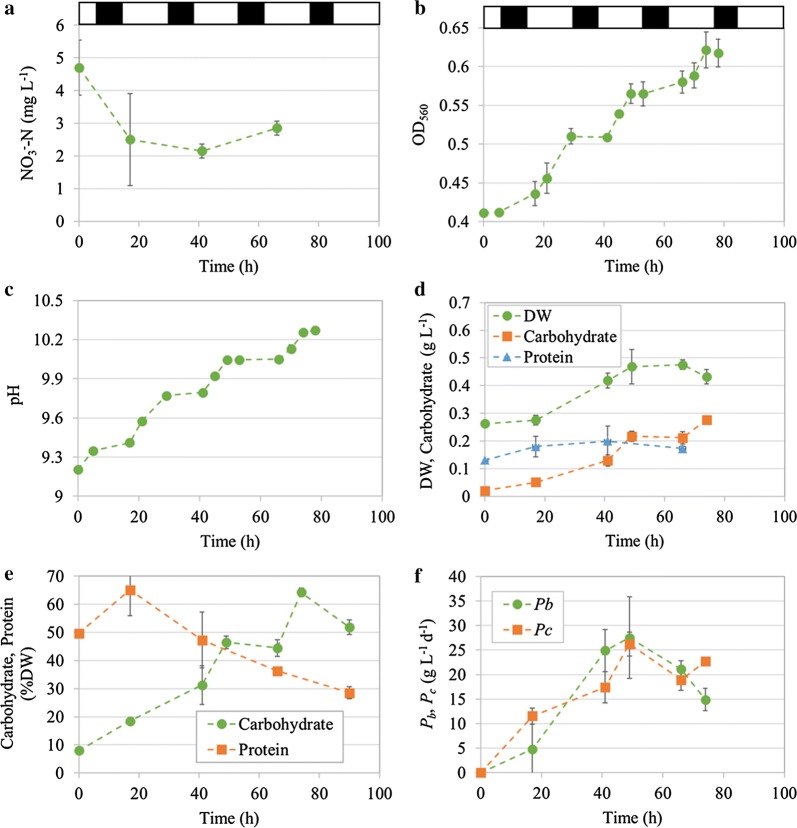
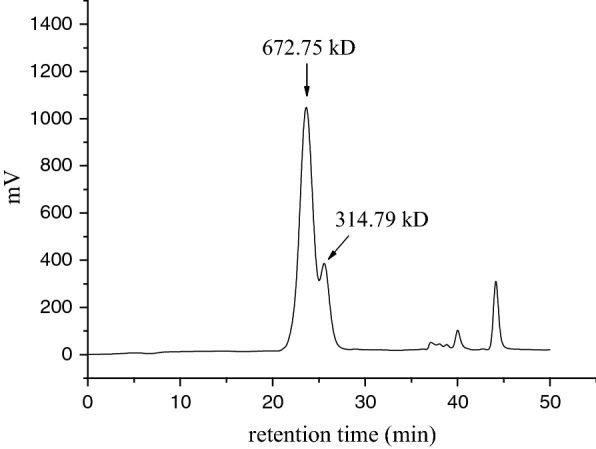
Carbohydrates are major biomass source in fuel-targeted biorefinery. Arthrospira platensis is the largest commercialized microalgae with good environmental tolerance and high biomass production. However, the traditional target of A. platensis cultivation is the protein, which is the downstream product of carbohydrates. Aiming to provide the alternative non-food carbohydrates source, the feasible manipulation technology on the cultivation is needed, as well as new separation methodology to achieve maximum utilization of overall biomass. The present study aimed to demonstrate the feasibility of industrially producing carbohydrate-enriched A. platensis and characterize the structure of the polysaccharide involved. Cultivated in industrial-scale outdoor open raceway ponds under nitrogen limitation, A. platensis accumulated maximally 64.3%DW of carbohydrate. The maximum biomass and carbohydrate productivity reached 27.5 g m −2 day −1 and 26.2 g m −2 day −1 , respectively. The efficient extraction and purification of the polysaccharides include a high-pressure homogenization-assisted hot water extraction followed by flocculation with a non-toxic flocculant ZTC1 + 1, with the polysaccharide purity and total recovery reaching 81% and 75%, respectively. The purified polysaccharide was mainly composed of (1→3)(1→4)- or (1→3)(1→2)-α-glucan with a molecular weight of 300–700 kDa, which differed from the commonly acknowledged glycogen. By the way of controlled nitrogen limitation, the high carbohydrate production of A. platensis in the industrial scale was achieved. The α-glucan from A. platensis could be a potential glucose source for industrial applications. A non-toxic separation method of carbohydrate was applied to maintain the possibility of utilization of residue in high-value field.
Overview
The claims and statistics of this paper haven’t been checked yet.
Free: it reads the open-access text and checks the first 5 claims that cite a source we can check. Create a free account to check every claim.
Integrity signals
Registry
Cites
Statistics
Figures
Verification
Claims the paper makes
The claims and statistics of this paper haven’t been checked yet.
Free: it reads the open-access text and checks the first 5 claims that cite a source we can check. Create a free account to check every claim.
Claims other papers make about this one
Each is checked against this paper’s own text: does it say what the citing paper says it does?
The cited source says what the claim attributes to it.
In the citing paper
“Liu et al. [45], who cultivated Spirulina platensis in an industrial-scale outdoor open raceway pond under nitrogen limitations, reaching a maximum carbohydrate content of about 64.30% DW.”
From Strategy Development for Microalgae Spirulina platensis Biomass Cultivation in a Bubble Photobioreactor to Promote High Carbohydrate Content (2022) · cites this paper as [45]
In the citing paper
“the accumulation of glycogen is accompanied by an increase in the cellular density and sedimentation of the biomass [63].”
From Arthrospira platensis as a Feasible Feedstock for Bioethanol Production (2021) · cites this paper as [63]
Self-check
Percentages, sums and reported differences re-computed from the paper’s own numbers.
The self-check needs the paper’s full text.
Citations
Cites
Colorimetric Method for Determination of Sugars and Related Substances
DuBois, M., Gilles, K. A., Hamilton, J. K., Rebers, P. A., & Smith, F. (1956) · Analytical Chemistry · doi:10.1021/ac60111a017 · Cited by 52,269
Production of liquid biofuels from renewable resources
Nigam, P. S., & Singh, A. (2011) · Progress in Energy and Combustion Science · doi:10.1016/j.pecs.2010.01.003 · Cited by 2,156
Micro and macroalgal biomass: a renewable source for bioethanol
John, R. P., Anisha, G. S., Nampoothiri, K. M., & Pandey, A. (2011) · Bioresource Technology · doi:10.1016/j.biortech.2010.06.139 · Cited by 1,090
From Bacterial Glycogen to Starch: Understanding the Biogenesis of the Plant Starch Granule
Ball, S. G., & Morell, M. K. (2003) · Annual Review of Plant Biology · doi:10.1146/annurev.arplant.54.031902.134927 · Cited by 748
Aquatic phototrophs: efficient alternatives to land-based crops for biofuels
Dismukes, G. C., Carrieri, D., Bennette, N., Ananyev, G. M., & Posewitz, M. C. (2008) · Current Opinion in Biotechnology · doi:10.1016/j.copbio.2008.05.007 · Cited by 733
Microalgae-based carbohydrates for biofuel production
Chen, C.-Y., Zhao, X.-Q., Yen, H.-W., Ho, S.-H., Cheng, C.-L., Lee, D.-J., Bai, F.-W., & Chang, J.-S. (2013) · Biochemical Engineering Journal · doi:10.1016/j.bej.2013.03.006 · Cited by 724
Microalgae—novel highly efficient starch producers
Brányiková, I., Maršálková, B., Doucha, J., Brányik, T., Bišová, K., Zachleder, V., & Vítová, M. (2011) · Biotechnology and Bioengineering · doi:10.1002/bit.23016 · Cited by 486
Microalgae-based biorefinery – From biofuels to natural products
Yen, H.-W., Hu, I.-C., Chen, C.-Y., Ho, S.-H., Lee, D.-J., & Chang, J.-S. (2013) · Bioresource Technology · doi:10.1016/j.biortech.2012.10.099 · Cited by 481
Zhou, W., Li, Y., Min, M., Hu, B., Chen, P., & Ruan, R. (2011) · Bioresource Technology · doi:10.1016/j.biortech.2011.04.038 · Cited by 380
Structural analysis of glucans.
Synytsya, A., & Novák, M. (2014) · PubMed · doi:10.3978/j.issn.2305-5839.2014.02.07 · Cited by 332
Research works printed but not linked: 1
- Zhang P Wu Y Hua L Clarifying effect of ZTC1 + 1-IIclarifyicant for decoction of traditional Chinese medicine China J Chin Mater Med. 2007 32 113 115
Cited by
Microalgae: A Promising Source of Valuable Bioproducts
Dolganyuk, V., Belova, D., Babich, O., Prosekov, A., Ivanova, S., Katserov, D., Patyukov, N., & Sukhikh, S. (2020) · Biomolecules · doi:10.3390/biom10081153 · Cited by 481
“[75] presented a method for producing a new type of polysaccharide from the microalga Arthrospira platensis.”
MethodNagarajan, D., Varjani, S., Lee, D.-J., & Chang, J.-S. (2021) · Renewable and Sustainable Energy Reviews · doi:10.1016/j.rser.2021.111549 · Cited by 200
Nagarajan, D., Chang, J.-S., & Lee, D.-J. (2020) · Bioresource Technology · doi:10.1016/j.biortech.2020.122871 · Cited by 161
Microalgae Polysaccharides: An Overview of Production, Characterization, and Potential Applications
Costa, J. A. V., Lucas, B. F., Alvarenga, A. G. P., Moreira, J. B., & de Morais, M. G. (2021) · Polysaccharides · doi:10.3390/polysaccharides2040046 · Cited by 152
“Arthrospira platensis Glucose *, rhamnose, arabinose, fucose, mannose, galactose, xylose + − − − [59]”
Recent Advances in Biomass Pretreatment Technologies for Biohydrogen Production
Singh, H., Tomar, S., Qureshi, K. A., Jaremko, M., & Rai, P. K. (2022) · Energies · doi:10.3390/en15030999 · Cited by 133
Microalgae as feedstock for bioactive polysaccharides
Tounsi, L., Hentati, F., Ben Hlima, H., Barkallah, M., Smaoui, S., Fendri, I., Michaud, P., & Abdelkafi, S. (2022) · International Journal of Biological Macromolecules · doi:10.1016/j.ijbiomac.2022.08.206 · Cited by 94
Ai, X., Yu, P., Li, X., Lai, X., Yang, M., Liu, F., Luan, F., & Meng, X. (2023) · International Journal of Biological Macromolecules · doi:10.1016/j.ijbiomac.2023.123211 · Cited by 91
Deciphering and engineering photosynthetic cyanobacteria for heavy metal bioremediation
Cui, J., Xie, Y., Sun, T., Chen, L., & Zhang, W. (2020) · The Science of The Total Environment · doi:10.1016/j.scitotenv.2020.144111 · Cited by 100
Zhang, K., Zhang, F., & Wu, Y. (2021) · The Science of The Total Environment · doi:10.1016/j.scitotenv.2021.147024 · Cited by 79
Andreeva, A., Александровна, Б. Е., Babich, O., Сухих, С. А., Dolganyuk, V. F., Michaud, P., & Ivanova, S. A. (2021) · Marine Drugs · doi:10.3390/md19070381 · Cited by 77
Saxena, R., Rodríguez-Jasso, R. M., Chávez-Gonzalez, M. L., Aguilar, C. N., Quijano, G., & Ruiz, H. A. (2022) · Fermentation · doi:10.3390/fermentation8080374 · Cited by 44
Dananjaya, S. H. S., Thao, N. T. T., Wijerathna, H. M. S. M., Lee, J., Edussuriya, M., Choi, D.-R., & Kumar, R. (2020) · Process Biochemistry · doi:10.1016/j.procbio.2020.03.003 · Cited by 48
Debnath, S., Muthuraj, M., Bandyopadhyay, T. K., Bobby, M. N., Vanitha, K., Tiwari, O. N., & Bhunia, B. (2023) · Carbohydrate Polymers · doi:10.1016/j.carbpol.2023.121686 · Cited by 37
Carbohydrate Biolubricants from Algae and Cyanobacteria
Borah, D., Gopalakrishnan, S., & Thajuddin, N. (2021) · Journal of Polymers and the Environment · doi:10.1007/s10924-021-02144-z · Cited by 32
Wu, H., Li, T., Lv, J., Chen, Z., Wu, J., Wang, N., Wu, H., & Xiang, W. (2021) · Foods · doi:10.3390/foods10122974 · Cited by 37
Production of Arthrospira (Spirulina) platensis Enriched in β-Glucans through Phosphorus Limitation
Μάρκου, Γ., Eliopoulos, C., Argyri, A. A., & Arapoglou, D. (2021) · Applied Sciences · doi:10.3390/app11178121 · Cited by 28
Liao, B., Zheng, J., Xia, C., Chen, X., Xu, Q., & Duan, B. (2023) · International Journal of Biological Macromolecules · doi:10.1016/j.ijbiomac.2023.127482 · Cited by 24
Arthrospira platensis as a Feasible Feedstock for Bioethanol Production
Gonzalez Bautista, E., & Laroche, C. (2021) · Applied Sciences · doi:10.3390/app11156756 · Cited by 22
“The increase in glycogen in Arthrospira platensis can have a beneficial side effect, as the accumulation of glycogen is accompanied by an increase in the cellular density and sedimentation of the biomass [63].”
BackgroundThanigaivel, S., Priya, A. K., Kumar, P. S., Khoo, K. S., Hoang, T. K. A., Rajendran, S., & Soto-Moscoso, M. (2022) · Sustainable Energy Technologies and Assessments · doi:10.1016/j.seta.2022.102450 · Cited by 24
Jabri, H. M. S. J. A., Das, P., Khan, S., AbdulQuadir, M., Thaher, M. I., Hawari, A. H., & Al-Shamary, N. (2022) · Renewable Energy · doi:10.1016/j.renene.2022.02.100 · Cited by 22
Intracellular and extracellular carbohydrates in microalgae
Synytsya, A., Sushytskyi, L., Saloň, I., Babayeva, T., & Čopíková, J. (2023) · Elsevier eBooks · doi:10.1016/b978-0-323-99196-4.00017-6 · Cited by 28
Technological advancement in the production of biohydrogen from lignocellulosic biomass: A review
Lakshiakanthan, E., D., P. G., Vijay, S. J., Bhagavathsingh, J., Somu, P., Basavegowda, N., & Haldar, D. (2024) · Journal of environmental chemical engineering · doi:10.1016/j.jece.2024.113084 · Cited by 23
Purification, Characterization, and Self-Assembly of the Polysaccharide from Allium schoenoprasum
Zhang, F., Zheng, J., Li, Z., Cai, Z., Wang, F., Feng, L., & Yang, D. J. (2021) · Foods · doi:10.3390/foods10061352 · Cited by 19
Yang, J., Dou, S., Liu, X., Zhu, L., Liu, K., Zhang, Y., Li, L., Liu, G., & Yang, M. (2024) · Industrial Crops and Products · doi:10.1016/j.indcrop.2024.118433 · Cited by 18
Sarker, N. K., & Kaparaju, P. (2025) · Fermentation · doi:10.3390/fermentation11100574 · Cited by 21
“Several microalgal species contain fermentable carbohydrates suitable for lactic acid production: Chlorella vulgaris (12–17% starch content), Scenedesmus obliquus (up to 20% carbohydrate), and Arthrospira platensis (8–14% glycogen) under standard cultivation conditions [55,56].”
Carbohydrates derived from microalgae in the food industry
Ravindran, R., & Rajauria, G. (2021) · Elsevier eBooks · doi:10.1016/b978-0-12-821080-2.00007-1 · Cited by 20
Perspectives of HMF and LA from microalgal biomass
Singh, S. K., Kumar, Y., & Sasmal, S. (2023) · Algal Research · doi:10.1016/j.algal.2023.103133 · Cited by 16
Razack, S. A., Surendhiran, D., Kozani, P. S., Kozani, P. S., Hamidi, M., Cabrera‐Barjas, G., & Delattre, C. (2021) · Algal Research · doi:10.1016/j.algal.2021.102556 · Cited by 15
Akter, F., Krishnan, L., Mestres, G., Gustafsson, J., Ralph, P. J., & Kuzhiumparambil, U. (2025) · International Journal of Biological Macromolecules · doi:10.1016/j.ijbiomac.2025.143417 · Cited by 13
Cyanobacterial and microalgae polymers: antiviral activity and applications
Silva, M. B., & Teixeira, C. M. L. L. (2024) · Brazilian Journal of Microbiology · doi:10.1007/s42770-024-01452-5 · Cited by 13
“PS and EPS produced by microalgae and cyanobacteria have strong antiviral effects against diverse virus strains in vitro [17, 90, 103].”
Chen, Z., Tan, L., Yang, B., Wu, J., Li, T., Wu, H., Wu, H., & Xiang, W. (2021) · Algal Research · doi:10.1016/j.algal.2021.102562 · Cited by 13
Cuéllar‐Bermúdez, S. P., Struyf, T., Versluys, M., den Ende, W. V., Wattiez, R., & Muylaert, K. (2022) · Algal Research · doi:10.1016/j.algal.2022.102907 · Cited by 11
Kamal, R., Huang, Q., Li, Q., Chu, Y., Yu, X., Limtong, S., Xue, S., & Zhao, Z. K. (2021) · ACS Sustainable Chemistry & Engineering · doi:10.1021/acssuschemeng.1c02196 · Cited by 12
Self-citationRoques, S., Deborde, C., Skiba, S., Cala, O., Marchand, Y., Moing, A., & Fauconneau, B. (2022) · Aquaculture · doi:10.1016/j.aquaculture.2022.738033 · Cited by 8
Hamprakorn, K., Maneewan, B., Jantasin, W., Lani, M. N., Moonmanee, T., & Panatuk, J. (2025) · Veterinary World · doi:10.14202/vetworld.2025.52-59 · Cited by 9
“A carbohydrate content of approximately 13% and a crude protein (CP) concentration of 60%–70% were detected in S. platensis [9].”
Eco-Friendly Extraction to Enhance Antioxidants and Nutritional Value in Arthrospira platensis
Milia, M., Pasquini, V., Addis, P., & Angioni, A. (2025) · Foods · doi:10.3390/foods14091510 · Cited by 7
“This phenomenon is attributed to UAE cavitation, which alters the structure and morphology of plant cell tissue, disrupting or deforming cell walls, making them more porous while breaking down the neutral detergent fiber (NDF) microstructure (including hemicellulose, cellulose, and lignin) [76].”
InfluentialOptimal Laboratory Cultivation Conditions of Limnospira maxima for Large-Scale Production
Pineda‐Rodríguez, Y. Y., Herazo-Cárdenas, D. S., Vallejo, A., Pompelli, M. F., Jarma‐Orozco, A., Jaraba-Navas, J. D. D., Cordero-Ocampo, J. D., Berrio, M. G., Arrieta, D. V., Pico-González, A. I., et al. (2023) · Biology · doi:10.3390/biology12121462 · Cited by 5
“In corroboration, Cuellar-Bermudez et al. [35], found that when Arthrospira is grown under nitrogen-poor conditions, it reduces the protein content and accumulates carbohydrates (up to 57–77% of dry weight), generally glycogen [37].”
MethodAlgal and Cyanobacterial Colorants: From Chlorophyll to Phycocyanin
Mutaf‐Kılıc, T., & Oncel, S. S. (2025) · Microbial Colorants · doi:10.1002/9781394287888.ch4 · Cited by 5
Conventional and novel approaches to extract food ingredients and nutraceuticals from microalgae
Yatipanthalawa, B. S., & Martin, G. J. O. (2021) · Elsevier eBooks · doi:10.1016/b978-0-12-821080-2.00009-5 · Cited by 7
Arthrospira Cell Residues for Lactic Acid Fermentation as Bioproducts From Waste Utilization
Pan-utai, W., Thitiprasert, S., & Pornpukdeewattana, S. (2022) · Frontiers in Energy Research · doi:10.3389/fenrg.2022.878597 · Cited by 4
In Vivo and In Vitro Antioxidant Effects of Arthrospira platensis Polysaccharide Component 1 (PAP-1)
Yuan, H., Wei, Y., He, Z., Wang, X., Yu, X., Wang, Q., Yu, M., & Hu, T. (2025) · Antioxidants · doi:10.3390/antiox14111358 · Cited by 3
“At present, China ranks first globally in Arthrospira platensis production [10,11].”
Glucosyltransferase TeGSS from Thermosynechococcus elongatus produces an α-1,2-glucan
Qu, X., An, Q., Sayed, H., Cui, L., Mayo, K. H., & Su, J. (2024) · International Journal of Biological Macromolecules · doi:10.1016/j.ijbiomac.2024.136152 · Cited by 2
Mhatre, N., Sonawane, D., Saiger, F., Sanap, P. S., Patil, S. S., & Pratap, A. P. (2025) · Wiley eBooks · doi:10.1002/9781394234134.ch6 · Cited by 4
Schiavon, S., Don, G., Giannuzzi, D., Tono, V., Toscano, A., Verdiglione, R., Cecchinato, A., & Gallo, L. (2025) · Italian Journal of Animal Science · doi:10.1080/1828051x.2025.2536039 · Cited by 1
“The negative impact of the cell wall constituents on nutrient digestibility of this alga is well recognised, and specific treatments have been proposed to disrupt this barrier (Liu et al. 2019b; Torres-Tiji et al. 2020).”
InfluentialNgearnpat, N., Tiche, S., Wongkantrakorn, N., Duangjan, K., Phinyo, K., & Issakul, K. (2026) · Crops · doi:10.3390/crops6020040 · Cited by 2
“The total sugar content was quantified using the phenol-sulfuric acid method [20], with glucose as a standard.”
Rosenau, S. (2022) · eDiss (Georg-August-Universität Göttingen) · doi:10.53846/goediss-9551
Green Chemicals From Microalgae
Makhlof, M. E. M., Shehata, N., & EL‐Sayed, A. I. M. (2023) · Elsevier eBooks · doi:10.1016/b978-0-443-15738-7.00014-3
Husien, S., Shehata, N., & Al‐Asheh, S. (2024) · Elsevier eBooks · doi:10.1016/b978-0-443-15738-7.00062-3 · Cited by 1
Swinnen, E., Vangenechten, B., Bernaerts, T., Gompel, J. V., ter Heide, C., Goossens, S., Cuyper, A. D., Schoeters, F., Coninck, B. D., Ceusters, J., et al. (2026) · Phycology Journal · doi:10.1186/s44377-026-00009-x
Dewi, R. N., Nur, M. M. A., Nisya, A. F., Sunar, N. M., & Hadiyanto (2026) · Biocatalysis and Agricultural Biotechnology · doi:10.1016/j.bcab.2026.104166
Gharibzahedi, S. M. T., Yu, J., & Ahmadigol, A. (2026) · Elsevier eBooks · doi:10.1016/b978-0-443-44049-6.00006-5
Metadata
- Authors
- Liu, Q., Yao, C., Sun, Y., Chen, W., Tan, H., Cao, X., Xue, S., & Yin, H.
- Affiliations
- Dalian Institute of Chemical Physics (CN)
- Liaoning Academy of Agricultural Sciences (CN)
- Corresponding author
- Cao, Xupeng
- Xue, Song
- Yin, Heng
- Venue
- Biotechnology for Biofuels
- Published
- 2019-05-24
- Volume
- 12
- Issue
- 1
- Pages
- 131-131
- ISSN
- 1754-6834 (ISSN-L)
- PMC
- PMC6533678
- OpenAlex
- W2947900501
- Cited by
- 52
- References
- 55
- Citations by year
- 2026: 4 · 2025: 8 · 2024: 5 · 2023: 7 · 2022: 9 · 2021: 15 · 2020: 4
- FWCI
- 1.49
- Type
- journal article
- Language
- en
- Open access
- gold
- doi.org
- Licence
- cc-by
- creativecommons.org/licenses/by/4.0/ (tdm)
- creativecommons.org/licenses/by/4.0/ (vor)
- Locations
- Biotechnology for Biofuels (publishedVersion, cc-by)
- PubMed Central (publishedVersion, cc-by)
- PubMed (publishedVersion)
- Dalian Institute of Chemical Physics, CAS Institutional Repository (submittedVersion)
- DOAJ (DOAJ: Directory of Open Access Journals) (submittedVersion)
- Funders
- National Key Research and Development Program of China (2017YFD0201302)
- National Natural Science Foundation of China (31672077, 41406177, 31770847, 21878285)
- National High-tech Research and Development Program (2014AA022004)
- Fundamental Research Funds for the Central Universities (YJ201734)
- Key Laboratory of Advanced Control and Optimization for Chemical Processes (Se-2018A02)
- Biochemical Engineering Tengfei Project of Dalian Institute of Chemical Physics (DICP BioChE-X201801)
- DICP knowledge innovation project (ZZBS201704)
- Topics
- Physical Sciences › Energy › Renewable Energy, Sustainability and the Environment › Algal biology and biofuel production
- Life Sciences › Agricultural and Biological Sciences › Aquatic Science › Seaweed-derived Bioactive Compounds
- Life Sciences › Agricultural and Biological Sciences › Food Science › Polysaccharides Composition and Applications
- Keywords
- Spirulina platensis, cyanobacterial polysaccharides, carbohydrate accumulation, nitrogen limitation, raceway ponds, polysaccharide extraction, high-pressure homogenization, flocculation, α-glucan, glycogen, biorefinery, biomass utilization
About these checks
Registry, retraction, Cites and statistics results are computed, not judged, with one exception: a printed reference that no index lists is read once by a model before it counts as a citation error. Claims are extracted by a model and kept only when their quote appears verbatim in the text; each cited source is then checked, with a model’s help, for whether it says what the claim relies on. Those verdicts can be wrong — read the claim’s quote and the cited source before relying on one.
Statistics and arithmetic are recomputed, not judged.
Confidence bands are shown only for fields calibrated on our annotated test set. None is calibrated yet, so no band is shown.
What counts as a claim ›How we measure confidence ›How we check this ›
Are you an author, or do you see a problem with this page? Request a review
Data sources
Bibliographic data: Semantic Scholar, OpenAlex, Crossref.
Contains information from the Semantic Scholar Academic Graph Datasets, made available under the ODC Attribution License (ODC-BY 1.0).
Semantic Scholar’s data is described in: Kinney, R., et al. (2023). The Semantic Scholar Open Data Platform. arXiv:2301.10140.
