

Total utilization of lignin and carbohydrates in Eucalyptus grandis: an integrated biorefinery strategy towards phenolics, levulinic acid, and furfural
Open accessThe DOI matches its Crossref record; 62 of the 62 references it cites were found in a registry or an index.
Abstract
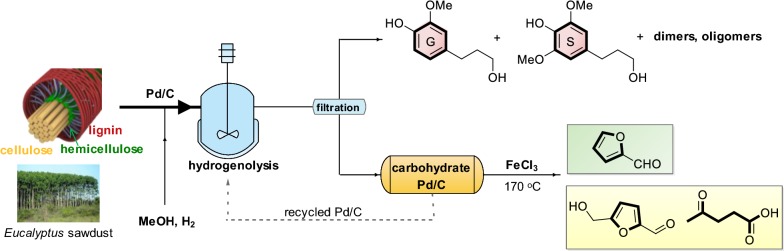
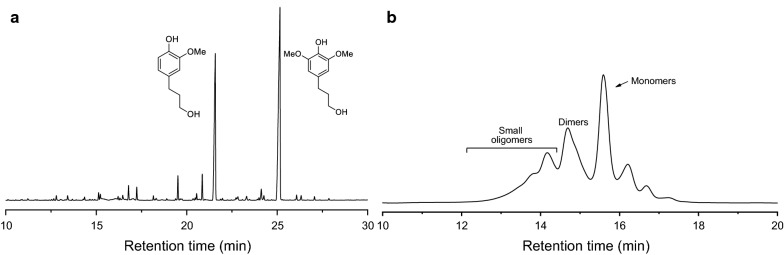
Background: Lignocellulosic biomass, which is composed of cellulose, hemicellulose and lignin, represents the most abundant renewable carbon source with significant potential for the production of sustainable chemicals and fuels. Current biorefineries focus on cellulose and hemicellulose valorization, whereas lignin is treated as a waste product and is burned to supply energy to the biorefineries. The depolymerization of lignin into well-defined mono-aromatic chemicals suitable for downstream processing is recognized increasingly as an important starting point for lignin valorization. In this study, conversion of all three components of Eucalyptus grandis into the corresponding monomeric chemicals was investigated using solid and acidic catalyst in sequence. Results: Lignin was depolymerized into well-defined monomeric phenols in the first step using a Pd/C catalyst. The maximum phenolic monomers yield of 49.8 wt% was achieved at 240 °C for 4 h under 30 atm H 2. In the monomers, 4-propanol guaiacol (12.9 wt%) and 4-propanol syringol (31.9 wt%) were identified as the two major phenolic products with 90% selectivity. High retention of cellulose and hemicellulose pulp was also obtained, which was treated with FeCl 3 catalyst to attain 5-hydroxymethylfurfural, levulinic acid and furfural simultaneously. The optimal reaction condition for the co-conversion of hemicellulose and cellulose was established as 190 °C and 100 min, from which furfural and levulinic acid were obtained in 55.9% and 73.6% yields, respectively. Ultimately, 54% of Eucalyptus sawdust can be converted into well-defined chemicals under such an integrated biorefinery method. Conclusions: A two-step process (reductive catalytic fractionation followed by FeCl 3 catalysis) allows the fractionation of all the three biopolymers (cellulose, hemicellulose, and lignin) in Eucalyptus biomass, which provides a promising strategy to make high-value chemicals from sustainable biomass.
Overview
The claims and statistics of this paper haven’t been checked yet.
Free: it reads the open-access text and checks the first 5 claims that cite a source we can check. Create a free account to check every claim.
Integrity signals
Registry
Cites
Statistics
Figures
Verification
Claims the paper makes
The claims and statistics of this paper haven’t been checked yet.
Free: it reads the open-access text and checks the first 5 claims that cite a source we can check. Create a free account to check every claim.
Claims other papers make about this one
Each is checked against this paper’s own text: does it say what the citing paper says it does?
The cited source says what the claim attributes to it.
In the citing paper
“Reductive catalytic fractionation (RCF) has been explored for the conversion of native lignin in lignocellulose, and the well-preserved carbohydrates are suitable for further processing [118,119].”
From Hydrothermal carbonization and liquefaction for sustainable production of hydrochar and aromatics (2021) · cites this paper as [118]
Self-check
Percentages, sums and reported differences re-computed from the paper’s own numbers.
The self-check needs the paper’s full text.
Citations
Cites
Determination of Structural Carbohydrates and Lignin in Biomass
Sluiter, A. D., Hames, B. R., Ruiz, R. O., Scarlata, C. J., Sluiter, J. B., Templeton, D. W., & Crocker, D. P. (2012) · Cited by 5,261
Chemicals from lignin: an interplay of lignocellulose fractionation, depolymerisation, and upgrading
Schutyser, W., Renders, T., Van den Bosch, S., Koelewijn, S.-F., Beckham, G. T., & Sels, B. F. (2018) · Chemical Society Reviews · doi:10.1039/c7cs00566k · Cited by 2,552
Valorization of Biomass: Deriving More Value from Waste
Tuck, C. O., Pérez, E., Horváth, I. T., Sheldon, R. A., & Poliakoff, M. (2012) · Science · doi:10.1126/science.1218930 · Cited by 2,165
Paving the Way for Lignin Valorisation: Recent Advances in Bioengineering, Biorefining and Catalysis
Rinaldi, R., Jastrzebski, R., Clough, M. T., Ralph, J., Kennema, M., Bruijnincx, P. C. A., & Weckhuysen, B. M. (2016) · Angewandte Chemie International Edition · doi:10.1002/anie.201510351 · Cited by 2,138
Green and sustainable manufacture of chemicals from biomass: state of the art
Sheldon, R. A. (2014) · Green Chem. · doi:10.1039/c3gc41935e · Cited by 1,678
Strategies for the Conversion of Lignin to High-Value Polymeric Materials: Review and Perspective
Upton, B. M., & Kasko, A. M. (2016) · Chemical Reviews · doi:10.1021/acs.chemrev.5b00345 · Cited by 1,519
Van den Bosch, S., Schutyser, W., Vanholme, R., Driessen, T., Koelewijn, S.-F., Renders, T., De Meester, B., Huijgen, W. J. J., Dehaen, W., Courtin, C. M., et al. (2015) · Energy & Environmental Science · doi:10.1039/c5ee00204d · Cited by 896
Constant, S., Wienk, H. L. J., Frissen, A. E., Peinder, P. D., Boelens, R., van Es, D. S., Grisel, R. J. H., Weckhuysen, B. M., Huijgen, W. J. J., Gosselink, R. J. A., et al. (2016) · Green Chemistry · doi:10.1039/c5gc03043a · Cited by 893
Song, Q., Wang, F., Cai, J., Wang, Y., Zhang, J., Yu, W., & Xu, J. (2013) · Energy & Environmental Science · doi:10.1039/c2ee23741e · Cited by 891
Biorefineries – Industrial Processes and Products
Kamm, B., Gruber, P. R., & Kamm, M. (2007) · Ullmann's Encyclopedia of Industrial Chemistry · doi:10.1002/14356007.l04_l01 · Cited by 797
Cited by
Lignocellulosic biomass based biorefinery: A successful platform towards circular bioeconomy
Rajesh Banu, J., Preethi, Kavitha, S., Tyagi, V. K., Gunasekaran, M., Karthikeyan, O. P., & Kumar, G. (2021) · Fuel · doi:10.1016/j.fuel.2021.121086 · Cited by 324
Osman, A. I., Farghali, M., Ihara, I., Elgarahy, A. M., Ayyad, A., Mehta, N., Ng, K. H., Abd El-Monaem, E. M., Eltaweil, A. S., Hosny, M., et al. (2023) · Environmental Chemistry Letters · doi:10.1007/s10311-023-01573-7 · Cited by 214
Brienza, F., Cannella, D., Montesdeoca, D., Cybulska, I., & Debecker, D. P. (2024) · RSC Sustainability · doi:10.1039/d3su00140g · Cited by 172
Hydrothermal carbonization and liquefaction for sustainable production of hydrochar and aromatics
Cao, Y., He, M., Dutta, S., Luo, G., Zhang, S., & Tsang, D. C. W. (2021) · Renewable and Sustainable Energy Reviews · doi:10.1016/j.rser.2021.111722 · Cited by 175
Development of ‘Lignin-First’ Approaches for the Valorization of Lignocellulosic Biomass
Korányi, T. I., Fridrich, B., Pineda, A., & Barta, K. (2020) · Molecules · doi:10.3390/molecules25122815 · Cited by 169
“67 8% G-C2-acetal 9 [92] 74 2020 eucalyptus Pd/C MeOH 240 30(H2) 4 32% propanolsyringol, 13% propanolguaiacol 50 [93] 75 2020 beech NiMo/Al2O3 EtOH 260 26(H2) 3 11% propylsyringol, 6% propylguaiacol 20 [94] 76 2020 pine Pt/C MeOH/H2O 230 30(H2) 10 mol% phenol 15 [95] 77 2020 birch H-BEA EtOH/H2O 220 2 20 [96] 78 2020…”
MethodAn Overview of Lignocellulose and Its Biotechnological Importance in High-Value Product Production
Ojo, A. O. (2023) · Fermentation · doi:10.3390/fermentation9110990 · Cited by 145
Alam, M. M., Greco, A., Rajabimashhadi, Z., & Corcione, C. E. (2024) · Cleaner Materials · doi:10.1016/j.clema.2024.100253 · Cited by 154
Downstream Processing Strategies for Lignin‐First Biorefinery
Sun, Z., Cheng, J., Wang, D. S., Yuan, T., Song, G., & Barta, K. (2020) · ChemSusChem · doi:10.1002/cssc.202001085 · Cited by 108
Self-citationWang, S., Li, W., Yang, Y., Chen, X., Ma, J., Chen, C., Xiao, L., & Sun, R. (2020) · ChemSusChem · doi:10.1002/cssc.202000785 · Cited by 91
Self-citationYogalakshmi, K. N., Usman, T. M. M., Kavitha, S. K., Sachdeva, S., Thakur, S., Adish Kumar, S., & Banu, J. R. (2023) · Fermentation · doi:10.3390/fermentation9030238 · Cited by 95
Su, S., Xiao, L., Chen, X., Wang, S., Chen, X., Guo, Y., & Zhai, S. (2022) · ChemSusChem · doi:10.1002/cssc.202200365 · Cited by 85
Self-citationChu, Q., Tong, W., Chen, J., Wu, S., Jin, Y., Hu, J., & Song, K. (2021) · Biotechnology for Biofuels · doi:10.1186/s13068-021-01988-w · Cited by 79
“As reported, the cellulosic and hemicellulosic sugars can be efficiently converted to bioethanol and value-added chemicals [3, 4].”
BackgroundBenzenoid Aromatics from Renewable Resources
Zheng, S., Zhang, Z., He, S., Yang, H., Atia, H., Abdel-Mageed, A. M., Wohlrab, S., Baráth, E., Tin, S., Heeres, H. J., et al. (2024) · Chemical Reviews · doi:10.1021/acs.chemrev.4c00087 · Cited by 78
Cellulose Textiles from Hemp Biomass: Opportunities and Challenges
Lawson, L., Degenstein, L. M., Bates, B., Chute, W., King, D., & Dolez, P. I. (2022) · Sustainability · doi:10.3390/su142215337 · Cited by 72
Fully lignocellulose-based PET analogues for the circular economy
Wu, X., Galkin, M. V., Stern, T., Sun, Z., & Barta, K. (2022) · Nature Communications · doi:10.1038/s41467-022-30735-4 · Cited by 72
Antonetti, C., Gori, S., Licursi, D., Pasini, G., Frigo, S., López, M., Parajó, J. C., & Galletti, A. M. R. (2020) · Catalysts · doi:10.3390/catal10050509 · Cited by 57
“The use of this feedstock is particularly advantageous if the complete fractionation and the successive valorization of each component are achieved, according to the perspective of an integrated biorefinery [45].”
BackgroundLignin-First Biorefinery for Converting Lignocellulosic Biomass into Fuels and Chemicals
Luo, Z., Qian, Q., Sun, H., Qi, W. D., Zhou, J., & Wang, K. (2022) · Energies · doi:10.3390/en16010125 · Cited by 56
Weng, C., Tang, R., Peng, X., & Han, Y. (2023) · Bioresource Technology · doi:10.1016/j.biortech.2023.128762 · Cited by 54
Recent developments of the nanocellulose extraction from water hyacinth: a review
Smriti, S. A., Haque, A. N. M. A., Khadem, A. H., Siddiqa, F., Rahman, A. N. M. M., Himu, H. A., Farzana, N., Islam, M. A., & Naebe, M. (2023) · Cellulose · doi:10.1007/s10570-023-05374-7 · Cited by 52
Khounani, Z., Hosseinzadeh-Bandbafha, H., Nazemi, F., Shafiei, M., Karimi, K., Tabatabaei, M., Aghbashlo, M., & Lam, S. S. (2020) · Journal of Environmental Management · doi:10.1016/j.jenvman.2020.111822 · Cited by 51
Saxena, A., Hussain, A., Parveen, F., & Ashfaque, M. (2023) · Microbiological Research · doi:10.1016/j.micres.2023.127478 · Cited by 42
Mazar, A., Ajao, O., Benali, M., Jemaa, N., Al-Dajani, W. W., & Paleologou, M. (2020) · ACS Sustainable Chemistry & Engineering · doi:10.1021/acssuschemeng.0c04871 · Cited by 41
A review of lignin-first reductive catalytic fractionation of lignocellulose
Li, X., Xu, Y. Q., Alorku, K., Wang, J., & Ma, L. (2023) · Molecular Catalysis · doi:10.1016/j.mcat.2023.113551 · Cited by 55
Wu, Y., Wen, J., Su, C., Jiang, C., Zhang, C., Wang, Y., Jiang, Y., Ren, W., Qin, P., & Cai, D. (2022) · Chemical Engineering Journal · doi:10.1016/j.cej.2022.139267 · Cited by 34
Dai, J.-H., Sun, J., Peng, W., Liao, W., Zhou, Y., Zhou, X., Qin, Y., Cheng, Y., & Cao, S. (2022) · Frontiers in Plant Science · doi:10.3389/fpls.2022.883654 · Cited by 36
Conversion sweet sorghum biomass to produce value-added products
Hu, W., Zhou, L., & Chen, J. (2022) · Biotechnology for Biofuels and Bioproducts · doi:10.1186/s13068-022-02170-6 · Cited by 33
Tavares, D., Cavali, M., Tanobe, V. O. D. A., Torres, L. A. Z., Rozendo, A. S., Filho, A. Z., Soccol, C. R., & Woiciechowski, A. L. (2022) · Biomass · doi:10.3390/biomass2030013 · Cited by 31
Wang, X., Zhang, Y., Jia, S., Deng, H., Xu, W., & Shi, J. (2023) · Industrial Crops and Products · doi:10.1016/j.indcrop.2023.117750 · Cited by 24
Chen, X., Zhu, J., Song, W., & Xiao, L. (2021) · Frontiers in Bioengineering and Biotechnology · doi:10.3389/fbioe.2021.803138 · Cited by 25
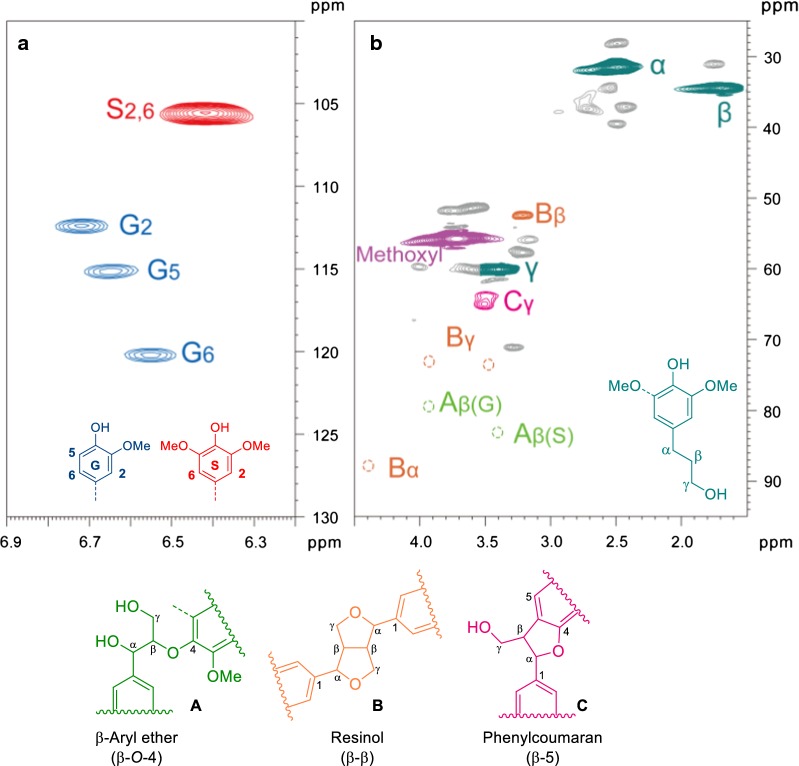
“This result was further supported by the 2D HSQC NMR spectra of the lignin oil, where newly dominant cross-peaks corresponding to propanol moieties were clearly observed, as we previously reported (Chen et al., 2020).”
BackgroundMethodResultSelf-citationSikhosana, T. S., Malebo, N. J., Mofokeng, T. G., Motloung, M. P., & Mochane, M. J. (2025) · Polymers · doi:10.3390/polym17111523 · Cited by 22
“…sawdust and its derivatives can be used as alternatives in the production of sustainable engineering materials for a variety of applications [133–138], ideally as reinforcing materials in inferior bioplastics to provide the requisite superior physical and mechanical properties for a wide range…”
Circular Bioeconomy: An Introduction
Nagarajan, D., Lee, D., & Chang, J. (2021) · Elsevier eBooks · doi:10.1016/b978-0-12-821878-5.00006-4 · Cited by 27
Py-GC/MS and pyrolysis studies of eucalyptus, mentha, and palmarosa biomass
Kaur, R., Kumar, A., Biswas, B., Krishna, B. B., Rout, P. K., & Bhaskar, T. (2022) · Biomass Conversion and Biorefinery · doi:10.1007/s13399-022-02729-1 · Cited by 23
Jiao, T., Liang, F., Fang, G., Jiao, J., Huang, C., Tian, Q., Zhu, B., Deng, Y., Han, S., & Zhou, X. (2024) · Industrial Crops and Products · doi:10.1016/j.indcrop.2024.118169 · Cited by 18
Optimization of light intensity on growth rate and total lipid content of Chlorella vulgaris
Febrieni, V. N., Sedjati, S., & Yudiati, E. (2020) · IOP Conference Series Earth and Environmental Science · doi:10.1088/1755-1315/584/1/012040 · Cited by 20
Revisiting the reaction scheme of slow pyrolysis of woody biomass
Safavi, A., Richter, C. P., & Unnþórsson, R. (2023) · Energy · doi:10.1016/j.energy.2023.128123 · Cited by 16
López, M., Vila, C., Santos, V., & Parajó, J. C. (2020) · Polymers · doi:10.3390/polym12061215 · Cited by 16
“Achieving high product yields from the polymeric constituents of wood in an integrated biorefinery process is an approach with great potential [16], but the recalcitrance of the feedstock makes it a tremendous challenge [2].”
BackgroundUpgradation of sugarcane bagasse lignin: Fractionation to cyclic alcohols production
Kumar, A., Jindal, M., Rawat, S., Kumar, J., Prabhakar, S., Yang, B., & Bhaskar, T. (2022) · Catalysis Today · doi:10.1016/j.cattod.2022.05.037 · Cited by 17
Masruri, B., Taban, E., Khavanin, A., & Attenborough, K. (2025) · Buildings · doi:10.3390/buildings15193590 · Cited by 16
NMR studies of lignin and lignin-derived products: recent advances and perspectives
Krivdin, L. B. (2025) · Russian Chemical Reviews · doi:10.59761/rcr5159 · Cited by 15
Miroshnikova, A. V., Kazachenko, А. S., Кузнецов, Б. Н., & Тaran, О. P. (2022) · Catalysis in Industry · doi:10.1134/s2070050422020052 · Cited by 17
Kosamia, N. M., Sánchez, A., & Rakshit, S. K. (2022) · Biomass Conversion and Biorefinery · doi:10.1007/s13399-022-02945-9 · Cited by 14
Bacterial Transformation of Aromatic Monomers in Softwood Black Liquor
Navas, L. E., Dexter, G. N., Liu, J., Levy‐Booth, D. J., Cho, M., Jang, S., Mansfield, S. D., Renneckar, S. H., Mohn, W. W., & Eltis, L. D. (2021) · Frontiers in Microbiology · doi:10.3389/fmicb.2021.735000 · Cited by 15
Duangrin, M., Pisutpiched, S., Deenu, A., & Kamthai, S. (2024) · International Journal of Biological Macromolecules · doi:10.1016/j.ijbiomac.2024.135610 · Cited by 11
Selective aromatic production from fast pyrolysis of sugarcane bagasse lignin over ZSM-5 catalyst
Soongprasit, K., Sricharoenchaikul, V., & Atong, D. (2021) · Energy Reports · doi:10.1016/j.egyr.2021.07.057 · Cited by 10
Taira, D., Nomura, T., Minami, E., & Kawamoto, H. (2026) · Journal of Analytical and Applied Pyrolysis · doi:10.1016/j.jaap.2026.107638 · Cited by 10
Forestry Wastes: Technical Concepts, Economic Circularity, and Sustainability Approaches
Aramburu, A. B., Lunkes, N., de Cademartori, P. H. G., Gatto, D. A., Missio, A. L., & Delucis, R. D. Á. (2022) · Springer eBooks · doi:10.1007/978-3-031-06562-0_14 · Cited by 10
Characterization of biomass fractionation by sequential hydrolysis in a flow-through reactor
Qin, H., Huang, X., Yu, F., Shao, Y., Ma, C., & Ran, J. (2025) · Industrial Crops and Products · doi:10.1016/j.indcrop.2025.121053 · Cited by 6
Drying temperature effect on the characteristics of cationically polymerized kraft lignin
Bacchus, A., & Fatehi, P. (2024) · International Journal of Biological Macromolecules · doi:10.1016/j.ijbiomac.2024.135935 · Cited by 6
Maree, D. C., & Heydenrych, M. (2021) · Catalysts · doi:10.3390/catal11121527 · Cited by 6
Zhang, L., Zhang, Z., Chen, K., & Wu, Y. (2021) · Industrial Crops and Products · doi:10.1016/j.indcrop.2021.113788 · Cited by 6
Jiang, Y., Wang, Y., Zhang, H., Wu, Y., Su, C., Guo, B., Liu, Y., Sun, M., Li, C., & Cai, D. (2025) · ACS Sustainable Chemistry & Engineering · doi:10.1021/acssuschemeng.4c09327 · Cited by 4
Miroshnikova, A. V., Baryshnikov, S. V., Malyar, Y. N., Li, X., Alekseeva, M. V., Кузнецов, Б. Н., & Тaran, О. P. (2023) · Polymers · doi:10.3390/polym15244722 · Cited by 4
Vacilotto, M. M., Pellegrini, V. D. O. A., de Araújo, E. A., Liberato, M. V., & Polikarpov, I. (2026) · Journal of Agricultural and Food Chemistry · doi:10.1021/acs.jafc.5c07569 · Cited by 4
Agata, M. M., Virda, S. A., Darmawan, A., Ni’mah, H., Roesyadi, A., & Kurniawansyah, F. (2023) · AIP conference proceedings · doi:10.1063/5.0131542 · Cited by 3
Masruri, B., Khavanin, A., Taban, E., & Amininasab, S. (2025) · Applied Acoustics · doi:10.1016/j.apacoust.2025.110983 · Cited by 3
Carbohydrate Derived Value-added Products from Lignocelluloses
Jyoti, J., Alisha, Singh, M., Negi, P., Dwivedi, P., & Mishra, B. B. (2024) · Current Organic Chemistry · doi:10.2174/0113852728325684240911063353 · Cited by 3
Progress in the valorization of biomass: a statistical perspective
Barabás, B., Fülöp, O., Nagy, M., & Pályi, G. (2024) · Journal of Mathematical Chemistry · doi:10.1007/s10910-024-01575-y · Cited by 2
Crop wastes/residue biorefinery
Dahunsi, O. S. (2024) · Elsevier eBooks · doi:10.1016/b978-0-443-24129-1.00008-9 · Cited by 2
Structural changes of cationic grafted lignin at different drying temperatures
Bacchus, A., & Fatehi, P. (2024) · Industrial Crops and Products · doi:10.1016/j.indcrop.2024.119837 · Cited by 2
Miroshnikova, A. V., Kazachenko, А. S., Кузнецов, Б. Н., & Тaran, О. P. (2021) · Kataliz v promyshlennosti · doi:10.18412/1816-0387-2021-6-425-443 · Cited by 1
Lignocellulosic resources biorefinery
Dahunsi, O. S. (2024) · Elsevier eBooks · doi:10.1016/b978-0-443-24129-1.00011-9 · Cited by 1
Lignin‐first Biorefining Process
Bajpai, P. (2023) · Wiley eBooks · doi:10.1002/9781394191666.ch4
การศึกษาเชิงปริมาณของสารประกอบ AOX ที่ตกค้างในผ้าที่มีส่วนผสมของเส้นใยธรรมชาติ ในประเทศไทย
ชูชีพชื่นกมล, ช., พรมสอน, อ., & หงษ์ศรี, ก. (2023) · วารสารวิทยาศาสตร์ประยุกต์ กรมวิทยาศาสตร์บริการ · doi:10.60136/bas.v12.2023.645
Nanucellulose from Tofu Production Waste for Wastewater Treatment
Puspitasari, D., Asri, L. A. T. W., & Syarif, N. F. (2023) · MESIN · doi:10.5614/mesin.2023.29.2.2
Vacilotto, M. M. (2024) · Digital Library of Theses and Dissertations (Universidade de São Paulo) · doi:10.11606/d.76.2024.tde-14052024-083827
Suriyachai, N., Kreetachat, T., & Imman, S. (2024) · Environmental science and engineering · doi:10.1007/978-981-97-3320-0_20
Bionanomaterials as polymer composite fillers: Surface modification and coating
da Cruz, J. A., Aramburu, A. B., Barbosa, K. T., Acosta, A. P., & Neves, R. M. (2025) · Elsevier eBooks · doi:10.1016/b978-0-443-23922-9.00019-9
Chu, Q., Tong, W., Chen, J., Wu, S., Jin, Y., Hu, J., & Song, K. (2021) · Figshare · doi:10.6084/m9.figshare.14775627
Valorisation of lignin-rich residue to produce biofuel and chemicals
Hamidizadeh, P., Dell’Anna, M. M., Liuzzi, F., Villone, A., Bari, I. D., Mali, M., Mastrorilli, P., & Derobertis, F. (2026) · Biomass and Bioenergy · doi:10.1016/j.biombioe.2026.109773
From source to use – cellulose separation, processing and opportunities for modern applications
Pandey, B. R., Tabatabaei, N., Okafor, C. C., Jouybari, I. G., Johnwealth, U. G., Aryal, P., Salem, A., Shaw, S. K., Seo, H., Song, X., et al. (2026) · Green Chemistry · doi:10.1039/d6gc04559f
Metadata
- Authors
- Chen, X., Zhang, K., Xiao, L.-P., Sun, R.-C., & Song, G.
- Affiliations
- Beijing Forestry University (CN)
- Dalian Polytechnic University (CN)
- Corresponding author
- Xiao, Ling-Ping
- Song, Guoyong
- Venue
- Biotechnology for Biofuels
- Published
- 2020-01-06
- Volume
- 13
- Issue
- 1
- Pages
- 2-2
- ISSN
- 1754-6834 (ISSN-L)
- PMC
- PMC6943948
- OpenAlex
- W3013129429
- Cited by
- 72
- References
- 62
- Citations by year
- 2026: 3 · 2025: 8 · 2024: 12 · 2023: 15 · 2022: 15 · 2021: 11 · 2020: 8
- FWCI
- 3.85
- Type
- journal article
- Language
- en
- Open access
- gold
- doi.org
- Licence
- cc-by
- creativecommons.org/licenses/by/4.0/ (tdm)
- creativecommons.org/licenses/by/4.0/ (vor)
- Locations
- Biotechnology for Biofuels (publishedVersion, cc-by)
- PubMed Central (publishedVersion, cc-by)
- PubMed (publishedVersion)
- DOAJ (DOAJ: Directory of Open Access Journals) (submittedVersion, cc-by-sa)
- Funders
- National Natural Science Foundation of China (21776020)
- Natural Science Foundation of Liaoning Province (2019-MS-019)
- Science Foundation of Dalian Polytechnic University (61010201)
- Topics
- Physical Sciences › Chemical Engineering › Process Chemistry and Technology › Lignin and Wood Chemistry
- Physical Sciences › Chemical Engineering › Catalysis › Catalysis for Biomass Conversion
- Physical Sciences › Engineering › Biomedical Engineering › Biofuel production and bioconversion
- Keywords
- Eucalyptus grandis, lignin valorization, lignocellulosic biomass, biorefinery, phenolic monomers, guaiacol, syringol, Pd/C catalysis, FeCl3 catalysis, 5-hydroxymethylfurfural, levulinic acid, furfural, reductive catalytic fractionation, hemicellulose valorization, cellulose valorization, sawdust
About these checks
Registry, retraction, Cites and statistics results are computed, not judged, with one exception: a printed reference that no index lists is read once by a model before it counts as a citation error. Claims are extracted by a model and kept only when their quote appears verbatim in the text; each cited source is then checked, with a model’s help, for whether it says what the claim relies on. Those verdicts can be wrong — read the claim’s quote and the cited source before relying on one.
Statistics and arithmetic are recomputed, not judged.
Confidence bands are shown only for fields calibrated on our annotated test set. None is calibrated yet, so no band is shown.
What counts as a claim ›How we measure confidence ›How we check this ›
Are you an author, or do you see a problem with this page? Request a review
Data sources
Bibliographic data: Semantic Scholar, OpenAlex, Crossref.
Contains information from the Semantic Scholar Academic Graph Datasets, made available under the ODC Attribution License (ODC-BY 1.0).
Semantic Scholar’s data is described in: Kinney, R., et al. (2023). The Semantic Scholar Open Data Platform. arXiv:2301.10140.
