

Engineering cyanobacteria as a new platform for producing taxol precursors directly from carbon dioxide
Open accessThe DOI matches its Crossref record; 59 of the 59 references it cites were found in a registry or an index.
Abstract
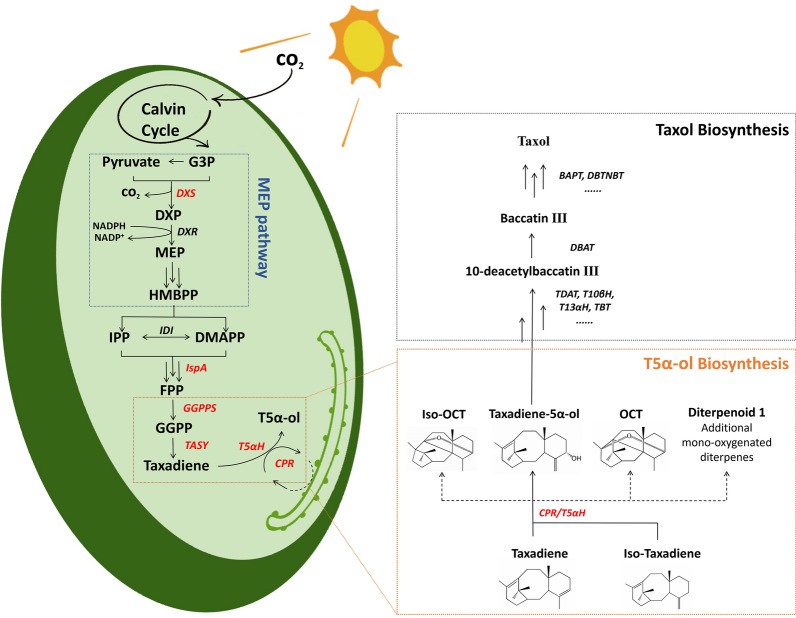
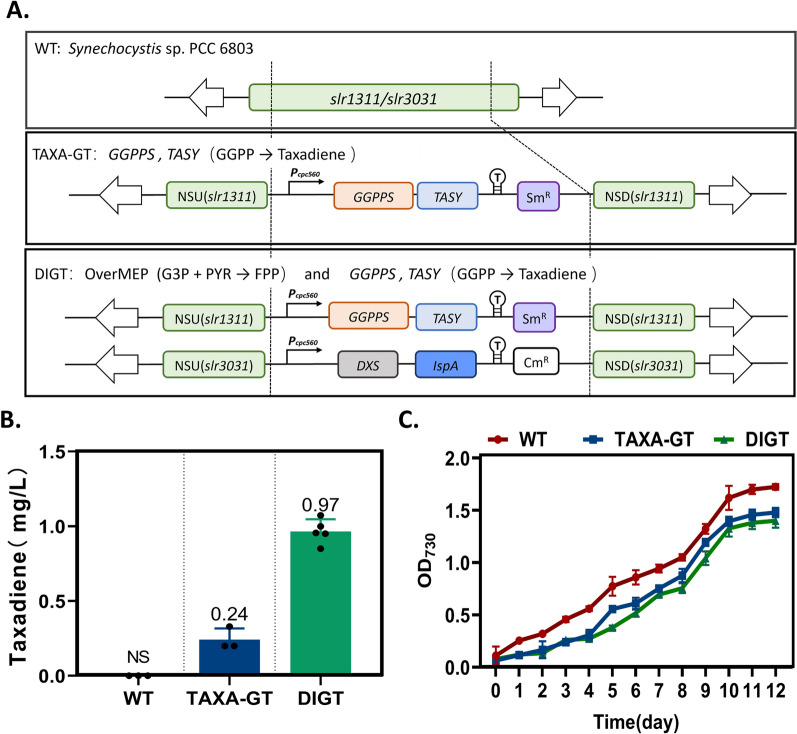
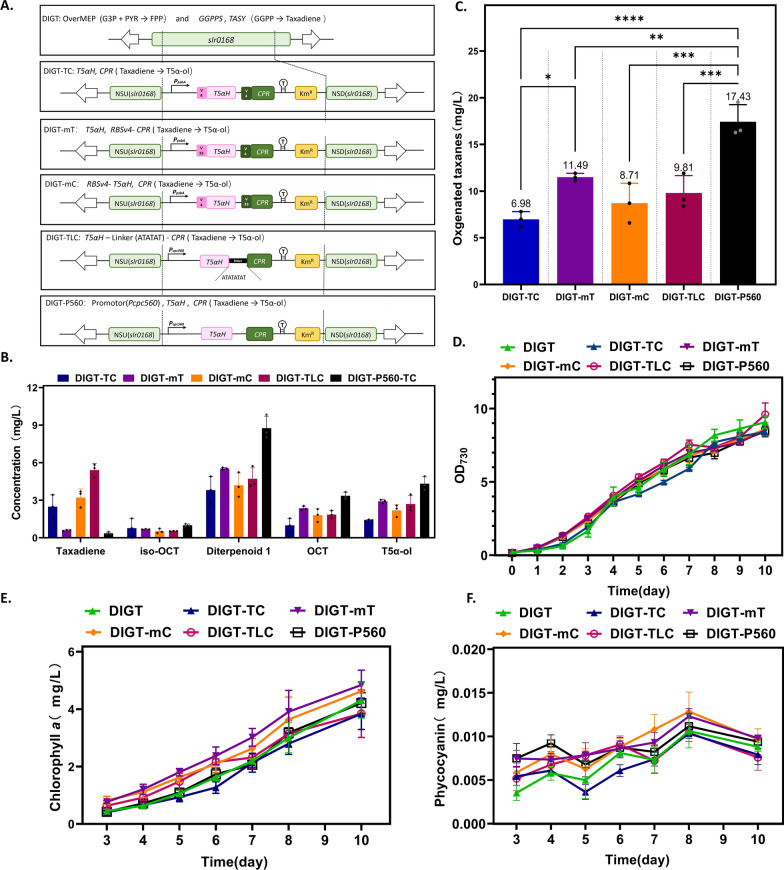
Taxol serves as an efficient natural anticancer agent with extensive applications in the treatment of diverse malignancies. Although advances in synthetic biology have enabled the de novo synthesis of taxol precursors in various microbial chassis, the total biosynthesis of taxol remains challengable owing to the restricted oxidation efficiency in heterotrophic microbes. Here, we engineered Synechocystis sp. PCC 6803 with modular metabolic pathways consisting of the methylerythritol phosphate pathway enzymes and taxol biosynthetic enzymes for production of taxadiene-5α-ol (T5α-ol), the key oxygenated intermediate of taxol. The best strain DIGT-P560 produced up to 17.43 mg/L of oxygenated taxanes and 4.32 mg/L of T5α-ol. Moreover, transcriptomic analysis of DIGT-P560 revealed that establishing a oxygenated taxane flux may enhance photosynthetic electron transfer efficiency and central metabolism in the engineered strain to ameliorate the metabolic disturbances triggered by the incorporation of exogenous genes. This is the first demonstration of photosynthetic production of taxadiene-5α-ol from CO 2 in cyanobacteria, highlighting the broad prospects of engineered cyanobacteria as bio-solar cell factories for valuable terpenoids production and expanding the ideas for further rational engineering and optimization.
Overview
The claims and statistics of this paper haven’t been checked yet.
Free: it reads the open-access text and checks the first 5 claims that cite a source we can check. Create a free account to check every claim.
Integrity signals
Registry
Cites
Statistics
Figures
Verification
Claims the paper makes
The claims and statistics of this paper haven’t been checked yet.
Free: it reads the open-access text and checks the first 5 claims that cite a source we can check. Create a free account to check every claim.
Claims other papers make about this one
Each is checked against this paper’s own text: does it say what the citing paper says it does?
The cited source says what the claim attributes to it.
In the citing paper
“The most effective strain yielded 17.43 mg/L of oxygenated taxanes and 4.32 mg/L of taxadiene-5α-ol, marking the first instance of photosynthetic taxadiene-5α-ol synthesis from CO2 in cyanobacteria.”
From Cyanobacteria as a Photosynthetic Chassis for Metabolic Pathway Engineering with Heterologous Gene Expression (2026) · cites this paper as [180]
The cited source says what the claim attributes to it.
In the citing paper
“Zhong et al. [180] engineered modular heterologous pathways that incorporated methylerythritol phosphate pathway enzymes alongside taxol biosynthetic enzymes, enabling the production of oxygenated taxanes, including taxadiene-5α-ol, directly from carbon dioxide.”
From Cyanobacteria as a Photosynthetic Chassis for Metabolic Pathway Engineering with Heterologous Gene Expression (2026) · cites this paper as [180]
Self-check
Percentages, sums and reported differences re-computed from the paper’s own numbers.
The self-check needs the paper’s full text.
Citations
Cites
1 retracted
RETRACTED: Cyanobacteria and microalgae: A positive prospect for biofuels
Parmar, A., Singh, N. K., Pandey, A., Gnansounou, E., & Madamwar, D. (2011) · Bioresource Technology · doi:10.1016/j.biortech.2011.08.030 · Cited by 542 · cited 1×
“As prokaryotic and photoautotrophic microorganisms, cyanobacteria are considered as non-food-based feed-stock resources that can convert solar energy and carbon dioxide for the synthesis of various carbon-based compounds [15].”
BackgroundRetractedGeneric Assignments, Strain Histories and Properties of Pure Cultures of Cyanobacteria
Rippka, R., Stanier, R. Y., Deruelles, J., Herdman, M., & Waterbury, J. B. (1979) · Microbiology · doi:10.1099/00221287-111-1-1 · Cited by 7,606 · cited 1×
“For flask shaking cultivation, the strains were grown at 30 °C in BG-11 medium [23] under continuous illumination of 25 µmol m − 2 s − 1 , with shaking at 130 rpm for normal growth in a photoincubator shaker (ZQZY-AGS8, Zhichu, China).”
MethodWani, M. C., Taylor, H. L., Wall, M. E., Coggon, P., & McPhail, A. T. (1971) · Journal of the American Chemical Society · doi:10.1021/ja00738a045 · Cited by 4,073 · cited 1×
“Taxol was initially derived from the bark of Taxus brevifolia [2].”
MethodPromotion of microtubule assembly in vitro by taxol
SCHIFF, P. B., FANT, J., & HORWITZ, S. B. (1979) · Nature · doi:10.1038/277665a0 · Cited by 3,600 · cited 1×
“It impedes the proliferation of neoplastic cells by arresting the cell cycle at the G2/M phase (the cell phase before mitosis) by stabilizing microtubule formation [1].”
BackgroundEngineering a mevalonate pathway in Escherichia coli for production of terpenoids
Martin, V. J. J., Pitera, D. J., Withers, S. T., Newman, J. D., & Keasling, J. D. (2003) · Nature Biotechnology · doi:10.1038/nbt833 · Cited by 1,725 · cited 3×
“This two-phase culture system is commonly employed to recover secreted hydrophobic products from cells [34, 35].”
BackgroundIsoprenoid Pathway Optimization for Taxol Precursor Overproduction in Escherichia coli
Ajikumar, P. K., Xiao, W.-H., Tyo, K. E. J., Wang, Y., Simeon, F., Leonard, E., Mucha, O., Phon, T. H., Pfeifer, B., & Stephanopoulos, G. (2010) · Science · doi:10.1126/science.1191652 · Cited by 1,677 · cited 5×
“In previous studies conducted using E. coli chassis [7, 8], considering the absence of compartmentalization structures such as the endoplasmic reticulum in prokaryotes, the N-terminal domains of T5αH and CPR were engineered to ensure their proper function in cytoplasm.”
BackgroundInfluentialSelf-citationIdentification and microbial production of a terpene-based advanced biofuel
Peralta-Yahya, P. P., Ouellet, M., Chan, R., Mukhopadhyay, A., Keasling, J. D., & Lee, T. S. (2011) · Nature Communications · doi:10.1038/ncomms1494 · Cited by 637 · cited 1×
“This two-phase culture system is commonly employed to recover secreted hydrophobic products from cells [34, 35].”
BackgroundDavies, F. K., Work, V. H., Beliaev, A. S., & Posewitz, M. C. (2014) · Frontiers in Bioengineering and Biotechnology · doi:10.3389/fbioe.2014.00021 · Cited by 272 · cited 1×
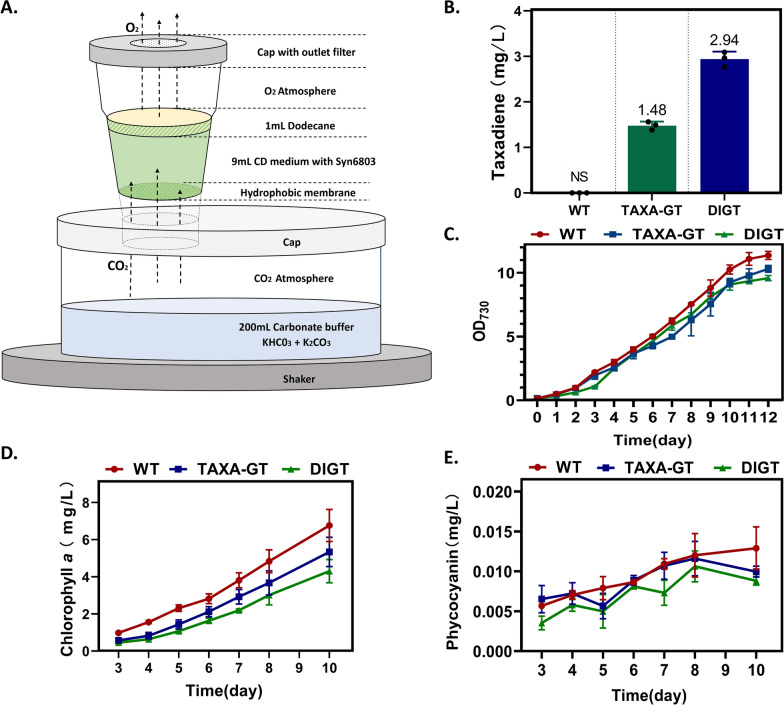
“To circumvent the solubility challenge of diterpenes in microbial cell cultures, engineered Syn6803 cells were cultivated in liquid medium overlaid with dodecane, a biocompatible organic solvent that mitigates cellular toxicity [33].”
BackgroundGenetic engineering of taxol biosynthetic genes in Saccharomyces cerevisiae
DeJong, J. M., Liu, Y., Bollon, A. P., Long, R. M., Jennewein, S., Williams, D., & Croteau, R. B. (2006) · Biotechnology and Bioengineering · doi:10.1002/bit.20694 · Cited by 269 · cited 2×
“Another ambitious endeavor was made to introduce eight taxol biosynthetic genes simultaneously into S. cerevisiae for the biosynthesis of Bac-catin III; however, only trace amounts of T5α-ol were detected [10].”
BackgroundYuan, L. Z., Rouvière, P. E., LaRossa, R. A., & Suh, W. (2006) · Metabolic Engineering · doi:10.1016/j.ymben.2005.08.005 · Cited by 263 · cited 1×
“All data are the mean ± standard deviation (SD) from triplicated shake flasks enzyme of the MEP pathway in various hosts [37, 38], while farnesyl phosphate synthase (IspA) is responsible for catalyzing the condensation of IPP and DMAPP to generate the terpenoid backbone molecule farnesyl…”
Method
Research works printed but not linked: 1
- Gao X Gao F Liu D Zhang H Nie X Yang C Engineering the methylerythritol phosphate pathway in cyanobacteria for photosynthetic isoprene production from CO2 Energy Environ Sci 2016 4 12
Cited by
Paclitaxel anti-cancer therapeutics: from discovery to clinical use
Yu, H., Lan, F., Zhuang, Y., Li, Q., Zhang, L., Tian, H., Bu, X., Chen, R., Gao, Y., Wang, Z., et al. (2025) · Chinese Journal of Natural Medicines · doi:10.1016/s1875-5364(25)60833-8 · Cited by 49
Bourgade, B., Xie, H., Lindblad, P. C., & Stensjö, K. (2025) · Communications Biology · doi:10.1038/s42003-025-08164-y · Cited by 21
“Similar activation levels were observed in S. elongatus PCC7942usingadCas9-basedsystem,withfold-changesranging from 2 to 10 19 , indicating that a limited dynamic range may be an inherent feature of cyanobacterial transcriptional regulation.”
Shi, J., Zhang, C., Deng, R., Fernie, A. R., Chen, M., & Zhang, Y. (2025) · Plant Communications · doi:10.1016/j.xplc.2025.101460 · Cited by 18
“…cerevisiae (184.2 mg/L) (Zhang et al., 2023a), Yarrowia lipolytica (101.4 mg/ L) (Xu et al., 2023), and Bacillus subtilis (390 mg/L) (He et al., 2024), as well as expression of taxadien-5 α -ol in Escherichia coli (7 mg/L) (Wu et al., 2022) and cyanobacteria (4.32 mg/L) (Zhong et al., 2024).”
InfluentialPlant synthetic biology‐based biofortification, strategies and recent progresses
Wang, K., & Liu, Z. (2025) · Journal of Integrative Plant Biology · doi:10.1111/jipb.13934 · Cited by 15
“Scale bars represent 1cm. Lower panel right, microbial “ chassis cells ” (cyanobacteria and yeast) were engineered to synthesize taxol precursors or sugars directly from CO 2 (Baumschabl et al., 2022; Tang et al., 2024; Zhong et al., 2024).”
Recent advances and perspectives in biosynthesis of paclitaxel: key enzymes and intermediates
Chen, Q., Xin, Q., Dong, S., Ge, X., Men, X., & Zhang, H. (2025) · International Journal of Biological Macromolecules · doi:10.1016/j.ijbiomac.2025.148049 · Cited by 12
Tan, C.-L., Yu, X., Feng, H.-C., Gershenzon, J., Liu, Y., & Li, S. (2026) · Trends in biotechnology · doi:10.1016/j.tibtech.2025.11.013 · Cited by 11
The Sustainable Production of Terpenoids in Cyanobacterial Chassis
Bo, H., Qiu, L., Lv, R., & Yu, Z.-X. (2025) · Microorganisms · doi:10.3390/microorganisms13061342 · Cited by 8
“The diterpenoid taxol is an important clinical anticancer drug [7].”
InfluentialHe, H., Gao, K., Mao, B., Shi, G., Li, Y., & Deng, X. (2025) · Biotechnology Journal · doi:10.1002/biot.70162 · Cited by 4
“Additionally, the optimization of metabolic flux modules and the balancing of P450 module expression enabled engineered Synechocystis sp. PCC 6803 to produce over 15 mg/L of oxygenated taxanes [84].”
InfluentialZhang, C., Wang, J., Zhao, L., Wu, N., Shi, Y., Li, X., Ke, C., Liu, J., Ye, Y., Wang, Y., et al. (2025) · Synthetic and Systems Biotechnology · doi:10.1016/j.synbio.2025.12.012 · Cited by 4
“These breakthroughs will accelerate the design and development of heterologous synthetic platforms for paclitaxel production, facilitating its synthetic biological manufacturing [10,11].”
Self-citationFeng, H.-C., Tan, C.-L., Zheng, X.-M., Yu, X., Gershenzon, J., Li, S., & Liu, Y. D. (2026) · Chemical Engineering Journal · doi:10.1016/j.cej.2025.172487 · Cited by 6
Walshe, J., & Saha, S. K. (2026) · Current Issues in Molecular Biology · doi:10.3390/cimb48060638 · Cited by 1
“Zhong et al. [180] engineered modular heterologous pathways that incorporated methylerythritol phosphate pathway enzymes alongside taxol biosynthetic enzymes, enabling the production of oxygenated taxanes, including taxadiene-5 α -ol, directly from carbon dioxide.”
Emerging Technologies Empowering the Biosynthesis of Paclitaxel
Liu, X., Zhang, Y., Li, J. L., & Huifeng, J. (2026) · Synthetic biology and engineering · doi:10.70322/sbe.2026.10006 · Cited by 1
Rezazadeh, H., Rad, S. M., Amandadi, M., Ghanati, F., & Hosseinkhani, S. (2026) · International Microbiology · doi:10.1007/s10123-026-00844-x · Cited by 1
“In this context, microbial systems, particularly endophytic fungi (Zhong et al. 2024 ) and selected bacteria (Zhang et al. 2025 ), have emerged as promising alternative platforms for the taxane biosynthesis.”
What would a hypothetical supercyanobacterium look like?
Pěnčík, O., Koláčková, M., Molnárová, K., & Húska, D. (2025) · Trends in biotechnology · doi:10.1016/j.tibtech.2025.04.006
Guo, M., Liu, Y., Wei, T., Adinkra, E. K., Ma, Y., Li, Y., Chen, Y., Wu, C., Xue, Z., & Liu, Y. (2026) · ACS Synthetic Biology · doi:10.1021/acssynbio.5c00803
Sfalcin, I., & Bonatto, D. (2026) · Bioresource Technology · doi:10.1016/j.biortech.2026.134893
Toward Sustainable Paclitaxel Bioproduction: Plant Biology, Biosynthesis and Platform Engineering
Zhang, M., Xing, X., & Zhu, H. (2026) · Plants · doi:10.3390/plants15111741
Lin, J. A. (2026) · BIO Web of Conferences · doi:10.1051/bioconf/202623702008
Kanwal, S., Ariyawansa, H. A., Karnchanatat, A., Monshupanee, T., & Srimongkol, P. (2026) · International Journal of Molecular Sciences · doi:10.3390/ijms27156680
“[7] Study of responses to heterologous production; attempted overexpression of upstream GGPP biosynthesis enzymes.”
Six decades of Taxol: From a Pacific Forest to a Life-Saving Drug
Mainkar, P. S., Srimannarayana, M., & Chandrasekhar, S. (2026) · Synlett · doi:10.1055/a-2949-1878
Shukla, V., Shukla, V., Rawat, S., Singh, V., & Phulara, S. C. (2026) · Frontiers in Bioengineering and Biotechnology · doi:10.3389/fbioe.2026.1933337
“Furthermore, photosynthetic production of the oxygenated taxol intermediate, taxadiene-5 α -ol, confirmed the ability of cyanobacteria to support complex cytochrome P450-dependent terpenoid biosynthesis (Zhong et al., 2024).”
Programmable plant chassis for sustainable biomanufacturing of high-value natural products
Li, Y., Xing, Y., Wang, Z., He, Y., Wang, Z., Yuan, Z., Zheng, X., Cheng, Z., Cao, M., Ni, J., et al. (2026) · Biotechnology Advances · doi:10.1016/j.biotechadv.2026.109044
Lai, T., Amosu, E. O., Raphael, J., McCubbin, T., Marcellin, E., Paulsen, I. T., & Cullen, A. (2026) · ACS Synthetic Biology · doi:10.1021/acssynbio.6c00175
Yang, X., Ren, J., Li, Z., Liang, R., & Liu, L. (2026) · Nano Today · doi:10.1016/j.nantod.2026.103206
Sustainable biomanufacturing of paclitaxel: From pathway elucidation to green production systems
Shan, F., Yu, J., Yang, J., & Wang, S. (2026) · Bioresource Technology · doi:10.1016/j.biortech.2026.136054
Pan, K., Liu, D., Chen, L., Sun, T., & Zhang, W. (2026) · Critical Reviews in Biotechnology · doi:10.1080/07388551.2026.2741611
Metadata
- Authors
- Zhong, J., Wang, Y., Chen, Z., Yalikun, Y., He, L., Liu, T., & Ma, G.
- Affiliations
- Shanghai Jiao Tong University (CN)
- Corresponding author
- Ma, Gang
- Venue
- Biotechnology for Biofuels and Bioproducts
- Published
- 2024-07-16
- Volume
- 17
- Issue
- 1
- Pages
- 99-99
- ISSN
- 2731-3654 (ISSN-L)
- PMC
- PMC11253407
- OpenAlex
- W4400681242
- Semantic Scholar
- a423159eb2445a6dd431e43ba716a9efdc40c3d4
- Cited by
- 25
- References
- 59
- Citations by year
- 2026: 16 · 2025: 9
- FWCI
- 3.40
- Type
- journal article
- Language
- en
- Open access
- gold
- doi.org
- Licence
- cc-by
- creativecommons.org/licenses/by/4.0 (tdm)
- creativecommons.org/licenses/by/4.0 (vor)
- Locations
- Biotechnology for Biofuels and Bioproducts (publishedVersion, cc-by)
- PubMed Central (publishedVersion, cc-by)
- PubMed (publishedVersion)
- DOAJ (DOAJ: Directory of Open Access Journals) (submittedVersion)
- Funders
- National Natural Science Foundation of China (31901022)
- National Key Research and Development Program of China (2019YFA0904603)
- Natural Science Foundation of Shanghai, China (21ZR1431700)
- Topics
- Life Sciences › Biochemistry, Genetics and Molecular Biology › Molecular Biology › Microbial Metabolic Engineering and Bioproduction
- Life Sciences › Biochemistry, Genetics and Molecular Biology › Molecular Biology › Plant biochemistry and biosynthesis
- Life Sciences › Immunology and Microbiology › Applied Microbiology and Biotechnology › Microbial Natural Products and Biosynthesis
- Keywords
- paclitaxel, cyanobacteria, Synechocystis sp. PCC 6803, methylerythritol phosphate pathway, photosynthetic production, CO2 fixation, terpenoid biosynthesis, metabolic engineering, photosynthetic electron transport
About these checks
Registry, retraction, Cites and statistics results are computed, not judged, with one exception: a printed reference that no index lists is read once by a model before it counts as a citation error. Claims are extracted by a model and kept only when their quote appears verbatim in the text; each cited source is then checked, with a model’s help, for whether it says what the claim relies on. Those verdicts can be wrong — read the claim’s quote and the cited source before relying on one.
Statistics and arithmetic are recomputed, not judged.
Confidence bands are shown only for fields calibrated on our annotated test set. None is calibrated yet, so no band is shown.
What counts as a claim ›How we measure confidence ›How we check this ›
Are you an author, or do you see a problem with this page? Request a review
Data sources
Bibliographic data: Semantic Scholar, OpenAlex, Crossref.
Contains information from the Semantic Scholar Academic Graph Datasets, made available under the ODC Attribution License (ODC-BY 1.0).
Semantic Scholar’s data is described in: Kinney, R., et al. (2023). The Semantic Scholar Open Data Platform. arXiv:2301.10140.
