

The blood fluke Schistosoma mansoni cleaves the coagulation protein high molecular weight kininogen (HK) but does not generate the vasodilator bradykinin
Open accessThe DOI matches its Crossref record; 43 of the 43 references it cites were found in a registry or an index.
Abstract
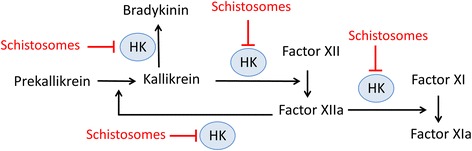
BACKGROUND: Schistosomes are blood dwelling parasitic worms that cause the debilitating disease schistosomiasis. Here we examined the influence of the parasites on their external environment by monitoring the impact of adult Schistosoma mansoni worms on the murine plasma proteome in vitro and, in particular, on how the worms affect the blood coagulation protein high molecular weight kininogen (HK). METHODS: Following the incubation of adult schistosomes in murine plasma, two-dimensional differential in-gel electrophoresis (2D-DIGE) was conducted to look for changes in the plasma proteome compared with control plasma. A major change to the blood protein kininogen (HK) was observed, and the interaction of Schistosoma mansoni parasite with this protein alone was then investigated by western blot analysis and activity assays. Finally, the generation of bradykinin from HK was monitored using a bradykinin detection kit. RESULTS: The most striking change to the plasma proteome concerned HK; while the full-length protein was more abundant in control plasma, carboxyl-terminal truncated forms were more abundant in plasma that contained schistosomes. Incubating parasites in buffer with pure HK followed by Western blot analysis confirmed that human HK is degraded by the worms. The resulting digestion pattern differed from that brought about by kallikrein, a host serine protease that normally acts on HK to release the vasodilator bradykinin. We found that live schistosomes, while digesting HK, do not generate bradykinin nor do they cleave a chromogenic kallikrein substrate. Since the cleavage of HK by the worms is not impeded by the serine protease inhibitor PMSF but is blocked by the cysteine protease inhibitor E64c, we hypothesize that schistosome tegumental cysteine proteases are responsible for HK cleavage. CONCLUSIONS: Since proteomic and biochemical studies have revealed that the schistosome tegument contains two cysteine proteases belonging to the calpain family (SmCalp1 and SmCalp2) we conclude that these are likely responsible for the HK cleavage reported here. Schistosome cleavage of HK should help impede blood clotting and inflammation around the worms in vivo and so promote their ease of movement within the vasculature of their hosts.
Overview
The claims and statistics of this paper haven’t been checked yet.
Free: it reads the open-access text and checks the first 5 claims that cite a source we can check. Create a free account to check every claim.
Integrity signals
Registry
Cites
Statistics
Figures
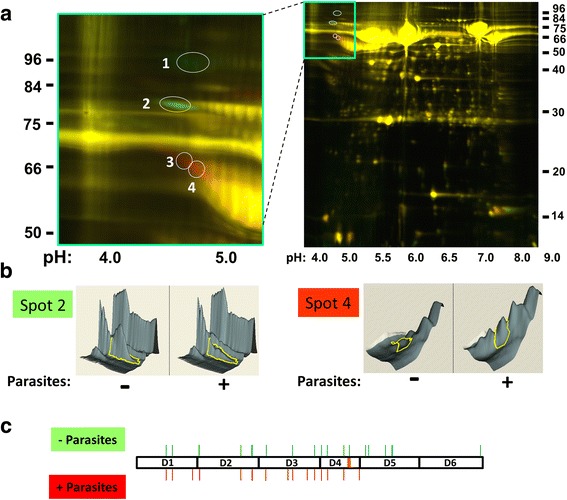
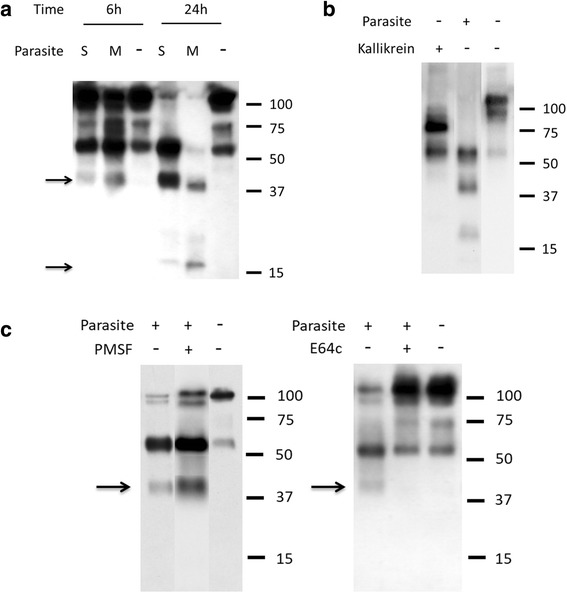
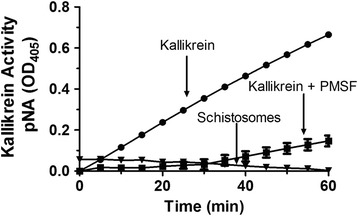
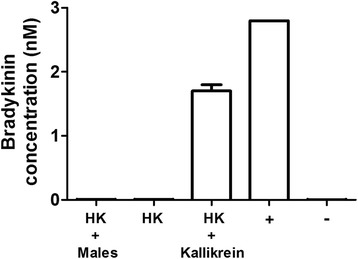
Verification
Claims the paper makes
The claims and statistics of this paper haven’t been checked yet.
Free: it reads the open-access text and checks the first 5 claims that cite a source we can check. Create a free account to check every claim.
Claims other papers make about this one
Each is checked against this paper’s own text: does it say what the citing paper says it does?
The source backs part of the claim, not all of it — or backs it for a different population, condition or comparison.
In the citing paper
“Calpain family proteases SmCalp-1 and SmCalp-2 are expressed in the tegument of S. mansoni adult worms, where they appear to cleave and inactivate key coagulation proteins fibronectin and high-molecular-weight kininogen (HK) (Wang et al., 2018).”
From Modulation of Host Immunity by Helminths: The Expanding Repertoire of Parasite Effector Molecules (2018) · cites this paper as Wang et al., 2018
Experimental — accuracy not yet measured
Self-check
Percentages, sums and reported differences re-computed from the paper’s own numbers.
The self-check needs the paper’s full text.
Citations
Cites
Cleavage of Structural Proteins during the Assembly of the Head of Bacteriophage T4
LAEMMLI, U. K. (1970) · Nature · doi:10.1038/227680a0 · Cited by 249,961 · cited 1×
“Samples recovered from the HK assay described above were resolved by 4–20% SDS-PAGE (BioRad, Hercules, USA) as previously described [17].”
MethodRaza, H., John, A., & Nemmar, A. (2013) · Cellular Physiology and Biochemistry · doi:10.1159/000350087 · Cited by 47,221
Colley, D. G., Bustinduy, A. L., Secor, W. E., & King, C. H. (2014) · The Lancet · doi:10.1016/s0140-6736(13)61949-2 · Cited by 2,444
Steinmann, P., Keiser, J., Bos, R., Tanner, M., & Utzinger, J. (2006) · The Lancet Infectious Diseases · doi:10.1016/s1473-3099(06)70521-7 · Cited by 2,156
Gryseels, B., Polman, K., Clerinx, J., & Kestens, L. (2006) · The Lancet · doi:10.1016/s0140-6736(06)69440-3 · Cited by 2,084
King, C. H., Dickman, K., & Tisch, D. J. (2005) · The Lancet · doi:10.1016/s0140-6736(05)66457-4 · Cited by 899 · cited 1×
“Annual mortality in sub-Saharan Africa alone is over 250,000 people, with many more experiencing chronic morbidity [3, 4].”
BackgroundThe unacknowledged impact of chronic schistosomiasis
King, C. H., & Dangerfield-Cha, M. (2008) · Chronic Illness · doi:10.1177/1742395307084407 · Cited by 530 · cited 1×
“Annual mortality in sub-Saharan Africa alone is over 250,000 people, with many more experiencing chronic morbidity [3, 4].”
BackgroundThe contact activation and kallikrein/kinin systems: pathophysiologic and physiologic activities
Schmaier, A. H. (2016) · Journal of Thrombosis and Haemostasis · doi:10.1111/jth.13194 · Cited by 396 · cited 5×
“Bradykinin can additionally act on the vascular endothelium to induce the production of the prostaglandin PGI2 [11].”
BackgroundInfluentialProteins Exposed at the Adult Schistosome Surface Revealed by Biotinylation
Braschi, S., & Wilson, R. A. (2006) · Molecular & Cellular Proteomics · doi:10.1074/mcp.m500287-mcp200 · Cited by 254
Zatz, M., & Starling, A. (2005) · New England Journal of Medicine · doi:10.1056/nejmra043361 · Cited by 238
Braschi, S., Curwen, R. S., Ashton, P. D., Verjovski‐Almeida, S., & Wilson, A. (2006) · PROTEOMICS · doi:10.1002/pmic.200500368 · Cited by 238 · cited 1×
“This result is also consistent with tegumental proteomic work which places cysteine proteases belonging to the calpain family in the parasite surface membranes but no serine proteases there [24, 25].”
ResultStructure–function relationships in calpains
Campbell, R. L., & Davies, P. L. (2012) · Biochemical Journal · doi:10.1042/bj20120921 · Cited by 216
Mechanisms of activation of the classical pathway of complement by Hageman factor fragment.
Ghebrehiwet, B., Randazzo, B. P., Dunn, J. T., Silverberg, M., & Kaplan, A. P. (1983) · Journal of Clinical Investigation · doi:10.1172/jci110898 · Cited by 196 · cited 1×
“For instance, since factor XIIa stimulates neutrophil aggregation [30], interleukin-1 expression in monocytes [31], and initiates the classical complement cascade [32], the ability of the worms to block its formation may additionally minimize the concentration of inflammatory mediators in their vicinity.”
BackgroundCalpain chronicle—an enzyme family under multidisciplinary characterization
SORIMACHI, H., HATA, S., & ONO, Y. (2011) · Proceedings of the Japan Academy, Series B · doi:10.2183/pjab.87.287 · Cited by 158
Castro-Borges, W., Dowle, A., Curwen, R. S., Thomas-Oates, J., & Wilson, R. A. (2011) · PLoS Neglected Tropical Diseases · doi:10.1371/journal.pntd.0000993 · Cited by 150
Sotillo, J., Pearson, M. S., Becker, L., Mulvenna, J. P., & Loukas, A. C. (2015) · International Journal for Parasitology · doi:10.1016/j.ijpara.2015.03.004 · Cited by 148
Scott, C. F., Silver, L. D., Schapira, M., & Colman, R. W. (1984) · Journal of Clinical Investigation · doi:10.1172/jci111319 · Cited by 138 · cited 2×
“However, whether HK cleavage by itself would necessarily impede coagulation remains to be determined; kallikrein cleavage of HK is reported to enhance its coagulant activity [29].”
BackgroundPurified plasma factor XIIa aggregates human neutrophils and causes degranulation
Wachtfogel, Y., Pixley, R., Kucich, U., Abrams, W., Weinbaum, G., Schapira, M., & Colman, R. (1986) · Blood · doi:10.1182/blood.v67.6.1731.1731 · Cited by 131 · cited 1×
“For instance, since factor XIIa stimulates neutrophil aggregation [30], interleukin-1 expression in monocytes [31], and initiates the classical complement cascade [32], the ability of the worms to block its formation may additionally minimize the concentration of inflammatory mediators in their vicinity.”
BackgroundScott, C. F., Whitaker, E. J., Hammond, B. F., & Colman, R. W. (1993) · Journal of Biological Chemistry · doi:10.1016/s0021-9258(18)53048-9 · Cited by 123 · cited 1×
“the bacteria Streptococcus pyogenes [41] and Porphyromonas gingivalis [42]).”
BackgroundBradykinin: Inflammatory Product of the Coagulation System
Hofman, Z. L. M., de Maat, S., Hack, C. E., & Maas, C. (2016) · Clinical Reviews in Allergy & Immunology · doi:10.1007/s12016-016-8540-0 · Cited by 112 · cited 1×
“On the other hand, neutrophil, as well as mast cell, activation has been functionally linked to bradykinin production, which may be damaging for the parasites [21].”
BackgroundInterference with the host haemostatic system by schistosomes
Mebius, M. M., van Genderen, P. J. J., Urbanus, R. T., Tielens, A. G. M., de Groot, P. G., & van Hellemond, J. J. (2013) · PLoS Pathogens · doi:10.1371/journal.ppat.1003781 · Cited by 83 · cited 3×
“Certainly, worms within blood vessels do not seem perturbed by thromboses [20, 27] and ex vivo they can severely impede the ability of blood to clot [28].”
BackgroundPurinergic signaling and immune modulation at the schistosome surface?
Bhardwaj, R., & Skelly, P. J. (2009) · Trends in Parasitology · doi:10.1016/j.pt.2009.03.004 · Cited by 78
Self-citationSchistosomes Enhance Plasminogen Activation: The Role of Tegumental Enolase
Figueiredo, B. C.-P., Da’dara, A. A., Oliveira, S. C., & Skelly, P. J. (2015) · PLoS Pathogens · doi:10.1371/journal.ppat.1005335 · Cited by 69 · cited 1×
“These include their possession of ectoenzymes that can cleave pro-thrombotic nucleotides like ADP [8] as well as surface molecules that can promote the generation of active plasmin, a major clot-degrading enzyme [9].”
BackgroundSelf-citationDa’dara, A. A., Bhardwaj, R., Ali, Y. B. M., & Skelly, P. J. (2014) · PeerJ · doi:10.7717/peerj.316 · Cited by 65 · cited 1×
“These include their possession of ectoenzymes that can cleave pro-thrombotic nucleotides like ADP [8] as well as surface molecules that can promote the generation of active plasmin, a major clot-degrading enzyme [9].”
BackgroundSelf-citationCharacterization of Schistosome Tegumental Alkaline Phosphatase (SmAP)
Bhardwaj, R., & Skelly, P. J. (2011) · PLoS Neglected Tropical Diseases · doi:10.1371/journal.pntd.0001011 · Cited by 61
Self-citationCercarial Transformation and in vitro Cultivation of Schistosoma mansoni Schistosomules
Milligan, J. N., & Jolly, E. R. (2011) · Journal of Visualized Experiments · doi:10.3791/3191 · Cited by 59 · cited 2×
“All parasites were cultured in complete Dulbecco's Modified Eagle Medium/Nutrient Mixture F-12 (DMEM/F12) medium supplemented with 10% heat-inactivated fetal bovine serum, 200 U/ml penicillin and 200 μg/ml streptomycin, 0.2 μM Triiodo-lthyronine, 1 μM serotonin and 8 μg/ml human insulin and were maintained at 37 °C, i…”
InfluentialInduction of expression of monocyte interleukin 1 by Hageman factor (factor XII).
Toossi, Z., Sedor, J. R., Mettler, M. A., Everson, B., Young, T., & Ratnoff, O. D. (1992) · Proceedings of the National Academy of Sciences · doi:10.1073/pnas.89.24.11969 · Cited by 59 · cited 1×
“For instance, since factor XIIa stimulates neutrophil aggregation [30], interleukin-1 expression in monocytes [31], and initiates the classical complement cascade [32], the ability of the worms to block its formation may additionally minimize the concentration of inflammatory mediators in their vicinity.”
BackgroundThe complement and contact activation systems: partnership in pathogenesis beyond angioedema
Ghebrehiwet, B., Kaplan, A. P., Joseph, K., & Peerschke, E. I. B. (2016) · Immunological Reviews · doi:10.1111/imr.12469 · Cited by 53 · cited 1×
“The plasma serine protease kallikrein is known to cleave HK to generate the vasodilator bradykinin [18, 19].”
BackgroundWang, Q., Da’dara, A. A., & Skelly, P. J. (2017) · Scientific Reports · doi:10.1038/s41598-017-13141-5 · Cited by 51 · cited 6×
“Furthermore, we have shown that living parasites exhibit surface calpain activity [36].”
BackgroundInfluentialSelf-citationGene Suppression in Schistosomes Using RNAi
Da’dara, A. A., & Skelly, P. J. (2014) · Methods in molecular biology · doi:10.1007/978-1-4939-1438-8_8 · Cited by 50 · cited 1×
“Larval schistosomes (cercariae, strain NMRI) were obtained from the infected snails, and schistosomula were prepared as described [15].”
MethodSelf-citationStreptococcus pyogenes Triggers Activation of the Human Contact System by Streptokinase
Nitzsche, R., Rosenheinrich, M., Kreikemeyer, B., & Oehmcke-Hecht, S. (2015) · Infection and Immunity · doi:10.1128/iai.00180-15 · Cited by 43 · cited 1×
“the bacteria Streptococcus pyogenes [41] and Porphyromonas gingivalis [42]).”
BackgroundKininogen adsorption to the cell surface of Candida spp.
Rapala-Kozik, M., Karkowska, J., Jacher, A., Golda, A., Barbasz, A., Guevara-Lora, I., & Kozik, A. (2008) · International Immunopharmacology · doi:10.1016/j.intimp.2007.07.005 · Cited by 41 · cited 1×
“[39, 40]) and some possess proteases that cleave HK (e.”
BackgroundFajtová, P., Štefanić, S., Hradílek, M., Dvořák, J., Vondrášek, J., Jílková, A., Ulrychová, L., McKerrow, J. H., Caffrey, C. R., Mares, M. A., et al. (2015) · PLoS neglected tropical diseases · doi:10.1371/journal.pntd.0003827 · Cited by 41 · cited 2×
“Nonetheless, live adult worms are reported to cleave bradykinin suggesting that SmPOP on worms can access the peptide [22].”
BackgroundBradford, H. N., Jameson, B. A., Adam, A. A., Wassell, R. P., & Colman, R. W. (1993) · Journal of Biological Chemistry · doi:10.1016/s0021-9258(19)74347-6 · Cited by 36 · cited 1×
“Since domains 2 and 3 of HK are designated as being involved in “cysteine protease inhibition” [37, 38], it is ironic that schistosome cysteine proteases may cleave this protein.”
BackgroundHaemostatic abnormalities in hepatosplenic schistosomiasis mansoni
Tanabe, M. (2003) · Parasitology International · doi:10.1016/s1383-5769(03)00051-5 · Cited by 31 · cited 1×
“Certainly, worms within blood vessels do not seem perturbed by thromboses [20, 27] and ex vivo they can severely impede the ability of blood to clot [28].”
BackgroundThe initiation and effects of plasma contact activation: an overview
Lin, L., Wu, M., & Zhao, J. (2016) · International Journal of Hematology · doi:10.1007/s12185-016-2132-x · Cited by 27 · cited 2×
“As noted earlier, HK is the source of the 9-amino acid vasodilatory peptide bradykinin and kallikrein-mediated cleavage of HK releases bradykinin [12, 20].”
BackgroundCARVALHO, W. S., LOPES, C. T., Juliano, L., Coelho, P. M. Z., Cunha-Melo, J. R., Beraldo, W. T., & Pesquero, J. L. (1998) · Parasitology · doi:10.1017/s0031182098003175 · Cited by 21
Karkowska‐Kuleta, J., Zając, D., Braś, G., Bocheńska, O., Seweryn, K., Kędracka–Krok, S., Jankowska, U., Rąpała‐Kozik, M., & Kozik, A. (2016) · Acta Biochimica Polonica · doi:10.18388/abp.2016_1353 · Cited by 21 · cited 1×
“[39, 40]) and some possess proteases that cleave HK (e.”
BackgroundCocude, C., Pierrot, C., Cêtre, C., Fontaine, J., GODIN, C., Capron, A., & Khalife, J. (1999) · Parasitology · doi:10.1017/s0031182098003874 · Cited by 19
Da’dara, A. A., de Laforcade, A. M., & Skelly, P. J. (2015) · Journal of Thrombosis and Thrombolysis · doi:10.1007/s11239-015-1298-z · Cited by 18 · cited 1×
“Certainly, worms within blood vessels do not seem perturbed by thromboses [20, 27] and ex vivo they can severely impede the ability of blood to clot [28].”
BackgroundSelf-citationSchmaier, A. H. (2016) · Frontiers in Medicine · doi:10.3389/fmed.2016.00061 · Cited by 18 · cited 1×
“The plasma serine protease kallikrein is known to cleave HK to generate the vasodilator bradykinin [18, 19].”
BackgroundPurified plasma factor XIIa aggregates human neutrophils and causes degranulation
Wachtfogel, Y. T., Pixley, R., Kucich, U., et al. (1986) · Blood · doi:10.1182/blood.v67.6.1731.bloodjournal6761731 · Cited by 9
Pavord, S., Kelton, J. G., Warner, M. N., Moore, J. C., Warkentin, T. E., & Hayward, C. P. M. (1997) · British Journal of Haematology · doi:10.1046/j.1365-2141.1997.1282947.x · Cited by 6 · cited 1×
“Since domains 2 and 3 of HK are designated as being involved in “cysteine protease inhibition” [37, 38], it is ironic that schistosome cysteine proteases may cleave this protein.”
Background
Cited by
Modulation of Host Immunity by Helminths: The Expanding Repertoire of Parasite Effector Molecules
Maizels, R. M., Smits, H. H., & McSorley, H. J. (2018) · Immunity · doi:10.1016/j.immuni.2018.10.016 · Cited by 435
Acharya, S., Da’dara, A. A., & Skelly, P. J. (2021) · PLoS Pathogens · doi:10.1371/journal.ppat.1010064 · Cited by 78
“Following schistosome incubation in serum, cleavage of selected host proteins is detected, including components of the complement cascade [91], and it is possible that tegumental proteases are responsible [92,93].”
BackgroundSelf-citationKinins and Their Receptors in Infectious Diseases
Dagnino, A. P. A., Campos, M. M., & Silva, R. B. M. (2020) · Pharmaceuticals · doi:10.3390/ph13090215 · Cited by 32
“Schistosomula or adult male worms cleaves HMWK through the action of two cysteine proteases belonging to the calpain family (SmCalp1 and SmCalp2), independent on the activation of kallikreins or BK formation [181].”
BackgroundElzoheiry, M., Da’dara, A. A., Bhardwaj, R., Wang, Q., Azab, M. S., El-Kholy, E.-S. I., El-Beshbishi, S. N., & Skelly, P. J. (2018) · Frontiers in Immunology · doi:10.3389/fimmu.2018.01746 · Cited by 32
“For instance, host-interactive tegumental proteases can cleave key components of the coagulation cascade like fibronectin (61) and high molecular weight kininogen (62).”
BackgroundSelf-citationChakraborty, P., Aravindhan, V., & Mukherjee, S. (2023) · International Journal of Biological Macromolecules · doi:10.1016/j.ijbiomac.2023.124649 · Cited by 29
Metadata
- Authors
- Wang, Q., Da’dara, A. A., & Skelly, P. J.
- Affiliations
- Tufts University (US)
- Corresponding author
- Wang, Qiang
- Venue
- Parasites & Vectors
- Published
- 2018-03-14
- Volume
- 11
- Issue
- 1
- Pages
- 182-182
- ISSN
- 1756-3305 (ISSN-L)
- PMC
- PMC5853081
- OpenAlex
- W2791881604
- Cited by
- 16
- References
- 42
- Citations by year
- 2025: 1 · 2024: 1 · 2023: 3 · 2022: 3 · 2021: 2 · 2020: 3 · 2019: 1 · 2018: 2
- FWCI
- 1.62
- Type
- journal article
- Language
- en
- Open access
- gold
- doi.org
- Licence
- cc-by
- creativecommons.org/licenses/by/4.0/ (tdm)
- Locations
- Parasites & Vectors (publishedVersion, cc-by)
- PubMed Central (publishedVersion, cc-by)
- PubMed (publishedVersion)
- DOAJ (DOAJ: Directory of Open Access Journals) (submittedVersion, cc-by-sa)
- Funders
- Foundation for the National Institutes of Health (AI056273)
- Topics
- Life Sciences › Immunology and Microbiology › Parasitology › Parasites and Host Interactions
- Health Sciences › Medicine › Hematology › Coagulation, Bradykinin, Polyphosphates, and Angioedema
- Health Sciences › Medicine › Hematology › Blood Coagulation and Thrombosis Mechanisms
- Keywords
- Schistosoma mansoni, high molecular weight kininogen, bradykinin, coagulation, plasma proteome, cysteine protease, calpain, kallikrein, host-parasite interactions, schistosomiasis
- MeSH terms
- Animals, Blood Coagulation, Bradykinin, Calpain, Humans, Molecular Weight, Schistosoma mansoni, Schistosomiasis, Blotting, Western, Electrophoresis, Gel, Two-Dimensional, Kininogen, High-Molecular-Weight, Proteomics, Mice, Cysteine Proteases
About these checks
Registry, retraction, Cites and statistics results are computed, not judged, with one exception: a printed reference that no index lists is read once by a model before it counts as a citation error. Claims are extracted by a model and kept only when their quote appears verbatim in the text; each cited source is then checked, with a model’s help, for whether it says what the claim relies on. Those verdicts can be wrong — read the claim’s quote and the cited source before relying on one.
Statistics and arithmetic are recomputed, not judged.
Confidence bands are shown only for fields calibrated on our annotated test set. None is calibrated yet, so no band is shown.
What counts as a claim ›How we measure confidence ›How we check this ›
Are you an author, or do you see a problem with this page? Request a review
Data sources
Bibliographic data: Semantic Scholar, OpenAlex, Crossref.
Contains information from the Semantic Scholar Academic Graph Datasets, made available under the ODC Attribution License (ODC-BY 1.0).
Semantic Scholar’s data is described in: Kinney, R., et al. (2023). The Semantic Scholar Open Data Platform. arXiv:2301.10140.
