

Multiple drug resistance in the canine hookworm Ancylostoma caninum: an emerging threat?
Open accessPublished version of a preprint
The DOI matches its Crossref record; 97 of the 97 references it cites were found in a registry or an index; 19 of the 104 sources its claims cite were checked for support.
Abstract
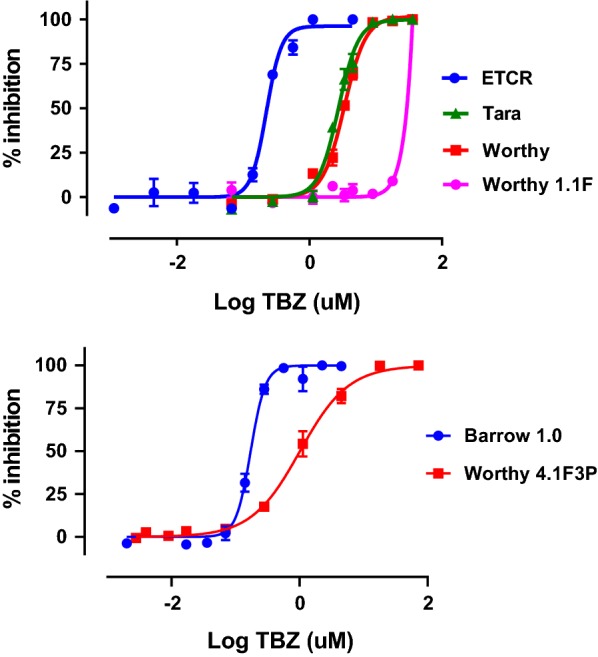
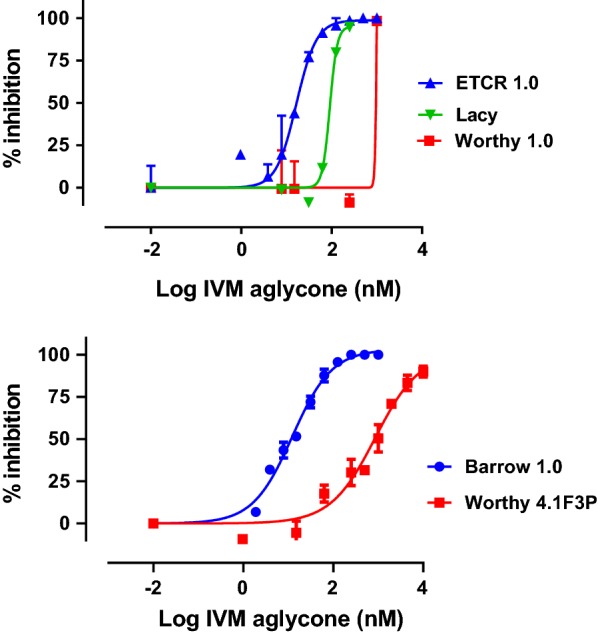
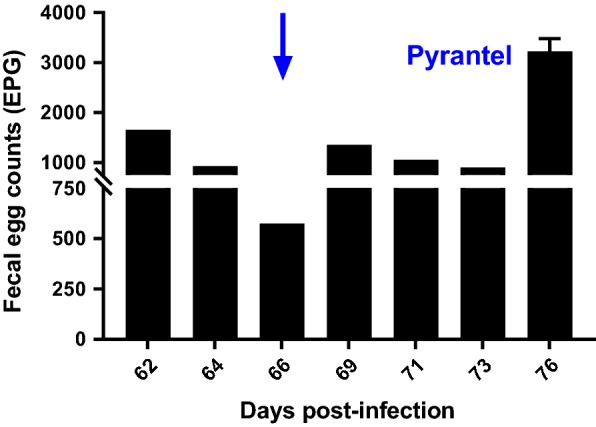
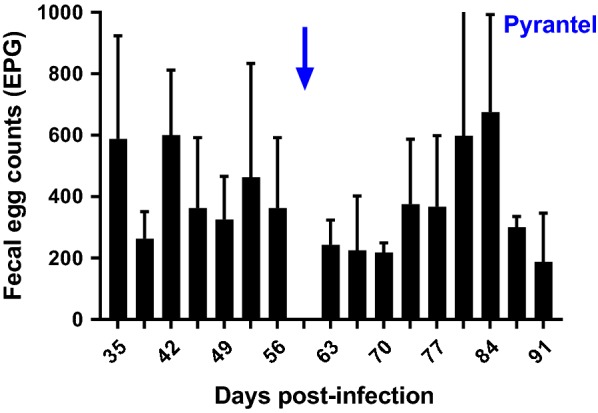
BACKGROUND: The canine hookworm, Ancylostoma caninum is the most prevalent and important intestinal nematode parasite of dogs in the USA. Hookworms are typically well controlled by treatment with all commonly used anthelmintics that are approved for this use in dogs. However, in the past few years, cases of recurrent/persistent canine hookworm infections appear to have dramatically increased, suggesting that anthelmintic resistance (AR) may have evolved in this parasite. These cases are highly overrepresented by greyhounds, but multiple other breeds are also represented. The aim of this study was to characterize several of these suspected resistant isolates using in vitro, genetic and clinical testing to determine if these cases represent true anthelmintic resistance in A. caninum. METHODS: Fecal samples containing hookworm eggs from three cases of persistent hookworm infections; one from a greyhound, one from a miniature schnauzer and one from a hound-mix, were received by our laboratory. These were then used to establish infections in laboratory dogs and to perform egg hatch assays (EHA) and larval development assays (LDA) for detecting resistance to benzimidazoles and macrocyclic lactones, respectively. Additional EHA and LDA were performed on eggs recovered from the laboratory-induced infections. Fecal egg count reduction tests were performed to detect resistance to pyrantel. Deep amplicon sequencing assays were developed to measure the frequency of non-synonymous single nucleotide polymorphisms (SNP) at codons 167, 198 and 200 of the A. caninum isotype-1 β-tubulin gene. RESULTS: Resistance ratios for the three A. caninum isolates tested ranged from 6.0 to > 100 and 5.5 to 69.8 for the EHA and LDA, respectively. Following treatment with pyrantel, reduction in faecal egg counts was negative or 0%. Deep amplicon sequencing of the isotype-1 β-tubulin gene identified a high frequency of resistance-associated SNPs at codon 167 in all three resistant isolates and in two additional clinical cases. CONCLUSIONS: These data conclusively demonstrate multiple anthelmintic resistance in multiple independent isolates of A. caninum, strongly suggesting that this is an emerging problem in the USA. Furthermore, evidence suggest that these resistant hookworms originate from racing greyhound farms and kennels, though additional research is needed to confirm this.
Overview
CoChat Summary
TL;DR
This study characterized suspected resistant canine hookworm isolates and concluded that multiple anthelmintic resistance in *Ancylostoma caninum* is an emerging problem in the USA, likely originating from racing greyhound farms/kennels. In vitro, in vivo, and genetic testing showed resistance to benzimidazoles, macrocyclic lactones, and pyrantel, with high frequencies of the F167Y β-tubulin SNP in resistant isolates.
Key findings
- Resistance ratios ranged from 6.0 to >100 for the egg hatch assay (EHA) and 5.5 to 69.8 for the larval development assay (LDA). Initial EHA resistance ratios for Lacy, Tara, and Worthy versus susceptible ETCR were 10.9, 11.8, and 14.5, respectively.
- Following pyrantel treatment, fecal egg count reduction was negative or 0%; Tara increased and Worthy showed 3% reduction.
- Deep amplicon sequencing detected benzimidazole resistance-associated SNPs only at codon 167 (F167Y). All three phenotypically resistant isolates had high F167Y frequencies ranging from 13% to almost 100%, while susceptible isolates had allele frequencies of 0%, 1%, and 9%. In Tara, F167Y increased from 13% to 51% after a single fenbendazole treatment; Lacy adults had ~50% and eggs ~100%; clinical cases Fame Taker and Dolores had ~90%.
- The authors conclude that multiple drug resistance in *A. caninum* is an emerging problem in dogs, with evidence suggesting origin in the greyhound racing industry and spread into the pet population, though definitive evidence for spread is still lacking.
Methods
- Fecal samples from three persistent hookworm cases—one greyhound (Worthy), one miniature schnauzer (Tara), and one hound-mix (Lacy)—plus susceptible isolates ETCR and Barrow were used to establish infections in purpose-bred research dogs.
- Egg hatch assays and larval development assays tested benzimidazole and macrocyclic lactone resistance; fecal egg count reduction tests assessed pyrantel resistance after treatment at 10 mg/kg; deep amplicon sequencing measured non-synonymous SNPs at codons 167, 198, and 200 of the isotype-1 β-tubulin gene; ITS-2 rDNA deep amplicon sequencing confirmed species identity.
- Dose-response data were log-transformed and fitted to a four-parameter non-linear regression with variable slope; IC50 values and resistance ratios were calculated.
Limitations
- Stated: the authors lack definitive evidence to infer that resistant hookworms are spreading into the pet dog population; additional research is needed to confirm origin from racing greyhound farms/kennels; mechanisms of resistance to macrocyclic lactones and pyrantel are unknown, so no molecular diagnostics exist for those drug classes.
- Evident from the text: only three resistant isolates plus two additional clinical cases were characterized, limiting broader prevalence or epidemiological inference.
- Evident from the text: the LDA failed to discriminate benzimidazole resistance (resistance ratios <2.0) and levamisole yielded low R², preventing useful pyrantel discrimination, so in vitro confirmation was limited mainly to macrocyclic lactones.
Model-written summary. Check it against the paper before relying on it.
Integrity signals
Registry
Cites
Statistics
Figures
Verification
Claims the paper makes
15 Valid · 3 Not valid · 41 Not checked · 85 Own results and interpretations
The cited sources support only part of this claim — read each source’s verdict below.
In the paper
“Parasitic strongylid nematodes have a number of genetic features, which favour the development of anthelmintic resistance, such as rapid rates of nucleotide sequence evolution and exceedingly large effective population sizes, leading to remarkably high levels of genetic diversity [21, 22].”
§ Multiple drug resistance in the canine hookworm Ancylostoma caninum: an emerging threat? > Background
What the sources say
- Partly supportedcites [21] Blouin MS Yowell CA Courtney CH Dame JB Host movement and the genetic structure of populations of parasitic nematodes Genetics. 1995 141 1007 1014 8582607 PMC1206824 sourceExperimental — accuracy not yet measured
The Discussion (p. 7) proposes large effective population size, perhaps combined with accelerated nucleotide substitution, as an explanation for the high diversity observed in trichostrongylids. It treats faster nucleotide evolution as a hypothesis, not an established feature. Its discussion of anthelmintic resistance (p. 7) links its spread to high gene flow, rather than showing that the proposed diversity mechanisms favour resistance development. (LLM, conf=0.86)
- Not checked — no full text of the sourcecites [22] Gilleard JS Redman E Genetic diversity and population structure of Haemonchus contortus Adv Parasitol. 2016 93 31 68 10.1016/bs.apar.2016.02.009 27238002 source
plainstates a cause- Asserted: passes — The authors put it forward as true.
- Checkable: passes — It can be checked against evidence.
- Load-bearing: unclear — It is unclear whether the paper’s conclusions depend on it.
- Based: passes — The paper gives a reason why it holds.
- Partly supported
Every source the paper cites for this claim was checked and supports it.
In the paper
“a recent publication reported resistance to benzimidazoles and macrocyclic lactones in an isolate of A. caninum obtained from a greyhound dog [34].”
§ Multiple drug resistance in the canine hookworm Ancylostoma caninum: an emerging threat? > Background
What the sources say
- Supportedcites [34] Kitchen S Ratnappan R Han S Leasure C Grill E Iqbal Z Isolation and characterization of a naturally occurring multidrug-resistant strain of the canine hookworm, Ancylostoma caninum Int J Parasitol. 2019 49 397 406 10.1016/j.ijpara.2018.12.004 30771359 PMC6456372 source
The Results section, under “Isolation and characterization of anthelmintic resistance in KGR strain,” says the A. caninum strain was established from larvae obtained from a former racing greyhound and documents benzimidazole resistance. The Discussion reports that the same strain also showed profound resistance to ivermectin, a macrocyclic lactone. (LLM, conf=0.95)
plainSingle case- Asserted: passes — The authors put it forward as true.
- Checkable: passes — It can be checked against evidence.
- Load-bearing: passes — The paper’s conclusions depend on it.
- Based: passes — The paper gives a reason why it holds.
- Supported
Every source the paper cites for this claim was checked and supports it.
In the paper
“The poor discrimination for resistance to benzimidazoles was similar to that recently reported for A. caninum [34].”
§ Multiple drug resistance in the canine hookworm Ancylostoma caninum: an emerging threat? > Discussion
What the sources say
- Supportedcites [34] Kitchen S Ratnappan R Han S Leasure C Grill E Iqbal Z Isolation and characterization of a naturally occurring multidrug-resistant strain of the canine hookworm, Ancylostoma caninum Int J Parasitol. 2019 49 397 406 10.1016/j.ijpara.2018.12.004 30771359 PMC6456372 source
In Results (Isolation and characterization of anthelmintic resistance in KGR strain; page unavailable), the paper reports that the benzimidazole-resistant A. caninum strain had a thiabendazole IC50 only 1.98 times that of the sensitive strain. That modest separation supports the citing sentence’s comparison to poor discrimination of benzimidazole resistance. (LLM, conf=0.84)
plain- Asserted: passes — The authors put it forward as true.
- Checkable: passes — It can be checked against evidence.
- Load-bearing: unclear — It is unclear whether the paper’s conclusions depend on it.
- Based: passes — The paper gives a reason why it holds.
- Supported
Every source the paper cites for this claim was checked and supports it.
In the paper
“Coincident with our studies, a separate recent study reported resistance to benzimidazoles and macrocyclic lactones in A. caninum recovered from a greyhound dog [34].”
§ Multiple drug resistance in the canine hookworm Ancylostoma caninum: an emerging threat? > Discussion
What the sources say
- Supportedcites [34] Kitchen S Ratnappan R Han S Leasure C Grill E Iqbal Z Isolation and characterization of a naturally occurring multidrug-resistant strain of the canine hookworm, Ancylostoma caninum Int J Parasitol. 2019 49 397 406 10.1016/j.ijpara.2018.12.004 30771359 PMC6456372 source
The Results section identifies the source dog as a former racing greyhound and says its A. caninum larvae established the KGR strain. The Discussion reports resistance to the benzimidazole thiabendazole and the macrocyclic lactone ivermectin in that strain. (LLM, conf=0.95)
plainSingle case- Asserted: passes — The authors put it forward as true.
- Checkable: passes — It can be checked against evidence.
- Load-bearing: unclear — It is unclear whether the paper’s conclusions depend on it.
- Based: passes — The paper gives a reason why it holds.
- Supported
Every source the paper cites for this claim was checked and supports it.
In the paper
“Recently, this same SNP was also reported in a resistant isolate of A. caninum that was originally isolated from a racing greyhound from Florida.”
§ Multiple drug resistance in the canine hookworm Ancylostoma caninum: an emerging threat? > Discussion
What the sources say
- Supportedcites [34] Kitchen S Ratnappan R Han S Leasure C Grill E Iqbal Z Isolation and characterization of a naturally occurring multidrug-resistant strain of the canine hookworm, Ancylostoma caninum Int J Parasitol. 2019 49 397 406 10.1016/j.ijpara.2018.12.004 30771359 PMC6456372 source
The Discussion identifies the resistant A. caninum strain Aca-KGR as carrying a fixed codon-167 SNP that changes phenylalanine to tyrosine (F167Y). Materials and methods (Parasites) states that KGR was isolated from a retired racing greyhound originally from Florida. (LLM, conf=0.94)
plainSingle case- Asserted: passes — The authors put it forward as true.
- Checkable: passes — It can be checked against evidence.
- Load-bearing: unclear — It is unclear whether the paper’s conclusions depend on it.
- Based: passes — The paper gives a reason why it holds.
- Supported
70 more claims · 1 with their cited sources checked
Create a free account to see all 144 claims and to verify the 11 references still open.
- It may state two separate claims as one. 60
- Probably not a substantial claim. 24
Claims other papers make about this one
Each is checked against this paper’s own text: does it say what the citing paper says it does?
The source backs part of the claim, not all of it — or backs it for a different population, condition or comparison.
In the citing paper
“These data support previous findings of the MDR status of Worthy 4.1F3P as treatments with pyrantel pamoate, fenbendazole and milbemycin oxime lacked efficacy.”
From Efficacy evaluation of anthelmintic products against an infection with the canine hookworm (Ancylostoma caninum) isolate Worthy 4.1F3P in dogs (2020) · cites this paper as Jimenez Castro et al., 2019
Experimental — accuracy not yet measuredThe source backs part of the claim, not all of it — or backs it for a different population, condition or comparison.
In the citing paper
“The A. caninum isolate used in this study was designated as Worthy 4.1F3P, the fourth laboratory passage of an isolate that was originally isolated from a retired racing greyhound in October 2017 (Jimenez Castro et al., 2019).”
From Efficacy evaluation of anthelmintic products against an infection with the canine hookworm (Ancylostoma caninum) isolate Worthy 4.1F3P in dogs (2020) · cites this paper as Jimenez Castro et al., 2019
Experimental — accuracy not yet measuredThe cited source says what the claim attributes to it.
In the citing paper
“Multiple-drug resistance (MDR) has been confirmed in a number of A. caninum isolates, including isolate Worthy 4.1F3P, against all anthelmintic drug classes approved for hookworm treatment in dogs in the United States (US).”
From Efficacy evaluation of anthelmintic products against an infection with the canine hookworm (Ancylostoma caninum) isolate Worthy 4.1F3P in dogs (2020) · cites this paper as Jimenez Castro et al., 2019
The cited source says what the claim attributes to it.
In the citing paper
“This clearly demonstrates that milbemycin oxime lacks efficacy against this MDR isolate of A. caninum, and based on previously published data (Jimenez Castro et al., 2019), it is highly likely that this isolate is also less susceptible to all other macrocyclic lactone anthelmintics.”
From Efficacy evaluation of anthelmintic products against an infection with the canine hookworm (Ancylostoma caninum) isolate Worthy 4.1F3P in dogs (2020) · cites this paper as Jimenez Castro et al., 2019
1 more claim about this paper
Create a free account to see every claim other papers make about this one.
Self-check
Percentages, sums and reported differences re-computed from the paper’s own numbers.
Each contradiction between two passages listed here was confirmed by an independent check.
Rated minor: it would not touch a result — a value no result rests on, a p-value that stays on the same side of the significance level, or a conflict that is clerical, resolved elsewhere in the paper, or outside its own findings.
In the paper
§ Multiple drug resistance in the canine hookworm Ancylostoma caninum: an emerging threat? > Abstract > Results
“Following treatment with pyrantel, reduction in faecal egg counts was negative or 0%.”
§ Multiple drug resistance in the canine hookworm Ancylostoma caninum: an emerging threat? > Results > In vivo measurements
“FEC in Tara actually increased (negative reduction) and FEC in Worthy remained unchanged (3% reduction)”
Citations
Cites
The Nematode Caenorhabditis elegans
Wood, W. B. (1988) · Cold Spring Harbor Laboratory eBooks · Cited by 3,050
Nematode parasites of vertebrates: their development and transmission
Anderson, R. C. (2000) · CABI Publishing eBooks · doi:10.1079/9780851994215.0000 · Cited by 2,486
Coles, G. C., Bauer, C., Borgsteede, F. H. M., Geerts, S., Klei, T. R., Taylor, M. A., & Waller, P. J. (1992) · Veterinary Parasitology · doi:10.1016/0304-4017(92)90141-u · Cited by 1,740
Drug resistance in nematodes of veterinary importance: a status report
Kaplan, R. M. (2004) · Trends in Parasitology · doi:10.1016/j.pt.2004.08.001 · Cited by 1,276
Self-citationGeorgis' Parasitology for Veterinarians
(2021) · Elsevier eBooks · doi:10.1016/c2016-0-02298-2 · Cited by 973
Drug resistance in veterinary helminths
Wolstenholme, A. J., Fairweather, I., Prichard, R., von Samson-Himmelstjerna, G., & Sangster, N. C. (2004) · Trends in Parasitology · doi:10.1016/j.pt.2004.07.010 · Cited by 813
The Nematode Parasites of Vertebrates
Yorke, W., & Maplestone, P. A. (1926) · Transactions of the American Microscopical Society · doi:10.2307/3221805 · Cited by 752
(2015) · Wiley eBooks · doi:10.1002/9781119073680 · Cited by 658
Mode of action of benzimidazoles
Lacey, E. (1990) · Parasitology Today · doi:10.1016/0169-4758(90)90227-u · Cited by 594
Hotez, P. J., Brooker, S., Bethony, J. M., Bottazzi, M. E., Loukas, A., & Xiao, S. (2004) · New England Journal of Medicine · doi:10.1056/nejmra032492 · Cited by 589
Research works printed but not linked: 4
- Taylor M Coop RL Wall R Vet Parasitol 2016 Hoboken, NJ Wiley Blackwell
- Enigk K Stoye M Untersuchungen über den Infektionsweg von Ancylostoma caninum Ercolani 1859 (Ancylostomidae) beim Hund Kongreßbericht über die III Tagung der Deutschen Tropenmedizinischen Gesellschaft, e V, Hamburg, vom. 1967 20 22
- Hopkins T Gyr P Hedemann P Nematocidal and cesticidal efficacy of a tablet formulation containing febantel, pyranted embonate and praziquantel in dogs Vet Med Rev. 1988 59 71 75
- Hopkins T Gyr P Synergism of a combination of febantel and pyrantel embonate against Ancylostoma caninum on dogs Vet Med Rev. 1991 61 3 9
Cited by
Items 101–196 of 196
Rodpai, R., Sanpool, O., Sadaow, L., Boonroumkaew, P., Intapan, P. M., Maleewong, W., Yingklang, M., Janwan, P., Vaisusuk, K., Chatan, W., et al. (2024) · Parasitology Research · doi:10.1007/s00436-024-08134-z · Cited by 5
Mapping resistance-associated anthelmintic interactions in the model nematode Caenorhabditis elegans
Rehborg, E. G., Wheeler, N. J., & Zamanian, M. (2023) · PLoS neglected tropical diseases · doi:10.1371/journal.pntd.0011705 · Cited by 3
Widiyono, I., Rusmihayati, R., Purnamaningsih, H., & Sahara, A. (2023) · Biodiversitas Journal of Biological Diversity · doi:10.13057/biodiv/d240628 · Cited by 4
Geisshirt, H. A., Bonde, C. S., Marcussen, C., Mejer, H., & Williams, A. R. (2023) · Pathogens · doi:10.3390/pathogens12040536 · Cited by 6
Phytocompounds as Therapeutic Agents Against Neglected Tropical Diseases
Chithra, A., Dhivya, K., Shanmuga Sundari, I., Suresh, A. R., & Balasubramaniyan, M. (2023) · Advances in medical diagnosis, treatment, and care (AMDTC) book series · doi:10.4018/978-1-6684-6737-4.ch012 · Cited by 3
Charles, S. D., Wiseman, S., Savadelis, M. D., Nichols, E. C., & Young, L. (2025) · Parasites & Vectors · doi:10.1186/s13071-025-06932-7 · Cited by 4
Survey on canine hookworms: Knowledge, perceptions and practices among U.S. veterinarians
Ochoa, S. J., Hanzlicek, G., Miller, K. R., Kastner, J., & Chelladurai, J. R. J. J. (2024) · Research in Veterinary Science · doi:10.1016/j.rvsc.2024.105501 · Cited by 3
Nezami, R., Otis, C., Boyer, A., Blanchard, J., Moreau, M., Pelletier, J., Martel‐Pelletier, J., Godoy, P., & Troncy, É. (2024) · Veterinary Parasitology Regional Studies and Reports · doi:10.1016/j.vprsr.2024.101036 · Cited by 6
Ten simple rules for implementing deep amplicon sequencing in parasitology
Šlapeta, J. R., Krücken, J., Rojas, A., Chambers, A., Melville, L. A., Valladares, M. M., Cantón, C., Francis, E. K., Zahid, O., de Albuquerque, A. C. A., et al. (2025) · International Journal for Parasitology · doi:10.1016/j.ijpara.2025.11.003 · Cited by 7
Self-citationZoonotic and non-zoonotic intestinal parasites in shelter dogs at admission and before discharge
Campanale, D. N., Walden, H. S., Garcia, L. N., Crawford, P. C., & Hernández, J. A. (2023) · Journal of Shelter Medicine and Community Animal Health · doi:10.56771/jsmcah.v2.9 · Cited by 3
Jitsamai, W., Kamkong, P., Traub, R. J., & Taweethavonsawat, P. (2023) · Zoonoses and Public Health · doi:10.1111/zph.13102 · Cited by 4
The expanding role of microRNAs in the biology and control of veterinary parasitic nematodes
Manikantan, V., dos Santos, A. P., & Dangoudoubiyam, S. (2025) · Frontiers in Veterinary Science · doi:10.3389/fvets.2025.1668932 · Cited by 3
Immonen, H., Raekallio, M. R., & Holmström, A.-R. (2023) · Veterinary and Animal Science · doi:10.1016/j.vas.2023.100310 · Cited by 5
Efficacy of Anthelmintics Against Canine Hookworm Infections in the Bono East Region of Ghana
Ofori, S. A., Amissah-Reynolds, P. K., Gyamfi, O., Addo, K. A., Nyarko, S., Agyei, V., Dwomoh, J., & Ayemugah, E. (2025) · Journal of Parasitology Research · doi:10.1155/japr/4079763 · Cited by 4
Snyder, D. E., Wiseman, S., Crawley, E., Wallace, K., Bowman, D. D., & Reinemeyer, C. R. (2021) · Parasites & Vectors · doi:10.1186/s13071-021-04761-y · Cited by 2
Motaher, R., Grill, E., McKean, E. L., Kenney, E., Eleftherianos, I., Hawdon, J. M., & O’Halloran, D. M. (2021) · Computational Biology and Chemistry · doi:10.1016/j.compbiolchem.2021.107464 · Cited by 2
Venkatesan, A., Castro, P. D. J., Morosetti, A., Horvath, H., Chen, R., Redman, E., Dunn, K., Collins, J. B., Fraser, J. S., Andersen, E. C., et al. (2022) · bioRxiv (Cold Spring Harbor Laboratory) · doi:10.1101/2022.10.12.511840 · Cited by 2
Self-citationFecal prevalence and diversity of endoparasites in shelter dogs and cats from East Tennessee
Baker, E., DeBolt, R. K., Smith, E., Gerhold, R. W., & Wyrosdick, H. M. (2025) · Veterinary Parasitology Regional Studies and Reports · doi:10.1016/j.vprsr.2025.101212 · Cited by 4
Feline Parasitic Infections, Risk Factors, and Their Association with Parasitic Treatment in Mexico
Segura-Tinoco, J. C., Morales-Guerrero, R. E., Pérez‐Rivero, J. J., Rico‐Chávez, O., Río‐Araiza, V. H. D., & Alcalá-Canto, Y. (2025) · Parasitologia · doi:10.3390/parasitologia5030048 · Cited by 1
Chapkunovska, B., Rashikj, L., Shikoska, I., Cvetkovikj, I., Vlahov, J., Xhekaj, B., Petrov, E. A., Stefanovska, J., & Cvetkovikj, A. (2026) · Macedonian Veterinary Review · doi:10.2478/macvetrev-2026-0012 · Cited by 1
Drug repurposing to combat multidrug-resistant hookworm
McKean, E. L., Jackson, C. A., Dowd, A. L., Hawdon, J. M., & O’Halloran, D. M. (2026) · Biology Open · doi:10.1242/bio.062380 · Cited by 1
Breaking the Silos – Obstacles and Opportunities for One Health in Filariases
Kaminsky, R., & Geary, T. G. (2022) · Wiley eBooks · doi:10.1002/9783527823413.ch1 · Cited by 2
Deak, G., Xhekaj, B., Sherifi, K., Ursache, A. L., Louro, M., Mircean, V., Šlapeta, J. R., & Ionică, A. M. (2025) · Parasitology · doi:10.1017/s003118202510084x · Cited by 1
Mandal, S. C. (2025) · Springer eBooks · doi:10.1007/978-981-99-2924-5_6 · Cited by 1
Chen, Y.-J., Li, V., Suwandy, M., Mitrea, I. B., Hayward, D. A., Jaensch, S. M., Francis, E. K., & Šlapeta, J. R. (2025) · International Journal for Parasitology · doi:10.1016/j.ijpara.2025.10.005 · Cited by 3
Anthelmintic resistance in the canine hookworm,Ancylostoma caninum
Castro, P. D. J. (2024) · Companion animal · doi:10.12968/coan.2023.0042 · Cited by 1
Gianechini, L. S., Zhang, X., Li, K., Witola, W. H., & Kaplan, R. M. (2025) · Parasitology International · doi:10.1016/j.parint.2025.103054 · Cited by 1
Self-citationJackson, C. A., McKean, E. L., & Hawdon, J. M. (2024) · PubMed Central · doi:10.17912/micropub.biology.001360 · Cited by 1
Lee, S., Park, J., Kim, C.-H., Min, K.-D., Kim, H., & Lee, S. (2025) · Parasitology Research · doi:10.1007/s00436-025-08595-w · Cited by 1
Heinau, L., Petersen, I., Rohdich, N., Plehn, C., Chiummo, R., Zschiesche, E., van der Mescht, L., Liebenberg, J. E., & Barrett, A. W. (2026) · Parasites & Vectors · doi:10.1186/s13071-025-07232-w · Cited by 1
Ojo, F. T., Idowu, O. A., Ademolu, K. O., & Olukunle, J. O. (2023) · Helminthologia · doi:10.2478/helm-2023-0033 · Cited by 4
Principais Enterites Parasitárias em Cães: Revisão
Pradoa, A. C. F., Gonçalves, E. S., Pereira, M., Júnior, S. T. A., & Guedes, E. (2021) · UNICIÊNCIAS · doi:10.17921/1415-5141.2021v25n2p107-119 · Cited by 6
Leong, C., Scanlon, R., Kyne, A., Sharpton, T. J., & Kent, M. L. (2026) · Veterinary Parasitology · doi:10.1016/j.vetpar.2026.110704 · Cited by 1
Tenorio, J. C. B., Tabios, I. K. B., Angeles, J. M. M., Kaisar, M. M. M., Macalalad, M. A. B., Orosco, F. L., Saichua, P., & Suttiprapa, S. (2026) · International Journal of One Health · doi:10.14202/ijoh.2026.175-191
Humak, F., Buono, F., Veneziano, V., Piantedosi, D., Castaldo, E., Scarcelli, S., Locantore, F., Rivolta, A. P., Rotondi, S., Mencke, N., et al. (2025) · Parasites & Vectors · doi:10.1186/s13071-025-07027-z · Cited by 2
AMEBÍASE E BALANTIDIOSE: DOENÇAS CANINAS CAUSADAS POR PROTOZOÁRIOS COM POTENCIAL ZOONÓTICO
Gomes, A. C., de Jesus, J. V., Soares, M. E., Alves, A. M., da Silva, W. S. I., Santos, J. V. B. D., dos Santos, E. C. G., dos Santos, A. L. H., da Costa, A. C. S., de Carvalho, J. F., et al. (2024) · Editora In Vivo eBooks · doi:10.47242/978-65-87959-41-2-6
DERMATOFITOSE EM UM CÃO: RELATO DE CASO
de Araújo, D. P., & Araújo, G. D. S. (2024) · Editora In Vivo eBooks · doi:10.47242/978-65-87959-41-2-1
Anthelmintic Resistance in Companion Animal Parasites
Chelladurai, J. R. J. J., & Brewer, M. T. (2026) · Veterinary Clinics of North America Small Animal Practice · doi:10.1016/j.cvsm.2026.06.002
Anthelmintic resistance in the canine hookworm, Ancylostoma caninum
Castro, P. D. J. (2025) · The Veterinary Nurse · doi:10.12968/vetn.2025.0009b
ASPECTOS DA ESTRONGILOIDÍASE EM CÃES E O SEU IMPACTO NO ÂMBITO DA SAÚDE PÚBLICA
Gomes, A. C., de Jesus, J. V., Soares, M. E., Alves, A. M., Oliveira, M. R., Batista, D. D. C. S., da Silva, W. S. I., de Melo, M. E. S., Almeida, C. D. S., Barata, C. V., et al. (2024) · Editora In Vivo eBooks · doi:10.47242/978-65-87959-41-2-15
da Silva, A. I., Moura, A. L. A., Galetti, B. M., Vieira, B. L., da Silva, C., Reis, G. A., Brito, L. L. D., Goes, L. S., Menezes, L. D. A., Cortezi, M. P., et al. (2025) · Revista Brasileira de Parasitologia Veterinária/Brazilian Journal of Veterinary Parasitology · doi:10.1590/s1984-29612025071
Scalable assembly of Ascaris mitogenomes from whole-genome data reveals a novel clade
Woolfe, L., Kozel, K., Adisakwattana, P., Alonte, A. J. I., Llanes, K. K. R., Juhász, A., Stothard, J. R., Strübe, C., Raulf, M., Lawton, S. P., et al. (2026) · Scientific Reports · doi:10.1038/s41598-026-65562-w
Pires, A. T. T., Bulamarque, B. M., Filho, J. V. D., Herculano, L. F. S., & Leite, A. K. R. D. M. (2024) · Editora In Vivo eBooks · doi:10.47242/978-65-87959-41-2-17
Packianathan, R., Hodge, A. J., Bruellke, N., Pearce, M. C., Selepe, F., Taweethavonsawat, P., & Geurden, T. (2025) · Parasites & Vectors · doi:10.1186/s13071-025-06758-3
Osman, F. A. (2024) · Wiley eBooks · doi:10.1002/9781394158256.ch18
The roundworm Ascaris: Recent advances on the road to elimination
Betson, M., Evangelista, F. M. D., Jones, B. P., & Woolfe, L. (2025) · Advances in Parasitology/Advances in parasitology · doi:10.1016/bs.apar.2025.07.006 · Cited by 4
Castro, P. D. J., Willcox, J. L., Rochani, H., Richmond, H. L., Martinez, H. E., Lozoya, C. E., Savard, C., & Leutenegger, C. M. (2024) · bioRxiv (Cold Spring Harbor Laboratory) · doi:10.1101/2024.09.08.611871
Harrington, S. M., Pyche, J., Burns, A. R., Spalholz, T., Baker, R. J., Ching, J., Lautens, M., Kulke, D., Deuther‐Conrad, W., Brust, P., et al. (2022) · bioRxiv (Cold Spring Harbor Laboratory) · doi:10.1101/2022.06.14.496146
Jackson, C. A., McKean, E. L., & Hawdon, J. M. (2025) · Tropical Medicine and Infectious Disease · doi:10.3390/tropicalmed10070181 · Cited by 1
Hooksnip: A Browser Tool for Designing Allele-Specific PCR Primers in Hookworm
Jackson, C. A., Hawdon, J. M., & O’Halloran, D. M. (2026) · Journal of Parasitology · doi:10.1645/25-88
McKean, E. L., Jackson, C. A., O’Halloran, D. M., & Hawdon, J. M. (2026) · Journal of Parasitology · doi:10.1645/25-80 · Cited by 1
Genetic characterization of the zoonotic parasite Ancylostoma caninum in the central and eastern USAPreprint
Quintana, T. A., Johnson, W. L., Ritchie, D., Smith, V., Martin, K. A., McMahan, K., Brewer, M. T., & Chelladurai, J. R. J. J. (2022) · bioRxiv (Cold Spring Harbor Laboratory) · doi:10.1101/2022.12.22.521591
Jones, H., Yabsley, M. J., Kuhn, N., Castro, P. D. J., Evason, M. D., Leutenegger, C. M., Lozoya, C. E., Loo, S., Savard, C., Why, K. V., et al. (2026) · Veterinary Parasitology Regional Studies and Reports · doi:10.1016/j.vprsr.2026.101513 · Cited by 1
DOENÇA INTESTINAL INFLAMATÓRIA EM FELINOS: UMA REVISÃO DE LITERATURA
Sousa, L. I. L. D. M., Bezerra, M. G. S., Cruz, C. E. B., & Leite, A. K. R. D. M. (2024) · Editora In Vivo eBooks · doi:10.47242/978-65-87959-41-2-3
EFICÁCIA DO VERMKILL® PLUS SUSPENSÃO EM CÃES INFESTADOS NATURALMENTE – RELATO DE CASO
Correia, L. F., Carneiro, K. D. O., Castro, M., Moreira, R., & de Lima, A. P. C. (2022) · Enciclopédia Biosfera · doi:10.18677/encibio_2022d38
ATUALIDADES NA SAÚDE E BEM-ESTAR ANIMAL, VOLUME 9
Rodrigues, V. H. V., & Bezerra, L. S. (2024) · Editora In Vivo eBooks · doi:10.47242/978-65-87959-41-2
Prevalences of Gastrointestinal Parasitic in Dogs and Cats at Kaki 4 and K-5 Clinics Kediri City
Handoko, T. A., Hastutiek, P., Mufasirin, M., Hermadi, H. A., & Triakoso, N. (2022) · Journal of Parasite Science · doi:10.20473/jops.v6i2.36172 · Cited by 1
FISIOPATOGENIA, SINAIS CLÍNICOS E MÉTODOS DE DIAGNÓSTICOS PARA A DETECÇÃO DA LEUCEMIA VIRAL FELINA
Ferreira, A. D. S., Barbosa, G. M. D. O., Leite, A. K. R. D. M., & Brito, B. G. D. M. (2024) · Editora In Vivo eBooks · doi:10.47242/978-65-87959-41-2-11
A HEMODIÁLISE COMO TRATAMENTO EM CÃES COM INSUFICIÊNCIA RENAL
de Araujo, T. P. C., ESTEVES, A. L. B., Barbosa, G. M. D. O., Lima, F. E. D. S., & Rondon, F. C. M. (2024) · Editora In Vivo eBooks · doi:10.47242/978-65-87959-41-2-12
Wong, M. T. J., Anuar, N. S., Noordin, R., & Tye, G. J. (2024) · Acta Tropica · doi:10.1016/j.actatropica.2024.107122
Ramalingam, V., Gopalan, T. K., Sangaran, A., Ronald, S. M., Jeyathilakan, N., & Muthusamy, R. (2025) · Veterinary Parasitology Regional Studies and Reports · doi:10.1016/j.vprsr.2025.101356
Lopes, P., Geraldes, M. A., Gomes, J., Louro, M., da Fonseca, I. P., & Cunha, M. V. (2026) · Preventive Veterinary Medicine · doi:10.1016/j.prevetmed.2026.106962
OCORRÊNCIA DA GIARDÍASE EM CÃES E A SUA RELEVÂNCIA PARA A SAÚDE PÚBLICA
Gomes, A. C., Soares, M. E., de Jesus, J. V., Alves, A. M., da Silva, W. S. I., Oliveira, M. R., de Melo, M. E. S., Batista, M. D. A., da Silva, J. C., Almeida, C. D. S., et al. (2024) · Editora In Vivo eBooks · doi:10.47242/978-65-87959-41-2-7
Ancylostoma ceylanicum Infection in a Miniature Schnauzer Dog Breed
Lin, X., Cai, H., Yan, Z., Liao, S., Lv, M., Wu, C., Li, J., Hu, J., Xiao, W., Zhang, J., et al. (2022) · Acta Parasitologica · doi:10.1007/s11686-022-00582-w · Cited by 1
Dini, M., Chen, R., Redman, E., Leutenegger, C. M., Tereski, J., Loo, S., Savard, C., Castro, P. D. J., Miyashiro, S. I., & Gilleard, J. S. (2026) · International Journal for Parasitology Drugs and Drug Resistance · doi:10.1016/j.ijpddr.2026.100643 · Cited by 2
Self-citationFluorescence videography for the rapid and automated in-clinic detection of microfilariae
Ripley, B., Smith, M., Chen, A., Calcote, K., Moorhead, A. R., Campbell, E. J., & Slusarewicz, P. (2026) · Parasites & Vectors · doi:10.1186/s13071-026-07486-y · Cited by 1
Parasiten beim Tier – ein Thema für die Phytotherapie?
Brendieck-Worm, C., Thoonsen, Y., & Vollstedt, S. (2021) · Zeitschrift für Phytotherapie · doi:10.1055/a-1338-2107
Parasitic Vaccines in Dogs and Cats
Munir, F., Shakoor, A., Aleem, M. T., & Sindhu, Z. U. D. (2024) · Wiley eBooks · doi:10.1002/9781394158256.ch20
LASERTERAPIA E SUAS APLICAÇÕES NO TRATAMENTO E REABILITAÇÃO DE PEQUENOS ANIMAIS COM OSTEOARTROSE
Fontenele, E. B., Sudário, L. A., Barbosa, G. M. D. O., Filho, J. I. C. F., & Rodrigues, M. A. D. M. (2024) · Editora In Vivo eBooks · doi:10.47242/978-65-87959-41-2-4
Tenorio, J. C. B., Kafle, A., Heikal, M. F., Saichua, P., & Suttiprapa, S. (2026) · Infectious Microbes & Diseases · doi:10.1097/im9.0000000000000207
Gestion parasitaire raisonnée : la consultation pubertaire, point de départ d’une stratégie durable
Pellecuer, M.-A., Callait‐Cardinal, M., Guillot, J., Freyburger, L., Gaultier, E., Rosset, É., Rouch-Buck, P., Seguela, J., & Thary, V. (2025) · Revue Vétérinaire Clinique · doi:10.1016/j.anicom.2025.09.001
The prevalence of zoonotic intestinal helminthiasis in dog
Shahanenko, R., Rublenko, S., Shaganenko, V., Koziі, N., Авраменко, Н. В., Antipov, A., & Гончаренко, В. П. (2024) · Naukovij vìsnik veterinarnoï medicini · doi:10.33245/2310-4902-2024-192-2-88-101 · Cited by 2
AVALIAÇÃO DA CRIPTOSPORIDIOSE EM CÃES E SUAS IMPLICAÇÕES NA SAÚDE ÚNICA
Gomes, A. C., Soares, M. E., de Jesus, J. V., Alves, A. M., da Silva, W. S. I., Santos, J. V. B. D., de Melo, M. E. S., Batista, M. D. A., da Silva, J. C., Almeida, C. D. S., et al. (2024) · Editora In Vivo eBooks · doi:10.47242/978-65-87959-41-2-8
Tenorio, J. C. B., Kafle, A., Heikal, M. F., Saichua, P., & Suttiprapa, S. (2025) · Research Square · doi:10.21203/rs.3.rs-7089344/v1
Metadata
- Authors
- Jimenez Castro, P. D., Howell, S. B., Schaefer, J. J., Avramenko, R. W., Gilleard, J. S., & Kaplan, R. M.
- Affiliations
- University of Georgia (US)
- University of Tennessee at Knoxville (US)
- University of Calgary (CA)
- Venue
- Parasites & Vectors
- Published
- 2019-12
- Volume
- 12
- Issue
- 1
- Pages
- 576-576
- ISSN
- 1756-3305 (ISSN-L)
- PMC
- PMC6902405
- OpenAlex
- W2992289015
- Semantic Scholar
- eefc02352369919e9f841b550d3f7ebbb21d42d0
- Cited by
- 192
- References
- 88
- Citations by year
- 2026: 15 · 2025: 36 · 2024: 36 · 2023: 27 · 2022: 31 · 2021: 27 · 2020: 19 · 2019: 1
- FWCI
- 25.69
- Type
- journal article
- Language
- en
- Open access
- gold
- doi.org
- Licence
- cc-by
- creativecommons.org/licenses/by/4.0/ (tdm)
- creativecommons.org/licenses/by/4.0/ (vor, 8 d)
- Locations
- Parasites & Vectors (publishedVersion, cc-by)
- bioRxiv (Cold Spring Harbor Laboratory) (acceptedVersion)
- PubMed Central (publishedVersion, cc-by)
- PubMed (publishedVersion)
- DOAJ (DOAJ: Directory of Open Access Journals) (submittedVersion)
- Libraries and Cultural Resources (University of Calgary) (submittedVersion)
- Funders
- Bill and Melinda Gates Foundation (OPP1172974)
- University of Calgary
- Natural Sciences and Engineering Research Council of Canada
- Topics
- Life Sciences › Immunology and Microbiology › Parasitology › Helminth infection and control
- Life Sciences › Immunology and Microbiology › Parasitology › Parasites and Host Interactions
- Life Sciences › Agricultural and Biological Sciences › Animal Science and Zoology › Mollusks and Parasites Studies
- Keywords
- Ancylostoma caninum, anthelmintic resistance, multidrug resistance, benzimidazole resistance, macrocyclic lactone resistance, beta-tubulin gene, single nucleotide polymorphisms, greyhounds
- MeSH terms
- Ancylostoma, Ancylostomiasis, Animals, Anthelmintics, Breeding, Dog Diseases, Dogs, Feces, Parasite Egg Count, Pyrantel, United States, Drug Resistance, Multiple, Polymorphism, Single Nucleotide
About these checks
Registry, retraction, Cites and statistics results are computed, not judged, with one exception: a printed reference that no index lists is read once by a model before it counts as a citation error. Claims are extracted by a model and kept only when their quote appears verbatim in the text; each cited source is then checked, with a model’s help, for whether it says what the claim relies on. Those verdicts can be wrong — read the claim’s quote and the cited source before relying on one.
The claim verdicts this report counts are experimental: their accuracy is not yet measured.
A language model drew the claims from the paper on 2026-10-10, under version 3 of the claim definition (model deepseek-v4.1-flash, prompt extract-v3).
A second model labelled each claim on 2026-10-10 (model jev-1.13-20260917, definition revision gold-guideline-v0.2).
Cited sources are checked with a language model’s help (gpt-6-sol).
Statistics and arithmetic are recomputed, not judged.
Confidence bands are shown only for fields calibrated on our annotated test set. None is calibrated yet, so no band is shown.
What counts as a claim ›How we measure confidence ›How we check this ›
Are you an author, or do you see a problem with this page? Request a review
Data sources
Bibliographic data: Semantic Scholar, OpenAlex, Crossref.
Contains information from the Semantic Scholar Academic Graph Datasets, made available under the ODC Attribution License (ODC-BY 1.0).
Semantic Scholar’s data is described in: Kinney, R., et al. (2023). The Semantic Scholar Open Data Platform. arXiv:2301.10140.
