

The DOI matches its Crossref record; 111 of the 111 references it cites were found in a registry or an index.
Lessons learned from additional research analyses of unsolved clinical exome cases
Open accessAbstract
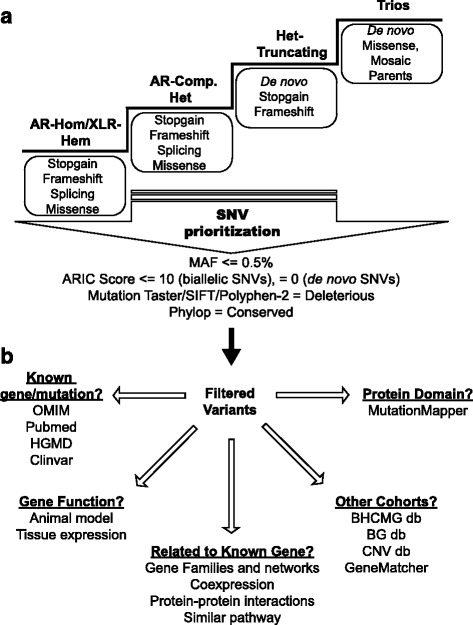
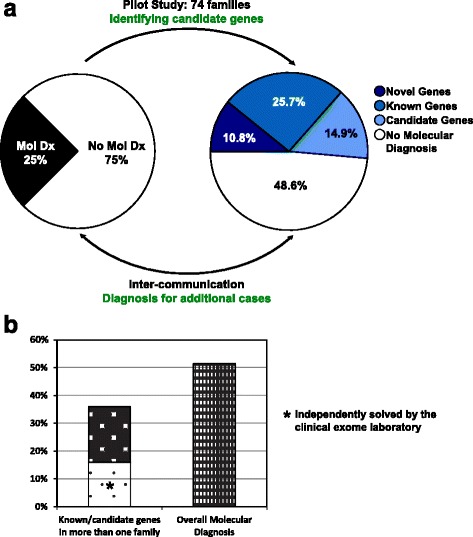
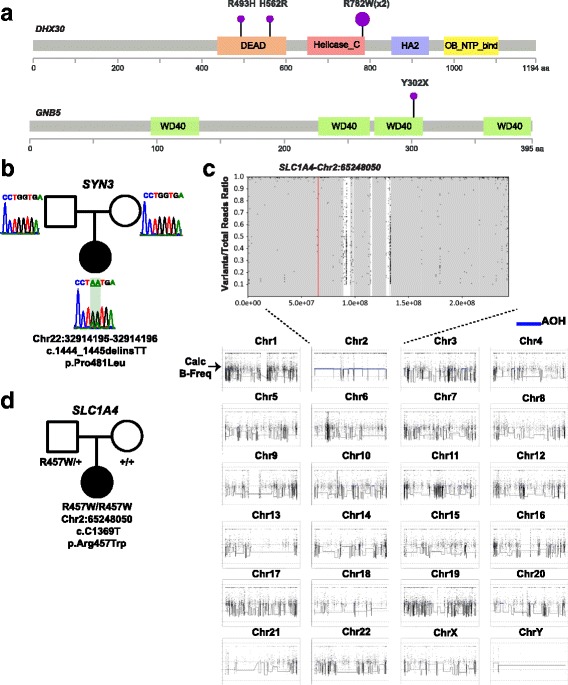
BACKGROUND: Given the rarity of most single-gene Mendelian disorders, concerted efforts of data exchange between clinical and scientific communities are critical to optimize molecular diagnosis and novel disease gene discovery. METHODS: We designed and implemented protocols for the study of cases for which a plausible molecular diagnosis was not achieved in a clinical genomics diagnostic laboratory (i.e. unsolved clinical exomes). Such cases were recruited to a research laboratory for further analyses, in order to potentially: (1) accelerate novel disease gene discovery; (2) increase the molecular diagnostic yield of whole exome sequencing (WES); and (3) gain insight into the genetic mechanisms of disease. Pilot project data included 74 families, consisting mostly of parent-offspring trios. Analyses performed on a research basis employed both WES from additional family members and complementary bioinformatics approaches and protocols. RESULTS: Analysis of all possible modes of Mendelian inheritance, focusing on both single nucleotide variants (SNV) and copy number variant (CNV) alleles, yielded a likely contributory variant in 36% (27/74) of cases. If one includes candidate genes with variants identified within a single family, a potential contributory variant was identified in a total of ~51% (38/74) of cases enrolled in this pilot study. The molecular diagnosis was achieved in 30/63 trios (47.6%). Besides this, the analysis workflow yielded evidence for pathogenic variants in disease-associated genes in 4/6 singleton cases (66.6%), 1/1 multiplex family involving three affected siblings, and 3/4 (75%) quartet families. Both the analytical pipeline and the collaborative efforts between the diagnostic and research laboratories provided insights that allowed recent disease gene discoveries (PURA, TANGO2, EMC1, GNB5, ATAD3A, and MIPEP) and increased the number of novel genes, defined in this study as genes identified in more than one family (DHX30 and EBF3). CONCLUSION: An efficient genomics pipeline in which clinical sequencing in a diagnostic laboratory is followed by the detailed reanalysis of unsolved cases in a research environment, supplemented with WES data from additional family members, and subject to adjuvant bioinformatics analyses including relaxed variant filtering parameters in informatics pipelines, can enhance the molecular diagnostic yield and provide mechanistic insights into Mendelian disorders. Implementing these approaches requires collaborative clinical molecular diagnostic and research efforts.
Overview
The claims and statistics of this paper haven’t been checked yet.
Run the check — free, no account needed. It reads the open-access text and checks the sources it cites.
Integrity signals
Registry
Cites
Statistics
Figures
Verification
Claims the paper makes
The claims and statistics of this paper haven’t been checked yet.
Run the check — free, no account needed. It reads the open-access text and checks the sources it cites.
Claims other papers make about this one
Each is checked against this paper’s own text: does it say what the citing paper says it does?
In the citing paper
“The transition from targeted gene tests to genomic sequencing enables recursive reanalysis, including reinterpretation of individual sequences on the basis of subsequent discoveries regarding causal disease alleles and their phenotypic consequences137.”
From A brief history of human disease genetics (2020) · cites this paper as [137]
Self-check
Percentages, sums and reported differences re-computed from the paper’s own numbers.
The self-check needs the paper’s full text.
Citations
Cites
Richards, S., Aziz, N., Bale, S., Bick, D., Das, S., Gastier-Foster, J., Grody, W. W., Hegde, M., Lyon, E., Spector, E., et al. (2015) · Genetics in Medicine · doi:10.1038/gim.2015.30 · Cited by 32,594
The Genome Analysis Toolkit: A MapReduce framework for analyzing next-generation DNA sequencing data
McKenna, A., Hanna, M., Banks, E., Sivachenko, A., Cibulskis, K., Kernytsky, A., Garimella, K., Altshuler, D., Gabriel, S., Daly, M., et al. (2010) · Genome Research · doi:10.1101/gr.107524.110 · Cited by 27,895
A map of human genome variation from population-scale sequencing.
The 1000 Genomes Project Consortium (2010) · Nature · doi:10.1038/nature09534 · Cited by 7,877
Clinical Whole-Exome Sequencing for the Diagnosis of Mendelian Disorders
Yang, Y., Muzny, D. M., Reid, J. G., Bainbridge, M. N., Willis, A. S., Ward, P. A., Braxton, A. A., Beuten, J., Xia, F., Niu, Z., et al. (2013) · New England Journal of Medicine · doi:10.1056/nejmoa1306555 · Cited by 1,991
Self-citationExome sequencing as a tool for Mendelian disease gene discovery
Bamshad, M. J., Ng, S. B. H., Bigham, A. W., Tabor, H. K., Emond, M. J., Nickerson, D. A., & Shendure, J. (2011) · Nature Reviews Genetics · doi:10.1038/nrg3031 · Cited by 1,744
Zhuchenko, O., Bailey, J. M., Bonnen, P. E., Ashizawa, T., Stockton, D. W., Amos, C. I., Dobyns, W. B., Subramony, S. H., Zoghbi, H. Y., & Lee, C. C. (1997) · Nature Genetics · doi:10.1038/ng0197-62 · Cited by 1,581
Diagnostic exome sequencing in persons with severe intellectual disability
de Ligt, J., Willemsen, M. H., van Bon, B. W. M., Kleefstra, T., Yntema, H. G., Kroes, T., Vulto-van Silfhout, A. T., Koolen, D. A., de Vries, P., Gilissen, C., et al. (2012) · New England Journal of Medicine · doi:10.1056/nejmoa1206524 · Cited by 1,546
GeneMatcher: a matching tool for connecting investigators with an interest in the same gene.
Sobreira, N., Schiettecatte, F., Valle, D., & Hamosh, A. (2015) · Human Mutation · doi:10.1002/humu.22844 · Cited by 1,529
Molecular Findings Among Patients Referred for Clinical Whole-Exome Sequencing
Yang, Y., Muzny, D. M., Xia, F., Niu, Z., Person, R., Ding, Y., Ward, P., Braxton, A., Wang, M., Buhay, C., et al. (2014) · JAMA · doi:10.1001/jama.2014.14601 · Cited by 1,360
Self-citationGenome sequencing identifies major causes of severe intellectual disability
Gilissen, C., Hehir-Kwa, J. Y., Thung, D. T., van de Vorst, M., van Bon, B. W. M., Willemsen, M. H., Kwint, M., Janssen, I. M., Hoischen, A., Schenck, A., et al. (2014) · Nature · doi:10.1038/nature13394 · Cited by 1,125
Cited by
Sorted by citations
A brief history of human disease genetics
Claussnitzer, M., Cho, J. H., Collins, R., Cox, N. J., Dermitzakis, E. T., Hurles, M. E., Kathiresan, S., Kenny, E. E., Lindgren, C. M., MacArthur, D. G., et al. (2020) · Nature · doi:10.1038/s41586-019-1879-7 · Cited by 697
Self-citationClark, M. M., Stark, Z., Farnaes, L., Tan, T. Y., White, S. M., Dimmock, D., & Kingsmore, S. F. (2018) · npj Genomic Medicine · doi:10.1038/s41525-018-0053-8 · Cited by 619
Paediatric genomics: diagnosing rare disease in children
Wright, C. F., FitzPatrick, D. R., & Firth, H. V. (2018) · Nature Reviews Genetics · doi:10.1038/nrg.2017.116 · Cited by 654
A guide for the diagnosis of rare and undiagnosed disease: beyond the exome
Marwaha, S., Knowles, J. W., & Ashley, E. A. (2022) · Genome Medicine · doi:10.1186/s13073-022-01026-w · Cited by 400
Identification of rare-disease genes using blood transcriptome sequencing and large control cohorts
Undiagnosed Diseases Network, Frésard, L., Care4Rare Canada Consortium, Smail, C., Ferraro, N. M., Teran, N. A., Li, X., Smith, K. S., Bonner, D., Kernohan, K. D., et al. (2019) · Nature Medicine · doi:10.1038/s41591-019-0457-8 · Cited by 321
Wright, C. F., McRae, J. F., Clayton, S., Gallone, G., Aitken, S., Fitzgerald, T. W., Jones, P., Prigmore, E., Rajan, D., Lord, J., et al. (2018) · Genetics in Medicine · doi:10.1038/gim.2017.246 · Cited by 343
Reanalysis of Clinical Exome Sequencing Data
Liu, P., Meng, L., Normand, E. A., Xia, F., Song, X., Ghazi, A. R., Rosenfeld, J. A., Magoulas, P. L., Braxton, A. A., Ward, P. A., et al. (2019) · New England Journal of Medicine · doi:10.1056/nejmc1812033 · Cited by 294
Self-citationGenomic Medicine–Progress, Pitfalls, and Promise
Shendure, J., Findlay, G. M., & Snyder, M. W. (2019) · Cell · doi:10.1016/j.cell.2019.02.003 · Cited by 263
Petrikin, J. E., Cakici, J. A., Clark, M. M., Willig, L. K., Sweeney, N. M., Farrow, E. G., Saunders, C. J., Thiffault, I., Miller, N. A., Zellmer, L., et al. (2018) · npj Genomic Medicine · doi:10.1038/s41525-018-0045-8 · Cited by 229
Model Organisms Facilitate Rare Disease Diagnosis and Therapeutic Research
Wangler, M. F., Yamamoto, S., Chao, H., Posey, J. E., Westerfield, M., Postlethwait, J. H., Members of the Undiagnosed Diseases Network (UDN), Hieter, P., Boycott, K. M., Campeau, P. M., et al. (2017) · Genetics · doi:10.1534/genetics.117.203067 · Cited by 217
Self-citationInsights into genetics, human biology and disease gleaned from family based genomic studies
Posey, J. E., O’Donnell‐Luria, A., Chong, J. X., Harel, T., Jhangiani, S. N., Coban‐Akdemir, Z., Buyske, S. G., Pehli̇van, D., Carvalho, C. M. B., Baxter, S. M., et al. (2019) · Genetics in Medicine · doi:10.1038/s41436-018-0408-7 · Cited by 202
Self-citationEwans, L., SCHOFIELD, D. J., Shrestha, R. N., Zhu, Y., Gayevskiy, V., Ying, K., Walsh, C., Lee, E., Kirk, E. P., Colley, A., et al. (2018) · Genetics in Medicine · doi:10.1038/gim.2018.39 · Cited by 196
A Diagnosis for All Rare Genetic Diseases: The Horizon and the Next Frontiers
Boycott, K. M., Hartley, T., Biesecker, L. G., Gibbs, R. A., Innes, A. M., Riess, O., Belmont, J., Dunwoodie, S. L., Jojic, N., Lassmann, T., et al. (2019) · Cell · doi:10.1016/j.cell.2019.02.040 · Cited by 177
Self-citationMaione, L., Dwyer, A. A., Francou, B., Guiochon‐Mantel, A., Binart, N., Bouligand, J., & Young, J. (2018) · European Journal of Endocrinology · doi:10.1530/eje-17-0749 · Cited by 155
Lindstrand, A., Eisfeldt, J., Pettersson, M., Carvalho, C. M. B., Kvarnung, M., Grigelioniené, G., Anderlid, B., Bjerin, O., Gustavsson, P., Hammarsjö, A., et al. (2019) · Genome Medicine · doi:10.1186/s13073-019-0675-1 · Cited by 149
Genomic medicine for kidney disease
Groopman, E., Rasouly, H. M., & Gharavi, A. G. (2018) · Nature Reviews Nephrology · doi:10.1038/nrneph.2017.167 · Cited by 142
Melbourne Genomics Health Alliance, Dillon, O. J., Lunke, S., Stark, Z., Yeung, A., Thorne, N., Gaff, C., White, S. M., & Tan, T. Y. (2018) · European Journal of Human Genetics · doi:10.1038/s41431-018-0099-1 · Cited by 134
Deep Phenotyping on Electronic Health Records Facilitates Genetic Diagnosis by Clinical Exomes
Son, J. H., Xie, G., Yuan, C., Ena, L., Li, Z., Goldstein, A., Huang, L., Wang, L., Shen, F., Liu, H., et al. (2018) · The American Journal of Human Genetics · doi:10.1016/j.ajhg.2018.05.010 · Cited by 136
Bombard, Y., Brothers, K. B., Fitzgerald‐Butt, S. M., Garrison, N. A., Jamal, L., James, C. A., Jarvik, G. P., McCormick, J. B., Nelson, T. N., Ormond, K. E., et al. (2019) · The American Journal of Human Genetics · doi:10.1016/j.ajhg.2019.02.025 · Cited by 133
Autozygome and high throughput confirmation of disease genes candidacy
Maddirevula, S., Alzahrani, F., Al‐Owain, M. A., Muhaizea, M. A. A., Kayyali, H. R., Alhashem, A. M., Rahbeeni, Z. A., Alotaibi, M., Alzaidan, H., Balobaid, A., et al. (2018) · Genetics in Medicine · doi:10.1038/s41436-018-0138-x · Cited by 125
WNT Signaling Perturbations Underlie the Genetic Heterogeneity of Robinow Syndrome
White, J. J., Mazzeu, J. F., Coban‐Akdemir, Z., Bayram, Y., Bahrambeigi, V., Hoischen, A., van Bon, B. W. M., Gezdirici, A., Güleç, E. Y., Ramond, F., et al. (2017) · The American Journal of Human Genetics · doi:10.1016/j.ajhg.2017.10.002 · Cited by 111
Self-citationLimitations of exome sequencing in detecting rare and undiagnosed diseases
Burdick, K. J., Cogan, J. D., Rives, L. C., Robertson, A. K., Koziura, M. E., Brokamp, E., Duncan, L., Hannig, V., Pfotenhauer, J. P., Vanzo, R. J., et al. (2020) · American Journal of Medical Genetics Part A · doi:10.1002/ajmg.a.61558 · Cited by 111
Li, Q., Zhao, K., Bustamante, C. D., Ma, X., & Wong, W. H. (2019) · Genetics in Medicine · doi:10.1038/s41436-019-0439-8 · Cited by 106
Pehlivan, D., Bayram, Y., Gunes, N., Akdemir, Z. C., Shukla, A., Bierhals, T., Tabakçı, B., Sahin, Y., Gezdirici, A., Fatih, J., et al. (2019) · American Journal of Human Genetics · doi:10.1016/j.ajhg.2019.05.015 · Cited by 92
Self-citationChinn, I. K., Chan, A. Y. K., Chen, K., Chou, J. S., Dorsey, M. J., Hajjar, J., Jongco, A. M., Keller, M. D., Kobrynski, L. J., Kumánovics, A., et al. (2019) · Journal of Allergy and Clinical Immunology · doi:10.1016/j.jaci.2019.09.009 · Cited by 112
Self-citationClinical sequencing: From raw data to diagnosis with lifetime value
Caspar, S. M., Dubacher, N., Kopps, A. M., Meienberg, J., Henggeler, C., & Mátyás, G. (2017) · Clinical Genetics · doi:10.1111/cge.13190 · Cited by 109
Paralog Studies Augment Gene Discovery: DDX and DHX Genes
Paine, I. S., Posey, J. E., Grochowski, C. M., Jhangiani, S. N., Rosenheck, S., Kleyner, R. S., Marmorale, T., Yoon, M. S., Wang, K., Robison, R. J., et al. (2019) · The American Journal of Human Genetics · doi:10.1016/j.ajhg.2019.06.001 · Cited by 104
Self-citationReijnders, M. R. F., Janowski, R., Alvi, M., Self, J., van Essen, T. A. J., Vreeburg, M., Rouhl, R. P. W., Stevens, S. J. C., Stegmann, A. P. A., Schieving, J., et al. (2017) · Journal of Medical Genetics · doi:10.1136/jmedgenet-2017-104946 · Cited by 105
New Diagnostic Approaches for Undiagnosed Rare Genetic Diseases
Hartley, T., Lemire, G., Kernohan, K. D., Howley, H. E. A., Adams, D. R., & Boycott, K. M. (2020) · Annual Review of Genomics and Human Genetics · doi:10.1146/annurev-genom-083118-015345 · Cited by 105
Lessel, D., Schob, C., Küry, S., Reijnders, M. R. F., Harel, T., Eldomery, M. K., Coban‐Akdemir, Z., Denecke, J., Edvardson, S., Colin, E., et al. (2017) · The American Journal of Human Genetics · doi:10.1016/j.ajhg.2017.09.014 · Cited by 98
Self-citationMitani, T., Işıkay, S., Gezdirici, A., Güleç, E. Y., Punetha, J., Fatih, J. M., Herman, I., Akay, G., Du, H., Calame, D. G., et al. (2021) · The American Journal of Human Genetics · doi:10.1016/j.ajhg.2021.08.009 · Cited by 100
Self-citationNext Generation Sequencing and Bioinformatics Analysis of Family Genetic Inheritance
Kanzi, A. M., San, J. E., Chimukangara, B., Wilkinson, E., Fish, M., Ramsuran, V., & de Oliveira, T. (2020) · Frontiers in Genetics · doi:10.3389/fgene.2020.544162 · Cited by 108
Chung, C. C. Y., Hue, S. P. Y., Ng, N. Y. T., Doong, P. H. L., Chu, A. T.-W., & Chung, B. H. (2023) · Genetics in Medicine · doi:10.1016/j.gim.2023.100896 · Cited by 99
Salfati, E., Spencer, E. G., Topol, S. E., Muse, E. D., Rueda, M., Lucas, J. R., Wagner, G. N., Campman, S. C., Topol, E. J., & Torkamani, A. (2019) · Genome Medicine · doi:10.1186/s13073-019-0702-2 · Cited by 90
Automated Clinical Exome Reanalysis Reveals Novel Diagnoses
Baker, S. W., Murrell, J. R., Nesbitt, A. I., Pechter, K. B., Balciuniene, J., Zhao, X., Yu, Z., Denenberg, E. H., DeChene, E. T., Wilkens, A., et al. (2018) · Journal of Molecular Diagnostics · doi:10.1016/j.jmoldx.2018.07.008 · Cited by 88
Fung, J. L. F., Yu, M. H. C., Huang, S., Chung, C. C. Y., Chan, M. C. Y., Pajusalu, S., Mak, C. C. Y., Hui, V. C. C., Tsang, M. H., Yeung, K. S., et al. (2020) · npj Genomic Medicine · doi:10.1038/s41525-020-00144-x · Cited by 85
Phenotypic expansion in DDX 3X – a common cause of intellectual disability in females
Wang, X., Posey, J. E., Rosenfeld, J. A., Bacino, C. A., Scaglia, F., Immken, L. L., Harris, J. M., Hickey, S. E., Mosher, T. M., Slavotinek, A. M., et al. (2018) · Annals of Clinical and Translational Neurology · doi:10.1002/acn3.622 · Cited by 84
Self-citationTan, N. B., Stapleton, R., Stark, Z., Delatycki, M. B., Yeung, A., Hunter, M. F., Amor, D. J., Brown, N. J., Stutterd, C., McGillivray, G., et al. (2020) · Molecular Genetics & Genomic Medicine · doi:10.1002/mgg3.1508 · Cited by 83
Clinically severe CACNA1A alleles affect synaptic function and neurodegeneration differentially
Luo, X., Rosenfeld, J. A., Yamamoto, S., Harel, T., Zuo, Z., Hall, M., Wierenga, K. J., Pastore, M., Bartholomew, D., Delgado, M. R., et al. (2017) · PLoS Genetics · doi:10.1371/journal.pgen.1006905 · Cited by 80
Self-citationPhen2Gene: rapid phenotype-driven gene prioritization for rare diseases
Zhao, M., Havrilla, J. M., Li, F., Chen, Y., Peng, J. J., Liu, C., Wu, C., Sarmady, M., Botas, P., Isla, J., et al. (2020) · NAR Genomics and Bioinformatics · doi:10.1093/nargab/lqaa032 · Cited by 91
The role of the clinician in the multi‐omics era: are you ready?
van Karnebeek, C., Wortmann, S. B., Tarailo‐Graovac, M., Langeveld, M., Ferreira, C. R., van de Kamp, J. M., Hollak, C. E. M., Wasserman, W. W., Waterham, H. R., Wevers, R. A., et al. (2018) · Journal of Inherited Metabolic Disease · doi:10.1007/s10545-017-0128-1 · Cited by 82
Dai, P., Honda, A., Ewans, L., McGaughran, J. M., Burnett, L., Law, M. G., & Phan, T. G. (2022) · Genetics in Medicine · doi:10.1016/j.gim.2022.04.021 · Cited by 82
Megabase Length Hypermutation Accompanies Human Structural Variation at 17p11.2
Beck, C. R., Carvalho, C. M. B., Coban‐Akdemir, Z., Sedlazeck, F. J., Song, X., Meng, Q., Hu, J., Doddapaneni, H., Chong, Z., Chen, E. S., et al. (2019) · Cell · doi:10.1016/j.cell.2019.01.045 · Cited by 78
Self-citationShashi, V., Schoch, K., Rk, S., Cope, H., Tan, Q. K. ‐., Walley, N., Peña, L., McConkie‐Rosell, A., Jiang, Y.-H., Stong, N., et al. (2018) · Genetics in Medicine · doi:10.1038/s41436-018-0044-2 · Cited by 72
Self-citationTANGO2: expanding the clinical phenotype and spectrum of pathogenic variants
Dines, J. N., Golden‐Grant, K. L., LaCroix, A. J., Muir, A. M., Cintrón, D. L., McWalter, K. M., Cho, M. T., Sun, A., Merritt, J. L., Thies, J. M., et al. (2018) · Genetics in Medicine · doi:10.1038/s41436-018-0137-y · Cited by 75
Fu, F., Li, R., Yu, Q., Wang, D., Deng, Q., Li, L., Lei, T., Chen, G., Nie, Z., Yang, X., et al. (2022) · Genome Medicine · doi:10.1186/s13073-022-01130-x · Cited by 73
Li, J., Gao, K., Yan, H., XiangWei, W., Liu, N., Wang, T., Han, X., Lin, Z., Xie, H., Wang, J., et al. (2019) · Gene · doi:10.1016/j.gene.2019.03.037 · Cited by 70
Schmitz‐Abe, K., Li, Q., Rosen, S. M., Nori, N., Madden, J. A., Genetti, C. A., Wojcik, M. H., Ponnaluri, S., Gubbels, C. S., Picker, J. D., et al. (2019) · European Journal of Human Genetics · doi:10.1038/s41431-019-0401-x · Cited by 68
Reuter, C. M., Kohler, J. N., Bonner, D. E., Zastrow, D. B., Fernández, L., Dries, A. M., Marwaha, S., Davidson, J. M., Brokamp, E., Herzog, M. R., et al. (2019) · Journal of Genetic Counseling · doi:10.1002/jgc4.1161 · Cited by 68
Self-citationNurchis, M. C., Altamura, G., Riccardi, M. T., Radio, F. C., Chillemi, G., Bertini, E. S., Garlasco, J., Tartaglia, M., Dallapiccola, B., & Damiani, G. (2023) · Archives of Public Health · doi:10.1186/s13690-023-01112-4 · Cited by 65
The Epilepsy Genetics Initiative: Systematic reanalysis of diagnostic exomes increases yield
Initiative, E. G. (2019) · Epilepsia · doi:10.1111/epi.14698 · Cited by 65
Pagnamenta, A. T., Heemeryck, P., Martin, H. C., Bosc, C., Peris, L., Uszynski, I., Gory‐Fauré, S., Couly, S., Deshpande, C., Siddiqui, A. U., et al. (2019) · Human Molecular Genetics · doi:10.1093/hmg/ddz186 · Cited by 64
Schobers, G., Schieving, J., Yntema, H. G., Pennings, M., Pfundt, R., Derks, R. C., Hofste, T. G. J., de Wijs, I. J., Wieskamp, N., van den Heuvel, S., et al. (2022) · Genome Medicine · doi:10.1186/s13073-022-01069-z · Cited by 66
Bruel, A., Nambot, S., Quéré, V., Vitobello, A., Thévenon, J., Assoum, M., Moutton, S., Houcinat, N., Lehalle, D., Jean‐Marçais, N., et al. (2019) · European Journal of Human Genetics · doi:10.1038/s41431-019-0442-1 · Cited by 62
(2020) · Europe PMC (PubMed Central) · Cited by 60
Green, E. D., Rubin, E. M., & Olson, M. V. (2017) · Nature · doi:10.1038/550179a · Cited by 60
Identification of novel candidate disease genes from de novo exonic copy number variants
Gambin, T., Yuan, B., Bi, W., Liu, P., Rosenfeld, J. A., Coban‐Akdemir, Z., Pursley, A. N., Nagamani, S. C. S., Marom, R., Golla, S., et al. (2017) · Genome Medicine · doi:10.1186/s13073-017-0472-7 · Cited by 61
Self-citationSystematic reanalysis of genomic data improves quality of variant interpretation
Hiatt, S. M., Amaral, M. D., Bowling, K. M., Finnila, C. R., Thompson, M. L., Gray, D. E., Lawlor, J. M. J., Cochran, J. N., Bebin, E. M., Brothers, K. B., et al. (2018) · Clinical Genetics · doi:10.1111/cge.13259 · Cited by 58
Human Mitoribosome Biogenesis and Its Emerging Links to Disease
Sanchez, M. I. G. L., Krüger, A., Shiriaev, D. I., Liu, Y., & Rorbach, J. (2021) · International Journal of Molecular Sciences · doi:10.3390/ijms22083827 · Cited by 57
Re-analysis of genomic data: An overview of the mechanisms and complexities of clinical adoption
Robertson, A. J., Tan, N. B., Spurdle, A. B., Metke‐Jimenez, A., Sullivan, C. M., & Waddell, N. (2022) · Genetics in Medicine · doi:10.1016/j.gim.2021.12.011 · Cited by 66
Ruiz‐García, R., Vargas‐Hernández, A., Chinn, I. K., Angelo, L. S., Cao, T. N., Coban‐Akdemir, Z., Jhangiani, S. N., Meng, Q., Forbes, L. R., Muzny, D. M., et al. (2018) · Journal of Allergy and Clinical Immunology · doi:10.1016/j.jaci.2017.11.042 · Cited by 56
Self-citationGenotype imputation and variability in polygenic risk score estimation
Chen, S., Dias, R., Evans, D., Salfati, E., Liu, S., Wineinger, N. E., & Torkamani, A. (2020) · Genome Medicine · doi:10.1186/s13073-020-00801-x · Cited by 62
Navigating the nuances of clinical sequence variant interpretation in Mendelian disease
Strande, N. T., Brnich, S. E., Roman, T. S., & Berg, J. S. (2018) · Genetics in Medicine · doi:10.1038/s41436-018-0100-y · Cited by 63
Pandey, R., Brennan, N. F., Trachana, K., Katsandres, S. C., Bodamer, O. A., Belmont, J. W., Veenstra, D. L., & Peng, S. (2025) · Genetics in Medicine · doi:10.1016/j.gim.2025.101398 · Cited by 56
Self-citationNovel applications of array comparative genomic hybridization in molecular diagnostics
Cheung, S. W., & Bi, W. (2018) · Expert Review of Molecular Diagnostics · doi:10.1080/14737159.2018.1479253 · Cited by 51
Self-citationClinical spectrum of POLR3-related leukodystrophy caused by biallelic POLR1C pathogenic variants
Gauquelin, L., Cayami, F. K., Sztriha, L., Yoon, G., Tran, L. T., Guerrero, K., Hocke, F., van Spaendonk, R. M. L., Fung, E. L. W., D’Arrigo, S., et al. (2019) · Neurology Genetics · doi:10.1212/nxg.0000000000000369 · Cited by 48
Jiao, Q., Sun, H., Zhang, H., Wang, R., Li, S. T., Sun, D., Yang, X., & Jin, Y. (2019) · Clinical Genetics · doi:10.1111/cge.13548 · Cited by 50
New generation genetic testing entering the clinic
Gorcenco, S., Ilinca, A., Almasoudi, W., Kafantari, E., Lindgren, A. G., & Puschmann, A. (2020) · Parkinsonism & Related Disorders · doi:10.1016/j.parkreldis.2020.02.015 · Cited by 48
Genotype–phenotype analysis of 523 patients by genetics evaluation and clinical exome sequencing
Ziats, M. N., Ahmad, A., Bernat, J. A., Fisher, R. A., Glassford, M. R., Hannibal, M., Jacher, J. E., Weiser, N., Keegan, C. E., Lee, K. N., et al. (2019) · Pediatric Research · doi:10.1038/s41390-019-0611-5 · Cited by 45
Bergen, N. J. V., Guo, Y., Al-Deri, N., Lipatova, Z., Stanga, D., Zhao, S. F., Murtazina, R., Gyurkovska, V., Pehlivan, D., Mitani, T., et al. (2019) · Brain · doi:10.1093/brain/awz374 · Cited by 47
Self-citationCalame, D. G., Guo, T., Wang, C., Garrett, L., Jolly, A., Dawood, M., Kurolap, A., Henig, N. Z., Fatih, J. M., Herman, I., et al. (2023) · The American Journal of Human Genetics · doi:10.1016/j.ajhg.2023.06.013 · Cited by 42
Self-citationTaylor, J., Craft, J., Blair, E., Wordsworth, S., Beeson, D., Chandratre, S., Cossins, J., Lester, T., Nemeth, A. H., Ormondroyd, E., et al. (2019) · Genome Medicine · doi:10.1186/s13073-019-0651-9 · Cited by 43
Genetic Mosaicism as a Cause of Inborn Errors of Immunity
Aluri, J., & Cooper, M. A. (2021) · Journal of Clinical Immunology · doi:10.1007/s10875-021-01037-z · Cited by 42
Integrative omics approaches to advance rare disease diagnostics
Smirnov, D., Konstantinovskiy, N., & Prokisch, H. (2023) · Journal of Inherited Metabolic Disease · doi:10.1002/jimd.12663 · Cited by 47
Schoch, K., Esteves, C., Bican, A., Spillmann, R. C., Cope, H., McConkie‐Rosell, A., Walley, N., Fernández, L., Kohler, J. N., Bonner, D. E., et al. (2020) · Genetics in Medicine · doi:10.1038/s41436-020-00984-z · Cited by 44
Self-citationIsaic, A., Motofelea, N., Hoinoiu, T., Motofelea, A. C., Leancu, I. C., Stan, E., Gheorghe, S. R., Duţu, A., & Crintea, A. (2025) · Diagnostics · doi:10.3390/diagnostics15192425 · Cited by 50
Germline de novo variants in CSNK2B in Chinese patients with epilepsy
Li, J., Gao, K., Cai, S., Yin, L., Wang, Y., Huang, S., Zha, J., Hu, W., Yu, S., Yang, Z., et al. (2019) · Scientific Reports · doi:10.1038/s41598-019-53484-9 · Cited by 40
NAA10 polyadenylation signal variants cause syndromic microphthalmia
Johnston, J. J., Williamson, K. A., Chou, C. M., Sapp, J. C., Ansari, M., Chapman, H. M., Cooper, D. N., Dabir, T. A., Dudley, J. N., Holt, R. J., et al. (2019) · Journal of Medical Genetics · doi:10.1136/jmedgenet-2018-105836 · Cited by 37
Mahler, E. A., Johannsen, J., Tsiakas, K., Kloth, K., Lüttgen, S., Mühlhausen, C., Alhaddad, B., Haack, T. B., Strom, T. M., Kortüm, F., et al. (2019) · Deutsches Ärzteblatt international · doi:10.3238/arztebl.2019.0197 · Cited by 40
Self-citationZhang, C., Jolly, A., Shayota, B. J., Mazzeu, J. F., Du, H., Dawood, M., Celestino-Soper, P. B. S., de Lima, A. R., Ferreira, B. M., Coban‐Akdemir, Z., et al. (2021) · Human Genetics and Genomics Advances · doi:10.1016/j.xhgg.2021.100074 · Cited by 33
Self-citationGenetic modifiers and non-Mendelian aspects of CMT
Bis‐Brewer, D. M., Fazal, S., & Zuchner, S. L. (2019) · Brain Research · doi:10.1016/j.brainres.2019.146459 · Cited by 39
Whole exome sequencing in three families segregating a pediatric case of sarcoidosis
France), I. T. F. O. G. (. S., Calender, A., Farnier, P. A. R., Buisson, A., Pinson, S., Bentaher, A., Lebecque, S., Corvol, H., Taam, R. A., Houdouin, V., et al. (2018) · BMC Medical Genomics · doi:10.1186/s12920-018-0338-x · Cited by 38
Støve, S. I., Blenski, M., Stray‐Pedersen, A., Wierenga, K. J., Jhangiani, S. N., Coban‐Akdemir, Z., Crawford, D., McTiernan, N., Myklebust, L. M., Purcarin, G., et al. (2018) · European Journal of Human Genetics · doi:10.1038/s41431-018-0136-0 · Cited by 37
Self-citationCoban‐Akdemir, Z., Charng, W., Azamian, M. S., Paine, I. S., Punetha, J., Grochowski, C. M., Gambin, T., Valdés, S. O., Cannon, B. C., Zapata, G. E., et al. (2020) · American Journal of Medical Genetics Part A · doi:10.1002/ajmg.a.61571 · Cited by 40
Self-citationSpainUDP: The Spanish Undiagnosed Rare Diseases Program
Martín, E. L., Martínez–Delgado, B., Bermejo, E., Alonso, J., The SpainUDP Network, & Posada, M. (2018) · International Journal of Environmental Research and Public Health · doi:10.3390/ijerph15081746 · Cited by 36
Kernohan, K. D., Hartley, T., Naumenko, S., Armour, C. M., Graham, G. E., Nikkel, S. M., Lines, M. A., Geraghty, M. T., Richer, J., Mears, W., et al. (2018) · American Journal of Medical Genetics Part A · doi:10.1002/ajmg.a.38838 · Cited by 33
Variable clinical severity in TANGO2 deficiency: Case series and literature review
Schymick, J. C., Leahy, P., Cowan, T. M., Ruzhnikov, M. R. Z., Gates, R. W., Fernández, L., Pramanik, G., Undiagnosed Diseases Network, Yarlagadda, V. V., Wheeler, M. T., et al. (2021) · American Journal of Medical Genetics Part A · doi:10.1002/ajmg.a.62543 · Cited by 36
Bullich, G., Matalonga, L., Pujadas, M., Papakonstantinou, A., Piscia, D., Tonda, R., Artuch, R., Gallano, P., Garrabou, G., González, J. R., et al. (2022) · Journal of Molecular Diagnostics · doi:10.1016/j.jmoldx.2022.02.003 · Cited by 39
Perspectives on the Genomics of HSP Beyond Mendelian Inheritance
Bis-Brewer, D. M., & Züchner, S. (2018) · Frontiers in Neurology · doi:10.3389/fneur.2018.00958 · Cited by 31
Carvalho, C. M. B., Coban‐Akdemir, Z., Hijazi, H., Yuan, B., Pendleton, M., Harrington, E. D., Beaulaurier, J., Juul, S., Turner, D., Kanchi, R. S., et al. (2019) · Genome Medicine · doi:10.1186/s13073-019-0633-y · Cited by 32
Self-citationSalvatore, M., Polizzi, A., de Stefano, M. C., Floridia, G., Baldovino, S., Roccatello, D., Sciascia, S., Menegatti, E., Remuzzi, G., Daina, E., et al. (2020) · The Italian Journal of Pediatrics/Italian journal of pediatrics · doi:10.1186/s13052-020-00883-8 · Cited by 30
van Slobbe, M., van Haeringen, A., Vissers, L. E. L. M., Bijlsma, E. K., Rutten, J. W., Suerink, M., Nibbeling, E. A. R., Ruivenkamp, C. A. L., & Koene, S. (2023) · European Journal of Pediatrics · doi:10.1007/s00431-023-05279-4 · Cited by 29
Pathophysiological Heterogeneity of the BBSOA Neurodevelopmental Syndrome
Bertacchi, M., Tocco, C., Schaaf, C. P., & Studer, M. (2022) · Cells · doi:10.3390/cells11081260 · Cited by 28
Self-citationThe different clinical facets of SYN1-related neurodevelopmental disorders
Parenti, I., Leitão, E., Kuechler, A., Villard, L., Goizet, C., Courdier, C., Bayat, A., Rossi, A., Julia, S., Bruel, A., et al. (2022) · Frontiers in Cell and Developmental Biology · doi:10.3389/fcell.2022.1019715 · Cited by 32
Al-Murshedi, F. M., Meftah, D., & Scott, P. (2018) · European Journal of Medical Genetics · doi:10.1016/j.ejmg.2018.04.016 · Cited by 28
RDmap: a map for exploring rare diseases
Yang, J., Dong, C., Duan, H., Shu, Q., & Li, H. (2021) · Orphanet Journal of Rare Diseases · doi:10.1186/s13023-021-01741-4 · Cited by 28
Ameratunga, R., Lehnert, K., & Woon, S. (2019) · Frontiers in Immunology · doi:10.3389/fimmu.2019.02678 · Cited by 29
Assessing non-Mendelian inheritance in inherited axonopathies
Bis‐Brewer, D. M., Gan‐Or, Z., Abou‐Sleiman, P. M., Rodriguez, A., Bacha, A., Kosikowski, A., Wood, B., McCray, B. A., Blume, B., Siskind, C. E., et al. (2020) · Genetics in Medicine · doi:10.1038/s41436-020-0924-0 · Cited by 29
Self-citationResta, C. D., Pipitone, G. B., Carrera, P., & Ferrari, M. (2020) · Neural Regeneration Research · doi:10.4103/1673-5374.293135 · Cited by 25
Du, H., Jolly, A., Grochowski, C. M., Yuan, B., Dawood, M., Jhangiani, S. N., Li, H., Muzny, D. M., Fatih, J. M., Coban‐Akdemir, Z., et al. (2022) · Genome Medicine · doi:10.1186/s13073-022-01123-w · Cited by 27
Self-citation
Metadata
- Authors
- Eldomery, M. K., Coban-Akdemir, Z., Harel, T., Rosenfeld, J. A., Gambin, T., Stray-Pedersen, A., Küry, S., Mercier, S., Lessel, D., Denecke, J., Wiszniewski, W., Penney, S., Liu, P., Bi, W., Lalani, S. R., Schaaf, C. P., Wangler, M. F., Bacino, C. A., Lewis, R. A., Potocki, L., Graham, B. H., Belmont, J. W., Scaglia, F., Orange, J. S., Jhangiani, S. N., Chiang, T., Doddapaneni, H., Hu, J., Muzny, D. M., Xia, F., Beaudet, A. L., Boerwinkle, E., Eng, C. M., Plon, S. E., Sutton, V. R., Gibbs, R. A., Posey, J. E., Yang, Y., & Lupski, J. R.
- Affiliations
- Baylor College of Medicine (US)
- Warsaw University of Technology (PL)
- Centre Hospitalier Universitaire de Nantes (FR)
- University Medical Center Hamburg-Eppendorf (DE)
- Corresponding author
- Lupski, James R.
- ORCID
- Eldomery, Mohammad K.
- Harel, Tamar
- Rosenfeld, Jill A.
- Gambin, Tomasz
- Küry, Sébastien
- Mercier, Sandra
- Lessel, Davor
- Denecke, Jonas
- Wiszniewski, Wojciech
- Liu, Pengfei
- Bi, Weimin
- Lalani, Seema R.
- Schaaf, Christian P.
- Wangler, Michael F.
- Bacino, Carlos A.
- Lewis, Richard Alan
- Potocki, Lorraine
- Graham, Brett H.
- Belmont, John W.
- Scaglia, Fernando
- Orange, Jordan S.
- Jhangiani, Shalini N.
- Hu, Jianhong
- Muzny, Donna M.
- Xia, Fan
- Beaudet, Arthur L.
- Boerwinkle, Eric
- Eng, Christine M.
- Plon, Sharon E.
- Sutton, V. Reid
- Gibbs, Richard A.
- Posey, Jennifer E.
- Yang, Yaping
- Lupski, James R.
- Venue
- Genome Medicine
- Published
- 2017-03-21
- Volume
- 9
- Issue
- 1
- Pages
- 26-26
- ISSN
- 1756-994X (ISSN-L)
- PMC
- PMC5361813
- OpenAlex
- W2598900401
- Cited by
- 230
- References
- 111
- Citations by year
- 2026: 7 · 2025: 6 · 2024: 22 · 2023: 22 · 2022: 30 · 2021: 27 · 2020: 33 · 2019: 43 · 2018: 30 · 2017: 10
- FWCI
- 21.00
- Type
- journal article
- Language
- en
- Open access
- gold
- doi.org
- Locations
- Genome Medicine (publishedVersion, cc-by)
- PubMed Central (publishedVersion, cc-by)
- PubMed (publishedVersion)
- IUScholarWorks (Indiana University) (submittedVersion, cc-by-nc-nd)
- Purdue University Indianapolis (Indiana University) (submittedVersion, cc-by-nc-nd)
- Funders
- National Human Genome Research Institute (U54HG006542)
- National Institutes of Health (T32 GM07526, NIH T32 GM07526)
- Genetics Resource Association of Texas
- Topics
- Life Sciences › Biochemistry, Genetics and Molecular Biology › Genetics › Genomics and Rare Diseases
- Life Sciences › Biochemistry, Genetics and Molecular Biology › Genetics › Connective tissue disorders research
- Life Sciences › Biochemistry, Genetics and Molecular Biology › Clinical Biochemistry › Metabolism and Genetic Disorders
- Keywords
- monogenic disorders, disease gene discovery, molecular diagnosis, exome sequencing, parent-offspring trios, copy number variation, single nucleotide variants, clinical research collaboration, multiplex families, PURA, TANGO2, GNB5, ATAD3A, MIPEP, DHX30, EBF3
- MeSH terms
- ATPases Associated with Diverse Cellular Activities, Adenosine Triphosphatases, DNA-Binding Proteins, Female, Humans, Male, Membrane Proteins, Metalloendopeptidases, Pilot Projects, Transcription Factors, Sequence Analysis, DNA, Computational Biology, Polymorphism, Single Nucleotide, Genomics, Mitochondrial Proteins, Genetic Diseases, Inborn, GTP-Binding Protein beta Subunits, DNA Copy Number Variations, Exome
About these checks
Registry, retraction, Cites and statistics results are computed, not judged, with one exception: a printed reference that no index lists is read once by a model before it counts as a citation error. Claims are extracted by a model and kept only when their quote appears verbatim in the text; each cited source is then checked, with a model’s help, for whether it says what the claim relies on. Those verdicts can be wrong — read the claim’s quote and the cited source before relying on one.
Statistics and arithmetic are recomputed, not judged.
Confidence bands are shown only for fields calibrated on our annotated test set. None is calibrated yet, so no band is shown.
What counts as a claim ›How we measure confidence ›How we check this ›
Are you an author, or do you see a problem with this page? Request a review
