

The DOI matches its Crossref record; 9 of the 9 references it cites were found in a registry or an index.
Digital twins to personalize medicine
Open accessAbstract
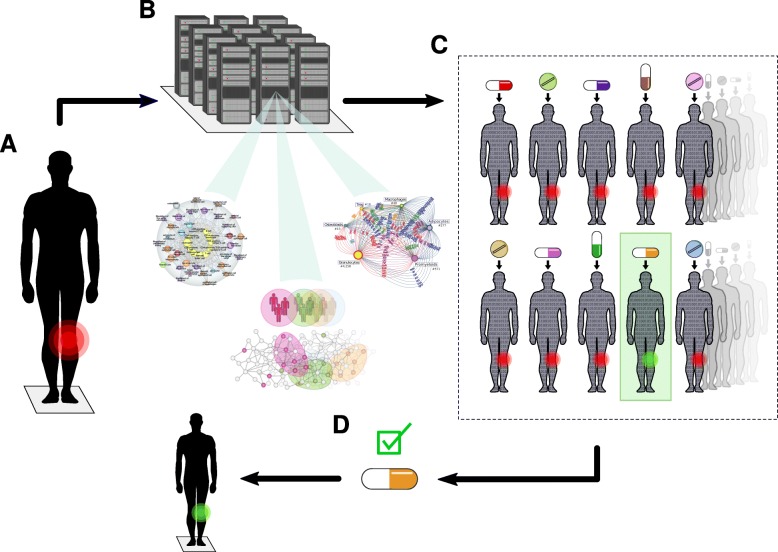
Personalized medicine requires the integration and processing of vast amounts of data. Here, we propose a solution to this challenge that is based on constructing Digital Twins. These are high-resolution models of individual patients that are computationally treated with thousands of drugs to find the drug that is optimal for the patient.
Overview
The claims and statistics of this paper haven’t been checked yet.
Run the check — free, no account needed. It reads the open-access text and checks the sources it cites.
Integrity signals
Registry
Cites
Statistics
Figures
Verification
Claims the paper makes
The claims and statistics of this paper haven’t been checked yet.
Run the check — free, no account needed. It reads the open-access text and checks the sources it cites.
Claims other papers make about this one
Each is checked against this paper’s own text: does it say what the citing paper says it does?
The cited source says what the claim attributes to it.
In the citing paper
“In healthcare, digital twins are a promising tool for drug target discovery 65,66 .”
From Multimodal biomedical AI (2022) · cites this paper as [65]
The cited source says what the claim attributes to it.
In the citing paper
“This will likely require large collaborations across health systems, research groups and industry, such as the Swedish Digital Twins Consortium 65,72 .”
From Multimodal biomedical AI (2022) · cites this paper as [65]
Self-check
Percentages, sums and reported differences re-computed from the paper’s own numbers.
The self-check needs the paper’s full text.
Citations
Cites
Network medicine: a network-based approach to human disease
Barabási, A.-L., Gulbahce, N., & Loscalzo, J. (2011) · Nature Reviews Genetics · doi:10.1038/nrg2918 · Cited by 5,034
Intra- and Inter-cellular Rewiring of the Human Colon during Ulcerative Colitis
Smillie, C. S., Biton, M., Ordovás-Montañés, J., Sullivan, K. M., Burgin, G., Graham, D. B., Herbst, R. H., Rogel, N., Slyper, M., Waldman, J., et al. (2019) · Cell · doi:10.1016/j.cell.2019.06.029 · Cited by 1,417
Deep learning: new computational modelling techniques for genomics
Eraslan, G., Avsec, Ž., Gagneur, J., & Theis, F. J. (2019) · Nature Reviews Genetics · doi:10.1038/s41576-019-0122-6 · Cited by 1,288
Tao, F., & Qi, Q. (2019) · Nature · doi:10.1038/d41586-019-02849-1 · Cited by 799
Human symptoms–disease network
Zhou, X., Menche, J., Barabási, A.-Ĺ., & Sharma, A. (2014) · Nature Communications · doi:10.1038/ncomms5212 · Cited by 659
Single-cell analyses to tailor treatments
Shalek, A. K., & Benson, M. (2017) · Science Translational Medicine · doi:10.1126/scitranslmed.aan4730 · Cited by 163
Self-citationA decade of digital medicine innovation
Topol, E. J. (2019) · Science Translational Medicine · doi:10.1126/scitranslmed.aaw7610 · Cited by 117
Gawel, D. R., Serra-Musach, J., Lilja, S., Aagesen, J., Arenas, À., Asking, B., Bengnér, M., Björkander, J., Biggs, S., Ernerudh, J., et al. (2019) · Genome Medicine · doi:10.1186/s13073-019-0657-3 · Cited by 95
Self-citationGustafsson, M., Gawel, D. R., Alfredsson, L. S., Baranzini, S. E., Björkander, J., Blomgran, R., Hellberg, S., Eklund, D., Ernerudh, J., Kockum, I. S., et al. (2015) · Science Translational Medicine · doi:10.1126/scitranslmed.aad2722 · Cited by 67
Self-citation
Research works printed but not linked: 1
- US Food and Drug Administration. Paving the way for personalized medicine: FDA’s role in a new era of medical product development. Silver Spring: US Food and Drug Administration; 2013. https://www.fdanews.com/ext/resources/files/10/10-28-13-Personalized-Medicine.pdf. Accessed 26 Nov 2019.
Cited by
Sorted by citations
Items 301–400 of 588
Harnessing Visualization to Enhance Digital Twin in Health Applications
Andreassen, J. I., & Babić, A. (2025) · Studies in health technology and informatics · doi:10.3233/shti250409 · Cited by 2
Al‐Sulaiti, F. K., & Şahin, S. (2025) · Journal of Drug Delivery Science and Technology · doi:10.1016/j.jddst.2025.107252 · Cited by 2
Aghamiri, S. S., & Amin, R. (2025) · Kinases and Phosphatases · doi:10.3390/kinasesphosphatases3030018 · Cited by 2
Human Digital Twin for Healthcare Applications: a White Label Digital Twin Implementation
Micelli, L., & Montagna, S. (2025) · International Conference on Information Technology for Social Good (GoodIT) · doi:10.1145/3748699.3749778 · Cited by 2
Biomarkers for targeted therapy and treatment decision making
Mukherjee, P., Jana, M. K., Dutta, A., Ponda, A., Gupta, N. M., DAS, S. K., Kumar, U., Swarup, V., & Narayan, M. (2026) · Advances in cancer research · doi:10.1016/bs.acr.2025.12.009 · Cited by 2
Ying, W., Liu, X., & Rao, Y. (2025) · BIG D · doi:10.64504/big.d.v2i3.236 · Cited by 2
Egbunu, A. S., & Okedoye, A. M. (2026) · Journal of Computing Theories and Applications · doi:10.62411/jcta.15367 · Cited by 2
Digital twins for cardiopulmonary medicine: the case for pulmonary arterial hypertension
Niederer, S., Balmus, M., Burr, C., Chico, T., Clayton, R. H., Bai, W., Rangel-Smith, C., Wagg, D., Wilkinson, R. D., Wang, S., et al. (2026) · American Journal of Respiratory and Critical Care Medicine · doi:10.1093/ajrccm/aamag082 · Cited by 2
Ghavami, D., Giulietti, N., Sandri, G., & Giberti, H. (2026) · International Journal of Pharmaceutics X · doi:10.1016/j.ijpx.2026.100526 · Cited by 2
Gajendiran, T. Y., Ganamurali, N., & Sabarathinam, S. (2026) · Drug Discovery Today · doi:10.1016/j.drudis.2026.104683 · Cited by 2
Ma, C., Koh, D., Nishimura, T., Takata, Y., Kameda, Y., Negoro, R., Ishiguro, N., Shibuta, M., Namatame, I., Tetsuka, K., et al. (2026) · Advanced Drug Delivery Reviews · doi:10.1016/j.addr.2026.115887 · Cited by 2
Fluid-based biomarkers of amyotrophic lateral sclerosis: recent advances and future prospects
Jiang, Y., Hu, S., Yang, B., Zhang, L., Wang, ·., Yang, G., & Zhang, H. (2026) · Brain Research · doi:10.1016/j.brainres.2026.150395 · Cited by 2
Self-citationFrom virtual experiments to biomedical insight with synthetic data
Victoriano, M., Pavlović, M., Sandve, G. K., Oliveira, H. P., Rocha, A., & Greiff, V. (2026) · Nature Machine Intelligence · doi:10.1038/s42256-026-01244-6 · Cited by 2
Varol, T. Ö., & Varol, M. (2026) · Cancer Medicine · doi:10.1002/cam4.72193 · Cited by 2
Frileux, S., Sharma, S., Altunlu, E., Bergonzo, S., Jensen, O. C., Leboyer, M., Bonnot, O., Mouchabac, S., Koutsouleris, N., & Bourla, A. (2026) · L Encéphale · doi:10.1016/j.encep.2026.08.004 · Cited by 2
Dlamini, Z., & Hull, R. (2023) · Springer eBooks · doi:10.1007/978-3-031-21506-3_1 · Cited by 2
Nia, P. S., Ganushchak, Y. M., & Maessen, J. G. (2024) · Interdisciplinary CardioVascular and Thoracic Surgery · doi:10.1093/icvts/ivae032 · Cited by 2
Using Machine Learning for Aerostructure Surface Damage Digital Reconstruction
Wu, Y., Tang, H. P., Mannion, A. J. P., Voyle, R., & Xin, Y. (2025) · Aerospace · doi:10.3390/aerospace12010072 · Cited by 2
Sensors and digital twin for healthcare monitoring frameworks
Kumari, S., Tyagi, A. K., Tiwari, S., & Kulshreshtha, G. (2025) · Elsevier eBooks · doi:10.1016/b978-0-443-34174-8.00011-9 · Cited by 2
Exploring the Adoption and Innovation of Digital Twins in Healthcare
John, T., Nath, K. C., & Guravaiah, K. (2025) · Procedia Computer Science · doi:10.1016/j.procs.2025.03.015 · Cited by 2
Bruno, P., Calimeri, F., & Greco, G. (2021) · Springer eBooks · doi:10.1007/978-3-030-58080-3_32-1 · Cited by 2
Enhancing hospital operations efficiency through digital twin technology
Koul, S., Mishra, V., & Taylor, I. W. (2025) · Elsevier eBooks · doi:10.1016/b978-0-443-34226-4.00026-5 · Cited by 2
Qin, J., Cai, Y., Wang, Z., Jin, J., Huang, X., & Pei, L. (2024) · IEEE Smart World Congress (SWC) · doi:10.1109/swc62898.2024.00318 · Cited by 2
Personalizing Medicine for Fake Drug Prevention With AI-Driven Digital Twins
Nwanakwaugwu, A. C., Andrew-Vitalis, N., Kwakpovwe, P., Emakporuena, D., & Bunmi, E. E. (2025) · Advances in computational intelligence and robotics book series · doi:10.4018/979-8-3373-0538-7.ch010 · Cited by 2
Digital Twin Technology for Precision Medicine
Tripathi, S., & Chumnanvej, S. (2025) · IGI Global eBooks · doi:10.4018/979-8-3373-0659-9.ch006 · Cited by 2
Künstliche Intelligenz in der Hämatologie
Nenoff, K., Grieb, N., Oeser, A., Neumuth, T., Platzbecker, U., & Kubasch, A. S. (2021) · InFo Hämatologie + Onkologie · doi:10.1007/s15004-021-8909-y · Cited by 2
Cytokine storm mitigation for exogenous immune agonists
Kareva, I., & Gevertz, J. L. (2023) · Mathematics of Control Signals and Systems · doi:10.1007/s00498-023-00362-5 · Cited by 2
Precision Medicine in Oncology and Cancer Therapeutics
Geantă, M., Боата, А., Brand, A. M., Cucoş, B., & Lehrach, H. (2022) · Springer eBooks · doi:10.1007/978-981-19-5082-7_3 · Cited by 2
Quantum-Enhanced Blockchain and Digital Twin Integration for Enhanced Healthcare Data SecurityPreprint
Bose, R., Sutradhar, S., & Roy, S. (2024) · Research Square · doi:10.21203/rs.3.rs-4707183/v1 · Cited by 2
RETRACTED ARTICLE: Einsatz von künstlicher Intelligenz im Management akuter Leukämien
Kubasch, A. S., Grieb, N., Oeser, A., Haferlach, C., & Platzbecker, U. (2022) · Die Onkologie · doi:10.1007/s00761-022-01153-4 · Cited by 1
RetractedDigital Twins : High Resolution Disease Models for Optimized Diagnosis and Treatment
Lilja, S. (2022) · Linköping University medical dissertations · doi:10.3384/9789179292157 · Cited by 1
Self-citationImpact of Artificial Intelligence on Clinical Research
Zoghbi, M. E., Malhotra, A., Bilal, M., & Shaukat, A. (2024) · Gastrointestinal Endoscopy Clinics of North America · doi:10.1016/j.giec.2024.10.002 · Cited by 1
Tena, A. F., Arnedo, C., Houzeaux, G., & Eguzkitza, B. (2024) · Open Respiratory Archives · doi:10.1016/j.opresp.2024.100394 · Cited by 1
Chugh, M., & Vyas, S. (2025) · IGI Global eBooks · doi:10.4018/979-8-3693-4199-5.ch003 · Cited by 1
Digital Health Transformation in Ecuador: Progress, Barriers, and Future Directions
Vásconez-González, J., Alexander-León, H., & Ortiz‐Prado, E. (2025) · Journal of Medical Systems · doi:10.1007/s10916-025-02174-3 · Cited by 1
Guan, W. (2025) · Frontiers in Medical Science Research · doi:10.25236/fmsr.2025.070210 · Cited by 1
Extravasation modeling from a PET/CT imaging for a possible digital twin approach
Isolan, L., Panico, N., Fioroni, F., Grassi, E., Iori, M., & Sumini, M. (2025) · Radiation Physics and Chemistry · doi:10.1016/j.radphyschem.2025.113080 · Cited by 1
A Survey of Training Healthcare Robots With Extended Reality and Digital Twins
Badalov, K., Tseng, H., & Yoon, Y. (2025) · Expert Systems · doi:10.1111/exsy.70113 · Cited by 1
A Personalized and Evidence-Based Clinical Decision Support System Using Ensemble Learning
Brandl, C., Nitschke, A., Egersdörfer, F., Ommer, B., & Weidemüller, M. (2025) · Annual International Conference of the IEEE Engineering in Medicine and Biology Society (EMBC) · doi:10.1109/embc58623.2025.11253016 · Cited by 1
Digital Twins in the Context of Ensuring Sustainable Industrial Development
Biliavska, Y., & Biliavskyi, V. (2025) · Acta Informatica Pragensia · doi:10.18267/j.aip.291 · Cited by 2
Iterative calibration of medical digital twins via adaptive estimators
Sereno, J. E., Neujahr, H., Hernández-González, M., & Hernandez-Vargas, E. A. (2026) · Frontiers in Applied Mathematics and Statistics · doi:10.3389/fams.2025.1699390 · Cited by 1
Karageorgiev, I., Ahmed, S., Shakev, N. G., & Minev, I. (2025) · International Conference Automatics and Informatics (ICAI) · doi:10.1109/icai67591.2025.11324843 · Cited by 1
Revolutionizing healthcare using digital twins: Monitoring, analysis, and advancement
Arora, R., Dixit, N., Mishra, J., Sihare, M., Khule, S., & Sharma, Y. K. (2026) · Elsevier eBooks · doi:10.1016/b978-0-443-32878-7.00003-1 · Cited by 1
From Classical PKPD to Model‐Informed Drug Development: Are “Digital Twins” a New Paradigm?
Houk, B. E. (2026) · Clinical Pharmacology & Therapeutics · doi:10.1002/cpt.70340 · Cited by 1
Digital Twins: A Computational Realization of the Scientific Method in Dynamical Systems
Emmert‐Streib, F. (2026) · Machine Learning and Knowledge Extraction · doi:10.3390/make8060159 · Cited by 1
Closing the Loop in Precision Oncology: A Digital Twin‐Driven Paradigm for Dynamic Decision‐Making
Zhu, J., Yang, M., Ouyang, C., & Zhang, L. (2026) · iMetaMed · doi:10.1002/imm3.70044 · Cited by 1
Technological innovation in healthcare: challenges, opportunities and impact on sustainability
Vallet‐Regí, M., Doblaré, M., Garrido, J. A., Fuster-Matanzo, A., Alberich‐Bayarri, Á., Hernando, M. E., Cena, C. E. G., Destarac, M. A., & Bouza, E. (2026) · Frontiers in Digital Health · doi:10.3389/fdgth.2026.1720615 · Cited by 1
Vasquez-Cevallos, L., Rodriguez, P. E. D. S., & Salazar, P. (2026) · Applied Sciences · doi:10.3390/app16178391 · Cited by 1
Hull, R., Chauke-Malinga, N., Gaudji, G. R., Blenman, K., & Dlamini, Z. (2023) · Springer eBooks · doi:10.1007/978-3-031-36461-7_8 · Cited by 1
MAI: A Very Short History and the State of the Art
Rubeis, G. (2024) · The International library of ethics, law and technology · doi:10.1007/978-3-031-55744-6_3 · Cited by 1
Künstliche Intelligenz und ethische Verantwortung
Reder, M., & Koska, C. (2024) · Edition Moderne, Postmoderne · doi:10.1515/9783839469057 · Cited by 2
Gong, P., Chen, X., Zhou, T., Tian, Y., & Su, M. (2024) · Interdisciplinary Nursing Research · doi:10.1097/nr9.0000000000000062 · Cited by 1
Puladi, B., Röhrig, R., & Hölzle, F. (2025) · Die MKG-Chirurgie · doi:10.1007/s12285-024-00516-7 · Cited by 1
Ethics of Digitalization and Artificial Intelligence in Mental Healthcare
Schwarz, E., & Meyer‐Lindenberg, A. (2025) · The International Library of Bioethics · doi:10.1007/978-94-024-2274-0_16 · Cited by 1
Digital Twins in Medicine: Where We Stand?
Chrysanthakopoulou, D., & Koutsojannis, C. M. (2025) · Lecture notes of the Institute for Computer Sciences, Social Informatics and Telecommunications Engineering · doi:10.1007/978-3-031-85572-6_14 · Cited by 1
The ‘power of 1’: The ethics and epistemology of ‘N-of-1 trials’ in oncology
Heynemann, S., Lipworth, W. L., McLachlan, S., Philip, J. A. M., John, T., & Kerridge, I. (2025) · Research Ethics · doi:10.1177/17470161251351401 · Cited by 1
Analysing the Structural Identifiability and Observability of Mechanistic Models of Tumour Growth
Vázquez, A. G., & Villaverde, A. F. (2025) · Bioengineering · doi:10.3390/bioengineering12101048 · Cited by 1
John, A., Alhajj, R., & Rokne, J. G. (2026) · Network Modeling Analysis in Health Informatics and Bioinformatics · doi:10.1007/s13721-026-00763-x · Cited by 1
Hauguel, P., Anctil, N., & Noël, L.-P. (2026) · Digital Twin · doi:10.1080/27525783.2026.2706347 · Cited by 1
Modern Advancements in AI for Healthcare Diagnostics
Khan, D. N. A. (2026) · Advances in computational intelligence and robotics book series · doi:10.4018/407372 · Cited by 1
Liu, Z.-Y., & Zhou, X.-J. (2026) · Genes & Diseases · doi:10.1016/j.gendis.2026.102226 · Cited by 1
Bhasha, S., Chintada, V., Munikumar, D. M., Maddineni, J., Nagulavancha, R., Malempati, T., Gadda, S. S., Sankepally, K. K. R., & Pradeepkiran, J. A. (2026) · Ageing Research Reviews · doi:10.1016/j.arr.2026.103186 · Cited by 1
Singh, A., Goel, N., Mehndiratta, S., Chaudhry, A., Kaur, M., Swain, S. K., Prabhakar, P., Misra, A., & Rishi, B. (2026) · Frontiers in Oncology · doi:10.3389/fonc.2026.1879586 · Cited by 1
Digital twin for neurological conditions: a systematic scoping review
Youn, B.-Y., Park, S., Song, D., & Nam, K. C. (2026) · Biomedical Engineering Letters · doi:10.1007/s13534-026-00605-9 · Cited by 1
Artificial intelligence in drug development: From molecular discovery to precision medicine
Xie, T., Zhang, Z., Wang, Y., Wang, H., Chen, X., Feng, H., & Shao, F. (2026) · Genes & Diseases · doi:10.1016/j.gendis.2026.102402 · Cited by 1
Li, W., Aziz, A. U. R., Xu, B., Xu, J., Yu, X., Wang, D., & Ha, C. (2026) · Frontiers in Cell and Developmental Biology · doi:10.3389/fcell.2026.1900624 · Cited by 1
Danishuddin, Haque, M. A., Madhukar, G., Khan, S., Khan, S. N., & Kim, J.-J. (2026) · Biotechnology Advances · doi:10.1016/j.biotechadv.2026.109040 · Cited by 1
Experience of Creating Digital Twins as a Result of Monitoring the Health of Industrial Personnel
Баранов, Л. И., Tikhonova, O. A., Tsarev, A. N., Твердынин, Н. М., & Grishakina, N. I. (2022) · Advances in economics, business and management research/Advances in Economics, Business and Management Research · doi:10.2991/aebmr.k.220208.003 · Cited by 1
Alarcón, Á. S., Madrid, N. M., Seepold, R., & Ramirez, J. A. O. (2022) · Procedia Computer Science · doi:10.1016/j.procs.2022.09.532 · Cited by 1
Potential applications of digital twin in medical care
Abrougui, K., Dahir, H., Khattab, A., Luna, J., Kumar, R., & Verma, R. (2023) · Elsevier eBooks · doi:10.1016/b978-0-32-399163-6.00016-0 · Cited by 1
Mixed Reality procedures for the maintenance of existing bridges and retaining walls
Savini, F., Castiglia, M., Gargaro, D., Trizio, I., & Fabbrocino, G. (2023) · ce/papers · doi:10.1002/cepa.2110 · Cited by 1
Nabizadeh, A. H. (2024) · Journal of Health and Biomedical Informatics · doi:10.34172/jhbmi.2024.21 · Cited by 1
de Paula, M. A. M., Silva, G. G., Gazola, G. M., Quintela, B. D. M., & Lobosco, M. (2025) · Journal of Computational Science · doi:10.1016/j.jocs.2024.102516 · Cited by 1
Clinical aspects of digital twins in medicine: a systematic review
Гаранин, А. А., Aidumova, O. Y., & Васильевна, К. А. (2025) · The European Physical Journal Special Topics · doi:10.1140/epjs/s11734-025-01518-x · Cited by 1
Harnessing the Power of Digital Twins: A Paradigm Shift in Precision Medicine and Cancer Biology
Butt, W. A., Iqbal, M. J., Hameed, S. A., Amin, G., Khalid, A., Aslam, A., & Hussain, S. (2025) · Indus journal of bioscience research. · doi:10.70749/ijbr.v3i4.1177 · Cited by 1
Enterprise Architecture Role in Hospital Management Systems Development
Ilie, L., Moisescu, M. A., Caramihai, S. I., & Culiţă, J. (2021) · International Conference on Control Systems and Computer Science · doi:10.1109/cscs52396.2021.00052 · Cited by 1
Digital Twin for Amyotrophic Lateral Sclerosis
Giudice, M. D., Surian, R., & Osello, A. (2022) · Advances in human and social aspects of technology book series · doi:10.4018/978-1-6684-4854-0.ch026 · Cited by 1
Digital-twin Healthcare: A Gateway to Future Medicine (Preprint)Preprint
Li, Z. (2022) · doi:10.2196/preprints.36867 · Cited by 1
Editorial: All good things come to an end
(2023) · Physiology News · doi:10.36866/pn.132.6 · Cited by 1
Gu, J., & Chen, J. Y. (2024) · bioRxiv (Cold Spring Harbor Laboratory) · doi:10.1101/2024.09.13.612988 · Cited by 1
Vallée, A., & Ayoubi, J.-M. (2026) · Maturitas · doi:10.1016/j.maturitas.2026.109043 · Cited by 1
Utkina, A. S., & Karagodin, V. (2021) · SHS Web of Conferences · doi:10.1051/shsconf/20219304013
Dijital Sağlık ve Genomik Veri Etiği
Karabekmez, M. E. (2021) · TRT Akademi · doi:10.37679/trta.909558
Digital Twin Disease Diagnosis Using Machine Learning
Ferdousi, R. (2021) · uO Research (University of Ottawa) · doi:10.20381/ruor-26990
Bruno, P., Calimeri, F., & Greco, G. (2022) · Springer eBooks · doi:10.1007/978-3-030-64573-1_32
Closing the loop in personalized medicine
Hernandez-Vargas, E. A. (2022) · Elsevier eBooks · doi:10.1016/b978-0-32-390171-0.00010-x
Bhandari, M. K., Sarkar, D., & Mishra, P. C. (2022) · Advances in civil and industrial engineering book series · doi:10.4018/978-1-6684-3833-6.ch001
Hidalgo, M. G. (2022) · UVaDOC UVaDOC University of Valladolid Documentary Repository (University of Valladolid) · doi:10.35376/10324/60280
Complex data representation, modeling and computational power for a personalized dialysis
Hueso, M., Valencia, A., Carbonell‐Caballero, J., Montagud, A., Álvarez, R., & Vellido, A. (2023) · Elsevier eBooks · doi:10.1016/b978-0-443-18498-7.00006-5
Introduction to Machine Learning in Medicine
Buongiorno, R., Caudai, C., Colantonio, S., & Germanese, D. (2023) · Imaging informatics for healthcare professionals · doi:10.1007/978-3-031-25928-9_3
Network-based biomarker discovery for multiple sclerosis
Åkesson, J. (2023) · Linköping studies in science and technology. Dissertations · doi:10.3384/9789180753968
Trending Advancements in Technologies Pertinent to Therapeutical Pharmacodynamics
Priyadharshini, S., Nivedha, M. V., Vasupriya, M., Jayasree, S., Mahalakshmi, S., Sinduja, G., & Singaravelu, U. (2023) · IntechOpen eBooks · doi:10.5772/intechopen.107341
Smart city traffic monitoring using digital twin technology
Vlahakis, V., Protopsaltis, A. I., & Sarigiannidis, P. G. (2023) · AIP conference proceedings · doi:10.1063/5.0182999
A tribute to Professor Justin Yerbury: an advocate and beacon of hope for motor neurone disease
Ooi, L. (2023) · Physiology News · doi:10.36866/pn.132.45
Obituary: John Nicholls (1929-2023)
Ashmore, J. F., & Gibb, A. J. (2023) · Physiology News · doi:10.36866/pn.132.46
Faisal, A. A., Komorowski, M., Gordon, A. C., Lewis, R. M., Todd, O. M., & Antoniades, C. A. (2023) · Physiology News · doi:10.36866/pn.132.42
AI for fairer clinical decisions
Surodina, S., Albertyn, C. P., Siow, R. C. M., & Haraldsen, I. (2023) · Physiology News · doi:10.36866/pn.132.25
Meeting Report: Drowning Prevention and Treatment Online Summit
Events Team The Physiological Society (2023) · Physiology News · doi:10.36866/pn.132.36
News from our family of journals
The Physiological Society (2023) · Physiology News · doi:10.36866/pn.132.10
The Physiological Society (2023) · Physiology News · doi:10.36866/pn.132.41
Metadata
- Authors
- on behalf of the Swedish Digital Twin Consortium, Björnsson, B., Borrebaeck, C., Elander, N., Gasslander, T., Gawel, D. R., Gustafsson, M., Jörnsten, R., Lee, E. J., Li, X., Lilja, S., Martínez-Enguita, D., Matussek, A., Sandström, P., Schäfer, S., Stenmarker, M., Sun, X. F., Sysoev, O., Zhang, H., & Benson, M.
- Affiliations
- Lund University (SE)
- Linköping University (SE)
- Chalmers University of Technology (SE)
- Karolinska University Hospital (SE)
- Futurum - Akademin för Hälsa och Vård (SE)
- Corresponding author
- Benson, Mikael
- ORCID
- Venue
- Genome Medicine
- Published
- 2019-12-31
- Volume
- 12
- Issue
- 1
- Pages
- 4-4
- ISSN
- 1756-994X (ISSN-L)
- PMC
- PMC6938608
- OpenAlex
- W2999365564
- Cited by
- 566
- References
- 9
- Citations by year
- 2026: 143 · 2025: 126 · 2024: 103 · 2023: 79 · 2022: 66 · 2021: 37 · 2020: 12
- FWCI
- 19.56
- Type
- journal article
- Language
- en
- Open access
- gold
- doi.org
- Locations
- Genome Medicine (publishedVersion, cc-by)
- Europe PMC (PubMed Central) (publishedVersion, cc-by)
- PubMed Central (publishedVersion, cc-by)
- PubMed (publishedVersion)
- DiVA (Linkoping University) (submittedVersion, other-oa)
- DOAJ (DOAJ: Directory of Open Access Journals) (submittedVersion, cc-by-sa)
- Lund University Publications (Lund University) (submittedVersion)
- Chalmers Research (Chalmers University of Technology) (submittedVersion)
- Funders
- Swedish Cancer Foundation
- Topics
- Life Sciences › Pharmacology, Toxicology and Pharmaceutics › Drug Discovery › Computational Drug Discovery Methods
- Health Sciences › Medicine › Health Informatics › Artificial Intelligence in Healthcare and Education
- Physical Sciences › Computer Science › Artificial Intelligence › Machine Learning in Healthcare
- Keywords
- digital twin, personalized medicine, patient modeling, drug repurposing, computational drug screening, precision medicine, data integration
- MeSH terms
- Disease, Humans, Databases, Factual, Neural Networks, Computer, Precision Medicine
About these checks
Registry, retraction, Cites and statistics results are computed, not judged, with one exception: a printed reference that no index lists is read once by a model before it counts as a citation error. Claims are extracted by a model and kept only when their quote appears verbatim in the text; each cited source is then checked, with a model’s help, for whether it says what the claim relies on. Those verdicts can be wrong — read the claim’s quote and the cited source before relying on one.
Statistics and arithmetic are recomputed, not judged.
Confidence bands are shown only for fields calibrated on our annotated test set. None is calibrated yet, so no band is shown.
What counts as a claim ›How we measure confidence ›How we check this ›
Are you an author, or do you see a problem with this page? Request a review
