

The neuroimmune axis of Alzheimer’s disease
Open accessThe DOI matches its Crossref record; 335 of the 336 references it cites were found in a registry or an index; 4 of the 176 sources its claims cite were checked for support.
Abstract
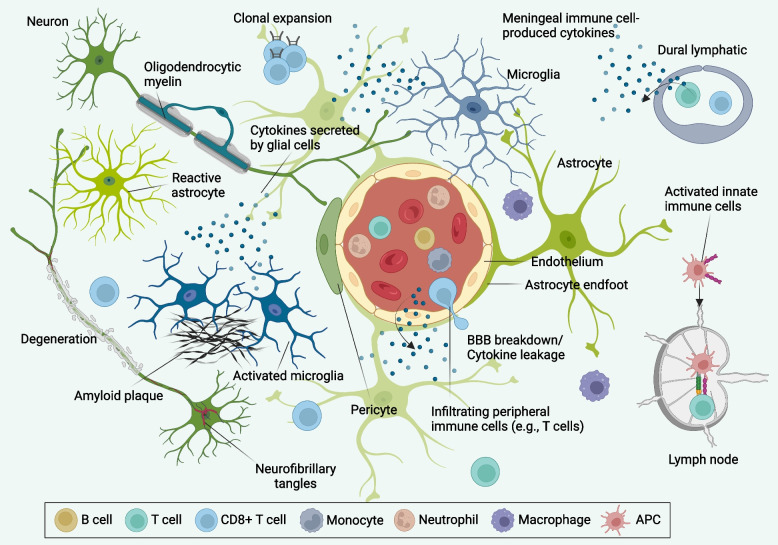
Alzheimer’s disease (AD) is a genetically complex and heterogeneous disorder with multifaceted neuropathological features, including β-amyloid plaques, neurofibrillary tangles, and neuroinflammation. Over the past decade, emerging evidence has implicated both beneficial and pathological roles for innate immune genes and immune cells, including peripheral immune cells such as T cells, which can infiltrate the brain and either ameliorate or exacerbate AD neuropathogenesis. These findings support a neuroimmune axis of AD, in which the interplay of adaptive and innate immune systems inside and outside the brain critically impacts the etiology and pathogenesis of AD. In this review, we discuss the complexities of AD neuropathology at the levels of genetics and cellular physiology, highlighting immune signaling pathways and genes associated with AD risk and interactions among both innate and adaptive immune cells in the AD brain. We emphasize the role of peripheral immune cells in AD and the mechanisms by which immune cells, such as T cells and monocytes, influence AD neuropathology, including microglial clearance of amyloid-β peptide, the key component of β-amyloid plaque cores, pro-inflammatory and cytotoxic activity of microglia, astrogliosis, and their interactions with the brain vasculature. Finally, we review the challenges and outlook for establishing immune-based therapies for treating and preventing AD.
Overview
CoChat Summary
TL;DR
This review argues that Alzheimer’s disease pathogenesis involves a neuroimmune axis in which innate and adaptive immune cells inside and outside the brain interact to modulate β-amyloid, tau, neuroinflammation, and neurodegeneration. It synthesizes genetic, cellular, animal, and clinical evidence and discusses immune-based therapeutic opportunities and challenges.
Key findings
- AD risk genetics implicates immune genes: GWAS-associated genes with potential innate/adaptive immune roles include CD33, TREM2, INPP5D, CLU, CR1, SPI1, ABCA7, EPHA1, and the MS4A cluster (Table 1).
- Microglia are central: disease-associated microglia (DAM), MGnD, and PAM states exist; CD33 promotes pro-inflammatory activation while TREM2 promotes phagocytosis and Aβ clearance, making TREM2/CD33 therapeutic targets.
- Peripheral immune cells infiltrate via the BBB, choroid plexus, and meninges; neutrophils, monocytes, CD4+/CD8+ T cells, Tregs, and B cells can have beneficial or detrimental effects, and CD8+ T cell clonal expansion is reported in MCI/AD brains/CSF.
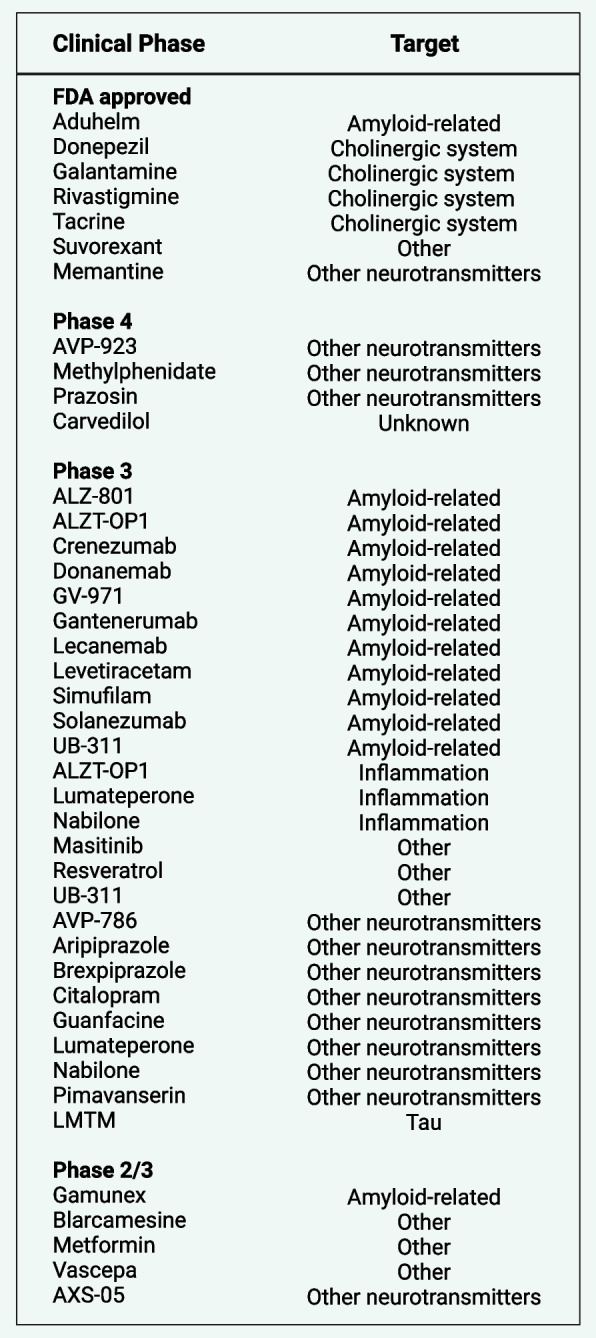
- Therapeutics: lecanemab showed 27% slower cognitive decline in early AD versus placebo over 18 months; aducanumab approval was controversial; immune strategies include targeting TREM2/CD33, Treg/TH17 balance, B-cell depletion, and APOE ε2.
Methods
- Narrative review; no new experimental data.
- Synthesizes human post-mortem, CSF/blood biomarker, GWAS, mouse model, and clinical trial literature; includes Table 1 (genome-wide significant AD-associated immune genes) and Table 2 (cellular infiltration in AD).
- Main analysis is qualitative synthesis of immune signaling pathways and cell interactions.
Limitations
- Stated: much of the work discussed used mouse models; the field needs model systems recapitulating peripheral immune cells and vascularization, such as 3D in vitro models, patient-derived cells, and iPSC-derived microglia.
- Stated: direct causative evidence for infiltrating T cells in AD is lacking, partly due to lack of a comprehensive disease model; roles of neutrophils, monocytes, Tregs, and B cells remain unclear or controversial.
- Evident: as a narrative review, it provides no primary data or systematic quantitative synthesis; conclusions depend on cited literature, and the text notes limited/handful of studies and nascent stages for several cell types.
Model-written summary. Check it against the paper before relying on it.
Integrity signals
Registry
Cites
Statistics
Figures
Verification
Claims the paper makes
1 Valid · 0 Not valid · 105 Not checked · 7 Own results and interpretations
The cited sources support only part of this claim — read each source’s verdict below.
In the paper
“Over the past decade, emerging evidence has implicated both beneficial and pathological roles for innate immune genes and immune cells, including peripheral immune cells such as T cells, which can infiltrate the brain and either ameliorate or exacerbate AD neuropathogenesis.”
§ The neuroimmune axis of Alzheimer’s disease > Abstract
What the sources say
- Partly supportedcites [142] Gate D Saligrama N Leventhal O Yang AC Unger MS Middeldorp J Clonally expanded CD8 T cells patrol the cerebrospinal fluid in Alzheimer’s disease Nature 2020 577 399 404 10.1038/s41586-019-1895-7 31915375 PMC7445078 sourceExperimental — accuracy not yet measured
Gate et al. (2020) support the infiltration half of the claim: the Abstract/introduction states that the brain's lymphatic system 'carries immune cells from the cerebrospinal fluid... enabling peripheral T cells to respond to brain antigens', and the post-mortem work (Results, Fig. 2 / Extended Data Fig. 7 section) reports 'numerous extravascular CD8+ T cells in the perivascular space of blood vessels with cerebral amyloid angiopathy in the hippocampi of three AD brains' and significantly more CD3+CD8+ T cells in AD-affected hippocampi. However, the paper does not attribute any beneficial/pathological dual role to innate immune genes — it only notes that 'much effort has been dedicated to understanding innate inflammation in AD' (crediting that to Ransohoff, ref. 1) while its own data concern adaptive immunity. Nor does it establish that infiltrating cells 'ameliorate or exacerbate' neuropathogenesis: it states 'whether T cells enter the brain to perpetuate neuroinflammation in AD is unknown' and hedges to 'a potential effect on neurodegeneration through their cytotoxic effector function' (Discussion), i.e. a possible pathological effect only, with an explicit caution against inferring causality. (LLM, conf=0.75)
- Not checked yetcites [145] Morris G Berk M Maes M Puri BK Could Alzheimer’s disease originate in the periphery and if so how so? Mol Neurobiol 2019 56 406 434 10.1007/s12035-018-1092-y 29705945 PMC6372984 source
- Not checked yetcites [146] Stephenson J Nutma E Valk P Amor S Inflammation in CNS neurodegenerative diseases Immunology. 2018 154 204 219 10.1111/imm.12922 29513402 PMC5980185 source
- Not checked yetcites [147] Webers A Heneka MT Gleeson PA The role of innate immune responses and neuroinflammation in amyloid accumulation and progression of Alzheimer’s disease Immunol Cell Biol 2020 98 28 41 10.1111/imcb.12301 31654430 source
- Not checked yetcites [148] Page AL Dupuis G Frost EH Larbi A Pawelec G Witkowski JM Role of the peripheral innate immune system in the development of Alzheimer’s disease Exp Gerontol 2018 107 59 66 10.1016/j.exger.2017.12.019 29275160 source
- Partly supportedcites [149] Bettcher BM Tansey MG Dorothée G Heneka MT Peripheral and central immune system crosstalk in Alzheimer disease — a research prospectus Nat Rev Neurol 2021 17 1 13 34522039 PMC8439173 sourceExperimental — accuracy not yet measured
The infiltration and dual-effect parts are well supported: 'Mechanistic insight from animal studies' (peripheral innate immune cell infiltration) describes activated peripheral immune cells entering the CNS, with myeloid cells mitigating Aβ deposition and cognition in mouse models but not modifying Aβ load in APP23/APP-PS1, and neutrophils/NK cells contributing to pathology; the T cell passage states 'a complex picture involving detrimental and beneficial effects of different T cell subtypes' (TH1 increasing Aβ deposition and impairing spatial learning, TH2/Treg reversing cognitive decline, or Treg worsening established amyloid pathology). However, the source classifies T cells under 'Adaptive immunity in AD'/'Adaptive immune mechanisms of AD pathogenesis', not as innate immune cells, and it does not attribute beneficial versus pathological roles to innate immune genes — its only genetic statement is the general one that 'GWAS... have implicated the immune system in AD' (Translational roadmap), alongside NLRP3 inflammasome knockout work. So the gene component and the innate labelling of T cells are not what this source says. (LLM, conf=0.72)
- Partly supportedcites [150] Kinney JW Bemiller SM Murtishaw AS Leisgang AM Salazar AM Lamb BT Inflammation as a central mechanism in Alzheimer’s disease Alzheimer’s Dementia Transl Res Clin Interventions. 2018 4 575 590 10.1016/j.trci.2018.06.014 PMC6214864 30406177 sourceExperimental — accuracy not yet measured
Kinney et al. (2018) support the dual, benefit-or-harm framing and the infiltration of peripheral innate/myeloid cells: 'Inflammation in AD' states brain inflammation 'appears to have a dual function, playing a neuroprotective role during an acute-phase response, but becomes detrimental when a chronic response is mounted', the 'Microglia' subsection states early immune response 'results in clearance of Aβ and has been demonstrated to exert positive effects on AD-related pathologies' while prolonged activation 'result[s] in an exacerbation of AD pathology' and that 'peripheral macrophages may be recruited to Aβ plaque deposition', and 'Relevance of inflammation and risk factors for AD' notes systemic inflammation damages the BBB 'allowing entry of peripheral immune cells into the brain'. What our copy does not support is the specific cell type the claim names: no passage mentions T cells or adaptive immune infiltration — the paper's peripheral infiltrate is confined to macrophages/myeloid cells, and the 'TREM2 in AD pathology' section even records that 'subsequent studies utilizing parabiosis failed to detect these infiltrates'. The 'innate immune genes' element likewise appears only as a cited reference title (ref 51, Cribbs et al.), not as a stated point of this review. (LLM, conf=0.72)
- Supportedcites [151] Cao W Zheng H Peripheral immune system in aging and Alzheimer’s disease Mol Neurodegener 2018 13 1 17 30285785 PMC6169078 source
The review's 'Involvement of peripheral immune cells in AD pathogenesis' (Background) documents both directions of effect for infiltrating peripheral cells: peripherally-derived macrophages/myeloid cells participating in Aβ clearance yet, in other studies, adopting a microglia-like phenotype with limited phagocytic capacity; neutrophils in 5xFAD/3xTg-AD parenchyma promoting plaques, tangles and decline, while increased neutrophil infiltration after TNF-α modulation coincided with reduced pathology; and Aβ-specific TH1 cells infiltrating J20 brain to clear plaques while inducing meningoencephalitis, worsening pathology in APP/PS1, versus TH2-driven memory improvement. Genetic implication of innate immunity is stated in 'A systematic understanding of LOAD' and the innate/TREM2 passages (immune-related LOAD risk loci, TREM2, CD33, inflammasome, complement, expressed elevated both peripherally and centrally). The only imprecision is taxonomic — the paper classifies T cells under adaptive, not innate, immunity and stresses their scarcity in the parenchyma — but the attributed content (dual beneficial/pathological roles, peripheral infiltration, ameliorating or exacerbating AD neuropathogenesis) is what our copy reports. (LLM, conf=0.85)
plainstates a possible cause- Asserted: passes — The authors put it forward as true.
- Checkable: passes — It can be checked against evidence.
- Load-bearing: passes — The paper’s conclusions depend on it.
- Based: passes — The paper gives a reason why it holds.
- Partly supported
None of the sources cited for this claim have been checked yet.
In the paper
“recent studies have also shown that various types of vaccination, from influenza to bacillus Calmette-Guérin (BCG), protect against AD risk [293–298]”
§ The neuroimmune axis of Alzheimer’s disease > Role of systemic inflammation in AD
What the sources say
- Not checked yetcites [293] Bukhbinder AS, Ling Y, Hasan O, Jiang X, Kim Y, Phelps KN, et al. Risk of Alzheimer’s disease following influenza vaccination: a claims-based cohort study using propensity score matching. J Alzheimer’s Dis. 2022;88(3):1061–74. PMC9484126 35723106 source
- Not checked yetcites [294] Klein BY Greenblatt CL Gofrit ON Bercovier H Bacillus Calmette-Guérin in immuno-regulation of Alzheimer’s disease Front Aging Neurosci 2022 14 861956 10.3389/fnagi.2022.861956 35832066 PMC9271739 source
- Not checked yetcites [295] Amran A, Lin Y, Kim Y, Bernstam E, Jiang X, Schulz PE. Influenza vaccination is associated with a reduced incidence of Alzheimer’s disease. Alzheimer’s Dementia. 2020;16:e041693. source
- Not checked yetcites [296] Kim JI Zhu D Barry E Kovac E Aboumohamed A Agalliu I Intravesical Bacillus Calmette-Guérin treatment is inversely associated with the risk of developing Alzheimer disease or other dementia among patients with non–muscle-invasive bladder cancer Clin Genitourin Canc 2021 19 e409 e416 10.1016/j.clgc.2021.05.001 34116955 source
- Not checked yetcites [297] Klinger D Hill BL Barda N Halperin E Gofrit ON Greenblatt CL Bladder cancer immunotherapy by BCG is associated with a significantly reduced risk of Alzheimer’s disease and Parkinson’s disease Nato Adv Sci Inst Se 2021 9 491 PMC8151667 34064775 source
- Not checked yetcites [298] Verreault R Laurin D Lindsay J Serres GD Past exposure to vaccines and subsequent risk of Alzheimer’s disease Cmaj Can Medical Assoc J J De L’association Medicale Can 2001 165 1495 1498 PMC81665 11762573
plainstates a cause- Asserted: passes — The authors put it forward as true.
- Checkable: passes — It can be checked against evidence.
- Load-bearing: passes — The paper’s conclusions depend on it.
- Based: passes — The paper gives a reason why it holds.
In the paper
“Neuroimaging studies have revealed that β-amyloid plaques begin to deposit in the brain a decade or more before the onset of cognitive decline [5].”
§ The neuroimmune axis of Alzheimer’s disease > Background
What the sources say
- Not checked yetcites [5] Veitch DP Weiner MW Aisen PS Beckett LA Cairns NJ Green RC Understanding disease progression and improving Alzheimer’s disease clinical trials: recent highlights from the Alzheimer’s Disease Neuroimaging Initiative Alzheimer’s Dementia 2018 15 106 152 10.1016/j.jalz.2018.08.005 30321505 source
plainstates an association- Asserted: passes — The authors put it forward as true.
- Checkable: passes — It can be checked against evidence.
- Load-bearing: passes — The paper’s conclusions depend on it.
- Based: passes — The paper gives a reason why it holds.
None of the sources cited for this claim have been checked yet.
In the paper
“In the blood, the neutrophil:lymphocyte ratio has been correlated with cognitive decline in AD [262, 263].”
§ The neuroimmune axis of Alzheimer’s disease > Peripheral innate immunity in AD
What the sources say
- Not checked yetcites [262] Kuyumcu ME Yesil Y Oztürk ZA Kizilarslanoğlu C Etgül S Halil M The evaluation of neutrophil-lymphocyte ratio in Alzheimer’s disease Dement Geriatr Cogn 2012 34 69 74 10.1159/000341583 22922667 source
- Not checked yetcites [263] Dong X Nao J Shi J Zheng D Predictive value of routine peripheral blood biomarkers in Alzheimer’s disease Front Aging Neurosci. 2019 11 332 10.3389/fnagi.2019.00332 31866854 PMC6906180 source
plainstates an association- Asserted: passes — The authors put it forward as true.
- Checkable: passes — It can be checked against evidence.
- Load-bearing: unclear — It is unclear whether the paper’s conclusions depend on it.
- Based: passes — The paper gives a reason why it holds.
None of the sources cited for this claim have been checked yet.
In the paper
“Pathogenic infiltration of peripheral immune cells into the brain parenchyma may lead to exacerbation of AD pathology [146, 149, 256].”
§ The neuroimmune axis of Alzheimer’s disease > BBB breakdown during AD pathogenesis
What the sources say
- Not checked yetcites [146] Stephenson J Nutma E Valk P Amor S Inflammation in CNS neurodegenerative diseases Immunology. 2018 154 204 219 10.1111/imm.12922 29513402 PMC5980185 source
- Not checked yetcites [149] Bettcher BM Tansey MG Dorothée G Heneka MT Peripheral and central immune system crosstalk in Alzheimer disease — a research prospectus Nat Rev Neurol 2021 17 1 13 34522039 PMC8439173 source
- Not checked yetcites [256] Mason HD McGavern DB How the immune system shapes neurodegenerative diseases Trends Neurosci 2022 45 10 733 748 10.1016/j.tins.2022.08.001 36075783 PMC9746609 source
hedgedstates a possible cause- Asserted: passes — The authors put it forward as true.
- Checkable: passes — It can be checked against evidence.
- Load-bearing: passes — The paper’s conclusions depend on it.
- Based: passes — The paper gives a reason why it holds.
69 more claims
Create a free account to see all 113 claims and to verify the 172 references still open.
- It may state two separate claims as one. 35
- Probably not a substantial claim. 5
Self-check
Percentages, sums and reported differences re-computed from the paper’s own numbers.
Each contradiction between two passages listed here was confirmed by an independent check.
Rated minor: it would not touch a result — a value no result rests on, a p-value that stays on the same side of the significance level, or a conflict that is clerical, resolved elsewhere in the paper, or outside its own findings.
In the paper
§ The neuroimmune axis of Alzheimer’s disease > Background
“Redondo-García et al., 2021 [23]”
§ The neuroimmune axis of Alzheimer’s disease > References
“23. Redondo-García S Peris-Torres C Caracuel-Peramos R Rodríguez-Manzaneque JC ADAMTS proteases and the tumor immune microenvironment: lessons from substrates and pathologies Matrix Biology Plus 2020 9 100054”
Rated minor: it would not touch a result — a value no result rests on, a p-value that stays on the same side of the significance level, or a conflict that is clerical, resolved elsewhere in the paper, or outside its own findings.
In the paper
§ The neuroimmune axis of Alzheimer’s disease > References
“1. Bertram L Tanzi RE Alzheimer disease risk genes: 29 and counting Nat Rev Neurol 2019 15 191 192 10.1038/s41582-019-0158-4 30833695”
§ The neuroimmune axis of Alzheimer’s disease > References
“6. Bertram L Tanzi RE Alzheimer disease risk genes: 29 and counting Nat Rev Neurol 2019 15 1 10.1038/s41582-019-0158-4 30833695”
Rated minor: it would not touch a result — a value no result rests on, a p-value that stays on the same side of the significance level, or a conflict that is clerical, resolved elsewhere in the paper, or outside its own findings.
In the paper
§ The neuroimmune axis of Alzheimer’s disease > Background
“Talbot et al., 2018 [86]”
§ The neuroimmune axis of Alzheimer’s disease > References
“86. Talbot H Saada S Naves T Gallet P-F Fauchais A-L Jauberteau M-O Regulatory roles of sortilin and SorLA in immune-related processes Front Pharmacol 2019 9 1507”
Rated minor: it would not touch a result — a value no result rests on, a p-value that stays on the same side of the significance level, or a conflict that is clerical, resolved elsewhere in the paper, or outside its own findings.
In the paper
§ The neuroimmune axis of Alzheimer’s disease > Background
“G'Sell et al., 2016 [56]”
§ The neuroimmune axis of Alzheimer’s disease > References
“56. G’Sell RT Gaffney PM Powell DW Review: A20-binding inhibitor of NF-κB activation 1 is a physiologic inhibitor of NF-κB: a molecular switch for inflammation and autoimmunity Arthritis Rheumatol 2015 67 2292 2302”
Rated minor: it would not touch a result — a value no result rests on, a p-value that stays on the same side of the significance level, or a conflict that is clerical, resolved elsewhere in the paper, or outside its own findings.
In the paper
§ The neuroimmune axis of Alzheimer’s disease > CNS interfaces and peripheral immune cell infiltration
“| Treg cells | 5XFAD mice | 10-month-old | PD-1 blockade led to clearance of cerebral β-amyloid plaques and improved cognitive performance | PD-1/IFN-γ pathway | Baruch et al., 2016 [227] |”
§ The neuroimmune axis of Alzheimer’s disease > References
“227. Baruch K Rosenzweig N Kertser A Deczkowska A Sharif AM Spinrad A Breaking immune tolerance by targeting Foxp3+ regulatory T cells mitigates Alzheimer’s disease pathology Nat Commun 2015 6 7967 10.1038/ncomms8967 26284939 PMC4557123”
Citations
Cites
Corder, E. H., Saunders, A. M., Strittmatter, W. J., Schmechel, D. E., Gaskell, P. C., Small, G. W., Roses, A. D., Haines, J. L., & Pericak-Vance, M. A. (1993) · Science · doi:10.1126/science.8346443 · Cited by 9,429 · cited 10×
“A viral-mediated overexpression of APOE ε2 in amyloid mouse model brains led to a reduction of the Aβ burden, which might be attributed to an increased Aβ clearance in APOE ε2 expressing animals [321].”
BackgroundInfluentialNeuroinflammation in Alzheimer's disease
Heneka, M. T., Carson, M. J., Khoury, J. E., Landreth, G. E., Brosseron, F., Feinstein, D. L., Jacobs, A. H., Wyss-Coray, T., Vitorica, J., Ransohoff, R. M., et al. (2015) · The Lancet Neurology · doi:10.1016/s1474-4422(15)70016-5 · Cited by 6,226
Iliff, J. J., Wang, M., Liao, Y., Plogg, B. A., Peng, W., Gundersen, G. A., Benveniste, H., Vates, G. E., Deane, R., Goldman, S. A., et al. (2012) · Science Translational Medicine · doi:10.1126/scitranslmed.3003748 · Cited by 5,824
Lecanemab in early Alzheimer's disease
van Dyck, C. H., Swanson, C. J., Aisen, P., Bateman, R. J., Chen, C., Gee, M., Kanekiyo, M., Li, D., Reyderman, L., Cohen, S., et al. (2023) · New England Journal of Medicine · doi:10.1056/nejmoa2212948 · Cited by 5,678
A Unique Microglia Type Associated with Restricting Development of Alzheimer’s Disease
Keren-Shaul, H., Spinrad, A., Weiner, A., Matcovitch-Natan, O., Dvir-Szternfeld, R., Ulland, T. K., David, E., Baruch, K., Lara-Astaiso, D., Toth, B., et al. (2017) · Cell · doi:10.1016/j.cell.2017.05.018 · Cited by 5,493
Sleep Drives Metabolite Clearance from the Adult Brain
Xie, L., Kang, H., Xu, Q., Chen, M. J., Liao, Y., Thiyagarajan, M., O’Donnell, J., Christensen, D. J., Nicholson, C., Iliff, J. J., et al. (2013) · Science · doi:10.1126/science.1241224 · Cited by 5,411
Meta-Analysis of 74,046 Individuals Identifies 11 New Susceptibility Loci for Alzheimer’s Disease
(EADI), E. A. D. I., Lambert, J.-C., (GERAD), G. A. E. R. I. A. D., Alzheimer's Disease Genetic Consortium (ADGC), (CHARGE), C. F. H. A. A. R. I. G. E., Ibrahim-Verbaas, C. A., Harold, D., Naj, A. C., Sims, R., Bellenguez, C., et al. (2013) · Nature Genetics · doi:10.1038/ng.2802 · Cited by 4,336 · cited 3×
“…healing and inflammation Nordhoff et al., 2012 [37]; Wixler et al., 2019 [38] 2 INPP5D Immunity and microglia function Efthymiou and Goate, 2017 [19]; Lambert et al., 2013 [39] 2 SPRED2 NK cells; cytokine/chemokine production Itakura et al., 2017 [40] 2 PRKD3 Thymic selection during T cell…”
BackgroundA Randomized, Placebo-Controlled Trial of Natalizumab for Relapsing Multiple Sclerosis
Polman, C. H., O'Connor, P. W., Havrdova, E., Hutchinson, M., Kappos, L., Miller, D. H., Phillips, J. T., Lublin, F. D., Giovannoni, G., Wajgt, A., et al. (2006) · New England Journal of Medicine · doi:10.1056/nejmoa044397 · Cited by 3,386
Harold, D., Abraham, R., Hollingworth, P., Sims, R., Gerrish, A., Hamshere, M. L., Pahwa, J. S., Moskvina, V., Dowzell, K., Williams, A., et al. (2009) · Nature Genetics · doi:10.1038/ng.440 · Cited by 3,326 · cited 1×
“…regulation of complement system Deming et al., 2019 [83]; Kuek et al., 2016 [84] 11 PICALM Endocytosis and Aβ clearance Zhao et al., 2015 [72]; Harold et al., 2009 [85] 11 SORL1 Microglia, monocyte migration, pro‑inflammatory cytokines regulation and phagocytosis Talbot et al., 2018…”
BackgroundBlood–brain barrier breakdown in Alzheimer disease and other neurodegenerative disorders
Sweeney, M. D., Sagare, A. P., & Zlokovic, B. V. (2018) · Nature Reviews Neurology · doi:10.1038/nrneurol.2017.188 · Cited by 3,076
Research works printed but not linked: 9
- Bertram L Tanzi RE Alzheimer disease risk genes: 29 and counting Nat Rev Neurol 2019 15 1 10.1038/s41582-019-0158-4 30833695 · DOI · Paper page
- Keren-Shaul H Spinrad A Weiner A Matcovitch-Natan O Dvir-Szternfeld R Ulland TK A unique microglia type associated with restricting development of Alzheimer’s disease Cell 2017 169 1276 1290.e17 28602351
- Sengillo JD Winkler EA Walker CT Sullivan JS Johnson M Zlokovic BV Pericytes in Alzheimer’s disease Brain Pathol 2013 23 303 310 10.1111/bpa.12004 23126372 PMC3628957 · DOI · Paper page
- Halliday R Rege V Ma Q Zhao Z Miller A Winkler A Accelerated pericyte degeneration and blood-brain barrier breakdown in apolipoprotein E4 carriers with Alzheimer’s disease J Cereb Blood Flow Metab 2016 36 216 227 10.1038/jcbfm.2015.44 25757756 PMC4758554 · DOI · Paper page
- Janelidze S Hertze J Nagga K Nilsson K Nilsson C Study GSBF Increased blood-brain barrier permeability is associated with dementia and diabetes but not amyloid pathology or APOE genotype Neurobiol Aging. 2017 51 104 12 10.1016/j.neurobiolaging.2016.11.017 28061383 PMC5754327 · DOI · Paper page
- Ma Q Zhao Z Sagare P Wu Y Wang M Owens C Blood-brain barrier-associated pericytes internalize and clear aggregated amyloid-beta42 by LRP1-dependent apolipoprotein E isoform-specific mechanism Mol Neurodegener 2018 13 57 10.1186/s13024-018-0286-0 30340601 PMC6194676 · DOI · Paper page
- van de Haar HJ Jansen JFA Jeukens CRLPN Burgmans S van Buchem MA Muller M Subtle blood-brain barrier leakage rate and spatial extent: considerations for dynamic contrast-enhanced MRI Med Phys 2017 44 4112 25 10.1002/mp.12328 28493613 · DOI · Paper page
- van de Haar HJ Jansen JF van Osch MJ van Buchem MA Muller M Wong SM Hofman PA Burgmans S Verhey FR Backes WH Neurovascular unit impairment in early Alzheimer’s disease measured with magnetic resonance imaging Neurobiol Aging 2016 1 45 190 6 10.1016/j.neurobiolaging.2016.06.006 27459939 · DOI · Paper page
- van de Haar H Jansen JFA van Osch MJP van Buchem MA Backes WH Neurovascular unit impairment in early Alzheimer’s disease measured with magnetic resonance imaging Neurobiol Aging 2016 45 190 196 10.1016/j.neurobiolaging.2016.06.006 27459939 · DOI · Paper page
Cited by
Zhang, J., Zhang, Y., Wang, J., Xia, Y., Zhang, J., & Chen, L. (2024) · Signal Transduction and Targeted Therapy · doi:10.1038/s41392-024-01911-3 · Cited by 1,138
Jorfi, M., Park, J., Hall, C. K., Lin, C.-C. J., Chen, M., von Maydell, D., Kruskop, J. M., Kang, B., Choi, Y., Prokopenko, D., et al. (2023) · Nature Neuroscience · doi:10.1038/s41593-023-01415-3 · Cited by 214
Self-citationMicroglial activation states and their implications for Alzheimer's Disease
Valiukas, Z., Tangalakis, K., Apostolopoulos, V., & Feehan, J. (2025) · The Journal of Prevention of Alzheimer s Disease · doi:10.1016/j.tjpad.2024.100013 · Cited by 206
ACSL4-Mediated Ferroptosis and Its Potential Role in Central Nervous System Diseases and Injuries
Jia, B., Li, J., Song, Y., & Luo, C. (2023) · International Journal of Molecular Sciences · doi:10.3390/ijms241210021 · Cited by 177
Deep learning on medical image analysis
Wang, J., Wang, S., & Zhang, Y. (2024) · CAAI Transactions on Intelligence Technology · doi:10.1049/cit2.12356 · Cited by 160
Metadata
- Authors
- Jorfi, M., Maaser-Hecker, A., & Tanzi, R. E.
- Affiliations
- Harvard University (US)
- Corresponding author
- Jorfi, Mehdi
- Tanzi, Rudolph E.
- Venue
- Genome Medicine
- Published
- 2023-01-26
- Volume
- 15
- Issue
- 1
- Pages
- 6-6
- ISSN
- 1756-994X (ISSN-L)
- PMC
- PMC9878767
- OpenAlex
- W4318067131
- Cited by
- 333
- References
- 334
- Citations by year
- 2026: 93 · 2025: 95 · 2024: 100 · 2023: 45
- FWCI
- 7.01
- Type
- journal article
- Language
- en
- Open access
- gold
- doi.org
- Licence
- cc-by
- creativecommons.org/licenses/by/4.0 (tdm)
- creativecommons.org/licenses/by/4.0 (vor)
- Locations
- Genome Medicine (publishedVersion, cc-by)
- PubMed Central (publishedVersion, cc-by)
- PubMed (publishedVersion)
- DOAJ (DOAJ: Directory of Open Access Journals) (submittedVersion)
- Funders
- Cure Alzheimer's Fund
- JPB Foundation
- Topics
- Life Sciences › Neuroscience › Neurology › Neuroinflammation and Neurodegeneration Mechanisms
- Life Sciences › Neuroscience › Cellular and Molecular Neuroscience › Alzheimer's disease research and treatments
- Health Sciences › Medicine › Psychiatry and Mental health › Dementia and Cognitive Impairment Research
- Keywords
- Alzheimer's disease, neuroimmune axis, neuroinflammation, innate immunity, adaptive immunity, T cells, monocytes, microglia, amyloid-beta clearance, amyloid plaques, neurofibrillary tangles, astrocyte activation, cerebral vasculature, immune signaling pathways, immunotherapy, risk genes
- MeSH terms
- Alzheimer Disease, Brain, Humans, Nervous System Diseases, Neuroimmunomodulation, Amyloid beta-Peptides, Microglia
About these checks
Registry, retraction, Cites and statistics results are computed, not judged, with one exception: a printed reference that no index lists is read once by a model before it counts as a citation error. Claims are extracted by a model and kept only when their quote appears verbatim in the text; each cited source is then checked, with a model’s help, for whether it says what the claim relies on. Those verdicts can be wrong — read the claim’s quote and the cited source before relying on one.
The claim verdicts this report counts are experimental: their accuracy is not yet measured.
A language model drew the claims from the paper on 2026-11-26, under version 3 of the claim definition (model deepseek-v4.1-flash, prompt extract-v3).
A second model labelled each claim on 2026-11-26 (model jev-1.13-20260917, definition revision gold-guideline-v0.2).
Cited sources are checked with a language model’s help (qwen3.8-omni-flash).
Statistics and arithmetic are recomputed, not judged.
Confidence bands are shown only for fields calibrated on our annotated test set. None is calibrated yet, so no band is shown.
What counts as a claim ›How we measure confidence ›How we check this ›
Are you an author, or do you see a problem with this page? Request a review
Data sources
Bibliographic data: Semantic Scholar, OpenAlex, Crossref.
Contains information from the Semantic Scholar Academic Graph Datasets, made available under the ODC Attribution License (ODC-BY 1.0).
Semantic Scholar’s data is described in: Kinney, R., et al. (2023). The Semantic Scholar Open Data Platform. arXiv:2301.10140.
