

Differential DNA methylation of genes involved in fibrosis progression in non-alcoholic fatty liver disease and alcoholic liver disease
Open accessThe DOI matches its Crossref record; 25 of the 25 references it cites were found in a registry or an index.
Abstract
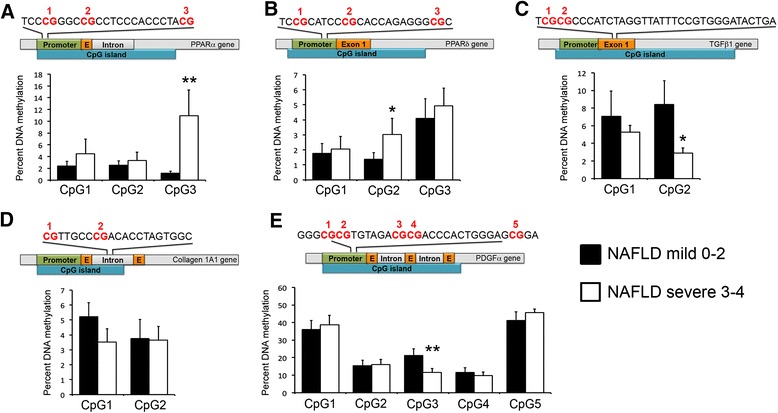
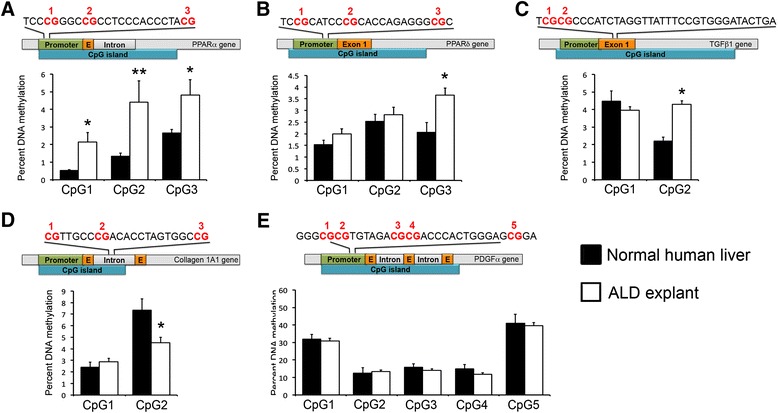
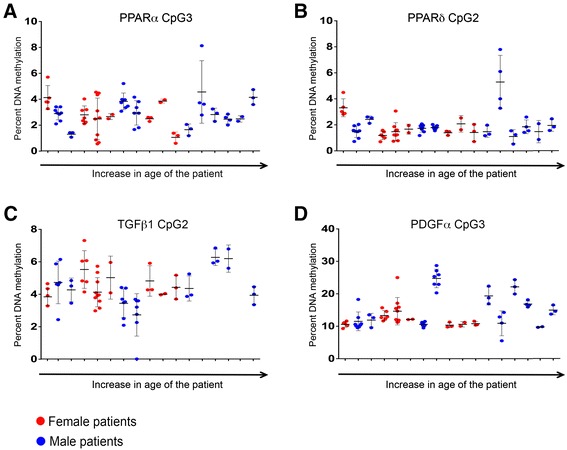
BACKGROUND: Chronic liver injury can lead to the development of liver fibrosis and cirrhosis but only in a minority of patients. Currently, it is not clear which factors determine progression to fibrosis. We investigated whether DNA\methylation profile as determined by pyrosequencing can distinguish patients with mild from those with advanced/severe fibrosis in non-alcoholic liver disease (NAFLD) and alcoholic liver disease (ALD). To this end, paraffin-embedded liver biopsies were collected from patients with biopsy-proven NAFLD or ALD, as well as paraffin-embedded normal liver resections, genomic DNA isolated, bisulfite converted and pyrosequencing assays used to quantify DNA methylation at specific CpGs within PPARα, PPARα, TGFβ1, Collagen 1A1 and PDGFα genes. Furthermore, we assessed the impact of age, gender and anatomical location within the liver on patterns of DNA methylation in the same panel of genes. RESULTS: DNA methylation at specific CpGs within genes known to affect fibrogenesis distinguishes between patients with mild from those with severe fibrosis in both NAFLD and ALD, although same CpGs are not equally represented in both etiologies. In normal liver, age, gender or anatomical location had no significant impact on DNA methylation patterns in the liver. CONCLUSIONS: DNA methylation status at specific CpGs may be useful as part of a wider set of patient data for predicting progression to liver fibrosis.
Overview
The claims and statistics of this paper haven’t been checked yet.
Free: it reads the open-access text and checks the first 5 claims that cite a source we can check. Create a free account to check every claim.
Integrity signals
Registry
Cites
Statistics
Figures
Verification
Claims the paper makes
The claims and statistics of this paper haven’t been checked yet.
Free: it reads the open-access text and checks the first 5 claims that cite a source we can check. Create a free account to check every claim.
Claims other papers make about this one
Each is checked against this paper’s own text: does it say what the citing paper says it does?
The source backs part of the claim, not all of it — or backs it for a different population, condition or comparison.
In the citing paper
“Moreover, certain patterns of DNA methylation at fibrosis-related genes, such as those encoding TGFβ1, COL1A1, PDGFα, peroxisome proliferator-activated receptor alpha (PPARα), and peroxisome proliferator-activated receptor delta (PPARδ), can not only distinguish between patients with mild versus advanced MASLD, but also predict future fibrosis progression (169-172).”
From Found in translation—Fibrosis in metabolic dysfunction–associated steatohepatitis (MASH) (2023) · cites this paper as [170]
Experimental — accuracy not yet measuredThe source backs part of the claim, not all of it — or backs it for a different population, condition or comparison.
In the citing paper
“Moreover, certain patterns of DNA methylation at fibrosis-related genes, such as those encoding TGFβ1, COL1A1, PDGFα, peroxisome proliferator-activated receptor alpha (PPARα), and peroxisome proliferator-activated receptor delta (PPARδ), can not only distinguish between patients with mild versus advanced MASLD, but also predict future fibrosis progression (169-172).”
From Found in translation—Fibrosis in metabolic dysfunction–associated steatohepatitis (MASH) (2023) · cites this paper as [171]
Experimental — accuracy not yet measured
Self-check
Percentages, sums and reported differences re-computed from the paper’s own numbers.
The self-check needs the paper’s full text.
Citations
Cites
Design and validation of a histological scoring system for nonalcoholic fatty liver disease†
Kleiner, D. E., Brunt, E. M., Van Natta, M., Behling, C., Contos, M. J., Cummings, O. W., Ferrell, L. D., Liu, Y., Torbenson, M. S., Unalp‐Arida, A., et al. (2005) · Hepatology · doi:10.1002/hep.20701 · Cited by 10,791 · cited 1×
“Histological scoring was performed according to the NIH NAFLD Clinical Research Network criteria for NAFLD biopsies [24].”
MethodDNA methylation patterns and epigenetic memory
Bird, A. (2002) · Genes & Development · doi:10.1101/gad.947102 · Cited by 7,124 · cited 1×
“In many cases, higher levels of DNA methylation around gene promoters correlate with low or no transcription [10].”
BackgroundJaenisch, R., & Bird, A. (2003) · Nature Genetics · doi:10.1038/ng1089 · Cited by 6,325 · cited 1×
“As a general rule, hypermethylation of CpG islands is associated with gene repression, whereas hypomethylation is permissive to transcription [18].”
BackgroundEpigenetic modifications and human disease
Portela, A., & Esteller, M. (2010) · Nature Biotechnology · doi:10.1038/nbt.1685 · Cited by 2,836 · cited 1×
“Epigenetic processes play a prominent role in a number of complex diseases and may mediate the effects of environmental factors including diet and alcohol [5,6].”
BackgroundIrizarry, R. A., Ladd-Acosta, C., Wen, B., Wu, Z., Montano, C., Onyango, P., Cui, H., Gabo, K., Rongione, M., Webster, M., et al. (2009) · Nature Genetics · doi:10.1038/ng.298 · Cited by 2,177
Sampling Variability of Liver Biopsy in Nonalcoholic Fatty Liver Disease
Ratziu, V., Charlotte, F., Heurtier, A., Gombert, S., Giral, P., Bruckert, E., Grimaldi, A., Capron, F., & Poynard, T. (2005) · Gastroenterology · doi:10.1053/j.gastro.2005.03.084 · Cited by 2,106 · cited 1×
“Liver biopsy remains the gold standard for assessment of aetiology and fibrosis staging, although there are drawbacks to this method including its inherent invasiveness and significant sampling variability [17].”
BackgroundPathogenesis of Liver Fibrosis
Hernandez-Gea, V., & Friedman, S. L. (2011) · Annual Review of Pathology: Mechanisms of Disease · doi:10.1146/annurev-pathol-011110-130246 · Cited by 1,809
Liver fibrosis – from bench to bedside
Friedman, S. L. (2003) · Journal of Hepatology · doi:10.1016/s0168-8278(02)00429-4 · Cited by 1,780 · cited 1×
“Background Chronic liver injury of any aetiology can lead to development of liver fibrosis and ultimately cirrhosis [1].”
BackgroundIllingworth, R. S., & Bird, A. P. (2009) · FEBS Letters · doi:10.1016/j.febslet.2009.04.012 · Cited by 887 · cited 1×
“DNA methylation occurs at the cytosine base within a cytosine-guanine dinucleotide (often referred to as CpG) where DNA methyltransferase catalyses transfer of a methyl group to the fifth carbon atom within the cytosine ring to form 5-methylcytosine [9].”
BackgroundDNA methylation dynamics in health and disease
Bergman, Y., & Cedar, H. (2013) · Nature Structural & Molecular Biology · doi:10.1038/nsmb.2518 · Cited by 592 · cited 1×
“Given its importance in regulation of transcription/gene expression and, therefore, in cellular differentiation, errors in DNA methylation impact on multiple disease processes, including cancer [11,12].”
Background
Cited by
Adams, L. A., Anstee, Q. M., Tilg, H., & Targher, G. (2017) · Gut · doi:10.1136/gutjnl-2017-313884 · Cited by 1,174
Self-citationGenetics and epigenetics of NAFLD and NASH: Clinical impact
Eslam, M., Valenti, L., & Romeo, S. (2018) · Journal of Hepatology · doi:10.1016/j.jhep.2017.09.003 · Cited by 971
Nonalcoholic fatty liver disease
Brunt, E. M., Wong, V. W.-S., Nobili, V., Day, C. P., Sookoian, S., Maher, J. J., Bugianesi, E., Sirlin, C. B., Neuschwander-Tetri, B. A., & Rinella, M. E. (2015) · Nature Reviews Disease Primers · doi:10.1038/nrdp.2015.80 · Cited by 818
Nonalcoholic Fatty Liver Disease: Pathogenesis and Disease Spectrum
Hardy, T., Oakley, F., Anstee, Q. M., & Day, C. P. (2016) · Annual Review of Pathology: Mechanisms of Disease · doi:10.1146/annurev-pathol-012615-044224 · Cited by 611
“Another recently reported study showed that key antifibrogenic genes were hypomethylated in mild NAFLD, whereas profibrogenic genes were hypomethylated in severe NAFLD (276).”
BackgroundSelf-citationNon-Alcoholic Fatty Liver Disease: Metabolic, Genetic, Epigenetic and Environmental Risk Factors
Juanola, O., Martínez-López, S., Francés, R., & Gómez-Hurtado, I. (2021) · International Journal of Environmental Research and Public Health · doi:10.3390/ijerph18105227 · Cited by 302
“Genes involved in fibrogenesis such as TGF-β1, Collagen 1A1, and platelet-derived growth factor (PDGF) were hypomethylated and their expression was upregulated in more severe stages of NAFLD progression indicating risk of developing fibrosis [173,177].”
BackgroundGenetic Factors That Affect Risk of Alcoholic and Nonalcoholic Fatty Liver Disease
Anstee, Q. M., Seth, D., & Day, C. P. (2016) · Gastroenterology · doi:10.1053/j.gastro.2016.01.037 · Cited by 254
Self-citationEndocrine-disrupting chemicals and fatty liver disease
Foulds, C. E., Treviño, L. S., York, B., & Walker, C. L. (2017) · Nature Reviews Endocrinology · doi:10.1038/nrendo.2017.42 · Cited by 252
Pathogenesis and treatment of non-alcoholic steatohepatitis and its fibrosis
Lee, K.-C., Wu, P.-S., & Lin, H.-C. (2023) · Clinical and Molecular Hepatology · doi:10.3350/cmh.2022.0237 · Cited by 246
Hardy, T., Zeybel, M., Day, C. P., Dipper, C., Masson, S., McPherson, S., Henderson, E., Tiniakos, D., White, S., French, J., et al. (2017) · Gut · doi:10.1136/gutjnl-2016-311526 · Cited by 216
Self-citationGenetic predisposition in nonalcoholic fatty liver disease
Sookoian, S., & Pirola, C. J. (2017) · Clinical and Molecular Hepatology · doi:10.3350/cmh.2016.0109 · Cited by 213
Urea cycle dysregulation in non-alcoholic fatty liver disease
De Chiara, F., Heebøll, S., Marrone, G., Montoliu, C., Hamilton-Dutoit, S., Ferrandez, A., Andreola, F., Rombouts, K., Grønbæk, H., Felipo, V., et al. (2018) · Journal of Hepatology · doi:10.1016/j.jhep.2018.06.023 · Cited by 208
“Furthermore, patients with NAFLD have been shown to have hyperammonemia and neuropsychological disturbances (17), although the mechanism underlying this has so far not been clarified.”
BackgroundInfluentialEpigenetics in liver disease: from biology to therapeutics
Hardy, T., & Mann, D. A. (2016) · Gut · doi:10.1136/gutjnl-2015-311292 · Cited by 176
Self-citationGenetic and epigenetic factors determining NAFLD risk
Jonas, W., & Schürmann, A. (2021) · Molecular Metabolism · doi:10.1016/j.molmet.2020.101111 · Cited by 157
“detected a higher methylation of specific CpGs within TGFb1 and PDGFa, whereas specific CpGs exhibited a lower degree of methylation in the anti-fibrogenic PPARa and PPARd genes in patients with mild fibrosis [101].”
BackgroundMechanisms of Non-Alcoholic Fatty Liver Disease in the Metabolic Syndrome. A Narrative Review
Rinaldi, L., Pafundi, P. C., Galiero, R., Caturano, A., Morone, M. V., Silvestri, C., Giordano, M., Salvatore, T., & Sasso, F. C. (2021) · Antioxidants · doi:10.3390/antiox10020270 · Cited by 171
“Moreover, in humans with overt NAFLD, PPARs involved in the regulation of the expression of genes implicated in lipid and glucose metabolism were reported as hypermethylated, while genes encoding TGF-1 and PDGF hypomethylated [152].”
BackgroundPerakakis, N., Stefanakis, K., & Mantzoros, C. S. (2020) · Metabolism · doi:10.1016/j.metabol.2020.154320 · Cited by 162
“Genes promoting fibrogenesis such as TGFβ1 and PDGFα are hypomethylated and thus highly expressed whereas genes inhibiting hepatic stellate cells activation such as the PPARα, PPARδ and PPARγ are hypermethylated and thus lower expressed in the liver of patients with advanced fibrosis compared to the ones with mild dis…”
Genetic and Epigenetic Regulation in Nonalcoholic Fatty Liver Disease (NAFLD)
Del Campo, J., Gallego-Durán, R., Gallego, P., & Grande, L. (2018) · International Journal of Molecular Sciences · doi:10.3390/ijms19030911 · Cited by 147
“It has been shown in humans diagnosed with NAFLD that PPARs are hyper-methylated and fibrogenic TGF-β1 and PDGF-α are hypo-methylated in patients with progressive disease [61].”
BackgroundFound in translation—Fibrosis in metabolic dysfunction–associated steatohepatitis (MASH)
Wang, S., & Friedman, S. L. (2023) · Science Translational Medicine · doi:10.1126/scitranslmed.adi0759 · Cited by 158
Epigenetics in non-alcoholic fatty liver disease
Lee, J.-H., Kim, Y., Friso, S., & Choi, S. (2016) · Molecular Aspects of Medicine · doi:10.1016/j.mam.2016.11.008 · Cited by 157
Epigenetics and Liver Fibrosis
Moran-Salvador, E., & Mann, J. (2017) · Cellular and Molecular Gastroenterology and Hepatology · doi:10.1016/j.jcmgh.2017.04.007 · Cited by 136
“12 from severe fibrosis, while a separate study also c onfirms existence of altered DNA methylation signatures in human ALD livers [58].”
BackgroundSelf-citationNutrition and Genetics in NAFLD: The Perfect Binomium
Meroni, M., Longo, M., Rustichelli, A., & Dongiovanni, P. (2020) · International Journal of Molecular Sciences · doi:10.3390/ijms21082986 · Cited by 140
“isolated genomic DNA from percutaneous needle biopsies of patients with mild or severe NAFLD and identified significant differences across several CpGs islands within fibrosis-related genes, among which transforming growth factor beta 1 (TGFβ1), Type I Collagen α1 (Col1A1) and Platelet-derived growth factor (PDGFα) [1…”
BackgroundPage, A., Paoli, P., Moran Salvador, E., White, S., French, J., & Mann, J. (2016) · Journal of Hepatology · doi:10.1016/j.jhep.2015.11.024 · Cited by 134
Self-citationAbderrahmani, A., Yengo, L., Caiazzo, R. J., Canouil, M., Cauchi, S., Raverdy, V., Plaisance, V., Pawlowski, V., Lobbens, S., Maillet, J., et al. (2018) · Diabetes · doi:10.2337/db17-1539 · Cited by 118
“Therefore, in the liver of obese patients with T2D, the increased PDGF-AA signaling contributes to insulin resistance, opening new therapeutic avenues against T2D and possibly NAFLD.”
BackgroundResultInfluentialEpigenetic regulation in fibrosis progress
Xue, T., Qiu, X., Liu, H., Gan, C., Tan, Z., Xie, Y., Wang, D., & Ye, T. (2021) · Pharmacological Research · doi:10.1016/j.phrs.2021.105910 · Cited by 120
DNA Methylation in Nonalcoholic Fatty Liver Disease
Hyun, J., & Jung, Y. (2020) · International Journal of Molecular Sciences · doi:10.3390/ijms21218138 · Cited by 112
“Since genome-wide association studies have been applied in studies on human liver diseases [30,31], there is the potential to detect epigenetic modifiers in NAFLD, which might provide therapeutic targets and molecular tools for diagnosing NAFLD, assessing the severity, and predicting disease progression [32].”
BackgroundMethodStevanović, J., Beleza, J., Coxito, P. M., Ascensão, A. A. M. R., & Magalhães, J. (2019) · Molecular Metabolism · doi:10.1016/j.molmet.2019.11.015 · Cited by 108
“Some studies propose DNA methylation status as a marker of progression of NAFLD [151,152], however, this field remains quite open for research regarding NAFLD treatment through changes in lifestyle.”
BackgroundLi, X., Zhu, L., Wang, B., Yuan, M., & Zhu, R. (2017) · Frontiers in Pharmacology · doi:10.3389/fphar.2017.00855 · Cited by 108
“It has been reported that the levels of DNA methylation at specific CpG sites of pro-fibrotic genes (PPARα, PPARδ, TGFβ1, Collagen1A1, and PDGFα) differ among different fibrosis stages in NAFLD (Zeybel et al., 2015).”
BackgroundInfluentialEpigenetic reprogramming in liver fibrosis and cancer
Wilson, C. L., Mann, D. A., & Borthwick, L. A. (2017) · Advanced Drug Delivery Reviews · doi:10.1016/j.addr.2017.10.011 · Cited by 96
“demonstrated that hypermethylation at discreet CpG dinucleotides within the human PPARγ gene promotor could be used to stratify patients with mild fibrosis (Kleiner score 0–2) from those with severe fibrosis (Kleiner score 3–4) [46,47].”
Pirola, C. J., Scian, R., Gianotti, T. F., Dopazo, H., Rohr, C., Martino, J. S., Castaño, G. O., & Sookoian, S. C. (2015) · Medicine · doi:10.1097/md.0000000000001480 · Cited by 103
Sadler, T. M., Bhasin, J., Xu, Y., Barnholz-Sloan, J., Chen, Y., Ting, A. H., & Stylianou, E. (2016) · Clinical Epigenetics · doi:10.1186/s13148-016-0193-6 · Cited by 87
“Based on previous studies including a recent study of fibrotic liver disease, the average age difference of 20 years between our fibrotic Crohn’s disease and normal patient groups is highly unlikely to be a confounding factor in the differential DNA methylation we identified [23].”
ResultChoudhary, N. S., & Duseja, A. (2021) · Translational Gastroenterology and Hepatology · doi:10.21037/tgh.2019.09.06 · Cited by 80
“Zeybel et al. showed that differential DNA methylation at specific CpGs within genes affecting fibrogenesis distinguished mild from severe fibrosis in both NAFLD and ALD (121).”
BackgroundInfluentialGenetics of Nonalcoholic Fatty Liver Disease: From Pathogenesis to Therapeutics
Sookoian, S., & Pirola, C. (2019) · Seminars in Liver Disease · doi:10.1055/s-0039-1679920 · Cited by 70
Lin, H., Jeon, A., Chen, K., Lee, C. J. M., Wu, L., Chong, S.-L., Anene-Nzelu, C. G., Foo, R., & Chow, P. K. H. (2025) · British Journal of Cancer · doi:10.1038/s41416-025-02969-8 · Cited by 86
Human liver epigenetic alterations in non-alcoholic steatohepatitis are related to insulin action
de Mello, V. D., Matte, A., Perfilyev, A., Männistö, V., Rönn, T., Nilsson, E., Käkelä, P., Ling, C., & Pihlajamäki, J. (2017) · Epigenetics · doi:10.1080/15592294.2017.1294305 · Cited by 70
Understanding Dietary Intervention-Mediated Epigenetic Modifications in Metabolic Diseases
Asif, S., Morrow, N. M., Mulvihill, E. E., & Kim, K.-H. (2020) · Frontiers in Genetics · doi:10.3389/fgene.2020.590369 · Cited by 78
“For example, histone demethylases LSD1 of H3K4 (Duteil et al., 2014), JMJD1A of H3K9 (Abe et al., 2018), and UTX (KDM6A) (Zha et al., 2015), and JMJD3 (KDM6B) (Pan et al., 2015) of H3K27 mediate the induction of BAT-selective genes (e.g., Ucp1, Pgc-1α, Ppara, Cidea) in WAT for the development of thermogenically active…”
BackgroundEpigenetic Regulation of Hepatic Lipid Metabolism by DNA Methylation
Wang, S., Zha, L., Cui, X., Yeh, Y., Liu, R., Jing, J., Shi, H., Chen, W., Hanover, J. A., Yin, J., et al. (2023) · Advanced Science · doi:10.1002/advs.202206068 · Cited by 77
Nonalcoholic steatohepatitis is associated with a state of betaine‐insufficiency
Sookoian, S., Puri, P., Castaño, G. O., Scian, R., Mirshahi, F., Sanyal, A. J., & Pirola, C. J. (2017) · Liver International · doi:10.1111/liv.13249 · Cited by 68
Galvin, Z., Rajakumar, R., Chen, E., Adeyi, O., Selzner, M., Grant, D., Sapisochin, G., Greig, P., Cattral, M., McGilvray, I., et al. (2019) · Liver Transplantation · doi:10.1002/lt.25338 · Cited by 76
“(44) More recently, epigenetics, specifically DNA methylation, has been shown to affect IR and severity of NAFLD.(45) Dumortier et al.”
BackgroundEpigenetic Mechanisms in Hepatic Stellate Cell Activation During Liver Fibrosis and Carcinogenesis
Barcena-Varela, M., Colyn, L., & Fernandez-Barrena, M. G. (2019) · International Journal of Molecular Sciences · doi:10.3390/ijms20102507 · Cited by 72
“In this field, genomic DNA methylation patterns in human liver can distinguish patients with different stages of nonalcoholic fatty liver disease (NAFLD), alcoholic liver disease (ALD), and liver fibrosis [82–84].”
BackgroundGenetic and epigenetic mechanisms of NASH
Eslam, M., & George, J. (2015) · Hepatology International · doi:10.1007/s12072-015-9689-y · Cited by 74
“[85] explored the potential value of DNA methylation analysis for the prediction of liver fibrosis.”
BackgroundEpigenetics of Hepatic Insulin Resistance
Maude, H., Sanchez-Cabanillas, C., & Cebola, I. (2021) · Frontiers in Endocrinology · doi:10.3389/fendo.2021.681356 · Cited by 69
“investigated whether the differential DNA methylation of pro- or anti-fibrogenic gene networks in liver could distinguish patients with severe fibrosis due to NAFLD or alcoholic liver disease (ALD) from those with simple steatosis (37).”
BackgroundInfluentialNew perspectives of biomarkers for the management of chronic hepatitis B
Lin, C., & Kao, J. (2016) · Clinical and Molecular Hepatology · doi:10.3350/cmh.2016.0069 · Cited by 69
“DNA methylation might also contribute to the downregulation of gene expression, which may link to liver disease progression.(80) Recently, through hepatic genome-wide methylation profiling, hypermethylation of HOXA2 and HDAC4 along with hypomethylation of PPP1R18 were identified and significantly linked to severe fibr…”
BackgroundNAFLD-Associated HCC: Progress and Opportunities
Geh, D., Anstee, Q. M., & Reeves, H. L. (2021) · Journal of Hepatocellular Carcinoma · doi:10.2147/jhc.s272213 · Cited by 61
“74,75 Importantly the methylation of circulating cell-free DNA (cfDNA) can be analysed.”
Self-citationAn Update in Epigenetics in Metabolic-Associated Fatty Liver Disease
Rodríguez-Sanabria, J. S., Escutia-Gutiérrez, R., Rosas-Campos, R., Armendáriz‐Borunda, J., & Sandoval-Rodriguez, A. S. (2022) · Frontiers in Medicine · doi:10.3389/fmed.2021.770504 · Cited by 58
“advanced fibrosis, identifying significant more methylation in gene regulatory regions of transforming growth factor beta 1 (TGFB1) and platelet-derived growth factor subunit A (PDGFA) in patients with mild fibrosis, whereas PPARA and PPARD showed considerably less methylation (36).”
BackgroundSoto, A., Spongberg, C. V., Martinino, A., & Giovinazzo, F. (2024) · Biomedicines · doi:10.3390/biomedicines12020397 · Cited by 57
“In MASLD patients, hepatic levels of miRNA are reduced, while serum levels are elevated [79]. miR-34a: The overexpression of miR-34a leads to decreased fatty acid oxidation, along with increased inflammation, ROS, and apoptosis, and the progression of MASLD [97]. miR-21: miR-21 may be implicated in…”
BackgroundEpigenetic Biomarkers for the Diagnosis and Treatment of Liver Disease
Arechederra, M., Recalde, M., Gárate‐Rascón, M., Fernández‐Barrena, M. G., Avila, M. A., & Berasain, C. (2021) · Cancers · doi:10.3390/cancers13061265 · Cited by 56
“Alcohol Differentially methylated CpG sigantures [56,59]”
BackgroundInfluentialEpigenetics as a versatile regulator of fibrosis
Liu, Y., Wen, D., Ho, C., Li, Y., Zheng, D., O’Reilly, S., Gao, Y., Li, Q., & Zhang, Y. (2023) · Journal of Translational Medicine · doi:10.1186/s12967-023-04018-5 · Cited by 55
Smiriglia, A., Lorito, N., Serra, M., Perra, A., Morandi, A., & Kowalik, M. A. (2023) · iScience · doi:10.1016/j.isci.2023.108363 · Cited by 53
Epigenetics of alcohol-related liver diseases
Habash, N. W., Sehrawat, T. S., Shah, V. H., & Cao, S. (2022) · JHEP Reports · doi:10.1016/j.jhepr.2022.100466 · Cited by 41
“Differential methylation of specific CpG dinucleotides in patients with ARLD and nonalcohol-related fatty liver disease (NAFLD) has been well described.(36,37)”
BackgroundLyall, M. J., Thomson, J. P., Cartier, J., Ottaviano, R., Kendall, T. J., Meehan, R. R., & Drake, A. J. (2019) · Epigenetics · doi:10.1080/15592294.2019.1649527 · Cited by 49
Li, Y. Y., Tang, D., Du, Y. L., Cao, C. Y., Nie, Y. Q., Cao, J., & Zhou, Y. J. (2018) · Journal of Digestive Diseases · doi:10.1111/1751-2980.12610 · Cited by 49
Epigenetics factors in nonalcoholic fatty liver disease
Pirola, C. J., & Sookoian, S. (2022) · Expert Review of Gastroenterology & Hepatology · doi:10.1080/17474124.2020.1765772 · Cited by 42
The Endless Sources of Hepatocellular Carcinoma Heterogeneity
Bárcena‐Varela, M., & Lujambio, A. (2021) · Cancers · doi:10.3390/cancers13112621 · Cited by 49
Johnson, N. D., Wu, X., Still, C. D., Chu, X., Petrick, A. T., Gerhard, G. S., Conneely, K. N., & DiStefano, J. K. (2021) · Clinical Epigenetics · doi:10.1186/s13148-021-01129-y · Cited by 43
Modelling non-alcoholic fatty liver disease in human hepatocyte-like cells
Lyall, M. J., Cartier, J., Thomson, J. P., Cameron, K., Meseguer-Ripolles, J., O’Duibhir, E., Szkolnicka, D., Lucendo‐Villarin, B., Wang, Y., Blanco, G. R., et al. (2018) · Philosophical Transactions of the Royal Society B Biological Sciences · doi:10.1098/rstb.2017.0362 · Cited by 43
Involvement of MicroRNA-210 Demethylation in Steroid-associated Osteonecrosis of the Femoral Head
Yuan, H., Roemeling, C. A. V., Guo, C., Chu, Y., Liu, R., & Yan, Z. (2016) · Scientific Reports · doi:10.1038/srep20046 · Cited by 44
Skubic, C., Drakulić, Ž., & Rozman, D. (2018) · Expert Opinion on Drug Metabolism & Toxicology · doi:10.1080/17425255.2018.1492552 · Cited by 41
“and epigenetic DNA modifications [13,14] are associated with NAFLD prevalence, but in most cases additional studies need to be done to confirm the genetic factors [15].”
BackgroundNon-alcoholic fatty liver disease: Not time for an obituary just yet!
Singh, S. P., Anirvan, P., Reddy, K. R., Conjeevaram, H. S., Marchesini, G., Rinella, M. E., Madan, K., Petroni, M. L., Al‐Mahtab, M., Caldwell, S. H., et al. (2020) · Journal of Hepatology · doi:10.1016/j.jhep.2020.10.015 · Cited by 41
Liver DNA methylation of FADS2 associates with FADS2 genotypex
Walle, P., Männistö, V., de Mello, V. D., Vaittinen, M., Perfilyev, A., Hanhineva, K., Ling, C., & Pihlajamäki, J. (2019) · Clinical Epigenetics · doi:10.1186/s13148-019-0609-1 · Cited by 39
Differentially methylated loci in NAFLD cirrhosis are associated with key signaling pathways
Gerhard, G. S., Malenica, I., Llaci, L., Chu, X., Petrick, A. T., Still, C. D., & DiStefano, J. K. (2018) · Clinical Epigenetics · doi:10.1186/s13148-018-0525-9 · Cited by 39
The Emerging Factors and Treatment Options for NAFLD-Related Hepatocellular Carcinoma
Zhang, C., & Yang, M. J. (2021) · Cancers · doi:10.3390/cancers13153740 · Cited by 37
Wu, J., Zhang, R., Shen, F., Yang, R., Zhou, D., Cao, H., Chen, G., Pan, Q., & Fan, J. (2018) · Medical Science Monitor · doi:10.12659/msm.909747 · Cited by 37
“Recent research on human liver disease has begun to apply the genome-wide association studies (GWAS) [11,12], which have shown that alterations in the pattern of DNA methylation are capable of inducing gene expression changes that are reversible and can contribute to insulin resistance and changes in lipid metabolism…”
BackgroundNAFLD Fibrosis Progression and Type 2 Diabetes: The Hepatic–Metabolic Interplay
Cernea, S. (2024) · Life · doi:10.3390/life14020272 · Cited by 36
“…matrix molecules or remodeling factors, but also chemokines (CCR7 and CCL5) or factors related to the inflammasome (e.g., signal transducer and activator of transcription (STAT)1, and caspase 1 (CASP1)) has been observed in patients with NAFLD, and this was correlated to the fibrosis stage [80–82].”
BackgroundMoore, A., Wu, L., Chuang, J.-C., Sun, X., Luo, X., Gopal, P., Li, L., Celen, C., Zimmer, M., & Zhu, H. (2018) · Hepatology · doi:10.1002/hep.30487 · Cited by 37
“Several studies have demonstrated that there are differences in DNA methylation between patients with mild and advanced NAFLD that appear to affect pathways related to DNA repair, metabolism, and fibrosis.(5,6) Mann et al.”
BackgroundNAFLD as a continuous driver in the whole spectrum of vascular disease
Li, W., Liu, J., Cai, J., Zhang, X., Zhang, P., She, Z., Chen, S., & Li, H. (2021) · Journal of Molecular and Cellular Cardiology · doi:10.1016/j.yjmcc.2021.10.007 · Cited by 35
Genetic and Epigenetic Culprits in the Pathogenesis of Nonalcoholic Fatty Liver Disease
Kovalic, A. J., Banerjee, P., Tran, Q. T., Singal, A. K., & Satapathy, S. K. (2018) · Journal of Clinical and Experimental Hepatology · doi:10.1016/j.jceh.2018.04.001 · Cited by 35
“The next two major studies established a correlation between methylation of several target genes and the diagnosis of NAFLD based upon liver biopsy is presented in Table 4.(95,96) However, a great portion of this data vested its analysis in the epigenetic differences among various degrees of NAFLD severity, or increas…”
BackgroundDeciphering the role of aberrant DNA methylation in NAFLD and NASH
Vachher, M., Bansal, S., Kumar, B., Yadav, S., & Burman, A. (2022) · Heliyon · doi:10.1016/j.heliyon.2022.e11119 · Cited by 34
Genetic variation in long noncoding RNAs and the risk of nonalcoholic fatty liver disease
Sookoian, S. C., Rohr, C., Salatino, A., Dopazo, H., Gianotti, T. F., Castaño, G. O., & Pirola, C. J. (2017) · Oncotarget · doi:10.18632/oncotarget.15286 · Cited by 33
Genetics and epigenetics purpose in nonalcoholic fatty liver disease
Botello-Manilla, A. E., Chávez-Tapia, N. C., Uribe, M., & Nuño‐Lámbarri, N. (2020) · Expert Review of Gastroenterology & Hepatology · doi:10.1080/17474124.2020.1780915 · Cited by 33
Dallio, M., Romeo, M., Gravina, A. G., Masarone, M., Larussa, T., Abenavoli, L., Persico, M., Loguercio, C., & Federico, A. (2021) · Nutrients · doi:10.3390/nu13051679 · Cited by 33
“Moreover, in individuals affected by severe steatosis compared to mild ones, lower DNA methylation levels characterized specific CpG islands of noted pro-fibrotic genes, such as transforming growth factor- β(TGF-β), collagen 1A1, platelet-derived growth factorα(PDGF-α), and others [75,76].”
BackgroundSchiöth, H. B., Boström, A. E. D., Murphy, S. K., Erhart, W., Hampe, J., Moylan, C. A., & Mwinyi, J. (2016) · BMC Genomics · doi:10.1186/s12864-016-2814-z · Cited by 34
“obesity [9], or diabetes mellitus [10, 11].”
Mechanisms and therapeutic insights into MASH-associated fibrosis
Zhu, Y., & Cai, B. (2025) · Trends in Endocrinology and Metabolism · doi:10.1016/j.tem.2025.09.004 · Cited by 34
Tryndyak, V., Han, T., Fuscoe, J. C., Ross, S. A., Beland, F. A., & Pogribny, I. P. (2016) · BMC Genomics · doi:10.1186/s12864-016-2617-2 · Cited by 32
“patterns [9–13].”
Zaiou, M., Amrani, R., Rihn, B. H., & Hajri, T. (2021) · Biomedicines · doi:10.3390/biomedicines9091256 · Cited by 30
“In agreement with this suggestion, another study carried out on individuals diagnosed with NAFLD indicated that DNA methylation at specific CpGs within Pparα, Pparγ, TGFβ1, Collagen 1A1, and PDGFα genes can distinguish mild from severe NAFLD-associated fibrosis [83].”
ResultTheys, C., Vanderhaeghen, T., Dijck, E. V., Peleman, C., Scheepers, A., Ibrahim, J., Mateiu, L. M., Timmermans, S., Berghe, T. V., Francque, S., et al. (2024) · Frontiers in Molecular Medicine · doi:10.3389/fmmed.2023.1283170 · Cited by 30
Zeybel, M., Vatansever, S., Hardy, T., Sarı, A., Çakalağaoğlu, F., Avcı, A., Zeybel, G. L., Karahüseyinoğlu, S., Bashton, M., Mathers, J. C., et al. (2016) · Clinical Epigenetics · doi:10.1186/s13148-016-0218-1 · Cited by 31
Self-citationDeciphering the role of epigenetic modifications in fatty liver disease: A systematic review
Zhang, X., Asllanaj, E., Amiri, M., Portilla-Fernández, E., Bramer, W. M., Nano, J., Voortman, T., Pan, Q., & Ghanbari, M. (2021) · European Journal of Clinical Investigation · doi:10.1111/eci.13479 · Cited by 27
Chalasani, N., Toden, S., Sninsky, J. J., Rava, R. P., Braun, J. V., Gawrieh, S., Zhuang, J., Nerenberg, M. I., Quake, S. R., & Maddala, T. (2021) · American Journal of Physiology-Gastrointestinal and Liver Physiology · doi:10.1152/ajpgi.00397.2020 · Cited by 27
Profiling of cell‐free DNA methylation and histone signatures in pediatric NAFLD: A pilot study
Búzová, D., Braghini, M. R., Bianco, S. D., Re, O. L., Raffaele, M., Fröhlich, J., Kisheva, А., Crudele, A., Mosca, A., Sartorelli, M. R., et al. (2022) · Hepatology Communications · doi:10.1002/hep4.2082 · Cited by 27
“[45] Indeed, the ALT levels were not found to be elevated in obese patients with NAFLD diagnosed by imaging procedures, suggesting that ALT elevation could occur at more advanced stages of NAFLD.”
ResultInfluentialSharma, N., Sircar, A., Anders, H., & Gaikwad, A. B. (2020) · Archives of Physiology and Biochemistry · doi:10.1080/13813455.2020.1745851 · Cited by 26
“Moreover, NAFLD patients were reported with hypermethylation of PPARs while hypomethylation of TGF- b1 and PDGF-a (Zeybel et al. 2015).”
BackgroundZhao, H., Guo, P., Zuo, Y., Wang, Y., Zhao, H. J., Lan, T., Xue, M., Zhang, H., & Liang, H. (2022) · Food & Function · doi:10.1039/d1fo04267j · Cited by 26
Massey, V. L., Cabezas, J., & Bataller, R. A. (2017) · Seminars in Liver Disease · doi:10.1055/s-0037-1605371 · Cited by 26
Li, Y., Li, Y., Zheng, G., Zhu, L., Wang, J., Mu, S., Ren, Q., & Feng, F. (2017) · Molecular Medicine Reports · doi:10.3892/mmr.2017.7929 · Cited by 26
“High levels of methylation in CpG islands were reported to result in the downregulation of gene expression, which may be an underpinning cause of disease (10-12).”
BackgroundLiver fibrogenesis: un update on established and emerging basic concepts
Novo, E., Bocca, C., Foglia, B., Protopapa, F., Maggiora, M., Parola, M., & Cannito, S. (2020) · Archives of Biochemistry and Biophysics · doi:10.1016/j.abb.2020.108445 · Cited by 26
Meir, A. Y., Keller, M., Müller, L., Bernhart, S. H., Tsaban, G., Zelicha, H., Rinott, E., Kaplan, A., Gepner, Y., Shelef, I., et al. (2021) · Liver International · doi:10.1111/liv.14916 · Cited by 26
Fan, W., Bradford, T. M., & Török, N. J. (2024) · Annals of the New York Academy of Sciences · doi:10.1111/nyas.15184 · Cited by 25
Rungratanawanich, W., Ballway, J. W., Wang, X., Won, K., Hardwick, J. P., & Song, B. (2023) · Pharmacology & Therapeutics · doi:10.1016/j.pharmthera.2023.108547 · Cited by 26
Park, E., Jeong, J., Won, S., Sharma, S. P., Gebru, Y. A., Ganesan, R., Gupta, H., Suk, K. T., & Kim, D. J. (2021) · Cells · doi:10.3390/cells10102634 · Cited by 24
“This suggests that DNA methylation levels at specific CpGs can be a useful tool to predict progression to liver fibrosis [115].”
BackgroundPPARα in the Epigenetic Driver Seat of NAFLD: New Therapeutic Opportunities for Epigenetic Drugs?
Theys, C., Lauwers, D., Perez-Novo, C. A., & Berghe, W. V. (2022) · Biomedicines · doi:10.3390/biomedicines10123041 · Cited by 23
“Moreover, NAFLD patients with mild versus severe fibrosis can be distinguished based on the lower methylation of specific CpGs in pro-fibrogenic genes in NAFLD patients with severe fibrosis [38].”
BackgroundSignal Transduction and Molecular Regulation in Fatty Liver Disease
Dong, X. C., Chowdhury, K., Huang, M., & Kim, H.-G. (2021) · Antioxidants and Redox Signaling · doi:10.1089/ars.2021.0076 · Cited by 23
The Role of Epigenetic Changes in the Progression of Alcoholic Steatohepatitis
Kim, H.-G., Cho, J.-H., Kim, J., & Kim, S.-J. (2021) · Frontiers in Physiology · doi:10.3389/fphys.2021.691738 · Cited by 23
Testino, G., Fagoonee, S., Caputo, F., & Pellicano, R. (2021) · Panminerva Medica · doi:10.23736/s0031-0808.21.04272-5 · Cited by 22
Gallstone and Gallbladder Disease: Biliary Tract and Cholangiopathies
Ceci, L., Han, Y., Krutsinger, K., Baiocchi, L., Wu, N., Kundu, D., Kyritsi, K., Zhou, T., Gaudio, E., Francis, H., et al. (2023) · Comprehensive physiology · doi:10.1002/cphy.c220028 · Cited by 23
Comprehensive analysis of epigenetic and epitranscriptomic genes’ expression in human NAFLD
Herranz, J. M., López-Pascual, A., Clavería-Cabello, A., Uriarte, I., Latasa, M. U., Irigaray-Miramon, A., Adán-Villaescusa, E., Castelló-Uribe, B., Sangro, B., Arechederra, M., et al. (2023) · Journal of Physiology and Biochemistry · doi:10.1007/s13105-023-00976-y · Cited by 23
“These dynamic processes are shaped by lifestyle, environment, and enduring risk factors, and their persistent influence on gene expression may be linked to metabolic derangement and disease progression in NAFLD [25, 38, 57, 65, 78, 119, 124].”
BackgroundDNA methylation in cell plasticity and malignant transformation in liver diseases
Kim, M., Delgado, E. R., & Ko, S. (2022) · Pharmacology & Therapeutics · doi:10.1016/j.pharmthera.2022.108334 · Cited by 21
Wang, J., Chen, X.-Y., Zhang, Y., Shen, Y., Zhu, M.-L., Zhang, J., & Zhang, J. (2025) · Frontiers in Physiology · doi:10.3389/fphys.2025.1562848 · Cited by 20
Liang, J., Na, X., Meng, L., He, L., Shu, T., Fang, Y., Zhang, B., Zhao, Z., Guo, C., Li, J., et al. (2025) · MedComm · doi:10.1002/mco2.70245 · Cited by 21
“…of diverse genomic alterations, which are manifested in promoting low methylation and overexpression of pathogenic genes in the early stages of NAFLD, and in a later stage, the hypermethylation and silencing of genes that resist disease progression form a second strike to hepatocytes [232].”
Zaiou, M. (2023) · Cells · doi:10.3390/cells12081205 · Cited by 20
Hagiwara, S., Nishida, N., Ueshima, K., Minami, Y., Komeda, Y., Aoki, T., Takita, M., Morita, M., Chishina, H., Yoshida, A., et al. (2021) · Cells · doi:10.3390/cells10113257 · Cited by 19
Xue, W.-Y., Zhang, L. R., Liu, C., Gao, Y., Li, S., Huai, Z., Dai, J., & Wang, Y. (2022) · Expert Review of Gastroenterology & Hepatology · doi:10.1080/17474124.2022.2032661 · Cited by 19
Insights into the role of nucleotide methylation in metabolic-associated fatty liver disease
Zhang, N., Tian, X., Yan, T., Wang, H., Zhang, D., Lin, C., Liu, Q., & Jiang, S. (2023) · Frontiers in Immunology · doi:10.3389/fimmu.2023.1148722 · Cited by 19
“This finding suggests that specific CpG islands’ methylation status may be an important predictor of liver fibrosis progression (63).”
Background
Metadata
- Authors
- Zeybel, M., Hardy, T., Robinson, S. M., Fox, C., Anstee, Q. M., Ness, T., Masson, S., Mathers, J. C., French, J., White, S., & Mann, J.
- Affiliations
- Newcastle University (GB)
- Royal Victoria Infirmary (GB)
- Corresponding author
- Mann, Jelena
- ORCID
- Venue
- Clinical Epigenetics
- Published
- 2015-03-14
- Volume
- 7
- Issue
- 1
- Pages
- 25-25
- ISSN
- 1868-7075 (ISSN-L)
- 1868-7083
- PMC
- PMC4391139
- OpenAlex
- W2108664168
- Cited by
- 180
- References
- 25
- Citations by year
- 2026: 11 · 2025: 14 · 2024: 14 · 2023: 20 · 2022: 18 · 2021: 23 · 2020: 12 · 2019: 13 · 2018: 16 · 2017: 17 · 2016: 14 · 2015: 8
- FWCI
- 14.38
- Type
- journal article
- Language
- en
- Open access
- gold
- doi.org
- Locations
- Clinical Epigenetics (publishedVersion, cc-by)
- PubMed Central (publishedVersion, cc-by)
- PubMed (publishedVersion)
- Digital Collections portal (Koç University) (submittedVersion)
- Newcastle University ePrints (Newcastle Univesity) (cc-by)
- Funders
- National Institute for Health and Care Research
- European Association for the Study of the Liver
- Medical Research Council (MC_PC_13071, MR/L002094/1, MR/K001949/1)
- NIHR Newcastle Biomedical Research Centre
- National Institute on Alcohol Abuse and Alcoholism (U01AA018663)
- Topics
- Health Sciences › Medicine › Hepatology › Liver Disease Diagnosis and Treatment
- Life Sciences › Biochemistry, Genetics and Molecular Biology › Molecular Biology › Epigenetics and DNA Methylation
- Health Sciences › Medicine › Hepatology › Liver physiology and pathology
- Keywords
- DNA methylation, liver fibrosis, non-alcoholic fatty liver disease, alcoholic liver disease, fibrosis progression, PPARα, TGF-β1, collagen 1A1, CpG sites, epigenetic biomarkers, liver cirrhosis, liver biopsy
About these checks
Registry, retraction, Cites and statistics results are computed, not judged, with one exception: a printed reference that no index lists is read once by a model before it counts as a citation error. Claims are extracted by a model and kept only when their quote appears verbatim in the text; each cited source is then checked, with a model’s help, for whether it says what the claim relies on. Those verdicts can be wrong — read the claim’s quote and the cited source before relying on one.
Statistics and arithmetic are recomputed, not judged.
Confidence bands are shown only for fields calibrated on our annotated test set. None is calibrated yet, so no band is shown.
What counts as a claim ›How we measure confidence ›How we check this ›
Are you an author, or do you see a problem with this page? Request a review
Data sources
Bibliographic data: Semantic Scholar, OpenAlex, Crossref.
Contains information from the Semantic Scholar Academic Graph Datasets, made available under the ODC Attribution License (ODC-BY 1.0).
Semantic Scholar’s data is described in: Kinney, R., et al. (2023). The Semantic Scholar Open Data Platform. arXiv:2301.10140.
