

DNA methylation alterations in iPSC- and hESC-derived neurons: potential implications for neurological disease modeling
Open accessThe DOI matches its Crossref record; 36 of the 36 references it cites were found in a registry or an index.
Abstract
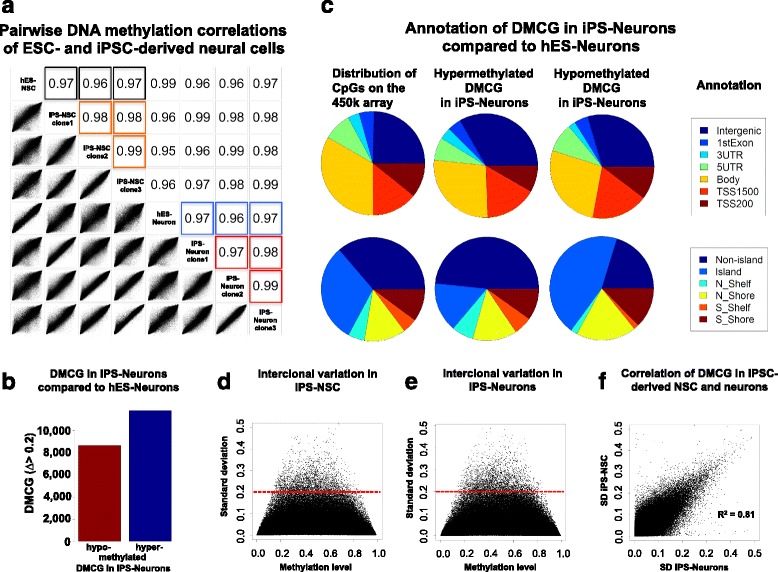
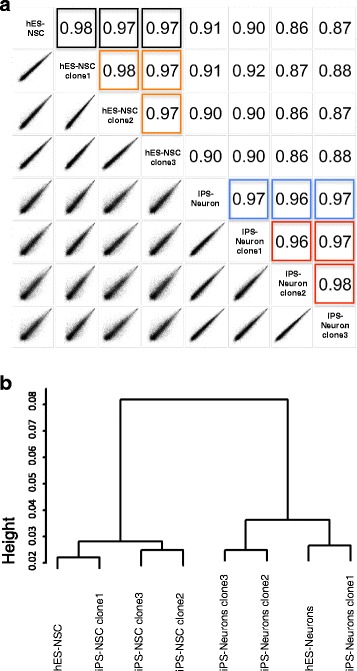
Background: Genetic predisposition and epigenetic alterations are both considered to contribute to sporadic neurodegenerative diseases (NDDs) such as Parkinson's disease (PD). Since cell reprogramming and the generation of induced pluripotent stem cells (iPSCs) are themselves associated with major epigenetic remodeling, it remains unclear to what extent iPSC-derived neurons lend themselves to model epigenetic disease-associated changes. A key question to be addressed in this context is whether iPSC-derived neurons exhibit epigenetic signatures typically observed in neurons derived from non-reprogrammed human embryonic stem cells (hESCs). Results: Here, we compare mature neurons derived from hESC and isogenic human iPSC generated from hESC-derived neural stem cells. Genome-wide 450 K-based DNA methylation and HT12v4 gene array expression analyses were complemented by a deep analysis of selected genes known to be involved in NDD. Our studies show that DNA methylation and gene expression patterns of isogenic hESC- and iPSC-derived neurons are markedly preserved on a genome-wide and single gene level. Conclusions: Overall, iPSC-derived neurons exhibit similar DNA methylation patterns compared to isogenic hESC-derived neurons. Further studies will be required to explore whether the epigenetic patterns observed in iPSC-derived neurons correspond to those detectable in native brain neurons.
Overview
The claims and statistics of this paper haven’t been checked yet.
Free: it reads the open-access text and checks the first 5 claims that cite a source we can check. Create a free account to check every claim.
Integrity signals
Registry
Cites
Statistics
Figures
Verification
Claims the paper makes
The claims and statistics of this paper haven’t been checked yet.
Free: it reads the open-access text and checks the first 5 claims that cite a source we can check. Create a free account to check every claim.
Claims other papers make about this one
Each is checked against this paper’s own text: does it say what the citing paper says it does?
The check wasn’t confident either way, so it gives no verdict — never disputed.
In the citing paper
“While cellular reprogramming reverts to the differentiated state of the cells, epigenetic memory and lineage-specific DNA methylation marks could affect the differentiation potential of the generated iPSC line [51,52,53].”
From Overcoming the Variability of iPSCs in the Manufacturing of Cell-Based Therapies (2023) · cites this paper as [51]
Experimental — accuracy not yet measured
Self-check
Percentages, sums and reported differences re-computed from the paper’s own numbers.
The self-check needs the paper’s full text.
Citations
Cites
α-Synuclein Locus Triplication Causes Parkinson's Disease
Singleton, A. B., Farrer, M., Johnson, J., Singleton, A., Hague, S., Kachergus, J., Hulihan, M., Peuralinna, T., Dutra, A., Nussbaum, R., et al. (2003) · Science · doi:10.1126/science.1090278 · Cited by 4,383 · cited 1×
“This is an important finding as elevated α-synuclein protein levels are directly linked to the development of PD [3, 4].”
BackgroundCausal relation between α-synuclein locus duplication as a cause of familial Parkinson's disease
Ibáñez, P., Bonnet, A.-M., Débarges, B., Lohmann, E., Tison, F., Agid, Y., Dürr, A., Brice, A., & Pollak, P. (2004) · The Lancet · doi:10.1016/s0140-6736(04)17104-3 · Cited by 1,044
RNA Toxicity from the ALS/FTD C9ORF72 Expansion Is Mitigated by Antisense Intervention
Donnelly, C. J., Zhang, P.-W., Pham, J. T., Haeusler, A. R., Mistry, N. A., Vidensky, S., Daley, E. L., Poth, E. M., Hoover, B., Fines, D. M., et al. (2013) · Neuron · doi:10.1016/j.neuron.2013.10.015 · Cited by 877
Kondo, T., Asai, M., Tsukita, K., Kutoku, Y., Ohsawa, Y., Sunada, Y., Imamura, K., Egawa, N., Yahata, N., Okita, K., et al. (2013) · Cell Stem Cell · doi:10.1016/j.stem.2013.01.009 · Cited by 741
Comprehensive analysis of DNA methylation data with RnBeads
Assenov, Y., Müller, F., Lutsik, P., Walter, J., Lengauer, T., & Bock, C. (2014) · Nature Methods · doi:10.1038/nmeth.3115 · Cited by 598 · cited 2×
“Genome-wide methylation raw data were pre-processed using R statistics software suites minfi and RnBeads [34] to extract the data, subtract the background, and to normalize the data using internal controls present on the chips.”
MethodEpigenetic mechanisms in neurological diseases: genes, syndromes, and therapies
Urdinguio, R. G., Sanchez-Mut, J. V., & Esteller, M. (2009) · The Lancet Neurology · doi:10.1016/s1474-4422(09)70262-5 · Cited by 582 · cited 13×
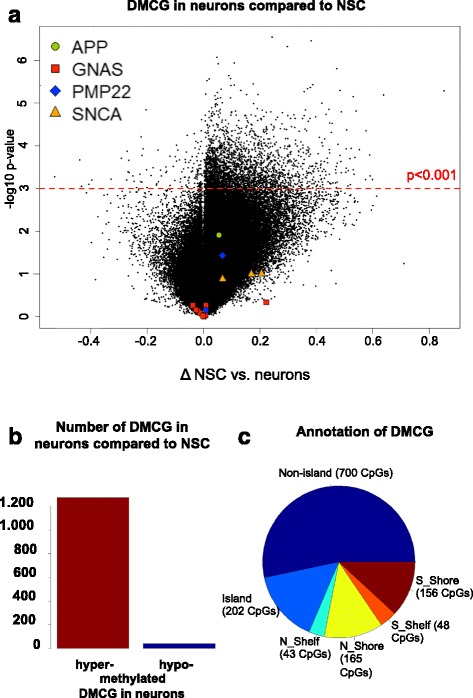
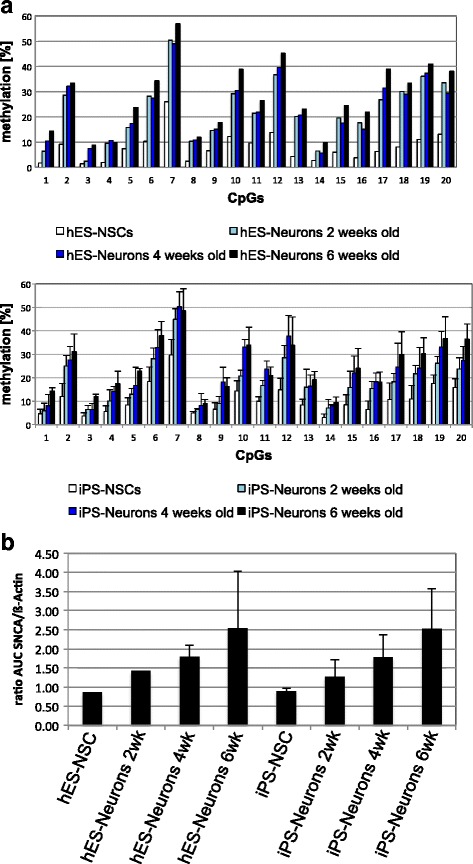
“DNA methylation alterations during neuronal differentiation of NSCs were observed specifically at the SNCA intron 1, but not for the other selected and analyzed NDD-associated genes.”
BackgroundInfluentialCooper, O., Seo, H., Andrabi, S., Guardia-Laguarta, C., Graziotto, J., Sundberg, M., McLean, J. R., Carrillo-Reid, L., Xie, Z., Osborn, T., et al. (2012) · Science Translational Medicine · doi:10.1126/scitranslmed.3003985 · Cited by 508
Koch, P., Opitz, T., Steinbeck, J. A., Ladewig, J., & Brüstle, O. (2009) · Proceedings of the National Academy of Sciences · doi:10.1073/pnas.0808387106 · Cited by 492 · cited 4×
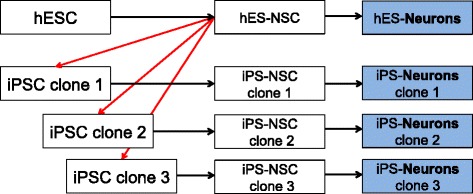
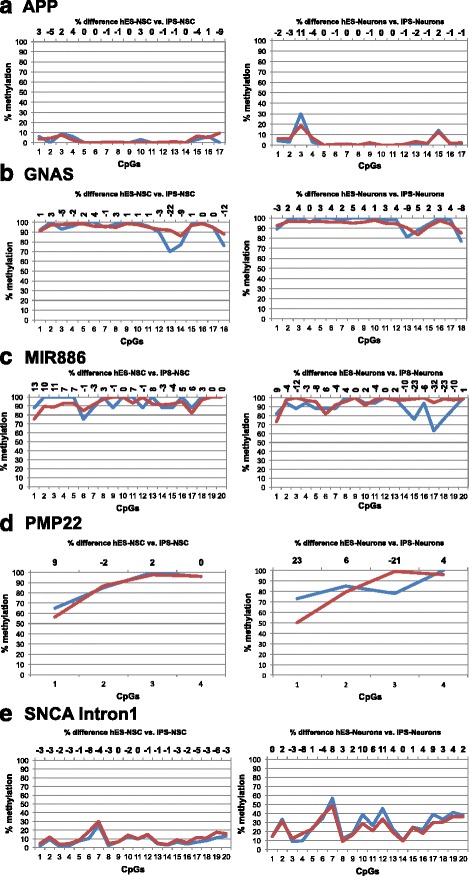
“Taken together, our data indicate that isogenic hESCderived and iPSC-derived neurons generated via a highly standardized intermediate NSC population [14] display similar DNA methylation and gene expression patterns.”
BackgroundMethodGuenther, M. G., Frampton, G. M., Soldner, F., Hockemeyer, D., Mitalipova, M., Jaenisch, R., & Young, R. A. (2010) · Cell Stem Cell · doi:10.1016/j.stem.2010.06.015 · Cited by 456 · cited 1×
“However, the reprogramming process itself is based on a major epigenetic “reset” with the resulting iPSC exhibiting epigenetic patterns closely related to those of ESC [24, 25].”
BackgroundJowaed, A., Schmitt, I., Kaut, O., & Wüllner, U. (2010) · The Journal of Neuroscience · doi:10.1523/jneurosci.6119-09.2010 · Cited by 434
Cited by
Volpato, V., & Webber, C. (2020) · Disease Models & Mechanisms · doi:10.1242/dmm.042317 · Cited by 379
Human in vitro models for understanding mechanisms of autism spectrum disorder
Gordon, A., & Geschwind, D. H. (2020) · Molecular Autism · doi:10.1186/s13229-020-00332-7 · Cited by 47
Maternal immune activation primes deficiencies in adult hippocampal neurogenesis
Couch, A. C. M., Berger, T., Hanger, B., Matulevičiūtė, R., Srivastava, D. P., Thuret, S., & Vernon, A. C. (2021) · Brain Behavior and Immunity · doi:10.1016/j.bbi.2021.07.021 · Cited by 47
“During differentiation, hiPSC-derived cells do undergo epigenetic remodelling (Bachmann et al., 2021; Su et al., 2021), and genome-wide DNA methylation patterns and gene expression patterns are preserved between neurons, derived from hiPSCs and human embryonic stem cells (de Boni, 2018).”
BackgroundExploring noncoding variants in genetic diseases: from detection to functional insights
Wu, K., Bu, F., Wu, Y., Zhang, G., Wang, X., He, S., Liu, M., Chen, R., & Yuan, H. (2024) · Journal of genetics and genomics/Journal of Genetics and Genomics · doi:10.1016/j.jgg.2024.01.001 · Cited by 41
The use of induced pluripotent stem cells in domestic animals: a narrative review
Scarfone, R. A., Pena, S. M., Russell, K. A., Betts, D. H., & Koch, T. G. (2020) · BMC Veterinary Research · doi:10.1186/s12917-020-02696-7 · Cited by 39
Contribution of astrocytes to familial risk and clinical manifestation of schizophrenia
Koskuvi, M., Lehtonen, Š., Trontti, K., Keuters, M., Wu, Y., Koivisto, H., Ludwig, A., Plotnikova, L., Virtanen, P., Räsänen, N., et al. (2021) · Glia · doi:10.1002/glia.24131 · Cited by 28
Moving pharmacoepigenetics tools for depression toward clinical use
Hack, L. M., Fries, G. R., Eyre, H. A., Bousman, C. A., Singh, A. B., Quevedo, J., John, V. P., Baune, B. T., & Dunlop, B. W. (2019) · Journal of Affective Disorders · doi:10.1016/j.jad.2019.02.009 · Cited by 33
Polit, L. D., Eidhof, I., McNeill, R. V., Warre-Cornish, K. M., Ohki, C. M. Y., Walter, N. M., Sala, C., Verpelli, C., Radtke, F., Galderisi, S., et al. (2023) · Neuroscience Applied · doi:10.1016/j.nsa.2023.101125 · Cited by 35
“However, late-passage cells show minimal bias to their differentiation potential, demonstrating that epigenetic memory is attenuated over multiple passages (de Boni et al., 2018; Efrat, 2020; Poetsch et al., 2022).”
BackgroundOvercoming the Variability of iPSCs in the Manufacturing of Cell-Based Therapies
Nath, S. C., Menendez, L., & Friedrich Ben-Nun, I. (2023) · International Journal of Molecular Sciences · doi:10.3390/ijms242316929 · Cited by 35
“While cellular reprogramming reverts to the differentiated state of the cells, epigenetic memory and lineage-specific DNA methylation marks could affect the differentiation potential of the generated iPSC line [51–53].”
BackgroundEpigenetic Clock and Circadian Rhythms in Stem Cell Aging and Rejuvenation
Samoilova, E. M., Викторович, Б. В., Ekusheva, E. V., Zhang, C., Troitskiy, A. V., & Baklaushev, V. P. (2021) · Journal of Personalized Medicine · doi:10.3390/jpm11111050 · Cited by 32
The Use of Induced Pluripotent Stem Cells as a Model for Developmental Eye Disorders
Eintracht, J., Toms, M., & Moosajee, M. (2020) · Frontiers in Cellular Neuroscience · doi:10.3389/fncel.2020.00265 · Cited by 29
“Further comparisons of hESC- and hiPSC-derived neurons revealed that epigenetic and gene expression profiles are remarkably similar (de Boni et al., 2018).”
BackgroundAtrazine exposure in zebrafish induces aberrant genome-wide methylation
Wang, S., Bryan, C., Xie, J., Zhao, H., Lin, L. F., Tai, J. A. C., Horzmann, K. A., Sánchez, O. F., Zhang, M., Freeman, J. L., et al. (2022) · Neurotoxicology and Teratology · doi:10.1016/j.ntt.2022.107091 · Cited by 29
Harnessing cellular aging in human stem cell models of amyotrophic lateral sclerosis
Ziff, O. J., & Patani, R. (2018) · Aging Cell · doi:10.1111/acel.12862 · Cited by 29
Khoo, T. S., Jamal, R. A., Ghani, N. A. A., Alauddin, H., Hussin, N. H., & Murad, N. A. A. (2020) · Stem Cell Reviews and Reports · doi:10.1007/s12015-020-09956-x · Cited by 30
“2% out of 485,000 CpGs tested were differentially methylated, indicating that the memory persisted even after differentiation into terminally differentiated cells [23].”
BackgroundNiemsiri, V., Rosenthal, S. B., Nievergelt, C. M., Maihofer, A. X., Marchetto, M. C., Santos, R., Shekhtman, T., Alliey‐Rodriguez, N., Anand, A., Balaraman, Y., et al. (2023) · Molecular Psychiatry · doi:10.1038/s41380-022-01909-9 · Cited by 29
Challenges with Cell-based Therapies for Type 1 Diabetes Mellitus
Siwakoti, P., Rennie, C., Huang, Y., Li, J. J., Tuch, B. E., McClements, L., & Xu, X. (2022) · Stem Cell Reviews and Reports · doi:10.1007/s12015-022-10482-1 · Cited by 29
Pre-clinical Investigation of Rett Syndrome Using Human Stem Cell-Based Disease Models
Haase, F., Coorey, B., Riley, L. G., Cantrill, L. C., Tam, P., & Gold, W. A. (2021) · Frontiers in Neuroscience · doi:10.3389/fnins.2021.698812 · Cited by 26
“Studies have also confirmed that the individual donor’s genetic background and differences in differentiation protocols might significantly influence the methylation landscape, affecting pluripotency between iPSCs from different donors (de Boni et al., 2018).”
BackgroundSerres‐Bérard, T. D., Pierre, M., Chahine, M., & Puymirat, J. (2021) · Neurobiology of Disease · doi:10.1016/j.nbd.2021.105532 · Cited by 24
Recent Findings on Therapeutic Cancer Vaccines: An Updated Review
Sheikhlary, S., Lopez, D. H., Moghimi, S., & Sun, B. (2024) · Biomolecules · doi:10.3390/biom14040503 · Cited by 26
Pluripotent Stem Cells for Modelling and Cell Therapy of Parkinson’s Disease
Lebedeva, O. S., & Lagarkova, M. A. (2018) · Biochemistry (Moscow) · doi:10.1134/s0006297918090067 · Cited by 19
Rovina, D., Castiglioni, E., Niro, F., Mallia, S., Pompilio, G., & Gowran, A. (2020) · International Journal of Molecular Sciences · doi:10.3390/ijms21196997 · Cited by 18
Human pluripotent stem cells: An alternative for 3D in vitro modelling of skin disease
Khurana, P., Kolundžić, N., Flohr, C., & Ilić, D. (2021) · Experimental Dermatology · doi:10.1111/exd.14358 · Cited by 22
Marvian, A. T., Strauß, T., Tang, Q., Tuck, B. J., Keeling, S., Rüdiger, D., Dizaji, N. M., Mohammad‐Beigi, H., Nuscher, B., Chakraborty, P., et al. (2024) · Molecular Neurodegeneration · doi:10.1186/s13024-024-00786-w · Cited by 18
DNA methylation patterns in human iPSC-derived sensory neuronal differentiation
Ankam, S., Rovini, A. M. F., Baheti, S., Hrstka, R. F., Wu, Y., Schmidt, K., Wang, H., Madigan, N. N., Koenig, L.-S., Stelzig, K. E., et al. (2019) · Epigenetics · doi:10.1080/15592294.2019.1625672 · Cited by 17
“iPSC-derived neuronal DNA methylation and gene expression appear to be robust and comparable to embryonic stem cell methodologies [10], further supporting the iPSC approach.”
ResultDiscovery of new epigenomics-based biomarkers and the early diagnosis of neurodegenerative diseases
Lee, D., Choi, Y. H., Seo, J., Kim, J. K., & Lee, S. B. (2020) · Ageing Research Reviews · doi:10.1016/j.arr.2020.101069 · Cited by 14
Schaffner, S. L., Wassouf, Z., Lázaro, D. F., Xylaki, M., Gladish, N., Lin, D. T. S., MacIsaac, J. L., Ramadori, K. E., Hentrich, T., Schulze-Hentrich, J. M., et al. (2022) · Human Molecular Genetics · doi:10.1093/hmg/ddac104 · Cited by 14
The application of brain organoid for drug discovery in mitochondrial diseases
Liang, K. X. (2024) · The International Journal of Biochemistry & Cell Biology · doi:10.1016/j.biocel.2024.106556 · Cited by 12
Cell Reprogramming Preserving Epigenetic Age: Advantages and Limitations
Samoylova, E. M., & Baklaushev, V. P. (2020) · Biochemistry (Moscow) · doi:10.1134/s0006297920090047 · Cited by 15
DNA Methylation of Intragenic CpG Islands are Required for Differentiation from iPSC to NPC
Choi, W., Hwang, J.-H., Cho, A., Lee, A., Lee, J. W., Jung, I., Cho, S., Kim, L. K., & Kim, Y.-J. (2020) · Stem Cell Reviews and Reports · doi:10.1007/s12015-020-10041-6 · Cited by 13
“Moreover, we generated whole genome bisulfite sequencing (WGBS) data with 10x sequencing depth to analyze DNA methylation at single base resolution to obtain more detailed information compared to the data from Illumina 450 K bead arrays used in most previous studies [27, 28].”
MethodInfluentialEpigenetic Analysis in Human Neurons: Considerations for Disease Modeling in PD
de Boni, L., & Wüllner, U. (2019) · Frontiers in Neuroscience · doi:10.3389/fnins.2019.00276 · Cited by 9
“Moreover, it has been shown that the genetic background and differentiation protocols have a high impact on the epigenetic landscape in iPSC-derived neurons (de Boni et al., 2018).”
BackgroundDecoding Parkinson's disease – iPSC-derived models in the OMICs era
Krach, F., Bogiongko, M., & Winner, B. (2020) · Molecular and Cellular Neuroscience · doi:10.1016/j.mcn.2020.103501 · Cited by 7
Li, H., Liu, Y., Liu, H., & Sun, X. S. (2020) · Frontiers in Genetics · doi:10.3389/fgene.2020.00230 · Cited by 8
Epigenetics as Diagnostic and Therapeutic Tool in Neurodegenerative Disorders
Wasim, R., Mahmood, T., Ahsan, F., Singh, A., & Ahmad, A. (2024) · BENTHAM SCIENCE PUBLISHERS eBooks · doi:10.2174/9789815238754124010011 · Cited by 5
Haubenreich, C., Lenz, M., Schuppert, A., Peitz, M., Koch, P., Zenke, M., & Brüstle, O. (2024) · International Journal of Molecular Sciences · doi:10.3390/ijms25063214 · Cited by 4
“The high similarity of autosomal methylation patterns, conversely, is in line with results from a previous study where we reported first data on this circular system with a focus on DNA methylation differences in isogenic ESC-and iPSC-derived neurons [27].”
ResultThe application of iPSCs in Parkinson’s disease
Nielsen, J. J. J., Lillethorup, T. P., Glud, A. N., Sørensen, J. C. H., & Orłowski, D. (2020) · Acta Neurobiologiae Experimentalis · doi:10.21307/ane-2020-024 · Cited by 3
“…(Freed et al., 2001; Olanow et al., 2003). iPSC‑technology circumvents some of these issues but patient‑specific iPSC produc‑ tion is expensive and additional safety issues regard‑ ing genetic and epigenetic variations as well as somatic cell use are associated with iPSCs (de Boni et al., 2018).”
BackgroundCapturing the epigenome: Differences among blood, saliva, and brain samples
Nishitani, S. (2022) · Elsevier eBooks · doi:10.1016/b978-0-12-823039-8.00006-x · Cited by 3
Maskell, K. G., Cook, A. L., King, A. E., Dickson, T. C., & Blizzard, C. L. (2026) · Lab on a Chip · doi:10.1039/d5lc00577a · Cited by 3
Safety Issues Related to Pluripotent Stem Cell-Based Therapies: Tumour Risk
Hillenius, S., Montilla‐Rojo, J., Eleveld, T. F., Salvatori, D. C. F., & Looijenga, L. H. J. (2023) · Springer eBooks · doi:10.1007/978-3-031-41943-0_18 · Cited by 2
Embracing change: Chemical modifications of nucleic acid bases as epigenetic marks
Nain, N., Khan, S., Phogat, P., Bansal, A., & Kukreti, S. (2025) · Next research. · doi:10.1016/j.nexres.2025.101292 · Cited by 1
Altered genome induced immune response of iPSCs
Osete, J. R., Álvarez-Palomo, B., & Edel, M. J. (2026) · Frontiers in Immunology · doi:10.3389/fimmu.2026.1751499 · Cited by 1
Gao, J., Zhang, W., HU, S., Zhang, L., Chen, T., Tang, B., Zhang, Z., & Hu, J. (2020) · All Life · doi:10.1080/26895293.2020.1808082 · Cited by 1
Alpha-synuclein induces epigenomic dysregulation of glutamate signaling and locomotor pathwaysPreprint
Schaffner, S. L., Wassouf, Z., Lázaro, D. F., Xylaki, M., Gladish, N., Lin, D. T. S., MacIsaac, J. L., Ramadori, K. E., Schulze-Hentrich, J. M., Outeiro, T. F., et al. (2021) · bioRxiv (Cold Spring Harbor Laboratory) · doi:10.1101/2021.06.12.448150 · Cited by 1
[Facioacromelic disostosis with metal retardation (author's transl)].
Cantú, J. M., Hernández, A., Nazará-Cazorla, Z., Pacheco, C., & Armendares, S. (1974) · PubMed
Transcription Factors in Brain Regeneration: A Potential Novel Therapeutic Target
Marzoog, B. A. (2023) · Current Drug Targets · doi:10.2174/0113894501279977231210170231
Streubel-Gallasch, L., & Seibler, P. (2024) · Elsevier eBooks · doi:10.1016/b978-0-443-13550-7.00011-2 · Cited by 1
Role of brain organoids in Rett syndrome
Mohan, G., & Vishnupriya, P. (2025) · Elsevier eBooks · doi:10.1016/b978-0-443-29898-1.00014-9 · Cited by 1
de Visser, C., Rahm, L., Lewerissa, E., Mijdam, R., Doornbos, C., Huang, J., O’Gorman, L., Badmus, F., van Karnebeek, C., Faber, C. G., et al. (2026) · bioRxiv (Cold Spring Harbor Laboratory) · doi:10.64898/2026.06.10.731279 · Cited by 1
Metadata
- Authors
- de Boni, L., Gasparoni, G., Haubenreich, C., Tierling, S., Schmitt, I., Peitz, M., Koch, P., Walter, J., Wüllner, U., & Brüstle, O.
- Affiliations
- Saarland University (DE)
- University of Bonn (DE)
- Corresponding author
- Walter, Jörn
- Wüllner, Ullrich
- Brüstle, Oliver
- ORCID
- Venue
- Clinical Epigenetics
- Published
- 2018-01-29
- Volume
- 10
- Issue
- 1
- Pages
- 13-13
- ISSN
- 1868-7075 (ISSN-L)
- 1868-7083
- PMC
- PMC5789607
- OpenAlex
- W2788963675
- Cited by
- 47
- References
- 36
- Citations by year
- 2026: 3 · 2025: 2 · 2024: 7 · 2023: 5 · 2022: 4 · 2021: 7 · 2020: 13 · 2019: 3 · 2018: 2
- FWCI
- 2.22
- Type
- journal article
- Language
- en
- Open access
- gold
- doi.org
- Licence
- cc-by
- Locations
- Clinical Epigenetics (publishedVersion, cc-by)
- PubMed Central (publishedVersion, cc-by)
- PubMed (publishedVersion)
- DOAJ (DOAJ: Directory of Open Access Journals) (submittedVersion, cc-by-sa)
- DZNE Pub (submittedVersion, cc-by)
- Funders
- BMBF (01-KU1216F, 01GNO813, 01ZX1314A)
- BONFOR
- DZNE
- BMBF/ANR (01KU1403B)
- Topics
- Life Sciences › Biochemistry, Genetics and Molecular Biology › Molecular Biology › Pluripotent Stem Cells Research
- Life Sciences › Biochemistry, Genetics and Molecular Biology › Molecular Biology › Epigenetics and DNA Methylation
- Life Sciences › Biochemistry, Genetics and Molecular Biology › Genetics › Genetic Syndromes and Imprinting
- Keywords
- DNA methylation, iPSC-derived neurons, neurodegenerative diseases, Parkinson's disease, epigenetic remodeling, cellular reprogramming, isogenic cell lines, gene expression, disease modeling, neural stem cells
- MeSH terms
- Human Embryonic Stem Cells, Cell Differentiation, Cells, Cultured, Humans, Neurons, Sequence Analysis, DNA, DNA Methylation, Oligonucleotide Array Sequence Analysis, Gene Expression Profiling, Epigenesis, Genetic, alpha-Synuclein, Induced Pluripotent Stem Cells
About these checks
Registry, retraction, Cites and statistics results are computed, not judged, with one exception: a printed reference that no index lists is read once by a model before it counts as a citation error. Claims are extracted by a model and kept only when their quote appears verbatim in the text; each cited source is then checked, with a model’s help, for whether it says what the claim relies on. Those verdicts can be wrong — read the claim’s quote and the cited source before relying on one.
Statistics and arithmetic are recomputed, not judged.
Confidence bands are shown only for fields calibrated on our annotated test set. None is calibrated yet, so no band is shown.
What counts as a claim ›How we measure confidence ›How we check this ›
Are you an author, or do you see a problem with this page? Request a review
Data sources
Bibliographic data: Semantic Scholar, OpenAlex, Crossref.
Contains information from the Semantic Scholar Academic Graph Datasets, made available under the ODC Attribution License (ODC-BY 1.0).
Semantic Scholar’s data is described in: Kinney, R., et al. (2023). The Semantic Scholar Open Data Platform. arXiv:2301.10140.
