

The DOI matches its Crossref record; 76 of the 77 references it cites were found in a registry or an index.
Evidence for benefit of statins to modify cognitive decline and risk in Alzheimer’s disease
Open accessAbstract
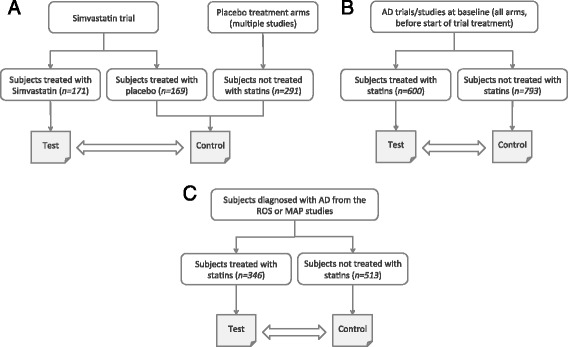
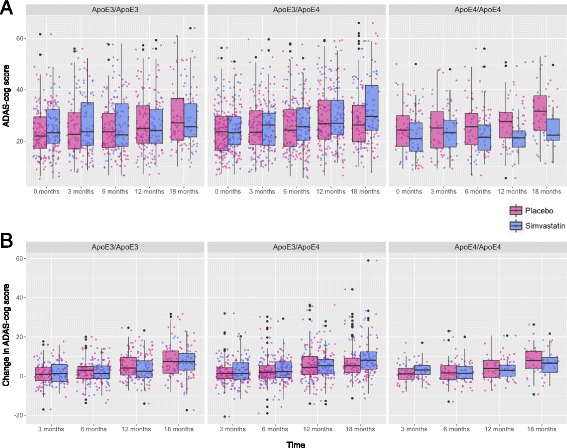
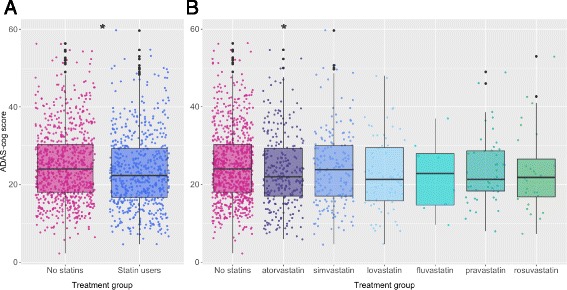
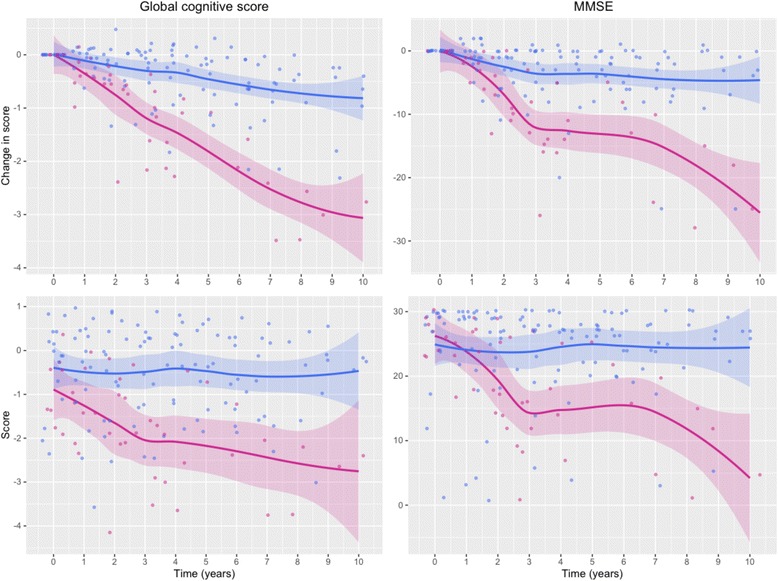
BACKGROUND: Despite substantial research and development investment in Alzheimer's disease (AD), effective therapeutics remain elusive. Significant emerging evidence has linked cholesterol, β-amyloid and AD, and several studies have shown a reduced risk for AD and dementia in populations treated with statins. However, while some clinical trials evaluating statins in general AD populations have been conducted, these resulted in no significant therapeutic benefit. By focusing on subgroups of the AD population, it may be possible to detect endotypes responsive to statin therapy. METHODS: Here we investigate the possible protective and therapeutic effect of statins in AD through the analysis of datasets of integrated clinical trials, and prospective observational studies. RESULTS: Re-analysis of AD patient-level data from failed clinical trials suggested by trend that use of simvastatin may slow the progression of cognitive decline, and to a greater extent in ApoE4 homozygotes. Evaluation of continual long-term use of various statins, in participants from multiple studies at baseline, revealed better cognitive performance in statin users. These findings were supported in an additional, observational cohort where the incidence of AD was significantly lower in statin users, and ApoE4/ApoE4-genotyped AD patients treated with statins showed better cognitive function over the course of 10-year follow-up. CONCLUSIONS: These results indicate that the use of statins may benefit all AD patients with potentially greater therapeutic efficacy in those homozygous for ApoE4.
Overview
The claims and statistics of this paper haven’t been checked yet.
Run the check — free, no account needed. It reads the open-access text and checks the sources it cites.
Integrity signals
Registry
Cites
Statistics
Figures
Verification
Claims the paper makes
The claims and statistics of this paper haven’t been checked yet.
Run the check — free, no account needed. It reads the open-access text and checks the sources it cites.
Claims other papers make about this one
Each is checked against this paper’s own text: does it say what the citing paper says it does?
The source backs part of the claim, not all of it — or backs it for a different population, condition or comparison.
In the citing paper
“As lowering cholesterol in APOE4 carriers may decrease the risk of dementia based on other published literature [27, 28, 29, 30, 31, 32]”
From Blood PCSK9 Impacts Alzheimer's Disease Risk in an APOE Genotype‐Dependent Manner: A Prospective Cohort Study (2026) · cites this paper as [30]
Experimental — accuracy not yet measured
Self-check
Percentages, sums and reported differences re-computed from the paper’s own numbers.
The self-check needs the paper’s full text.
Citations
Cites
Folstein, M. F., Folstein, S. E., & McHugh, P. R. (1975) · Journal of Psychiatric Research · doi:10.1016/0022-3956(75)90026-6 · Cited by 88,282
Fitting Linear Mixed-Effects Models Using lme4
Bates, D., Mächler, M., Bolker, B., & Walker, S. (2015) · Journal of Statistical Software · doi:10.18637/jss.v067.i01 · Cited by 86,835
McKhann, G., Drachman, D., Folstein, M., Katzman, R., Price, D., & Stadlan, E. M. (1984) · Neurology · doi:10.1212/wnl.34.7.939 · Cited by 27,915
Hirono, N., Mori, E., Ikejiri, Y., Imamura, T., Shimomura, T., Hashimoto, M., Yamashita, H., & Ikeda, M. (1997) · PubMed · Cited by 21,012
Kok, J. S., Berg, I. J., & Scherder, E. J. A. (2013) · Dementia and Geriatric Cognitive Disorders Extra · doi:10.1159/000353441 · Cited by 20,589
Older Adults' Reasons for Using Technology while Aging in Place
Peek, S. T. M., Luijkx, K. G., Rijnaard, M. D., Nieboer, M. E., van der Voort, C. S., Aarts, S., van Hoof, J., Vrijhoef, H. J., & Wouters, E. (2015) · Gerontology · doi:10.1159/000430949 · Cited by 19,852
Sensitivity and False Alarm Rate of a Fall Sensor in Long-Term Fall Detection in the Elderly
Kangas, M., Korpelainen, R., Vikman, I., Nyberg, L., & Jämsä, T. J. (2014) · Gerontology · doi:10.1159/000362720 · Cited by 19,007
The Clinical Dementia Rating (CDR): Current version and scoring rules
Morris, J. C. (1993) · Neurology · doi:10.1212/wnl.43.11.2412-a · Cited by 9,882
2016 Alzheimer's disease facts and figures
Alzheimer's Association (2016) · Alzheimer's & Dementia · doi:10.1016/j.jalz.2016.03.001 · Cited by 5,069
Research works printed but not linked: 1
- National Institute on Aging. Alzheimer's Disease Progress Report 2014–2015: Advancing Research Toward a Cure. Bethesda: National Institute on Aging; 2015.
Cited by
Sorted by citations
Lipids and Alzheimer’s Disease
Kao, Y.-C., Ho, P.-C., Tu, Y.-K., Jou, I.-M., & Tsai, K.-J. (2020) · International Journal of Molecular Sciences · doi:10.3390/ijms21041505 · Cited by 485
Yin, F. (2023) · The FEBS Journal · doi:10.1111/febs.16344 · Cited by 441
Sharma, P., Srivastava, P., Seth, A., Tripathi, P. N., Banerjee, A. G., & Shrivastava, S. K. (2019) · Progress in Neurobiology · doi:10.1016/j.pneurobio.2018.12.006 · Cited by 331
Vascular Cognitive Impairment (VCI)
Rundek, T., Tolea, M. I., Ariko, T., Fagerli, E. A., & Camargo, C. J. (2021) · Neurotherapeutics · doi:10.1007/s13311-021-01170-y · Cited by 347
Apolipoprotein E in lipid metabolism and neurodegenerative disease
Yang, L. G., March, Z. M., Stephenson, R. A., & Narayan, P. S. (2023) · Trends in Endocrinology & Metabolism · doi:10.1016/j.tem.2023.05.002 · Cited by 286
Metadata
- Authors
- Geifman, N., Brinton, R. D., Kennedy, R. E., Schneider, L. S., & Butte, A. J.
- Affiliations
- University of Manchester (GB)
- University of Alabama at Birmingham (US)
- University of Southern California (US)
- University of California, San Francisco (US)
- Corresponding author
- Geifman, Nophar
- Venue
- Alzheimer's Research & Therapy
- Published
- 2017-02-17
- Volume
- 9
- Issue
- 1
- Pages
- 10-10
- ISSN
- 1758-9193 (ISSN-L)
- PMC
- PMC5316146
- OpenAlex
- W2588146368
- Cited by
- 191
- References
- 77
- Citations by year
- 2026: 9 · 2025: 13 · 2024: 20 · 2023: 19 · 2022: 30 · 2021: 22 · 2020: 24 · 2019: 18 · 2018: 28 · 2017: 8
- FWCI
- 2.62
- Type
- journal article
- Language
- en
- Open access
- gold
- doi.org
- Locations
- Alzheimer s Research & Therapy (publishedVersion, cc-by)
- Europe PMC (PubMed Central) (publishedVersion, cc-by)
- PubMed Central (publishedVersion, cc-by)
- PubMed (publishedVersion)
- UA Campus Repository (The University of Arizona) (acceptedVersion, cc-by)
- eScholarship (California Digital Library) (submittedVersion)
- eScholarship (California Digital Library) (submittedVersion, cc-by)
- Research Explorer (The University of Manchester) (submittedVersion, other-oa)
- Funders
- National Institute on Aging (R34 AG049652)
- James H. Zumberge Faculty Research and Innovation Fund at the University of Southern California (NA)
- National Institutes of Health (R01 AG037561)
- Topics
- Life Sciences › Neuroscience › Cellular and Molecular Neuroscience › Alzheimer's disease research and treatments
- Health Sciences › Medicine › Psychiatry and Mental health › Dementia and Cognitive Impairment Research
- Health Sciences › Medicine › Cardiology and Cardiovascular Medicine › Lipoproteins and Cardiovascular Health
- Keywords
- statins, Alzheimer's disease, cognitive decline, simvastatin, APOE ε4, cholesterol, amyloid-beta, dementia risk, endotypes, statin therapy response, long-term statin use
- MeSH terms
- Alzheimer Disease, Humans, Nootropic Agents, Hydroxymethylglutaryl-CoA Reductase Inhibitors, Cognitive Dysfunction
About these checks
Registry, retraction, Cites and statistics results are computed, not judged, with one exception: a printed reference that no index lists is read once by a model before it counts as a citation error. Claims are extracted by a model and kept only when their quote appears verbatim in the text; each cited source is then checked, with a model’s help, for whether it says what the claim relies on. Those verdicts can be wrong — read the claim’s quote and the cited source before relying on one.
Statistics and arithmetic are recomputed, not judged.
Confidence bands are shown only for fields calibrated on our annotated test set. None is calibrated yet, so no band is shown.
What counts as a claim ›How we measure confidence ›How we check this ›
Are you an author, or do you see a problem with this page? Request a review
