

GPS driving: a digital biomarker for preclinical Alzheimer disease
Open accessThe DOI matches its Crossref record; 41 of the 41 references it cites were found in a registry or an index.
Abstract
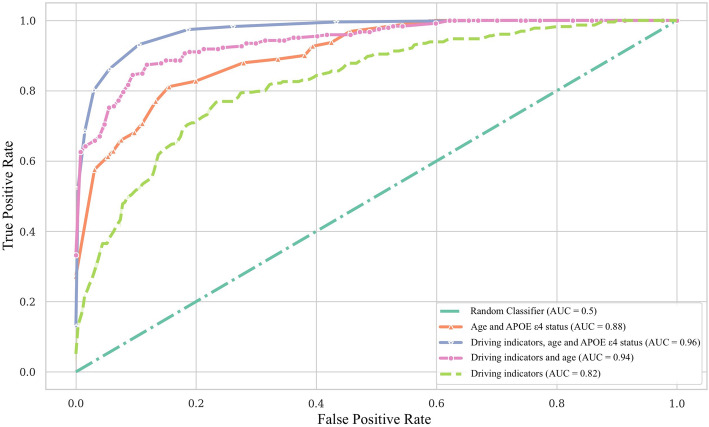
Background: Alzheimer disease (AD) is the most common cause of dementia. Preclinical AD is the period during which early AD brain changes are present but cognitive symptoms have not yet manifest. The presence of AD brain changes can be ascertained by molecular biomarkers obtained via imaging and lumbar puncture. However, the use of these methods is limited by cost, acceptability, and availability. The preclinical stage of AD may have a subtle functional signature, which can impact complex behaviours such as driving. The objective of the present study was to evaluate the ability of in-vehicle GPS data loggers to distinguish cognitively normal older drivers with preclinical AD from those without preclinical AD using machine learning methods. Methods: We followed naturalistic driving in cognitively normal older drivers for 1 year with a commercial in-vehicle GPS data logger. The cohort included n = 64 individuals with and n = 75 without preclinical AD, as determined by cerebrospinal fluid biomarkers. Four Random Forest (RF) models were trained to detect preclinical AD. RF Gini index was used to identify the strongest predictors of preclinical AD. Results: The F1 score of the RF models for identifying preclinical AD was 0.85 using APOE ε4 status and age only, 0.82 using GPS-based driving indicators only, 0.88 using age and driving indicators, and 0.91 using age,APOE ε4 status, and driving. The area under the receiver operating curve for the final model was 0.96. Conclusion: The findings suggest that GPS driving may serve as an effective and accurate digital biomarker for identifying preclinical AD among older adults.
Overview
The claims and statistics of this paper haven’t been checked yet.
Free: it reads the open-access text and checks the first 5 claims that cite a source we can check. Create a free account to check every claim.
Integrity signals
Registry
Cites
Statistics
Figures
Verification
Claims the paper makes
The claims and statistics of this paper haven’t been checked yet.
Free: it reads the open-access text and checks the first 5 claims that cite a source we can check. Create a free account to check every claim.
Claims other papers make about this one
Each is checked against this paper’s own text: does it say what the citing paper says it does?
The source backs part of the claim, not all of it — or backs it for a different population, condition or comparison.
In the citing paper
“While classification tasks are common in automated speech analysis in neurodegenerative research, several studies have employed regression models to predict continuous cognitive outcomes (e.g., MMSE)97,98 or to explore relationships with imaging and biomarker measures.99–101”
From Review of Artificial Intelligence for Clinical Use in Alzheimer's Disease and Related Dementias (2026) · cites this paper as [101]
Experimental — accuracy not yet measuredThe cited source says what the claim attributes to it.
In the citing paper
“Using the data from 75 without and 64 people with preclinical AD, the authors built a random forest classifier for identifying preclinical AD patients with F1 score as 0.82.”
From Human-centred artificial intelligence for mobile health sensing: challenges and opportunities (2023) · cites this paper as [114]
In the citing paper
“Features extracted from driving trajectories are found to have potential to become digital biomarkers for Alzheimer’s disease (AD) [114].”
From Human-centred artificial intelligence for mobile health sensing: challenges and opportunities (2023) · cites this paper as [114]
In the citing paper
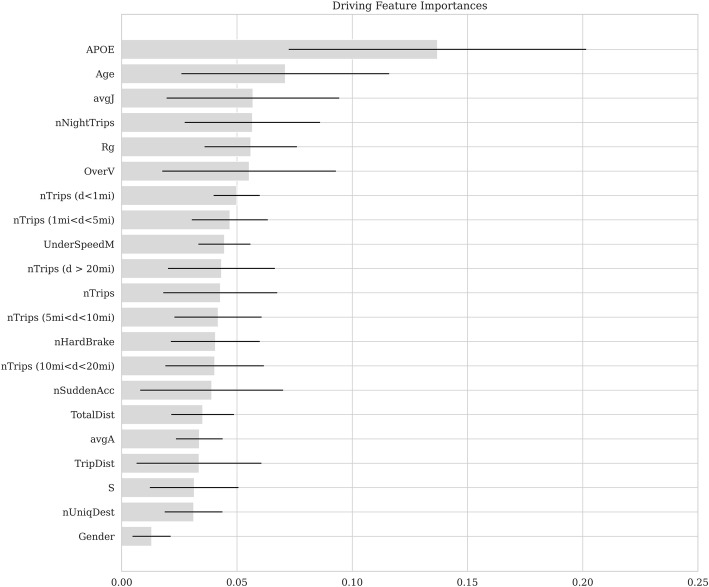
“The most important driving based features were average jerk, number of night trips and radius of gyration.”
From Human-centred artificial intelligence for mobile health sensing: challenges and opportunities (2023) · cites this paper as [114]
Self-check
Percentages, sums and reported differences re-computed from the paper’s own numbers.
The self-check needs the paper’s full text.
Citations
Cites
The Clinical Dementia Rating (CDR): Current version and scoring rules
Morris, J. C. (1993) · Neurology · doi:10.1212/wnl.43.11.2412-a · Cited by 9,882
Self-citationUnderstanding individual human mobility patterns
González, M. C., Hidalgo, C. A., & Barabási, A.-L. (2008) · Nature · doi:10.1038/nature06958 · Cited by 6,059 · cited 1×
“Radius of gyration Rg Typical distance travelled by an individual, computed using [29]:”
MethodHypothetical model of dynamic biomarkers of the Alzheimer's pathological cascade
Jack, C. R., Knopman, D. S., Jagust, W. J., Shaw, L. M., Aisen, P. S., Weiner, M. W., Petersen, R. C., & Trojanowski, J. Q. (2010) · The Lancet Neurology · doi:10.1016/s1474-4422(09)70299-6 · Cited by 4,806 · cited 1×
“Because the decline in CSF Aβ42 is one of the earliest pathological events in AD [41], preceding the appearance of dementia symptoms by up to 20 years, we used Aβ42/Aβ40 as our marker of neuropathological AD among our cognitively normal participants.”
Method2020 Alzheimer's disease facts and figures
(2020) · Alzheimer's & Dementia · doi:10.1002/alz.12068 · Cited by 2,353
2018 Alzheimer's disease facts and figures
Alzheimer's Association (2018) · Alzheimer's & Dementia · doi:10.1016/j.jalz.2018.02.001 · Cited by 1,912
Inverse relation between in vivo amyloid imaging load and cerebrospinal fluid Aβ 42 in humans
Fagan, A. M., Mintun, M. A., Mach, R. H., Lee, S., Dence, C. S., Shah, A. R., LaRossa, G. N., Spinner, M. L., Klunk, W. E., Mathis, C. A., et al. (2006) · Annals of Neurology · doi:10.1002/ana.20730 · Cited by 1,246
Self-citationHigh-precision plasma β-amyloid 42/40 predicts current and future brain amyloidosis
Schindler, S. E., Bollinger, J. G., Ovod, V., Mawuenyega, K. G., Li, Y., Gordon, B. A., Holtzman, D. M., Morris, J. C., Benzinger, T. L. S., Xiong, C., et al. (2019) · Neurology · doi:10.1212/wnl.0000000000008081 · Cited by 885
Self-citationRandom Forest for Bioinformatics
Qi, Y. (2012) · Ensemble Machine Learning · doi:10.1007/978-1-4419-9326-7_11 · Cited by 754 · cited 1×
“RFs were selected because they have proven to outperform classical machine learning models in terms of accuracy and are more interpretable than deep learning models [32].”
MethodSpatial navigation deficits — overlooked cognitive marker for preclinical Alzheimer disease?
Coughlan, G., Laczó, J., Hort, J., Minihane, A.-M., & Hornberger, M. (2018) · Nature Reviews Neurology · doi:10.1038/s41582-018-0031-x · Cited by 500 · cited 2×
“A few studies have explored the utility of spatial navigation deficits as a marker for early and preclinical AD and discussed its high specificity for identifying at-risk individuals [13, 14].”
BackgroundData mining in the Life Sciences with Random Forest: a walk in the park or lost in the jungle?
Touw, W. G., Bayjanov, J. R., Overmars, L., Backus, L., Boekhorst, J., Wels, M., & van Hijum, S. A. F. T. (2013) · Briefings in Bioinformatics · doi:10.1093/bib/bbs034 · Cited by 453 · cited 1×
“In addition, they are effective at handling high-dimensional data and are robust to outliers [33].”
Background
Cited by
Explainable AI-based Alzheimer’s prediction and management using multimodal data
Jahan, S., Abu Taher, K., Kaiser, M. S., Mahmud, M., Rahman, M. S., Hosen, A. S. M. S., & Ra, I.-H. (2023) · PLOS ONE · doi:10.1371/journal.pone.0294253 · Cited by 122
“If an Alzheimer’s patient goes missing, this GPS tracker will assist to locate him [30]. h. Mini speaker: A mini speaker will assist in providing hourly reminders to the Alzheimer’s patient.”
BackgroundFord, E. M., Milne, R., & Curlewis, K. (2023) · Wiley Interdisciplinary Reviews Data Mining and Knowledge Discovery · doi:10.1002/widm.1492 · Cited by 97
“These differences could potentially be used, against an individual baseline, to detect the early stages of dementia (Bayat et al., 2021).”
BackgroundStatistical Foundations of Actuarial Learning and its Applications
Wüthrich, M. V., & Merz, M. (2023) · Springer Actuarial · doi:10.1007/978-3-031-12409-9 · Cited by 95
Harris, C., Tang, Y., Birnbaum, E., Cherian, C., Mendhe, D., & Chen, M. H. (2024) · Archives of Clinical Neuropsychology · doi:10.1093/arclin/acae016 · Cited by 95
Ouyang, X., Shuai, X., Li, Y., Pan, L., Zhang, X., Fu, H., Cheng, S., Wang, X., Cao, S., Xin, J., et al. (2024) · ACM Annual International Conference on Mobile Computing and Networking (MobiCom) · doi:10.1145/3636534.3649370 · Cited by 86
“Recently, understanding AD using mobile sensor-based digital biomarkers has attracted tremendous attention [12, 17, 27, 29, 35].”
BackgroundAlzheimer's disease digital biomarkers multidimensional landscape and AI model scoping review
Qi, W., Zhu, X., Wang, B., Shi, Y., Dong, C., Shen, S., Li, J., Zhang, K., He, Y., Zhao, M., et al. (2025) · npj Digital Medicine · doi:10.1038/s41746-025-01640-z · Cited by 78
Breasail, M. Ó., Biswas, B., Smith, M. D., Mazhar, M. K. A., Tenison, E., Cullen, A., Lithander, F. E., Roudaut, A., & Henderson, E. J. (2021) · Sensors · doi:10.3390/s21248261 · Cited by 75
Driving Performance in Older Adults: Current Measures, Findings, and Implications for Roadway Safety
Toups, R., Chirles, T. J., Ehsani, J. P., Michael, J. P., Bernstein, J. P. K., Calamia, M. R., Parsons, T. D., Carr, D. B., & Keller, J. N. (2022) · Innovation in Aging · doi:10.1093/geroni/igab051 · Cited by 56
Wearable sensors and features for diagnosis of neurodegenerative diseases: A systematic review
Zhao, H., Cao, J., Xie, J., Liao, W., Lei, Y., Cao, H., Qu, Q., & Bowen, C. (2023) · Digital Health · doi:10.1177/20552076231173569 · Cited by 57
“Moreover, GPS driving may serve effectively for identifying preclinical AD among older adults.(113)”
BackgroundGoing round in circles—The Papez circuit in Alzheimer's disease
Forno, G., Lladó, A., & Hornberger, M. (2021) · European Journal of Neuroscience · doi:10.1111/ejn.15494 · Cited by 52
Song, J., Cho, E., Lee, H., Lee, S., Kim, S., & Kim, J. (2025) · Biosensors · doi:10.3390/bios15020102 · Cited by 47
“Additionally, Bayat et al. suggested GPS-based driving behavior as a digital biomarker for preclinical AD and conducted integrated prediction results of the proposed digital biomarker and APOE status [104].”
What can we learn from telematics car driving data: A survey
Gao, G., Meng, S., & Wüthrich, M. V. (2022) · Insurance Mathematics and Economics · doi:10.1016/j.insmatheco.2022.02.004 · Cited by 44
Affective Computing for Late-Life Mood and Cognitive Disorders
Smith, E., Storch, E. A., Vahia, I. V., Wong, S. T. C., Lavretsky, H., Cummings, J. L., & Eyre, H. A. (2021) · Frontiers in Psychiatry · doi:10.3389/fpsyt.2021.782183 · Cited by 40
“The receiver operating curve (ROC) area under the curve (AUC) for predicting preclinical AD from driving features alone was 0.82, with the addition of age alone increased to 0.94, and with the additions of age and APOE ε 4 status increased to 0.96 (113).”
BackgroundInfluentialČepukaitytė, G., Newton, C., & Chan, D. (2024) · Alzheimer s & Dementia · doi:10.1002/alz.13716 · Cited by 40
Ensemble feature selection with data-driven thresholding for Alzheimer's disease biomarker discovery
Spooner, A., Mohammadi, G., Sachdev, P. S., Brodaty, H., Sowmya, A., & Initiative, A. D. N. (2023) · BMC Bioinformatics · doi:10.1186/s12859-022-05132-9 · Cited by 38
“Informant subjective cognitive complaints – total score Increasingly being recognised as predictors of progression to mild cognitive impairment and dementia [53] Participant subjective cognitive complaints – total score Composite variable encoding the number of major and minor at fault motor vehicle accidents in the p…”
Estimating the effect of physical activity on cognitive function within the UK Biobank cohort
Campbell, T., & Cullen, B. (2023) · International Journal of Epidemiology · doi:10.1093/ije/dyad009 · Cited by 32
Human-centred artificial intelligence for mobile health sensing: challenges and opportunities
Dang, T., Spathis, D., Ghosh, A., & Mascolo, C. (2023) · Royal Society Open Science · doi:10.1098/rsos.230806 · Cited by 30
“Features extracted from driving trajectories are found to have potential to become digital biomarkers for Alzheimer ’ s disease (AD) [114].”
BackgroundLentzen, M., Vairavan, S., Muurling, M., Alepopoulos, V., Atreya, A., Boada, M., de Boer, C., Conde, P., Curcic, J., Frisoni, G. B., et al. (2025) · Alzheimer s Research & Therapy · doi:10.1186/s13195-025-01675-0 · Cited by 24
“Bayat et al. used the driver’s age and derived metrics from an in-vehicle GPS logger to identify patients with preclinical AD [14].”
Harms, R., Ferrari, A., Meier, I. B., Martinková, J., Santus, E., Marino, N., Cirillo, D., Mellino, S., Catuara-Solarz, S., Tarnanas, I., et al. (2022) · The EPMA Journal · doi:10.1007/s13167-022-00284-3 · Cited by 19
“Moreover, they often exhibit higher sensitivity than traditional clinically used methods, enabling early predictive diagnostics by identifying patients at risk of overt clinical disease [15].”
BackgroundNeuropsychological Correlates of Changes in Driving Behavior Among Clinically Healthy Older Adults
Aschenbrenner, A. J., Murphy, S. A., Doherty, J. M., Johnson, A. M., Bayat, S., Walker, A. I. B., Peña, Y., Hassenstab, J. J., Morris, J. C., & Babulal, G. M. (2022) · The Journals of Gerontology Series B · doi:10.1093/geronb/gbac101 · Cited by 23
Self-citationQi, W., Zhu, X., He, D., Wang, B., Cao, S., Dong, C., Li, Y., Chen, Y., Wang, B., Shi, Y., et al. (2024) · Journal of Medical Internet Research · doi:10.2196/57830 · Cited by 22
“In the realm of digital biomarkers, Bayat et al [124] achieved an accuracy rate of 89% in predicting preclinical AD by analyzing natural driving GPS data and building a random forest model.”
In-Vehicle Sensing and Data Analysis for Older Drivers with Mild Cognitive Impairment
Moshfeghi, S., Jan, M. T., Conniff, J., Ghoreishi, S. G. A., Jang, J., Furht, B., Yang, K., Rosselli, M., Newman, D., Tappen, R. M., et al. (2023) · IEEE International Conference on Smart Communities: Improving Quality of Life using AI, Robotics and IoT (HONET) · doi:10.1109/honet59747.2023.10374639 · Cited by 21
“Some machine learning models could predict the most critical diagnostic factors, such as Alzheimer’s disease genetics and individual and behavioral patterns for older drivers [24].”
BackgroundDeterminants of physical activity engagement in older adults
Stojanovic, M., Babulal, G. M., & Head, D. M. (2023) · Journal of Behavioral Medicine · doi:10.1007/s10865-023-00404-y · Cited by 21
“(e.g., Bayat et al., 2021 ; Roe et al., 2017 ).”
Self-citationDigital Biomarkers for Neurodegenerative Disease
Erickson, C. M., Wexler, A., & Largent, E. A. (2025) · JAMA Neurology · doi:10.1001/jamaneurol.2024.3533 · Cited by 19
Doherty, J. M., Roe, C. M., Murphy, S. A., Johnson, A. M., Fleischer, E., Toedebusch, C. D., Redrick, T., Freund, D., Morris, J. C., Schindler, S. E., et al. (2022) · SLEEP · doi:10.1093/sleep/zsac070 · Cited by 18
Self-citationConsensus on rapid screening for prodromal Alzheimer’s disease in China
Huang, L., Li, Q., Lu, Y., Pan, F., Cui, L., Wang, Y., Miao, Y., Chen, T., Li, Y., Wu, J., et al. (2024) · General Psychiatry · doi:10.1136/gpsych-2023-101310 · Cited by 17
Gregory, S., Saunders, S., & Ritchie, C. W. (2022) · The Lancet Healthy Longevity · doi:10.1016/s2666-7568(22)00219-7 · Cited by 18
“26 Speech is also emerging as an important biomarker, with changes to elaboration and attribution associated with symptomatic Alzheimer’s disease.”
BackgroundDi, X. S., Yin, Y., Fu, Y., Mo, Z., Lo, S., DiGuiseppi, C. G., Eby, D. W., Hill, L. L., Mielenz, T. J., Strogatz, D. S., et al. (2023) · Artificial Intelligence in Medicine · doi:10.1016/j.artmed.2023.102510 · Cited by 18
Paolillo, E. W., Casaletto, K. B., Clark, A. L., Taylor, J. C., Heuer, H. W., Wise, A. B., Dhanam, S., Sanderson-Cimino, M., Saloner, R., Kramer, J. H., et al. (2024) · JMIR Aging · doi:10.2196/52831 · Cited by 16
(2023) · doi:10.2196/preprints.52831 · Cited by 16
Derafshi, R., Babulal, G. M., & Bayat, S. (2024) · Scientific Reports · doi:10.1038/s41598-024-63663-y · Cited by 15
Self-citationChen, C., Brown, D. C., Al-Hammadi, N. J., Bayat, S., Dickerson, A. E., Vrkljan, B. H., Blake, M., Zhu, Y., Trani, J., Lenze, E. J., et al. (2025) · npj Digital Medicine · doi:10.1038/s41746-025-01500-w · Cited by 15
Self-citationA cognitive–motor framework for spatial navigation in aging and early-stage Alzheimer's disease
Hill, P. F., & Ekstrom, A. D. (2025) · Cortex · doi:10.1016/j.cortex.2025.02.003 · Cited by 14
Novel approaches to measuring neurocognitive functions in Alzheimer's disease clinical trials
Carlson, S., Kim, H., Devanand, D. P., & Goldberg, T. E. (2022) · Current Opinion in Neurology · doi:10.1097/wco.0000000000001041 · Cited by 14
Doherty, J. M., Murphy, S. A., Bayat, S., Wisch, J. K., Johnson, A. M., Walker, A. I. B., Schindler, S. E., Ances, B. M., Morris, J. C., & Babulal, G. M. (2022) · Alzheimer s & Dementia · doi:10.1002/alz.12852 · Cited by 14
Self-citationHiPerMovelets: high-performance movelet extraction for trajectory classification
Portela, T. T., Carvalho, J. T., & Bogorny, V. (2022) · International Journal of Geographical Information Systems · doi:10.1080/13658816.2021.2018593 · Cited by 13
CDK10, CDK11, FOXO1, and FOXO3 Gene Expression in Alzheimer’s Disease Encephalic Samples
Fredi, B. M., de Lábio, R. W., Rasmussen, L. T., Chagas, E. F. B., Chen, E., Turecki, G., Smith, M. D. A. C., & Payão, S. L. M. (2023) · Cellular and Molecular Neurobiology · doi:10.1007/s10571-023-01341-9 · Cited by 13
DuBord, A. Y., Paolillo, E. W., & Staffaroni, A. M. (2023) · Journal of Diabetes Science and Technology · doi:10.1177/19322968231171399 · Cited by 13
“129,130 Even in nondriving patients, GPS may be a method to study changes in travel, social activities, and other aspects of movement that might reflect underlying health issues.”
MethodDriving assessment in preclinical Alzheimer’s disease: progress to date and the path forward
Bayat, S., & Roe, C. M. (2022) · Alzheimer s Research & Therapy · doi:10.1186/s13195-022-01109-1 · Cited by 12
“Most recently, a study evaluated the feasibility of identifying preclinical AD from everyday driving behaviours using machine learning methods on a larger sample of cognitively intact older adults with and without preclinical AD [34].”
BackgroundSelf-citationBayat, S., Roe, C. M., Schindler, S. E., Murphy, S. A., Doherty, J. M., Johnson, A. M., Walker, A. I. B., Ances, B. M., Morris, J. C., & Babulal, G. M. (2023) · Journal of Alzheimer s Disease · doi:10.3233/jad-221268 · Cited by 11
“This list is an extension of a partial list of variables obtained from the DRIVES chip that has been published [16].”
InfluentialSelf-citationGregory, S., Blennow, K., Ritchie, C. W., Shannon, O. M., Stevenson, E., & Terrera, G. M. (2023) · Neurobiology of Aging · doi:10.1016/j.neurobiolaging.2023.07.012 · Cited by 11
Noninvasive Biomarkers for Disease Diagnosis and Health Monitoring
Pandey, R., Ngaju, P., Janghorban, M., Abuelazm, H., Malaeb, K., & Aryal, K. P. (2024) · Springer eBooks · doi:10.1007/978-981-97-5473-1_2 · Cited by 10
A framework of digital biomarkers for neurodegenerative diseases
Nerrise, F., Schütz, N., Zhao, Q., Gould, C. E., Milstein, A. S., Schulman, K. A., Henderson, V. W., Landay, J. A., Fei-Fei, L., Lin, F. V., et al. (2026) · Nature Reviews Bioengineering · doi:10.1038/s44222-026-00433-7 · Cited by 9
“Location eigenbehaviour (that is, the structure in indoor location information routines obtained from contactless ambient sensors) and GPS driving tracking have also been proposed as DBMs for detecting cognitive levels and preclinical Alzheimer disease in older adults 79,80 .”
AI and Non AI Assessments for DementiaPreprint
Parsapoor, M., Ghodrati, H., Dentamaro, V., Madan, C. R., Lazarou, I., Nikolopoulos, S., & Kompatsiaris, I. Y. (2023) · arXiv (Cornell University) · doi:10.48550/arxiv.2307.01210 · Cited by 7
“Such AI assessments can identify older adults with associated behavioral, functional and language disorders associated with dementia [452].”
BackgroundReview of Artificial Intelligence for Clinical Use in Alzheimer's Disease and Related Dementias
Breithaupt, A. G., Tang, A., Paolillo, E. W., Bibars, M., Johnson, E. C. B., Saloner, R., Possin, K. L., Windon, C. C., Hill-Jarrett, T. G., Giorgio, J., et al. (2026) · Seminars in Neurology · doi:10.1055/a-2744-9871 · Cited by 6
Mukherjee, S., McDonald, A. D., Kesler, S. R., Cuevas, H. E., Swank, C., Stevens, A. B., Ferris, T. K., & Danesh, V. C. (2024) · Journal of the American Geriatrics Society · doi:10.1111/jgs.18738 · Cited by 6
“Cognitive impairments were the focus of most ( n = 18) of the studies, and 15 studies included patients with Alzheimer's disease and related dementias (ADRD).”
BackgroundMethodInfluentialSmart Driving Technology for Non-Invasive Detection of Age-Related Cognitive Decline
Serhan, P., Victor, S., Perez, O. O., Karam, K. A., Elghoul, A. Z., Ransdell, M., Al-Hindawi, F., Geda, Y. E., Chahal, G., Eagan, D. E., et al. (2024) · Sensors · doi:10.3390/s24248062 · Cited by 6
Al-Hindawi, F., Serhan, P., Geda, Y. E., Tsow, F., Wu, T., & Forzani, E. (2025) · Bioengineering · doi:10.3390/bioengineering12010086 · Cited by 6
“Recently, researchers [19–21] have begun investigating the potential of using driving performance as a biomarker for AD.”
Digital health technologies in swallowing care from screening to rehabilitation: A narrative review
Alter, I. L., Dias, C. G., Briano, J. A., & Rameau, A. (2025) · Auris Nasus Larynx · doi:10.1016/j.anl.2025.05.002 · Cited by 6
Gao, H., Harris, J., Maupin, D. J., Schneider, S., Hernandez, R., & Jin, H. (2025) · Public Health · doi:10.1016/j.puhe.2025.105822 · Cited by 7
Koh, R. G. L., Khan, M. A., Rashidiani, S., Hassan, S. I., Tucci, V., Liu, T., Nesovic, K., Kumbhare, D. A., & Doyle, T. E. (2023) · IEEE Access · doi:10.1109/access.2023.3316019 · Cited by 6
“and finance [13], [14], [15], [16], [17], [18], [19], [20], 32”
Erickson, C. M., Wexler, A., & Largent, E. A. (2023) · Informatics for Health and Social Care · doi:10.1080/17538157.2023.2294203 · Cited by 6
“27,28 This suggests that driving patterns – which some insurers already measure through stand-alone devices or apps 29 may be a novel digital biomarker for AD, allowing for the identification of individuals at risk for cognitive decline due to AD.”
BackgroundChen, L., Carr, D. B., Singh, R. K., Bekena, S., Zhu, Y., Taylor, K., Trani, J., & Babulal, G. M. (2025) · Neurology · doi:10.1212/wnl.0000000000214440 · Cited by 5
Self-citationWisch, J. K., Kianfar, J., Carr, D. B., Dickerson, A. D., Vivoda, J. M., Harmon, A. C., Trani, J., Johnson, A. M., Doherty, J. M., Murphy, S. A., et al. (2023) · Transportation Research Part F Traffic Psychology and Behaviour · doi:10.1016/j.trf.2023.08.010 · Cited by 5
Self-citationJoshi, A., Chang, J. H., Basulto‐Elias, G., Hallmark, S. L., Rizzo, M., & Sharma, A. (2025) · Research Square · doi:10.21203/rs.3.rs-6735622/v1 · Cited by 5
Spooner, A., Mohammadi, G., Sachdev, P. S., Brodaty, H., & Sowmya, A. (2025) · BMC Bioinformatics · doi:10.1186/s12859-024-06018-8 · Cited by 4
“Fair: Between the 25th and 75th percentile [44]”
Hafezifar, R., Alizadeh, S., Dickerson, A. E., Vrkljan, B. H., Babulal, G. M., & Bayat, S. (2025) · Cities & Health · doi:10.1080/23748834.2025.2578565 · Cited by 4
Self-citationRoe, C. M., Bayat, S., & Babulal, G. M. (2023) · Journal of Alzheimer s Disease Reports · doi:10.3233/adr-230088 · Cited by 4
“Based on our prior research [8, 16, 19, 20], we used the following driving outcomes: total number of trips, number of unique locations visited, average distance travelled, average duration of a trip, average jerk, average acceleration, number of hard braking events per mile, number of rapid…”
Self-citationTorabgar, M., Figeys, M., Esmail, S., Stroulia, E., & Rincon, A. M. R. (2025) · JMIR Serious Games · doi:10.2196/54797 · Cited by 4
“Beyond serious gaming, Bayat et al [5] developed an ML model with a 91% accuracy in identifying older individuals with and without preclinical AD (the phase that occurs prior to the onset of symptoms) by analyzing driving behaviors recorded through in-vehicle global positioning system data loggers.”
The Long-Term Impacts of Dementia on Preventive Care Utilization and Health BehaviorsPreprint
Lin, Z., & Chen, X. (2023) · medRxiv · doi:10.1101/2023.10.24.23297477 · Cited by 4
“Moreover, early signals of dementia have also been found in the financial sector, transportation sector, etc (Bayat et al., 2021; Eyigoz et al., 2020; Nicholas et al., 2021).”
BackgroundParhizi, B., Kolady, R., Vogel, M. T., Singh, R. K., Bekena, S., Chokkalingam, R., Zhu, Y., & Babulal, G. M. (2025) · Journal of Alzheimer s Disease Reports · doi:10.1177/25424823251407543 · Cited by 3
“21,41 Effect sizes and signi fi - cance tests were used to explore group differences, while feature importance was used for model interpretation.”
InfluentialSelf-citationDetecting Alzheimer's disease using digital virtual reality cognitive tests
Fang, L., Fan, X., Li, A., Cai, Y., Sun, P., Wei, Z., Chen, H., Yu, K., Lan, G., González‐Ortiz, F., et al. (2025) · Alzheimer s & Dementia · doi:10.1002/alz.71039 · Cited by 3
“18,25,34 Additionally, weak to moderate correlations of digital biomarkers with hippocampal atrophy, cortical A β burden, and tau tangle aggregation have also been reported in several studies.”
Al-Hammadi, N. J., Abouelyazid, M., Brown, D. C., Lalwani, P. D., Devos, H., Carr, D. B., & Babulal, G. M. (2025) · The Journals of Gerontology Series B · doi:10.1093/geronb/gbaf023 · Cited by 3
Self-citationEvaluating digital device technology in Alzheimer’s disease via artificial intelligence
Sood, M., Aborageh, M., Domingo‐Fernándéz, D., Harms, R., Lordick, T., Birkenbihl, C., Owens, A. P., Coello, N., Narayan, V. A., Aarsland, D., et al. (2021) · Alzheimer s & Dementia · doi:10.1002/alz.053574 · Cited by 3
Modeling Memory Imprints Induced by Interactions in Social Networks
Flamino, J., DeVito, R., Ližardo, O., & Szymanski, B. K. (2022) · Lecture notes in computer science · doi:10.1007/978-3-031-17114-7_18 · Cited by 3
“Unlike current indirect methods for diagnosing memory ailments [3], modeling perception similar to what was done with student perception in this paper allows us to explicitly measure the strength of distortion of perception.”
BackgroundSTAR-ML: A Rapid Screening Tool for Assessing Reporting of Machine Learning in Research
Khan, M. A., Koh, R. G. L., Hassan, S. I., Liu, T., Tucci, V., Kumbhare, D. A., & Doyle, T. E. (2022) · Conference proceedings - Canadian Conference on Electrical and Computer Engineering · doi:10.1109/ccece49351.2022.9918312 · Cited by 3
“It has also been applied to many problems that include classification [20]– [22] and segmentation [23]–[25].”
MethodVakulin, A., & D'Rozario, A. L. (2022) · SLEEP · doi:10.1093/sleep/zsac093 · Cited by 3
Haltaufderheide, J., Funer, F., Braun, E., Ehni, H., Wiesing, U., & Ranisch, R. (2025) · arXiv (Cornell University) · doi:10.48550/arxiv.2511.09238 · Cited by 3
A Survey of Machine Learning-Based Approaches for Alzheimer’s Disease Prediction
Mathur, A., Dwivedi, R. K., & Rastogi, R. (2024) · doi:10.53555/kuey.v30i1.5984 · Cited by 2
Multi‐modal machine learning for predicting amyloid positivity using on‐ramp driving
Danda, S. S. R., Murphey, Y. L., Maher, A., Persad, C. C., Rose, S. G., Koeppe, R., & Giordani, B. (2025) · Alzheimer s & Dementia Diagnosis Assessment & Disease Monitoring · doi:10.1002/dad2.70161 · Cited by 2
“While early dementiadetectionisoftenanalyzedbasedonentiredrivingtrips, 26,27 we focused specifically on a complex freeway on-ramp section, analyzing the three crucial phases 28 : on-ramp, acceleration lane, and post-merge.”
Alshammari, S., Alsubaie, M. N., Figeys, M., Rincon, A. M. R., Ezeugwu, V. E., Esmail, S., Daum, C., Liu, L., & Cruz, A. M. (2025) · Applied Clinical Informatics · doi:10.1055/a-2657-8212 · Cited by 2
“All data analyzed in this study were obtained from previously published sources Therefore, ethical approval and informed consent were not required.”
Tappen, R. M., Newman, D., Rosselli, M., Conniff, J., Ray, S., Moshfeghi, S., Jang, J., Yang, K., & Furht, B. (2026) · Sensors · doi:10.3390/s26010290 · Cited by 2
“In a study involving 64 drivers with preclinical AD and 75 unimpaired drivers, jerk (the suddenness or abruptness of the driving), overspeeding, fewer night trips, and reduced distance of trips were noted in those with preclinical AD identified by cerebrospinal fluid biomarkers [17].”
Al-Hindawi, F., Wu, T., Wen, Y., Serhan, P., Forzani, E., Tsow, F., & Geda, Y. E. (2026) · JMIR Medical Informatics · doi:10.2196/83622 · Cited by 2
“Notably, such changes can be detected by machine learning (ML) models using in-vehicle sensor data, as demonstrated in studies such as LongROAD [25] and GPS driving [19].”
InfluentialDriving as a screening aid: Scenario-based cognitive assessment in older drivers from driving video
Hasan, M. Z., Basulto‐Elias, G., HaChang, J., Hallmark, S. L., Rizzo, M., Sharma, A., & Sarkar, S. (2026) · Artificial Intelligence for Transportation · doi:10.1016/j.ait.2026.100067 · Cited by 2
Roe, C. M. (2022) · Journal of Alzheimer s Disease Reports · doi:10.3233/adr-220024 · Cited by 2
Self-citationSS-OCoClus: A contiguous order-aware method for semantic trajectory co-clustering
Santos, Y., Carvalho, J. T., & Bogorny, V. (2022) · IEEE International Conference on Mobile Data Management (MDM) · doi:10.1109/mdm55031.2022.00048 · Cited by 2
“…analysing spatio-temporal sequences, also called moving object trajectories, benefits a wide range of applications and services, including traffic planning [3], animal behaviour analysis [4], location-aware advertising [5], social recommendations [6], medical diagnosis [7], to name just a few works.”
BackgroundMiller, L. R., Reed, C., Divers, R. M., & Calamia, M. R. (2023) · Journal of Geriatric Psychiatry and Neurology · doi:10.1177/08919887231175436 · Cited by 2
“18 However, future research on the utility of self-reported driving habits is still needed given the lack of reliability and validity in this area.”
BackgroundNeuroSense: Smartwatch-based Early Detection Framework for Alzheimer’s Disease
Dixit, A., & Das, D. (2024) · IEEE International Symposium on Network Computing and Applications (NCA) · doi:10.1109/nca61908.2024.00046 · Cited by 2
Promoting brain health in a digital world
Siddarth, P., Hodes, J. F., & Small, G. W. (2023) · Elsevier eBooks · doi:10.1016/b978-0-12-820480-1.00015-2 · Cited by 2
The Influence of Personality Traits on Driving Behaviors in Preclinical Alzheimer Disease
Aschenbrenner, A. J., Carr, D. B., Benzinger, T. L. S., Morris, J. C., & Babulal, G. M. (2024) · Alzheimer Disease & Associated Disorders · doi:10.1097/wad.0000000000000632 · Cited by 1
“The radius of gyration measure takes into account the frequency of trips as well as the distance traveled, 7 and therefore, no additional corrections were made to this outcome.”
Self-citationThe Impact of Cognitive Impairment on Pedal Control and Crash Risk Following Stroke: A Pilot Study
Delmas, S., Patel, P. J., Casamento‐Moran, A., Christou, E. A., & Lodha, N. (2025) · Restorative Neurology and Neuroscience · doi:10.1177/09226028251379341 · Cited by 1
Predicting mild cognitive impairment using naturalistic driving and trip destination modeling
Chattopadhyay, S., Basulto-Elias, G., Chang, J. H., Rizzo, M., Hallmark, S. L., Sharma, A., & Sarkar, S. (2026) · Transportation Research Interdisciplinary Perspectives · doi:10.1016/j.trip.2026.102091 · Cited by 1
“An important thing to note here is that even though our sample size is conservative (153 samples) due to data collection limitations, our sample size is bigger compared to previous studies like Bayat et al. (2021).”
UltraMovelets: Efficient Movelet Extraction for Multiple Aspect Trajectory Classification
Portela, T. T., Machado, V. L., Carvalho, J. T., Bogorny, V., Bernasconi, A., & Renso, C. (2024) · Lecture notes in computer science · doi:10.1007/978-3-031-68312-1_6 · Cited by 1
Long, K., Babulal, G. M., & Bayat, S. (2025) · IEEE Journal of Translational Engineering in Health and Medicine · doi:10.1109/jtehm.2025.3619802 · Cited by 1
Self-citationMining frequency-based sequential trajectory co-clustersPreprint
Santos, Y., Tyska, J., & Bogorny, V. (2021) · arXiv (Cornell University) · doi:10.48550/arxiv.2110.14110 · Cited by 1
“…published if accepted for publication ∗ Corresponding author Email address: yuri.nassar@posgrad.ufsc.br (Yuri Santos) services, including traffic planning [3], animal behaviour analysis [4], location-aware advertising [5], social recommendations [6], medical diagnosis [7], to name just a few works.”
BackgroundSpooner, A., Mohammadi, G., Sachdev, P. S., Brodaty, H., & Sowmya, A. (2022) · arXiv (Cornell University) · doi:10.48550/arxiv.2207.02380 · Cited by 1
Nevers, J. I. (2023) · Research Square · doi:10.21203/rs.3.rs-3318513/v1 · Cited by 1
Newton, C. (2023) · Apollo (University of Cambridge) · doi:10.17863/cam.93912 · Cited by 1
Towards optimization methods for movelets extraction in multiple aspect trajectory classification
Portela, T. T. (2023) · LA Referencia (Red Federada de Repositorios Institucionales de Publicaciones Científicas) · Cited by 1
Advancing multimodal neuroimaging: Explainable and responsible AI for early dementia detection
Arco, J. E., Alizadehsani, R., Atzmueller, M., Barakova, E., Bloch, L., Bologna, G., Bonomini, P., Cho, S.-B., Cortes, J. M., Elazab, A., et al. (2026) · NeuroImage · doi:10.1016/j.neuroimage.2026.122142 · Cited by 1
Lifting the cage of consent a data perspective on evolvable trust relationships
Esteves, B. G. C., & Verborgh, R. (2026) · Data in Brief · doi:10.1016/j.dib.2026.113216 · Cited by 1
“Data generated in the course of the operation of motor vehicles may contain indicators consistent with the presence of Alzheimer’s disease in the vehicle operator, preceding clinical identification by a medical practitioner [ 26 ].”
Navigation in individuals at risk for Alzheimer's disease
Lowry, E., Morrissey, S., & Hornberger, M. (2023) · Elsevier eBooks · doi:10.1016/b978-0-12-820480-1.00018-8
Understanding Driving Behaviour in Individuals with Mild Cognitive Impairments: A Naturalistic Study
Lanfranchi, V., Fadlian, M. F., Koilpillai, S., Sproson, L., Burke, M. J., Chapman, S., & Blackburn, D. J. (2023) · Lecture notes in computer science · doi:10.1007/978-3-031-35908-8_18
Monitoring (on) Your Mind: Digital Biomarkers for Alzheimer’s Disease
Erickson, C. M., & Largent, E. A. (2024) · Cambridge University Press eBooks · doi:10.1017/9781009373234.010
Development of an algorithm for analysis of routes: Case studies using novice and older drivers
Zhu, S., Chirles, T. J., Keller, J. A., Hellinger, A., Xu, Y., Yenokyan, G., Chang, C., Weast, R. A., Keller, J. N., Igusa, T., et al. (2024) · Journal of Safety Research · doi:10.1016/j.jsr.2024.07.003
Opportunities arising from the tech revolution
Čepukaitytė, G., & Chan, D. (2025) · Elsevier eBooks · doi:10.1016/b978-0-12-822240-9.00006-5
Gregory, S., Saunders, S., & Ritchie, C. W. (2025) · Elsevier eBooks · doi:10.1016/b978-0-12-822240-9.00016-8
Chen, C., & Babulal, G. M. (2025) · Journal of Alzheimer s Disease · doi:10.1177/13872877251365636
“19,20 As a multi-task digital biomarker, driving requires more than just the cognitive abilities assessed by traditional cognitive tests.”
Self-citationMoshfeghi, S., Jang, J., Ghoreishi, S. G. A., Jan, M. T., Yang, K., Furht, B., Tappen, R. M., Newman, D. J., Conniff, J., & Rosselli, M. (2025) · doi:10.36227/techrxiv.175756378.81876036/v1
Moshfeghi, S., Jang, J., Ghoreishi, S. G. A., Jan, M. T., Yang, K., Furht, B., Tappen, R. M., Newman, D. J., Conniff, J., & Rosselli, M. (2025) · doi:10.36227/techrxiv.175756377.76795854/v1
Metadata
- Authors
- Bayat, S., Babulal, G. M., Schindler, S. E., Fagan, A. M., Morris, J. C., Mihailidis, A., & Roe, C. M.
- Affiliations
- University of Toronto (CA)
- Washington University in St. Louis (US)
- Corresponding author
- Bayat, Sayeh
- ORCID
- Venue
- Alzheimer's Research & Therapy
- Published
- 2021-06-14
- Volume
- 13
- Issue
- 1
- Pages
- 115-115
- ISSN
- 1758-9193 (ISSN-L)
- PMC
- PMC8204509
- OpenAlex
- W3172159521
- Cited by
- 91
- References
- 41
- Citations by year
- 2026: 10 · 2025: 21 · 2024: 17 · 2023: 23 · 2022: 16 · 2021: 4
- FWCI
- 27.53
- Type
- journal article
- Language
- en
- Open access
- gold
- doi.org
- Licence
- cc-by
- creativecommons.org/licenses/by/4.0 (tdm)
- creativecommons.org/licenses/by/4.0 (vor)
- Locations
- Alzheimer s Research & Therapy (publishedVersion, cc-by)
- PubMed Central (publishedVersion, cc-by)
- PubMed (publishedVersion)
- Digital Commons@Becker (Washington University School of Medicine) (submittedVersion, cc-by)
- DOAJ (DOAJ: Directory of Open Access Journals) (submittedVersion, cc-by-sa)
- Funders
- Foundation for the National Institutes of Health (R01AG056466, R01AG068183, R01AG067428, P30AG066444; P01AG003991; P01AG026276; U19AG032438; and U19AG024904, K23AG053426)
- BrightFocus Foundation (A2021142S)
- Topics
- Health Sciences › Medicine › Geriatrics and Gerontology › Older Adults Driving Studies
- Health Sciences › Medicine › Psychiatry and Mental health › Dementia and Cognitive Impairment Research
- Life Sciences › Neuroscience › Cellular and Molecular Neuroscience › Alzheimer's disease research and treatments
- Keywords
- preclinical Alzheimer's disease, digital biomarkers, naturalistic driving, older drivers, driver behavior, APOE ε4, cerebrospinal fluid biomarkers, random forest classification, dementia risk prediction
- MeSH terms
- Machine Learning, Aged, Alzheimer Disease, Brain, Humans, Cohort Studies, Biomarkers, Amyloid beta-Peptides
About these checks
Registry, retraction, Cites and statistics results are computed, not judged, with one exception: a printed reference that no index lists is read once by a model before it counts as a citation error. Claims are extracted by a model and kept only when their quote appears verbatim in the text; each cited source is then checked, with a model’s help, for whether it says what the claim relies on. Those verdicts can be wrong — read the claim’s quote and the cited source before relying on one.
Statistics and arithmetic are recomputed, not judged.
Confidence bands are shown only for fields calibrated on our annotated test set. None is calibrated yet, so no band is shown.
What counts as a claim ›How we measure confidence ›How we check this ›
Are you an author, or do you see a problem with this page? Request a review
Data sources
Bibliographic data: Semantic Scholar, OpenAlex, Crossref.
Contains information from the Semantic Scholar Academic Graph Datasets, made available under the ODC Attribution License (ODC-BY 1.0).
Semantic Scholar’s data is described in: Kinney, R., et al. (2023). The Semantic Scholar Open Data Platform. arXiv:2301.10140.
