

GPS driving: a digital biomarker for preclinical Alzheimer disease
Open accessThe DOI matches its Crossref record; 41 of the 41 references it cites were found in a registry or an index.
Abstract
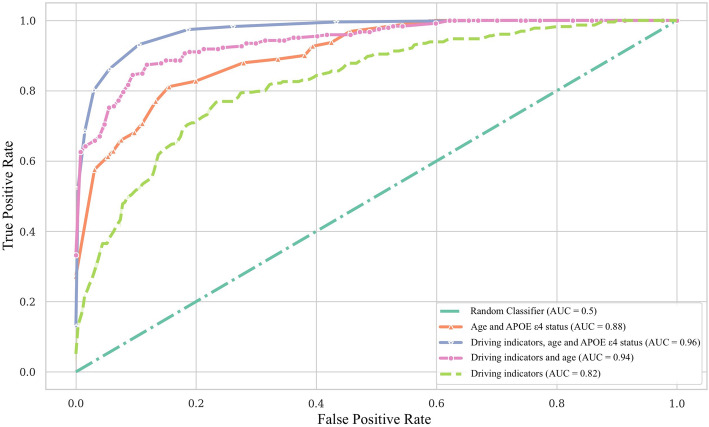
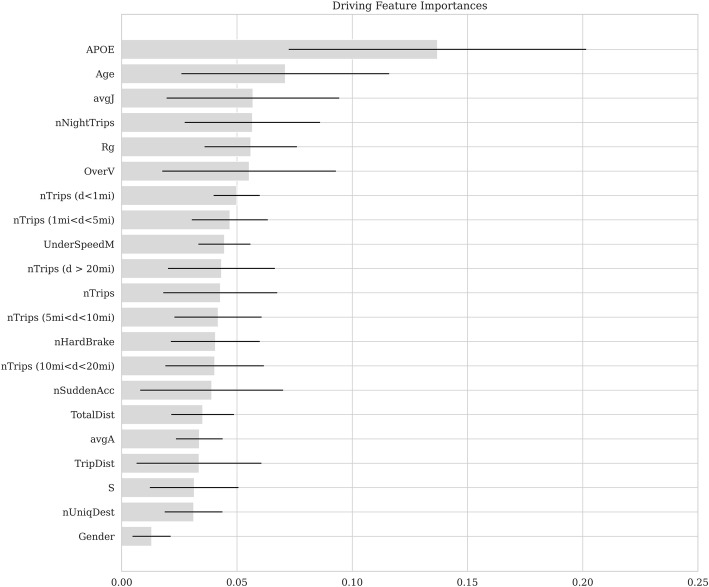
Background: Alzheimer disease (AD) is the most common cause of dementia. Preclinical AD is the period during which early AD brain changes are present but cognitive symptoms have not yet manifest. The presence of AD brain changes can be ascertained by molecular biomarkers obtained via imaging and lumbar puncture. However, the use of these methods is limited by cost, acceptability, and availability. The preclinical stage of AD may have a subtle functional signature, which can impact complex behaviours such as driving. The objective of the present study was to evaluate the ability of in-vehicle GPS data loggers to distinguish cognitively normal older drivers with preclinical AD from those without preclinical AD using machine learning methods. Methods: We followed naturalistic driving in cognitively normal older drivers for 1 year with a commercial in-vehicle GPS data logger. The cohort included n = 64 individuals with and n = 75 without preclinical AD, as determined by cerebrospinal fluid biomarkers. Four Random Forest (RF) models were trained to detect preclinical AD. RF Gini index was used to identify the strongest predictors of preclinical AD. Results: The F1 score of the RF models for identifying preclinical AD was 0.85 using APOE ε4 status and age only, 0.82 using GPS-based driving indicators only, 0.88 using age and driving indicators, and 0.91 using age,APOE ε4 status, and driving. The area under the receiver operating curve for the final model was 0.96. Conclusion: The findings suggest that GPS driving may serve as an effective and accurate digital biomarker for identifying preclinical AD among older adults.
Overview
The claims and statistics of this paper haven’t been checked yet.
Free: it reads the open-access text and checks the first 5 claims that cite a source we can check. Create a free account to check every claim.
Integrity signals
Registry
Cites
Statistics
Figures
Verification
Claims the paper makes
The claims and statistics of this paper haven’t been checked yet.
Free: it reads the open-access text and checks the first 5 claims that cite a source we can check. Create a free account to check every claim.
Claims other papers make about this one
Each is checked against this paper’s own text: does it say what the citing paper says it does?
The source backs part of the claim, not all of it — or backs it for a different population, condition or comparison.
In the citing paper
“While classification tasks are common in automated speech analysis in neurodegenerative research, several studies have employed regression models to predict continuous cognitive outcomes (e.g., MMSE)97,98 or to explore relationships with imaging and biomarker measures.99–101”
From Review of Artificial Intelligence for Clinical Use in Alzheimer's Disease and Related Dementias (2026) · cites this paper as [101]
Experimental — accuracy not yet measuredThe cited source says what the claim attributes to it.
In the citing paper
“Using the data from 75 without and 64 people with preclinical AD, the authors built a random forest classifier for identifying preclinical AD patients with F1 score as 0.82.”
From Human-centred artificial intelligence for mobile health sensing: challenges and opportunities (2023) · cites this paper as [114]
In the citing paper
“Features extracted from driving trajectories are found to have potential to become digital biomarkers for Alzheimer’s disease (AD) [114].”
From Human-centred artificial intelligence for mobile health sensing: challenges and opportunities (2023) · cites this paper as [114]
In the citing paper
“The most important driving based features were average jerk, number of night trips and radius of gyration.”
From Human-centred artificial intelligence for mobile health sensing: challenges and opportunities (2023) · cites this paper as [114]
Self-check
Percentages, sums and reported differences re-computed from the paper’s own numbers.
The self-check needs the paper’s full text.
Citations
Cites
The Clinical Dementia Rating (CDR): Current version and scoring rules
Morris, J. C. (1993) · Neurology · doi:10.1212/wnl.43.11.2412-a · Cited by 9,882
Self-citationUnderstanding individual human mobility patterns
González, M. C., Hidalgo, C. A., & Barabási, A.-L. (2008) · Nature · doi:10.1038/nature06958 · Cited by 6,059 · cited 1×
“Radius of gyration Rg Typical distance travelled by an individual, computed using [29]:”
MethodHypothetical model of dynamic biomarkers of the Alzheimer's pathological cascade
Jack, C. R., Knopman, D. S., Jagust, W. J., Shaw, L. M., Aisen, P. S., Weiner, M. W., Petersen, R. C., & Trojanowski, J. Q. (2010) · The Lancet Neurology · doi:10.1016/s1474-4422(09)70299-6 · Cited by 4,806 · cited 1×
“Because the decline in CSF Aβ42 is one of the earliest pathological events in AD [41], preceding the appearance of dementia symptoms by up to 20 years, we used Aβ42/Aβ40 as our marker of neuropathological AD among our cognitively normal participants.”
Method2020 Alzheimer's disease facts and figures
(2020) · Alzheimer's & Dementia · doi:10.1002/alz.12068 · Cited by 2,353
2018 Alzheimer's disease facts and figures
Alzheimer's Association (2018) · Alzheimer's & Dementia · doi:10.1016/j.jalz.2018.02.001 · Cited by 1,912
Inverse relation between in vivo amyloid imaging load and cerebrospinal fluid Aβ 42 in humans
Fagan, A. M., Mintun, M. A., Mach, R. H., Lee, S., Dence, C. S., Shah, A. R., LaRossa, G. N., Spinner, M. L., Klunk, W. E., Mathis, C. A., et al. (2006) · Annals of Neurology · doi:10.1002/ana.20730 · Cited by 1,246
Self-citationHigh-precision plasma β-amyloid 42/40 predicts current and future brain amyloidosis
Schindler, S. E., Bollinger, J. G., Ovod, V., Mawuenyega, K. G., Li, Y., Gordon, B. A., Holtzman, D. M., Morris, J. C., Benzinger, T. L. S., Xiong, C., et al. (2019) · Neurology · doi:10.1212/wnl.0000000000008081 · Cited by 885
Self-citationRandom Forest for Bioinformatics
Qi, Y. (2012) · Ensemble Machine Learning · doi:10.1007/978-1-4419-9326-7_11 · Cited by 754 · cited 1×
“RFs were selected because they have proven to outperform classical machine learning models in terms of accuracy and are more interpretable than deep learning models [32].”
MethodSpatial navigation deficits — overlooked cognitive marker for preclinical Alzheimer disease?
Coughlan, G., Laczó, J., Hort, J., Minihane, A.-M., & Hornberger, M. (2018) · Nature Reviews Neurology · doi:10.1038/s41582-018-0031-x · Cited by 500 · cited 2×
“A few studies have explored the utility of spatial navigation deficits as a marker for early and preclinical AD and discussed its high specificity for identifying at-risk individuals [13, 14].”
BackgroundData mining in the Life Sciences with Random Forest: a walk in the park or lost in the jungle?
Touw, W. G., Bayjanov, J. R., Overmars, L., Backus, L., Boekhorst, J., Wels, M., & van Hijum, S. A. F. T. (2013) · Briefings in Bioinformatics · doi:10.1093/bib/bbs034 · Cited by 453 · cited 1×
“In addition, they are effective at handling high-dimensional data and are robust to outliers [33].”
BackgroundO'Bryant, S. E., Mielke, M. M., Rissman, R. A., Lista, S., Vanderstichele, H., Zetterberg, H., Lewczuk, P., Posner, H., Hall, J., Johnson, L., et al. (2017) · Alzheimer's & Dementia · doi:10.1016/j.jalz.2016.09.014 · Cited by 303 · cited 1×
“research or assessments involving cerebrospinal fluid (CSF) collection), and availability [9, 10].”
BackgroundPreclinical Alzheimer disease—the challenges ahead
Sperling, R. A., Karlawish, J., & Johnson, K. A. (2013) · Nature Reviews Neurology · doi:10.1038/nrneurol.2012.241 · Cited by 291 · cited 1×
“Preclinical AD is the period during which early AD brain changes are present but cognitive symptoms have not yet manifest [11].”
BackgroundMoving fluid biomarkers for Alzheimer’s disease from research tools to routine clinical diagnostics
Zetterberg, H., & Blennow, K. (2021) · Molecular Neurodegeneration · doi:10.1186/s13024-021-00430-x · Cited by 219 · cited 1×
“Furthermore, recent advances in the development of plasma AD biomarkers have led to newly available blood tests for abnormality of AD-related proteins [42], and these blood tests may ultimately become widely used in clinical practice to diagnose AD.”
BackgroundSpatial Navigation in Preclinical Alzheimer’s Disease
Allison, S. L., Fagan, A. M., Morris, J. C., & Head, D. (2016) · Journal of Alzheimer's Disease · doi:10.3233/jad-150855 · Cited by 208 · cited 1×
“A few studies have explored the utility of spatial navigation deficits as a marker for early and preclinical AD and discussed its high specificity for identifying at-risk individuals [13, 14].”
BackgroundSelf-citationFeng, F., Bao, S., Sayer, J. R., Flannagan, C., Manser, M., & Wunderlich, R. (2017) · Accident Analysis & Prevention · doi:10.1016/j.aap.2017.04.012 · Cited by 208 · cited 1×
“Although studies on driving behaviour in naturalistic settings have used vehicle jerk to identify unsafe and aggressive driving behaviour [31, 40], no study to date has examined vehicle jerk to identify AD.”
BackgroundNew Approaches for the Treatment of Alzheimer’s Disease
Fish, P. V., Steadman, D., Bayle, E. D., & Whiting, P. (2019) · Bioorganic & Medicinal Chemistry Letters · doi:10.1016/j.bmcl.2018.11.034 · Cited by 189
Bature, F., Guinn, B.-A., Pang, D., & Pappas, Y. (2017) · BMJ Open · doi:10.1136/bmjopen-2016-015746 · Cited by 183 · cited 1×
“Since subtle cognitive changes may precede a clinical diagnosis of dementia by up to 20 years, tracking and recording navigational and driving abilities could potentially enable earlier identification of individuals with AD [12, 13].”
BackgroundGaetani, L., Höglund, K., Parnetti, L., Pujol-Calderon, F., Becker, B., Eusebi, P., Sarchielli, P., Calabresi, P., Di Filippo, M., Zetterberg, H., et al. (2018) · Alzheimer's Research & Therapy · doi:10.1186/s13195-018-0339-1 · Cited by 178 · cited 1×
“In addition, in a similar approach to previous studies that tested the ability of a novel biomarker to distinguish between clinical groups [34, 35], a receiver operating curve (ROC) was generated and its area under the curve (AUC) was computed for each model.”
ResultHird, M. A., Egeto, P., Fischer, C. E., Naglie, G., & Schweizer, T. A. (2016) · Journal of Alzheimer s Disease · doi:10.3233/jad-160276 · Cited by 153 · cited 2×
“Road tests and driving simulators are commonly used for assessing fitness-to-drive in clinical and healthy populations [15].”
BackgroundSelf-regulatory driving practices among older adults: Health, age and sex effects
Kostyniuk, L. P., & Molnar, L. J. (2008) · Accident Analysis & Prevention · doi:10.1016/j.aap.2008.04.005 · Cited by 142 · cited 1×
“These studies show that drivers with symptomatic AD are more likely to drive shorter distances, visit fewer unique destinations, and have a smaller driving space compared to cognitively intact drivers [17, 18].”
BackgroundMicroRNAs in Alzheimer’s Disease: Diagnostic Markers or Therapeutic Agents?
Angelucci, F., Cechova, K., Valis, M., Kuca, K., Zhang, B., & Hort, J. (2019) · Frontiers in Pharmacology · doi:10.3389/fphar.2019.00665 · Cited by 141 · cited 1×
“Given the growing socioeconomic impacts of AD, many studies have focused on the development of specific treatment strategies aimed at slowing down or even preventing the onset of symptomatic AD [7, 8].”
BackgroundCruchaga, C., Kauwe, J. S. K., Mayo, K., Spiegel, N., Bertelsen, S., Nowotny, P., Shah, A. R., Abraham, R., Hollingworth, P., Harold, D., et al. (2010) · PLoS Genetics · doi:10.1371/journal.pgen.1001101 · Cited by 128 · cited 1×
“Taqman genotyping of rs7412 and rs429358 was used to determine APOE genotype [25].”
MethodSelf-citationDevelopment of a method for detecting jerks in safety critical events
Bagdadi, O., & Várhelyi, A. (2012) · Accident Analysis & Prevention · doi:10.1016/j.aap.2012.03.032 · Cited by 123 · cited 2×
“Although studies on driving behaviour in naturalistic settings have used vehicle jerk to identify unsafe and aggressive driving behaviour [31, 40], no study to date has examined vehicle jerk to identify AD.”
BackgroundDriving behaviors in early stage dementia: A study using in-vehicle technology
Eby, D. W., Silverstein, N. M., Molnar, L. J., LeBlanc, D. J., & Adler, G. (2011) · Accident Analysis & Prevention · doi:10.1016/j.aap.2011.11.021 · Cited by 103 · cited 1×
“In addition, these assessment methods are methodologically limited by objectivity, availability, generalizability, and cost-effectiveness [15, 16].”
BackgroundPatterns, Entropy, and Predictability of Human Mobility and Life
Qin, S.-M., Verkasalo, H., Mohtaschemi, M., Hartonen, T., & Alava, M. J. (2012) · PLoS ONE · doi:10.1371/journal.pone.0051353 · Cited by 95
Hill, J. W., Fillit, H. M., Thomas, S. K., & Chang, S. (2006) · PharmacoEconomics · doi:10.2165/00019053-200624030-00006 · Cited by 92
Davis, J. D., Papandonatos, G. D., Miller, L. A., Hewitt, S. D., Festa, E. K., Heindel, W. C., & Ott, B. R. (2012) · Journal of the American Geriatrics Society · doi:10.1111/j.1532-5415.2012.04206.x · Cited by 82 · cited 1×
“These studies show that drivers with symptomatic AD are more likely to drive shorter distances, visit fewer unique destinations, and have a smaller driving space compared to cognitively intact drivers [17, 18].”
BackgroundSaddiki, H., Fayosse, A., Cognat, E., Sabia, S., Engelborghs, S., Wallon, D., Alexopoulos, P., Blennow, K., Zetterberg, H., Parnetti, L., et al. (2020) · PLOS Medicine · doi:10.1371/journal.pmed.1003289 · Cited by 78 · cited 1×
“This improvement is unsurprising since age and APOE ε4 are among the strongest risk factors for AD [36].”
BackgroundA 2.5-Year Longitudinal Assessment of Naturalistic Driving in Preclinical Alzheimer’s Disease
Roe, C. M., Stout, S. H., Rajasekar, G., Ances, B. M., Jones, J. M., Head, D. M., Benzinger, T. L. S., Williams, M., Davis, J. D., Ott, B. R., et al. (2019) · Journal of Alzheimer s Disease · doi:10.3233/jad-181242 · Cited by 72
Self-citationDeb, A., Sambamoorthi, U., Thornton, J. D., Schreurs, B., & Innes, K. (2018) · Aging & Mental Health · doi:10.1080/13607863.2017.1286454 · Cited by 60 · cited 1×
“As a result, AD can place significant financial and emotional burdens on family members and society at large [6].”
BackgroundThe AB255 Study Group, Pérez-Grijalba, V., Arbizu, J., Romero, J., Prieto, E., Pesini, P., Sarasa, L., Guillen, F., Monleón, I., San-José, I., et al. (2019) · Alzheimer's Research & Therapy · doi:10.1186/s13195-019-0549-1 · Cited by 57 · cited 1×
“Others have shown that the ability of novel AD biomarkers to predict preclinical AD (generally indicated by abnormality of PET or CSF amyloid biomarkers) may be improved by including age and APOE ε4 status in models [34, 37, 38].”
BackgroundBabulal, G. M., Stout, S. H., Benzinger, T. L. S., Ott, B. R., Carr, D. B., Webb, M. M., Traub, C. M., Addison, A., Morris, J. C., Warren, D. K., et al. (2017) · Journal of Applied Gerontology · doi:10.1177/0733464817690679 · Cited by 55 · cited 1×
“To our knowledge, our group is the first to use GPS to assess naturalistic driving behaviour among older drivers with preclinical AD [19].”
BackgroundSelf-citationRoe, C. M., Ances, B. M., Head, D. M., Babulal, G. M., Stout, S. H., Grant, E., Hassenstab, J. J., Xiong, C., Holtzman, D. M., Benzinger, T. L. S., et al. (2018) · Brain · doi:10.1093/brain/awy244 · Cited by 46
Self-citationHandels, R. L. H., Wimo, A. B., Dodel, R. C., Kramberger, M. G., Visser, P. J., Molinuevo, J. L., Verhey, F. R. J., & Winblad, B. G. (2017) · Journal of Alzheimer s Disease · doi:10.3233/jad-170324 · Cited by 45 · cited 1×
“research or assessments involving cerebrospinal fluid (CSF) collection), and availability [9, 10].”
BackgroundBayat, S., Naglie, G., Rapoport, M. J., Stasiulis, E., Widener, M. J., & Mihailidis, A. (2022) · Gerontology · doi:10.1159/000515391 · Cited by 41 · cited 1×
“To select these indicators, we searched the literature for articles that used GPS technology to evaluate driving performance and measure life-space [20, 27, 28].”
MethodSelf-citationIdentifying Preclinical Alzheimer’s Disease Using Everyday Driving Behavior: Proof of Concept
Babulal, G. M., Johnson, A., Fagan, A. M., Morris, J. C., & Roe, C. M. (2021) · Journal of Alzheimer s Disease · doi:10.3233/jad-201294 · Cited by 32 · cited 5×
“The DRIVES recorded date, time, latitude and longitude coordinates, and speed every 30 s when a vehicle was driven.”
BackgroundMethodSelf-citationVaughn, M. G., Define, R. S., DeLisi, M., Perron, B. E., Beaver, K. M., Fu, Q. J., & Howard, M. O. (2010) · Journal of Psychiatric Research · doi:10.1016/j.jpsychires.2010.06.016 · Cited by 31
Dayon, L., Wojcik, J., Galindo, A. N., Corthésy, J., Cominetti, O., Oikonomidi, A., Henry, H., Migliavacca, E., Bowman, G. L., & Popp, J. (2017) · Journal of Alzheimer s Disease · doi:10.3233/jad-170426 · Cited by 28 · cited 1×
“Others have shown that the ability of novel AD biomarkers to predict preclinical AD (generally indicated by abnormality of PET or CSF amyloid biomarkers) may be improved by including age and APOE ε4 status in models [34, 37, 38].”
BackgroundCorrespondence of CSF biomarkers measured by Lumipulse assays with amyloid PET
Volluz, K., Schindler, S. E., Henson, R. L., Xiong, C., Gordon, B. A., Benzinger, T. L. S., Holtzman, D. M., Morris, J. C., & Fagan, A. M. (2021) · Alzheimer s & Dementia · doi:10.1002/alz.051085 · Cited by 23 · cited 3×
“Others have shown that the ability of novel AD biomarkers to predict preclinical AD (generally indicated by abnormality of PET or CSF amyloid biomarkers) may be improved by including age and APOE ε4 status in models [34, 37, 38].”
BackgroundSelf-citationNeuropsychiatric Symptoms and Alzheimer’s Disease Biomarkers Predict Driving Decline: Brief Report
Babulal, G. M., Stout, S. H., Head, D. M., Holtzman, D. M., Fagan, A. M., Morris, J. C., & Roe, C. M. (2017) · Journal of Alzheimer s Disease · doi:10.3233/jad-170067 · Cited by 18 · cited 2×
“This data logger, together with custom software, comprises the Driving Real-World In-Vehicle Evaluation System (DRIVES) [20, 21, 26].”
MethodSelf-citationBayat, S., Ye, B., Stasiulis, E., Rapoport, M. J., Naglie, G., & Mihailidis, A. (2020) · Alzheimer s & Dementia · doi:10.1002/alz.039485 · Cited by 2 · cited 1×
“To select these indicators, we searched the literature for articles that used GPS technology to evaluate driving performance and measure life-space [20, 27, 28].”
MethodSelf-citation
Cited by
Explainable AI-based Alzheimer’s prediction and management using multimodal data
Jahan, S., Abu Taher, K., Kaiser, M. S., Mahmud, M., Rahman, M. S., Hosen, A. S. M. S., & Ra, I.-H. (2023) · PLOS ONE · doi:10.1371/journal.pone.0294253 · Cited by 122
“If an Alzheimer’s patient goes missing, this GPS tracker will assist to locate him [30]. h. Mini speaker: A mini speaker will assist in providing hourly reminders to the Alzheimer’s patient.”
BackgroundFord, E. M., Milne, R., & Curlewis, K. (2023) · Wiley Interdisciplinary Reviews Data Mining and Knowledge Discovery · doi:10.1002/widm.1492 · Cited by 97
“These differences could potentially be used, against an individual baseline, to detect the early stages of dementia (Bayat et al., 2021).”
BackgroundStatistical Foundations of Actuarial Learning and its Applications
Wüthrich, M. V., & Merz, M. (2023) · Springer Actuarial · doi:10.1007/978-3-031-12409-9 · Cited by 95
Harris, C., Tang, Y., Birnbaum, E., Cherian, C., Mendhe, D., & Chen, M. H. (2024) · Archives of Clinical Neuropsychology · doi:10.1093/arclin/acae016 · Cited by 95
Ouyang, X., Shuai, X., Li, Y., Pan, L., Zhang, X., Fu, H., Cheng, S., Wang, X., Cao, S., Xin, J., et al. (2024) · ACM Annual International Conference on Mobile Computing and Networking (MobiCom) · doi:10.1145/3636534.3649370 · Cited by 86
“Recently, understanding AD using mobile sensor-based digital biomarkers has attracted tremendous attention [12, 17, 27, 29, 35].”
Background
Metadata
- Authors
- Bayat, S., Babulal, G. M., Schindler, S. E., Fagan, A. M., Morris, J. C., Mihailidis, A., & Roe, C. M.
- Affiliations
- University of Toronto (CA)
- Washington University in St. Louis (US)
- Corresponding author
- Bayat, Sayeh
- ORCID
- Venue
- Alzheimer's Research & Therapy
- Published
- 2021-06-14
- Volume
- 13
- Issue
- 1
- Pages
- 115-115
- ISSN
- 1758-9193 (ISSN-L)
- PMC
- PMC8204509
- OpenAlex
- W3172159521
- Cited by
- 91
- References
- 41
- Citations by year
- 2026: 10 · 2025: 21 · 2024: 17 · 2023: 23 · 2022: 16 · 2021: 4
- FWCI
- 27.53
- Type
- journal article
- Language
- en
- Open access
- gold
- doi.org
- Licence
- cc-by
- creativecommons.org/licenses/by/4.0 (tdm)
- creativecommons.org/licenses/by/4.0 (vor)
- Locations
- Alzheimer s Research & Therapy (publishedVersion, cc-by)
- PubMed Central (publishedVersion, cc-by)
- PubMed (publishedVersion)
- Digital Commons@Becker (Washington University School of Medicine) (submittedVersion, cc-by)
- DOAJ (DOAJ: Directory of Open Access Journals) (submittedVersion, cc-by-sa)
- Funders
- Foundation for the National Institutes of Health (R01AG056466, R01AG068183, R01AG067428, P30AG066444; P01AG003991; P01AG026276; U19AG032438; and U19AG024904, K23AG053426)
- BrightFocus Foundation (A2021142S)
- Topics
- Health Sciences › Medicine › Geriatrics and Gerontology › Older Adults Driving Studies
- Health Sciences › Medicine › Psychiatry and Mental health › Dementia and Cognitive Impairment Research
- Life Sciences › Neuroscience › Cellular and Molecular Neuroscience › Alzheimer's disease research and treatments
- Keywords
- preclinical Alzheimer's disease, digital biomarkers, naturalistic driving, older drivers, driver behavior, APOE ε4, cerebrospinal fluid biomarkers, random forest classification, dementia risk prediction
- MeSH terms
- Machine Learning, Aged, Alzheimer Disease, Brain, Humans, Cohort Studies, Biomarkers, Amyloid beta-Peptides
About these checks
Registry, retraction, Cites and statistics results are computed, not judged, with one exception: a printed reference that no index lists is read once by a model before it counts as a citation error. Claims are extracted by a model and kept only when their quote appears verbatim in the text; each cited source is then checked, with a model’s help, for whether it says what the claim relies on. Those verdicts can be wrong — read the claim’s quote and the cited source before relying on one.
Statistics and arithmetic are recomputed, not judged.
Confidence bands are shown only for fields calibrated on our annotated test set. None is calibrated yet, so no band is shown.
What counts as a claim ›How we measure confidence ›How we check this ›
Are you an author, or do you see a problem with this page? Request a review
Data sources
Bibliographic data: Semantic Scholar, OpenAlex, Crossref.
Contains information from the Semantic Scholar Academic Graph Datasets, made available under the ODC Attribution License (ODC-BY 1.0).
Semantic Scholar’s data is described in: Kinney, R., et al. (2023). The Semantic Scholar Open Data Platform. arXiv:2301.10140.
