

The Alzheimer’s disease drug development landscape
Open accessThe DOI matches its Crossref record; 28 of the 28 references it cites were found in a registry or an index.
Abstract
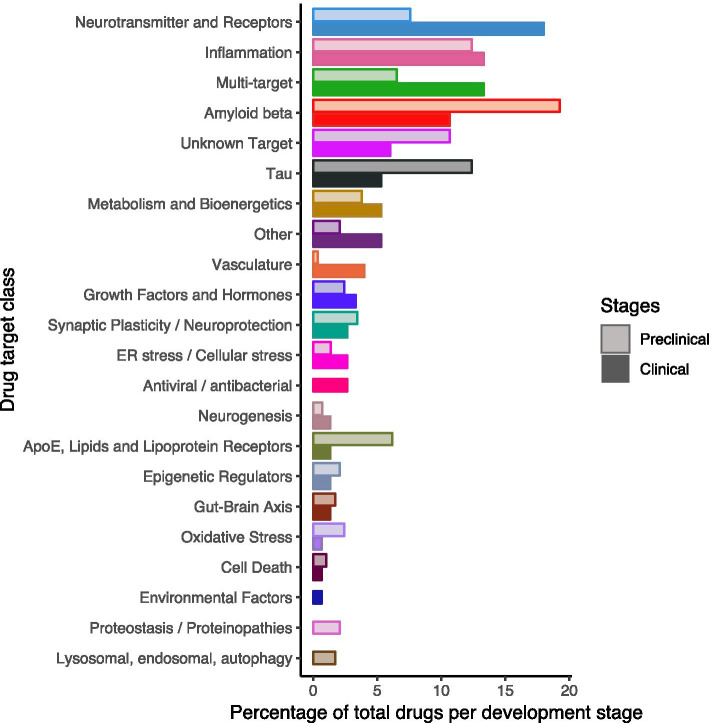
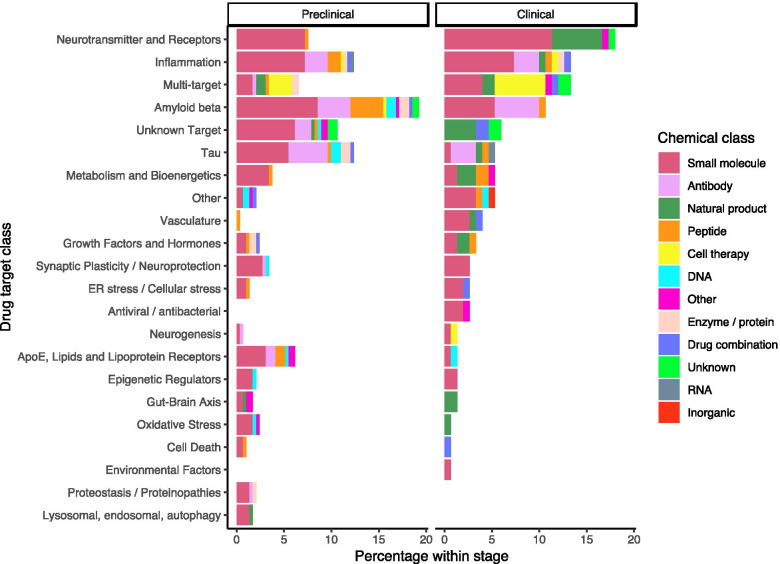
Background: Alzheimer’s disease (AD) is a devastating neurodegenerative disease leading to dementia. The field has made significant progress over the last 15 years. AD diagnosis has shifted from syndromal, based on signs and symptoms, to a biomarker construct based on the pathological hallmarks of the disease: amyloid β deposition, pathologic tau, and neurodegeneration. Numerous genetic risk factors for sporadic AD have been identified, providing further insight into the molecular underpinnings of the disease. For the last two decades, however, drug development for AD has been proven to be particularly challenging. Here, we provide a unique overview of the drug development landscape for AD. By comparing preclinical and clinical drug development pipelines, we aim to describe trends and differences regarding target classes and therapeutic modalities in preclinical and clinical development. Methods: We analyzed proprietary and public databases and company websites for drugs in preclinical development for AD by the pharmaceutical industry and major clinical trial registries for drugs in clinical development for AD. Drugs were categorized by target class and treatment modality. Results: We found a higher proportion of preclinical interventions targeting molecular pathways associated with sporadic AD genetic risk variants, compared to clinical stage interventions. These include apolipoprotein E (ApoE) and lipids, lysosomal/endosomal targets, and proteostasis. Further, we observed a trend suggesting that more traditional therapeutic modalities are developed for these novel targets, while more novel treatment modalities such as gene therapies and enzyme treatments are in development for more traditional targets such as amyloid β and tau. Interestingly, the percentage of amyloid β targeting therapies in preclinical development (19.2%) is even higher than the percentage in clinical development (10.7%), indicating that diversification away from interventions targeting amyloid-beta has not materialized. Inflammation is the second most popular target class in both preclinical and clinical development. Conclusions: Our observations show that the AD drug development pipeline is diversifying in terms of targets and treatment modalities, while amyloid-targeting therapies remain a prominent avenue of development as well. To further advance AD drug development, novel companion diagnostics are needed that are directed at disease mechanisms related to genetic risk factors of AD, both for patient stratification and assessment of therapeutic efficacy in clinical trials.
Overview
The claims and statistics of this paper haven’t been checked yet.
Free: it reads the open-access text and checks the first 5 claims that cite a source we can check. Create a free account to check every claim.
Integrity signals
Registry
Cites
Statistics
Figures
Verification
Claims the paper makes
The claims and statistics of this paper haven’t been checked yet.
Free: it reads the open-access text and checks the first 5 claims that cite a source we can check. Create a free account to check every claim.
Claims other papers make about this one
Each is checked against this paper’s own text: does it say what the citing paper says it does?
The source backs part of the claim, not all of it — or backs it for a different population, condition or comparison.
In the citing paper
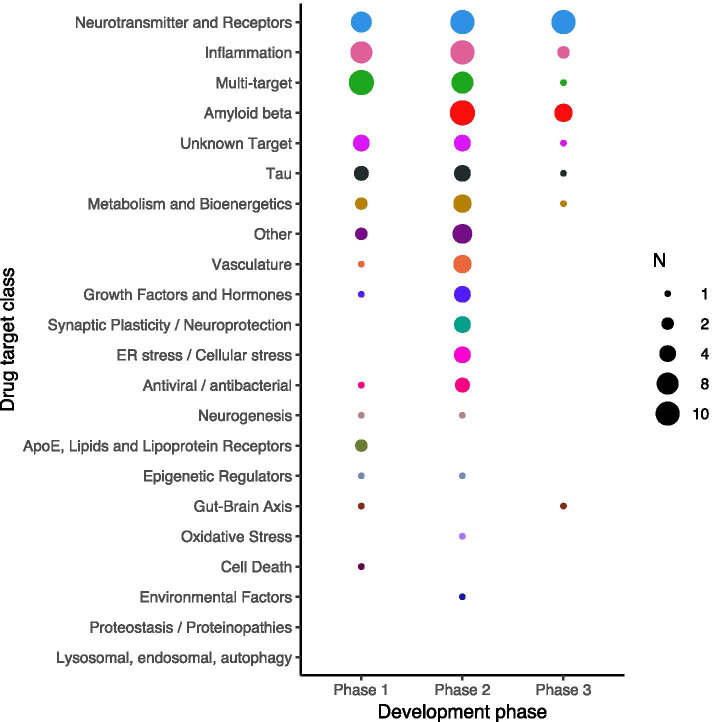
“The majority of phase II and III trials center around neurotransmitter receptors and Aβ mechanisms, while tau and inflammation drugs are more prominent in phase II, often featuring repurposed compounds.”
From Recent advances in Alzheimer's disease: Mechanisms, clinical trials and new drug development strategies. (2024) · cites this paper as [435]
Experimental — accuracy not yet measuredThe source backs part of the claim, not all of it — or backs it for a different population, condition or comparison.
In the citing paper
“While immunotherapy appears to be the most advanced therapeutic strategy, primarily targeting traditional targets such as Aβ and tau, a noticeable paradigm shift is occurring toward small-molecule therapeutic modalities.435”
From Recent advances in Alzheimer's disease: Mechanisms, clinical trials and new drug development strategies. (2024) · cites this paper as [435]
Experimental — accuracy not yet measuredThe cited source says what the claim attributes to it.
In the citing paper
“The major mechanisms of action center around: 1) neurotransmitter receptors, including AChE, NMDA receptor, 5-hydroxytryptamine receptor, nicotinic α7 receptor, and adrenoceptor; 2) Aβ, including the reduction of Aβ production (such as γ-secretase inhibitors and modulators, BACE1 inhibitors, and α-secretase activators), prevention of Aβ aggregation, and enhancing Aβ clearance (vaccines and ant”
From Recent advances in Alzheimer's disease: Mechanisms, clinical trials and new drug development strategies. (2024) · cites this paper as [435]
Self-check
Percentages, sums and reported differences re-computed from the paper’s own numbers.
The self-check needs the paper’s full text.
Citations
Cites
Scheltens, P., De Strooper, B., Kivipelto, M., Holstege, H., Chételat, G., Teunissen, C. E., Cummings, J., & van der Flier, W. M. (2021) · The Lancet · doi:10.1016/s0140-6736(20)32205-4 · Cited by 5,465
Self-citationMeta-Analysis of 74,046 Individuals Identifies 11 New Susceptibility Loci for Alzheimer’s Disease
(EADI), E. A. D. I., Lambert, J.-C., (GERAD), G. A. E. R. I. A. D., Alzheimer's Disease Genetic Consortium (ADGC), (CHARGE), C. F. H. A. A. R. I. G. E., Ibrahim-Verbaas, C. A., Harold, D., Naj, A. C., Sims, R., Bellenguez, C., et al. (2013) · Nature Genetics · doi:10.1038/ng.2802 · Cited by 4,336
Nichols, E., Szoeke, C. E. I., Vollset, S. E., Abbasi, N., Abd-Allah, F., Abdela, J., Aichour, M. T. E., Akinyemi, R. O., Alahdab, F., Asgedom, S. W., et al. (2019) · The Lancet Neurology · doi:10.1016/s1474-4422(18)30403-4 · Cited by 2,412
Jansen, I. E., Savage, J. E., Watanabe, K., Bryois, J., Williams, D. M., Steinberg, S., Sealock, J., Karlsson, I. K., Hägg, S., Athanasiu, L., et al. (2019) · Nature Genetics · doi:10.1038/s41588-018-0311-9 · Cited by 2,277 · cited 1×
“These are all biological processes tightly linked to the genetic underpinnings of sporadic AD [12].”
BackgroundThe Cellular Phase of Alzheimer’s Disease
De Strooper, B., & Karran, E. (2016) · Cell · doi:10.1016/j.cell.2015.12.056 · Cited by 1,990 · cited 1×
“The onset of pathological processes far ahead of the initial symptoms further complicates the intervention strategies as this requires early detection and therapeutic intervention [28].”
BackgroundTau PET patterns mirror clinical and neuroanatomical variability in Alzheimer’s disease
Ossenkoppele, R., Schonhaut, D. R., Schöll, M., Lockhart, S. N., Ayakta, N., Baker, S. L., O’Neil, J. P., Janabi, M., Lazaris, A., Cantwell, A., et al. (2016) · Brain · doi:10.1093/brain/aww027 · Cited by 1,185 · cited 1×
“Tau, the second pathological hallmark of AD, became more popular as a drug target a bit later than amyloid, especially when it became evident that tau accumulation is directly associated with cognitive decline in AD, where Aβ accumulation is suggested to have an indirect, tau-mediated association with neurodegeneratio…”
BackgroundThe neuronal sortilin-related receptor SORL1 is genetically associated with Alzheimer disease
Rogaeva, E., Meng, Y., Lee, J. H., Gu, Y., Kawarai, T., Zou, F., Katayama, T., Baldwin, C. T., Cheng, R., Hasegawa, H., et al. (2007) · Nature Genetics · doi:10.1038/ng1943 · Cited by 1,167 · cited 2×
“ABCA7 influences AD risk via a reduced ability to transfer cholesterol to ApoE, TREM2 variants affect the uptake of lipoproteins on microglia cells, CLU (apolipoprotein J) plays a role in lipid transport, and SORL1 acts as an ApoE receptor on neuronal cells [22].”
BackgroundCommon and rare variants in multifactorial susceptibility to common diseases
Bodmer, W., & Bonilla, C. (2008) · Nature Genetics · doi:10.1038/ng.f.136 · Cited by 1,131
Swanson, C. J., Zhang, Y., Dhadda, S., Wang, J., Kaplow, J., Lai, R. Y. K., Lannfelt, L., Bradley, H., Rabe, M., Koyama, A., et al. (2021) · Alzheimer's Research & Therapy · doi:10.1186/s13195-021-00813-8 · Cited by 847 · cited 2×
“This is surprising as several treatments in clinical trials over recent years were able to clear Aβ deposits from the brains of AD patients while cognitive effects were often ambiguous [8].”
BackgroundResultSelf-citationAlzheimer’s disease drug development pipeline: 2020
Cummings, J., Lee, G., Ritter, A., Sabbagh, M., & Zhong, K. (2020) · Alzheimer's & Dementia: Translational Research & Clinical Interventions · doi:10.1002/trc2.12050 · Cited by 557
Self-citation
Cited by
Zhang, J., Zhang, Y., Wang, J., Xia, Y., Zhang, J., & Chen, L. (2024) · Signal Transduction and Targeted Therapy · doi:10.1038/s41392-024-01911-3 · Cited by 1,138
“435 These modalities, characterized by their simplicity, maturity, and adaptability, provide a promising avenue for emerging targets.”
BackgroundFrom target discovery to clinical drug development with human genetics
Trajanoska, K., Bhérer, C., Taliun, D., Zhou, S., Richards, J. B., & Mooser, V. (2023) · Nature · doi:10.1038/s41586-023-06388-8 · Cited by 220
Towards a future where Alzheimer’s disease pathology is stopped before the onset of dementia
van der Flier, W. M., de Vugt, M. E., Smets, E. M. A., Blom, M., & Teunissen, C. E. (2023) · Nature Aging · doi:10.1038/s43587-023-00404-2 · Cited by 220
Frisoni, G. B., Altomare, D., Ribaldi, F., Villain, N., Brayne, C., Mukadam, N., Abramowicz, M., Barkhof, F., Berthier, M., Bieler-Aeschlimann, M., et al. (2023) · The Lancet Regional Health - Europe · doi:10.1016/j.lanepe.2022.100576 · Cited by 186
Self-citationYaffe, K., Vittinghoff, E., Dublin, S., Peltz, C. B., Fleckenstein, L. E., Rosenberg, D. E., Barnes, D. E., Balderson, B. H., & Larson, E. B. (2024) · JAMA Internal Medicine · doi:10.1001/jamainternmed.2023.6279 · Cited by 124
Disease-Modifying Therapies for Alzheimer’s Disease: More Questions than Answers
Golde, T. E. (2022) · Neurotherapeutics · doi:10.1007/s13311-022-01201-2 · Cited by 119
del Campo, M., Peeters, C. F. W., Johnson, E. C. B., Vermunt, L., Hok-A-Hin, Y. S., van Nee, M., Chen-Plotkin, A., Irwin, D. J., Hu, W. T., Lah, J. J., et al. (2022) · Nature Aging · doi:10.1038/s43587-022-00300-1 · Cited by 95
Self-citationHossain, M. S., & Hussain, M. H. (2025) · Pharmacology Research & Perspectives · doi:10.1002/prp2.70131 · Cited by 121
ACU193: An Immunotherapeutic Poised to Test the Amyloid β Oligomer Hypothesis of Alzheimer’s Disease
Krafft, G. A., Jerecìć, J., Siemers, E., & Cline, E. N. (2022) · Frontiers in Neuroscience · doi:10.3389/fnins.2022.848215 · Cited by 56
Hajjo, R., Sabbah, D. A., Abusara, O. H., & Bawab, A. Q. A. (2022) · Diagnostics · doi:10.3390/diagnostics12122975 · Cited by 63
Microglia-Mediated Neurovascular Unit Dysfunction in Alzheimer’s Disease
Huang, W., Xia, Q., Zheng, F., Zhao, X. L., Ge, F., Xiao, J., Liu, Z., Shen, Y., Ye, K., Wang, D., et al. (2023) · Journal of Alzheimer s Disease · doi:10.3233/jad-221064 · Cited by 51
Therapeutic approaches for improving cognitive function in the aging brain
Chen, L., Jiao, J., & Zhang, Y. (2022) · Frontiers in Neuroscience · doi:10.3389/fnins.2022.1060556 · Cited by 44
Adenosine receptor signalling in Alzheimer’s disease
Trinh, P. N. H., Baltos, J., Hellyer, S. D., May, L. T., & Gregory, K. J. (2022) · Purinergic Signalling · doi:10.1007/s11302-022-09883-1 · Cited by 44
Drug Development for Alzheimer’s and Parkinson’s Disease: Where Do We Go Now?
Sequeira, L., Benfeito, S., Fernandes, C., Gaspar, A., Lima, I., Peixoto, J., Alves, C., Machado, C. S., Borges, F., & Chavarria, D. (2024) · Pharmaceutics · doi:10.3390/pharmaceutics16060708 · Cited by 43
Shen, Y., Liu, F., & Zhang, M. (2024) · Biomedicine & Pharmacotherapy · doi:10.1016/j.biopha.2024.117235 · Cited by 41
Choe, M. S., Yeo, H. C., Kim, J., Lee, J., Lee, H. J., Kim, H., Baek, K. M., Jung, N., Choi, M., & Lee, M. Y. (2024) · Stem Cell Research & Therapy · doi:10.1186/s13287-024-03732-1 · Cited by 45
Shastri, D., Raj, V., & Lee, S.-K. (2024) · Ageing Research Reviews · doi:10.1016/j.arr.2024.102379 · Cited by 36
Oosthoek, M., Vermunt, L., de Wilde, A., Bongers, B., Antwi‐Berko, D., Scheltens, P., van Bokhoven, P., Vijverberg, E. G. B., & Teunissen, C. E. (2024) · Alzheimer s Research & Therapy · doi:10.1186/s13195-024-01456-1 · Cited by 42
Self-citationDrug Discovery and Development Targeting Dementia
Zagórska, A., Czopek, A., Fryc, M., Jaromin, A., & Boyd, B. J. (2023) · Pharmaceuticals · doi:10.3390/ph16020151 · Cited by 33
Cacabelos, R., Martínez-Iglesias, O. A., Cacabelos, N., Carrera, I., Corzo, L., & Naidoo, V. (2024) · Life · doi:10.3390/life14121555 · Cited by 40
Evaluation of bumetanide as a potential therapeutic agent for Alzheimer’s disease
Boyarko, B., Podvin, S., Greenberg, B., Momper, J. D., Huang, Y., Gerwick, W. H., Bang, A. G., Quinti, L., Griciuc, A., Kim, D. Y., et al. (2023) · Frontiers in Pharmacology · doi:10.3389/fphar.2023.1190402 · Cited by 25
Geerts, H., Walker, M., Rose, R., Bergeler, S., van der Graaf, P. H., Schuck, E. L., Koyama, A., Yasuda, S., Hussein, Z., Reyderman, L., et al. (2023) · CPT Pharmacometrics & Systems Pharmacology · doi:10.1002/psp4.12912 · Cited by 29
The landscape of autosomal-dominant Alzheimer’s disease: global distribution and age of onset
Liu, H., Marsh, T. W., Shi, X., Renton, A. E., Bowling, K. M., Ziegemeier, E., Wang, G., Cao, Y., Aristel, A., Li, J., et al. (2025) · Brain · doi:10.1093/brain/awaf038 · Cited by 28
Temmerman, J., Engelborghs, S., Bjerke, M., & D’haeseleer, M. (2023) · Frontiers in Immunology · doi:10.3389/fimmu.2023.1162340 · Cited by 23
Zinellu, A., Tommasi, S., Sedda, S., & Mangoni, A. A. (2023) · Ageing Research Reviews · doi:10.1016/j.arr.2023.102139 · Cited by 24
Alzheimer’s disease is an inherent, natural part of human brain aging: an integrated perspective
Ferrer, I. (2022) · Free Neuropathology · doi:10.17879/freeneuropathology-2022-3806 · Cited by 30
Screening Techniques for Drug Discovery in Alzheimer’s Disease
Maniam, S., & Maniam, S. (2024) · ACS Omega · doi:10.1021/acsomega.3c07046 · Cited by 24
Wuli, W., Lin, S., Chen, S., Tannous, B. A., Huang, W.-S., Woon, P. Y., Wu, Y., Yang, H., Chen, Y.-C., Fleming, R. L., et al. (2022) · International Journal of Molecular Sciences · doi:10.3390/ijms231810554 · Cited by 23
Gao, L., Dongqing, W., Ren, J., Tan, X., Chen, J., Kong, Z., Nie, Y., & Yan, M. (2023) · Phytotherapy Research · doi:10.1002/ptr.8006 · Cited by 20
Targeting calcium signaling in Alzheimer’s disease: challenges and promising therapeutic avenues
Song, L., Tang, Y. P., & Law, B. Y. K. (2023) · Neural Regeneration Research · doi:10.4103/1673-5374.380898 · Cited by 21
TREM2 risk variants and associated endophenotypes in alzheimer’s disease
Dijkstra, J. I. R., Vermunt, L., Venkatraghavan, V., Ozhegov, G., Coomans, E. M., Ossenkoppele, R., van de Giessen, E., Hulsman, M., de Geus, C. M., van der Flier, W. M., et al. (2025) · Alzheimer's Research & Therapy · doi:10.1186/s13195-025-01700-2 · Cited by 18
Self-citationZhou, J., Kim, Y. K., Li, C., & Park, S. (2024) · Computers in Biology and Medicine · doi:10.1016/j.compbiomed.2024.109523 · Cited by 18
Harrison, M. A. A., Morris, S. L., Rudman, G. A., Rittenhouse, D. J., Monk, C. H., Sakamuri, S. S. V. P., Jones, M., Hasan, M. M., Khatun, M. S., Wang, H., et al. (2024) · Brain Behavior and Immunity · doi:10.1016/j.bbi.2023.12.033 · Cited by 21
Ren, J., Xiang, B., Xueling, L., Han, X., Yang, Z., Zhang, M., & Zhang, Y. (2024) · Heliyon · doi:10.1016/j.heliyon.2024.e36470 · Cited by 18
Jo, T., Kim, J., Bice, P., Huynh, K., Wang, T., Arnold, M., Meikle, P. J., Giles, C., Kaddurah-Daouk, R., Saykin, A. J., et al. (2023) · eBioMedicine · doi:10.1016/j.ebiom.2023.104820 · Cited by 15
Brain-targeted intranasal delivery of biologics: a perspective for Alzheimer's disease treatment
Li, H., Shen, X., Zhang, B., Li, Y., Alexander, C., Harvey, P., & Zhu, Z. (2025) · RSC Pharmaceutics · doi:10.1039/d5pm00148j · Cited by 22
From Small Peptides to Large Proteins against Alzheimer’sDisease
Picone, P., Sanfilippo, T., Vasto, S., Baldassano, S., Guggino, R., Nuzzo, D., Bulone, D., Biagio, P. L. S., Muscolino, E., Monastero, R., et al. (2022) · Biomolecules · doi:10.3390/biom12101344 · Cited by 18
Forlenza, O. V., & Barbosa, B. J. A. P. (2025) · Dementia & Neuropsychologia · doi:10.1590/1980-5764-dn-2025-e001 · Cited by 22
Sukreet, S., Rafii, M. S., & Rissman, R. A. (2024) · Alzheimer s & Dementia Diagnosis Assessment & Disease Monitoring · doi:10.1002/dad2.12580 · Cited by 17
Multi-target regulatory mechanism of Yang Xin Tang − a traditional Chinese medicine against dementia
Lo, T. Y., Chan, A. S. L., Cheung, S. T., Yung, L. Y., Leung, M. M. H., & Wong, Y. H. (2023) · Chinese Medicine · doi:10.1186/s13020-023-00813-w · Cited by 18
The broken Alzheimer’s disease genome
Roque, C. G., Phatnani, H. P., & Hengst, U. (2024) · Cell Genomics · doi:10.1016/j.xgen.2024.100555 · Cited by 15
Wang, B., Shi, J.-Z., Guo, N., Shao, L., Zhai, W., Jiang, L., Zhao, F., Wang, J., Wang, J., Du, L.-D., et al. (2023) · Analytica Chimica Acta · doi:10.1016/j.aca.2023.341900 · Cited by 13
Maazouzi, M., Rasheed, M., Mbarek, L., Wang, X., Liang, J., Ma, H., Chen, Z., & Deng, Y. (2025) · Journal of Neurochemistry · doi:10.1111/jnc.70031 · Cited by 12
Chen, D., Chen, Q., Qin, X., Tong, P., Peng, L., Zhang, T., & Xia, C. (2023) · Frontiers in Aging Neuroscience · doi:10.3389/fnagi.2023.1209863 · Cited by 11
Piccirillo, S., Preziuso, A., Cerqueni, G., Serfilippi, T., Terenzi, V., Vinciguerra, A., Amoroso, S., Lariccia, V., & Magi, S. (2023) · Biochemical Pharmacology · doi:10.1016/j.bcp.2023.115869 · Cited by 10
Delivery of RNA to the Blood-Brain Barrier Endothelium Using Cationic Bicelles
Cheng, J., Wang, L., Guttha, V., Haugstad, G. D., & Kandimalla, K. K. (2023) · Pharmaceutics · doi:10.3390/pharmaceutics15082086 · Cited by 10
Song, Z., Wu, Z., Luo, R., He, C., Li, Z., Yang, M., Yu, W., He, J., Deng, S., & Cheng, S. (2023) · Aging · doi:10.18632/aging.205220 · Cited by 13
Dementia—so much done, so much to do, so much to gain by doing so
Banerjee, S. (2022) · Age and Ageing · doi:10.1093/ageing/afac204 · Cited by 10
Vargas-Barona, A., Bernáldez-Sarabia, J., & Castro-Ceseña, A. B. (2024) · Journal of Materials Chemistry B · doi:10.1039/d4tb00521j · Cited by 10
Moebius, H. J., & Church, K. J. (2023) · Journal of Alzheimer s Disease · doi:10.3233/jad-220871 · Cited by 10
del Campo, M., Quesada, C., Vermunt, L., Peeters, C. F. W., Hok‐A‐Hin, Y. S., Trieu, C., den Braber, A., Verberk, I. M. W., Visser, P. J., Tijms, B. M., et al. (2024) · Molecular Neurodegeneration · doi:10.1186/s13024-024-00767-z · Cited by 12
Self-citationFernandez, F., Aust, C. E., Lye, S., & Griffiths, L. R. (2022) · Brain Behavior & Immunity - Health · doi:10.1016/j.bbih.2022.100435 · Cited by 9
Jorge‐Oliva, M., van Weering, J. R. T., & Scheper, W. (2023) · International Journal of Molecular Sciences · doi:10.3390/ijms241310865 · Cited by 7
Liu, M., Zhu, L., Guo, Y., Zhang, S., Jiang, L. H., Zhang, Y., Chao, F., & Tang, Y. C. (2023) · The Journal of Comparative Neurology · doi:10.1002/cne.25485 · Cited by 8
DAT1 and BDNF polymorphisms interact to predict Aβ and tau pathology
Ciampa, C. J., Morin, T., Murphy, A., Joie, R. L., Landau, S. M., & Berry, A. S. (2023) · Neurobiology of Aging · doi:10.1016/j.neurobiolaging.2023.10.009 · Cited by 8
Gopukumar, S. T., Dwivedi, D., Gowri, K., Karpakavalli, M., Nair, C., Singh, D., & Das, U. (2025) · Medicine in Drug Discovery · doi:10.1016/j.medidd.2025.100237 · Cited by 11
How can secondary dementia prevention trials of Alzheimer's disease be clinically meaningful?
Liu, K. Y., Thambisetty, M., & Howard, R. J. (2022) · Alzheimer s & Dementia · doi:10.1002/alz.12788 · Cited by 9
Tapella, L., Dematteis, G., Vitola, P. L., Leva, S., Tonelli, E., Raddi, M., Delconti, M., Dacomo, L., Macchia, A. L., Murari, E., et al. (2024) · Glia · doi:10.1002/glia.24509 · Cited by 5
Dai, Y., Gao, S., Zhang, Z., Du, W.-J., Bao, X., & Xu, Y. (2025) · Chemical Engineering Journal · doi:10.1016/j.cej.2025.168038 · Cited by 6
Guizzaro, L., Bałkowiec-Iskra, E., Haberkamp, M., Mol, P. G. M., Moreau, A., Mueller-Berghaus, J., Philadelphy, D., Balabanov, P. P., Garcia, J., Thirstrup, S., et al. (2026) · The Lancet Regional Health - Europe · doi:10.1016/j.lanepe.2026.101644 · Cited by 14
Cancer drugs with high repositioning potential for Alzheimer’s disease
Majeed, J., Sabbagh, M. N., Kang, M. H., Lawrence, J. J., Pruitt, K., Bacus, S. S., Reyna, E., Brown, M., & Decourt, B. (2023) · Expert Opinion on Emerging Drugs · doi:10.1080/14728214.2023.2296079 · Cited by 10
Pattarachotanant, N., Sukjamnong, S., Rangsinth, P., Chaikhong, K., Sillapachaiyaporn, C., Leung, G., Hu, V. W., Sarachana, T., Chuchawankul, S., Tencomnao, T., et al. (2024) · Nutrients · doi:10.3390/nu16162727 · Cited by 6
Boyarko, B., Podvin, S., Greenberg, B., Arnold, S. E., Juanes, A. M., van der Kant, R., Goldstein, L. S. B., Momper, J. D., Bang, A. G., Silverman, J., et al. (2024) · ACS Pharmacology & Translational Science · doi:10.1021/acsptsci.4c00229 · Cited by 9
Pharmacogenomic Strategies in Alzheimer’s Disease: An In-Depth Review
Zhou, Y., Peng, S., Wang, H., Cai, X., & Wang, Q. (2024) · Journal of Medical Sciences and Interdisciplinary Research · doi:10.51847/q8jx01pn0m · Cited by 6
Activity-dependent synapse elimination requires caspase-3 activation
Yu, Z., Gutu, A., Kim, N., & O'Shea, E. K. (2025) · eLife · doi:10.7554/elife.101779.3 · Cited by 5
The Broad Range of Research in Alzheimer's Disease and Related Dementias
DeKosky, S. T., & Duara, R. (2022) · Neurotherapeutics · doi:10.1007/s13311-022-01245-4 · Cited by 6
McKenzie, C., Bucks, R. S., Weinborn, M., Bourgeat, P., Salvado, O., & Gavett, B. E. (2022) · Frontiers in Aging Neuroscience · doi:10.3389/fnagi.2022.943823 · Cited by 9
Yeerlan, J., He, B., Hu, X., & Zhang, L. (2024) · Journal of Alzheimer s Disease Reports · doi:10.3233/adr-230092 · Cited by 6
Wojtunik‐Kulesza, K. A., Rudkowska, M., Klimek, K., Agacka‐Mołdoch, M., Mołdoch, J., & Michalak, A. (2024) · International Journal of Molecular Sciences · doi:10.3390/ijms25136866 · Cited by 7
Focus on Neurochemistry Led to the Cholinergic Hypothesis of Alzheimer’s Disease
Behl, C. (2023) · Springer eBooks · doi:10.1007/978-3-031-31570-1_5 · Cited by 5
Scalia, E., Calligaris, M., Pinto, M. L., Castelbuono, S., Iemmolo, M., Re, V. L., Bivona, G., Piccoli, T., Ghersi, G., & Scilabra, S. D. (2025) · Molecular & Cellular Proteomics · doi:10.1016/j.mcpro.2025.101025 · Cited by 8
Cheng, J., & Kandimalla, K. K. (2025) · Molecular Pharmaceutics · doi:10.1021/acs.molpharmaceut.5c00285 · Cited by 4
Combinatorial therapy in Alzheimer's disease
Giri, M. A., Kendre, P. N., Bhalke, R. D., Pande, V. V., Autade, K. A., & Sumbe, R. B. (2024) · Elsevier eBooks · doi:10.1016/b978-0-443-13205-6.00026-1 · Cited by 7
Activity-dependent synapse elimination requires caspase-3 activationPreprint
Yu, Z., Gutu, A., Kim, N., & O’Shea, E. K. (2025) · eLife · doi:10.7554/elife.101779 · Cited by 9
Wei, H., Wu, C., Yuan, Y., & Lai, L. (2023) · Frontiers in Aging Neuroscience · doi:10.3389/fnagi.2023.1249682 · Cited by 3
Enzymes and Alzheimer's Disease: Pioneering Drug Development Strategies
Godwa, T., Dubey, S., & Tiwari, P. K. (2025) · Current Psychopharmacologye · doi:10.2174/0122115560340307250106065419 · Cited by 5
Pharmacogenomic Approaches in Alzheimer's Disease: A Comprehensive Review
Bhat, R., Varshini, V., Himasvi, H., & Shabaraya, R. (2023) · International Journal of Pharmaceutical and Phytopharmacological Research · doi:10.51847/qdmsgl63u7 · Cited by 3
β- and γ-secretases as therapeutic targets for Alzheimer's disease
Swarup, G., Kanik, P., Shekhar, V., & Gupta, S. K. (2024) · Elsevier eBooks · doi:10.1016/b978-0-443-23841-3.00011-x · Cited by 4
Gao, F., Xu, W., Xiao, Y., Jiang, W., Chen, M., Liu, Z., Zhang, P., Yang, T., Qian, Z., & Gao, K. (2024) · Chemical Engineering Journal · doi:10.1016/j.cej.2024.157496 · Cited by 2
Khan, K. A., Esa, M., Kamal, Z., Ullah, B., Perry, G. L., Kamal, S., Ahmad, S., Hussain, H., Ullah, A., & Shafique, M. S. (2025) · Current Neuropharmacology · doi:10.2174/011570159x361867250313073624 · Cited by 2
Precision medicine for brain health and prevention of neurodegenerative/neurocognitive decline
Hausman-Cohen, S., & Bilich, C. (2024) · Elsevier eBooks · doi:10.1016/b978-0-323-98808-7.00011-4 · Cited by 1
Exploring Gene Therapy Modalities for Neuroinflammation Control in Alzheimer’s Disease Pathogenesis
Kadiri, S. K., & Tiwari, P. K. (2025) · Current pharmacogenomics and personalized medicine (Online)/Current pharmacogenomics and personalized medicine · doi:10.2174/0118756921377967250714173056 · Cited by 3
Unmasking the hidden catalyst: How infections trigger Alzheimer's disease
Fülöp, T., Cohen, A. A., Frost, E. H., Lévesque, S., Khalil, A., Rodrigues, S., Desroches, M., Alami, M., Berrougui, H., Ramassamy, C., et al. (2026) · Journal of Alzheimer s Disease · doi:10.1177/13872877251415571 · Cited by 2
Therapeutic efficacy of synthetic analogues of gut hormones in a mouse model of Alzheimer’s disease
Denver, P., Duffy, A. M., Kennedy, R. T., Gault, V. A., & McClean, P. L. (2026) · Neuroscience · doi:10.1016/j.neuroscience.2026.01.038 · Cited by 2
Zhao, Y., Zeng, M., Zhang, S., & Peng, D. (2026) · Frontiers in Neurology · doi:10.3389/fneur.2026.1798080 · Cited by 1
Berg, A., Mayers, R. P., & Richards, S. (2022) · MIT Science Policy Review · doi:10.38105/spr.y9p3sxuqg1 · Cited by 1
Zhao, G., Zhao, S., & Xie, X. (2023) · Springer eBooks · doi:10.1007/978-981-99-1284-1_32 · Cited by 1
Mangoni, A. A., & Zinellu, A. (2025) · BMC Geriatrics · doi:10.1186/s12877-025-05760-9 · Cited by 3
Ren, H., Pei, Z., Zhang, X., Zhu, L., Lan, X., Li, B., Lei, Y., Lian, C., Huang, H., Xie, P., et al. (2022) · Research Square · doi:10.21203/rs.3.rs-2188561/v1 · Cited by 1
ADUCANUMAB E A PROMESSA PARA O FUTURO DO TRATAMENTO DO ALZHEIMER: UMA REVISÃO SISTEMÁTICA
Saturnino, V. S., Uchôa, D. P. D. L., & de Queiroz, A. P. (2022) · Revista Contemporânea · doi:10.56083/rcv2n3-031 · Cited by 1
Understanding the Mechanisms of Amyloid Beta (Aβ) Aggregation by Computational Modeling
Rao, P. P. N., Zhao, Y., & Huang, R. (2023) · Neuromethods · doi:10.1007/978-1-0716-3311-3_2 · Cited by 1
Choe, M. S., Yeo, H. C., Kim, J., Lee, J., Lee, H. J., Kim, H., Baek, K. M., Jung, N., Choi, M., & Lee, M. Y. (2023) · Research Square · doi:10.21203/rs.3.rs-2817666/v1
A Comprehensive Review on Alzheimer’s Disease; Pathophysiology and Treatment
Nandini, N., & Cyriac, K. S. (2024) · International Journal of Pharmaceutical Sciences Review and Research · doi:10.47583/ijpsrr.2024.v84i06.007
Yu, Z., Gutu, A., Kim, N., & O’Shea, E. K. (2024) · Qeios · doi:10.32388/td1oxf
Yu, Z., Gutu, A., Kim, N., & O’Shea, E. K. (2024) · eLife · doi:10.7554/elife.101779.1
TREM2 Risk Variants with Alzheimer’s Disease Differ in Rate of Cognitive DeclinePreprint
Dijkstra, J. I. R., Vermunt, L., Venkatraghavan, V., Ozhegov, G., Coomans, E. M., Ossenkoppele, R., van de Giessen, E., Hulsman, M., de Geus, C. M., van der Flier, W. M., et al. (2024) · Research Square · doi:10.21203/rs.3.rs-5310076/v1
Self-citationActivity-dependent synapse elimination requires caspase-3 activationPreprint
Yu, Z., Gutu, A., Kim, N., & O’Shea, E. K. (2025) · eLife · doi:10.7554/elife.101779.2
Hawsawi, M. B., Khan, S. A., Iqbal, T., Hussain, R., & Fiaz, Z. (2025) · ChemistrySelect · doi:10.1002/slct.202500957
Exercise as a Therapeutic Intervention for Alzheimer’s Disease
Hwang, D.-J., & Cho, J.-Y. (2025) · Advances in neurobiology · doi:10.1007/978-981-95-0066-6_16
Mitochondria as a therapeutic target for the treatment of Alzheimer's disease
Elufioye, T. O. (2025) · Elsevier eBooks · doi:10.1016/b978-0-443-30008-0.00021-1
Metadata
- Authors
- van Bokhoven, P., de Wilde, A., Vermunt, L., Leferink, P. S., Heetveld, S., Cummings, J., Scheltens, P., & Vijverberg, E. G. B.
- Affiliations
- Amsterdam Neuroscience (NL)
- University of Nevada, Las Vegas (US)
- ORCID
- Venue
- Alzheimer's Research & Therapy
- Published
- 2021-11-11
- Volume
- 13
- Issue
- 1
- Pages
- 186-186
- ISSN
- 1758-9193 (ISSN-L)
- PMC
- PMC8582156
- OpenAlex
- W3212733691
- Cited by
- 123
- References
- 28
- Citations by year
- 2026: 9 · 2025: 20 · 2024: 46 · 2023: 31 · 2022: 17
- FWCI
- 14.77
- Type
- journal article
- Language
- en
- Open access
- gold
- doi.org
- Licence
- cc-by
- creativecommons.org/licenses/by/4.0 (tdm)
- creativecommons.org/licenses/by/4.0 (vor)
- Locations
- Alzheimer s Research & Therapy (publishedVersion, cc-by)
- PubMed Central (publishedVersion, cc-by)
- PubMed (publishedVersion)
- Amsterdam UMC (VU Amsterdam) - Institutional Repository (publishedVersion, other-oa)
- Digital Scholarship - UNLV (University of Nevada Reno) (submittedVersion, cc-by)
- DOAJ (DOAJ: Directory of Open Access Journals) (submittedVersion, cc-by-sa)
- Data Archiving and Networked Services (DANS) (submittedVersion, other-oa)
- Funders
- Amsterdam Neuroscience
- Topics
- Life Sciences › Neuroscience › Cellular and Molecular Neuroscience › Alzheimer's disease research and treatments
- Health Sciences › Medicine › Psychiatry and Mental health › Dementia and Cognitive Impairment Research
- Health Sciences › Medicine › Pharmacology (medical) › Cholinesterase and Neurodegenerative Diseases
- Keywords
- Alzheimer's disease, drug development pipeline, preclinical drug development, clinical trials, therapeutic target, amyloid-beta, tau protein, apolipoprotein E, proteostasis, inflammation, gene therapy, enzyme therapy, genetic risk factors, companion diagnostics, patient stratification
- MeSH terms
- Drug Development, Alzheimer Disease, Humans, Biomarkers, Amyloid beta-Peptides, Neurodegenerative Diseases
About these checks
Registry, retraction, Cites and statistics results are computed, not judged, with one exception: a printed reference that no index lists is read once by a model before it counts as a citation error. Claims are extracted by a model and kept only when their quote appears verbatim in the text; each cited source is then checked, with a model’s help, for whether it says what the claim relies on. Those verdicts can be wrong — read the claim’s quote and the cited source before relying on one.
Statistics and arithmetic are recomputed, not judged.
Confidence bands are shown only for fields calibrated on our annotated test set. None is calibrated yet, so no band is shown.
What counts as a claim ›How we measure confidence ›How we check this ›
Are you an author, or do you see a problem with this page? Request a review
Data sources
Bibliographic data: Semantic Scholar, OpenAlex, Crossref.
Contains information from the Semantic Scholar Academic Graph Datasets, made available under the ODC Attribution License (ODC-BY 1.0).
Semantic Scholar’s data is described in: Kinney, R., et al. (2023). The Semantic Scholar Open Data Platform. arXiv:2301.10140.
