

Transcriptomic predictors of rapid progression from mild cognitive impairment to Alzheimer's disease
Open accessThe DOI matches its Crossref record; 38 of the 38 references it cites were found in a registry or an index.
Abstract
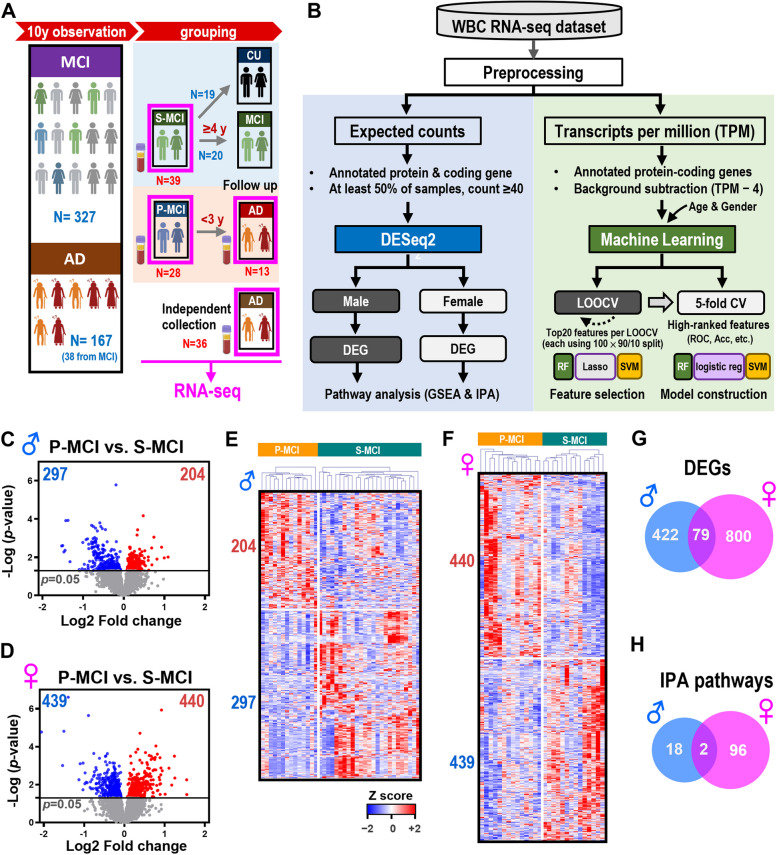
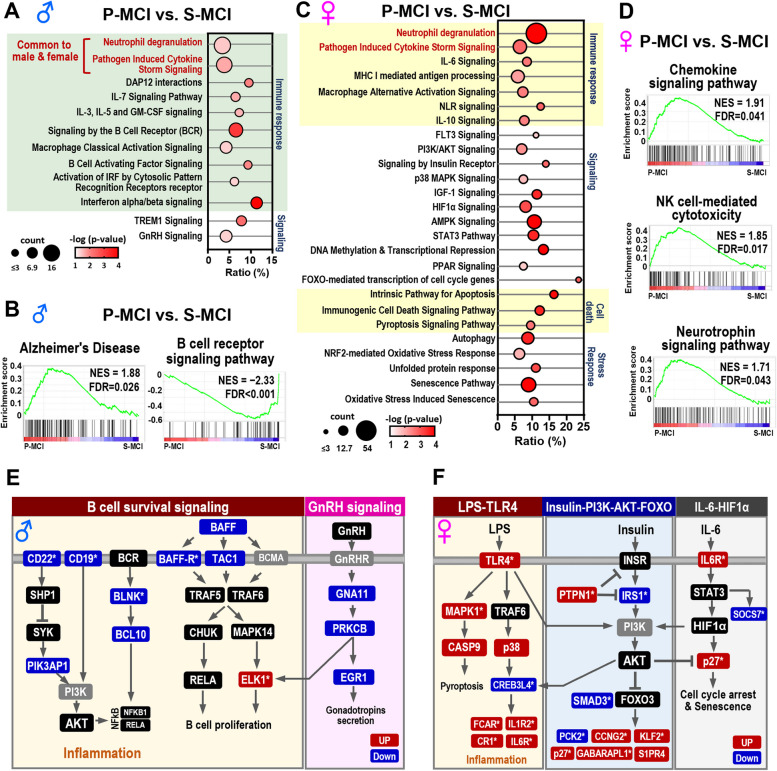
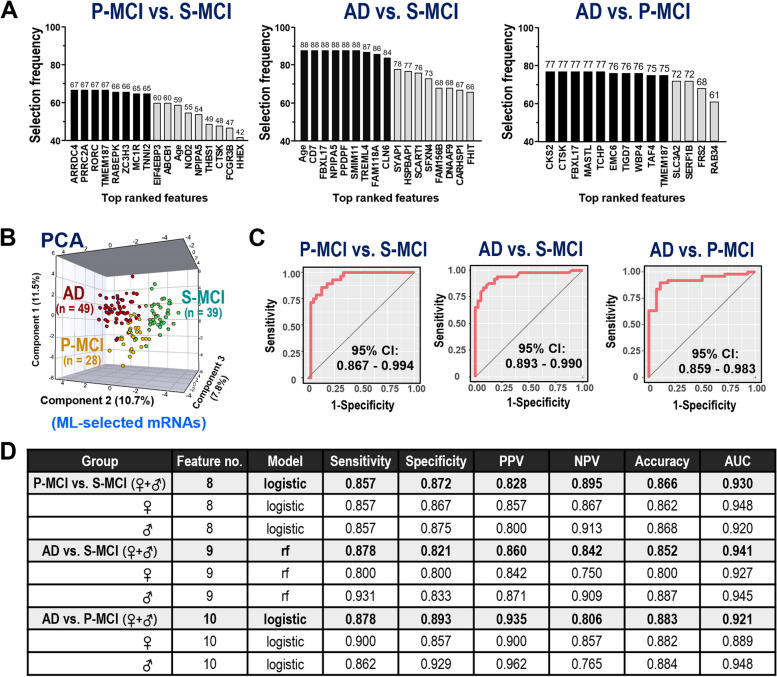
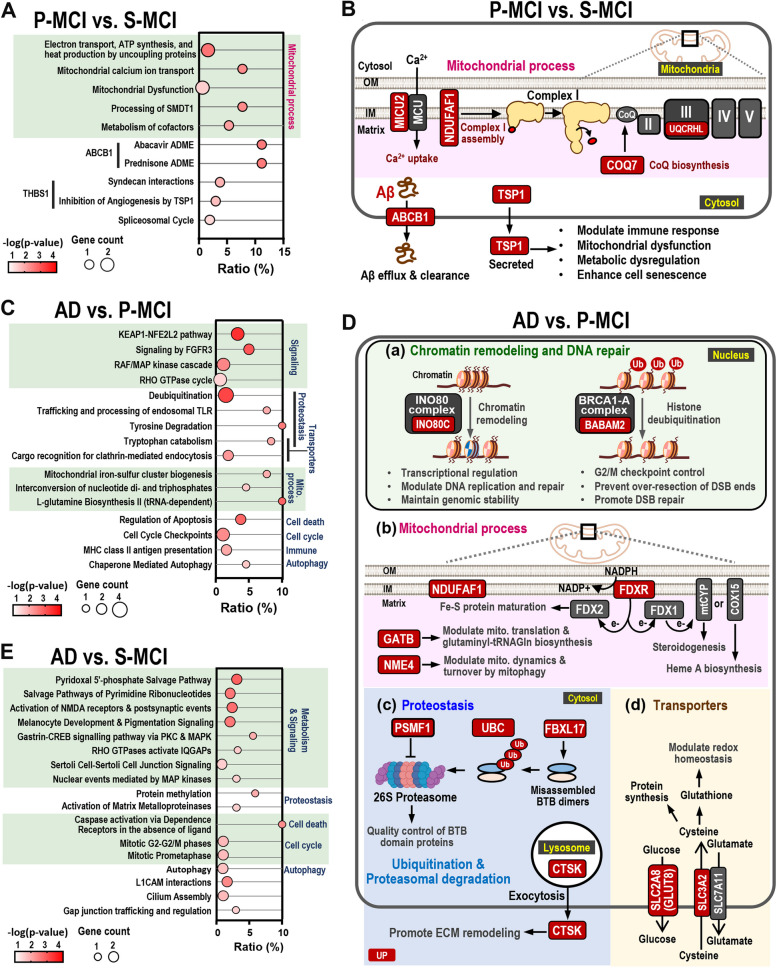
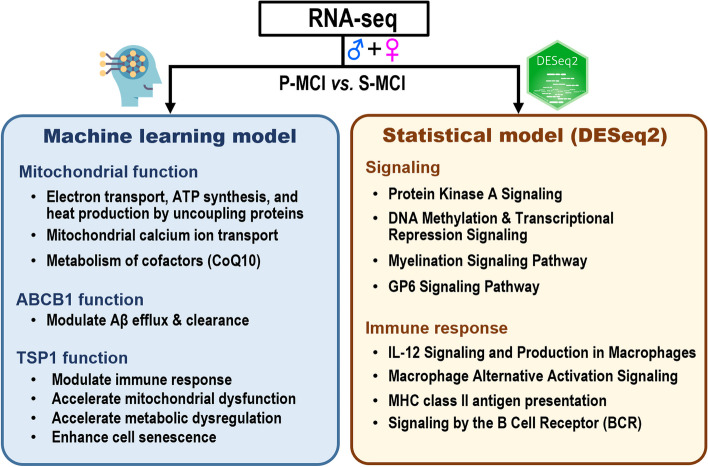
BACKGROUND: Effective treatment for Alzheimer's disease (AD) remains an unmet need. Thus, identifying patients with mild cognitive impairment (MCI) who are at high-risk of progressing to AD is crucial for early intervention. METHODS: Blood-based transcriptomics analyses were performed using a longitudinal study cohort to compare progressive MCI (P-MCI, n = 28), stable MCI (S-MCI, n = 39), and AD patients (n = 49). Statistical DESeq2 analysis and machine learning methods were employed to identify differentially expressed genes (DEGs) and develop prediction models. RESULTS: We discovered a remarkable gender-specific difference in DEGs that distinguish P-MCI from S-MCI. Machine learning models achieved high accuracy in distinguishing P-MCI from S-MCI (AUC 0.93), AD from S-MCI (AUC 0.94), and AD from P-MCI (AUC 0.92). An 8-gene signature was identified for distinguishing P-MCI from S-MCI. CONCLUSIONS: Blood-based transcriptomic biomarker signatures show great utility in identifying high-risk MCI patients, with mitochondrial processes emerging as a crucial contributor to AD progression.
Overview
The claims and statistics of this paper haven’t been checked yet.
Free: it reads the open-access text and checks the first 5 claims that cite a source we can check. Create a free account to check every claim.
Integrity signals
Registry
Cites
Statistics
Figures
Verification
Claims the paper makes
The claims and statistics of this paper haven’t been checked yet.
Free: it reads the open-access text and checks the first 5 claims that cite a source we can check. Create a free account to check every claim.
Claims other papers make about this one
Each is checked against this paper’s own text: does it say what the citing paper says it does?
The source backs part of the claim, not all of it — or backs it for a different population, condition or comparison.
In the citing paper
“Nested cross-validation has mitigated this problem in transcriptomic classifiers, increasing external accuracy by up to 15%283.”
From Artificial intelligence-driven multi-omics approaches in Alzheimer's disease: Progress, challenges, and future directions (2025) · cites this paper as [283]
Experimental — accuracy not yet measuredThe cited source says what the claim attributes to it.
In the citing paper
“Similarly, transcriptomic studies have identified concise gene panels with high diagnostic utility; for example, an eight-gene signature distinguished progressive from stable MCI with an AUC of 0.93283.”
From Artificial intelligence-driven multi-omics approaches in Alzheimer's disease: Progress, challenges, and future directions (2025) · cites this paper as [283]
Self-check
Percentages, sums and reported differences re-computed from the paper’s own numbers.
The self-check needs the paper’s full text.
Citations
Cites
Breiman, L. (2001) · Machine Learning · doi:10.1023/a:1010933404324 · Cited by 133,538
Moderated estimation of fold change and dispersion for RNA-seq data with DESeq2
Love, M. I., Huber, W., & Anders, S. (2014) · Genome Biology · doi:10.1186/s13059-014-0550-8 · Cited by 95,106
Cortes, C., & Vapnik, V. (1995) · Machine Learning · doi:10.1007/bf00994018 · Cited by 59,421
Regression shrinkage and selection via the lasso
Tibshirani, R. (1996) · Journal of the Royal Statistical Society Series B: Statistical Methodology · doi:10.1111/j.2517-6161.1996.tb02080.x · Cited by 51,482
RSEM: accurate transcript quantification from RNA-Seq data with or without a reference genome
Li, B., & Dewey, C. N. (2011) · BMC Bioinformatics · doi:10.1186/1471-2105-12-323 · Cited by 22,179
McKhann, G. M., Knopman, D. S., Chertkow, H., Hyman, B. T., Jack, C. R., Kawas, C. H., Klunk, W. E., Koroshetz, W. J., Manly, J. J., Mayeux, R., et al. (2011) · Alzheimer's & Dementia · doi:10.1016/j.jalz.2011.03.005 · Cited by 18,657
Albert, M. S., DeKosky, S. T., Dickson, D., Dubois, B., Feldman, H. H., Fox, N. C., Gamst, A., Holtzman, D. M., Jagust, W. J., Petersen, R. C., et al. (2011) · Alzheimer's & Dementia · doi:10.1016/j.jalz.2011.03.008 · Cited by 10,152
TM4: a free, open-source system for microarray data management and analysis
Saeed, A. I., Sharov, V., White, J., Li, J., Liang, W., Bhagabati, N., Braisted, J., Klapa, M., Currier, T., Thiagarajan, M., et al. (2003) · BioTechniques · doi:10.2144/03342mt01 · Cited by 4,837
Profiling Tumor Infiltrating Immune Cells with CIBERSORT
Chen, B., Khodadoust, M. S., Liu, C. L., Newman, A. M., & Alizadeh, A. A. (2018) · Methods in Molecular Biology · doi:10.1007/978-1-4939-7493-1_12 · Cited by 3,874
Inflammation as a central mechanism in Alzheimer's disease
Kinney, J. W., Bemiller, S. M., Murtishaw, A. S., Leisgang, A. M., Salazar, A. M., & Lamb, B. T. (2018) · Alzheimer's & Dementia: Translational Research & Clinical Interventions · doi:10.1016/j.trci.2018.06.014 · Cited by 2,253
Mitochondria dysfunction in the pathogenesis of Alzheimer’s disease: Recent advances.
Wang, W., Zhao, F., Ma, X., Perry, G., & Zhu, X. (2020) · Molecular Neurodegeneration · doi:10.1186/s13024-020-00376-6 · Cited by 1,274
Blood-based biomarkers for Alzheimer disease: mapping the road to the clinic
Hampel, H., O’Bryant, S. E., Molinuevo, J. L., Zetterberg, H., Masters, C. L., Lista, S., Kiddle, S. J., Batrla, R., & Blennow, K. (2018) · Nature Reviews Neurology · doi:10.1038/s41582-018-0079-7 · Cited by 716
Barker, W. W., Luis, C. A., Kashuba, A., Luis, M., Harwood, D. G., Loewenstein, D., Waters, C., Jimison, P., Shepherd, E., Sevush, S., et al. (2002) · Alzheimer Disease & Associated Disorders · doi:10.1097/00002093-200210000-00001 · Cited by 705
Dementia: a global health priority - highlights from an ADI and World Health Organization report
Wortmann, M. (2012) · Alzheimer's Research & Therapy · doi:10.1186/alzrt143 · Cited by 471
Peripheral and central immune system crosstalk in Alzheimer disease — a research prospectus
Bettcher, B. M., Tansey, M. G., Dorothée, G., & Heneka, M. T. (2021) · Nature Reviews Neurology · doi:10.1038/s41582-021-00549-x · Cited by 427
Koepsell, T. D., & Monsell, S. E. (2012) · Neurology · doi:10.1212/wnl.0b013e31826e26b7 · Cited by 369
A novel m6A reader Prrc2a controls oligodendroglial specification and myelination
Wu, R., Li, A., Sun, B., Sun, J.-G., Zhang, J., Zhang, T., Chen, Y., Xiao, Y., Gao, Y., Zhang, Q., et al. (2019) · Cell Research · doi:10.1038/s41422-018-0113-8 · Cited by 366
Neff, R. A., Wang, M., Vatansever, S., Guo, L., Ming, C., Wang, Q., Wang, E., Horgusluoglu-Moloch, E., Song, W.-M., Li, A., et al. (2021) · Science Advances · doi:10.1126/sciadv.abb5398 · Cited by 324
Targeting Neuroinflammation to Treat Alzheimer’s Disease
Ardura-Fabregat, A., Boddeke, E. W. G. M., Boza-Serrano, A., Brioschi, S., Castro-Gomez, S., Ceyzériat, K., Dansokho, C., Dierkes, T., Gelders, G., Heneka, M. T., et al. (2017) · CNS Drugs · doi:10.1007/s40263-017-0483-3 · Cited by 233
Does mild cognitive impairment always lead to dementia? A review
Pandya, S. Y., Clem, M. A., Silva, L. M., & Woon, F. L. M. (2016) · Journal of the Neurological Sciences · doi:10.1016/j.jns.2016.07.055 · Cited by 177
Sex Differences in Alzheimer’s Disease: Insights From the Multiomics Landscape
Guo, L., Zhong, M. B., Zhang, L., Zhang, B., & Cai, D. (2022) · Biological Psychiatry · doi:10.1016/j.biopsych.2021.02.968 · Cited by 164
Biomarkers in dementia: clinical utility and new directions
Ahmed, R. M., Paterson, R. W., Warren, J. D., Zetterberg, H., O'Brien, J. T., Fox, N. C., Halliday, G. M., & Schott, J. M. (2014) · Journal of Neurology, Neurosurgery & Psychiatry · doi:10.1136/jnnp-2014-307662 · Cited by 156
Single-Cell RNA Sequencing of Peripheral Blood Reveals Immune Cell Signatures in Alzheimer’s Disease
Xu, H., & Jia, J. (2021) · Frontiers in Immunology · doi:10.3389/fimmu.2021.645666 · Cited by 149
Single-cell RNA sequencing reveals B cell–related molecular biomarkers for Alzheimer’s disease
Xiong, L.-L., Xue, L.-L., Du, R.-L., Niu, R.-Z., Chen, L., Chen, J., Hu, Q., Tan, Y.-X., Shang, H.-F., Liu, J., et al. (2021) · Experimental & Molecular Medicine · doi:10.1038/s12276-021-00714-8 · Cited by 114
ElAli, A., & Rivest, S. (2013) · Frontiers in Physiology · doi:10.3389/fphys.2013.00045 · Cited by 108
Systematic Analysis and Biomarker Study for Alzheimer’s Disease
Li, X., Wang, H., Long, J., Pan, G., He, T., Anichtchik, O., Belshaw, R., Albani, D., Edison, P., Green, E. K., et al. (2018) · Scientific Reports · doi:10.1038/s41598-018-35789-3 · Cited by 87
Iturria-Medina, Y., Khan, A. F., Adewale, Q., Shirazi, A. H., & Initiative, T. A. D. N. (2020) · Brain · doi:10.1093/brain/awz400 · Cited by 77
Croisile, B., Auriacombe, S., Etcharry‐Bouyx, F., & Vercelletto, M. (2012) · Revue Neurologique · doi:10.1016/j.neurol.2011.11.007 · Cited by 62
INO80-C and SWR-C: Guardians of the Genome
Gerhold, C., Hauer, M., & Gasser, S. M. (2014) · Journal of Molecular Biology · doi:10.1016/j.jmb.2014.10.015 · Cited by 56
Antidiabetic Drugs in Alzheimer’s Disease and Mild Cognitive Impairment: A Systematic Review
Muñoz-Jiménez, M., Zaarkti, A., García-Arnés, J. A., & García-Casares, N. (2020) · Dementia and Geriatric Cognitive Disorders · doi:10.1159/000510677 · Cited by 56
Chi, X., Jin, W., Zhao, X., Xie, T., Shao, J., Bai, X., Jiang, Y., Wang, X., & Dong, C. (2022) · Science Advances · doi:10.1126/sciadv.abn7774 · Cited by 56
Thrombospondin-1 in maladaptive aging responses: a concept whose time has come
Isenberg, J. S., & Roberts, D. D. (2020) · American Journal of Physiology-Cell Physiology · doi:10.1152/ajpcell.00089.2020 · Cited by 51
Paranjpe, M. D., Belonwu, S., Wang, J. K., Oskotsky, T., Gupta, A., Taubes, A., Zalocusky, K. A., Paranjpe, I., Glicksberg, B. S., Huang, Y., et al. (2021) · Frontiers in Aging Neuroscience · doi:10.3389/fnagi.2021.735611 · Cited by 49
Self-citationThe roles of GnRH in the human central nervous system
Wickramasuriya, N., Hawkins, R. D., Atwood, C., & Butler, T. (2022) · Hormones and Behavior · doi:10.1016/j.yhbeh.2022.105230 · Cited by 48
Karaman, B. K., Mormino, E. C., Sabuncu, M. R., & Initiative, A. D. N. (2022) · PLoS ONE · doi:10.1371/journal.pone.0277322 · Cited by 43
Costanzo, A. D., Paris, D., Melck, D. J., Angiolillo, A., Corso, G., Maniscalco, M., & Motta, A. (2020) · Scientific Reports · doi:10.1038/s41598-020-71832-y · Cited by 36
Kang, S., Byun, J., Son, S. M., & Mook‐Jung, I. (2018) · Cell Death Discovery · doi:10.1038/s41420-017-0023-4 · Cited by 35
Cáceres, A., & González, J. R. (2020) · Neurobiology of Aging · doi:10.1016/j.neurobiolaging.2020.08.020 · Cited by 18
Cited by
Ren, F., Wei, J., Chen, Q., Hu, M., Yu, L., Mi, J., Zhou, X., Qin, D., Wu, J., & Wu, A. (2025) · Acta Pharmaceutica Sinica B · doi:10.1016/j.apsb.2025.07.030 · Cited by 97
Doxycycline: An essential tool for Alzheimer’s disease
Forloni, G. (2025) · Biomedicine & Pharmacotherapy · doi:10.1016/j.biopha.2025.118159 · Cited by 12
Conserved Blood Transcriptome Patterns Highlight microRNA and Hub Gene Drivers of Neurodegeneration
Cerna, J. L. O. D. L., Talubo, N. D. D., Villanueva, B. H. A., Tsai, P., & Tayo, L. L. (2025) · Genes · doi:10.3390/genes16101178 · Cited by 8
“This contrast underscores that blood captures overlapping but not identical processes compared with the brain, while inflammatory and metabolic responses are mirrored peripherally, neuronal and synaptic pathways remain largely CNS-restricted [37,127–131].”
Mitochondrial methylcytosines as blood-based biomarkers for Alzheimer’s disease dementia prognosis
Gascón‐Bayarri, J., Mosquera, J. L., Blanch, M., Martí, P., Fontal, B., Trapero, C., Rojo, N., Rico, I., Campdelacreu, J., Fowler, C., et al. (2025) · iScience · doi:10.1016/j.isci.2025.113418 · Cited by 4
“24 27 Although our study did not report sex-stratified analyses, additional analyses performed for internal validation did not indicate a significant contribution of Sex to the classification performance, nor did Sex demonstrate associations with site-specific methylation patterns in our data-set.”
Chen, K., Yu, G., & Li, H. (2025) · Experimental Gerontology · doi:10.1016/j.exger.2025.113019 · Cited by 1
Metadata
- Authors
- Huang, Y.-L., Tsai, T.-H., Shen, Z.-Q., Chan, Y.-H., Tu, C.-W., Tung, C.-Y., Wang, P.-N., & Tsai, T.-F.
- Affiliations
- National Yang Ming Chiao Tung University (TW)
- Acer (Taiwan) (TW)
- Corresponding author
- Tsai, Tsung-Hsien
- Wang, Pei-Ning
- Tsai, Ting-Fen
- Venue
- Alzheimer's Research & Therapy
- Published
- 2025-01-03
- Volume
- 17
- Issue
- 1
- Pages
- 3-3
- ISSN
- 1758-9193 (ISSN-L)
- PMC
- PMC11697870
- OpenAlex
- W4406039902
- Cited by
- 13
- References
- 38
- Citations by year
- 2026: 6 · 2025: 7
- FWCI
- 8.70
- Type
- journal article
- Language
- en
- Open access
- gold
- doi.org
- Licence
- cc-by-nc-nd
- creativecommons.org/licenses/by-nc-nd/4.0 (tdm)
- creativecommons.org/licenses/by-nc-nd/4.0 (vor)
- Locations
- Alzheimer s Research & Therapy (publishedVersion, cc-by-nc-nd)
- PubMed Central (publishedVersion, cc-by-nc-nd)
- PubMed (publishedVersion)
- DOAJ (DOAJ: Directory of Open Access Journals) (submittedVersion, cc-by-sa)
- NHRI Institutional Repository (submittedVersion)
- Funders
- Shanghai Educational Development Foundation
- Ministry of Education, India
- National Health Research Institutes
- National Science and Technology Council (MOST 110-2320-B-A49A-529-MY3)
- Topics
- Health Sciences › Medicine › Psychiatry and Mental health › Dementia and Cognitive Impairment Research
- Life Sciences › Neuroscience › Cellular and Molecular Neuroscience › Alzheimer's disease research and treatments
- Life Sciences › Neuroscience › Neurology › Neuroinflammation and Neurodegeneration Mechanisms
- Keywords
- Alzheimer's disease, mild cognitive impairment, disease progression prediction, blood transcriptomics, gene expression biomarkers, differentially expressed genes, early intervention
- MeSH terms
- Machine Learning, Aged, Aged, 80 and over, Alzheimer Disease, Female, Humans, Longitudinal Studies, Male, Biomarkers, Disease Progression, Transcriptome, Cognitive Dysfunction
About these checks
Registry, retraction, Cites and statistics results are computed, not judged, with one exception: a printed reference that no index lists is read once by a model before it counts as a citation error. Claims are extracted by a model and kept only when their quote appears verbatim in the text; each cited source is then checked, with a model’s help, for whether it says what the claim relies on. Those verdicts can be wrong — read the claim’s quote and the cited source before relying on one.
Statistics and arithmetic are recomputed, not judged.
Confidence bands are shown only for fields calibrated on our annotated test set. None is calibrated yet, so no band is shown.
What counts as a claim ›How we measure confidence ›How we check this ›
Are you an author, or do you see a problem with this page? Request a review
Data sources
Bibliographic data: Semantic Scholar, OpenAlex, Crossref.
Contains information from the Semantic Scholar Academic Graph Datasets, made available under the ODC Attribution License (ODC-BY 1.0).
Semantic Scholar’s data is described in: Kinney, R., et al. (2023). The Semantic Scholar Open Data Platform. arXiv:2301.10140.
