

Atopic dermatitis
Open accessThe DOI matches its Crossref record; 39 of the 39 references it cites were found in a registry or an index; 17 of the 67 sources its claims cite were checked for support.
Abstract
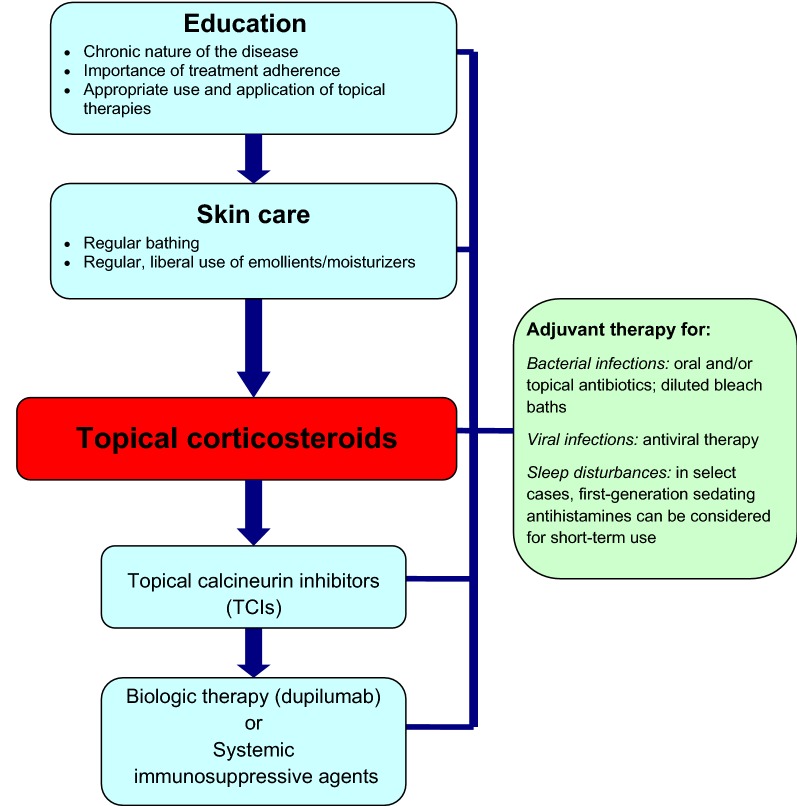
Atopic dermatitis (AD) is a common, chronic skin disorder that can significantly impact the quality of life of affected individuals as well as their families. Although the pathogenesis of the disorder is not completely understood, it appears to result from the complex interplay between defects in skin barrier function, environmental and infectious agents, and immune dysregulation. There are no diagnostic tests for AD; therefore, the diagnosis is based on specific clinical criteria that take into account the patient's history and clinical manifestations. Successful management of the disorder requires a multifaceted approach that involves education, optimal skin care practices, anti-inflammatory treatment with topical corticosteroids and/or topical calcineurin inhibitors, the management of pruritus, and the treatment of skin infections. Systemic immunosuppressive agents may also be used, but are generally reserved for severe flare-ups or more difficult-to-control disease. Topical corticosteroids are the first-line pharmacologic treatments for AD, and evidence suggests that these agents may also be beneficial for the prophylaxis of disease flare-ups. Although the prognosis for patients with AD is generally favourable, those patients with severe, widespread disease and concomitant atopic conditions, such as asthma and allergic rhinitis, are likely to experience poorer outcomes.
Overview
CoChat Summary
TL;DR
Atopic dermatitis (AD) is a common chronic pruritic skin disorder driven by skin barrier defects, immune dysregulation, and environmental/infectious factors, with diagnosis based on clinical criteria rather than specific tests. Management centers on education, skin care, topical corticosteroids, and topical calcineurin inhibitors, with systemic agents reserved for severe or refractory disease.
Key findings
- AD affects an estimated 10–20% of children and 1–3% of adults in developed countries; approximately 45% of cases begin within the first 6 months of life, 60% during the first year, and 85% before 5 years of age, while up to 70% of children enter clinical remission before adolescence.
- The annual cost of AD in Canada is estimated at $1.4 billion; *S. aureus* colonizes approximately 90% of AD patients, and early consistent emollient use in at-risk infants has been associated with a 30–50% reduction in AD diagnosis at 6 months.
- About 35% of children with moderate-to-severe AD have contributory food allergies, but random food-allergen screening is not recommended because positive predictive value can be as low as 2%; allergy testing should be guided by history.
- Topical corticosteroids are first-line pharmacologic treatment and may also help prevent flares; TCIs are second-line, and dupilumab has been approved in Canada for moderate-to-severe AD not adequately controlled with topical therapies, with two phase 3 trials showing significant symptom and quality-of-life improvement versus placebo.
Methods
- Narrative review/overview of current literature on the epidemiology, pathophysiology, diagnosis, and management of atopic dermatitis.
- No primary data collection, systematic search strategy, or meta-analysis is described; the article synthesizes cited studies, guidelines, and trials.
- Main analysis is a narrative synthesis of diagnostic criteria, allergy assessment, prevention, and stepwise treatment approaches.
Limitations
- The paper states that AD pathogenesis is not completely understood; the exact role of foods and aeroallergens in AD is controversial; there is limited clinical trial data to guide corticosteroid selection; long-term UV phototherapy toxicity is unknown; and a systematic review found no good-quality evidence that wet-wrap therapy is superior to conventional topical corticosteroids.
- Evident from the text: as a narrative review, it does not report a systematic search strategy, inclusion/exclusion criteria, or formal quality appraisal of cited evidence.
- Evident from the text: recommendations rely on synthesis of existing literature and expert opinion rather than primary data, and potential publication or selection bias is not addressed.
Model-written summary. Check it against the paper before relying on it.
Integrity signals
Registry
Cites
Statistics
Figures
Verification
Claims the paper makes
14 Valid · 0 Not valid · 25 Not checked · 2 Own results and interpretations
The cited sources support only part of this claim — read each source’s verdict below.
In the paper
“Severe AD in infancy is a major risk factor for allergies to egg and peanut [7, 13, 16].”
§ Atopic dermatitis > Epidemiology
What the sources say
- Partly supportedcites [7] Tsakok T Marrs T Mohsin M Baron S du Toit G Till S Flohr C Does atopic dermatitis cause food allergy? A systematic review J Allergy Clin Immunol 2016 137 4 1071 1078 10.1016/j.jaci.2015.10.049 26897122 sourceExperimental — accuracy not yet measured
The section ‘The association between AD severity and FA’ reports that greater infant AD severity was associated with egg and peanut sensitization, and that food allergy was more frequent among children with severe than moderate AD. The evidence for egg specifically is primarily sensitization rather than clinically confirmed egg allergy, so the claim overstates what the review establishes for both named allergies. (LLM, conf=0.84)
- Not checked — no full text of the sourcecites [13] Kelleher MM Dunn-Galvin A Gray C Murray DM Kiely M Kenny L McLean WH Irvine AD Hourihane JO Skin barrier impairment at birth predicts food allergy at 2 years of age J Allergy Clin Immunol 2016 137 4 1111 1116 10.1016/j.jaci.2015.12.1312 26924469 source
- Partly supportedcites [16] Brough HA Liu AH Sicherer S Makinson K Douiri A Brown SJ Stephens AC Irwin McLean WH Turcanu V Wood RA Atopic dermatitis increases the effect of exposure to peanut antigen in dust on peanut sensitization and likely peanut allergy J Allergy Clin Immunol 2015 135 1 164 170 10.1016/j.jaci.2014.10.007 25457149 PMC4282723 sourceExperimental — accuracy not yet measured
The Results section ('History of AD modifies the effect of EPE') reports that severe AD amplified the association between peanut exposure and peanut sensitization, but did not show a similar increase for likely peanut allergy. The paper describes a general association between early-onset AD and food allergy, but does not establish severe infant AD as a major risk factor for egg allergy. Page numbers were not available in our copy. (LLM, conf=0.88)
states a cause- Asserted: passes — The authors put it forward as true.
- Checkable: passes — It can be checked against evidence.
- Load-bearing: unclear — It is unclear whether the paper’s conclusions depend on it.
- Based: passes — The paper gives a reason why it holds.
- Partly supported
Every source the paper cites for this claim was checked and supports it.
In the paper
“Early AD may also be a causative factor in the development of food allergy [7].”
§ Atopic dermatitis > Background
What the sources say
- Supportedcites [7] Tsakok T Marrs T Mohsin M Baron S du Toit G Till S Flohr C Does atopic dermatitis cause food allergy? A systematic review J Allergy Clin Immunol 2016 137 4 1071 1078 10.1016/j.jaci.2015.10.049 26897122 source
The Conclusions state that atopic dermatitis can precede food sensitization and allergy, which is consistent with a causal relationship. The Discussion links early-onset dermatitis to a possible pathway through inflamed skin that may lead to clinical food allergy; the claim appropriately says “may” rather than asserting causation. (LLM, conf=0.94)
states a possible cause- Asserted: passes — The authors put it forward as true.
- Checkable: passes — It can be checked against evidence.
- Load-bearing: unclear — It is unclear whether the paper’s conclusions depend on it.
- Based: passes — The paper gives a reason why it holds.
- Supported
The sources with a verdict support this claim; the rest weren’t checked yet, have no full text we could read, or their verdicts aren’t rated yet.
In the paper
“Current evidence suggests that AD is a primary skin barrier defect that facilitates the development of other atopic conditions [4, 5].”
§ Atopic dermatitis > Background
What the sources say
- Supportedcites [4] Egawa G Kabashima K Multifactorial skin barrier deficiency and atopic dermatitis: essential topics to prevent the atopic march J Allergy Clin Immunol 2016 138 2 350 358 10.1016/j.jaci.2016.06.002 27497277 source
The Abstract describes skin barrier deficiency as having a primary pathogenic role in AD and says it contributes to the subsequent atopic march. The section ‘Barrier Deficiency and the Development of Allergic Diseases’ links disrupted skin barriers to later allergic conditions. The paper also notes that AD has multiple causes; the claim’s emphasis on the barrier is consistent with its account. (LLM, conf=0.91)
- Not checked — no full text of the sourcecites [5] Nomura T Kabashima K Advances in atopic dermatitis in 2015 J Allergy Clin Immunol 2016 138 6 1548 1555 10.1016/j.jaci.2016.10.004 27931536 source
hedgedstates a cause- Asserted: passes — The authors put it forward as true.
- Checkable: passes — It can be checked against evidence.
- Load-bearing: unclear — It is unclear whether the paper’s conclusions depend on it.
- Based: passes — The paper gives a reason why it holds.
- Supported
The cited sources support only part of this claim — read each source’s verdict below.
In the paper
“The pathogenesis of AD is not completely understood, however, the disorder appears to result from the complex interaction between defects in skin barrier function, immune dysregulation, and environmental and infectious agents [4, 5, 10].”
§ Atopic dermatitis > Pathophysiology
What the sources say
- Partly supportedcites [4] Egawa G Kabashima K Multifactorial skin barrier deficiency and atopic dermatitis: essential topics to prevent the atopic march J Allergy Clin Immunol 2016 138 2 350 358 10.1016/j.jaci.2016.06.002 27497277 sourceExperimental — accuracy not yet measured
The Abstract and ‘Immunologic Modulation of Skin Integrity’ describe interactions among skin-barrier defects, environmental antigens, and immune dysregulation in AD pathogenesis. ‘Tight Junctions in AD Pathogenesis’ describes viral infections as complications of AD, not as agents contributing to its pathogenesis, so that part of the claim is not supported. (LLM, conf=0.88)
- Not checked — no full text of the sourcecites [5] Nomura T Kabashima K Advances in atopic dermatitis in 2015 J Allergy Clin Immunol 2016 138 6 1548 1555 10.1016/j.jaci.2016.10.004 27931536 source
- Not checked — no full text of the sourcecites [10] Fonacier LS Dreskin SC Leung DYM Allergic skin diseases J Allergy Clin Immunol 2010 125 S138 S149 10.1016/j.jaci.2009.05.039 19932921 source
hedgedstates a possible cause- Asserted: passes — The authors put it forward as true.
- Checkable: passes — It can be checked against evidence.
- Load-bearing: unclear — It is unclear whether the paper’s conclusions depend on it.
- Based: passes — The paper gives a reason why it holds.
- Rests on an assumption not shown here.
- Partly supported
The cited sources support only part of this claim — read each source’s verdict below.
In the paper
“This simple and cost-effective approach has resulted in a 30–50% reduction in the diagnosis of AD at 6 months [25–27].”
- Also stated in: § Key take-home messages · hedged
“Early, consistent application of emollients may help prevent AD in infants at increased risk.”
§ Atopic dermatitis > Prevention
What the sources say
- Supportedcites [25] Simpson EL Chalmers JR Hanifin JM Thomas KS Cork MJ McLean WH Brown SJ Chen Z Chen Y Williams HC Emollient enhancement of the skin barrier from birth offers effective atopic dermatitis prevention J Allergy Clin Immunol 2014 134 818 823 10.1016/j.jaci.2014.08.005 25282563 PMC4180007 source
The Methods describe daily full-body emollient use beginning within three weeks of birth in infants at high risk of atopic dermatitis. The Results report a 50% relative reduction in cumulative atopic dermatitis incidence at six months, which falls within the claimed 30–50% range. (LLM, conf=0.93)
- Partly supportedcites [26] Horimukai K Morita K Narita M Kondo M Kitazawa H Nozaki M Shigematsu Y Yoshida K Niizeki H Motomura K Application of moisturizer to neonates prevents development of atopic dermatitis J Allergy Clin Immunol 2014 134 4 824 830 10.1016/j.jaci.2014.07.060 25282564 sourceExperimental — accuracy not yet measured
Our copy supports the intervention, population and rough magnitude: daily emulsion-type emollient from the first week of life for 32 weeks in 118 neonates at high risk for AD (parent or sibling with AD), with 'approximately 32% fewer neonates who received the moisturizer had AD/eczema by week 32' (Abstract/Results) and a Cox hazard ratio of 0.48 (95% CI 0.27-0.86) (Primary and secondary outcomes) — consistent with the 30-50% range. However, the endpoint the trial reports is week 32 of life (~7+ months), not 6 months; infants were examined at week 24 but our copy gives no 6-month figure, so the claim's time point is not supported. The reported outcome was also the combined endpoint AD/eczema (AD defined as itchy eczema lasting ≥4 weeks, eczema ≥2 weeks), not a diagnosis of AD alone. (LLM, conf=0.75)
- Partly supportedcites [27] Xu S Immaneni S Hazen GB Silverberg JI Paller AS Lio PA Cost-effectiveness of prophylactic moisturization for atopic dermatitis JAMA Pediatr 2017 171 2 e163909 10.1001/jamapediatrics.2016.3909 27918774 sourceExperimental — accuracy not yet measured
The paper’s introductory passage reports that early full-body moisturization in high-risk infants was associated with reduced atopic dermatitis incidence, and the Methods use a previously reported 50% relative risk reduction. But the passage gives 25% for the Japanese cohort, not 30%, and describes application over 6–8 months rather than a reduction measured uniformly at 6 months. (LLM, conf=0.84)
boostedstates a cause- Asserted: passes — The authors put it forward as true.
- Checkable: passes — It can be checked against evidence.
- Load-bearing: passes — The paper’s conclusions depend on it.
- Based: passes — The paper gives a reason why it holds.
- Also stated in: § Key take-home messages · hedged
15 more claims · 3 with their cited sources checked
Create a free account to see all 41 claims and to verify the 6 references still open.
- Borderline: one of the tests for a substantial claim is unclear. 1
- Probably not a substantial claim. 8
- It may state two separate claims as one. 18
Self-check
Percentages, sums and reported differences re-computed from the paper’s own numbers.
Self-check results appear here once an independent check has confirmed them.
Cited works that were retracted
Works this paper cites that were later retracted, from the retraction notices publishers deposit. Major when the notice came out before this paper was published.
A note, not an issue: for example, a cited work that was retracted only after this paper was published, which its authors could not have known.
In the paper
“Kelleher M, Dunn-Galvin A, Hourihane JO, Murray D, Campbell LE, McLean WH, Irvine AD. Skin barrier dysfunction measured by transepidermal water loss at 2 days and 2 months predates and predicts atopic dermatitis at 1 year. J Allergy Clin Immunol. 2015;135(4):930–5.”
Cited work 10.1016/j.jaci.2014.12.013 · retracted 2021-04-01 · notice 10.1016/j.jaci.2021.02.002 · this paper published 2018-09
A note, not an issue: for example, a cited work that was retracted only after this paper was published, which its authors could not have known.
In the paper
“Kelleher MM, Dunn-Galvin A, Gray C, Murray DM, Kiely M, Kenny L, McLean WH, Irvine AD, Hourihane JO. Skin barrier impairment at birth predicts food allergy at 2 years of age. J Allergy Clin Immunol. 2016;137(4):1111–6.”
Cited work 10.1016/j.jaci.2015.12.1312 · retracted 2021-04-01 · notice 10.1016/j.jaci.2021.02.003 · this paper published 2018-09
Citations
Cites
2 retracted
Kelleher, M., Dunn-Galvin, A., Hourihane, J. O., Murray, D., Campbell, L. E., McLean, W. H. I., & Irvine, A. D. (2015) · Journal of Allergy and Clinical Immunology · doi:10.1016/j.jaci.2014.12.013 · Cited by 225
RetractedRETRACTED: Skin barrier impairment at birth predicts food allergy at 2 years of age
Kelleher, M. M., Dunn-Galvin, A., Gray, C., Murray, D. M., Kiely, M., Kenny, L., McLean, W. H. I., Irvine, A. D., & Hourihane, J. O. (2016) · Journal of Allergy and Clinical Immunology · doi:10.1016/j.jaci.2015.12.1312 · Cited by 169 · cited 2×
“Severe AD in infancy is a major risk factor for allergies to egg and peanut [7, 13, 16].”
BackgroundRetractedTwo Phase 3 Trials of Dupilumab versus Placebo in Atopic Dermatitis
Simpson, E. L., Bieber, T., Guttman-Yassky, E., Beck, L. A., Blauvelt, A., Cork, M. J., Silverberg, J. I., Deleuran, M., Kataoka, Y., Lacour, J.-P., et al. (2016) · New England Journal of Medicine · doi:10.1056/nejmoa1610020 · Cited by 2,110 · cited 1×
“Two phase 3 trials found dupilumab to significantly improve symptoms and quality of life in patients with AD compared to placebo [39].”
BackgroundWeidinger, S., & Novak, N. (2016) · The Lancet · doi:10.1016/s0140-6736(15)00149-x · Cited by 1,908
Bieber, T. (2008) · New England Journal of Medicine · doi:10.1056/nejmra074081 · Cited by 1,780
WILLIAMS, H. C., JBURNEY, P. G., HAY, R. J., ARCHER, C. B., SHIPLEY, M. J., AHUNTER, J. J., BINGHAM, E. A., FINLAY, A. Y., PEMBROKE, A. C., CGRAHAM-BROWN, R. A., et al. (1994) · British Journal of Dermatology · doi:10.1111/j.1365-2133.1994.tb08530.x · Cited by 1,271
Allergen immunotherapy: A practice parameter third update
Cox, L., Nelson, H., Lockey, R., Calabria, C., Chacko, T., Finegold, I., Nelson, M., Weber, R., Bernstein, D. I., Blessing-Moore, J., et al. (2011) · Journal of Allergy and Clinical Immunology · doi:10.1016/j.jaci.2010.09.034 · Cited by 1,256
Atopic dermatitis and the atopic march
Spergel, J. M., & Paller, A. S. (2003) · Journal of Allergy and Clinical Immunology · doi:10.1016/j.jaci.2003.09.033 · Cited by 1,229 · cited 1×
“In fact, AD is often the initial step in the “atopic march” (the sequential development of allergic disease manifestations during early childhood), which leads to asthma and/or allergic rhinitis in the majority of afflicted patients [6].”
BackgroundWILLIAMS, H. C., JBURNEY, P. G., PEMBROKE, A. C., HAY, R. J., & Party, A. D. D. C. W. (1994) · British Journal of Dermatology · doi:10.1111/j.1365-2133.1994.tb08532.x · Cited by 926
Akdis, C. A., Akdis, M., Bieber, T., Bindslev‐Jensen, C., Boguniewicz, M., Eigenmann, P., Hamid, Q., Kapp, A., Leung, D. Y. M., Lipozencic, J., et al. (2006) · Allergy · doi:10.1111/j.1398-9995.2006.01153.x · Cited by 733
Emollient enhancement of the skin barrier from birth offers effective atopic dermatitis prevention
Simpson, E. L., Chalmers, J. R., Hanifin, J. M., Thomas, K. S., Cork, M. J., McLean, W. H. I., Brown, S. J., Chen, Z., Chen, Y., & Williams, H. C. (2014) · Journal of Allergy and Clinical Immunology · doi:10.1016/j.jaci.2014.08.005 · Cited by 722
Application of moisturizer to neonates prevents development of atopic dermatitis
Horimukai, K., Morita, K., Narita, M., Kondo, M., Kitazawa, H., Nozaki, M., Shigematsu, Y., Yoshida, K., Niizeki, H., Motomura, K.-I., et al. (2014) · Journal of Allergy and Clinical Immunology · doi:10.1016/j.jaci.2014.07.060 · Cited by 607
Treatment of Staphylococcus aureus Colonization in Atopic Dermatitis Decreases Disease Severity
Huang, J. T., Abrams, M., Tlougan, B., Rademaker, A., & Paller, A. S. (2009) · Pediatrics · doi:10.1542/peds.2008-2217 · Cited by 481
Akdis, C. A., Akdis, M., Bieber, T., Bindslev-Jensen, C., Boguniewicz, M., Eigenmann, P., Hamid, Q., Kapp, A., Leung, D. Y. M., Lipozencic, J., et al. (2006) · Journal of Allergy and Clinical Immunology · doi:10.1016/j.jaci.2006.03.045 · Cited by 460
Risk of first‐generation H 1 ‐antihistamines: a GA 2 LEN position paper
Church, M. K., Maurer, M., Simons, F. E. R., Bindslev‐Jensen, C., Van Cauwenberge, P., Bousquet, J., Holgate, S. T., & Zuberbier, T. (2010) · Allergy · doi:10.1111/j.1398-9995.2009.02325.x · Cited by 440
Does atopic dermatitis cause food allergy? A systematic review
Tsakok, T., Marrs, T., Mohsin, M., Baron, S., du Toit, G., Till, S., & Flohr, C. (2016) · Journal of Allergy and Clinical Immunology · doi:10.1016/j.jaci.2015.10.049 · Cited by 368 · cited 3×
“Results of a recent systematic review suggest that AD of increased severity and chronicity is particularly associated with food allergy, and that AD precedes the development of food allergy, suggesting a causal relationship [7].”
BackgroundBrough, H. A., Liu, A. H., Sicherer, S., Makinson, K., Douiri, A., Brown, S. J., Stephens, A. C., Irwin McLean, W. H., Turcanu, V., Wood, R. A., et al. (2015) · Journal of Allergy and Clinical Immunology · doi:10.1016/j.jaci.2014.10.007 · Cited by 345 · cited 1×
“Severe AD in infancy is a major risk factor for allergies to egg and peanut [7, 13, 16].”
BackgroundEpidemiology of atopic dermatitis
Larsen, F. S., & Hanifin, J. M. (2002) · Immunology and Allergy Clinics of North America · doi:10.1016/s0889-8561(03)00066-3 · Cited by 310
WILLIAMS, H. C., JBURNEY, P. G., STRACHAN, D., HAY, R. J., & Party, A. D. D. C. W. (1994) · British Journal of Dermatology · doi:10.1111/j.1365-2133.1994.tb08531.x · Cited by 273
Egawa, G., & Kabashima, K. (2016) · Journal of Allergy and Clinical Immunology · doi:10.1016/j.jaci.2016.06.002 · Cited by 265 · cited 2×
“Pathophysiology The pathogenesis of AD is not completely understood, however, the disorder appears to result from the complex interaction between defects in skin barrier function, immune dysregulation, and environmental and infectious agents [4, 5, 10].”
BackgroundSchmitt, J., von Kobyletzki, L., Svensson, Å., & Apfelbacher, C. (2011) · British Journal of Dermatology · doi:10.1111/j.1365-2133.2010.10030.x · Cited by 257 · cited 2×
“Studies have found that, after AD is stabilized, the addition of twice-weekly topical anti-inflammatories to maintenance treatment with emollients significantly reduces the risk of relapses in both pediatric and adult subjects [29].”
BackgroundManagement of Atopic Dermatitis in the Pediatric Population
Krakowski, A. C., Eichenfield, L. F., & Dohil, M. A. (2008) · Pediatrics · doi:10.1542/peds.2007-2232 · Cited by 205 · cited 5×
“Background Atopic dermatitis (AD) is a chronic, highly pruritic (itchy) inflammatory skin disease, and is one of the most common skin disorders in children [1].”
BackgroundInfluentialBae, J. M., Choi, Y. Y., Park, C. O., Chung, K. Y., & Lee, K. H. (2013) · Journal of Allergy and Clinical Immunology · doi:10.1016/j.jaci.2013.02.044 · Cited by 201
Siegfried, E. C., Jaworski, J. C., Kaiser, J. D., & Hebert, A. A. (2016) · BMC Pediatrics · doi:10.1186/s12887-016-0607-9 · Cited by 194 · cited 1×
“Topical calcineurin inhibitors (TCIs) TCIs are immunosuppressant agents that have also been shown to be safe and effective for the treatment of AD [9, 30, 31], as well as the prophylaxis of AD flares [29].”
BackgroundFonacier, L. S., Dreskin, S. C., & Leung, D. Y. M. (2010) · Journal of Allergy and Clinical Immunology · doi:10.1016/j.jaci.2009.05.039 · Cited by 139 · cited 1×
“Pathophysiology The pathogenesis of AD is not completely understood, however, the disorder appears to result from the complex interaction between defects in skin barrier function, immune dysregulation, and environmental and infectious agents [4, 5, 10].”
BackgroundChang, A., Robison, R., Cai, M., & Singh, A. M. (2016) · The Journal of Allergy and Clinical Immunology: In Practice · doi:10.1016/j.jaip.2015.08.006 · Cited by 122 · cited 1×
“caution as they can inadvertently lead to loss of tolerance of foods and increase the risk of immediate, IgE-mediated food reactions [24].”
BackgroundNatural History and Risk Factors of Atopic Dermatitis in Children
Pyun, B. Y. (2015) · Allergy, Asthma & Immunology Research · doi:10.4168/aair.2015.7.2.101 · Cited by 115 · cited 1×
“Fortunately, up to 70% of children with AD will go into clinical remission before adolescence [14, 15].”
BackgroundA Comprehensive Review of the Treatment of Atopic Eczema
Lee, J. H., Son, S. W., & Cho, S. H. (2016) · Allergy, Asthma & Immunology Research · doi:10.4168/aair.2016.8.3.181 · Cited by 112 · cited 3×
“Therefore, optimal management of AD requires a multifaceted approach aimed at healing and protecting the skin barrier and addressing the complex immunopathogenesis of the disease [8, 9].”
BackgroundBroeders, J. A., Ahmed Ali, U., & Fischer, G. (2016) · Journal of the American Academy of Dermatology · doi:10.1016/j.jaad.2016.02.1228 · Cited by 84
Burden of Atopic dermatitis in Canada
Barbeau, M., & Bpharm, H. L. (2006) · International Journal of Dermatology · doi:10.1111/j.1365-4632.2004.02345.x · Cited by 83
Food Allergen Panel Testing Often Results in Misdiagnosis of Food Allergy
Bird, J. A., Crain, M., & Varshney, P. (2015) · The Journal of Pediatrics · doi:10.1016/j.jpeds.2014.07.062 · Cited by 75 · cited 1×
“The positive predictive value of screening panels of food allergens in such cases is as low as 2%, and these screening panels are associated with significant health care utilization [23].”
BackgroundQuality of life of children with atopic dermatitis and their families
McKenna, S. P., & Doward, L. C. (2008) · Current Opinion in Allergy & Clinical Immunology · doi:10.1097/aci.0b013e3282ffd6cc · Cited by 74 · cited 2×
“The disorder results in significant morbidity and adversely affects quality of life [2].”
BackgroundGonzález‐López, G., Ceballos‐Rodríguez, R. M., González‐López, J. J., Feito Rodríguez, M., & Herranz‐Pinto, P. (2017) · British Journal of Dermatology · doi:10.1111/bjd.15165 · Cited by 66
Gu, H., Chen, X. S., Chen, K., Yan, Y., Jing, H., Chen, X. Q., Shao, C. G., & Ye, G. Y. (2001) · British Journal of Dermatology · doi:10.1046/j.1365-2133.2001.04379.x · Cited by 63
Advances in atopic dermatitis in 2015
Nomura, T., & Kabashima, K. (2016) · Journal of Allergy and Clinical Immunology · doi:10.1016/j.jaci.2016.10.004 · Cited by 60
Cost-effectiveness of Prophylactic Moisturization for Atopic Dermatitis
Xu, S., Immaneni, S., Hazen, G. B., Silverberg, J. I., Paller, A. S., & Lio, P. A. (2017) · JAMA Pediatrics · doi:10.1001/jamapediatrics.2016.3909 · Cited by 47
Bathing and Associated Treatments in Atopic Dermatitis
Gittler, J. K., Wang, J. F., & Orlow, S. J. (2016) · American Journal of Clinical Dermatology · doi:10.1007/s40257-016-0240-2 · Cited by 44
Segal, A. O., Ellis, A. K., & Kim, H. L. (2013) · Allergy, Asthma & Clinical Immunology · doi:10.1186/1710-1492-9-24 · Cited by 29
Pediatric Atopic Dermatitis: The Importance of Food Allergens
Kim, J. S. (2008) · Seminars in Cutaneous Medicine and Surgery · doi:10.1016/j.sder.2008.05.003 · Cited by 19 · cited 3×
“Although most patients with AD demonstrate specific IgE antibodies to foods and/or aeroallergens on skin prick testing (SPT) and measurements of serum-specific IgE levels, their clinical significance remains unclear [17, 22].”
Background
Cited by
The Epidemiology and Global Burden of Atopic Dermatitis: A Narrative Review
Hadi, H. A., Tarmizi, A. I., Khalid, K. A., Gajdács, M., Aslam, A., & Jamshed, S. (2021) · Life · doi:10.3390/life11090936 · Cited by 188
“the eczematous nature of this disease, which presents with rusting, serous oozing, and blister formation, in addition to erythema and scaling [1].”
BackgroundApplications and evolution of melittin, the quintessential membrane active peptide
Guha, S., Ferrie, R. P., Ghimire, J., Ventura, C. R., Wu, E., Sun, L., Kim, S. Y., Wiedman, G. R., Hristova, K., & Wimley, W. C. (2021) · Biochemical Pharmacology · doi:10.1016/j.bcp.2021.114769 · Cited by 158
Echinacea purpurea (L.) Moench: Biological and Pharmacological Properties. A Review
Burlou-Nagy, C., Bănică, F., Jurca, T., Vicaș, L. G., Marian, E., Muresan, M. E., Bácskay, I., Kiss, R., Fehér, P. S., & Pallag, A. (2022) · Plants · doi:10.3390/plants11091244 · Cited by 201
Afshari, M., Koláčková, M., Rosecká, M., Čelakovská, J., & Krejsek, J. (2024) · Frontiers in Immunology · doi:10.3389/fimmu.2024.1361005 · Cited by 213
How, K. N., Yap, W. H., Lim, C. L. H., Goh, B. H., & Lai, Z. W. (2020) · Frontiers in Pharmacology · doi:10.3389/fphar.2020.01105 · Cited by 136
“It also affects the quality of individual life as well as their families (Kapur et al., 2018).”
BackgroundInfluential
Metadata
- Authors
- Kapur, S., Watson, W., & Carr, S.
- Affiliations
- Dalhousie University (CA)
- University of Alberta (CA)
- Corresponding author
- Kapur, Sandeep
- ORCID
- Kapur, Sandeep
- Venue
- Allergy, Asthma & Clinical Immunology
- Published
- 2018-09
- Volume
- 14
- Issue
- S2
- Pages
- 52-52
- ISSN
- 1710-1484 (ISSN-L)
- 1710-1492
- PMC
- PMC6157251
- OpenAlex
- W4255155429
- Cited by
- 175
- References
- 39
- Citations by year
- 2026: 12 · 2025: 22 · 2024: 33 · 2023: 31 · 2022: 17 · 2021: 31 · 2020: 18 · 2019: 9 · 2018: 1
- FWCI
- 2.37
- Type
- journal article
- Language
- en
- Open access
- gold
- doi.org
- Licence
- cc-by
- creativecommons.org/licenses/by/4.0/ (tdm)
- Locations
- Allergy Asthma and Clinical Immunology (publishedVersion, cc-by)
- Europe PMC (PubMed Central) (publishedVersion, other-oa)
- PubMed Central (publishedVersion, cc-by)
- PubMed (publishedVersion)
- DOAJ (DOAJ: Directory of Open Access Journals) (submittedVersion, cc-by-sa)
- Funders
- Pfizer
- AstraZeneca
- Teva Pharmaceutical Industries
- CSL Behring
- Merck Canada
- Pfizer Canada
- Takeda Canada
- Shire Canada
- Topics
- Health Sciences › Medicine › Dermatology › Dermatology and Skin Diseases
- Health Sciences › Medicine › Dermatology › Contact Dermatitis and Allergies
- Health Sciences › Medicine › Pulmonary and Respiratory Medicine › Asthma and respiratory diseases
- Keywords
- atopic dermatitis, skin barrier dysfunction, immune dysregulation, diagnosis, topical corticosteroids, calcineurin inhibitors, pruritus management, skin infections, systemic immunosuppressive therapy, disease flares, prognosis, asthma, allergic rhinitis
About these checks
Registry, retraction, Cites and statistics results are computed, not judged, with one exception: a printed reference that no index lists is read once by a model before it counts as a citation error. Claims are extracted by a model and kept only when their quote appears verbatim in the text; each cited source is then checked, with a model’s help, for whether it says what the claim relies on. Those verdicts can be wrong — read the claim’s quote and the cited source before relying on one.
The claim verdicts this report counts are experimental: their accuracy is not yet measured.
A language model drew the claims from the paper on 2026-10-10, under version 3 of the claim definition (model deepseek-v4.1-flash, prompt extract-v3).
A second model labelled each claim on 2026-10-10 (model jev-1.13-20260917, definition revision gold-guideline-v0.2).
Cited sources are checked with a language model’s help (gpt-6-sol and qwen3.8-omni-flash).
Statistics and arithmetic are recomputed, not judged.
Confidence bands are shown only for fields calibrated on our annotated test set. None is calibrated yet, so no band is shown.
What counts as a claim ›How we measure confidence ›How we check this ›
Are you an author, or do you see a problem with this page? Request a review
Data sources
Bibliographic data: Semantic Scholar, OpenAlex, Crossref.
Contains information from the Semantic Scholar Academic Graph Datasets, made available under the ODC Attribution License (ODC-BY 1.0).
Semantic Scholar’s data is described in: Kinney, R., et al. (2023). The Semantic Scholar Open Data Platform. arXiv:2301.10140.
