

An investigation of the diet, exercise, sleep, BMI, and health outcomes of autistic adults
Open accessThe DOI matches its Crossref record; 95 of the 97 references it cites were found in a registry or an index.
Abstract
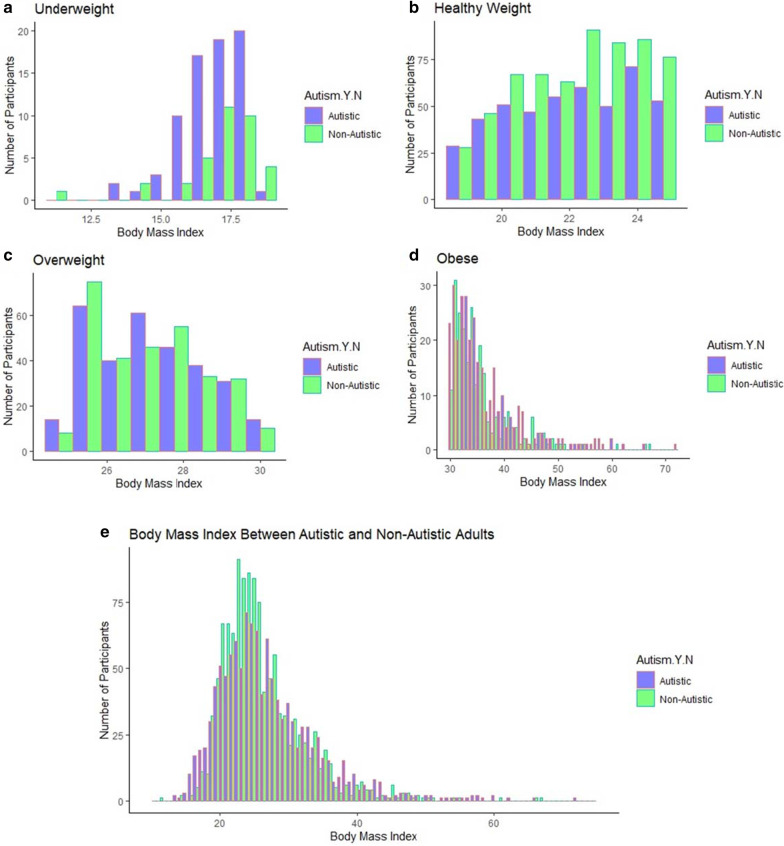
Background: Studies of autistic children suggest that restricted eating, reduced physical activity, and sleep disorders are common; however, no studies attempt to broadly describe the diet, exercise, and sleep patterns of autistic adults or consider relationships between lifestyle behaviors and the widely reported increased risks of obesity and chronic conditions. To address this, the authors developed the largest study of lifestyle patterns of autistic adults and assessed their relationships to body mass index, health outcomes, and family history. Methods: We administered an anonymized, online survey to n = 2386 adults (n = 1183 autistic) aged 16–90 years of age. We employed Fisher’s exact tests and binomial logistic regression to describe diet, exercise, and sleep patterns; mediation of seizure disorders on sleep; body mass index (BMI); relationships of lifestyle factors to BMI, cardiovascular conditions, and diabetic conditions; and sex differences among autistic adults. Results: Autistic adults, and particularly autistic females, exhibit unhealthy diet, exercise, and sleep patterns; they are also more likely to be underweight or obese. Limited sleep duration and high rates of sleep disturbances cannot be accounted for by epilepsy or seizure disorders. Lifestyle factors are positively related to higher risk of cardiovascular conditions among autistic males, even more than family history. Limitations: Our sample may not be representative of all autistic and non-autistic people, as it primarily comprised individuals who are white, female, have a high school education or higher, and reside in the UK. Our sampling methods may also exclude some individuals on the autism spectrum, and particularly those with moderate to severe intellectual disability. This is a cross-sectional sample that can test for relationships between factors (e.g., lifestyle factors and health outcomes) but cannot assess the direction of these relationships. Conclusions: Autistic adults are less likely to meet minimal health recommendations for diet, exercise, and sleep—and these unhealthy behaviors may relate to excess risk of cardiovascular conditions. Although the present study can only provide preliminary, correlational evidence, our findings suggest that diet, exercise, and sleep should be considered and further investigated as key targets for reducing the now widely reported and dramatically increased risks of health comorbidity and premature death among autistic individuals compared to others. Physicians should work cooperatively with patients to provide health education and develop individualized strategies for how to better manage challenges with diet, exercise, and sleep.
Overview
The claims and statistics of this paper haven’t been checked yet.
Free: it reads the open-access text and checks the first 5 claims that cite a source we can check. Create a free account to check every claim.
Integrity signals
Registry
Cites
Statistics
Figures
Verification
Claims the paper makes
The claims and statistics of this paper haven’t been checked yet.
Free: it reads the open-access text and checks the first 5 claims that cite a source we can check. Create a free account to check every claim.
Claims other papers make about this one
Each is checked against this paper’s own text: does it say what the citing paper says it does?
In the citing paper
“In terms of health conditions, autistic females are more likely to have epilepsy and endocrine–reproductive problems79,125, depressive disorders78, and disordered eating and sleep126–128, whereas autistic males are more likely to exhibit hyperactivity in childhood124.”
From Sex and gender in neurodevelopmental conditions (2023) · cites this paper as [128]
Self-check
Percentages, sums and reported differences re-computed from the paper’s own numbers.
The self-check needs the paper’s full text.
Citations
Cites
Diagnostic and Statistical Manual of Mental Disorders
American Psychiatric Association (2013) · doi:10.1176/appi.books.9780890425596 · Cited by 116,369
Diagnostic and Statistical Manual of Mental Disorders
Williams, J. B. W., & First, M. (2013) · Encyclopedia of Social Work · doi:10.1093/acrefore/9780199975839.013.104 · Cited by 109,519
Baio, J., Wiggins, L., Christensen, D. L., Maenner, M. J., Daniels, J., Warren, Z., Kurzius-Spencer, M., Zahorodny, W., Robinson, C., Rosenberg, et al. (2018) · MMWR. Surveillance Summaries · doi:10.15585/mmwr.ss6706a1 · Cited by 6,078
Guh, D. P., Zhang, W., Bansback, N., Amarsi, Z., Birmingham, C. L., & Anis, A. H. (2009) · BMC Public Health · doi:10.1186/1471-2458-9-88 · Cited by 3,855 · cited 1×
“Being overweight or obese contributes significantly to risk of developing chronic physical health conditions, including diabetic and cardiovascular conditions [6, 16].”
BackgroundMaenner, M. J., Shaw, K. A., Baio, J., EdS1, Washington, A., Patrick, M., DiRienzo, M., Christensen, D. L., Wiggins, L. D., Pettygrove, S., et al. (2020) · MMWR. Surveillance Summaries · doi:10.15585/mmwr.ss6904a1 · Cited by 3,780
The health status of adults on the autism spectrum
Croen, L. A., Zerbo, O., Qian, Y., Massolo, M. L., Rich, S., Sidney, S., & Kripke, C. (2015) · Autism · doi:10.1177/1362361315577517 · Cited by 1,110
Allison, C., Auyeung, B., & Baron-Cohen, S. (2012) · Journal of the American Academy of Child & Adolescent Psychiatry · doi:10.1016/j.jaac.2011.11.003 · Cited by 1,016
Self-citationPremature mortality in autism spectrum disorder
Hirvikoski, T., Mittendorfer-Rutz, E., Boman, M., Larsson, H., Lichtenstein, P., & Bölte, S. (2016) · British Journal of Psychiatry · doi:10.1192/bjp.bp.114.160192 · Cited by 1,011 · cited 4×
“The study also includes a large sample of autistic females, who remain underserved in research and clinical practice, despite further increased risks of chronic health conditions and premature mortality (even in comparison with autistic males) [3, 5, 7, 9].”
BackgroundInfluentialGastrointestinal Symptoms in Autism Spectrum Disorder: A Meta-analysis
McElhanon, B. O., McCracken, C., Karpen, S., & Sharp, W. G. (2014) · Pediatrics · doi:10.1542/peds.2013-3995 · Cited by 831
Food selectivity and sensory sensitivity in children with autism spectrum disorders
Cermak, S. A., Curtin, C., & Bandini, L. G. (2010) · Journal of the American Dietetic Association · doi:10.1016/j.jada.2009.10.032 · Cited by 750
Cited by
Sex and gender in neurodevelopmental conditions
Bölte, S., Neufeld, J., Marschik, P. B., Williams, Z. J., Gallagher, L., & Lai, M.-C. (2023) · Nature Reviews Neurology · doi:10.1038/s41582-023-00774-6 · Cited by 249
van Kessel, R., Hrzic, R., O'Nuallain, E., Weir, E., Wong, B. L. H., Anderson, M., Baron-Cohen, S., & Mossialos, E. (2022) · Journal of Medical Internet Research · doi:10.2196/33819 · Cited by 137
“These tend to be significantly worse among autistic adults relative to neurotypical people and are associated with excess risk of chronic cardiovascular conditions [55].”
BackgroundSelf-citationBourne, L., Mandy, W., & Bryant‐Waugh, R. (2022) · Developmental Medicine & Child Neurology · doi:10.1111/dmcn.15139 · Cited by 110
Representativeness of autistic samples in studies recruiting through social media
Rødgaard, E., Jensen, K. L., Miskowiak, K. W., & Mottron, L. (2022) · Autism Research · doi:10.1002/aur.2777 · Cited by 130
Feeding and Swallowing Issues in Autism Spectrum Disorders
Adams, S. N. (2022) · Neuropsychiatric Disease and Treatment · doi:10.2147/ndt.s332523 · Cited by 62
“There is evidence to suggest that children not eating a healthy and balanced diet may experience changes in their disposition, such as increases or decreases in weight or changes in sleep patterns.(48) Furthermore, metabolic disturbances have been shown to be a determinant during the SARS-CoV-2 (Covid-19) outbreak (La…”
BackgroundPallier, P. N., Ferrara, M., Romagnolo, F., Ferretti, M. T., Soreq, H., & Cerase, A. (2022) · Progress in Neurobiology · doi:10.1016/j.pneurobio.2022.102353 · Cited by 38
Bhat, A. N. (2023) · Autism · doi:10.1177/13623613231193196 · Cited by 38
“…with ASD will contribute to their poor physical health outcomes such as greater risk for cardiovascular disease and diabetes, as well as social isolation/depression, an overall poor quality of life, and perhaps lower life expectancy (DaWalt et al., 2019; Srinivasan et al., 2014; Weir et al., 2021).”
BackgroundErridge, S., Kerr‐Gaffney, J., Holvey, C., Coomber, R., Barros, D. A. R., Bhoskar, U., Mwimba, G., Praveen, K., Symeon, C., Sachdeva-Mohan, S., et al. (2022) · Therapeutic Advances in Psychopharmacology · doi:10.1177/20451253221116240 · Cited by 31
Health conditions in autism: Defining the trajectory from adolescence to early adulthood
Malow, B. A., Qian, Y., Ames, J., Alexeeff, S., & Croen, L. (2023) · Autism Research · doi:10.1002/aur.2960 · Cited by 29
“For example, a survey of 1183 autistic adults documented less healthy exercise, diet, and sleep patterns compared to non-autistic adults, with autistic women more affected than men (Weir et al., 2021).”
BackgroundAging Across the Autism Spectrum
Stewart, G. R., & Happe, F. G. E. (2025) · Annual Review of Developmental Psychology · doi:10.1146/annurev-devpsych-111323-090813 · Cited by 39
Alhrbi, A., Vlachopoulos, D., Healey, E., Massoud, A. T., Morris, C., & Iniesta, R. R. (2025) · Journal of Human Nutrition and Dietetics · doi:10.1111/jhn.70099 · Cited by 28
“It is well documented that unhealthy lifestyles including diet increases the risk of non ‐ communicable diseases in adulthood [11].”
InfluentialAging Well and Autism: A Narrative Review and Recommendations for Future Research
Klein, C. B., & Klinger, L. G. (2024) · Healthcare · doi:10.3390/healthcare12121207 · Cited by 23
“…etiologic or genetic predisposition to health conditions (e.g., epilepsy; [33]), lifestyle factors common in autism (e.g., exercise, sleep, diet; [34]), reduced access to preventive healthcare associated with characteristics of autism (e.g., social communication differences, challenges with the…”
BackgroundReynaud, E., Pottelette, J., Rabot, J., Rolling, J., Royant‐Parola, S., Hartley, S., Coutelle, R., & Schröder, C. M. (2022) · Autism Research · doi:10.1002/aur.2692 · Cited by 13
Conti, M. V., Breda, C., Basilico, S., Luzzi, A., Voto, L., Santero, S., de Filippo, G., & Cena, H. (2023) · Eating and Weight Disorders - Studies on Anorexia Bulimia and Obesity · doi:10.1007/s40519-023-01590-z · Cited by 28
Garcia, J. M., Shurack, R. H., Leahy, N. A., Brazendale, K., Lee, E., & Lawrence, S. A. (2023) · Journal of Nutrition Education and Behavior · doi:10.1016/j.jneb.2022.11.002 · Cited by 11
Rouphael, M., Hojeij, B., Ezzedine, D., Mortada, H., Sacre, Y., Bitar, T., Naim, E., Hleihel, W., & Hoteit, M. (2023) · Children · doi:10.3390/children10010117 · Cited by 15
“Previous studies reported that overweight and obesity found among children are related to dietary factors including a high energy intake, fast food consumption, sugary beverages, and snack foods, and all of these behaviors are present in autistic children as well as in typically developing children [22,23].”
BackgroundNutritional problems and body mass index of Turkish children with autism
Asil, E., Uçar, A., Tunay, Ç. Z., & Ayhan, A. B. (2022) · Nutrition & Food Science · doi:10.1108/nfs-12-2021-0389 · Cited by 10
Núñez-Gaunaurd, A., & Tovin, M. M. (2024) · Journal of Developmental and Physical Disabilities · doi:10.1007/s10882-024-09951-x · Cited by 7
“Physical Activity Guidelines for Americans, 2018), adults with autism spectrum disorder (ASD) are less likely to meet these guidelines and therefore at higher risk for non-communicable chronic diseases than their peers without autism (Hillier et al., 2020; Weir et al., 2021).”
Browne, K., Lawson, W. B., McGarry, S., Scott, M., Girdler, S. J., & Milbourn, B. T. (2024) · Autism in Adulthood · doi:10.1089/aut.2024.0141 · Cited by 10
“81 Vulnerability of autistic adults to negative life experiences may diminish mental health and life satisfaction.”
Food and Nutrition in Autistic Adults: Knowledge Gaps and Future Perspectives
Remón, S., Ferrer‐Mairal, A., & Sanclemente, T. (2025) · Nutrients · doi:10.3390/nu17091456 · Cited by 11
“Notably, Weir et al. found that autistic adults were twice as likely to be underweight compared to controls, even after adjusting for potential confounders, including sociodemographic factors, lifestyle habits, and dietary characteristics [53].”
InfluentialCui, T., Zhang, J., Han, Y., Su, Y., Li, Z., & Zhang, X. (2023) · European Journal of Clinical Nutrition · doi:10.1038/s41430-023-01365-w · Cited by 7
“It has been found that food preferences for high energy density foods and sugar beverages, but avoidance of vegetables and fruits exists in individuals with ASD compared with peer TDs [7, 8].”
Gernert, C. C., Falter, C. M., Noreika, V., Jachs, B., Jassim, N., Gibbs, K., Streicher, J., Betts, H., & Bekinschtein, T. A. (2024) · PLoS ONE · doi:10.1371/journal.pone.0303209 · Cited by 13
Understanding and mitigating low health literacy
Byrne, D. (2022) · Nursing Standard · doi:10.7748/ns.2022.e11875 · Cited by 10
Holloway, J. M., Gray, H. L., Buro, A. W., Thomas, J., Sauls, R., & Howard, A. M. (2022) · Review Journal of Autism and Developmental Disorders · doi:10.1007/s40489-022-00349-z · Cited by 9
“…such as visual supports or parent assistance that may help individuals with ASD provide self-report on questionnaires related to PA. Finally, in all but 4 studies (An et al., 2019; Matheson et al., 2019; Soden et al., 2012; Weir et al., 2021), dietary intake and PA were evaluated independently.”
InfluentialRisk of physical health comorbidities in autistic adults: clinical nested cross-sectional study
Hunt, M., Underwood, J. F. G., Hubbard, L., & Hall, J. (2024) · BJPsych Open · doi:10.1192/bjo.2024.777 · Cited by 8
Friedman, S., Noble, R., Archer, S., Gibson, J. L., & Hughes, C. H. (2024) · Autism in Adulthood · doi:10.1089/aut.2023.0009 · Cited by 11
“15 19 Mental and physical health are both indicators of well-being that appear diminished in autistic people, 20–22 who also experience difficulties in accessing physical and mental health support as practitioners often lack knowledge of autism.”
Bhat, A. N. (2024) · Autism Research · doi:10.1002/aur.3189 · Cited by 8
“Additionally, physical inactivity in autistic children may lead to poor long-term health outcomes of obesity, heart disease, diabetes, social isolation/ depression, and shortened life expectancy (Bhat, 2020a, 2020b; et al., 2023; Weir et al., 2021a, 2021b).”
Kim, J. (2024) · Journal of korean Academy of Child and Adolescent Psychiatry · doi:10.5765/jkacap.230063 · Cited by 8
Autism, Physical Health Conditions, and a Need for Reform
Weir, E. M. (2023) · Archives of Pediatrics and Adolescent Medicine · doi:10.1001/jamapediatrics.2022.5639 · Cited by 7
Self-citationAutism Characteristics and Self-Reported Health in Older Adulthood
Lodi‐Smith, J., Rodgers, J. D., Kozlowski, K. F., Khan, S., Luna, V. M., Long, C., Donnelly, J. P., Lopata, C. J., & Thomeer, M. L. (2021) · The Journals of Gerontology Series B · doi:10.1093/geronb/gbab136 · Cited by 7
Parsons, K., Payne, S. M., Bhaska, L., Wallace, J., & Holt, N. (2025) · Psychology of sport and exercise · doi:10.1016/j.psychsport.2025.102867 · Cited by 3
Autism and Its Correlation With Increased Cardiovascular Mortality and Diseases
Griborio-Guzman, A. G., & Ducas, R. (2025) · Canadian Journal of Cardiology · doi:10.1016/j.cjca.2025.05.014 · Cited by 5
Khawer, S., Ismail, M., & Zehra, S. (2025) · Middle East Current Psychiatry · doi:10.1186/s43045-025-00533-x · Cited by 3
Shelton, N. J., Abdinor, S., & Lodder, A. (2025) · Journal of Public Health · doi:10.1093/pubmed/fdaf027 · Cited by 2
“20 Their findings report a high prevalence of cardiovascular conditions amongst autistic adults due to unhealthy lifestyle behaviours, inadequate nutrition, unhealthy levels of physical activity and sleep.”
Exerkines: opening the way to protecting ischemic heart
Feng, L., Li, B., & Tian, Z. (2022) · Current Opinion in Physiology · doi:10.1016/j.cophys.2022.100615 · Cited by 3
Kang, J., Zhu, J.-Q., Wang, Y., & He, Q. (2024) · Journal of Clinical and Experimental Hepatology · doi:10.1016/j.jceh.2024.102387 · Cited by 2
Pagán, A. F., Pagán, A. L., Hernandez, L., Cribbet, M. R., Loveland, K. A., & Acierno, R. E. (2025) · Journal of Racial and Ethnic Health Disparities · doi:10.1007/s40615-025-02295-y · Cited by 2
“Autistic adults also struggle to meet minimal health recommendations for sleep and behaviors associated with HRQoL [4].”
Bourke, M., O’Flaherty, M., Fortnum, K., Thomas, G., & Walker, J. L. (2025) · Research in Autism · doi:10.1016/j.reia.2025.202751 · Cited by 3
Kennedy, B. S., Weir, E. M., Fysh, M. C., Tsompanidis, A., Payne, R., Allison, C. L., Matthews, F. E., & Baron‐Cohen, S. (2026) · Molecular Autism · doi:10.1186/s13229-025-00698-6 · Cited by 1
“Yet, at the same time, biological mechanisms have also been associated with both autism and health vulnerability, including immune dysfunction and an increased cardiometabolic burden [12, 14, 17, 18, 21, 27].”
Self-citationParsons, K., Payne, S. M., Wallace, J., & Holt, N. (2026) · Health Marketing Quarterly · doi:10.1080/07359683.2026.2624294 · Cited by 1
“Autistic individuals are underserved in robust health behavior change intervention research (Parsons et al., 2025) and are evidenced to demonstrate both low levels of physical activity and high rates of noncommunicable diseases that are often associated with sedentarism (Weir et al., 2021a; 2021b).”
Online surveys, a breakthrough in research, especially in nutrition and food sciences
Hinojosa-Nogueira, D., Subiri-Verdugo, A., Rodríguez-Muñoz, A., Díaz-Perdigones, C. M., García-López, M. J., Tinahones, F. J., & Moreno-Indias, I. (2026) · Clinical Nutrition ESPEN · doi:10.1016/j.clnesp.2026.103299 · Cited by 4
Aging in autism: A systematic review of cognitive, neural, and physical health findings
Dickinson, A. H., Ryan, D. P., Carroll, J., & Lord, C. (2026) · Neuroscience & Biobehavioral Reviews · doi:10.1016/j.neubiorev.2026.106820 · Cited by 3
Lemmetti, N., Leduc, T., Dufort‐Gervais, J., Lina, J., & Mongrain, V. (2025) · bioRxiv (Cold Spring Harbor Laboratory) · doi:10.1101/2025.07.25.666775 · Cited by 2
“In addition, patients affected with multiple neurodevelopmental disorders express a symptomatology that varies with sex, including when considering sleep phenotypes (Bricout et al., 2024; Estes et al., 2023; Hartley & Sikora, 2009; Robison et al., 2008; Saré & Smith, 2020; Weir et al., 2021).”
Increased risk of major ischaemic events among autistic peoplePreprint
Al-Rubaie, O., Weir, E. M., Tsompanidis, A., Allison, C. L., Fysh, M. C., Angelantonio, E. D., Payne, R., Matthews, F. E., & Baron‐Cohen, S. (2026) · medRxiv · doi:10.64898/2026.07.01.26357011 · Cited by 1
Self-citationEvaluation of Skipping in College Students with and without Autism Spectrum Disorder
Orozco, I. M., Hernandez, K. A., Mata, J., Todd, T. A., Mache, M. A., & Jarvis, D. N. (2023) · Perceptual and Motor Skills · doi:10.1177/00315125231194342
Assessment for Sleep, Feeding, Sensory Issues, and Motor Skills in Females with Autism
Gabrielsen, T. P., Begay, K. K., Campbell, K. M., Hahn, K., & Harrington, L. T. (2023) · Springer eBooks · doi:10.1007/978-3-031-33969-1_4
The role of food program to overcome obesity, overweight, and underweight among autistic children
Abu-Hussein, L. A. (2023) · THE SCIENTIFIC TEMPER · doi:10.58414/scientifictemper.2023.14.3.52
“…of calcium from the program aimed to mitigate potential digestive issues (Sanctuary et al. , 2018), while the replacement of sugar with natural sweetening alternatives, such as honey, was considered for its potential benefits (Hill et al. , 2015; Sanctuary et al. , 2018; Weir et al. , 2021).”
BackgroundHachmeriyan, A., Тоsheva, Y., & Hadzhieva, S. (2023) · Biomedical Reviews · doi:10.14748/bmr.v34.9618
An Exploration of Health Inequalities in a Tier 3 Specialist Weight Management ServicePreprint
Sorrell, C., Brough, G., & Savidge, C. (2024) · Research Square · doi:10.21203/rs.3.rs-4992197/v1
Thompson, C., Gorey, T., Lawler, T., Watson, G., Wells, B., & McVeigh, J. A. (2024) · Health Promotion Journal of Australia · doi:10.1002/hpja.944
Hart, L. C., Sirrianni, J., Rust, S., & Hanks, C. D. (2025) · The Journal of Pediatrics Clinical Practice · doi:10.1016/j.jpedcp.2025.200159 · Cited by 1
“While we know that autistic children and adults exhibit less healthy eating and exercise habits compared to nonautistic peers, 14,15 less is known about how the habits of autistic people themselves change over time.”
Autism spectrum and disordered eating: the mediating roles of poor sleep quality and mood problems
Ates, H. H., Newman, E., & Williams, J. M. (2025) · Current Psychology · doi:10.1007/s12144-025-08331-8
“These findings align with the majority of previous clinical ED, Autism Spectrum and DE literature on the association between pathological eating, autistic traits and mood problems (Moseley et al., 2023; Weir et al., 2021 ).”
InfluentialDastamooz, S., Boroujeni, S. T., Zou, L., Farahani, M. H. D., Hasani, M., Dastamouz, S., Sarahian, N., Hosseini, S. A., & Kordnayej, M. (2026) · Research in Autism · doi:10.1016/j.reia.2026.202879
Blood Pressure Trends Among Autistic Youth Transitioning to Adult Care: A Retrospective Cohort Study
Hart, L. C., Richardson, C., & Hanks, C. D. (2026) · American Journal of Preventive Medicine · doi:10.1016/j.amepre.2026.108372
Psychotropic medication use and health-related behaviors in adults with autism spectrum disorder
Drumond, M. R., Santos, J. D., Macedo, M. T. S., Baldo, T. D. O. F., & Baldo, M. P. (2026) · International Journal of Developmental Disabilities · doi:10.1080/20473869.2026.2671192
Núñez-Gaunaurd, A., Tovin, M. M., Kermah, D., Beech, B. M., & Bruce, M. A. (2026) · Disability and health journal · doi:10.1016/j.dhjo.2026.102115
Perceived Barriers and Facilitators to Physical Activity Among Autistic Adults: A Scoping Review
Duong, V. N., Quested, E., McVeigh, J. A., Wan, P., & Thompson, C. (2026) · Journal of Physical Activity and Health · doi:10.1123/jpah.2026-0200
Duong, V. N., Thompson, C., McVeigh, J. A., & Quested, E. (2026) · Research Quarterly for Exercise and Sport · doi:10.1080/02701367.2026.2733279
Metadata
- Authors
- Weir, E., Allison, C., Ong, K. K., & Baron-Cohen, S.
- Affiliations
- University of Cambridge (GB)
- Corresponding author
- Weir, Elizabeth
- Venue
- Molecular Autism
- Published
- 2021-05-08
- Volume
- 12
- Issue
- 1
- Pages
- 31-31
- ISSN
- 2040-2392 (ISSN-L)
- PMC
- PMC8106173
- OpenAlex
- W3162699520
- Cited by
- 58
- References
- 97
- Citations by year
- 2026: 11 · 2025: 12 · 2024: 10 · 2023: 13 · 2022: 10 · 2021: 2
- FWCI
- 4.60
- Type
- journal article
- Language
- en
- Open access
- gold
- doi.org
- Licence
- cc-by
- creativecommons.org/licenses/by/4.0 (tdm)
- creativecommons.org/licenses/by/4.0 (vor)
- Locations
- Molecular Autism (publishedVersion, cc-by)
- PubMed Central (publishedVersion, cc-by)
- PubMed (publishedVersion)
- DOAJ (DOAJ: Directory of Open Access Journals) (submittedVersion, cc-by-sa)
- Apollo (University of Cambridge) (submittedVersion, cc-by)
- Apollo
- Apollo (cc-by)
- Funders
- Autism Research Trust (RG72423)
- Rosetrees Trust (G102199)
- Cambridge and Peterborough NHS Foundation Trust (G102307)
- Corbin Charitable Trust
- Medical Research Council (MC_UU_12015/2)
- Wellcome Trust (214322\Z\18\Z)
- National Institute for Health Research
- Innovative Medicines Initiative 2 Joint Undertaking (Grant Agreement No 777394)
- Topics
- Life Sciences › Neuroscience › Cognitive Neuroscience › Autism Spectrum Disorder Research
- Health Sciences › Medicine › Psychiatry and Mental health › Child Nutrition and Feeding Issues
- Health Sciences › Medicine › Public Health, Environmental and Occupational Health › Health and Lifestyle Studies
- Keywords
- autistic adults, diet, physical activity, sleep patterns, sleep disorders, body mass index, obesity, underweight, cardiovascular conditions, diabetes mellitus, epilepsy, sex differences, family history (medicine), lifestyle habits
- MeSH terms
- Adolescent, Adult, Aged, Aged, 80 and over, Autistic Disorder, Cross-Sectional Studies, Diet, Female, Humans, Male, Middle Aged, Obesity, Sleep, Exercise, Body Mass Index, Outcome Assessment, Health Care, Young Adult
About these checks
Registry, retraction, Cites and statistics results are computed, not judged, with one exception: a printed reference that no index lists is read once by a model before it counts as a citation error. Claims are extracted by a model and kept only when their quote appears verbatim in the text; each cited source is then checked, with a model’s help, for whether it says what the claim relies on. Those verdicts can be wrong — read the claim’s quote and the cited source before relying on one.
Statistics and arithmetic are recomputed, not judged.
Confidence bands are shown only for fields calibrated on our annotated test set. None is calibrated yet, so no band is shown.
What counts as a claim ›How we measure confidence ›How we check this ›
Are you an author, or do you see a problem with this page? Request a review
Data sources
Bibliographic data: Semantic Scholar, OpenAlex, Crossref.
Contains information from the Semantic Scholar Academic Graph Datasets, made available under the ODC Attribution License (ODC-BY 1.0).
Semantic Scholar’s data is described in: Kinney, R., et al. (2023). The Semantic Scholar Open Data Platform. arXiv:2301.10140.
