

An investigation of the diet, exercise, sleep, BMI, and health outcomes of autistic adults
Open accessThe DOI matches its Crossref record; 95 of the 97 references it cites were found in a registry or an index.
Abstract
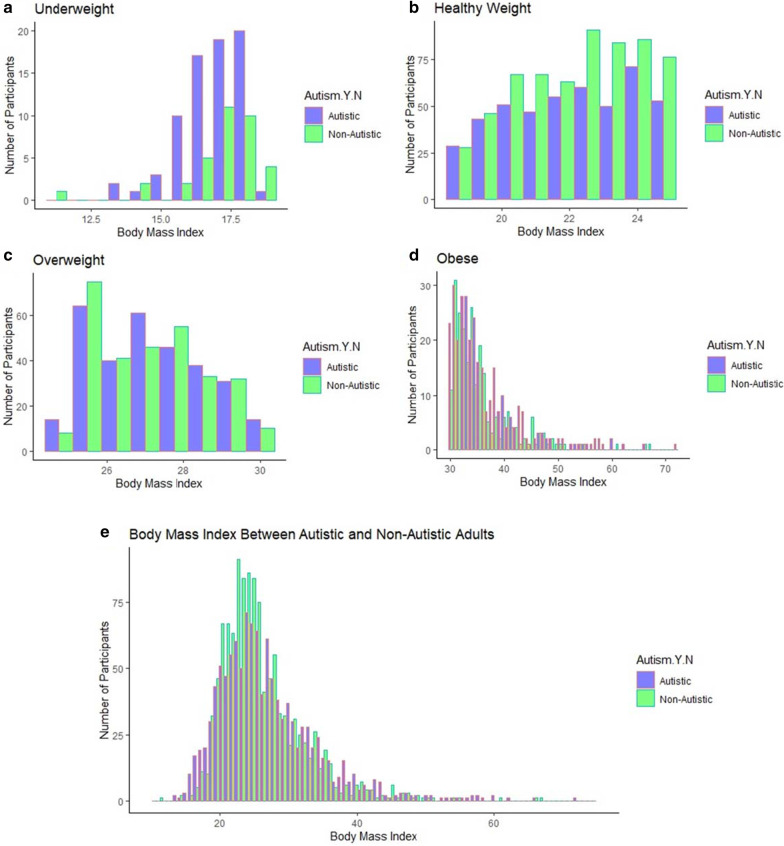
Background: Studies of autistic children suggest that restricted eating, reduced physical activity, and sleep disorders are common; however, no studies attempt to broadly describe the diet, exercise, and sleep patterns of autistic adults or consider relationships between lifestyle behaviors and the widely reported increased risks of obesity and chronic conditions. To address this, the authors developed the largest study of lifestyle patterns of autistic adults and assessed their relationships to body mass index, health outcomes, and family history. Methods: We administered an anonymized, online survey to n = 2386 adults (n = 1183 autistic) aged 16–90 years of age. We employed Fisher’s exact tests and binomial logistic regression to describe diet, exercise, and sleep patterns; mediation of seizure disorders on sleep; body mass index (BMI); relationships of lifestyle factors to BMI, cardiovascular conditions, and diabetic conditions; and sex differences among autistic adults. Results: Autistic adults, and particularly autistic females, exhibit unhealthy diet, exercise, and sleep patterns; they are also more likely to be underweight or obese. Limited sleep duration and high rates of sleep disturbances cannot be accounted for by epilepsy or seizure disorders. Lifestyle factors are positively related to higher risk of cardiovascular conditions among autistic males, even more than family history. Limitations: Our sample may not be representative of all autistic and non-autistic people, as it primarily comprised individuals who are white, female, have a high school education or higher, and reside in the UK. Our sampling methods may also exclude some individuals on the autism spectrum, and particularly those with moderate to severe intellectual disability. This is a cross-sectional sample that can test for relationships between factors (e.g., lifestyle factors and health outcomes) but cannot assess the direction of these relationships. Conclusions: Autistic adults are less likely to meet minimal health recommendations for diet, exercise, and sleep—and these unhealthy behaviors may relate to excess risk of cardiovascular conditions. Although the present study can only provide preliminary, correlational evidence, our findings suggest that diet, exercise, and sleep should be considered and further investigated as key targets for reducing the now widely reported and dramatically increased risks of health comorbidity and premature death among autistic individuals compared to others. Physicians should work cooperatively with patients to provide health education and develop individualized strategies for how to better manage challenges with diet, exercise, and sleep.
Overview
The claims and statistics of this paper haven’t been checked yet.
Free: it reads the open-access text and checks the first 5 claims that cite a source we can check. Create a free account to check every claim.
Integrity signals
Registry
Cites
Statistics
Figures
Verification
Claims the paper makes
The claims and statistics of this paper haven’t been checked yet.
Free: it reads the open-access text and checks the first 5 claims that cite a source we can check. Create a free account to check every claim.
Claims other papers make about this one
Each is checked against this paper’s own text: does it say what the citing paper says it does?
In the citing paper
“In terms of health conditions, autistic females are more likely to have epilepsy and endocrine–reproductive problems79,125, depressive disorders78, and disordered eating and sleep126–128, whereas autistic males are more likely to exhibit hyperactivity in childhood124.”
From Sex and gender in neurodevelopmental conditions (2023) · cites this paper as [128]
Self-check
Percentages, sums and reported differences re-computed from the paper’s own numbers.
The self-check needs the paper’s full text.
Citations
Cites
Diagnostic and Statistical Manual of Mental Disorders
American Psychiatric Association (2013) · doi:10.1176/appi.books.9780890425596 · Cited by 116,369
Diagnostic and Statistical Manual of Mental Disorders
Williams, J. B. W., & First, M. (2013) · Encyclopedia of Social Work · doi:10.1093/acrefore/9780199975839.013.104 · Cited by 109,519
Baio, J., Wiggins, L., Christensen, D. L., Maenner, M. J., Daniels, J., Warren, Z., Kurzius-Spencer, M., Zahorodny, W., Robinson, C., Rosenberg, et al. (2018) · MMWR. Surveillance Summaries · doi:10.15585/mmwr.ss6706a1 · Cited by 6,078
Guh, D. P., Zhang, W., Bansback, N., Amarsi, Z., Birmingham, C. L., & Anis, A. H. (2009) · BMC Public Health · doi:10.1186/1471-2458-9-88 · Cited by 3,855 · cited 1×
“Being overweight or obese contributes significantly to risk of developing chronic physical health conditions, including diabetic and cardiovascular conditions [6, 16].”
BackgroundMaenner, M. J., Shaw, K. A., Baio, J., EdS1, Washington, A., Patrick, M., DiRienzo, M., Christensen, D. L., Wiggins, L. D., Pettygrove, S., et al. (2020) · MMWR. Surveillance Summaries · doi:10.15585/mmwr.ss6904a1 · Cited by 3,780
The health status of adults on the autism spectrum
Croen, L. A., Zerbo, O., Qian, Y., Massolo, M. L., Rich, S., Sidney, S., & Kripke, C. (2015) · Autism · doi:10.1177/1362361315577517 · Cited by 1,110
Allison, C., Auyeung, B., & Baron-Cohen, S. (2012) · Journal of the American Academy of Child & Adolescent Psychiatry · doi:10.1016/j.jaac.2011.11.003 · Cited by 1,016
Self-citationPremature mortality in autism spectrum disorder
Hirvikoski, T., Mittendorfer-Rutz, E., Boman, M., Larsson, H., Lichtenstein, P., & Bölte, S. (2016) · British Journal of Psychiatry · doi:10.1192/bjp.bp.114.160192 · Cited by 1,011 · cited 4×
“The study also includes a large sample of autistic females, who remain underserved in research and clinical practice, despite further increased risks of chronic health conditions and premature mortality (even in comparison with autistic males) [3, 5, 7, 9].”
BackgroundInfluentialGastrointestinal Symptoms in Autism Spectrum Disorder: A Meta-analysis
McElhanon, B. O., McCracken, C., Karpen, S., & Sharp, W. G. (2014) · Pediatrics · doi:10.1542/peds.2013-3995 · Cited by 831
Food selectivity and sensory sensitivity in children with autism spectrum disorders
Cermak, S. A., Curtin, C., & Bandini, L. G. (2010) · Journal of the American Dietetic Association · doi:10.1016/j.jada.2009.10.032 · Cited by 750
Sharp, W. G., Berry, R. C., McCracken, C., Nuhu, N. N., Marvel, E., Saulnier, C. A., Klin, A., Jones, W., & Jaquess, D. L. (2013) · Journal of Autism and Developmental Disorders · doi:10.1007/s10803-013-1771-5 · Cited by 643
Response Rates and Response Bias for 50 Surveys of Pediatricians
Cull, W. L., O'Connor, K. G., Sharp, S., & Tang, S. S. (2005) · Health Services Research · doi:10.1111/j.1475-6773.2005.00350.x · Cited by 421
Cheung, K. L., ten Klooster, P. M., Smit, C., de Vries, H., & Pieterse, M. E. (2017) · BMC Public Health · doi:10.1186/s12889-017-4189-8 · Cited by 421
Nicolaidis, C., Raymaker, D., McDonald, K., Dern, S., Boisclair, W. C., Ashkenazy, E., & Baggs, A. (2013) · Journal of General Internal Medicine · doi:10.1007/s11606-012-2262-7 · Cited by 419 · cited 1×
“While it appears true that these lifestyle factors still affect likelihood of developing diabetic conditions, our results suggest that other factors may more meaningfully contribute to these outcomes, such as genetic mutations [82], hormonal conditions [83–85], negative life experiences [86], mental health conditions…”
BackgroundCurtin, C., Anderson, S. E., Must, A., & Bandini, L. (2010) · BMC Pediatrics · doi:10.1186/1471-2431-10-11 · Cited by 376
Srinivasan, S. M., Pescatello, L. S., & Bhat, A. N. (2014) · Physical Therapy · doi:10.2522/ptj.20130157 · Cited by 322
Cukier, H. N., Dueker, N. D., Slifer, S. H., Lee, J. M., Whitehead, P. L., Lalanne, E., Leyva, N., Konidari, I., Gentry, R. C., Hulme, W. F., et al. (2014) · Molecular Autism · doi:10.1186/2040-2392-5-1 · Cited by 316
Sleep and Behavioral Problems in Children with Autism Spectrum Disorder
Mazurek, M. O., & Sohl, K. (2016) · Journal of Autism and Developmental Disorders · doi:10.1007/s10803-016-2723-7 · Cited by 309
Jones, R. A., Downing, K., Rinehart, N. J., Barnett, L. M., May, T., McGillivray, J. A., Papadopoulos, N. V., Skouteris, H., Timperio, A., & Hinkley, T. (2017) · PLOS ONE · doi:10.1371/journal.pone.0172482 · Cited by 291
Mason, D., Ingham, B., Urbanowicz, A., Michael, C., Birtles, H., Woodbury-Smith, M., Brown, T., James, I., Scarlett, C., Nicolaidis, C., et al. (2019) · Journal of Autism and Developmental Disorders · doi:10.1007/s10803-019-04049-2 · Cited by 291 · cited 1×
“While it appears true that these lifestyle factors still affect likelihood of developing diabetic conditions, our results suggest that other factors may more meaningfully contribute to these outcomes, such as genetic mutations [82], hormonal conditions [83–85], negative life experiences [86], mental health conditions…”
BackgroundAdams, J., Audhya, T., Geis, E., Gehn, E., Fimbres, V., Pollard, E., Mitchell, J., Ingram, J., Hellmers, R., Laake, D., et al. (2018) · Nutrients · doi:10.3390/nu10030369 · Cited by 267
Griffiths, S., Allison, C., Kenny, R., Holt, R., Smith, P., & Baron‐Cohen, S. (2019) · Autism Research · doi:10.1002/aur.2162 · Cited by 246 · cited 1×
“While it appears true that these lifestyle factors still affect likelihood of developing diabetic conditions, our results suggest that other factors may more meaningfully contribute to these outcomes, such as genetic mutations [82], hormonal conditions [83–85], negative life experiences [86], mental health conditions…”
BackgroundSelf-citationAutism Spectrum Disorders in Eating Disorder Populations: A Systematic Review
Huke, V., Turk, J., Saeidi, S., Kent, A., & Morgan, J. F. (2013) · European Eating Disorders Review · doi:10.1002/erv.2244 · Cited by 236
Prevalence of physical and mental health conditions in Medicare-enrolled, autistic older adults
Hand, B. N., Angell, A. M., Harris, L., & Carpenter, L. A. (2020) · Autism · doi:10.1177/1362361319890793 · Cited by 235 · cited 3×
“The study also includes a large sample of autistic females, who remain underserved in research and clinical practice, despite further increased risks of chronic health conditions and premature mortality (even in comparison with autistic males) [3, 5, 7, 9].”
BackgroundResultThe physical activity patterns of children with autism
MacDonald, M., Esposito, P., & Ulrich, D. (2011) · BMC Research Notes · doi:10.1186/1756-0500-4-422 · Cited by 234
Autism, Gastrointestinal Symptoms and Modulation of Gut Microbiota by Nutritional Interventions
Ristori, M. V., Quagliariello, A., Reddel, S., Ianiro, G., Vicari, S., Gasbarrini, A., & Putignani, L. (2019) · Nutrients · doi:10.3390/nu11112812 · Cited by 214
McCoy, S. M., Jakicic, J. M., & Gibbs, B. B. (2016) · Journal of Autism and Developmental Disorders · doi:10.1007/s10803-016-2762-0 · Cited by 205 · cited 1×
“It is also clear that autistic children are less likely to engage in physical activity than non-autistic children [14, 20, 47, 48].”
BackgroundMayes, S. D., & Zickgraf, H. (2019) · Research in Autism Spectrum Disorders · doi:10.1016/j.rasd.2019.04.002 · Cited by 195
Must, A., Phillips, S. M., Curtin, C., Anderson, S. E., Maslin, M., Lividini, K., & Bandini, L. G. (2014) · Autism · doi:10.1177/1362361313479039 · Cited by 186
Prevalence of Overweight and Obesity in a Large Clinical Sample of Children With Autism
Broder-Fingert, S., Brazauskas, K., Lindgren, K., Iannuzzi, D., & Van Cleave, J. (2014) · Academic Pediatrics · doi:10.1016/j.acap.2014.04.004 · Cited by 182
Esteban-Figuerola, P., Canals, J., Fernández-Cao, J. C., & Arija Val, V. (2019) · Autism · doi:10.1177/1362361318794179 · Cited by 181
Correlates and Risk Markers for Sleep Disturbance in Participants of the Autism Treatment Network
Hollway, J. A., Aman, M. G., & Butter, E. (2013) · Journal of Autism and Developmental Disorders · doi:10.1007/s10803-013-1830-y · Cited by 179
Obesity in Children with Autism Spectrum Disorder
Curtin, C., Jojic, M., & Bandini, L. G. (2014) · Harvard Review of Psychiatry · doi:10.1097/hrp.0000000000000031 · Cited by 175
Toscano, C. V. A., Carvalho, H. M., & Ferreira, J. P. (2018) · Perceptual and Motor Skills · doi:10.1177/0031512517743823 · Cited by 174
Effects of Physical Exercise on the Stereotyped Behavior of Children with Autism Spectrum Disorders
Ferreira, J. P., Ghiarone, T., Cabral, C. R., Furtado, G. E., Carvalho, H. M., Machado‐Rodrigues, A. M., & Toscano, C. V. A. (2019) · Medicina · doi:10.3390/medicina55100685 · Cited by 171
Kahathuduwa, C. N., West, B. D., Blume, J., Dharavath, N., Moustaid‐Moussa, N., & Mastergeorge, A. (2019) · Obesity Reviews · doi:10.1111/obr.12933 · Cited by 162
Psychiatric and Medical Conditions in Transition-Aged Individuals With ASD
Davignon, M. N., Qian, Y., Massolo, M., & Croen, L. A. (2018) · Pediatrics · doi:10.1542/peds.2016-4300k · Cited by 155 · cited 4×
“As prevalence of health outcomes may depend on biological sex [3, 4, 7], these analyses compared rates of medical conditions among autistic females vs.”
BackgroundInfluentialWen, Y., Alshikho, M. J., & Herbert, M. R. (2016) · PLOS ONE · doi:10.1371/journal.pone.0153329 · Cited by 150 · cited 1×
“While it appears true that these lifestyle factors still affect likelihood of developing diabetic conditions, our results suggest that other factors may more meaningfully contribute to these outcomes, such as genetic mutations [82], hormonal conditions [83–85], negative life experiences [86], mental health conditions…”
BackgroundStanish, H. I., Curtin, C., Must, A., Phillips, S. M., Maslin, M. C. T., & Bandini, L. G. (2015) · Adapted Physical Activity Quarterly · doi:10.1123/apaq.2015-0038 · Cited by 147
Risk Factors for Unhealthy Weight Gain and Obesity among Children with Autism Spectrum Disorder
Dhaliwal, K. K., Orsso, C. E., Richard, C., Haqq, A. M., & Zwaigenbaum, L. (2019) · International Journal of Molecular Sciences · doi:10.3390/ijms20133285 · Cited by 140
Exploring autistic traits in anorexia: a clinical study
Tchanturia, K., Smith, E., Weineck, F., Fidanboylu, E., Kern, N., Treasure, J., & Baron Cohen, S. (2013) · Molecular Autism · doi:10.1186/2040-2392-4-44 · Cited by 137
Self-citationMcCoy, S. M., & Morgan, K. (2019) · Autism · doi:10.1177/1362361319861579 · Cited by 136 · cited 2×
“It is also clear that autistic children are less likely to engage in physical activity than non-autistic children [14, 20, 47, 48].”
BackgroundMethodZheng, Z., Zhang, L., Li, S., Zhao, F., Wang, Y., Huang, L., Huang, J., Zou, R., Qu, Y., & Mu, D. (2017) · Scientific Reports · doi:10.1038/s41598-017-12003-4 · Cited by 132
Sleep disorders, epilepsy, and autism
Malow, B. A. (2004) · Mental Retardation and Developmental Disabilities Research Reviews · doi:10.1002/mrdd.20023 · Cited by 128
Do girls with anorexia nervosa have elevated autistic traits?
Baron-Cohen, S., Jaffa, T., Davies, S., Auyeung, B., Allison, C., & Wheelwright, S. (2013) · Molecular Autism · doi:10.1186/2040-2392-4-24 · Cited by 128
Self-citationSubthreshold autism spectrum disorder in patients with eating disorders
Dell'Osso, L., Carpita, B., Gesi, C., Cremone, I. M., Corsi, M., Massimetti, E., Muti, D., Calderani, E., Castellini, G., Luciano, M., et al. (2018) · Comprehensive Psychiatry · doi:10.1016/j.comppsych.2017.11.007 · Cited by 123
Howells, K., Sivaratnam, C. S., May, T., Lindor, E., McGillivray, J., & Rinehart, N. (2019) · Journal of Autism and Developmental Disorders · doi:10.1007/s10803-019-04050-9 · Cited by 122
Participation and factors associated with late or non‐response to an online survey in primary care
Aerny‐Perreten, N., Domínguez‐Berjón, M. F., Esteban‐Vasallo, M. D., & García‐Riolobos, C. (2015) · Journal of Evaluation in Clinical Practice · doi:10.1111/jep.12367 · Cited by 119
Physical activity in children and adolescents with autism assessed by triaxial accelerometry
Memari, A. H., Ghaheri, B., Ziaee, V., Kordi, R., Hafizi, S., & Moshayedi, P. (2013) · Pediatric Obesity · doi:10.1111/j.2047-6310.2012.00101.x · Cited by 116
Polycystic ovary syndrome and autism: A test of the prenatal sex steroid theory
Cherskov, A., Pohl, A., Allison, C., Zhang, H., Payne, R. A., & Baron-Cohen, S. (2018) · Translational Psychiatry · doi:10.1038/s41398-018-0186-7 · Cited by 114
Self-citationPolycystic Ovary Syndrome Is Associated With Adverse Mental Health and Neurodevelopmental Outcomes
Berni, T. R., Morgan, C. L., Berni, E. R., & Rees, D. A. (2018) · The Journal of Clinical Endocrinology & Metabolism · doi:10.1210/jc.2017-02667 · Cited by 111
The Relationship Between Adverse Childhood Events, Resiliency and Health Among Children with Autism
Rigles, B. (2016) · Journal of Autism and Developmental Disorders · doi:10.1007/s10803-016-2905-3 · Cited by 110
Autism Spectrum Disorders and Metabolic Complications of Obesity
Shedlock, K. E., Susi, A., Gorman, G. H., Hisle-Gorman, E. J., Erdie-Lalena, C. R., & Nylund, C. M. (2016) · The Journal of Pediatrics · doi:10.1016/j.jpeds.2016.07.055 · Cited by 109 · cited 1×
“Being overweight or obese contributes significantly to risk of developing chronic physical health conditions, including diabetic and cardiovascular conditions [6, 16].”
BackgroundZuckerman, K. E., Hill, A. P., Guion, K., Voltolina, L., & Fombonne, E. (2014) · Journal of Autism and Developmental Disorders · doi:10.1007/s10803-014-2050-9 · Cited by 106 · cited 1×
“In a large sample of autistic children, obesity was associated with sleep difficulties and melatonin use, further emphasizing the relationships between sleep quality, metabolism, and markers of overall health within this population [69].”
BackgroundKuschner, E. S., Eisenberg, I. W., Orionzi, B., Simmons, W. K., Kenworthy, L., Martin, A., & Wallace, G. L. (2015) · Research in Autism Spectrum Disorders · doi:10.1016/j.rasd.2015.04.005 · Cited by 105
Increased prevalence of non-communicable physical health conditions among autistic adults
Weir, E., Allison, C., Warrier, V., & Baron-Cohen, S. (2021) · Autism · doi:10.1177/1362361320953652 · Cited by 104 · cited 5×
“We have previously reported similar results to that of model one and model two for sex-stratified analyses of cardiovascular and diabetic conditions using data from the same sample [7].”
BackgroundResultInfluentialSelf-citationMortality in individuals with autism spectrum disorder: Predictors over a 20-year period
Smith DaWalt, L., Hong, J., Greenberg, J. S., & Mailick, M. R. (2019) · Autism · doi:10.1177/1362361319827412 · Cited by 103 · cited 3×
“5 years younger on a average than expected [8, 9], with greatest risk among autistic females and those with intellectual disability (ID) [9].”
BackgroundGastrointestinal dysfunction in children with autism spectrum disorders
Kang, V., Wagner, G. C., & Ming, X. (2014) · Autism Research · doi:10.1002/aur.1386 · Cited by 101
Uncovering steroidopathy in women with autism: a latent class analysis
Pohl, A., Cassidy, S., Auyeung, B., & Baron-Cohen, S. (2014) · Molecular Autism · doi:10.1186/2040-2392-5-27 · Cited by 97
Self-citationSleep problems in adults with autism spectrum disorder and intellectual disability
Ballester, P., Martínez, M. J., Javaloyes, A., Inda, M., Fernández, N., Gázquez, P., Aguilar, V., Pérez, A., Hernández, L., Richdale, A. L., et al. (2019) · Autism Research · doi:10.1002/aur.2000 · Cited by 93 · cited 2×
“Further, sleep problems have previously been associated with daytime sedentary behavior and unemployment among autistic adults [70, 74] and with increased mental health difficulties among those who self-report high autistic traits [75]; however, there is no existing literature that considers the effects of Fig.”
BackgroundPhysical Activity Among Adults With Autism: Participation, Attitudes, and Barriers
Hillier, A. J., Buckingham, A., & Schena, D. A. (2020) · Perceptual and Motor Skills · doi:10.1177/0031512520927560 · Cited by 91
Dickinson, K., & Place, M. (2014) · Autism Research and Treatment · doi:10.1155/2014/419653 · Cited by 88
Healy, S., Aigner, C. J., Haegele, J. A., & Patterson, F. (2019) · Autism Research · doi:10.1002/aur.2095 · Cited by 88 · cited 2×
“It is also clear that autistic children are less likely to engage in physical activity than non-autistic children [14, 20, 47, 48].”
BackgroundLugo, J., Fadeuilhe, C., Gisbert, L., Setien, I., Delgado, M., Corrales, M., Richarte, V., & Ramos-Quiroga, J. A. (2020) · European Neuropsychopharmacology · doi:10.1016/j.euroneuro.2020.07.004 · Cited by 81 · cited 2×
“Regarding sleep, autistic individuals of all ages are more likely to have a variety of sleep disorders and limited sleep duration [4, 5, 47, 63, 64].”
BackgroundMatheson, B. E., & Douglas, J. M. (2017) · Review Journal of Autism and Developmental Disorders · doi:10.1007/s40489-017-0103-7 · Cited by 81
Overweight and obese status in children with autism spectrum disorder and disruptive behavior
Criado, K. K., Sharp, W. G., McCracken, C. E., De Vinck-Baroody, O., Dong, L., Aman, M. G., McDougle, C. J., McCracken, J. T., Eugene Arnold, L., Weitzman, C., et al. (2018) · Autism · doi:10.1177/1362361316683888 · Cited by 78
Eating as an autistic adult: an exploratory qualitative study
Kinnaird, E., Norton, C., Pimblett, C., Stewart, C., & Tchanturia, K. (2019) · PLoS ONE · doi:10.1371/journal.pone.0221937 · Cited by 78
González-Domenech, P. J., Díaz Atienza, F., García Pablos, C., Fernández Soto, M. L., Martínez-Ortega, J. M., & Gutiérrez-Rojas, L. (2020) · Journal of Autism and Developmental Disorders · doi:10.1007/s10803-019-04333-1 · Cited by 76
Solmi, F., Bentivegna, F., Bould, H., Mandy, W., Kothari, R., Rai, D., Skuse, D., & Lewis, G. (2021) · Journal of Child Psychology and Psychiatry · doi:10.1111/jcpp.13255 · Cited by 73
Eating Problems in Men and Women with an Autism Spectrum Disorder
Spek, A. A., van Rijnsoever, W., van Laarhoven, L., & Kiep, M. (2020) · Journal of Autism and Developmental Disorders · doi:10.1007/s10803-019-03931-3 · Cited by 66
Sleep Quality in Autism from Adolescence to Old Age
Jovevska, S., Richdale, A. L., Lawson, L. P., Uljarević, M., Arnold, S. R. C., & Trollor, J. N. (2020) · Autism in Adulthood · doi:10.1089/aut.2019.0034 · Cited by 63 · cited 1×
“However, there are only three studies and one meta-analysis, all with relatively small sample sizes, that consider specific sleep disorders and/or sleep traits in depth among autistic adults–with some evidence that social impairment and biological sex may be related to sleep dysfunction [63, 64, 70, 71].”
BackgroundGarcia, J. M., Leahy, N. A., Rivera, P. M., Renziehausen, J. M., Samuels, J., Fukuda, D. H., & Stout, J. R. (2019) · Journal of Autism and Developmental Disorders · doi:10.1007/s10803-019-04338-w · Cited by 55
Odeh, C. E., Gladfelter, A. L., Stoesser, C., & Roth, S. (2022) · International Journal of Developmental Disabilities · doi:10.1080/20473869.2020.1764241 · Cited by 51
Healy, S., Garcia, J. M., & Haegele, J. A. (2018) · Journal of Autism and Developmental Disorders · doi:10.1007/s10803-018-3818-0 · Cited by 51
Relationship between Vitamin Deficiencies and Co-Occurring Symptoms in Autism Spectrum Disorder
Robea, M.-A., Luca, A.-C., & Ciobica, A. (2020) · Medicina · doi:10.3390/medicina56050245 · Cited by 48
Evaluation of Turmeric Nanoparticles as Anti-Gout Agent: Modernization of a Traditional Drug
Kiyani, M. M., Sohail, M. F., Shahnaz, G., Rehman, H., Akhtar, M. F., Nawaz, I., Mahmood, T., Manzoor, M., & Bokhari, S. A. I. (2019) · Medicina · doi:10.3390/medicina55010010 · Cited by 47
Cheng, B., Zhu, J., Yang, T., Guo, M., Lai, X., Li, Q., Chen, J., & Li, T. (2020) · Pediatric Research · doi:10.1038/s41390-020-0865-y · Cited by 44
Sleep Problems of Children with Autism May Independently Affect Parental Quality of Life
Liu, R., Dong, H., Wang, Y., Lu, X., Li, Y., Xun, G., Ou, J., Shen, Y., Xia, K., & Zhao, J. (2020) · Child Psychiatry & Human Development · doi:10.1007/s10578-020-01035-z · Cited by 43
Waniek, S., Di Giuseppe, R., Esatbeyoglu, T., Plachta-Danielzik, S., Ratjen, I., Jacobs, G., Nöthlings, U., Koch, M., Schlesinger, S., Rimbach, G., et al. (2017) · Nutrients · doi:10.3390/nu10010003 · Cited by 42
Dietary status and nutrient intake of children with autism spectrum disorder: A case-control study
Barnhill, K., Gutierrez, A., Ghossainy, M., Marediya, Z., Devlin, M., Sachdev, P., Marti, C. N., & Hewitson, L. (2018) · Research in Autism Spectrum Disorders · doi:10.1016/j.rasd.2018.03.002 · Cited by 42
Baker, E. K., Richdale, A. L., & Hazi, A. (2019) · Autism · doi:10.1177/1362361317745857 · Cited by 42
Lawson, L. M., & Foster, L. H. (2016) · American Journal of Occupational Therapy · doi:10.5014/ajot.2016.021535 · Cited by 40
Wallace, G. L., Richard, E., Wolff, A., Nadeau, M., & Zucker, N. (2021) · Autism · doi:10.1177/1362361320942087 · Cited by 39
Sleep problems and mental health difficulties in older adults who endorse high autistic traits
Stewart, G. R., Corbett, A., Ballard, C. G., Creese, B., Aarsland, D., Hampshire, A., Charlton, R. A., & Happe, F. G. E. (2020) · Research in Autism · doi:10.1016/j.rasd.2020.101633 · Cited by 37 · cited 1×
“Further, sleep problems have previously been associated with daytime sedentary behavior and unemployment among autistic adults [70, 74] and with increased mental health difficulties among those who self-report high autistic traits [75]; however, there is no existing literature that considers the effects of Fig.”
BackgroundWaddington, H. L., McLay, L., Woods, L., & Whitehouse, A. (2020) · Journal of Autism and Developmental Disorders · doi:10.1007/s10803-020-04475-7 · Cited by 36 · cited 1×
“It has also been suggested that there may be a relationship between epilepsy/seizure disorders, sleep duration, and frequency of sleep disturbances [65].”
BackgroundZhu, V., & Dalby‐Payne, J. (2019) · Journal of Paediatrics and Child Health · doi:10.1111/jpc.14638 · Cited by 33
Bach, T. A., Nap, R. E., & Johnson, A. (2011) · BMC Research Notes · doi:10.1186/1756-0500-4-328 · Cited by 31
Tan, Y., Thomas, S., & Lee, B. K. (2019) · Autism Research · doi:10.1002/aur.2106 · Cited by 31
Thermally induced micro-motion by inflection in optical potential
Šiler, M., Jákl, P., Brzobohatý, O., Ryabov, A., Filip, R., & Zemánek, P. (2017) · Scientific Reports · doi:10.1038/s41598-017-01848-4 · Cited by 21
Garcia, J. M., & Hahs‐Vaughn, D. L. (2020) · Journal of Autism and Developmental Disorders · doi:10.1007/s10803-020-04572-7 · Cited by 21 · cited 2×
“ability to make friends, physical activity, sleep habits, and screen time [73].”
BackgroundPhysical Activity for Autistic Adults: Recommendations for a Shift in Approach
Hallett, R. (2019) · Autism in Adulthood · doi:10.1089/aut.2019.0016 · Cited by 19 · cited 1×
“Despite some evidence that autistic children, and particularly autistic girls, engage less in physical activity as they age [12, 59–61], there are currently no large-scale studies that indicate whether patterns of inactivity persist into adulthood, the degree to which autistic adults engage in physical activity, or wh…”
BackgroundUs, A. (2019) · International Journal of Autism & Related Disabilities · doi:10.29011/2642-3227.000020 · Cited by 18
Primary caregiver education level and sleep problems in children with autism spectrum disorder
Smidt, S. D. E., Lu, F., Rao, S. R., Asato, M. R., & Handen, B. L. (2019) · Journal of Sleep Research · doi:10.1111/jsr.12932 · Cited by 13 · cited 2×
“Regarding sleep, autistic individuals of all ages are more likely to have a variety of sleep disorders and limited sleep duration [4, 5, 47, 63, 64].”
BackgroundGeng, F., Jiang, F., Conrad, R. C., Liu, T., Liu, Y., Liu, H., & Tang, Y. (2020) · Child Psychiatry & Human Development · doi:10.1007/s10578-020-01074-6 · Cited by 13
Renal and Cardiovascular Effects of Atrial Natriuretic Peptide in Fetal Sheep
Hargrave, B., Iwamoto, H. S., & Rudolph, A. M. (1989) · Pediatric Research · doi:10.1203/00006450-198907000-00001 · Cited by 11
Healy, S., Patterson, F., Williams, E., Lozano, A. J., Hanlon, A. L., & Obrusníková, I. (2020) · European Journal of Adapted Physical Activity · doi:10.5507/euj.2020.006 · Cited by 10 · cited 1×
“It is also clear that autistic children are less likely to engage in physical activity than non-autistic children [14, 20, 47, 48].”
BackgroundSchmidt, S. K., Navanandan, N., Cabrera, N., Mistry, R. D., & DiStefano, M. C. (2018) · American Academy of Pediatrics Section on Emergency Medicine Program · doi:10.1542/peds.141.1_meetingabstract.335 · Cited by 2
Cited by
Sex and gender in neurodevelopmental conditions
Bölte, S., Neufeld, J., Marschik, P. B., Williams, Z. J., Gallagher, L., & Lai, M.-C. (2023) · Nature Reviews Neurology · doi:10.1038/s41582-023-00774-6 · Cited by 249
van Kessel, R., Hrzic, R., O'Nuallain, E., Weir, E., Wong, B. L. H., Anderson, M., Baron-Cohen, S., & Mossialos, E. (2022) · Journal of Medical Internet Research · doi:10.2196/33819 · Cited by 137
“These tend to be significantly worse among autistic adults relative to neurotypical people and are associated with excess risk of chronic cardiovascular conditions [55].”
BackgroundSelf-citationBourne, L., Mandy, W., & Bryant‐Waugh, R. (2022) · Developmental Medicine & Child Neurology · doi:10.1111/dmcn.15139 · Cited by 110
Representativeness of autistic samples in studies recruiting through social media
Rødgaard, E., Jensen, K. L., Miskowiak, K. W., & Mottron, L. (2022) · Autism Research · doi:10.1002/aur.2777 · Cited by 127
Feeding and Swallowing Issues in Autism Spectrum Disorders
Adams, S. N. (2022) · Neuropsychiatric Disease and Treatment · doi:10.2147/ndt.s332523 · Cited by 62
“There is evidence to suggest that children not eating a healthy and balanced diet may experience changes in their disposition, such as increases or decreases in weight or changes in sleep patterns.(48) Furthermore, metabolic disturbances have been shown to be a determinant during the SARS-CoV-2 (Covid-19) outbreak (La…”
Background
Metadata
- Authors
- Weir, E., Allison, C., Ong, K. K., & Baron-Cohen, S.
- Affiliations
- University of Cambridge (GB)
- Corresponding author
- Weir, Elizabeth
- Venue
- Molecular Autism
- Published
- 2021-05-08
- Volume
- 12
- Issue
- 1
- Pages
- 31-31
- ISSN
- 2040-2392 (ISSN-L)
- PMC
- PMC8106173
- OpenAlex
- W3162699520
- Cited by
- 58
- References
- 97
- Citations by year
- 2026: 11 · 2025: 12 · 2024: 10 · 2023: 13 · 2022: 10 · 2021: 2
- FWCI
- 4.60
- Type
- journal article
- Language
- en
- Open access
- gold
- doi.org
- Licence
- cc-by
- creativecommons.org/licenses/by/4.0 (tdm)
- creativecommons.org/licenses/by/4.0 (vor)
- Locations
- Molecular Autism (publishedVersion, cc-by)
- PubMed Central (publishedVersion, cc-by)
- PubMed (publishedVersion)
- DOAJ (DOAJ: Directory of Open Access Journals) (submittedVersion, cc-by-sa)
- Apollo (University of Cambridge) (submittedVersion, cc-by)
- Apollo
- Apollo (cc-by)
- Funders
- Autism Research Trust (RG72423)
- Rosetrees Trust (G102199)
- Cambridge and Peterborough NHS Foundation Trust (G102307)
- Corbin Charitable Trust
- Medical Research Council (MC_UU_12015/2)
- Wellcome Trust (214322\Z\18\Z)
- National Institute for Health Research
- Innovative Medicines Initiative 2 Joint Undertaking (Grant Agreement No 777394)
- Topics
- Life Sciences › Neuroscience › Cognitive Neuroscience › Autism Spectrum Disorder Research
- Health Sciences › Medicine › Psychiatry and Mental health › Child Nutrition and Feeding Issues
- Health Sciences › Medicine › Public Health, Environmental and Occupational Health › Health and Lifestyle Studies
- Keywords
- autistic adults, diet, physical activity, sleep patterns, sleep disorders, body mass index, obesity, underweight, cardiovascular conditions, diabetes mellitus, epilepsy, sex differences, family history (medicine), lifestyle habits
- MeSH terms
- Adolescent, Adult, Aged, Aged, 80 and over, Autistic Disorder, Cross-Sectional Studies, Diet, Female, Humans, Male, Middle Aged, Obesity, Sleep, Exercise, Body Mass Index, Outcome Assessment, Health Care, Young Adult
About these checks
Registry, retraction, Cites and statistics results are computed, not judged, with one exception: a printed reference that no index lists is read once by a model before it counts as a citation error. Claims are extracted by a model and kept only when their quote appears verbatim in the text; each cited source is then checked, with a model’s help, for whether it says what the claim relies on. Those verdicts can be wrong — read the claim’s quote and the cited source before relying on one.
Statistics and arithmetic are recomputed, not judged.
Confidence bands are shown only for fields calibrated on our annotated test set. None is calibrated yet, so no band is shown.
What counts as a claim ›How we measure confidence ›How we check this ›
Are you an author, or do you see a problem with this page? Request a review
Data sources
Bibliographic data: Semantic Scholar, OpenAlex, Crossref.
Contains information from the Semantic Scholar Academic Graph Datasets, made available under the ODC Attribution License (ODC-BY 1.0).
Semantic Scholar’s data is described in: Kinney, R., et al. (2023). The Semantic Scholar Open Data Platform. arXiv:2301.10140.
