

Heterogeneity of proangiogenic features in mesenchymal stem cells derived from bone marrow, adipose tissue, umbilical cord, and placenta
Open accessThe DOI matches its Crossref record; 52 of the 52 references it cites were found in a registry or an index.
Abstract
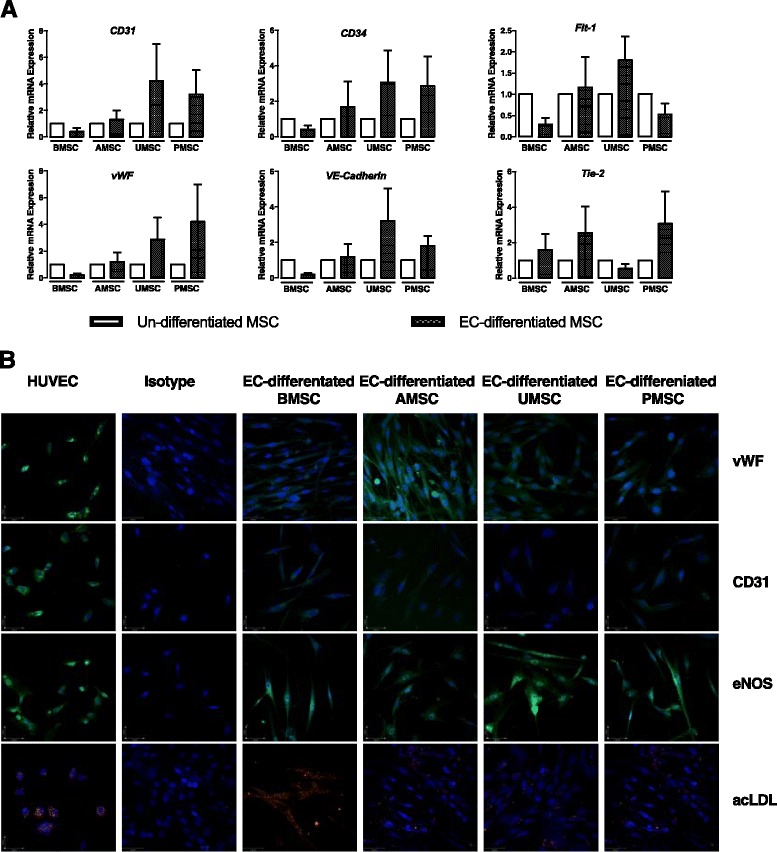
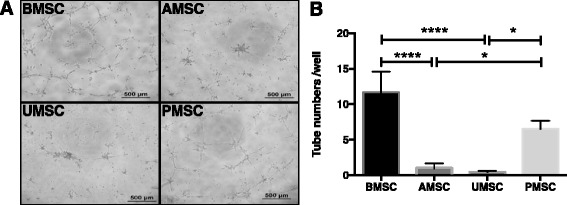
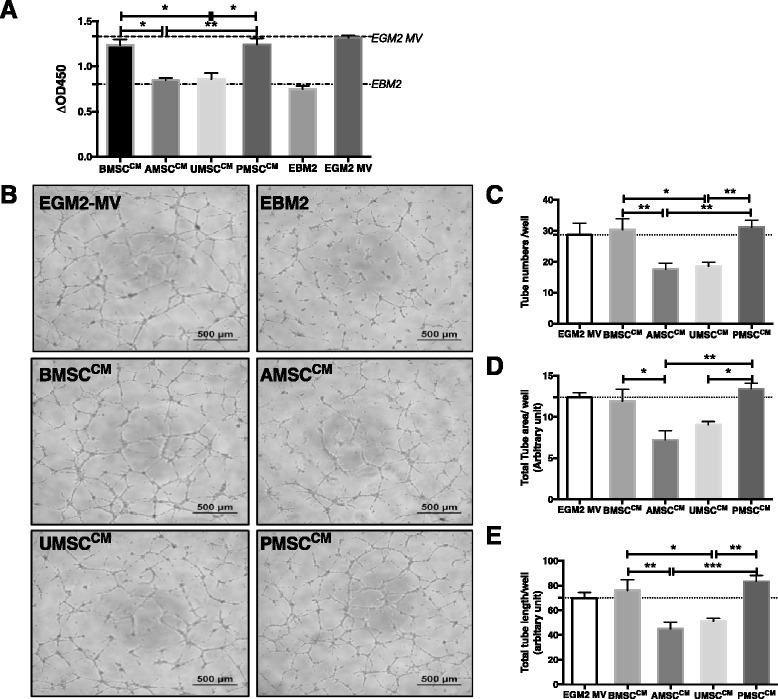
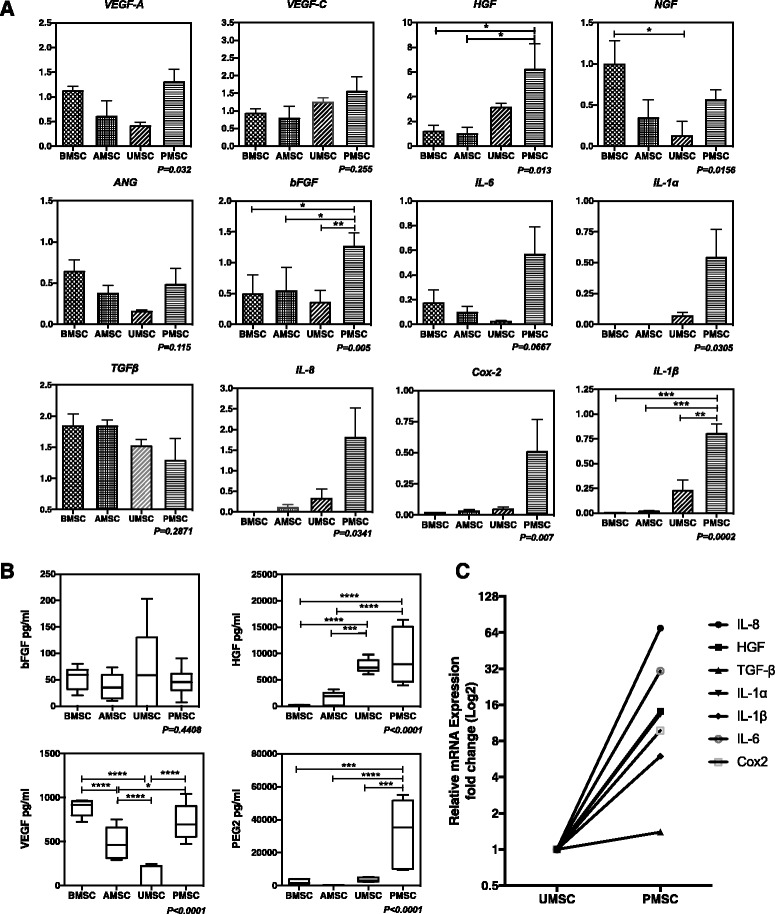
Background: Mesenchymal stem cells (MSCs) have been widely proven effective for therapeutic angiogenesis in ischemia animal models as well as clinical vascular diseases. Because of the invasive method, limited resources, and aging problems of adult tissue-derived MSCs, more perinatal tissue-derived MSCs have been isolated and studied as promising substitutable MSCs for cell transplantation. However, fewer studies have comparatively studied the angiogenic efficacy of MSCs derived from different tissues sources. Here, we evaluated whether the in-situ environment would affect the angiogenic potential of MSCs. Methods: We harvested MSCs from adult bone marrow (BMSCs), adipose tissue (AMSCs), perinatal umbilical cord (UMSCs), and placental chorionic villi (PMSCs), and studied their “MSC identity” by flow cytometry and in-vitro trilineage differentiation assay. Then we comparatively studied their endothelial differentiation capabilities and paracrine actions side by side in vitro. Results: Our data showed that UMSCs and PMSCs fitted well with the minimum standard of MSCs as well as BMSCs and AMSCs. Interestingly, we found that MSCs regardless of their tissue origins could develop similar endothelial-relevant functions in vitro, including producing eNOS and uptaking ac-LDL during endothelial differentiation in spite of their feeble expression of endothelial-related genes and proteins. Additionally, we surprisingly found that BMSCs and PMSCs could directly form tubular structures in vitro on Matrigel and their conditioned medium showed significant proangiogenic bioactivities on endothelial cells in vitro compared with those of AMSCs and UMSCs. Besides, several angiogenic genes were upregulated in BMSCs and PMSCs in comparison with AMSCs and UMSCs. Moreover, enzyme-linked immunosorbent assay further confirmed that BMSCs secreted much more VEGF, and PMSCs secreted much more HGF and PGE2. Conclusions: Our study demonstrated the heterogeneous proangiogenic properties of MSCs derived from different tissue origins, and the in vivo isolated environment might contribute to these differences. Our study suggested that MSCs derived from bone marrow and placental chorionic villi might be preferred in clinical application for therapeutic angiogenesis.
Overview
The claims and statistics of this paper haven’t been checked yet.
Free: it reads the open-access text and checks the first 5 claims that cite a source we can check. Create a free account to check every claim.
Integrity signals
Registry
Cites
Statistics
Figures
Verification
Claims the paper makes
The claims and statistics of this paper haven’t been checked yet.
Free: it reads the open-access text and checks the first 5 claims that cite a source we can check. Create a free account to check every claim.
Claims other papers make about this one
Each is checked against this paper’s own text: does it say what the citing paper says it does?
The cited source says what the claim attributes to it.
In the citing paper
“Although our results align with previous studies showing superior proangiogenic abilities [41] and higher secretion of VEGF in BM-MSC cultures [42], others have conversely reported higher tube formation and angiogenic bioactivity in the secretome of A-MSCs [43, 44].”
Self-check
Percentages, sums and reported differences re-computed from the paper’s own numbers.
The self-check needs the paper’s full text.
Citations
Cites
Mesenchymal stem cells in health and disease
Uccelli, A., Moretta, L., & Pistoia, V. (2008) · Nature Reviews Immunology · doi:10.1038/nri2395 · Cited by 3,746 · cited 1×
“which make them ideal candidates for cell therapy and tissue engineering [1].”
Secretion of angiogenic and antiapoptotic factors by human adipose stromal cells
Rehman, J., Traktuev, D., Li, J., Merfeld-Clauss, S., Temm-Grove, C. J., Bovenkerk, J. E., Pell, C. L., Johnstone, B. H., Considine, R. V., & March, K. L. (2004) · Circulation · doi:10.1161/01.cir.0000121425.42966.f1 · Cited by 2,269 · cited 1×
“[41], Kandel and Pittenger [42], and Bronckaers et al.”
Mesenchymal Stem Cells Enhance Wound Healing Through Differentiation and Angiogenesis
Wu, Y., Chen, L., Scott, P. G., & Tredget, E. E. (2007) · Stem Cells · doi:10.1634/stemcells.2007-0226 · Cited by 1,676 · cited 2×
“[19] reported that 27 % of transplanted MSCs engrafted into the wounded skin but only 2.”
Fibroblast precursors in normal and irradiated mouse hematopoietic organs.
Friedenstein, A. J., Jf, G., & Nn, K. (1976) · PubMed · Cited by 1,658
Bussolino, F., Di Renzo, M. F., Ziche, M., Bocchietto, E., Olivero, M., Naldini, L., Gaudino, G., Tamagnone, L., Coffer, A., & Comoglio, P. M. (1992) · The Journal of cell biology · doi:10.1083/jcb.119.3.629 · Cited by 1,337 · cited 1×
“Previous studies have shown that VEGF [43], HGF [44], and PGE2 [32] were important angiogenic cytokines that could significantly promote the growth and tube formation of endothelial cells.”
Wagner, W., Wein, F., Seckinger, A., Frankhauser, M., Wirkner, U., Krause, U., Blake, J., Schwager, C., Eckstein, V., Ansorge, W., et al. (2005) · Experimental Hematology · doi:10.1016/j.exphem.2005.07.003 · Cited by 1,259 · cited 1×
“Many studies have comparatively analyzed the differential properties and biological functions of MSCs derived from perinatal and adult tissues, including their molecule profile [7], tridifferentiation potentials [8], proliferation/clonogenic formation capacities [9], immunomodulatory functions [10], and hematopoietic…”
Baksh, D., Yao, R., & Tuan, R. S. (2007) · Stem Cells · doi:10.1634/stemcells.2006-0709 · Cited by 1,058 · cited 1×
“Many studies have comparatively analyzed the differential properties and biological functions of MSCs derived from perinatal and adult tissues, including their molecule profile [7], tridifferentiation potentials [8], proliferation/clonogenic formation capacities [9], immunomodulatory functions [10], and hematopoietic…”
Lu, L., Liu, Y.-J., Yang, S.-G., Zhao, Q., Wang, X., Gong, W., Han, Z., Xu, Z., Lu, Y., Liu, D., et al. (2006) · PubMed · Cited by 852
Self-citationWinkler, I. G., Sims, N. A., Pettit, A. R., Barbier, V., Nowlan, B., Helwani, F., Poulton, I. J., van Rooijen, N., Alexander, K. A., Raggatt, L. J., et al. (2010) · Blood · doi:10.1182/blood-2009-11-253534 · Cited by 801 · cited 1×
“VCAM-1, also known as CD106, is extensively expressed on endothelial cells [45] and some stromal cells in a particular niche, such as the vascular niche [46] and the hematopoietic niche [47, 48].”
Nör, J. E., Christensen, J., Mooney, D. J., & Polverini, P. J. (1999) · The American Journal of Pathology · doi:10.1016/s0002-9440(10)65284-4 · Cited by 641 · cited 1×
“Previous studies have shown that VEGF [43], HGF [44], and PGE2 [32] were important angiogenic cytokines that could significantly promote the growth and tube formation of endothelial cells.”
Cited by
Items 101–200 of 203
Esposito, M., Paulesu, L. R., & Mandalà, M. (2025) · Frontiers in Endocrinology · doi:10.3389/fendo.2025.1637570 · Cited by 22
Spatial subcellular organelle networks in single cells
Venkatesan, M., Zhang, N. Y., Marteau, B. L., Yajima, Y., Garcia, N. O. D. Z., Fang, Z., Hu, T., Cai, S., Ford, A., Olszewski, H., et al. (2023) · Scientific Reports · doi:10.1038/s41598-023-32474-y · Cited by 17
Placenta-Derived Cells for Acute Brain Injury
Pischiutta, F., Sammali, E., Parolini, O., Carswell, H. V. O., & Zanier, E. R. (2018) · Cell Transplantation · doi:10.1177/0963689717732992 · Cited by 18
Kutaish, H., Bengtsson, L., Tscholl, P. M., Marteyn, A., Braunersreuther, V., Guérin, A., Béna, F., Gimelli, S., Longet, D., Ilmjärv, S., et al. (2022) · Stem Cells Translational Medicine · doi:10.1093/stcltm/szac074 · Cited by 17
“21 Current clinical trials show improvement in patient scores 22 but have not yet shown evidence of regenerating articular cartilage.”
Jiang, Y., Jiao, H., Lee, M., Wang, T., Turng, L., Li, Q., & Li, W. (2018) · Journal of Biomedical Materials Research Part A · doi:10.1002/jbm.a.36362 · Cited by 17
Boss, A. L., Damani, T. T., Wickman, T. J., Chamley, L., James, J. L., & Brooks, A. E. S. (2022) · eLife · doi:10.7554/elife.76622 · Cited by 16
“In line with this, cultured pMSCs have well established angiogenic and haematopoietic paracrine effects in vitro and in vivo ( Chen et al., 2009 ; Du et al., 2016a ). pMSCs are typically isolated by gross tissue culture methods (explant outgrowths or enzymatic digestion followed by plastic…”
Umapathy, A., McCall, A., Sun, C., Boss, A. L., Gamage, T. K. J. B., Brooks, A. E. S., Chamley, L., & James, J. L. (2020) · Stem Cell Reviews and Reports · doi:10.1007/s12015-020-09959-8 · Cited by 16
“Previous reports have demonstrated that media conditioned by a mixed population of pMSCs isolated from the chorionic plate and villi resulted in a higher density (number of tubes that intersected with the criteria grid) of endothelial tubes in vitro compared to basal media [33, 34].”
Otsuka, T., Maeda, Y., Kurose, T., Nakagawa, K., Mitsuhara, T., Kawahara, Y., Kurisu, K., & Yuge, L. (2021) · Stem Cells and Development · doi:10.1089/scd.2021.0070 · Cited by 17
“MSCs, which are isolated mainly from the bone marrow [15–17], have been investigated in clinical trials [15,18], while previous studies have identified differences in the characteristics of MSCs derived from various tissues [13,19,20].”
Li, C.-H., Zhao, J., Zhang, H., & Wang, B. (2023) · World Journal of Stem Cells · doi:10.4252/wjsc.v15.i4.105 · Cited by 16
The pathological and therapeutic roles of mesenchymal stem cells in preeclampsia
Jin, S., Wu, C., Chen, M., Sun, D., & Zhang, H. (2022) · Frontiers in Medicine · doi:10.3389/fmed.2022.923334 · Cited by 16
Mesenchymal stem cells and connective tissue diseases: From bench to bedside
Shi, Y., Jiang, N., Li, M., Zeng, X., & Tian, X. (2022) · Journal of Translational Internal Medicine · doi:10.2478/jtim-2022-0028 · Cited by 16
“The therapeutic efficacy of PDSCs varies depending on the anatomical site, and they have been reported to have a better effect for vascular disease.[4]”
BackgroundSantos, R. D. A., Asensi, K. D., de Barros, J. H. O., de Menezes, R. C. S., Cordeiro, I. R., Brito, J. M., Kasai-Brunswick, T. H., & Goldenberg, R. C. D. S. (2020) · International Journal of Molecular Sciences · doi:10.3390/ijms21249563 · Cited by 16
Yang, C., Chen, Y., Zhong, L., You, M., Yan, Z., Luo, M., Zhang, B., Yang, B., & Chen, Q. (2019) · Biochemistry and Cell Biology · doi:10.1139/bcb-2019-0253 · Cited by 14
“MSCs have been isolated from many tissues, including bone marrow, umbilical cord, adipose, and dental tissues(Du et al. 2016; Gottipamula et al. 2014; Gronthos et al. 2000; Miura et al. 2003; Zuk et al. 2001).”
BackgroundInfluentialIsolation and characterization of mesenchymal stem cells from umbilical cord of giant panda
Liu, Y., Li, F., Cai, Z., Wang, D., Hou, R., Zhang, H., Zhang, M., Yie, S.-M., Wu, K., Zeng, C., et al. (2021) · Tissue and Cell · doi:10.1016/j.tice.2021.101518 · Cited by 15
Mesenchymal Stem/Stromal Cells in Cancer: from Initiation to Metastasis
Zheng, Z., Li, P., Shen, F., Shi, Y., & Shao, C. (2022) · Archives of Medical Research · doi:10.1016/j.arcmed.2022.11.001 · Cited by 14
Skalska, U., Kuca‐Warnawin, E., Kornatka, A., Janicka, I., Musiałowicz, U., Burakowski, T., & Kontny, E. (2017) · Autoimmunity · doi:10.1080/08916934.2017.1411481 · Cited by 14
Ji, S., Wu, C., Tong, L., Wang, L., Zhou, J., Chen, C., & Song, Y. (2019) · Regenerative Medicine · doi:10.2217/rme-2018-0152 · Cited by 13
Applications of chitosan-based hydrogels in diabetic wound healing: A review
Li, W. (2025) · International Journal of Biological Macromolecules · doi:10.1016/j.ijbiomac.2025.147264 · Cited by 18
Zhou, Z., Zhang, X., Wang, S., Wang, X., & Mao, J. (2023) · International Journal of Nanomedicine · doi:10.2147/ijn.s443716 · Cited by 13
Mesenchymal stem cells in cancer therapy; the art of harnessing a foe to a friend.
Karimi‐Shahri, M., Javid, H., Mashhad, A. S., Yazdani, S., & Hashemy, S. I. (2021) · PubMed Central · doi:10.22038/ijbms.2021.58227.12934 · Cited by 18
“MSCs regulate angiogenesis Given the ability of MSCs to release different angiogenesis-stimulating growth factors and cytokines, it is not surprising to bring up MSCs as potent regulators of tumor angiogenesis (73, 74).”
BackgroundBlock, T. J., & Garza, J. R. (2017) · Aesthetic Surgery Journal · doi:10.1093/asj/sjx015 · Cited by 13
Prophylaxis against renal ischemia-reperfusion injury in canine model: Stem cell approach
Osman, Y. M., Hamed, S. M., Barakat, N., Khater, S. M., Gabr, M., Mosbah, A., Gaballah, M., & Shaaban, A. A. (2020) · Indian Journal of Urology · doi:10.4103/iju.iju_114_19 · Cited by 13
“[23] Others showed that BM-MSCs are superior to adipose cell origin regarding their endothelial differentiation capabilities and paracrine action side by side in vitro.[24]”
BackgroundKang, H., Feng, J., Peng, Y., Liu, Y., Yang, Y., Wu, Y. H., Huang, J., Jie, Y., Chen, B., & He, Y. (2023) · Stem Cell Research & Therapy · doi:10.1186/s13287-023-03559-2 · Cited by 13
“Due to noninvasive collection methods, uncontroversial ethics and large quantities, hAD-MSCs and hUC-MSCs generated from discarded tissue are considered promising candidates [16, 52].”
BackgroundEmerging roles of mesenchymal stem cell-derived exosomes in gastrointestinal cancers
Wang, N., Pei, B., Yuan, X., Yi, C., Ocansey, D. K. W., Qian, H., & Mao, F. (2022) · Frontiers in Bioengineering and Biotechnology · doi:10.3389/fbioe.2022.1019459 · Cited by 16
“MSCs play an important role in promoting tumour angiogenesis through the release of high levels of cytokines and pro-angiogenic growth factors, including vascular endothelial growth factor (VEGF), fibroblast growth factor-2 (FGF-2), IL-8, IL-6, angiopoietin, and transforming growth factor-β (TGF-β) (Feng and Chen, 200…”
BackgroundInfluentialEx Vivo Peptide Decoration Strategies on Stem Cell Surfaces for Augmenting Endothelium Interaction
Park, H. W., Lee, C. E., Kim, S., Jeong, W., & Kim, K. (2023) · Tissue Engineering Part B Reviews · doi:10.1089/ten.teb.2023.0210 · Cited by 12
Xiao, Y.-C., Zhu, Q., Liu, X.-Y., Jiang, M., Hao, H., Zhu, H., Cowan, P., He, X.-M., Liu, Q., Zhou, S.-H., et al. (2020) · Journal of Tissue Engineering and Regenerative Medicine · doi:10.1002/term.3047 · Cited by 10
Oh, S.-Y., Choi, D. H., Jin, Y. M., Yu, Y., Kim, H. Y., Kim, G., Park, Y. S., & Jo, I. (2019) · Tissue Engineering and Regenerative Medicine · doi:10.1007/s13770-019-00221-y · Cited by 11
Human Placental Mesenchymal Stem Cells for the Treatment of ARDS in Rat
Kakabadze, Z., Kipshidze, N. N., Paresishvili, T., Kipshidze, N. N., Vadachkoria, Z., & Chakhunashvili, D. (2022) · Stem Cells International · doi:10.1155/2022/8418509 · Cited by 13
Wu, H., Qian, X., & Liang, G. (2023) · Cardiovascular Drugs and Therapy · doi:10.1007/s10557-023-07472-x · Cited by 12
“The pro-angiogenic function of MSCs is attributed to the secretion of VEGF, ANG, transforming growth factor-beta (TGF-β), nerve growth factor (NGF), and other pro-angiogenic factors by MSCs [83].”
Boss, A. L., Brooks, A. E. S., Chamley, L., & James, J. L. (2020) · Placenta · doi:10.1016/j.placenta.2020.09.002 · Cited by 11
Targeted therapy of tumour microenvironment by gold nanoparticles as a new therapeutic approach
Mahhengam, N., Kazemnezhad, K., Budi, H. S., Ansari, M. J., Bokov, D. O., Suksatan, W., Thangavelu, L. P., & Siahmansouri, H. (2022) · Journal of drug targeting · doi:10.1080/1061186x.2022.2032095 · Cited by 12
“MSCs release a high amount of cytokines and angiogenesis-stimulating growth factors, including bFGF, VEGF, PDGF, IL-6, TGFb, IL-8, and angiopoietin; all in all, give rise to tumour angiogenesis enhancement [131,132].”
BackgroundIntroduction of Perinatal Tissue-Derived Stem Cells
Li, Z., & Han, Z. (2019) · Springer eBooks · doi:10.1007/978-981-13-2703-2_1 · Cited by 10
Self-citationSaadh, M. J., Mohamed, A. H., Almoyad, M. A. A., Allela, O. Q. B., Amin, A. H., Malquisto, A. A., Jin, W. T., Sârbu, I., AlShamsi, F., Elsaid, F. G., et al. (2024) · Cell Biochemistry and Function · doi:10.1002/cbf.3962 · Cited by 11
“46,47 MSCs are also able to transform fibroblasts at the tumor site into CAFs.”
BackgroundTaeb, S., Rostamzadeh, D., Amini, S. M., Rahmati, M. M., Golshekan, M., Abedinzade, M., Ahmadi, E., Singh, N. C., & Najafi, M. (2024) · Current Topics in Medicinal Chemistry · doi:10.2174/0115680266299112240514103048 · Cited by 11
Apigenin alleviates osteoporosis by orchestrating SIRT1/HIF1α signaling in mesenchymal stem cells
He, X., Chen, M., Zhang, X., Cheng, X., Chen, Y., Shen, H., Yang, H., Shi, Q., & Niu, J. (2024) · Fundamental Research · doi:10.1016/j.fmre.2024.02.002 · Cited by 9
“Although MSCs are potential candidates for tissue regenerative repair owing to their multispectral differentiation potential, there are significant differences in their properties under pathological conditions [6] .”
Hypoxia and interleukin-1-primed mesenchymal stem/stromal cells as novel therapy for stroke
Salaudeen, M. A., Allan, S. M., & Pinteaux, E. (2023) · Human Cell · doi:10.1007/s13577-023-00997-1 · Cited by 10
“Further, the secretion of trophic factors, growth factors, proangiogenic factors (PDGF, TGFβ, VEGF, bFGF), cytokines (such as IL-6 and IL-8), and the differentiation of MSCs to endothelial-like cells or pericytes favours angiogenesis in tumour cells [93, 98, 99].”
BackgroundLocal and Remote Effects of Mesenchymal Stem Cell Administration on Skin Wound Regeneration
Silina, E. V., Stupin, V. A., Koreyba, K. A., Bolevich, S., Suzdaltseva, Y. G., & Manturova, N. (2021) · Pathophysiology · doi:10.3390/pathophysiology28030024 · Cited by 9
Couto, P. S., Stibbs, D. J., Rotondi, M. C., Khalife, R., Wolf, D., Takeuchi, Y., & Rafiq, Q. A. (2024) · Cytotherapy · doi:10.1016/j.jcyt.2024.05.020 · Cited by 8
Ghufran, H., Azam, M., Mehmood, A., Umair, M., Baig, M. T., Tasneem, S., Butt, H., & Riazuddin, S. A. (2024) · Journal of Clinical and Experimental Hepatology · doi:10.1016/j.jceh.2024.101364 · Cited by 8
Wu, X., Jin, S., Pan, Y., Zhen, W., Yu, S., Zhang, Y., Xu, F. Y., Wang, R., Wu, M., Sun, W., et al. (2026) · Stem Cell Research & Therapy · doi:10.1186/s13287-026-04997-4 · Cited by 7
Li, H., Yang, W., Zhu, B., Li, M., & Zhang, X. (2024) · Photodiagnosis and Photodynamic Therapy · doi:10.1016/j.pdpdt.2024.104389 · Cited by 7
Mesodermal Derivatives of Pluripotent Stem Cells Route to Scarless Healing
Suzdaltseva, Y. G., & Киселев, С. Л. (2023) · International Journal of Molecular Sciences · doi:10.3390/ijms241511945 · Cited by 7
Recent advances in mesenchymal stem cell therapy for myocardial infarction
He, Y.-C., Yuan, G.-D., Li, N., Ren, M.-F., Qian‐Zhang, Deng, K.-N., Wang, L.-C., Xiao, W.-L., Ma, N., Stamm, C., et al. (2024) · Clinical Hemorheology and Microcirculation · doi:10.3233/ch-249101 · Cited by 7
“Mesenchymal stem cells have a wide distribution and can be isolated from various biological tissues, including adult bone marrow and adipose tissue, as well as neonatal tissues such as umbilical cord and placenta [21].”
Sun, S., Wang, L., Tang, Q., Yi, J., Yu, X., Cao, Y. Q., Jiang, L., & Liu, J. (2024) · Frontiers in Cell and Developmental Biology · doi:10.3389/fcell.2024.1469541 · Cited by 7
Najar, M., Crompot, E., van Grunsven, L. A., Dollé, L., & Lagneaux, L. (2019) · Cytotechnology · doi:10.1007/s10616-018-0283-8 · Cited by 7
Chaplygina, A. V., Zhdanova, D., Kovalev, V. I., Полтавцева, Р. А., Medvinskaya, N. I., & Бобкова, Н. В. (2022) · Journal of Evolutionary Biochemistry and Physiology · doi:10.1134/s0022093022010112 · Cited by 7
“The absence of hematopoietic stem cells in the samples is evidenced by the absence of CD14, CD34, CD45 markers [40].”
BackgroundAdvances in Understanding the Roles of Mesenchymal Stem Cells in Lung Cancer
Ding, W., Zhang, K., Li, Q., Xu, L., Ma, Y., Han, F., Zhu, L. W., & Sun, X. (2023) · Cellular Reprogramming · doi:10.1089/cell.2022.0133 · Cited by 8
“Concerning angiogenesis, BMSCs express relatively high vascular cell adhesion molecular-1 levels and thus exhibit higher vasogenic properties (Du et al., 2016).”
Mesenchymal Stem Cells in Clinical Trials for Immune Disorders
Li, Z., Han, Z., & Han, Z. (2024) · Global Medical Genetics · doi:10.1055/s-0044-1788044 · Cited by 7
Self-citationCarmona-Luque, M., Ballesteros-Ribelles, A., Millán-López, A., Blanco, A., Nogueras, S., & Herrera, C. (2024) · Journal of Clinical Medicine · doi:10.3390/jcm13092480 · Cited by 6
“Thus, Hsiao et al. compared the paracrine potential of AT-MSCs and BM-MSCs and observed that cells derived from AT showed higher levels of cytokine secretion such as VEGF and TGF-β [33] and, paradoxically, another published study found out that BM-MSCs were more proangiogenic than AT-MSCs [34].”
ResultSaadh, M. J., Alhuthali, H. M., Aníbal, O. G., Asenjo‐Alarcón, J. A., Younus, D. G., Alhili, A., Adhab, Z. H., Alsalmi, O. A., Gharib, A. F., Pecho, R. D. C., et al. (2023) · Cell Biology International · doi:10.1002/cbin.12098 · Cited by 6
“MSCs derived from these three sources have been identified to exhibit comparable phenotypic and surface antigenic expression characteristics, as well as immunosuppressive capabilities (Du et al., 2016).”
BackgroundMesenchymal stem cells from different sources for sepsis treatment: prospects and limitations
Heng, C., Ling, X., Zhao, B., Chen, J., Sun, X., Yang, J., & Li, P. (2024) · Brazilian Journal of Medical and Biological Research · doi:10.1590/1414-431x2024e13457 · Cited by 6
“In addition, another study found that BMSC secrete a higher amount of VEGF (vascular endothelial growth factor) than umbilical cord mesenchymal stem cells (UC-MSC) (20).”
Differences in human placental mesenchymal stromal cells may impair vascular function in FGR
Boss, A. L., Chamley, L., Brooks, A. E. S., & James, J. L. (2021) · Reproduction · doi:10.1530/rep-21-0226 · Cited by 6
Jang, H. H., Son, Y., Park, G., & Park, K. (2022) · International Journal of Molecular Sciences · doi:10.3390/ijms24010413 · Cited by 6
Warzycha, M., Oleksiuk, A., Suska, O., Kolanowski, T. J., & Rozwadowska, N. (2026) · Genes · doi:10.3390/genes17010108 · Cited by 6
“Their study suggests that bone marrow-derived MSCs and placental-derived MSCs may be more suitable for clinical applications in vascular diseases due to their strong paracrine activity [67].”
Heterogeneity of fibroblasts from radicular cyst influenced osteoclastogenesis and bone destruction
Yang, J., Xu, S., & Wang, H. (2020) · Oral Diseases · doi:10.1111/odi.13317 · Cited by 5
Rody, E., Zwaig, J., Derish, I., Khan, K., Kachurina, N., Gendron, N., Giannetti, N., Schwertani, A. G., & Cecere, R. (2024) · International Journal of Molecular Sciences · doi:10.3390/ijms251910279 · Cited by 4
Facing the challenges of peripheral arterial disease in the era of emerging technologies
Hedhli, J., Cole, J. A., Memon, W., Kim, M., Dobrucki, I. T., Insana, M. F., Jimenez, J. J., Kumar, J. S., & Dobrucki, L. W. (2024) · JVS-Vascular Insights · doi:10.1016/j.jvsvi.2024.100095 · Cited by 5
Khazeni, S., Ghavimi, M. A., Abbasi, M. M., Roshangar, L., Abedi, S., & Pourlak, T. (2024) · Journal of Oral Biosciences · doi:10.1016/j.job.2024.07.007 · Cited by 4
Serra, J., Alves, C. P. A., Cabral, J. M. S., Monteiro, G. A., da Silva, C. L., & Prazeres, D. M. F. (2021) · The Journal of Gene Medicine · doi:10.1002/jgm.3342 · Cited by 4
Pinto, D. D. S., Bandeiras, C., Fuzeta, M. D. A., Rodrigues, C. A. V., Jung, S., Hashimura, Y., Tseng, R.-J., Milligan, W., Lee, B., Ferreira, F. C., et al. (2020) · Biotechnology Journal · doi:10.1002/biot.202070064 · Cited by 4
Cheng, X., Wang, W., Du, R., Zhang, M., Xie, Y., Sun, W., Ji, J., Sun, B., & Zhang, Y. (2022) · In Vitro Cellular & Developmental Biology - Animal · doi:10.1007/s11626-022-00733-3 · Cited by 4
Current Advances in Stem Cell-Based Therapies: Adult Stem Cell Applications
Şanlı, N. M., & Timuroğlu, A. (2024) · Biochemistry · doi:10.5772/intechopen.1007380 · Cited by 2
Biomaterials for angiogenesis applications in an orthopedic context
Widholz, B., & Westhauser, F. (2022) · Elsevier eBooks · doi:10.1016/b978-0-12-821867-9.00016-0 · Cited by 4
Lee, J., Henderson, K., Ochoa, M. A., Veith, A. P., Maceda, P. A., Yoon, E., Samarneh, L., Wong, M., Dunn, A. K., & Baker, A. B. (2018) · bioRxiv (Cold Spring Harbor Laboratory) · doi:10.1101/487710 · Cited by 3
Karimi, M., Zandsalimi, K., Jafary, H., Akbari, N., & Heidari, B. (2025) · Research Square · doi:10.21203/rs.3.rs-7136519/v1 · Cited by 2
Li, C. (2021) · Biochemistry · doi:10.5772/intechopen.100286 · Cited by 1
Zhang, K., Xiao, D., Li, F., Song, G., Huang, G., Wang, Y., & Liu, H. (2024) · Advances in Medical Sciences · doi:10.1016/j.advms.2024.10.002 · Cited by 1
Tamimi, R., Tafazzoli‐Shadpour, M., & Vosough, M. (2026) · Biochimica et Biophysica Acta (BBA) - Reviews on Cancer · doi:10.1016/j.bbcan.2026.189626 · Cited by 2
Pan, K., Fu, E., Wang, W., Li, R., Yang, J., Tao, H., Han, Z., Han, Z., Li, Q., Guo, Z., et al. (2026) · Proceedings of the National Academy of Sciences · doi:10.1073/pnas.2536368123 · Cited by 1
Self-citationLiu, L., Zhang, B.-B., Gao, Q., Li, B., Sha, H., & Bin, Y. (2019) · International Journal of Morphology · doi:10.4067/s0717-95022019000100054 · Cited by 1
Perinatal Stem Cells in Kidney Regeneration: Current Knowledge and Perspectives
Feng, G., Yao, X., & Li, Z. (2019) · Springer eBooks · doi:10.1007/978-981-13-2703-2_12 · Cited by 1
Self-citationNeuropotency and Neurotherapeutic Potential of Human Umbilical Cord Stem Cell’s Secretome
Muniswami, D. M., Reddy, L. V. K., Katari, V., Babu, S., & Sen, D. (2019) · Regenerative Engineering and Translational Medicine · doi:10.1007/s40883-019-00096-4 · Cited by 1
Pham, V. Q., Tran, N. N.-T., Vu, B. T., LE, H. T., Vu, N. B., & Pham, P. V. (2021) · Minerva Biotechnology and Biomolecular Research · doi:10.23736/s2724-542x.21.02749-x · Cited by 1
Biomanufacturing of Mesenchymal Stromal Cells for Therapeutic Applications
Marklein, R. A., Mantay, M., Gomillion, C. T., & Warnock, J. N. (2021) · Cell engineering · doi:10.1007/978-3-030-79871-0_9 · Cited by 1
Naji, F. (2023) · theses.fr (ABES) · doi:10.70675/4a4b7452z5f92z4891zaa7cz332c9c7a804a · Cited by 1
How Bone Marrow Mesenchymal Stem Cells Influence the Metastasis of Breast Cancer
Squires, C. M. L. (2017) · Otago University Research Archive (University of Otago)
Conception et développement d’hydrogels pour l’ingénierie tissulaire appliquée au tissu osseux
Maisani, M. (2017) · theses.fr (ABES) · doi:10.70675/51d90721z5f68z415bzb2cezfeab39cd5d94 · Cited by 3
Vascular Formation by Perinatal Stem Cells
Beck, E. C., & Jacot, J. G. (2018) · Elsevier eBooks · doi:10.1016/b978-0-12-812015-6.00005-4
Proangiogenic Features of Perinatal Tissue-Derived Stem Cells in Cardiovascular Disease Therapy
Tao, H., & Li, Z. (2019) · Springer eBooks · doi:10.1007/978-981-13-2703-2_11
Self-citationTherapeutic Application of Perinatal Mesenchymal Stem Cells in Diabetes Mellitus
Cheng, Y., Shen, J., & Hao, H. (2019) · Springer eBooks · doi:10.1007/978-981-13-2703-2_9
Análise da expressão gênica em larga escala de células-tronco mesenquimais e de osteoblastos
Fideles, S. O. M. (2019) · Digital Library of Theses and Dissertations (Universidade de São Paulo) · doi:10.11606/d.58.2019.tde-29082018-135038
Hybrid Hydrogels for Harnessing Mesenchymal Stem Cell Secretome
Sears, V. A. (2019) · Deep Blue (University of Michigan)
Diabetic Wound Care: A Concise Review of Diabetic Wound and Skincare Ingredients
Afsahi, M., Ashtiani, H. R. A., Pour, A. H. A., & Hazrati, E. (2020) · Journal of Archives in Military Medicine · doi:10.5812/jamm.107178
“They are more easily obtained than bone marrow with the same angiogenic effects (62) while showing interesting immuno-regulatory properties, which have a key role in treating chronic wounds.”
BackgroundDesenvolvimento de matrizes celulares para o tratamento de cardiomiopatia dilatada
Liguori, T. T. A. (2020) · Digital Library of Theses and Dissertations (Universidade de São Paulo) · doi:10.11606/t.5.2020.tde-29102020-181006
王, 伟., & 韩, 忠. (2017) · Scientia Sinica Vitae · doi:10.1360/n052017-00264
Accelerating Wound Repair: The Multifaceted Role of Mesenchymal Stem CellsPreprint
Abdul Ghani, N. I., Nurhidayatul, M. N., Khairul, A. K., Hasmad, H. N., Afifa, N. T., Helmi, B. S., Aida Juliana, A. J., Farisha, M. N., Balqish, M. R., Kh, C., et al. (2024) · Preprints.org · doi:10.20944/preprints202409.1422.v1 · Cited by 1
Kim, D. J., Youn, Y., Kim, J. M., & Lim, S. (2025) · Scientific Reports · doi:10.1038/s41598-025-08283-w
“Du et al. reported that placenta-and BM-derived MSCs exhibited superior angiogenic cytokine profiles compared to AD-MSCs in a limb ischemia model 47 .”
Yurkina, E. G., Krivenko, S. I., Primakova, E. A., Nazarova, E. A., Symanovich, A. A., Dedyulya, N. I., Romanova, I. A., Yanushevskaya, E. A., Smolnikova, V. V., & Efimov, D. Y. (2025) · Medical and Biological Problems of Life Activity · doi:10.58708/2074-2088.2025-3(35)-34-41
Dias, I. E., Franchi-Mendes, T., Fernandes‐Platzgummer, A., Dias, I. R., Viegas, C. A., Spee, B., Carvalho, P. P., & da Silva, C. L. (2025) · BMC Veterinary Research · doi:10.1186/s12917-025-05175-z
“Depending on the source, MSC may differ in their proliferative capacity, immunosuppressive ability and regenerative potential, which can lead to inconsistent therapeutic outcomes [42–44].”
Fan, D., Zeng, M., Xia, Q., Wu, S., Ye, S., Rao, J., Lin, D., Zhang, H., Ma, H., Han, Z., et al. (2020) · Figshare · doi:10.6084/m9.figshare.12569375
Self-citationCalcat-i-Cervera, S., Rendra, E., Scaccia, E., Amadeo, F., Hanson, V., Wilm, B., Murray, P., O’Brien, T., Taylor, A., & Bieback, K. (2023) · Figshare · doi:10.6084/m9.figshare.22767212
Zhuang, W.-Z., Lin, Y.-H., Su, L.-J., Wu, M.-S., Jeng, H.-Y., Chang, H., Huang, Y.-H., & Ling, T.-Y. (2021) · Figshare · doi:10.6084/m9.figshare.14411581
Kang, H., Feng, J., Peng, Y., Liu, Y., Yang, Y., Wu, Y., Huang, J., Jie, Y., Chen, B., & He, Y. (2023) · Figshare · doi:10.6084/m9.figshare.24558109
Kang, H., Feng, J., Peng, Y., Liu, Y., Yang, Y., Wu, Y., Huang, J., Jie, Y., Chen, B., & He, Y. (2024) · Figshare · doi:10.6084/m9.figshare.24558241
Zhuang, W.-Z., Lin, Y.-H., Su, L.-J., Wu, M.-S., Jeng, H.-Y., Chang, H., Huang, Y.-H., & Ling, T.-Y. (2021) · Figshare · doi:10.6084/m9.figshare.14411578
Serhal, N. (2024) · theses.fr (ABES) · doi:10.70675/5db20f03z9603z4abcz8a73z3a59190b9f3c
Metadata
- Authors
- Du, W. J., Chi, Y., Yang, Z. X., Li, Z. J., Cui, J. J., Song, B. Q., Li, X., Yang, S. G., Han, Z. B., & Han, Z. C.
- Affiliations
- Chinese Academy of Medical Sciences & Peking Union Medical College (CN)
- Corresponding author
- Han, Zhi Bo
- Venue
- Stem Cell Research & Therapy
- Published
- 2016-11-10
- Volume
- 7
- Issue
- 1
- Pages
- 163-163
- ISSN
- 1757-6512 (ISSN-L)
- PMC
- PMC5103372
- OpenAlex
- W2553749118
- Cited by
- 200
- References
- 52
- Citations by year
- 2026: 7 · 2025: 6 · 2024: 24 · 2023: 25 · 2022: 26 · 2021: 24 · 2020: 27 · 2019: 31 · 2018: 17 · 2017: 13
- FWCI
- 14.75
- Type
- journal article
- Language
- en
- Open access
- gold
- doi.org
- Licence
- cc-by
- creativecommons.org/licenses/by/4.0 (tdm)
- creativecommons.org/licenses/by/4.0 (vor)
- Locations
- Stem Cell Research & Therapy (publishedVersion, cc-by)
- Europe PMC (PubMed Central) (publishedVersion, cc-by)
- PubMed Central (publishedVersion, cc-by)
- PubMed (publishedVersion)
- DOAJ (DOAJ: Directory of Open Access Journals) (submittedVersion)
- Funders
- The Natural Science Foundation of China (81330015, 31470951)
- The National Science and Technology Support Program (2013BAI01B09)
- Topics
- Life Sciences › Biochemistry, Genetics and Molecular Biology › Cell Biology › Mesenchymal stem cell research
- Life Sciences › Biochemistry, Genetics and Molecular Biology › Molecular Biology › Angiogenesis and VEGF in Cancer
- Health Sciences › Medicine › Hematology › Hematopoietic Stem Cell Transplantation
- Keywords
- mesenchymal stem cells, therapeutic angiogenesis, tissue of origin, bone marrow mesenchymal stem cells, adipose-derived stem cells, human umbilical cord mesenchymal stem cells, endothelial differentiation, vascular endothelial growth factor, hepatocyte growth factor, prostaglandin E2, endothelial nitric oxide synthase, tube formation, angiogenic gene expression
- MeSH terms
- Adipose Tissue, Bone Marrow, Bone Marrow Cells, Cell Differentiation, Cells, Cultured, Female, Humans, Placenta, Pregnancy, Umbilical Cord, Culture Media, Conditioned, Neovascularization, Physiologic, Endothelial Cells, Mesenchymal Stem Cells, Human Umbilical Vein Endothelial Cells
About these checks
Registry, retraction, Cites and statistics results are computed, not judged, with one exception: a printed reference that no index lists is read once by a model before it counts as a citation error. Claims are extracted by a model and kept only when their quote appears verbatim in the text; each cited source is then checked, with a model’s help, for whether it says what the claim relies on. Those verdicts can be wrong — read the claim’s quote and the cited source before relying on one.
Statistics and arithmetic are recomputed, not judged.
Confidence bands are shown only for fields calibrated on our annotated test set. None is calibrated yet, so no band is shown.
What counts as a claim ›How we measure confidence ›How we check this ›
Are you an author, or do you see a problem with this page? Request a review
Data sources
Bibliographic data: Semantic Scholar, OpenAlex, Crossref.
Contains information from the Semantic Scholar Academic Graph Datasets, made available under the ODC Attribution License (ODC-BY 1.0).
Semantic Scholar’s data is described in: Kinney, R., et al. (2023). The Semantic Scholar Open Data Platform. arXiv:2301.10140.
