

Suspension culture improves iPSC expansion and pluripotency phenotype
The DOI matches its Crossref record; 69 of the 69 references it cites were found in a registry or an index.
Abstract
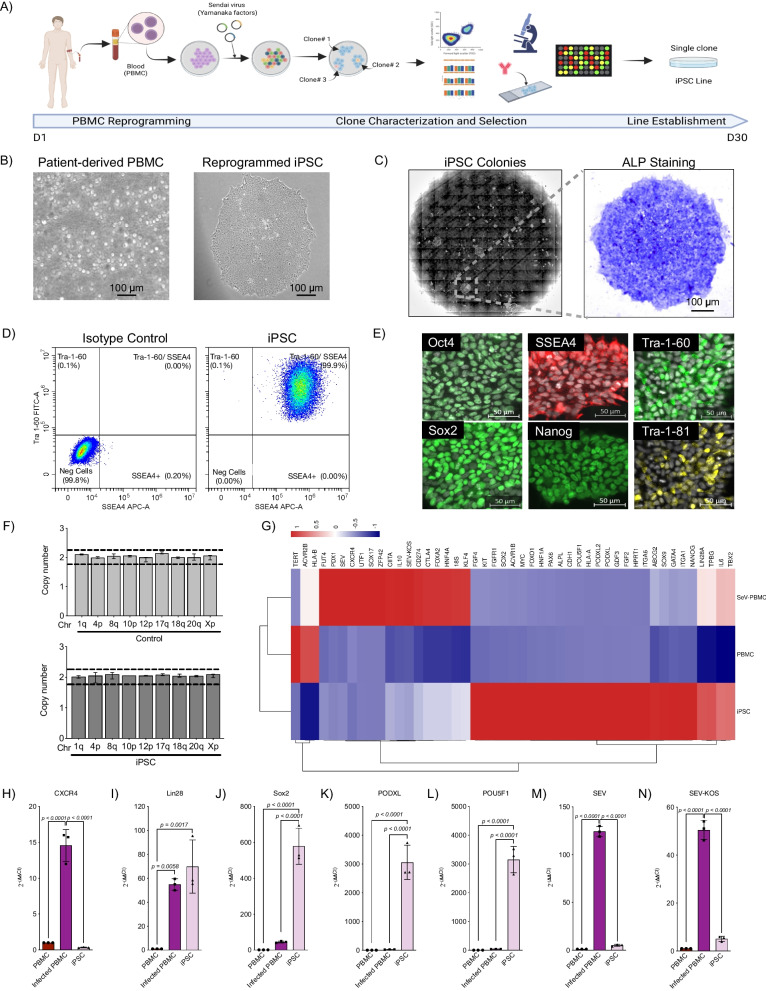
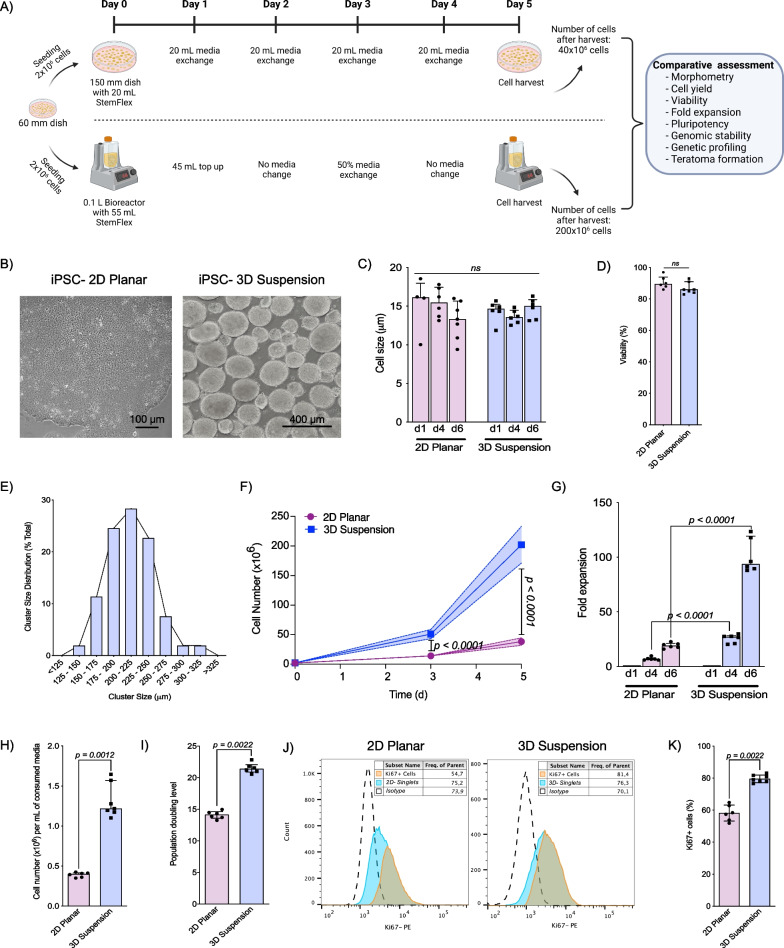
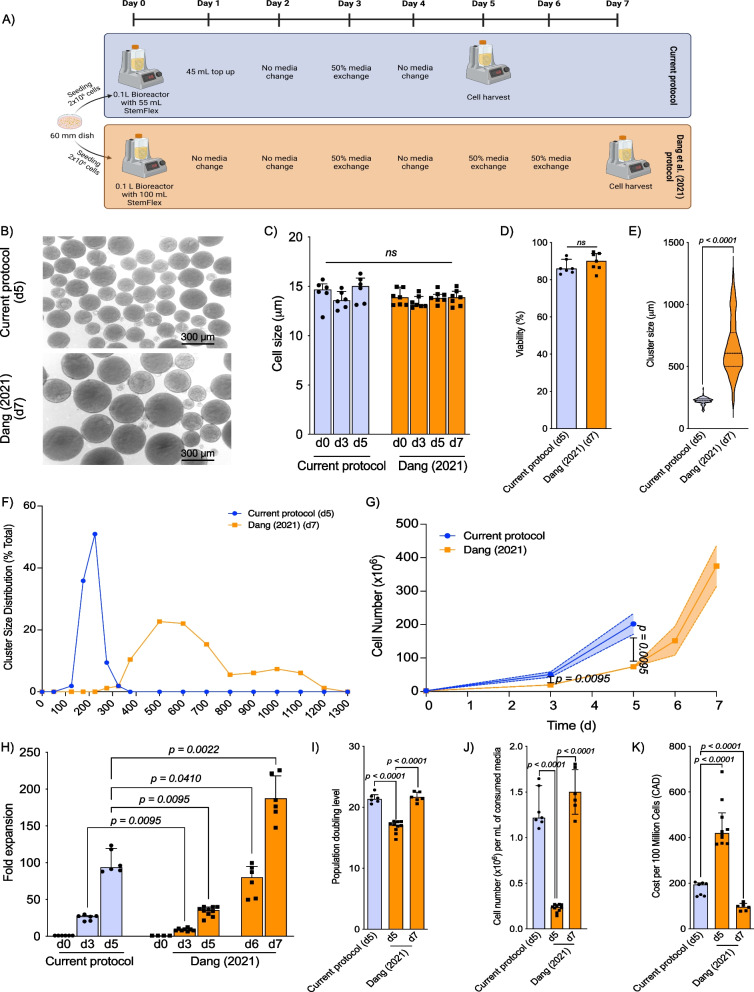
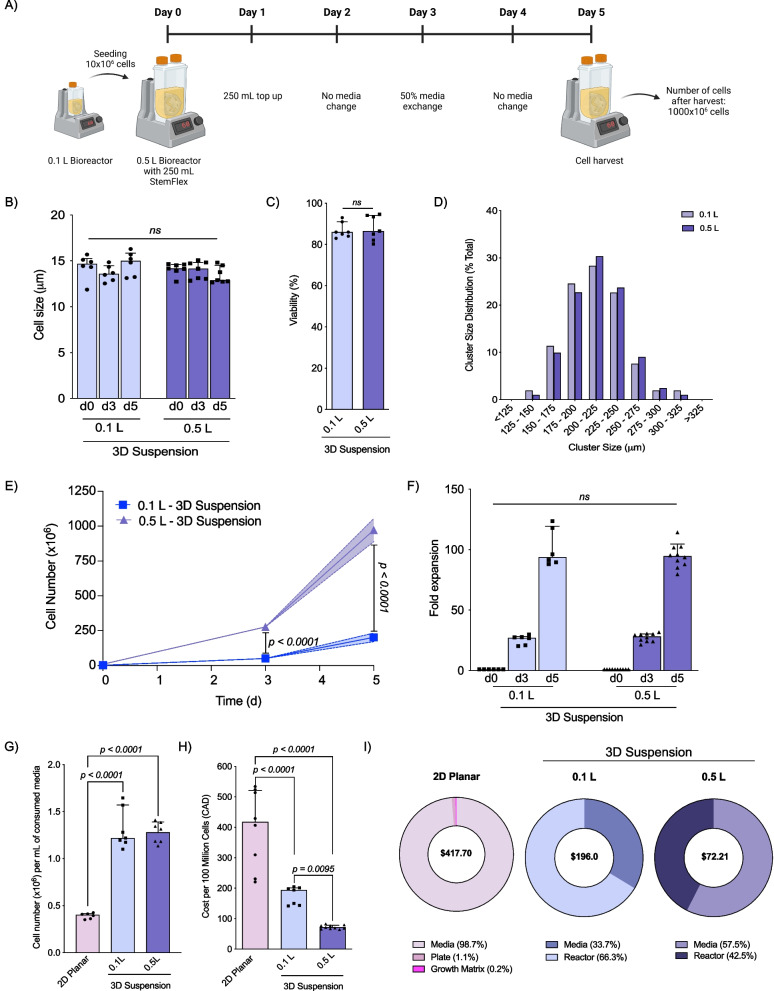
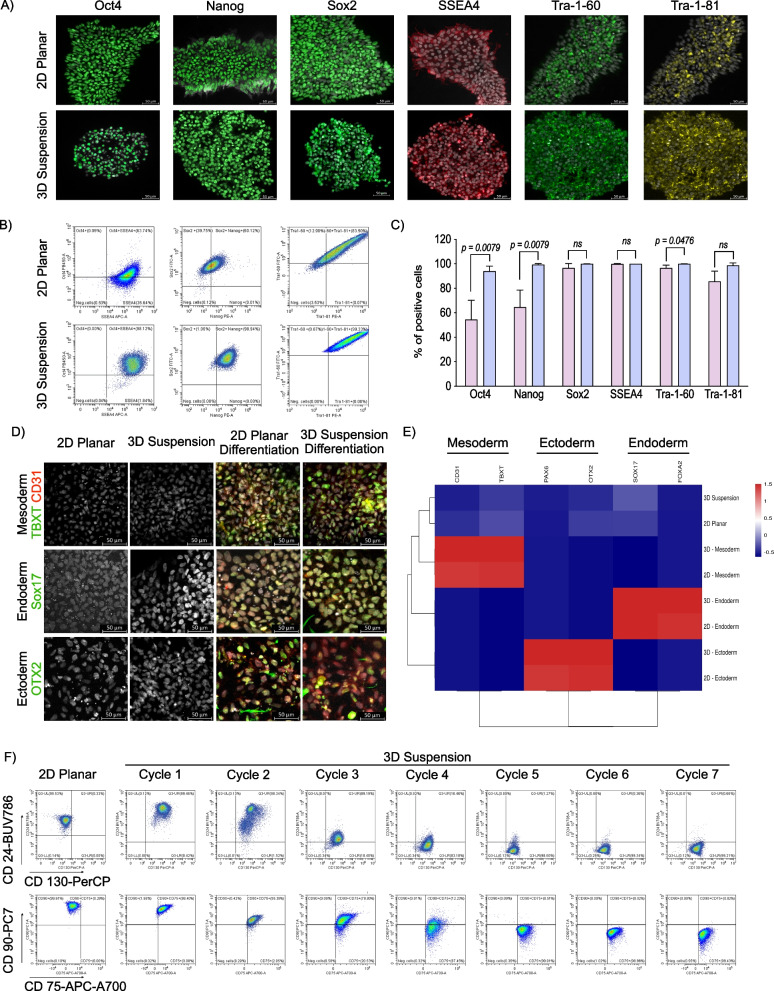
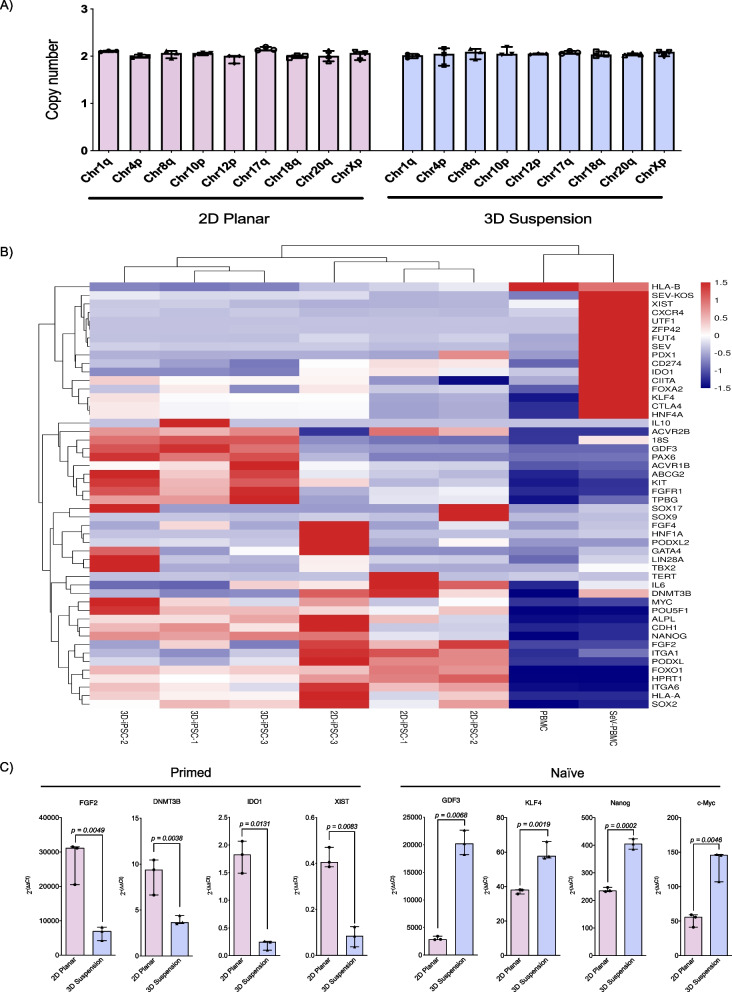
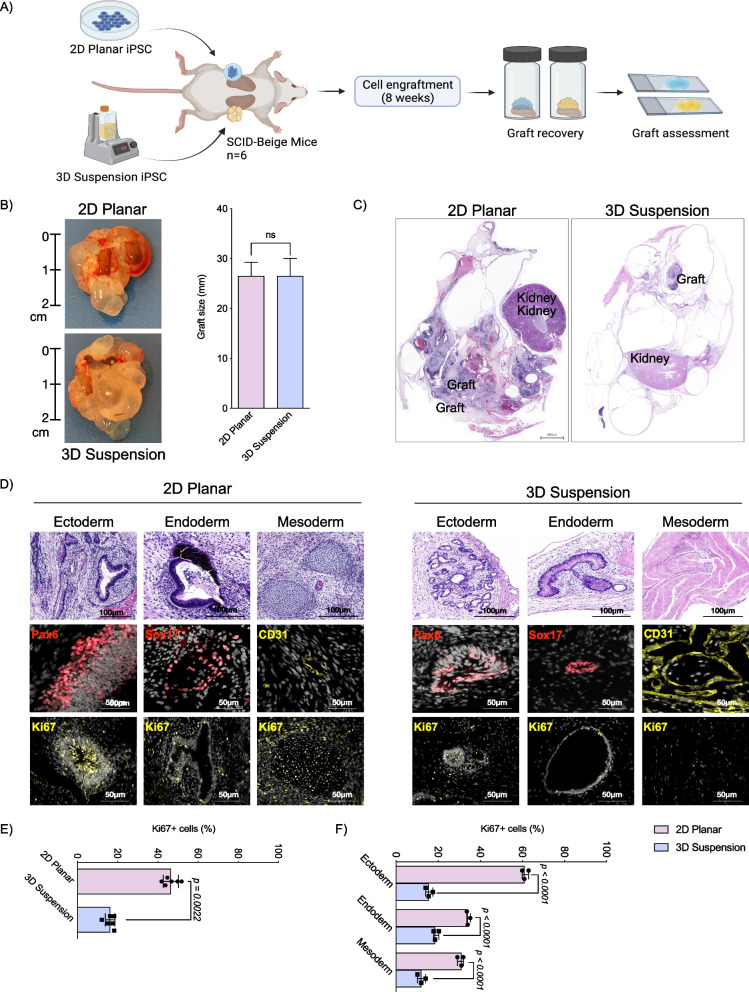
Background: Induced pluripotent stem cells (iPSCs) offer potential to revolutionize regenerative medicine as a renewable source for islets, dopaminergic neurons, retinal cells, and cardiomyocytes. However, translation of these regenerative cell therapies requires cost-efficient mass manufacturing of high-quality human iPSCs. This study presents an improved three-dimensional Vertical-Wheel® bioreactor (3D suspension) cell expansion protocol with comparison to a two-dimensional (2D planar) protocol. Methods: Sendai virus transfection of human peripheral blood mononuclear cells was used to establish mycoplasma and virus free iPSC lines without common genetic duplications or deletions. iPSCs were then expanded under 2D planar and 3D suspension culture conditions. We comparatively evaluated cell expansion capacity, genetic integrity, pluripotency phenotype, and in vitro and in vivo pluripotency potential of iPSCs. Results: Expansion of iPSCs using Vertical-Wheel® bioreactors achieved 93.8-fold (IQR 30.2) growth compared to 19.1 (IQR 4.0) in 2D (p < 0.0022), the largest expansion potential reported to date over 5 days. 0.5 L Vertical-Wheel® bioreactors achieved similar expansion and further reduced iPSC production cost. 3D suspension expanded cells had increased proliferation, measured as Ki67+expression using flow cytometry (3D: 69.4% [IQR 5.5%] vs. 2D: 57.4% [IQR 10.9%],p = 0.0022), and had a higher frequency of pluripotency marker (Oct4+Nanog+Sox2+) expression (3D: 94.3 [IQR 1.4] vs. 2D: 52.5% [IQR 5.6],p = 0.0079). q-PCR genetic analysis demonstrated a lack of duplications or deletions at the 8 most commonly mutated regions within iPSC lines after long-term passaging (> 25). 2D-cultured cells displayed a primed pluripotency phenotype, which transitioned to naïve after 3D-culture. Both 2D and 3D cells were capable of trilineage differentiation and following teratoma, 2D-expanded cells generated predominantly solid teratomas, while 3D-expanded cells produced more mature and predominantly cystic teratomas with lower Ki67+expression within teratomas (3D: 16.7% [IQR 3.2%] vs.. 2D: 45.3% [IQR 3.0%],p = 0.002) in keeping with a naïve phenotype. Conclusion: This study demonstrates nearly 100-fold iPSC expansion over 5-days using our 3D suspension culture protocol in Vertical-Wheel® bioreactors, the largest cell growth reported to date. 3D expanded cells showed enhanced in vitro and in vivo pluripotency phenotype that may support more efficient scale-up strategies and safer clinical implementation.
Overview
The claims and statistics of this paper haven’t been checked yet.
Free: it reads the open-access text and checks the first 5 claims that cite a source we can check. Create a free account to check every claim.
Integrity signals
Registry
Cites
Statistics
Figures
Verification
Claims the paper makes
The claims and statistics of this paper haven’t been checked yet.
Free: it reads the open-access text and checks the first 5 claims that cite a source we can check. Create a free account to check every claim.
Claims other papers make about this one
Each is checked against this paper’s own text: does it say what the citing paper says it does?
The source backs part of the claim, not all of it — or backs it for a different population, condition or comparison.
In the citing paper
“During expansion, a single iPSC expansion cycle in a 0.5 L VW® bioreactor vessel generated 997.1 (IQR: 850–1050) million human iPSCs with uniform 3D clusters of average 250 µm size (IQR: 125–324 µm), as previously reported by Cuesta-Gomez et al. from our group38.”
From Scale up manufacturing approach for production of human induced pluripotent stem cell-derived islets using Vertical Wheel® bioreactors (2025) · cites this paper as [38]
Experimental — accuracy not yet measuredIn the citing paper
“For the current study, we used these patient-derived iPSC lines after quality control pluripotency characterization, viral clearance, normal karyotyping, mycoplasma absence, and pluripotent stem cell transcriptomics38.”
From Scale up manufacturing approach for production of human induced pluripotent stem cell-derived islets using Vertical Wheel® bioreactors (2025) · cites this paper as [38]
In the citing paper
“We previously implemented PBS mini–Vertical Wheel® Bioreactors for ~100-fold iPSC expansion38 and achieved high efficiency in pancreatic progenitor cell differentiation (>90% PDX1 + NKX6.1 + )24.”
From Scale up manufacturing approach for production of human induced pluripotent stem cell-derived islets using Vertical Wheel® bioreactors (2025) · cites this paper as [38]
In the citing paper
“Each cell line was scrutinized for routine pluripotent stem cell quality control criteria (ALP staining, phenotype, genetic analysis, and genomic integrity) as previously described and reported38.”
From Scale up manufacturing approach for production of human induced pluripotent stem cell-derived islets using Vertical Wheel® bioreactors (2025) · cites this paper as [38]
Self-check
Percentages, sums and reported differences re-computed from the paper’s own numbers.
The self-check needs the paper’s full text.
Citations
Cites
Induction of Pluripotent Stem Cells from Adult Human Fibroblasts by Defined Factors
Takahashi, K., Tanabe, K., Ohnuki, M., Narita, M., Ichisaka, T., Tomoda, K., & Yamanaka, S. (2007) · Cell · doi:10.1016/j.cell.2007.11.019 · Cited by 20,221
Production of pancreatic hormone–expressing endocrine cells from human embryonic stem cells
D'Amour, K. A., Bang, A. G., Eliazer, S., Kelly, O. G., Agulnick, A. D., Smart, N. G., Moorman, M. A., Kroon, E., Carpenter, M. K., & Baetge, E. E. (2006) · Nature Biotechnology · doi:10.1038/nbt1259 · Cited by 1,915
Naive and Primed Pluripotent States
Nichols, J., & Smith, A. (2009) · Cell Stem Cell · doi:10.1016/j.stem.2009.05.015 · Cited by 1,859
Reversal of diabetes with insulin-producing cells derived in vitro from human pluripotent stem cells
Rezania, A., Bruin, J. E., Arora, P., Rubin, A., Batushansky, I., Asadi, A., O'Dwyer, S., Quiskamp, N., Mojibian, M., Albrecht, T., et al. (2014) · Nature Biotechnology · doi:10.1038/nbt.3033 · Cited by 1,575 · cited 4×
“Additionally, while cells grown in both conditions are capable of differentiating into tissues of interest [1, 2, 3, 4, 5, 6, 7, 8, 9, 10, 11], comparison of their pluripotency phenotype remains elusive.”
BackgroundMethodInfluentialMummery, C. L., Zhang, J., Ng, E. S., Elliott, D. A., Elefanty, A. G., & Kamp, T. J. (2012) · Circulation Research · doi:10.1161/circresaha.110.227512 · Cited by 713
Ovarian Teratomas: Tumor Types and Imaging Characteristics
Outwater, E. K., Siegelman, E. S., & Hunt, J. L. (2001) · RadioGraphics · doi:10.1148/radiographics.21.2.g01mr09475 · Cited by 630
Initiative, T. I. S. C. (2011) · Nature Biotechnology · doi:10.1038/nbt.2051 · Cited by 577
Guidelines and Techniques for the Generation of Induced Pluripotent Stem Cells
Maherali, N., & Hochedlinger, K. (2008) · Cell Stem Cell · doi:10.1016/j.stem.2008.11.008 · Cited by 486
Derivation of naïve human embryonic stem cells
Ware, C. B., Nelson, A. M., Mecham, B., Hesson, J., Zhou, W., Jonlin, E. C., Jimenez-Caliani, A. J., Deng, X., Cavanaugh, C., Cook, S., et al. (2014) · Proceedings of the National Academy of Sciences · doi:10.1073/pnas.1319738111 · Cited by 468
Schulz, T. C., Young, H. Y., Agulnick, A. D., Babin, M. J., Baetge, E. E., Bang, A. G., Bhoumik, A., Cepa, I., Cesario, R. M., Haakmeester, C., et al. (2012) · PLoS ONE · doi:10.1371/journal.pone.0037004 · Cited by 428
Research works printed but not linked: 4
- Borys BS So T Colter J Dang T Roberts EL Revay T Optimized serial expansion of human induced pluripotent stem cells using low-density inoculation to generate clinically relevant quantities in vertical-wheel bioreactors Stem Cells Transl Med 2020 9 9 1036 1052 10.1002/sctm.19-0406 32445290 PMC7445025 · DOI · Paper page
- Croughan MS Giroux D Fang D Lee B Cabral JMS Lobato de Silva C Chase LG Margarida Diogo M Novel single-use bioreactors for scale-up of anchorage-dependent cell manufacturing for cell therapies Stem cell manufacturing 2016 Boston Elsevier 105 139 · DOI
- Szot GL Koudria P Bluestone JA Transplantation of pancreatic islets into the kidney capsule of diabetic mice JoVE 2007 9 e404 PMC2566322 18989445
- Nogueira DES Rodrigues CAV Carvalho MS Miranda CC Hashimura Y Jung S Strategies for the expansion of human induced pluripotent stem cells as aggregates in single-use Vertical-Wheel™ bioreactors J Biol Eng 2019 13 74 10.1186/s13036-019-0204-1 31534477 PMC6744632 · DOI · Paper page
Cited by
Dadheech, N., Bermúdez de León, M., Czarnecka, Z., Cuesta-Gomez, N., Jasra, I. T., Pawlick, R., Marfil-Garza, B., Sapkota, S., Verhoeff, K., Razavy, H., et al. (2025) · npj Regenerative Medicine · doi:10.1038/s41536-025-00409-y · Cited by 23
Self-citationVerhoeff, K., Cuesta-Gomez, N., Maghera, J., Dadheech, N., Pawlick, R., Smith, N., O’Gorman, D., Razavy, H., Marfil-Garza, B., Young, L. G., et al. (2025) · Transplantation · doi:10.1097/tp.0000000000005108 · Cited by 16
Self-citationAT7867 promotes pancreatic progenitor differentiation of human iPSCs
Cuesta-Gomez, N., Verhoeff, K., Dadheech, N., Pawlick, R., Marfil-Garza, B., Razavy, H., & Shapiro, A. M. J. (2023) · Stem Cell Reports · doi:10.1016/j.stemcr.2023.10.005 · Cited by 8
Self-citation
Metadata
- Authors
- Cuesta-Gomez, N., Verhoeff, K., Dadheech, N., Dang, T., Jasra, I. T., de Leon, M. B., Pawlick, R., Marfil-Garza, B., Anwar, P., Razavy, H., Zapata-Morin, P. A., Jickling, G., Thiesen, A., O’Gorman, D., Kallos, M. S., & Shapiro, A. M. J.
- Venue
- Stem Cell Research & Therapy
- Published
- 2023-06-06
- Volume
- 14
- Issue
- 1
- ISSN
- 1757-6512
- PMC
- PMC10245469
- Semantic Scholar
- 31191681527a0ef383169124b24fe637614355d8
- Cited by
- 48
- References
- 69
- Language
- en
- Licence
- creativecommons.org/licenses/by/4.0 (tdm)
- creativecommons.org/licenses/by/4.0 (vor)
- Funders
- Canada Research Chairs
- Juvenile Diabetes Research Foundation Canada
- Diabetes Canada
- Canadian Donation and Transplant Research Program
- Diabetes Research Institute Foundation of Canada
- Alberta Diabetes Institute
- Stem Cell Network
- Patronato del Instituto Nacional de Ciencias Medicas y Nutricion Salvador Zubiran
- Fundacion para la Salud y la Educacion Dr. Salvador Zubirán
- CHRISTUS Excellence and Innovation Center
About these checks
Registry, retraction, Cites and statistics results are computed, not judged, with one exception: a printed reference that no index lists is read once by a model before it counts as a citation error. Claims are extracted by a model and kept only when their quote appears verbatim in the text; each cited source is then checked, with a model’s help, for whether it says what the claim relies on. Those verdicts can be wrong — read the claim’s quote and the cited source before relying on one.
Statistics and arithmetic are recomputed, not judged.
Confidence bands are shown only for fields calibrated on our annotated test set. None is calibrated yet, so no band is shown.
What counts as a claim ›How we measure confidence ›How we check this ›
Are you an author, or do you see a problem with this page? Request a review
Data sources
Bibliographic data: Semantic Scholar, OpenAlex, Crossref.
Contains information from the Semantic Scholar Academic Graph Datasets, made available under the ODC Attribution License (ODC-BY 1.0).
Semantic Scholar’s data is described in: Kinney, R., et al. (2023). The Semantic Scholar Open Data Platform. arXiv:2301.10140.
