

MeSH Now: automatic MeSH indexing at PubMed scale via learning to rank
Open accessThe DOI matches its Crossref record; 75 of the 80 references it cites were found in a registry or an index.
Abstract
Background: MeSH indexing is the task of assigning relevant MeSH terms based on a manual reading of scholarly publications by human indexers. The task is highly important for improving literature retrieval and many other scientific investigations in biomedical research. Unfortunately, given its manual nature, the process of MeSH indexing is both time-consuming (new articles are not immediately indexed until 2 or 3 months later) and costly (approximately ten dollars per article). In response, automatic indexing by computers has been previously proposed and attempted but remains challenging. In order to advance the state of the art in automatic MeSH indexing, a community-wide shared task called BioASQ was recently organized. Methods: We propose MeSH Now, an integrated approach that first uses multiple strategies to generate a combined list of candidate MeSH terms for a target article. Through a novel learning-to-rank framework, MeSH Now then ranks the list of candidate terms based on their relevance to the target article. Finally, MeSH Now selects the highest-ranked MeSH terms via a post-processing module. Results: We assessed MeSH Now on two separate benchmarking datasets using traditional precision, recall and F 1 -score metrics. In both evaluations, MeSH Now consistently achieved over 0.60 in F-score, ranging from 0.610 to 0.612. Furthermore, additional experiments show that MeSH Now can be optimized by parallel computing in order to process MEDLINE documents on a large scale. Conclusions: We conclude that MeSH Now is a robust approach with state-of-the-art performance for automatic MeSH indexing and that MeSH Now is capable of processing PubMed scale documents within a reasonable time frame. Availability: http://www.ncbi.nlm.nih.gov/CBBresearch/Lu/Demo/MeSHNow/ .
Overview
The claims and statistics of this paper haven’t been checked yet.
Free: it reads the open-access text and checks the first 5 claims that cite a source we can check. Create a free account to check every claim.
Integrity signals
Registry
Cites
Statistics
Figures
Verification
Claims the paper makes
The claims and statistics of this paper haven’t been checked yet.
Free: it reads the open-access text and checks the first 5 claims that cite a source we can check. Create a free account to check every claim.
Claims other papers make about this one
Each is checked against this paper’s own text: does it say what the citing paper says it does?
The source backs part of the claim, not all of it — or backs it for a different population, condition or comparison.
In the citing paper
“However, it may not provide keywords according to Medical Subject Headings, which is a criterion of the majority of the journal for better indexing of their articles.[24]”
From ChatGPT in academic writing: Maximizing its benefits and minimizing the risks (2023) · cites this paper as [24]
Experimental — accuracy not yet measured
Self-check
Percentages, sums and reported differences re-computed from the paper’s own numbers.
The self-check needs the paper’s full text.
Citations
Cites
Greedy function approximation: A gradient boosting machine
Friedman, J. H. (2001) · The Annals of Statistics · doi:10.1214/aos/1013203451 · Cited by 30,731 · cited 2×
“LambdaMART [67] is a combination of MART and LambdaRank, where the MART algorithm can be viewed as generalizations of logistic regression [63] and LambdaRank is a method for learning arbitrary information retrieval measures [68].”
MethodRobust estimation of a location parameter
Huber, P. J. (1964) · The Annals of Mathematical Statistics · doi:10.1214/aoms/1177703732 · Cited by 7,228
The mathematics of statistical machine translation: parameter estimation
Brown, P. F., Pietra, V. J. D., Pietra, S. A. D., & Mercer, R. L. (1993) · Cited by 3,973
Learning to rank using gradient descent
Burges, C., Shaked, T., Renshaw, E., Lazier, A., Deeds, M., Hamilton, N., & Hullender, G. (2005) · Proceedings of the 22nd international conference on Machine learning - ICML '05 · doi:10.1145/1102351.1102363 · Cited by 2,836 · cited 1×
“In this work we evaluated several other learning-to-rank algorithms [43] on the BioASQ test dataset, including MART [63], RankNet [64], Coord-inate Ascent [65], AdaRank [66], and LambdaMART, which are available in RankLib v2.”
MethodLearning to rank: from pairwise approach to listwise approach
Cao, Z., Qin, T., Liu, T.-Y., Tsai, M.-F., & Li, H. (2007) · Proceedings of the 24th international conference on Machine learning · doi:10.1145/1273496.1273513 · Cited by 1,960 · cited 1×
“In our previous work, we trained the ranking function with ListNet [62], which sorts the results based on a list of scores.”
MethodLearning to rank for information retrieval
Liu, T.-Y. (2010) · Proceedings of the 33rd international ACM SIGIR conference on Research and development in information retrieval · doi:10.1145/1835449.1835676 · Cited by 1,856
Learning to Rank for Information Retrieval
Liu, T.-Y. (2009) · Foundations and Trends® in Information Retrieval · doi:10.1561/1500000016 · Cited by 1,568
AdaRank: a boosting algorithm for information retrieval
Xu, J., & Li, H. (2007) · Proceedings of the 30th annual international ACM SIGIR conference on Research and development in information retrieval · doi:10.1145/1277741.1277809 · Cited by 775 · cited 1×
“In this work we evaluated several other learning-to-rank algorithms [43] on the BioASQ test dataset, including MART [63], RankNet [64], Coord-inate Ascent [65], AdaRank [66], and LambdaMART, which are available in RankLib v2.”
Method(2006) · doi:10.7551/mitpress/7503.003.0029 · Cited by 753
Information Retrieval as Statistical Translation
Berger, A., & Lafferty, J. (2017) · ACM SIGIR Forum · doi:10.1145/3130348.3130371 · Cited by 621
Tsatsaronis, G., Balikas, G., Malakasiotis, P., Partalas, I., Zschunke, M., Alvers, M. R., Weissenborn, D., Krithara, A., Petridis, S., Polychronopoulos, D., et al. (2015) · BMC Bioinformatics · doi:10.1186/s12859-015-0564-6 · Cited by 598 · cited 1×
“This approach has been shown to be highly successful in the recent BioASQ 2 challenge evaluations [44 – 46] and has also been adopted by many others [47, 48].”
ResultAdapting boosting for information retrieval measures
Wu, Q., Burges, C. J. C., Svore, K. M., & Gao, J. (2010) · Information Retrieval · doi:10.1007/s10791-009-9112-1 · Cited by 567 · cited 2×
“LambdaMART [67] is a combination of MART and LambdaRank, where the MART algorithm can be viewed as generalizations of logistic regression [63] and LambdaRank is a method for learning arbitrary information retrieval measures [68].”
Information retrieval as statistical translation
Berger, A., & Lafferty, J. (1999) · Proceedings of the 22nd annual international ACM SIGIR conference on Research and development in information retrieval · doi:10.1145/312624.312681 · Cited by 396 · cited 2×
“We reused many features developed previously: neighbourhood features, word unigram/bigram overlap features, translation probability features [69], query-likelihood features [70, 71], and synonym features.”
MethodLinear feature-based models for information retrieval
Metzler, D., & Bruce Croft, W. (2007) · Information Retrieval · doi:10.1007/s10791-006-9019-z · Cited by 372 · cited 1×
“In this work we evaluated several other learning-to-rank algorithms [43] on the BioASQ test dataset, including MART [63], RankNet [64], Coord-inate Ascent [65], AdaRank [66], and LambdaMART, which are available in RankLib v2.”
MethodCost-sensitive learning methods for imbalanced data
Thai-Nghe, N., Gantner, Z., & Schmidt-Thieme, L. (2010) · The 2010 International Joint Conference on Neural Networks (IJCNN) · doi:10.1109/ijcnn.2010.5596486 · Cited by 342 · cited 1×
“Our implementation is based on the cost-sensitive SVM classifiers [58] with Huber loss function [59].”
MethodUnderstanding PubMed(R) user search behavior through log analysis
Islamaj Dogan, R., Murray, G. C., Neveol, A., & Lu, Z. (2009) · Database · doi:10.1093/database/bap018 · Cited by 341 · cited 1×
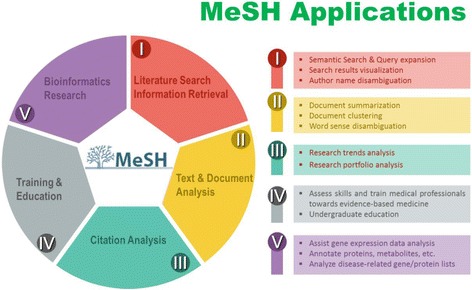
“The rapid growth of scholar publications in biomedicine makes the search of relevant information in literature increasingly more difficult, even for specialists [1, 2].”
BackgroundSelf-citationAuthor name disambiguation in MEDLINE
Torvik, V. I., & Smalheiser, N. R. (2009) · ACM Transactions on Knowledge Discovery from Data · doi:10.1145/1552303.1552304 · Cited by 285 · cited 1×
“When applied to information retrieval, MeSH and its indexing results have been used to build “ tag clouds ” for improving the visualization of search results [5, 6] and to help distinguish between publication authors with identical names [7, 8].”
MethodHierarchical Text Categorization Using Neural Networks
Ruiz, M. E., & Srinivasan, P. (2002) · Information Retrieval · doi:10.1023/a:1012782908347 · Cited by 246 · cited 1×
“Thus many multi-label text classification methods have been proposed, such as neural networks [33], Support Vector Machines (SVM) [34, 35], Inductive Logic Programming [36], naïve Bayes with optimal training set [37], Stochastic Gradient Descent [38], and meta-learning [39].”
MethodPubMed related articles: a probabilistic topic-based model for content similarity
Lin, J., & Wilbur, W. J. (2007) · BMC Bioinformatics · doi:10.1186/1471-2105-8-423 · Cited by 243 · cited 1×
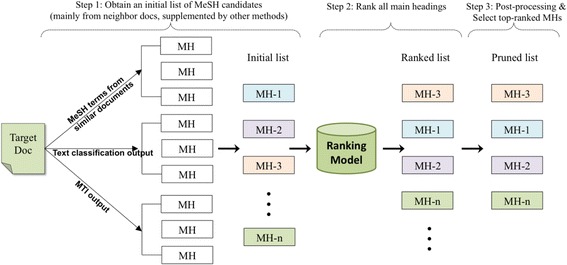
“We first adapt the PubMed Related Articles algorithm [56] to retrieve k-nearest neighbours for each new PubMed article.”
MethodThe UMLS project: making the conceptual connection between users and the information they need.
Humphreys, B. L., & Lindberg, D. A. B. (1993) · Europe PMC (PubMed Central) · Cited by 225
Proceedings of the 23rd International Conference on Computational Linguistics: Posters
Joshi, A. K., Huang, C., & Jurafsky, D. (2010) · Cited by 215
The NLM Indexing Initiative's Medical Text Indexer.
Aronson, A. R., Mork, J. G., Gay, C. W., Humphrey, S. M., & Rogers, W. J. (2004) · PubMed · Cited by 206
Large scale multi-label classification via metalabeler
Tang, L., Rajan, S., & Narayanan, V. K. (2009) · Proceedings of the 18th international conference on World wide web · doi:10.1145/1526709.1526738 · Cited by 191 · cited 1×
“Motivated by [57], we implemented a multi-label text classification approach where we treat each MeSH concept as a label and build a binary classifier accordingly.”
MethodIndexing consistency in MEDLINE.
Funk, M. E., & Reid, C. A. (1983) · Europe PMC (PubMed Central) · Cited by 180
Evaluation of query expansion using MeSH in PubMed
Lu, Z., Kim, W., & Wilbur, W. J. (2009) · Information Retrieval · doi:10.1007/s10791-008-9074-8 · Cited by 177 · cited 1×
“Assigned MeSH terms can then be used implicitly (e.g., automatic query expansion using MeSH) or explicitly in PubMed searches [4].”
MethodSelf-citationRecommending MeSH terms for annotating biomedical articles
Huang, M., Névéol, A., & Lu, Z. (2011) · Journal of the American Medical Informatics Association · doi:10.1136/amiajnl-2010-000055 · Cited by 149 · cited 10×
“As mentioned before, MeSH Now was developed in 2014 based on the learning-to-rank framework we first proposed in 2010 [3] for automatic MeSH indexing.”
BackgroundMethodResultInfluentialSelf-citationMapping knowledge domains: Characterizing PNAS
Boyack, K. W. (2004) · Proceedings of the National Academy of Sciences · doi:10.1073/pnas.0307509100 · Cited by 141 · cited 1×
“MeSH indexing also serves several key roles in citation analysis, from identifying emerging research trends [12, 13] to measuring similar journals [14] and characterizing research profiles for an individual re-searcher, institute or journal [15].”
BackgroundUse of keyword hierarchies to interpret gene expression patterns
Masys, D. R., Welsh, J. B., Fink, J. L., Gribskov, M., Klacansky, I., & Corbeil, J. (2001) · Bioinformatics · doi:10.1093/bioinformatics/17.4.319 · Cited by 132 · cited 1×
“Finally, much bioinformatics research, such as gene expression data analysis [19, 20], greatly benefits from MeSH indexing [21 – 25].”
MethodAutomatic assignment of biomedical categories: toward a generic approach
Ruch, P. (2006) · Bioinformatics · doi:10.1093/bioinformatics/bti783 · Cited by 126 · cited 1×
“Finally, many methods attempt to combine results of different approaches [49, 50].”
MethodDeepMeSH: deep semantic representation for improving large-scale MeSH indexing
Peng, S., You, R., Wang, H., Zhai, C., Mamitsuka, H., & Zhu, S. (2016) · Bioinformatics · doi:10.1093/bioinformatics/btw294 · Cited by 126 · cited 3×
“At the same time, our ranking framework was adopted by several other state-of-the-art systems such as MeSHLabeler [73] and DeepMeSH [74].”
MethodInfluentialThe nlm medical text indexer system for indexing biomedical literature
Mork, J. G., Yepes, A. J., & Aronson, A. R. (2013) · Cited by 118
Exploiting MeSH indexing in MEDLINE to generate a data set for word sense disambiguation
Jimeno-Yepes, A. J., McInnes, B. T., & Aronson, A. R. (2011) · BMC Bioinformatics · doi:10.1186/1471-2105-12-223 · Cited by 103 · cited 1×
“Another major use of MeSH indexing is in bio-medical text mining, where it has been applied to problems such as document summarization [9], document clustering [10], and word sense disambiguation [11].”
BackgroundGruppen, L. D., Rana, G., & Arndt, T. (2005) · Academic Medicine · doi:10.1097/00001888-200510000-00014 · Cited by 102 · cited 1×
“In the era of evidence-based practice, MeSH becomes increasingly important in assessing and training the literature search skills of healthcare professionals [16, 17], as well as in assisting undergraduate education in biological sciences [18].”
BackgroundGeneRIF QUALITY ASSURANCE AS SUMMARY REVISION
Lu, Z., Cohen, K. B., & Hunter, L. (2006) · Pacific Symposium on Biocomputing (PSB) · doi:10.1142/9789812772435_0026 · Cited by 102 · cited 1×
“Like many manual annotation projects [26 – 30], MeSH indexing is a labour-intensive process.”
MethodSelf-citationMeSH Up: effective MeSH text classification for improved document retrieval
Trieschnigg, D., Pęzik, P., Lee, V., de Jong, F. M. G., Kraaij, W., & Rebholz‐Schuhmann, D. (2009) · Bioinformatics · doi:10.1093/bioinformatics/btp249 · Cited by 95
Enhancing MEDLINE document clustering by incorporating MeSH semantic similarity
Zhu, S., Zeng, J., & Mamitsuka, H. (2009) · Bioinformatics · doi:10.1093/bioinformatics/btp338 · Cited by 93
Publication trends in the medical informatics literature: 20 years of "Medical Informatics" in MeSH
DeShazo, J. P., LaVallie, D. L., & Wolf, F. M. (2009) · BMC Medical Informatics and Decision Making · doi:10.1186/1472-6947-9-7 · Cited by 92
Semi-automatic semantic annotation of PubMed queries: A study on quality, efficiency, satisfaction
Névéol, A., Islamaj Doğan, R., & Lu, Z. (2011) · Journal of Biomedical Informatics · doi:10.1016/j.jbi.2010.11.001 · Cited by 90
Self-citationAuthor name disambiguation for P ub M ed
Liu, W., Islamaj, R., Kim, S., Comeau, D. C., Kim, W. B., Yeganova, L. E., Lu, Z., & Wilbur, W. J. (2013) · Journal of the Association for Information Science and Technology · doi:10.1002/asi.23063 · Cited by 89 · cited 1×
“When applied to information retrieval, MeSH and its indexing results have been used to build “ tag clouds ” for improving the visualization of search results [5, 6] and to help distinguish between publication authors with identical names [7, 8].”
MethodSelf-citationMapping proteins to disease terminologies: from UniProt to MeSH
Mottaz, A., Yip, Y. L., Ruch, P., & Veuthey, A.-L. (2008) · BMC Bioinformatics · doi:10.1186/1471-2105-9-s5-s3 · Cited by 73 · cited 1×
“Finally, much bioinformatics research, such as gene expression data analysis [19, 20], greatly benefits from MeSH indexing [21 – 25].”
MethodBiocuration workflows and text mining: overview of the BioCreative 2012 Workshop Track II
Lu, Z., & Hirschman, L. (2012) · Database · doi:10.1093/database/bas043 · Cited by 73
Self-citationMeSHLabeler: improving the accuracy of large-scale MeSH indexing by integrating diverse evidence
Liu, K., Peng, S., Wu, J., Zhai, C., Mamitsuka, H., & Zhu, S. (2015) · Bioinformatics · doi:10.1093/bioinformatics/btv237 · Cited by 71 · cited 1×
“At the same time, our ranking framework was adopted by several other state-of-the-art systems such as MeSHLa-beler [73] and DeepMeSH [74].”
MethodThe effect of feature representation on MEDLINE document classification.
Yetisgen-Yildiz, M., & Pratt, W. (2005) · PubMed · Cited by 68
A recent advance in the automatic indexing of the biomedical literature
Névéol, A., Shooshan, S. E., Humphrey, S. M., Mork, J. G., & Aronson, A. R. (2008) · Journal of Biomedical Informatics · doi:10.1016/j.jbi.2008.12.007 · Cited by 59 · cited 1×
“For instance, the current production system in MeSH indexing at the NLM is called Medical Text Indexer (MTI), which is a hybrid system that combines both pattern matching and k-NN results [51] via manually-developed rules and continues to be improved over the years [52, 53].”
MethodEvolving research trends in bioinformatics
Perez-Iratxeta, C., Andrade-Navarro, M. A., & Wren, J. D. (2006) · Briefings in Bioinformatics · doi:10.1093/bib/bbl035 · Cited by 57 · cited 1×
“MeSH indexing also serves several key roles in citation analysis, from identifying emerging research trends [12, 13] to measuring similar journals [14] and characterizing research profiles for an individual re-searcher, institute or journal [15].”
BackgroundOverview of the gene ontology task at BioCreative IV
Mao, Y., Van Auken, K., Li, D., Arighi, C. N., McQuilton, P., Hayman, G. T., Tweedie, S., Schaeffer, M. L., Laulederkind, S. J. F., Wang, S.-J., et al. (2014) · Database · doi:10.1093/database/bau086 · Cited by 57
Self-citationSmalheiser, N. R., Zhou, W., & Torvik, V. I. (2008) · Journal of Biomedical Discovery and Collaboration · doi:10.1186/1747-5333-3-2 · Cited by 56
BC4GO: a full-text corpus for the BioCreative IV GO task
Auken, K. M. V., Schaeffer, M. L., McQuilton, P., Laulederkind, S. J. F., Li, D., Wang, S.-J., Hayman, G. T., Tweedie, S., Arighi, C. N., Done, J., et al. (2014) · Database · doi:10.1093/database/bau074 · Cited by 49
Self-citationMeSH: a window into full text for document summarization
Bhattacharya, S., Ha−Thuc, V., & Srinivasan, P. (2011) · Bioinformatics · doi:10.1093/bioinformatics/btr223 · Cited by 49 · cited 1×
“Another major use of MeSH indexing is in bio-medical text mining, where it has been applied to problems such as document summarization [9], document clustering [10], and word sense disambiguation [11].”
BackgroundOptimal Training Sets for Bayesian Prediction of MeSH(R) Assignment
Sohn, S., Kim, W., Comeau, D. C., & Wilbur, W. J. (2008) · Journal of the American Medical Informatics Association · doi:10.1197/jamia.m2431 · Cited by 47
LabeledIn: Cataloging labeled indications for human drugs
Khare, R., Li, J., & Lu, Z. (2014) · Journal of Biomedical Informatics · doi:10.1016/j.jbi.2014.08.004 · Cited by 43 · cited 1×
“Like many manual annotation projects [26 – 30], MeSH indexing is a labour-intensive process.”
MethodSelf-citationInferring novel gene-disease associations using Medical Subject Heading Over-representation Profiles
Cheung, W., Ouellette, B. F. F., & Wasserman, W. W. (2012) · Genome Medicine · doi:10.1186/gm376 · Cited by 40
Metab2MeSH: annotating compounds with medical subject headings
Sartor, M. A., Ade, A. S., Wright, Z., States, D. J., Omenn, G. S., Athey, B. D., & Karnovsky, A. (2012) · Bioinformatics · doi:10.1093/bioinformatics/bts156 · Cited by 39
Burrows, S., & Tylman, V. (1999) · Europe PMC (PubMed Central) · Cited by 38
The role of medical libraries in undergraduate education: a case study in genetics.
Tennant, M. R., & Miyamoto, M. M. (2002) · Europe PMC (PubMed Central) · Cited by 35
Results of the BioASQ tasks of the Question Answering Lab at CLEF 2015
Balikas, G., Kosmopoulos, A., Krithara, A., Παλιούρας, Γ., & Kakadiaris, I. A. (2015) · HAL · Cited by 34
A One-Size-Fits-All Indexing Method Does Not Exist: Automatic Selection Based on Meta-Learning
Yepes, A. J., Mork, J. G., Demner‐Fushman, D., & Aronson, A. R. (2012) · Journal of Computing Science and Engineering · doi:10.5626/jcse.2012.6.2.151 · Cited by 32 · cited 1×
“Thus many multi-label text classification methods have been proposed, such as neural networks [33], Support Vector Machines (SVM) [34, 35], Inductive Logic Programming [36], naïve Bayes with optimal training set [37], Stochastic Gradient Descent [38], and meta-learning [39].”
MethodComparison and combination of several MeSH indexing approaches.
Yepes, A. J., Mork, J. G., Demner‐Fushman, D., & Aronson, A. R. (2013) · Europe PMC (PubMed Central) · Cited by 30
Papanikolaou, Y., Tsoumakas, G., Laliotis, M., Markantonatos, N., & Vlahavas, I. P. (2017) · Journal of Biomedical Semantics · doi:10.1186/s13326-017-0150-0 · Cited by 27
Sarkar, I. N., Schenk, R., Miller, H., & Norton, C. N. (2009) · Europe PMC (PubMed Central) · Cited by 25
An application of Expert Network to clinical classification and MEDLINE indexing.
Yang, Y., & Chute, C. G. (1994) · PubMed · Cited by 24
Large-Scale Semantic Indexing of Biomedical Publications.
Tsoumakas, G., Laliotis, M., Markantonatos, N., & Vlahavas, I. P. (2013) · Cited by 23
Stochastic Gradient Descent and the Prediction of MeSH for PubMed Records.
Wilbur, W. J., & Kim, W. (2014) · PubMed Central · Cited by 22
Results of the First BioASQ Workshop
Partalas, I., Gaussier, É., & Ngomo, A.-C. N. (2013) · HAL · Cited by 20
Automatic inference of indexing rules for MEDLINE
Névéol, A., Shooshan, S. E., & Claveau, V. (2008) · BMC Bioinformatics · doi:10.1186/1471-2105-9-s11-s11 · Cited by 18 · cited 1×
“Thus many multi-label text classification methods have been proposed, such as neural networks [33], Support Vector Machines (SVM) [34, 35], Inductive Logic Programming [36], naïve Bayes with optimal training set [37], Stochastic Gradient Descent [38], and meta-learning [39].”
MethodNakazato, T., 滝中, 徹., Mizuguchi, H., Matsuda, H., Bono, H. U., & Asogawa, M. (2008) · In Silico Biology · doi:10.3233/isb-00343 · Cited by 17 · cited 1×
“Finally, much bioinformatics research, such as gene expression data analysis [19, 20], greatly benefits from MeSH indexing [21 – 25].”
MethodKavuluru, R., & Lu, Y. (2014) · Data & Knowledge Engineering · doi:10.1016/j.datak.2014.09.002 · Cited by 15 · cited 1×
“This approach has been shown to be highly successful in the recent BioASQ 2 challenge evaluations [44 – 46] and has also been adopted by many others [47, 48].”
ResultThree Journal Similarity Metrics and Their Application to Biomedical Journals
D’Souza, J., & Smalheiser, N. R. (2014) · PLoS ONE · doi:10.1371/journal.pone.0115681 · Cited by 15
Jani, S. D., Argraves, G. L., Barth, J. L., & Argraves, W. S. (2010) · BMC Bioinformatics · doi:10.1186/1471-2105-11-166 · Cited by 13 · cited 1×
“Finally, much bioinformatics research, such as gene expression data analysis [19, 20], greatly benefits from MeSH indexing [21 – 25].”
MethodAUTH-Atypon at BioASQ 3: Large-Scale Semantic Indexing in Biomedicine.
Papanikolaou, Y., Tsoumakas, G., Laliotis, M., Markantonatos, N., & Vlahavas, I. P. (2015) · CLEF (Working Notes) · Cited by 10
Ono, T., & Kuhara, S. (2014) · BMC Bioinformatics · doi:10.1186/1471-2105-15-179 · Cited by 9
Using Co-Authoring and Cross-Referencing Information for MEDLINE Indexing.
Delbecque, T., & Zweigenbaum, P. (2010) · PubMed · Cited by 8
Identifying well-formed biomedical phrases in MEDLINE® text
Kim, W. B., Yeganova, L. E., Comeau, D. C., & Wilbur, W. J. (2012) · Journal of Biomedical Informatics · doi:10.1016/j.jbi.2012.05.005 · Cited by 8 · cited 1×
“Cost-sensitive SVMs have been shown to be a good solution for dealing with imbalanced and noisy data in biomedical documents [60].”
Background(2001) · doi:10.1002/pds.4850 · Cited by 7
Learning to Annotate Scientific Publications
Huang, M. (2012) · Cited by 5
Research works printed but not linked: 5
- Mao Y Wei C-H Lu Z NCBI at the 2014 BioASQ challenge task: large-scale biomedical semantic indexing and question answering Proceedings of Question Answering Lab at CLEF 2014
- Liu K Wu J Peng S Zhai C Zhu S The Fudan-UIUC participation in the BioASQ Challenge Task 2a: The Antinomyra system Risk 2014 129816 100
- Mork JG Demner-Fushman D Schmidt SC Aronson AR Recent enhancements to the NLM medical text indexer Working Notes for CLEF 2014 Conference, Sheffield, UK 2014 1328 36
- Quoc C Le V Learning to rank with nonsmooth cost functions NIPS’07 2007 193
- Robertson SE, Walker S, Jones S, Hancock-Beaulieu MM, Gatford M. Okapi at TREC-3. Gaithersburg: NIST Special Publication; 1995. pp. 109–126 · doi:10.6028/nist.sp.500-225.adhoc-city
Cited by
Best Match: New relevance search for PubMed
Fiorini, N., Canese, K., Starchenko, G., Kireev, E., Kim, W., Miller, V., Osipov, M., Kholodov, M., Ismagilov, R., Mohan, S., et al. (2018) · PLOS Biology · doi:10.1371/journal.pbio.2005343 · Cited by 175
Self-citationDeep neural network for hierarchical extreme multi-label text classification
Gargiulo, F., Silvestri, S., Ciampi, M., & Pietro, G. D. (2019) · Applied Soft Computing · doi:10.1016/j.asoc.2019.03.041 · Cited by 174
ML-Net: multi-label classification of biomedical texts with deep neural networks
Du, J., Chen, Q., Peng, Y., Xiang, Y., Tao, C., & Lu, Z. (2019) · Journal of the American Medical Informatics Association · doi:10.1093/jamia/ocz085 · Cited by 133
“We used the pre-trained PubMed word2vec (dimension: 200) [31] to map the tokens in the documents to high dimensional vectors.”
BackgroundMethodInfluentialSelf-citationRecent advances in biomedical literature mining
Zhao, S., Su, C., Lu, Z., & Wang, F. (2021) · Briefings in Bioinformatics · doi:10.1093/bib/bbaa057 · Cited by 134
“Zhang et al. [82] provided a literature review on multi-label classification,and many models therein have been applied in this context, such as k-nearest neighbor (KNN) [83], Naive Bayes [84], SVM [85], learning to rank approaches [79, 86–88], etc.”
BackgroundMethodSelf-citationA Review of Cancer Genetics and Genomics Studies in Africa
Rotimi, S. O., Rotimi, O. A., & Salhia, B. (2021) · Frontiers in Oncology · doi:10.3389/fonc.2020.606400 · Cited by 97
“Since PubMed Medical Subject Heading (MeSH) terms involve synonym control, it yields more precise and inclusive search results (16).”
Background
Metadata
- Authors
- Mao, Y., & Lu, Z.
- Affiliations
- Nanjing University of Chinese Medicine (CN)
- National Center for Biotechnology Information (US)
- Corresponding author
- Lu, Zhiyong
- Venue
- Journal of Biomedical Semantics
- Published
- 2017-04-17
- Volume
- 8
- Issue
- 1
- Pages
- 15-15
- ISSN
- 2041-1480 (ISSN-L)
- PMC
- PMC5392968
- OpenAlex
- W2606900069
- Cited by
- 87
- References
- 80
- Citations by year
- 2026: 8 · 2025: 9 · 2024: 5 · 2023: 10 · 2022: 12 · 2021: 10 · 2020: 12 · 2019: 12 · 2018: 7 · 2017: 1
- FWCI
- 3.57
- Type
- journal article
- Language
- en
- Open access
- gold
- doi.org
- Licence
- cc-by
- creativecommons.org/licenses/by/4.0 (tdm)
- creativecommons.org/licenses/by/4.0 (vor)
- Locations
- Journal of Biomedical Semantics (publishedVersion, cc-by)
- PubMed Central (publishedVersion, cc-by)
- PubMed (publishedVersion)
- DOAJ (DOAJ: Directory of Open Access Journals) (submittedVersion, cc-by-sa)
- Funders
- National Natural Science Foundation of China (81674099, 81603498)
- Government of Jiangsu Province
- Six Talent Peaks Project in Jiangsu Province
- Priority Academic Program Development of Jiangsu Higher Education Institutions
- Qinglan Project of Jiangsu Province of China
- National Institutes of Health
- U.S. National Library of Medicine
- Topics
- Health Sciences › Medicine › Health Informatics › Biomedical Text Mining and Ontologies
- Physical Sciences › Computer Science › Artificial Intelligence › Advanced Text Analysis Techniques
- Physical Sciences › Computer Science › Artificial Intelligence › Text and Document Classification Technologies
- Keywords
- MeSH indexing, automatic indexing, learning to rank, term ranking, post-processing, MEDLINE, PubMed, biomedical literature retrieval, parallel computing
- MeSH terms
- Abstracting and Indexing, Machine Learning, Automation, Benchmarking, PubMed, Medical Subject Headings
About these checks
Registry, retraction, Cites and statistics results are computed, not judged, with one exception: a printed reference that no index lists is read once by a model before it counts as a citation error. Claims are extracted by a model and kept only when their quote appears verbatim in the text; each cited source is then checked, with a model’s help, for whether it says what the claim relies on. Those verdicts can be wrong — read the claim’s quote and the cited source before relying on one.
Statistics and arithmetic are recomputed, not judged.
Confidence bands are shown only for fields calibrated on our annotated test set. None is calibrated yet, so no band is shown.
What counts as a claim ›How we measure confidence ›How we check this ›
Are you an author, or do you see a problem with this page? Request a review
Data sources
Bibliographic data: Semantic Scholar, OpenAlex, Crossref.
Contains information from the Semantic Scholar Academic Graph Datasets, made available under the ODC Attribution License (ODC-BY 1.0).
Semantic Scholar’s data is described in: Kinney, R., et al. (2023). The Semantic Scholar Open Data Platform. arXiv:2301.10140.
