

The DOI matches its Crossref record; 66 of the 67 references it cites were found in a registry or an index, and 1 are not checked yet.
Psychiatric comorbidity in chronic urticaria patients: a systematic review and meta-analysis
Open accessAbstract
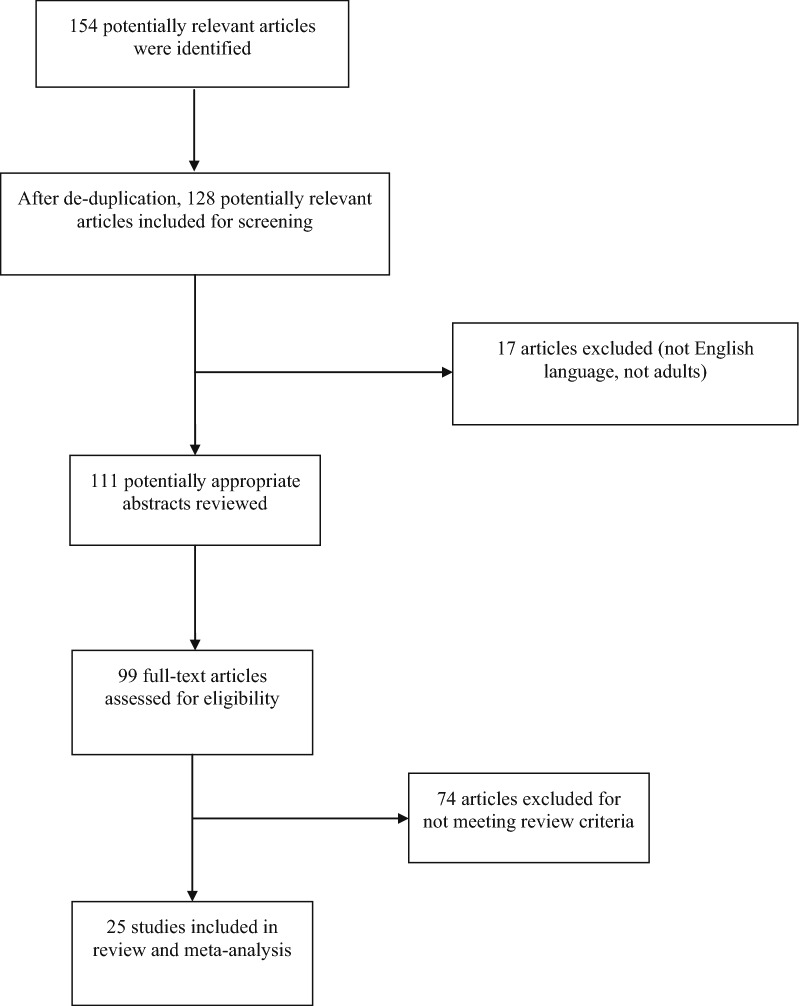
BACKGROUND: Dermatological illness can affect the quality of life and may coexist with psychiatric disorders. OBJECTIVE: The aim of this review was to systematically evaluate the published evidence of any psychiatric disorders that may coexist with chronic urticaria (CU) and any effect psychiatric interventions may have on CU. METHODS: Following the Cochrane guidance, we conducted a systematic literature search using web-based search engines provided by PubMed (for Medline database), Google Scholar and Scopus for studies that have investigated the existence of psychiatric comorbidity in patients with CU. To be included, a study had to possess features, such as: (1) distinction between chronic urticaria and allergic conditions, (2) direct collection of diagnostic psychiatric data by using clinical interview and standardized questionnaires, (3) International Classification of Disorders criteria or the Diagnostic and Statistical Manual of Mental Disorders criteria for the diagnosis of mental disorders, and (4) manuscripts written or published in the English language. Unpublished research and research in progress were not included. All the eligible studies were scrutinized for any reported psychiatric interventions that had any effect on CU. The systematic review has been registered on PROSPERO (registration number CRD42019122811) and was conducted following the Preferred Reporting Items for Systematic Reviews and Meta-Analysis (PRISMA). RESULTS: Twenty-five studies were identified. Almost one out of three CU patients have at least one underlying psychiatric disorder. None of the studies clarified whether the psychiatric disorders pre-existed the CU onset, and no association was found between CU severity and duration, and psychological functioning. Only one case report and two case series mentioned that treatment of psychiatric disorders with either anti-depressants, anti-anxiety drugs or psychological interventions might result in improvement of urticaria. CONCLUSIONS: Patients with CU frequently experience psychiatric disorders. This highlights the need for a multidisciplinary therapeutic approach involving prompt recognition and management of any potential psychiatric disorder in addition to urticaria treatment. Further studies are needed to assess whether psychiatric disorders coexist with CU independently or follow urticaria onset and whether any psychological or psychiatric intervention may help in CU control.
Overview
The claims and statistics of this paper haven’t been checked yet.
Run the check — free, no account needed. It reads the open-access text and checks the sources it cites.
Integrity signals
Registry
Cites
Statistics
Figures
Verification
Claims the paper makes
The claims and statistics of this paper haven’t been checked yet.
Run the check — free, no account needed. It reads the open-access text and checks the sources it cites.
Claims other papers make about this one
Each is checked against this paper’s own text: does it say what the citing paper says it does?
The source backs part of the claim, not all of it — or backs it for a different population, condition or comparison.
In the citing paper
“Psychotropic drugs (e.g., antidepressants and benzodiazepines) could have a positive effect on CSU treatment 11,31 .”
From Could distress tolerance levels be associated with the severity of chronic spontaneous urticaria? (2022) · cites this paper as [31]
Experimental — accuracy not yet measured
Self-check
Percentages, sums and reported differences re-computed from the paper’s own numbers.
The self-check needs the paper’s full text.
Citations
Cites
Liberati, A., Altman, D. G., Tetzlaff, J., Mulrow, C., Gøtzsche, P. C., Ioannidis, J. P. A., Clarke, M., Devereaux, P. J., Kleijnen, J., & Moher, D. (2009) · PLoS Medicine · doi:10.1371/journal.pmed.1000100 · Cited by 28,164
Liberati, A., Altman, D. G., Tetzlaff, J., Mulrow, C., Gotzsche, P. C., Ioannidis, J. P. A., Clarke, M., Devereaux, P. J., Kleijnen, J., & Moher, D. (2009) · BMJ · doi:10.1136/bmj.b2700 · Cited by 17,648
From inflammation to sickness and depression: when the immune system subjugates the brain
Dantzer, R., O'Connor, J. C., Freund, G. G., Johnson, R. W., & Kelley, K. W. (2008) · Nature Reviews Neuroscience · doi:10.1038/nrn2297 · Cited by 7,395
Psychological stress and the human immune system: a meta-analytic study of 30 Years of inquiry
Segerstrom, S. C., & Miller, G. E. (2004) · Psychological Bulletin · doi:10.1037/0033-2909.130.4.601 · Cited by 3,334
Hypothalamic-pituitary-adrenal axis, neuroendocrine factors and stress
Tsigos, C., & Chrousos, G. P. (2002) · Journal of Psychosomatic Research · doi:10.1016/s0022-3999(02)00429-4 · Cited by 2,822
Zuberbier, T., Aberer, W., Asero, R., Latiff, A. H. A., Baker, D. R., Ballmer-Weber, B. K., Bernstein, J. A., Bindslev‐Jensen, C., Brzoza, Z., Bedrikow, R. B., et al. (2018) · Allergy · doi:10.1111/all.13397 · Cited by 1,479
Zuberbier, T., Aberer, W., Asero, R., Bindslev‐Jensen, C., Brzoza, Z., Canonica, G. W., Church, M. K., Ensina, L. F., Giménez‐Arnau, A. M., Godse, K. V., et al. (2014) · Allergy · doi:10.1111/all.12313 · Cited by 1,206
The diagnosis and management of acute and chronic urticaria: 2014 update
Bernstein, J. A., Lang, D. M., Khan, D. A., Craig, T., Dreyfus, D. H., Hsieh, F. H., Sheikh, J. K., Weldon, D., Zuraw, B. L., Bernstein, D. I., et al. (2014) · Journal of Allergy and Clinical Immunology · doi:10.1016/j.jaci.2014.02.036 · Cited by 685
The impact of chronic urticaria on the quality of life
O’Donnell, C. P., LAWLOR, F., SIMPSON, J., Morgan, M., & GREAVES, M. W. (1997) · British Journal of Dermatology · doi:10.1046/j.1365-2133.1997.d01-1168.x · Cited by 615
Association of Schizophrenia and Autoimmune Diseases: Linkage of Danish National Registers
Eaton, W. W., Byrne, M., Ewald, H., Mors, O., Chen, C.-Y., Agerbo, E., & Mortensen, P. B. (2006) · American Journal of Psychiatry · doi:10.1176/appi.ajp.163.3.521 · Cited by 527
Research works printed but not linked: 1
- Mehta V, Malhotra SK. Psychiatric evaluation of patients with psoriasis vulgaris and chronic urticaria. German J Psychiatry, 2007;10(4):104–10.
Cited by
Sorted by citations
Items 101–110 of 110
Mind, Mucosa, and Skin: The Triad of Urticaria, Allergic Rhinitis, and Psychological Disorders
Katran, Z. Y., Bulut, İ., Salman, A., Baz, A., Küçükali, G. M. K., & Argın, Ö. (2026) · Journal of Craniofacial Surgery · doi:10.1097/scs.0000000000012581
Saja, M. F., Alhoqail, R., Alduwayan, R., Alsubaie, L., Alhelal, L., Alluhaydan, F., & Alotaibi, H. (2026) · Clinical Cosmetic and Investigational Dermatology · doi:10.2147/ccid.s597184
Depression in mastocytosis: A neglected dimension of a clonal mast cell disease
Heneberg, P. (2026) · Autoimmunity Reviews · doi:10.1016/j.autrev.2026.104100
Psychiatric Comorbidities in Chronic Spontaneous Urticaria: An Overlooked Dimension
Kumaran, M. S., Kaur, S., & Narang, T. K. (2026) · Indian Dermatology Online Journal · doi:10.4103/idoj.idoj_339_25
Влияние коморбидности на выбор антигистаминного препарата для лечения хронической крапивницы
Ненашева, Н. М., Передельская, М. Ю., & Sebekina, O. V. (2026) · Practical Allergology · doi:10.46393/27129667_2026_1_6-11
Srinivasan, V., Kannan, R., & Vadivelu, S. (2026) · Cureus · doi:10.7759/cureus.113619
AlBazali, A. A., Sharma, A. K., & AlRashidi, M. R. (2026) · Journal of Biosciences and Medicines · doi:10.4236/jbm.2026.148014
Bejarano-Antonio, L., Cabral, A. A. C., & Alonso, M. D. C. F. (2026) · FMC - Formación Médica Continuada en Atención Primaria · doi:10.1016/j.fmc.2026.01.008
Chronic Spontaneous Urticaria and Psychiatric Symptoms: The Blood–Brain Barrier Hypothesis
Konstantinou, G., Warsh, J. J., Blumberger, D. M., Kloiber, S. M., & Konstantinou, G. Ν. (2026) · Experimental Dermatology · doi:10.1111/exd.70369
Metadata
- Authors
- Konstantinou, G. N., & Konstantinou, G. N.
- Affiliations
- Hellenic Air Force (GR)
- Venue
- Clinical and Translational Allergy
- Publisher
- Wiley
- Published
- 2019-08-23
- Volume
- 9
- Issue
- 1
- Pages
- 42-42
- ISSN
- 2045-7022 (ISSN-L)
- PMC
- PMC6706894
- OpenAlex
- W2969929864
- Cited by
- 110
- References
- 66
- Citations by year
- 2026: 14 · 2025: 18 · 2024: 16 · 2023: 16 · 2022: 18 · 2021: 18 · 2020: 9
- FWCI
- 1.82
- Type
- journal article
- Language
- en
- Open access
- gold
- doi.org
- Locations
- Clinical and Translational Allergy (publishedVersion, cc-by)
- PubMed Central (publishedVersion, cc-by)
- PubMed (publishedVersion)
- DOAJ (DOAJ: Directory of Open Access Journals) (submittedVersion)
- Topics
- Health Sciences › Medicine › Dermatology › Urticaria and Related Conditions
- Health Sciences › Medicine › Psychiatry and Mental health › Psychosomatic Disorders and Their Treatments
- Health Sciences › Medicine › Dermatology › Dermatology and Skin Diseases
- Keywords
- chronic urticaria, psychiatric comorbidity, mental illness, depression, anxiety, antidepressants, anxiolytics, psychological intervention, urticaria severity, multidisciplinary care
About these checks
Registry, retraction, Cites and statistics results are computed, not judged, with one exception: a printed reference that no index lists is read once by a model before it counts as a citation error. Claims are extracted by a model and kept only when their quote appears verbatim in the text; each cited source is then checked, with a model’s help, for whether it says what the claim relies on. Those verdicts can be wrong — read the claim’s quote and the cited source before relying on one.
Statistics and arithmetic are recomputed, not judged.
Confidence bands are shown only for fields calibrated on our annotated test set. None is calibrated yet, so no band is shown.
What counts as a claim ›How we measure confidence ›How we check this ›
Are you an author, or do you see a problem with this page? Request a review
