

Improving search efficiency for systematic reviews of diagnostic test accuracy: an exploratory study to assess the viability of limiting to MEDLINE, EMBASE and reference checking
Open accessThe DOI matches its Crossref record; 23 of the 24 references it cites were found in a registry or an index.
Abstract
BACKGROUND: Increasing numbers of systematic reviews evaluating the diagnostic test accuracy of technologies are being published. Currently, review teams tend to apply conventional systematic review standards to identify relevant studies for inclusion, for example sensitive searches of multiple bibliographic databases. There has been little evaluation of the efficiency of searching only one or two such databases for this type of review. The aim of this study was to assess the viability of an approach that restricted searches to MEDLINE, EMBASE and the reference lists of included studies. METHODS: A convenience sample of nine Health Technology Assessment (HTA) systematic reviews of diagnostic test accuracy, with 302 included citations, was analysed to determine the number and proportion of included citations that were indexed in and retrieved from MEDLINE and EMBASE. An assessment was also made of the number and proportion of citations not retrieved from these databases but that could have been identified from the reference lists of included citations. RESULTS: 287/302 (95 %) of the included citations in the nine reviews were indexed across MEDLINE and EMBASE. The reviews' searches of MEDLINE and EMBASE accounted for 85 % of the included citations (256/302). Of the forty-six (15 %) included citations not retrieved by the published searches, 24 (8 %) could be found in the reference lists of included citations. Only 22/302 (7 %) of the included citations were not found by the proposed, more efficient approach. CONCLUSIONS: The proposed approach would have accounted for 280/302 (93 %) of included citations in this sample of nine systematic reviews. This exploratory study suggests that there might be a case for restricting searches for systematic reviews of diagnostic test accuracy studies to MEDLINE, EMBASE and the reference lists of included citations. The conduct of such reviews might be rendered more efficient by using this approach.
Overview
The claims and statistics of this paper haven’t been checked yet.
Free: it reads the open-access text and checks the first 5 claims that cite a source we can check. Create a free account to check every claim.
Integrity signals
Registry
Cites
Statistics
Figures
Verification
Claims the paper makes
The claims and statistics of this paper haven’t been checked yet.
Free: it reads the open-access text and checks the first 5 claims that cite a source we can check. Create a free account to check every claim.
Claims other papers make about this one
Each is checked against this paper’s own text: does it say what the citing paper says it does?
The source backs part of the claim, not all of it — or backs it for a different population, condition or comparison.
In the citing paper
“These databases were selected because they are known to have good coverage of clinical research,39 40”
From Systematic review protocol assessing the processes for linking clinical trial registries and their published results (2016) · cites this paper as [40]
Experimental — accuracy not yet measured
Self-check
Percentages, sums and reported differences re-computed from the paper’s own numbers.
The self-check needs the paper’s full text.
Citations
Cites
QUADAS-2: a revised tool for the quality assessment of diagnostic accuracy studies
Whiting, P. F., Rutjes, A. W. S., Westwood, M. E., Mallett, S., Deeks, J. J., Reitsma, J. B., Leeflang, M. M. G., Sterne, J. A. C., Bossuyt, P. M. M., & the QUADAS-2 Group* (2011) · Annals of Internal Medicine · doi:10.7326/0003-4819-155-8-201110180-00009 · Cited by 14,199
Egger, M., Jüni, P., Bartlett, C., Holenstein, F., & Sterne, J. (2003) · Health Technology Assessment · doi:10.3310/hta7010 · Cited by 1,181 · cited 2×
“This perhaps inevitable move has been driven by several factors, including the improved indexing and searching capabilities of databases and the need to produce high-quality reviews within time and resource constraints [9].”
BackgroundSystematic Reviews of Diagnostic Test Accuracy
Leeflang, M. M. G., Deeks, J. J., Gatsonis, C., & Bossuyt, P. M. M. (2008) · Annals of Internal Medicine · doi:10.7326/0003-4819-149-12-200812160-00008 · Cited by 1,124
Asymmetric funnel plots and publication bias in meta-analyses of diagnostic accuracy
Song, F., Khan, K. S., Dinnes, J., & Sutton, A. J. (2002) · International Journal of Epidemiology · doi:10.1093/ije/31.1.88 · Cited by 484 · cited 1×
“They might offer key data for assessing and managing publication bias [23] and, for some topics, these data might be vital for a review’s findings, especially for tests about which little has been published, for instance if the technique is novel [24, 25].”
BackgroundFull Publication of Results Initially Presented in Abstracts: A Meta-analysis
Scherer, R. W. (1994) · JAMA · doi:10.1001/jama.1994.03520020084025 · Cited by 296 · cited 1×
“They might offer key data for assessing and managing publication bias [23] and, for some topics, these data might be vital for a review’s findings, especially for tests about which little has been published, for instance if the technique is novel [24, 25].”
BackgroundCochrane diagnostic test accuracy reviews
Leeflang, M. M., Deeks, J. J., Takwoingi, Y., & Macaskill, P. (2013) · Systematic Reviews · doi:10.1186/2046-4053-2-82 · Cited by 292 · cited 1×
“They might offer key data for assessing and managing publication bias [23] and, for some topics, these data might be vital for a review’s findings, especially for tests about which little has been published, for instance if the technique is novel [24, 25].”
BackgroundSutcliffe, P., Hummel, S., Simpson, E., Young, T., Rees, A., Wilkinson, A., Hamdy, F., Clarke, N., & Staffurth, J. (2009) · Health Technology Assessment · doi:10.3310/hta13050 · Cited by 237
Iliffe, S., Kendrick, D., Morris, R., Masud, T., Gage, H., Skelton, D., Dinan, S., Bowling, A., Griffin, M., Haworth, D., et al. (2014) · Health Technology Assessment · doi:10.3310/hta18490 · Cited by 207
Pandor, A., Eastham, J., Beverley, C., Chilcott, J., & Paisley, S. (2004) · Health Technology Assessment · doi:10.3310/hta8120 · Cited by 201 · cited 1×
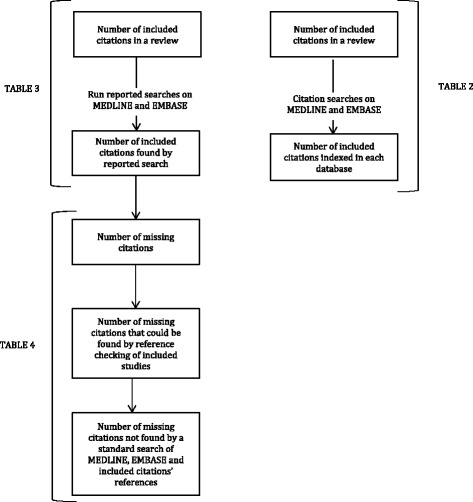
“Figure 1 describes the process.”
Self-citationRoyle, P., & Waugh, N. (2003) · Health Technology Assessment · doi:10.3310/hta7340 · Cited by 194 · cited 11×
“%) of its included citations (even though all 14 Table 1 Included reviews Review Topic Number of included studies Number and names of databases searched Holmes (2014) Routine echocardiography in the management of stroke and transient ischemic attack (TIA) 51 (n = 9) MEDLINEa, EMBASE, CENTRAL, CDSR, NHS DARE, HTA, CINA…”
BackgroundInfluential
Research works printed but not linked: 4
- National Institute for Health and Clinical Excellence Diagnostics Assessment Programme manual 2011 Manchester NICE 27466648
- de Vet HCW Eisinga A Riphagen II Aertgeerts B Pewsner D Chapter 7: Searching for Studies Cochrane Handbook for Systematic Reviews of Diagnostic Test Accuracy Version 0.4 [updated September 2008]. The Cochrane Collaboration 2008
- Van Enst WA Scholten RJPM Hooft L Could a search for a diagnostic test accuracy review be restricted to MEDLINE? 2011 Madrid Cochrane Colloquium
- Stevenson M Lloyd-Jones M Morgan M Wong R Non-invasive diagnostic assessment tools for the detection of liver fibrosis in patients with suspected alcohol-related liver disease: a systematic review and economic evaluation Health Technol Assess 2012 16 4 1 174 10.3310/hta16040 PMC4781535 22333291 · DOI · Paper page
Cited by
Meeting the review family: exploring review types and associated information retrieval requirements
Sutton, A., Clowes, M., Preston, L., & Booth, A. (2019) · Health Information & Libraries Journal · doi:10.1111/hir.12276 · Cited by 570
Self-citationOptimal literature search for systematic reviews in surgery
Goossen, K., Tenckhoff, S., Probst, P., Grummich, K., Mihaljevic, A. L., Büchler, M. W., & Diener, M. K. (2018) · Langenbeck's Archives of Surgery · doi:10.1007/s00423-017-1646-x · Cited by 248
Guidance on terminology, application, and reporting of citation searching: the TARCiS statement
Hirt, J., Nordhausen, T., Fürst, T., Ewald, H., & Appenzeller‐Herzog, C. (2024) · BMJ · doi:10.1136/bmj-2023-078384 · Cited by 183
Citation tracking for systematic literature searching: A scoping review
Hirt, J., Nordhausen, T., Appenzeller‐Herzog, C., & Ewald, H. (2023) · Research Synthesis Methods · doi:10.1002/jrsm.1635 · Cited by 135
How to conduct systematic reviews more expeditiously?
Tsertsvadze, A., Chen, Y.-F., Moher, D., Sutcliffe, P., & McCarthy, N. (2015) · Systematic Reviews · doi:10.1186/s13643-015-0147-7 · Cited by 104
“Preston and colleagues examined 302 citations included in 9 SRs of diagnostic test accuracy studies and found that 93 % of all included citations had been retrieved by searching Medline, Embase and the reference lists [44].”
BackgroundDatabase combinations to retrieve systematic reviews in overviews of reviews: a methodological study
Goossen, K., Hess, S., Lunny, C., & Pieper, D. (2020) · BMC Medical Research Methodology · doi:10.1186/s12874-020-00983-3 · Cited by 85
Chevance, G., Golaszewski, N. M., Tipton, E., Hekler, E. B., Buman, M. P., Welk, G. J., Patrick, K., & Godino, J. (2022) · JMIR mhealth and uhealth · doi:10.2196/35626 · Cited by 94
“A systematic review of the literature was conducted in 3 iterations to retrieve both published and unpublished studies [26].”
Conway, A., Tipton, E., Liu, W.-H., Conway, Z. J., Soalheira, K., Sutherland, J., & Fingleton, J. (2018) · Thorax · doi:10.1136/thoraxjnl-2017-211466 · Cited by 90
Affengruber, L., van der Maten, M. M., Spiero, I., Nussbaumer-Streit, B., Mahmić-Kaknjo, M., Ellen, M. E., Goossen, K., Kantorova, L., Hooft, L., Riva, N., et al. (2024) · BMC Medical Research Methodology · doi:10.1186/s12874-024-02320-4 · Cited by 52
“…study type [53, 73, 111], topic [123], or search date [43, 127]; citation-based searching [29, 66, 67]; search restrictions for database [54, 93, 105, 122] and language (e.g. only English articles) [38, 40, 61, 65, 82, 92, 100]) were evaluated in 24 studies [29, 35, 38, 40, 43, 53, 54, 57, 61,…”
BackgroundMethodInfluentialUsing Embase as a supplement to PubMed in Cochrane reviews differed across fields
Frandsen, T. F., Eriksen, M. B., Hammer, D. M. G., Christensen, J. B., & Wallin, J. A. (2021) · Journal of Clinical Epidemiology · doi:10.1016/j.jclinepi.2020.12.022 · Cited by 61
Patel, R., Ucer, C., Wright, S., & Khan, R. S. (2023) · Dentistry Journal · doi:10.3390/dj11090218 · Cited by 58
“A ‘snowballing’ citation method was used to optimise the value of this process, a technique that has been found to enhance search precision [14].”
MethodConway, A., Bittner, M., Phan, D., Chang, K., Kamboj, N., Tipton, E., & Parotto, M. (2020) · Journal of Clinical Monitoring and Computing · doi:10.1007/s10877-020-00543-6 · Cited by 51
Bashir, R., Bourgeois, F. T., & Dunn, A. G. (2017) · Systematic Reviews · doi:10.1186/s13643-017-0518-3 · Cited by 47
“PubMed and Embase were searched from inception to May 27, 2016, [23, 24].”
BackgroundBramer, W. M., Giustini, D., Kleijnen, J., & Franco, O. H. (2018) · Systematic Reviews · doi:10.1186/s13643-018-0864-9 · Cited by 45
The Use of Smart Rings in Health Monitoring—A Meta-Analysis
Fiore, M., Bianconi, A., Sicari, G., Conni, A., Lenzi, J., Tomaiuolo, G., Zito, F., Golinelli, D., & Sanmarchi, F. (2024) · Applied Sciences · doi:10.3390/app142310778 · Cited by 48
Delaney, A., & Tamás, P. A. (2017) · Research Synthesis Methods · doi:10.1002/jrsm.1282 · Cited by 40
Sarkar, S., Tom, A., & Mandal, P. (2021) · Substance Use & Misuse · doi:10.1080/10826084.2021.1908359 · Cited by 35
“We used a single database for searching and this might have missed some other relevant studies, though Medline has been reported as a robust search strategy (Preston et al., 2015; van Enst et al., 2014).”
MethodSearching for and selecting studies
Spijker, R., Dinnes, J., Glanville, J., & Eisinga, A. (2023) · Wiley eBooks · doi:10.1002/9781119756194.ch6 · Cited by 34
Kamboj, N., Chang, K., Metcalfe, K. A., Chu, C. H., & Conway, A. (2021) · Intensive and Critical Care Nursing · doi:10.1016/j.iccn.2021.103091 · Cited by 20
Ho, S., Ly, A., Ohno‐Matsui, K., Kalloniatis, M., & Doig, G. S. (2022) · Eye · doi:10.1038/s41433-022-02227-8 · Cited by 11
“MEDLINE (www.PubMed.org) and EMBASE (www.Embase.com) were searched from inception until 30 March 2021, without language restrictions.”
MethodBashir, R., & Dunn, A. G. (2016) · BMJ Open · doi:10.1136/bmjopen-2016-013048 · Cited by 10
Choosing which in-hospital laboratory tests to target for intervention: a scoping review
Podolsky, E., Hudek, N., McCudden, C. R., Presseau, J., Yanikomeroglu, S., Brouwers, M. C., & Brehaut, J. (2022) · Clinical Chemistry and Laboratory Medicine (CCLM) · doi:10.1515/cclm-2022-0910 · Cited by 10
The TARCiS statement: Guidance on terminology, application, and reporting of citation searchingPreprint
Hirt, J., Nordhausen, T., Fürst, T., Ewald, H., TARCiS study group, & Appenzeller‐Herzog, C. (2023) · medRxiv · doi:10.1101/2023.10.25.23297543 · Cited by 5
Alharbi, J. M. (2024) · Theory and Practice in Language Studies · doi:10.17507/tpls.1401.21 · Cited by 4
“Such methods can help to further reduce the risk of searching bias while improving the efficiency and ease of identifying topic-relevant studies (Preston et al., 2015).”
BackgroundServing Evidence Syntheses: Improving literature retrieval in systematic reviews
Bramer, W. M. (2019) · RePub (Erasmus University Rotterdam) · Cited by 19
Systematic Reviews of Diagnostic Test Accuracy
Pammi, M., & Takwoingi, Y. (2021) · Springer eBooks · doi:10.1007/978-3-030-71921-0_15 · Cited by 3
Identifying Social Care Research Literature: Case Studies From Guideline Development
Stansfield, C., & Liabo, K. (2017) · Evidence Based Library and Information Practice · doi:10.18438/b8m371 · Cited by 2
Chevance, G., Golaszewski, N. M., Tipton, E., Hekler, E. B., Buman, M. P., Welk, G. J., Patrick, K., & Godino, J. (2020) · SportRxiv (OSF Preprints) · doi:10.31236/osf.io/tgk7a · Cited by 2
Evaluating and optimizing the search process for systematic reviews
Mathisen, M. (2021) · NVA (Nasjonalt vitenarkiv) · Cited by 5
Booth, A., & Jones-Diette, J. S. (2018) · Springer eBooks · doi:10.1007/978-3-319-78966-8_6
Searching for Diagnostic Test Accuracy Studies
Golder, S., & Glanville, J. (2018) · Springer eBooks · doi:10.1007/978-3-319-78966-8_7
Lister, J., Paisley, S., Carroll, C., & Tappenden, P. (2024) · PharmacoEconomics · doi:10.1007/s40273-024-01414-7
“Most research in this field adopts a retrospective design where existing literature reviews are examined and compared [50–52].”
Self-citationTien, T. K. (2024) · Aston Publications Explorer (Aston University) · doi:10.48780/publications.aston.ac.uk.00047739 · Cited by 2
Methods for conducting searches in healthcare reviews: A systematic review
Clark, J. M., Beller, E., Forbes, C., Furuya‐Kanamori, L., & Sanders, S. (2026) · Research Synthesis Methods · doi:10.1017/rsm.2026.10112
Metadata
- Authors
- Preston, L., Carroll, C., Gardois, P., Paisley, S., & Kaltenthaler, E.
- Affiliations
- University of Sheffield (GB)
- University of Turin (IT)
- Corresponding author
- Carroll, Christopher
- Venue
- Systematic Reviews
- Published
- 2015-06-26
- Volume
- 4
- Issue
- 1
- Pages
- 82-82
- ISSN
- 2046-4053 (ISSN-L)
- PMC
- PMC4482161
- OpenAlex
- W1507257436
- Cited by
- 32
- References
- 24
- Citations by year
- 2026: 1 · 2024: 5 · 2023: 4 · 2022: 3 · 2021: 5 · 2020: 3 · 2019: 1 · 2018: 4 · 2017: 4 · 2016: 1 · 2015: 1
- FWCI
- 0.55
- Type
- journal article
- Language
- en
- Open access
- gold
- doi.org
- Locations
- Systematic Reviews (publishedVersion, cc-by)
- Europe PMC (PubMed Central) (publishedVersion, cc-by)
- PubMed Central (publishedVersion, cc-by)
- PubMed (publishedVersion)
- White Rose Research Online (University of Leeds, The University of Sheffield, University of York) (acceptedVersion)
- Institutional Research Information System University of Turin (University of Turin) (submittedVersion, other-oa)
- Topics
- Social Sciences › Decision Sciences › Statistics, Probability and Uncertainty › Meta-analysis and systematic reviews
- Social Sciences › Library and Information Sciences › scientometrics and bibliometrics research
- Physical Sciences › Computer Science › Information Systems › Information Retrieval and Search Behavior
- Keywords
- diagnostic accuracy, systematic review search strategy, MEDLINE, Embase, bibliographic database searching, search efficiency, citation retrieval
- MeSH terms
- Diagnostic Tests, Routine, Humans, Technology Assessment, Biomedical, Reproducibility of Results, Databases, Bibliographic, MEDLINE
About these checks
Registry, retraction, Cites and statistics results are computed, not judged, with one exception: a printed reference that no index lists is read once by a model before it counts as a citation error. Claims are extracted by a model and kept only when their quote appears verbatim in the text; each cited source is then checked, with a model’s help, for whether it says what the claim relies on. Those verdicts can be wrong — read the claim’s quote and the cited source before relying on one.
Statistics and arithmetic are recomputed, not judged.
Confidence bands are shown only for fields calibrated on our annotated test set. None is calibrated yet, so no band is shown.
What counts as a claim ›How we measure confidence ›How we check this ›
Are you an author, or do you see a problem with this page? Request a review
Data sources
Bibliographic data: Semantic Scholar, OpenAlex, Crossref.
Contains information from the Semantic Scholar Academic Graph Datasets, made available under the ODC Attribution License (ODC-BY 1.0).
Semantic Scholar’s data is described in: Kinney, R., et al. (2023). The Semantic Scholar Open Data Platform. arXiv:2301.10140.
