

Medication adherence influencing factors—an (updated) overview of systematic reviews
Open accessThe DOI matches its Crossref record; 50 of the 50 references it cites were found in a registry or an index; 36 of the 136 sources its claims cite were checked for support.
Abstract
BACKGROUND: Non-adherence negatively affects the efficacy, safety and costs of therapies. Non-adherence is a multifactorial problem. This systematic review (SR) of SRs (overview) aims to identify factors that can influence the adherence of adult patients with chronic physical diseases. METHODS: We performed a systematic literature search in MEDLINE and Embase on June 13, 2018. We included SRs on the factors that can influence adherence in adult patients taking oral medications for treating physical chronic diseases. Two reviewers independently selected studies according to pre-defined inclusion criteria. Two reviewers independently assessed the risk of bias with the ROBIS tool. Data were extracted in standardized tables previously piloted by one reviewer and verified by a second reviewer. We synthesized data in tables in a structured narrative manner. RESULTS: We included 21 SRs on eight different conditions. We rated eight SRs to be at low risk of bias and 13 to be at high risk of bias. Although higher education, employment, higher financial status and marriage/partnership mostly showed a positive effect on adherence, the impact was unclear because of the high uncertainty of the underlying evidence. The evidence indicates that socioeconomic status and social support might have a positive impact on adherence and that belonging to an ethnic minority might have a negative impact on adherence. Therapy-related factors (e.g., intake regime) and disease-related factors (e.g., duration) mostly showed no impact on adherence. Analysis of gender showed inconsistent results. Age might have a concave relation to adherence, i.e., adherence is lowest in very young and very old people. Depression has a negative impact on adherence. Impacts of other mental and physical comorbidities were uncertain. Co-payments (any or higher) have a negative impact on adherence. In contrast, the impacts of medication costs and insurance status were uncertain. CONCLUSION: This overview analyses factors that might impact adherence to oral therapies in adult patients with physical chronic diseases. Our overview suggests that there is a social gradient in adherence. However, for most factors, the evidence was not conclusive due to the risk of bias, inconsistency or imprecision.
Overview
CoChat Summary
## TL;DR
This updated overview of systematic reviews examined factors influencing adherence to oral medications in adults with chronic physical diseases and found a likely social gradient in adherence. The strongest supported negative influences were depression and co-payments, while many other factors remained uncertain because of bias, inconsistency, or imprecision.
## Key findings
- The overview included 21 SRs covering 313 primary studies across eight conditions; 8 SRs were rated low risk of bias and 13 high risk of bias.
- There is sufficient evidence that depression and co-payments have a negative impact on adherence.
- Evidence suggests a social gradient in adherence: higher socioeconomic status and social support may improve adherence, while belonging to an ethnic minority might reduce it; however, for many of these factors the paper says the evidence was uncertain.
- For age, the paper suggests a concave pattern: adherence is lowest in the very young and very old; for gender, results were inconsistent; for therapy-related and disease-related factors, the impact was mostly no impact or uncertain.
## Methods
- This was an overview of systematic reviews of adult patients (≥16 years) with physical chronic diseases taking oral medications; the authors limited the scope to pre-specified factors including age, gender, ethnicity, education, employment, financial status, marital status, social support, therapy complexity, duration, comorbidity, co-payments, medication costs, and insurance status.
- The authors searched MEDLINE and Embase on June 13, 2018, screened studies independently by two reviewers, and included SRs in English or German that assessed quantitative primary studies and reported implementation adherence.
- Risk of bias was assessed with ROBIS by two independent reviewers; results were synthesized in a structured narrative manner, with modified vote counting used for narrative SRs and meta-analytic estimates extracted when available.
## Limitations
- The paper states there was no published protocol and the overview was not registered.
- The authors explicitly note limitations of their own review: restriction to English and German literature, use of modified vote counting (which they say has strong limitations), and analysis of only therapy-unrelated factors, making evidence incomplete for settings where therapy-related factors matter.
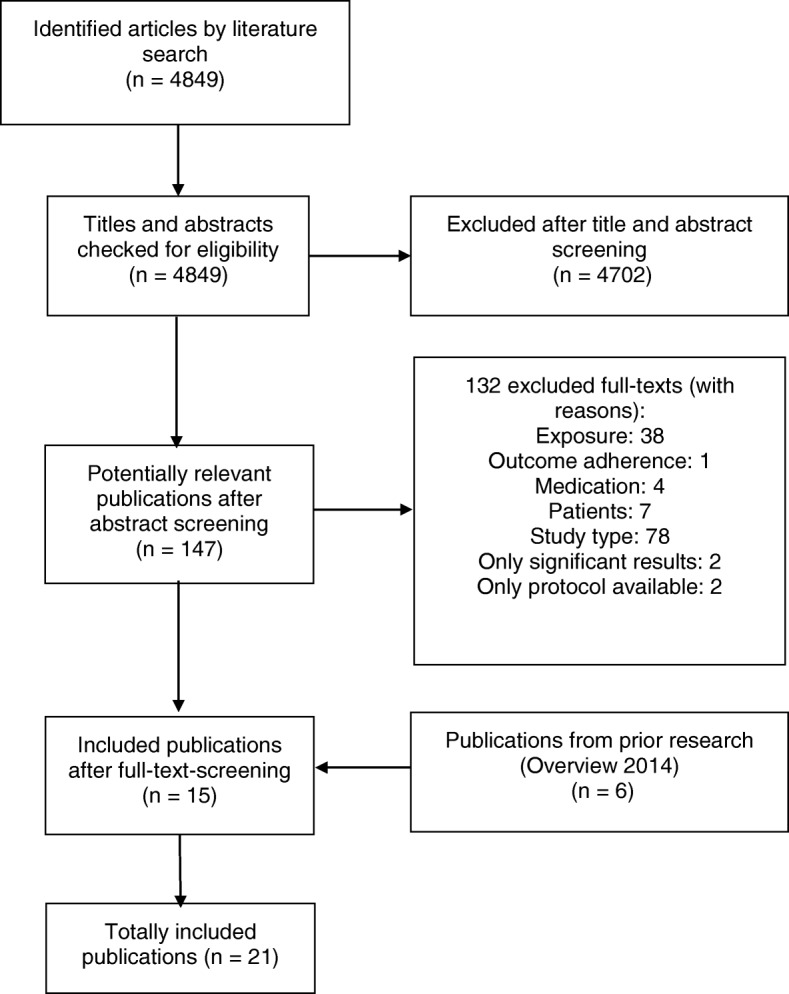
- Evident from the text: many conclusions are weakened because 13/21 SRs were at high risk of bias, and the authors repeatedly note inconsistency, imprecision, and limited reporting, with 78 reviews excluded because they lacked quality assessment of included primary studies.
Model-written summary. Check it against the paper before relying on it.
Integrity signals
Registry
Cites
Statistics
Figures
Verification
Claims the paper makes
20 Valid · 2 Not valid · 23 Not checked · 55 Own results and interpretations
At least one cited source doesn’t support this claim or points to a different paper, and none confirmed it — see the verdicts below.
In the paper
“The other conditions that were investigated for this influencing factor (hepatitis C, inflammatory arthritis and cardiovascular conditions) showed inconsistent results and thus were judged as uncertain evidence [23, 27, 38].”
§ Medication adherence influencing factors—an (updated) overview of systematic reviews > Results > Impact of influencing factors of adherence
What the sources say
- Not checked — no full text of the sourcecites [23] Jaam M, Ibrahim MIM, Kheir N, Awaisu A. Factors associated with medication adherence among patients with diabetes in the Middle East and North Africa region: a systematic mixed studies review. Diabetes Res Clin Pract. 2017;129:1–15. source
- Disputedcites [27] Mathes T, Antoine S-L, Pieper D. Factors influencing adherence in hepatitis-C infected patients: a systematic review. BMC Infect Dis. 2014;14:203. sourceExperimental — accuracy not yet measured
The Results section reports that employment status was investigated in hepatitis C, but says it showed no statistically significant effect throughout the included studies—not inconsistent results. The judgment of uncertain evidence may be the citing authors’ own assessment; this source does not give inconsistency as its basis. (LLM, conf=0.84)
Checked by a reasoning model — may be wrong.
- Not checked — no full text of the sourcecites [38] Pasma A, van't Spijker A, Hazes JMW, Busschbach JJV, Luime JJ. Factors associated with adherence to pharmaceutical treatment for rheumatoid arthritis patients: a systematic review. Semin Arthritis Rheum. 2013;43(1):18–28. source
plain- Asserted: passes — The authors put it forward as true.
- Checkable: passes — It can be checked against evidence.
- Load-bearing: passes — The paper’s conclusions depend on it.
- Based: passes — The paper gives a reason why it holds.
The cited sources support only part of this claim — read each source’s verdict below.
In the paper
“Some evidence for a positive impact was exclusively noted in HIV-infected patients [32, 34].”
§ Medication adherence influencing factors—an (updated) overview of systematic reviews > Results > Impact of influencing factors of adherence
What the sources say
- Not checked — no full text of the sourcecites [32] Gemeda DH, Gebretsadik LA, Dejene T, Wolde M, Sudhakar M. Determinants of non-compliance with antiretroviral therapy among adults living with HIV/AIDS: a systematic review. JBI Database System Rev Implement Rep. 2012;10(56):3596–648. source
- Partly supportedcites [34] Nachega JB, Uthman OA, Peltzer K, Richardson LA, Mills EJ, Amekudzi K, et al. Association between antiretroviral therapy adherence and employment status: systematic review and meta-analysis. Bull World Health Organ. 2015;93(1):29–41. sourceExperimental — accuracy not yet measured
The Discussion (page not provided) reports that employed patients with HIV were 27% more likely to adhere to antiretroviral therapy. It also raises reverse causation and calls for further research, so it does not establish a positive causal impact of employment. Because the review covers HIV-infected patients, it cannot establish that such evidence was found exclusively in that population. (LLM, conf=0.86)
plainstates a possible cause- Asserted: passes — The authors put it forward as true.
- Checkable: passes — It can be checked against evidence.
- Load-bearing: unclear — It is unclear whether the paper’s conclusions depend on it.
- Based: passes — The paper gives a reason why it holds.
The cited sources support only part of this claim — read each source’s verdict below.
In the paper
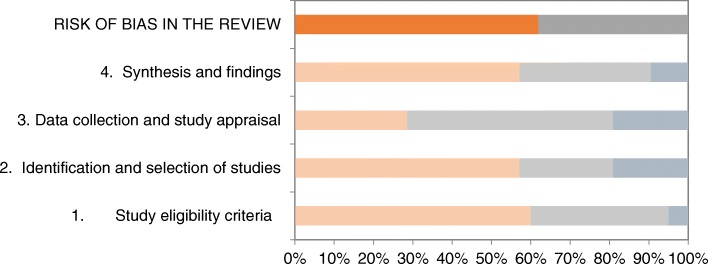
“In contrast, 2/3 of all included SRs were at high risk of bias in two or three domains [20, 21, 23, 24, 26, 30, 33, 35, 37–39].”
§ Medication adherence influencing factors—an (updated) overview of systematic reviews > Results > Risk of bias of the included systematic reviews
What the sources say
- Not matchedcites [20] Aziz H, Hatah E, Makmor Bakry M, Islahudin F. How payment scheme affects patients’ adherence to medications? A systematic review. Patient Prefer Adherence. 2016;10:837–50.
Its entry has no title and year that we can search by.
- Supportedcites [21] Chen H-Y, Saczynski JS, Lapane KL, Kiefe CI, Goldberg RJ. Adherence to evidence-based secondary prevention pharmacotherapy in patients after an acute coronary syndrome: a systematic review. Heart Lung. 2015;44(4):299–308. source
The Study Selection and Study Quality sections identify this work as a systematic review of 17 studies, so it supports its use as one of the SRs cited in the list. The two-thirds figure and risk-of-bias classification are the citing authors’ assessment, not findings attributed to this source. (LLM, conf=0.83)
- Not checked — no full text of the sourcecites [23] Jaam M, Ibrahim MIM, Kheir N, Awaisu A. Factors associated with medication adherence among patients with diabetes in the Middle East and North Africa region: a systematic mixed studies review. Diabetes Res Clin Pract. 2017;129:1–15. source
- Not checked — no full text of the sourcecites [24] Krueger K, Botermann L, Schorr SG, Griese-Mammen N, Laufs U, Schulz M. Age-related medication adherence in patients with chronic heart failure: a systematic literature review. Int J Cardiol. 2015;184:728–35. source
- Partly supportedcites [26] Mann BS, Barnieh L, Tang K, Campbell DJT, Clement F, Hemmelgarn B, et al. Association between drug insurance cost sharing strategies and outcomes in patients with chronic diseases: a systematic review. PLoS One. 2014;9(3):e89168. sourceExperimental — accuracy not yet measured
The paper is a systematic review, so it can identify one of the SRs cited in the sentence. But its Results > Quality of Included Studies section rates its primary studies, not the risk of bias of systematic reviews. It does not establish that two-thirds of the citing paper’s included SRs were at high risk in two or three domains. (LLM, conf=0.78)
- Could not verifycites [30] Crawshaw J, Auyeung V, Norton S, Weinman J. Identifying psychosocial predictors of medication non-adherence following acute coronary syndrome: a systematic review and meta-analysis. J Psychosom Res. 2016;90:10–32. sourceExperimental — accuracy not yet measured
Our copy of Crawshaw et al. (2016) contains no assessment of the risk of bias of systematic reviews: it is itself a systematic review of primary prognostic studies, and its quality appraisal (Section 2.4, p. 10; Section 3.2.3, p. 12) rates the 17 included primary studies as 'good' or 'fair' using an adapted QUIPS tool, with no 'poor'/high-risk category and no 'domains of high risk of bias' counting. Searched for 'high risk of bias in two or three domains', 'AMSTAR / risk of bias of previous systematic reviews', 'included SRs', and 'quality appraisal of systematic reviews' — no passage reports any proportion of reviews at high risk of bias, so the 2/3 figure attributed here cannot be checked against this source (nor is it contradicted by it; it appears to be the citing paper's own overview-of-reviews aggregate). (LLM, conf=0.70)
- Not checked — no full text of the sourcecites [33] Lewey J, Shrank WH, Bowry ADK, Kilabuk E, Brennan TA, Choudhry NK. Gender and racial disparities in adherence to statin therapy: a meta-analysis. Am Heart J. 2013;165(5):665–78, 678.e1. source
- Not checked — no full text of the sourcecites [35] Broekmans S, Dobbels F, Milisen K, Morlion B, Vanderschueren S. Medication adherence in patients with chronic non-malignant pain: is there a problem? Eur J Pain. 2009;13(2):115–23. source
- Could not verifycites [37] Oosterom-Calo R, van Ballegooijen AJ, Terwee CB, te Velde SJ, Brouwer IA, Jaarsma T, et al. Determinants of adherence to heart failure medication: a systematic literature review. Heart Fail Rev. 2013;18(4):409–27. sourceExperimental — accuracy not yet measured
The Method section (Methodological quality assessment) scores individual studies, and the Results section (Description and quality of the studies/data) reports good- and fair-quality ratings for the included studies. Neither section assesses the risk of bias of included systematic reviews or reports that two-thirds were at high risk in two or three domains. Searches for that phrase and for systematic-review risk-of-bias domains found no such assessment. (LLM, conf=0.77)
- Not checked — no full text of the sourcecites [38] Pasma A, van't Spijker A, Hazes JMW, Busschbach JJV, Luime JJ. Factors associated with adherence to pharmaceutical treatment for rheumatoid arthritis patients: a systematic review. Semin Arthritis Rheum. 2013;43(1):18–28. source
plain- Asserted: passes — The authors put it forward as true.
- Checkable: passes — It can be checked against evidence.
- Load-bearing: unclear — It is unclear whether the paper’s conclusions depend on it.
- Based: passes — The paper gives a reason why it holds.
- Not matched
The sources with a verdict support this claim; the rest weren’t checked yet, have no full text we could read, or their verdicts aren’t rated yet.
In the paper
“Finally, 21 SRs were included in this overview [20–40].”
§ Medication adherence influencing factors—an (updated) overview of systematic reviews > Results > Study selection
What the sources say
- Not matchedcites [20] Aziz H, Hatah E, Makmor Bakry M, Islahudin F. How payment scheme affects patients’ adherence to medications? A systematic review. Patient Prefer Adherence. 2016;10:837–50.
Its entry has no title and year that we can search by.
- Supportedcites [21] Chen H-Y, Saczynski JS, Lapane KL, Kiefe CI, Goldberg RJ. Adherence to evidence-based secondary prevention pharmacotherapy in patients after an acute coronary syndrome: a systematic review. Heart Lung. 2015;44(4):299–308. source
The citation identifies Chen et al. as one of the systematic reviews included in the citing authors’ overview; it does not attribute the overview’s total of 21 to Chen et al. The paper identifies itself as a systematic review, and its Results > Study Selection describes its own selection of 17 studies. (LLM, conf=0.92)
- Not checked — no full text of the sourcecites [22] Gourzoulidis G, Kourlaba G, Stafylas P, Giamouzis G, Parissis J, Maniadakis N. Association between copayment, medication adherence and outcomes in the management of patients with diabetes and heart failure. Health Policy. 2017;121(4):363–77. source
- Not checked — no full text of the sourcecites [23] Jaam M, Ibrahim MIM, Kheir N, Awaisu A. Factors associated with medication adherence among patients with diabetes in the Middle East and North Africa region: a systematic mixed studies review. Diabetes Res Clin Pract. 2017;129:1–15. source
- Not checked — no full text of the sourcecites [24] Krueger K, Botermann L, Schorr SG, Griese-Mammen N, Laufs U, Schulz M. Age-related medication adherence in patients with chronic heart failure: a systematic literature review. Int J Cardiol. 2015;184:728–35. source
- Supportedcites [25] Maimaris W, Paty J, Perel P, Legido-Quigley H, Balabanova D, Nieuwlaat R, et al. The influence of health systems on hypertension awareness, treatment, and control: a systematic literature review. PLoS Med. 2013;10(7):e1001490. source
The citation identifies this paper as one of the systematic reviews included in the citing authors’ overview; it does not attribute the overview’s total of 21 to this paper. The source’s Results section identifies it as a review and reports 53 studies included in its own review. (LLM, conf=0.91)
- Supportedcites [26] Mann BS, Barnieh L, Tang K, Campbell DJT, Clement F, Hemmelgarn B, et al. Association between drug insurance cost sharing strategies and outcomes in patients with chronic diseases: a systematic review. PLoS One. 2014;9(3):e89168. source
The citation identifies this paper as one of the systematic reviews included in the citing authors’ overview; it does not attribute the overview’s total of 21 to this paper. The source’s title identifies it as a systematic review, and its Results section describes the studies it included. Its count of 11 studies concerns its own review, not the citing overview. (LLM, conf=0.91)
- Supportedcites [27] Mathes T, Antoine S-L, Pieper D. Factors influencing adherence in hepatitis-C infected patients: a systematic review. BMC Infect Dis. 2014;14:203. source
The citation identifies this paper as one of the systematic reviews included in the citing authors’ overview. The paper’s Methods > Sources section explicitly calls it a systematic review. The total of 21 is the citing authors’ count, not a finding attributed to this individual source. (LLM, conf=0.90)
- Not checked — no full text of the sourcecites [28] Mathes T, Pieper D, Antoine S-L, Eikermann M. Adherence influencing factors in patients taking oral anticancer agents: a systematic review. Cancer Epidemiol. 2014;38(3):214–26. source
- Not checked — no full text of the sourcecites [29] Alsabbagh MHDW, Lemstra M, Eurich D, Lix LM, Wilson TW, Watson E, et al. Socioeconomic status and nonadherence to antihypertensive drugs: a systematic review and meta-analysis. Value Health. 2014;17(2):288–96. source
plain- Asserted: passes — The authors put it forward as true.
- Checkable: passes — It can be checked against evidence.
- Load-bearing: passes — The paper’s conclusions depend on it.
- Based: passes — The paper gives a reason why it holds.
- Not matched
The cited sources support only part of this claim — read each source’s verdict below.
In the paper
“The impact of financial status was uncertain in Parkinson disease, hepatitis C and cardiovascular conditions [21, 23, 27, 36, 37].”
§ Medication adherence influencing factors—an (updated) overview of systematic reviews > Results > Impact of influencing factors of adherence
What the sources say
- Supportedcites [21] Chen H-Y, Saczynski JS, Lapane KL, Kiefe CI, Goldberg RJ. Adherence to evidence-based secondary prevention pharmacotherapy in patients after an acute coronary syndrome: a systematic review. Heart Lung. 2015;44(4):299–308. source
For the cardiovascular portion of the multiply cited sentence, the Discussion (page not provided) says the review found no consistent predictors of cardiac-medication non-adherence and that socioeconomic-status information was limited. This supports describing the impact of financial status as uncertain in patients after an acute coronary syndrome; the paper is not being used to establish the Parkinson disease or hepatitis C portions. (LLM, conf=0.88)
- Not checked — no full text of the sourcecites [23] Jaam M, Ibrahim MIM, Kheir N, Awaisu A. Factors associated with medication adherence among patients with diabetes in the Middle East and North Africa region: a systematic mixed studies review. Diabetes Res Clin Pract. 2017;129:1–15. source
- Partly supportedcites [27] Mathes T, Antoine S-L, Pieper D. Factors influencing adherence in hepatitis-C infected patients: a systematic review. BMC Infect Dis. 2014;14:203. sourceExperimental — accuracy not yet measured
The Results (page unavailable) report no statistically significant association between employment status and adherence in hepatitis C, and list a nonsignificant estimate for source of income. These are financial proxies, not direct measures of financial status; the Discussion says copayments and other barriers to care were not analyzed. This paper does not address Parkinson disease or cardiovascular conditions, which have separate citations in the sentence. (LLM, conf=0.78)
- Not checked — no full text of the sourcecites [36] Daley DJ, Myint PK, Gray RJ. Deane KHO'L. systematic review on factors associated with medication non-adherence in Parkinson’s disease. Parkinsonism Relat Disord. 2012;18(10):1053–61. source
- Supportedcites [37] Oosterom-Calo R, van Ballegooijen AJ, Terwee CB, te Velde SJ, Brouwer IA, Jaarsma T, et al. Determinants of adherence to heart failure medication: a systematic literature review. Heart Fail Rev. 2013;18(4):409–27. source
The Results table (Description and quality of the studies/data; page unavailable) reports mixed findings for financial status and medication adherence in a heart-failure study, depending on how adherence was measured. This supports uncertainty for the heart-failure portion of the cardiovascular claim. The Parkinson disease and hepatitis C portions are not attributed specifically to this source among the five citations. (LLM, conf=0.84)
plain- Asserted: passes — The authors put it forward as true.
- Checkable: passes — It can be checked against evidence.
- Load-bearing: unclear — It is unclear whether the paper’s conclusions depend on it.
- Based: passes — The paper gives a reason why it holds.
- Supported
57 more claims · 13 with their cited sources checked
Create a free account to see all 100 claims and to verify the 4 references still open.
- Probably not a substantial claim. 25
- It may state two separate claims as one. 21
Citations
Cites
Preferred Reporting Items for Systematic Reviews and Meta-Analyses: the PRISMA statement
Moher, D., Liberati, A., Tetzlaff, J., Altman, D. G., & for the PRISMA Group (2009) · BMJ · doi:10.1136/bmj.b2535 · Cited by 83,823
Preferred reporting items for systematic reviews and meta-analyses: the PRISMA Statement.
(2009) · PubMed Central · Cited by 44,859
Preferred reporting items for systematic reviews and meta-analyses: The PRISMA statement
Moher, D., Liberati, A., Tetzlaff, J., Altman, D. G., & the PRISMA Group* (2009) · Annals of Internal Medicine · doi:10.7326/0003-4819-151-4-200908180-00135 · Cited by 37,554
The Handbook of Research Synthesis and Meta-Analysis
(2019) · doi:10.7758/9781610448864 · Cited by 4,553
Kirk, J., MacDonald, A., Lavender, P., Dean, J., & Rubin, G. (2017) · Biomedicine Hub · doi:10.1159/000480347 · Cited by 3,887
GRADE guidelines: a new series of articles in the Journal of Clinical Epidemiology
Guyatt, G. H., Oxman, A. D., Schünemann, H. J., Tugwell, P., & Knottnerus, A. (2011) · Journal of Clinical Epidemiology · doi:10.1016/j.jclinepi.2010.09.011 · Cited by 3,094
ROBIS: A new tool to assess risk of bias in systematic reviews was developed
Whiting, P., Savović, J., Higgins, J. P. T., Caldwell, D. M., Reeves, B. C., Shea, B., Davies, P., Kleijnen, J., & Churchill, R. (2016) · Journal of Clinical Epidemiology · doi:10.1016/j.jclinepi.2015.06.005 · Cited by 2,272
Medication compliance and persistence: terminology and definitions
Cramer, J. A., Roy, A., Burrell, A., Fairchild, C. J., Fuldeore, M. J., Ollendorf, D. A., & Wong, P. K. (2008) · Value in Health · doi:10.1111/j.1524-4733.2007.00213.x · Cited by 2,220
A new taxonomy for describing and defining adherence to medications
Vrijens, B., De Geest, S., Hughes, D. A., Przemyslaw, K., Demonceau, J., Ruppar, T., Dobbels, F., Fargher, E., Morrison, V., Lewek, P., et al. (2012) · British Journal of Clinical Pharmacology · doi:10.1111/j.1365-2125.2012.04167.x · Cited by 2,028
Medication Adherence: WHO Cares?
Brown, M. T., & Bussell, J. K. (2011) · Mayo Clinic Proceedings · doi:10.4065/mcp.2010.0575 · Cited by 1,928
Cited by
Jaarsma, T., Hill, L., Bayes‐Genis, A., La Rocca, H. B., Castiello, T., Čelutkienė, J., Marques‐Sule, E., Plymen, C. M., Piper, S. E., Riegel, B., et al. (2021) · European Journal of Heart Failure · doi:10.1002/ejhf.2008 · Cited by 538
Overcoming barriers to patient adherence: the case for developing innovative drug delivery systems
Baryakova, T. H., Pogostin, B. H., Langer, R., & McHugh, K. J. (2023) · Nature Reviews Drug Discovery · doi:10.1038/s41573-023-00670-0 · Cited by 492
Medication nonadherence: health impact, prevalence, correlates and interventions
Stewart, S.-J., Moon, Z., & Horne, R. (2022) · Psychology and Health · doi:10.1080/08870446.2022.2144923 · Cited by 228
Świątoniowska-Lonc, N., Polański, J., Tański, W., & Jankowska‐Polańska, B. (2020) · BMC Health Services Research · doi:10.1186/s12913-020-05912-0 · Cited by 188
Shahin, W., Kennedy, G. A., & Stupans, I. (2021) · Pharmacy Practice · doi:10.18549/pharmpract.2021.2.2300 · Cited by 135
Pedretti, R. F. E., Hansen, D., Ambrosetti, M., Back, M., Berger, T., Ferreira, M. C., Cornelissen, V., Davos, C. H., Doehner, W., de Pablo y Zarzosa, C., et al. (2023) · European Journal of Preventive Cardiology · doi:10.1093/eurjpc/zwac204 · Cited by 115
Hyvert, S., Yailian, A.-L., Haesebaert, J., Vignot, E., Chapurlat, R., Dussart, C., De Freminville, H., & Janoly-Dumenil, A. (2023) · International Journal of Clinical Pharmacy · doi:10.1007/s11096-022-01470-z · Cited by 102
Chow, C. K., Klimis, H., Thiagalingam, A., Redfern, J., Hillis, G. S., Brieger, D. B., Atherton, J. J., Bhindi, R., Chew, D. P., Collins, N. J., et al. (2022) · Circulation · doi:10.1161/circulationaha.121.056161 · Cited by 107
2024 EACTS Guidelines on perioperative medication in adult cardiac surgery
Jeppsson, A., (Sweden), (.-C., Rocca, B., (Italy), (.-C., Hansson, E. C., (Sweden), Guðbjartsson, T., (Iceland), James, S. K., (Sweden), et al. (2024) · European Journal of Cardio-Thoracic Surgery · doi:10.1093/ejcts/ezae355 · Cited by 129
Ampofo, A. G., Khan, E., & Ibitoye, B. M. (2020) · Heart & Lung · doi:10.1016/j.hrtlng.2020.02.039 · Cited by 109
Patel, S., Huang, M., & Miliara, S. (2025) · Journal of Clinical Medicine · doi:10.3390/jcm14176034 · Cited by 132
Self-reported health literacy and medication adherence in older adults: a systematic review
Schönfeld, M. S., Pfisterer‐Heise, S., & Bergelt, C. (2021) · BMJ Open · doi:10.1136/bmjopen-2021-056307 · Cited by 101
Factors associated with poor health literacy in older adults: A systematic review
Lima, A. C. P., Maximiano‐Barreto, M. A., Martins, T. C. R., & Luchesi, B. M. (2023) · Geriatric Nursing · doi:10.1016/j.gerinurse.2023.11.016 · Cited by 112
Ge, L., Heng, B. H., & Yap, C. W. (2023) · BMC Health Services Research · doi:10.1186/s12913-023-09904-8 · Cited by 83
Bellens, A., Roelant, E., Sabbe, B., Peeters, M., & van Dam, P. A. (2020) · The Breast · doi:10.1016/j.breast.2020.06.003 · Cited by 60
Impact of COVID-19 Pandemic on Adherence to Chronic Therapies: A Systematic Review
Olmastroni, E., Galimberti, F., Tragni, E., Catapano, A. L., & Casula, M. (2023) · International Journal of Environmental Research and Public Health · doi:10.3390/ijerph20053825 · Cited by 74
Liu, J., Yu, Y., Yan, S., Zeng, Y., Su, S., He, T., Wang, Z., Ding, Q., Zhang, R., Li, W., et al. (2023) · BMC Geriatrics · doi:10.1186/s12877-023-03768-7 · Cited by 81
Sahoo, J., Mohanty, S., Kundu, A., & Epari, V. (2022) · Cureus · doi:10.7759/cureus.33074 · Cited by 106
Chew, S. M., Lee, J. H., Lim, S. F., Liew, M. J., Xu, Y., & Towle, R. M. (2021) · Journal of Advanced Nursing · doi:10.1111/jan.14913 · Cited by 53
Talens, A., Guilabert, M., Lumbreras, B., Aznar-Saliente, T., & López-Pintor, E. (2021) · International Journal of Environmental Research and Public Health · doi:10.3390/ijerph18084266 · Cited by 47
Lim, H. M., Dunn, A. G., Lim, J. R., Abdullah, A. B., & Ng, C. J. (2022) · Digital Health · doi:10.1177/20552076221097784 · Cited by 49
Yoon, S., Kwan, Y. H., Yap, W. L., Lim, Z. Y., Phang, J. K., Loo, Y. X., Aw, J., & Low, L. L. (2023) · Frontiers in Pharmacology · doi:10.3389/fphar.2023.1124297 · Cited by 63
Mohamed, K., Ghabril, M., Desai, A. P., Orman, E. S., Patidar, K. R., Holden, J., Rawl, S. M., Chalasani, N., Kubal, C. A., & Nephew, L. D. (2022) · Liver Transplantation · doi:10.1002/lt.26473 · Cited by 48
Yadav, S., Singh, A., Palei, N. N., Pathak, P., Verma, A., & Yadav, J. P. (2024) · AAPS PharmSciTech · doi:10.1208/s12249-024-02948-x · Cited by 57
Medication Adherence Among Patients with Multimorbidity in the United Arab Emirates
Allaham, K., Feyasa, M. B., Govender, R. D., Musa, A. M., AlKaabi, A. J., Elbarazi, I., AlSheryani, S. D., Falasi, R. J. A., & Khan, M. A. (2022) · Patient Preference and Adherence · doi:10.2147/ppa.s355891 · Cited by 45
Babygeetha, A., & Devineni, D. (2024) · Europe’s Journal of Psychology · doi:10.5964/ejop.12131 · Cited by 60
Wibowo, M. I. N. A., Yasin, N. M., Kristina, S. A., & Prabandari, Y. S. (2022) · Patient Preference and Adherence · doi:10.2147/ppa.s347079 · Cited by 46
Suhail, M., Saeed, H., Saleem, Z., Younas, S., Hashmi, F. K., Rasool, M. F., Islam, M. F., & Imran, I. (2021) · Health and Quality of Life Outcomes · doi:10.1186/s12955-021-01761-5 · Cited by 52
An Update on Medication Use in Older Adults: a Narrative Review
Barry, H. E., & Hughes, C. M. (2021) · Current Epidemiology Reports · doi:10.1007/s40471-021-00274-5 · Cited by 45
Comorbidity of patients with noncommunicable diseases in general practice. Eurasian guidelines
Drapkina, O. M., Васильевна, К. А., Калинина, А. М., Avdeev, S. N., Викторович, А. М., Алексеева, Л. И., Almazova, I. I., Andreenko, Е. Y., Antipushina, D. N., Balanova, Y. А., et al. (2024) · CARDIOVASCULAR THERAPY AND PREVENTION · doi:10.15829/1728-8800-2024-3996 · Cited by 65
Jankowska‐Polańska, B., Świątoniowska-Lonc, N., Karniej, P., Polański, J., Tański, W., & Grochans, E. (2021) · Diabetes Research and Clinical Practice · doi:10.1016/j.diabres.2021.108693 · Cited by 40
Chen, Y., Gao, J., & Lu, M. (2023) · Journal of Advanced Nursing · doi:10.1111/jan.15776 · Cited by 59
Al-Qerem, W. A., Bawab, A. Q. A., Abusara, O. H., Alkhatib, N. S., & Horne, R. (2022) · PLoS ONE · doi:10.1371/journal.pone.0266606 · Cited by 32
Mobini, S., Allahbakhshian, A., Shabanloei, R., & Sarbakhsh, P. (2023) · SAGE Open Nursing · doi:10.1177/23779608231171772 · Cited by 49
Schuuring, M. J., Treskes, R. W., Castiello, T., Jensen, M. T., Casado-Arroyo, R., Neubeck, L., Lyon, A. R., Keser, N., Rucinski, M., Marketou, M. E., et al. (2024) · European Heart Journal - Digital Health · doi:10.1093/ehjdh/ztae064 · Cited by 43
Shahin, W., Kennedy, G. A., & Stupans, I. (2020) · Pharmacy · doi:10.3390/pharmacy8030147 · Cited by 36
Shin, J., & Konlan, K. D. (2023) · Nursing Open · doi:10.1002/nop2.1613 · Cited by 41
Awwad, O., AlMuhaissen, S. A., Al-Nashwan, A., & Aburuz, S. (2022) · PLoS ONE · doi:10.1371/journal.pone.0275778 · Cited by 39
Liddelow, C., Mullan, B. A., & Novoradovskaya, E. (2020) · International Journal of Behavioral Medicine · doi:10.1007/s12529-020-09862-z · Cited by 35
Corr, M., Walker, A., Maxwell, A. P., & McKay, G. J. (2024) · Transplantation Reviews · doi:10.1016/j.trre.2024.100900 · Cited by 38
von Gaudecker, J. R., Buelow, J. M., Miller, W. R., Tanner, A., & AUSTIN, J. K. (2021) · Epilepsy & Behavior · doi:10.1016/j.yebeh.2021.108328 · Cited by 29
Mendibil, X., Tena, G., Duque, A., Uranga, N., Campanero, M. Á., & Alonso, J. M. G. (2021) · Pharmaceutics · doi:10.3390/pharmaceutics13060907 · Cited by 36
Coronary Artery Disease in Very Young Patients: Analysis of Risk Factors and Long-Term Follow-Up
Juan‐Salvadores, P., Díaz, V. A. J., Carreño, C. I., González, A. G., Veiga, C., Reglero, C. M., Alonso, J. A. B., Caamaño‐Isorna, F., & Íñiguez, A. (2022) · Journal of Cardiovascular Development and Disease · doi:10.3390/jcdd9030082 · Cited by 38
Peipert, J. D., Badawy, S. M., Baik, S. H., Oswald, L. B., Efficace, F., Garcia, S. F., Mroczek, D. K., Wolf, M. S., Kaiser, K., Yanez, B. R., et al. (2020) · Patient Preference and Adherence · doi:10.2147/ppa.s249079 · Cited by 29
Lukina, Y. V., Кутишенко, Н. П., Martsevich, S. Y., Шепель, Р. Н., & Drapkina, O. M. (2020) · Russian Journal of Preventive Medicine · doi:10.17116/profmed20202303242 · Cited by 41
Misrepresentation and Nonadherence Regarding COVID-19 Public Health Measures
Levy, A. G., Thorpe, A., Scherer, L. D., Scherer, A. M., Drews, F. A., Butler, J. M., Burpo, N., Shoemaker, H. E., Stevens, V. W., & Fagerlin, A. (2022) · JAMA Network Open · doi:10.1001/jamanetworkopen.2022.35837 · Cited by 33
Care-seeking and managing diabetes in rural Bangladesh: a mixed methods study
Jennings, H. M., Morrison, J., Akter, K., Haghparast‐Bidgoli, H., King, C., Ahmed, N., Kuddus, A., Shaha, S. K., Nahar, T., Azad, K., et al. (2021) · BMC Public Health · doi:10.1186/s12889-021-11395-3 · Cited by 34
Dugunchi, F., Mudgal, S. K., Marznaki, Z. H., Shirafkan, H., Abrotan, S., Jafarian, F., & Pourkia, R. (2024) · BMC Cardiovascular Disorders · doi:10.1186/s12872-024-03827-w · Cited by 34
British Society of Gastroenterology guidelines for diagnosis and management of autoimmune hepatitis
Gleeson, D. C., Bornand, R., Brownlee, A., Dhaliwal, H., Dyson, J. K., Hails, J., Henderson, P., Kelly, D. A., Mells, G. F., Miquel, R., et al. (2025) · Gut · doi:10.1136/gutjnl-2024-333171 · Cited by 52
Merat, S., Jafari, E., Radmard, A. R., Khoshnia, M., Sharafkhah, M., Baygi, A. N., Marshall, T. P., Khuzani, A. S., Cheng, K. K., Poustchi, H., et al. (2021) · European Heart Journal · doi:10.1093/eurheartj/ehab919 · Cited by 27
van Schelven, F., van der Meulen, E., Wessels, E. M., & Boeije, H. (2023) · Patient Preference and Adherence · doi:10.2147/ppa.s400702 · Cited by 19
Al‐Noumani, H., Alharrasi, M., José, J., Al‐Naamani, Z., & Panchatcharam, S. M. (2021) · Clinical Nursing Research · doi:10.1177/10547738211033754 · Cited by 33
Adherence and Persistence to Nusinersen for Spinal Muscular Atrophy: A US Claims-Based Analysis
Fox, D., To, T. M., Seetasith, A., Patel, A. M., & Iannaccone, S. T. (2022) · Advances in Therapy · doi:10.1007/s12325-022-02376-y · Cited by 26
Rezaei, S., Vaezi, F., Afzal, G. S., Naderi, N., & Mehralian, G. (2022) · HLRP Health Literacy Research and Practice · doi:10.3928/24748307-20220718-02 · Cited by 46
Disparities in cardiovascular disease and treatment in the Nordic countries
Højstrup, S., Thomsen, J. H., & Prescott, E. (2023) · The Lancet Regional Health - Europe · doi:10.1016/j.lanepe.2023.100699 · Cited by 39
Chu, H.-Y., Huang, H., Huang, C., Chu, C.-C., Su, C., Tsai, I., Hu, H.-L. S., & Guo, S.-L. (2021) · Geriatric Nursing · doi:10.1016/j.gerinurse.2021.08.011 · Cited by 27
Al‐Noumani, H., Alharrasi, M., Lazarus, E. R., & Panchatcharam, S. M. (2023) · Scientific Reports · doi:10.1038/s41598-023-34393-4 · Cited by 36
Wibowo, M. I. N. A., Yasin, N. M., Kristina, S. A., & Prabandari, Y. S. (2022) · Dove Medical Press (Taylor and Francis Group) · Cited by 24
What Are the Factors Associated with Nonadherence to Medications in Patients with Chronic Diseases?
Bawab, A. Q. A., Al-Qerem, W. A., Abusara, O. H., Alkhatib, N. S., Mansour, M., & Horne, R. (2021) · Healthcare · doi:10.3390/healthcare9091237 · Cited by 35
Chapman, S., & Chan, A. H. Y. (2025) · Frontiers in Pharmacology · doi:10.3389/fphar.2025.1465059 · Cited by 40
Barrett, E. M., Paige, E., Welsh, J., Korda, R., Joshy, G., Martin, M., & Banks, E. (2021) · Preventive Medicine Reports · doi:10.1016/j.pmedr.2021.101342 · Cited by 23
Farhana, L., Rahayu, F. P., Sholihah, S., Sweileh, W. M., Abdulah, R., & Alfian, S. D. (2025) · Patient Preference and Adherence · doi:10.2147/ppa.s530503 · Cited by 41
Konradsen, A. A., Lund, C. M., Vistisen, K. K., Albieri, V., Dalton, S. O., & Nielsen, D. L. (2020) · Acta Oncologica · doi:10.1080/0284186x.2020.1772501 · Cited by 27
Siegel, R. D., LeFebvre, K. B., Temin, S., Evers, A., Barbarotta, L., Bowman, R., Chan, A., Dougherty, D. W., Ganio, M. C., Hunter, B. D., et al. (2024) · JCO Oncology Practice · doi:10.1200/op.24.00216 · Cited by 37
Consolazio, D., Gattoni, M. E., & Russo, A. G. (2022) · BMC Public Health · doi:10.1186/s12889-022-13052-9 · Cited by 29
Gackowski, M., Jasińska-Stroschein, M., Osmałek, T. Z., & Waszyk-Nowaczyk, M. (2024) · Medical Science Monitor · doi:10.12659/msm.944605 · Cited by 34
Barankay, I., Reese, P. P., Putt, M., Russell, L. B., Phillips, C., Pagnotti, D. R., Chadha, S., Oyekanmi, K. O., Yan, J., Zhu, J., et al. (2021) · JAMA Network Open · doi:10.1001/jamanetworkopen.2021.9211 · Cited by 21
Hafez, G., Aarnio, E., Mucherino, S., Kamusheva, M., Qvarnström, M., Potočnjak, I., Trečiokienė, I., Mihajlović, J., Ekenberg, M., van Boven, J. F. M., et al. (2024) · Journal of General Internal Medicine · doi:10.1007/s11606-024-08851-2 · Cited by 28
Khalifeh, A. H., & Hamdan‐Mansour, A. M. (2020) · Journal of Psychosocial Nursing and Mental Health Services · doi:10.3928/02793695-20201015-05 · Cited by 31
Zhao, J., Wang, H., Li, X., Hu, Y., Yan, V. K. C., Wong, C. K. H., Guo, Y., Cheung, M. K. H., Lip, G. Y. H., Siu, C., et al. (2021) · PLoS Medicine · doi:10.1371/journal.pmed.1003730 · Cited by 19
Medication Adherence Among Geriatric Patients with Chronic Diseases in Riyadh, Saudi Arabia
Alhabib, M. Y., Alhazmi, T. S., Alsaad, S. M., Alqahtani, A., & Alnafisah, A. A. (2022) · Patient Preference and Adherence · doi:10.2147/ppa.s363082 · Cited by 30
Roberts, B., Cooper, Z., Lu, S. Y., Stanley, S. H., Majda, B. T., Collins, K. R. L., Gilkes, L., Rodger, J., Akkari, P. A., & Hood, S. D. (2023) · Frontiers in Pharmacology · doi:10.3389/fphar.2023.1267294 · Cited by 29
Liljeberg, E., Payne, L., Josefsson, M. S., Söderström, L., & Einarsson, S. (2024) · Nutrition Research Reviews · doi:10.1017/s0954422424000192 · Cited by 31
Rovers, F. J., van Netten, J. J., Busch‐Westbroek, T. E., de Stegge, W. B. A., & Bus, S. A. (2022) · The International Journal of Lower Extremity Wounds · doi:10.1177/15347346221114565 · Cited by 21
Determinants of medication adherence in patients with diabetes, hypertension, and hyperlipidemia
Chantzaras, A. E., & Yfantopoulos, J. (2025) · HORMONES · doi:10.1007/s42000-025-00631-9 · Cited by 32
King, K., McGuinness, S., Watson, N., Norton, C. S., Chalder, T., & Czuber‐Dochan, W. (2023) · Patient Preference and Adherence · doi:10.2147/ppa.s424024 · Cited by 19
Yu, Y., Huang, Q., Ren, Z., & Ou, Z. (2024) · Annals of Behavioral Medicine · doi:10.1093/abm/kaae049 · Cited by 32
Fixed dose combinations: A formulary decision guide
Esba, L. C. A., Yousef, C. C., Ismail, S., Halim, M. A., Almodaimegh, H., Alabdulkarim, H. A., & Alhowimel, M. (2021) · Health Policy and Technology · doi:10.1016/j.hlpt.2021.02.006 · Cited by 19
Tam, H. L., Chung, S. F., & Wang, Q. (2022) · Chronic Illness · doi:10.1177/17423953221102627 · Cited by 21
Meraz, R., McGee, J. S., Ke, W., & Osteen, K. A. (2023) · Research in Nursing & Health · doi:10.1002/nur.22312 · Cited by 23
Bozec, A. L., Korb‐Savoldelli, V., Boiteau, C., Dechartres, A., Kahf, S. A., Sitbon, O., Montani, D., Jaïs, X., Guignabert, C., Humbert, M. J. C., et al. (2024) · European Respiratory Review · doi:10.1183/16000617.0006-2024 · Cited by 17
Anoopkumar‐Dukie, S., Mey, A., Hall, S., Bernaitis, N., Davey, A. K., & Plummer, D. (2020) · International Journal of Clinical Practice · doi:10.1111/ijcp.13489 · Cited by 18
Tracing drugs from discovery to disposal
Omidian, H., Razmara, J., Parvizpour, S., Tabrizchi, H., Masoudi‐Sobhanzadeh, Y., & Omidi, Y. (2023) · Drug Discovery Today · doi:10.1016/j.drudis.2023.103538 · Cited by 20
Stephenson, J. J., Gable, J. C., Zincavage, R. M., Price, G. L., Churchill, C., Zhu, E., Stenger, K. B., Singhal, M., Nepal, B., Grabner, M., et al. (2021) · Patient Preference and Adherence · doi:10.2147/ppa.s319239 · Cited by 14
Cooke, C. E., Xing, S., Gale, S. E., & Peters, S. (2021) · Journal of Human Hypertension · doi:10.1038/s41371-021-00549-w · Cited by 19
Ohlsson, A., Eckerdal, N., Lindahl, B., Hanning, M., & Westerling, R. (2021) · BMC Public Health · doi:10.1186/s12889-021-10919-1 · Cited by 18
Eshete, A., Worku, B. G., Aynaddis, G., Tilaye, B., Mekonnen, E., Taye, B., Belachew, D. Z., Deresse, T., Kifleyohans, T., & Assefa, Y. A. (2023) · Frontiers in Public Health · doi:10.3389/fpubh.2023.1214725 · Cited by 20
Evans, C. D., Marrie, R. A., Yao, S., Zhu, F., Walld, R., Tremlett, H. L., Blackburn, D. F., & Kingwell, E. (2021) · BMJ Open · doi:10.1136/bmjopen-2020-043930 · Cited by 21
Chan, A. H. Y., Vervloet, M., Lycett, H., Brabers, A. E. M., van Dijk, L., & Horne, R. (2021) · British Journal of Clinical Pharmacology · doi:10.1111/bcp.14744 · Cited by 19
de Souza, A. F. R., da Silva, M. R. R., dos Santos, J. B. R., Almeida, A. M., Acúrcio, F. D. A., & Álvares-Teodoro, J. (2021) · Pharmacy Practice · doi:10.18549/pharmpract.2021.2.2312 · Cited by 15
Tolley, A., Grewal, K., Weiler, A., Papameletiou, A. M., Hassan, R., & Basu, S. (2023) · Frontiers in Pharmacology · doi:10.3389/fphar.2023.1183818 · Cited by 21
Lee, S. Y., Yang, S., & Lwin, M. O. (2023) · BMC Public Health · doi:10.1186/s12889-023-15184-y · Cited by 24
Huang, C. L., Chiang, C.-H., Yang, S. C., & Wu, F. (2022) · International Journal of Environmental Research and Public Health · doi:10.3390/ijerph19116926 · Cited by 17
Evaluating a serious game to improve childhood cancer patients' treatment adherence
Chai, C. W. E., Theng, L. B., Tsun, M. T. K., & Mahmud, A. A. (2022) · Digital Health · doi:10.1177/20552076221134457 · Cited by 20
Al-Saleh, S. A., Lee, J. K., Rogers, W. A., & Insel, K. C. (2022) · Ergonomics in Design The Quarterly of Human Factors Applications · doi:10.1177/10648046211066409 · Cited by 19
Policy solutions for medication non-adherence: what can governments do?
Meslamani, A. Z. A. (2024) · Expert Review of Pharmacoeconomics & Outcomes Research · doi:10.1080/14737167.2024.2321242 · Cited by 20
Espírito‐Santo, M., Santos, S., & Estêvão, M. D. (2024) · Pharmacy · doi:10.3390/pharmacy12010020 · Cited by 19
Medication adherence of diabetes mellitus patients in Indonesia: A systematic review
Pertiwi, M. V., Alfian, R., Nita, Y., & Athiyah, U. (2022) · Pharmacy Education · doi:10.46542/pe.2022.222.188193 · Cited by 40
Metadata
- Authors
- Gast, A., & Mathes, T.
- Affiliations
- Witten/Herdecke University (DE)
- University of Cologne (DE)
- Corresponding author
- Mathes, Tim
- ORCID
- Mathes, Tim
- Venue
- Systematic Reviews
- Published
- 2019-05-10
- Volume
- 8
- Issue
- 1
- Pages
- 112-112
- ISSN
- 2046-4053 (ISSN-L)
- PMC
- PMC6511120
- OpenAlex
- W2947141589
- Cited by
- 560
- References
- 49
- Citations by year
- 2026: 70 · 2025: 114 · 2024: 113 · 2023: 104 · 2022: 66 · 2021: 66 · 2020: 27
- FWCI
- 7.99
- Type
- journal article
- Language
- en
- Open access
- gold
- doi.org
- Licence
- cc-by
- creativecommons.org/licenses/by/4.0/ (tdm)
- Locations
- Systematic Reviews (publishedVersion, cc-by)
- PubMed Central (publishedVersion, cc-by)
- PubMed (publishedVersion)
- Kölner Universitäts PublikationsServer (Universität zu Köln) (publishedVersion)
- DOAJ (DOAJ: Directory of Open Access Journals) (submittedVersion, cc-by-sa)
- GoeScholar The Publication Server of the Georg-August-Universität Göttingen (Georg-August-Universität Göttingen) (submittedVersion, cc-by)
- Topics
- Health Sciences › Medicine › Family Practice › Medication Adherence and Compliance
- Health Sciences › Health Professions › Pharmacy › Pharmacy and Medical Practices
- Social Sciences › Sociology and Political Science › Survey Methodology and Nonresponse
- Keywords
- medication adherence, non-compliance, chronic physical illness, oral medication, socioeconomic status, social support, ethnic minorities, depression, comorbidities, copayments, insurance status, age, gender, social gradient
- MeSH terms
- Age Factors, Chronic Disease, Depression, Ethnicity, Health Expenditures, Humans, Minority Groups, Medication Adherence
About these checks
Registry, retraction, Cites and statistics results are computed, not judged, with one exception: a printed reference that no index lists is read once by a model before it counts as a citation error. Claims are extracted by a model and kept only when their quote appears verbatim in the text; each cited source is then checked, with a model’s help, for whether it says what the claim relies on. Those verdicts can be wrong — read the claim’s quote and the cited source before relying on one.
The claim verdicts this report counts are experimental: their accuracy is not yet measured.
A language model drew the claims from the paper on 2026-10-10, under version 3 of the claim definition (model deepseek-v4.1-flash, prompt extract-v3).
A second model labelled each claim on 2026-10-10 (model jev-1.13-20260917, definition revision gold-guideline-v0.2).
Cited sources are checked with a language model’s help (gpt-6-sol and qwen3.8-omni-flash).
Statistics and arithmetic are recomputed, not judged.
Confidence bands are shown only for fields calibrated on our annotated test set. None is calibrated yet, so no band is shown.
What counts as a claim ›How we measure confidence ›How we check this ›
Are you an author, or do you see a problem with this page? Request a review
Data sources
Bibliographic data: Semantic Scholar, OpenAlex, Crossref.
Contains information from the Semantic Scholar Academic Graph Datasets, made available under the ODC Attribution License (ODC-BY 1.0).
Semantic Scholar’s data is described in: Kinney, R., et al. (2023). The Semantic Scholar Open Data Platform. arXiv:2301.10140.
